Nevermore (The Raven's Shadow)
Gustave Doré, 1884
Nevermore is the last full-page plate in Gustave Doré's illustrated The Raven, published after his death in 1883–84: the raven sits on the bust above the door while its long shadow falls across a man collapsed on the floor.
- Artist
- Gustave Doré
- Date
- 1884
- Medium
- Wood engraving
- Movement
- Romanticism
- Themes
- Literature & Poetry, Death & Memento Mori, Dark Academia, Night & Dreams, The Macabre
What you are looking at
An empty corner of a room, seen from low down. A tall double door stands on the right, its pediment topped by the same helmeted bust of Pallas that appears earlier in the book, with the raven perched on it and a pale fan of light behind. From the bird a long wedge of shadow drops straight down the face of the door, narrowing as it goes, and spreads out across the floor.
In front of the door, on a parquet floor laid in a zigzag pattern, a man lies sprawled where he has fallen. His legs are bent up, his body is wrapped in a tangled cloak or shawl with trailing fringes, and his arms are thrown up around his head, which is turned to the floor. An oval-backed armchair stands empty beside him.
On the wall to the left hangs a picture in a heavy carved frame, and at the far left the edge of a cabinet or bookcase. Nothing moves. There is no lamp to be seen, only its effect: light from somewhere in front of the bird, throwing its shadow down onto the man.
The lines it illustrates
This is the plate for the last two lines of Poe's poem. In the final stanza the bird has not left, and will not:
And the raven, never flitting, still is sitting, still is sitting On the pallid bust of Pallas just above my chamber door; And his eyes have all the seeming of a demon's that is dreaming, And the lamp-light o'er him streaming throws his shadow on the floor; And my soul from out that shadow that lies floating on the floor Shall be lifted—nevermore!
Poe means the shadow as a figure of speech: the narrator's soul is trapped in despair. Doré makes it literal. The shadow is a real shape, cast by a real lamp, and the man is lying inside it.
How Doré staged it
Everything in the plate is arranged around that one dark band. The vertical lines of the door and the wall run parallel with it; the bright fan above the bust makes the bird and its shadow stand out like a cut-out. The narrator is not given a face. He is reduced to a heap of cloth and limbs on the floor, the same young man we first saw dozing over his books in Once Upon a Midnight Dreary, now apparently collapsed or dead.
Poe leaves the ending open: the narrator is speaking in the present tense, so he is alive, though without hope. Doré pushes further. By placing the figure prone and twisted at the bottom of the plate, he gives the poem a sense of finality that Poe only implies. The book's very last image, a small round vignette that the list of illustrations titles "The secret of the Sphinx," then moves the story out of the room altogether.
How it was made and published
The Raven was Doré's last illustrated book. He died in Paris in January 1883 before it appeared; it was published in London by Sampson Low, Marston, Searle and Rivington (title page dated 1883) and in New York by Harper and Brothers (1884), with an essay by Edmund Clarence Stedman. The book's list of illustrations names 26 subjects and credits this plate to the American wood engraver R. G. Tietze, who also cut Perched Upon a Bust of Pallas. The engraver's small signature sits at lower left, "G. Doré" at lower right.
In this Library of Congress scan the cutting is easy to read. The wall and door are engraved in very fine vertical lines, close enough to read as gray tone; the shadow is the same lines cut thicker and closer. The parquet is drawn in crisp white outlines, and the fringed cloak around the fallen man is cut as a tangle of white and dark strokes.
Meaning
The last plate turns the poem's refrain into an image. "Nevermore" is the word the bird has said to every question, and here it becomes a permanent condition: the bird never flits, the shadow never lifts, the man never rises. The domestic room, with its armchair and framed picture, has become a tomb.
The plate rhymes with Doré's other visions of death arriving in ordinary places, from Death on the Pale Horse to the ghost ship of Death and Life-in-Death, and it closes Doré's The Raven. For the larger tradition, see Memento Mori & Vanitas; for the riddle Doré left at the book's end, compare his painting The Enigma, in which a winged figure questions a sphinx. More of Gustave Doré's work is collected on his artist page.
Questions & answers
What does Doré's last Raven illustration show?
It shows the raven still sitting on the bust of Pallas above the chamber door, with a long shadow falling from it down the door and across the floor. In that shadow the narrator lies sprawled on the parquet beside an empty armchair, his arms thrown over his head.
Which lines of The Raven does the plate illustrate?
The poem's final lines: "And the lamp-light o'er him streaming throws his shadow on the floor; / And my soul from out that shadow that lies floating on the floor / Shall be lifted—nevermore!" Doré turns Poe's figurative shadow into a literal one.
When was Doré's The Raven published?
After Doré died in Paris in January 1883. The book appeared in London from Sampson Low, Marston, Searle and Rivington (dated 1883) and in New York from Harper and Brothers (1884), with an essay by Edmund Clarence Stedman and 26 illustrations.
Who engraved the Nevermore plate?
Doré made the design and an American wood engraver cut the block. The book's list of illustrations credits R. G. Tietze, who also engraved the bust of Pallas plate. Fine vertical lines build the gray walls; thicker, closer lines make the shadow.
Is the narrator dead at the end of The Raven?
Poe does not say so. The narrator speaks in the present tense, so he is alive but without hope. Doré's plate, with the man collapsed on the floor in the bird's shadow, reads more like death, giving the poem a finality Poe only implies.
More by Gustave Doré
All works →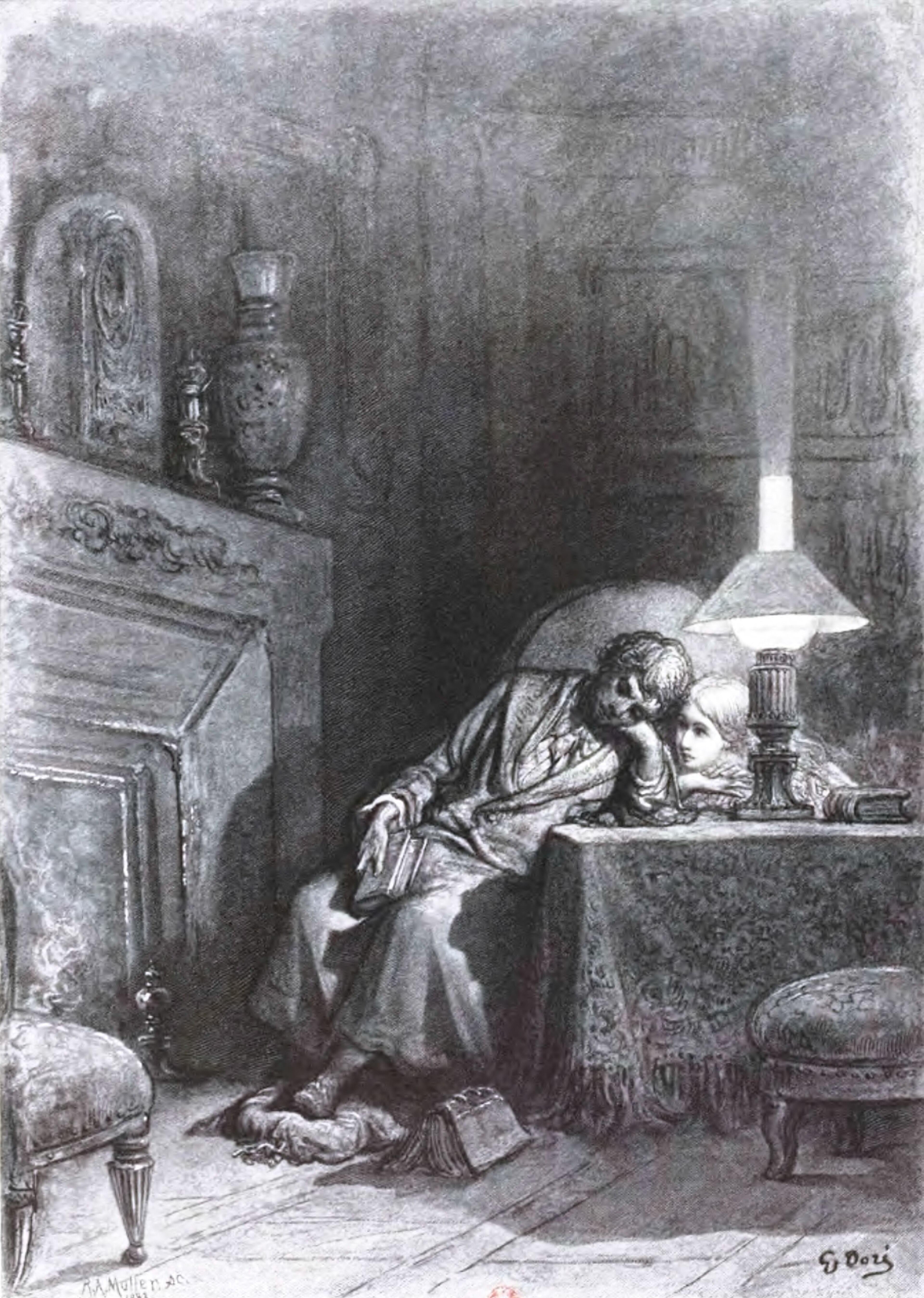
Once Upon a Midnight Dreary
Gustave Doré · 1884
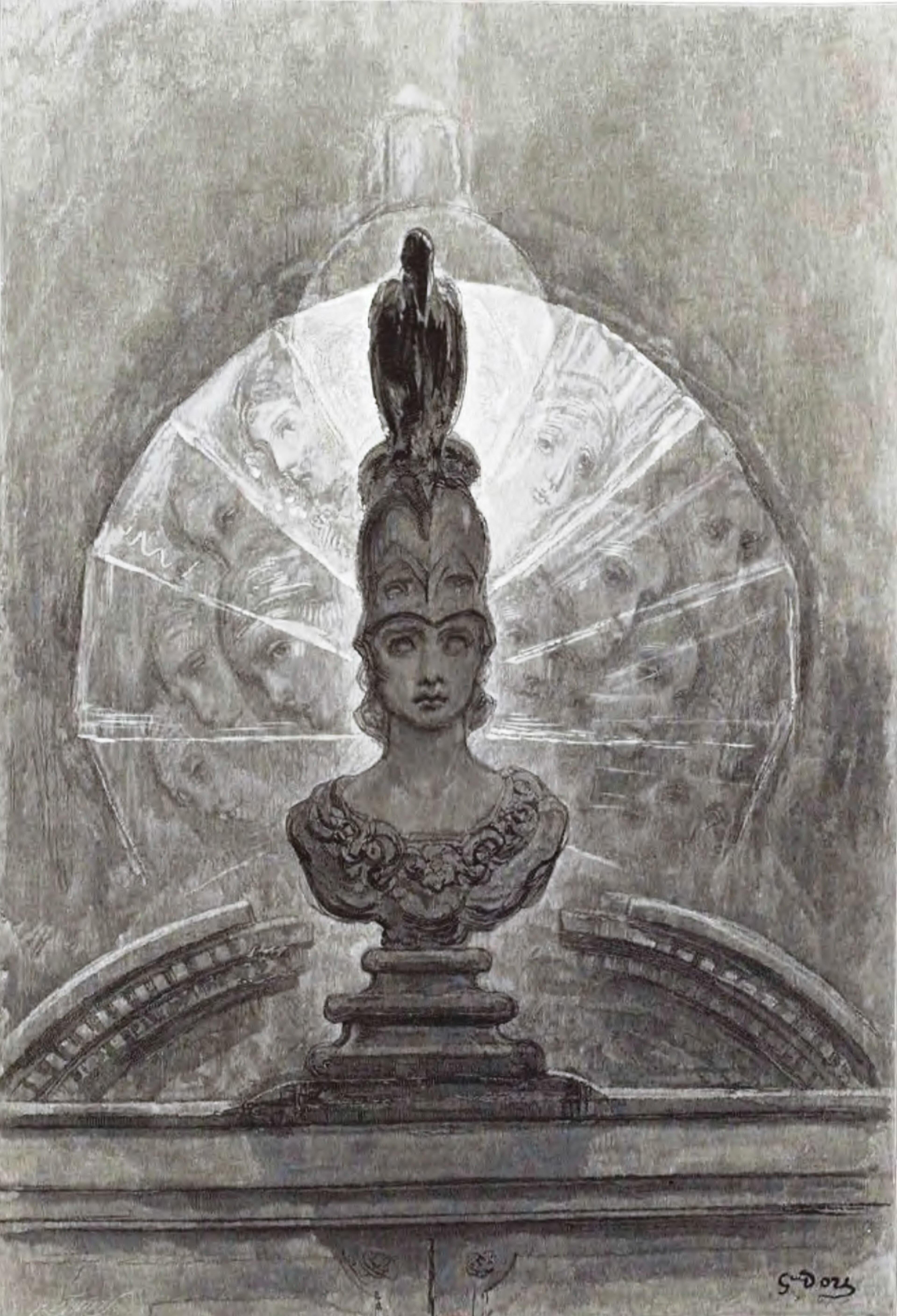
Perched Upon a Bust of Pallas
Gustave Doré · 1884
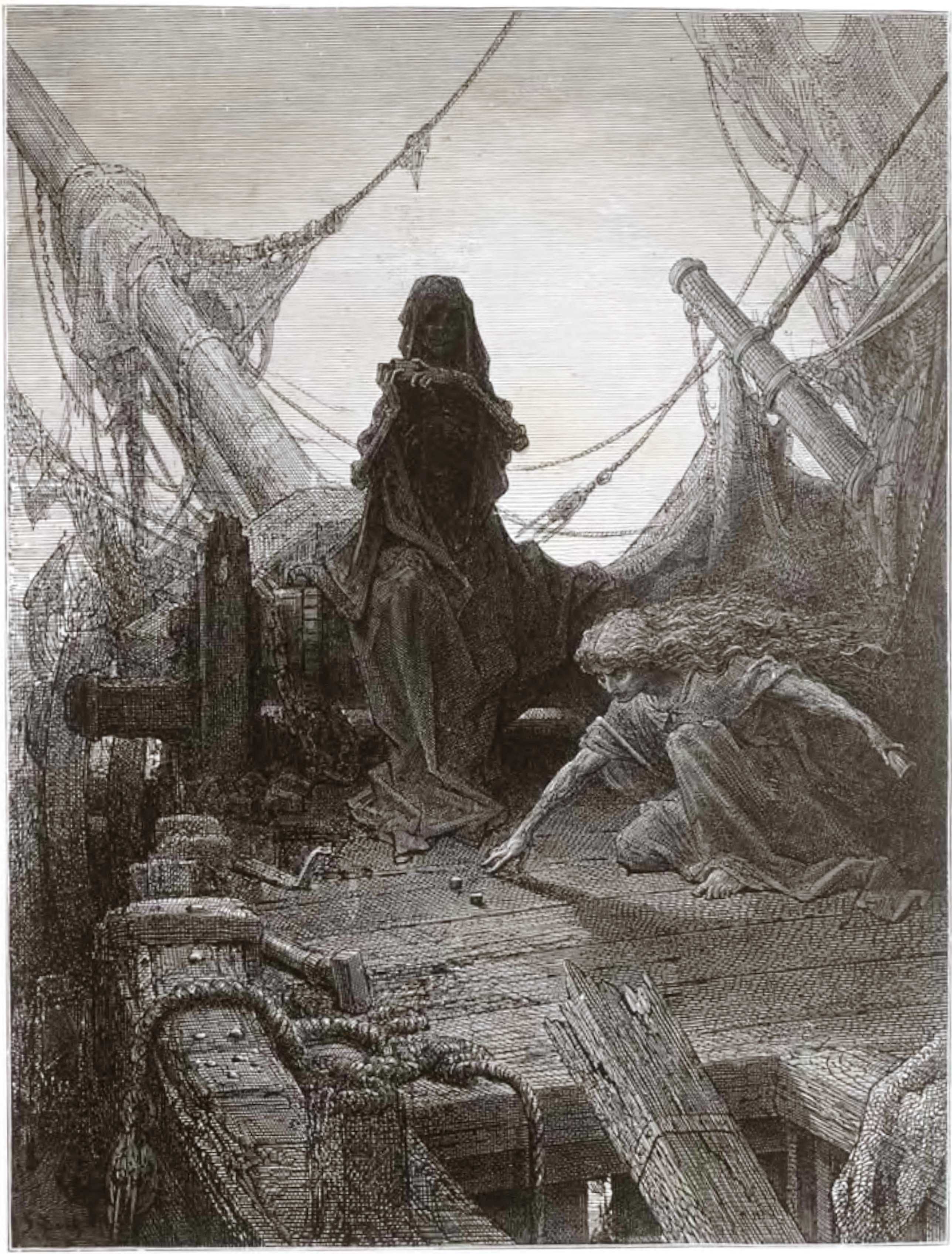
Death and Life-in-Death
Gustave Doré · 1876
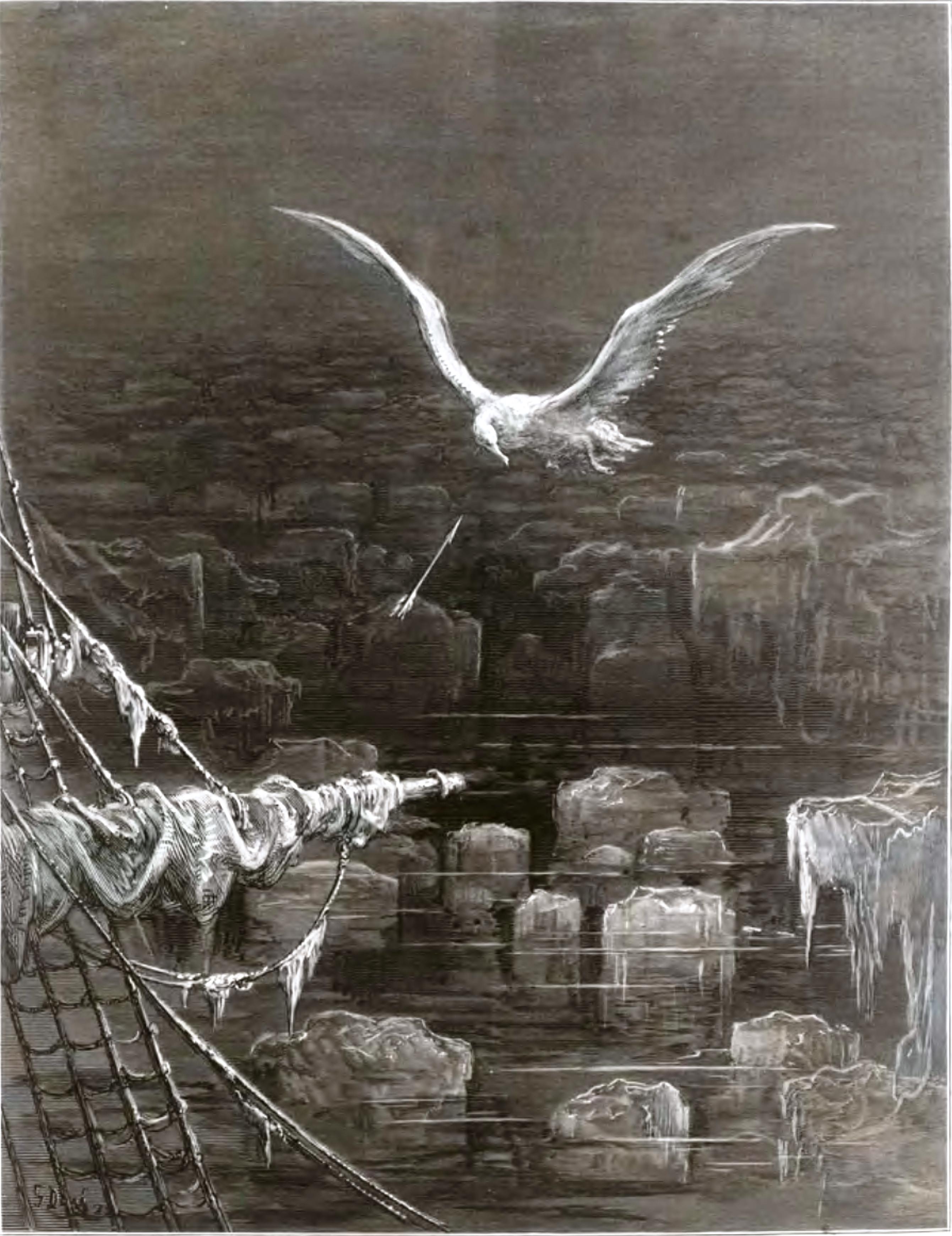
The Albatross
Gustave Doré · 1876
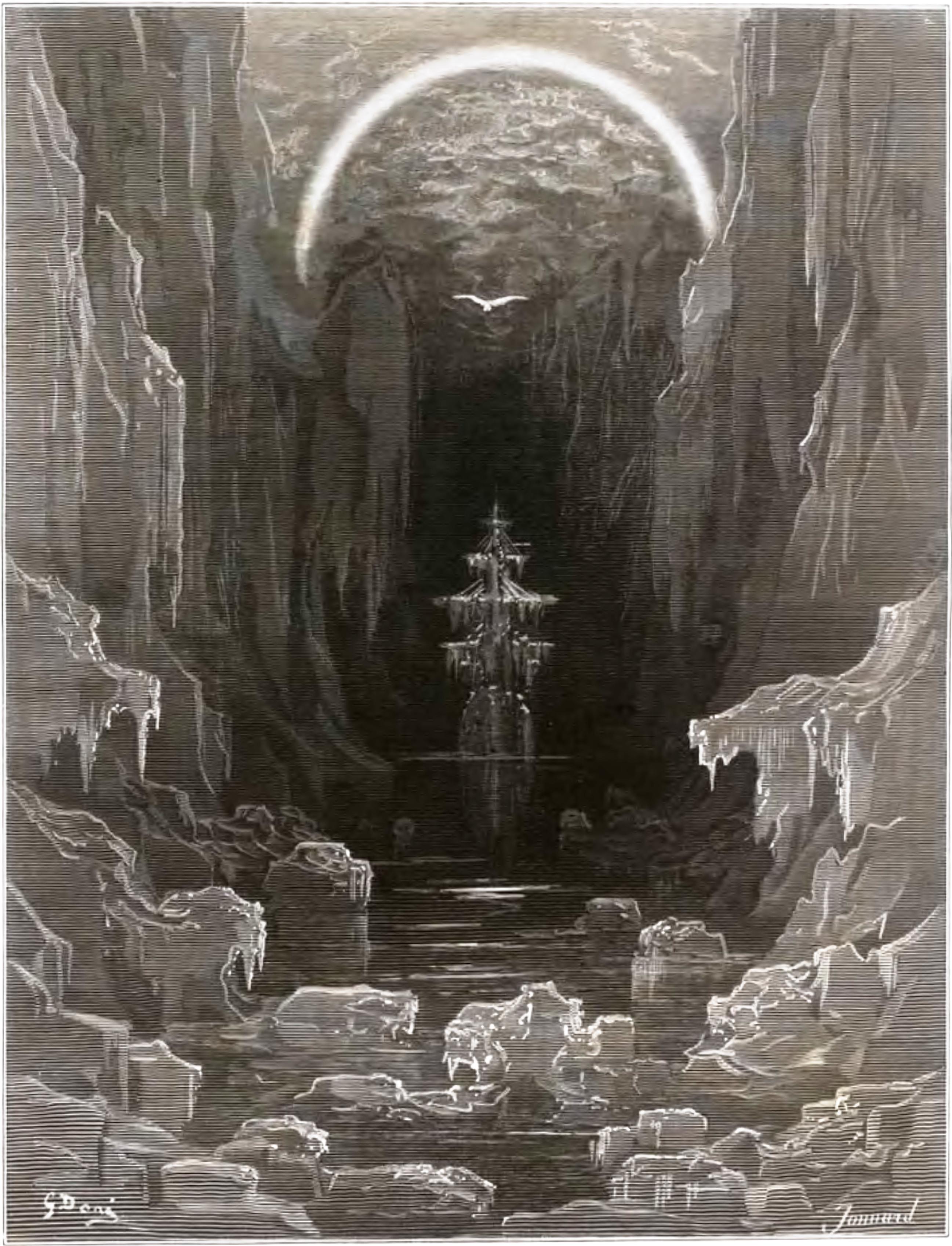
The Ship in the Ice
Gustave Doré · 1876
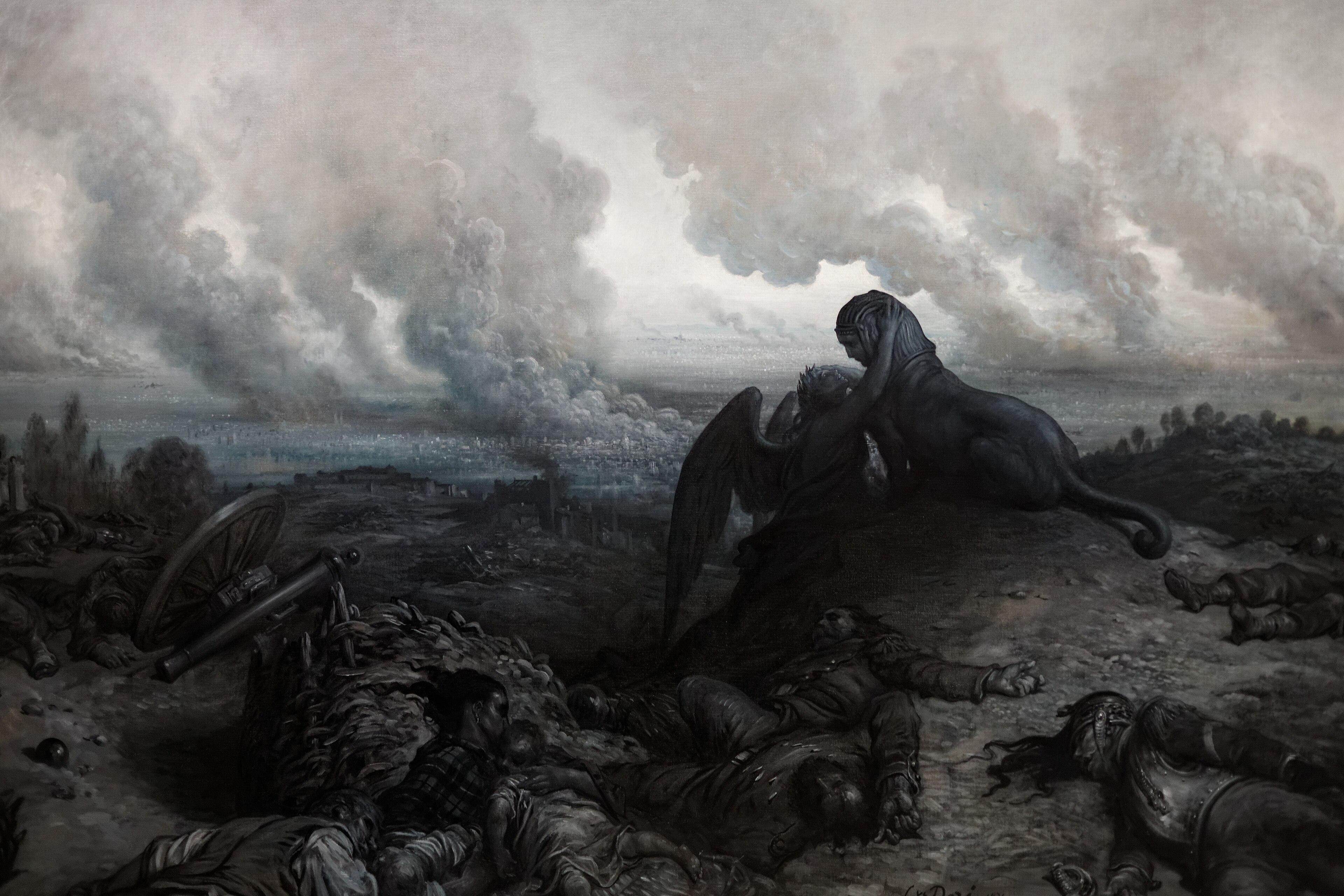
The Enigma
Gustave Doré · 1871
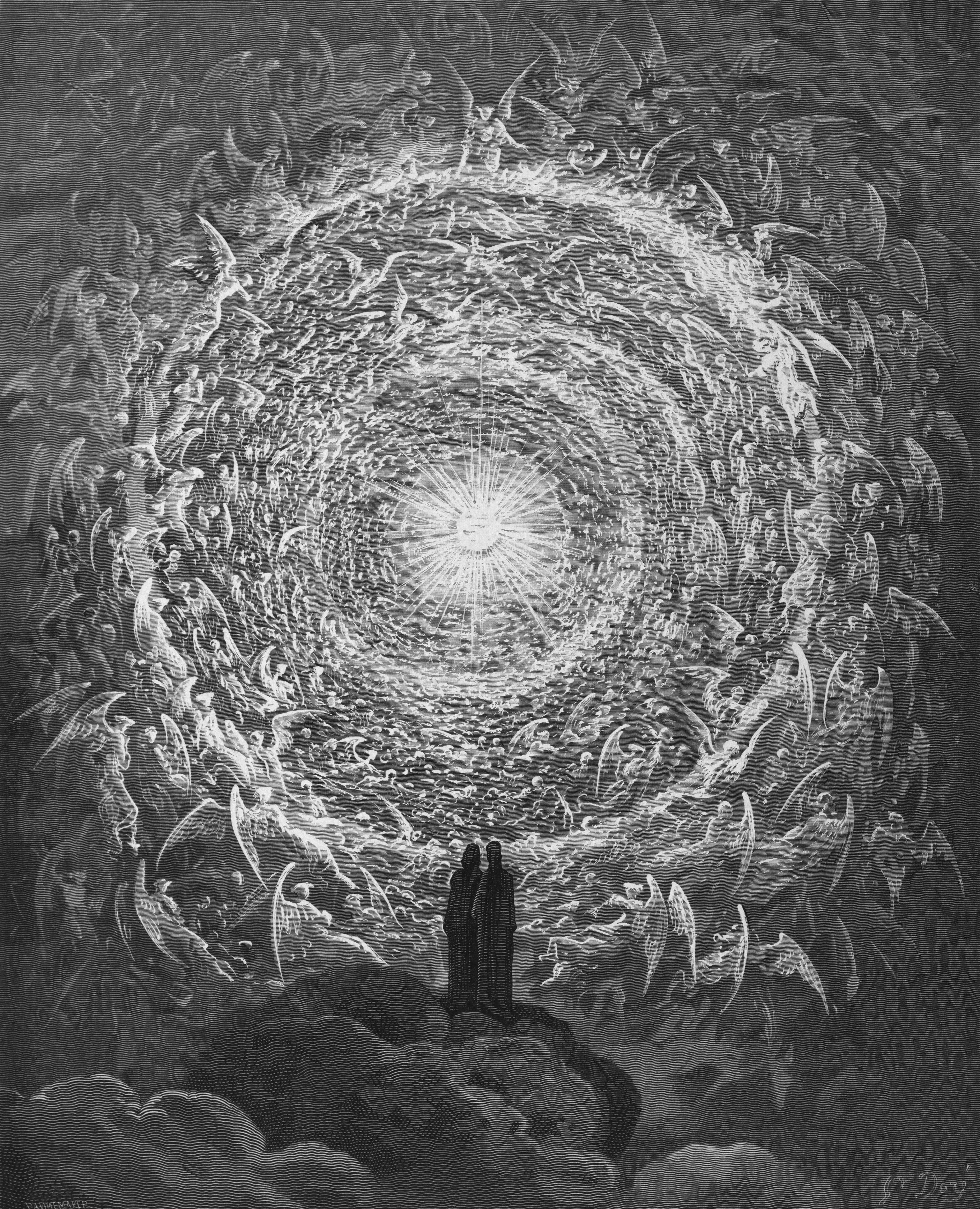
The Empyrean (Rosa Celeste)
Gustave Doré · 1868
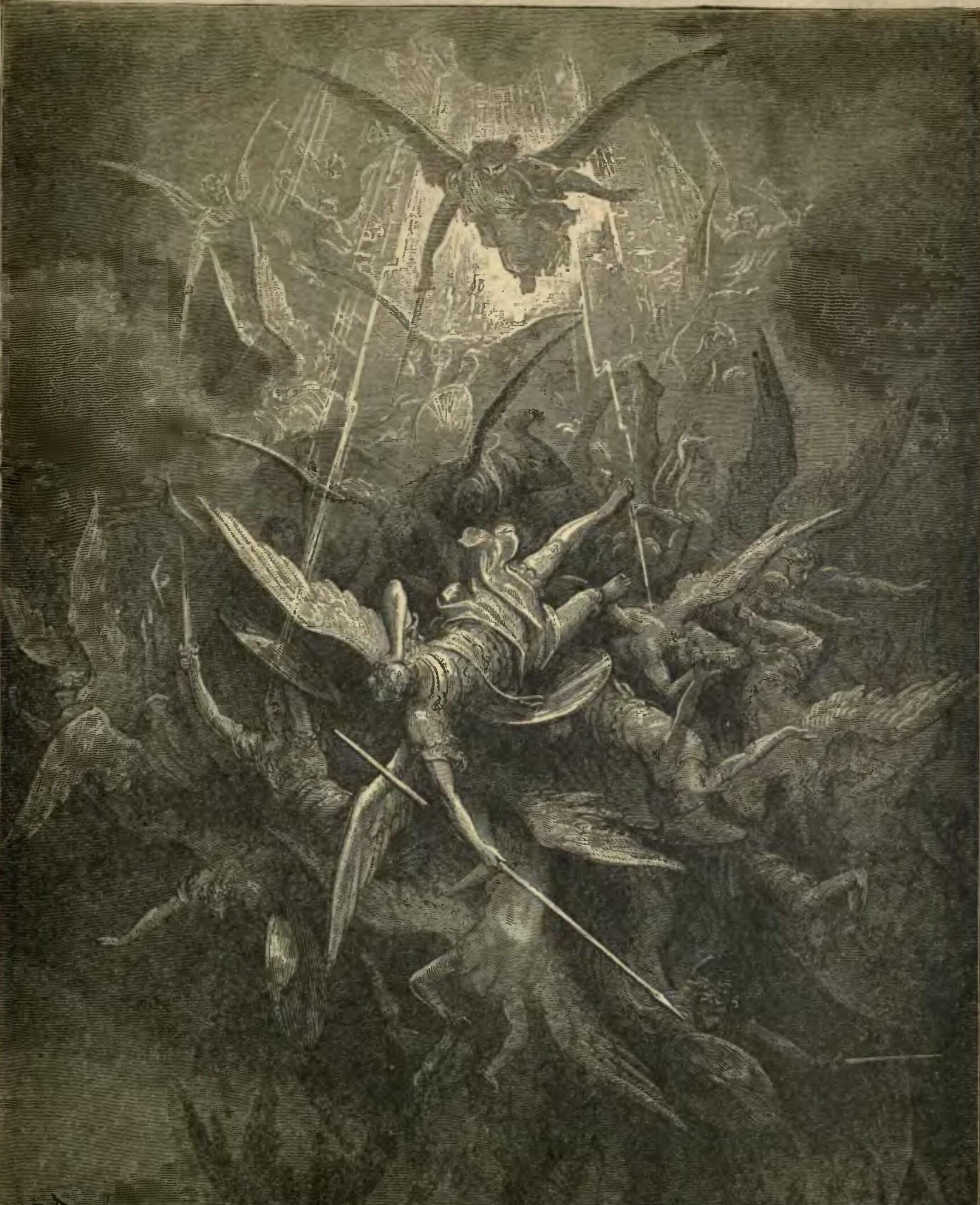
Satan Cast Out of Heaven
Gustave Doré · 1866
Related works
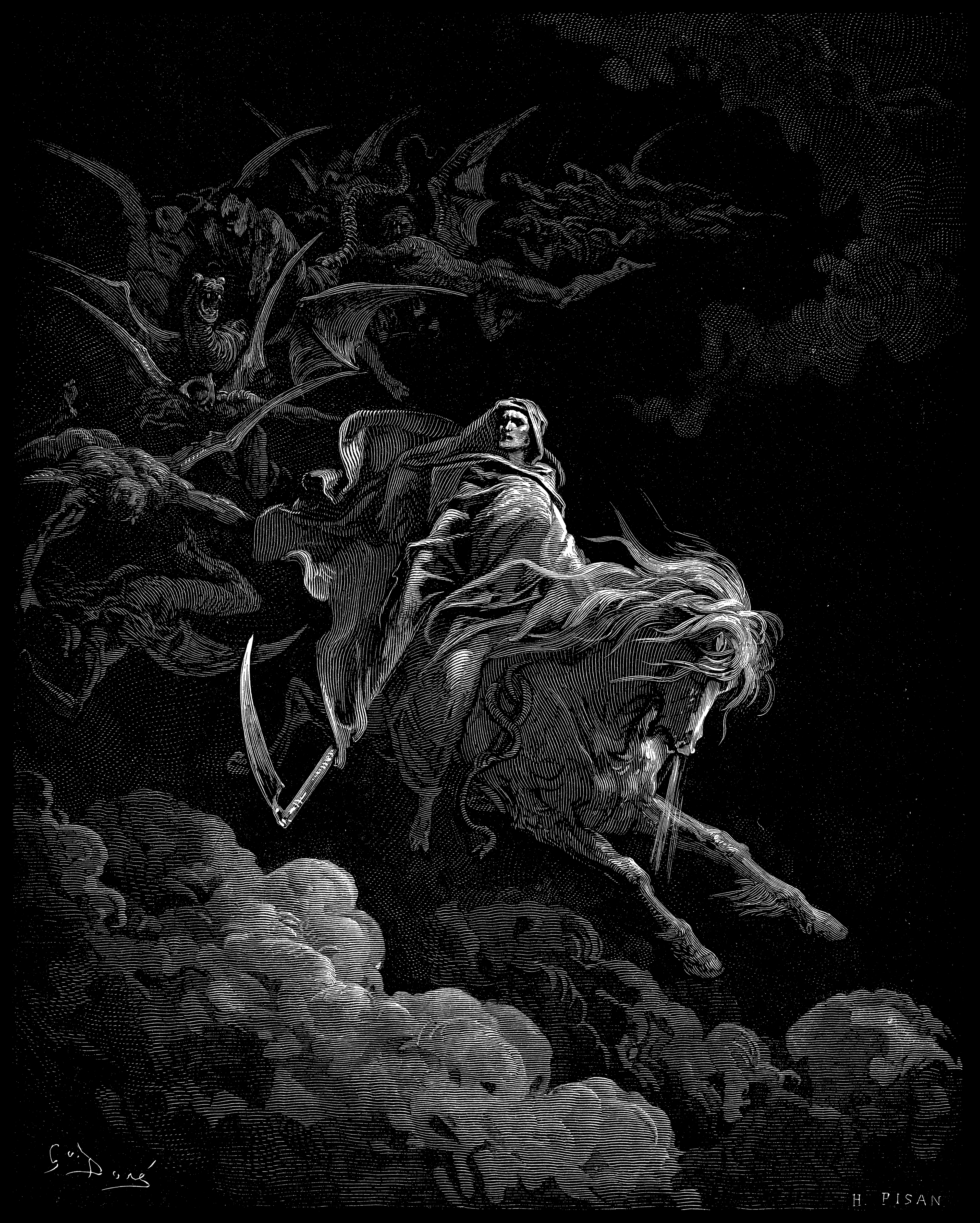
Death on the Pale Horse
Gustave Doré · 1866
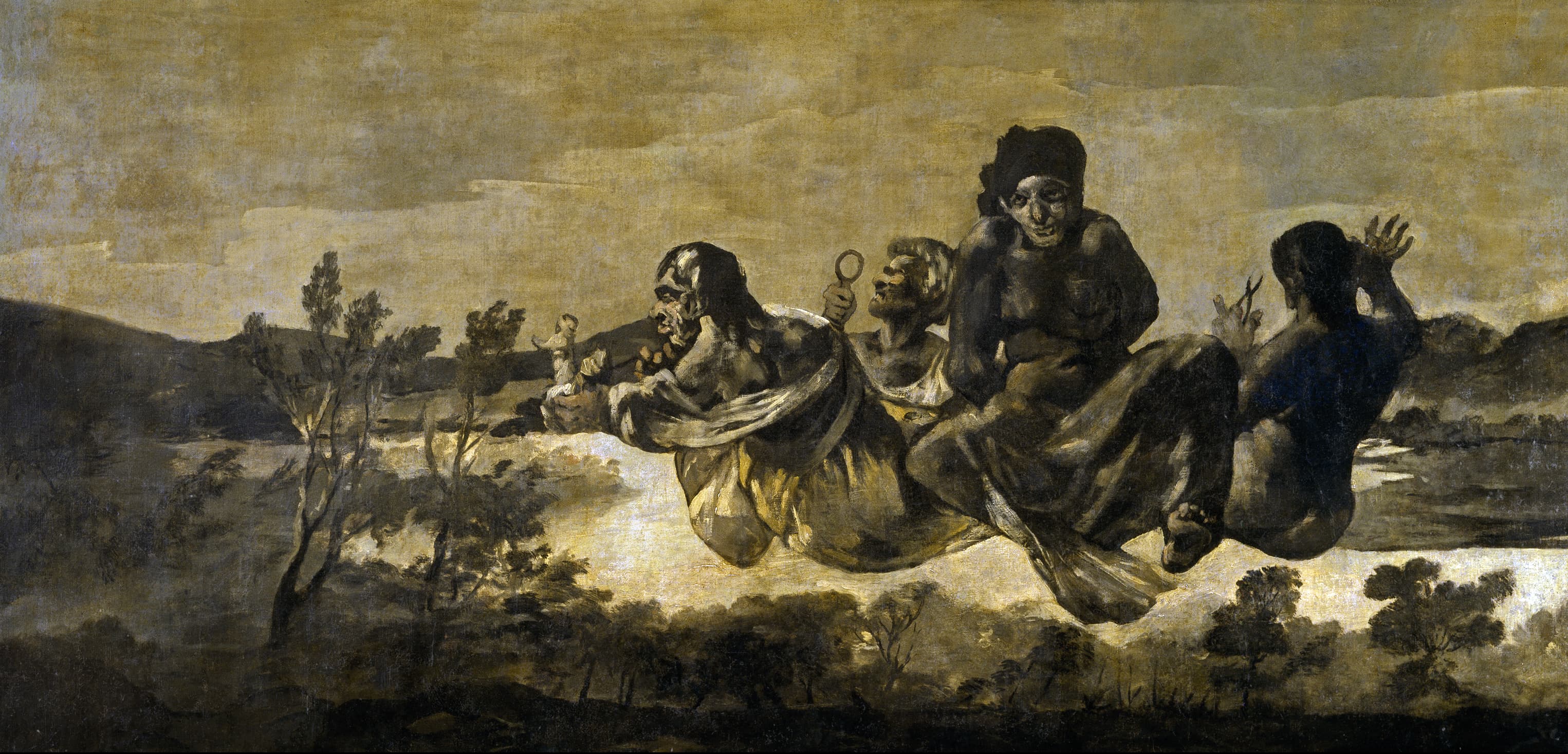
Atropos (The Fates)
Francisco Goya · c. 1819–1823
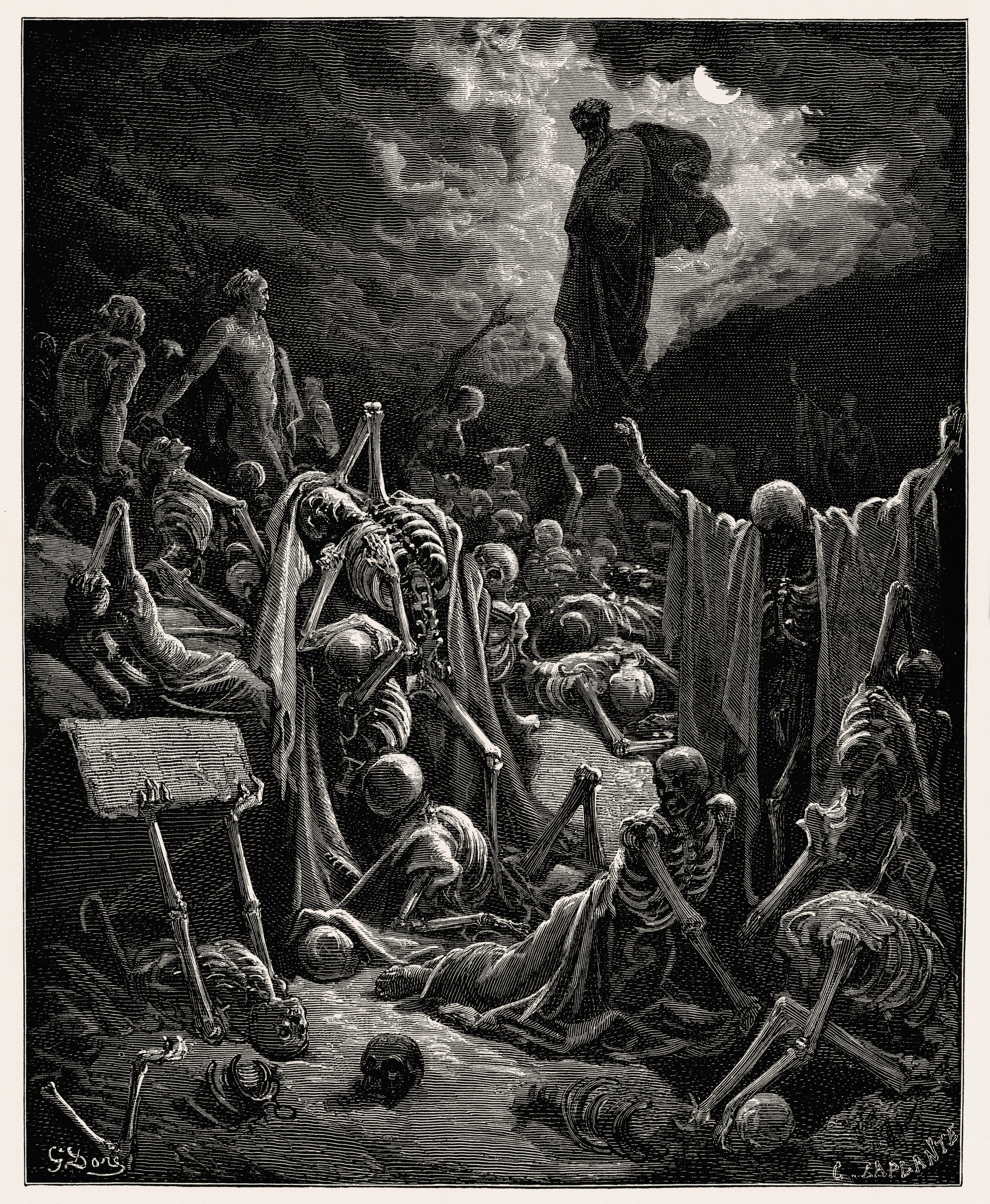
The Vision of the Valley of Dry Bones
Gustave Doré · 1866
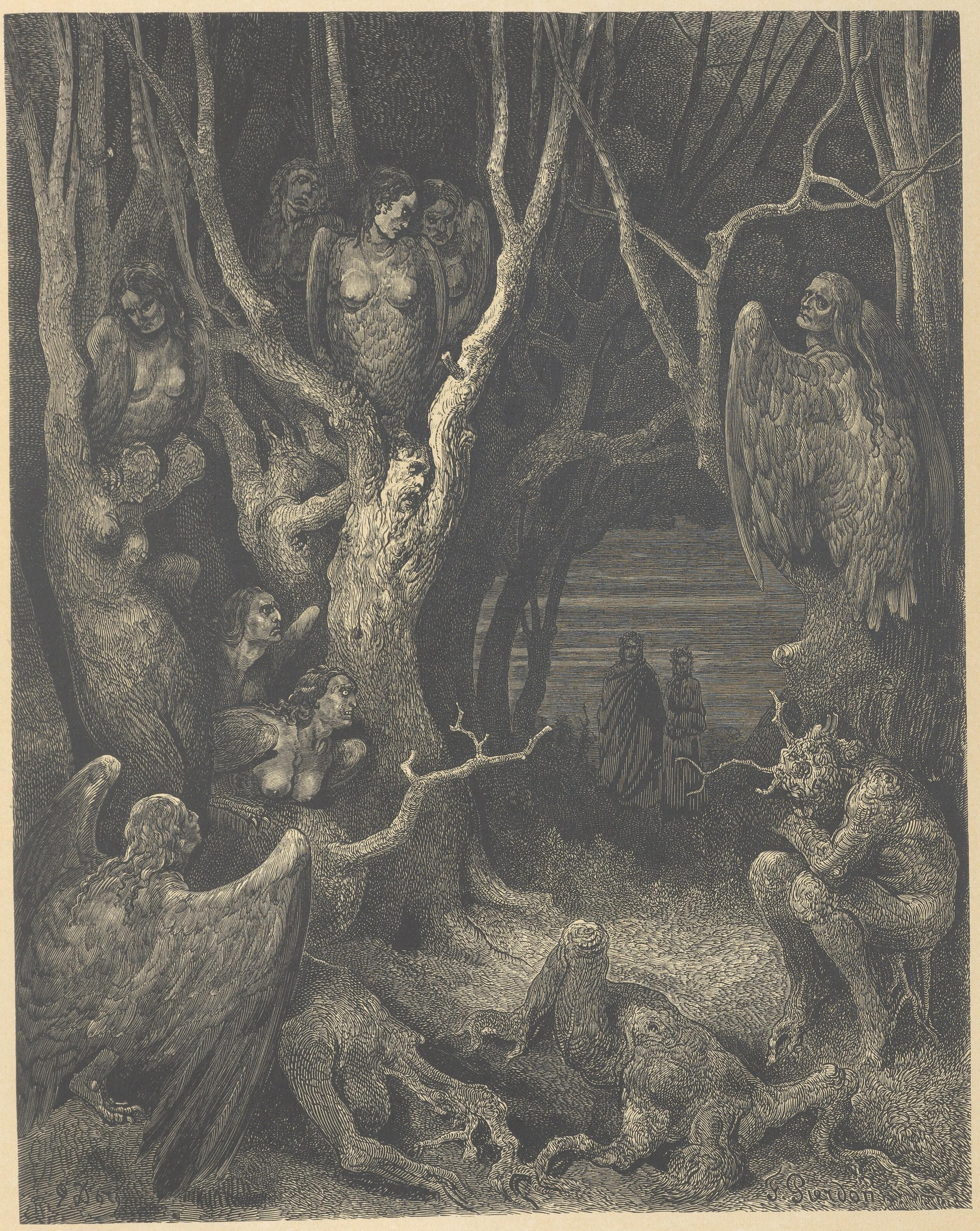
The Wood of the Suicides
Gustave Doré · 1861
The Dog
Francisco Goya · c. 1819–1823
Count Ugolino and His Sons
Gustave Doré · 1861
Dante Lost in the Dark Wood
Gustave Doré · 1861
Farinata degli Uberti
Gustave Doré · 1861