Image: Museo del Prado, Madrid · Public domain · via Wikimedia Commons
Romanticism
Atropos (The Fates)
Francisco Goya, c. 1819–1823
Atropos (The Fates) is one of Francisco Goya's Black Paintings, painted on a wall of his house outside Madrid around 1819–1823. It shows the three Fates and a bound man floating over a valley, and is now in the Prado.
- Artist
- Francisco Goya
- Date
- c. 1819–1823
- Medium
- Oil mural transferred to canvas
- Dimensions
- 123 × 266 cm
- Collection
- Museo del Prado, Madrid, Spain
- Movement
- Romanticism
What you're looking at
Four figures float in the air above a wide, dun-colored valley. They do not stand on anything. Their bodies are bundled together like a single dark cloud drifting from left to right, and beneath them a river or road catches a little pale light before the land fades into scrub and low hills.
Three of the figures are old women. The one on the left, a gaunt, hook-nosed crone, holds out a pair of scissors. Beside her a second woman raises a small round object to her eye, a lens or a hand mirror, and peers through it.
In the middle a broad, heavy figure with a dark headcloth looks straight out at us; on her lap, half lost in the paint, lies something small and pale that has been read as a doll or a newborn child. Behind them, at the right, a fourth figure twists away from us. Its arms are pulled behind its back, and it is usually described as a man whose hands are bound.
The palette is almost nothing: ocher, umber, black and a dirty white, with a single pinkish note in the faces. The figures are painted with the quick, scumbled strokes Goya used across the whole series, so that the edges of the women's skirts dissolve into the air around them.
What does Atropos (The Fates) mean?
The title points to classical myth. The three Fates, the Moirai of the Greeks and Parcae of the Romans, spun, measured and cut the thread of every human life: Clotho spun it, Lachesis measured its length and Atropos, "the one who cannot be turned," cut it. Goya's crone with the scissors is Atropos, which is why her name became the picture's main title. Lachesis appears to be the figure with the lens, as if measuring by looking, and Clotho, who would normally hold a distaff, cradles the small figure instead. Robert Hughes and others read that swap as Goya's way of turning the spinner of the thread into the bearer of life itself.
The bound man is not part of the classical trio, and he is the picture's real puzzle. One reading makes him humanity in general, carried along by forces it cannot resist. Another, which Hughes reports but treats as speculation, identifies him as Prometheus, punished by the gods for giving fire to mankind. Either way, the composition suggests a captive being ferried somewhere against his will by the powers that decide when he will die.
Goya was in his seventies when he painted it, had survived a near-fatal illness in 1819 and had been deaf for more than twenty-five years. It is hard not to read the scissors as personal. But Goya left no word about any of the Black Paintings, and the titles we use, Atropos and Las Parcas, were given after his death. What the picture meant to him is a matter of inference, not record.
How it was made
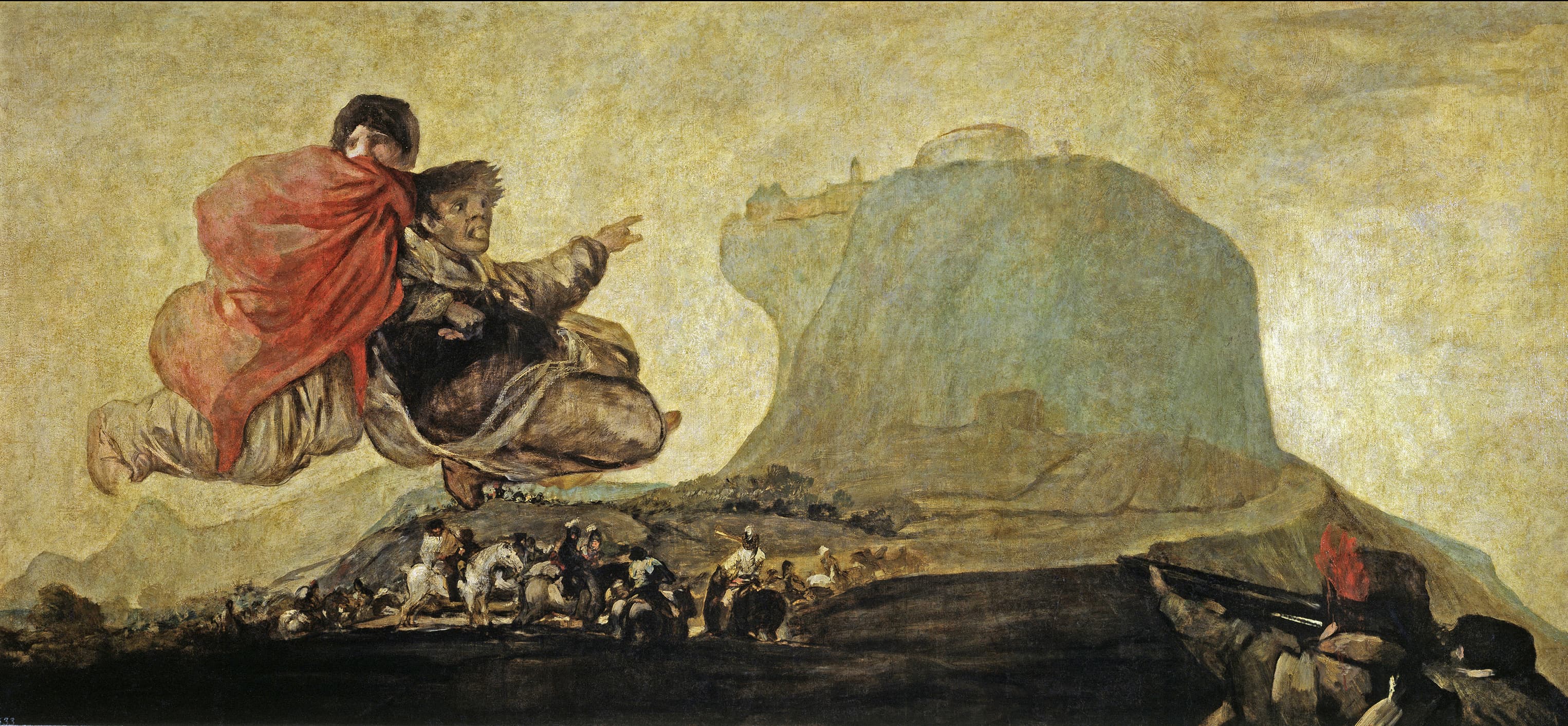
Like the rest of the Black Paintings, Atropos was painted in oil directly onto the plaster of a wall in the Quinta del Sordo, Goya's farmhouse on the west bank of the Manzanares outside Madrid. It belonged to the upper room of the house, where it is thought to have hung on the same wall as Fight with Cudgels, another long, low scene of figures set against an empty landscape. Across the room was Fantastic Vision (Asmodea), which repeats the motif of figures flying over open country.
The extreme width of the canvas, 123 by 266 cm, comes from the shape of the wall it was painted for. Goya seems to have laid the figures over an earlier, lighter landscape, a pattern scholars have found across the series, which helps explain why the valley below glows more warmly than the figures above it.
From the wall to the Prado
The murals stayed in the house after Goya left for France in 1824. In 1873 the Quinta was bought by the banker Baron Émile d'Erlanger, who had the paintings lifted from the walls and transferred to canvas under the Prado restorer Salvador Martínez Cubells in 1873–74. Transfer was rough on them: paint was lost, retouched and in places reinterpreted. D'Erlanger showed the series in Paris in 1878 and gave it to the Spanish state, which accepted the gift in 1881.
How Atropos fits the series
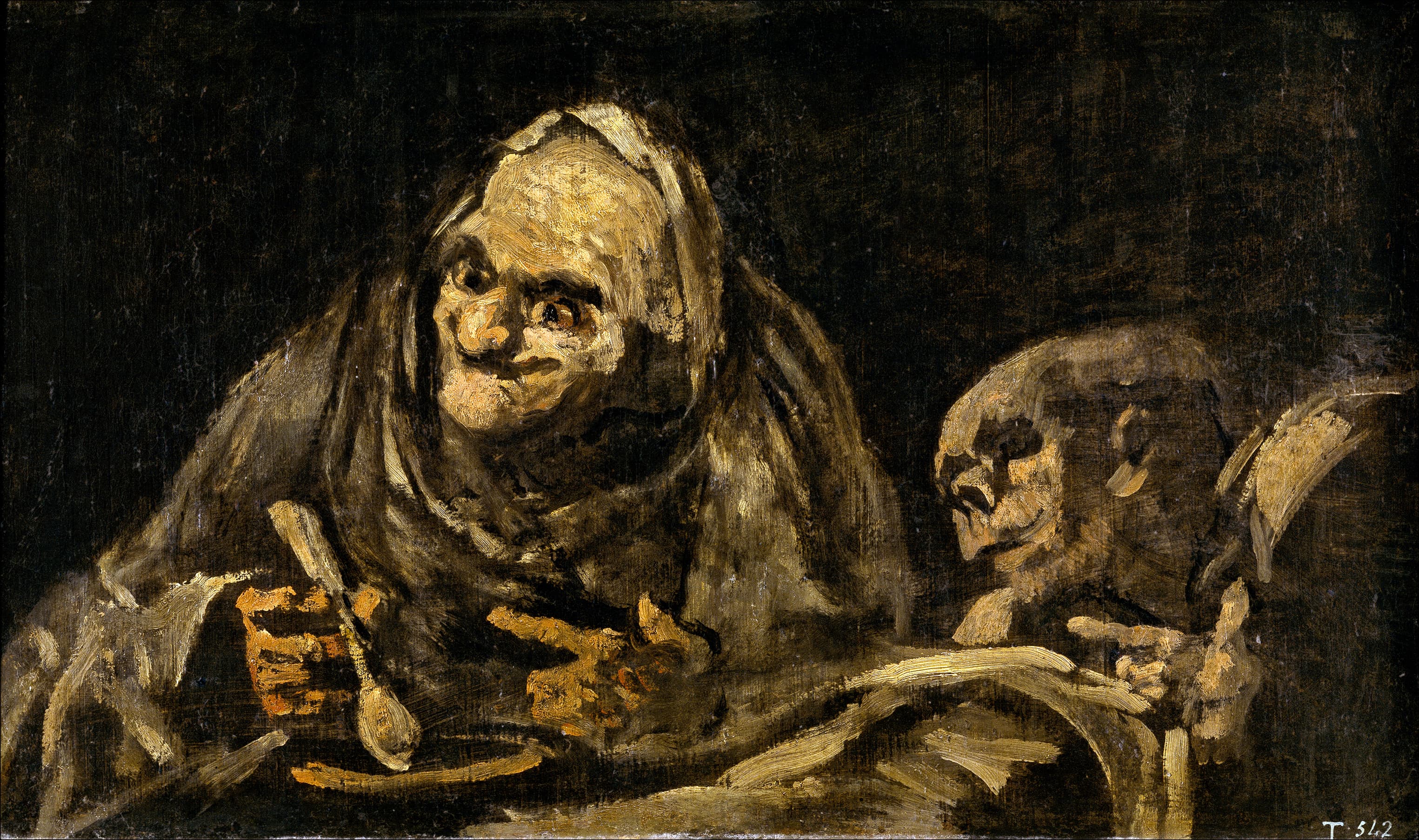
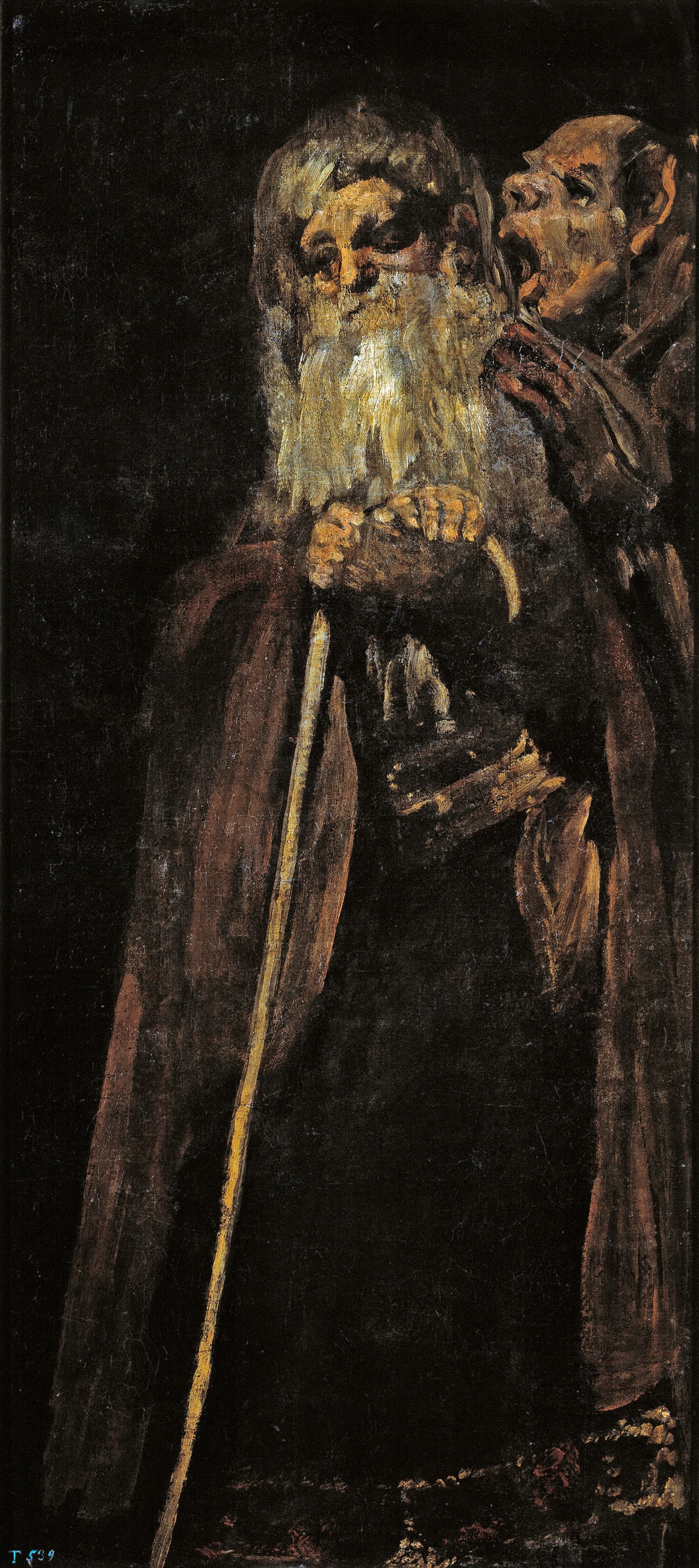
Seen alongside Saturn Devouring His Son, the most famous of the fourteen, Atropos is quieter but just as concerned with time and death. Saturn is the god who devours his children, a classical emblem of time consuming everything it creates. The Fates are the other face of the same idea: not an act of violence but a process, measured and cut with indifference. Elsewhere in the house, the toothless figures of Two Old Men Eating Soup and the bent, bearded figure of Two Old Men bring the same theme down to the scale of ordinary old age.
The detail most viewers miss is the scale shift. The figures are enormous relative to the landscape; the trees below them are no bigger than the crone's hand. Goya gives the Fates the scale of weather.
Where to see Atropos (The Fates) today
Atropos hangs with the other Black Paintings in a dedicated room on the ground floor of the Museo del Prado in Madrid. It is catalogued there as Átropos o Las Parcas. Because the paintings were transferred and heavily restored, photographs taken by Jean Laurent around 1874, before the transfer, remain an important record of how they looked on the walls.
Questions & answers
Who are the figures in Goya's Atropos (The Fates)?
Three of the figures are the Fates of classical myth. Atropos, at left, holds the scissors that cut the thread of life; Lachesis looks through a lens or mirror; Clotho holds a small figure, often read as a doll or newborn, instead of a distaff. The fourth figure, at right, appears to be a man with his hands tied behind his back.
Where is Atropos (The Fates) by Goya?
It is in the Museo del Prado in Madrid, where it hangs with the other Black Paintings. Goya painted it on a wall of his house, the Quinta del Sordo, and it was transferred to canvas in 1873–74. Baron Émile d'Erlanger gave the series to the Spanish state, which accepted it in 1881.
What does Goya's painting of the Fates mean?
Goya left no explanation. The Fates traditionally control the length of every human life, so the picture is widely read as a meditation on fate and death, painted by an old, deaf artist who had recently survived a serious illness. The bound man may stand for humanity's helplessness; some writers have suggested Prometheus.
Who named the painting Atropos?
Not Goya. He gave the Black Paintings no titles. The names Atropos and Las Parcas (The Fates) were applied after his death, in inventories and catalogues, and the Prado now uses Átropos o Las Parcas.
How big is Atropos (The Fates)?
The canvas measures 123 by 266 cm, more than twice as wide as it is tall. The format comes from the wall of the upper room of the Quinta del Sordo where Goya painted it, which it probably shared with Fight with Cudgels.
More by the artist
Francisco Goya

Saturn Devouring His Son
Francisco Goya · c. 1819–1823
The Third of May 1808
Francisco Goya · 1814
The Sleep of Reason Produces Monsters
Francisco Goya · 1797–99 (published 1799)
Fantastic Vision (Asmodea)
Francisco Goya · c. 1819–1823
La Leocadia
Francisco Goya · c. 1819–1823
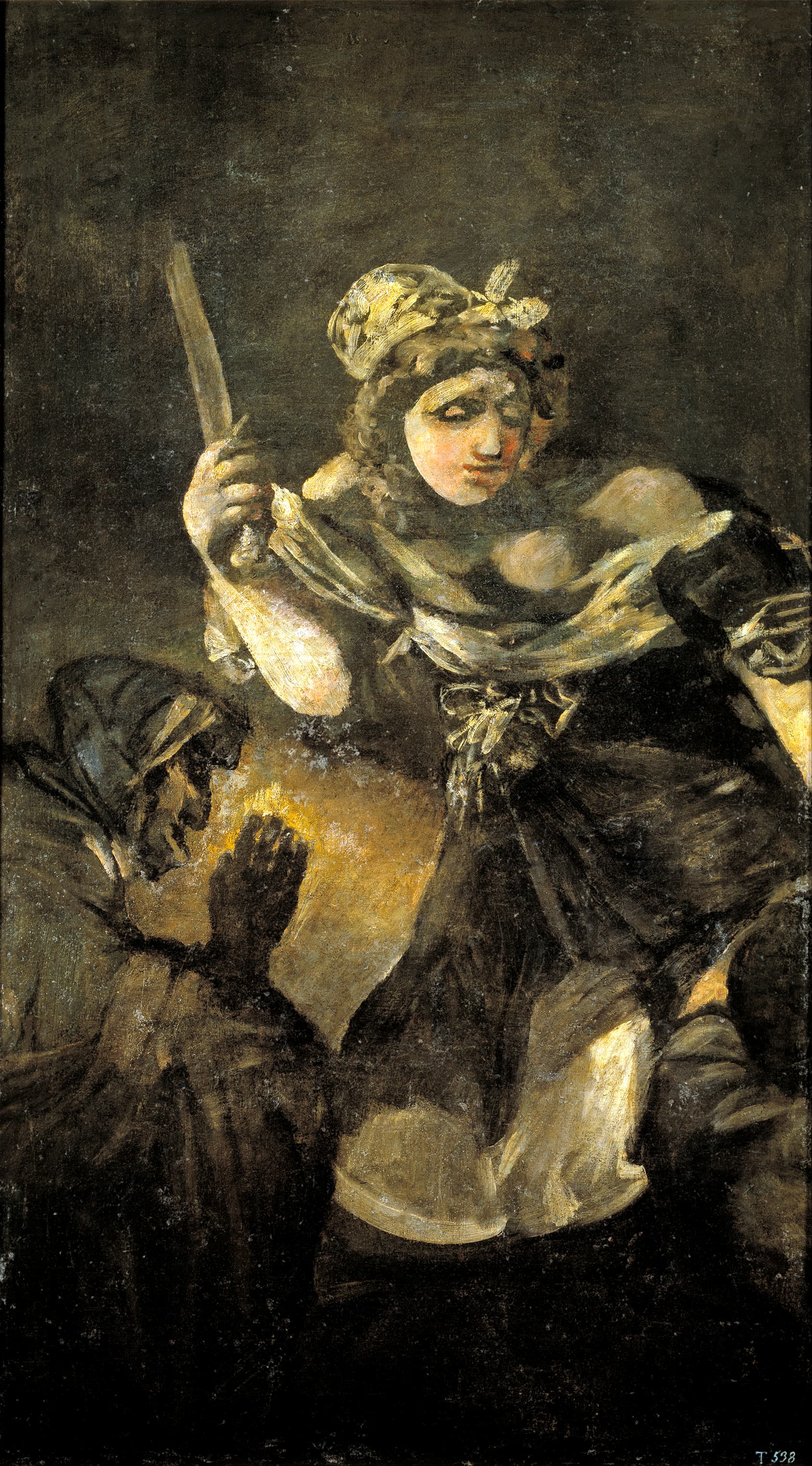
Judith and Holofernes
Francisco Goya · c. 1819–1823
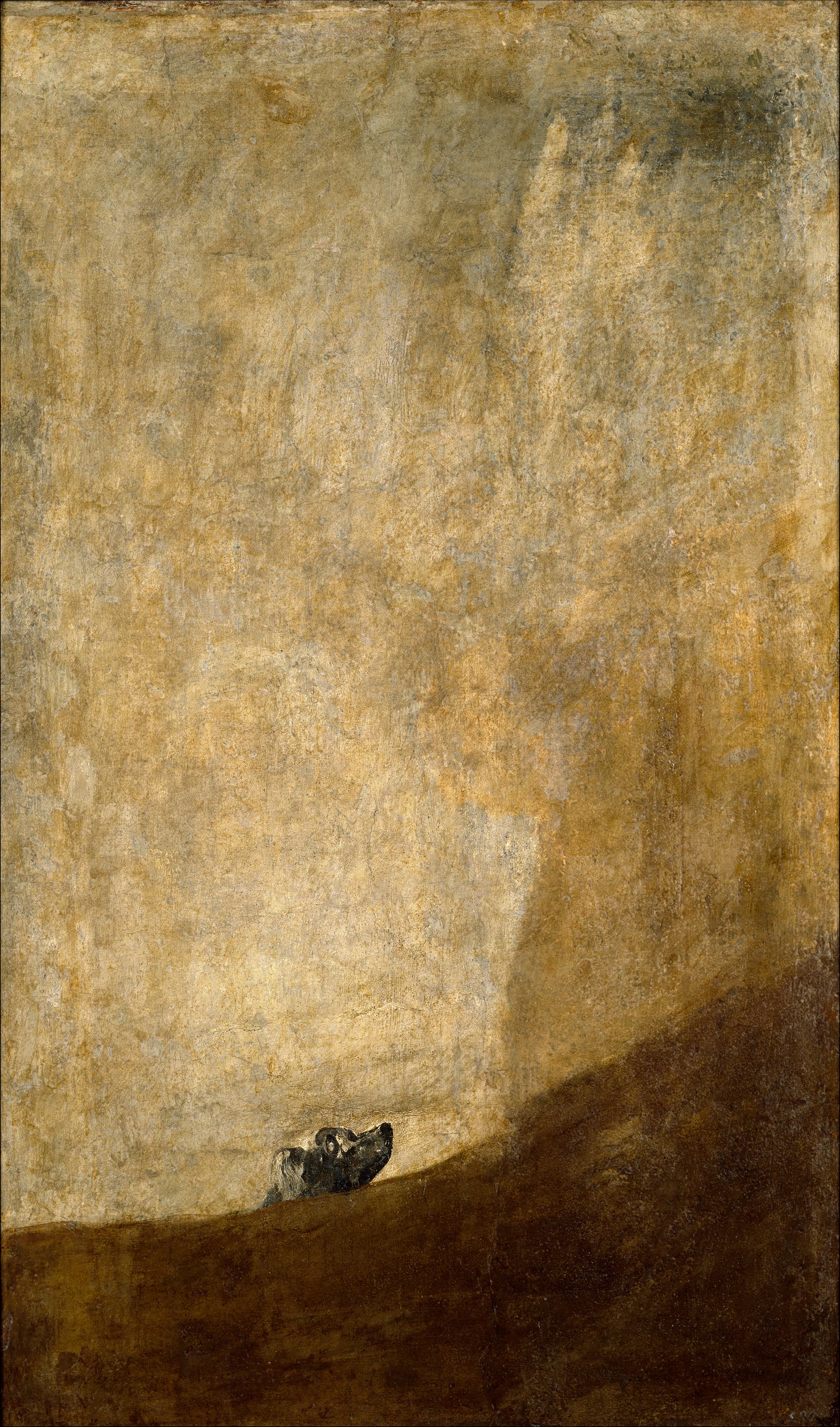
The Dog
Francisco Goya · c. 1819–1823
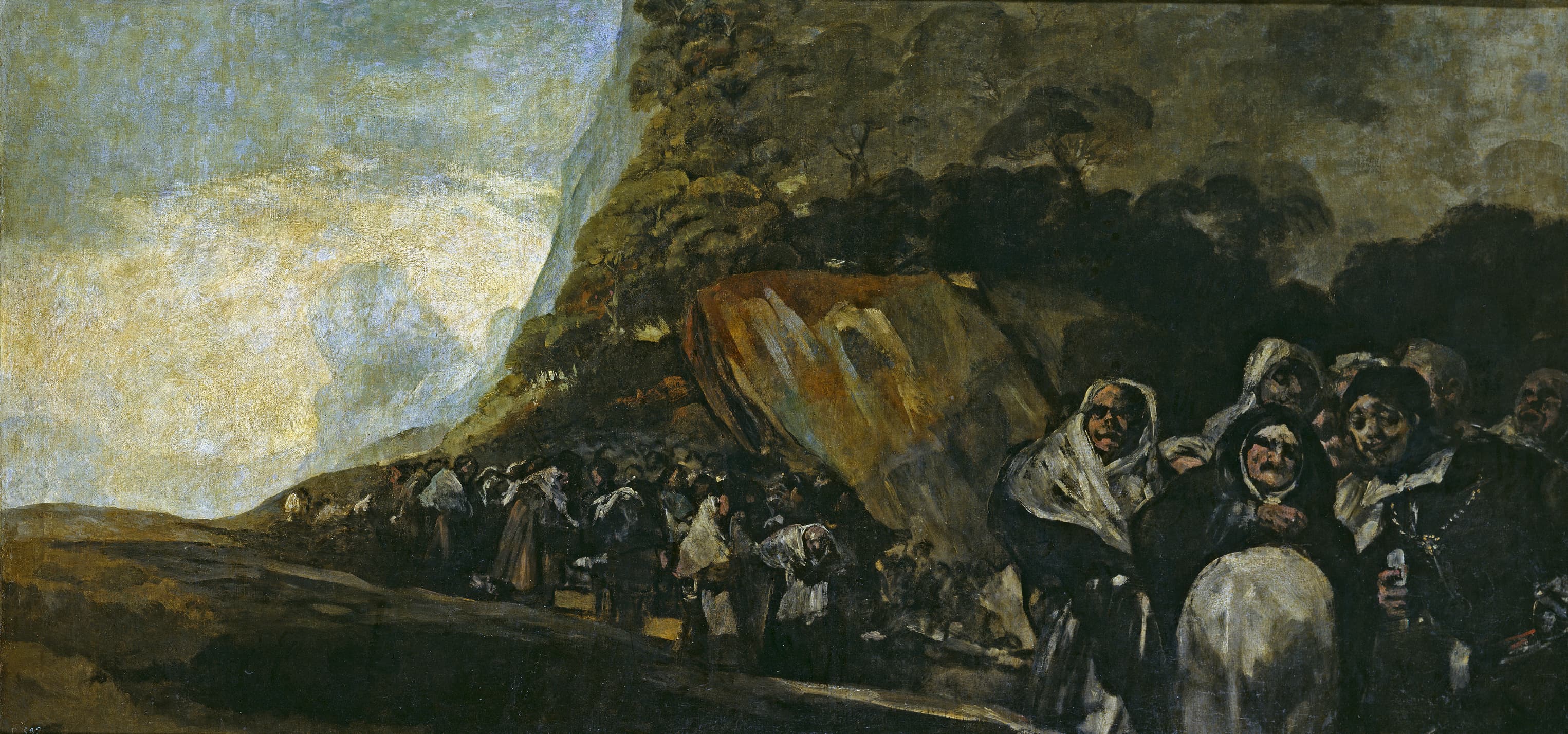
The Holy Office (Pilgrimage to the Fountain of San Isidro)
Francisco Goya · c. 1819–1823
Also painted in 1820
The same year
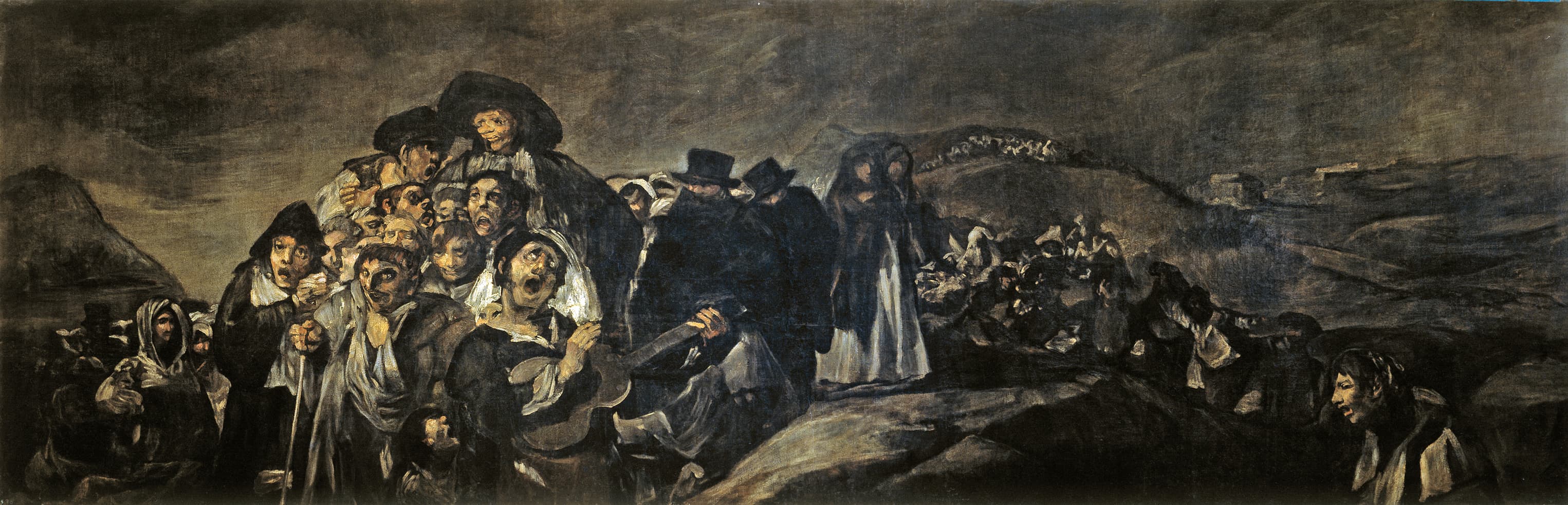
A Pilgrimage to San Isidro
Francisco Goya · c. 1819–1823
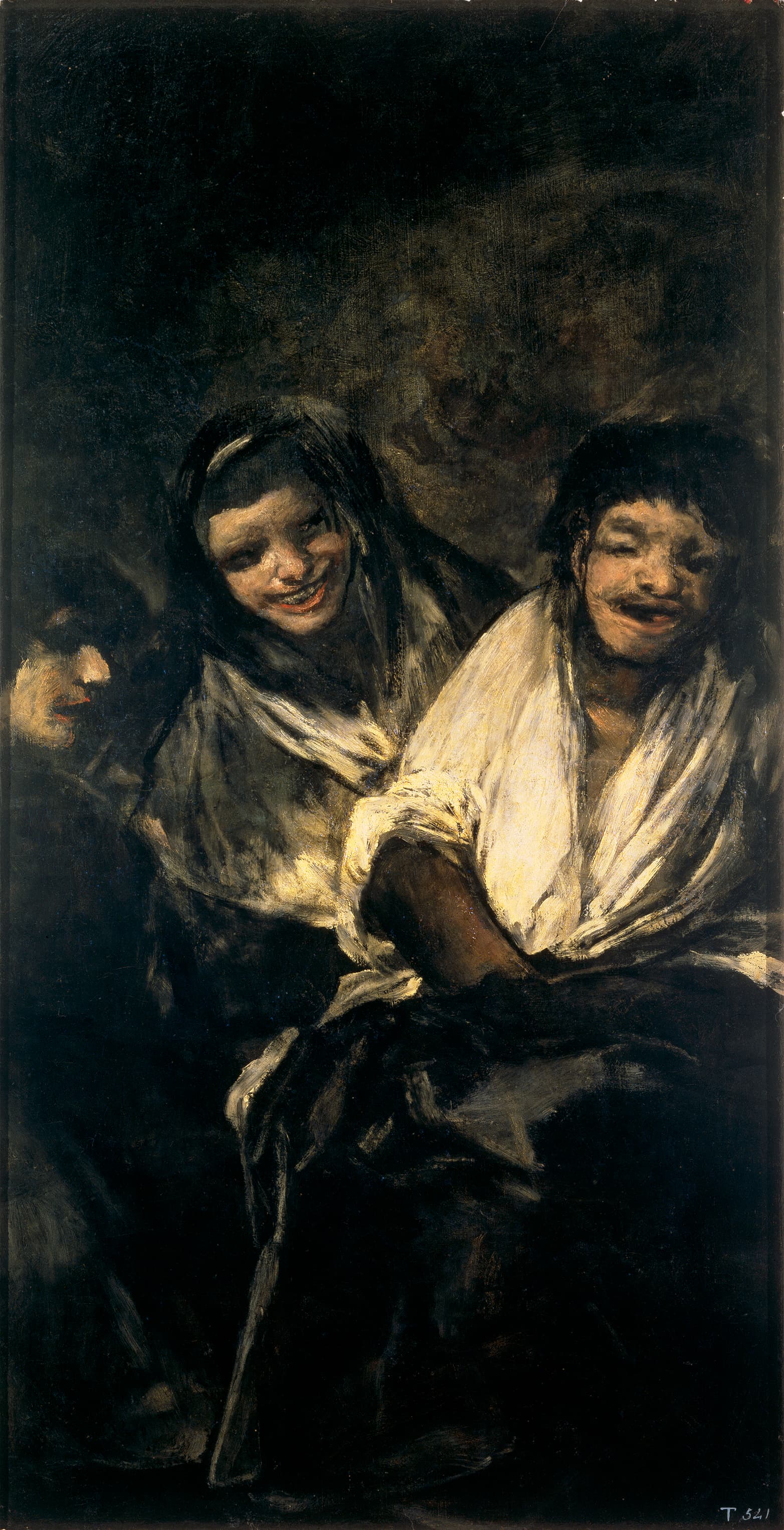
Women Laughing
Francisco Goya · c. 1819–1823
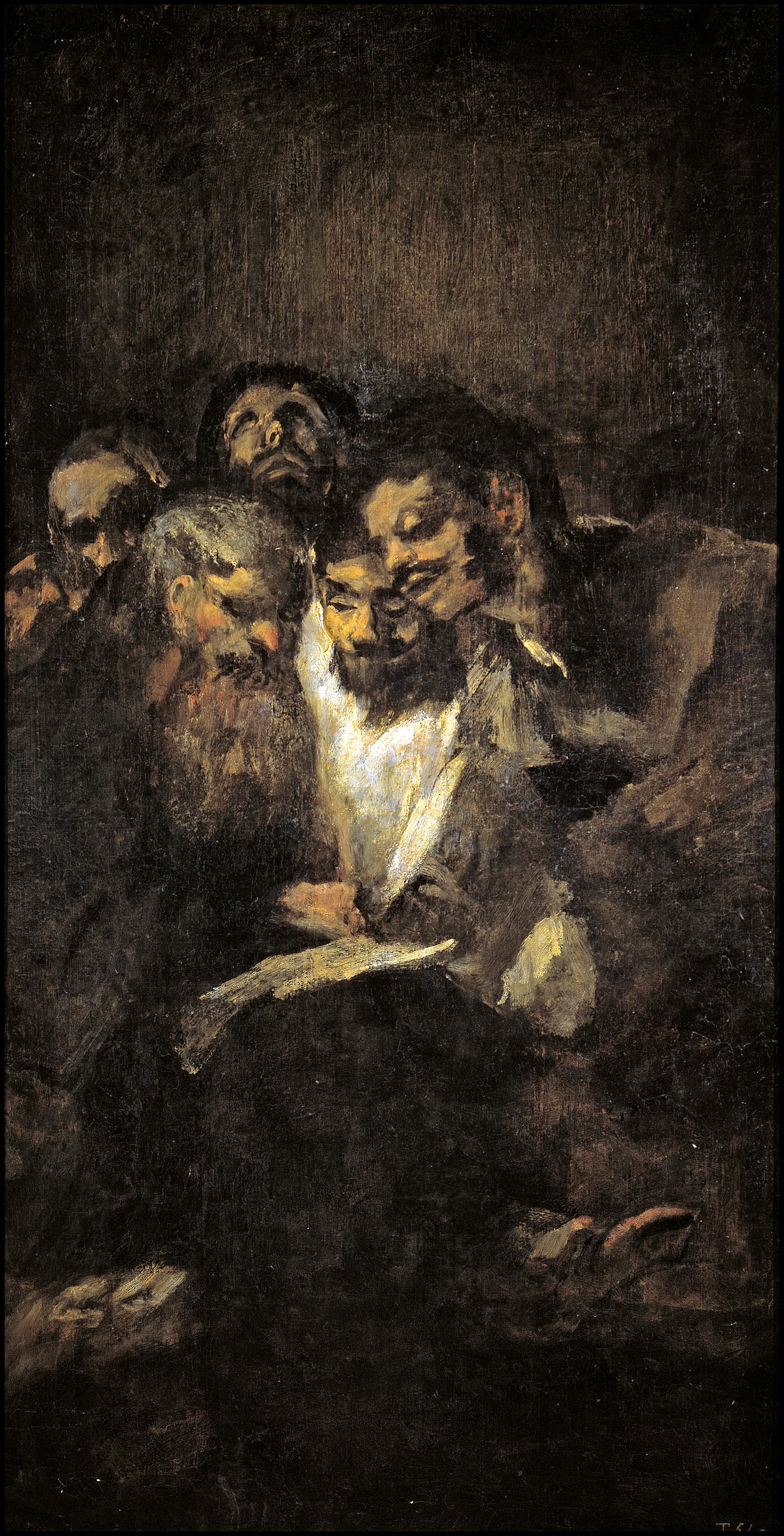
Men Reading
Francisco Goya · c. 1819–1823
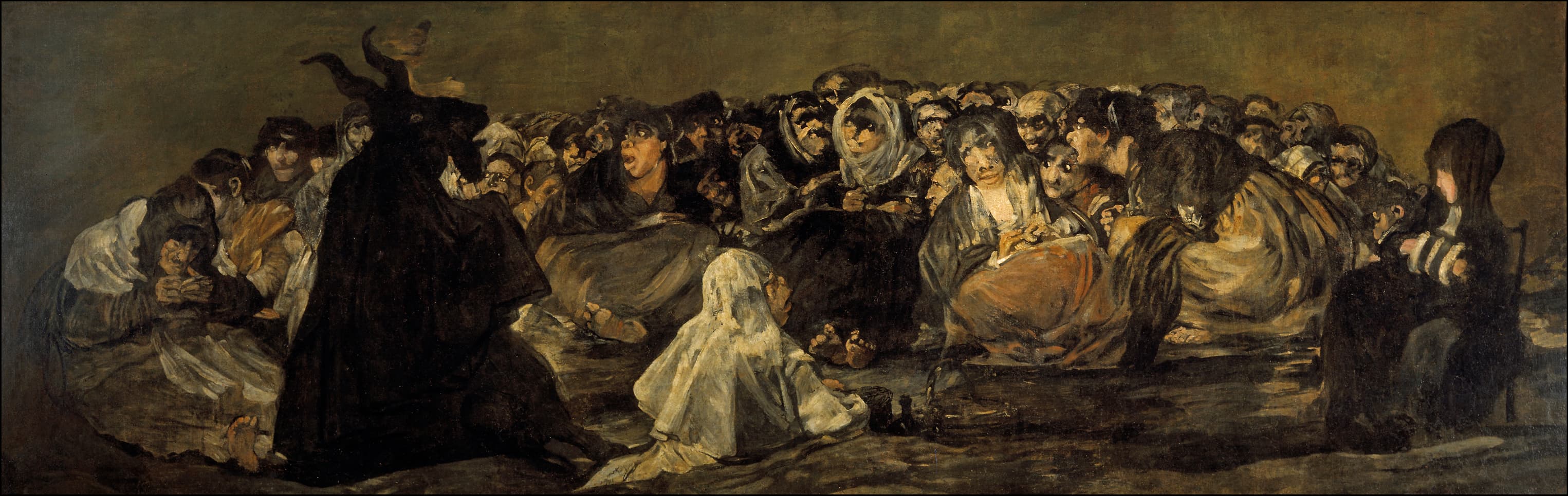
Witches' Sabbath (The Great He-Goat)
Francisco Goya · c. 1819–1823
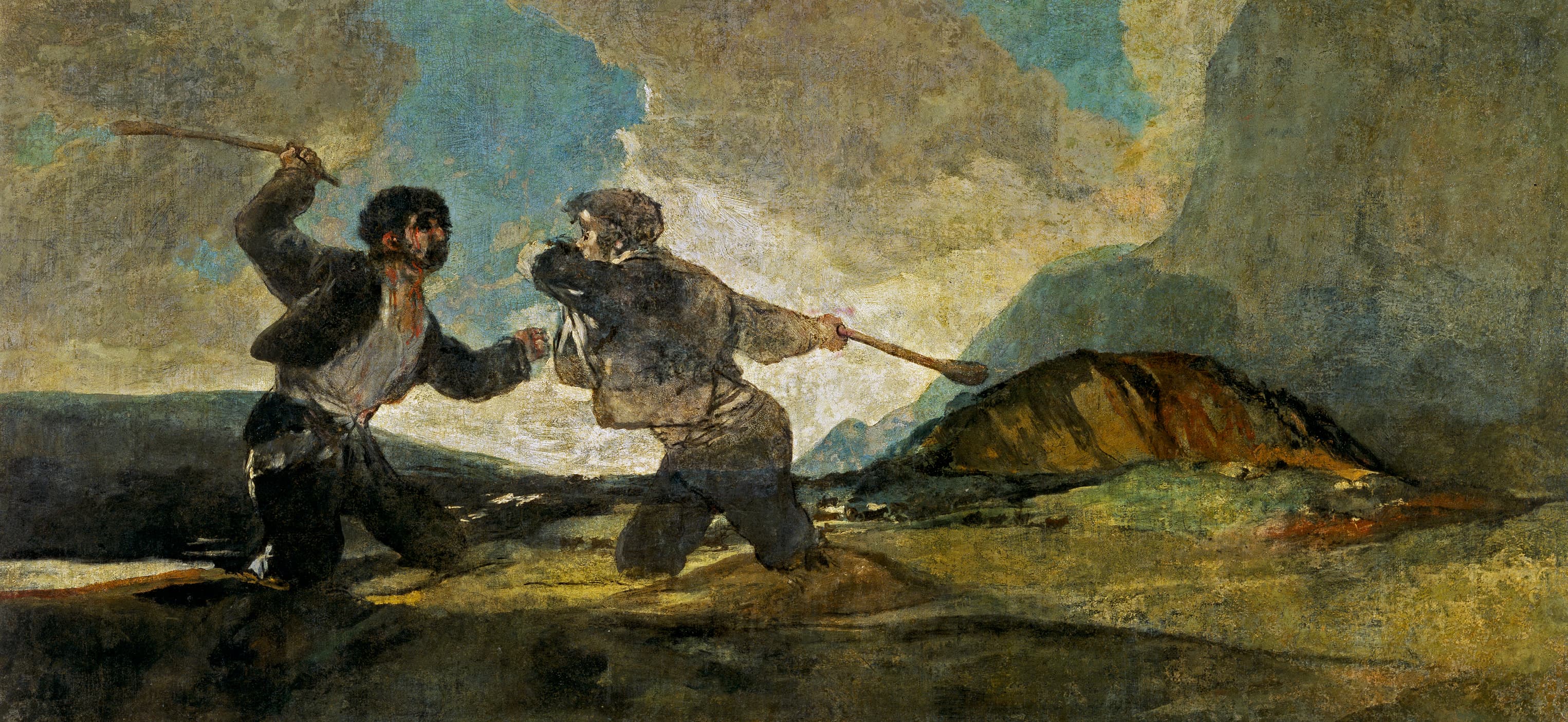
Fight with Cudgels
Francisco Goya · c. 1819–1823
Two Old Men Eating Soup
Francisco Goya · c. 1819–1823
Two Old Men
Francisco Goya · c. 1819–1823
Kindred works
You may also study
Fight with Cudgels
Francisco Goya · c. 1819–1823
Two Old Men
Francisco Goya · c. 1819–1823
Witches' Sabbath (The Great He-Goat)
Francisco Goya · c. 1819–1823

Venus de Milo
Alexandros of Antioch · c. 150–125 BC

Nymphs Dancing to Pan's Flute
Joseph Tomanek

The Scream
Edvard Munch · 1893
The Thinker
Auguste Rodin · Modeled 1880–82; enlarged 1902–03; this cast 1904

Ophelia
John Everett Millais · 1851–52