Once Upon a Midnight Dreary
Gustave Doré, 1884
Once Upon a Midnight Dreary is Gustave Doré's opening plate for Edgar Allan Poe's The Raven, published after his death in 1883–84: a scholar dozes over his books by lamplight while a pale girl's face appears at his shoulder.
- Artist
- Gustave Doré
- Date
- 1884
- Medium
- Wood engraving
- Movement
- Romanticism
- Themes
- Literature & Poetry, Dark Academia, Night & Dreams, Death & Memento Mori, Love & Desire
Appears in
What you are looking at
A cluttered room late at night. A young man in a long dressing gown has slumped sideways in a high-backed chair, his cheek propped on his fist, his eyes closed. An open book is sliding off his knee under his slack left hand; another lies splayed on the floor by his slippered feet. Beside him a heavy lamp with a pale shade stands on a table covered with a fringed, patterned cloth, and its light pours up the wall in a column and down across his shoulders.
At the left, a carved mantelpiece holds a tall vase and small ornaments, with a mirror or carved panel above. A padded armchair is cut off by the edge of the picture, and a round footstool sits at the right. The floorboards run away into shadow. It is a comfortable, bourgeois study of the 1880s, which makes what is happening at the table stranger.
Look just behind the sleeper's shoulder, in the brightest patch of lamplight. A young woman's face is resting on the table, fair hair loose, eyes wide open, looking past him. She is not drawn as a ghost, with no veil and no transparency; she is simply there, as real as the lamp. Many viewers miss her at first.
The lines it illustrates
The plate illustrates the first two lines of Poe's poem, which the book's list of illustrations quotes in full:
Once upon a midnight dreary, while I pondered, weak and weary, Over many a quaint and curious volume of forgotten lore,
Poe's next line, "While I nodded, nearly napping, suddenly there came a tapping," explains the pose: the reader has dozed off over his books. A few lines later we learn why he reads at midnight. He has "sought to borrow / From my books surcease of sorrow, sorrow for the lost Lenore." The face at the table is Doré's answer to that line. She is presumably Lenore, the "rare and radiant maiden" who is dead, present here only in the sleeper's dream.
How Doré staged it
Poe never describes Lenore. Doré gives her a face on the very first page and then withholds her for most of the book, so that the reader carries her image through all the plates that follow. It is a quiet, almost cinematic decision: the dream comes before the tapping at the door.
The setting is also Doré's own. Poe's narrator sits among purple curtains and violet velvet in an unspecified past. Doré dresses him in a contemporary dressing gown in a recognizably nineteenth-century room, with a modern oil lamp. The scholar among his books is a figure Doré could have met in any Paris apartment, which makes the poem's descent into grief and hallucination closer to home.
How it was made and published
The Raven was Doré's last major book. He drew the designs in the last years of his life and died in Paris in January 1883 before the book appeared. It was published in London by Sampson Low, Marston, Searle and Rivington, with a title page dated 1883, and in New York by Harper and Brothers, dated 1884, both with an essay by the American critic Edmund Clarence Stedman. The book's own list names 26 illustrations and their engravers.
The blocks were cut by American wood engravers. This plate is signed "R. A. Muller sc." at lower left, the engraver credited in the list as R. A. Muller, with "G. Doré" at lower right. Where Doré's earlier engravers in Paris worked in crisp parallel lines, the Raven engravers set out to reproduce the soft tones of his wash drawings, using fine, broken textures that read almost like charcoal. The fringed tablecloth and the haze around the lamp show the method at its best.
This reproduction comes from the London edition in the Bibliothèque nationale de France, digitized on Gallica. The scan is soft, and some of the finest line work is blurred.
Meaning
The opening plate sets the terms for everything after it: a mind alone at night, books that cannot comfort, and a love that exists only in memory. The narrator is a student of "forgotten lore" who will spend the poem demanding answers from a bird that knows only one word. Doré makes him young, exhausted and unprotected, and the presence at his side tells us that the haunting has already begun before the raven arrives.
It is no accident that the image has become a touchstone of dark academia: the lamp, the books, the grief. Follow the story through Doré's The Raven, from the bird perched upon a bust of Pallas to the final plate, Nevermore, where the same room has emptied of everything but a shadow. For the visionary side of Gustave Doré, compare the drifting phantoms of Death and Life-in-Death from his Ancient Mariner.
Questions & answers
What does Doré's "Once upon a midnight dreary" illustration show?
It shows the narrator of Poe's The Raven asleep in a chair by lamplight, a book sliding from his hand and another fallen on the floor. Behind his shoulder a young woman's face rests on the table, wide-eyed: presumably Lenore, the lost love he reads to forget, appearing in his dream.
Which lines of The Raven does the plate illustrate?
The opening lines: "Once upon a midnight dreary, while I pondered, weak and weary, / Over many a quaint and curious volume of forgotten lore." Poe's next line, "While I nodded, nearly napping," explains why the scholar has dozed off over his books.
When were Doré's Raven illustrations published?
After Doré's death in January 1883. The book appeared in London from Sampson Low, Marston, Searle and Rivington (title page dated 1883) and in New York from Harper and Brothers (dated 1884), with an essay by Edmund Clarence Stedman and 26 illustrations.
Who engraved this plate of The Raven?
Doré drew the design and an American wood engraver cut it. The plate is signed "R. A. Muller sc." at lower left and "G. Doré" at lower right, and the book's list of illustrations credits R. A. Muller. Each of the Raven plates names its engraver in that list.
Who is the woman in the picture?
Poe never shows Lenore, but Doré does. The pale face beside the sleeping scholar is presumably her, the "rare and radiant maiden whom the angels name Lenore," present only in his dream. Doré introduces her in this first plate so that her absence haunts the rest of the book.
More by Gustave Doré
All works →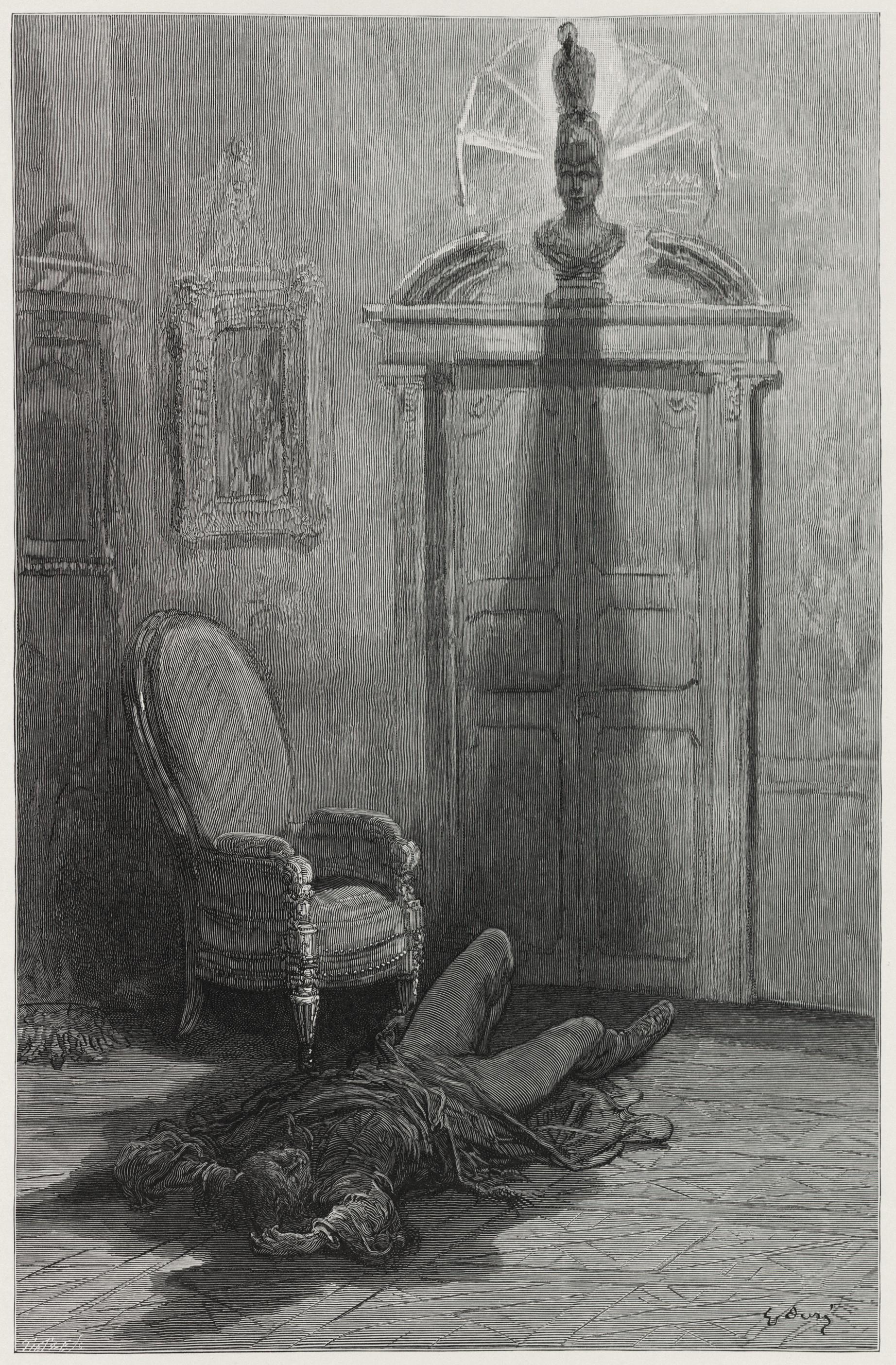
Nevermore (The Raven's Shadow)
Gustave Doré · 1884
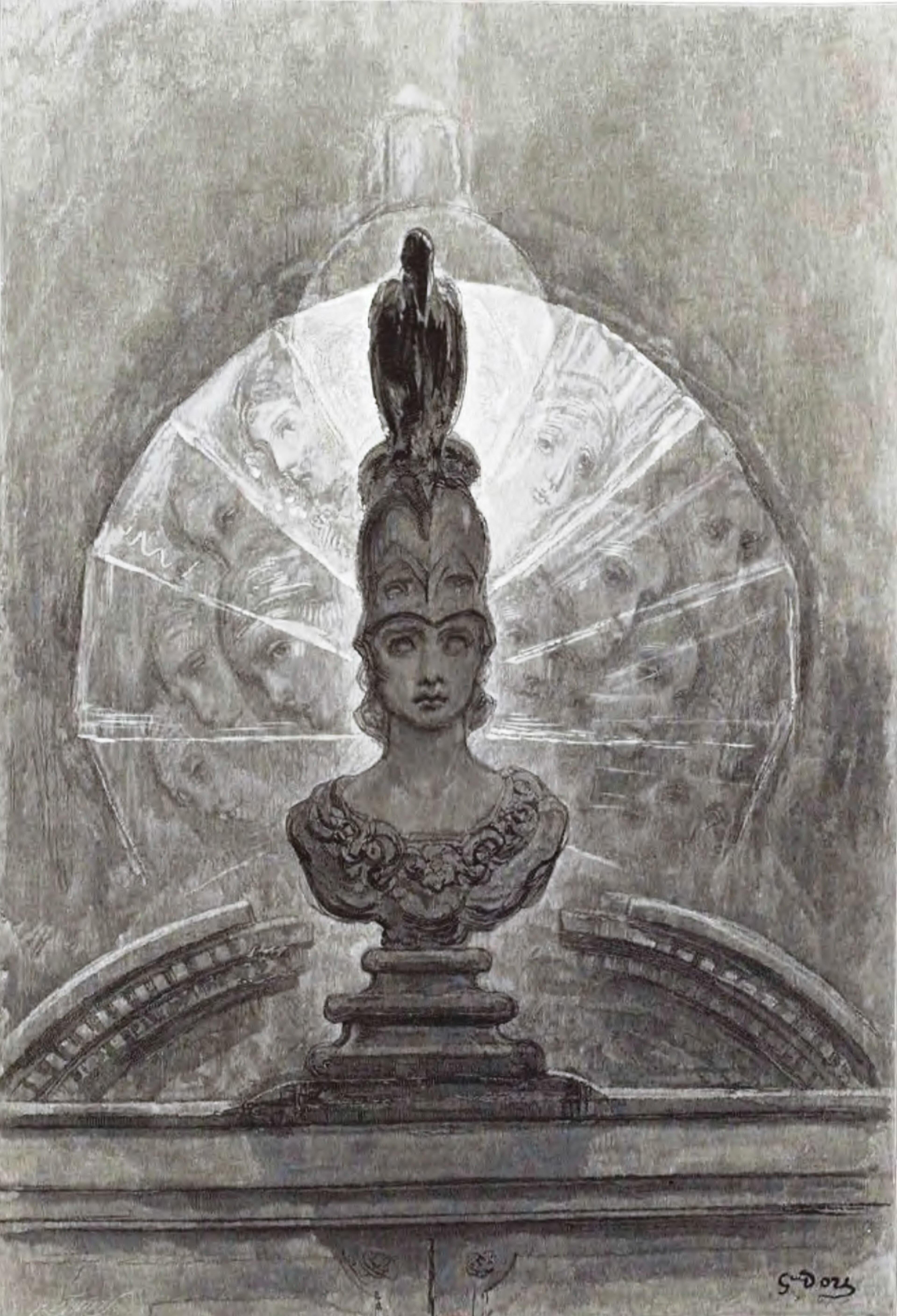
Perched Upon a Bust of Pallas
Gustave Doré · 1884
The Death of Abel
Gustave Doré · 1866
Lucifer, King of Hell
Gustave Doré · 1861
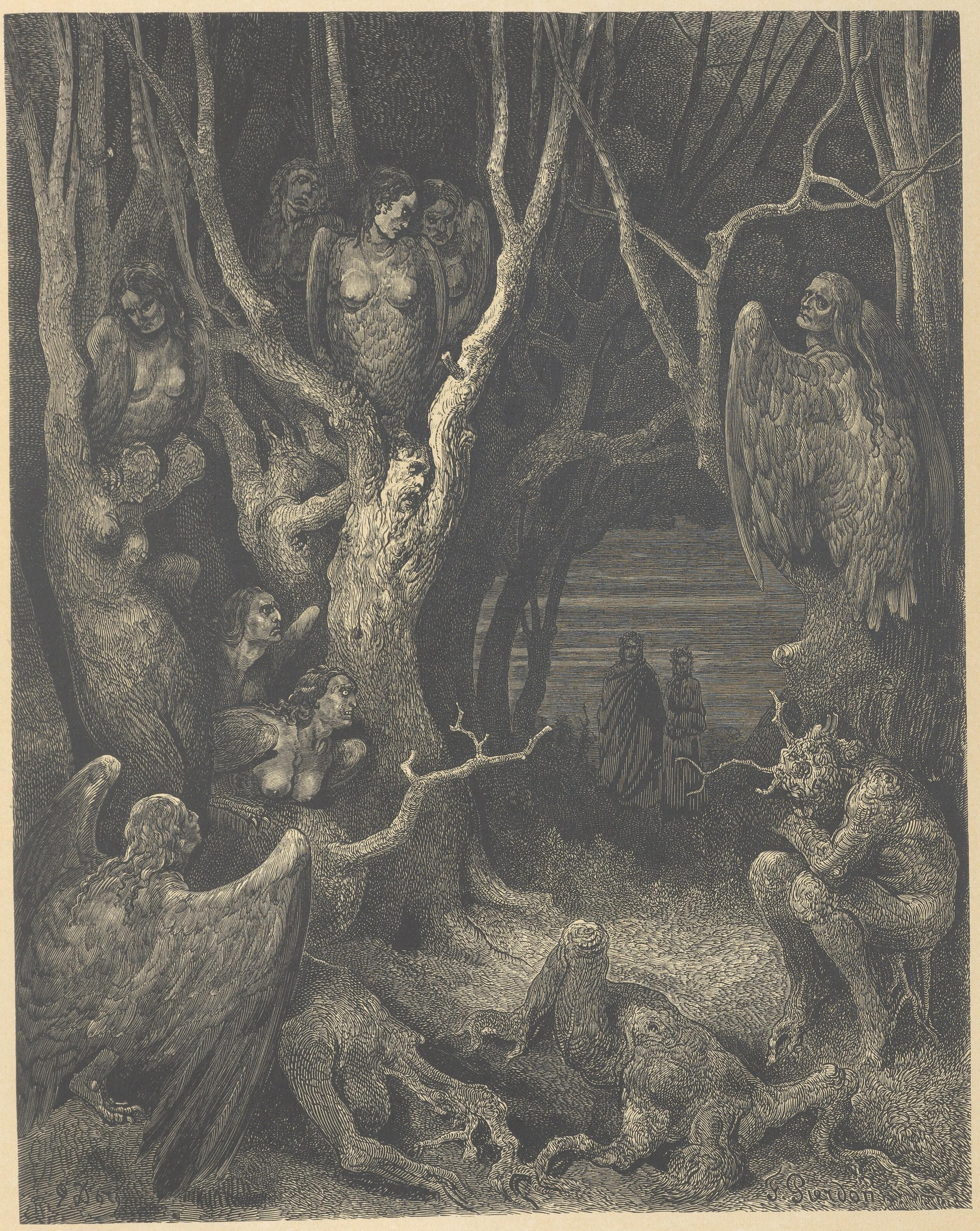
The Wood of the Suicides
Gustave Doré · 1861
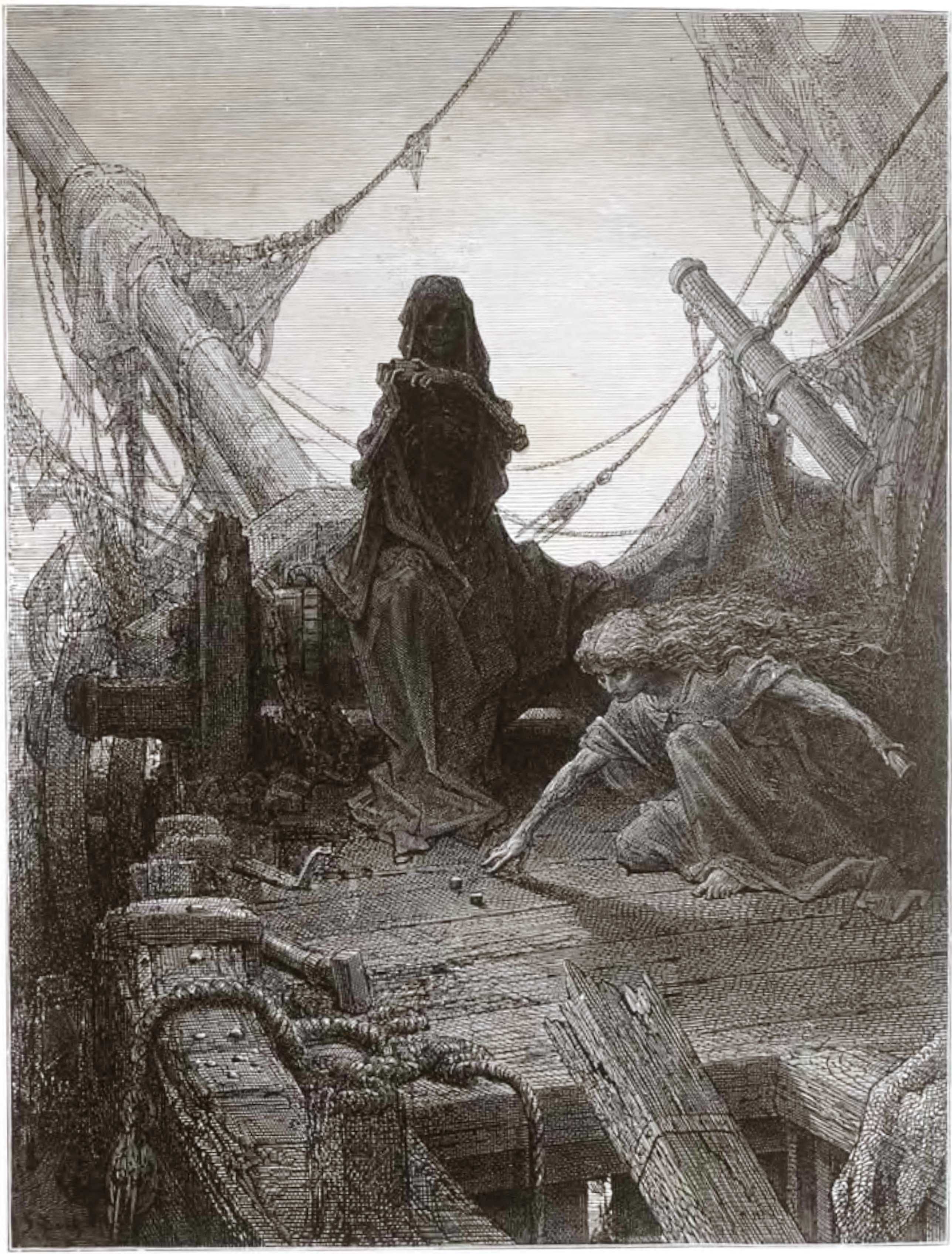
Death and Life-in-Death
Gustave Doré · 1876
The Albatross
Gustave Doré · 1876
The Ship in the Ice
Gustave Doré · 1876
Related works
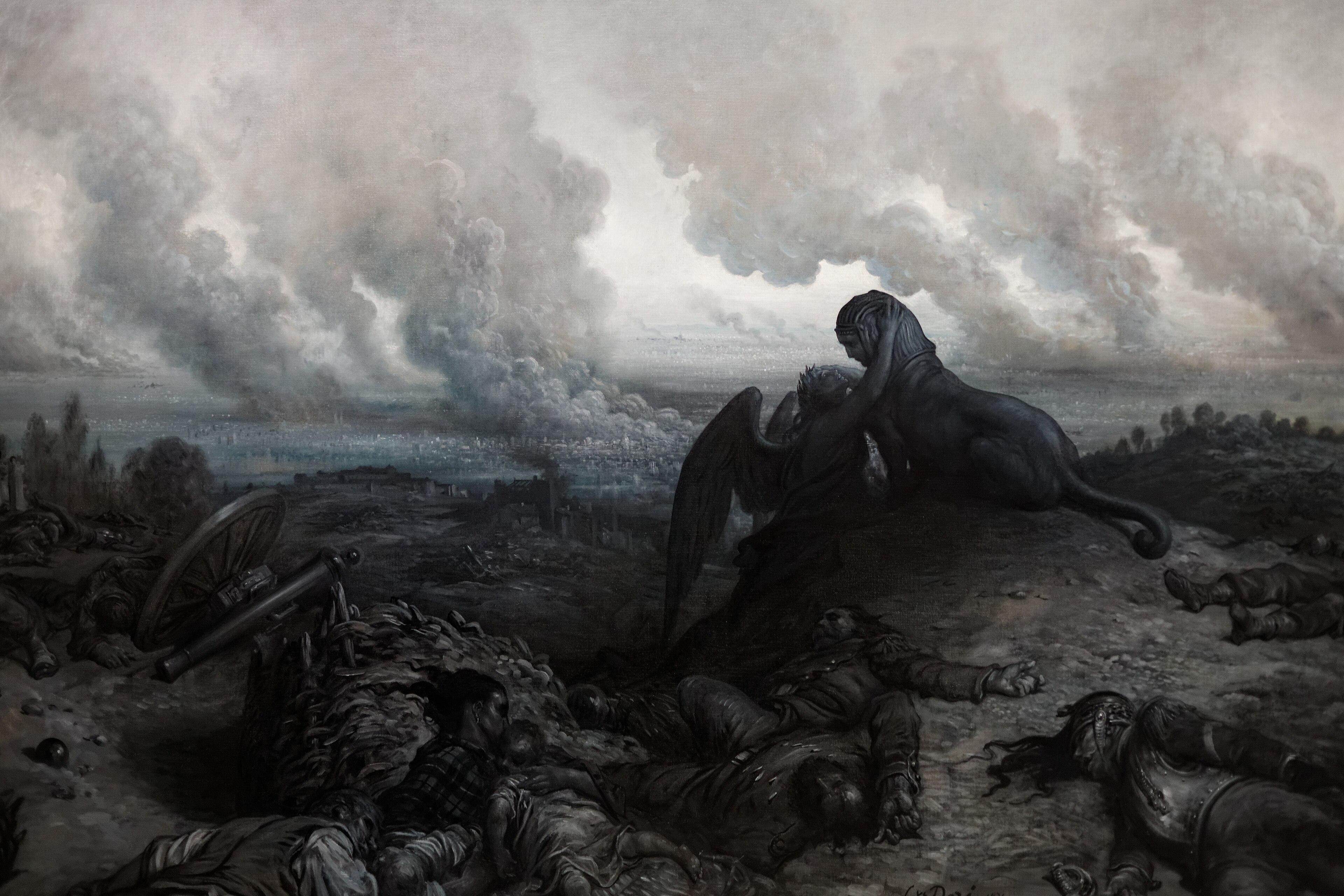
The Enigma
Gustave Doré · 1871
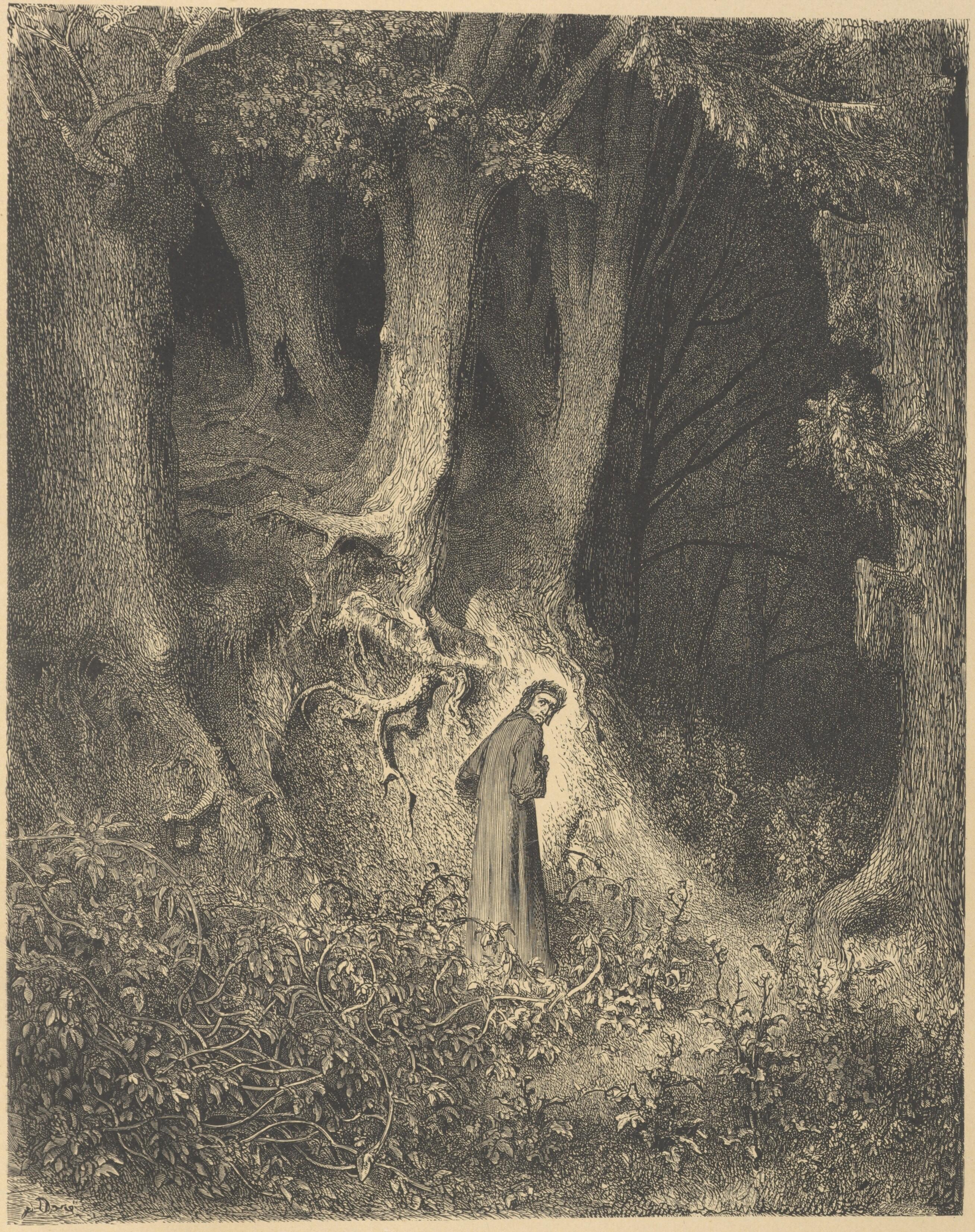
Dante Lost in the Dark Wood
Gustave Doré · 1861
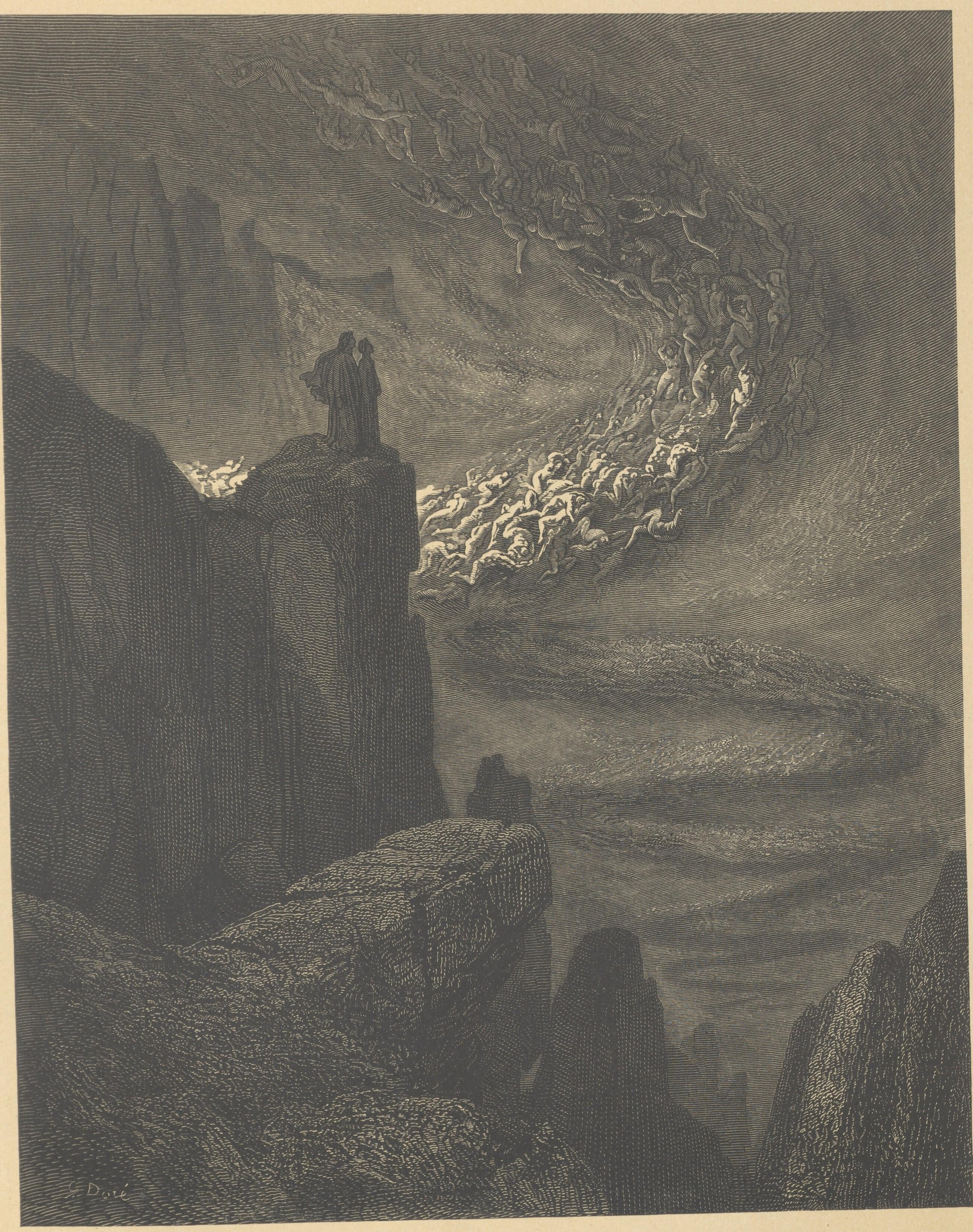
The Whirlwind of the Lustful
Gustave Doré · 1861
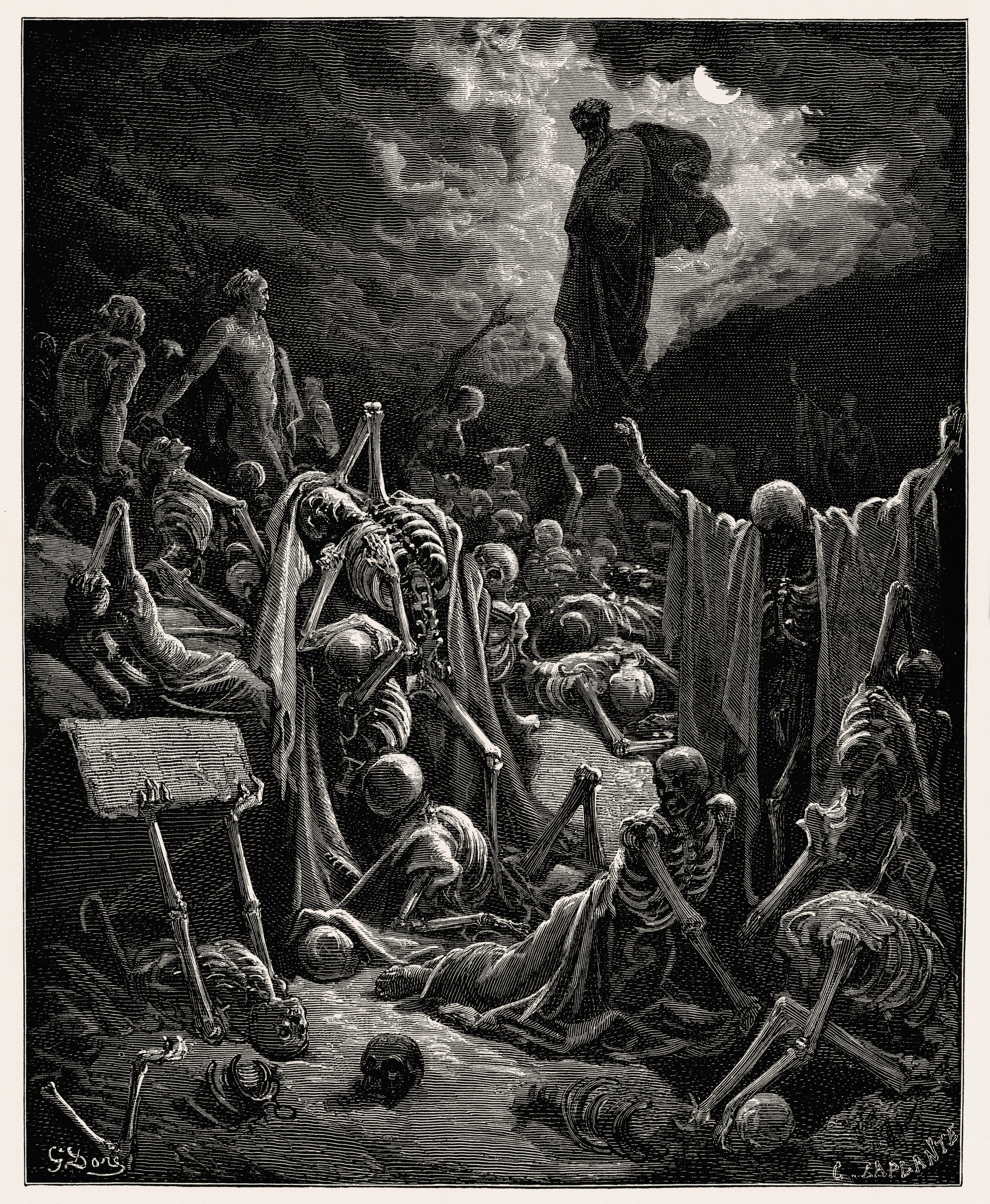
The Vision of the Valley of Dry Bones
Gustave Doré · 1866
Atropos (The Fates)
Francisco Goya · c. 1819–1823
Satan Approaching the Confines of the Earth
Gustave Doré · 1866
Farinata degli Uberti
Gustave Doré · 1861
The Gate of Hell (Abandon All Hope)
Gustave Doré · 1861