The Albatross
Gustave Doré, 1876
The Albatross is Gustave Doré’s wood-engraved plate for Coleridge’s The Rime of the Ancient Mariner (London, 1876) showing the poem’s fatal act, “With my cross-bow / I shot the Albatross”: a bolt flies up from the icebound ship toward the white bird.
- Artist
- Gustave Doré
- Date
- 1876
- Medium
- Wood engraving
- Movement
- Romanticism
- Themes
- Literature & Poetry, Water & Sea, Night & Dreams, Death & Memento Mori, Dark Academia
What you are looking at
A great white bird crosses a black night sky with its wings spread wide, its head turned down toward the ship below. It is lit as if from inside, the only bright thing in the upper half of the plate. Below and to the left of it, a crossbow bolt is in mid-flight, angled upward, its feathered end trailing. It has not struck yet.
The lower half is ice. Square-topped bergs and floes stand in still, dark water, their edges picked out in white and hung with icicles. At the left edge, cut off by the frame, is the bow of the ship: the bowsprit pointing into the ice, a furled sail crusted with frost, ratlines and a hanging chain dripping with ice. We see no one on board.
That absence is the point of the composition. The bolt comes from somewhere below the bowsprit, from roughly where the viewer stands, and the Mariner himself is never shown. Doré’s signature, “G. Doré”, is at lower left on the ship’s timbers; no engraver’s signature is legible on this impression.
The lines it illustrates
The plate closes Part I of Coleridge’s poem. The albatross has come to the ship through the polar fog, eaten the crew’s food and followed them north on a good south wind. Then, with no reason given, the Mariner kills it. In the 1834 text (lines 75–82):
In mist or cloud, on mast or shroud, It perched for vespers nine; Whiles all the night, through fog-smoke white, Glimmered the white Moon-shine.
“God save thee, ancient Mariner! From the fiends, that plague thee thus!— Why look’st thou so?”—With my cross-bow I shot the ALBATROSS.
Coleridge never shows the shot. The Wedding-Guest sees something terrible in the old man’s face, and the confession comes out in a single half-line. Doré, by contrast, freezes the instant between the release and the hit.
How Doré staged it
The crossbow is Coleridge’s, but the night is Doré’s choice, taken from the stanza about moonshine glimmering through “fog-smoke white.” The moon itself is not shown; instead the bird becomes the light source, so the shot looks less like hunting than like putting out a lamp. The arrangement of shapes does the moral work: the bird spread like a cross against the dark, the bolt a short hard diagonal rising to meet it.
Doré also keeps the killer off the page. The plate just before shows the crew crowded round the bird on the frozen deck, feeding it, and later plates show the sailors turning on the Mariner. Here, at the hinge of the story, there is only the ship, the ice and the weapon’s flight. Leaving the shooter out spares Doré from explaining a motive the poem never gives, and it makes the reader complicit.
The idea of the killing came from Wordsworth. On a walk in the Quantock Hills in 1797 he told Coleridge about George Shelvocke’s voyage narrative of 1726, in which a sailor shot a black albatross, and suggested the Mariner kill a bird on entering the South Sea. Doré’s white bird follows the poem, not Shelvocke.
How it was made and published
Doré drew the design onto a boxwood block, and a wood engraver cut it, working the sky in close ruled lines and the bird in fine white-line cutting. The plate is the ninth in the sequence of Doré’s Rime of the Ancient Mariner, published as a large folio in London in 1876 by the Doré Gallery with Hamilton, Adams & Co. An American edition followed in 1877, and Hachette published a French edition, La Chanson du vieux marin, translated by Auguste Barbier, the same year. The scan shown here is from the Bibliothèque nationale de France’s copy of that French edition.
The Mariner book was one of the last large literary cycles Gustave Doré completed. See the full set in Doré’s Rime of the Ancient Mariner illustrations, starting with The Ship in the Ice, two plates earlier, where the albatross first appears as a speck of white above the trapped ship.
What the plate means
In the poem the albatross is treated “as if it had been a Christian soul,” and Coleridge’s marginal gloss, added in 1817, calls it “a bird of good omen.” Killing it is the Mariner’s original sin, an act against hospitality and against the bond between people and the natural world. Doré’s cruciform bird, lit against the dark, makes that reading visible without forcing it.
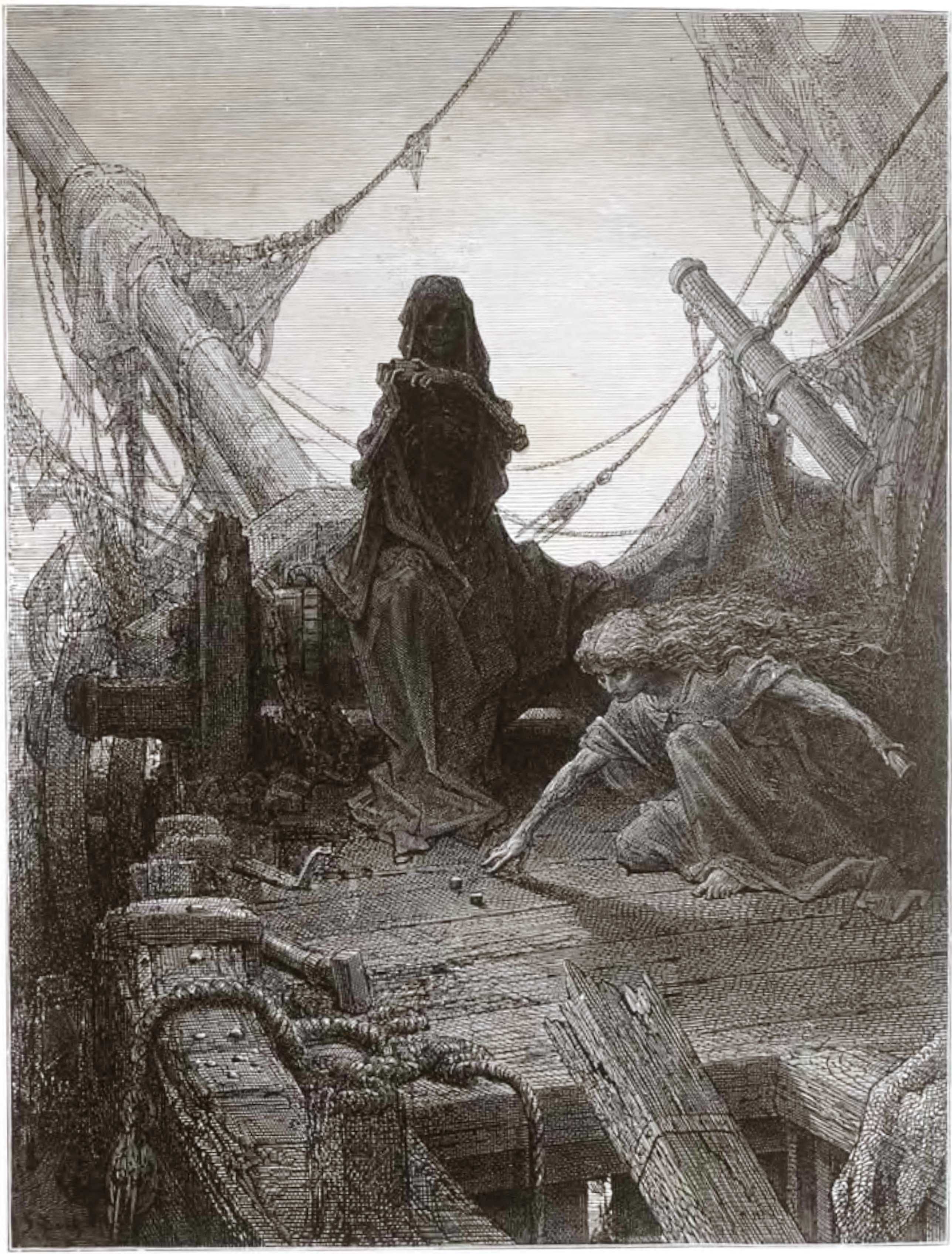
The punishment follows fast. The crew hang the dead bird around the Mariner’s neck, “instead of the cross,” and the ship drifts into the windless sea where Death and Life-in-Death dice for the sailors’ souls. The poem gave English the idiom of an albatross around one’s neck, a burden of guilt that cannot be put down, and it is a fixture of the dark academia reading list. Doré’s plate catches the moment before the bird became that burden: still alive, still white, a second from falling.
Questions & answers
What does Doré’s albatross plate show?
A white albatross with wings spread flies across a black night sky above an icebound sea while a crossbow bolt rises toward it. The bow of the Mariner’s ship, frosted and hung with icicles, juts in from the lower left. The Mariner himself is not shown.
Which lines of The Rime of the Ancient Mariner does it illustrate?
The end of Part I, lines 79–82 in the 1834 text: “‘God save thee, ancient Mariner! / From the fiends, that plague thee thus!— / Why look’st thou so?’—With my cross-bow / I shot the ALBATROSS.” Doré sets it at night, after the stanza where moonshine glimmers “through fog-smoke white.”
When was Doré’s Ancient Mariner published?
The illustrated folio was published in London in 1876 by the Doré Gallery with Hamilton, Adams & Co. An American edition followed in 1877, as did Hachette’s French edition, La Chanson du vieux marin. The shooting of the albatross is the ninth plate in the sequence.
How was The Albatross made?
It is a wood engraving. Doré drew the design directly onto a block of end-grain boxwood and a professional engraver cut away the whites, rendering the night sky as fine ruled lines and the bird in white-line cutting. Doré’s signature is at lower left; no engraver’s signature is legible.
Why does the Mariner shoot the albatross, and what does it symbolize?
Coleridge gives no reason, which is the point: it is a gratuitous act against a creature the crew had welcomed “as if it had been a Christian soul.” The bird stands for grace and the bond with nature; killing it brings the curse. Doré shows the bird spread like a cross.
More by Gustave Doré
All works →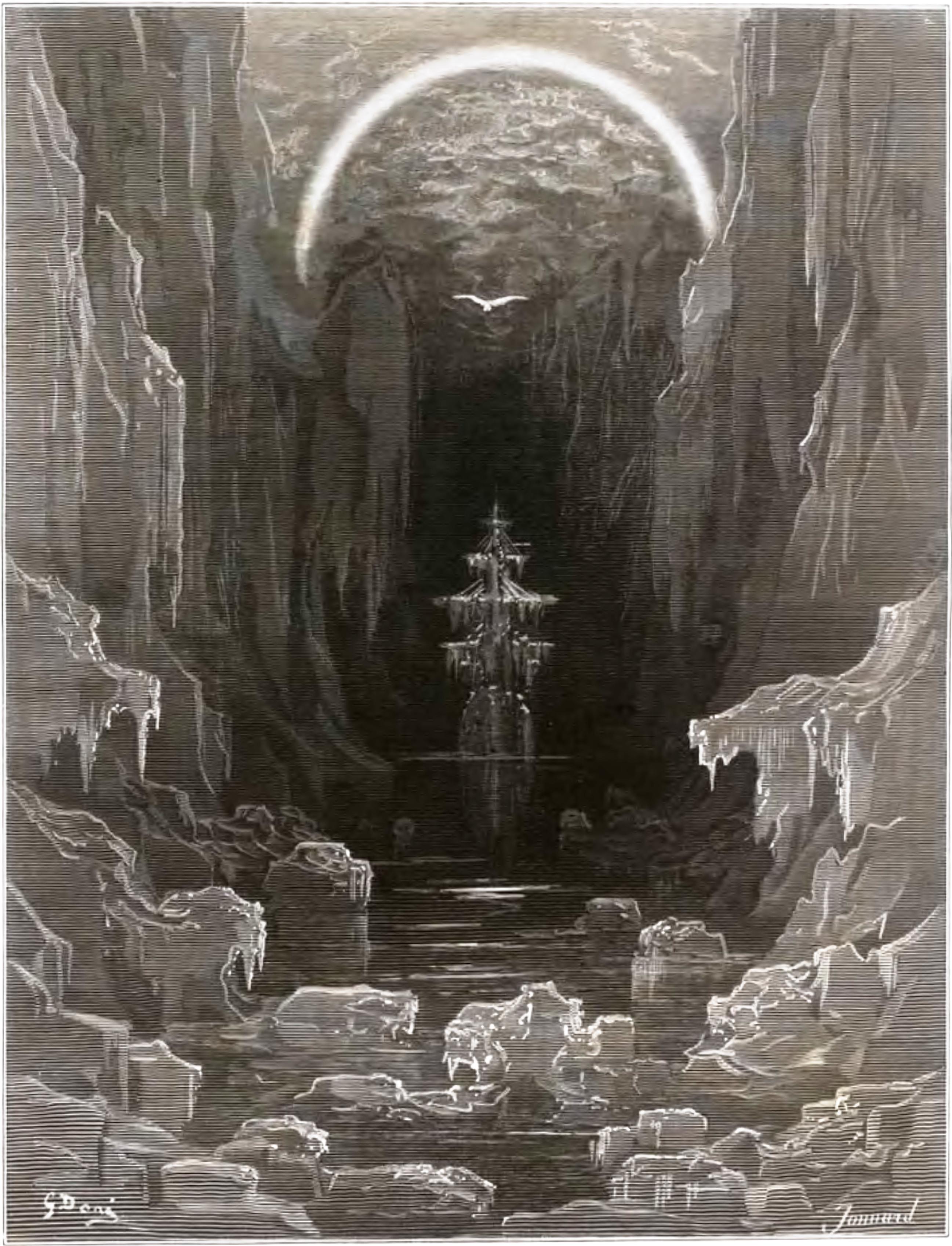
The Ship in the Ice
Gustave Doré · 1876
Death and Life-in-Death
Gustave Doré · 1876
The Enigma
Gustave Doré · 1871
The Empyrean (Rosa Celeste)
Gustave Doré · 1868
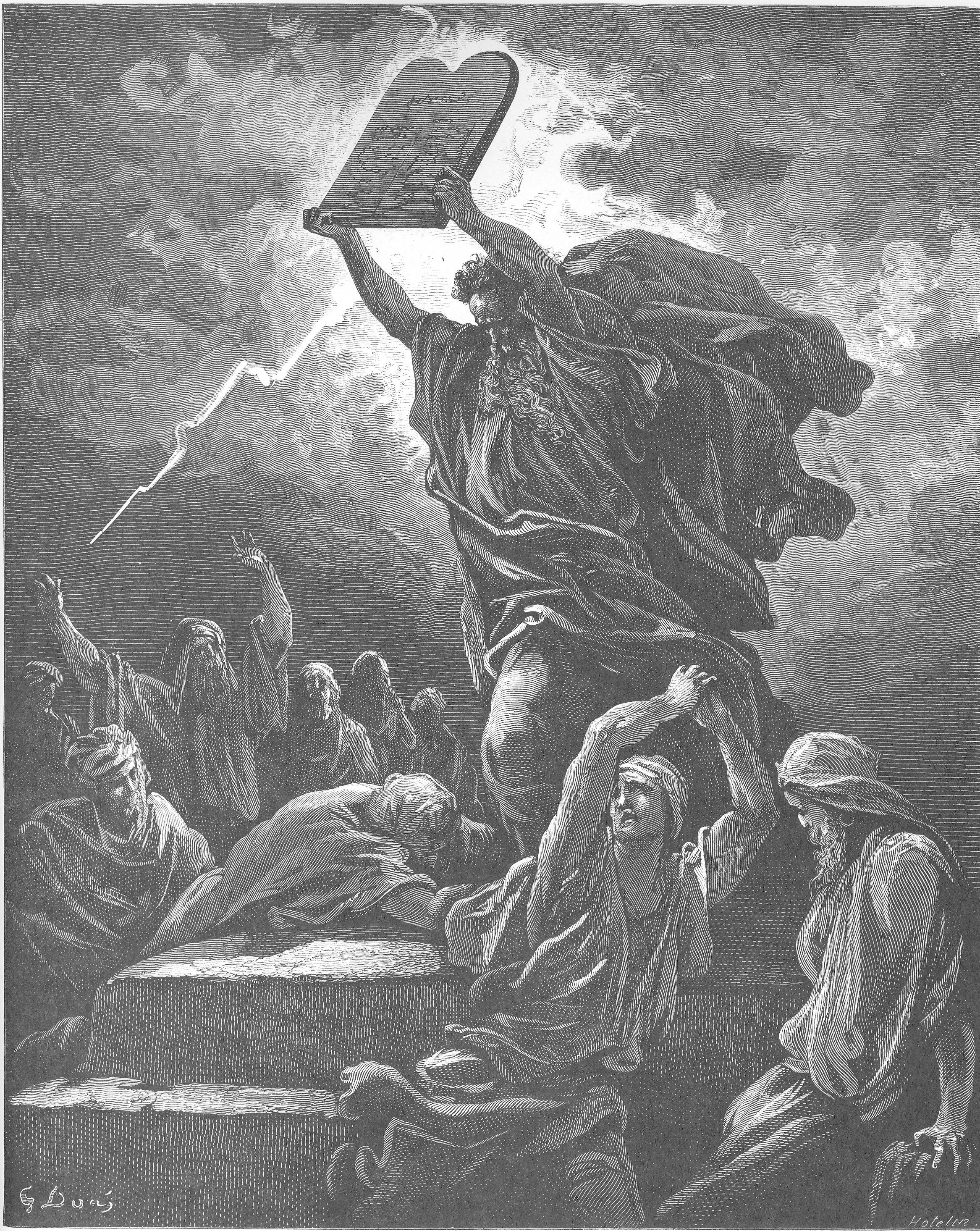
Moses Breaking the Tables of the Law
Gustave Doré · 1866
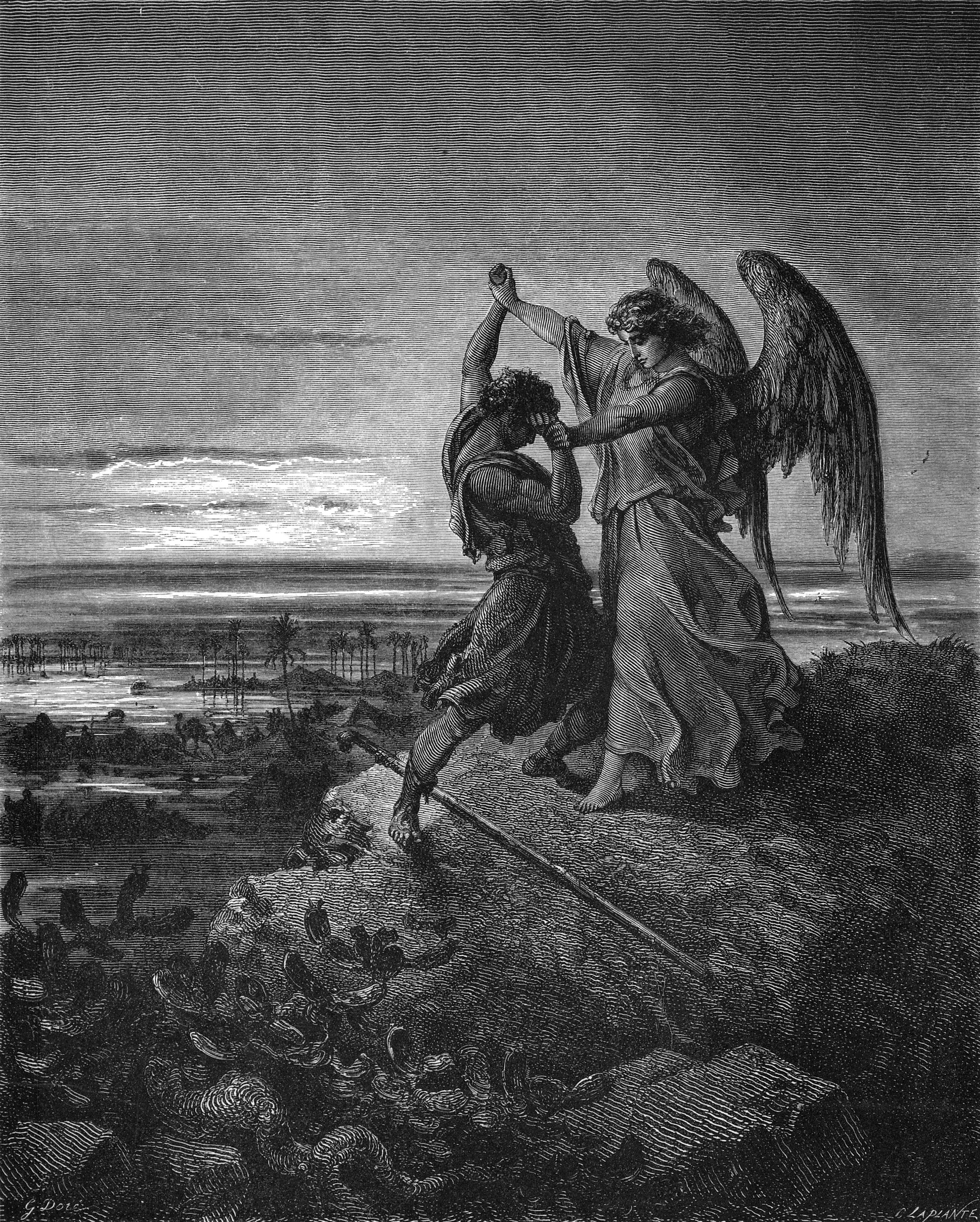
Jacob Wrestling with the Angel
Gustave Doré · 1866
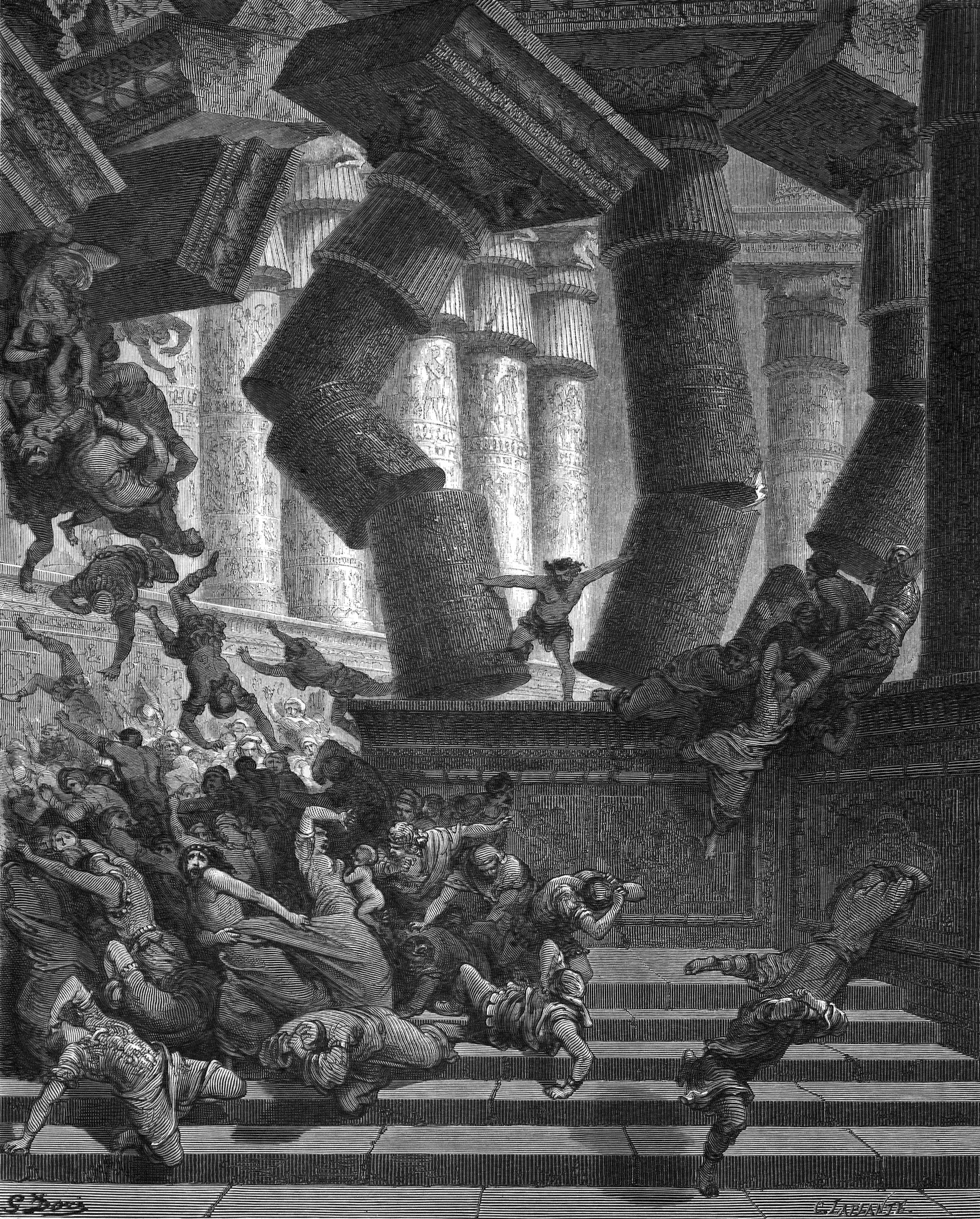
Samson Destroying the Temple
Gustave Doré · 1866
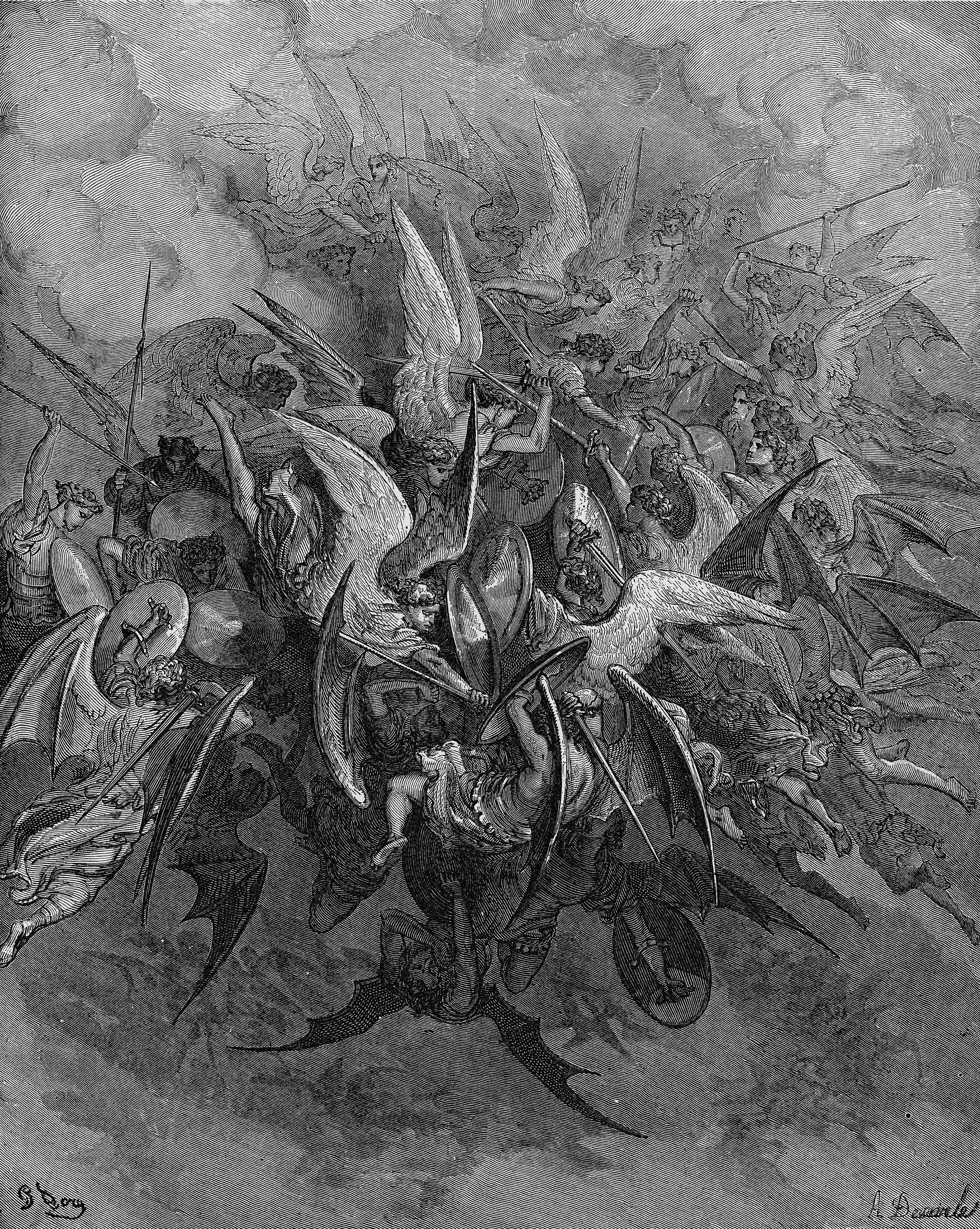
The War in Heaven
Gustave Doré · 1866
Related works
Nevermore (The Raven's Shadow)
Gustave Doré · 1884
Satan Cast Out of Heaven
Gustave Doré · 1866
The Deluge
Gustave Doré · 1866
The Lady of Shalott
John William Waterhouse · 1888
Dante Lost in the Dark Wood
Gustave Doré · 1861
Isle of the Dead
Arnold Böcklin · 1880 (first version); five versions 1880–86
The Dog
Francisco Goya · c. 1819–1823
Once Upon a Midnight Dreary
Gustave Doré · 1884