Image: Museo del Prado, Madrid · Public domain · via Wikimedia Commons
Romanticism
Fantastic Vision (Asmodea)
Francisco Goya, c. 1819–1823
Fantastic Vision (Asmodea) is a Black Painting by Francisco Goya, painted on a wall of his house near Madrid around 1819–1823. Two figures fly toward a rock-top town as soldiers fire below. It is now in the Prado.
- Artist
- Francisco Goya
- Date
- c. 1819–1823
- Medium
- Oil mural transferred to canvas
- Dimensions
- 127 × 263 cm
- Collection
- Museo del Prado, Madrid, Spain
- Movement
- Romanticism
What you're looking at
Two figures fly through the air above a broad, pale landscape. They are bundled together at the upper left, one behind the other, moving toward the right. The nearer figure, a man in a brown cloak, twists round and points urgently with his right hand toward a great flat-topped rock in the distance, on top of which stands a walled town or fortress. The figure behind him, wrapped in a billowing red cloak, has the lower part of the face covered and looks the other way, back over the shoulder.
Below them, the ground is dark and crowded with small, hurried figures: a group of riders and people on foot moving across the plain. At the bottom right, almost cut off by the frame, a row of soldiers lies or kneels in the shadows, aiming long guns toward the fleeing group. The sky is a livid yellow-gray, the same smoky color as the empty field in The Dog.
The canvas measures about 127 by 263 cm, a wide landscape format. The flying pair takes up a surprisingly small part of it; most of the surface is air, rock and plain.
The red of the second figure's cloak is the strongest color in the picture. Everything else is ocher, gray, umber and black, and the rock is built from pale, dry strokes that let the ground show through. That single patch of red pulls the eye to the flying pair before the viewer notices the violence going on below them.
What does Fantastic Vision (Asmodea) mean?
Goya gave none of the Black Paintings titles. The name Asmodea is usually credited to his friend the painter Antonio Brugada, who inventoried the house after Goya's death. It seems to be a feminine form of Asmodeus, the demon of the Book of Tobit. Asmodeus was also familiar to Spanish readers from Alain-René Lesage's novel Le Diable boiteux (1707), adapted from a Spanish original, in which the demon carries a student through the air over Madrid and lifts the roofs off its houses to show him the hidden lives inside. The idea of a spirit flying a mortal over a landscape to show him the truth fits the picture well, though Goya left no word to confirm it.
The scholars López Vázquez and, later, John F. Moffitt proposed a different source: the myth of Prometheus being carried to the Caucasus. Others simply prefer the neutral title the Prado also uses, Visión fantástica, Fantastic Vision.
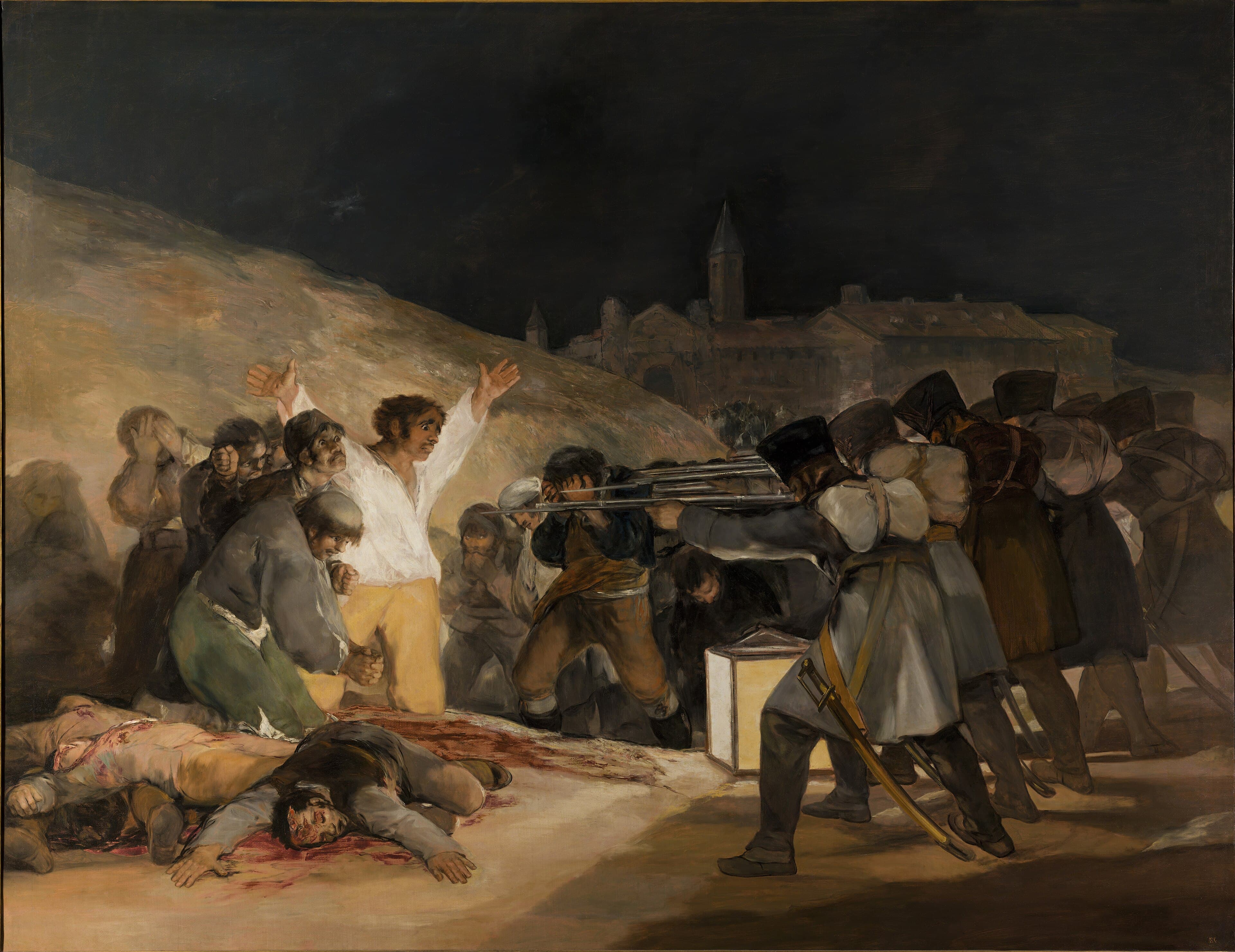
The lower half of the picture is more concrete. The soldiers aiming at the fleeing group recall the firing squad of The Third of May 1808, and they have often been read as French troops from the Peninsular War firing on refugees. The writer Evan S. Connell noted that the great rock resembles Gibraltar, which became a refuge for Spanish liberals. On this reading the flying man points toward safety while war goes on beneath him, a possible reflection of Goya's own position in the early 1820s, a liberal in a country sliding back toward absolutism, who would soon leave for France himself.
Where it hung
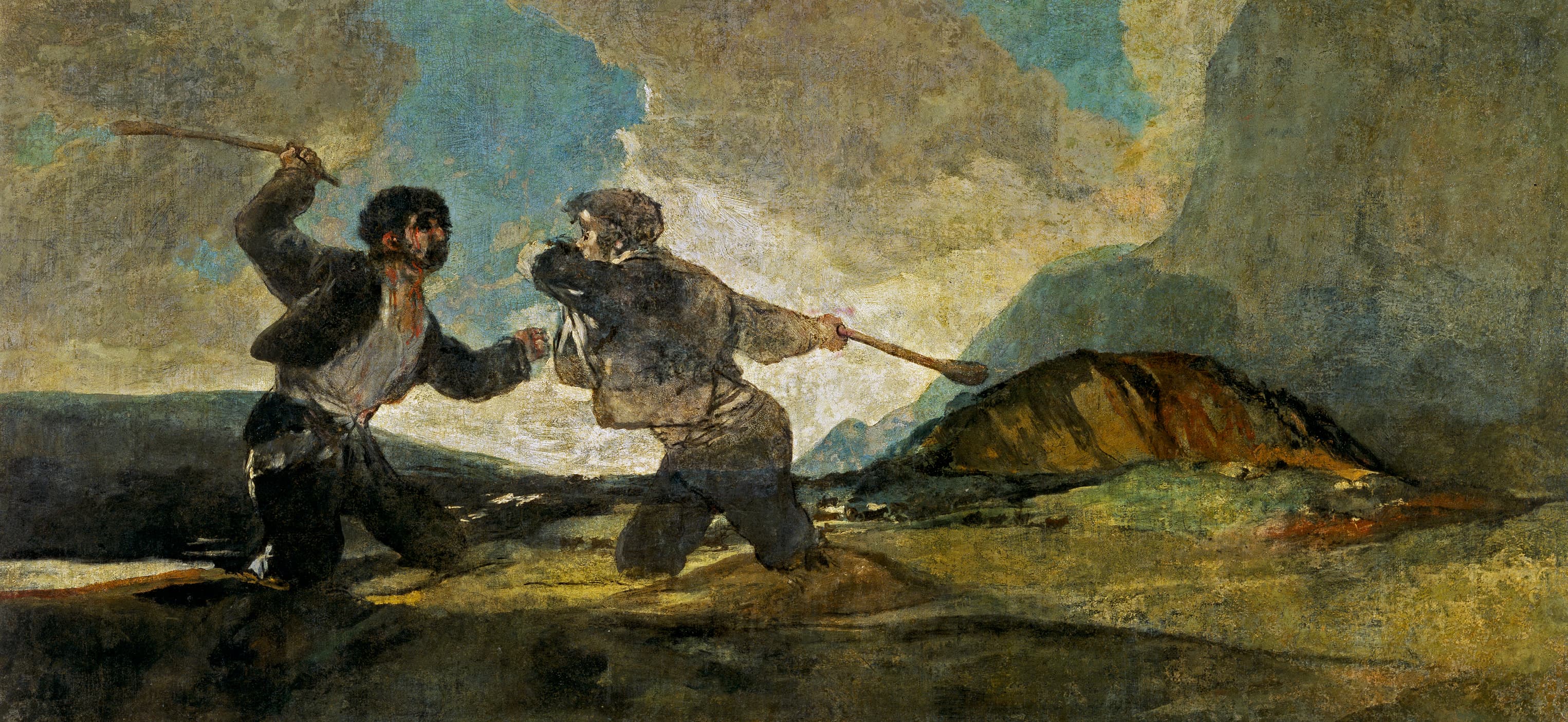
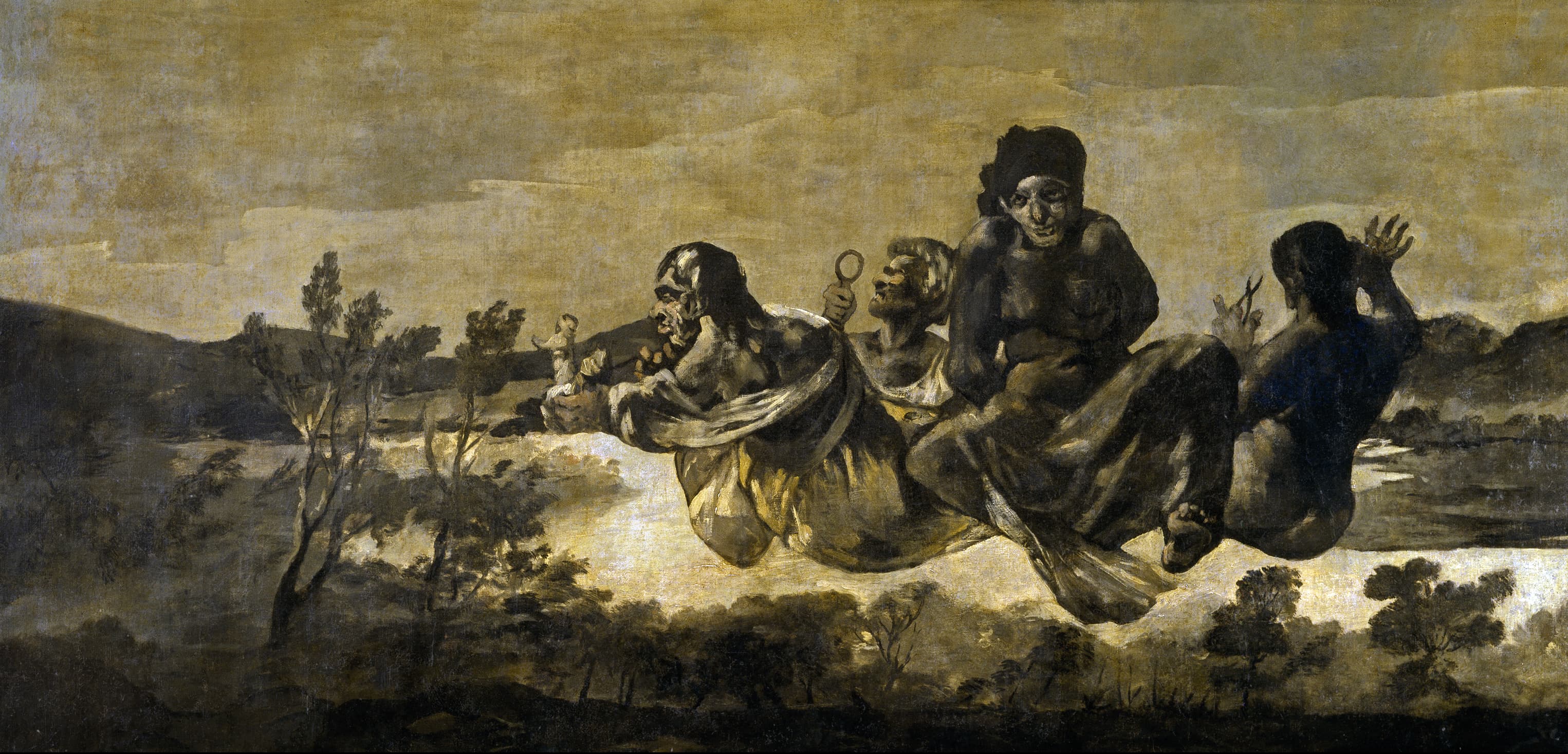
Fantastic Vision was painted in oil on a wall of the upper room of the Quinta del Sordo, Goya's farmhouse across the Manzanares from Madrid, on the wall nearest the entrance. It faced Atropos (The Fates), which repeats the motif of figures floating over open country, and Fight with Cudgels. Beside it was The Holy Office. The four long landscape scenes give the upper room a different character from the ground floor, where Saturn Devouring His Son and the great crowd scenes hung.
Like several of the murals, it seems to have been painted over an earlier composition, which helps explain the patchy, layered look of the sky.
Transfer and condition
In 1873–74 the banker Baron Émile d'Erlanger, then the owner of the house, had the murals lifted from the walls and transferred to canvas under the Prado restorer Salvador Martínez Cubells. The transfer saved them but cost paint and added retouching. D'Erlanger showed the canvases at the Paris Exposition Universelle of 1878 and gave them to the Spanish state, which accepted the gift in 1881.
What to notice
Look at the two flying figures' heads. They face in opposite directions, the man toward the rock, the cloaked figure back toward the soldiers. Goya builds the whole picture on that split: one looks at escape, the other at danger. Then look at how the man's cloak swells toward us, a curve that makes him seem to come out of the picture. It is the same distortion Goya used for the floating Fates on the opposite wall.
Where to see Fantastic Vision (Asmodea) today
The painting is in the Museo del Prado in Madrid, catalogued as Visión fantástica or Asmodea. It hangs with the other Black Paintings in a single room on the ground floor of the museum.
Questions & answers
What does Goya's Fantastic Vision (Asmodea) mean?
Goya left no explanation. Two figures fly over a landscape, one pointing to a fortified rock, while soldiers below fire on fleeing people. It is often read as an image of escape from war and repression, with the rock compared to Gibraltar, a refuge for Spanish liberals.
Why is it called Asmodea?
The title, usually credited to Goya's friend Antonio Brugada, seems to be a feminine form of Asmodeus, the demon of the Book of Tobit. Asmodeus also flies a student over Madrid in Lesage's novel Le Diable boiteux. Goya himself gave the painting no title.
Where is Fantastic Vision (Asmodea)?
It is in the Museo del Prado in Madrid, displayed with the other Black Paintings. Goya painted it on a wall of the upper room of his house, the Quinta del Sordo; it was transferred to canvas in 1873–74 and entered the Spanish state collection in 1881.
Who are the soldiers in Asmodea?
They are usually read as French troops of the Peninsular War, kneeling or lying in the bottom right corner and aiming at a group of riders and walkers crossing the plain. Their poses recall the firing squad in Goya's The Third of May 1808.
More by the artist
Francisco Goya

Saturn Devouring His Son
Francisco Goya · c. 1819–1823
The Third of May 1808
Francisco Goya · 1814
The Sleep of Reason Produces Monsters
Francisco Goya · 1797–99 (published 1799)
La Leocadia
Francisco Goya · c. 1819–1823
Judith and Holofernes
Francisco Goya · c. 1819–1823
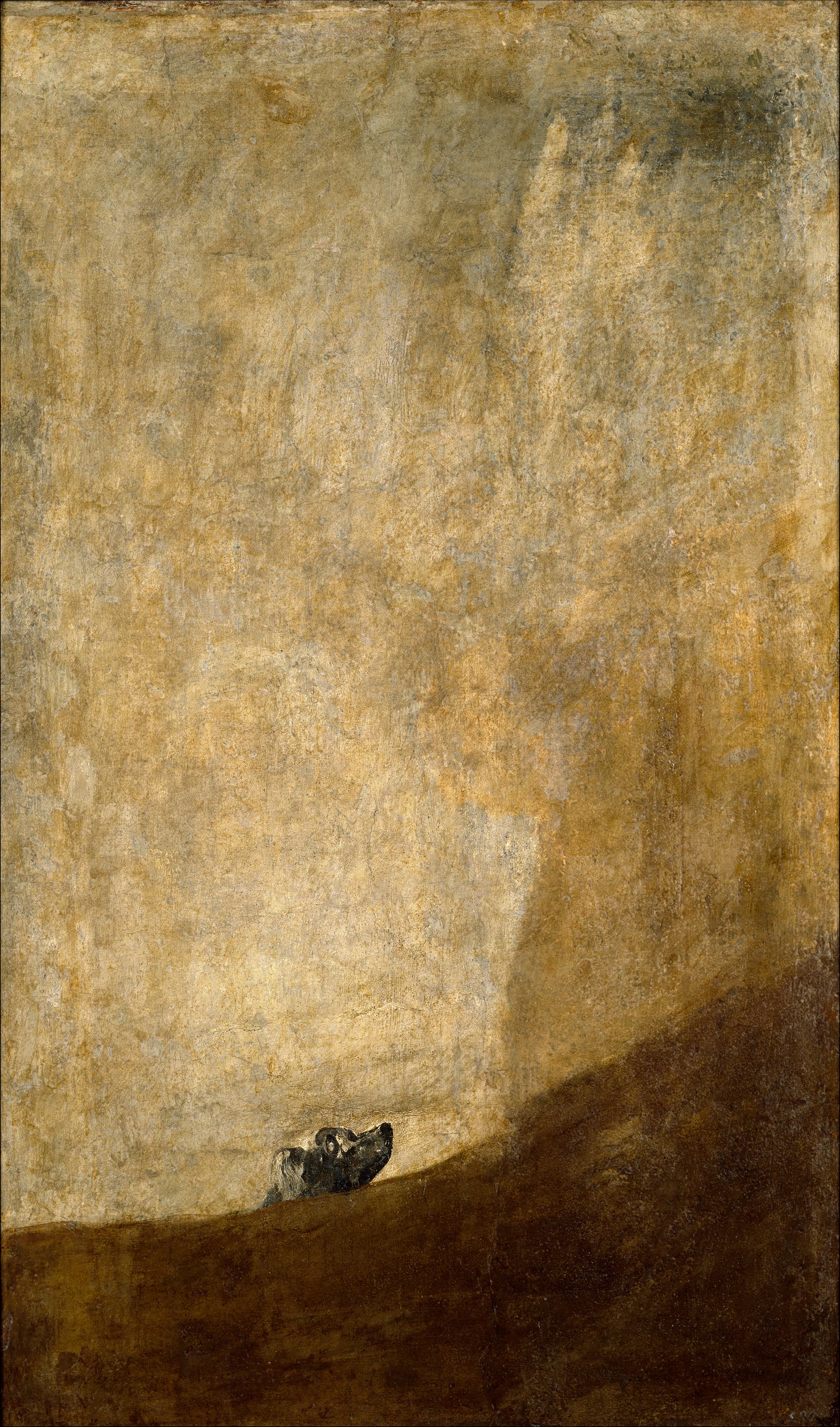
The Dog
Francisco Goya · c. 1819–1823
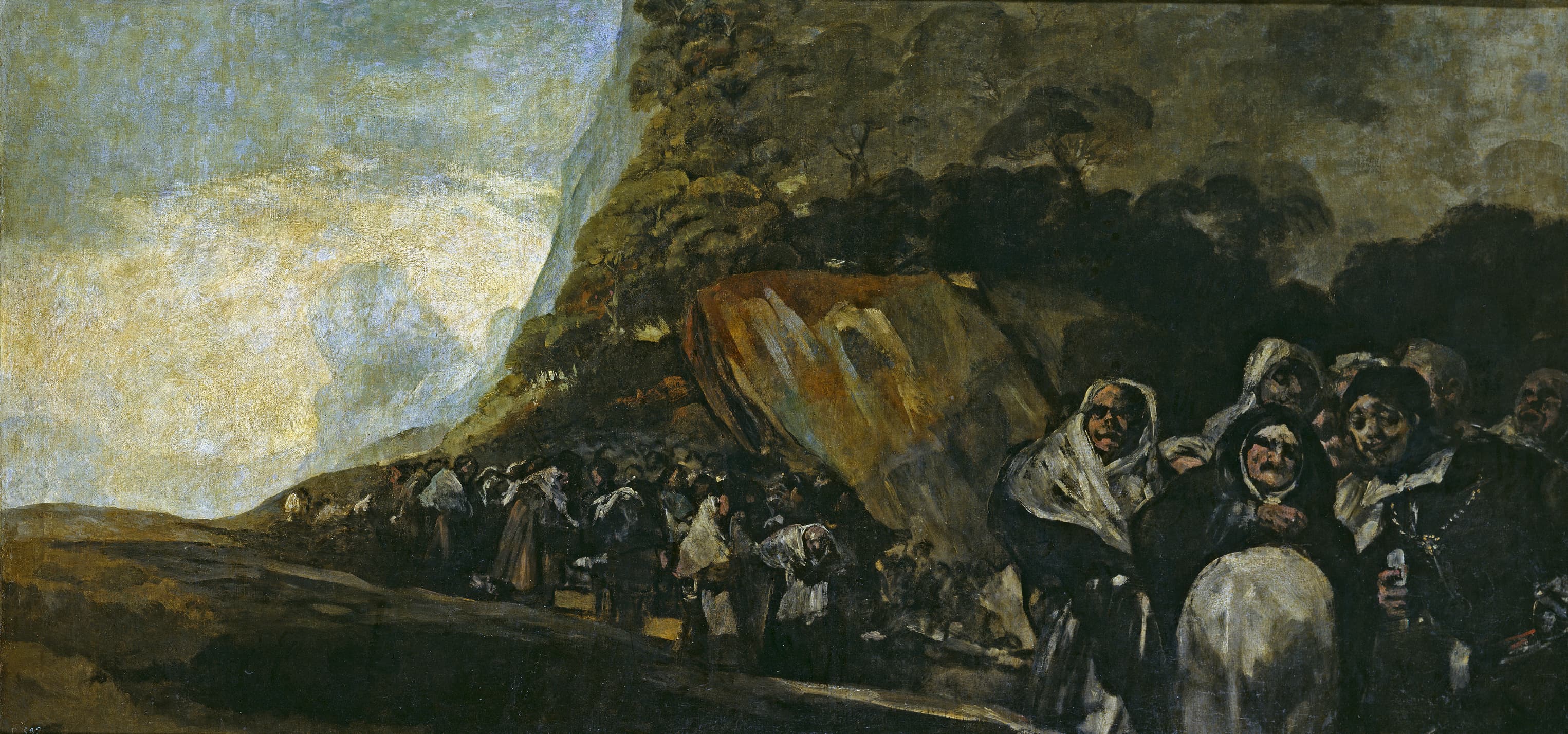
The Holy Office (Pilgrimage to the Fountain of San Isidro)
Francisco Goya · c. 1819–1823
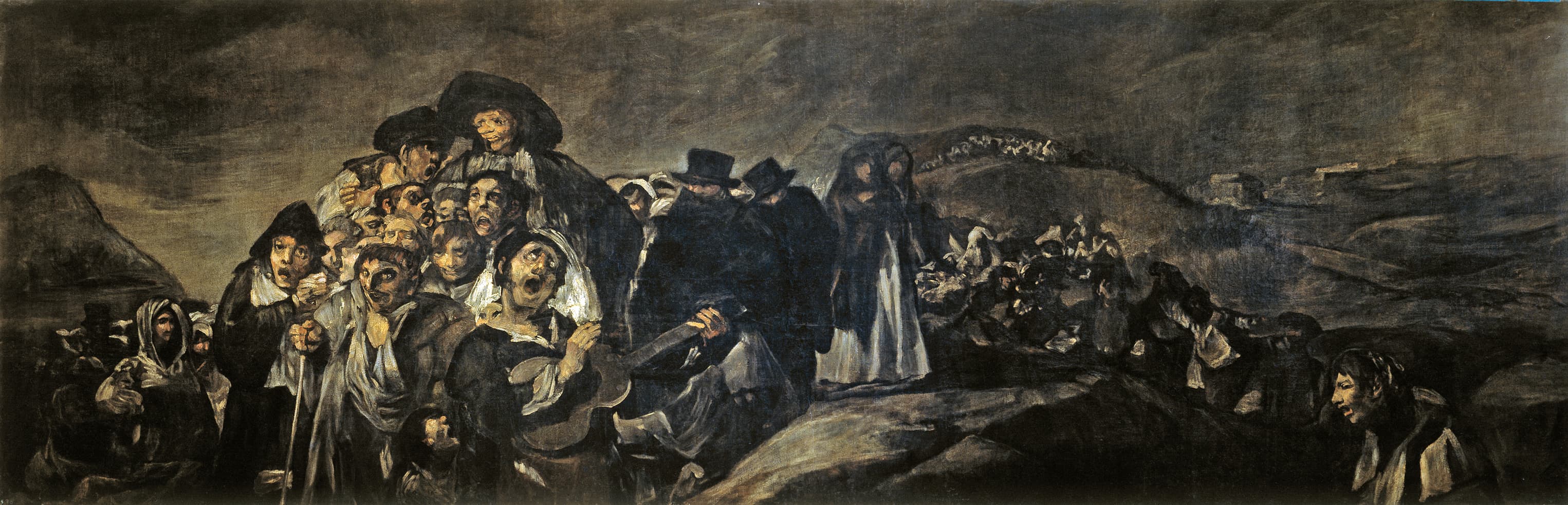
A Pilgrimage to San Isidro
Francisco Goya · c. 1819–1823
Also painted in 1820
The same year
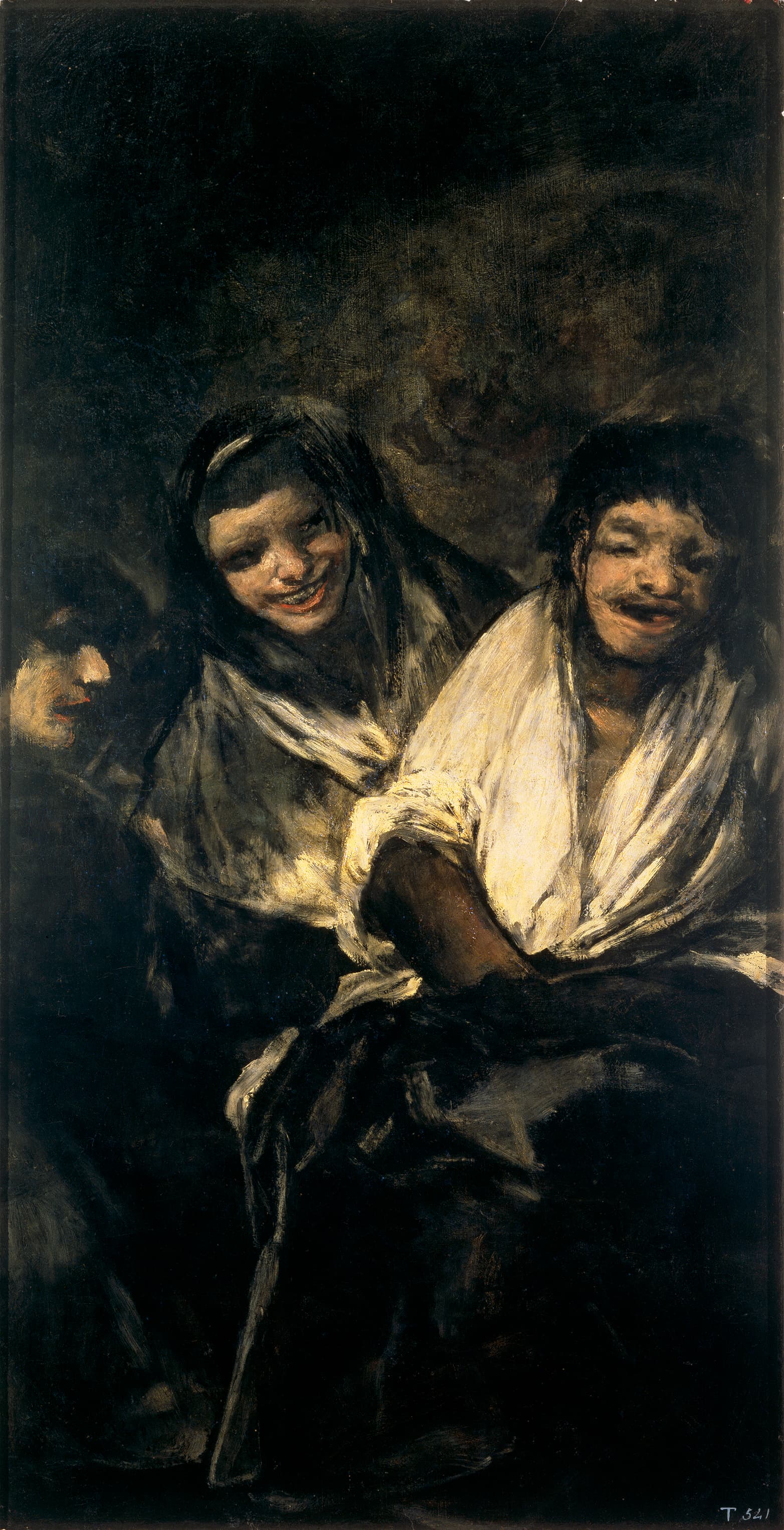
Women Laughing
Francisco Goya · c. 1819–1823
Men Reading
Francisco Goya · c. 1819–1823
Witches' Sabbath (The Great He-Goat)
Francisco Goya · c. 1819–1823
Fight with Cudgels
Francisco Goya · c. 1819–1823
Two Old Men Eating Soup
Francisco Goya · c. 1819–1823
Two Old Men
Francisco Goya · c. 1819–1823
Atropos (The Fates)
Francisco Goya · c. 1819–1823
Kindred works
You may also study
Atropos (The Fates)
Francisco Goya · c. 1819–1823
Fight with Cudgels
Francisco Goya · c. 1819–1823

Bridge over a Pond of Water Lilies
Claude Monet · 1899

Venus de Milo
Alexandros of Antioch · c. 150–125 BC

Nymphs Dancing to Pan's Flute
Joseph Tomanek

The Scream
Edvard Munch · 1893
The Creation of Adam
Michelangelo · c. 1511–12

Ophelia
John Everett Millais · 1851–52