Adam and Eve Expelled from Paradise
Gustave Doré, 1866
Adam and Eve Expelled from Paradise is the closing plate of Gustave Doré’s 1866 illustrated Paradise Lost, a wood engraving of Book XII, line 645, “Some natural tears they dropped, but wiped them soon”: Eve weeps against a rock beside Adam as the angel watches from the forest.
- Artist
- Gustave Doré
- Date
- 1866
- Medium
- Wood engraving
- Movement
- Romanticism
- Themes
- Religion & Saints, Literature & Poetry, Angels & Demons, The Nude, Nature & Landscape
What you are looking at
The last plate of Doré’s Milton is set in a dark forest, not a garden. Huge, gnarled trees rise at the left and back, their roots clutching the bank like fingers, and the floor is bare earth strewn with stones. At the right, a dead tree lies uprooted, its roots and branches twisted into a tangle of pale, dry wood.
In the foreground, Eve has sunk back against a boulder, one hand pressed to her face, her head tipped back, her mouth open as she weeps. Her body is bare except for an apron of leaves. Adam stands beside her with his back to us, a hide or leaf garment at his waist, and holds her other hand while he looks away into the wood. Far off at the upper right, on a rise of ground and in a soft light of his own, stands the angel: winged, robed, a long sword held point-down in one hand, the other arm stretched out and pointing away.
The light is gray and even, with no single source; the forest seems to close round the two figures. Doré’s signature is at lower left; the engraver’s, “Deschamps,” is at lower right on clean impressions of the plate, though it is hard to read on the softer reprint shown here.
The lines it illustrates
Paradise Lost ends with the expulsion. The archangel Michael, having shown Adam the future of mankind, takes the couple by the hand and leads them out of the eastern gate of Eden as the cherubim descend behind them with the flaming sword. Book XII, lines 641–649, the last lines of the poem:
They, looking back, all the eastern side beheld Of Paradise, so late their happy seat, Waved over by that flaming brand; the gate With dreadful faces thronged, and fiery arms: Some natural tears they dropt, but wiped them soon; The world was all before them, where to choose Their place of rest, and Providence their guide: They, hand in hand, with wandering steps and slow, Through Eden took their solitary way.
Doré’s caption is line 645, the line of tears.
How Doré staged it
The traditional image of the expulsion, from Masaccio onward, shows the couple driven through a gate by an angel with a sword. Milton changes the tone, and Doré follows him. There is no flaming brand, no thronged gate and no violence. The angel is not driving them but standing apart, pointing the way, and Adam and Eve are already outside, in a wilderness that looks nothing like the lush Eden of Doré’s earlier plates.
What Doré keeps is the emotional turn of Milton’s ending. Eve weeps openly; Adam, holding her hand, has already turned toward what lies ahead. The pairing of grief and resolve is the whole movement of the last lines, tears dropped “but wiped them soon.” The uprooted tree at the right is Doré’s addition, a reminder that death has entered the world, and the angel’s light is the only brightness left in the picture.
How it was made and published
Doré drew the scene on a boxwood block and Deschamps engraved it. It is the fiftieth and last plate in Milton’s Paradise Lost, published by Cassell, Petter & Galpin in London and New York in 1866 as a large folio with Robert Vaughan’s life of Milton. The scan shown here is from a later American reprint by J. W. Lovell of New York, so the tones are softer than in a first-edition impression.
The book opens with Satan Cast Out of Heaven, a crowd of falling angels in a blaze of light; it closes on this quiet scene of two people and one angel in a gray wood. For the full sequence see Doré’s Paradise Lost illustrations.
What the plate means
Shortly before the end, Milton’s Adam, told of the redemption to come, wonders whether he should repent his sin or rejoice in the good that will spring from it, the old idea of the fortunate fall. The ending is famously double: loss and exile, but also freedom, “The world was all before them.” Doré’s plate holds both. Eve’s grief is real and given full weight, but Adam is already looking out, and the angel is pointing, not threatening.
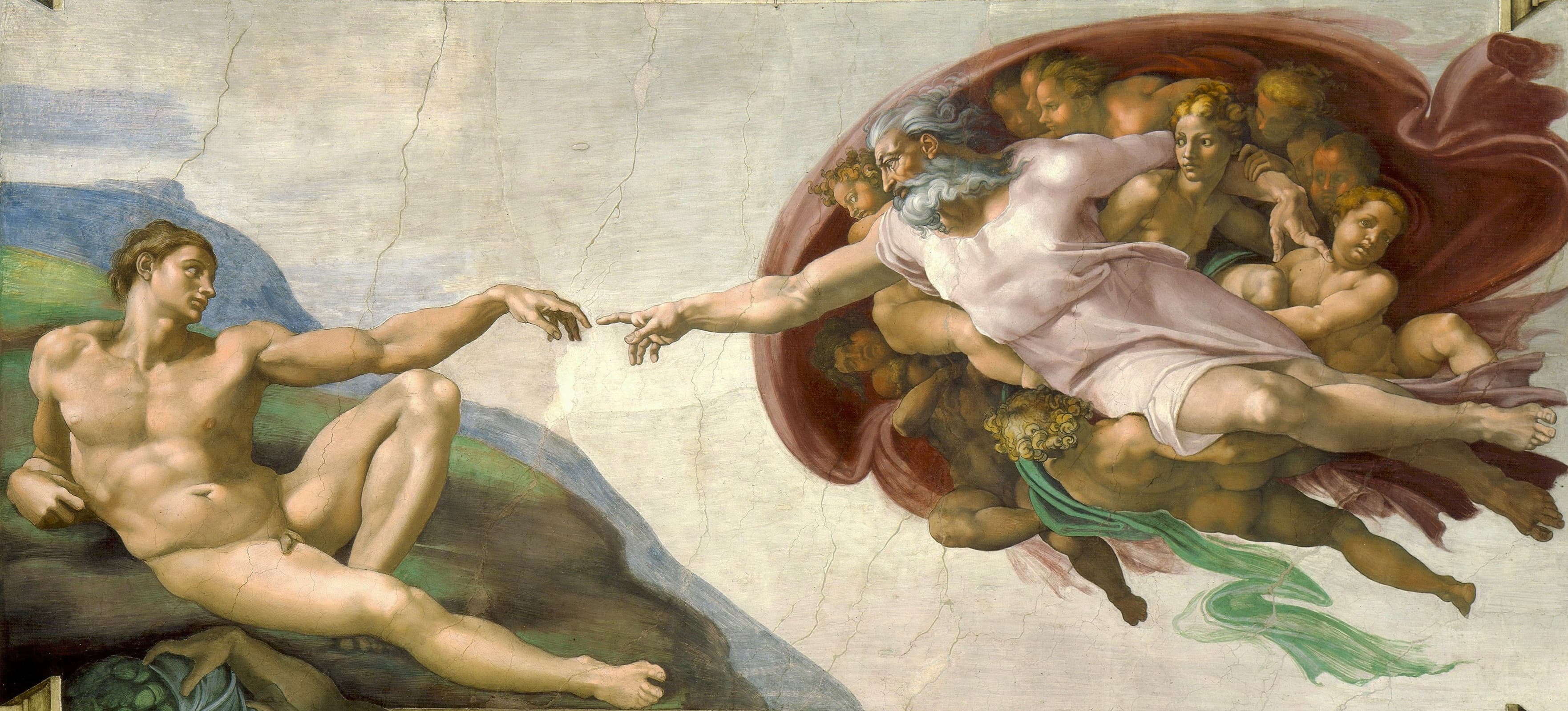
The nude bodies are shown frankly and without display, the way Doré drew Adam and Eve throughout the book: as the first human beings, vulnerable and newly ashamed. Compare the confident, idealized Adam of Michelangelo’s The Creation of Adam, made in the moment of his creation; Doré shows the same figure at the other end of the story. For Satan’s side of the journey that led here, see Satan Approaching the Confines of the Earth, and for Doré’s companion vision of the biblical story, The Doré Bible. Gustave Doré ends his Milton not with judgment but with two people about to start again.
Questions & answers
What does Doré’s Adam and Eve Expelled from Paradise show?
Adam and Eve in a dark forest after leaving Eden. Eve leans weeping against a rock with a hand to her face; Adam, his back to us, holds her hand and looks away. At the upper right the angel stands in soft light with a sword, pointing the way. An uprooted dead tree lies at the right.
Which lines of Paradise Lost does it illustrate?
The end of the poem, Book XII, line 645: “Some natural tears they dropt, but wiped them soon; / The world was all before them, where to choose / Their place of rest, and Providence their guide: / They, hand in hand, with wandering steps and slow, / Through Eden took their solitary way.”
When was Doré’s Paradise Lost published?
Cassell, Petter & Galpin published Milton’s Paradise Lost with Doré’s fifty full-page plates in London and New York in 1866, as a large folio. Adam and Eve Expelled from Paradise is the fiftieth and final plate.
Who engraved the final plate of Doré’s Paradise Lost?
Doré drew the design directly on a boxwood block and the engraver Deschamps cut it; his signature is at lower right on clean impressions, with Doré’s at lower left. The forest and the angel’s soft glow are built entirely from cut lines of varying weight.
What does the ending of Paradise Lost mean in Doré’s plate?
Milton’s ending is double: exile and grief, but also a new beginning, “The world was all before them.” Doré shows both, with Eve weeping while Adam already looks ahead, and the angel pointing the way rather than driving them out with the flaming sword.
More by Gustave Doré
All works →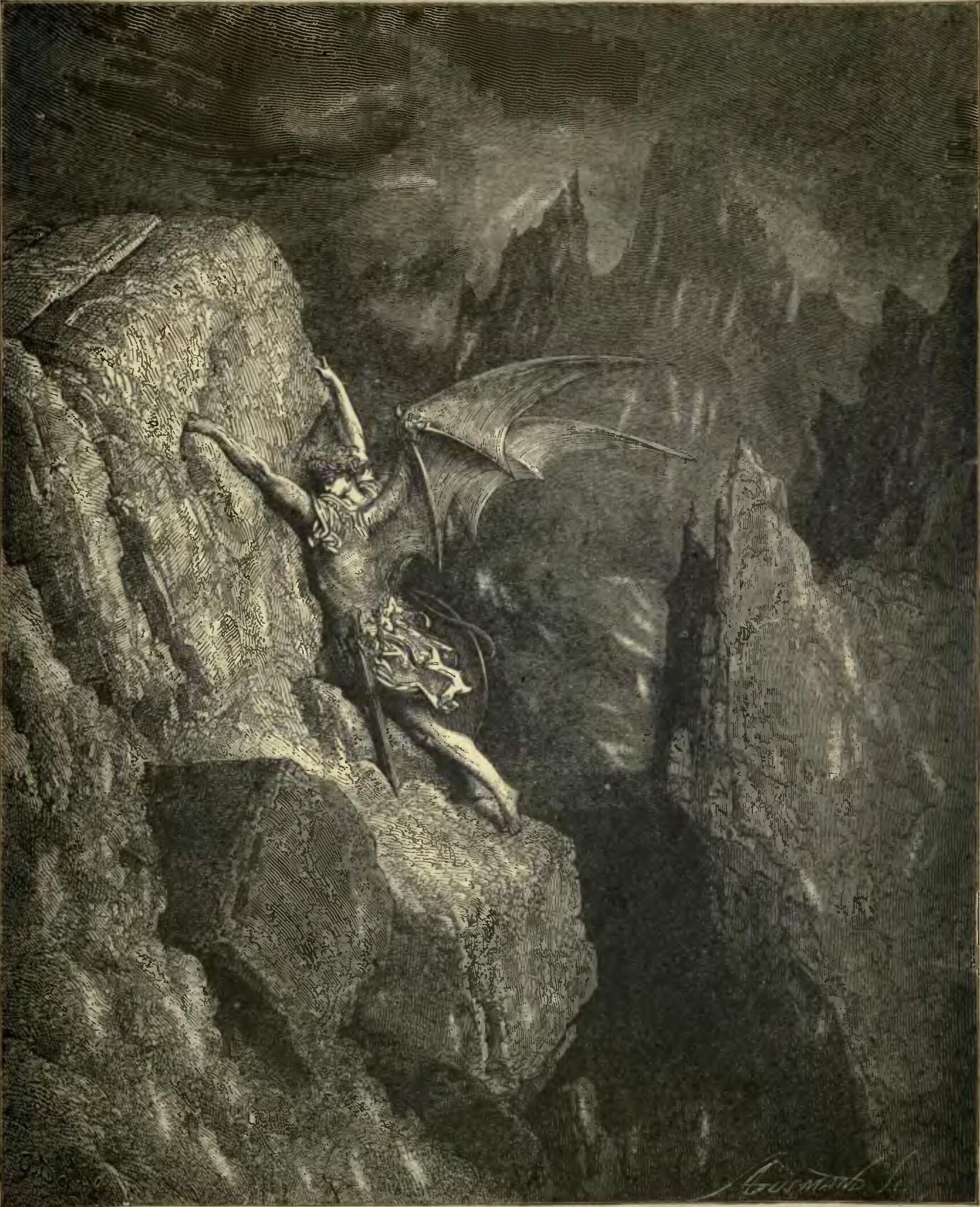
Satan’s Flight Through Chaos
Gustave Doré · 1866
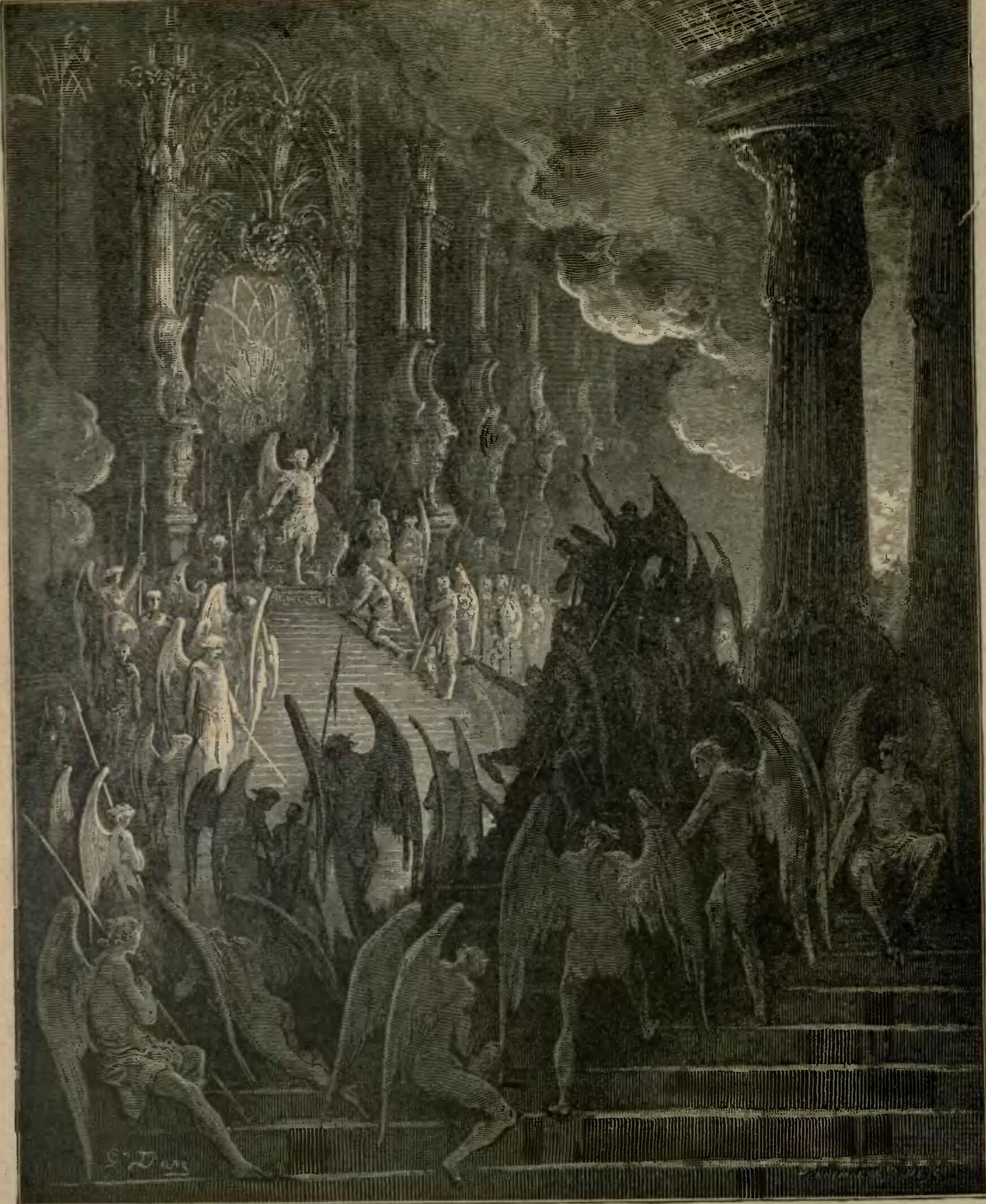
Satan in Council
Gustave Doré · 1866
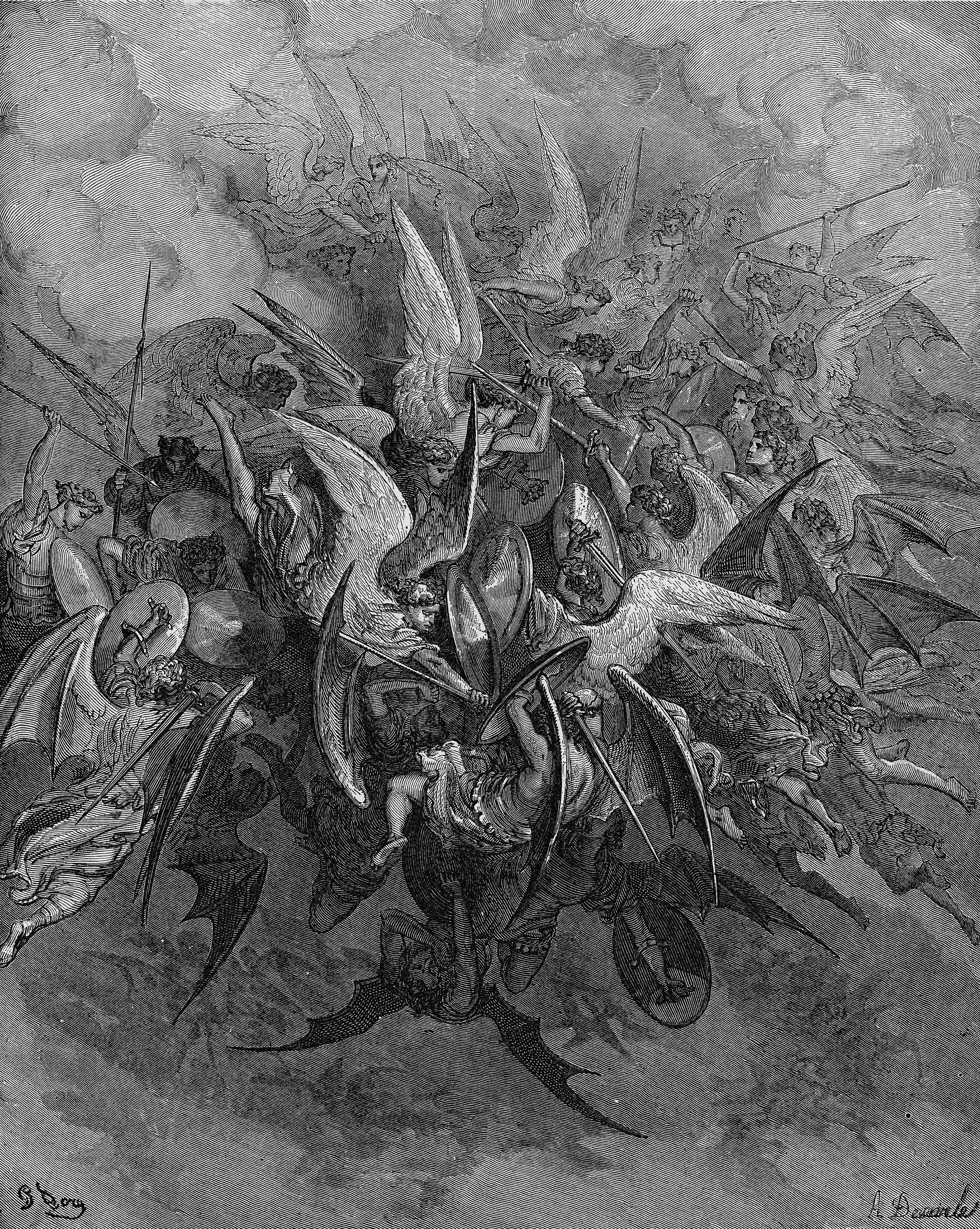
The War in Heaven
Gustave Doré · 1866
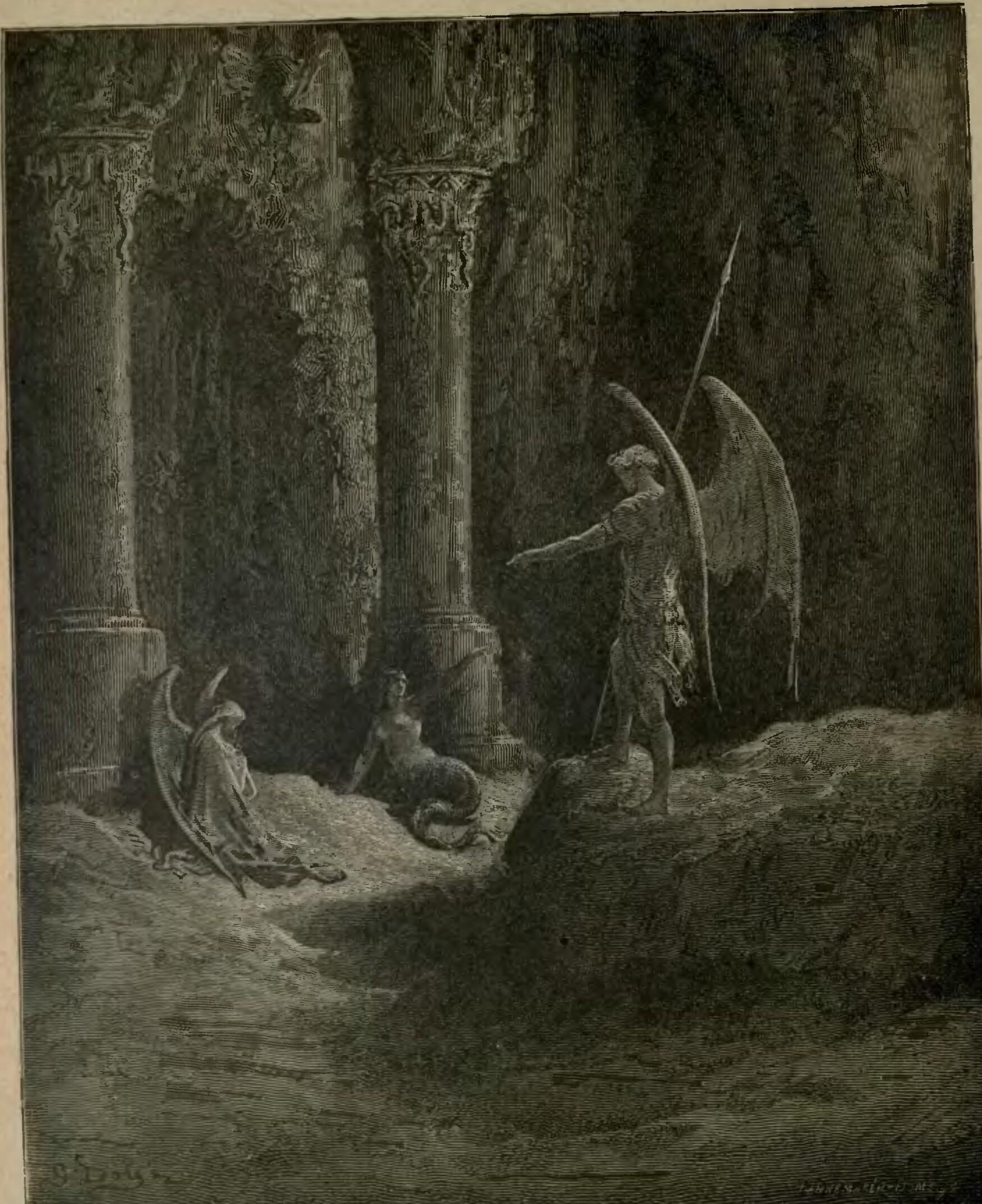
Satan, Sin and Death at the Gates of Hell
Gustave Doré · 1866
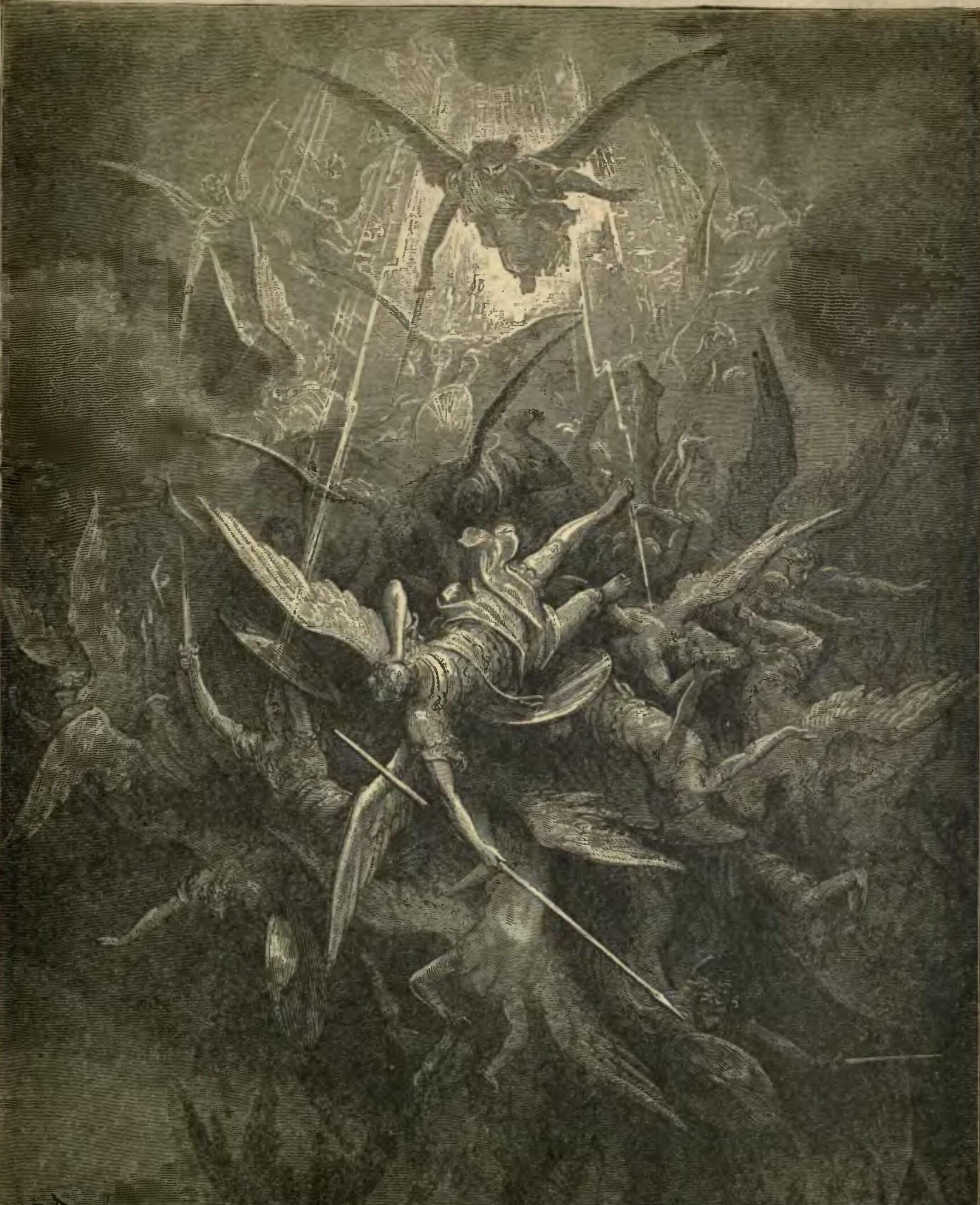
Satan Cast Out of Heaven
Gustave Doré · 1866
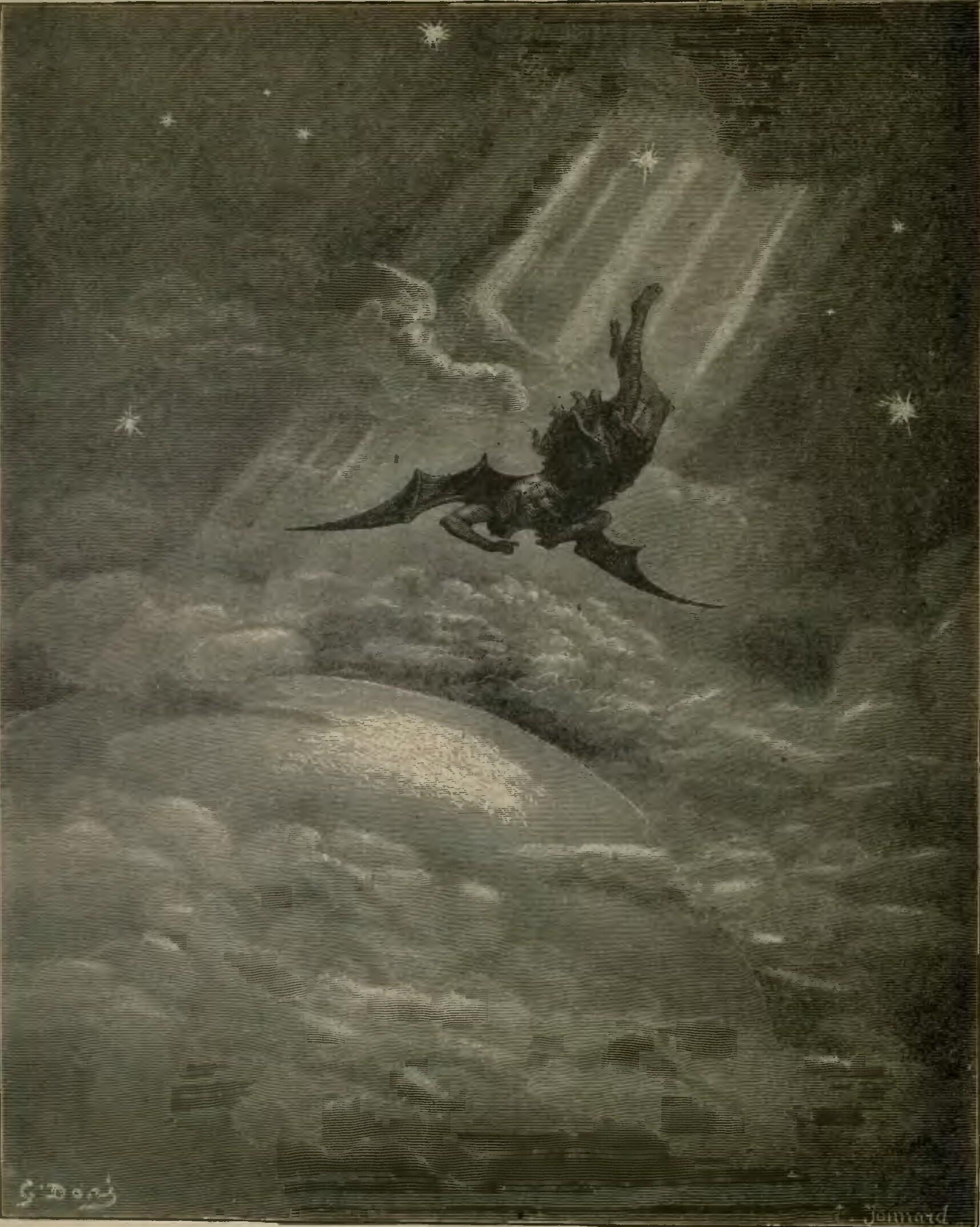
Satan Approaching the Confines of the Earth
Gustave Doré · 1866
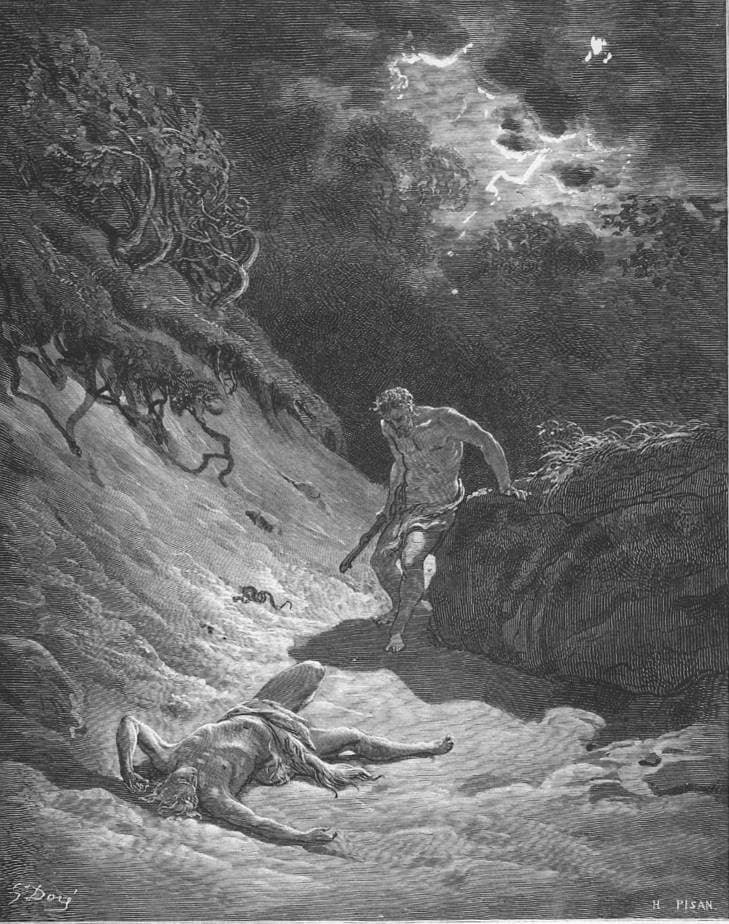
The Death of Abel
Gustave Doré · 1866
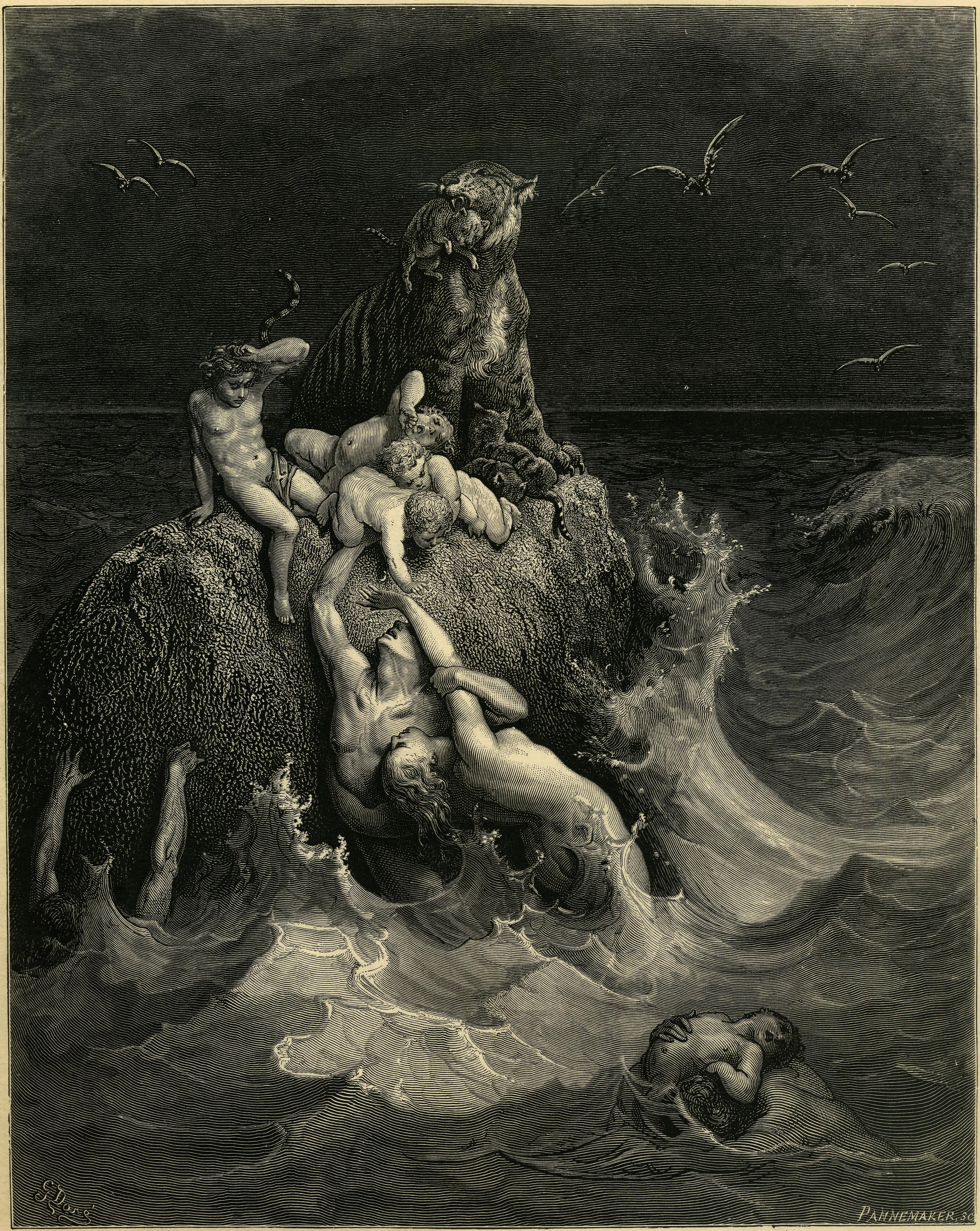
The Deluge
Gustave Doré · 1866
Also from 1866
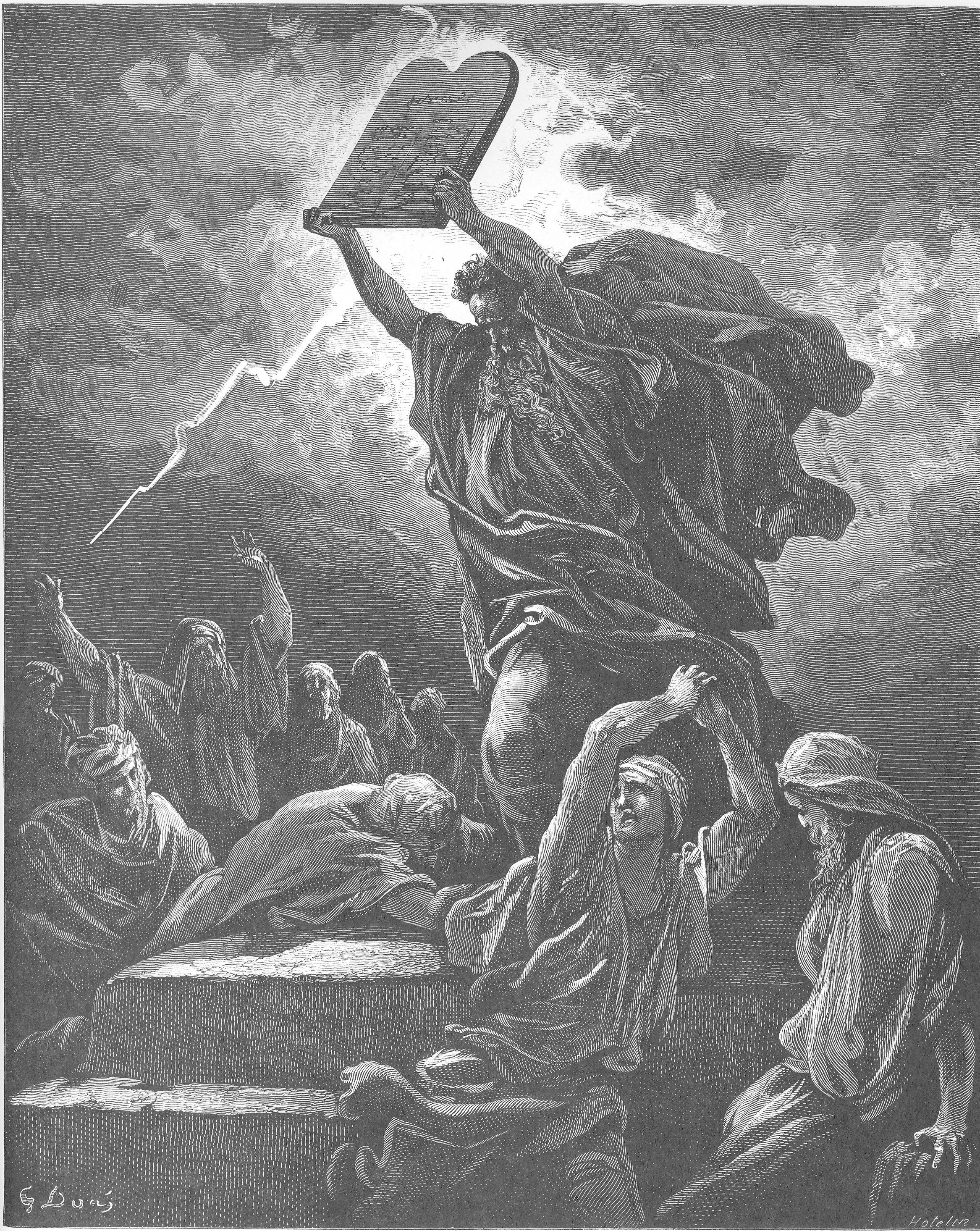
Moses Breaking the Tables of the Law
Gustave Doré · 1866
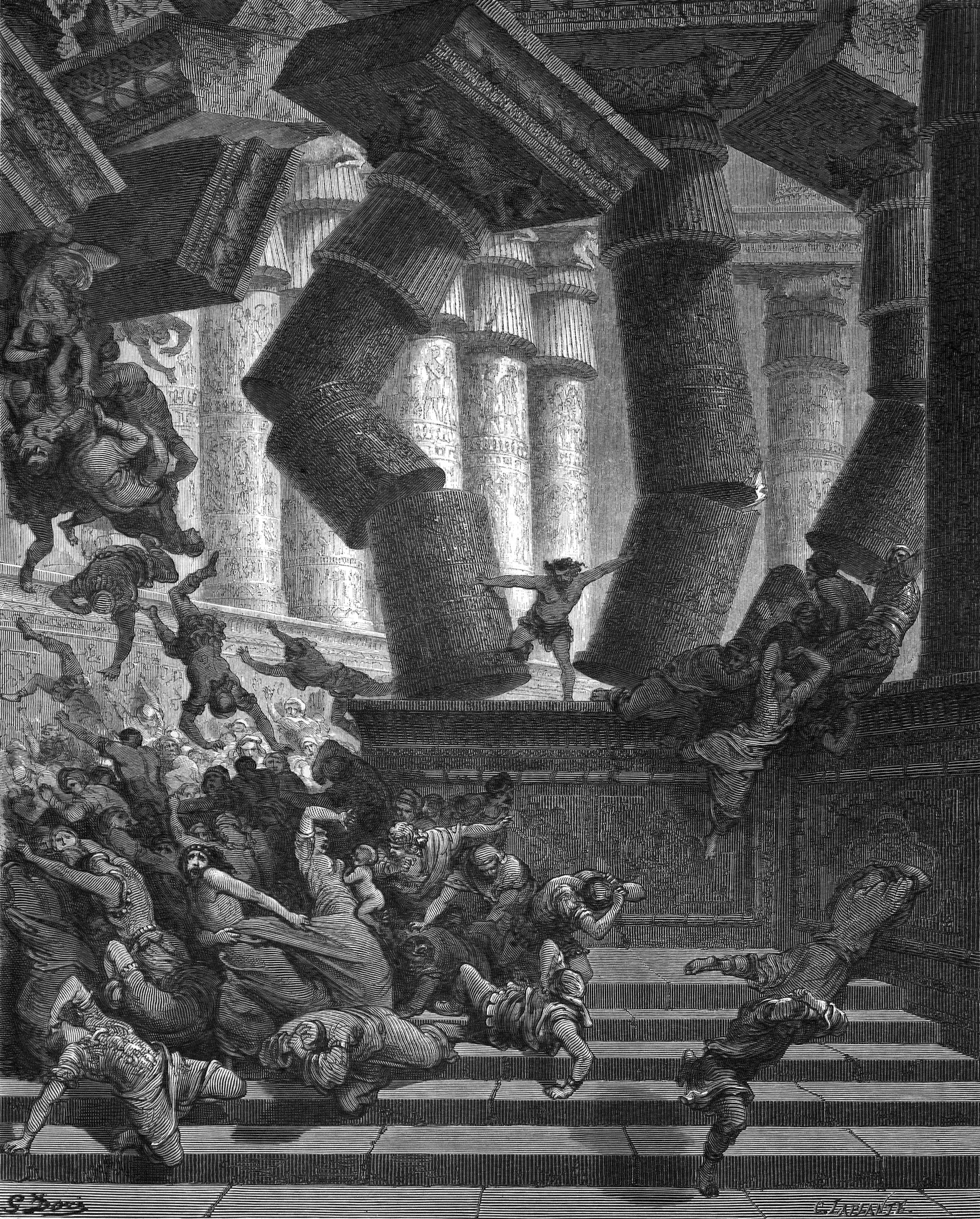
Samson Destroying the Temple
Gustave Doré · 1866
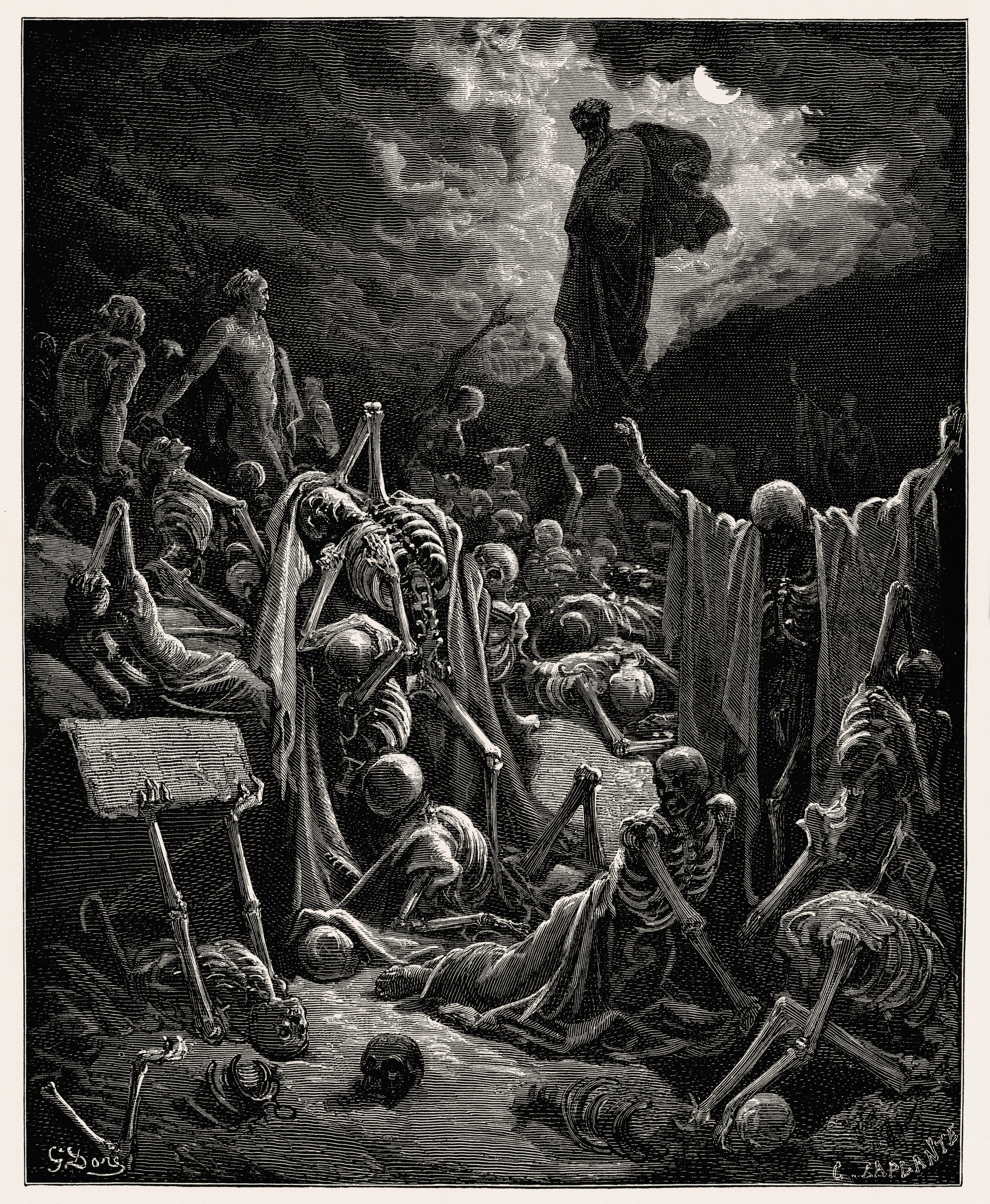
The Vision of the Valley of Dry Bones
Gustave Doré · 1866
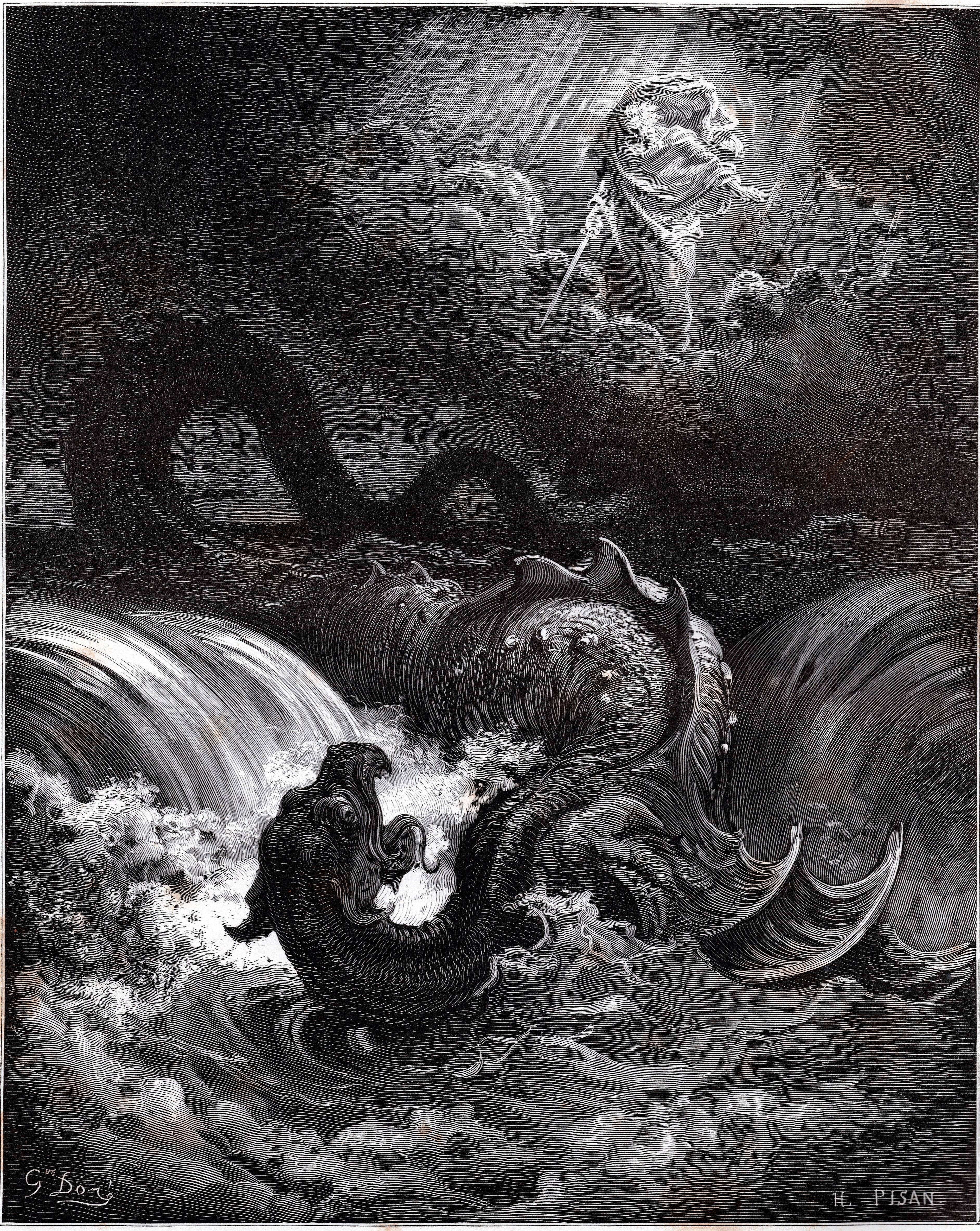
The Destruction of Leviathan
Gustave Doré · 1866
Jacob Wrestling with the Angel
Gustave Doré · 1866
The Confusion of Tongues
Gustave Doré · 1866
Death on the Pale Horse
Gustave Doré · 1866
Related works
The Creation of Adam
Michelangelo · c. 1511–12
Fallen Angel
Alexandre Cabanel · 1847
Jacob Wrestling with the Angel
Gustave Doré · 1866
Death on the Pale Horse
Gustave Doré · 1866
The Knight of the Flowers
Georges Rochegrosse · 1894
Nightmare
Nicolai Abraham Abildgaard · 1800
Bacchus (Saint John the Baptist)
Leonardo da Vinci · c. 1510–15; altered 1683–93
Lucifer, King of Hell
Gustave Doré · 1861