Academic art
Dante and Virgil in Hell
Gustave Courtois, 1879
Dante and Virgil in Hell is an 1879 painting by Gustave Courtois, shown at the 1880 Salon and now in the Musée des Beaux-Arts et d'Archéologie de Besançon. It shows the poets on the frozen lake of traitors, where Ugolino gnaws Archbishop Ruggieri's head.
- Artist
- Gustave Courtois
- Date
- 1879
- Medium
- Oil on canvas
- Dimensions
- 299 × 214 cm
- Collection
- Musée des Beaux-Arts et d'Archéologie de Besançon, Besançon, France
- Movement
- Academic art
What you are looking at
Courtois sets the scene at the very bottom of Hell, and he makes it look like an Alpine glacier. A wall of blue-white ice fills the canvas, split by crevasses and rising to black, jagged peaks under a storm sky. On a ledge in the left half stand the two poets, life-size on a canvas three meters tall.
Virgil is the taller figure: young, beardless, bare-shouldered, wrapped in a heavy ivory toga, a gold laurel wreath in his dark hair and gilt sandals on his feet. He stands upright and calm and looks away to the left, past the damned. Dante, in his traditional red robe and hood, is older, hunched and gaunt. He has pressed himself against his guide and grips Virgil's wrist with both hands while he leans forward to stare down into the ice.
What he sees fills the lower edge of the picture. Heads and shoulders of the damned break through the frozen surface: a gray old man on the left whose tears have frozen into streaks down his cheeks, a woman's face caught at the waterline, a man whose long hair fans out on the ice. At lower right, a muscular blond sinner has hauled himself half out of a crevasse. His mouth and chin are smeared with blood, he looks up at the two poets, and he clutches in both hands the head of a second man, whose hair and skull he has been gnawing.
Which part of Dante's Inferno does it show?
The full French title is Dante et Virgile aux Enfers ; cercle des traîtres à la patrie: Dante and Virgil in Hell, the circle of traitors to their country. This is Cocytus, the frozen lake of the ninth and last circle of Dante's Inferno, where traitors are locked in ice. Dante divides it into four rings, and the second, Antenora, holds those who betrayed their homeland or their party.
The bloodied man is Count Ugolino della Gherardesca of Pisa, and the head in his hands belongs to Archbishop Ruggieri degli Ubaldini. At the end of Canto XXXII the poets find the two frozen in one hole, Ugolino chewing the back of Ruggieri's skull. In Canto XXXIII Ugolino lifts his mouth from his grisly meal to tell his story: Ruggieri betrayed him and had him walled up in a tower with his sons and grandsons, where they starved to death. Courtois paints the moment of that pause, with Ugolino turning his face up toward the living visitor.
Two other details come straight from the text. Dante describes the sinners' tears freezing as they weep, which is the old man at left. And he describes Cocytus as ice so thick it looks like glass rather than water. Courtois turns that description into something closer to a real mountain glacier, with blue crevasses and seracs that his Salon audience would have recognized from Alpine travel and photography.
Who painted it, and when
Gustave-Claude-Étienne Courtois (1852–1923) was born in Pusey, near Vesoul in eastern France, and trained in Paris in the studio of Jean-Léon Gérôme at the École des Beaux-Arts, alongside his close friend Pascal Dagnan-Bouveret. He became known for polished portraits and for academic subjects drawn from myth, religion and literature.
Dante and Virgil in Hell is signed and dated Gustave Courtois 1879 at lower left. It is one of his early ambitious showpieces, made by a painter in his twenties to win attention at the Salon. It was exhibited at the Paris Salon of 1880 (no. 923), entered the French state collection, and was sent the same year to the museum in Besançon, the regional capital near the artist's birthplace.
How it fits the tradition
Dante's Inferno was one of the great sources for nineteenth-century French painters. Delacroix's Barque of Dante (1822) launched the Romantic fashion, and William-Adolphe Bouguereau answered it with Dante and Virgil in Hell (1850), two sinners locked in a biting struggle while the poets watch. Ugolino in particular had become a celebrity of suffering after Carpeaux's sculpture of the starving count and his sons (1857–61). Gustave Doré, whose Inferno illustrations appeared in 1861, gave the frozen lake its most famous image in black and white.
Courtois takes a cooler, more academic line. His Virgil is an idealized classical statue, his Dante a frightened old man, and the horror is pushed to the bottom edge of the frame, where the viewer has to look down to find it, just as Dante does. The contrast between the serene white figure and the scarlet one, between classical poise and human fear, is the real subject of the picture. Like Alexandre Cabanel's Fallen Angel, it shows how the Salon painters handled terror through beautiful finish rather than violent brushwork.
A detail many viewers miss: Dante is not only looking but holding on. His hands, clamped around Virgil's wrist, are the most nervous passage in the painting, and they echo the way Dante in the poem keeps clinging to his guide on the descent.
Where is Dante and Virgil in Hell today?
The painting is in the Musée des Beaux-Arts et d'Archéologie de Besançon, in eastern France. It was a state deposit there from 1880 and in 2022 ownership was formally transferred from the state to the city of Besançon. It is oil on canvas and measures 299 × 214 cm. In 2021–22 it traveled to Rome for the exhibition Inferno at the Scuderie del Quirinale, which marked the 700th anniversary of Dante's death. A preparatory drawing for the composition is also in the Besançon museum.
For more Salon painting of this kind, see Academic Art; for the darker side of the subject, Death in Art.
Questions & answers
Where is Gustave Courtois's Dante and Virgil in Hell?
It is in the Musée des Beaux-Arts et d'Archéologie de Besançon, France. It entered the French state collection after the Salon of 1880 and deposited it in Besançon that year; ownership passed to the city in 2022. The oil on canvas measures 299 × 214 cm.
What scene from Dante's Inferno does the painting show?
It shows Cocytus, the frozen lake of the ninth circle, in the ring of traitors to their country (Antenora). At lower right Count Ugolino, his mouth bloodied, holds the head of Archbishop Ruggieri, whose skull he gnaws, from the end of Canto XXXII and the start of Canto XXXIII.
Which figure is Dante and which is Virgil?
Dante is the older man in the red robe and hood, clutching his guide's wrist and peering down at the damned. Virgil is the young, laurel-crowned figure in the white toga, standing calm and upright. Courtois sets classical serenity against human fear.
When was Dante and Virgil in Hell painted?
Courtois signed and dated it 1879, at lower left. He exhibited it at the Paris Salon of 1880 as number 923, when he was in his late twenties and still building his reputation as a pupil of Jean-Léon Gérôme. The date sits beside his signature in the ice.
Who was Gustave Courtois?
Gustave-Claude-Étienne Courtois (1852–1923) was a French academic painter born in Pusey, near Vesoul. He studied with Jean-Léon Gérôme in Paris, was a close friend of Pascal Dagnan-Bouveret, and painted society portraits as well as mythological, religious and literary subjects for the Salon.
Kindred works
You may also study
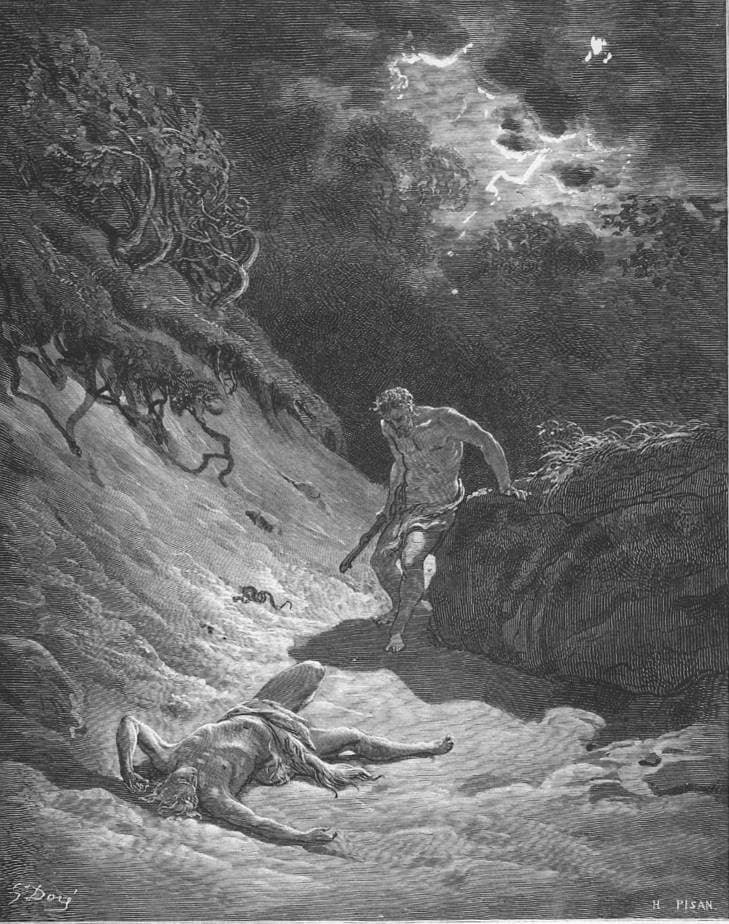
The Death of Abel
Gustave Doré · 1866
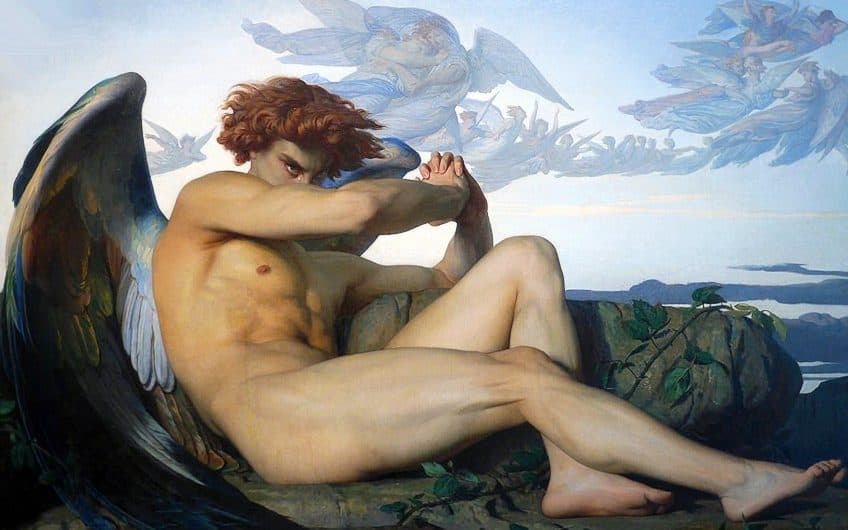
Fallen Angel
Alexandre Cabanel · 1847
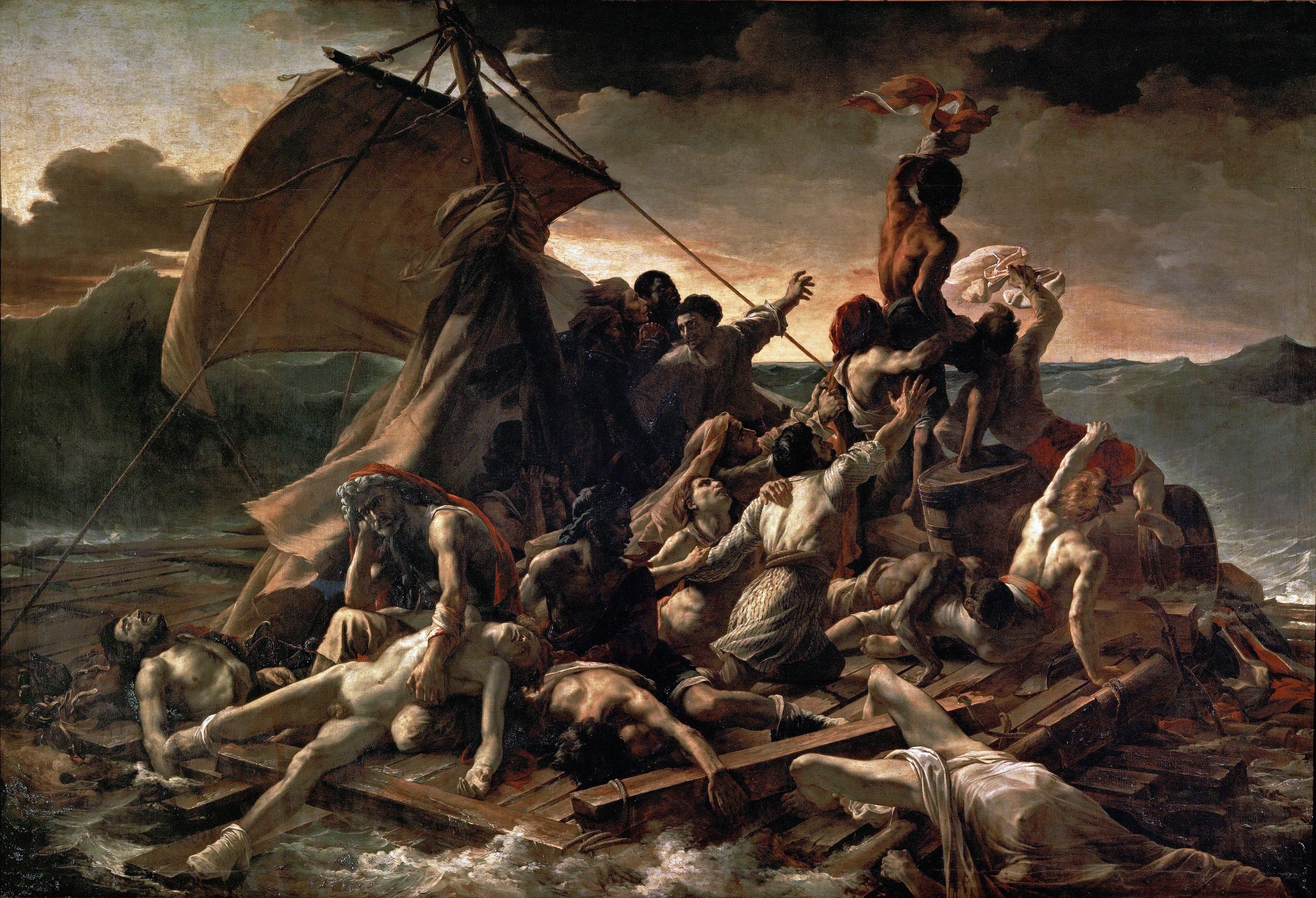
The Raft of the Medusa
Théodore Géricault · 1818–1819
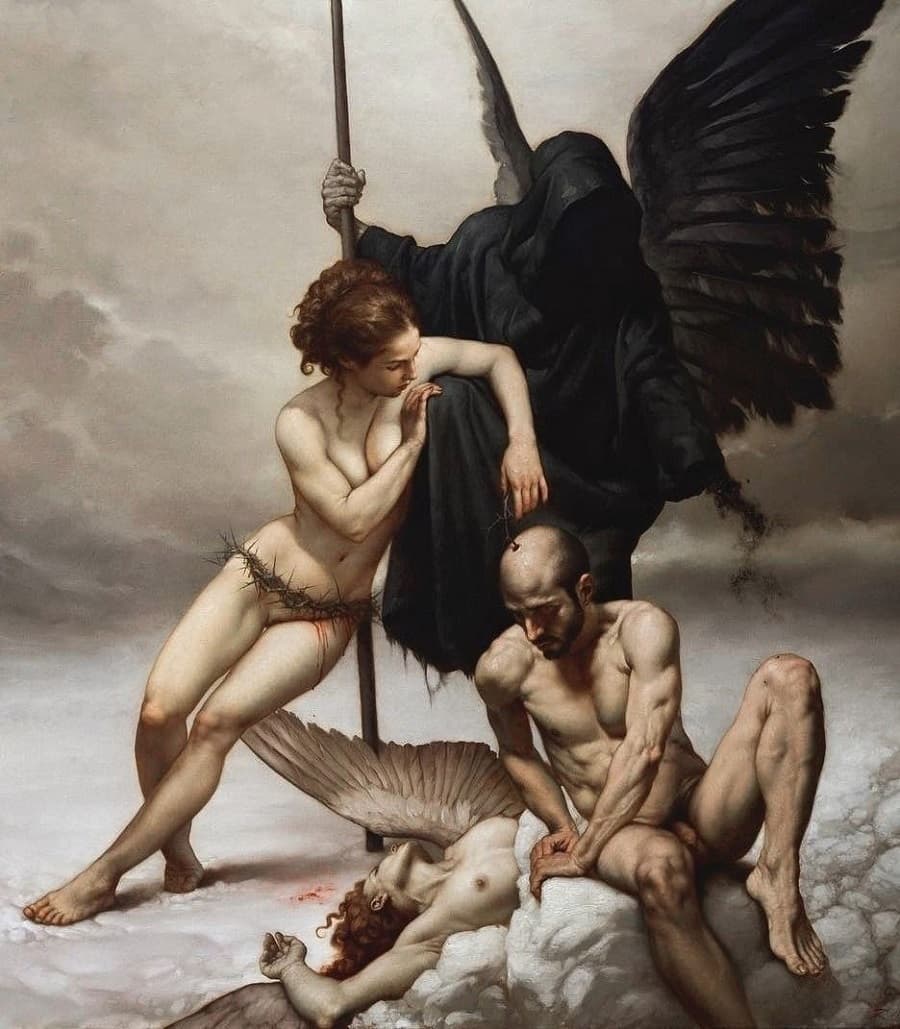
The Angel, the Death, and the Devil
Roberto Ferri · 2018
Humanity Against Evil
Gaetano Cellini · 1906–08

The Scream
Edvard Munch · 1893

The Thinker
Auguste Rodin · Modeled 1880–82; enlarged 1902–03; this cast 1904

Saturn Devouring His Son
Francisco Goya · c. 1819–1823