Impressionism
Water Lily Pond, Green Harmony
Claude Monet, 1899
Water Lily Pond, Green Harmony is an 1899 painting by Claude Monet of the Japanese footbridge over his water-lily pond at Giverny, in cool greens and blues. It is in the Musée d'Orsay, Paris.
- Artist
- Claude Monet
- Date
- 1899
- Medium
- Oil on canvas
- Dimensions
- 89.5 × 92.5 cm
- Collection
- Musée d'Orsay, Paris, France
- Movement
- Impressionism
- Catalogue
- Wildenstein 1515
More at Monet at the Musée d'Orsay
What you are looking at
A pale blue-green wooden footbridge arches across the pond from edge to edge, a little above the middle of the canvas. Behind it hangs a dense curtain of weeping willow and foliage in yellow-green and deep green. Below, the pond is covered with lily pads, laid in as horizontal strokes, and scattered with pink, white and red blossoms that thicken toward the foreground. The banks on each side are crowded with tall reeds and irises. The canvas is almost square, and there is no sky at all.
The light is soft and even, a summer morning or a lightly clouded day. Monet's signature sits at the lower right in red, the warmest touch in a cool picture.
The 1899 bridge series
Claude Monet bought land across the road from his house at Giverny in 1893 and dug a pond, planted it with water lilies and built a footbridge in the Japanese manner. In the summer of 1899 he painted it about a dozen times from the same viewpoint at the end of the pond, on nearly square canvases. This is one of them, catalogued by Wildenstein as W.1515.
Closely similar versions are in the National Gallery, London, the Metropolitan Museum (Bridge over a Pond of Water Lilies) and the National Gallery of Art in Washington (The Japanese Footbridge). The bridge pictures were shown at Durand-Ruel's gallery in Paris in late 1900, among Monet's first public paintings of his water garden. The whole sequence is traced in The Japanese Footbridge.
Japanese prints by Hiroshige and others, which Monet collected and hung throughout his house, often show arched bridges over water; the footbridge was his own version of that motif, built rather than borrowed.
How it was painted
The title points to the color. Monet restricts himself almost entirely to greens, in every shade from lemon to near-black, with blue in the bridge and shadows and small accents of pink and red in the flowers. Within that narrow range, he separates the zones by brushwork.
The willow above is painted in long, vertical, downward strokes, like falling water. The pond below is painted in short, horizontal strokes. The bridge sits between them as the one curved line.
Look at the lower foreground. The lily pads there are bigger and more widely spaced, and the flowers are larger dabs, while near the bridge they shrink to flecks. That simple change of scale creates the depth of the pond. Under the bridge, the willow's reflection appears as a second, darker curtain of vertical strokes in the water, so the bridge is framed above and below by the same tree.
The bridge itself is drawn with surprising care: two rails and a deck, each a band of blue-green highlighted with white where the light catches the top edge. It is the only firmly drawn object in the picture, and it holds everything else in place. Its color, a cool blue-green, was Monet's own choice for the garden's woodwork; not the red seen on many bridges in Japan, and the restored garden keeps the green.
How this version differs
Within the 1899 group, the Orsay picture is one of the most saturated in green and among the most evenly lit. The following year Monet returned to the motif with a hotter palette in pictures such as Water Lily Pond, Harmony in Rose, also in the Orsay, and The Water Lily Pond in Boston. Comparing the Orsay's green and rose versions, painted a year apart from the same spot, is the clearest demonstration of what Monet meant by painting the same motif in different light.
Provenance and where to see it
The painting was bought in 1900 by the collector Isaac de Camondo, who bequeathed his collection to the French state in 1911. It hung at the Louvre and the Jeu de Paume before moving to the Musée d'Orsay in 1986 (RF 2004). The museum's other Monets are described on Monet at the Musée d'Orsay, and the garden itself on Giverny.
Questions & answers
Where is Water Lily Pond, Green Harmony?
It is in the Musée d'Orsay in Paris (RF 2004). The collector Isaac de Camondo bought it in 1900 and left it to the French state in 1911; it hung at the Louvre and the Jeu de Paume before moving to the Orsay when the museum opened in 1986.
When and where was it painted?
In the summer of 1899 in Monet's water garden at Giverny, which he had created from 1893 across the road from his house. He painted the Japanese footbridge from the same spot about a dozen times that year. Wildenstein catalogues this canvas as W.1515.
How many Japanese bridge paintings did Monet make in 1899?
About a dozen, all from nearly the same viewpoint at the end of the pond and on nearly square canvases. Others are in London, New York, Washington, Philadelphia and Princeton. He returned to the motif in 1900 with a warmer palette and again much later, around 1918–24.
Is the Japanese bridge at Giverny still there?
Yes. The garden at Giverny, restored in the late 1970s, is open to visitors as part of the Fondation Claude Monet, and a green-painted footbridge crosses the pond in the same place. The original wooden bridge has been rebuilt over the years.
More by the artist
Claude Monet

Bridge over a Pond of Water Lilies
Claude Monet · 1899

Woman with a Parasol – Madame Monet and Her Son
Claude Monet · 1875

Sunset in Venice
Claude Monet · 1908–12

La Grenouillère
Claude Monet · 1869

Beach in Pourville
Claude Monet · 1882

Springtime
Claude Monet · 1872

Boating on the River Epte
Claude Monet · 1890

The Seine at Asnières (Hermitage)
Claude Monet · 1873
Also painted in 1899
The same year
Kindred works
You may also study
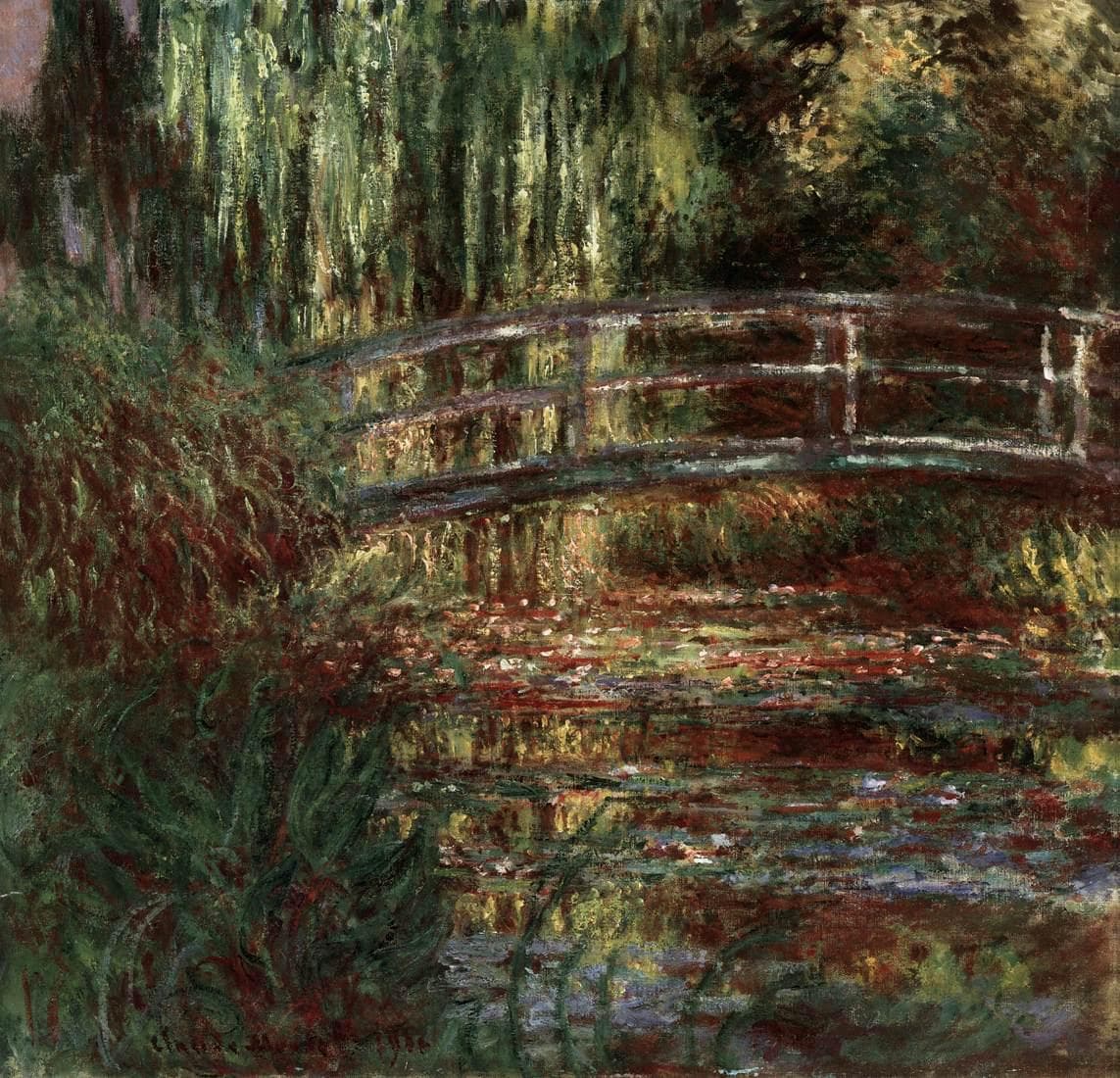
The Water Lily Pond
Claude Monet · 1900
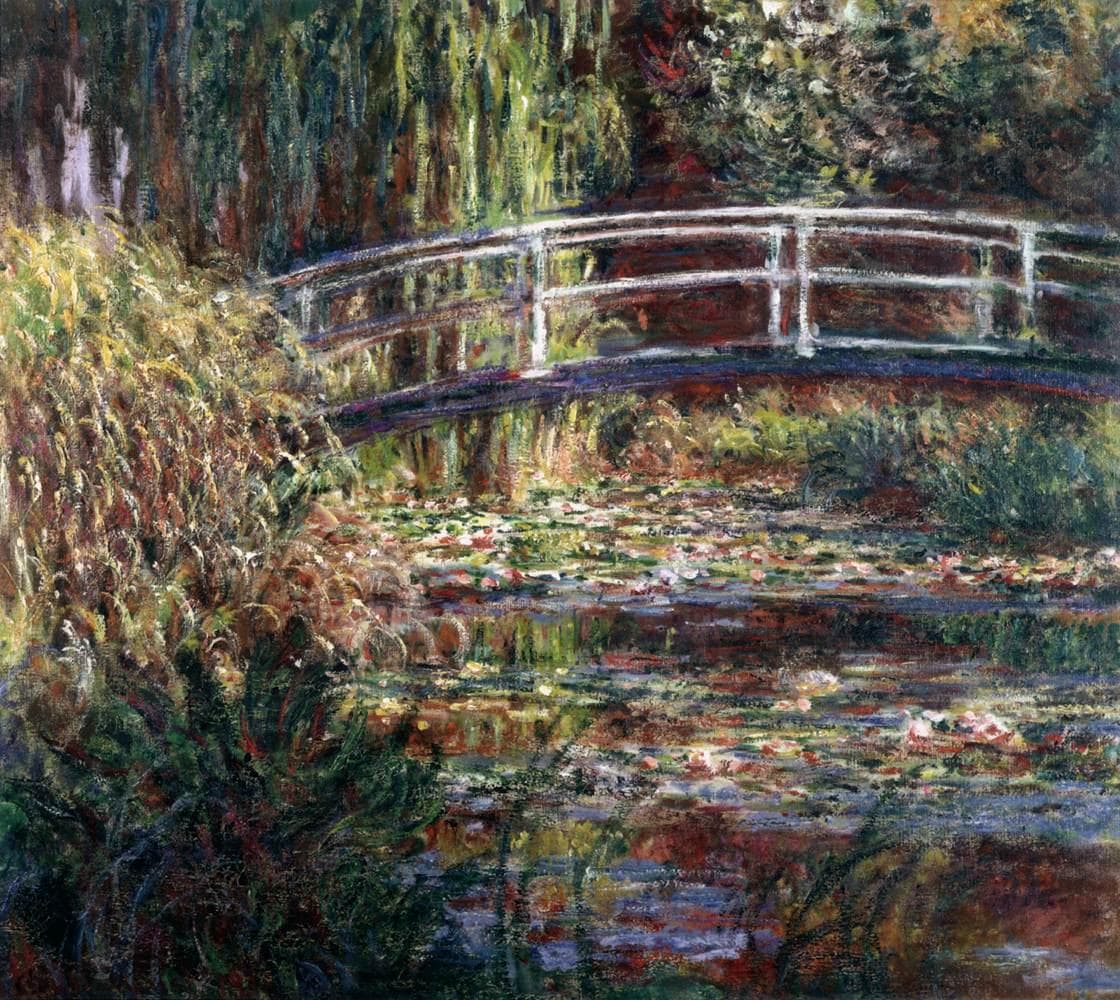
The Water Lily Pond, Harmony in Rose
Claude Monet · 1900
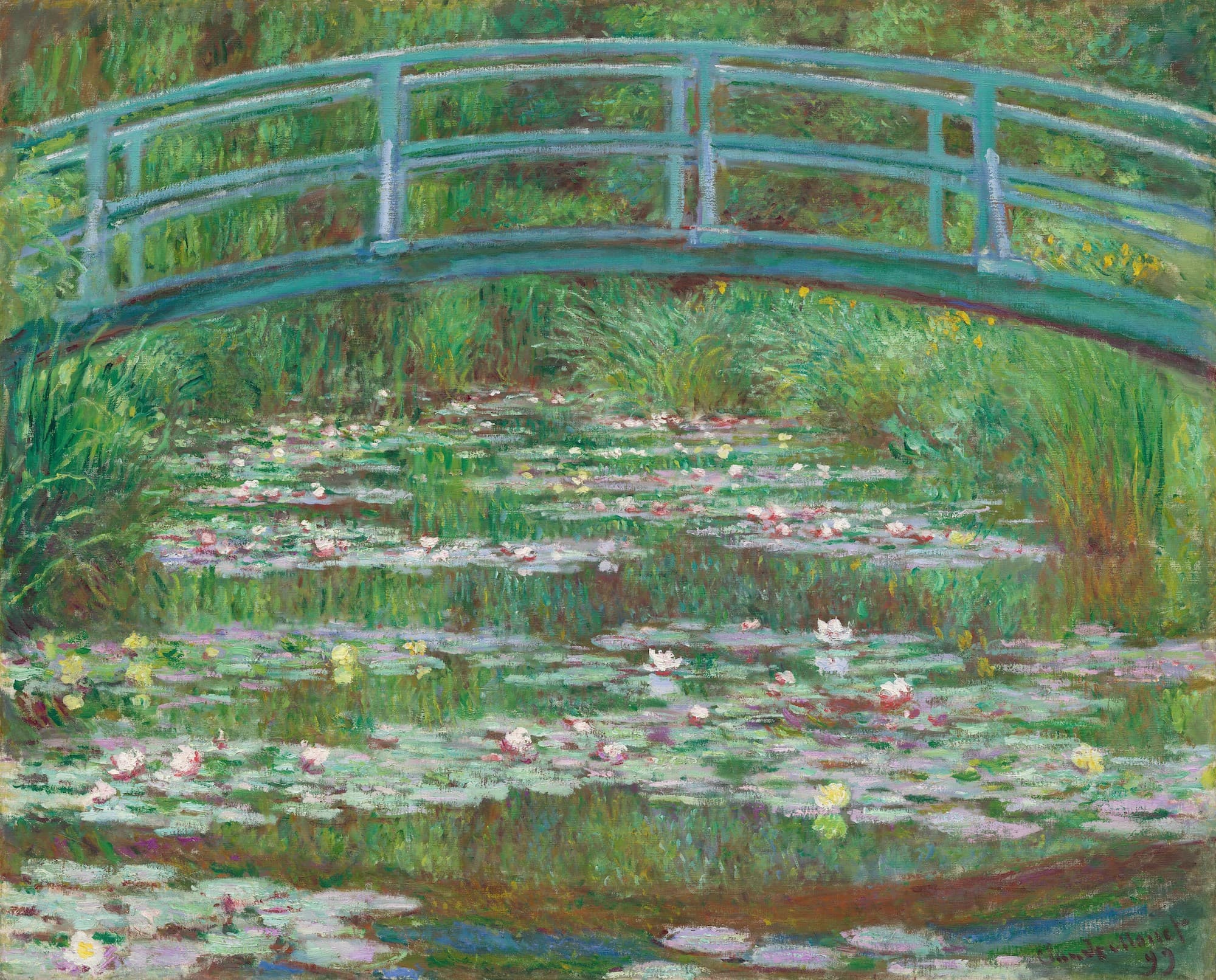
The Japanese Footbridge
Claude Monet · 1899
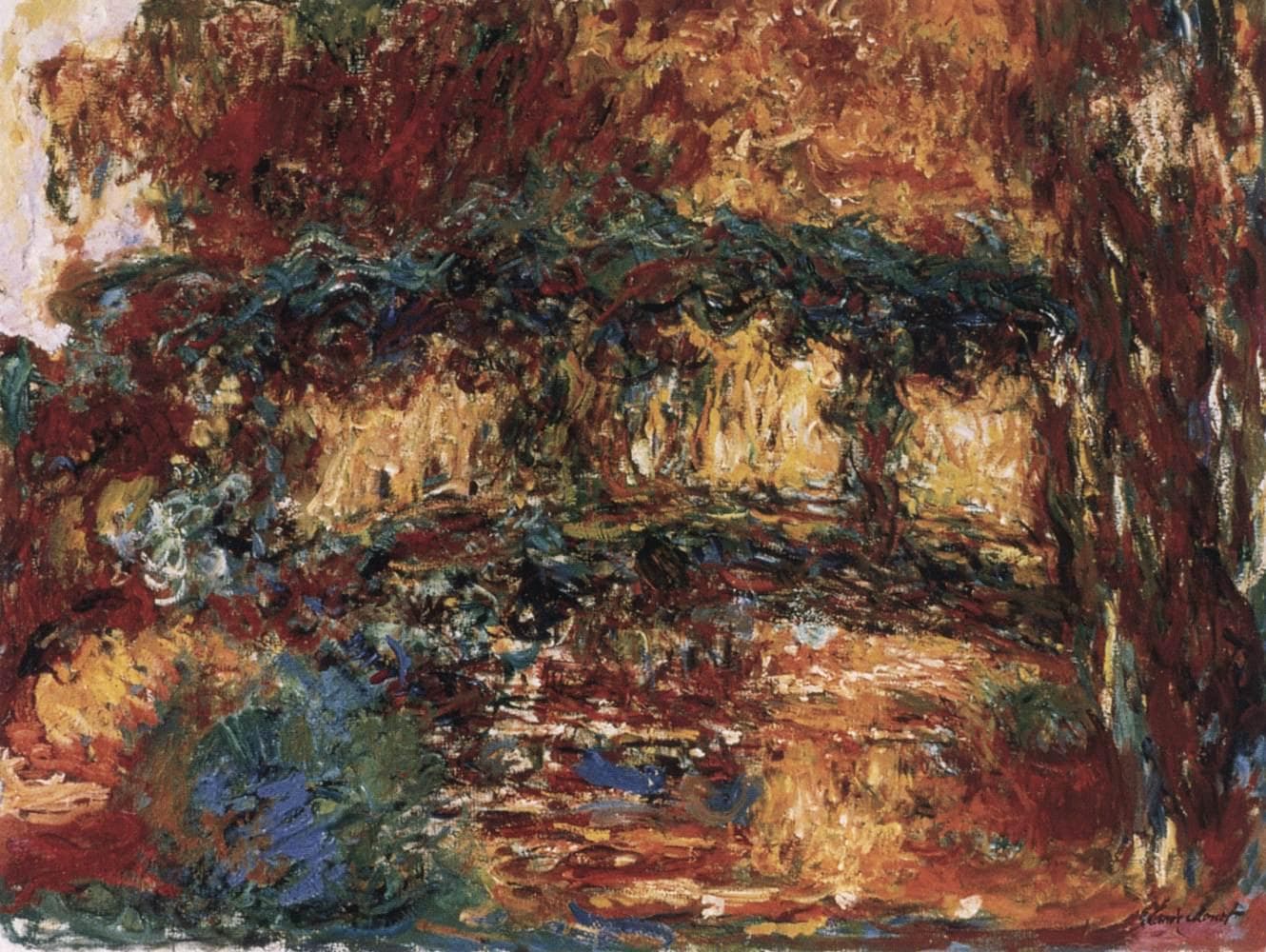
The Japanese Bridge
Claude Monet · c. 1923–25

The Scream
Edvard Munch · 1893

Ophelia
John Everett Millais · 1851–52

The Great Wave off Kanagawa
Katsushika Hokusai · c. 1830–32
The Birth of Venus
Sandro Botticelli · c. 1484–1486