Series
Gustave Doré's Illustrations for Poe's The Raven (1884)
Doré's last book: 26 wood engravings for Poe's poem, published after his death.
Gustave Doré's The Raven is his set of 26 wood engravings for Edgar Allan Poe's poem: 24 full-page plates and two smaller vignettes, published in a large folio by Harper & Brothers in New York with 1884 on the title page, and in London by Sampson Low. The book actually went on sale in December 1883, simultaneously in Britain and America, with a commentary by the critic Edmund Clarence Stedman.
It was Doré's last great book, and he did not live to see it. He died in Paris on 23 January 1883, aged 51, as he was finishing the project. Harper had commissioned the drawings in 1882, the only commission Doré ever received from an American publisher. The plates follow Poe's stanzas one by one, from the scholar nodding over his books at midnight to the raven's shadow on the floor, and they are among the darkest images he ever designed. This page walks through the key plates in the order of the poem.
The complete set
All 26 plates
In the order of the book. Plates with a full close reading are marked ✦.
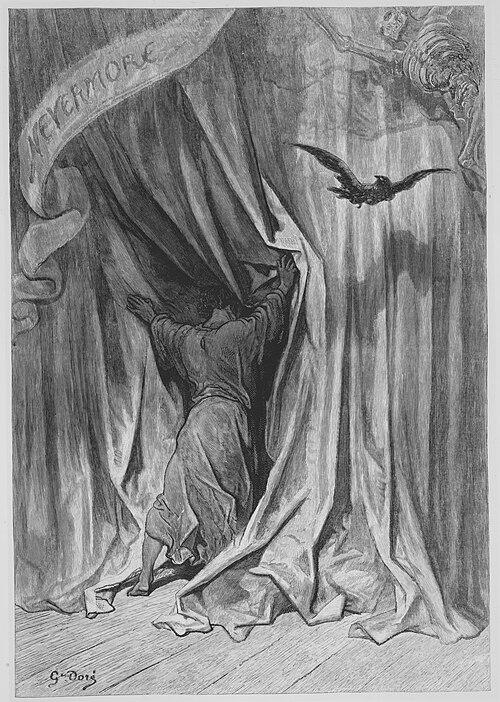
Frontispiece: Nevermore
1884 · The Raven (1884)
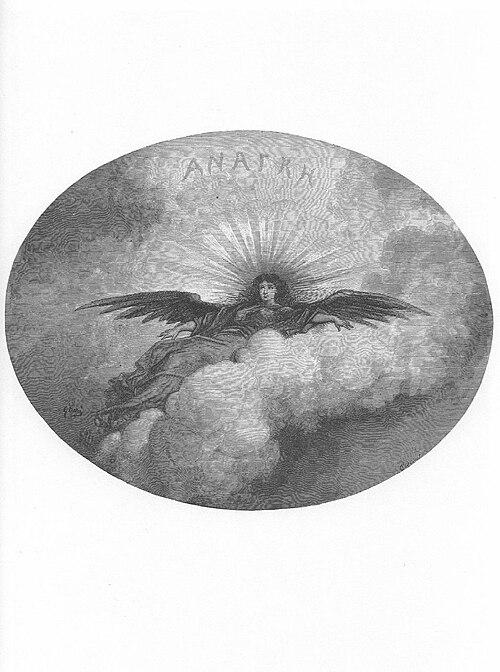
Ananke
1884 · The Raven (1884)
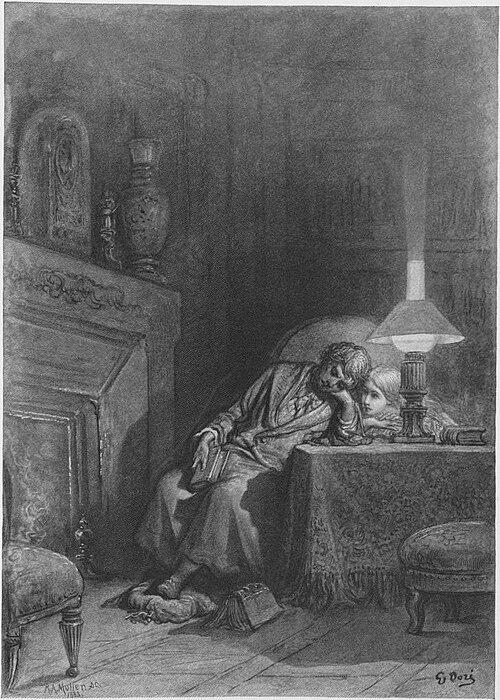
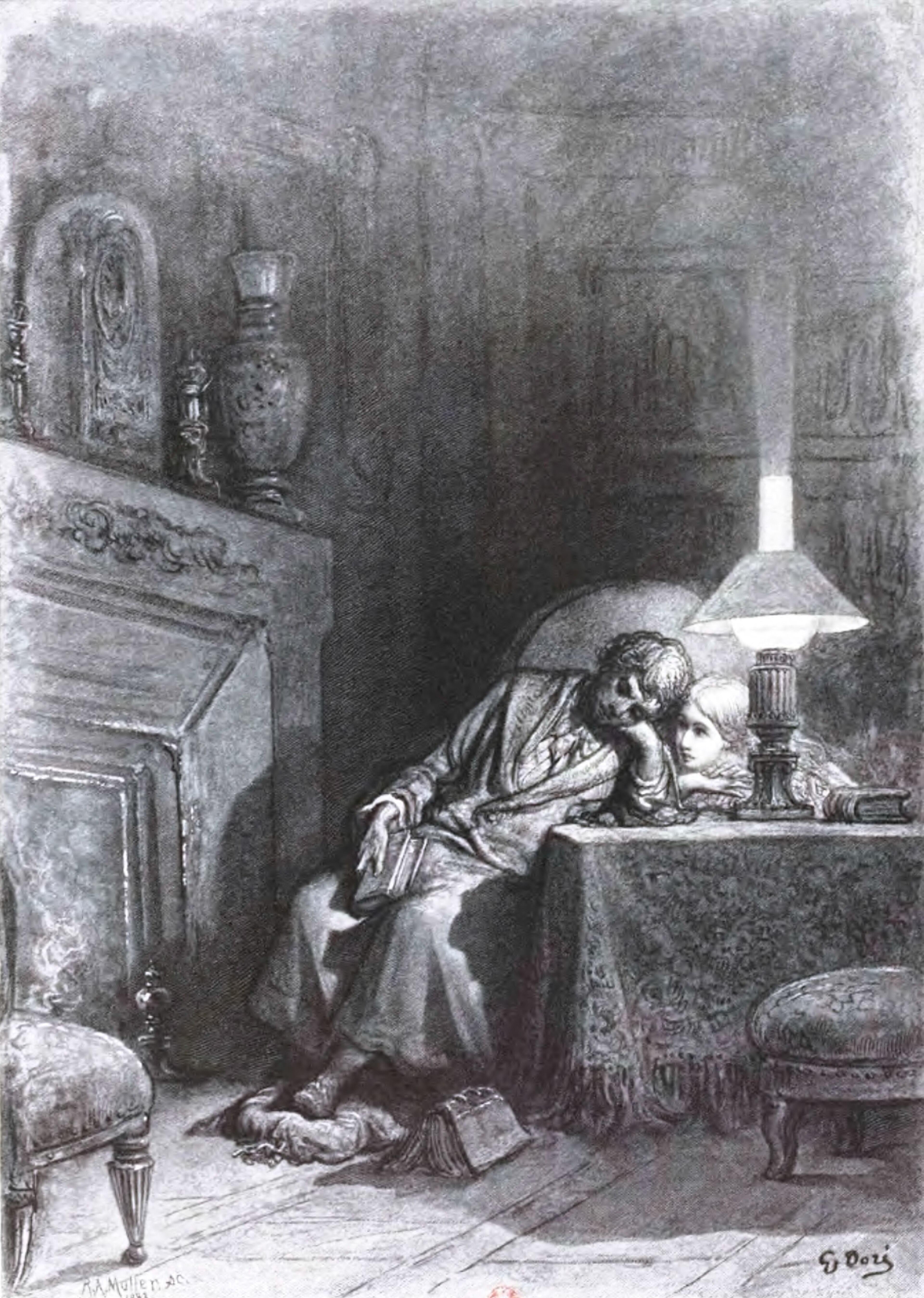
✦Stanza 1: Once upon a Midnight Dreary
1884 · The Raven (1884)
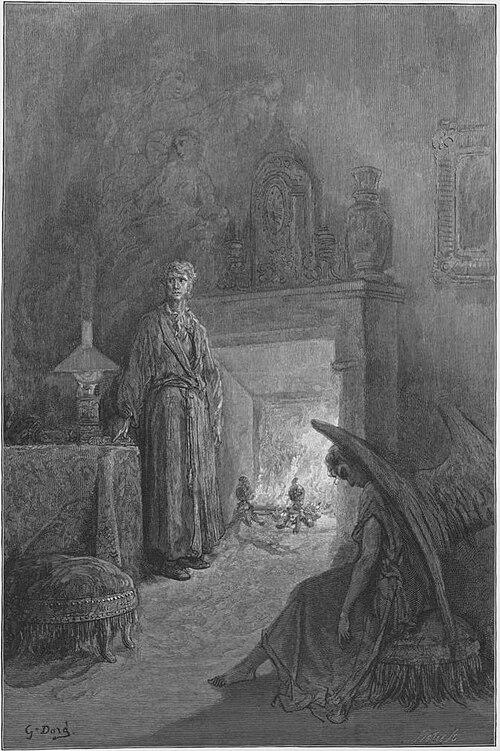
Stanza 2: The Bleak December
1884 · The Raven (1884)
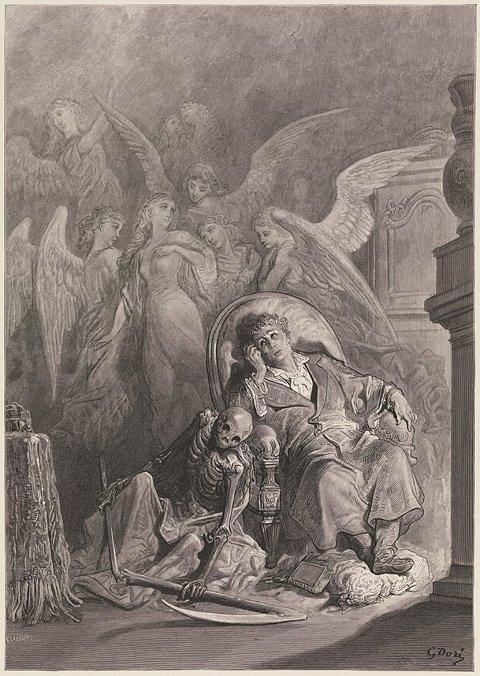
Stanza 2: Sorrow for the Lost Lenore
1884 · The Raven (1884)
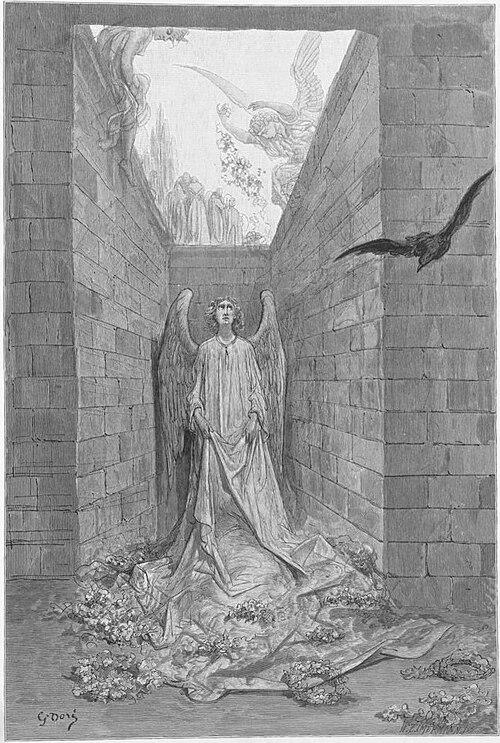
Stanza 2: Lenore
1884 · The Raven (1884)
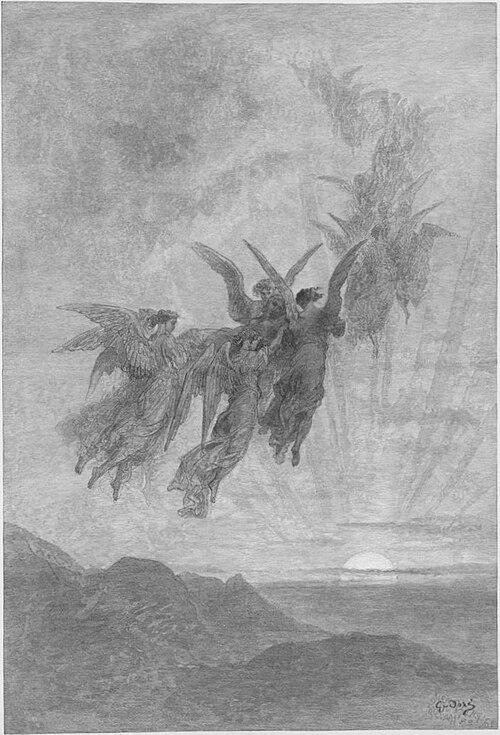
Stanza 2: The Rare and Radiant Maiden
1884 · The Raven (1884)
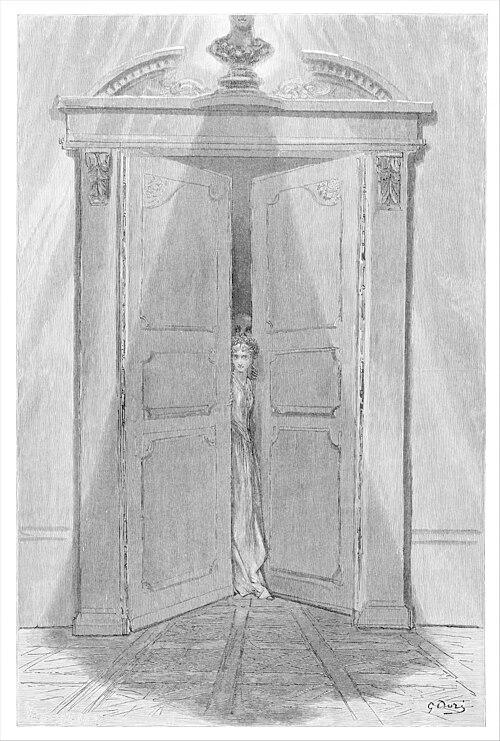
Stanza 3: Some Visitor Entreating Entrance
1884 · The Raven (1884)
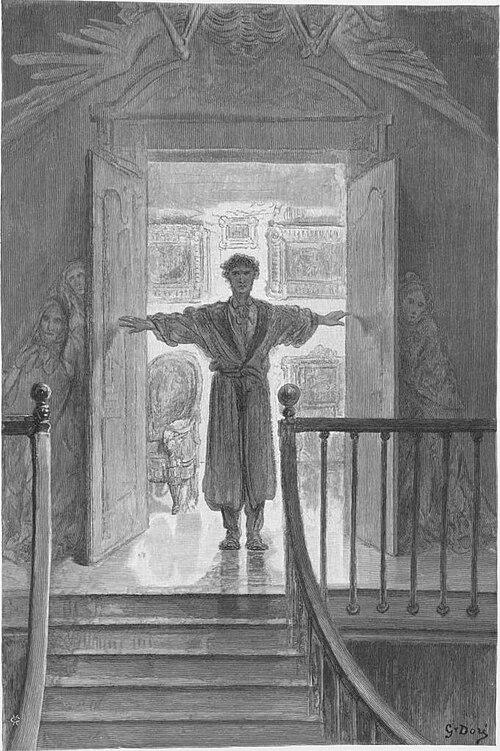
Stanza 4: Darkness There, and Nothing More
1884 · The Raven (1884)
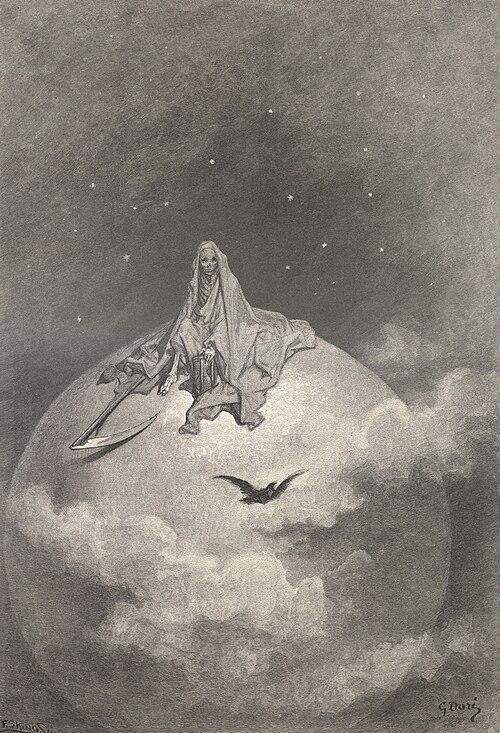
Stanza 5: Dreams No Mortal Ever Dared to Dream
1884 · The Raven (1884)
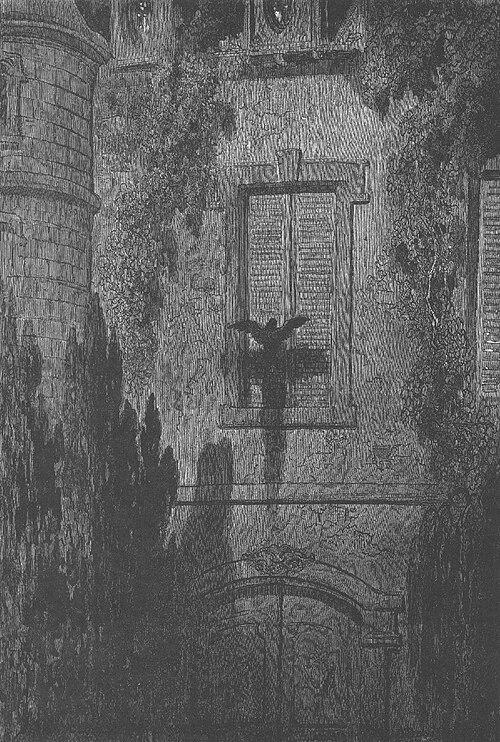
Stanza 6: Something at My Window Lattice
1884 · The Raven (1884)
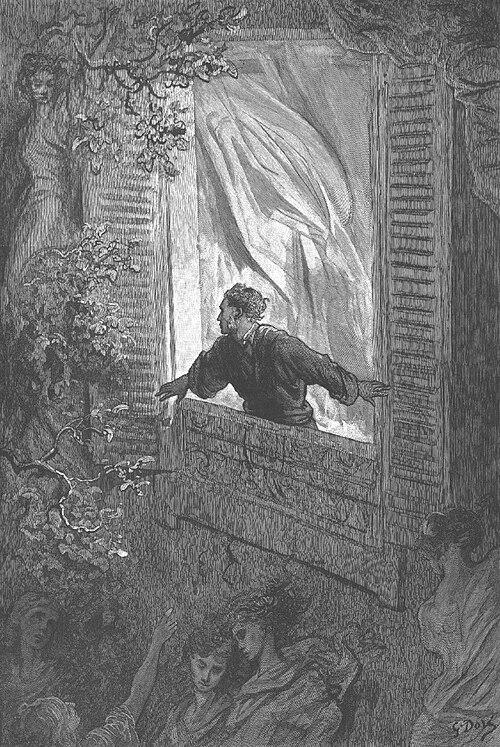
Stanza 7: Open Here I Flung the Shutter
1884 · The Raven (1884)
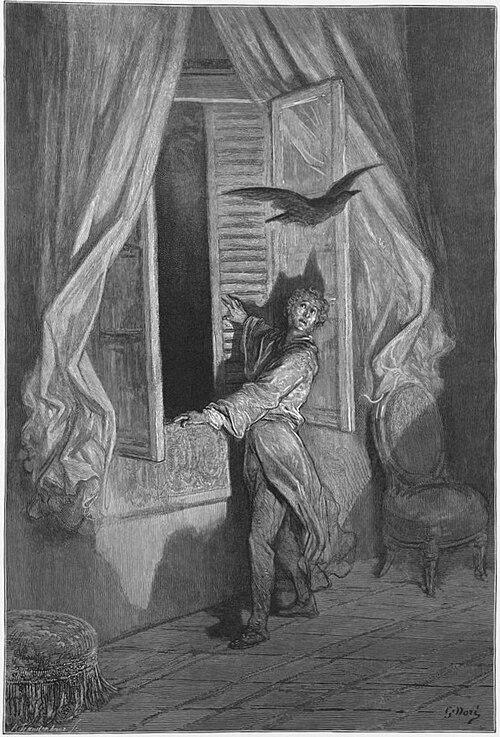
Stanza 7: A Stately Raven
1884 · The Raven (1884)
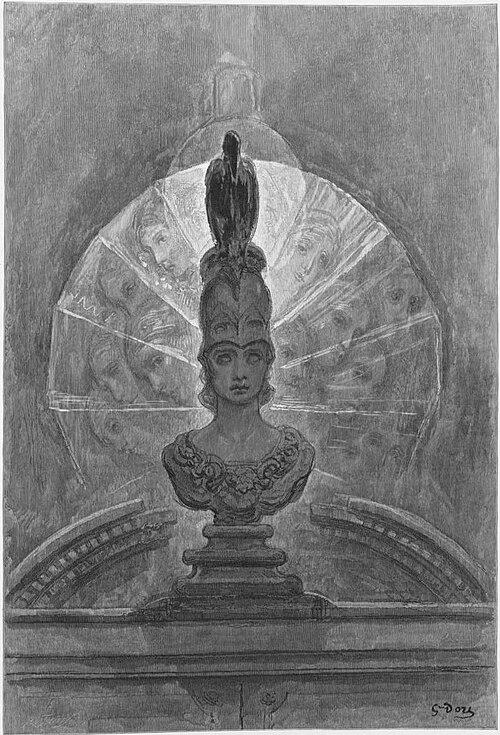
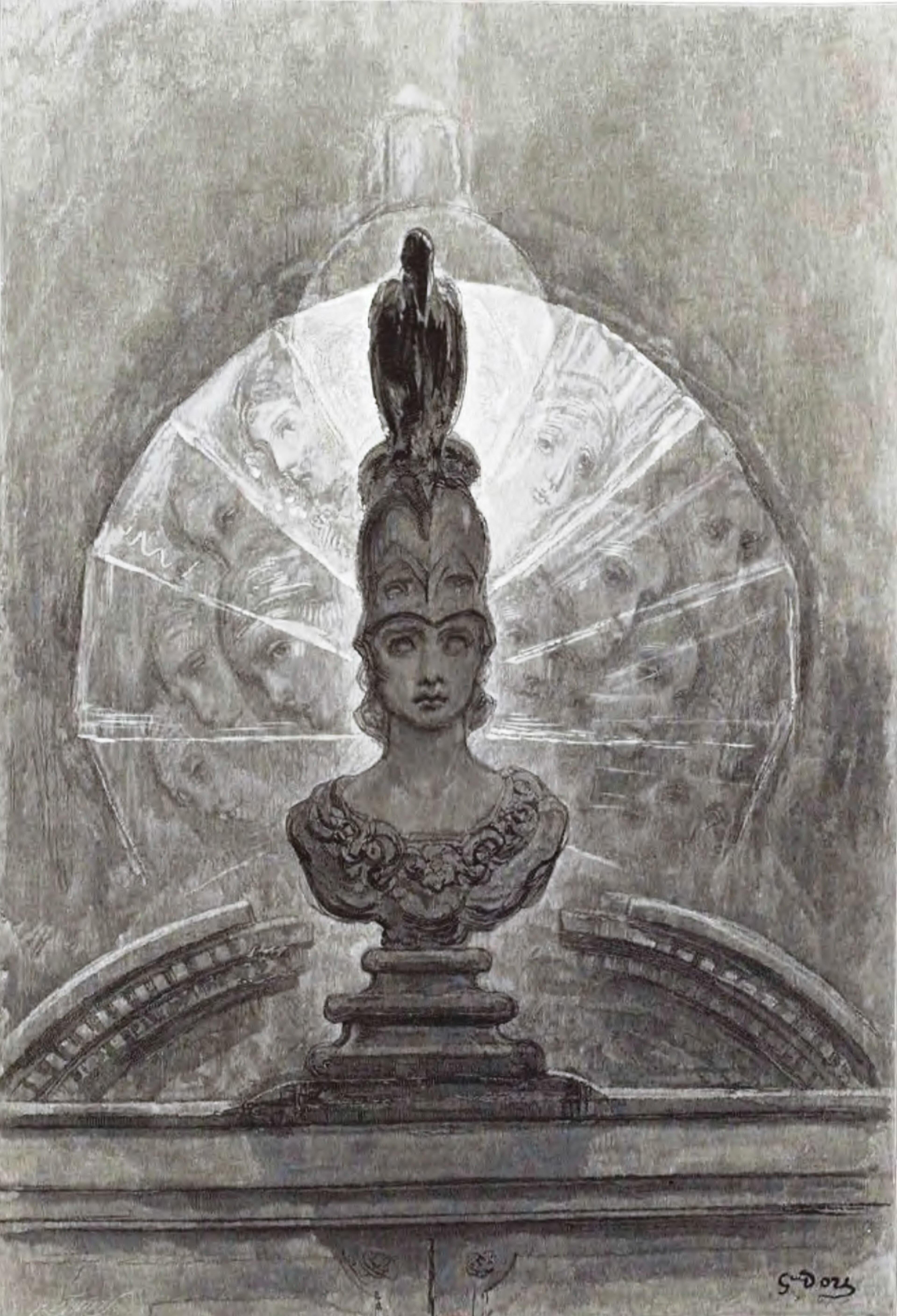
✦Stanza 7: Perched upon a Bust of Pallas
1884 · The Raven (1884)
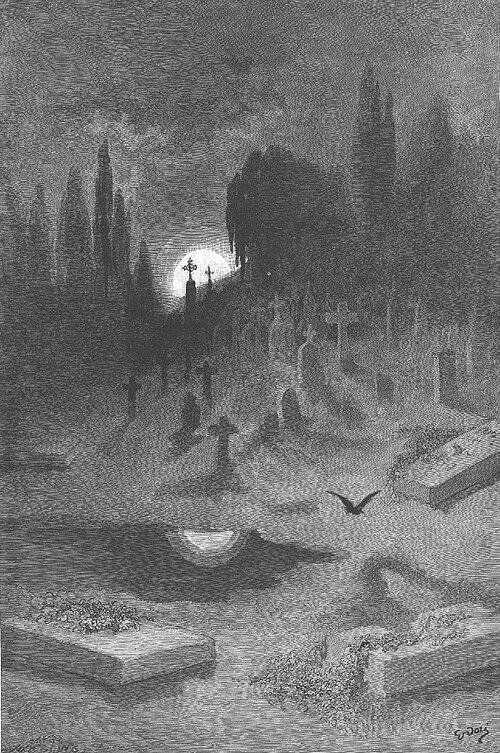
Stanza 8: Wandering from the Nightly Shore
1884 · The Raven (1884)
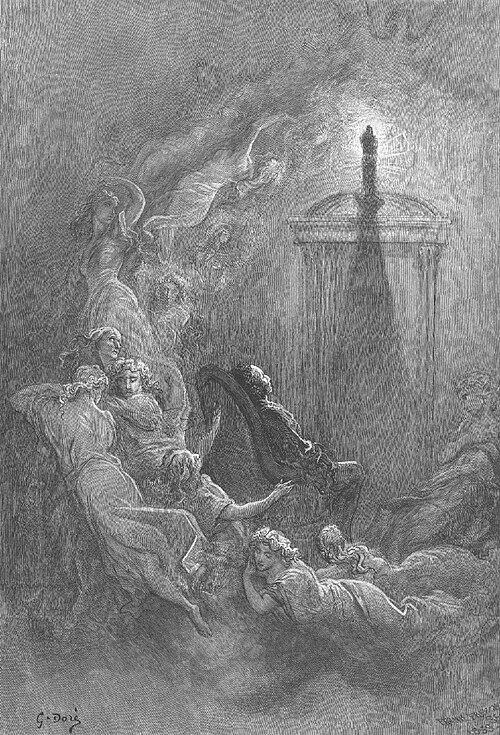
Stanza 10: Other Friends Have Flown Before
1884 · The Raven (1884)
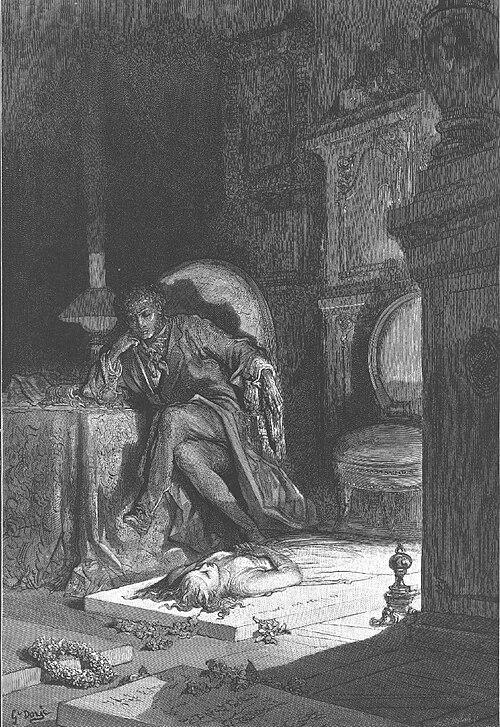
Stanza 12: Fancy unto Fancy
1884 · The Raven (1884)
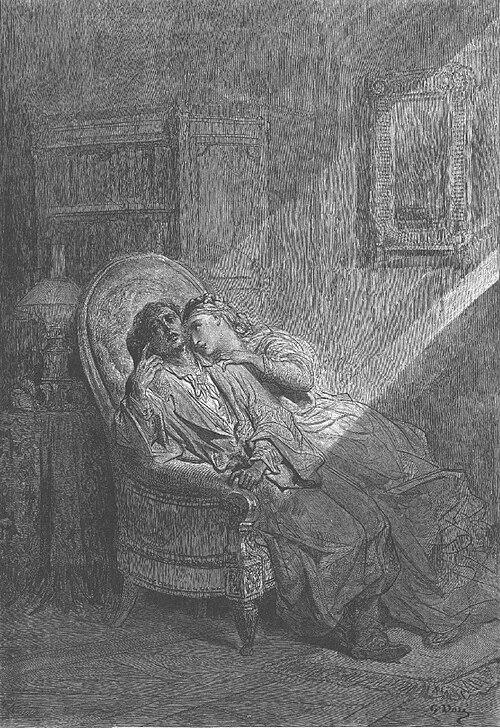
Stanza 13: She Shall Press, Ah, Nevermore
1884 · The Raven (1884)
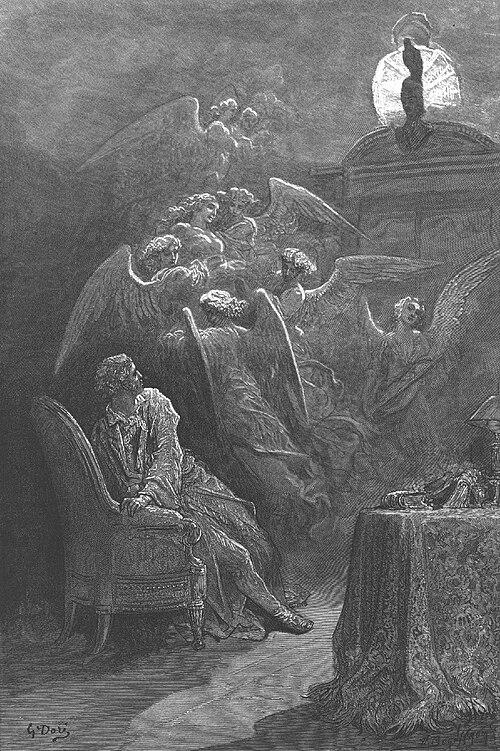
Stanza 14: Respite and Nepenthe
1884 · The Raven (1884)
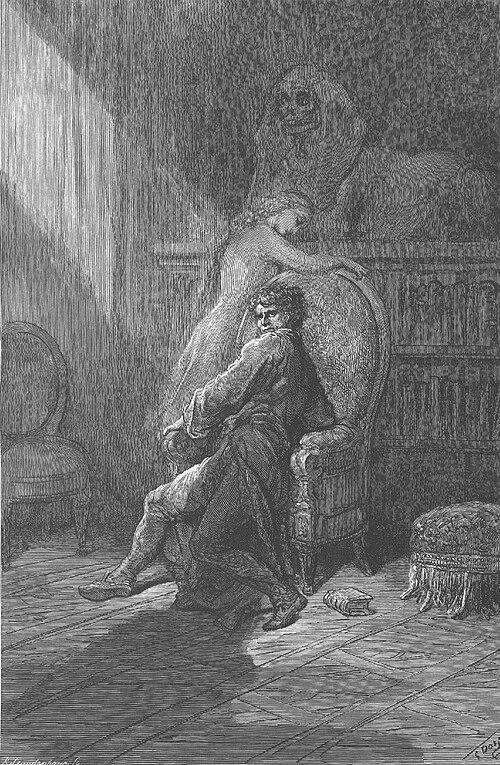
Stanza 15: This Home by Horror Haunted
1884 · The Raven (1884)
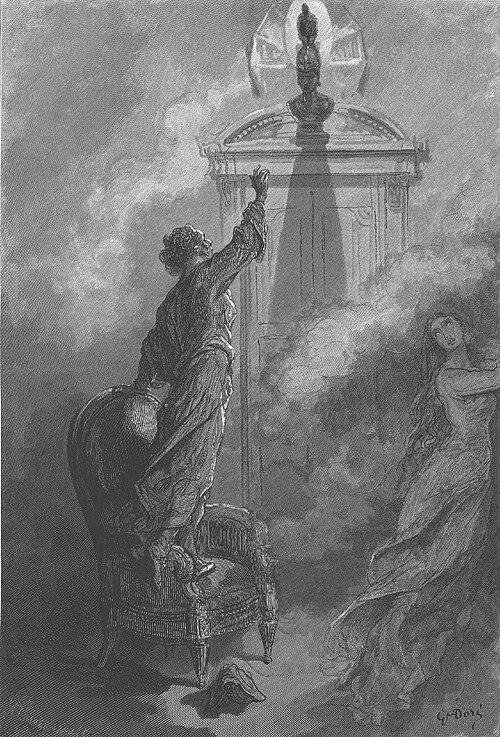
Stanza 15: Is There Balm in Gilead?
1884 · The Raven (1884)
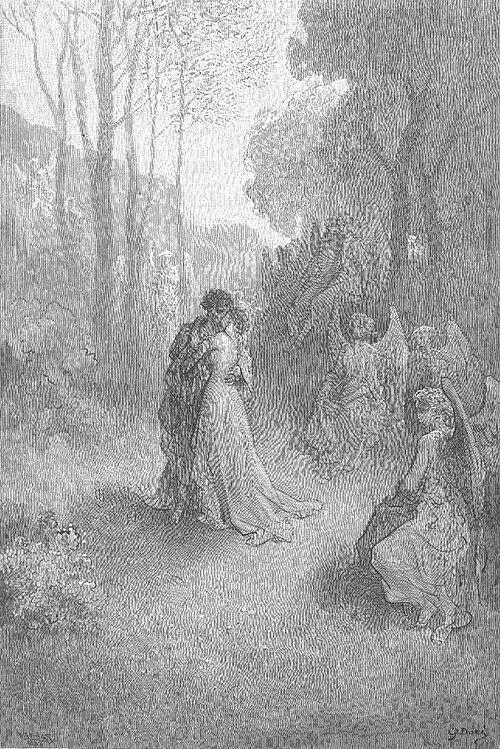
Stanza 16: The Distant Aidenn
1884 · The Raven (1884)
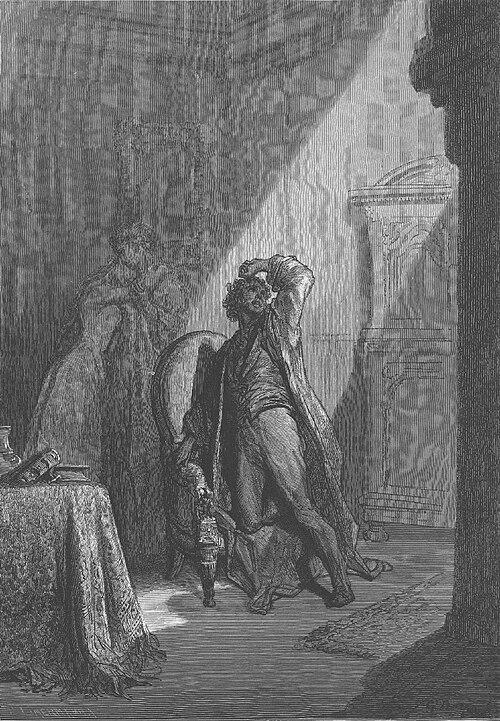
Stanza 17: Bird or Fiend
1884 · The Raven (1884)
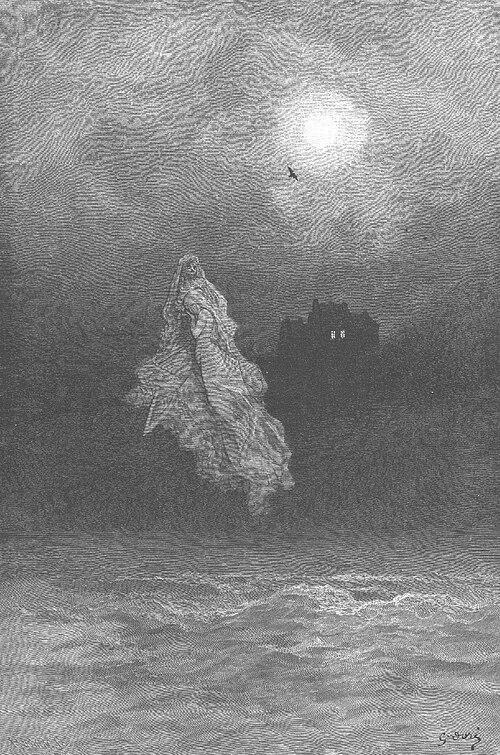
Stanza 17: The Night's Plutonian Shore
1884 · The Raven (1884)
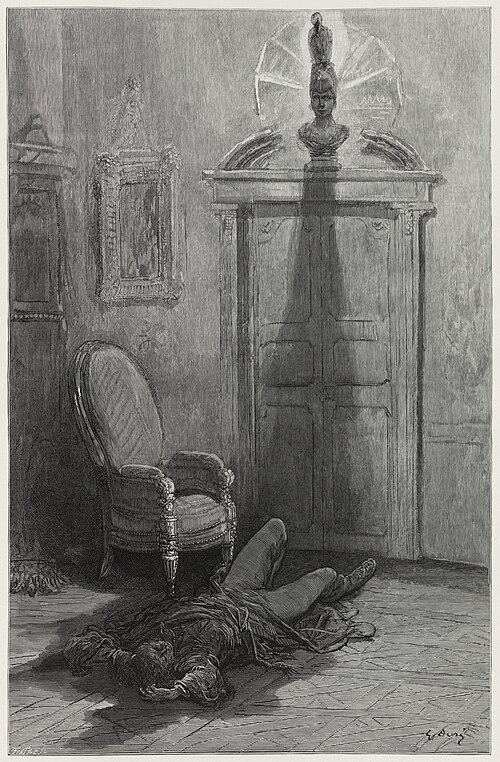
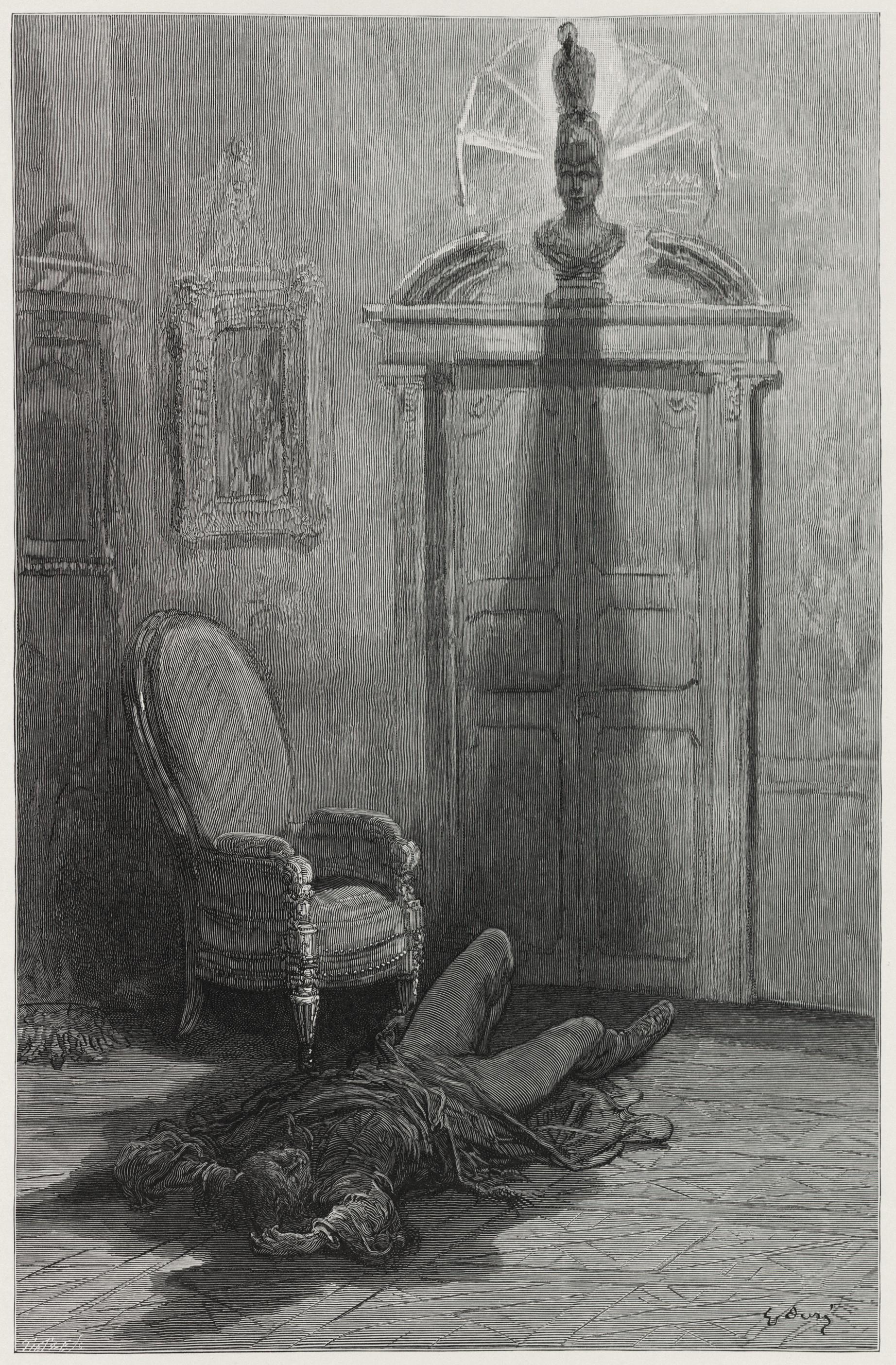
✦Stanza 18: Lifted—Nevermore
1884 · The Raven (1884)
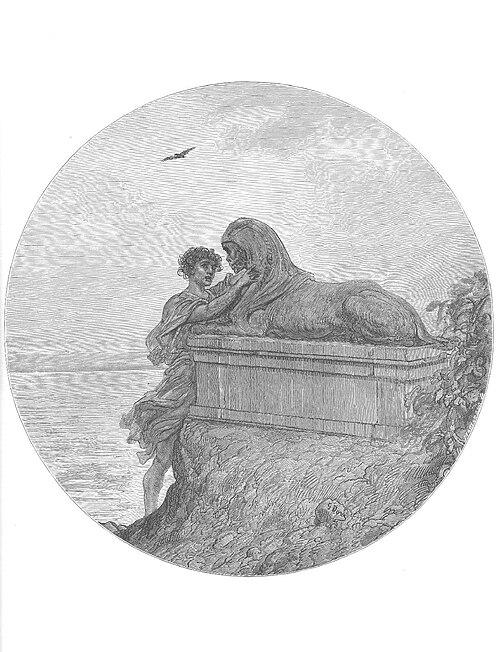
Tailpiece: The Secret of the Sphinx
1884 · The Raven (1884)
How the book came about
Poe's poem was first published in 1845 and had already been illustrated, most memorably by Édouard Manet, whose brush-drawn lithographs accompanied Stéphane Mallarmé's French translation in Le Corbeau (Paris, 1875). Doré's version was conceived for the English-speaking market. Harper & Brothers of New York, who had reprinted Doré's work in their magazines, commissioned him in 1882 to illustrate the poem as a luxury gift book, to be issued at the same time in London.
By then Doré was famous for the Inferno, the Bible and Paradise Lost, and he brought the same method to Poe: one image per stanza or pair of stanzas, each printed full page, with the verse set separately. The University of Utah's Marriott Library, which holds a copy, sums up his aim as rendering "the enigma of death and the hallucination of an inconsolable soul." The drawings were finished, but Doré died before the book appeared. The American edition includes a title vignette by Elihu Vedder showing Poe and Doré together, a tribute to both dead men, and a cover design by Dora Wheeler.
Poe's poem and Doré's reading
Poe first published The Raven in the New York Evening Mirror in January 1845, and it made him famous almost overnight. The poem's eighteen stanzas take place in a single room on a single December night: a student, grieving for the dead Lenore, hears a tapping, opens the door to darkness, and lets in a raven that answers every question with one word. Poe explained in his essay "The Philosophy of Composition" (1846) that he chose the bust of Pallas for the contrast between the black bird and the white marble, and that the raven was meant as an emblem of "mournful and never-ending remembrance."
Doré took the poem more literally than Poe's earlier illustrators. Manet had drawn a few spare scenes of the room, the window and the shadow; Doré made a cycle in which almost every stanza becomes a picture, and in which the invisible world the narrator imagines, the seraphim swinging censers, the "Night's Plutonian shore," the dead Lenore, is shown as real as the furniture. The effect is to turn a psychological poem into a visionary one, closer in spirit to his Dante than to Poe's careful ambiguity.
How the plates were made
As always, Doré drew the designs on the woodblocks and left the cutting to professional engravers. The blocks were divided among several engravers, not all of them French; the University of Delaware's impression of "Doubting, dreaming dreams no mortal ever dared to dream before," for instance, was engraved by the American Francis Scott King.
What unites the set is its tonality. These are night pictures, built from dense cross-hatching and deep blacks, with light coming from a single lamp or a door ajar. Doré also filled the room with figures Poe only implies: angels, specters and the lost Lenore.
A walk through the plates
The cycle opens on the first line: Once upon a midnight dreary, while I pondered, weak and weary. In Once Upon a Midnight Dreary the narrator sits slumped among his books and papers, a scholar's study at the hour when the visions begin. It is a scene of solitary study gone wrong, which is one reason it has become a favorite image of dark academia.
The middle plates move between the room and the world of the dead that the narrator imagines. Angels and spirits drift through the air; the narrator opens the door to darkness; Lenore appears in memory. The bird itself enters and takes its place in Perched Upon a Bust of Pallas, set above the chamber door on the white bust of the goddess of wisdom, the ominous black shape against the classical marble. Poe's irony, a bird of ill omen sitting on the head of reason, is the center of the picture. The narrator, half amused at first, sits below it in his cushioned chair, and Doré gives the bird the stillness the poem insists on: And the Raven, never flitting, still is sitting, still is sitting.
The book closes on the poem's last stanza: And my soul from out that shadow that lies floating on the floor / Shall be lifted—nevermore! Nevermore shows the narrator overwhelmed and the raven's shadow spread across the floor. After the crowded visions of the middle plates, the ending is bare.
The plates' afterlife
Doré's Raven was reprinted by Harper and others in smaller formats, and the designs have been reproduced in countless editions of Poe since. Together with Manet's lithographs, they are the best-known illustrations of the poem, and the image of the scholar alone at midnight under the bird has become part of the shared visual language of the gothic. For related themes, see death in art.
Where to see the original edition
Copies of the 1884 Harper folio are held by many research libraries, among them the Library of Congress, the University of Utah's Marriott Library and the University of Delaware, and the Fine Arts Museums of San Francisco and the Metropolitan Museum of Art hold the book or its plates. Complete scans are on the Internet Archive and Wikimedia Commons.
For Doré's other books, see The Rime of the Ancient Mariner, Doré's Inferno and the Doré Bible; for the artist, see Gustave Doré; and browse every plate in the complete catalogue.
Questions & answers
How many illustrations did Doré make for The Raven?
Doré designed 26 wood engravings for Poe's The Raven: 24 full-page plates and two smaller vignettes. The American edition also has a title vignette by Elihu Vedder, so some catalogues count 27 engravings in all.
When was Doré's Raven published?
Harper & Brothers of New York published it with 1884 on the title page, and Sampson Low in London at the same time; the book went on sale in December 1883. Doré had died in January 1883, so it was published after his death.
Who engraved Doré's Raven illustrations?
Doré drew the designs on the woodblocks, and several professional engravers cut them, not all of them French. One plate, 'Doubting, dreaming dreams no mortal ever dared to dream before,' was engraved by the American Francis Scott King.
Are Doré's Raven illustrations public domain?
Yes. The engravings were published in 1883–84 and Doré died in 1883, so the images are in the public domain. Faithful scans of the plates, such as those on Wikimedia Commons and the Internet Archive, can generally be reused freely.
Where can I see the original Doré Raven?
Copies of the 1884 Harper & Brothers folio are in libraries such as the Library of Congress and the University of Utah's Marriott Library, and the Fine Arts Museums of San Francisco hold a copy. Scans of the full book can be read on the Internet Archive.
Related guides
- The Dark Academia Aesthetic: A Guide Through Art
Candlelight, Greek tragedy, a skull on the bookshelf: the paintings and sculptures behind the internet's most literary aesthetic, and how to bring them home.