Series
Gustave Doré's Paradise Lost Illustrations (1866)
Fifty wood engravings for Milton's epic, from Satan's fall out of Heaven to Adam and Eve leaving Eden.
Gustave Doré's Paradise Lost is the set of 50 full-page wood engravings he designed for John Milton's epic, published in London in 1866 by Cassell, Petter and Galpin as Milton's Paradise Lost, Illustrated by Gustave Doré. Each plate faces a few lines of Milton's verse, and together they follow the poem from the fall of the rebel angels to the expulsion of Adam and Eve from Eden.
The book appeared in the same year as Doré's great Bible and five years after his Inferno, and it established his reputation in Britain. Its hero, for most readers, is Satan: Doré gave Milton's fallen archangel a body, a face and a sky to fall through, and that image of a vast, beautiful, defeated angel has shaped how Satan has been pictured ever since. This page walks through the key plates in the order of the poem and links each one in the archive.
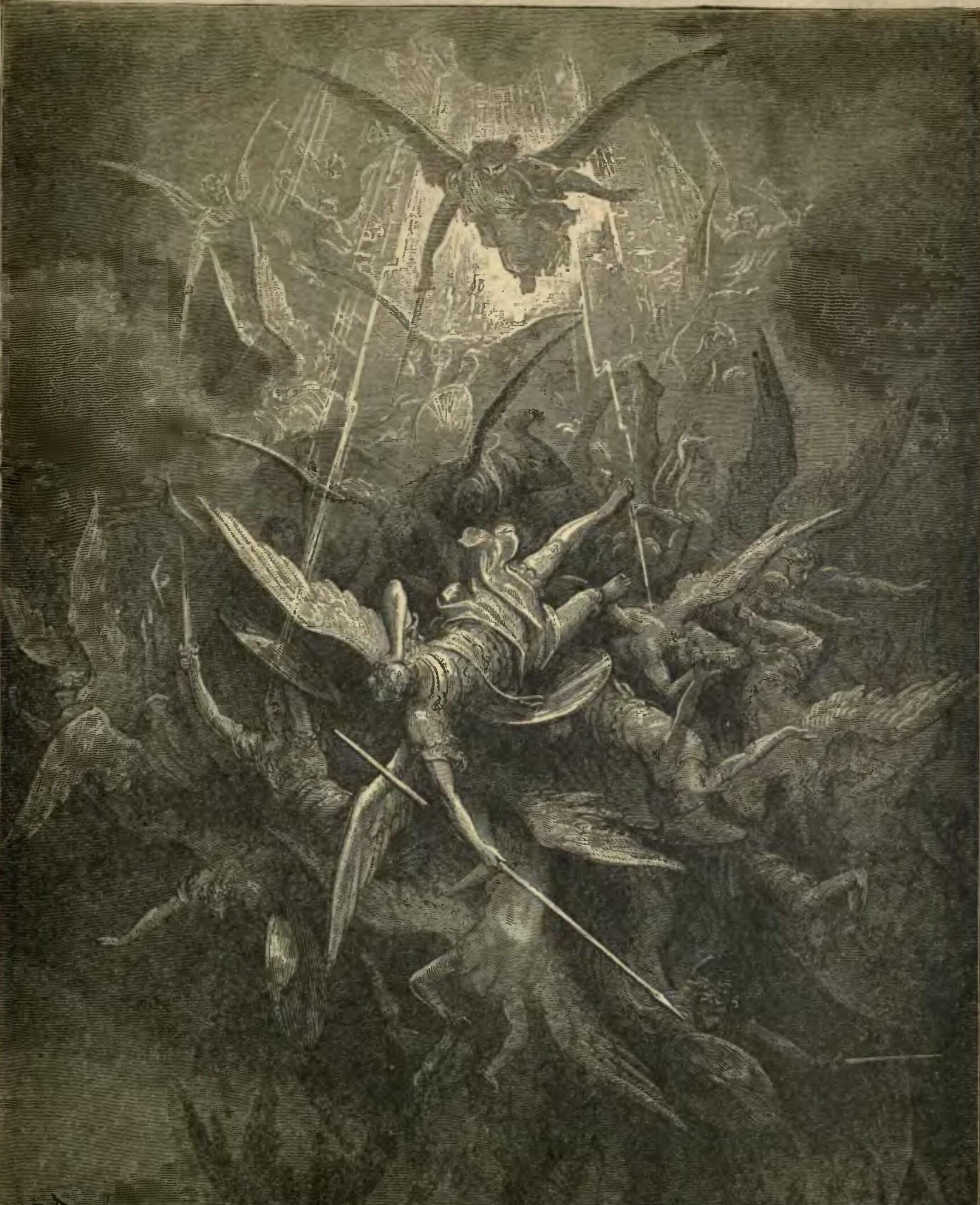
Satan Cast Out of Heaven
Gustave Doré · 1866
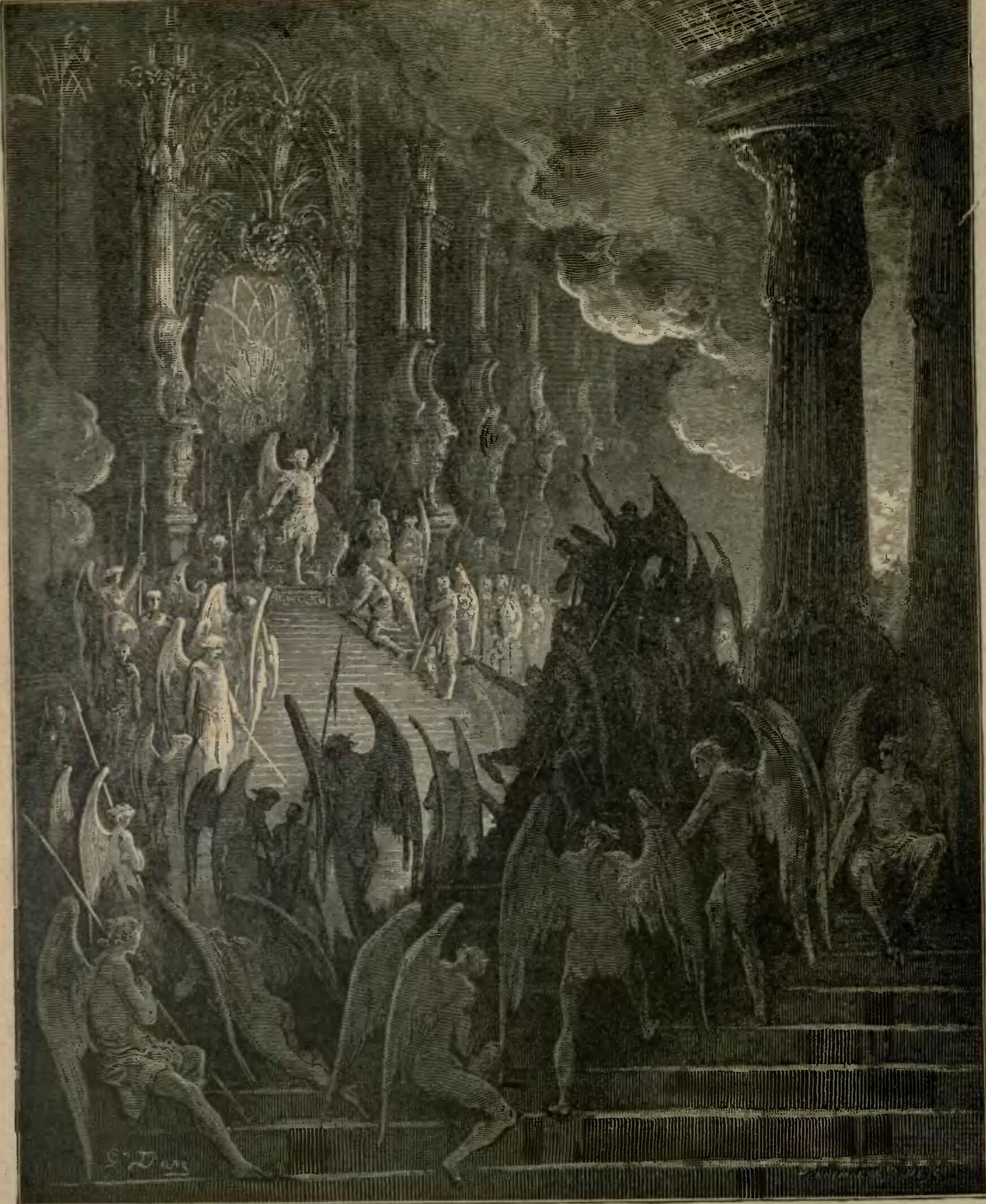
Satan in Council
Gustave Doré · 1866
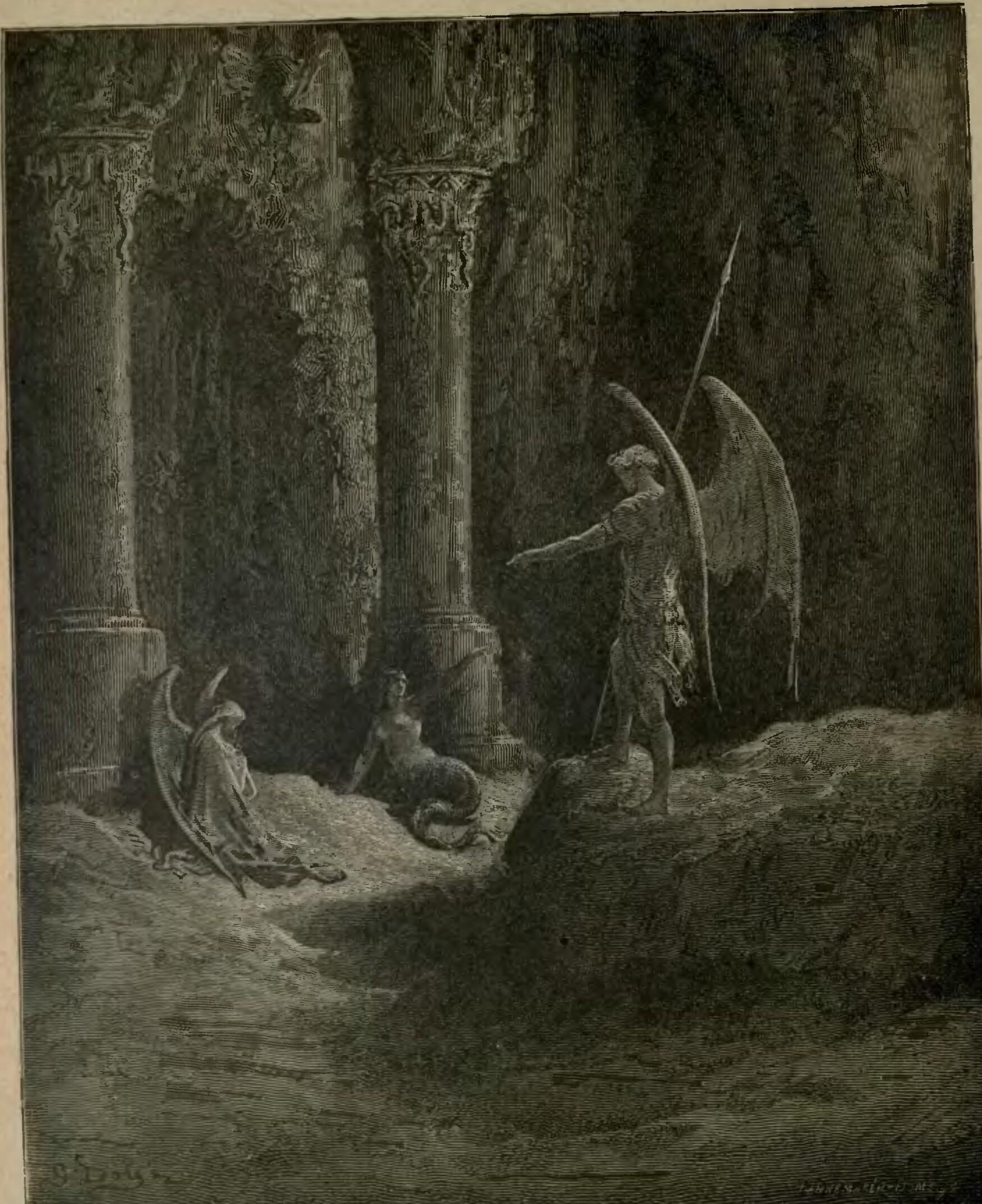
Satan, Sin and Death at the Gates of Hell
Gustave Doré · 1866
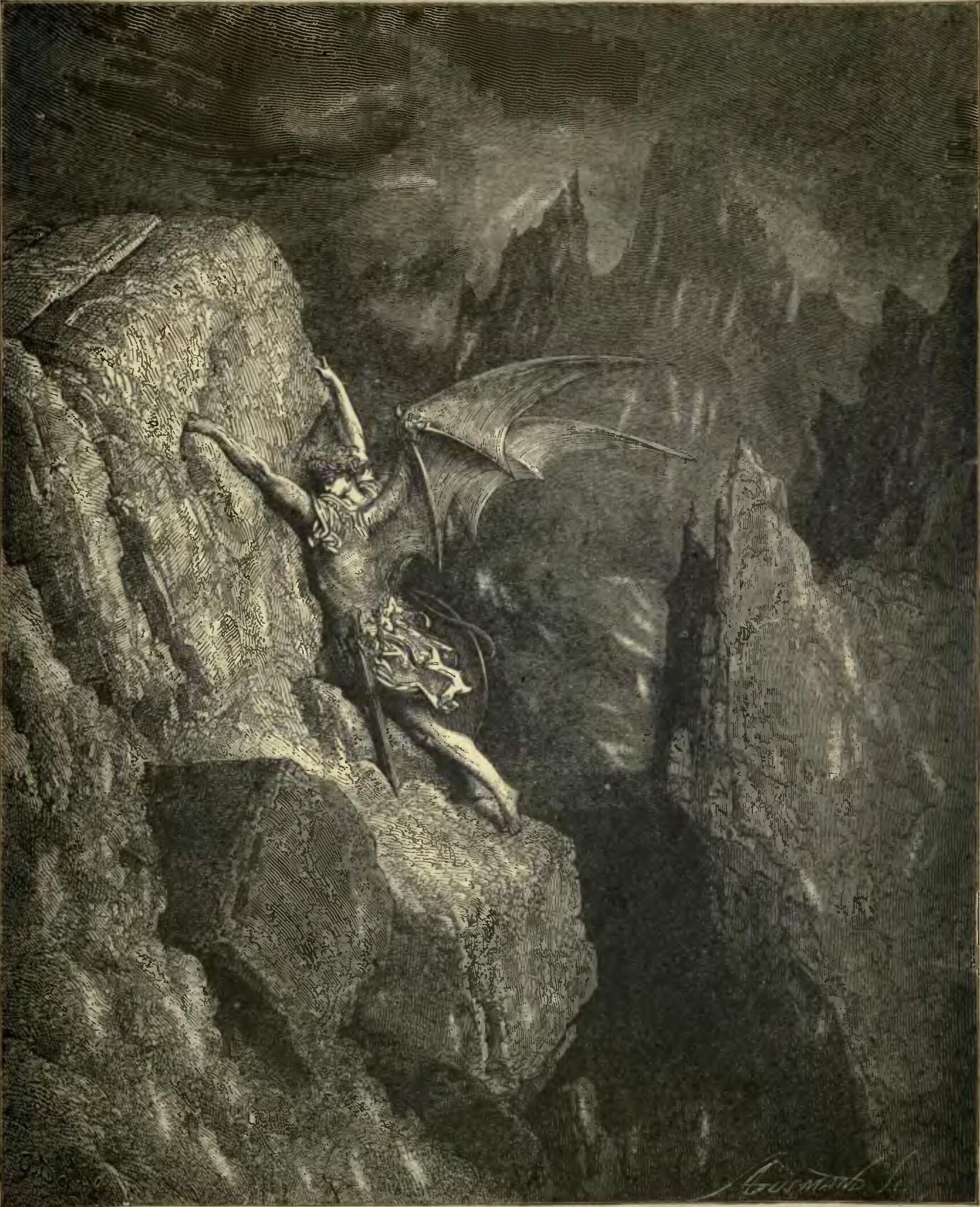
Satan’s Flight Through Chaos
Gustave Doré · 1866
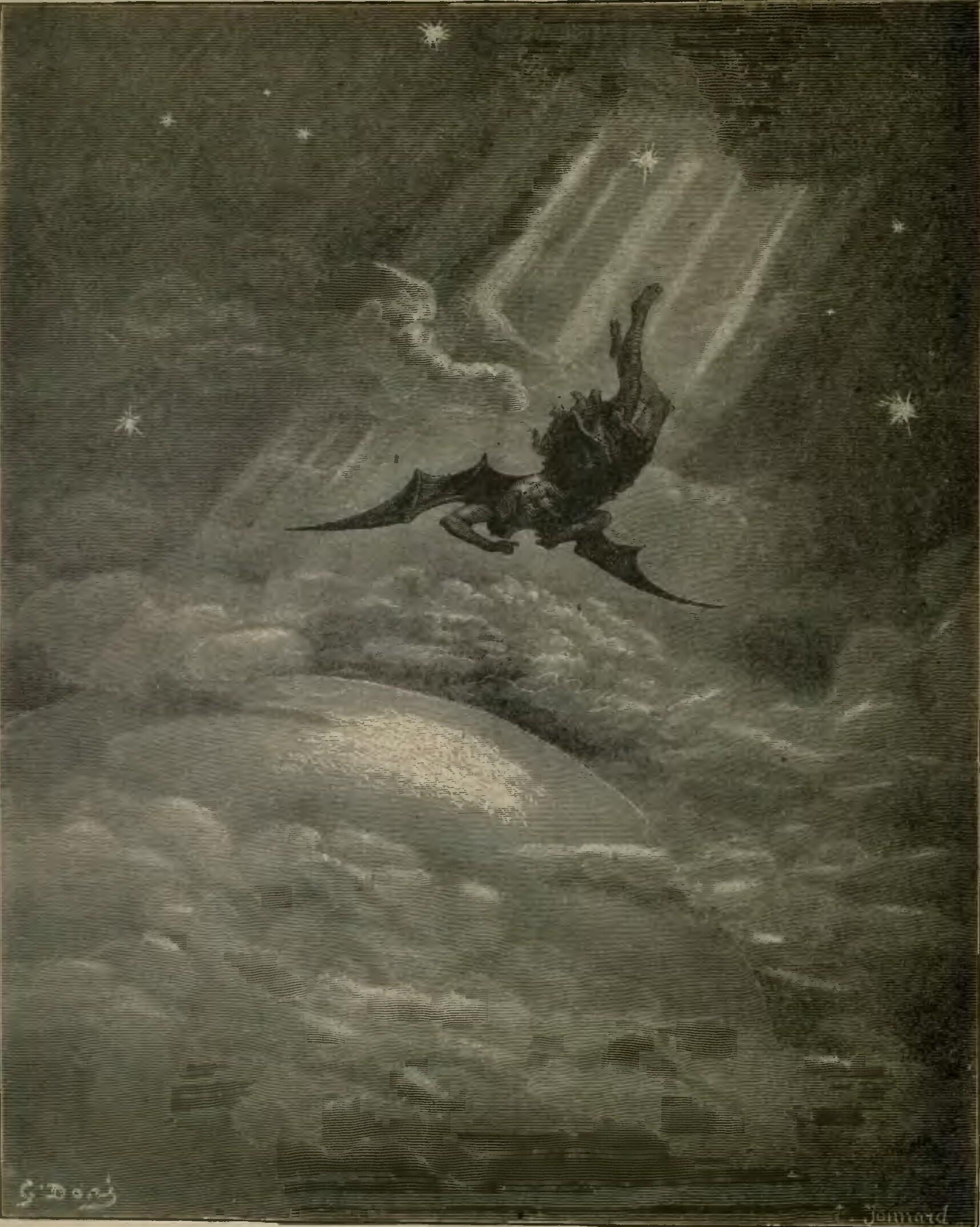
Satan Approaching the Confines of the Earth
Gustave Doré · 1866
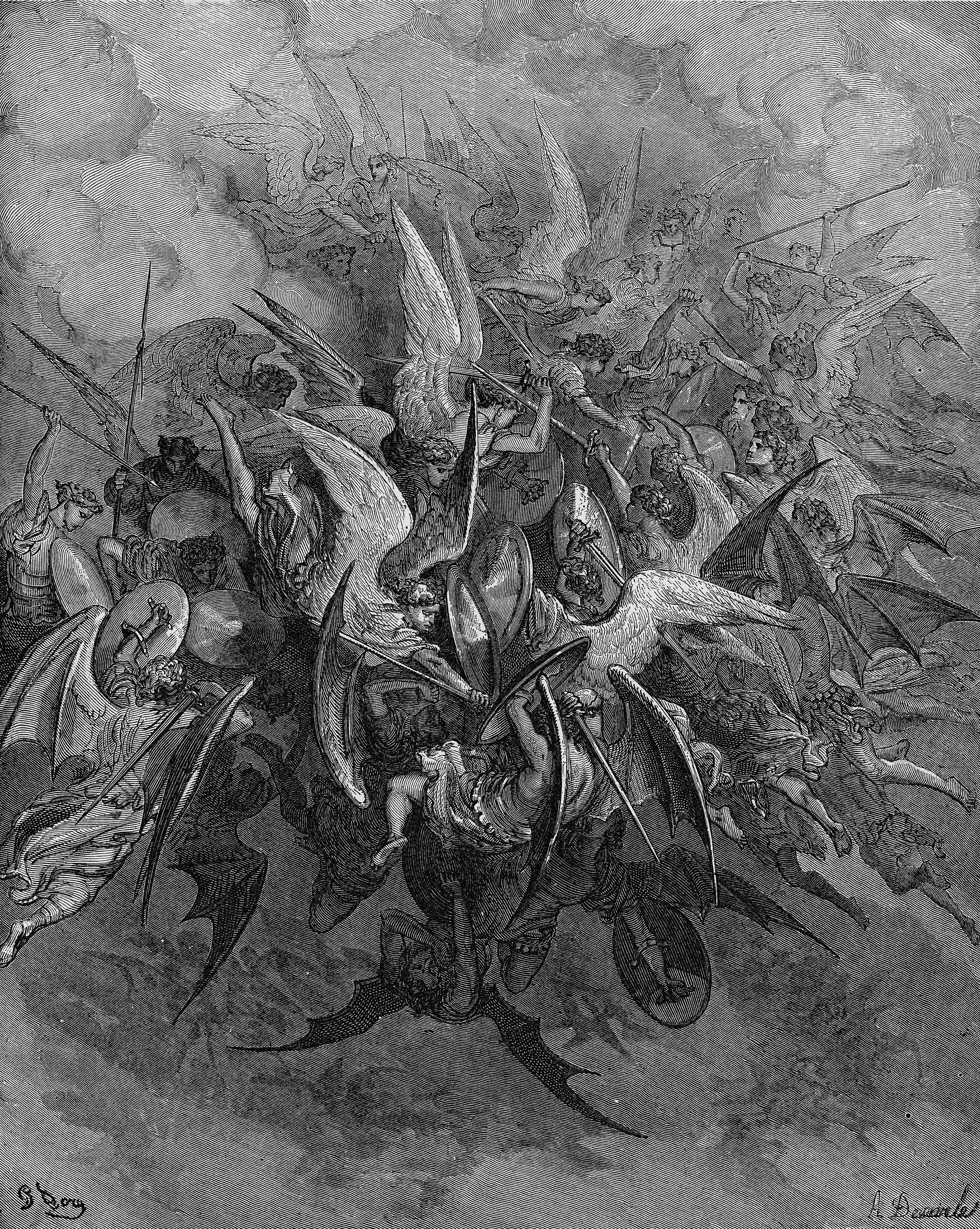
The War in Heaven
Gustave Doré · 1866
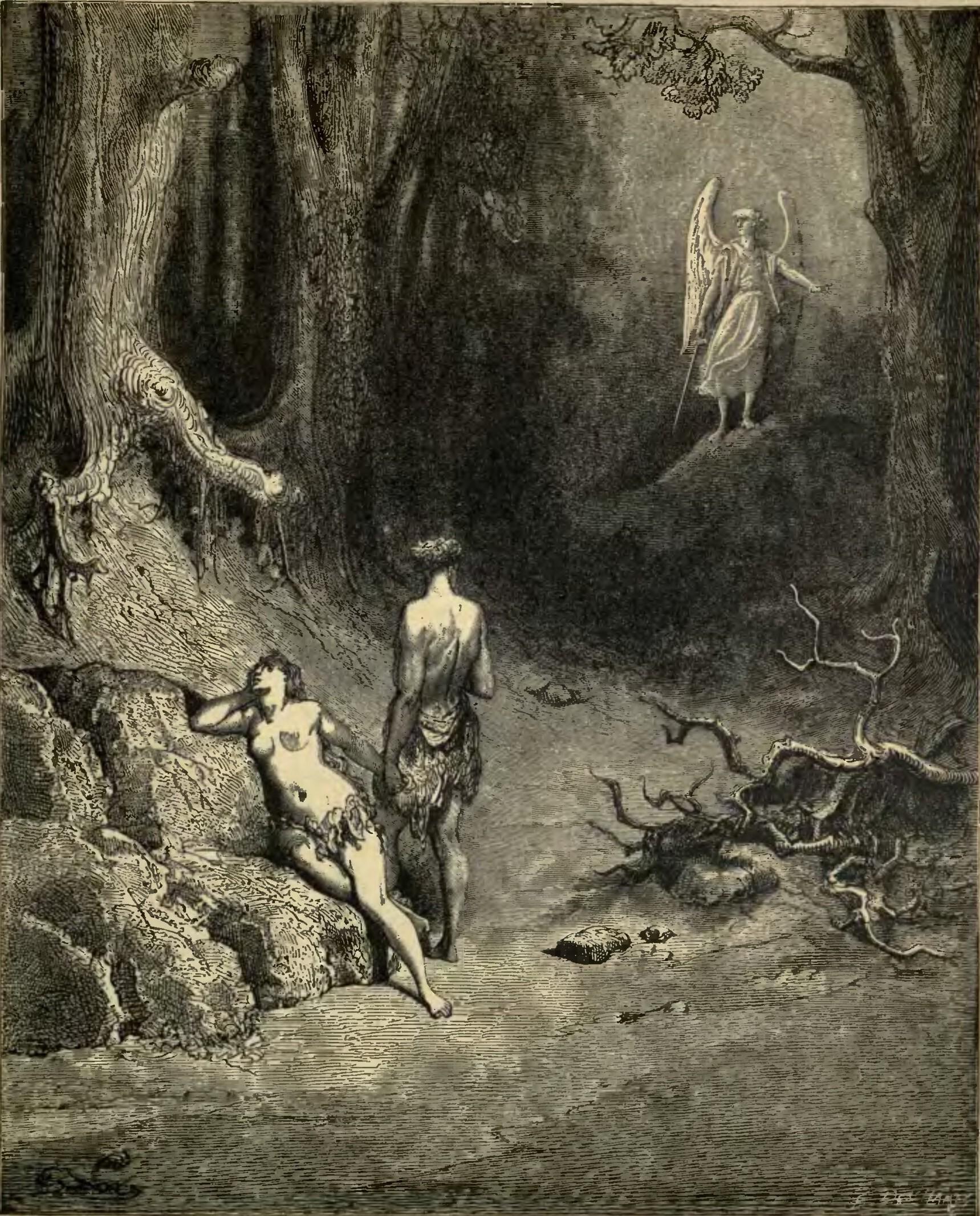
Adam and Eve Expelled from Paradise
Gustave Doré · 1866
The complete set
All 50 plates
In the order of the book. Plates with a full close reading are marked ✦.
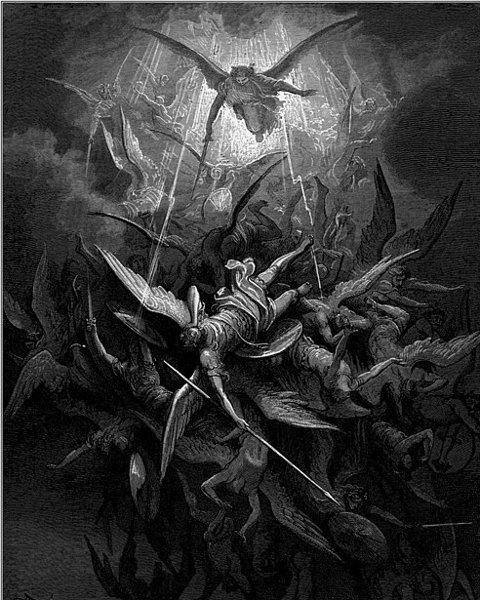
✦Book I: Satan Cast Out of Heaven
1866 · Paradise Lost (1866)
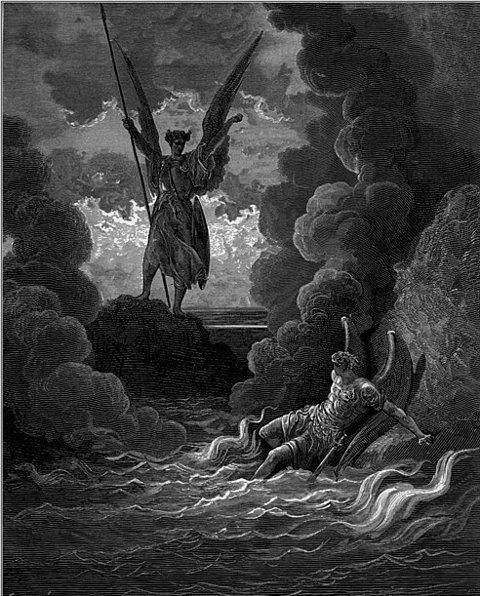
Book I: Satan Rises from the Burning Lake
1866 · Paradise Lost (1866)
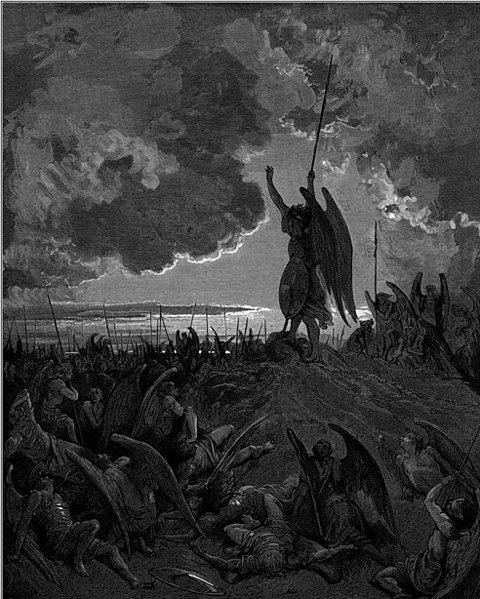
Book I: The Fallen Angels Rouse Themselves
1866 · Paradise Lost (1866)
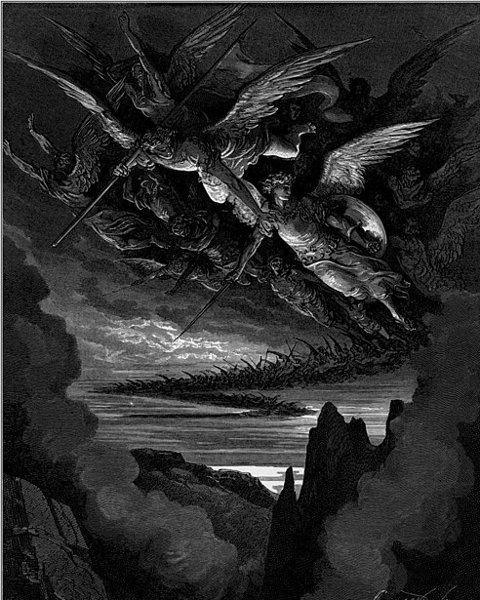
Book I: The Rebel Host Hovering over Hell
1866 · Paradise Lost (1866)
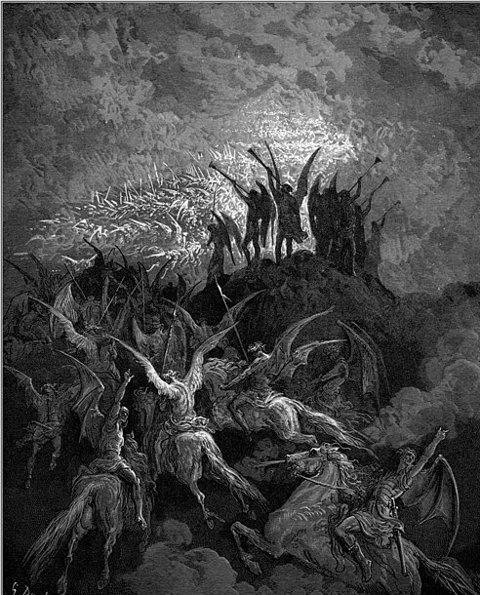
Book I: The Summons to Pandemonium
1866 · Paradise Lost (1866)
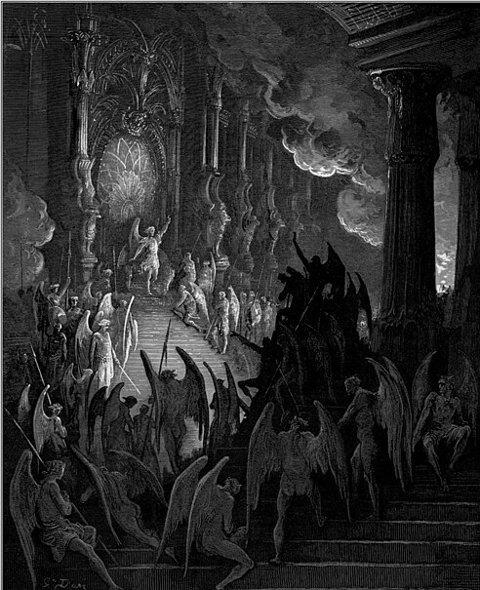
✦Book II: Satan Enthroned in Pandemonium
1866 · Paradise Lost (1866)
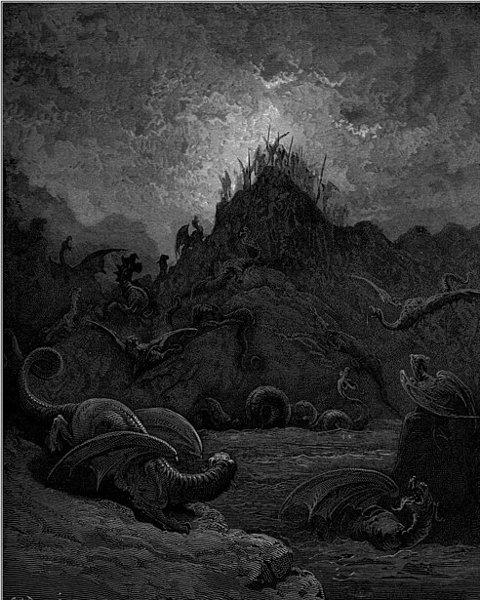
Book II: Gorgons, Hydras and Chimeras
1866 · Paradise Lost (1866)
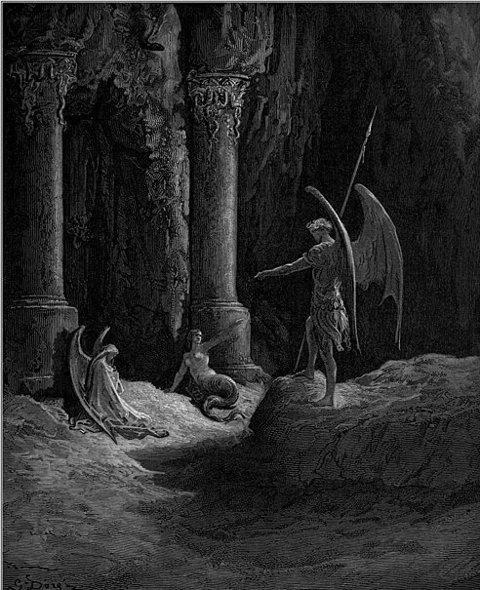
✦Book II: Satan at the Gates of Hell
1866 · Paradise Lost (1866)
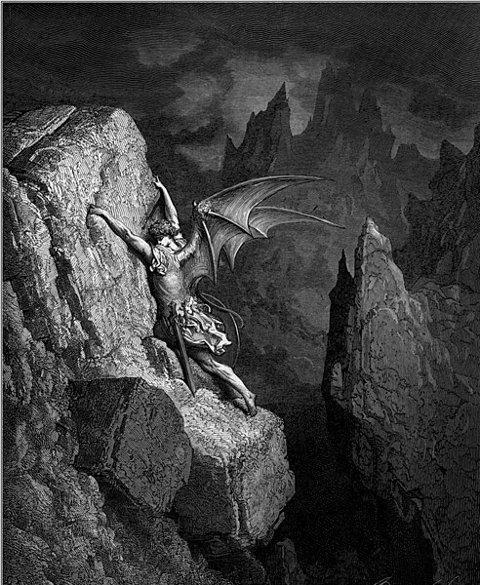
✦Book II: Satan's Journey through Chaos
1866 · Paradise Lost (1866)
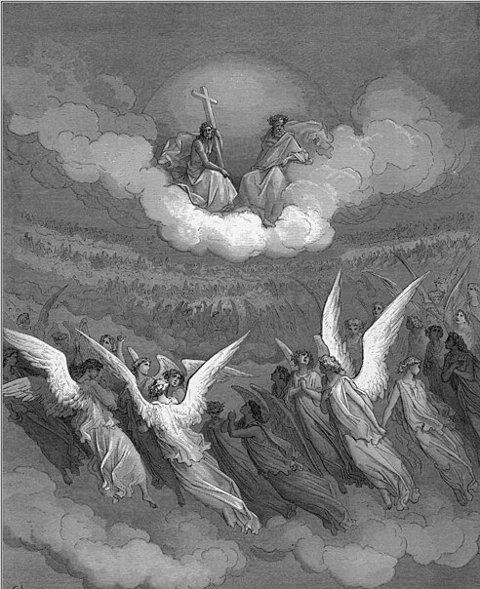
Book III: The Heavenly Host Rejoices
1866 · Paradise Lost (1866)
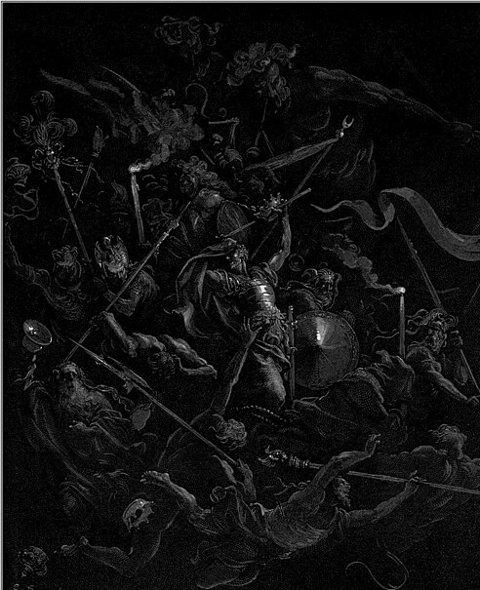
Book III: The Paradise of Fools
1866 · Paradise Lost (1866)
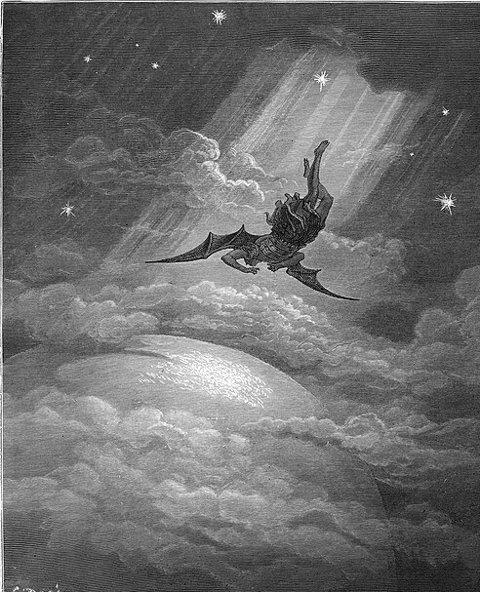
✦Book III: Satan Descends toward Earth
1866 · Paradise Lost (1866)
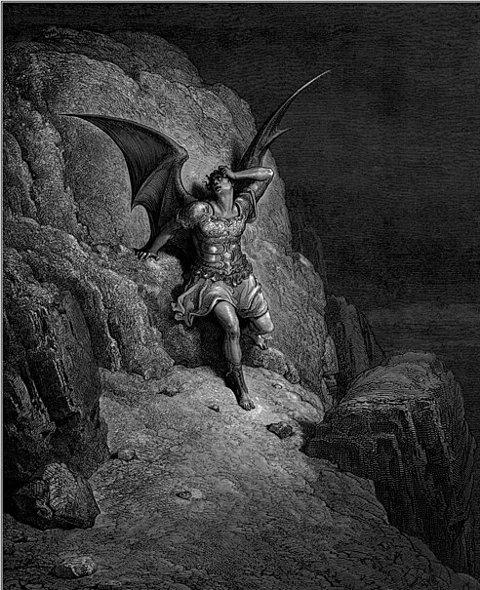
Book IV: Satan's Despair
1866 · Paradise Lost (1866)
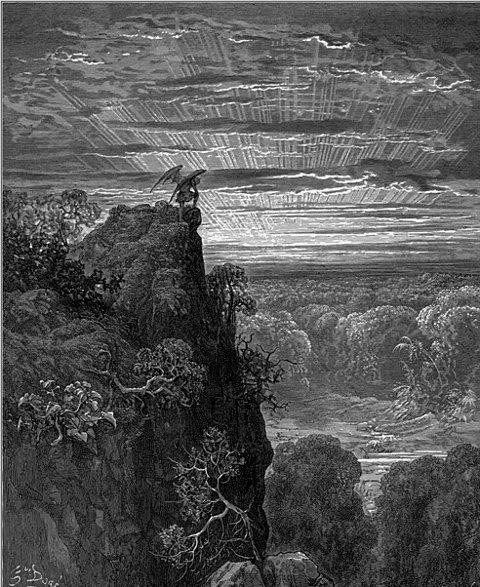
Book IV: Satan Approaches Eden
1866 · Paradise Lost (1866)
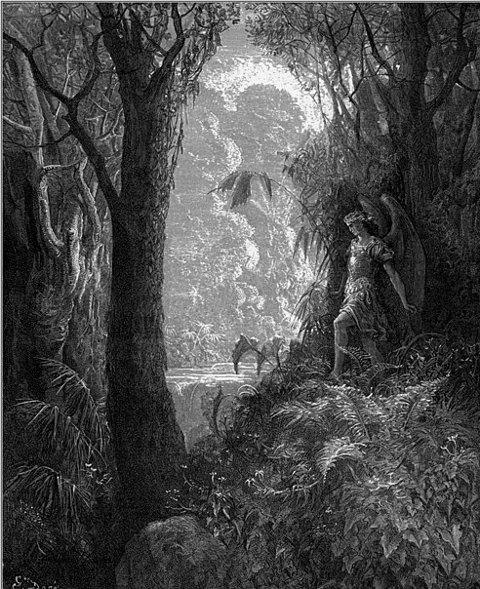
Book IV: The Garden of Eden
1866 · Paradise Lost (1866)
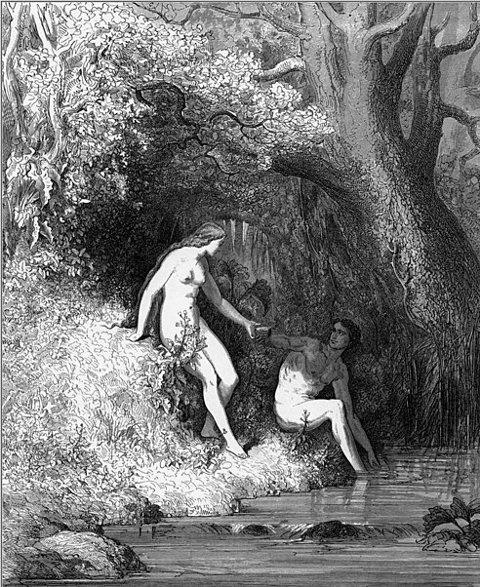
Book IV: Adam and Eve in Paradise
1866 · Paradise Lost (1866)
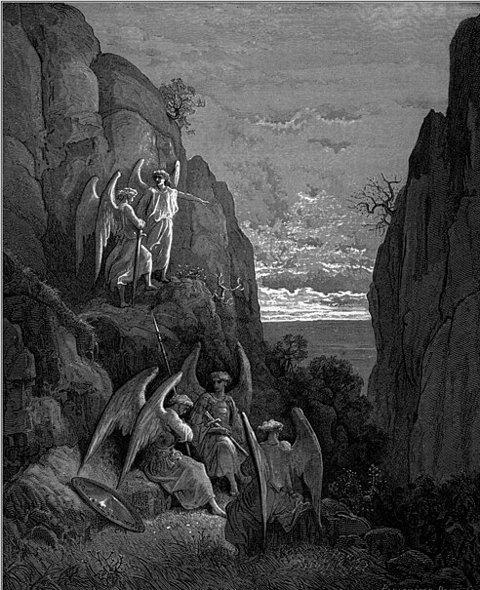
Book IV: Uriel Returns to His Charge
1866 · Paradise Lost (1866)
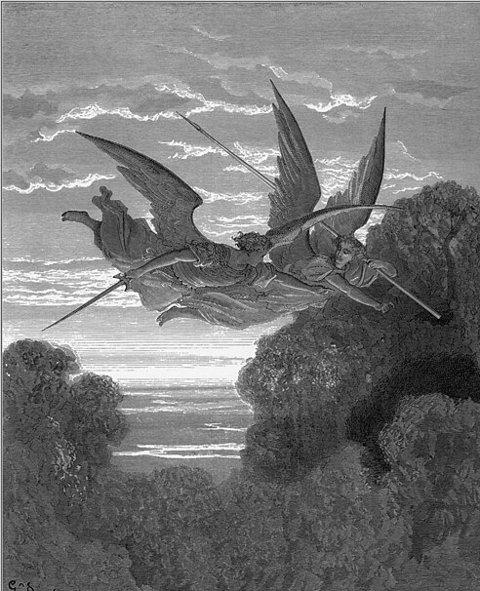
Book IV: Ithuriel and Zephon Go in Search of Satan
1866 · Paradise Lost (1866)
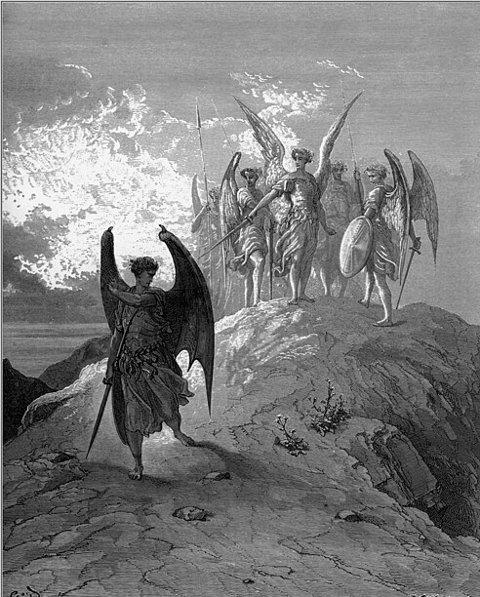
Book IV: Satan Flees from Gabriel
1866 · Paradise Lost (1866)
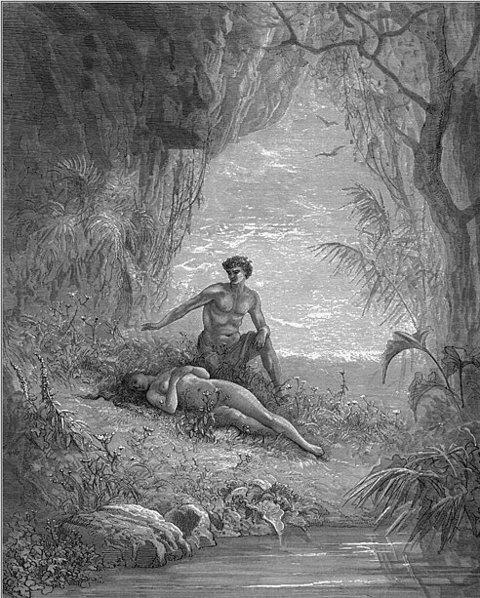
Book V: Adam Watches over the Sleeping Eve
1866 · Paradise Lost (1866)
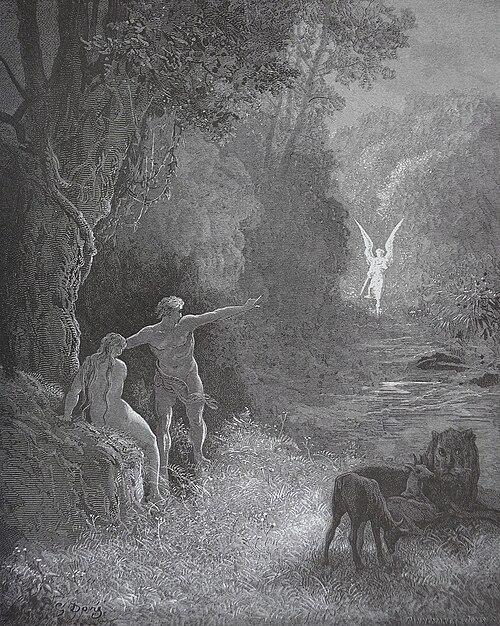
Book V: Raphael Approaches Eden
1866 · Paradise Lost (1866)
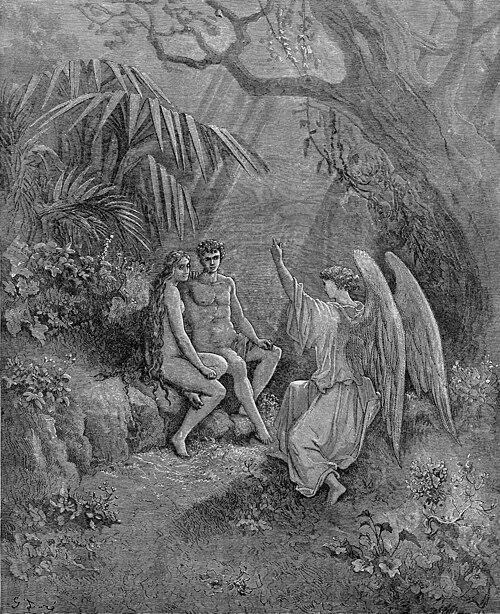
Book V: Raphael Converses with Adam and Eve
1866 · Paradise Lost (1866)
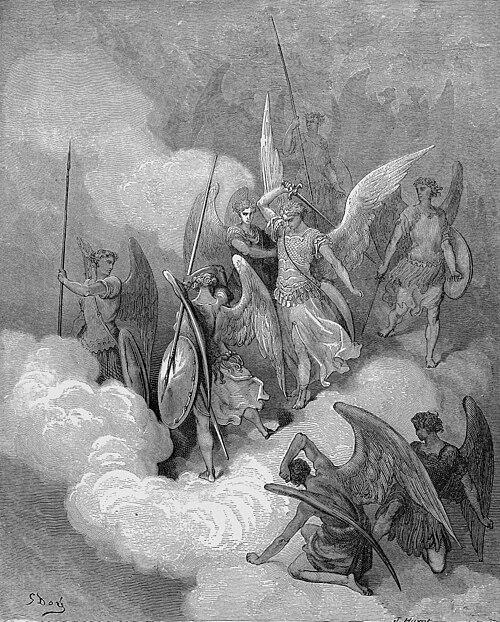
Book VI: Abdiel Strikes Satan
1866 · Paradise Lost (1866)
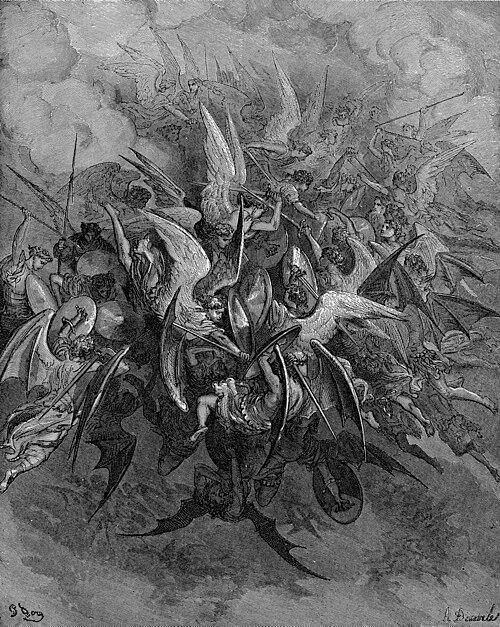
✦Book VI: The War in Heaven
1866 · Paradise Lost (1866)
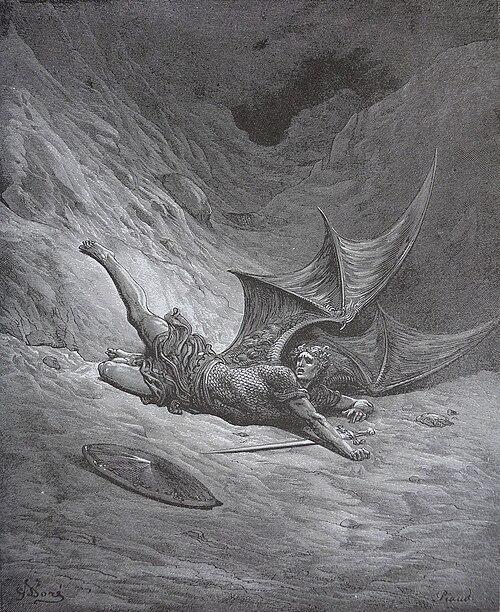
Book VI: Satan Wounded by Michael
1866 · Paradise Lost (1866)
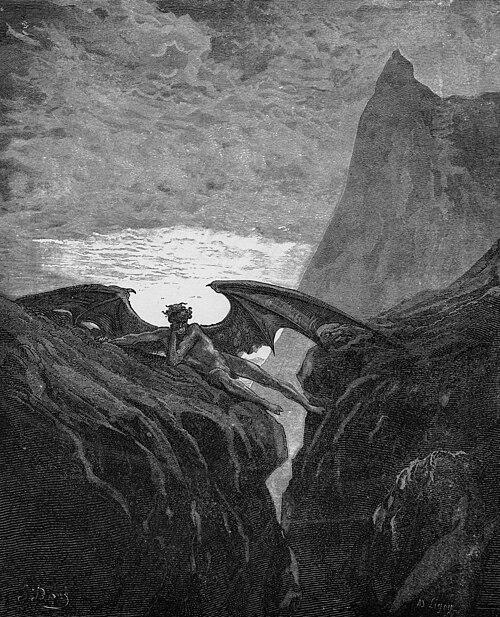
Book VI: Satan at Nightfall
1866 · Paradise Lost (1866)
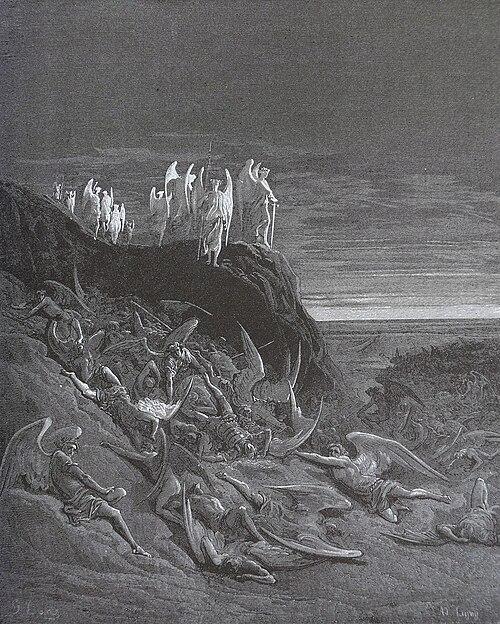
Book VI: Michael's Angels Keep Watch
1866 · Paradise Lost (1866)
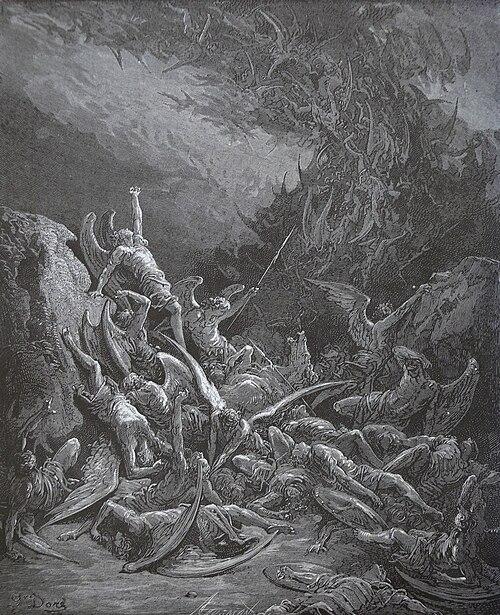
Book VI: The Rebel Angels Fall
1866 · Paradise Lost (1866)
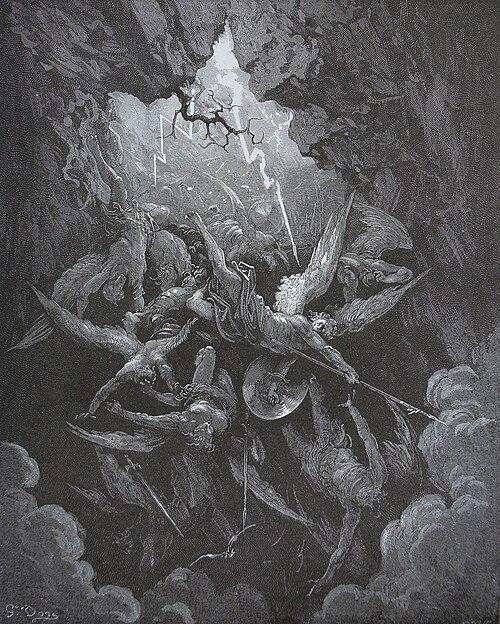
Book VI: Hell Receives the Rebel Angels
1866 · Paradise Lost (1866)
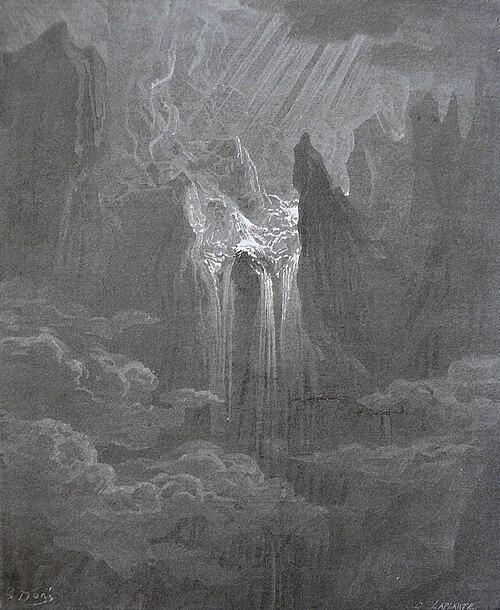
Book VII: The Creation: The Gathering of the Waters
1866 · Paradise Lost (1866)
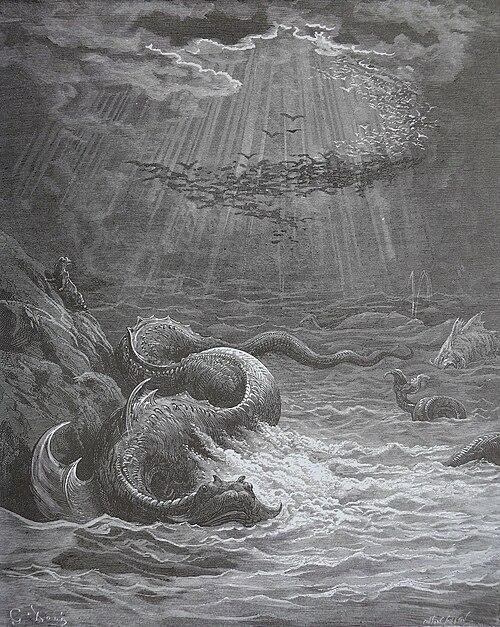
Book VII: The Creation of Fish and Birds
1866 · Paradise Lost (1866)
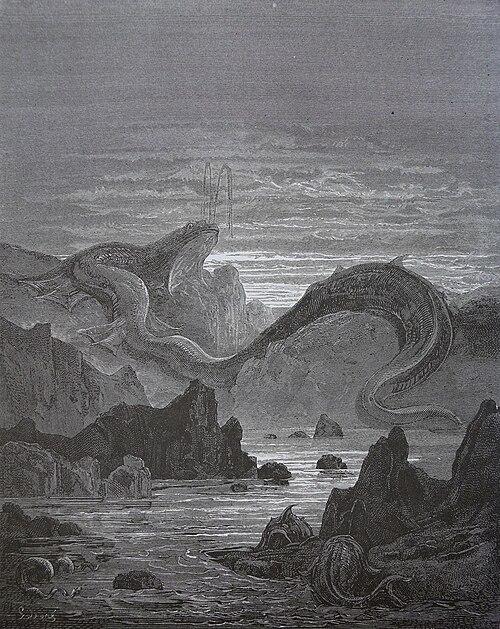
Book VII: Leviathan
1866 · Paradise Lost (1866)
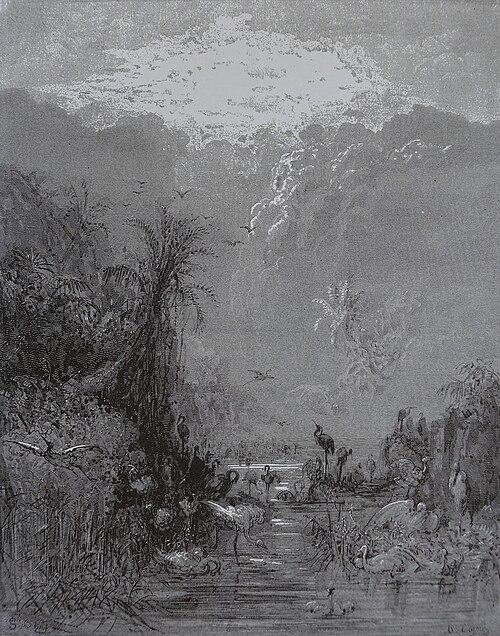
Book VII: The Creation of Birds
1866 · Paradise Lost (1866)
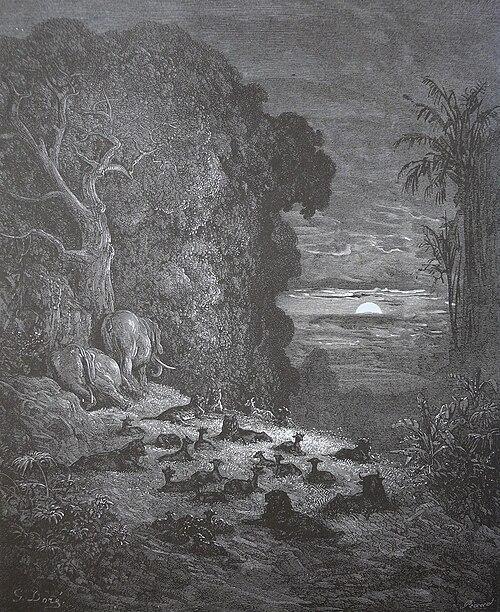
Book VII: The Seventh Evening in Eden
1866 · Paradise Lost (1866)
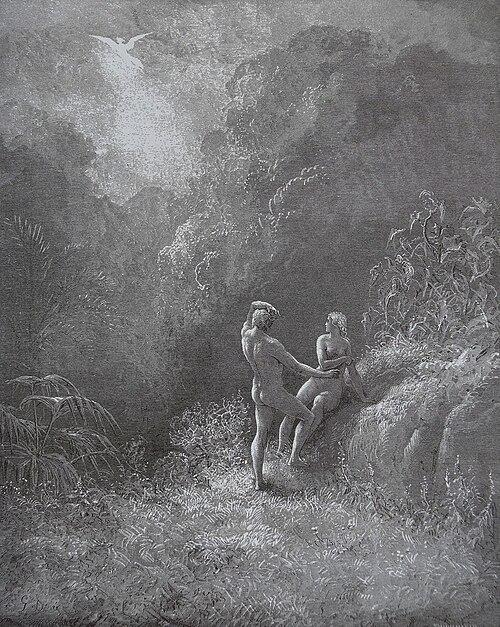
Book VIII: Raphael Departs
1866 · Paradise Lost (1866)
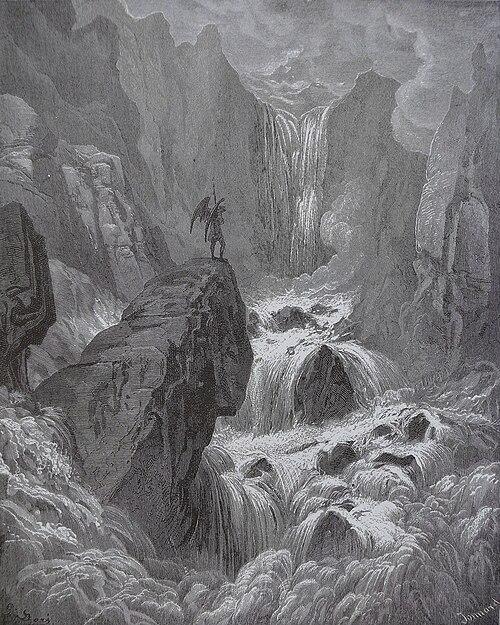
Book IX: Satan Returns to Eden
1866 · Paradise Lost (1866)
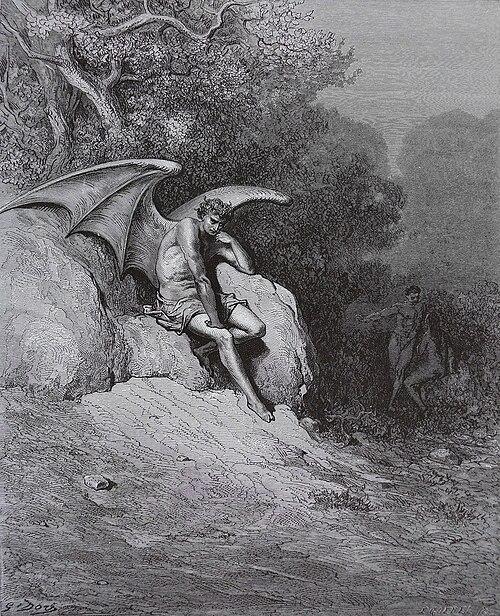
Book IX: Satan Contemplates the Earth
1866 · Paradise Lost (1866)
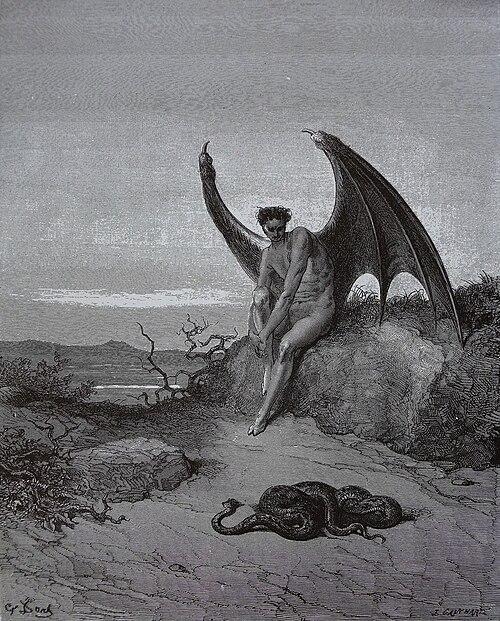
Book IX: Satan Finds the Serpent Asleep
1866 · Paradise Lost (1866)
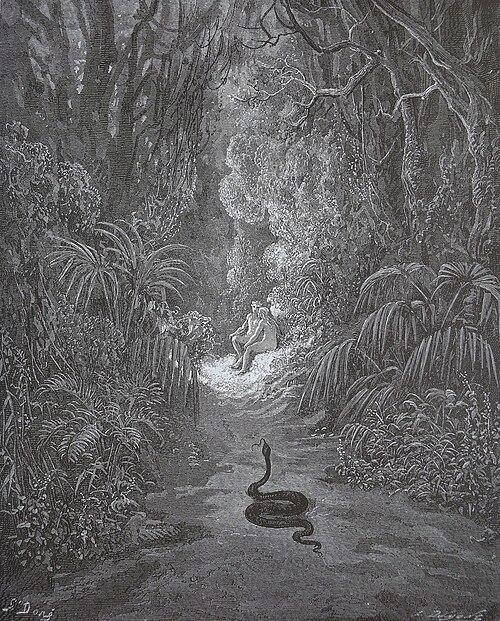
Book IX: The Serpent Approaches Eve
1866 · Paradise Lost (1866)
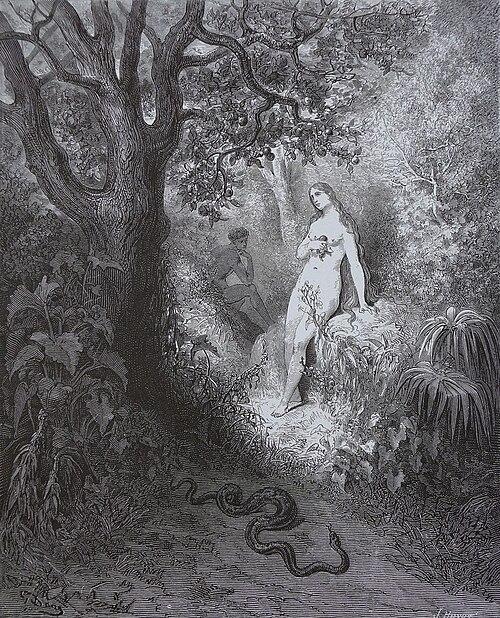
Book IX: The Serpent Slinks Away
1866 · Paradise Lost (1866)
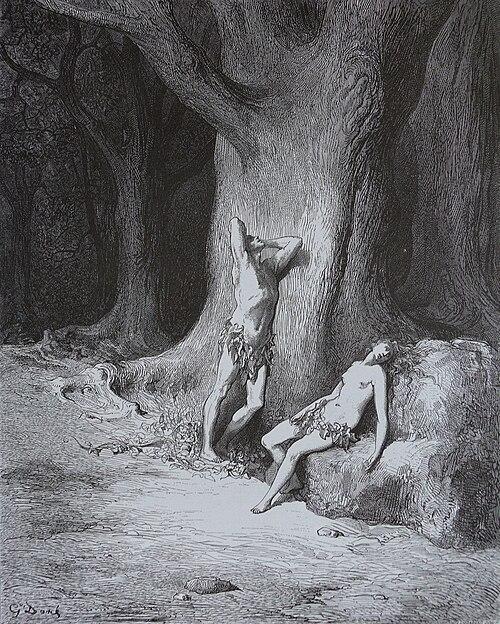
Book IX: Adam and Eve after the Fall
1866 · Paradise Lost (1866)
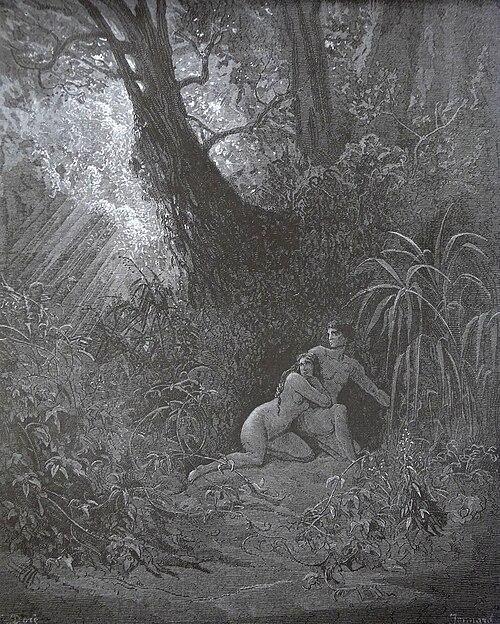
Book X: Adam and Eve Hide from God
1866 · Paradise Lost (1866)
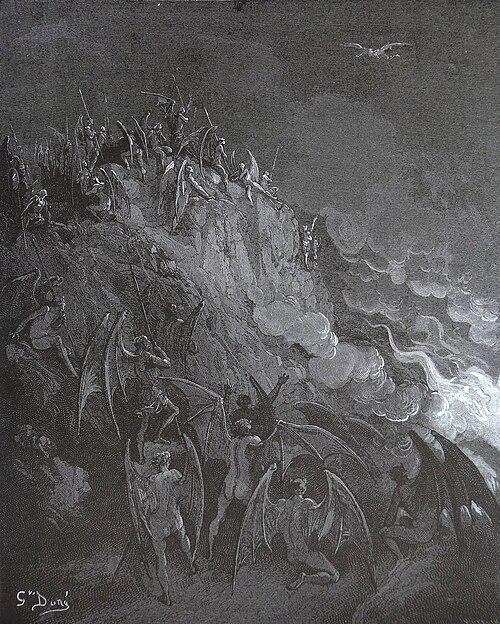
Book X: The Fallen Angels Await Satan
1866 · Paradise Lost (1866)
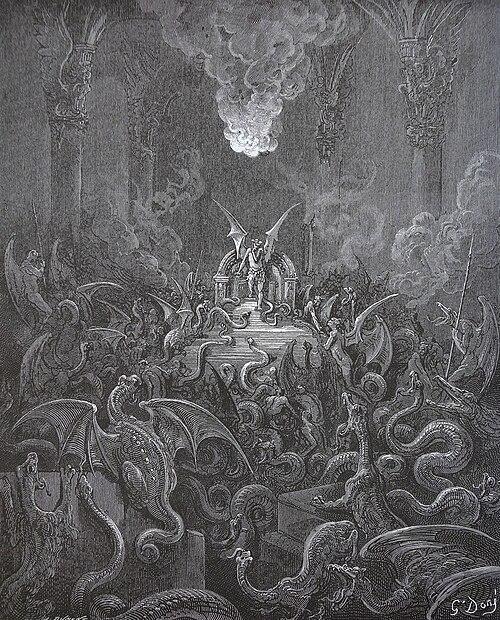
Book X: The Fallen Angels Turned to Serpents
1866 · Paradise Lost (1866)
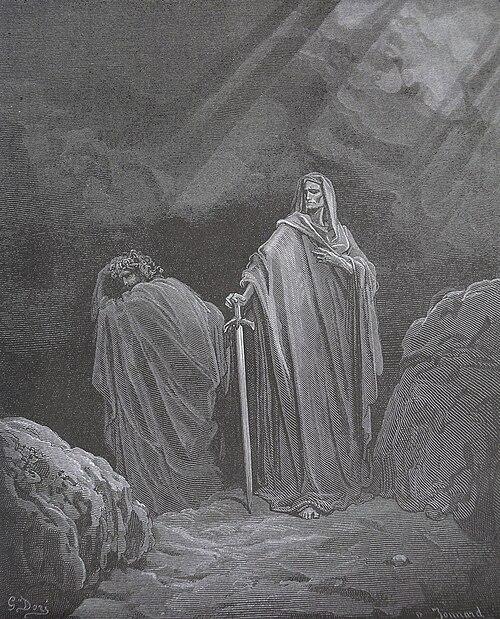
Book X: Sin and Death Go Their Ways
1866 · Paradise Lost (1866)
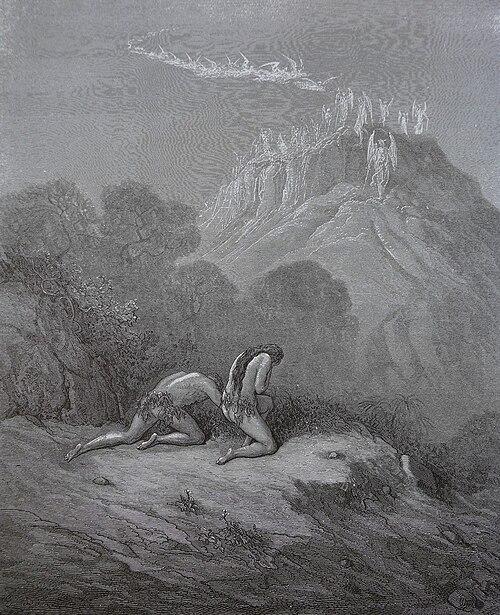
Book XI: Michael's Cohort Descends on Paradise
1866 · Paradise Lost (1866)
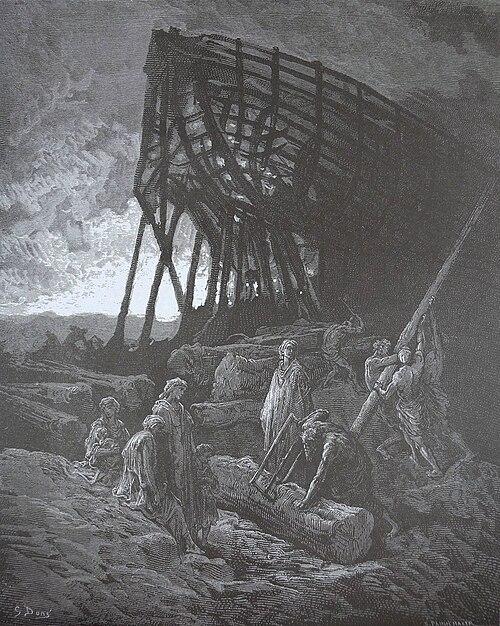
Book XI: The Building of the Ark
1866 · Paradise Lost (1866)
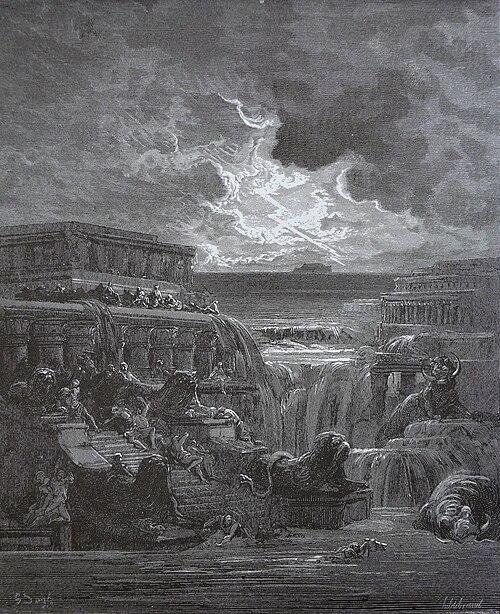
Book XI: The Flood
1866 · Paradise Lost (1866)
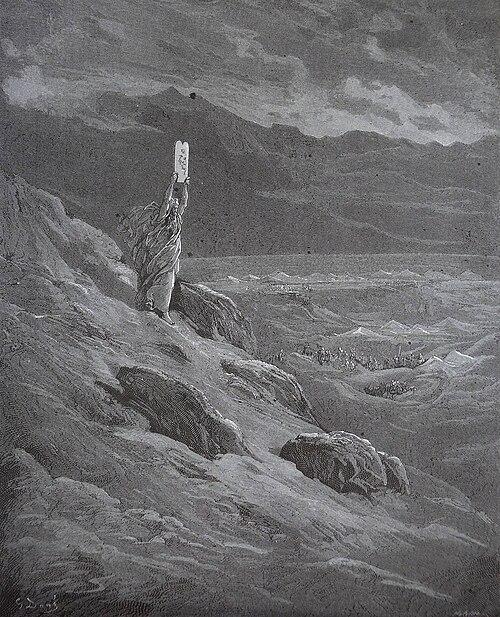
Book XII: Moses Receives the Law
1866 · Paradise Lost (1866)
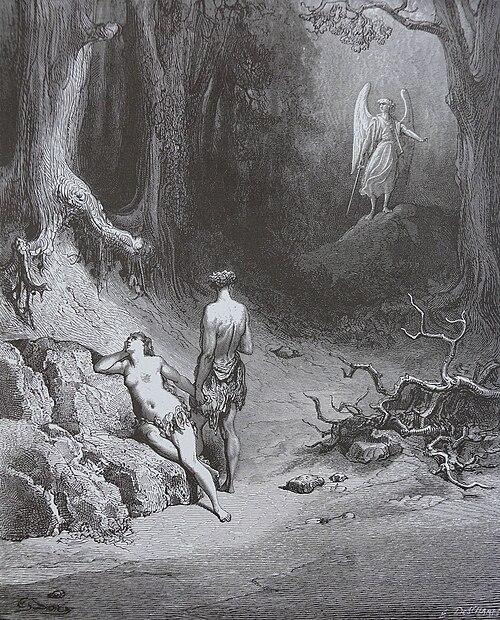
✦Book XII: The Expulsion from Paradise
1866 · Paradise Lost (1866)
How the book came about
By the mid-1860s Doré was working through a list of the great books of Western literature, and the London firm of Cassell, Petter and Galpin was his most important English partner. Cassell had issued his Hell plates in English as The Vision of Hell and was publishing Don Quixote in London. Paradise Lost was a natural next step: an English classic that had never had a set of illustrations on the scale of Doré's Dante.
The result was a large folio in which the text is reduced to short extracts. Each of the 50 plates is printed on its own leaf, faced by the lines of Milton it illustrates, so the book reads as a sequence of pictures with captions rather than an illustrated poem. Cassell reissued it many times, in large and smaller formats, and its success in Britain helped lead to the Doré Gallery in London, where his paintings were shown for more than twenty years.
Milton's poem in Doré's hands
Milton published Paradise Lost in ten books in 1667 and revised it into twelve in 1674. The poem does not tell its story in order: it opens in Hell after the fall of the rebel angels, follows Satan to Eden, and only later, through the archangel Raphael's narration, goes back to the war in Heaven and the creation. Doré follows Milton's order rather than the chronological one, so the book begins with defeat and spends its first third with the fallen angels before it reaches Adam and Eve.
How the plates were made
As with all his major books, Doré drew the designs directly onto the woodblocks and handed them to professional engravers to cut. Names cut into the margins of the Paradise Lost plates include members of the Pannemaker workshop (a Book I plate is credited to Stéphane Pannemaker); the British Museum's set lists the plates simply as wood engravings after Doré. The engravers' task was to turn Doré's washes into a range of grays with fine parallel lines, and this book shows that technique at its most refined: the skies of Chaos and of Heaven are built almost entirely from horizontal hatching of varying weight, against which the figures stand out in white.
The plates are among the most luminous Doré designed. Where the Inferno is dark and enclosed, Paradise Lost is full of air and distance, with figures often seen small against clouds, cliffs or the curve of the earth.
A walk through the plates
The cycle opens with the poem's first great image, the fall. Satan Cast Out of Heaven illustrates Book I, lines 44–45: Him the Almighty Power / Hurled headlong flaming from th' ethereal sky. Doré shows Satan plunging head-first through a black void, wings spread, a single body dropping through the dark. It is the image most people mean when they talk about Doré's Satan.
Book II opens with Satan enthroned, High on a throne of royal state, and Satan in Council gives him a vast hall of fallen angels, a parody of a royal court. In Satan, Sin and Death he confronts the shapeless figure of Death at the gates of Hell while Sin, his daughter, comes between them. The end of Book II sends him out alone: Satan's Flight Through Chaos is one of Doré's purest exercises in scale, a small winged figure crossing a landscape of cloud and darkness.
In Book III Satan reaches the created world, and Satan Approaching the Confines of the Earth shows him poised in space above the globe, the destroyer arriving at the world he means to ruin. Doré then goes back in time with Milton to the War in Heaven of Book VI, a battle of angels with spears and wings massed in great diagonal waves, before the story turns to Eden.
The final plate, Adam and Eve Expelled from Paradise, illustrates the poem's last lines, in which They hand in hand with wandering steps and slow, / Through Eden took their solitary way. After so much cosmic spectacle, Doré ends quietly, with two small human figures leaving the garden.
Satan as a Romantic hero
Doré's reading of Milton follows the Romantic one. Blake had said that Milton was of the Devil's party without knowing it, and Shelley and Byron admired Milton's Satan as a rebel. Doré's Satan is beautiful, muscular and alone; he is never shown as a monster. In the Inferno Doré had drawn Lucifer as a sullen giant frozen in ice; here, in a book that begins rather than ends with the devil, he gave him the heroic proportions of a fallen archangel. Seen side by side, Doré's Lucifer and his Satan cast out of Heaven show the two poles of the figure, defeat and defiance. Both belong to the long history of fallen angels in art, which runs back through Baroque altarpieces such as Sebastiano Ricci's Fall of the Rebel Angels and forward to Franz von Stuck's brooding Lucifer.
The plates' afterlife
Cassell's editions kept the plates in print for decades, and Dover's paperback reprint of all 50 designs has made them familiar to readers since the twentieth century. They are among the most reproduced of all Milton illustrations, and the figure of Satan plunging through space recurs, directly or indirectly, wherever fallen angels are drawn. For the broader theme, see angels and demons in art.
Where to see the original edition
The 1866 Cassell folio is held by many research libraries; Christ's College, Cambridge (Milton's own college) and the University of Wisconsin–Milwaukee's special collections have both exhibited copies, and the British Museum and the Metropolitan Museum of Art hold impressions of the plates. Complete scans are on the Internet Archive and Wikimedia Commons. The other Doré books are gathered on the hubs for Doré's Inferno, the Doré Bible, The Raven and The Rime of the Ancient Mariner, and you can browse every plate in the complete catalogue.
Questions & answers
How many illustrations did Doré make for Paradise Lost?
Doré designed 50 full-page wood engravings for Milton's Paradise Lost. Each is printed on its own leaf and faced by the lines of the poem it illustrates, running from Satan's fall in Book I to the expulsion of Adam and Eve at the end of Book XII.
When was Doré's Paradise Lost published?
It was first published in London in 1866 by Cassell, Petter and Galpin as Milton's Paradise Lost, Illustrated by Gustave Doré, a large folio. Cassell reissued it many times in the following decades, in large and smaller formats.
Who engraved Doré's Paradise Lost illustrations?
Doré drew the designs on the woodblocks, and professional engravers cut them. Signatures in the plate margins include members of the Pannemaker workshop, such as Stéphane Pannemaker. Doré himself did not cut the blocks.
Are Doré's Paradise Lost illustrations public domain?
Yes. The engravings were published in 1866 and Doré died in 1883, so the images are in the public domain. Faithful scans of the original prints, such as those on Wikimedia Commons and the Internet Archive, can generally be reused freely.
Where can I see the original Doré Paradise Lost?
Copies of the 1866 Cassell folio are in many research libraries, including Christ's College, Cambridge, and impressions of the plates are in the British Museum and the Metropolitan Museum of Art. Complete scans of the book are on the Internet Archive; Dover publishes an inexpensive reprint of all 50 plates.
Related guides
- Fallen Angel Paintings: Lucifer and the Rebel Angels in Art
From medieval battles in heaven to Cabanel's weeping Lucifer and Stuck's glowing eyes: how artists turned the first rebel into a tragic hero.
- Angels and Demons in Art: Statues, Paintings and Fallen Angels
From Bernini's marble angels in Rome to Cabanel's weeping Lucifer, how artists have given bodies to beings that have none.