Impressionism
The Rocks of Belle-Île, the Wild Coast
Claude Monet, 1886
The Rocks of Belle-Île, the Wild Coast is an 1886 painting by Claude Monet of dark rocks and churning surf on the Atlantic coast of Brittany. It is in the Musée d'Orsay, Paris.
- Artist
- Claude Monet
- Date
- 1886
- Medium
- Oil on canvas
- Dimensions
- 65.5 × 81.5 cm
- Collection
- Musée d'Orsay, Paris, France
- Movement
- Impressionism
- Catalogue
- Wildenstein 1100
More at Monet at the Musée d'Orsay
What you are looking at
Black rocks crowd the right half of the canvas and push out into the sea in a series of jagged headlands, one behind another. Between them the water is a seething field of blue, violet, green and white, foam sliding over every ledge. A strip of sky at the very top, pale yellow and gray, is almost an afterthought, and the horizon sits so high that the sea seems to tilt toward us. There is no beach, no boat, no figure, nothing to rest on. We are perched on the cliff, looking almost straight down into the surf.
The light is cool and overcast. Nothing casts a shadow; the drama comes entirely from the contrast between near-black stone and broken white water.
Belle-Île, autumn 1886
Belle-Île-en-Mer is the largest island off the south coast of Brittany. Its western shore, the Côte sauvage or "wild coast," takes the full force of the Atlantic. Claude Monet arrived in September 1886 expecting a short stay and remained about ten weeks, painting in wind and rain and writing to Alice Hoschedé that this ocean was nothing like the Channel he knew from Normandy. It was on Belle-Île that he met the critic Gustave Geffroy, who became his friend and, later, his biographer.
He came back with nearly forty canvases. This one, catalogued as W.1100, is among the most compressed: no sky to speak of, only rock and water. A local fisherman, Hippolyte Guillaume, known as Poly, carried his canvases to the cliffs, and Monet painted his weathered face too. The picture has that fierce, close-up feeling of a painter working at the edge.
How it was painted
The rocks are not gray. Up close they are built of thick, crusty strokes of deep blue, purple, red-brown and black, worked wet into wet. Monet seems to have modeled them with the same restless touch he used for the water, so the stone looks battered rather than solid. Only at the edges, where foam meets the rock, does he sharpen the contour.
The sea is a different handwriting: short curling strokes of white and pale blue laid over darker blue, with streaks of emerald where the water is deep and calm between swells. Follow the foam around the base of the nearest rock, lower center, and you can see the swell sucking back off the ledge. At the far left, the strokes flatten into horizontal dashes as the sea opens out toward the horizon.
The sky strip is worth a second look. It is not blank but dabbed with small touches of yellow, lilac and gray, a broken overcast that shares its colors with the foam below. That repetition is what keeps the picture whole despite its violent contrasts.
The Belle-Île pictures and how this one differs
On Belle-Île Monet returned again and again to a few spots: the needles of Port-Coton, the coves near Kervilahouen, the open headlands. In The "Pyramides" at Port-Coton the rocks stand up from the sea like spires; in Storm off Belle-Île the water explodes into spray. This canvas sits between them, neither calm nor full storm, and its high viewpoint gives it an unusual, almost aerial design.
The cropping, with the rocks cut by the frame on two sides, owes something to the Japanese prints Monet collected. It also anticipates the series of the 1890s, in which a single motif fills the canvas and weather does the rest. Set it beside the chalk cliffs of Rough Sea at Étretat or The Manneporte, painted on the Normandy coast a few years earlier, and the difference is plain: white chalk and green Channel water there, black granite and violet Atlantic here.
Where to see it
The painting is in the Musée d'Orsay, Paris (RF 2777), which also owns a stormier view of the same coast from the same trip, Tempête, côtes de Belle-Île. Both are among the Monets described on our Monet at the Musée d'Orsay page.
Questions & answers
Where is The Rocks of Belle-Île by Monet?
This 1886 canvas, Les Rochers de Belle-Île, la Côte sauvage, is in the Musée d'Orsay in Paris (RF 2777). It measures 65.5 by 81.5 centimeters. The museum also owns a stormier view of the same coast painted on the same trip, Tempête, côtes de Belle-Île.
When and where was it painted?
In the autumn of 1886 on Belle-Île-en-Mer, an island off the south coast of Brittany. Monet stayed about ten weeks, from September into November, painting the Atlantic-facing Côte sauvage in wind and rain, and came home with nearly forty canvases.
What does the painting show?
Dark headlands of rock thrusting into a churning sea, seen from high on a cliff, with only a thin strip of pale sky at the top. There are no boats or people. The subject is the collision of stone and water, painted with thick, restless strokes.
How does it differ from Monet's other Belle-Île paintings?
The Port-Coton canvases focus on needle rocks standing up from the sea, and the storm pictures on exploding spray. This one looks down from above, crops the rocks on two sides and gives almost the whole canvas to rock and surf, a compressed design that points toward his later series.
More by the artist
Claude Monet

Bridge over a Pond of Water Lilies
Claude Monet · 1899

Woman with a Parasol – Madame Monet and Her Son
Claude Monet · 1875

Sunset in Venice
Claude Monet · 1908–12

La Grenouillère
Claude Monet · 1869

Beach in Pourville
Claude Monet · 1882

Springtime
Claude Monet · 1872

Boating on the River Epte
Claude Monet · 1890

The Seine at Asnières (Hermitage)
Claude Monet · 1873
Also painted in 1886
The same year
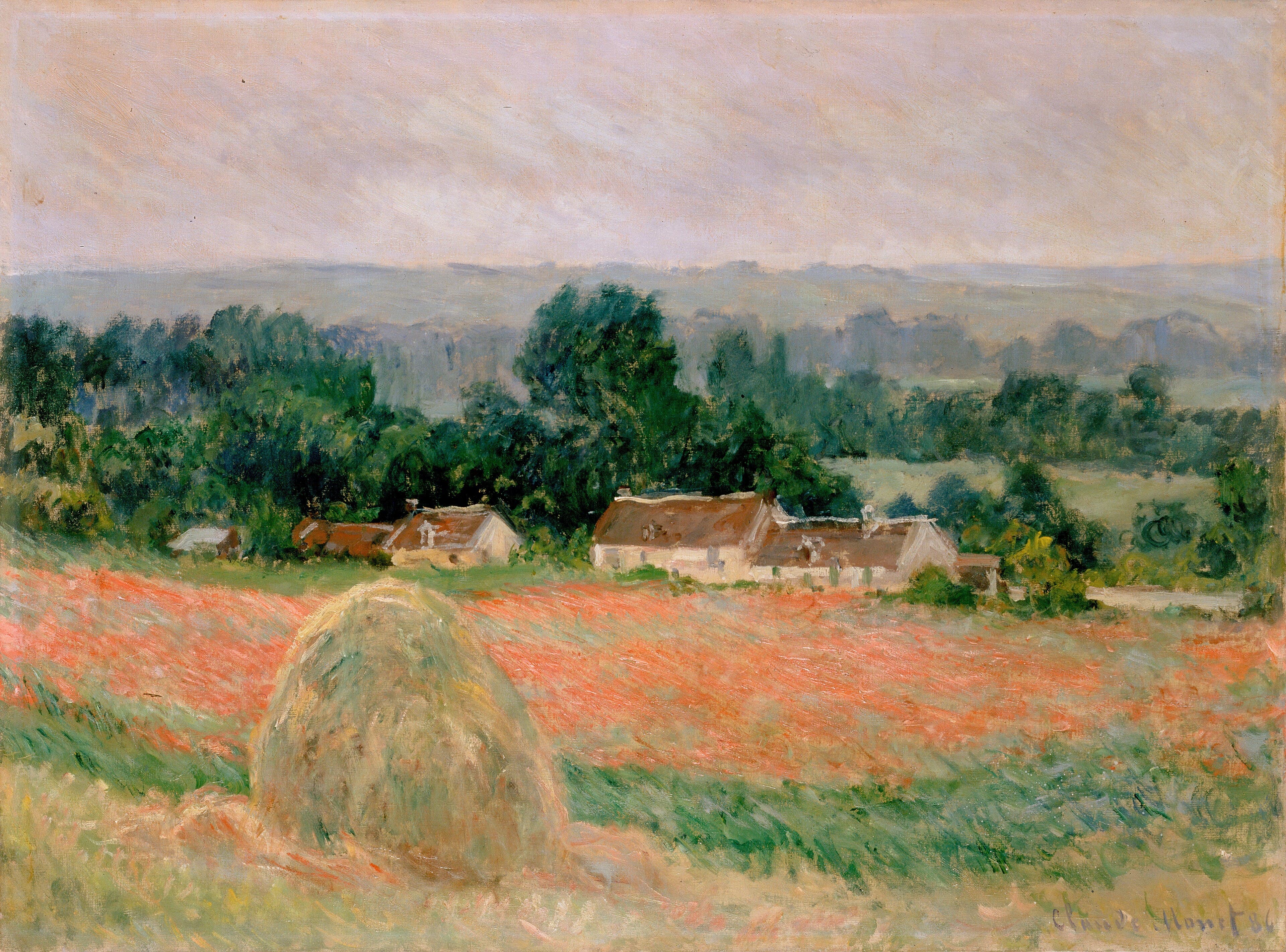
Haystack at Giverny
Claude Monet · 1886
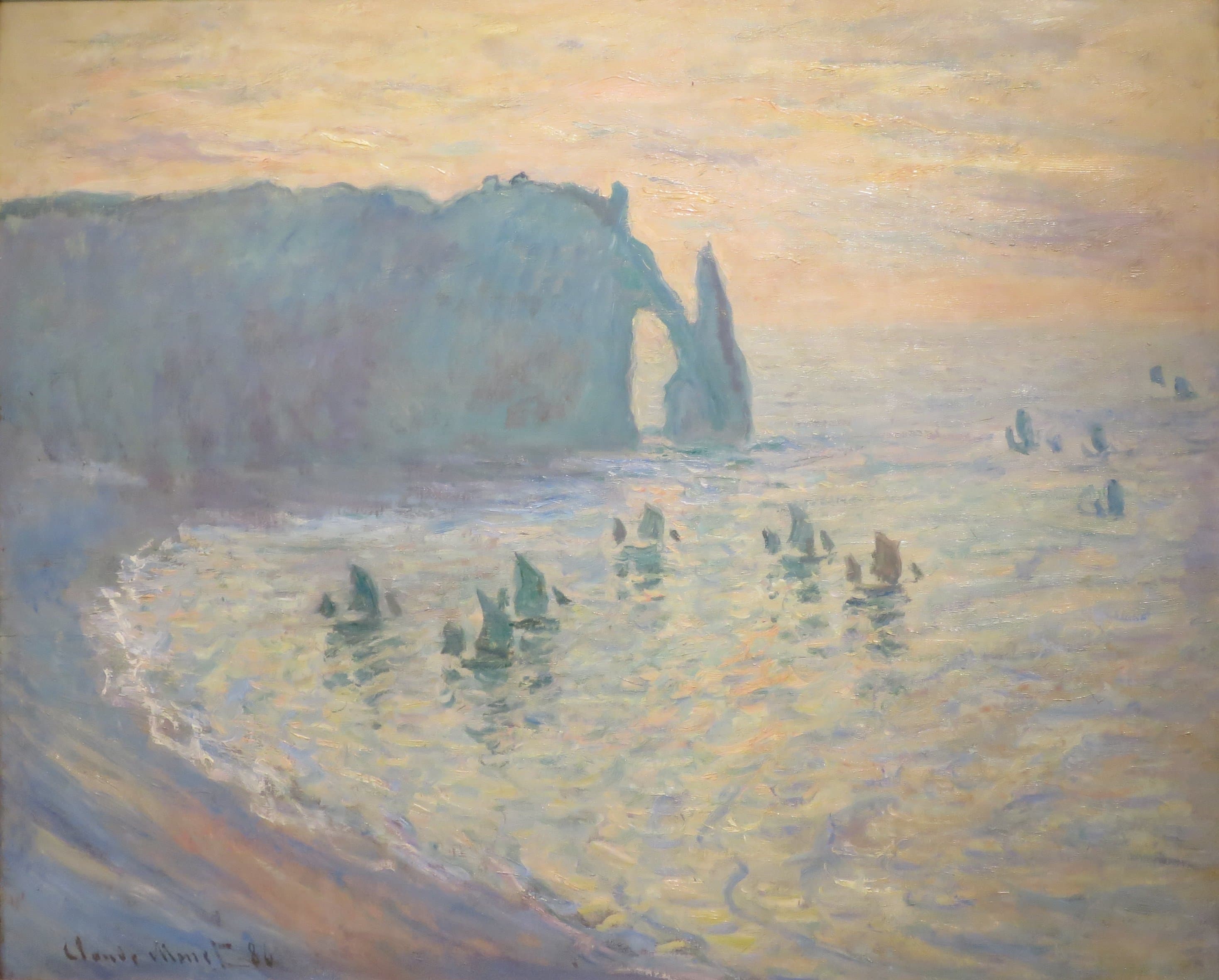
The Cliffs at Étretat
Claude Monet · 1886
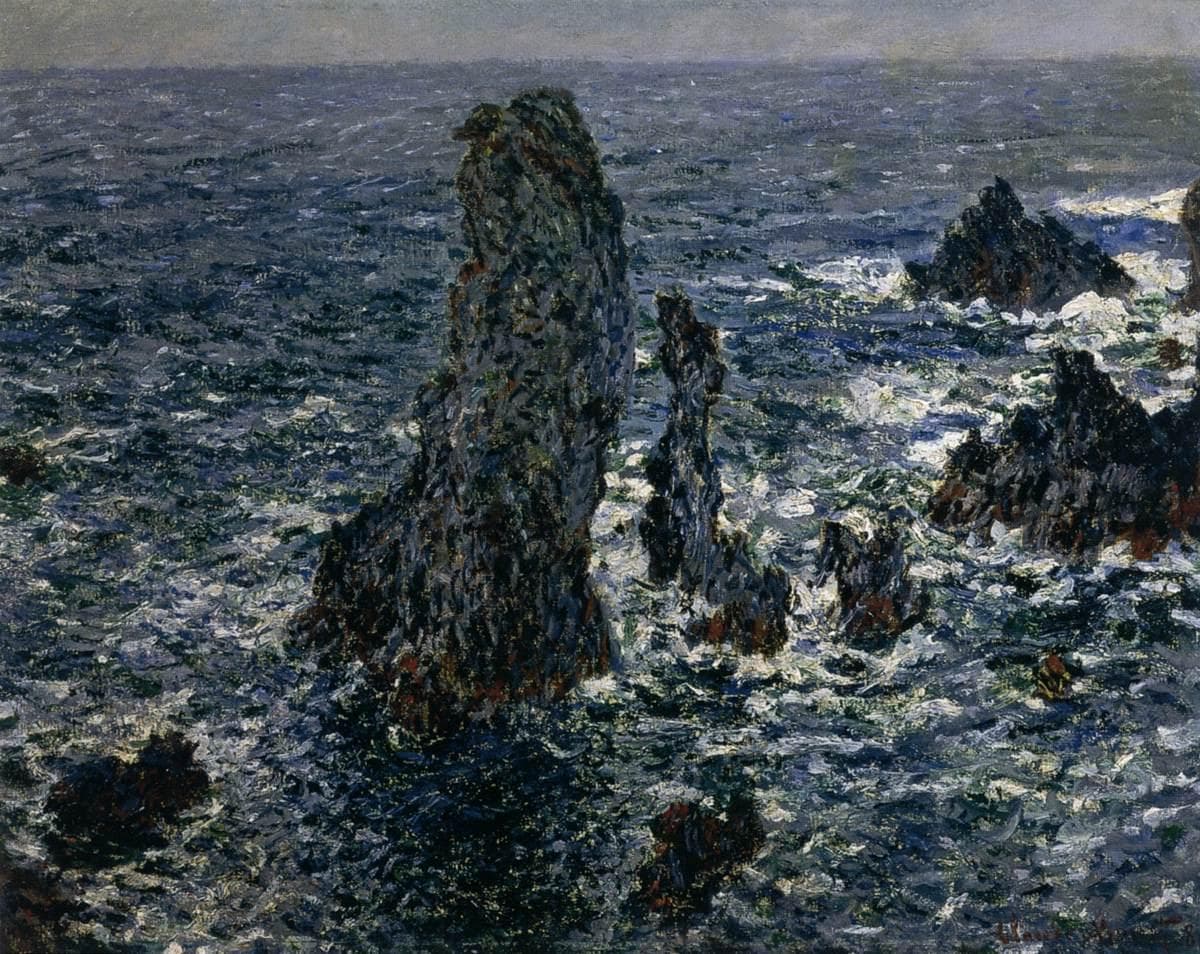
The Pyramides at Port-Coton, Rough Sea
Claude Monet · 1886
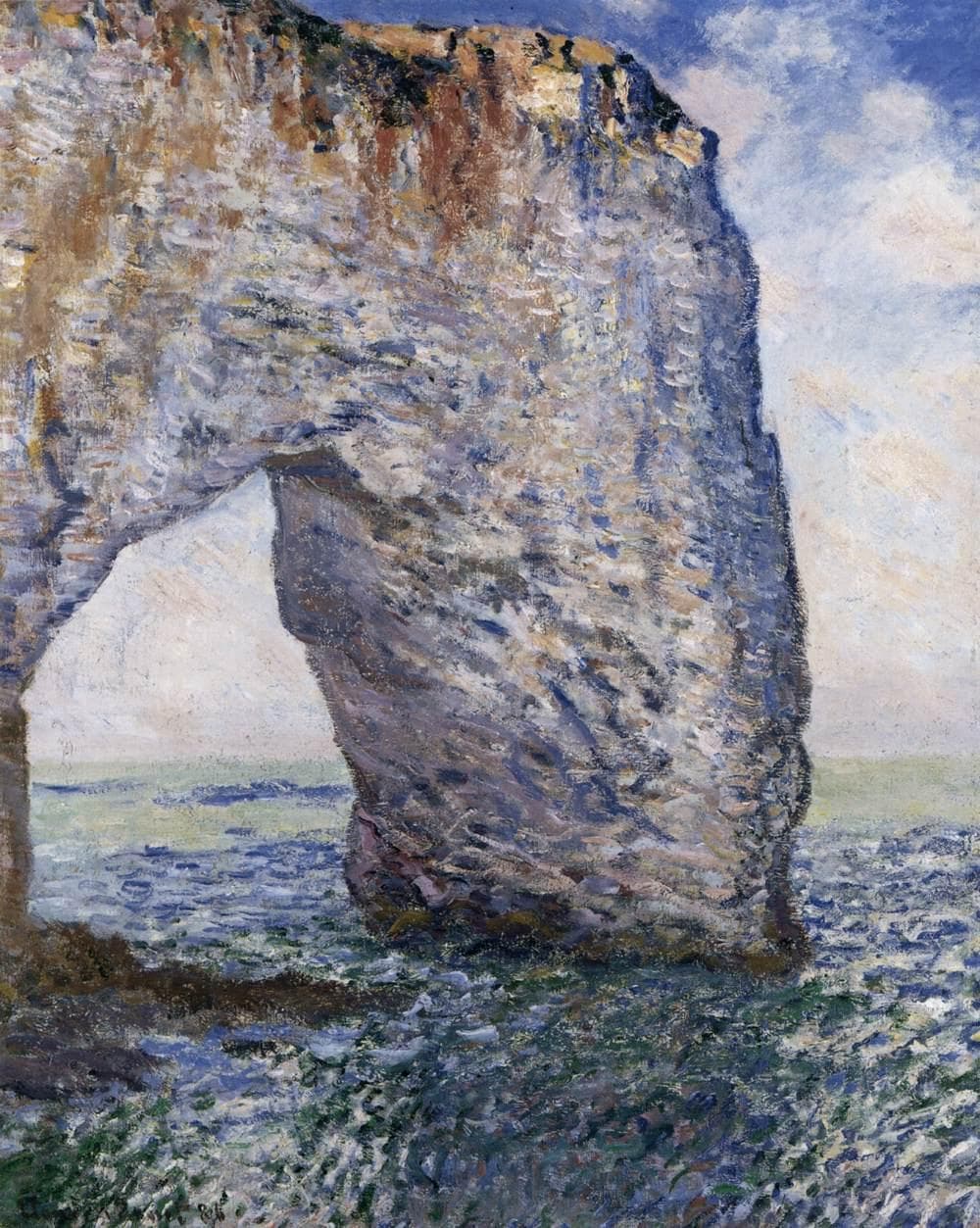
The Manneporte near Étretat
Claude Monet · 1886
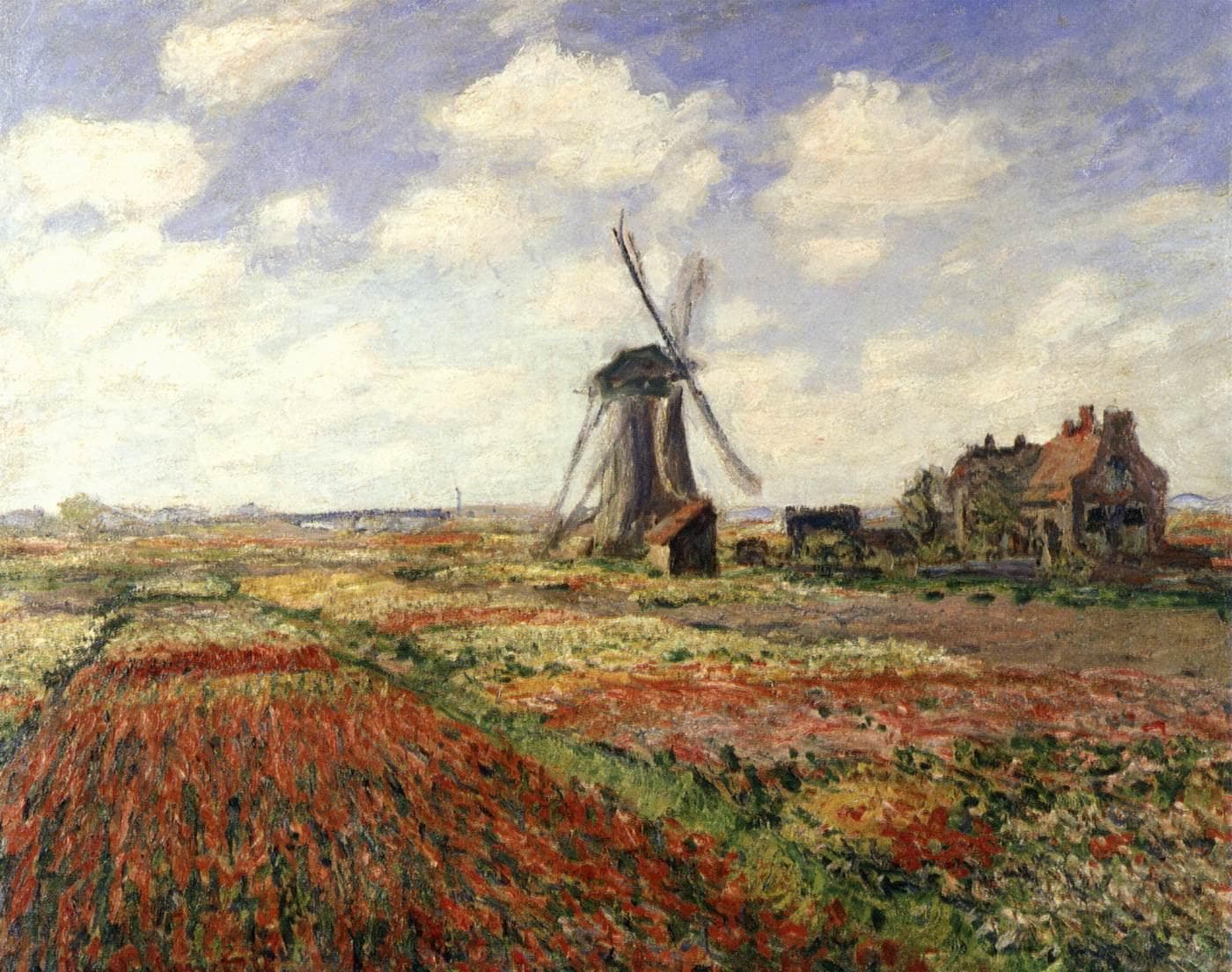
Tulip Fields in Holland
Claude Monet · 1886
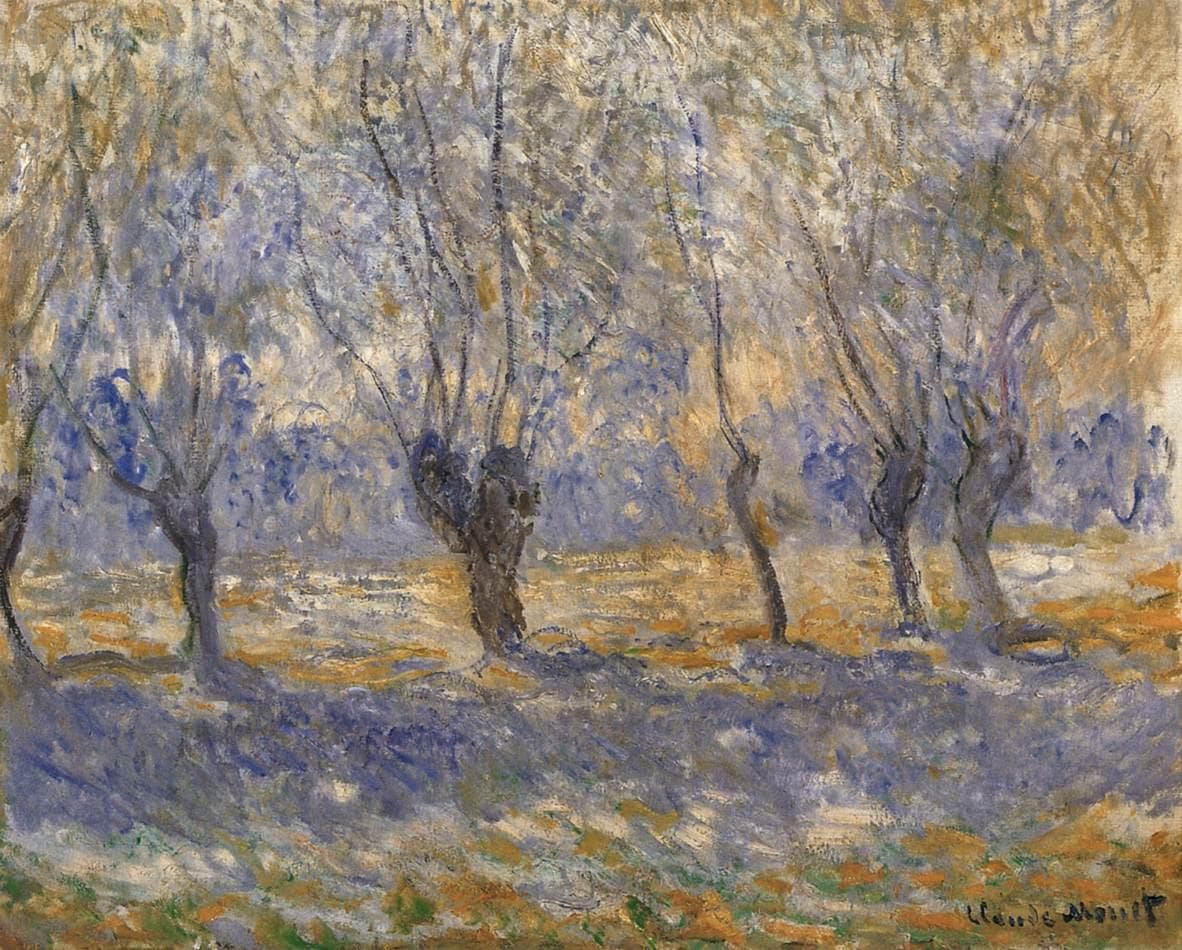
Willows at Giverny
Claude Monet · 1886
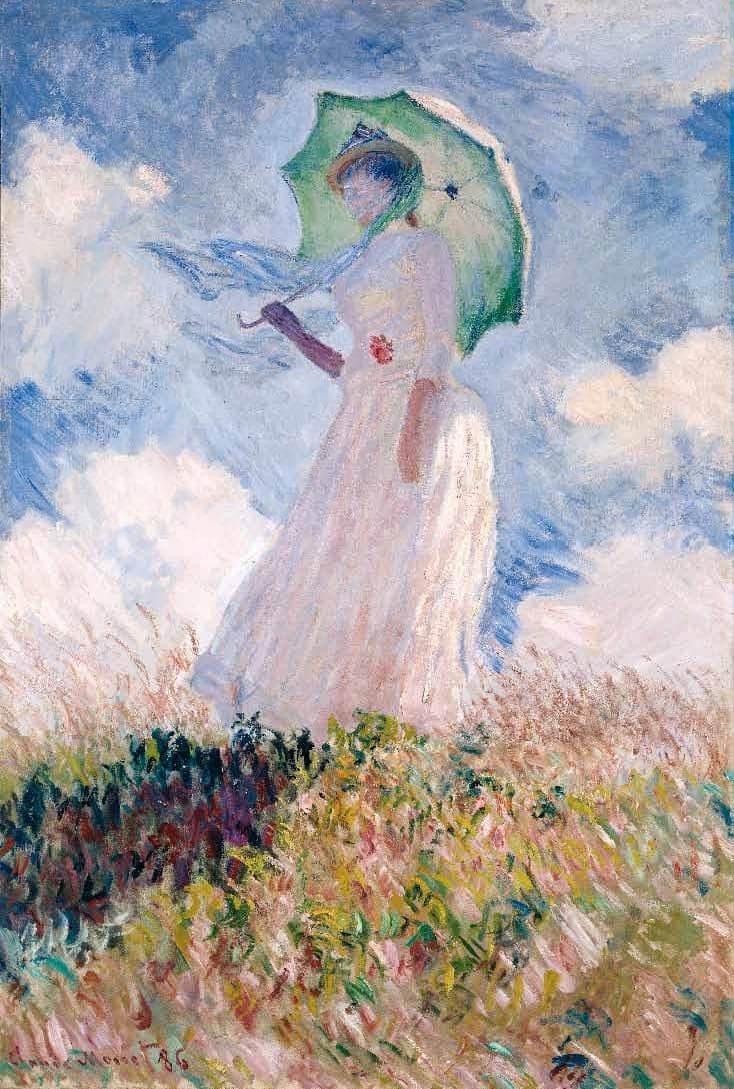
Woman with a Parasol, Facing Left
Claude Monet · 1886
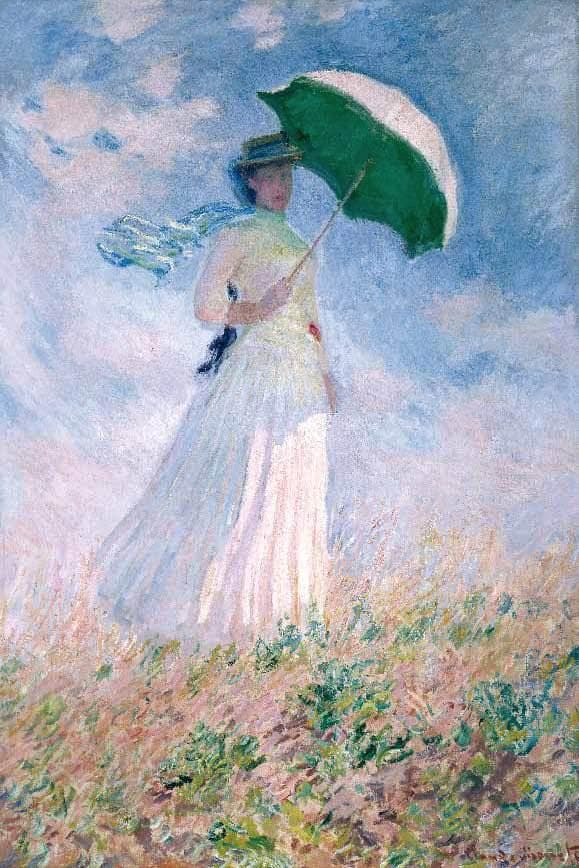
Woman with a Parasol, Facing Right
Claude Monet · 1886
Kindred works
You may also study
The Pyramides at Port-Coton, Rough Sea
Claude Monet · 1886
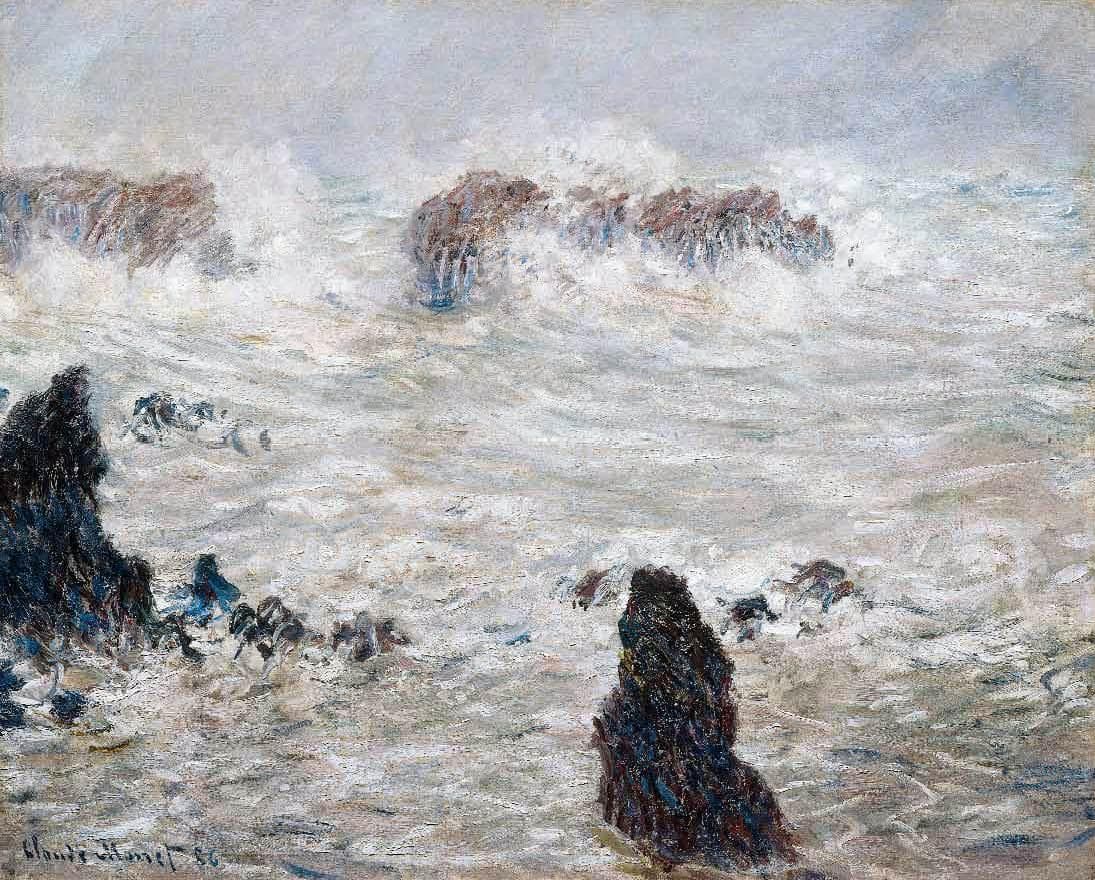
Storm off Belle-Île
Claude Monet · 1886
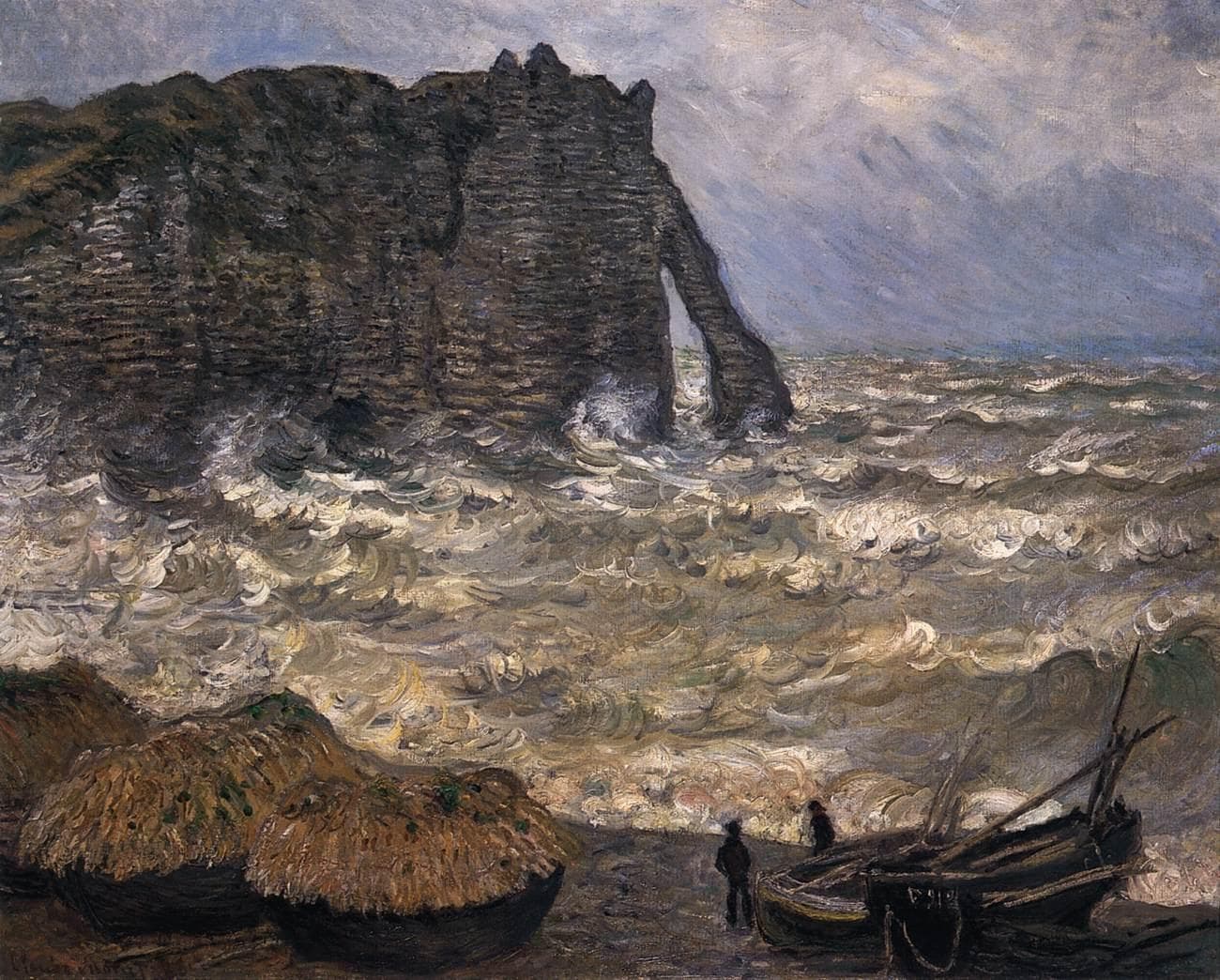
Rough Sea at Étretat
Claude Monet · 1883
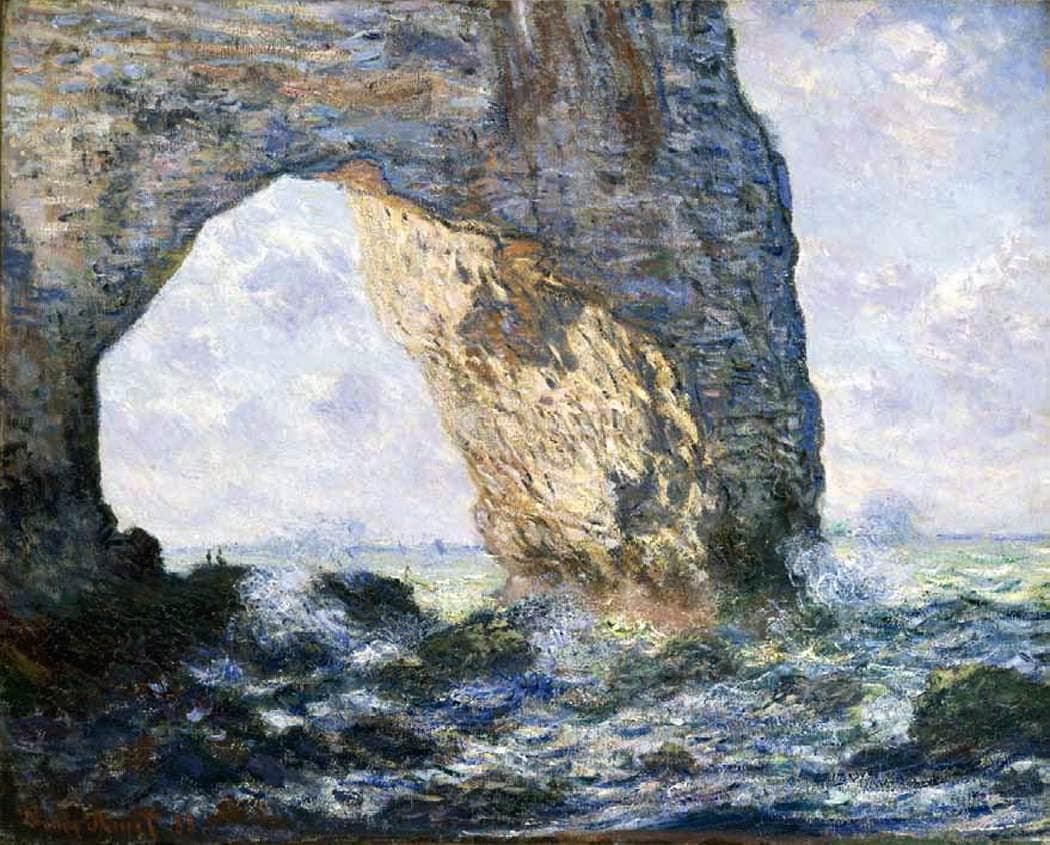
The Manneporte (Étretat)
Claude Monet · 1883
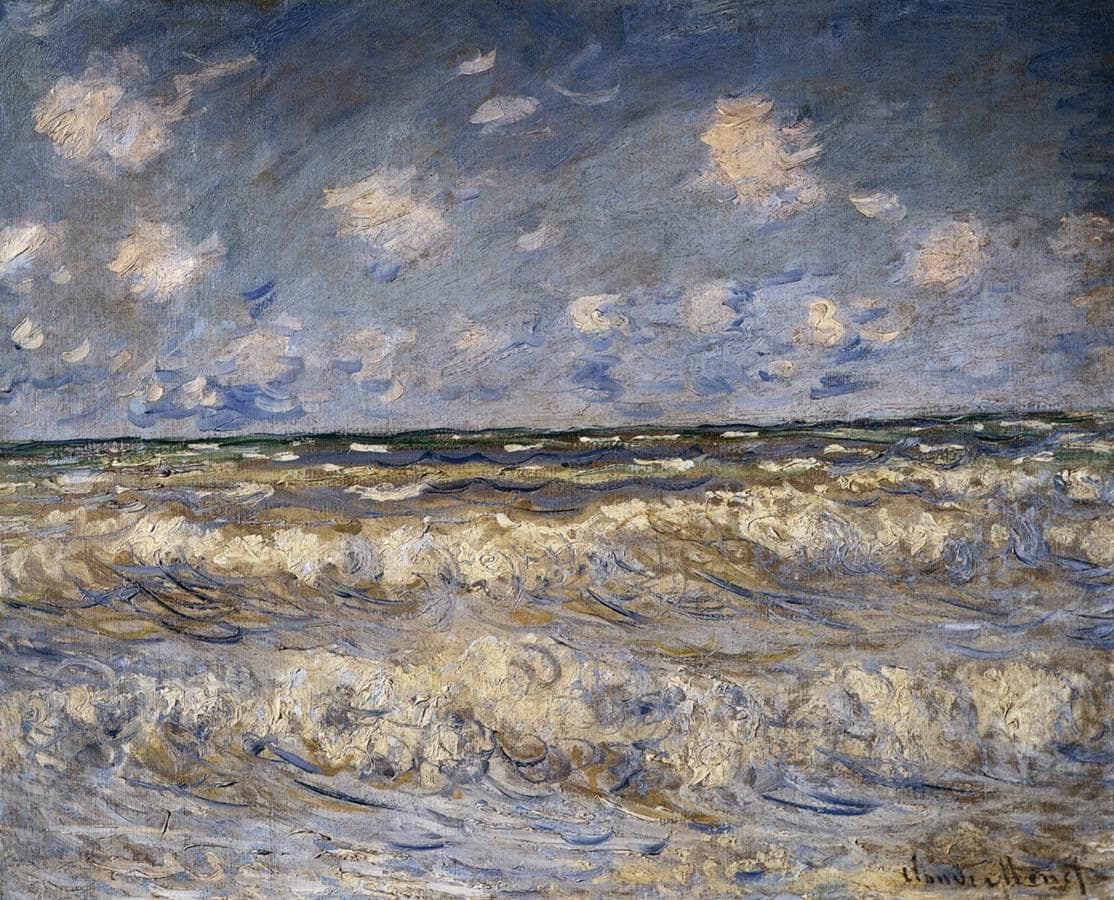
Stormy Sea
Claude Monet · c. 1881–84

The Scream
Edvard Munch · 1893

Ophelia
John Everett Millais · 1851–52

The Great Wave off Kanagawa
Katsushika Hokusai · c. 1830–32