Image: Photo: Jastrow (2007); Musée du Louvre · Public domain · via Wikimedia Commons
Hellenistic
Venus de Milo
Alexandros of Antioch, c. 150–125 BC
The Venus de Milo is an ancient Greek marble statue of a goddess, almost certainly Aphrodite, carved around 150–125 BC and probably the work of Alexandros of Antioch. Found on the island of Milos in 1820 without its arms, it has been in the Louvre in Paris since 1821.
- Artist
- Alexandros of Antioch
- Date
- c. 150–125 BC
- Medium
- Parian marble
- Dimensions
- 204 cm high
- Collection
- Musée du Louvre, Paris, France
- Movement
- Hellenistic
What you are looking at
A woman stands slightly larger than life, her weight on her right leg, her left knee bent forward and turned. Her upper body is bare. Around her hips hangs a heavy mantle, slipping down, its folds deep and full, held up, it seems, only by the twist of her body and the bent knee. Her head turns to her left, her face calm and remote, with a straight nose, small mouth and hair gathered loosely at the back.
She has no arms. The left is gone from above the elbow, the right from just below the shoulder. Her left foot is missing too, and there are small losses at the nose and lower lip. But the absences have become part of the statue's identity: almost no one now imagines her complete.
The pose is a spiral. Walk around her and you see it: the hips turn one way, the torso another, the head a third, so that the figure seems to rotate slowly in space. The contrast between the smooth, softly modeled skin of the torso and the deep-cut, shadowy drapery below is the sculptor's main effect, and it changes with the light through the day.
The detail most visitors miss: the statue is made of separate blocks of marble, joined at the hips just where the drapery begins. Look closely and you can see the seam hidden in the folds. Several smaller parts were also carved separately and attached, a common practice in Greek sculpture.
Discovery on Milos
On 8 April 1820 a Greek farmer (usually named as Yorgos Kentrotas), digging near the ruins of the ancient city on the Aegean island of Milos (Melos), found the upper part of the statue in a niche. A French naval officer, Olivier Voutier, who was looking for antiquities nearby, saw the find and alerted French diplomats. After a tangle of negotiations, the statue was bought on behalf of the French ambassador to the Ottoman Empire, the Marquis de Rivière, who presented it to King Louis XVIII. The king gave it to the Louvre, where it went on display in 1821.
Found in the same niche were fragments of an upper arm and a hand holding an apple, and a plinth inscribed with a sculptor's name. The plinth was lost soon after reaching Paris, but drawings of it survive.
Who made the Venus de Milo, and when?
The inscription recorded on the lost plinth names a sculptor "[...]andros, son of Menides, of Antioch on the Maeander". The name is usually restored as Alexandros, and the statue is attributed to this otherwise little-known artist. Whether the plinth really belonged to the statue is still disputed, and was fiercely so in the 19th century, partly because French authorities in the 19th century preferred to credit a great classical master such as Praxiteles. Today most scholars date the work to the late Hellenistic period, around 150–125 BC, a time when sculptors were consciously reviving the style of classical masters of the 4th century BC.
What does the Venus de Milo mean?
The statue is usually identified as Aphrodite, the Greek goddess of love and beauty (Venus to the Romans), because of the half-nudity and the slipping drapery, a classic motif for the goddess. Some scholars have suggested it could be Amphitrite, a sea goddess worshipped on Milos. Without the arms we cannot be sure what she was doing.
The arms have inspired endless reconstructions. If the hand with the apple belongs to the statue, she may have held up the golden apple won in the Judgment of Paris, which was also a play on the island's name (melos means apple in Greek). Others imagine her holding a mirror, a shield, a spindle, or leaning on a pillar. None of these proposals has been proven.
What the statue came to mean is clearer. In 19th-century France, newly deprived of the classical sculptures that Napoleon had taken from Italy and been forced to return, the Venus de Milo became a national treasure and an ideal of female beauty. Its armless state, at first a flaw, turned into its signature, so that the statue now represents the idea of ancient beauty surviving in fragments as much as any goddess.
Reception and legacy
Painters and poets idealized her, from the Romantics to the Symbolists. Salvador Dalí made a Venus de Milo with Drawers in 1936, and René Magritte painted a plaster cast of her in flesh tones. She has left France only once, for an exhibition in Japan in 1964.
During the Second World War, the Louvre evacuated her to the Château de Valençay in central France for safekeeping. Today she is, with the Winged Victory of Samothrace and Leonardo's Mona Lisa, one of the three most visited works in the Louvre. She is a cornerstone of our Greek statues collection and a constant reference in images of the goddess, from Botticelli's The Birth of Venus onward.
Where is the Venus de Milo today?
The Venus de Milo is in the Musée du Louvre in Paris, in the Department of Greek, Etruscan and Roman Antiquities (inventory Ma 399), on the ground floor of the Sully wing. She is displayed in the round so that visitors can walk all the way around her.
Questions & answers
Where is the Venus de Milo?
The Venus de Milo is in the Musée du Louvre in Paris, in the Greek antiquities galleries on the ground floor of the Sully wing. It has been in the Louvre since 1821, apart from wartime evacuation to the Château de Valençay during World War II.
What happened to the Venus de Milo's arms?
The arms were already missing when the statue was found on Milos in 1820. Fragments of an upper arm and a hand holding an apple were found nearby, but whether they belong to the statue is debated, and the arms have never been restored.
Who made the Venus de Milo?
The Louvre attributes it to Alexandros of Antioch, whose name, partly preserved, appeared on an inscribed plinth found with the statue but lost soon after it reached Paris. The link is not universally accepted. It was carved around 150–125 BC, in the late Hellenistic period.
Who is the Venus de Milo supposed to be?
She is usually identified as Aphrodite, the Greek goddess of love, known to the Romans as Venus, because of her half-nude pose and slipping drapery. Some scholars suggest she could be Amphitrite, a sea goddess worshipped on Milos.
How tall is the Venus de Milo?
The statue stands about 204 centimeters (6 feet 8 inches) high, slightly larger than life size. It is carved from Parian marble in separate blocks, joined at the hips beneath the drapery.
Kindred works
You may also study
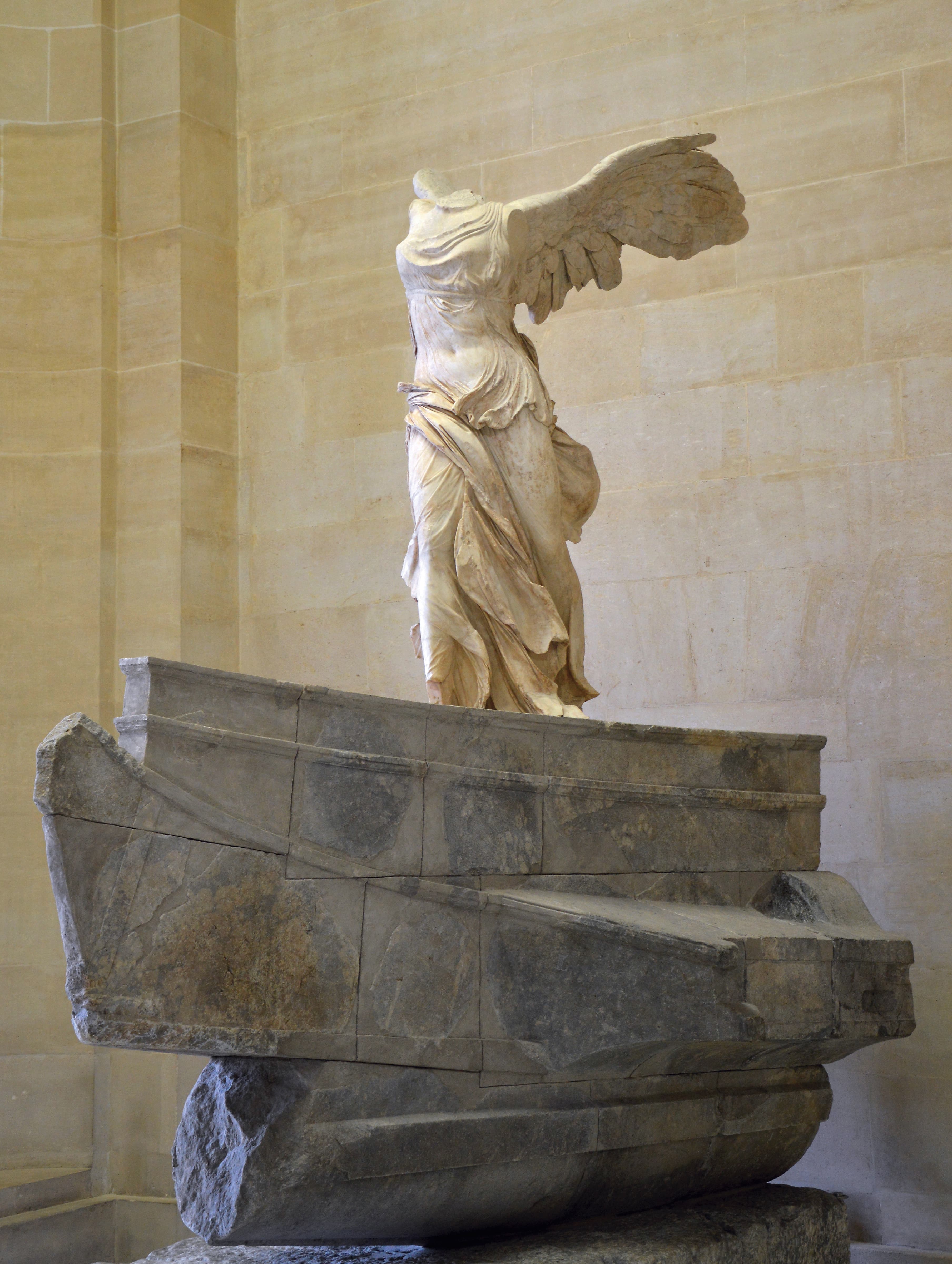
Winged Victory of Samothrace
Artist Unknown · c. 200–190 BC
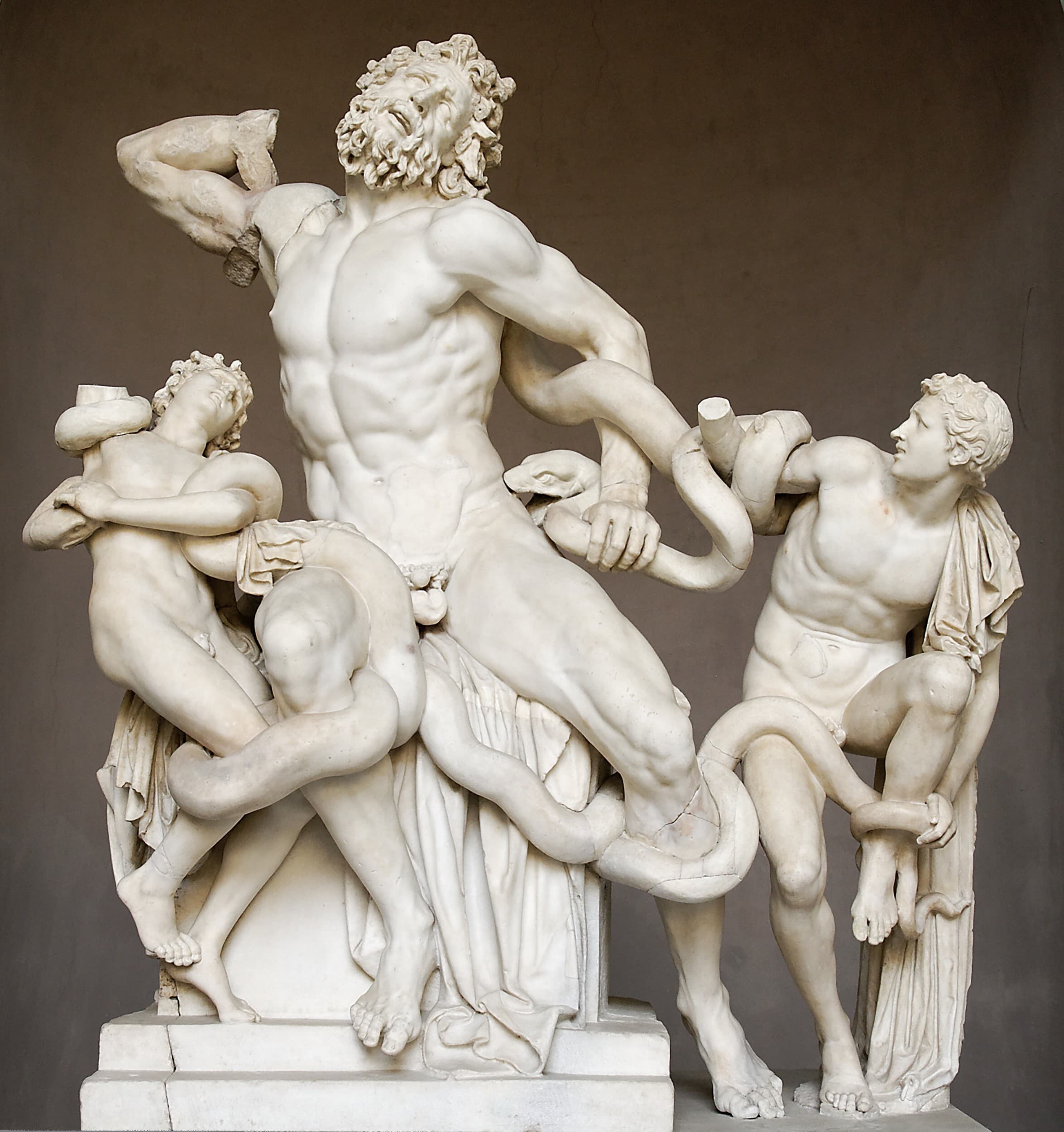
Laocoön and His Sons
Agesander of Rhodes & Athenodoros of Rhodes & Polydorus of Rhodes · c. 200 BC – AD 70 (date debated); excavated 1506
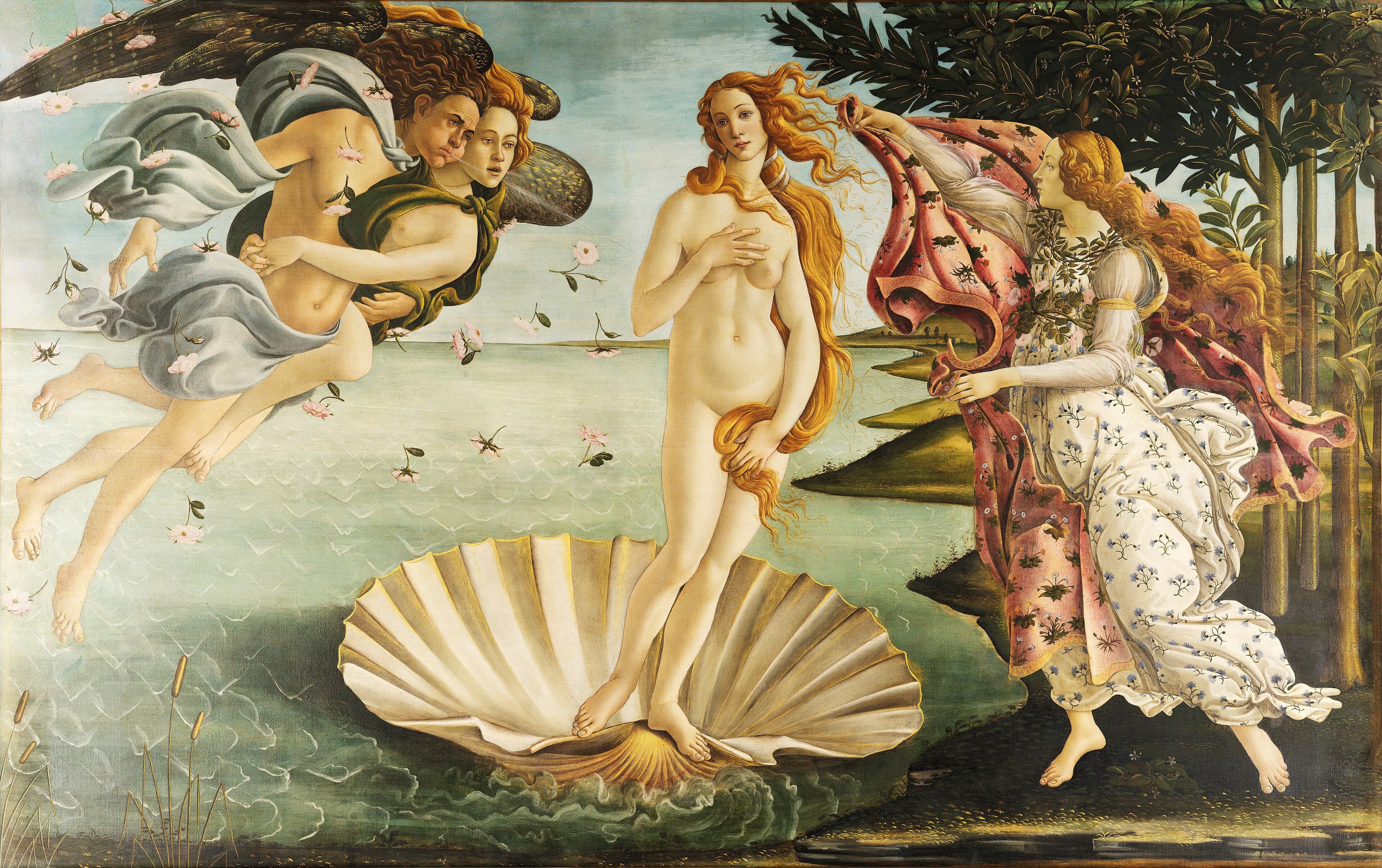
The Birth of Venus
Sandro Botticelli · c. 1484–1486
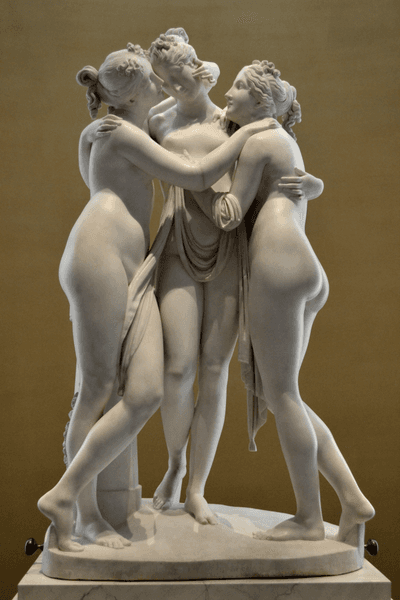
The Three Graces
Antonio Canova · 1814–17

The Thinker
Auguste Rodin · Modeled 1880–82; enlarged 1902–03; this cast 1904
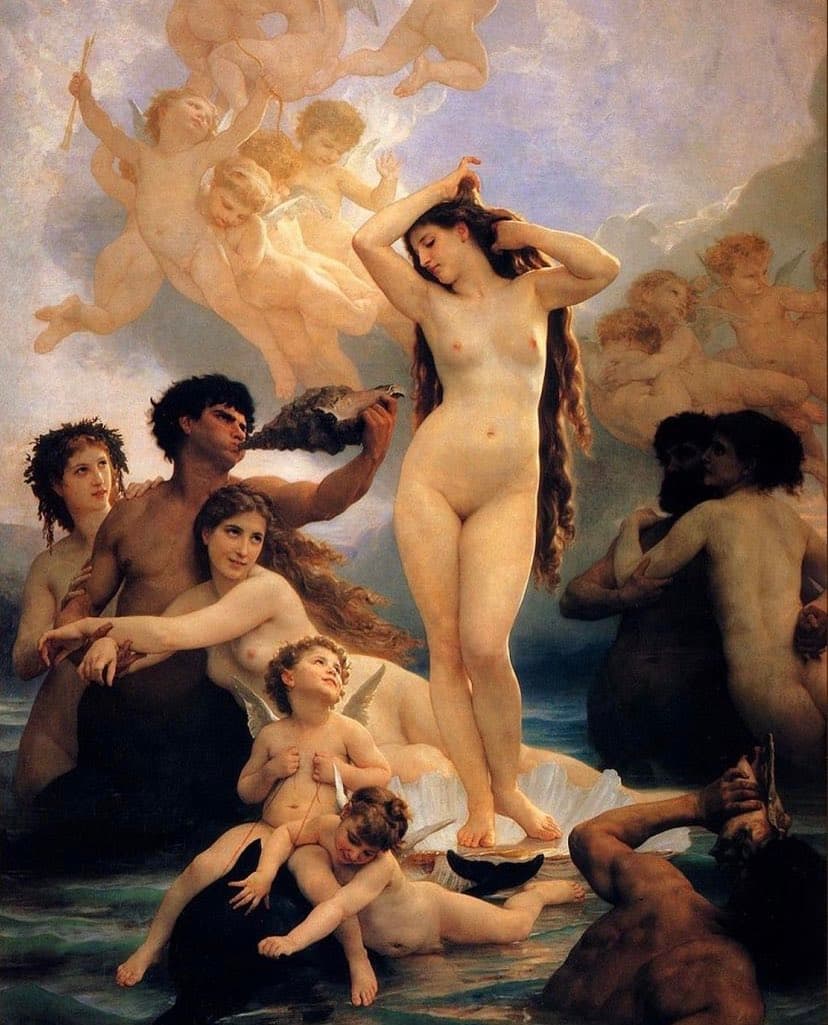
The Birth of Venus
William-Adolphe Bouguereau · 1879

Bridge over a Pond of Water Lilies
Claude Monet · 1899

Nymphs Dancing to Pan's Flute
Joseph Tomanek