Impressionism
Tulip Fields in Holland
Claude Monet, 1886
Tulip Fields in Holland is an 1886 painting by Claude Monet of red, yellow and white tulip fields stretching to a windmill and a farmhouse under a cloudy sky. It is in the Musée d'Orsay, Paris.
- Artist
- Claude Monet
- Date
- 1886
- Medium
- Oil on canvas
- Dimensions
- 65.5 × 81.5 cm
- Collection
- Musée d'Orsay, Paris, France
- Movement
- Impressionism
- Catalogue
- Wildenstein 1067
More at Monet at the Musée d'Orsay
What you are looking at
Bands of color run across a flat landscape toward a low horizon: a field of red tulips in the foreground, then strips of yellow, white, pink and green. In the middle distance stands a windmill, its sails angled against the sky, with a little shed at its foot and a dark cart beside it. To the right is a farmhouse with a red roof and a tall chimney, half screened by a tree. Above, half the canvas is sky, blue with big, bright cumulus clouds piled up by a spring wind.
The red field in the lower left is painted in rows of short strokes that converge, so the stripes of flowers seem to rush away from us toward the mill. Far off at the left, a thin line of buildings marks a distant town on the horizon.
Holland, spring 1886
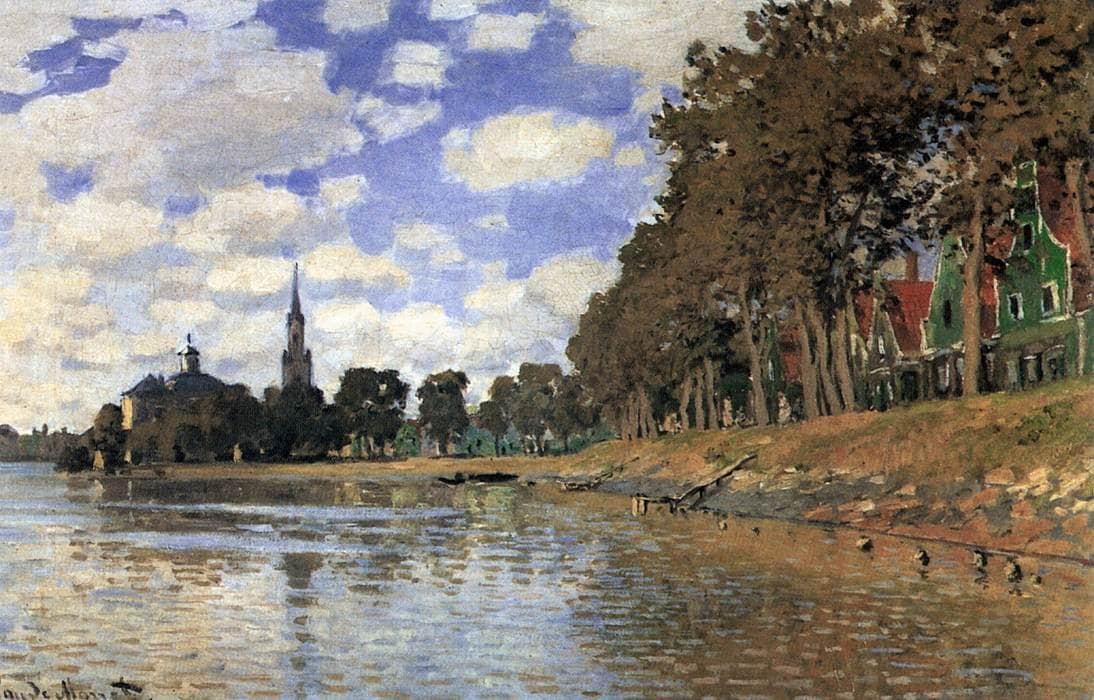
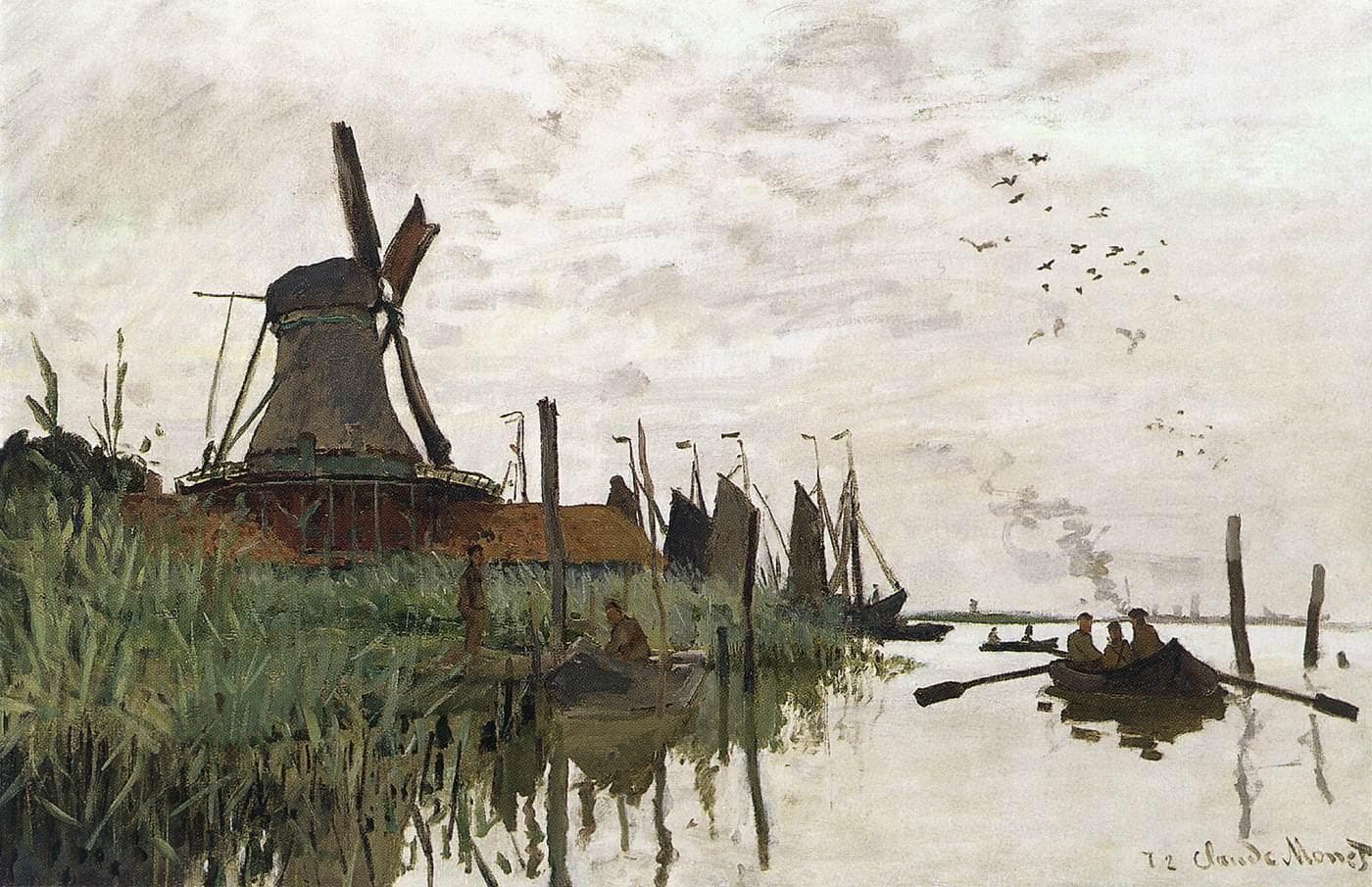
Claude Monet had painted in Holland once before, at Zaandam in 1871, when he made pictures such as Zaandam and Windmill and Boats near Zaandam. In late April 1886 he went back at the invitation of the diplomat Baron d'Estournelles de Constant, then posted at the French legation in The Hague, who wanted him to see the bulb fields in bloom between Leiden and Haarlem. Monet stayed only about two weeks and painted five canvases.
He found the subject thrilling and maddening at once. He wrote to his dealer Paul Durand-Ruel that the fields were admirable but enough to drive a poor painter mad, impossible to render with the colors on his palette. That remark is the best guide to the picture: it is a struggle with color that refuses to be tamed.
How it was painted
Monet faced a real problem: tulip fields are blocks of pure, flat color, which can look crude in paint. He solves it by breaking every field into strokes of several hues. The red field contains pink, orange and dark crimson; the white field has touches of yellow and green; the yellow band is warmed with ocher. Each strip vibrates rather than sitting flat, and between the strips run thin green paths and ditches that separate one color from the next.
The windmill is painted quickly in gray and brown, almost in silhouette, its sails a few strokes. The clouds are built up thickly in creamy white with blue showing between them, and their brightness balances the heavy color below. With the horizon set close to halfway up, earth and sky get roughly equal weight, a classic Dutch arrangement that Monet would have known from seventeenth-century landscapes.
Dutch bulb growers often cut the flower heads off to strengthen the bulbs, heaping the petals by the ditches, so the colorful moment Monet caught was brief. He painted fast, and the paint is laid wet into wet with few corrections.
The five tulip pictures
Besides this one (W.1067), three of the five are in public collections: Tulip Fields near The Hague (W.1068) at the Van Gogh Museum, on loan from the Dutch state; a smaller tulip field (W.1069) at the Musée Marmottan Monet; and Tulip Fields at Sassenheim (W.1070) at the Clark Art Institute in Williamstown. Our guide to where to see Monet lists those museums and their other holdings. The Orsay picture is the most panoramic, with the most sky, and the only one that puts a farmhouse and a mill side by side as a little rural story.
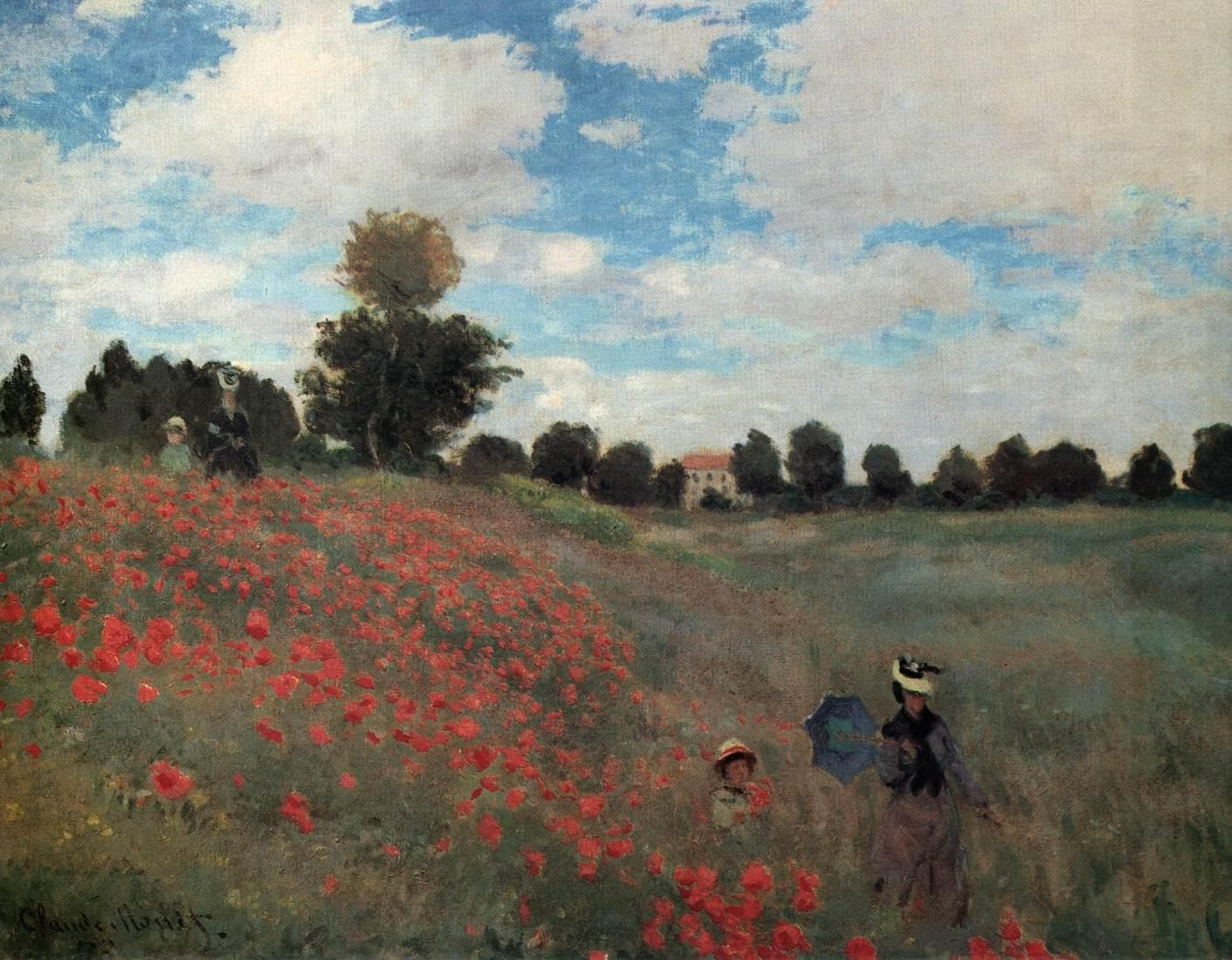
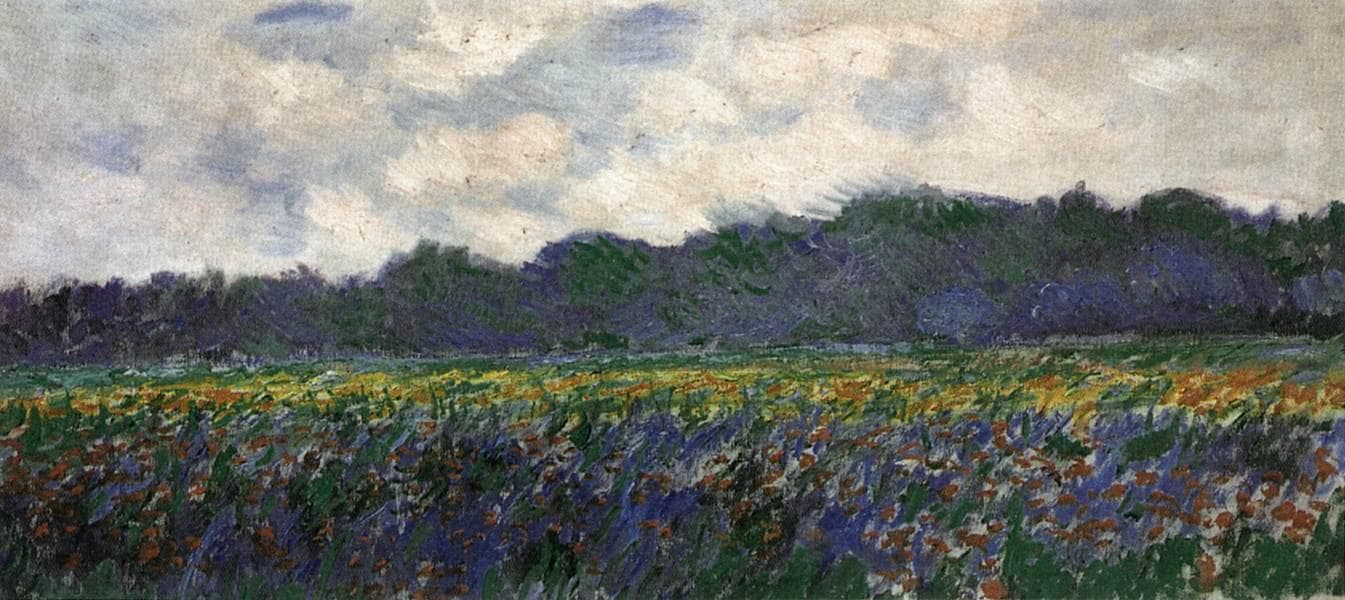
The fields were a flower subject on an industrial scale, and they point ahead to the cultivated color of Monet's own garden at Giverny, which he was planting in the same years. Compare Field of Yellow Irises at Giverny of 1887 and the poppies of A Field of Poppies.
Where to see it
The painting is in the Musée d'Orsay, Paris (RF 1944 19). It is one of the Monets described on our Monet at the Musée d'Orsay page.
Questions & answers
Where is Tulip Fields in Holland by Monet?
This 1886 version is in the Musée d'Orsay in Paris (RF 1944 19). Monet painted five tulip-field canvases on his trip to Holland that spring; three others are in the Clark Art Institute in Williamstown, the Van Gogh Museum in Amsterdam (on loan from the Dutch state) and the Musée Marmottan Monet in Paris.
When and where was it painted?
In late April and early May 1886 in the bulb-growing district between Leiden and Haarlem in the Netherlands. Monet went at the invitation of Baron d'Estournelles de Constant, a French diplomat in The Hague, and stayed about two weeks. Wildenstein catalogues the canvas as W.1067.
What does the painting show?
Strips of red, yellow, white and pink tulips running toward a windmill and a red-roofed farmhouse under a big spring sky. The subject is color itself: Monet wrote that the fields were enough to drive a poor painter mad because no paint could match them.
How many tulip paintings did Monet make?
Five, all from the 1886 trip. Besides the Orsay canvas, three are in museums: Tulip Fields near The Hague (Van Gogh Museum, on loan), Tulip Fields at Sassenheim (Clark Art Institute) and a smaller canvas in the Musée Marmottan Monet.
More by the artist
Claude Monet

Bridge over a Pond of Water Lilies
Claude Monet · 1899

Woman with a Parasol – Madame Monet and Her Son
Claude Monet · 1875

Sunset in Venice
Claude Monet · 1908–12

La Grenouillère
Claude Monet · 1869

Beach in Pourville
Claude Monet · 1882

Springtime
Claude Monet · 1872

Boating on the River Epte
Claude Monet · 1890

The Seine at Asnières (Hermitage)
Claude Monet · 1873
Also painted in 1886
The same year
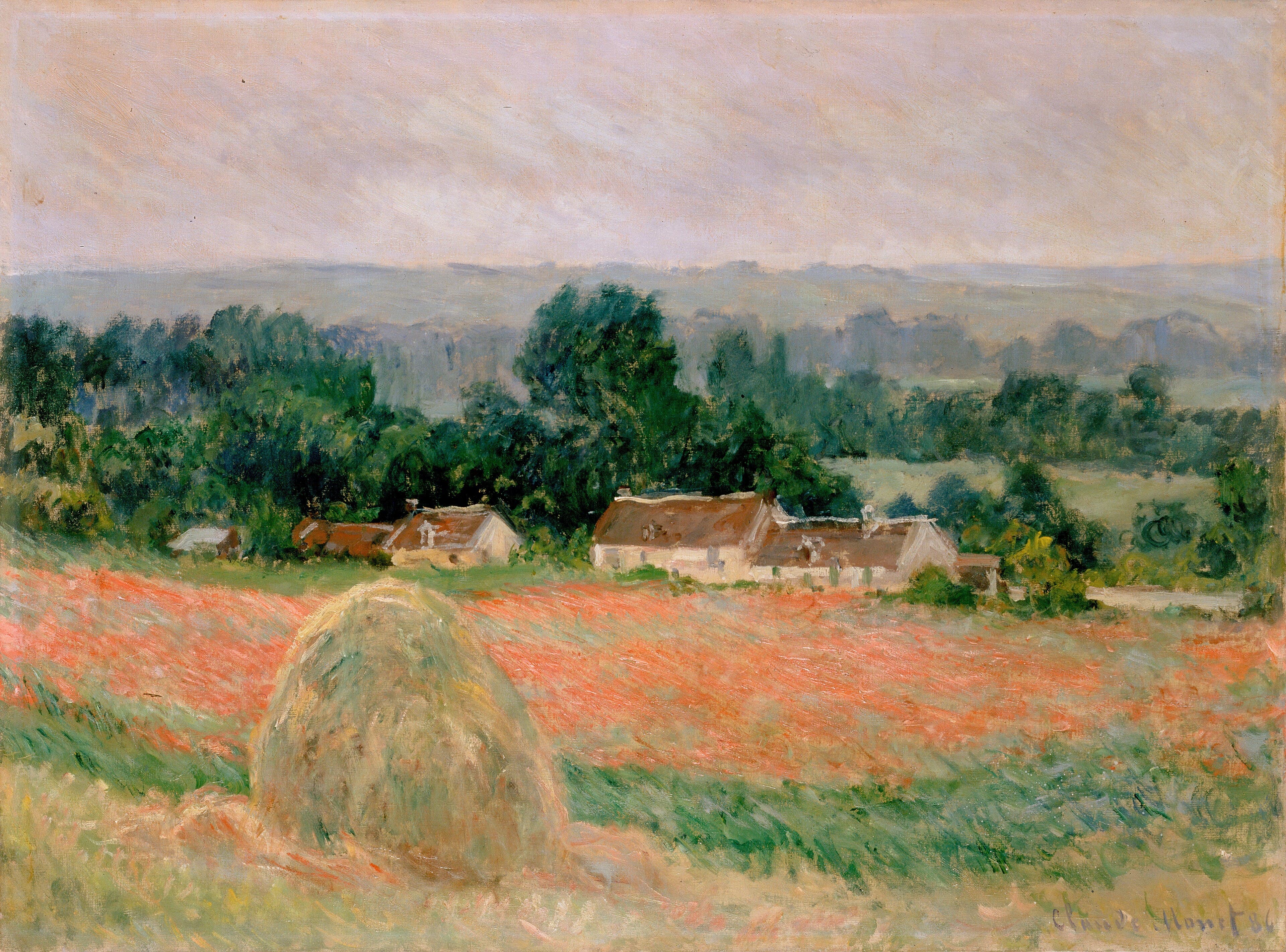
Haystack at Giverny
Claude Monet · 1886
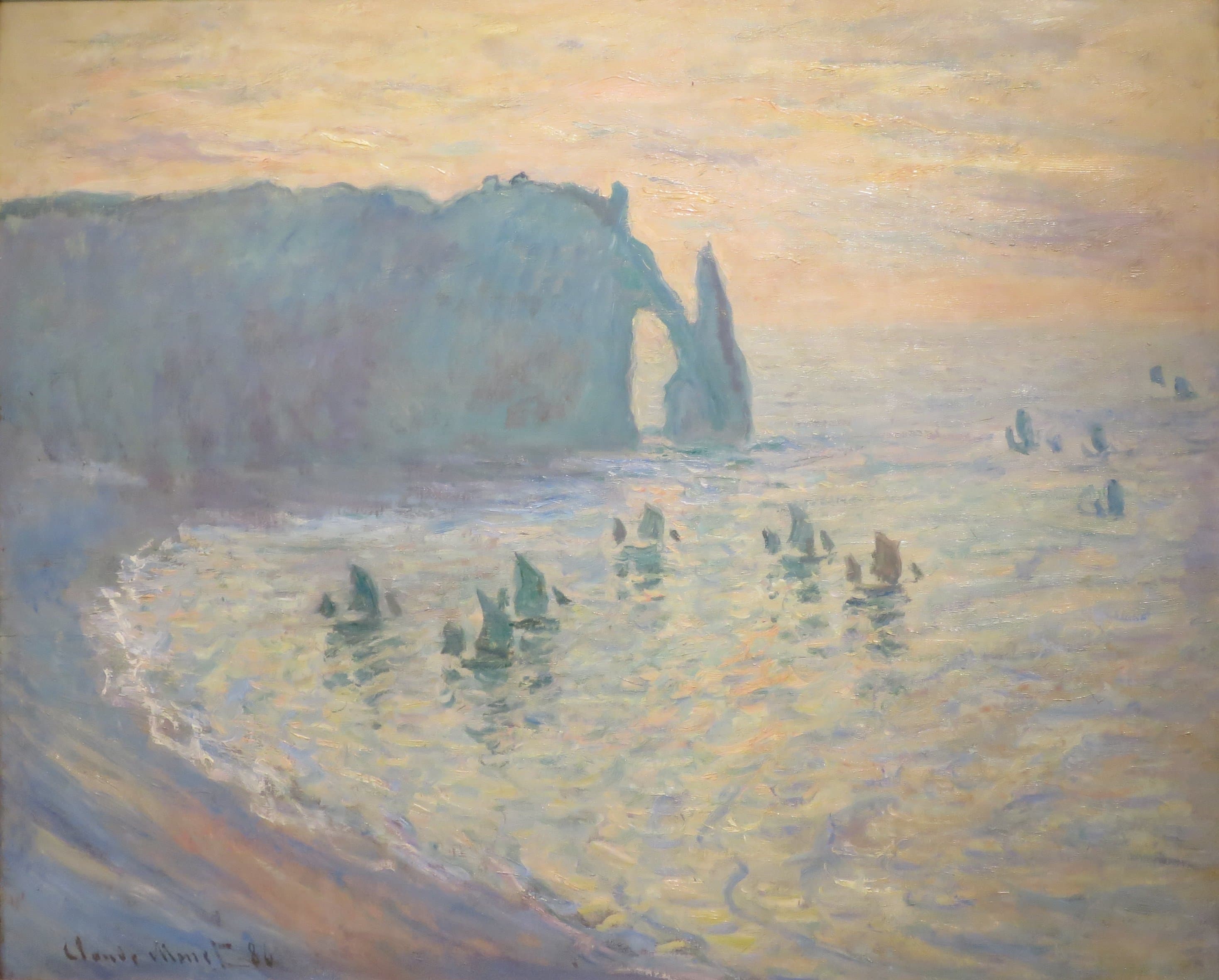
The Cliffs at Étretat
Claude Monet · 1886
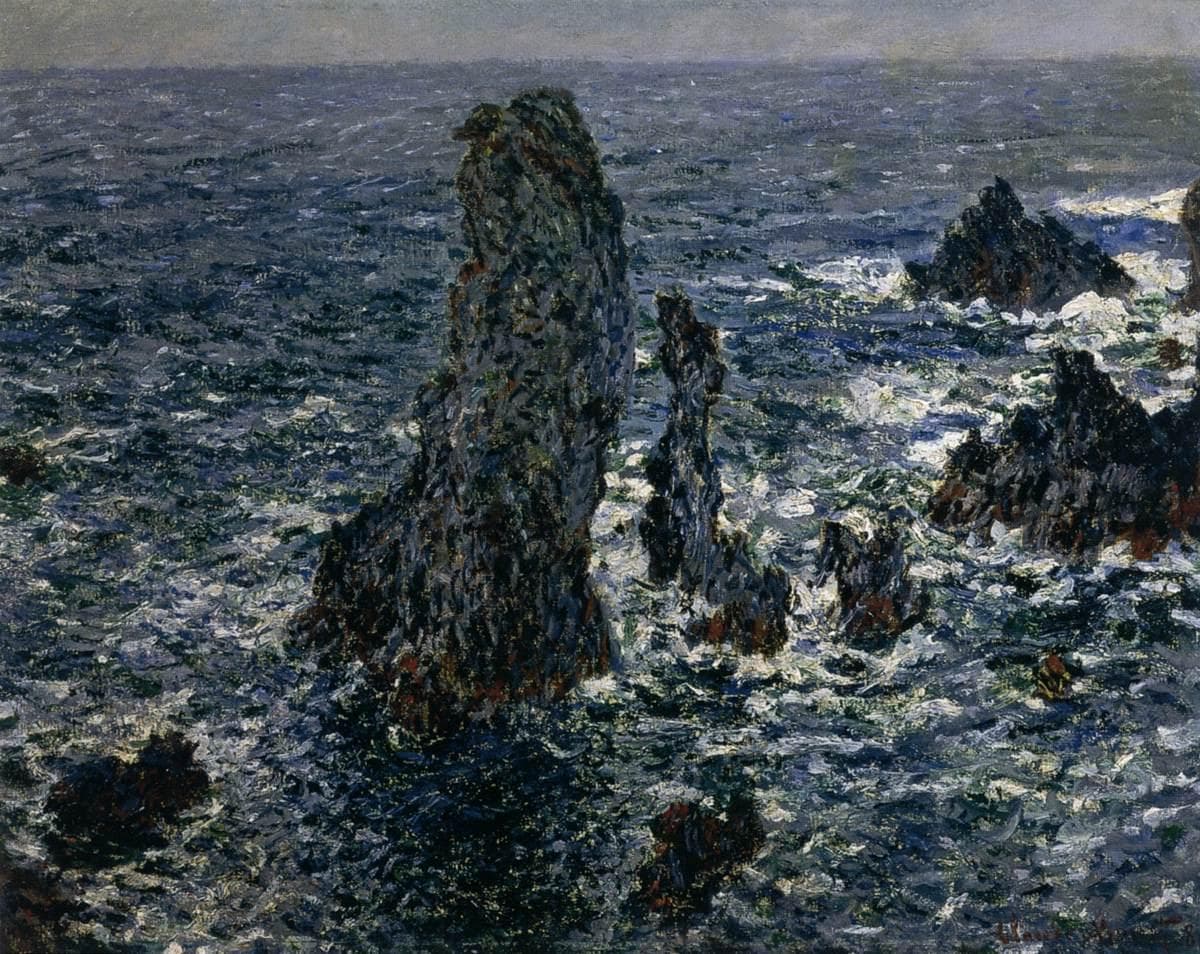
The Pyramides at Port-Coton, Rough Sea
Claude Monet · 1886
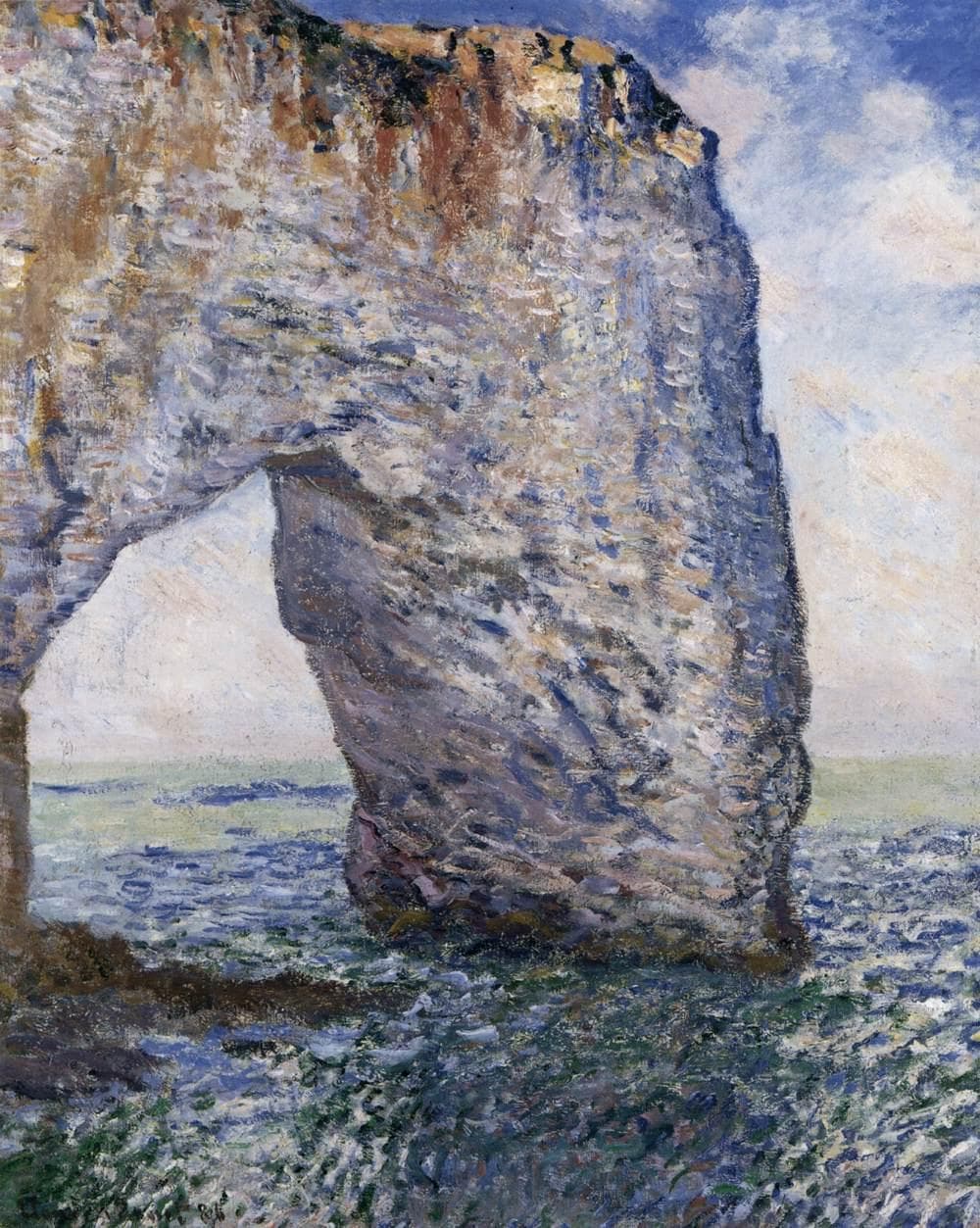
The Manneporte near Étretat
Claude Monet · 1886
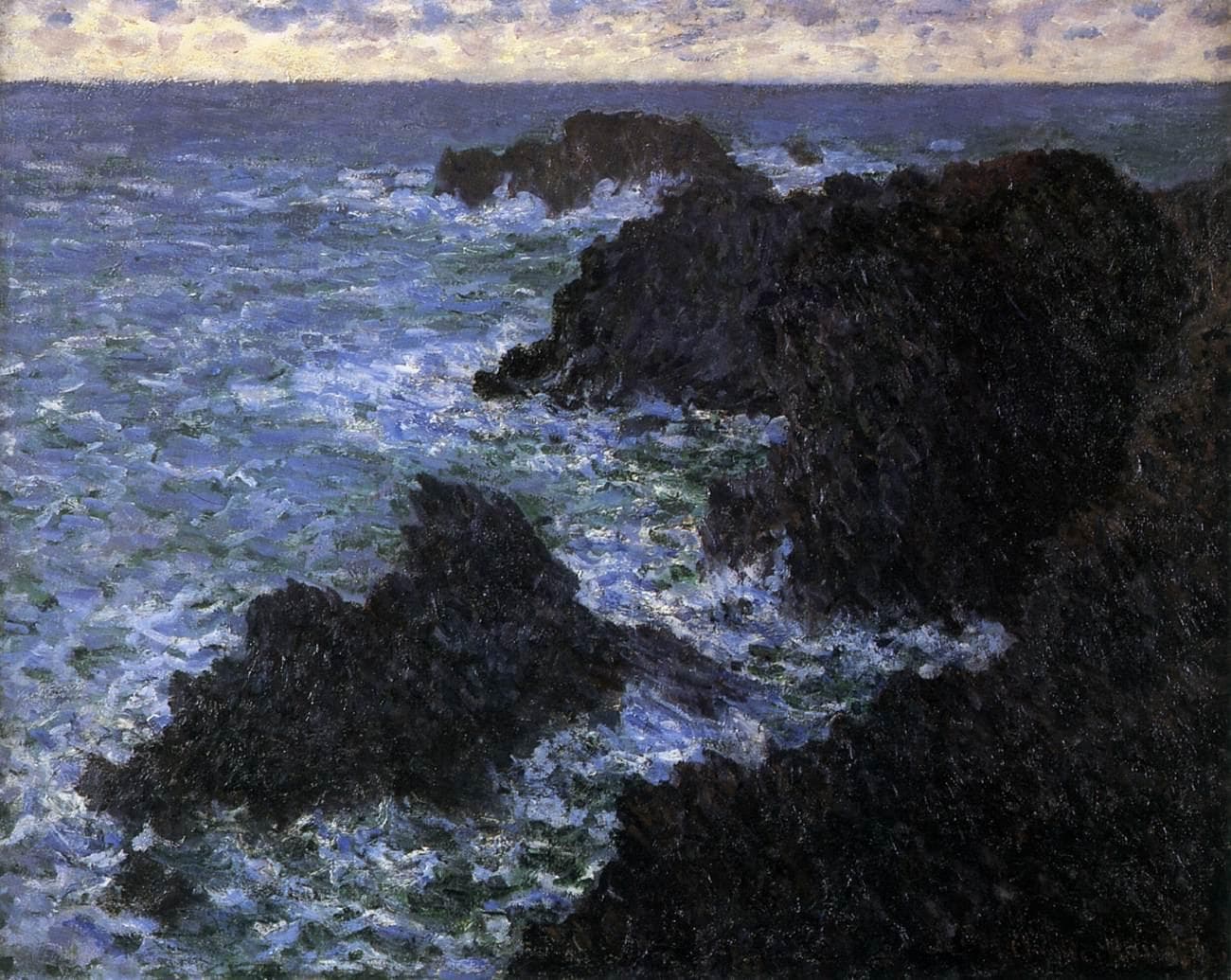
The Rocks of Belle-Île, the Wild Coast
Claude Monet · 1886
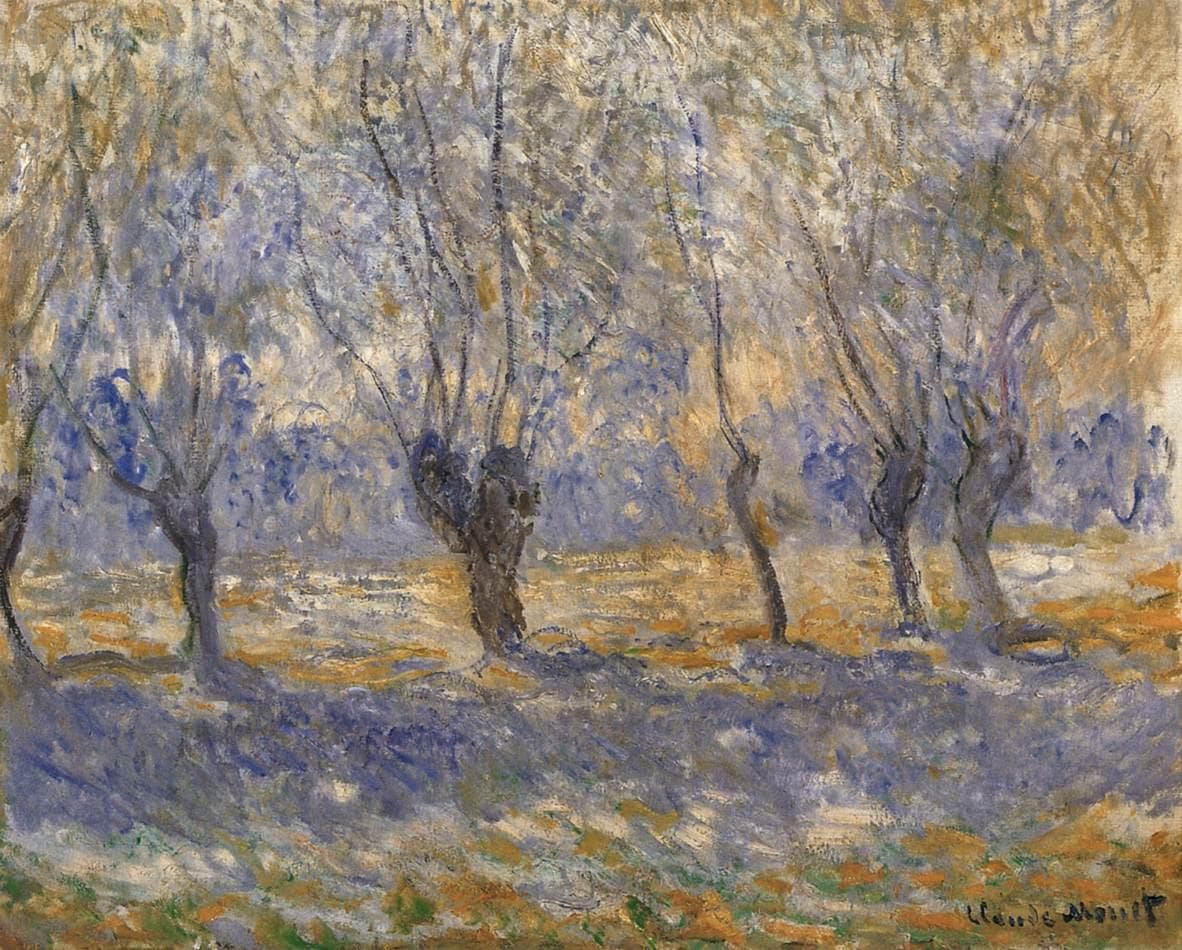
Willows at Giverny
Claude Monet · 1886
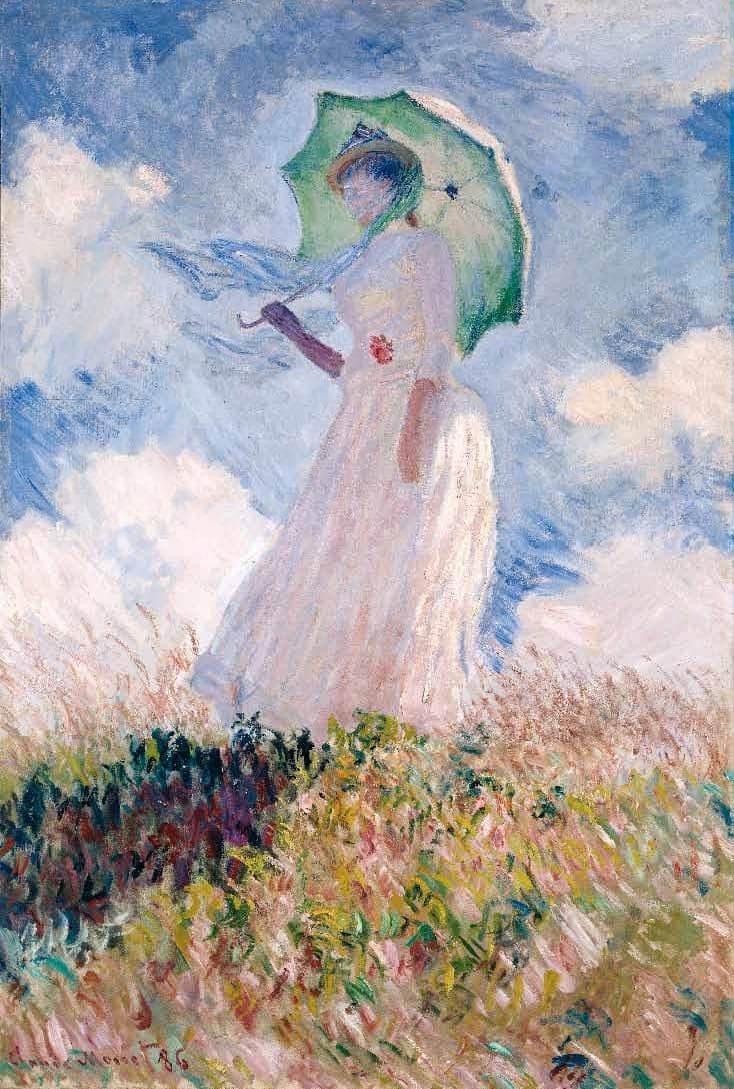
Woman with a Parasol, Facing Left
Claude Monet · 1886
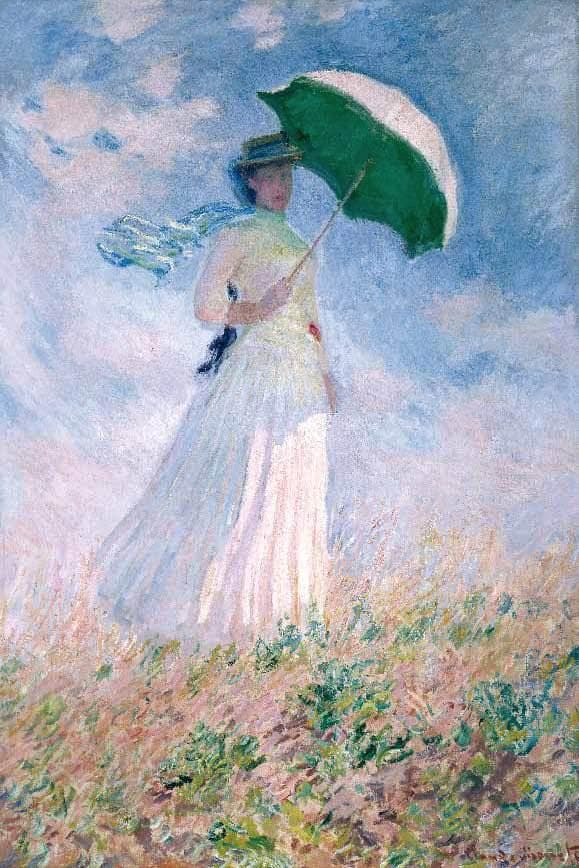
Woman with a Parasol, Facing Right
Claude Monet · 1886
Kindred works
You may also study
Zaandam
Claude Monet · 1871
Windmill and Boats near Zaandam
Claude Monet · 1871
Poppy Field (Poppies at Argenteuil)
Claude Monet · 1873
Field of Yellow Irises at Giverny
Claude Monet · 1887
Houses on the Zaan River at Zaandam
Claude Monet · 1871–72

The Scream
Edvard Munch · 1893

Ophelia
John Everett Millais · 1851–52

The Great Wave off Kanagawa
Katsushika Hokusai · c. 1830–32