Impressionism
The Pyramides at Port-Coton, Rough Sea
Claude Monet, 1886
The Pyramides at Port-Coton, Rough Sea is an 1886 painting by Claude Monet of jagged rock needles rising from a dark Atlantic swell off Belle-Île in Brittany. One of six versions of the motif, it is in the Pushkin State Museum of Fine Arts, Moscow.
- Artist
- Claude Monet
- Date
- 1886
- Medium
- Oil on canvas
- Dimensions
- 65 × 81 cm
- Collection
- Pushkin State Museum of Fine Arts, Moscow, Russia
- Movement
- Impressionism
- Catalogue
- Wildenstein 1084
What you are looking at
Out of a heaving, dark sea rise the "Pyramides," a cluster of tall, jagged rock needles off the coast of Belle-Île. The largest leans slightly to the left at center, built from crusty strokes of black-green, slate and rust; beside it a thinner spire rises like a broken tooth, and further right lower reefs break the surface, ringed with white foam. There is almost no sky: the horizon sits high, just below the top edge, a narrow band of gray light. Everything else is water.
And what water. Monet paints the Atlantic in short, choppy strokes of deep blue, bottle green, violet and black, with hundreds of flicks of white for the spray and the light caught on wave tops. There is no single direction to the brushwork; it churns in every way, so that the surface of the canvas itself seems to move. Up close the paint is thick and dense, as though the canvas had been worked over again and again. From a distance the rocks stand out as dark, almost sculptural masses against a restless field.
Look closely at the rocks and you will find small touches of rust red and orange at their bases and along their ridges, where weed, lichen and iron-stained stone catch the light. They are the only warm notes in the picture, and they keep the dark masses from going dead.
Notice how little color there is in the conventional sense. This is not the turquoise sea of the Riviera that Monet had painted two years before at Bordighera. It is a northern ocean under gray light, and the darkness is the point.
How Monet painted it
Monet arrived at Le Palais, the main town of Belle-Île off the south coast of Brittany, on 12 September 1886, and went straight to the island's wild Atlantic coast, the côte sauvage. He planned to stay two weeks. He stayed until 25 November, lodging in the tiny hamlet of Kervilahouen near Port-Coton and working outdoors in wind and rain. His letters to Alice Hoschedé describe the coast as sinister and diabolical but magnificent, and complain of storms and rain that made work outdoors a struggle. He nevertheless painted almost every day, often keeping several canvases going and returning to each when its particular weather came back.
Port-Coton is a cove whose name is said to come from the foam that whips up there like cotton in storms. Its rock needles, the Aiguilles de Port-Coton, were a famous sight. Monet painted them six times from much the same viewpoint, in different weather: rough sea, rain, sun. The versions are now in Moscow, Caracas, Copenhagen (the Ny Carlsberg Glyptotek), the Rau Foundation for UNICEF in Germany, and private collections. The Pushkin canvas, catalogued as W1084, is the one titled "Rough Sea."
During the stay Monet also met the critic Gustave Geffroy, who was visiting the island and who became his friend, champion and eventually biographer.
A new kind of seascape
The Belle-Île pictures broke with the elegant beach scenes of Monet's earlier career. There are no figures, no boats, no shore, only rock and water, seen from above and close up. The format, with its high horizon and flattened space, recalls the Japanese woodblock prints Monet collected, with their cropped rocks and stylized waves. The stay was also his most sustained serial project up to that date: painting the same motif repeatedly under changing conditions anticipated the Grainstacks and Poplars of the 1890s.
Reception
A group of Belle-Île paintings was shown at the Galerie Georges Petit in Paris in 1887, where Geffroy praised Monet's handling of color, and the series appeared again at the celebrated Monet–Rodin exhibition at the same gallery in 1889. Critics who had attacked Monet in the 1870s now saw him as a master of the sea. The Moscow version later entered the collection of the Russian textile magnate Sergei Shchukin; according to the Pushkin Museum, it was the first Monet he bought. Shchukin went on to own more than ten Monets, and after the Russian Revolution his collection was nationalized and divided between the Pushkin Museum and the Hermitage.
Meaning
Monet did not treat the rocks as symbols, but the paintings have often been read as a turn toward the sublime, the Romantic idea of nature as vast, dangerous and indifferent to people. Compared with the pleasure gardens and boating parties of his Argenteuil years, Belle-Île shows Monet confronting nature at its most elemental. The rocks endure; the sea never stops moving. Between them lies the subject that occupied him for the rest of his life: change measured against permanence.
Where to see it
The painting is in the Pushkin State Museum of Fine Arts in Moscow, in the collection of nineteenth- and twentieth-century European and American art. For other Belle-Île views in our catalogue, see The Rocks of Belle-Île (Rough Sea) at the Musée d'Orsay and Storm off Belle-Île.
Questions & answers
Where is Monet's The Pyramides at Port-Coton?
The version titled Rough Sea is in the Pushkin State Museum of Fine Arts in Moscow. Monet painted six versions of the motif; others are in Caracas, the Ny Carlsberg Glyptotek in Copenhagen, the Rau Foundation for UNICEF and private collections.
What are the Pyramides at Port-Coton?
They are tall, jagged rock needles rising from the sea at Port-Coton on the wild Atlantic coast of Belle-Île, an island off southern Brittany. They are also known as the Aiguilles (needles) de Port-Coton.
When did Monet paint at Belle-Île?
He stayed on Belle-Île from 12 September to 25 November 1886, working outdoors in storms and rain. He painted dozens of canvases of the côte sauvage, including six views of the Pyramides.
Who owned Monet's Pyramides at Port-Coton?
The Moscow version belonged to the Russian collector Sergei Shchukin; the Pushkin Museum says it was the first Monet he bought. His collection was nationalized after 1917 and divided between the Pushkin Museum and the Hermitage.
More by the artist
Claude Monet

Bridge over a Pond of Water Lilies
Claude Monet · 1899

Woman with a Parasol – Madame Monet and Her Son
Claude Monet · 1875

Sunset in Venice
Claude Monet · 1908–12

La Grenouillère
Claude Monet · 1869

Beach in Pourville
Claude Monet · 1882

Springtime
Claude Monet · 1872

Boating on the River Epte
Claude Monet · 1890

The Seine at Asnières (Hermitage)
Claude Monet · 1873
Also painted in 1886
The same year
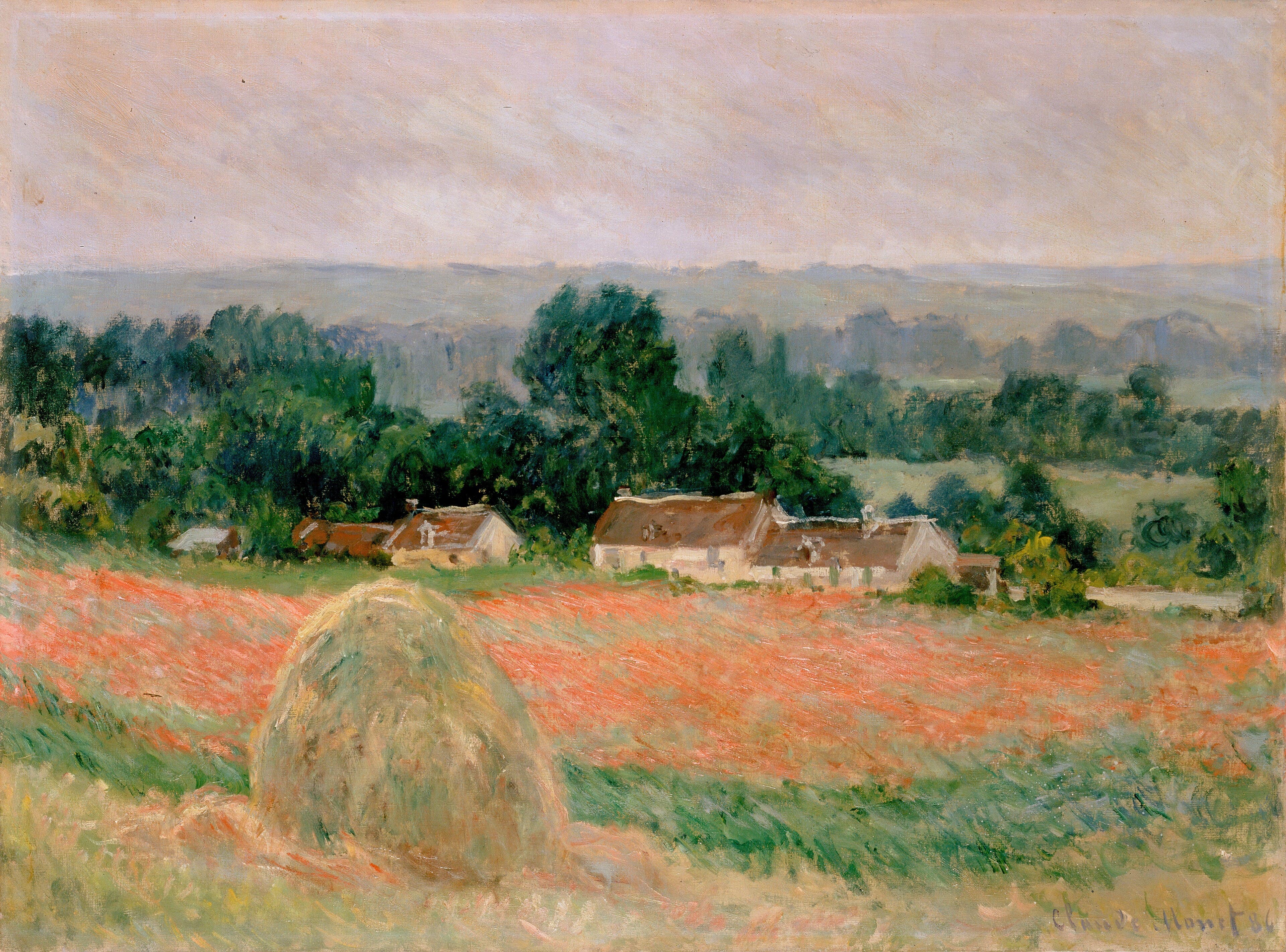
Haystack at Giverny
Claude Monet · 1886
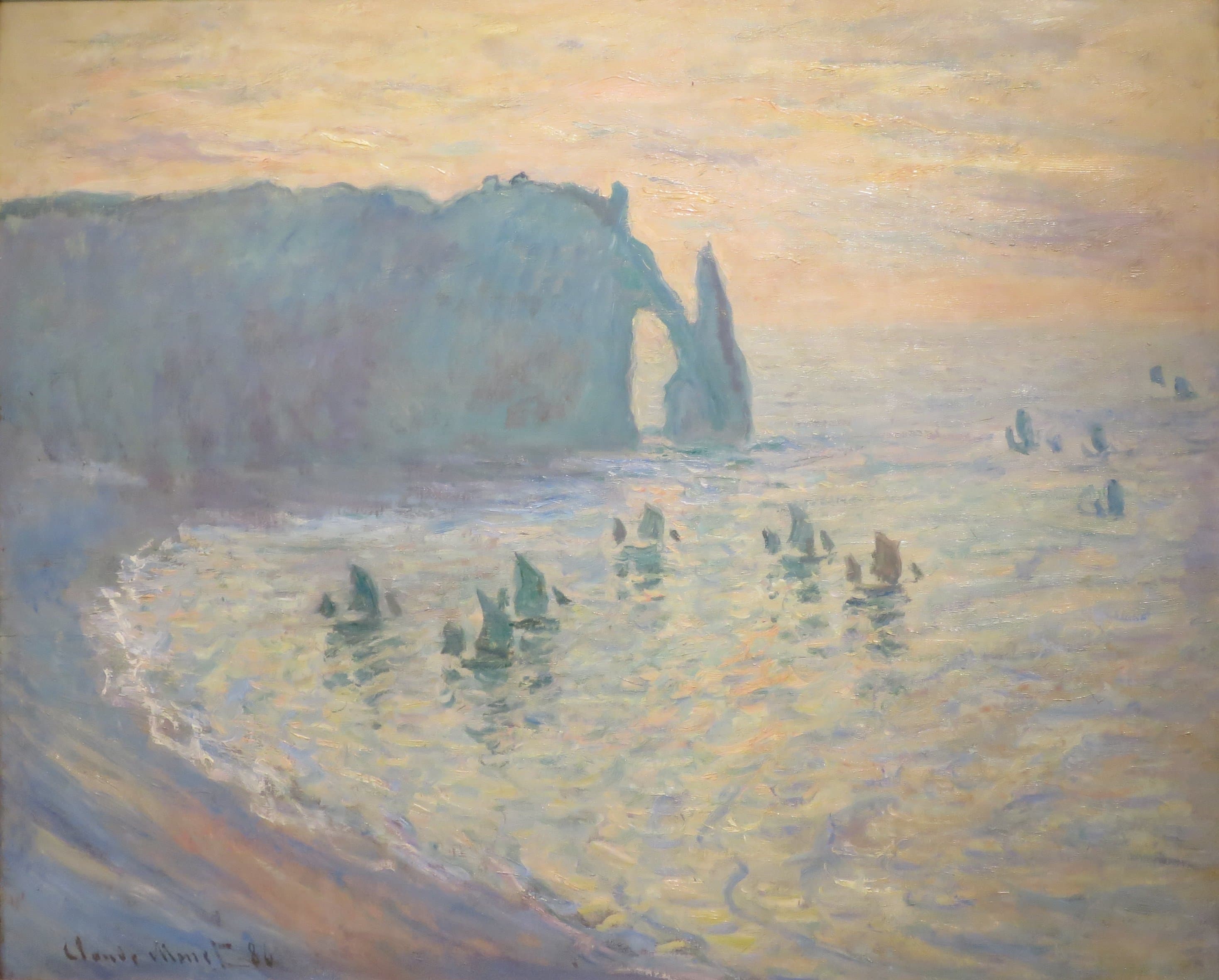
The Cliffs at Étretat
Claude Monet · 1886
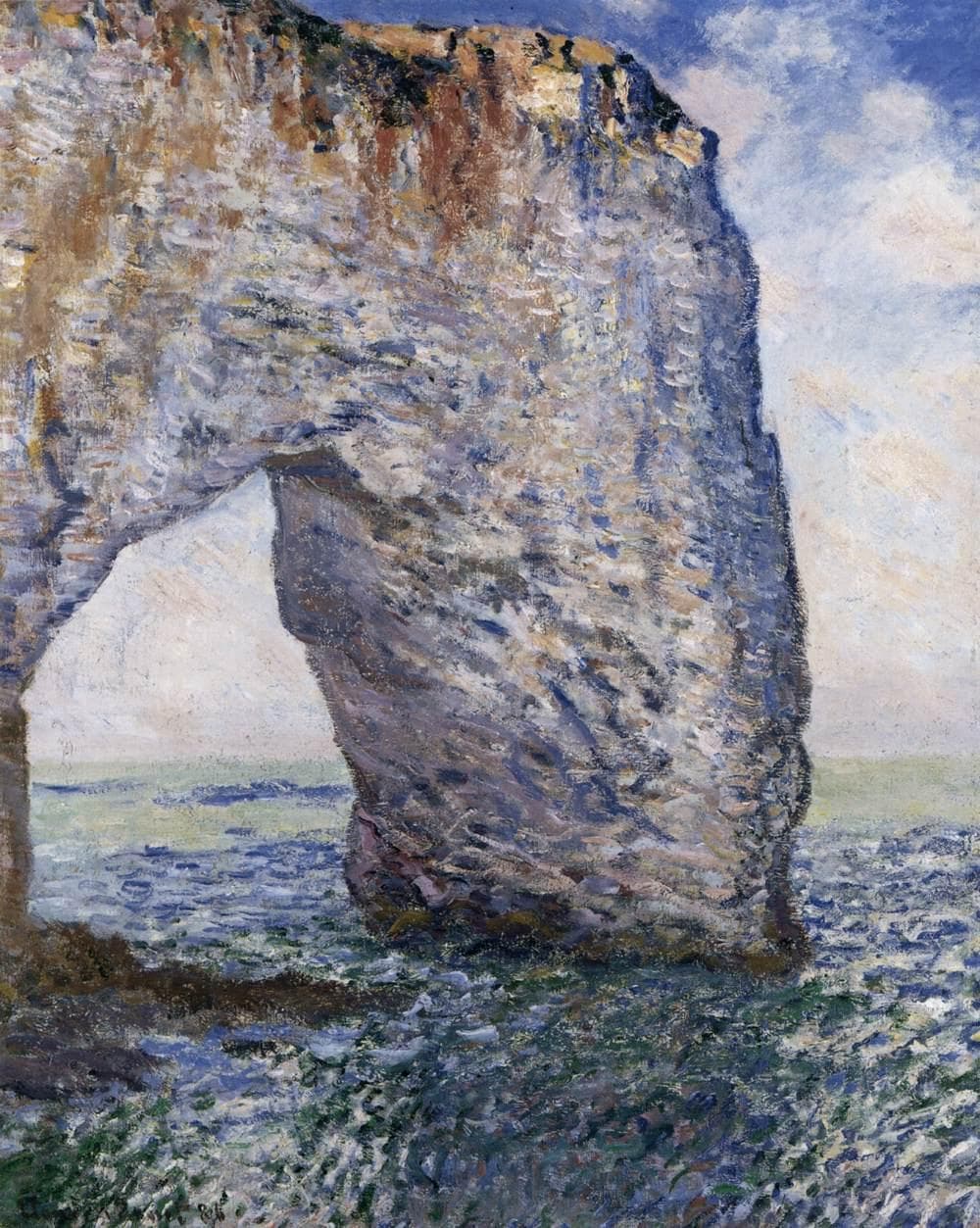
The Manneporte near Étretat
Claude Monet · 1886
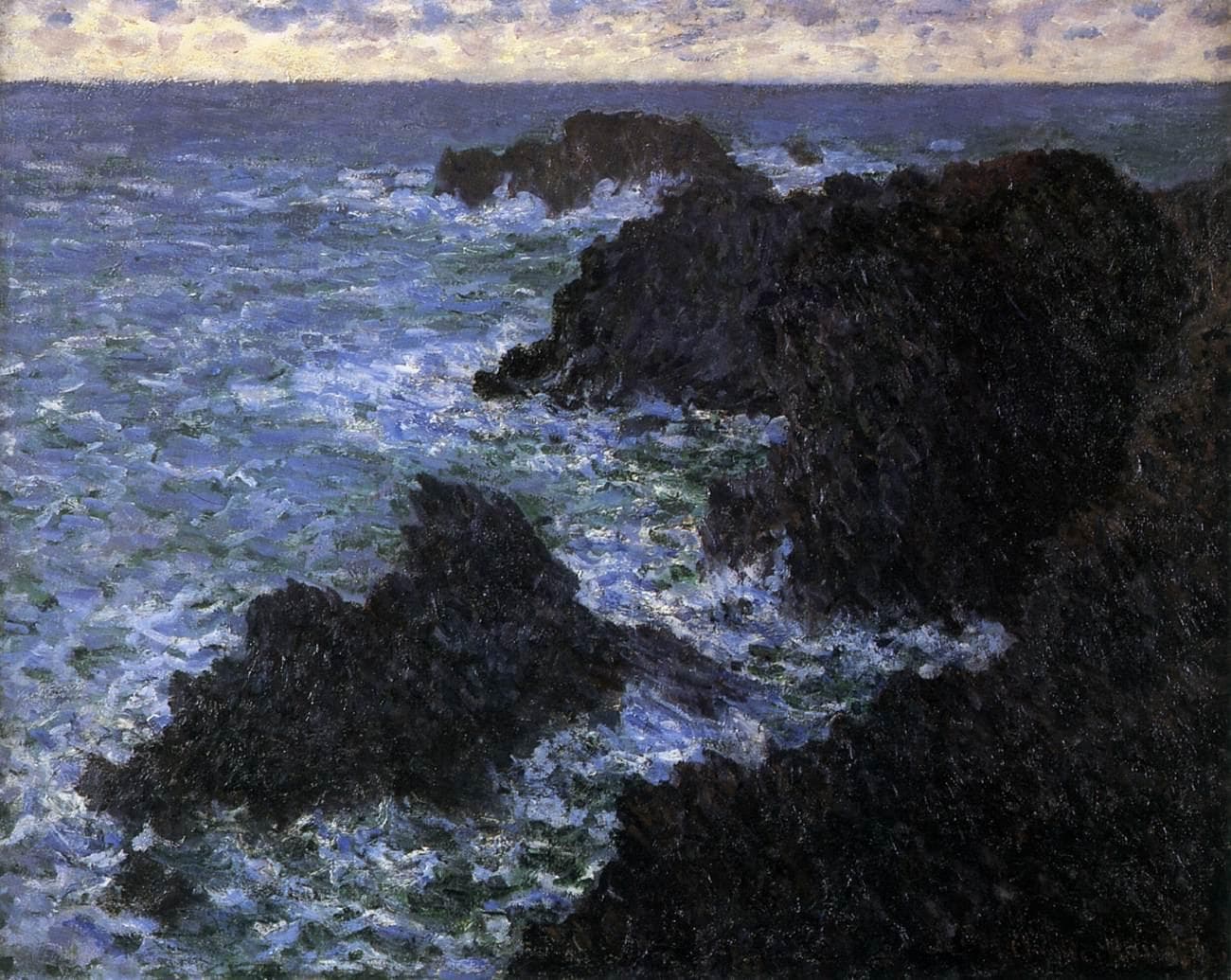
The Rocks of Belle-Île, the Wild Coast
Claude Monet · 1886
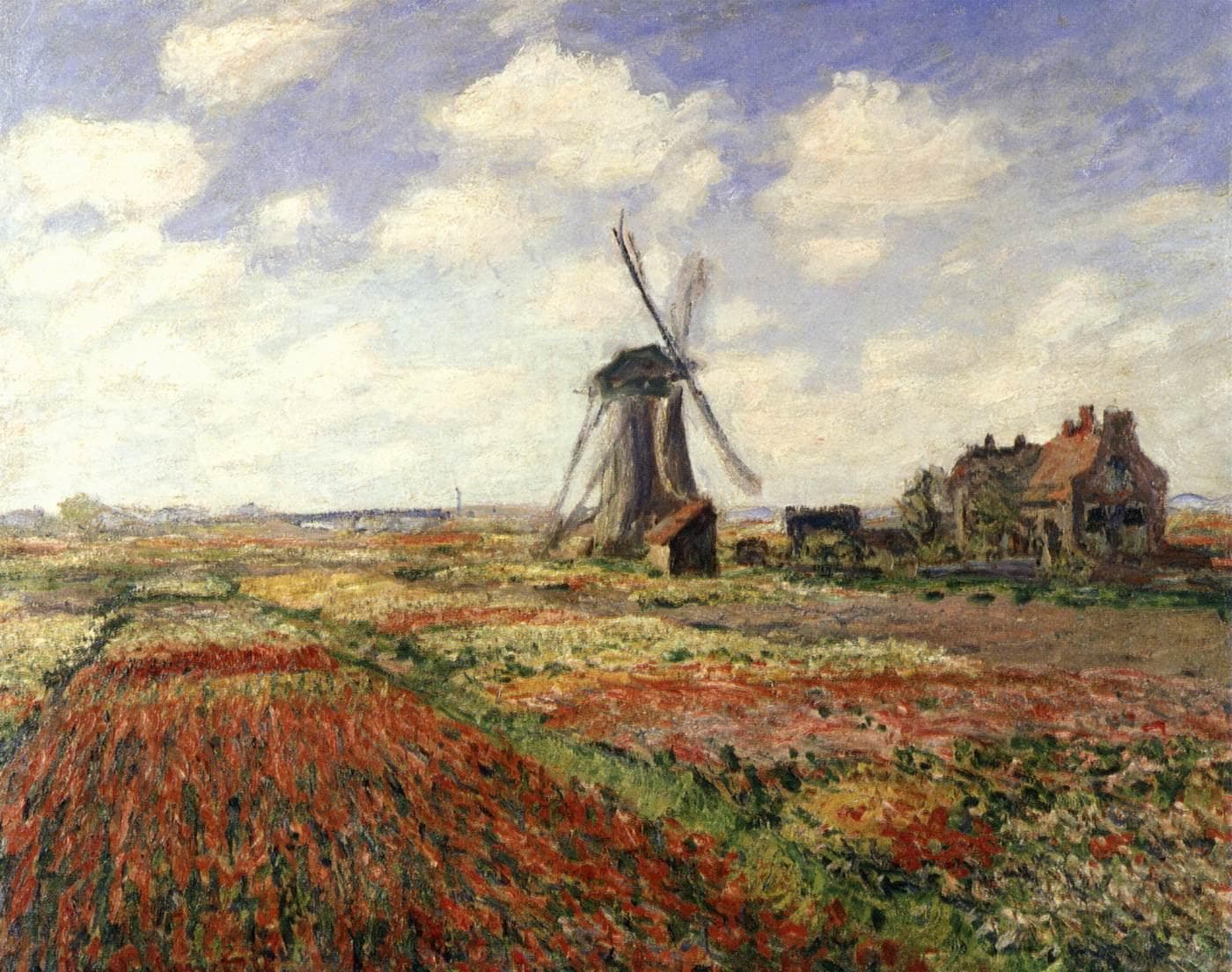
Tulip Fields in Holland
Claude Monet · 1886
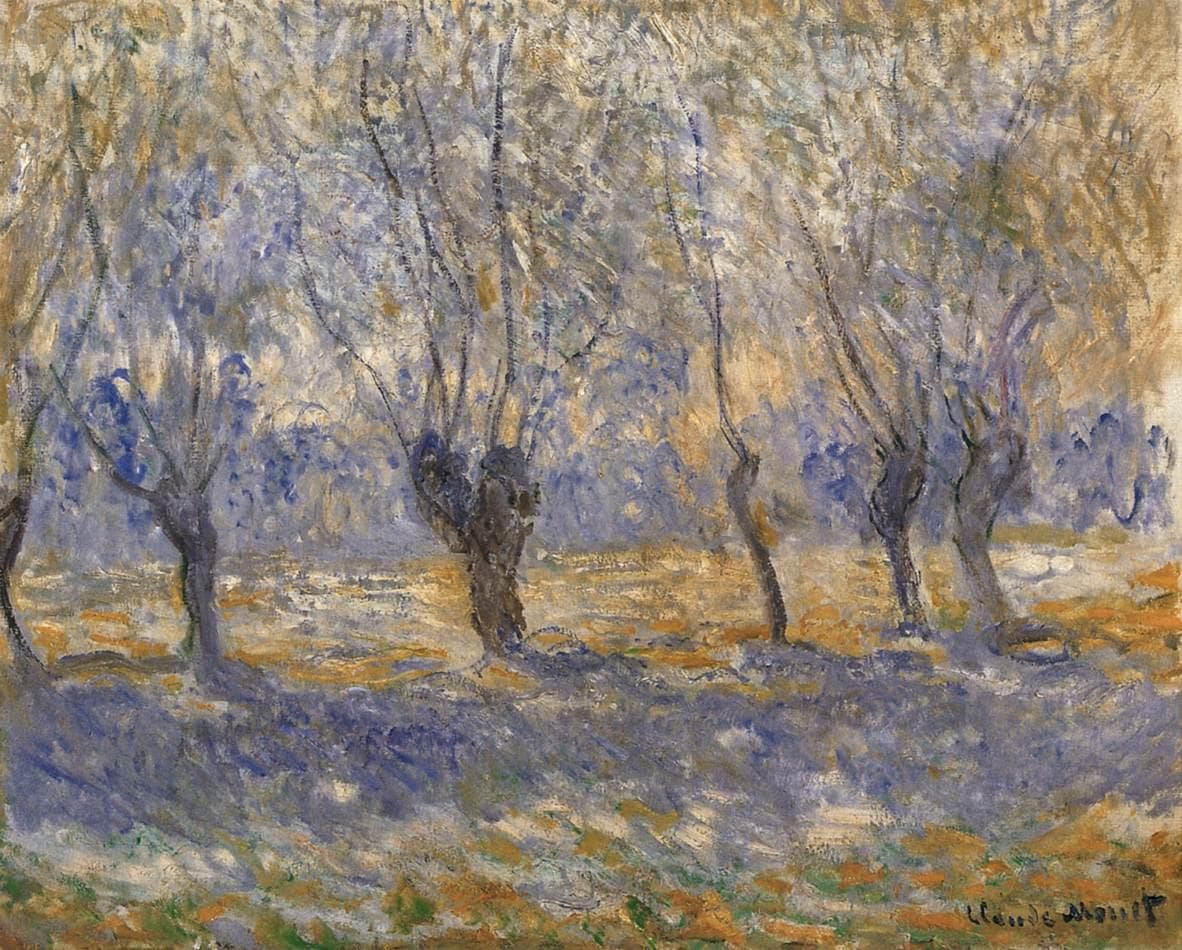
Willows at Giverny
Claude Monet · 1886
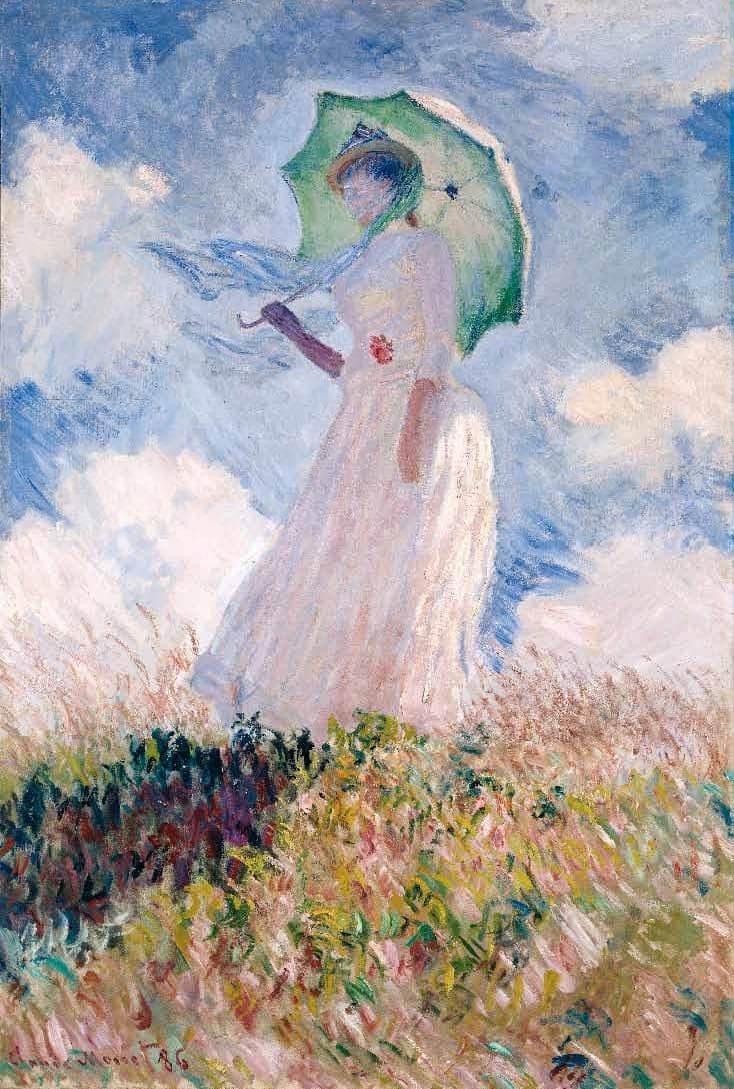
Woman with a Parasol, Facing Left
Claude Monet · 1886
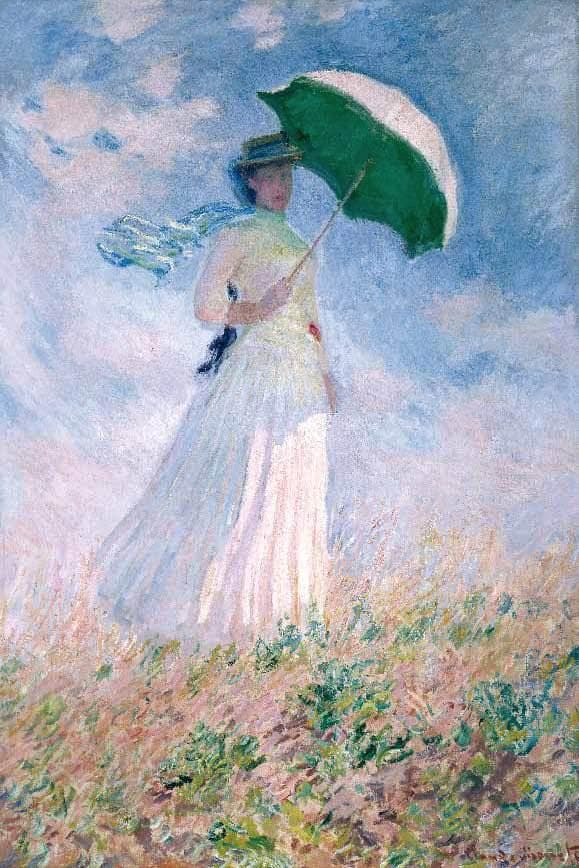
Woman with a Parasol, Facing Right
Claude Monet · 1886
Kindred works
You may also study
The Rocks of Belle-Île, the Wild Coast
Claude Monet · 1886
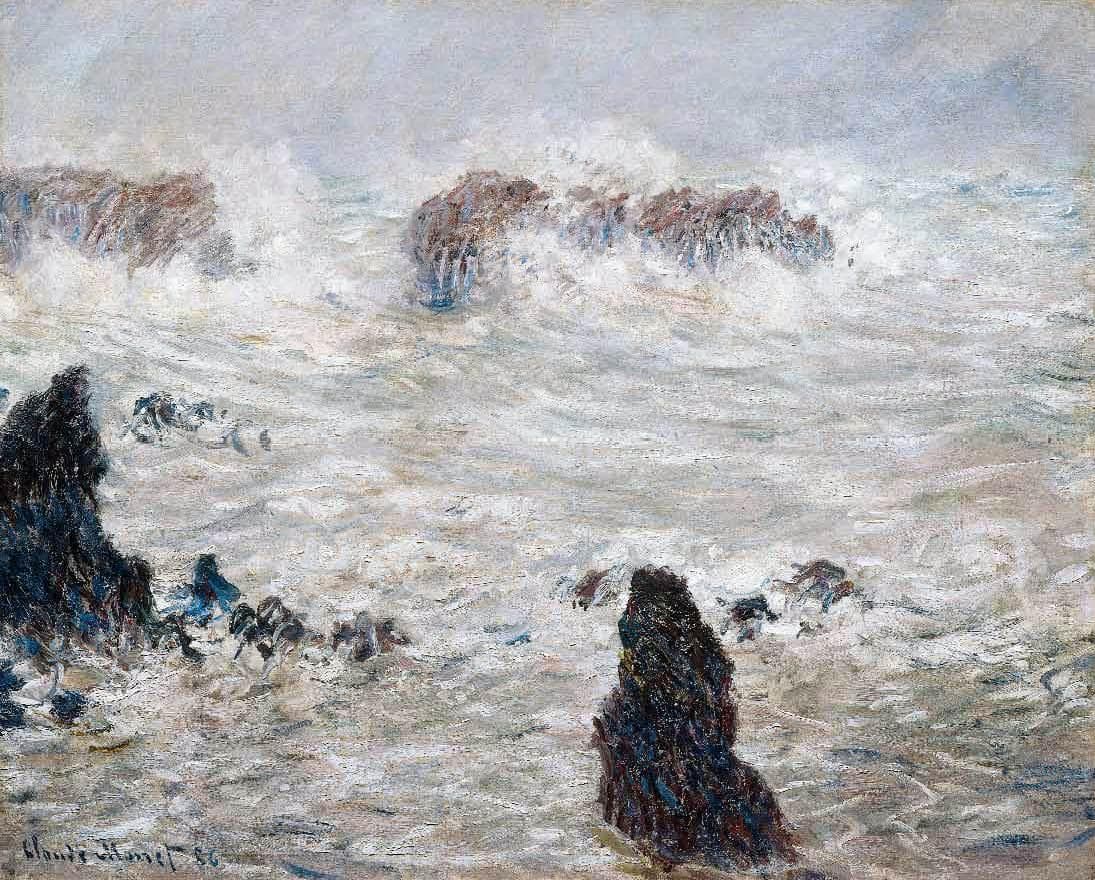
Storm off Belle-Île
Claude Monet · 1886
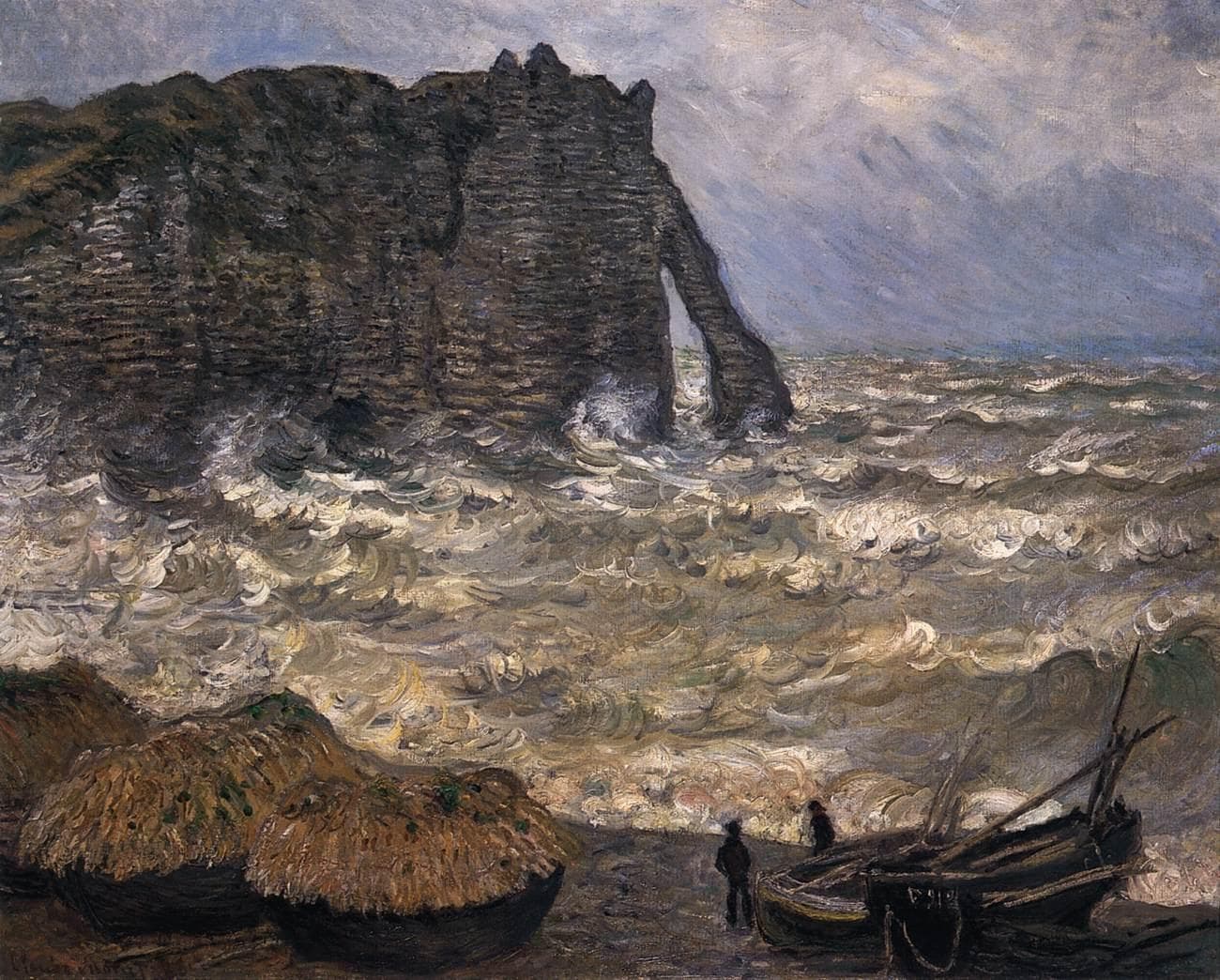
Rough Sea at Étretat
Claude Monet · 1883
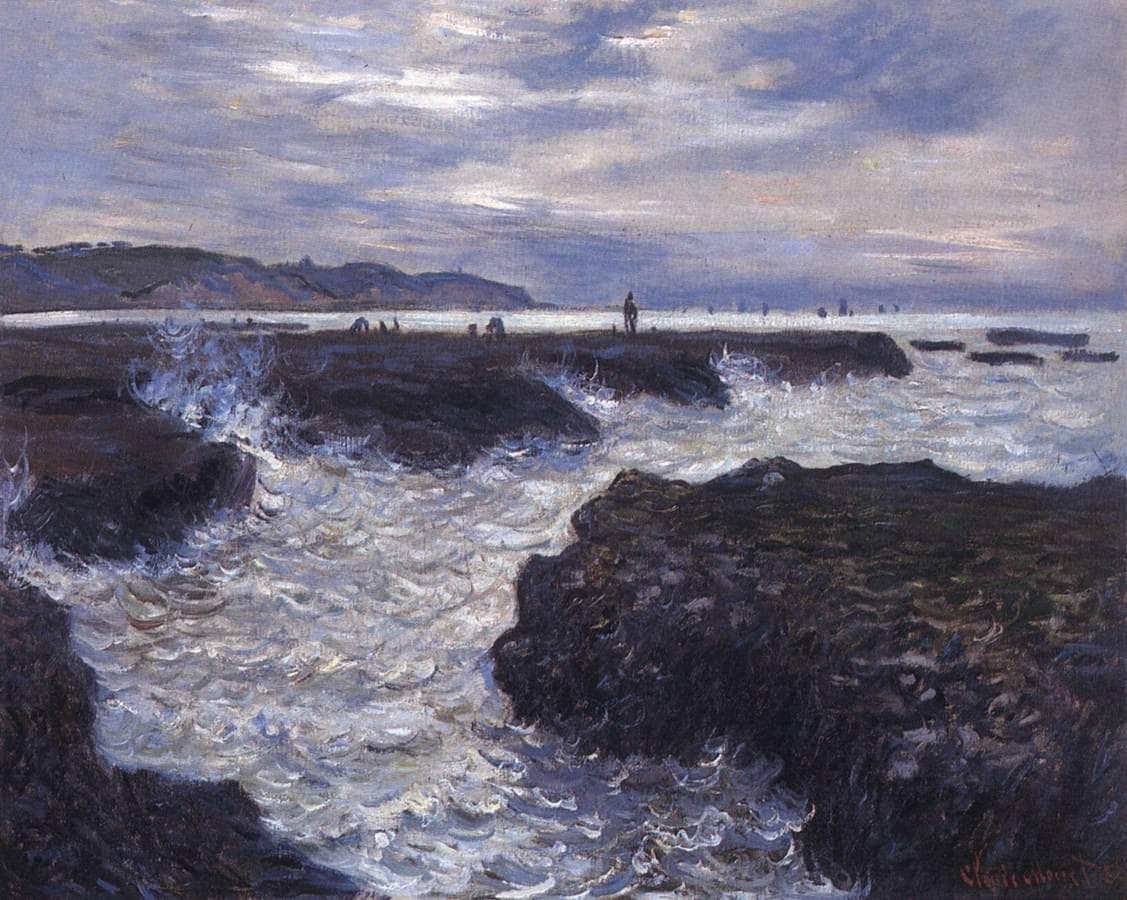
The Rocks at Pourville, Low Tide
Claude Monet · 1882
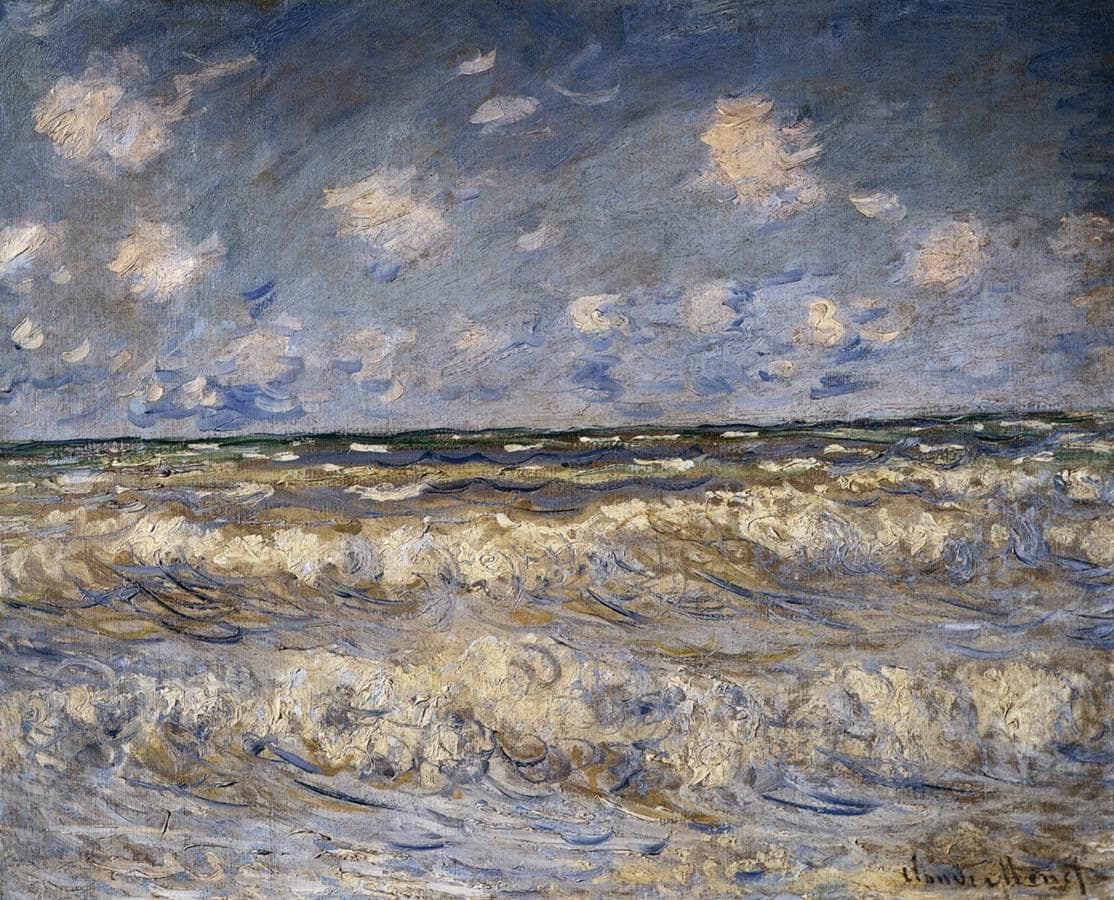
Stormy Sea
Claude Monet · c. 1881–84

The Scream
Edvard Munch · 1893

Ophelia
John Everett Millais · 1851–52

The Great Wave off Kanagawa
Katsushika Hokusai · c. 1830–32