Image: Wallraf-Richartz-Museum & Fondation Corboud, Cologne; photograph by Raimond Spekking · Public domain · via Wikimedia Commons
Impressionism
The Seine at Asnières
Claude Monet, 1873
The Seine at Asnières is an 1873 painting by Claude Monet of moored barges and floating sheds on the Seine at Asnières, with the town's bright houses lining the far bank. It is in the Wallraf-Richartz-Museum & Fondation Corboud, Cologne.
- Artist
- Claude Monet
- Date
- 1873
- Medium
- Oil on canvas
- Dimensions
- 54.2 × 72.5 cm
- Collection
- Wallraf-Richartz-Museum & Fondation Corboud, Cologne, Germany
- Movement
- Impressionism
- Catalogue
- Wildenstein 269
The Seine at Asnières (La Seine à Asnières) is a river view Claude Monet painted in 1873 at Asnières, a suburb on the Seine just northwest of Paris, between the city and his home at Argenteuil. Working barges and floating sheds crowd the foreground, and the town's houses stretch along the opposite bank in the spring sun. The painting is in the Wallraf-Richartz-Museum & Fondation Corboud in Cologne, on long-term loan from the Fondation Corboud since 2001.
What you are looking at
The picture is built in horizontal bands. In front, just beyond a strip of sandy bank at lower left, a cluster of moored river craft fills the width of the canvas: long, low barges with dark hulls, wooden cabins and sheds built on their decks, a bright yellow panel on one, a gangway, and at right a large, square, brown-roofed floating structure, perhaps a washhouse boat or boatshed, whose corner juts out into the water. A tall, thin mast rises at left.
Behind them the river is pale and still, reflecting the boats and the far bank in soft streaks of green, blue and cream. Across the water runs a long row of houses, painted in quick, square touches of white, cream, pink and red, with orange roofs and dark windows, broken by the bare, feathery forms of tall poplars and other trees just coming into leaf. A larger mansion with a mansard roof stands at the far right. The sky is a pale, clear blue-white. The signature is at lower right.
What holds the picture together is the contrast between the heavy, dark, crowded boats in front and the light, open, airy town behind. The eye has to cross the clutter of the working river to reach the bright houses, which seem all the sunnier for it. The single tall mast at left, rising out of the frame, is the only strong vertical, a counterweight to all the horizontals of hull, water and bank.
Where and when it was painted
In 1873 Monet was living at Argenteuil and painting up and down the Seine between the town and Paris. Asnières, a few stops down the line, was a busy place, part industrial river port, part weekend resort for boating Parisians; a decade later Seurat would paint its bathers. Monet painted it at least twice that year: a closely related view, Landscape: Seine at Asnières, is in the Hermitage. His Argenteuil river pictures are gathered on our Argenteuil hub.
How it was painted
The handling is brisk and broken. The houses on the far bank are not drawn but set down as small rectangles of color, each a single stroke, which together give a lively, flickering effect. The barges are painted more heavily and darkly, with thick paint on the sheds and hulls, which brings them forward. In the water Monet places short horizontal strokes of the same colors as the objects above, so that reflection and object answer each other across the picture. The light palette and the bare trees suggest early spring.
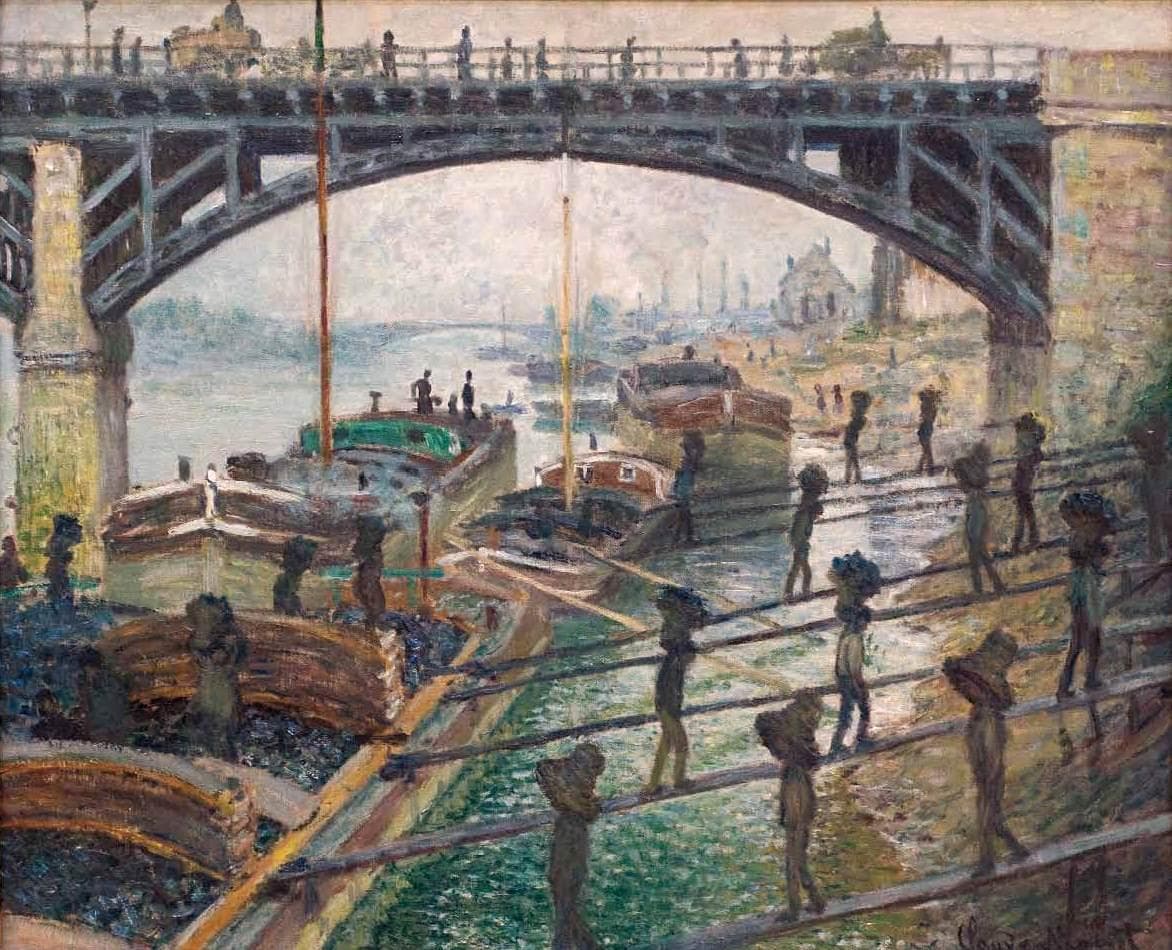
The motif is a working one. Monet did not avoid the industrial Seine; in these years he also painted men unloading coal in The Coal Workers and the factory chimneys of Argenteuil. Here the barges are simply part of the river's daily life, painted with the same care as the sailboats in The Basin at Argenteuil.
Ownership and where to see it
The painting belonged in the early 20th century to the French collector Fernand Halphen and was briefly in the Detroit Institute of Arts between about 1948 and 1950. It later entered the collection of the Swiss collector Gérard Corboud, whose foundation has lent its Impressionist holdings to the Wallraf-Richartz-Museum in Cologne since 2001 (Dep. 0784 FC). The museum also shows Monet's Fishing Boats and the Porte d'Aval. For other collections, see where to see Monet's paintings.
Questions & answers
Where is Monet's The Seine at Asnières?
It is in the Wallraf-Richartz-Museum & Fondation Corboud in Cologne, Germany. It belongs to the Fondation Corboud, which has lent its collection of Impressionist paintings to the museum on long-term loan since 2001.
When and where was it painted?
In 1873, at Asnières, a suburb on the Seine just northwest of Paris. Monet was living upriver at Argenteuil at the time and painted several views of the Seine between his home and the city.
What does The Seine at Asnières show?
A row of moored barges, sheds and floating structures on the Seine in the foreground, with the calm river reflecting them and a long line of colorful houses and bare spring trees along the far bank.
Did Monet paint Asnières more than once?
Yes. A closely related 1873 view, Landscape: Seine at Asnières, is in the State Hermitage Museum in St. Petersburg. Both show the river and the town's houses from the bank in the same period.
More by the artist
Claude Monet

Bridge over a Pond of Water Lilies
Claude Monet · 1899

Woman with a Parasol – Madame Monet and Her Son
Claude Monet · 1875

Sunset in Venice
Claude Monet · 1908–12

La Grenouillère
Claude Monet · 1869

Beach in Pourville
Claude Monet · 1882

Springtime
Claude Monet · 1872

Boating on the River Epte
Claude Monet · 1890

The Seine at Asnières (Hermitage)
Claude Monet · 1873
Also painted in 1873
The same year
Lilac in the Sun
Claude Monet · 1873
Lilacs, Gray Weather
Claude Monet · 1872–73
The Museum at Le Havre
Claude Monet · 1873
Autumn Effect at Argenteuil
Claude Monet · 1873
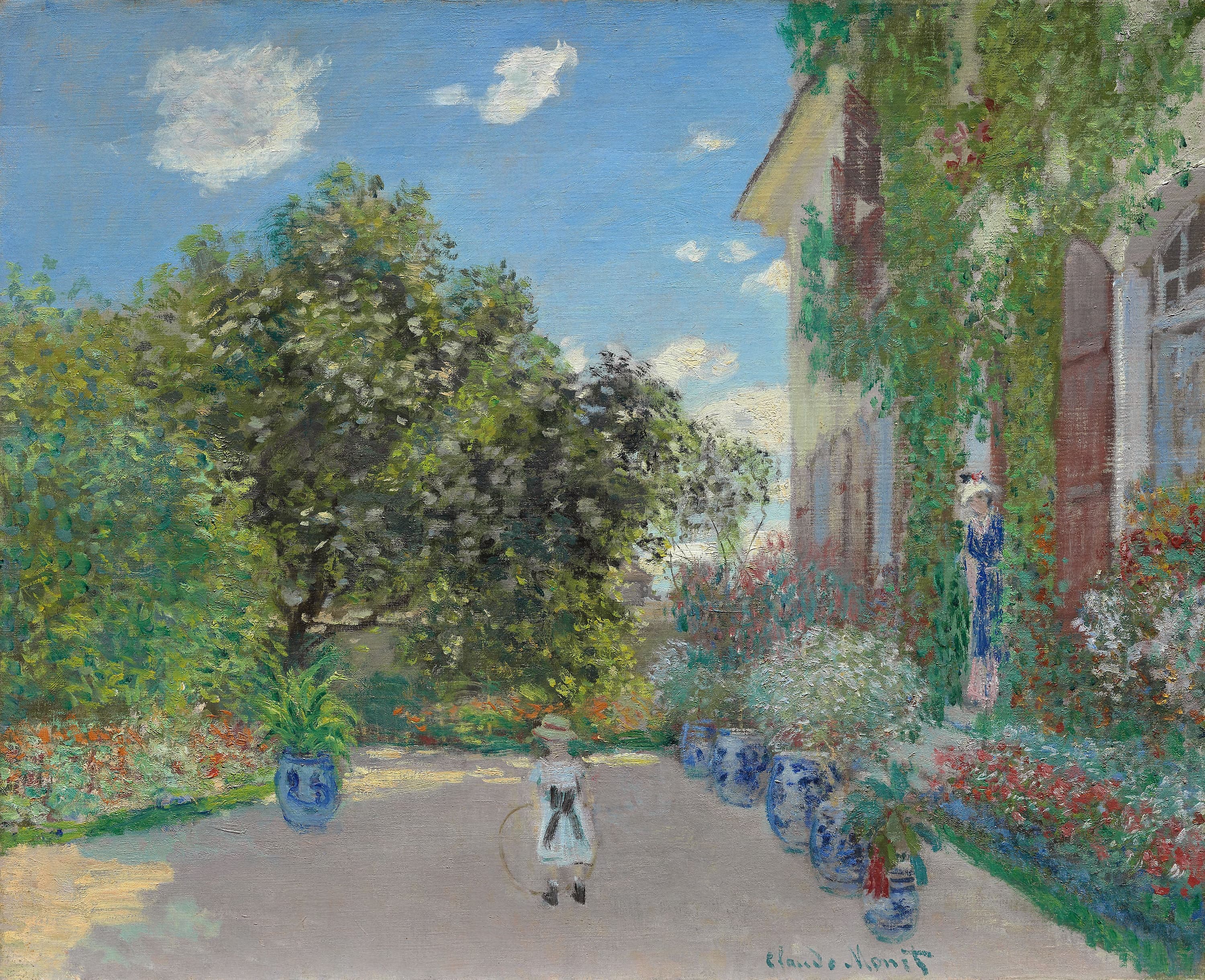
The Artist's House at Argenteuil
Claude Monet · 1873
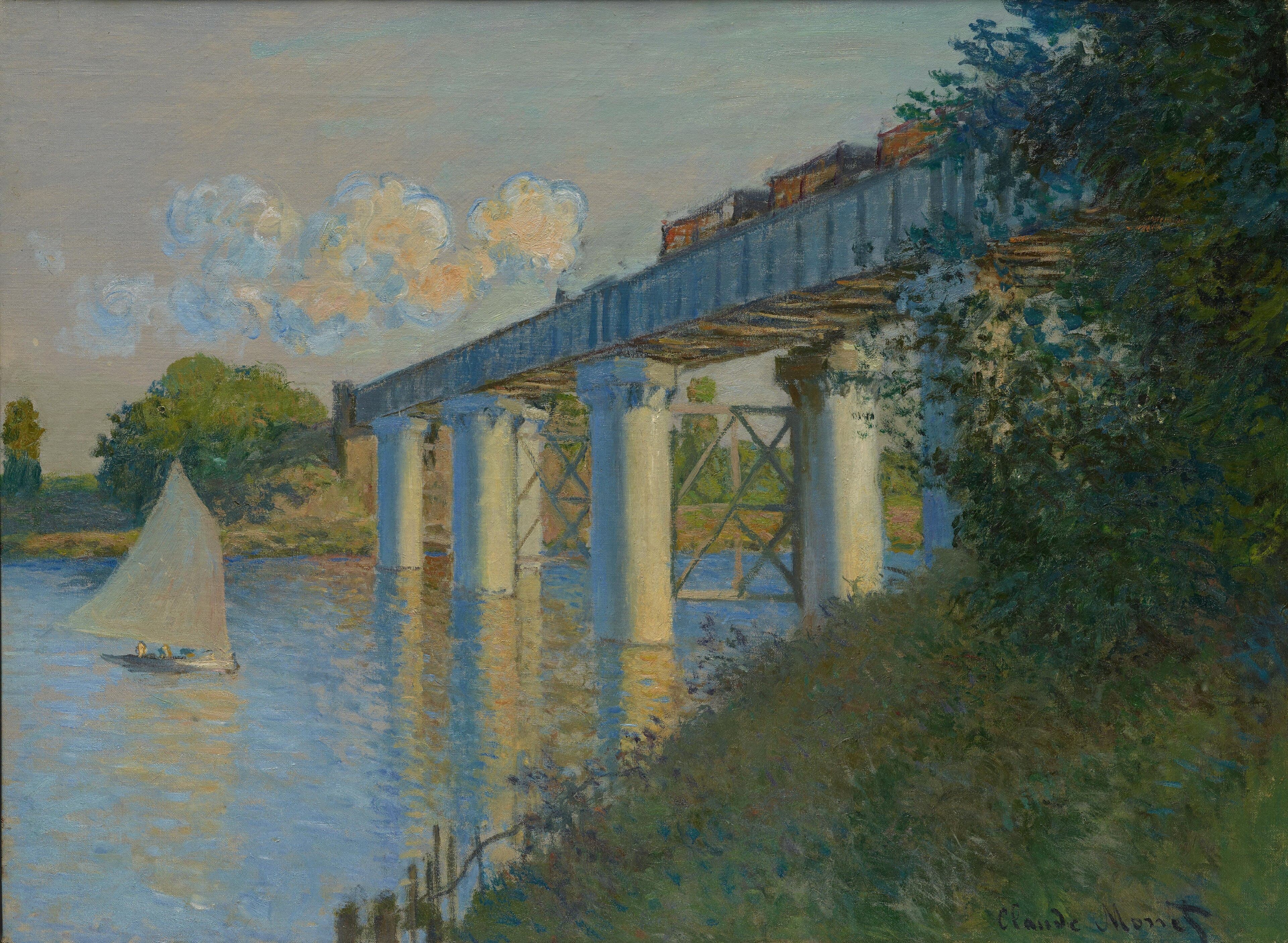
Railroad Bridge, Argenteuil
Claude Monet · 1873
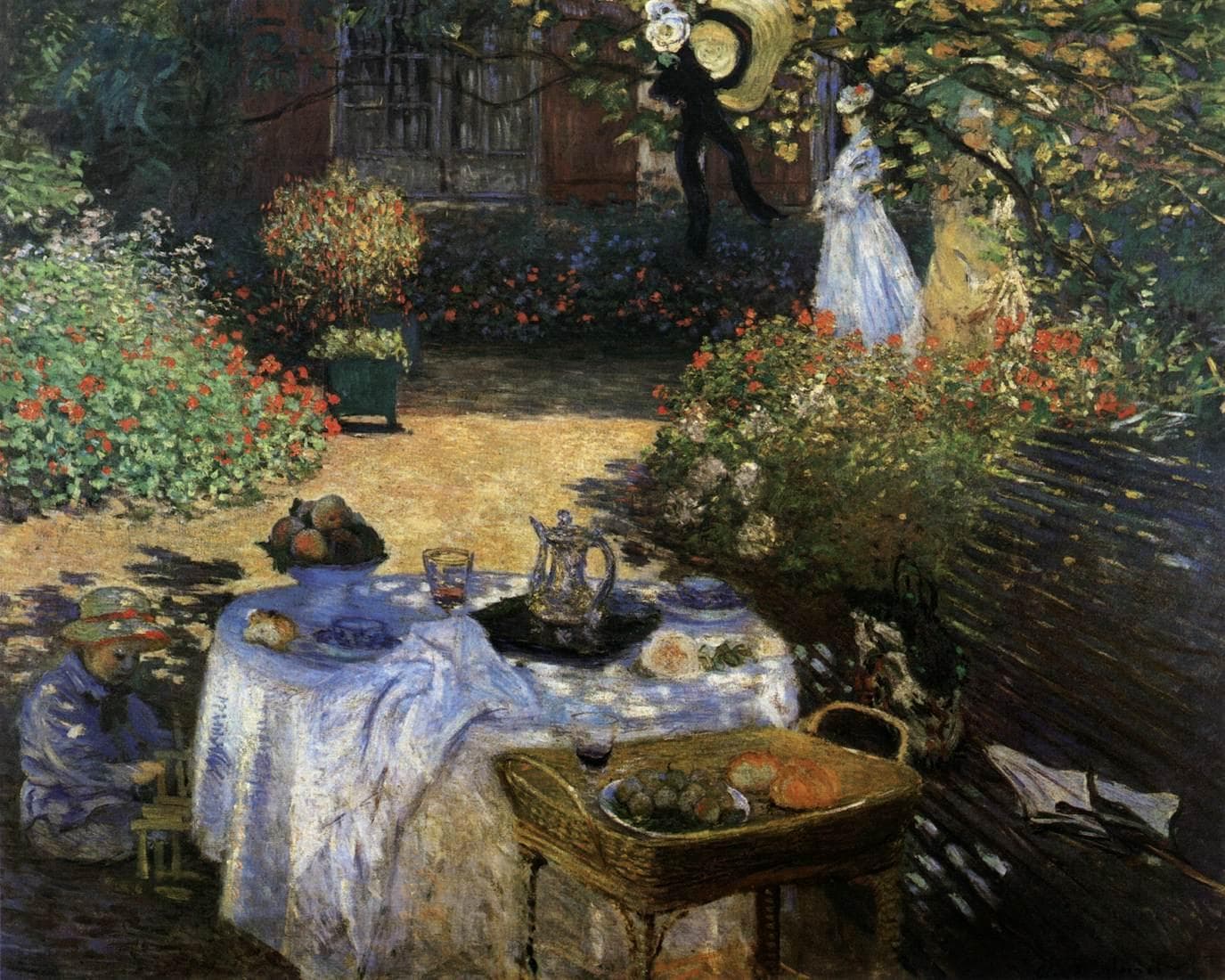
The Luncheon (Monet's Garden at Argenteuil)
Claude Monet · c. 1873
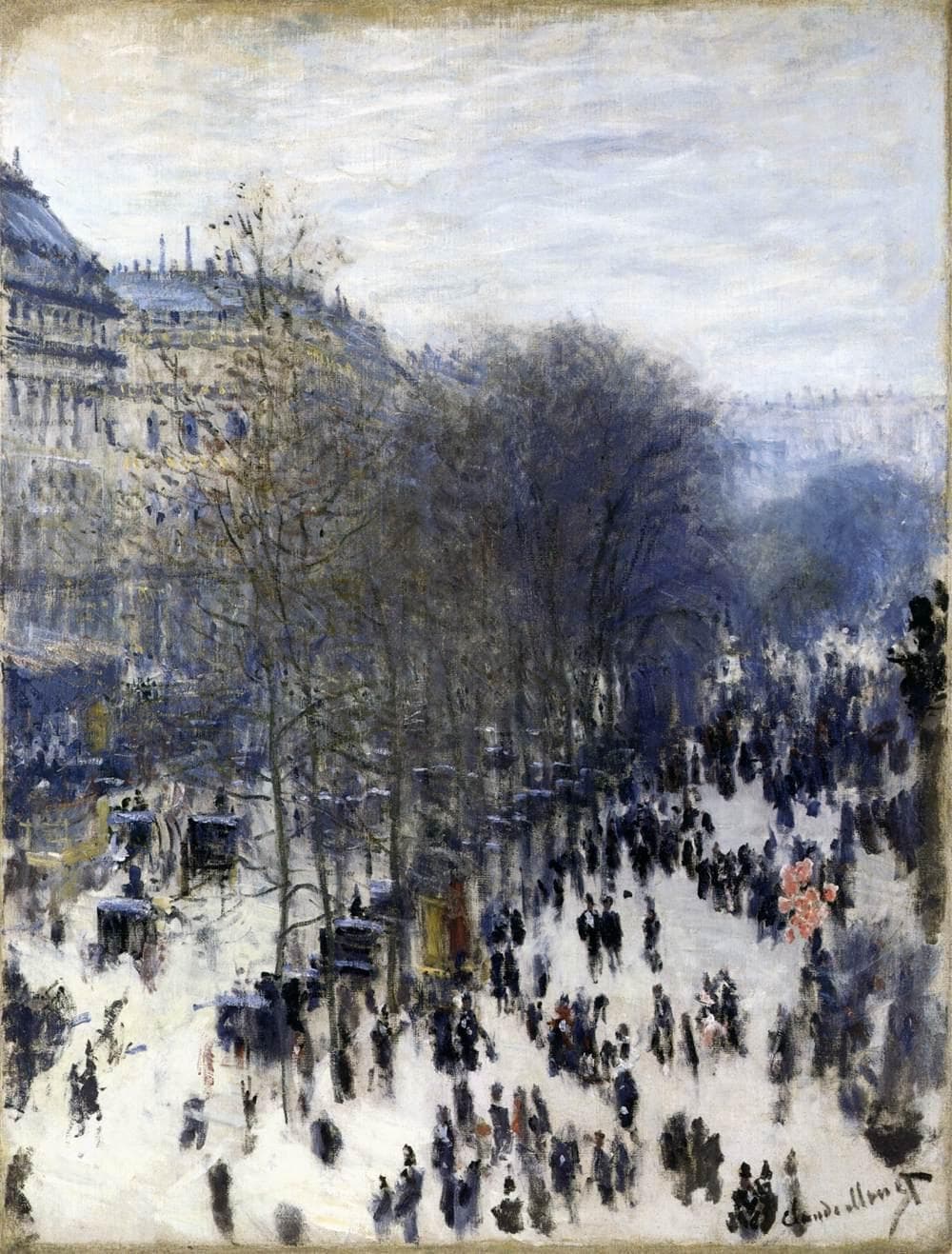
Boulevard des Capucines
Claude Monet · 1873–74
Kindred works
You may also study
The Coal Workers
Claude Monet · c. 1875
The Basin at Argenteuil
Claude Monet · 1872
Autumn Effect at Argenteuil
Claude Monet · 1873
Railroad Bridge, Argenteuil
Claude Monet · 1873

Ophelia
John Everett Millais · 1851–52

The Great Wave off Kanagawa
Katsushika Hokusai · c. 1830–32
The Birth of Venus
Sandro Botticelli · c. 1484–1486
Liberty Leading the People
Eugène Delacroix · 1830