Impressionism
The Lunch
Claude Monet, 1868
The Lunch (Le Déjeuner) is an 1868 painting by Claude Monet of Camille and their baby son Jean at a lunch table, with a maid and a visitor, painted on the scale of a history picture. It is in the Städel Museum, Frankfurt.
- Artist
- Claude Monet
- Date
- 1868
- Medium
- Oil on canvas
- Dimensions
- 231.5 × 151.5 cm
- Collection
- Städel Museum, Frankfurt am Main, Germany
- Movement
- Impressionism
- Catalogue
- Wildenstein 132
What you are looking at
A dining room in soft winter light. A round table covered with a white cloth fills the lower center, laid for a meal: a boiled egg in a cup, a long loaf of bread, a dish of grapes, a bowl of something red, a plate of pastries, glasses, two cruets and a dark wine bottle, and a folded newspaper. At the table sit a young woman in a brown dress with a black ribbon at her throat and a fair-haired small child in a white bib, holding up a spoon. An empty chair waits at the front right, its place set, the newspaper beside it, as if someone has just stepped away.
Standing at the left, by a window hung with a lace curtain, is a woman in black with a small veiled hat and gloves, a visitor. In the doorway at the back a maid in a white cap looks on. On the chair at far left lies a straw hat, and on the floor below it a child's doll or toy has been dropped. An oil lamp with a glass globe stands on a sideboard at right.
Claude Monet painted Le Déjeuner in 1868. It is a very large canvas, 231.5 by 151.5 centimeters, number 132 in Wildenstein's catalogue, and it is in the Städel Museum in Frankfurt.
Where and when
The young woman is Camille Doncieux, Monet's companion and future wife, and the child is their son Jean, born in August 1867. The empty place at the front is usually read as Monet's own: the painter has left his seat to paint the scene. The visitor at the window has not been firmly identified.
Monet painted the picture at Étretat on the Normandy coast, where the family spent the winter of 1868–69 in lodgings he could afford thanks to a patron in Le Havre, the shipowner Louis-Joachim Gaudibert. It was a rare moment of calm in years of poverty. Monet wrote to Frédéric Bazille that December that he was very happy there, surrounded by all that he loved, going out by day to paint the sea and coming home in the evening to his little household. See Étretat and the Normandy Coast.
How it was painted
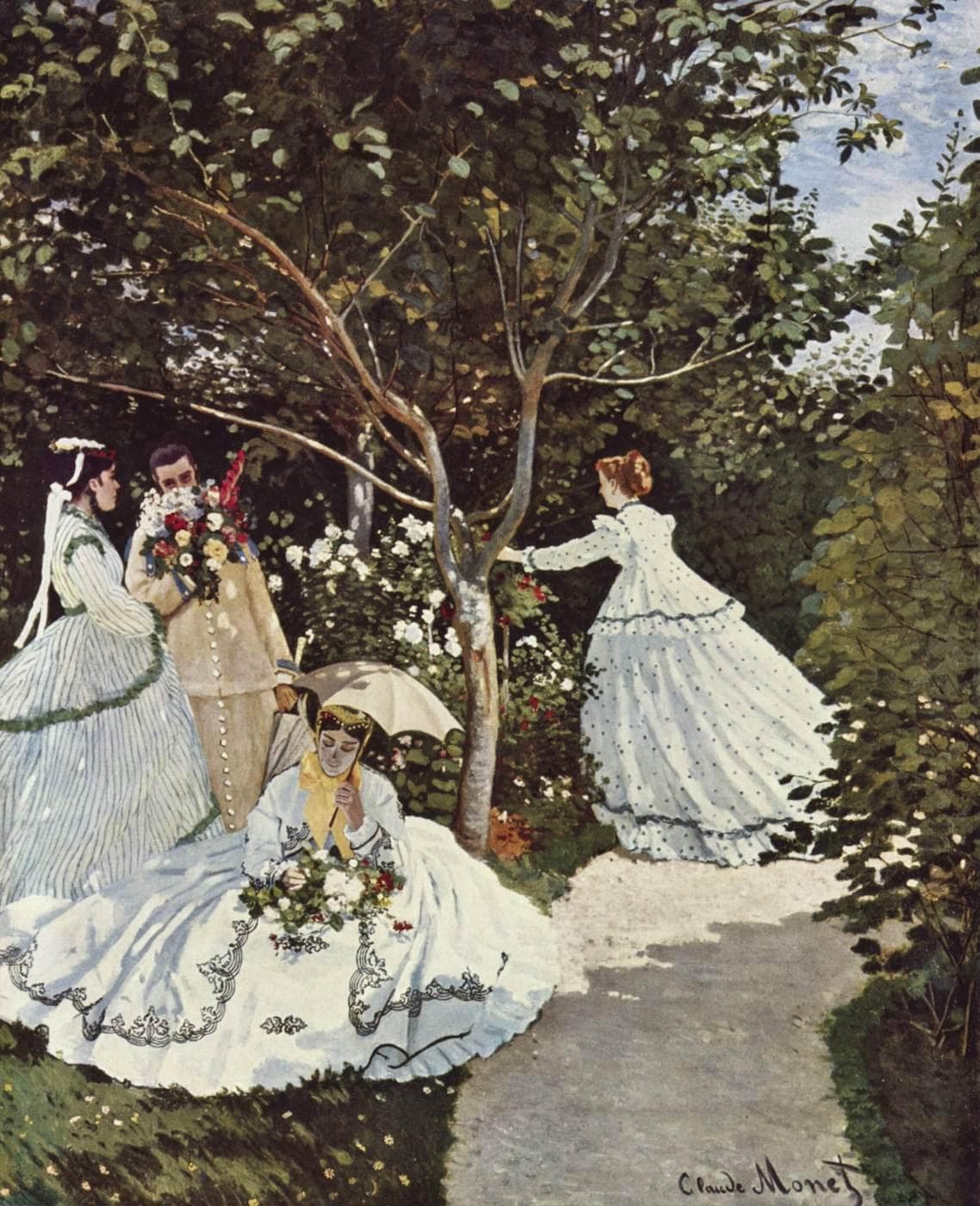
The size is the point. Paintings this large were reserved for history, religion and official portraits; Monet uses that scale for a family lunch, a quietly radical statement about what deserved a big canvas. He had tried the same thing outdoors in Women in the Garden two years earlier.
Look at the still life on the table, painted in loose, confident strokes: the egg is a single oval of white, the grapes a cluster of dark dabs, the bread a few curved strokes of ochre. The light on the cloth is built from greys, blues and creams, with the deep folds in violet. Notice how Jean is the center of attention: his mother watches him, the maid watches him, and the empty chair faces him. The dark figure by the window and the dark doorway behind frame that small bright group.
The palette is darker than Monet's landscapes of the same months, dominated by browns and blacks, as befits an interior; he was still close to the realism of Courbet and Manet here.
Reception and siblings
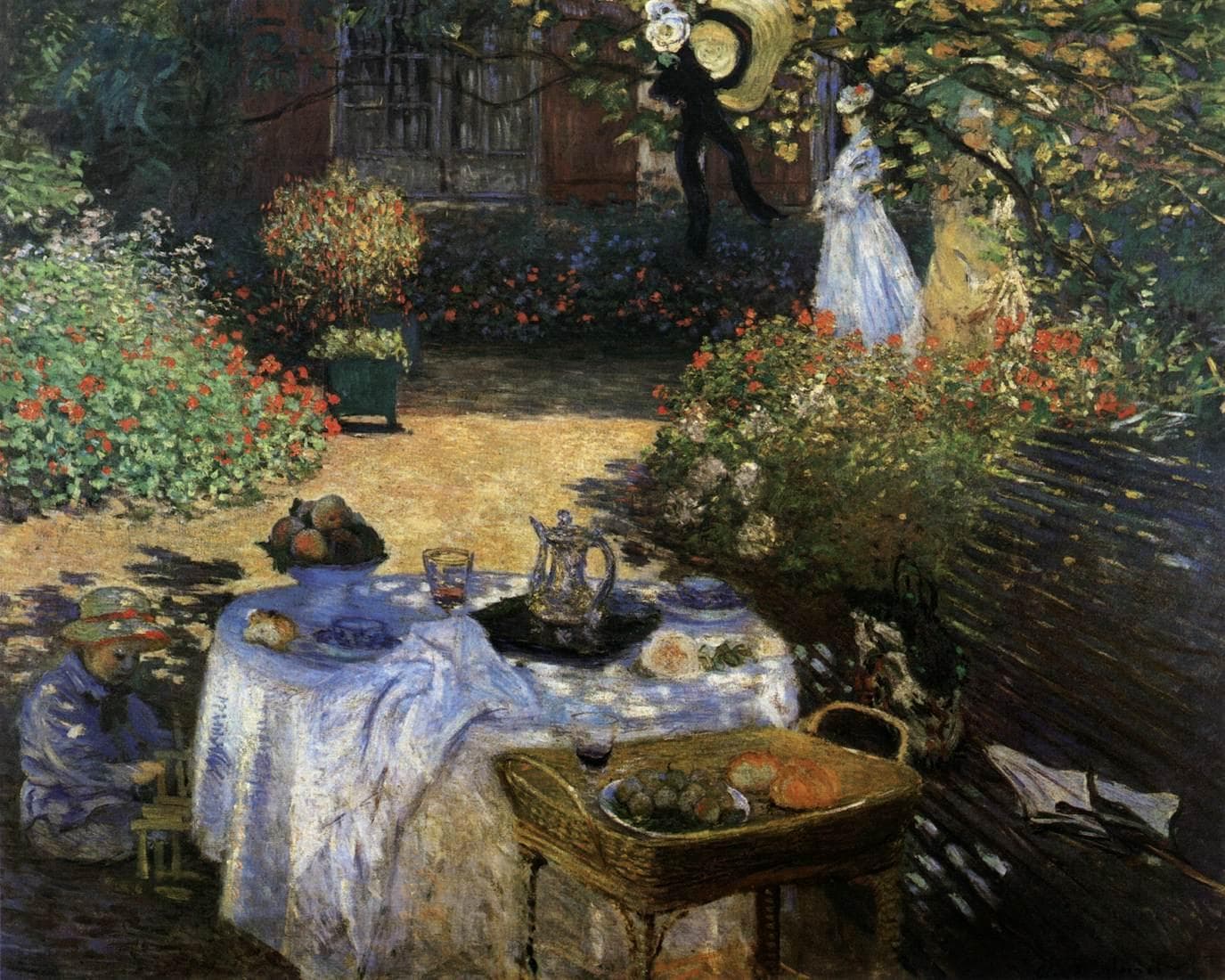
Monet submitted the painting to the Salon of 1870, and the jury rejected it. Compare his other interiors of that winter, the lamp-lit Interior after Dinner in Washington, and the great snow scene painted outdoors near Étretat at the same time, The Magpie. Gaudibert's support had also produced the full-length Madame Louis-Joachim Gaudibert in 1868. Monet returned to the family meal five years later, outdoors, in The Luncheon.
Where to see it
The painting is in the Städel Museum, Frankfurt am Main, one of Germany's leading collections of European painting. For other museums, see where to see Monet's paintings, and for the artist, Claude Monet.
Questions & answers
Where is Monet's The Lunch (Le Déjeuner)?
The painting is in the Städel Museum in Frankfurt am Main, Germany. Dated 1868, it is a very large canvas of 231.5 by 151.5 centimeters, catalogued by Wildenstein as number 132.
When and where did Monet paint The Lunch?
In 1868–69 at Étretat on the Normandy coast, where Monet, Camille and their baby son Jean spent the winter with help from the Le Havre patron Louis-Joachim Gaudibert.
Who is in Monet's The Lunch?
Camille Doncieux, Monet's future wife, sits at the table with their son Jean, born in 1867. A maid stands in the doorway and a visitor in black by the window; the empty chair at the front is usually read as Monet's own place.
Was The Lunch accepted at the Salon?
No. Monet submitted Le Déjeuner to the Salon of 1870 and the jury rejected it. Its life-size treatment of an ordinary family meal ran against the convention that large canvases were for history and religious subjects.
More by the artist
Claude Monet

Bridge over a Pond of Water Lilies
Claude Monet · 1899

Woman with a Parasol – Madame Monet and Her Son
Claude Monet · 1875

Sunset in Venice
Claude Monet · 1908–12

La Grenouillère
Claude Monet · 1869

Beach in Pourville
Claude Monet · 1882

Springtime
Claude Monet · 1872

Boating on the River Epte
Claude Monet · 1890

The Seine at Asnières (Hermitage)
Claude Monet · 1873
Also painted in 1868
The same year
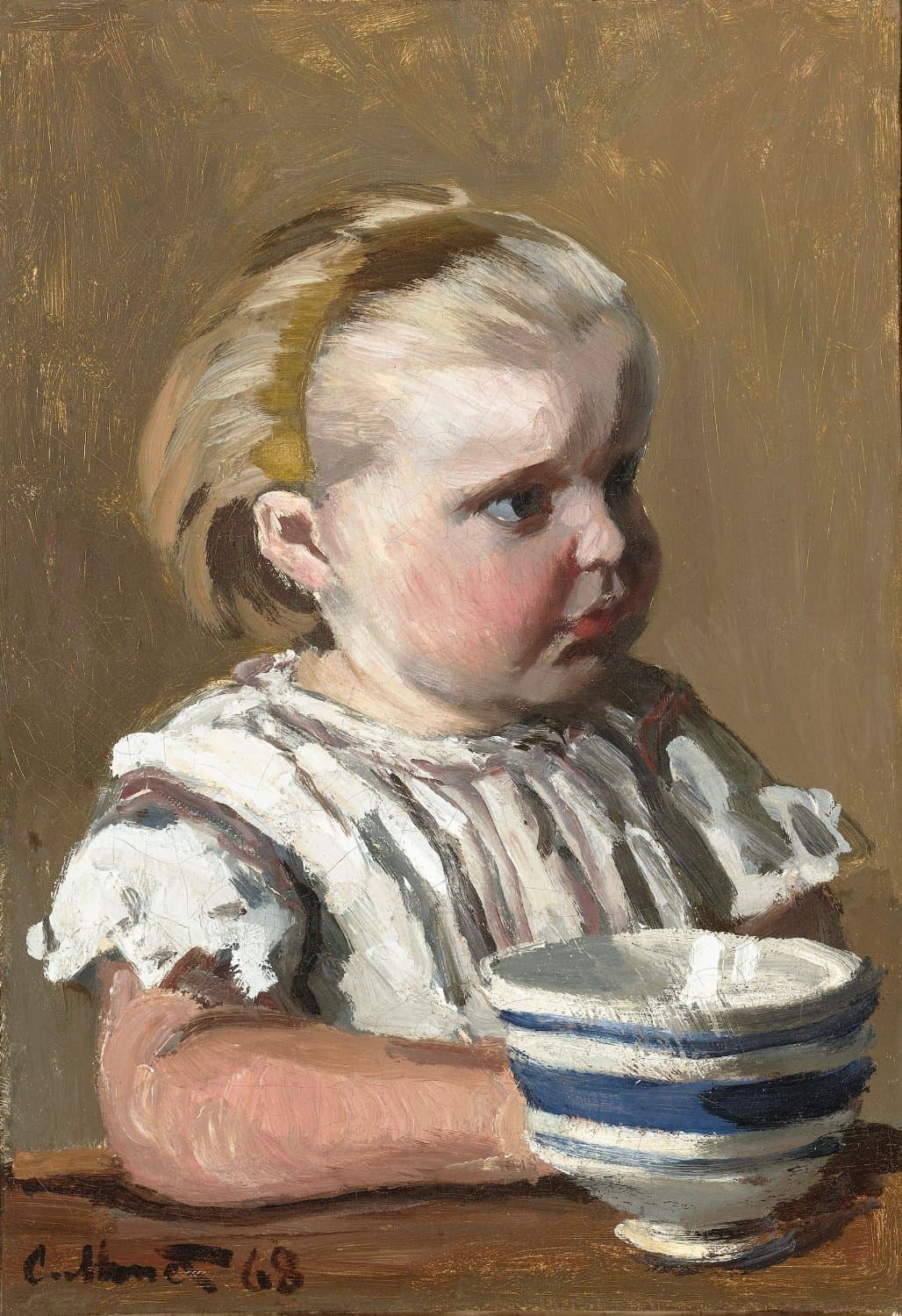
L'Enfant à la tasse (Portrait of Jean Monet)
Claude Monet · 1868
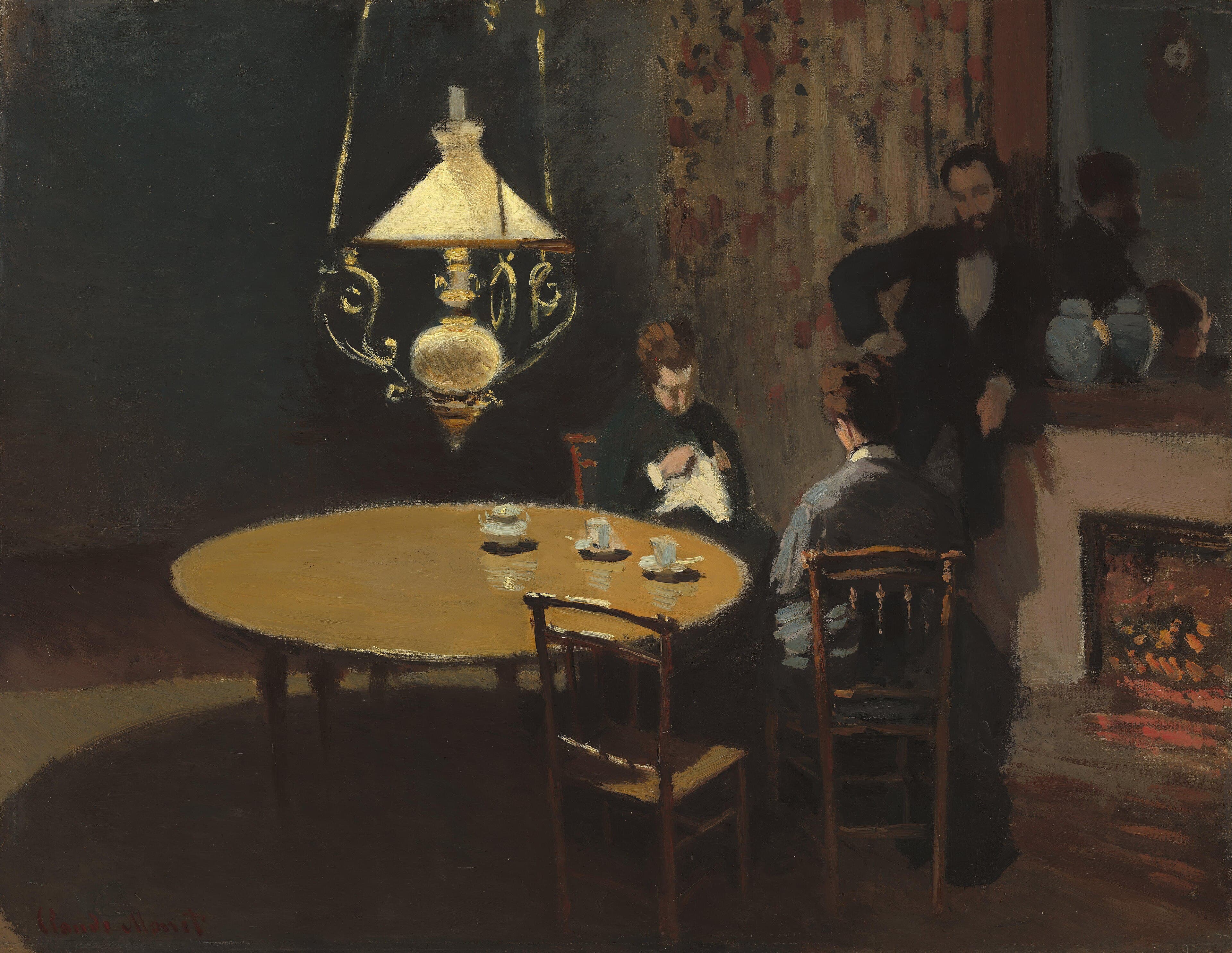
Interior, after Dinner
Claude Monet · 1868–69
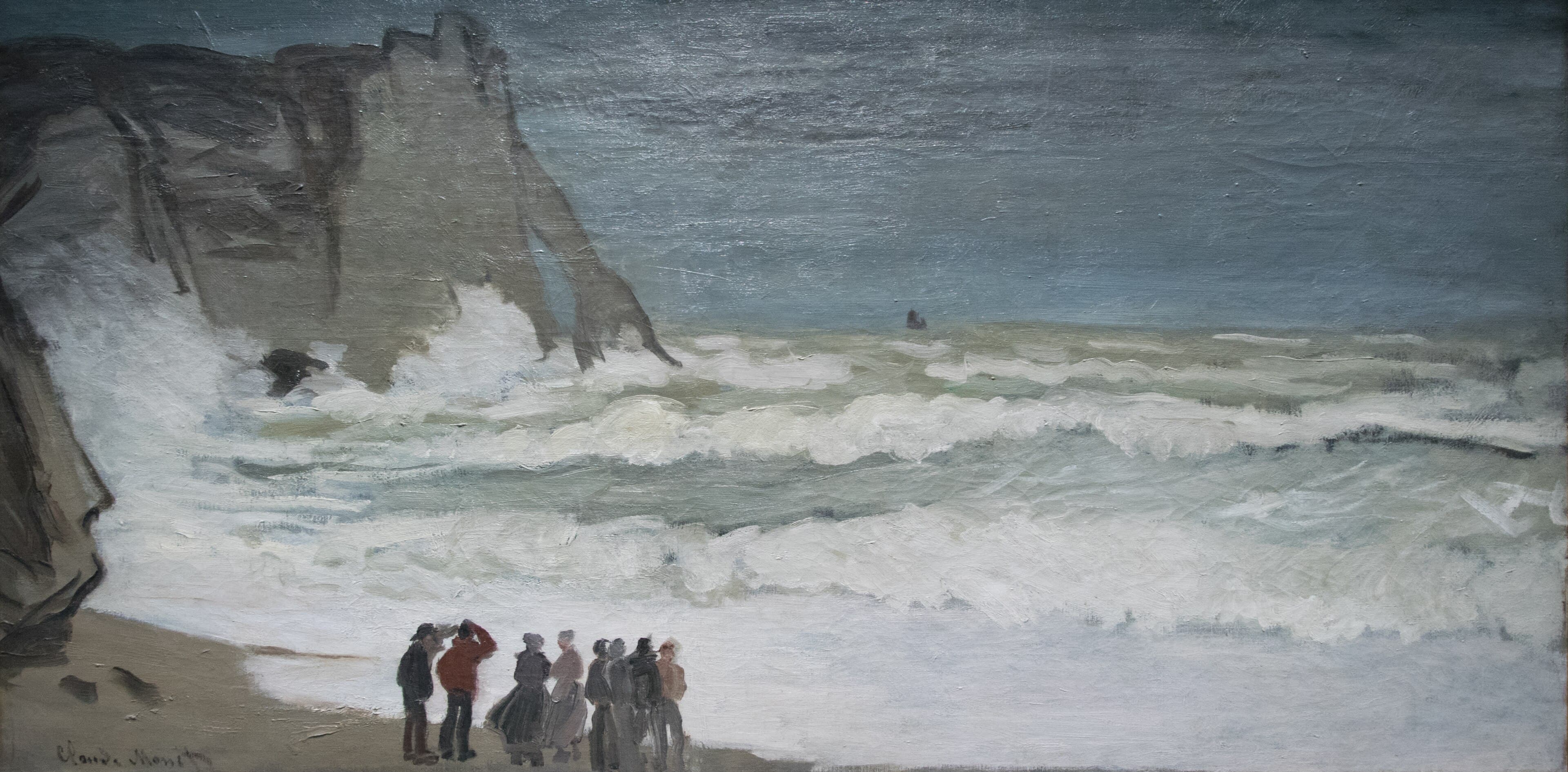
Heavy Sea at Étretat
Claude Monet · c. 1868–69
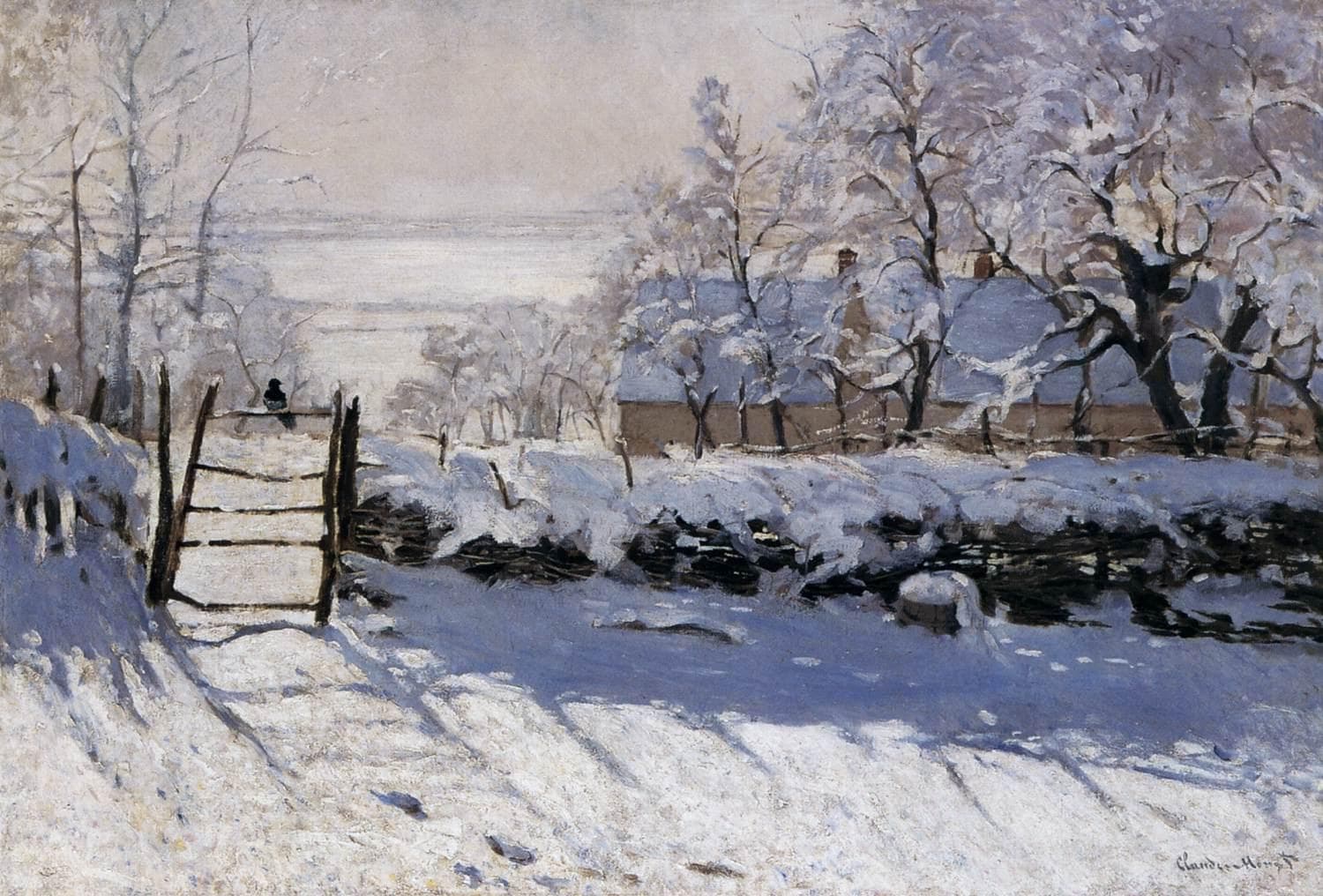
The Magpie
Claude Monet · 1868–69
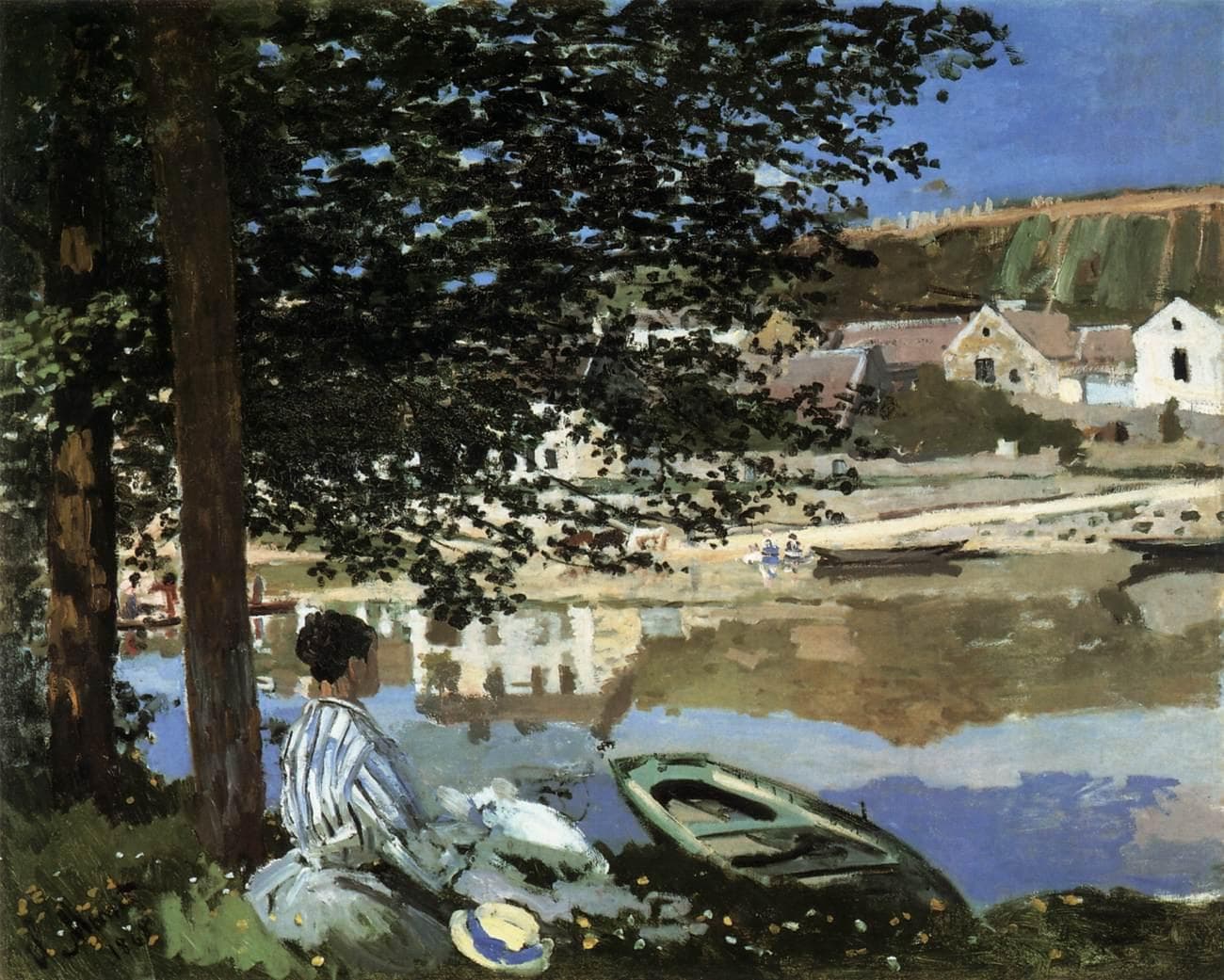
On the Bank of the Seine, Bennecourt
Claude Monet · 1868
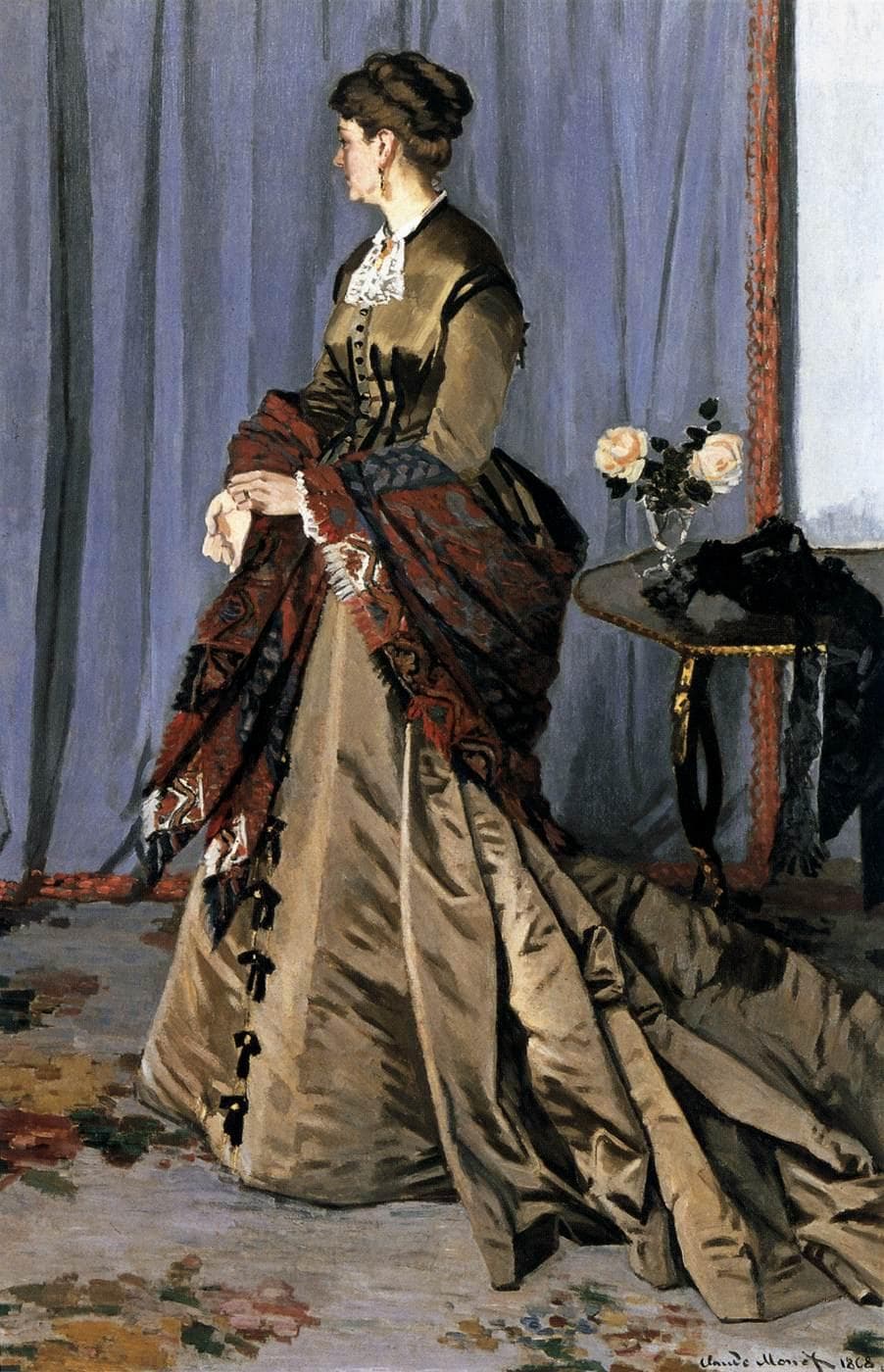
Madame Louis Joachim Gaudibert
Claude Monet · 1868
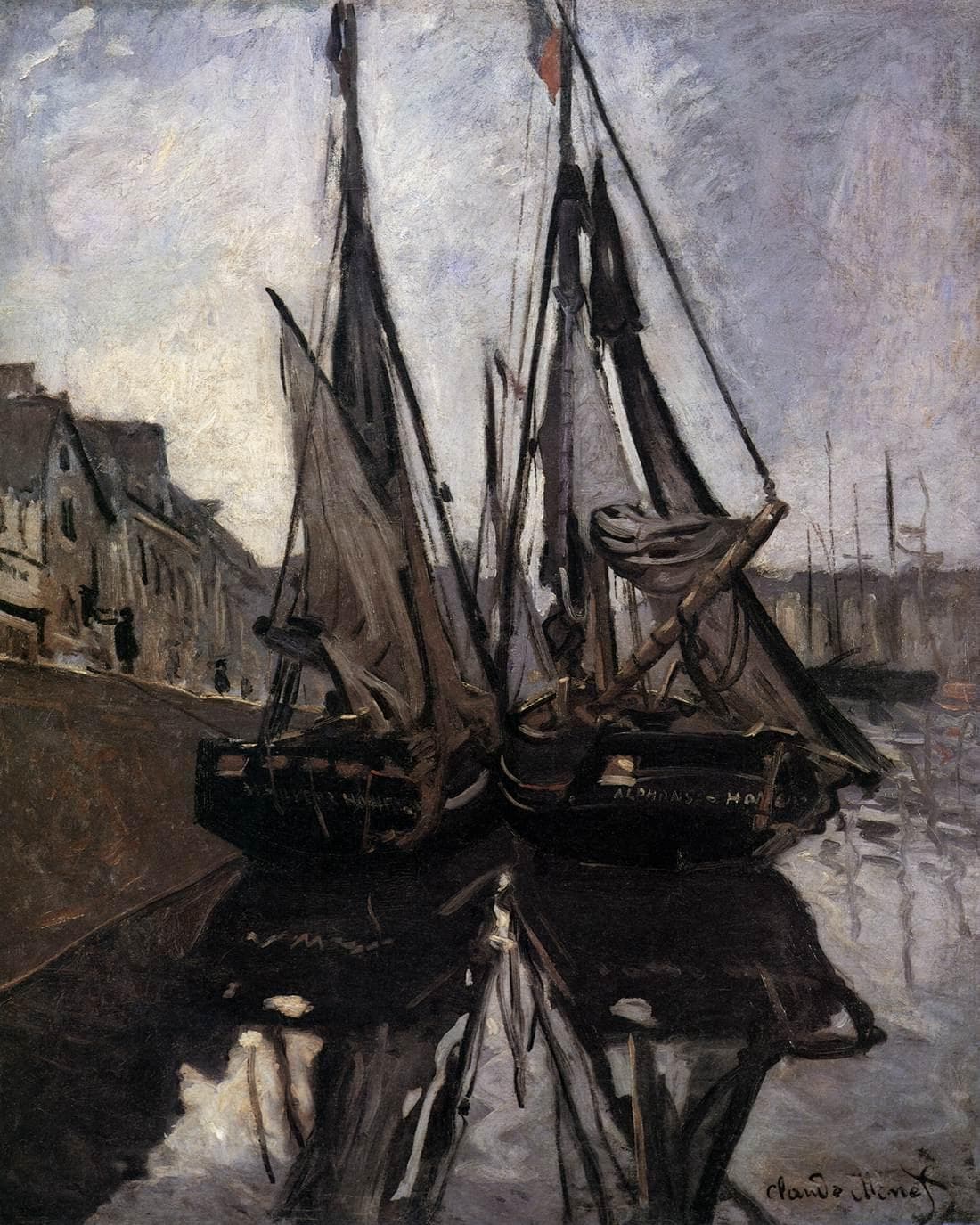
Fishing Boats at Honfleur
Claude Monet · c. 1868
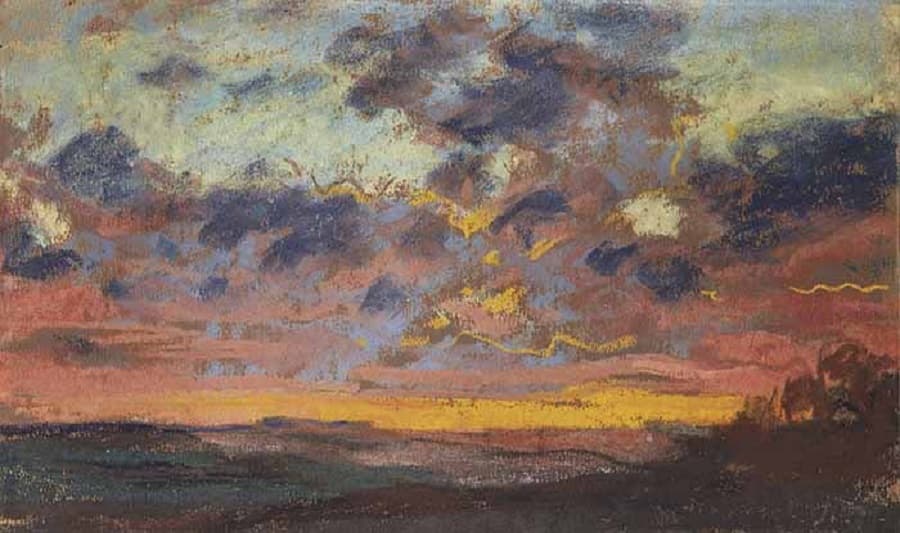
Sunset (Coucher de soleil)
Claude Monet · c. 1868
Kindred works
You may also study
The Magpie
Claude Monet · 1868–69
Interior, after Dinner
Claude Monet · 1868–69
The Luncheon (Monet's Garden at Argenteuil)
Claude Monet · c. 1873
Madame Louis Joachim Gaudibert
Claude Monet · 1868
Women in the Garden
Claude Monet · 1866–67

Venus de Milo
Alexandros of Antioch · c. 150–125 BC

Ophelia
John Everett Millais · 1851–52
Las Meninas
Diego Velázquez · 1656