Image: Kimbell Art Museum, Fort Worth; photo by Rlbberlin · Public domain · via Wikimedia Commons
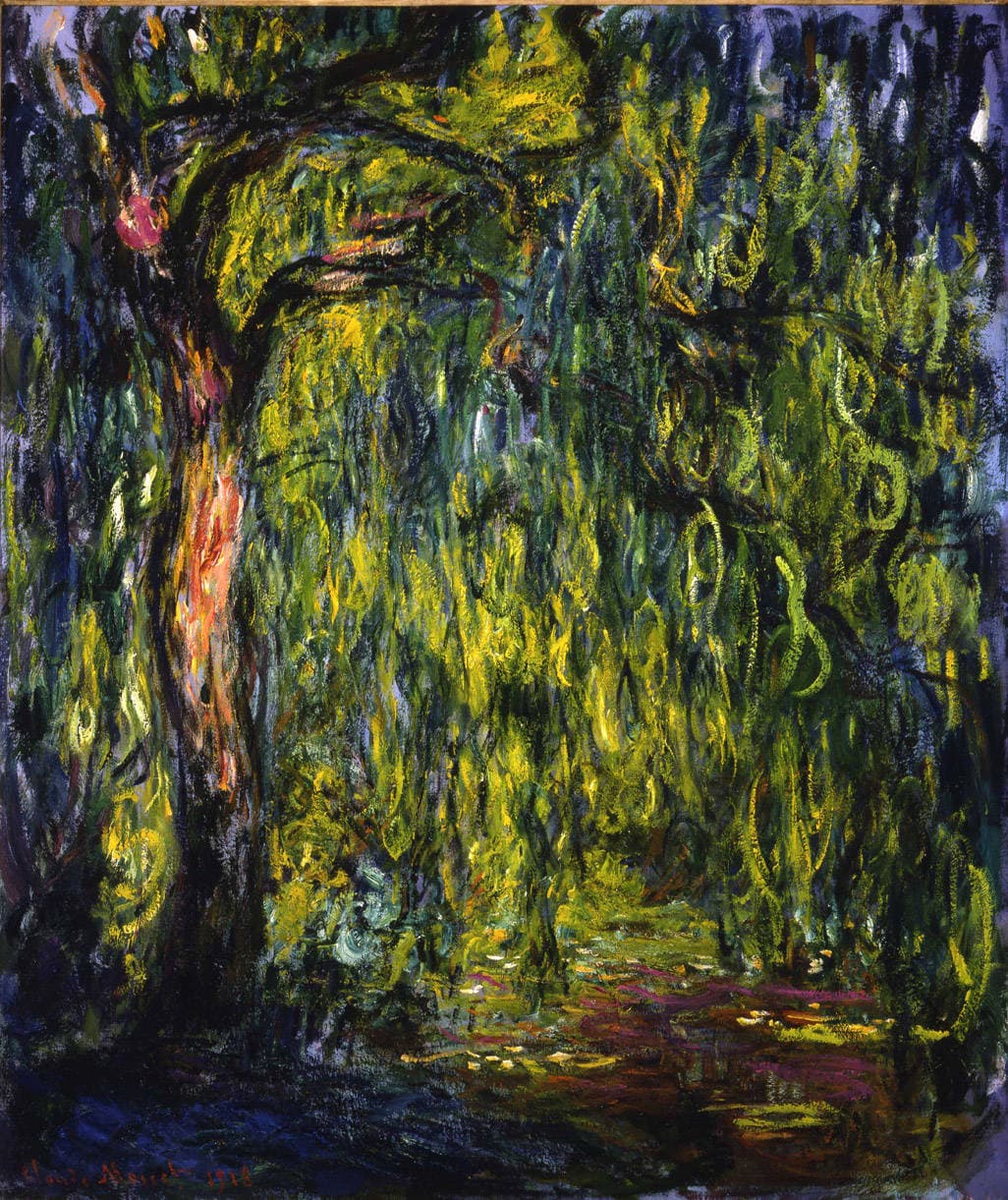
Weeping Willow
Claude Monet, 1918–19
Weeping Willow is a painting of 1918–19 by Claude Monet of the willow beside his water-lily pond at Giverny, its rust-red trunk and cascading yellow-green fronds filling the canvas. Part of a group often read as a response to the First World War, it is in the Kimbell Art Museum, Fort Worth.
- Artist
- Claude Monet
- Date
- 1918–19
- Medium
- Oil on canvas
- Dimensions
- 100 × 120 cm
- Collection
- Kimbell Art Museum, Fort Worth, Texas, United States
- Movement
- Impressionism
- Catalogue
- Wildenstein 1876
- Nature & Landscape
- Death & Memento Mori
Claude Monet's Weeping Willow (Saule pleureur) was painted in 1918–19, in the last months of the First World War and just after, beside the water-lily pond at Giverny. A single willow fills the canvas: a twisting, rust-red trunk rising through the center and a curtain of long, hanging fronds pouring down on every side. The canvas, 100 by 120 centimeters (Wildenstein 1876), is in the Kimbell Art Museum in Fort Worth, Texas, which bought it in 1996.
What you are looking at
The trunk is the spine of the picture. It rises from the bottom edge just left of center, thick and knotted, in red-brown, orange and violet, and splits near the top into several limbs that spread to the left and right before vanishing behind the foliage. The branches arch outward and then fall.
The fronds are everything else. They hang in long, nearly vertical streaks of yellow-green, lime, olive and gold on the right, darkening to blue-green, deep blue and violet on the left. Seen up close they are hundreds of separate, slightly curving strokes, many painted wet into wet so that colors slide together. From a distance they become a heavy, swaying curtain, lit from the right.
At the bottom of the canvas, a strip of dark ground or water runs across, and through the fronds at lower left and center you glimpse patches of pale blue and white, perhaps the surface of the pond reflecting the sky, perhaps flowers on the bank. Nothing is drawn clearly. The picture is a single, enveloping mass of tree.
Where and when
Monet had planted weeping willows around his water-lily pond in the 1890s. In 1918–19 he painted a group of about ten pictures of them. By then he was in his late seventies, mourning his wife Alice (died 1911) and his son Jean (died 1914), and his stepson Jean-Pierre Hoschedé and his son Michel were serving in the war, and in the spring of 1918 the German offensive brought the front within reach of Paris. Writers on the Kimbell picture, and the museum itself, connect the series with the war: the willow, which bows and seems to weep, has been read as an image of mourning, even as a stand-in for the grieving painter. That reading is an interpretation, not something Monet stated, but it fits the mood of the pictures and the moment.
Monet marked the Armistice in November 1918 by offering the French state two decorative paintings, a gesture that grew into the gift of the Orangerie Water Lilies.
How this version differs
The willow pictures range from tight close-ups of the trunk to views of the tree with the pond. The Columbus Museum's Weeping Willow of 1918 is bright, a cascade of yellow and green. The Musée d'Orsay's Weeping Willow of 1920–22 is darker, with swirling violet and red. The Kimbell picture sits between them: its right half is luminous yellow-green, its left half deep blue and violet, so that the tree seems to stand at the edge between light and shadow. Its strongly central trunk gives it a more upright, almost figurative presence. Compare also Weeping Willow and the Water-Lily Pond, where the tree leans over open water.
How it was painted
Monet worked with a large, loaded brush, in long, dragged, vertical strokes for the fronds and thick, twisting ones for the trunk. The paint is dense, with little bare canvas showing. Colors are strong and saturated, with complementary contrasts: orange trunk against blue shadow, yellow-green against violet. The cataracts that were clouding his vision in these years may have contributed to the intensity of the colors.
For the pond and its plants, see Water Lilies and Giverny: Monet's House and Garden.
Ownership and where to see it
According to its published provenance, the painting was in the collection of the Japanese collector Kojiro Matsukata by 1924, was sequestered by the French government in 1944, and belonged by 1960 to David Rockefeller in New York, from whom the Kimbell Art Foundation bought it in 1996. It is in the Kimbell's permanent collection in Fort Worth. See Where to See Monet's Paintings and Claude Monet.
Questions & answers
Where is Monet's Weeping Willow?
This Weeping Willow of 1918–19 is in the Kimbell Art Museum in Fort Worth, Texas, which bought it from David Rockefeller in 1996. Other versions are in the Columbus Museum of Art and the Musée d'Orsay.
What does Monet's Weeping Willow mean?
Monet left no statement, but the willow paintings of 1918–19 are often read as a response to the First World War and to his personal losses. The bowed, 'weeping' tree has been seen as an image of mourning, even of the grieving painter himself.
When and where was Weeping Willow painted?
Monet painted it in 1918–19 beside his water-lily pond at Giverny, where he had planted weeping willows in the 1890s. It belongs to a group of about ten willow paintings from those years.
How many weeping willow paintings did Monet make?
Monet painted around ten weeping willow pictures in 1918–19, and returned to the subject in the early 1920s. Versions are in the Kimbell Art Museum, the Columbus Museum of Art, the Musée d'Orsay and the Musée Marmottan Monet.
More by the artist
Claude Monet
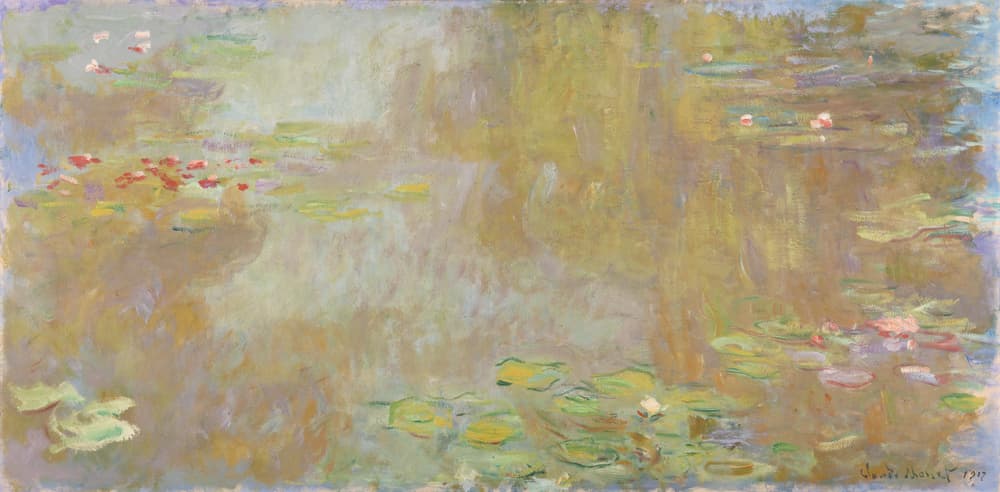
Water Lilies in Giverny
Claude Monet · 1917
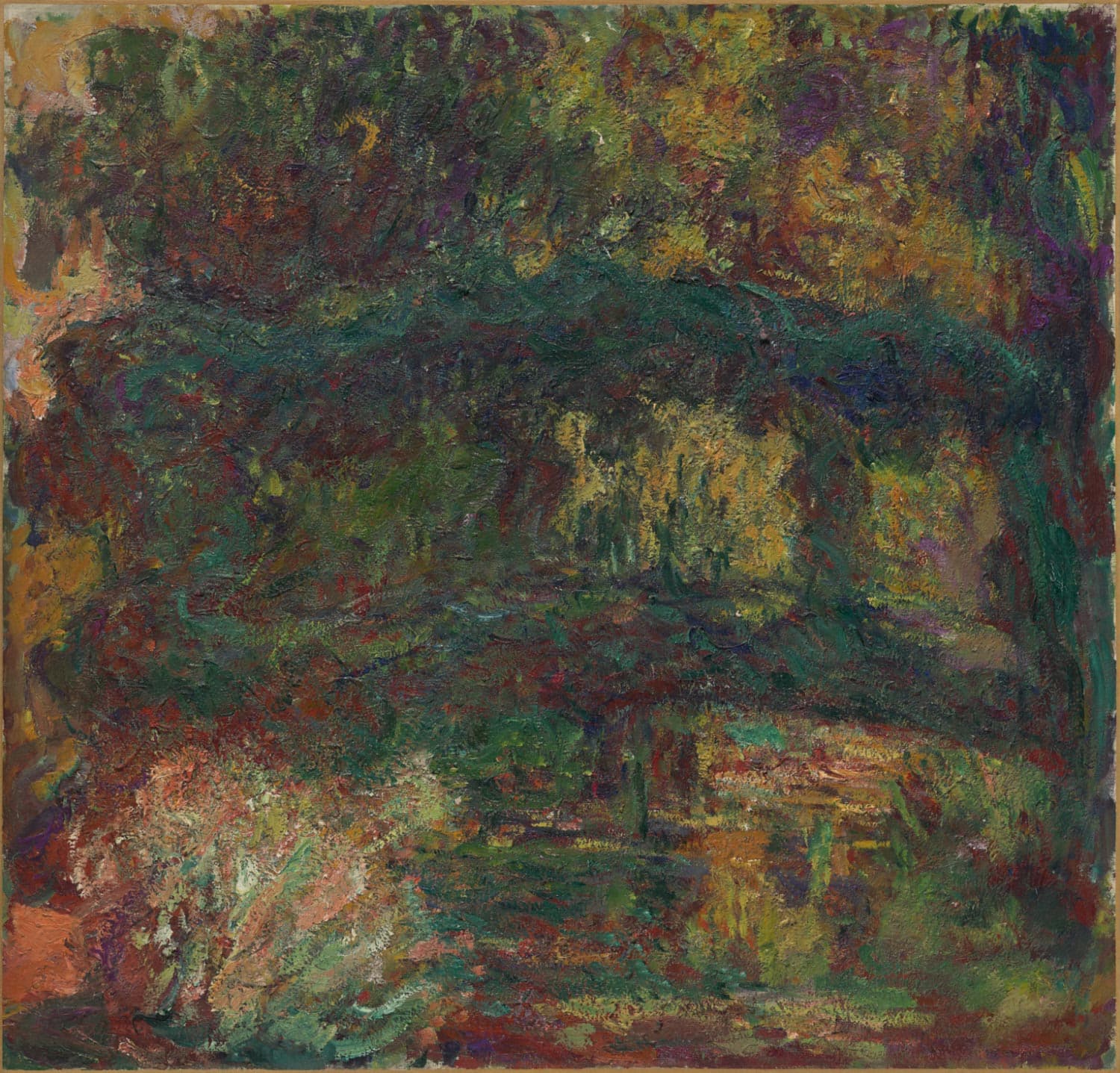
Nymphéas, Japanese Bridge
Claude Monet · 1918–26
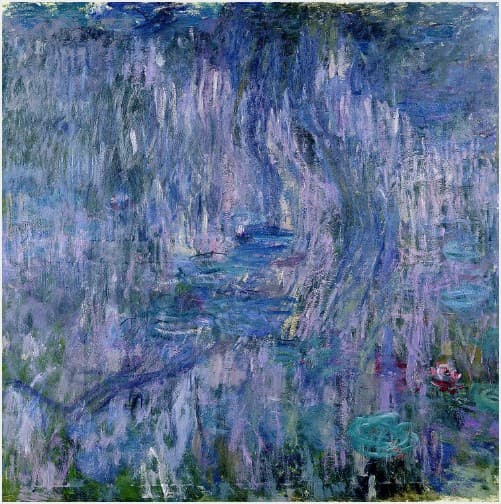
Water-Lilies, Reflection of a Weeping Willow
Claude Monet · 1916–19
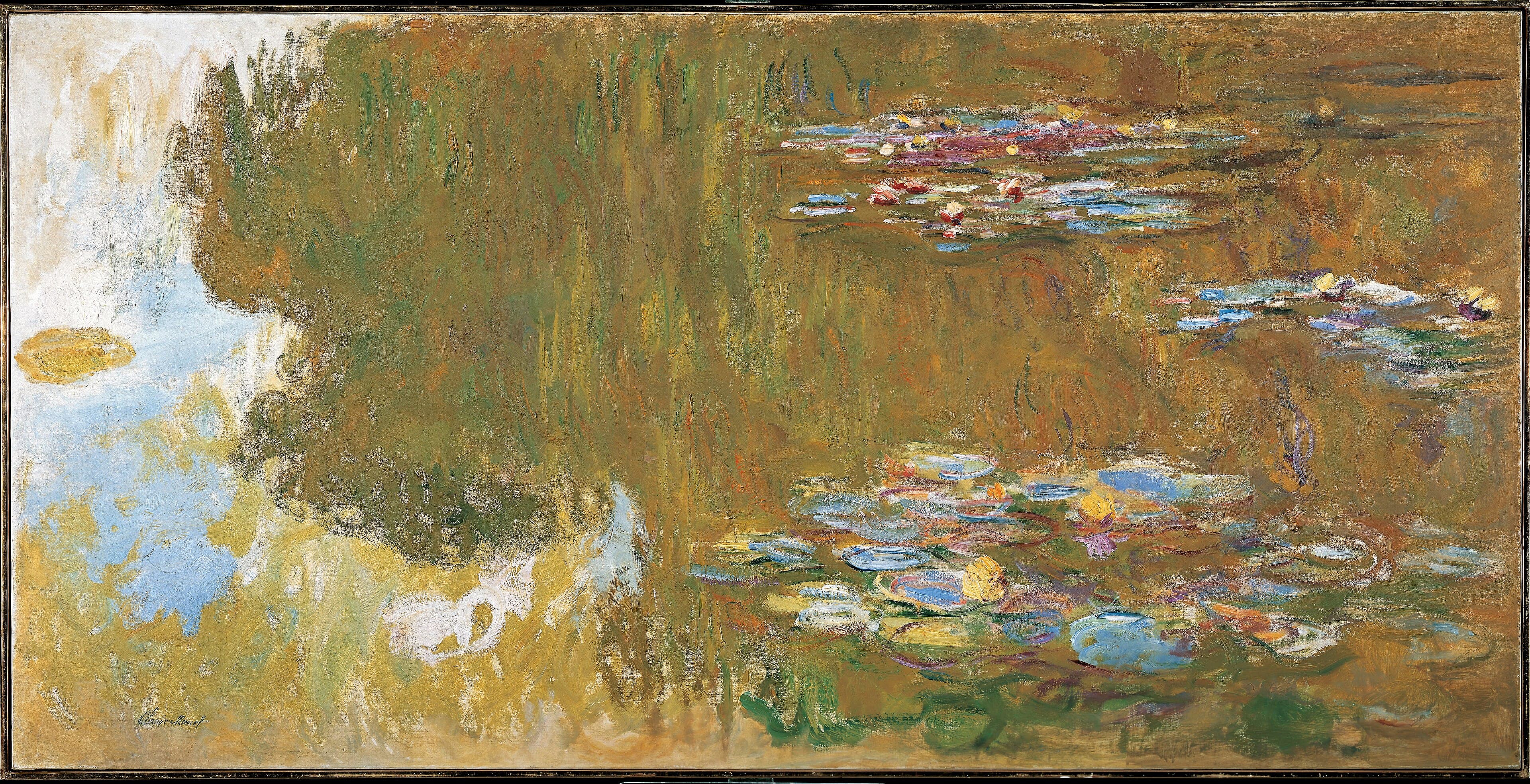
The Water Lily Pond (Albertina)
Claude Monet · 1917–19
Water Lilies: Green Reflections
Claude Monet · 1914–26
The Water-Lily Pond, Green Reflections
Claude Monet · 1920–26
Blue Water Lilies
Claude Monet · 1916–19
The Japanese Bridge
Claude Monet · 1918–24
Also painted in 1918
The same year
Weeping Willow (Columbus)
Claude Monet · 1918
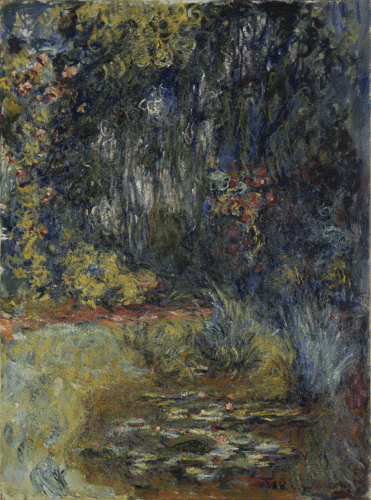
Corner of the Water-Lily Pond
Claude Monet · 1918
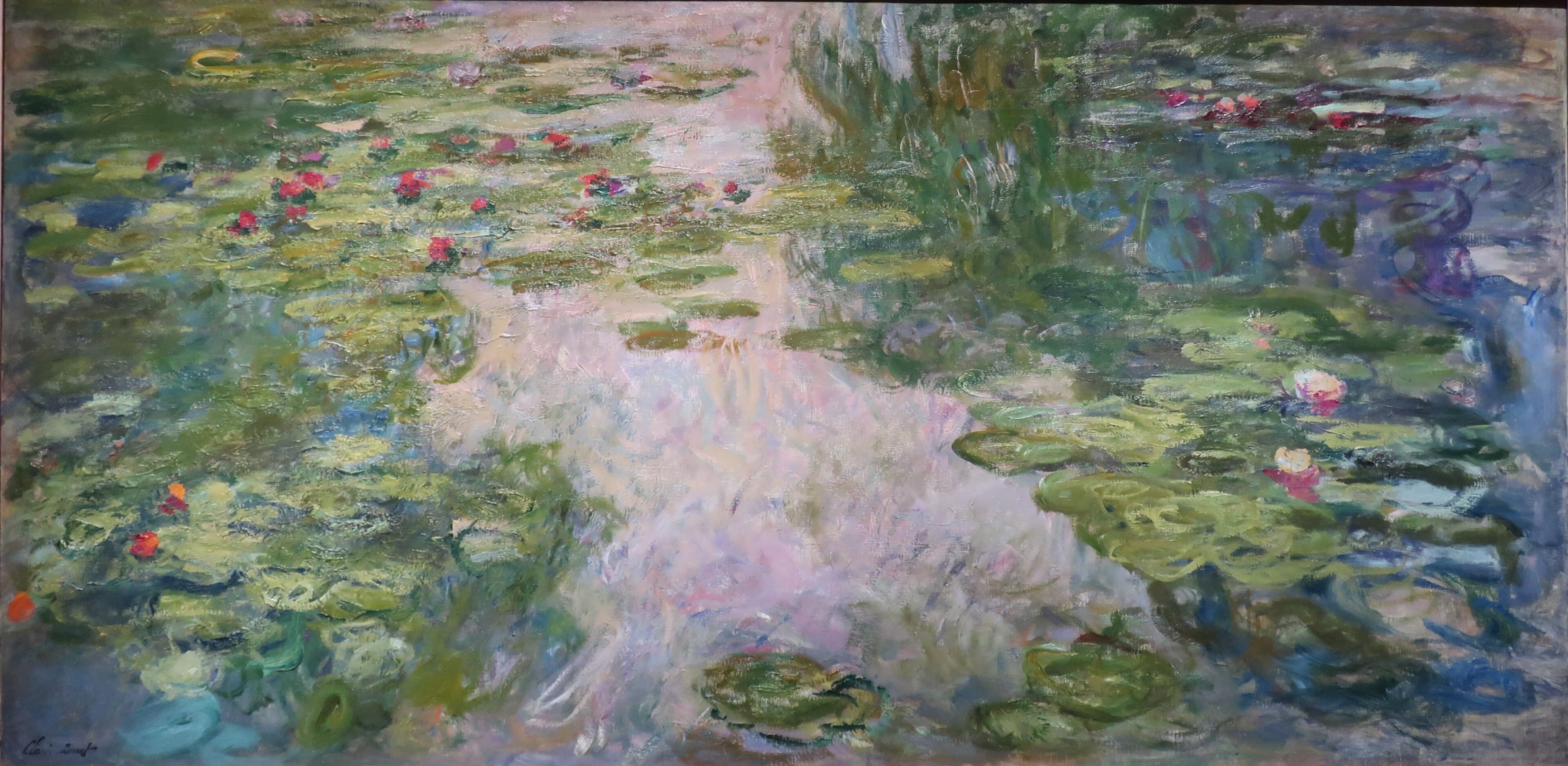
Water Lilies (Honolulu Museum of Art)
Claude Monet · 1917–19
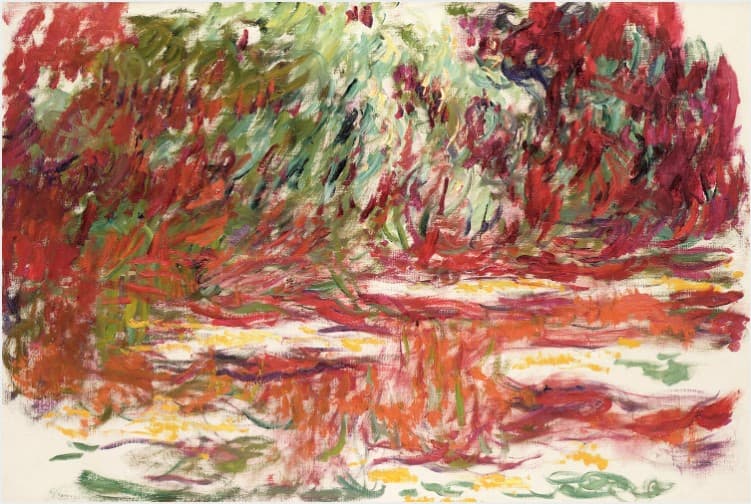
Water-Lily Pond (Bassin aux nymphéas, 1918–19)
Claude Monet · 1918–19
Nymphéas (Musée Marmottan Monet, 1917–19)
Claude Monet · 1917–19
The Japanese Bridge
Claude Monet · 1918
Le Pont japonais (The Japanese Bridge)
Claude Monet · 1918
Water-Lily Pond (Le Bassin aux nymphéas), 1917–19
Claude Monet · 1917–19
Kindred works
You may also study
Weeping Willow (Columbus)
Claude Monet · 1918
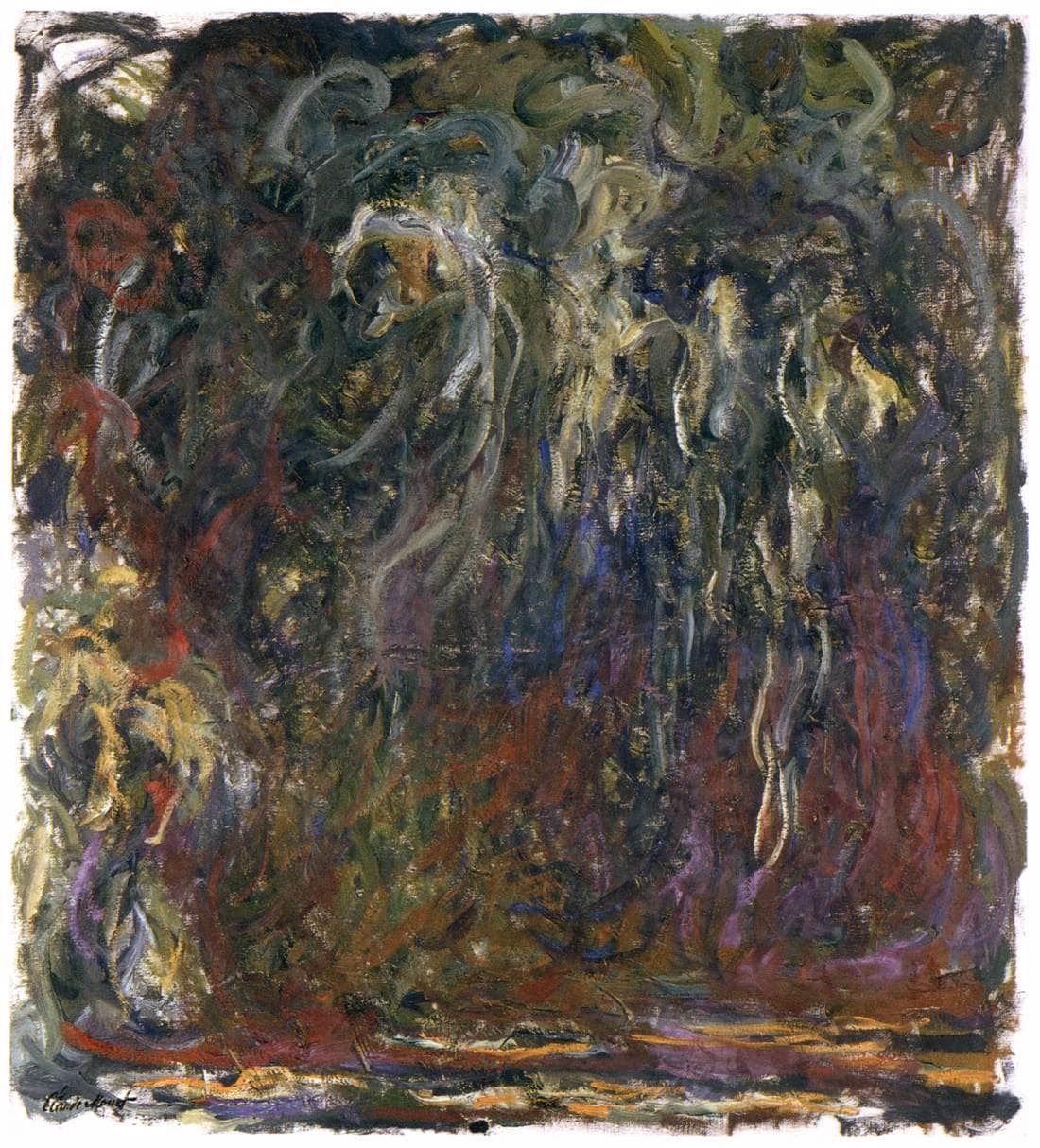
Weeping Willow
Claude Monet · 1920–22
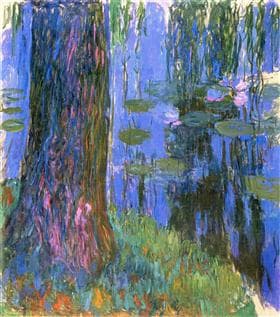
Weeping Willow and the Water-Lily Pond
Claude Monet · c. 1916–19
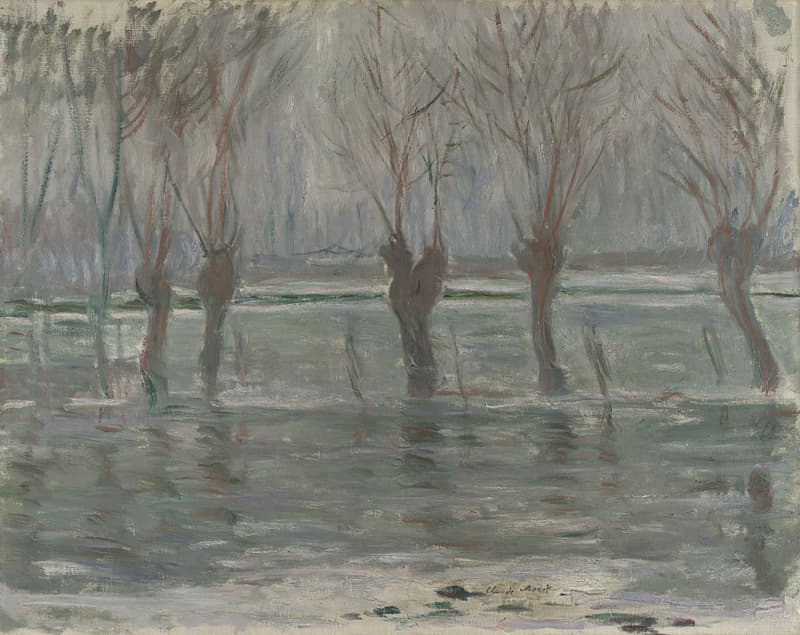
Flood Waters
Claude Monet · 1896
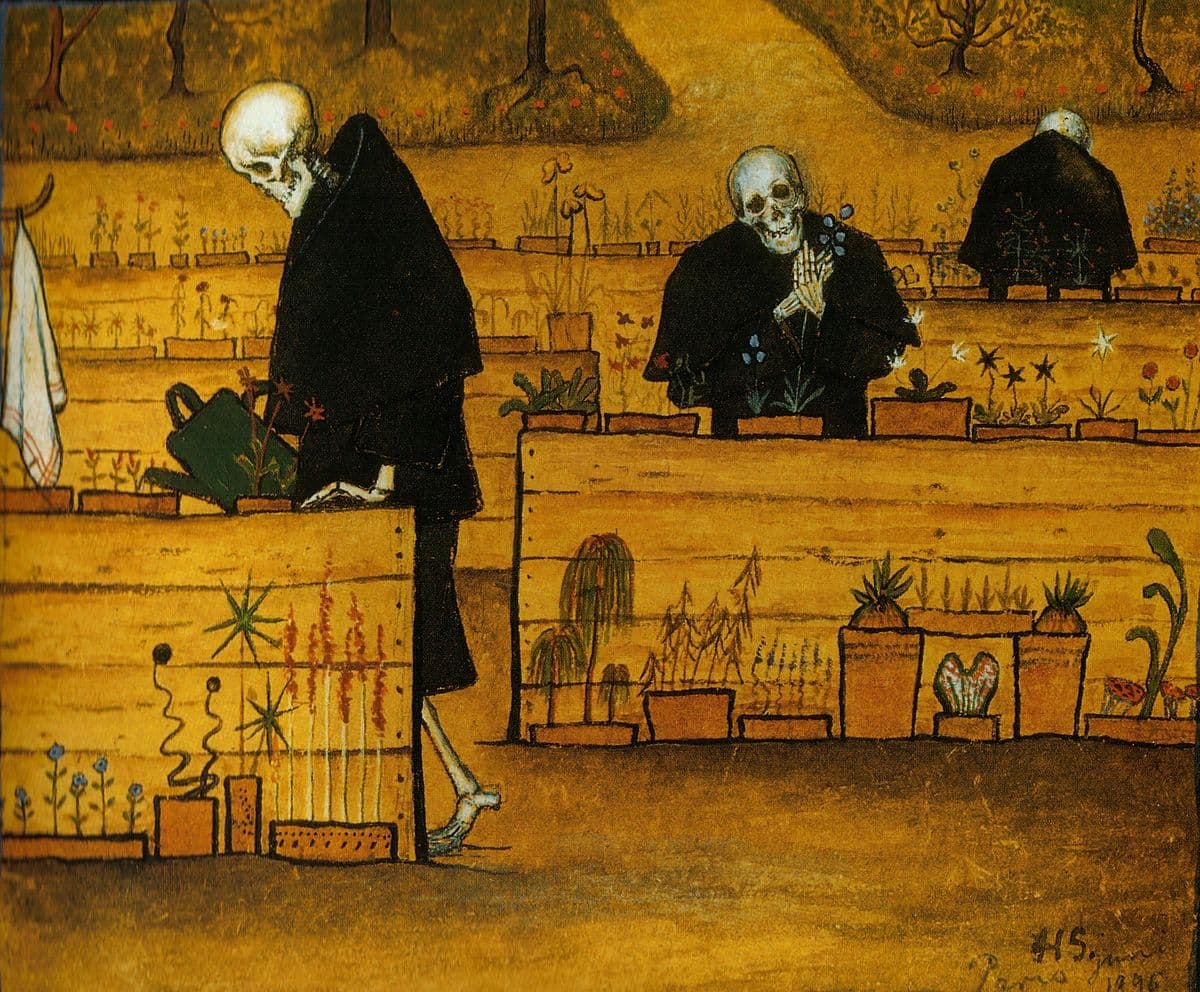
The Garden of Death
Hugo Simberg · 1896
Sunflowers
Vincent van Gogh · 1888–89
Solastalgia
Kate MacDowell · 2010
Victory (Lion Attacking a Python)
Herbert Thomas Dicksee · 1919