Image: Musée Marmottan Monet, Paris · Public domain · via Wikimedia Commons
Water-Lilies, Reflection of a Weeping Willow
Claude Monet, 1916–19
Water-Lilies, Reflection of a Weeping Willow (Nymphéas, reflets de saule) is a two-meter-square canvas Claude Monet painted at Giverny in 1916–19, in which a willow's reflection dissolves the pond into lilac haze. It is in the Musée Marmottan Monet, Paris.
- Artist
- Claude Monet
- Date
- 1916–19
- Medium
- Oil on canvas
- Dimensions
- 200 × 200 cm
- Collection
- Musée Marmottan Monet, Paris, France
- Movement
- Impressionism
- Catalogue
- Wildenstein 1862
- Nature & Landscape
- Water & Sea
Water-Lilies, Reflection of a Weeping Willow (Nymphéas. Reflets de saule) is a two-meter-square canvas Claude Monet painted at Giverny between 1916 and 1919. Unsigned, it came to the Musée Marmottan Monet in Paris in 1966 with the bequest of the painter's son Michel (inv. 5122). It is number 1862 in the Wildenstein catalogue raisonné, and it is one of the most nearly abstract of all his water-lily paintings.
What you're looking at
At first it is hard to find the lilies at all. The whole square is filled with short vertical strokes of lilac, pale violet, blue and white, falling in curtains from the top edge. These are the reflected fronds of a weeping willow, and they cover the water so completely that the pond reads as a single vibrating screen.
Look longer and the structure appears. Through the center runs a darker blue channel, roughly in the shape of a curving path, where the water shows between the reflections. In it float a few lily pads drawn as loose horizontal ovals. A long dark diagonal at lower left may be a branch or the edge of a pad. At lower right, a single pink-red flower opens beside a pad that Monet has painted with a looping, almost scribbled turquoise stroke, the most energetic mark on the canvas.
The effect is of soft, diffuse light, perhaps a hazy morning, with no strong shadows and no direct sun. Everything is reflection, and the willow itself is nowhere in view.
Where and when it was painted
In the war years Monet painted the weeping willows around his pond again and again. Their reflections became one of the main elements of the decorative cycle he was preparing, and in the Musée de l'Orangerie several panels are built around it. This canvas belongs to the experimental side of that work. It tests how far the willow reflection can take over the picture before the image of a pond disappears.
How it was painted
The paint is applied in dense, short, vertical touches, layered thickly enough that the surface has a woven texture. Monet keeps the tones close in value, so that nothing jumps forward except the flower and the turquoise pad. He was already suffering from the cataracts that would distort his color vision, and the dominance of violet and blue in canvases of these years has sometimes been connected to that, although the same harmonies appear deliberately in the finished Orangerie panels.
How this version differs
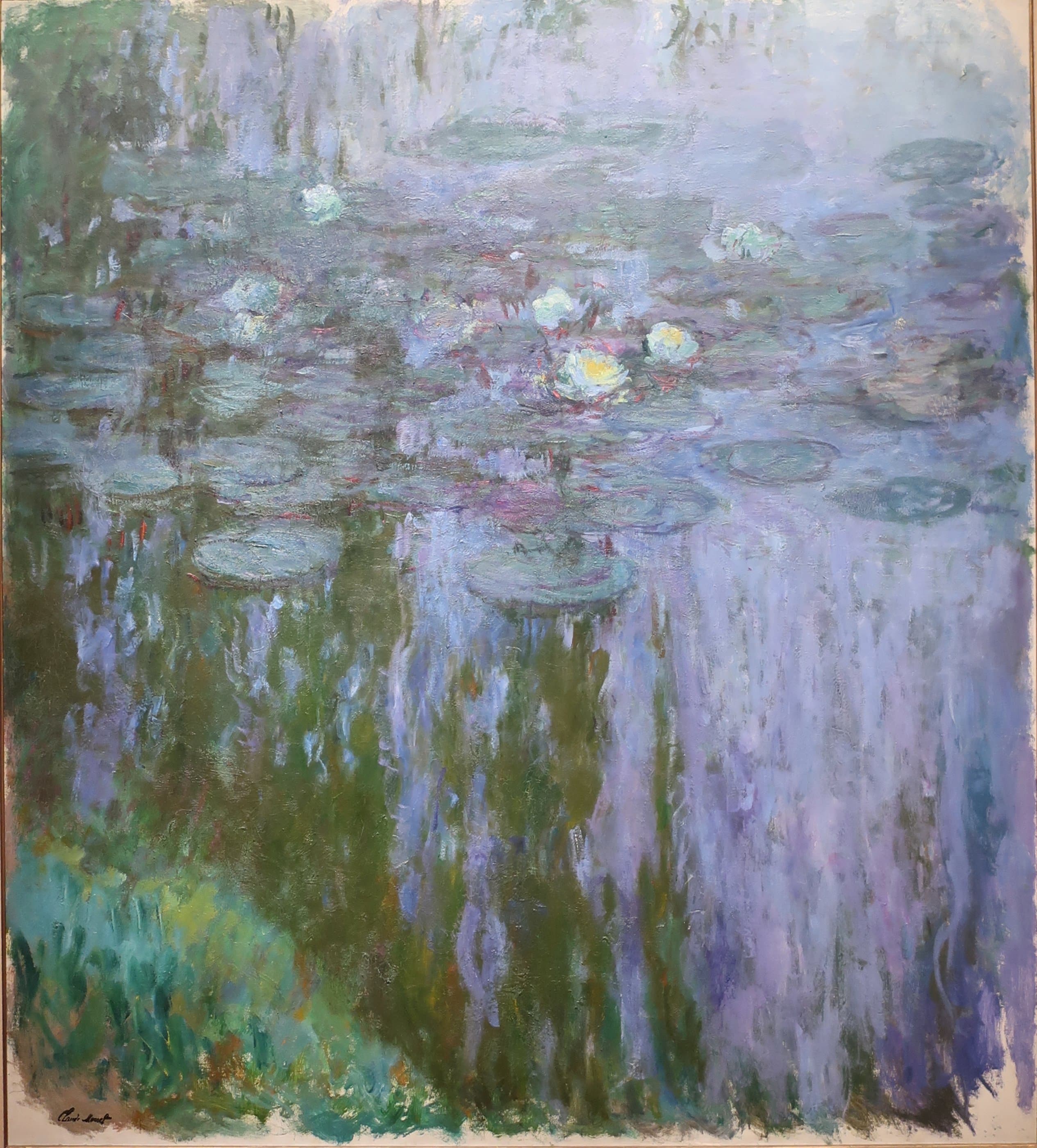
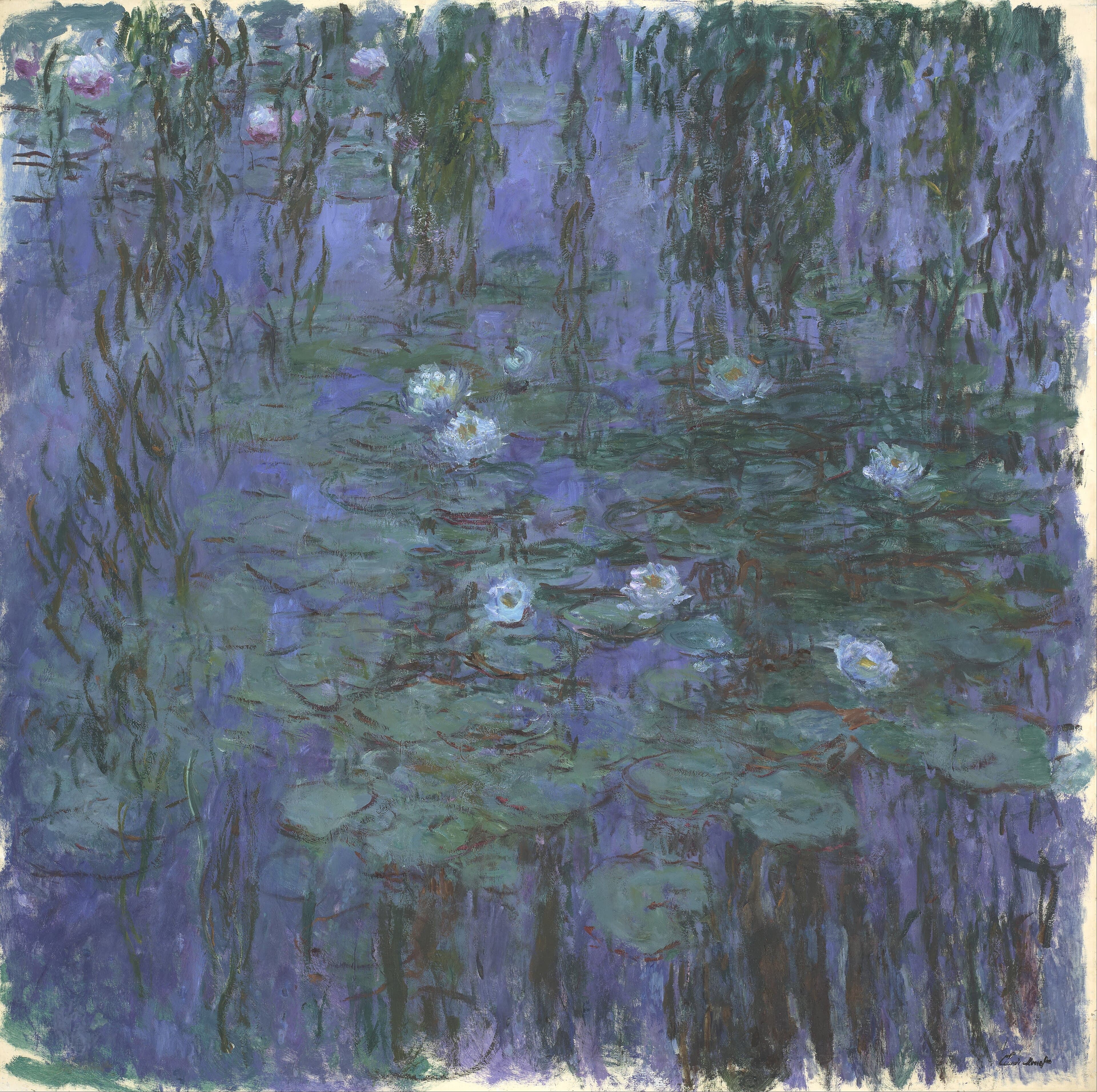
Among the Marmottan's late works, this is the canvas where the motif dissolves furthest. In Nymphéas (1916–19) the willow is a solid mass and the sky reflection is clear; in another Nymphéas of the same years the willow cascade occupies only the right side. The Orsay's Blue Water Lilies keeps the fronds as distinct dark lines. Here they are almost all light. Within the Water Lilies series, it points most clearly toward the all-over painting that later artists admired.
The late water lilies and modern painting
Canvases like this one were rediscovered in the 1950s, when the Museum of Modern Art in New York and other institutions began to acquire Monet's late water lilies. American critics and painters saw in their all-over composition and large scale a forerunner of Abstract Expressionism, and the comparison with Jackson Pollock and Mark Rothko became a commonplace. The comparison has limits: Monet always started from a real pond and a real tree, and he described his work as an effort to render what he saw. But a picture this close to pure surface helps explain why a generation of abstract painters looked to him.
Where to see it
The Musée Marmottan Monet in Paris holds the largest group of late Monet paintings in the world, drawn mostly from Michel Monet's bequest. It shows them in a dedicated gallery, with works rotating and traveling. For Claude Monet's garden, see Giverny.
Questions & answers
Where is Water-Lilies, Reflection of a Weeping Willow?
It is in the Musée Marmottan Monet in Paris (inventory 5122). It came to the museum in 1966 with Michel Monet's bequest, which gave the Marmottan most of the late canvases still in the family.
When was it painted?
Monet painted it at Giverny between 1916 and 1919, during the period he worked on the large water-lily decorations for the Musée de l'Orangerie. It is Wildenstein number 1862.
What does the painting show?
It shows the reflection of a weeping willow in Monet's lily pond, so dense that the water becomes a lilac screen of vertical strokes. A dark blue channel, a few lily pads and one pink flower at lower right are all that remain of the pond.
Is this an abstract painting?
Not in intention: every stroke describes reflection, water or lilies. But because the willow reflection covers nearly the whole canvas, it reads close to abstraction, which is why critics later linked such works to Abstract Expressionism.
More by the artist
Claude Monet
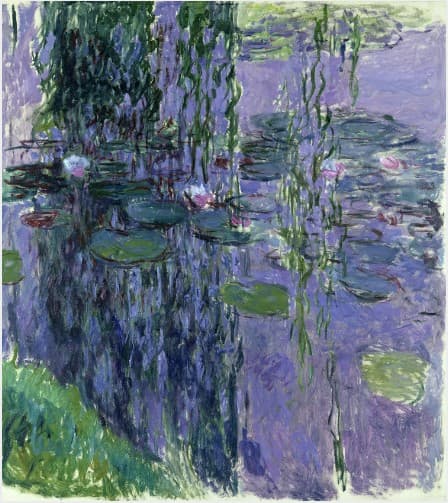
Nymphéas (Musée Marmottan Monet, 1916–19)
Claude Monet · 1916–19
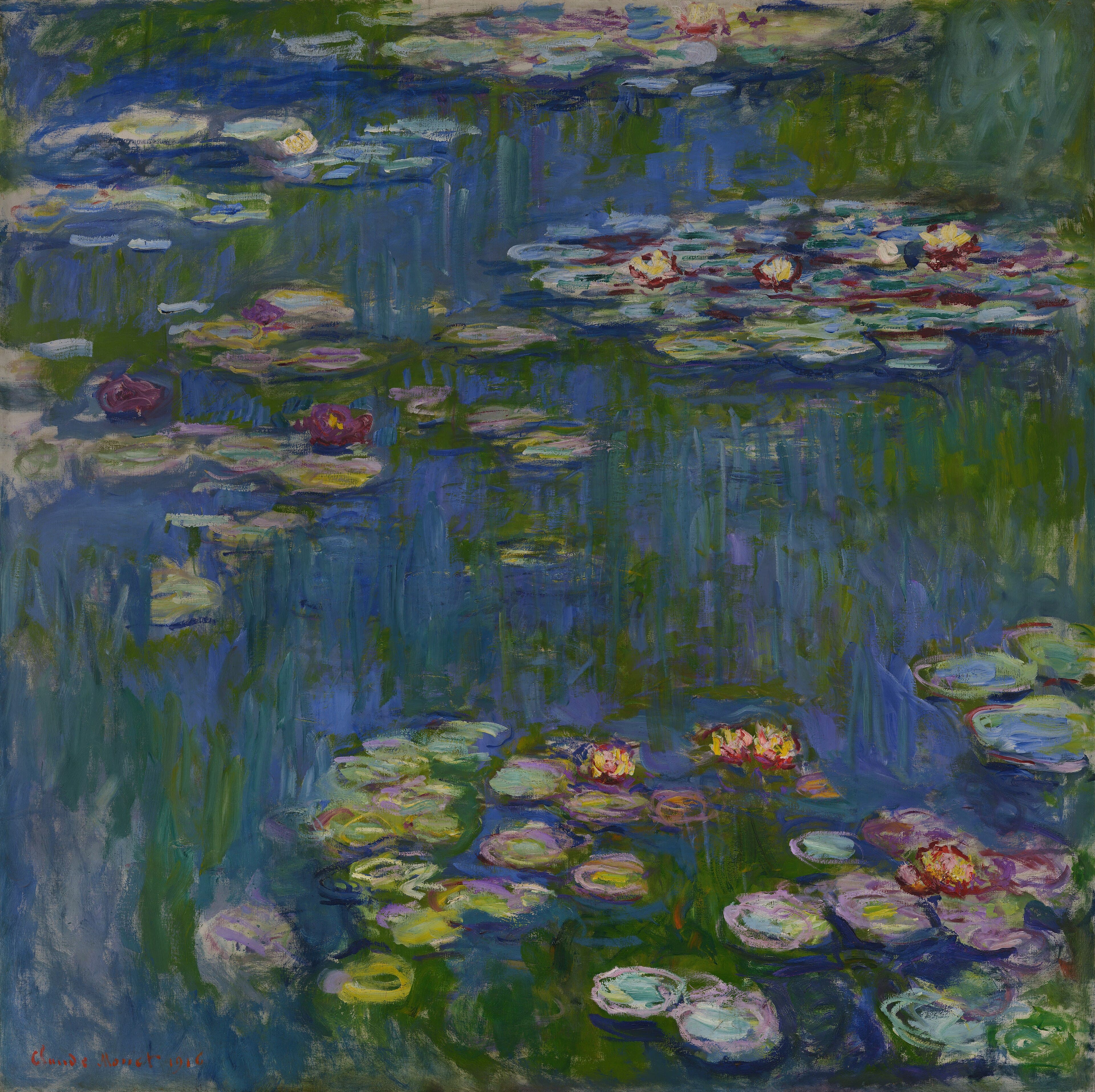
Water Lilies (1916, Tokyo)
Claude Monet · 1916
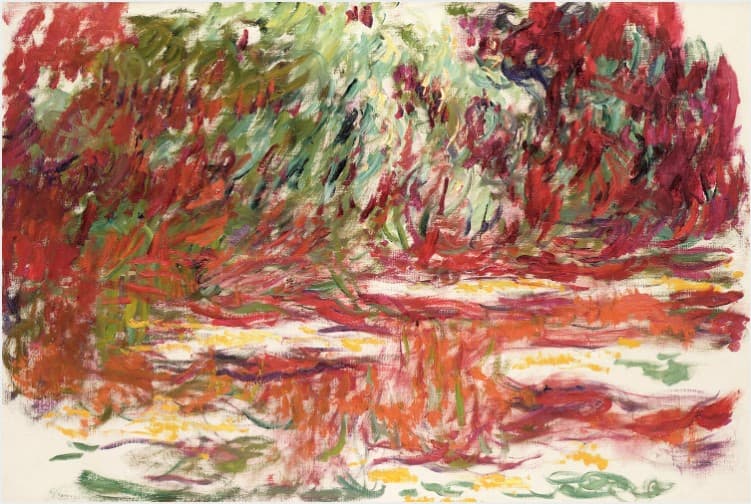
Water-Lily Pond (Bassin aux nymphéas, 1918–19)
Claude Monet · 1918–19
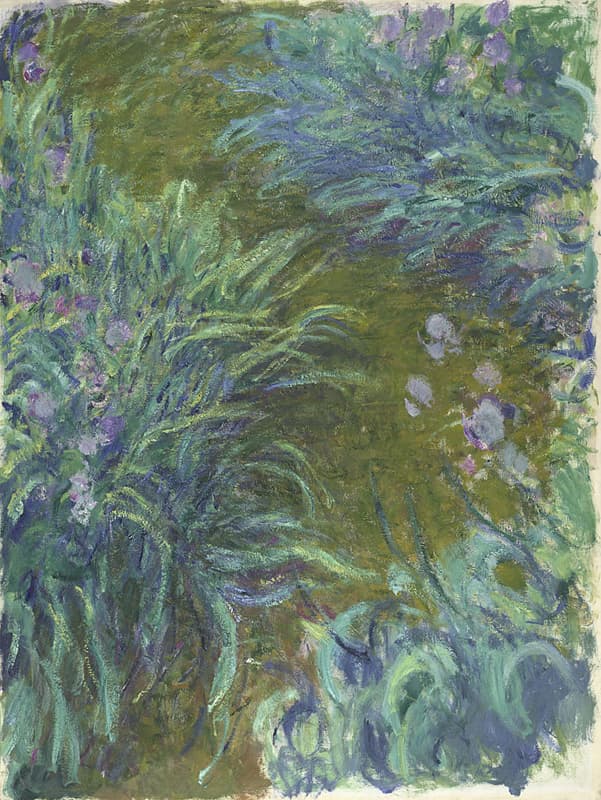
Irises
Claude Monet · c. 1914–17
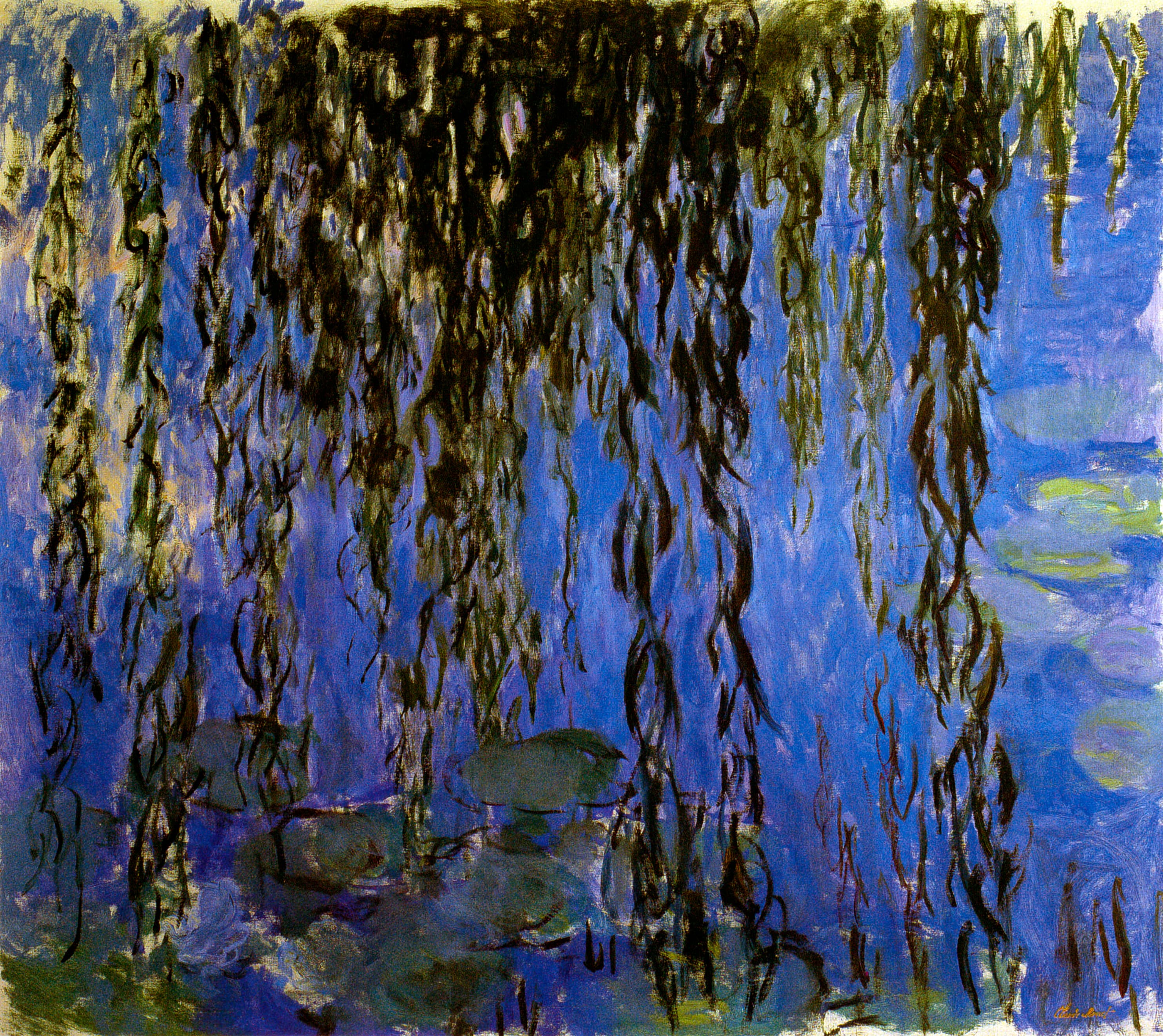
Water Lilies with Willow Branches
Claude Monet · c. 1916–17
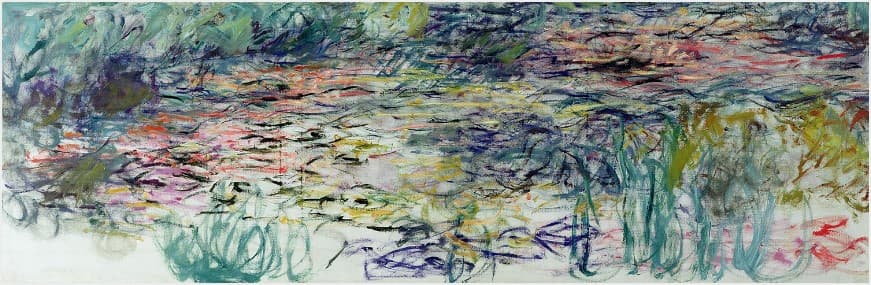
Nymphéas (Musée Marmottan Monet, 1917–19)
Claude Monet · 1917–19
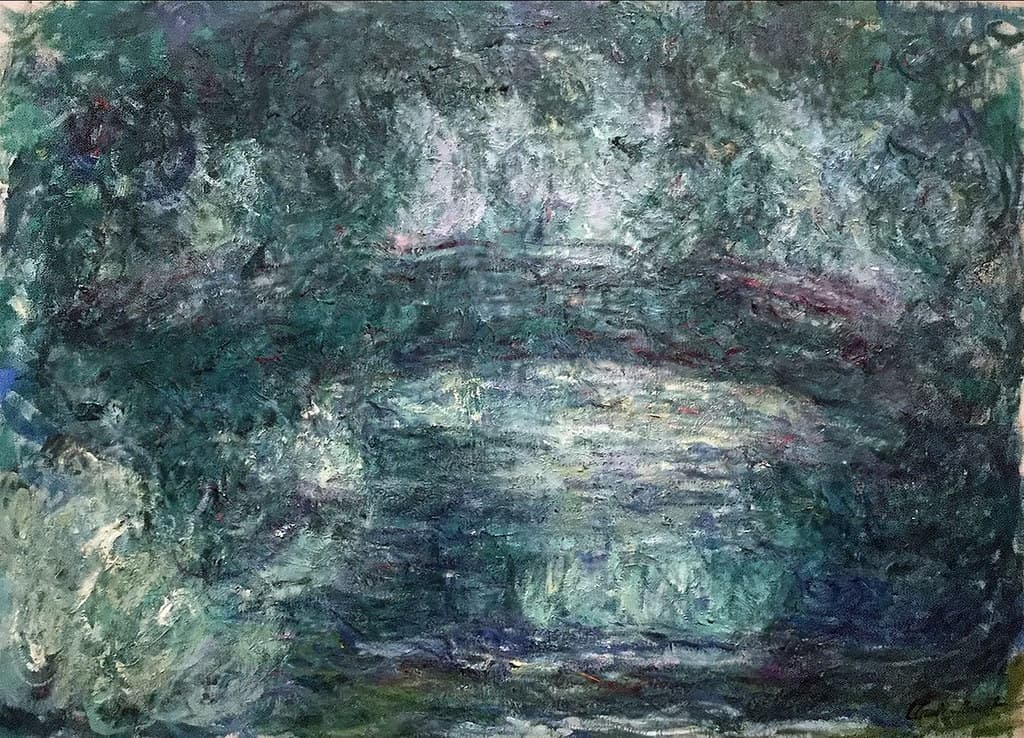
Japanese Bridge
Claude Monet · 1918–19
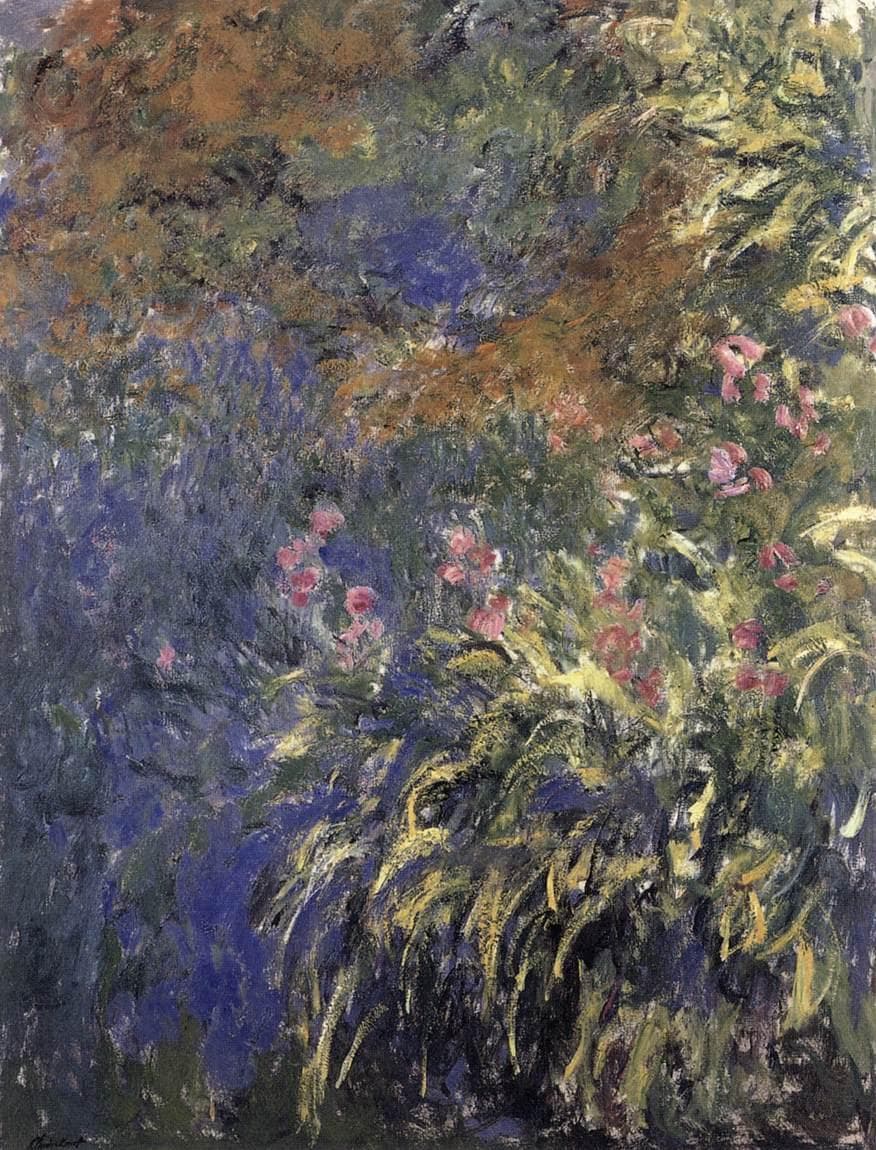
Irises by the Pond
Claude Monet · c. 1914–17
Also painted in 1917
The same year
Kindred works
You may also study
Nymphéas (Musée Marmottan Monet, 1916–19, inv. 5119)
Claude Monet · 1916–19
Blue Water Lilies
Claude Monet · 1916–19
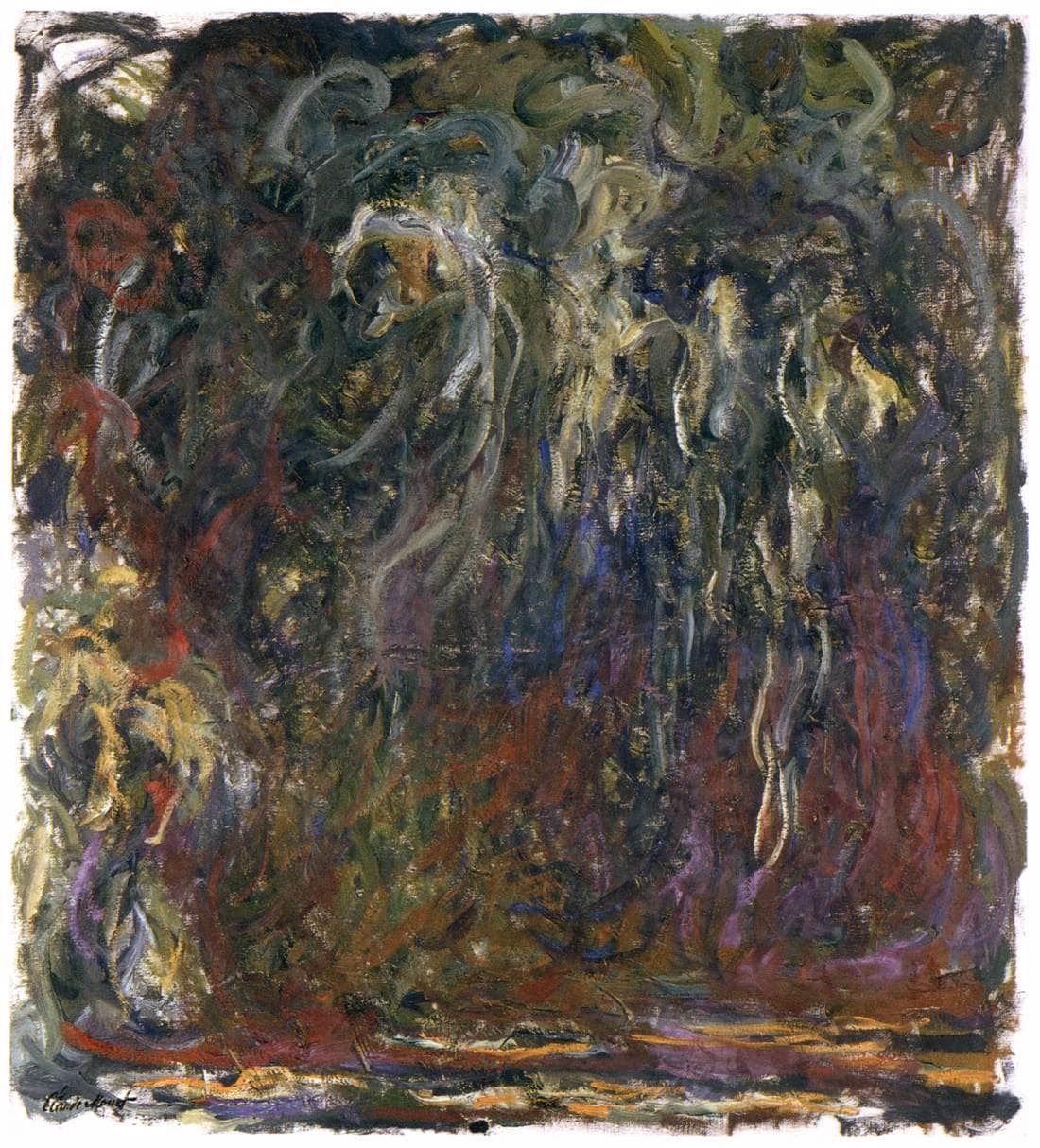
Weeping Willow
Claude Monet · 1920–22
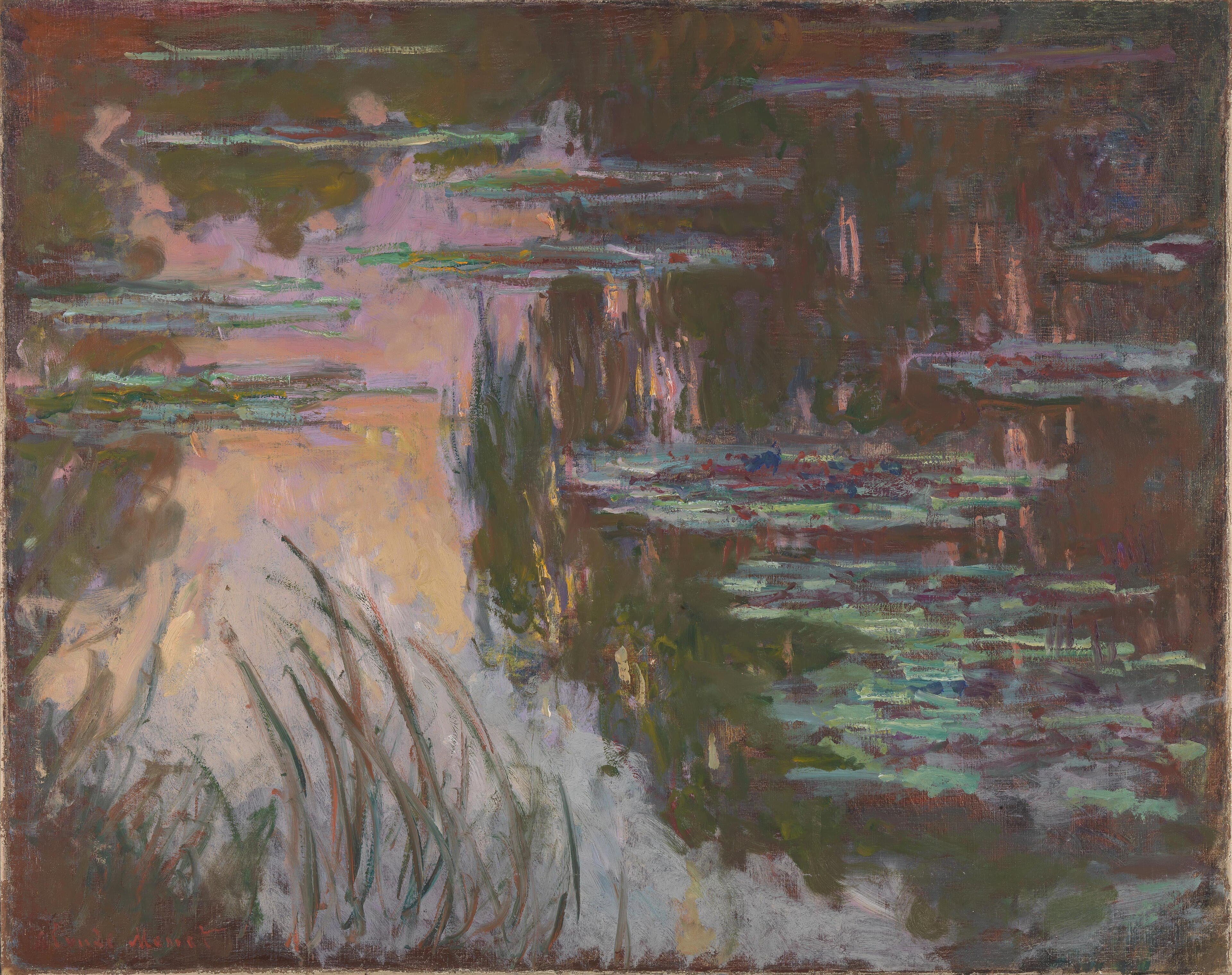
Water-Lilies, Setting Sun (National Gallery, London)
Claude Monet · c. 1907
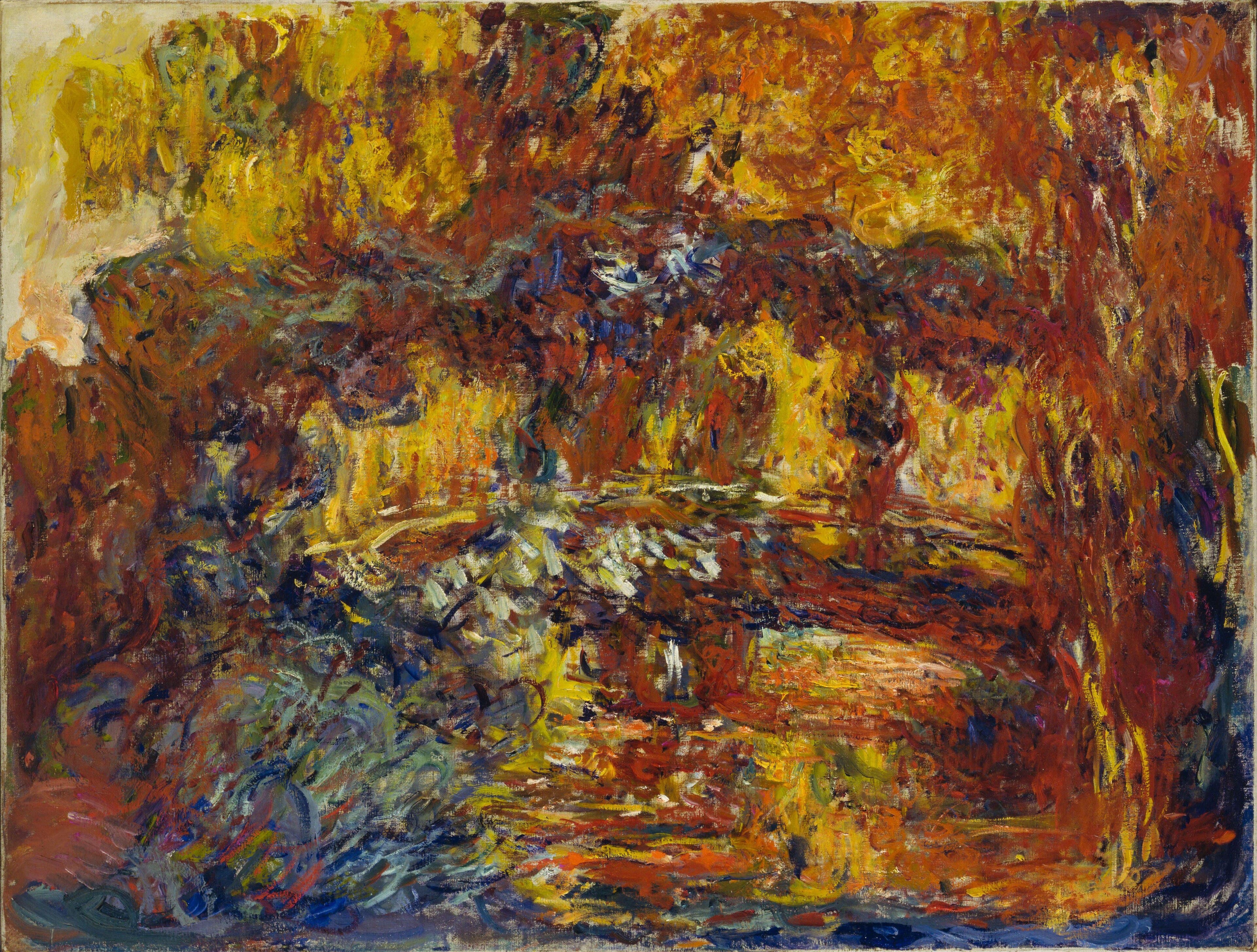
The Japanese Footbridge (MoMA)
Claude Monet · c. 1920–22
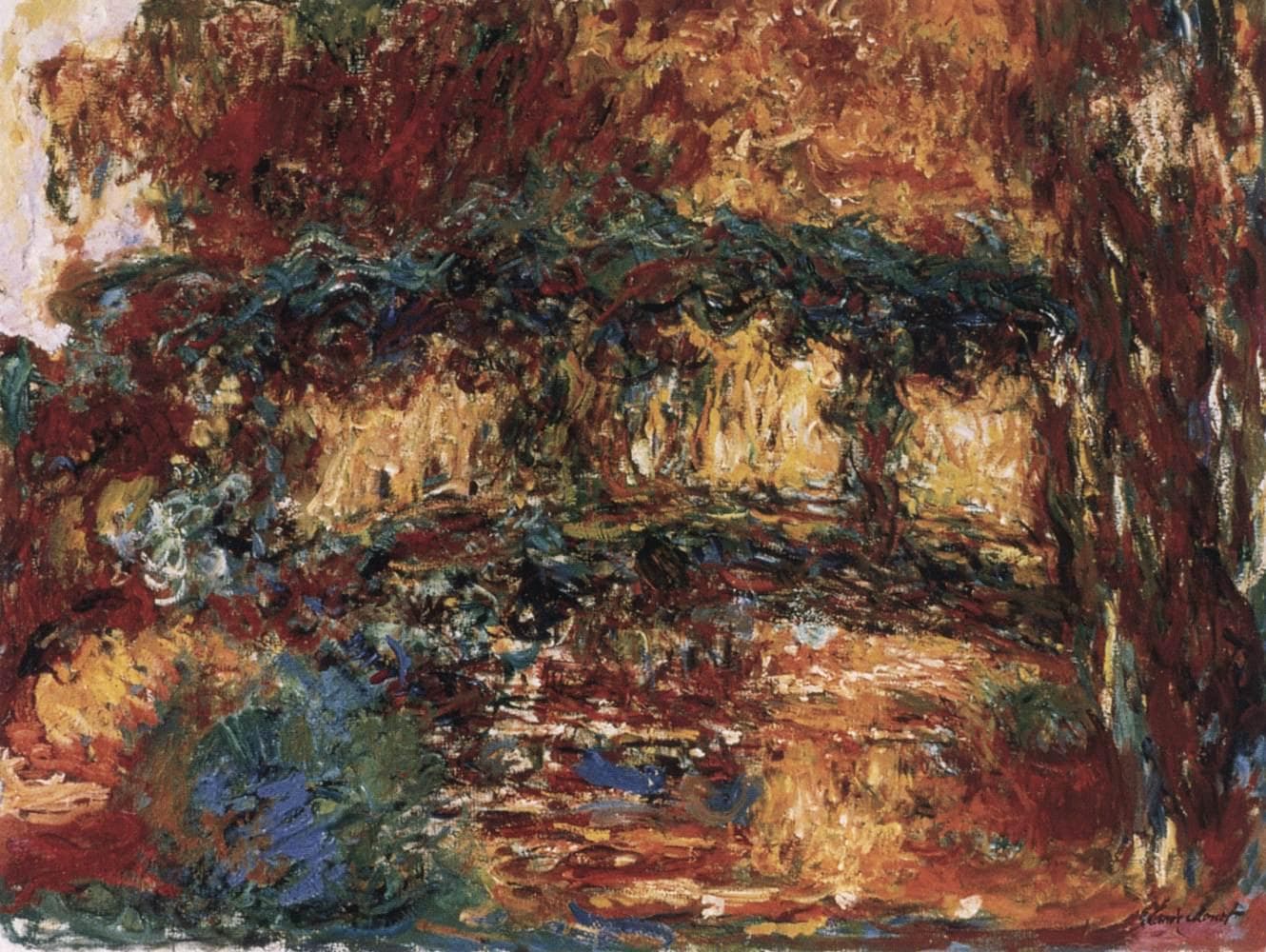
The Japanese Bridge
Claude Monet · c. 1923–25
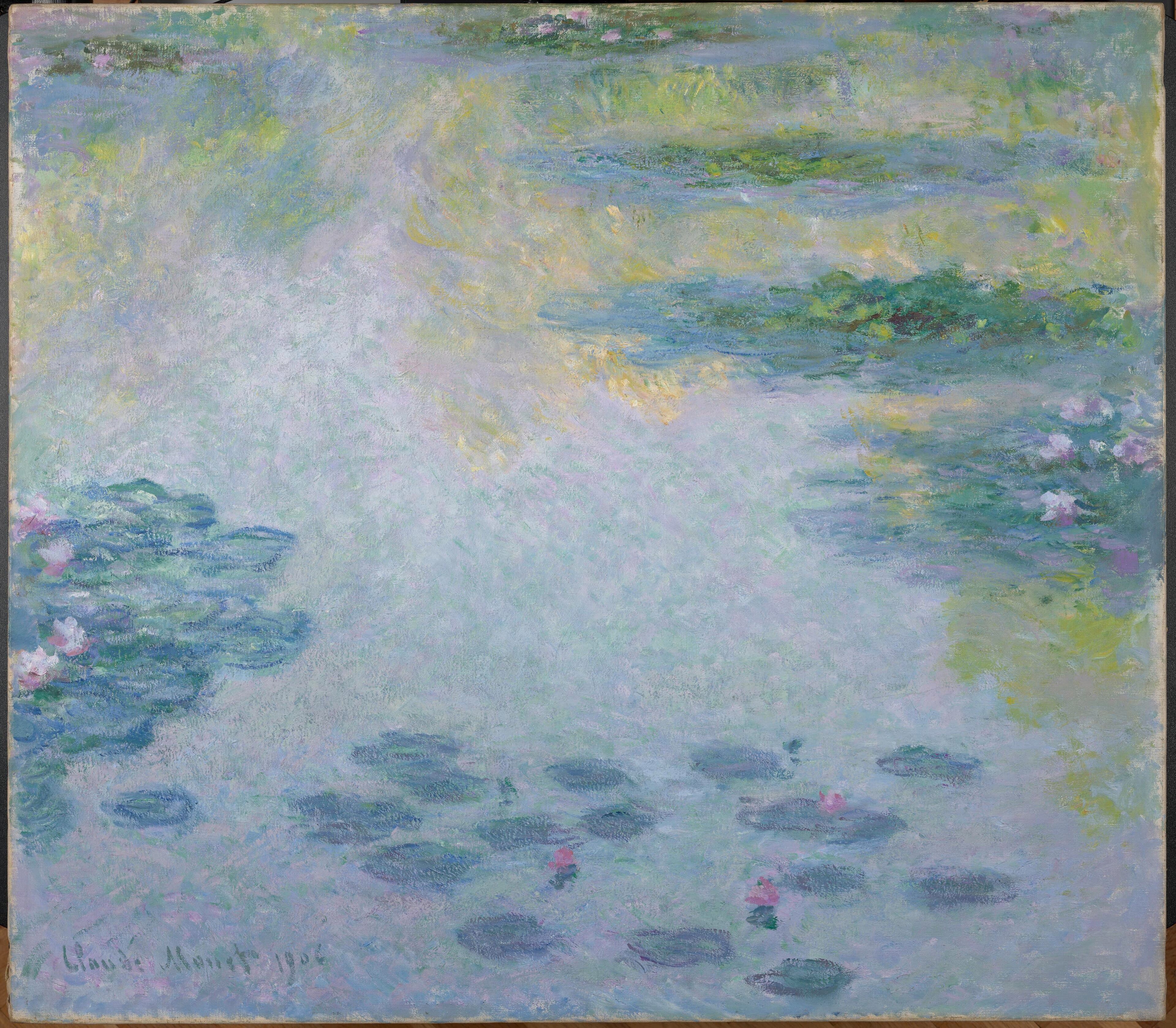
Waterlilies (1906, National Museum Cardiff)
Claude Monet · 1906
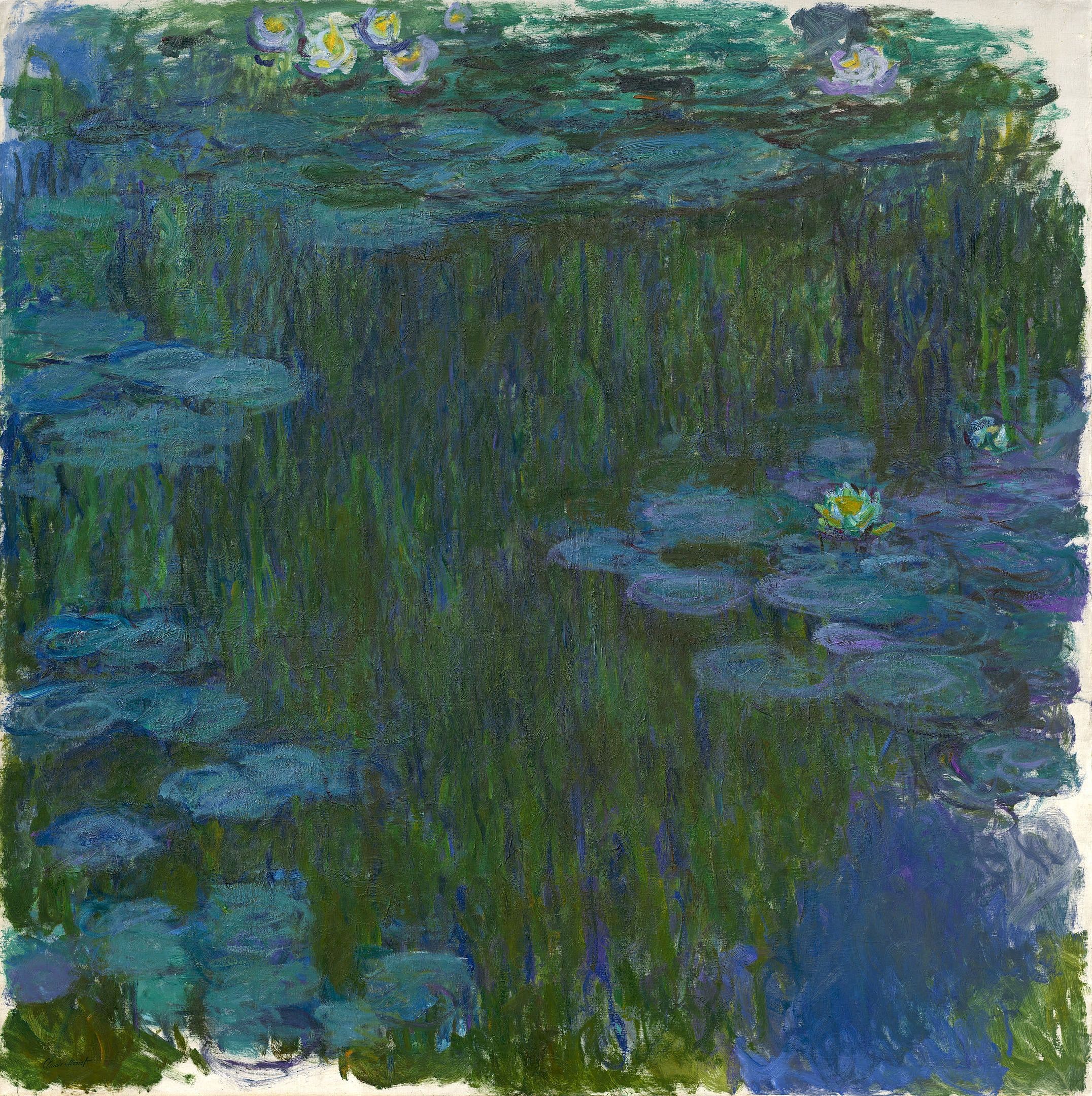
Water Lilies (1914–17, Museum Barberini)
Claude Monet · 1914–17