Image: Musée Marmottan Monet, Paris · Public domain · via Wikimedia Commons
The Japanese Bridge
Claude Monet, 1918–24
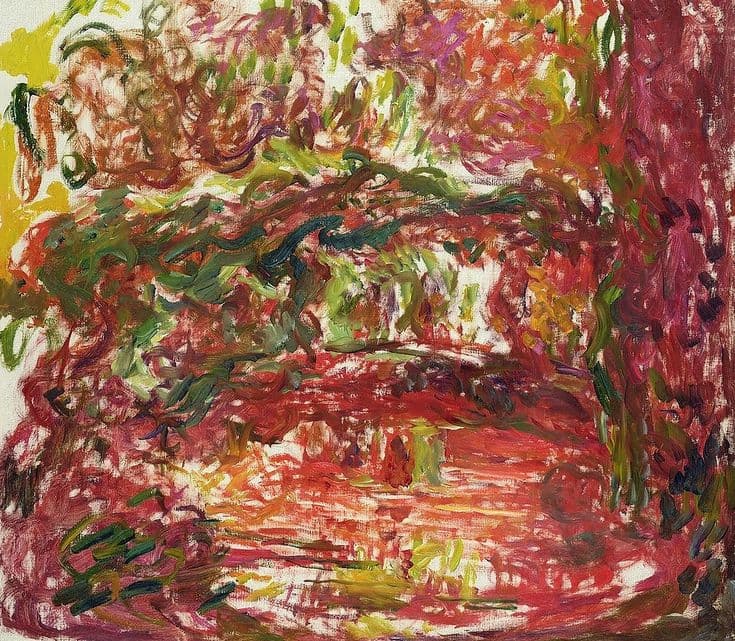
The Japanese Bridge (Wildenstein 1924) is one of Claude Monet's late views of his Giverny footbridge, about 1918–24, painted in dark russet, plum and olive with a flare of orange at the upper left. It is in the Musée Marmottan Monet, Paris.
- Artist
- Claude Monet
- Date
- 1918–24
- Medium
- Oil on canvas
- Dimensions
- 89 × 100 cm
- Collection
- Musée Marmottan Monet, Paris, France
- Movement
- Impressionism
- Catalogue
- Wildenstein 1924
- Nature & Landscape
- Water & Sea
- Night & Dreams
The Japanese Bridge (Le Pont japonais) is a late painting by Claude Monet of the footbridge over the water-lily pond at Giverny, made between about 1918 and 1924 and catalogued by Wildenstein as no. 1924. It measures 89 by 100 centimeters and is unsigned. Like most of Monet's late garden pictures, it stayed in his studio, passed to his son Michel, and came to the Musée Marmottan Monet in Paris with Michel's bequest in 1966.
What you're looking at
This is one of the darkest of the late bridges. The palette is russet, rust, plum, olive and deep violet, with a sudden blaze of orange and yellow in the upper left corner, as if the sun were breaking through the leaves there. The bridge is a heavy, low arch crossing the canvas a little above the center, painted in dark violet-brown with a rim of green-gray along its top. Above it, the wisteria and trees form a thick screen of brown-red and dark green strokes, with small sparks of yellow and orange scattered through them like late light on autumn leaves.
On the right, a column of blue and violet vertical strokes rises from bottom to top: the willow and the tall irises at the edge of the pond, in shadow. Below the arch the pond is barely distinguished from the bank. A few horizontal strokes of green, gray-blue and lilac suggest water and lily pads, and at the lower left a curl of blue-green may be a clump of leaves on the bank. At the bottom right a small flash of orange and yellow echoes the light in the opposite corner.
The overall impression is of evening, or of autumn, with the bridge almost swallowed by shadow.
The late bridges and Monet's eyesight
Monet painted the bridge first in 1899–1900, in clear greens and with the structure sharply drawn, as in Bridge over a Pond of Water Lilies at the Met. When he came back to it around 1918 he was suffering from cataracts, diagnosed in 1912, which progressively dimmed and yellowed his sight until his operation in 1923. He told visitors that colors no longer had the same intensity for him and that he had to rely on the order of the paints on his palette. The heavy, warm tonality of canvases like this one is often linked to that condition, though Monet was also deliberately pushing color and gesture further than ever before.
How it was painted
The handling is vigorous. Strokes of different colors are laid over each other wet, producing the browns and mauves where red and green mix on the canvas. The foliage above the bridge is built from short, nervous strokes, the willow at right from long verticals, the water from horizontals. The canvas's near-square format, 89 by 100 centimeters, is shared with several other Marmottan bridges of these years.
How this version differs
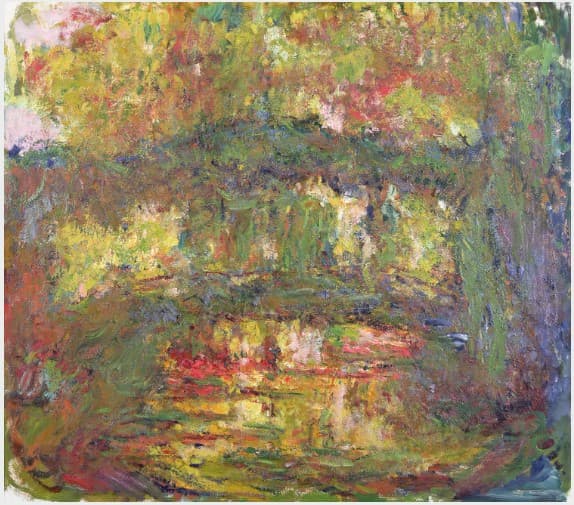
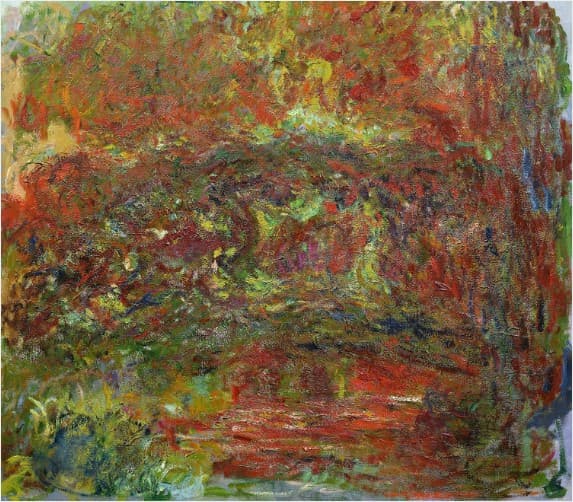
Among the Marmottan bridges of the same size, Le pont japonais (W 1923) is brighter, with yellows and greens and a readable reflection; the Japanese Bridge W 1928 is a blazing red-orange; Le pont japonais W 1927 is red-brown with green. This one is the most somber, its warm colors pressed down into dusk tones, with the orange flare in the corner as its single point of release. See the whole sequence in the Japanese Footbridge series and the garden in Monet's Giverny.
Where to see it
The painting is in the Musée Marmottan Monet in Paris, which holds the largest collection of Claude Monet's work, including the core of his late garden paintings. Late garden pictures, the bridges among them, are shown in rotation in the museum's lower-level Monet gallery. See Monet at the Musée Marmottan.
Questions & answers
Where is this Japanese Bridge by Monet?
It is in the Musée Marmottan Monet in Paris (inventory 5091). It came to the museum in 1966 with the bequest of Michel Monet, the painter's son, who had inherited the works left in his father's studio.
When was it painted?
Between about 1918 and 1924, at Giverny. Wikidata gives c. 1921. It belongs to the late group of bridge paintings Monet made while losing his sight to cataracts.
What does it show?
It shows the footbridge over the lily pond as a dark violet-brown arch beneath dense russet and olive foliage, with a willow in shadow at the right and a flare of orange light in the upper left corner.
Why are Monet's late bridge paintings so dark and red?
Cataracts dimmed and yellowed Monet's vision from about 1912 until his 1923 operation, and he struggled to judge color. He was also deliberately working more freely and expressively than in his earlier series.
More by the artist
Claude Monet
The Japanese Bridge
Claude Monet · 1918–24
The Japanese Bridge
Claude Monet · c. 1919–24
Le Pont japonais
Claude Monet · 1918–24
The Japanese Bridge
Claude Monet · 1918–24
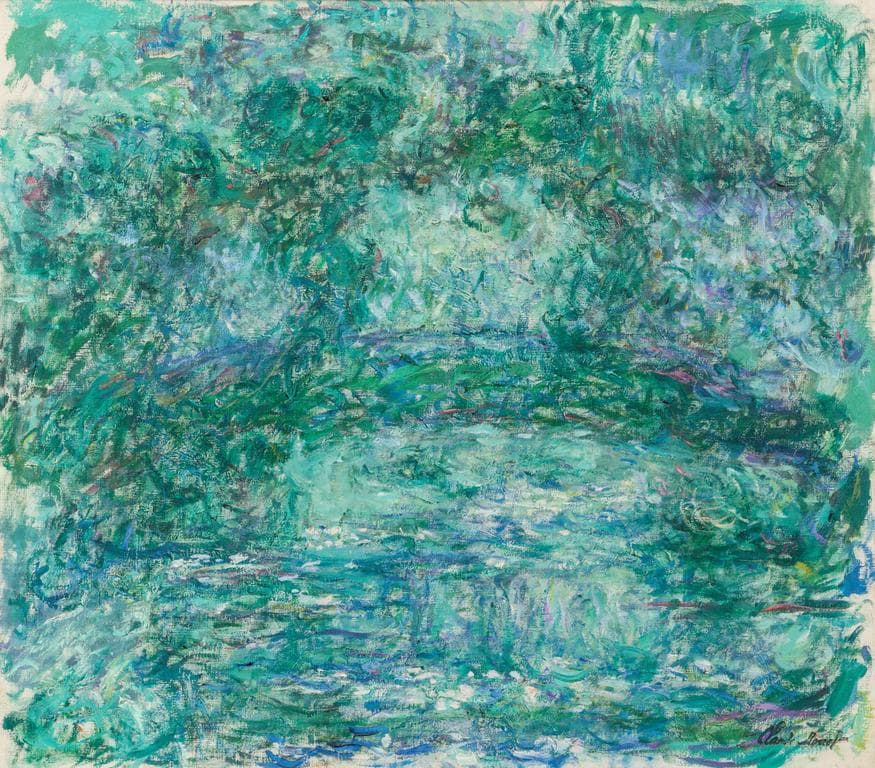
Le pont japonais (Japanese Bridge)
Claude Monet · 1918–24
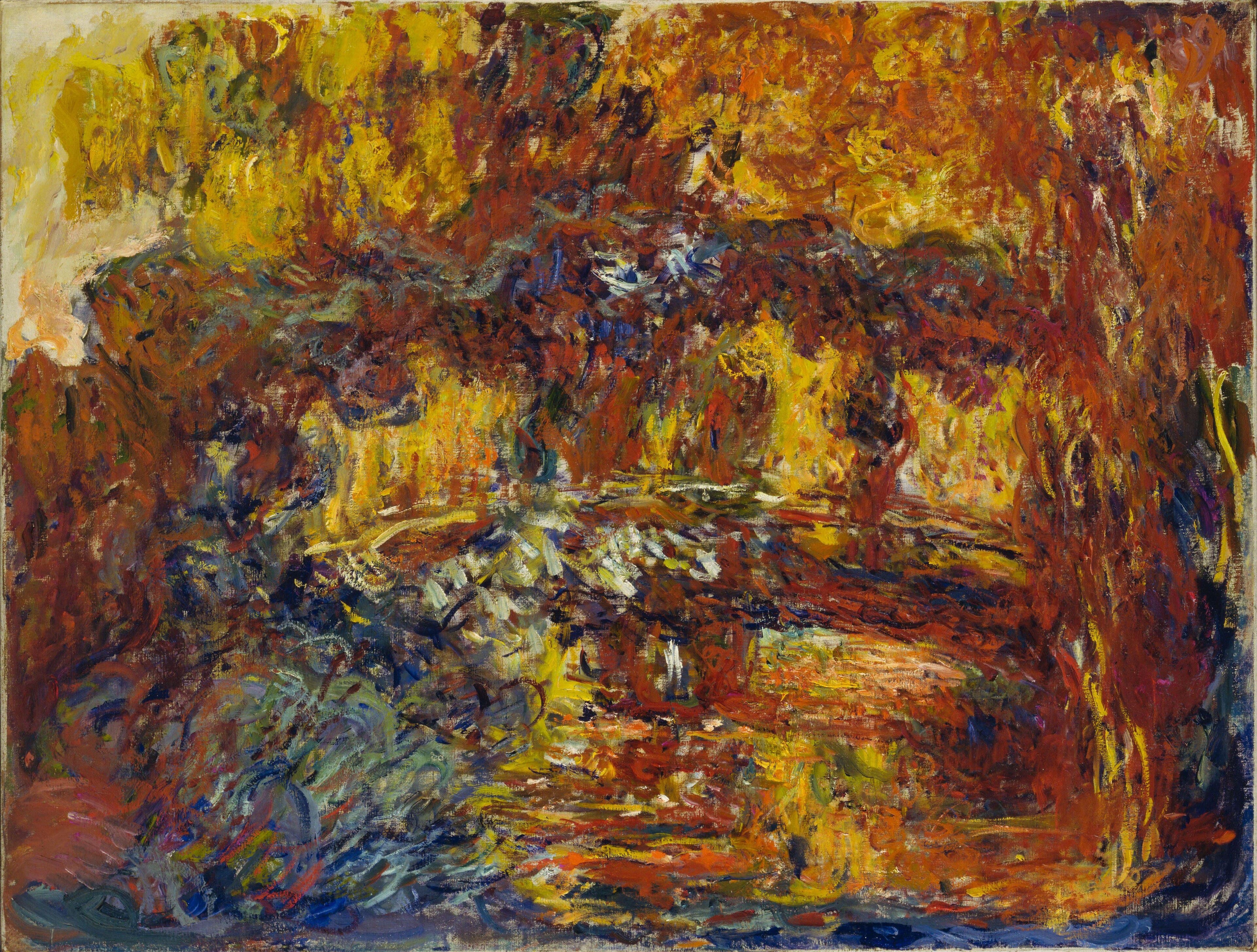
The Japanese Footbridge (MoMA)
Claude Monet · c. 1920–22
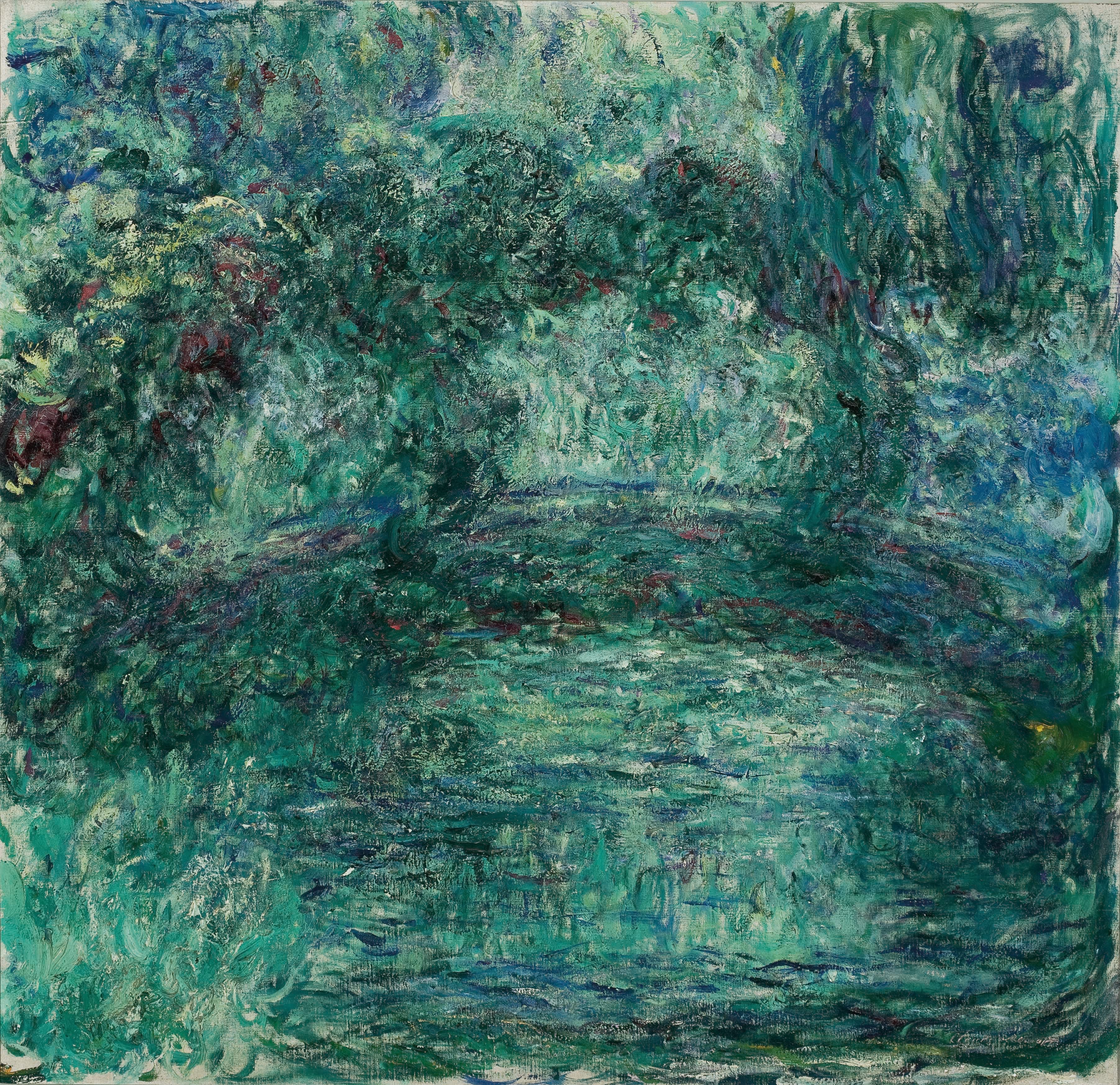
The Japanese Bridge over the Water-Lily Pond in Giverny
Claude Monet · 1920–24

The Water Lilies: The Clouds
Claude Monet · c. 1914–26
Also painted in 1921
The same year
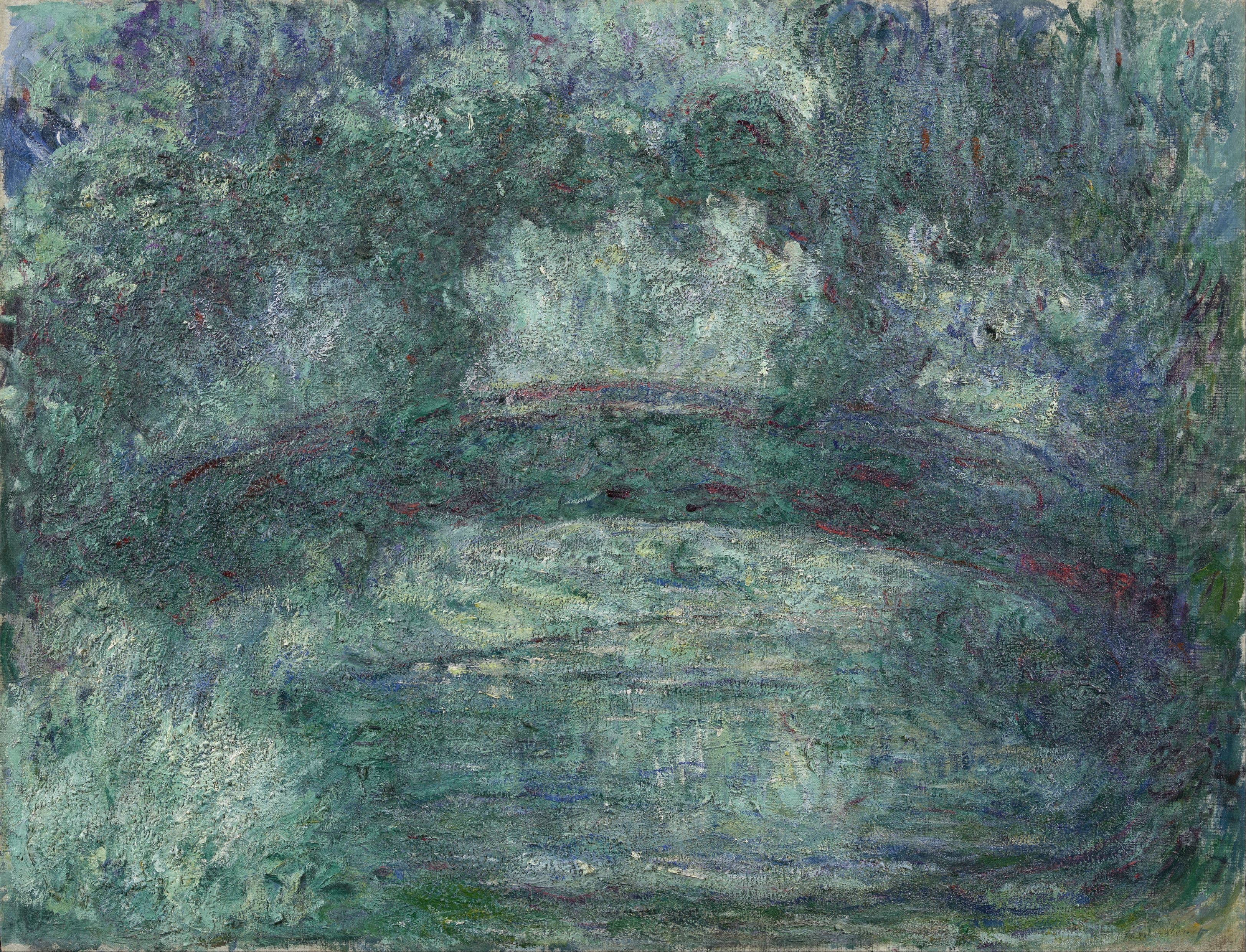
Kindred works
You may also study
Le pont japonais
Claude Monet · 1918–24
Le pont japonais
Claude Monet · 1918–24

Bridge over a Pond of Water Lilies
Claude Monet · 1899
Morning on the Seine
Claude Monet · 1897
Arm of the Seine near Giverny, Rising Sun
Claude Monet · 1897
Moonlit Landscape with a View of the New Amstel River and Castle Kostverloren
Aert van der Neer · c. 1647
Water Lilies, Evening Effect
Claude Monet · 1897
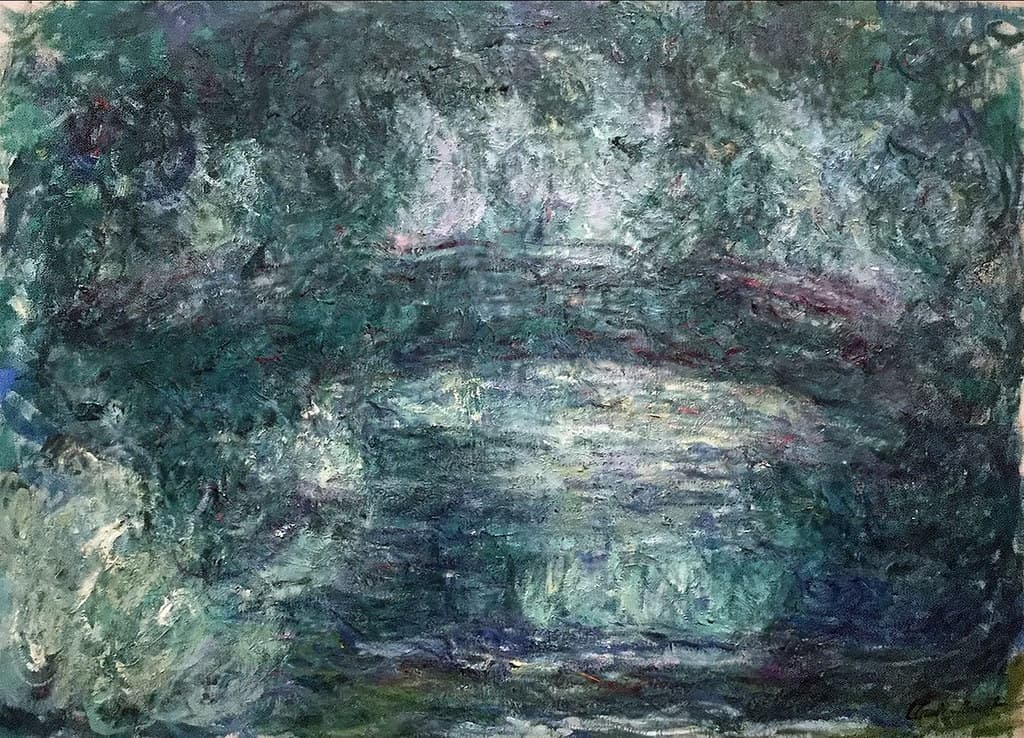
Japanese Bridge
Claude Monet · 1918–19