Image: Musée Marmottan Monet, Paris (photograph by Wikimedia Commons contributor) · Public domain · via Wikimedia Commons
The Japanese Bridge
Claude Monet, 1918
The Japanese Bridge (Le Pont japonais) is a 1918 painting by Claude Monet, a wide canvas in which his Giverny footbridge dissolves into a mesh of green, gold and pink over the lily pond. It is in the Musée Marmottan Monet, Paris.
- Artist
- Claude Monet
- Date
- 1918
- Medium
- Oil on canvas
- Dimensions
- 100 × 200 cm
- Collection
- Musée Marmottan Monet, Paris, France
- Movement
- Impressionism
- Catalogue
- Wildenstein 1911
- Nature & Landscape
- Water & Sea
The Japanese Bridge (Le Pont japonais) is a late painting by Claude Monet dated 1918, showing the wooden footbridge over the water-lily pond in his garden at Giverny. Unlike most of his bridge pictures, it is a wide, horizontal canvas, 100 by 200 centimeters, twice as wide as it is tall, and the bridge is dissolved into a dense weave of green, gold, pink and violet strokes. It is in the Musée Marmottan Monet in Paris (inventory 5079), from the bequest of the artist's son Michel Monet. Wildenstein lists it as number 1911.
What you're looking at
At first the canvas reads as an all-over surface of color. Then the bridge appears: a long, low arch of green crossing the pond from left to right, about a third of the way down, its rails melted into the foliage around it.
Above the bridge, the far bank is a screen of greens, yellows and soft pinks, with paler patches where light filters through. At the right edge, a weeping willow hangs down in long, streaming strokes of green, violet and plum. At the upper left, the foliage is lighter and more blue.
Below the arch, the pond reflects everything. It is painted in yellow-green and ocher, with scattered touches of pink and red for lily flowers, and a darker band of reflected bridge just under the arch. At lower left, the bank is a tangle of green and yellow grasses. The edges of the canvas are unfinished in places, with bare ground showing at the corners.
The wide format: what makes this version distinct
Most of the late bridge paintings, such as Mia's The Japanese Bridge or Philadelphia's Nymphéas, Japanese Bridge, are nearly square, focused tightly on the arch. This canvas stretches the view sideways, so the bridge becomes a long horizontal band and the eye travels along it rather than through it. The format connects it to the large horizontal water-lily panels Monet was painting in the same years for what became the Orangerie decorations.
The color is also lighter than in many of the late bridges. The Marmottan's other late version, Japanese Bridge of 1918–19, is darker and more red; here green and gold dominate, and the picture feels like a summer day seen through tired eyes rather than a dusk.
How it was painted
Monet painted the late bridges in his garden and in the large studio he built at Giverny in 1915 for the water-lily panels. His cataracts, worsening since about 1912, made colors appear muddy and yellow, and he relied increasingly on memory and on the labels of his paint tubes. The handling here is fast and broad. Strokes are long and loaded, often scrubbed or dragged so that layers below show through, and the unfinished corners suggest the picture was never fully resolved.
Michel Monet and the Marmottan
Many late canvases stayed in Monet's studio when he died in 1926. They passed to his son Michel, who bequeathed his collection in 1966 to the Académie des Beaux-Arts for the Musée Marmottan, making it the world's largest Monet collection. These late works were little known until then; their release, at a time when abstract painting dominated, changed how Monet's final decade was seen.
Details to look for
The bare corners, especially at upper right and lower left, show the pale ground beneath the paint, a sign that Monet left this canvas unfinished. Look at the underside of the bridge, where a dark band of reflection runs parallel to the arch: it is the clearest clue to the bridge's shape. A few small touches of red and pink on the water mark the lily flowers.
Where to see it
The painting is in the Musée Marmottan Monet in Paris, in the basement gallery devoted to the late Giverny works when on view. See the Musée Marmottan Monet, our Japanese Footbridge series hub, Giverny and Claude Monet.
Questions & answers
Where is Monet's The Japanese Bridge (1918)?
It is in the Musée Marmottan Monet in Paris, inventory number 5079. It came from the 1966 bequest of Michel Monet, the artist's son, which made the Marmottan the largest collection of Monet's paintings in the world.
When and where was it painted?
Monet painted it at Giverny in 1918, in his water garden and studio, during the last decade of his life, when he returned to the footbridge many times in loose, dense brushwork.
What does the painting show?
The wooden footbridge over the lily pond as a long green arch dissolving into foliage, with a weeping willow at right and the pond below reflecting green, gold and pink. The canvas is twice as wide as it is tall.
Why does it look so abstract?
Late in life Monet painted with large, loose strokes and his vision was affected by cataracts, which dulled and yellowed colors. The bridge and garden merge into a single surface of color, an approach later admired by abstract painters.
More by the artist
Claude Monet
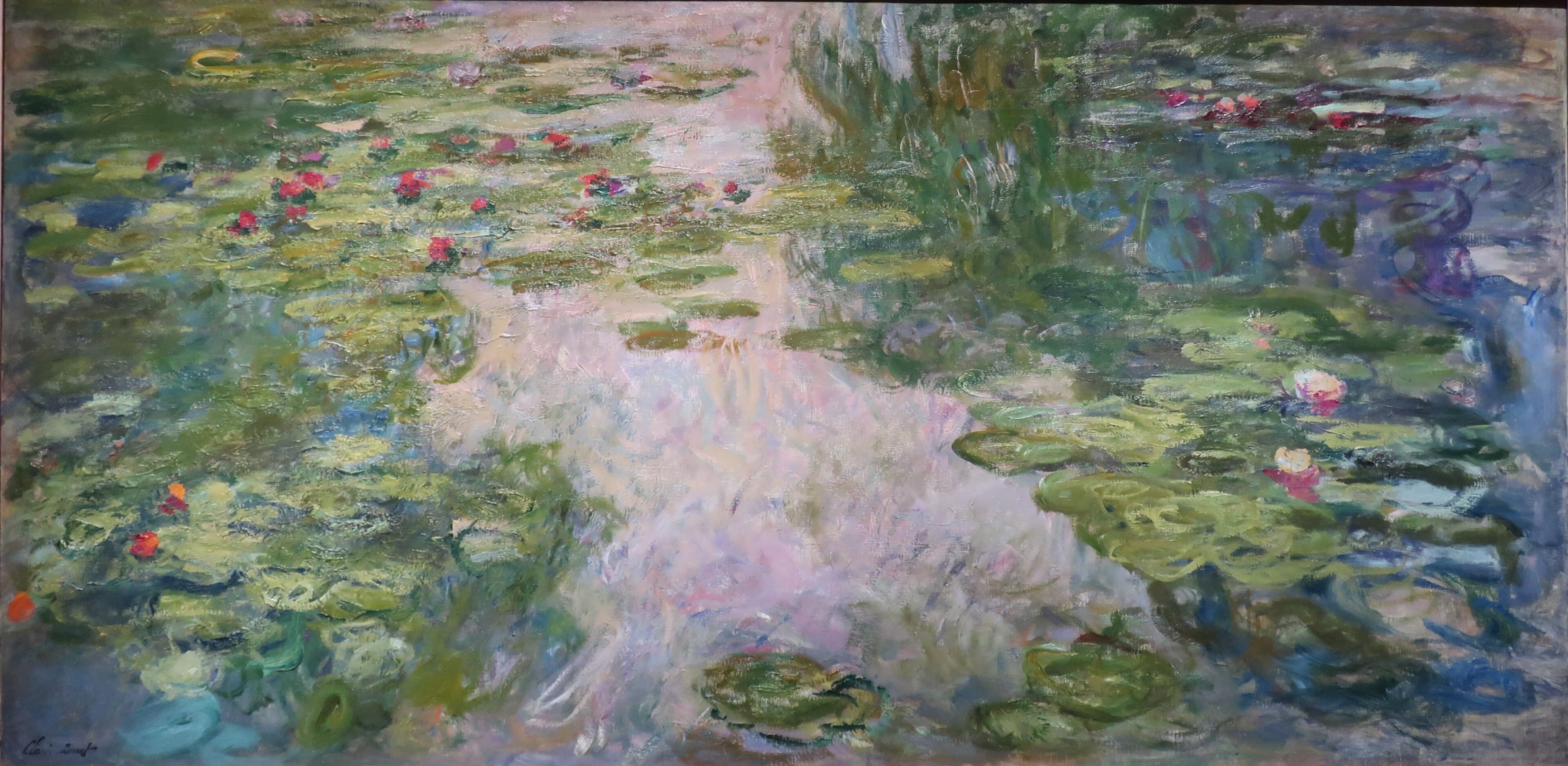
Water Lilies (Honolulu Museum of Art)
Claude Monet · 1917–19
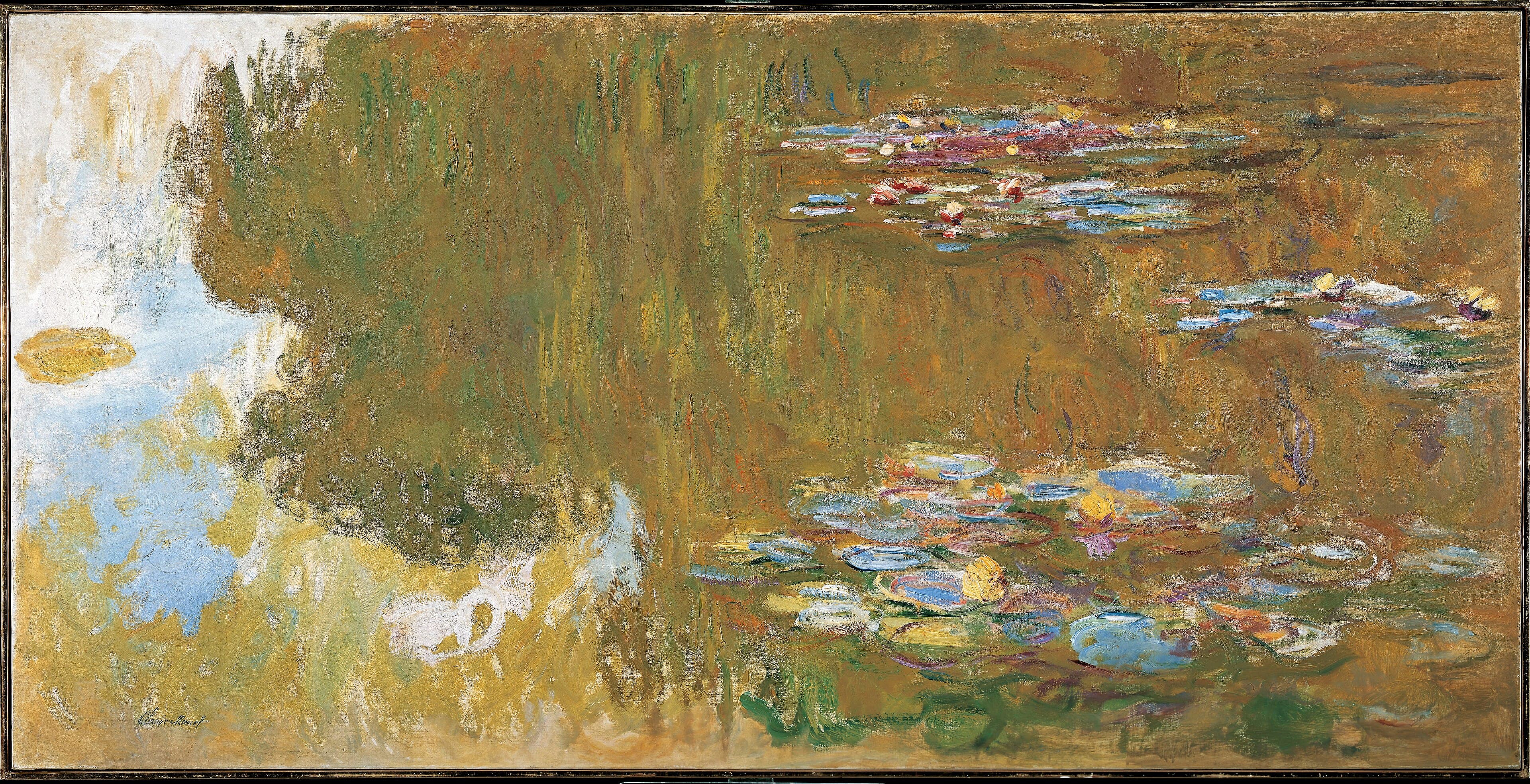
The Water Lily Pond (Albertina)
Claude Monet · 1917–19
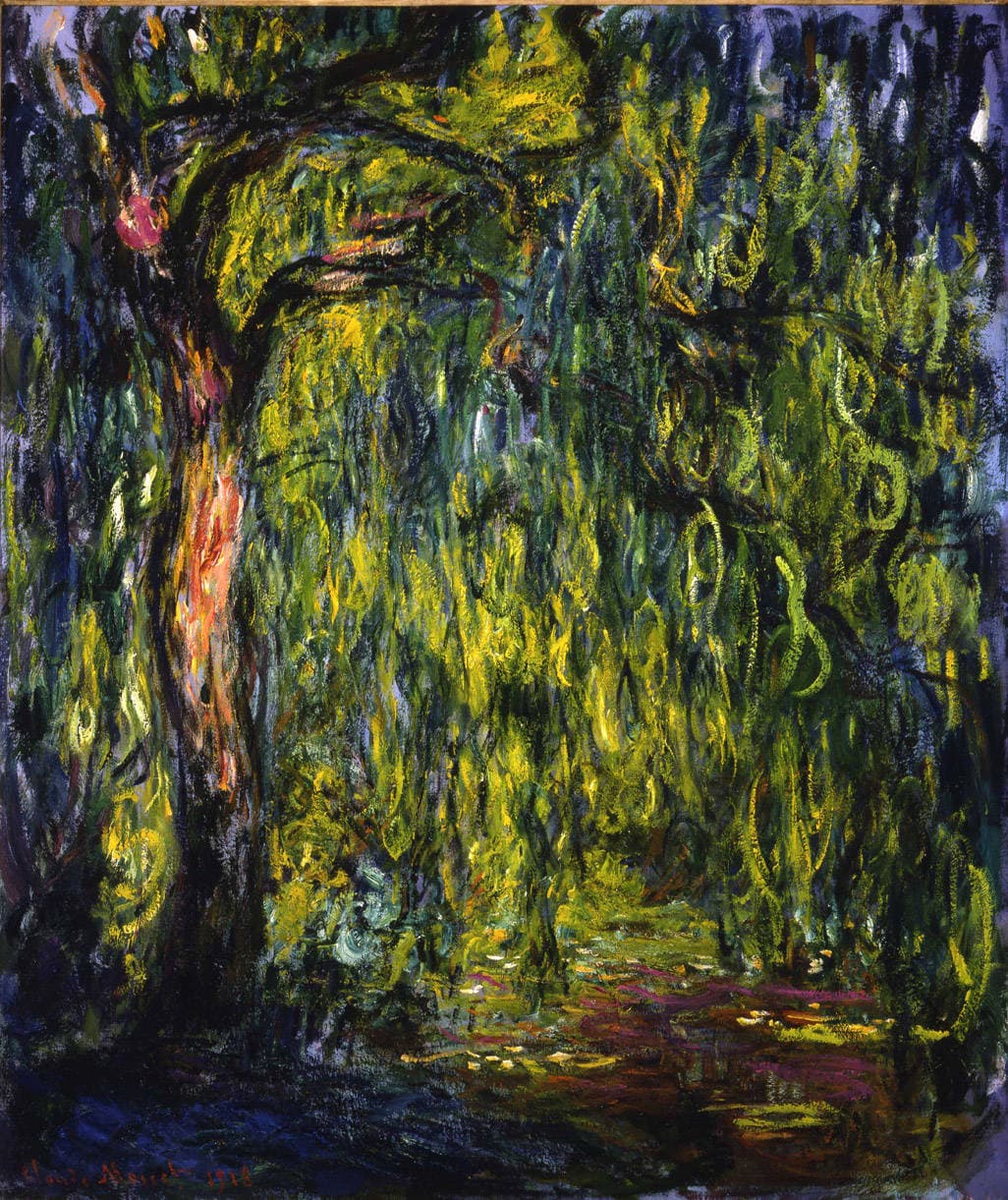
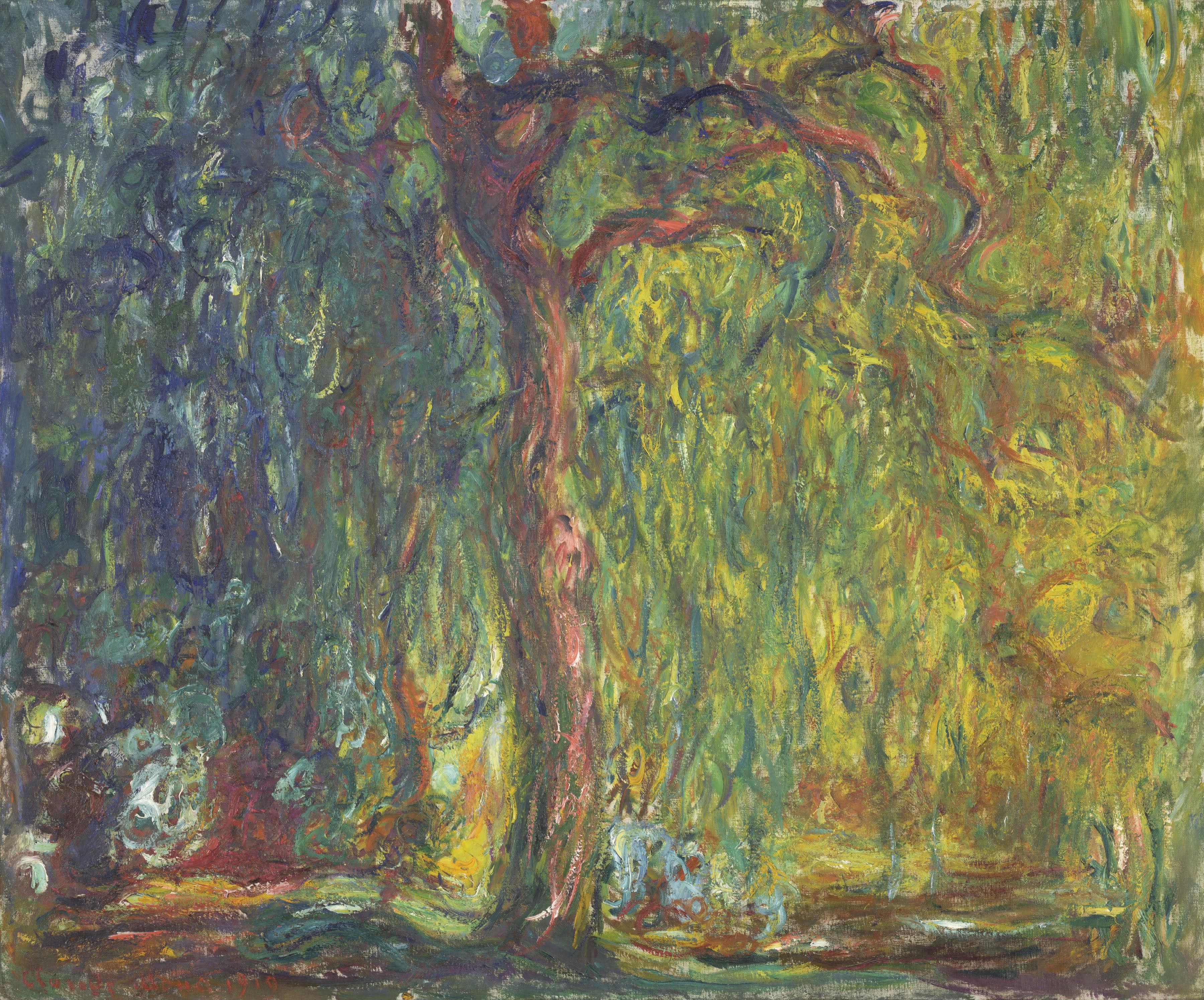
Weeping Willow (Columbus)
Claude Monet · 1918
Corner of the Water-Lily Pond
Claude Monet · 1918
Self-Portrait (1917)
Claude Monet · 1917
Water Lilies in Giverny
Claude Monet · 1917
Water-Lily Pond (Bassin aux nymphéas, 1918–19)
Claude Monet · 1918–19
Weeping Willow and the Water-Lily Pond
Claude Monet · c. 1916–19
Also painted in 1918
The same year
Kindred works
You may also study
Japanese Bridge
Claude Monet · 1918–19
Nymphéas, Japanese Bridge
Claude Monet · 1918–26
The Japanese Bridge
Claude Monet · c. 1923–25
The Japanese Footbridge (MoMA)
Claude Monet · c. 1920–22
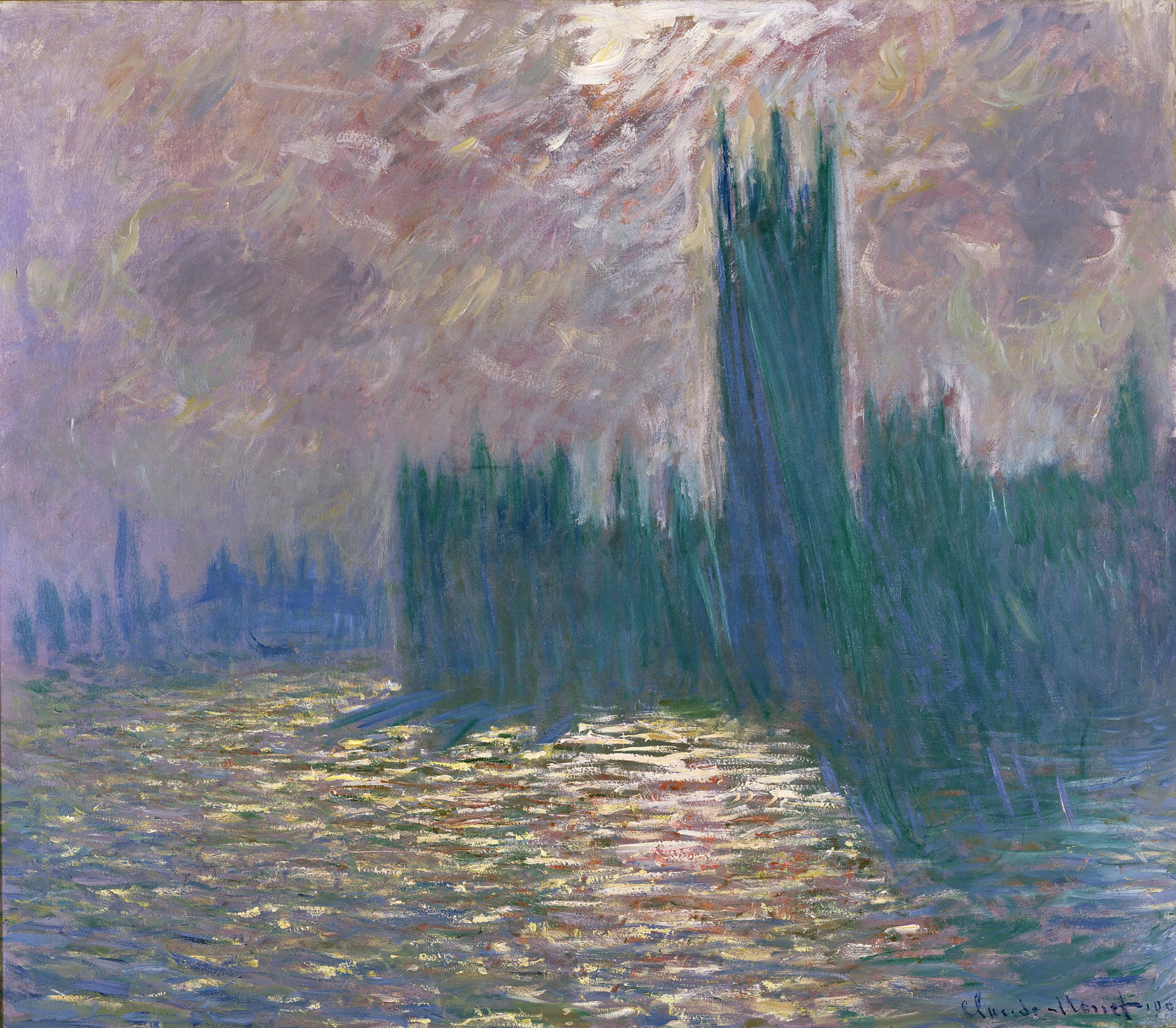
London, Parliament, Reflections on the Thames
Claude Monet · 1905
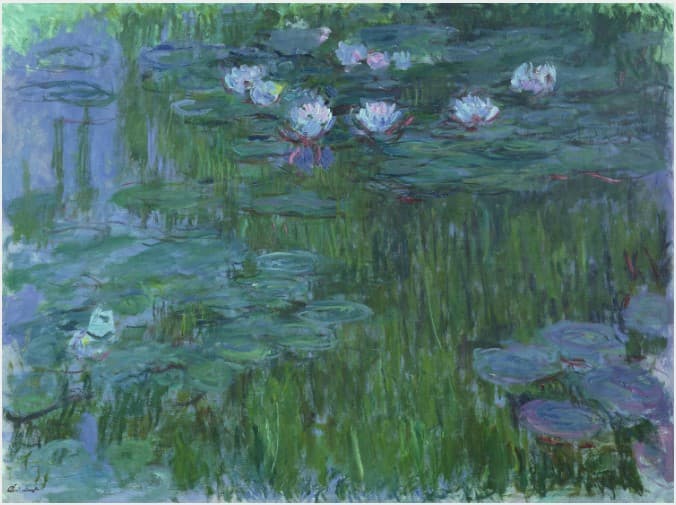
Nymphéas (Musée Marmottan Monet, 1914–17)
Claude Monet · 1914–17
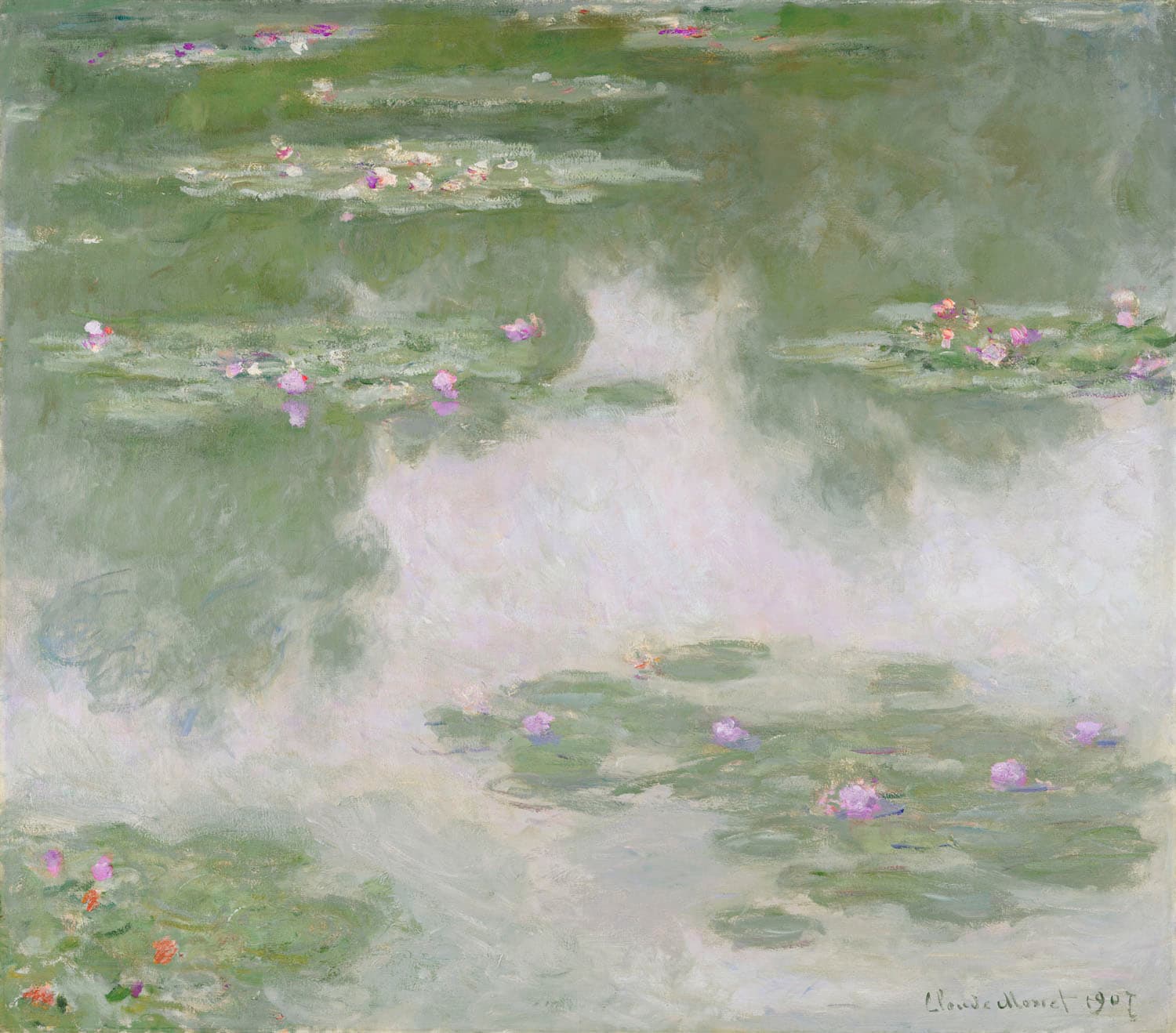
Nymphéas (Water Lilies), 1907 (Wadsworth Atheneum)
Claude Monet · 1907
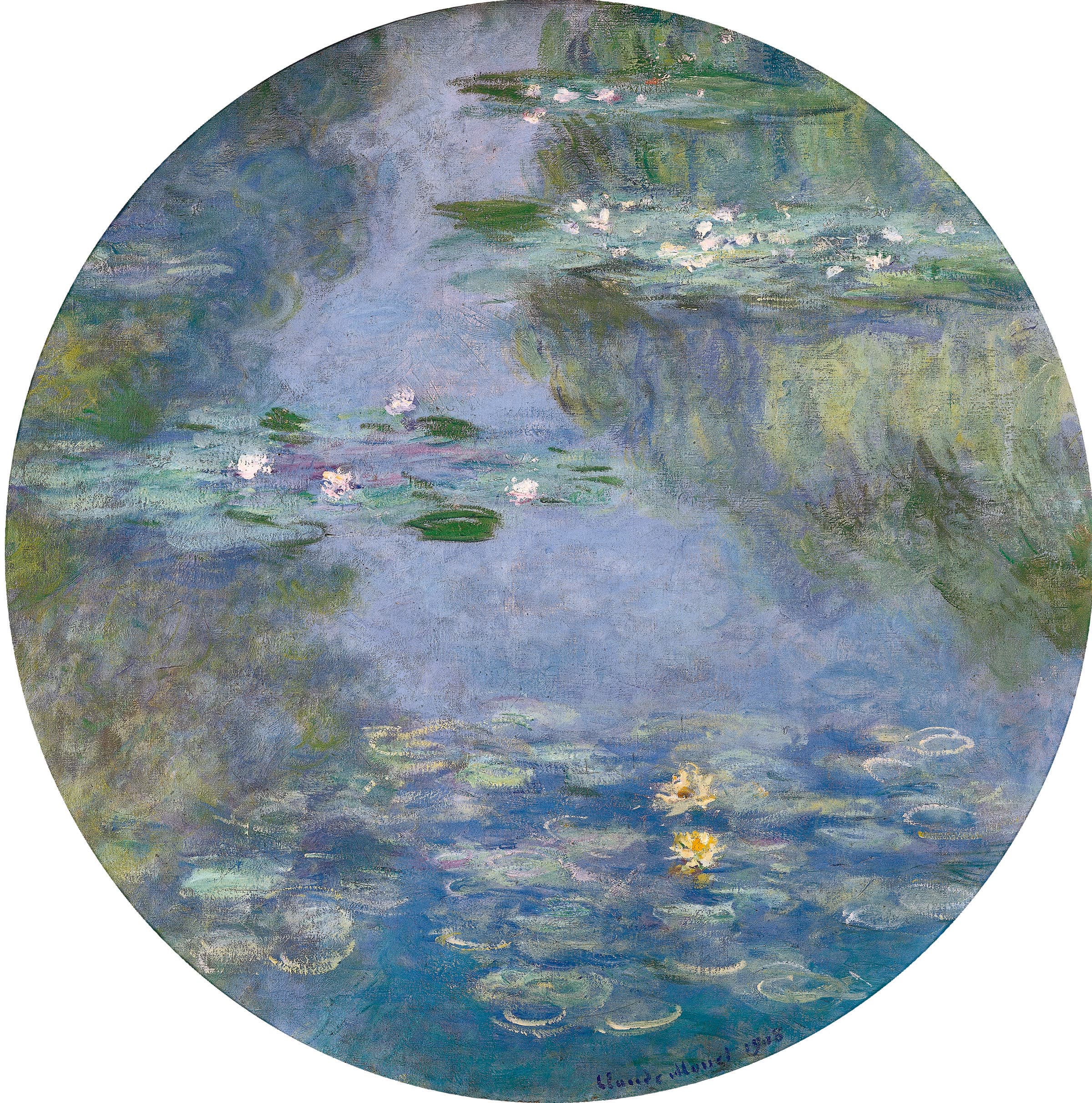
Nymphéas (1908 tondo, Vernon)
Claude Monet · 1908