Image: Albertina, Vienna – The Batliner Collection (Google Art Project) · Public domain · via Wikimedia Commons
The Water Lily Pond (Albertina)
Claude Monet, 1917–19
The Water Lily Pond is a wide canvas Claude Monet painted at Giverny in 1917–19: a golden-brown reflection of trees fills the pond, with blue and violet lily pads at right. It belongs to the Batliner Collection at the Albertina in Vienna.
- Artist
- Claude Monet
- Date
- 1917–19
- Medium
- Oil on canvas
- Collection
- Albertina (Batliner Collection), Vienna, Austria
- Movement
- Impressionism
- Catalogue
- Wildenstein 1899
- Nature & Landscape
- Water & Sea
The Water Lily Pond (Le Bassin aux nymphéas) is a late, horizontal canvas by Claude Monet, painted at Giverny between 1917 and 1919. It belongs to the Batliner Collection, the group of modern paintings that the collectors Herbert and Rita Batliner placed with the Albertina in Vienna, and it is one of the best-known works in the museum's permanent display of modern art. It is number 1899 in the Wildenstein catalogue raisonné.
What you're looking at
The canvas is about twice as wide as it is high, and it is dominated by a single reflection. A great mass of olive, ocher and khaki strokes fills the center and left of the picture, falling in vertical streaks: the mirrored foliage of trees on the far bank, turned golden-brown by the light. It looks almost like a hillside seen upside down.
At the left edge, the reflection breaks open on a patch of pale blue and white, the sky caught in the water, with a single small pad floating in it. To the right, the lily pads gather in three clusters, painted in surprising colors: sky blue, turquoise, violet, cream and pink, edged with red. Pink and yellow flowers dot them, and a single yellow bloom glows in the lowest group. At the bottom right a few green reeds stand up out of the water.
What distinguishes this version is that warm, earthy center, rare in the violet-dominated late work. It reads like a late afternoon or early autumn effect, the trees catching low sun and throwing their color into the water.
Where and when it was painted
In 1917–19 Monet, then in his late seventies, was deep in the work on his decorative water-lily cycle. Alongside the two-meter mural panels, he painted numerous canvases in a long horizontal format, roughly 100 × 200 cm or 130 × 200 cm, which allowed him to compose the pond as a panorama. The Albertina's picture belongs to this group. Others are in Chicago, Honolulu and Paris.
How it was painted
The paint is applied in long, loaded strokes, most of them vertical in the reflection and horizontal in the pads. Monet lets the reflection's ochers and greens overlap and blend wet, which gives the center its soft, woolly texture, and then places the pads on top in cleaner, brighter color. The signature is at lower left. The contrast between the dense, warm reflection and the cool, sharp pads gives the picture its depth.
How this version differs
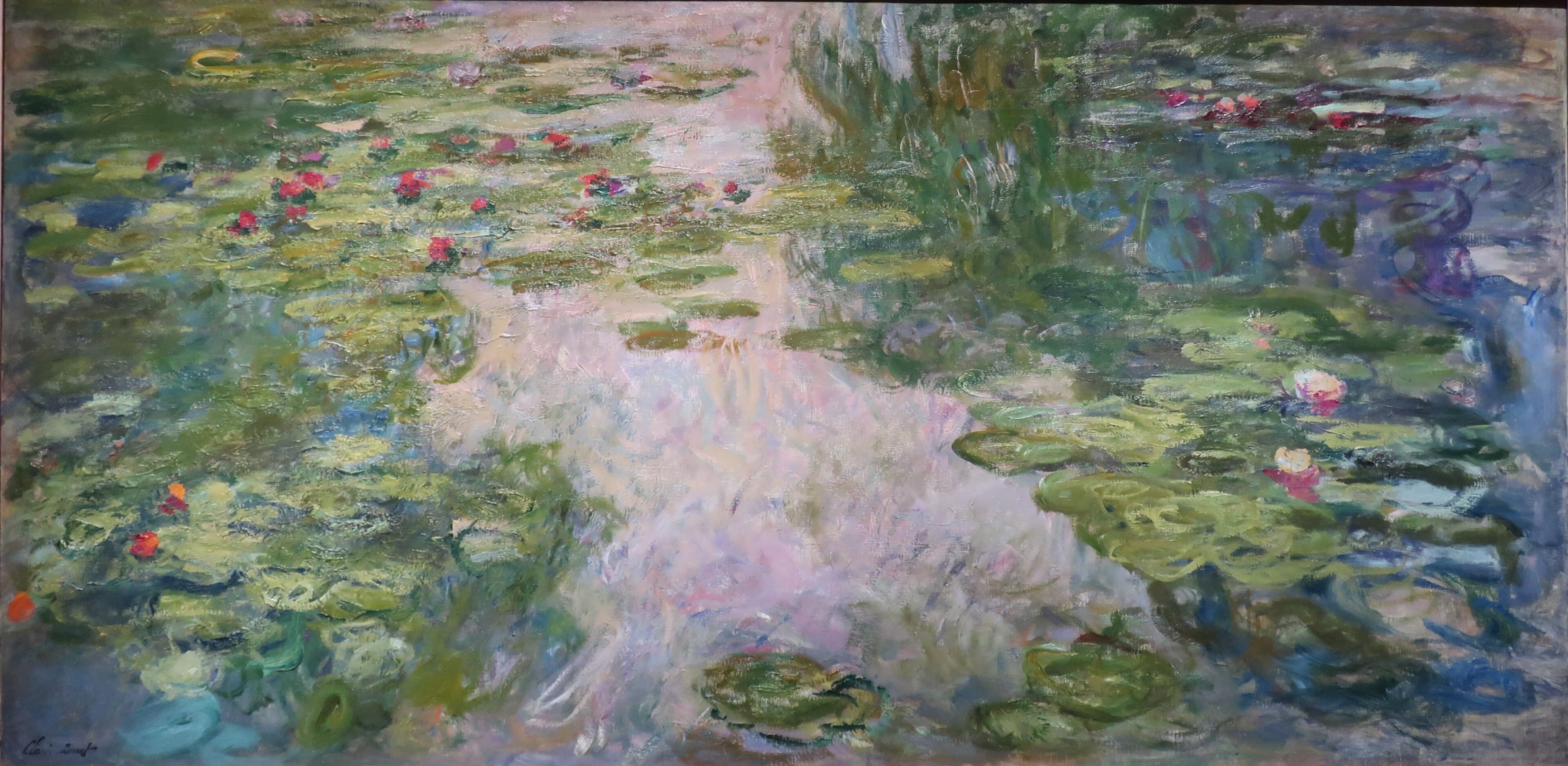
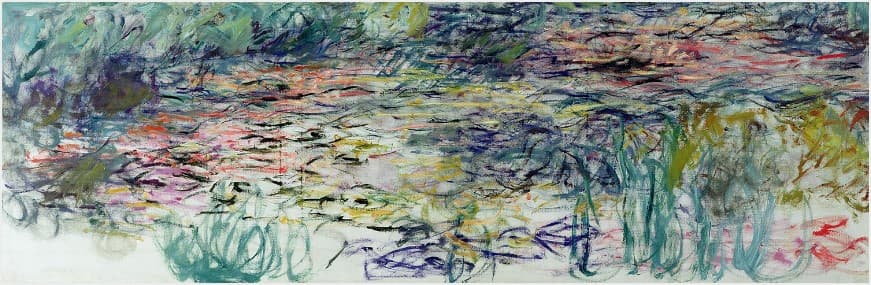
The Honolulu Museum of Art's Water Lilies, of a similar format, opens the pond with a broad pink-white sky reflection down the middle. The Marmottan's Bassin aux nymphéas of 1918–19 turns the same view into a blaze of red. Here the scene is the most legible and balanced of the three, with the trees' reflection clearly separated from the pads. Within the Water Lilies series, it sits between the descriptive pond views of 1914–17 and the near-abstract canvases of the early 1920s.
A detail to look for
At the far left edge, where the reflected sky breaks through the golden mass, a single lily pad floats alone, painted in yellow-green with a crisp outline. It sits in the brightest part of the picture and is easy to overlook among the bigger clusters at right. But it is doing important work: it tells you that the pale area is water, not sky, and keeps the composition from splitting in two. Monet often set one isolated pad like this at the edge of a composition, as a hinge between zones. In the Albertina's galleries, with the canvas at eye level, it is one of the first things a close look reveals.
Where to see it
The Albertina in Vienna shows the Batliner Collection in its permanent galleries of modern art, alongside paintings by Picasso, Chagall and the Expressionists, though individual works travel to exhibitions. For other museums holding Claude Monet's work, see where to see Monet's paintings; for the garden, see Giverny.
Questions & answers
Where is Monet's The Water Lily Pond in Vienna?
It is in the Albertina in Vienna, as part of the Batliner Collection of modern art that Herbert and Rita Batliner placed with the museum. It is usually shown in the Albertina's permanent display of modern painting.
When was The Water Lily Pond painted?
The Albertina dates it to 1917–19. Monet painted it at Giverny during the years he was preparing the large water-lily decorations now at the Musée de l'Orangerie. It is Wildenstein number 1899.
What does the painting show?
It shows the lily pond at Giverny with the reflection of trees, painted in warm olive and ocher, filling the center. Clusters of blue, violet and cream lily pads with pink and yellow flowers float at the right, and sky shows at the left edge.
How is this version different from other Water Lily Pond paintings?
Its center is unusually warm, a golden-brown reflection of foliage rather than the blue or violet of most late canvases. The composition is also more legible than many late works, with pads, reflection and sky clearly separated.
More by the artist
Claude Monet
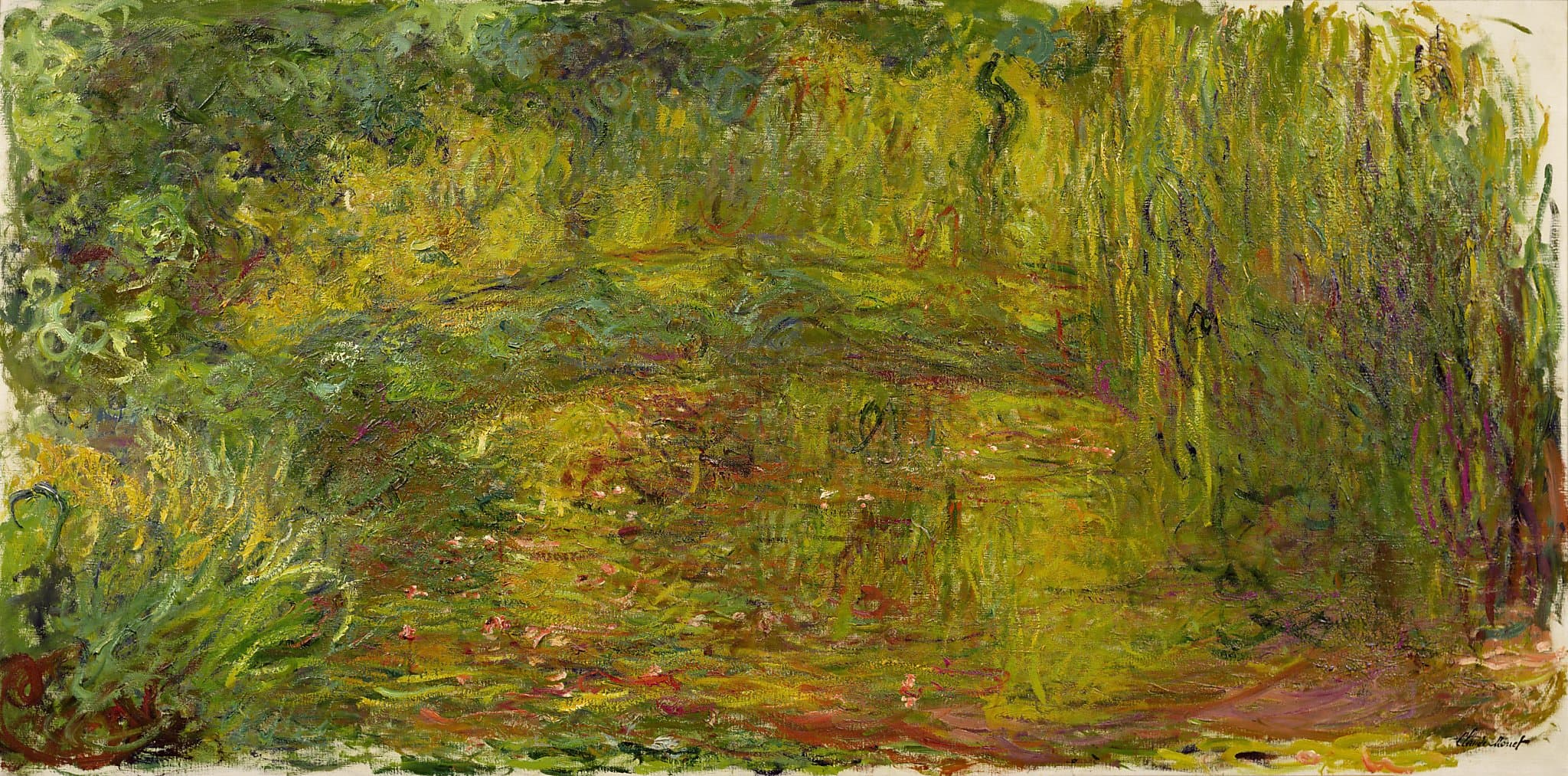
Le Pont japonais (The Japanese Bridge)
Claude Monet · 1918
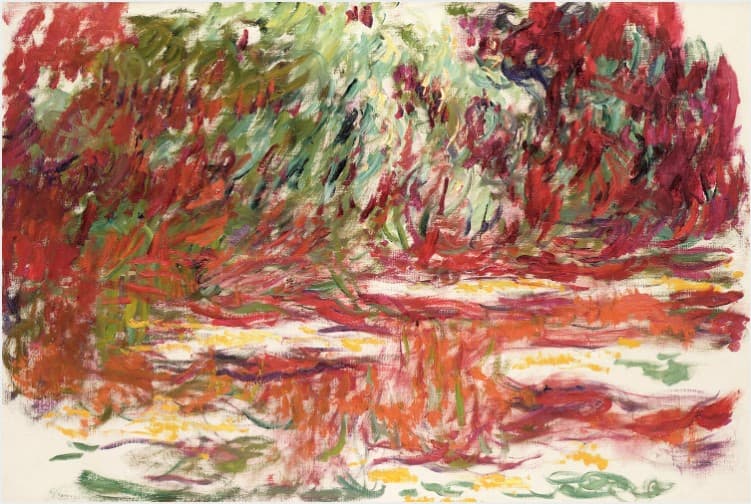
Water-Lily Pond (Bassin aux nymphéas, 1918–19)
Claude Monet · 1918–19
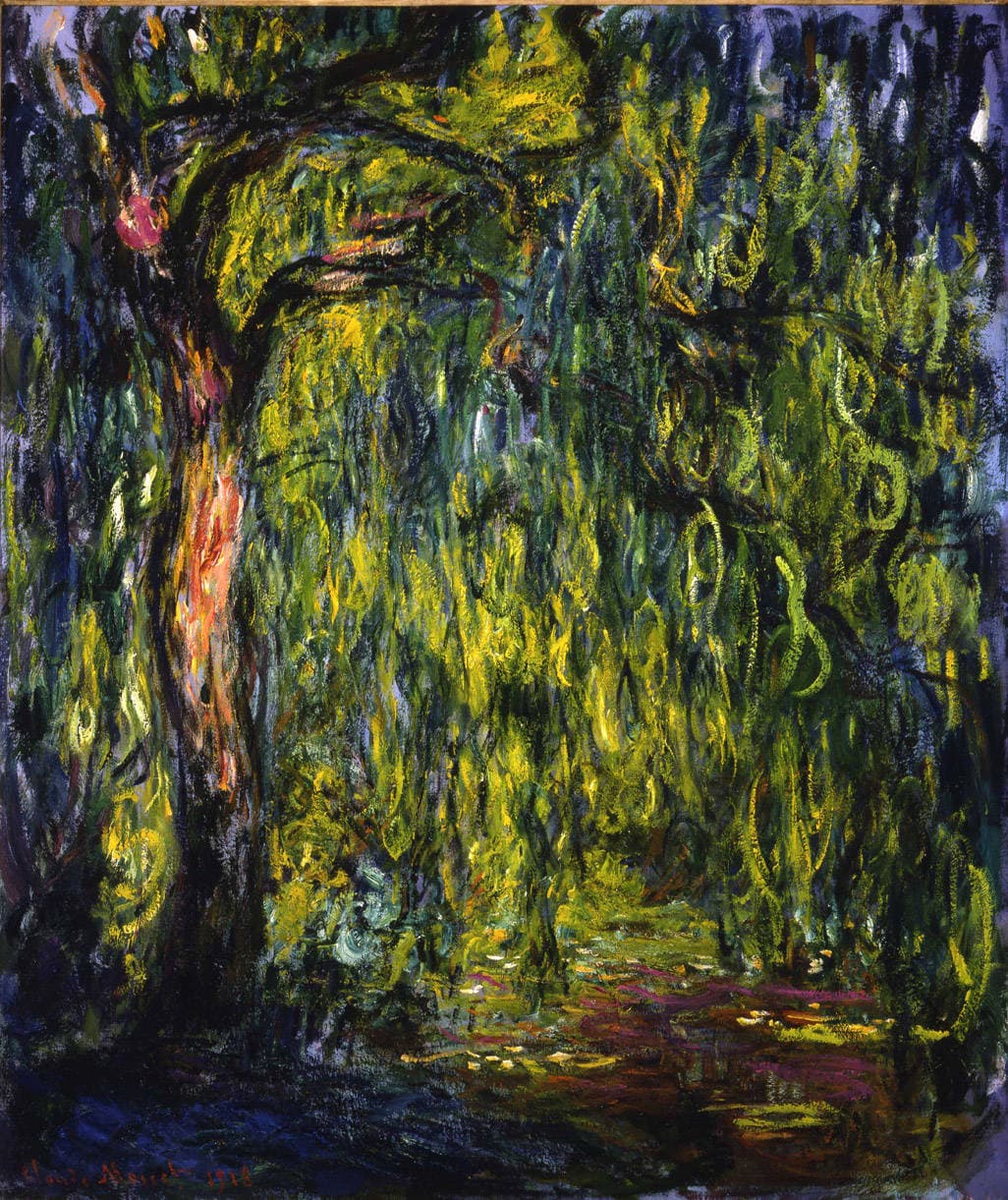
Weeping Willow (Columbus)
Claude Monet · 1918
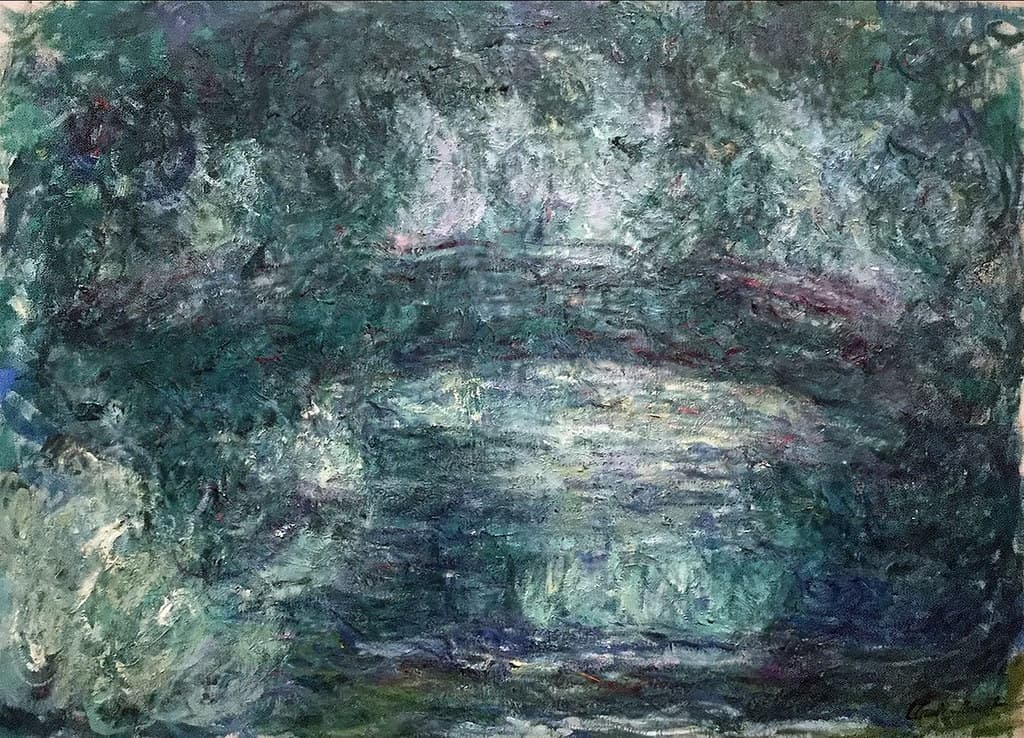
Japanese Bridge
Claude Monet · 1918–19
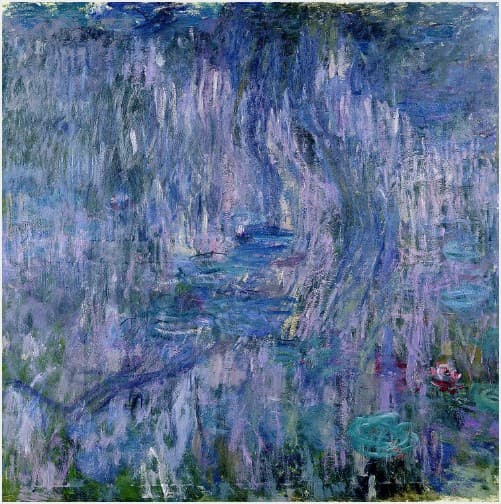
Water-Lilies, Reflection of a Weeping Willow
Claude Monet · 1916–19
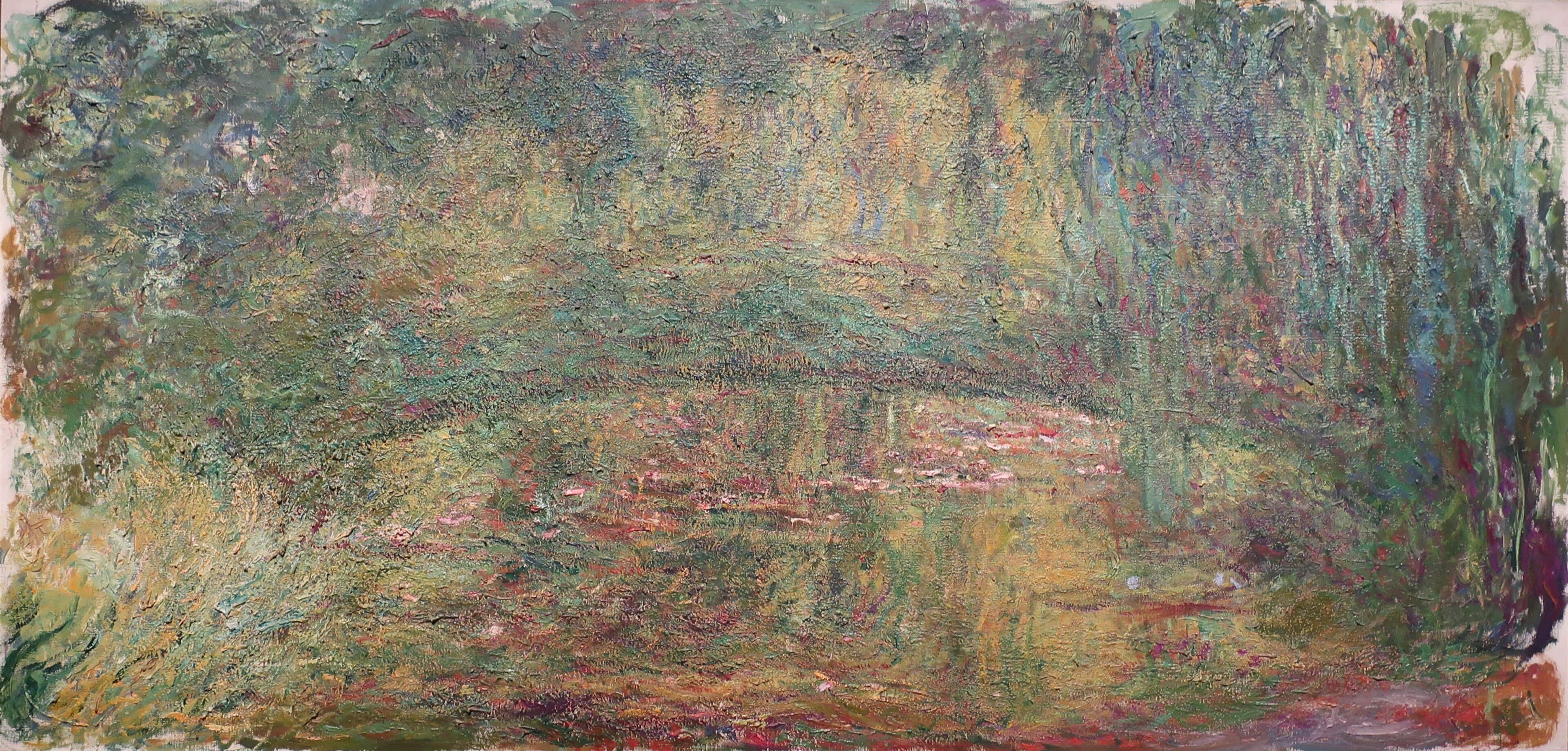
The Japanese Bridge
Claude Monet · 1918
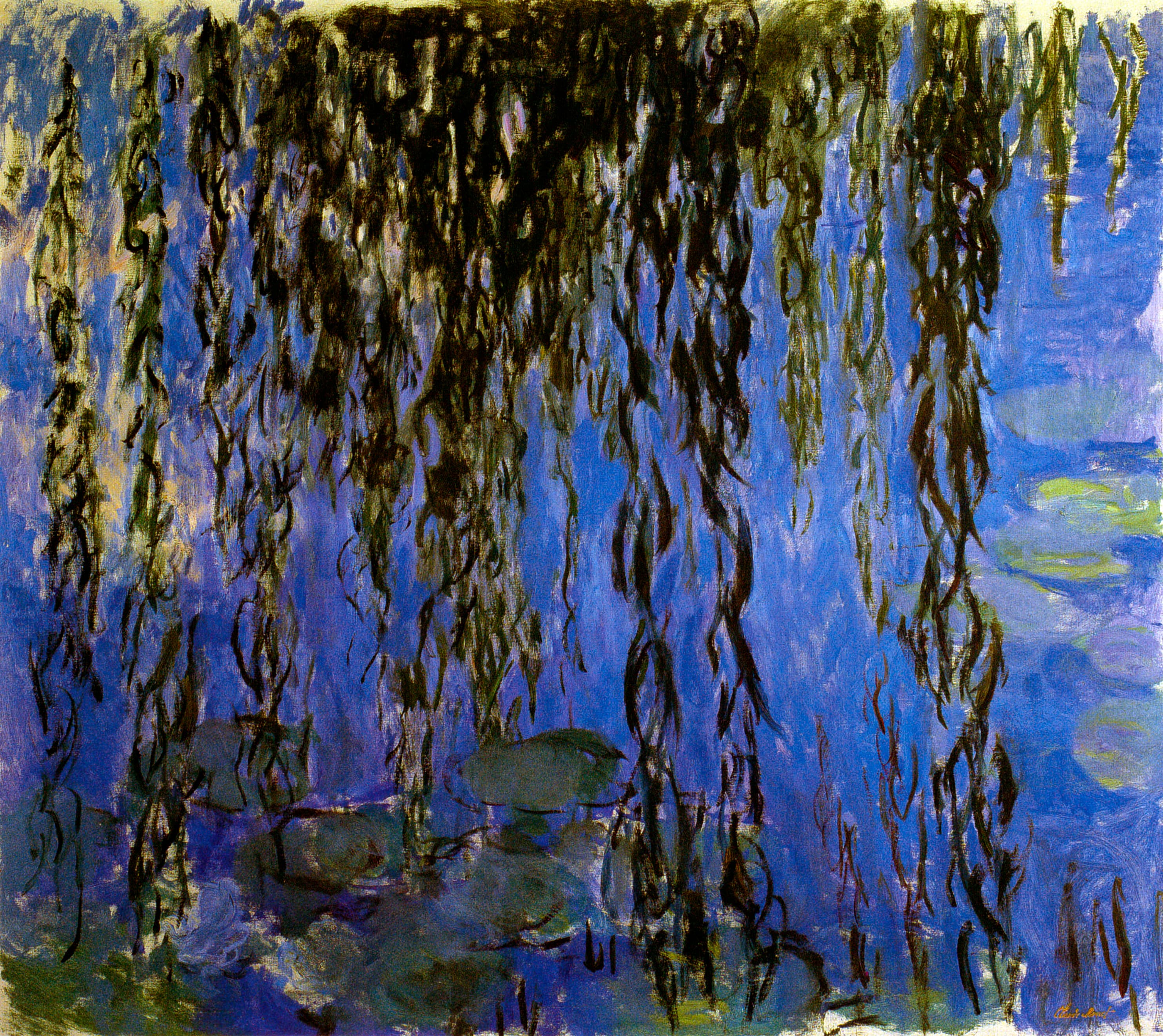
Water Lilies with Willow Branches
Claude Monet · c. 1916–17
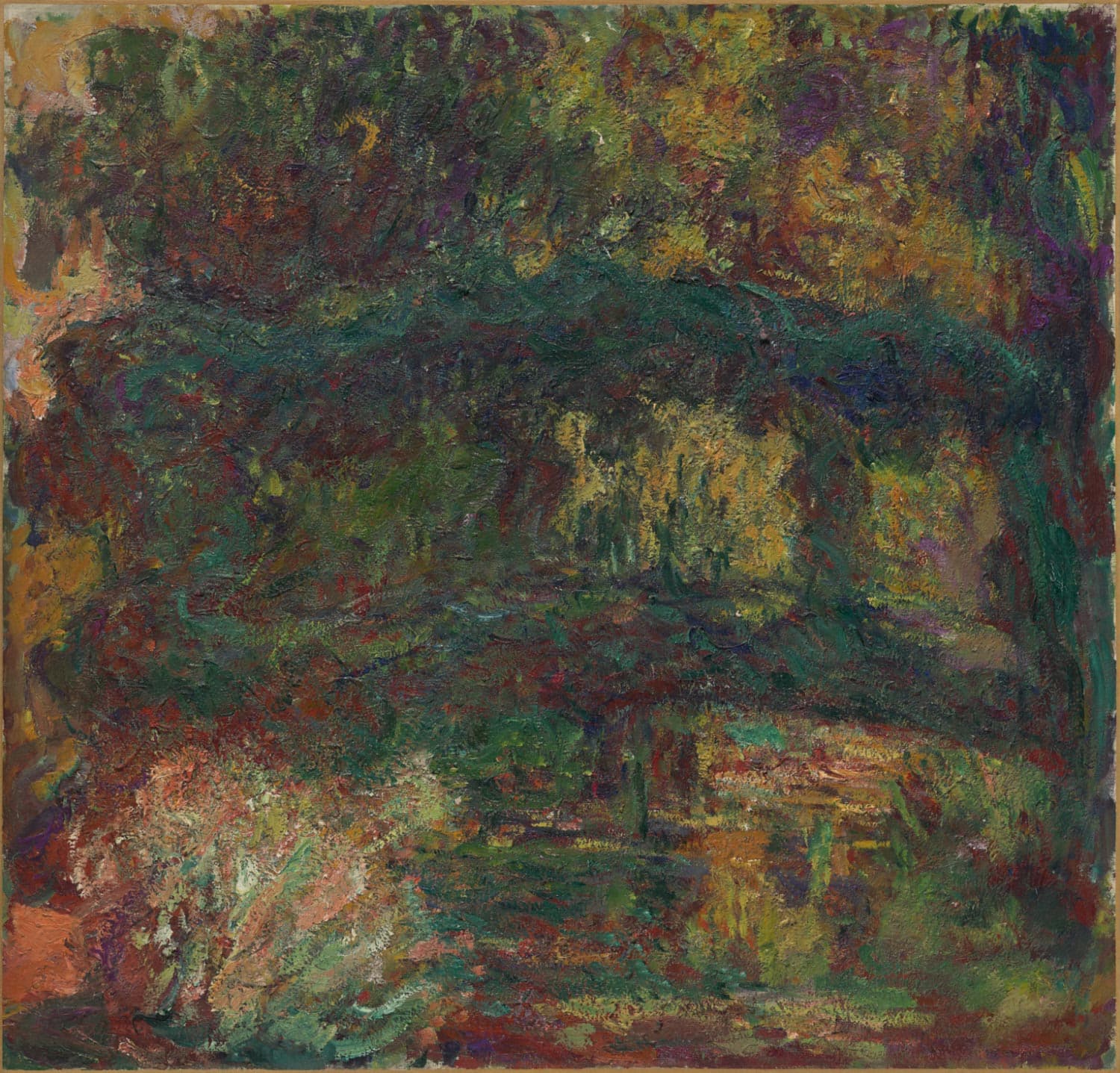
Nymphéas, Japanese Bridge
Claude Monet · 1918–26
Also painted in 1918
The same year
Kindred works
You may also study
Water Lilies (Honolulu Museum of Art)
Claude Monet · 1917–19
Nymphéas (Musée Marmottan Monet, 1917–19)
Claude Monet · 1917–19
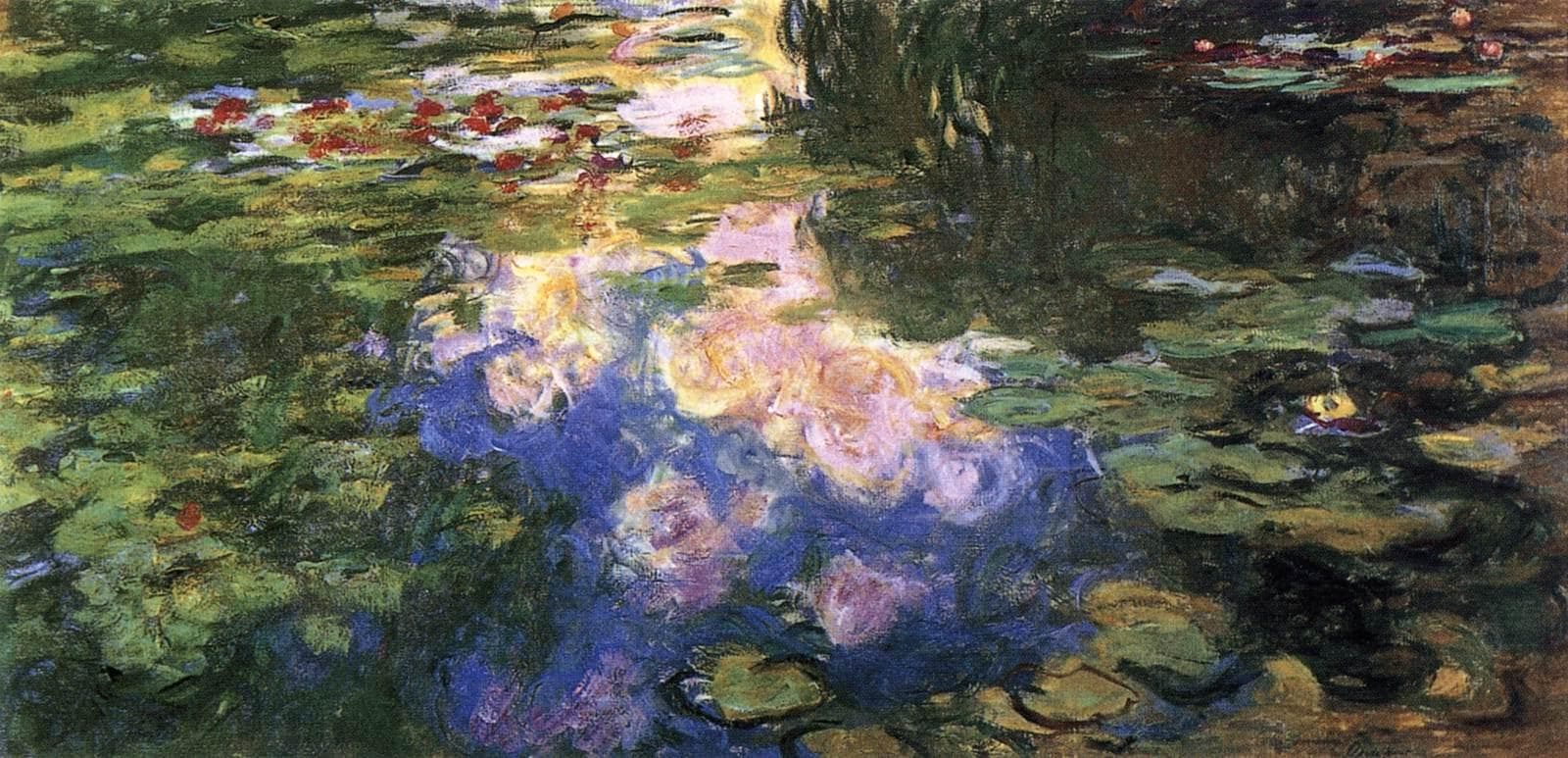
Water-Lily Pond (Le Bassin aux nymphéas), 1917–19
Claude Monet · 1917–19
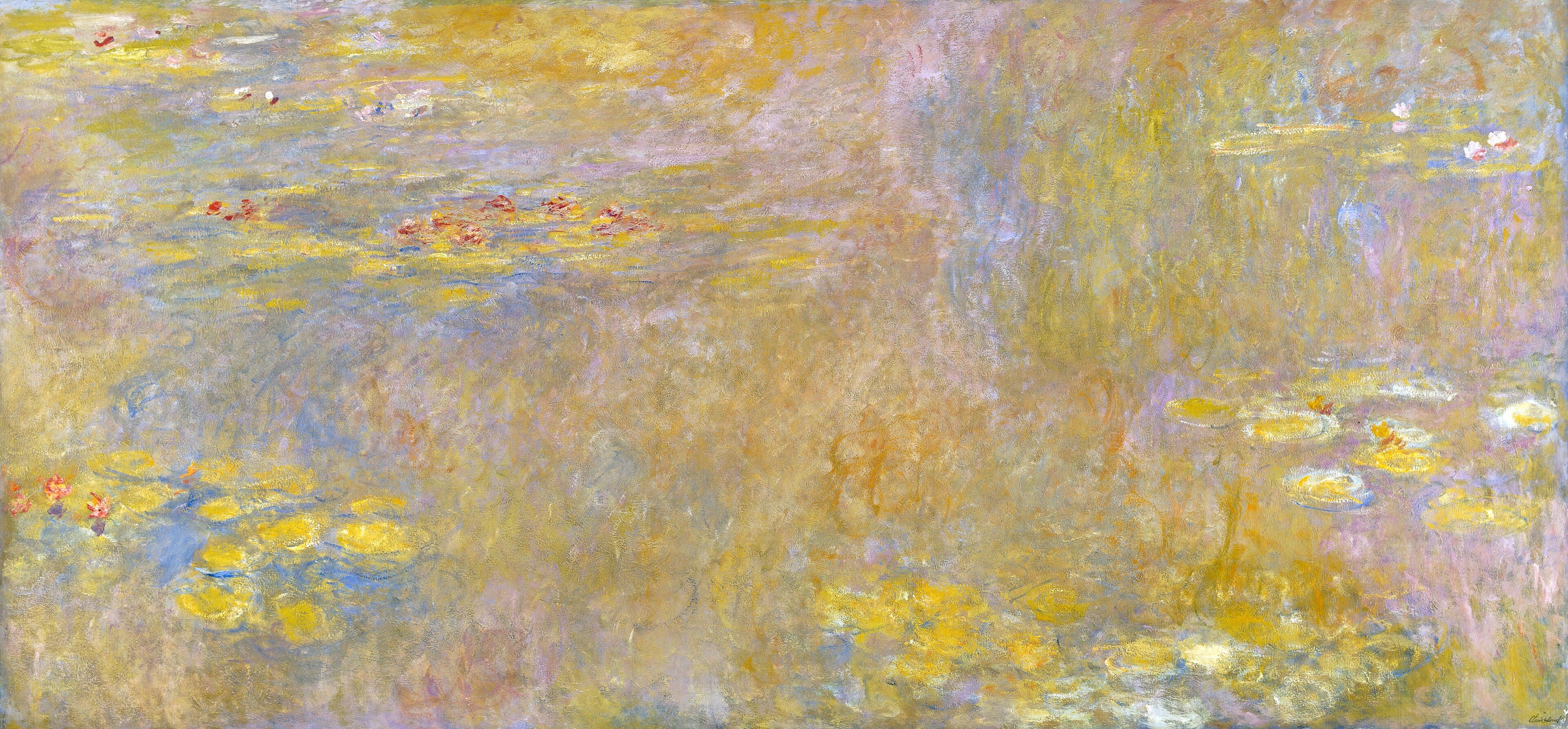
Water-Lilies
Claude Monet · after 1916
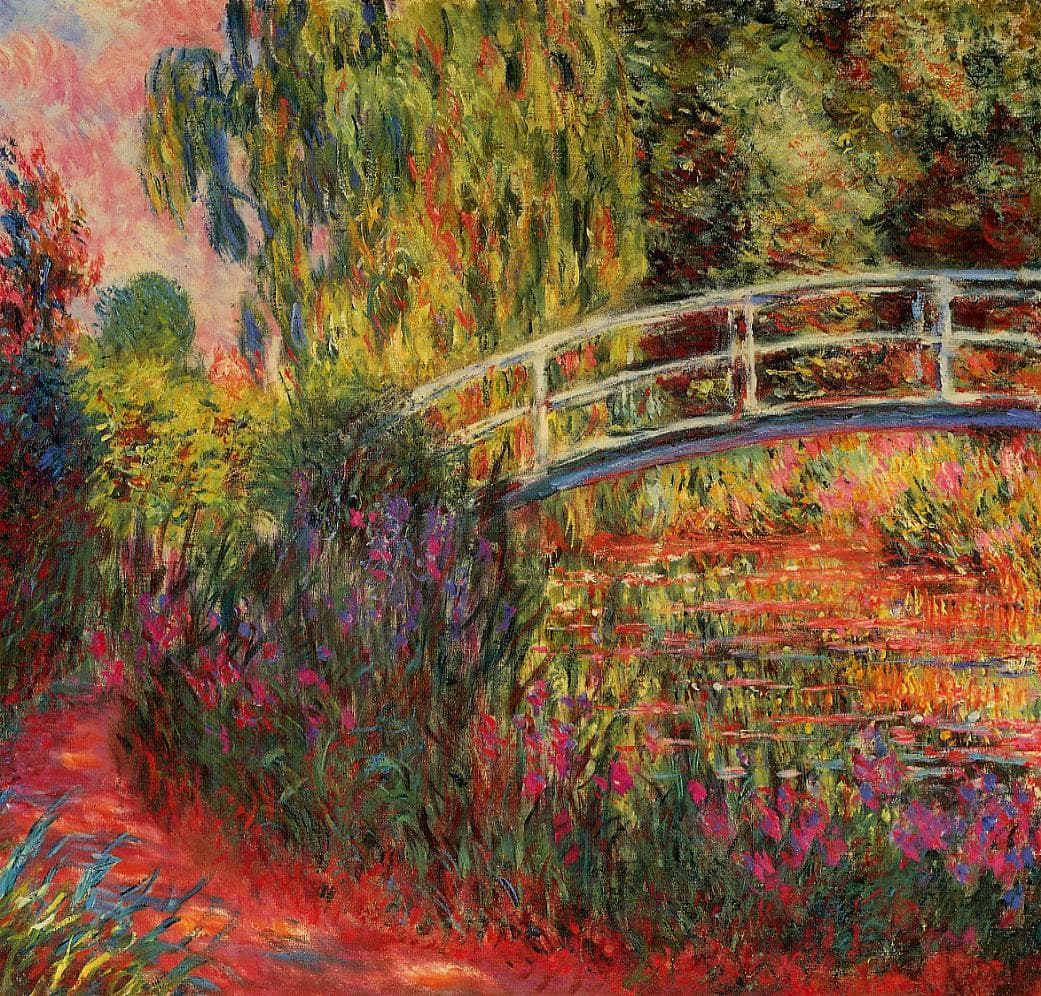
The Japanese Bridge or The Lily Pond
Claude Monet · 1900
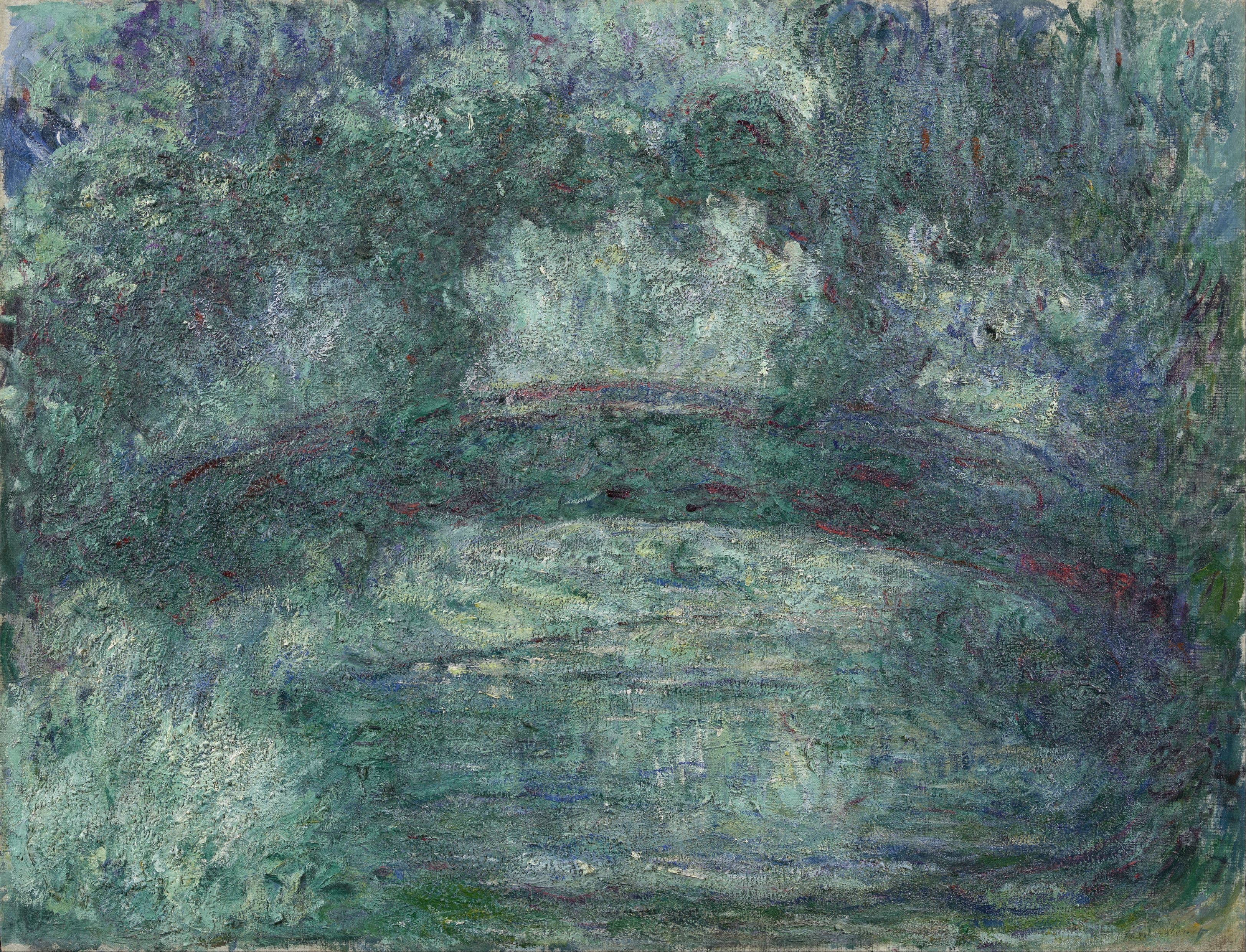
The Japanese Bridge
Claude Monet · 1919–24
Water Lilies: Setting Sun
Claude Monet · 1914–26
Water Lilies (1908, Tokyo Fuji Art Museum)
Claude Monet · 1908