Image: Foundation E.G. Bührle Collection, on loan to Kunsthaus Zürich · Public domain · via Wikimedia Commons
The Water-Lily Pond, Green Reflections
Claude Monet, 1920–26
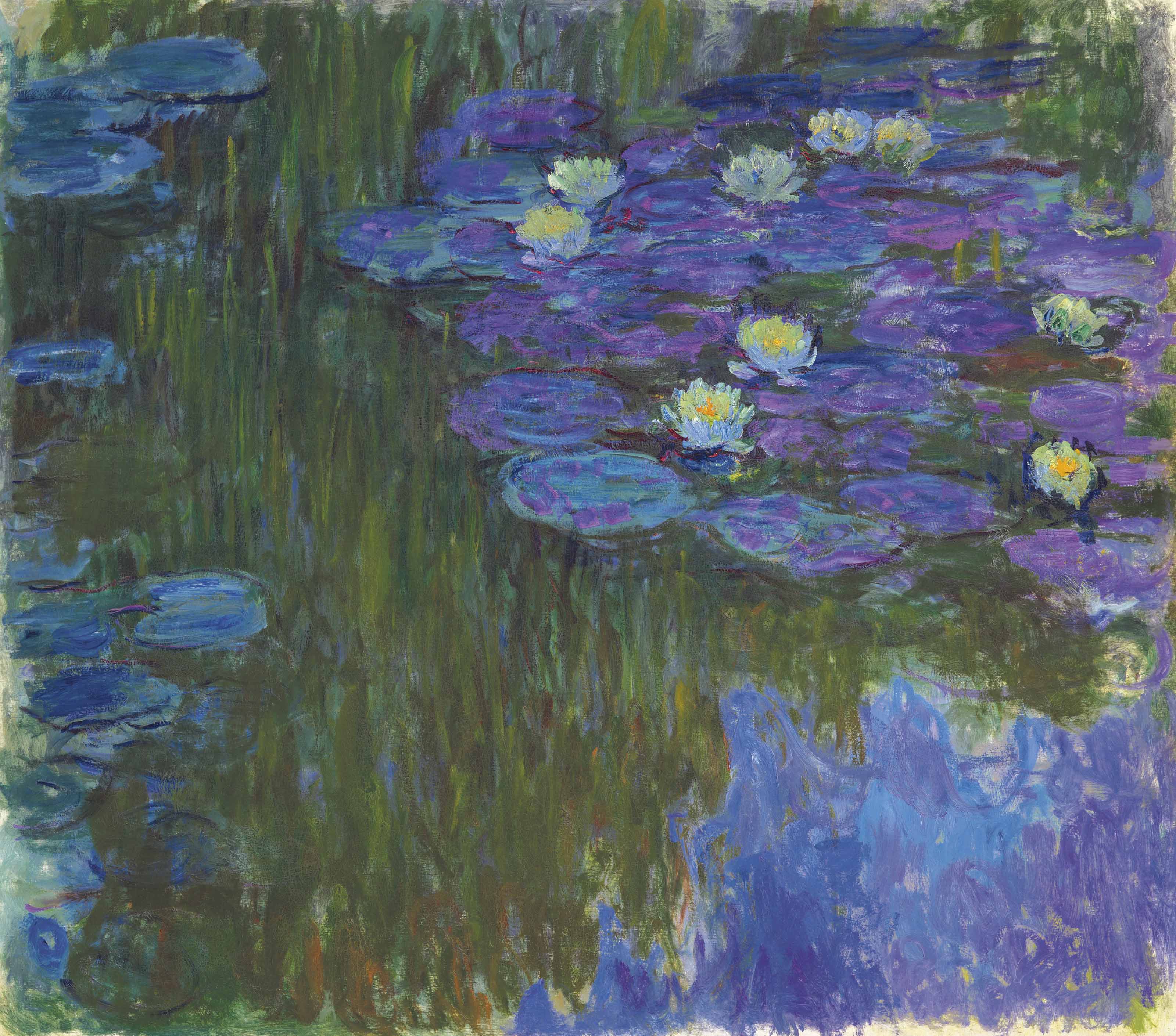
The Water-Lily Pond, Green Reflections (Le Bassin aux nymphéas, reflets verts) is a 2 × 4.25 m Claude Monet panel of 1920–26, deep green water with red and pink lilies. Owned by the Bührle Foundation, it hangs at the Kunsthaus Zürich.
- Artist
- Claude Monet
- Date
- 1920–26
- Medium
- Oil on canvas
- Dimensions
- 200 × 425 cm
- Collection
- Kunsthaus Zürich (Foundation E.G. Bührle Collection), Zürich, Switzerland
- Movement
- Impressionism
- Catalogue
- Wildenstein 1979
- Nature & Landscape
- Water & Sea
The Water-Lily Pond, Green Reflections (Le Bassin aux nymphéas, reflets verts) is a mural-scale canvas, 200 × 425 cm, by Claude Monet, dated by the Kunsthaus Zürich to 1920–26. It was one of about twenty two-meter-high canvases that were not used in the final installation of the water lilies at the Musée de l'Orangerie and stayed in Monet's studio at Giverny. Emil Bührle bought it in 1952; it belongs to the Foundation E.G. Bührle Collection (inv. 73) and is on long-term loan to the Kunsthaus Zürich. It is number 1979 in the Wildenstein catalogue raisonné.
What you're looking at
The panel is a single sweep of pond. Its ground is a deep, cool green: the reflections of willows and other trees around the water, laid in long vertical strokes of emerald, bottle green, blue and teal that run the full height of the picture. They give the surface a strong downward pull, like looking into dark water on a summer afternoon.
Across this green float islands of lily pads. A large cluster sits near the top center; others drift at the left, the right and along the bottom. The pads are yellow-green, cream and olive, and the flowers are the color notes the eye goes to: coral, scarlet and pink, with a few white blooms. At the lower right, a group of red lilies is especially intense.
The title's "green reflections" is precise. Compared with the violet or golden panels of the same years, this one keeps the trees' reflection as its dominant color and gives the whole canvas a shaded, enclosed feeling.
Where and when it was painted
Monet painted the large panels for his decorative cycle in his studio at Giverny from 1914 until his death in 1926. The Orangerie has a composition with the same title, Green Reflections, in its first room, and this panel is closely related to it in motif and color. When the Orangerie installation was completed in 1927, the unused canvases remained in the studio and passed to Monet's son Michel.
How it was painted
The vertical strokes of the reflections are laid first, broad and overlapping, with greens of different temperature placed side by side. The pads are then painted across them in horizontal touches, thicker and lighter in tone, and the flowers placed last as small, dense dabs of red and pink. The difference in direction between vertical reflection and horizontal pads is what makes the surface read as flat water with depth beneath it.
How this version differs
Set beside the National Gallery's golden Water-Lilies, of almost the same size, or the violet-blue Saint Louis Water Lilies, this panel is the green member of the family. Its nearest relative is the Orangerie's own Water Lilies: Green Reflections. Within the Water Lilies series it shows how close the unused panels came to the final installation.
A detail to look for
At the lower right, the cluster of lilies includes a group of strong red flowers among green and yellow pads. These are some of the most saturated reds in any of Monet's late panels, and they sit in the shaded part of the pond, where the green is deepest. Monet plays red against green here, complementary colors, so that each intensifies the other. From the far side of the gallery the red flowers seem almost to glow. Up close, they are only a few quick, heavy touches of paint, laid wet onto the green below, with edges that blur into it. The panel rewards both distances.
Ownership and where to see it
In 1952 the Kunsthaus Zürich held a major Monet exhibition that helped revive interest in the late water lilies. During it, Bührle, a Zürich industrialist and collector, bought this panel from Michel Monet for 1.5 million francs, having shortly before helped the Kunsthaus acquire its own water-lily paintings. The Bührle collection is now on long-term loan to the Kunsthaus and has been shown in its Chipperfield extension since 2021. For more on Claude Monet's work worldwide, see where to see Monet's paintings, and for the pond, Giverny.
Questions & answers
Where is Monet's Water-Lily Pond, Green Reflections?
It hangs at the Kunsthaus Zürich in Switzerland, in the Chipperfield extension. It belongs to the Foundation E.G. Bührle Collection (inv. 73), which lends its paintings to the Kunsthaus on a long-term basis.
When was it painted?
The Kunsthaus dates it to 1920–26, the last years of Monet's life, when he was finishing the water-lily decorations for the Musée de l'Orangerie. It is Wildenstein number 1979.
Is it one of the Orangerie Water Lilies?
It was made for the same project and has the same two-meter height, but it was one of about twenty panels not used in the final Orangerie installation. It stayed in the studio and passed to Michel Monet, who sold it to Emil Bührle in 1952.
What does the painting show?
It shows the surface of the Giverny pond, dominated by deep green reflections of trees, with clusters of yellow-green lily pads and red, pink and white flowers floating across it.
More by the artist
Claude Monet
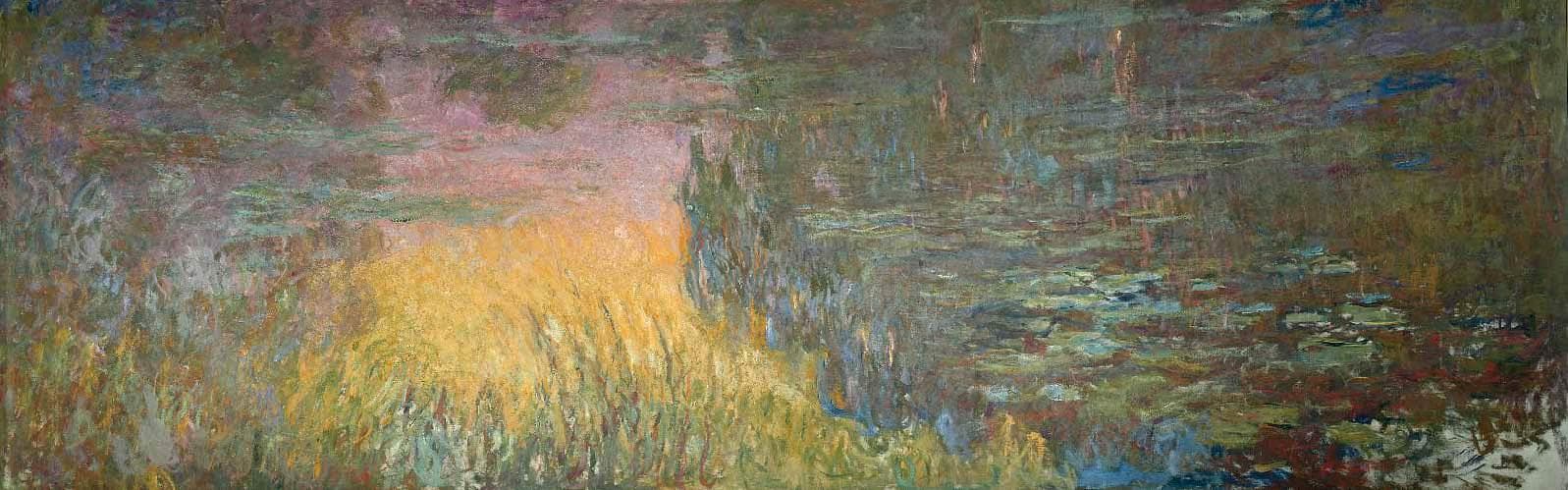
Water Lilies: Setting Sun
Claude Monet · 1914–26
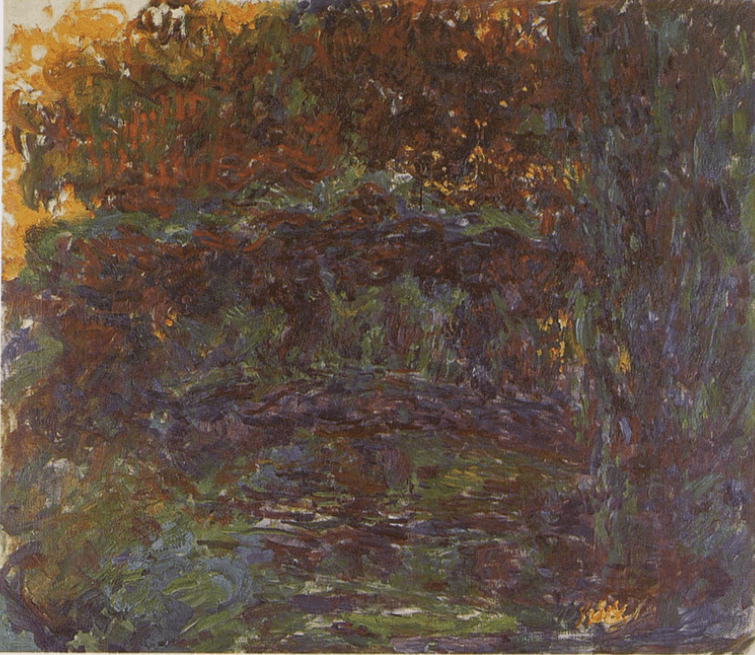
The Japanese Bridge
Claude Monet · 1918–24
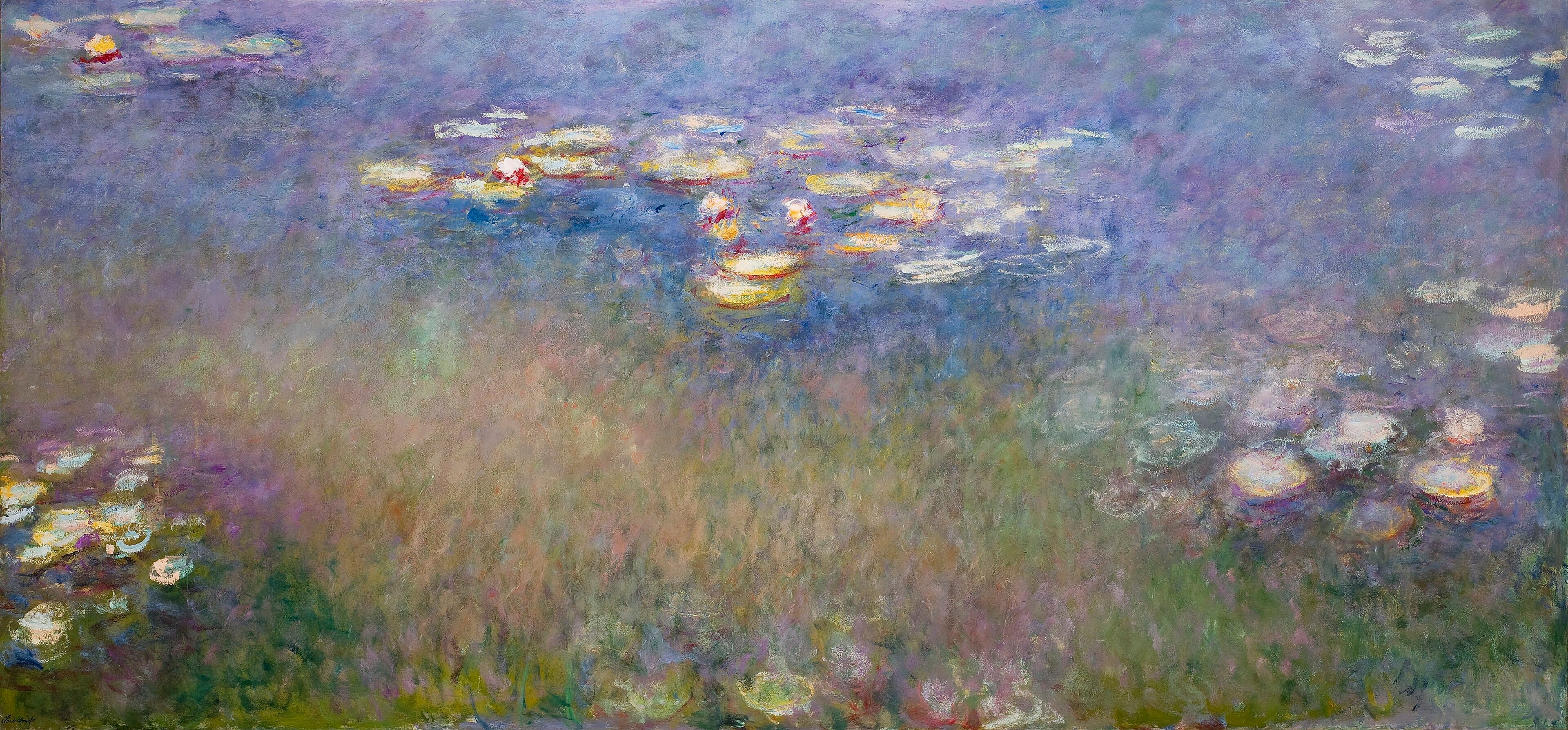
Water Lilies (Saint Louis Art Museum)
Claude Monet · c. 1915–26
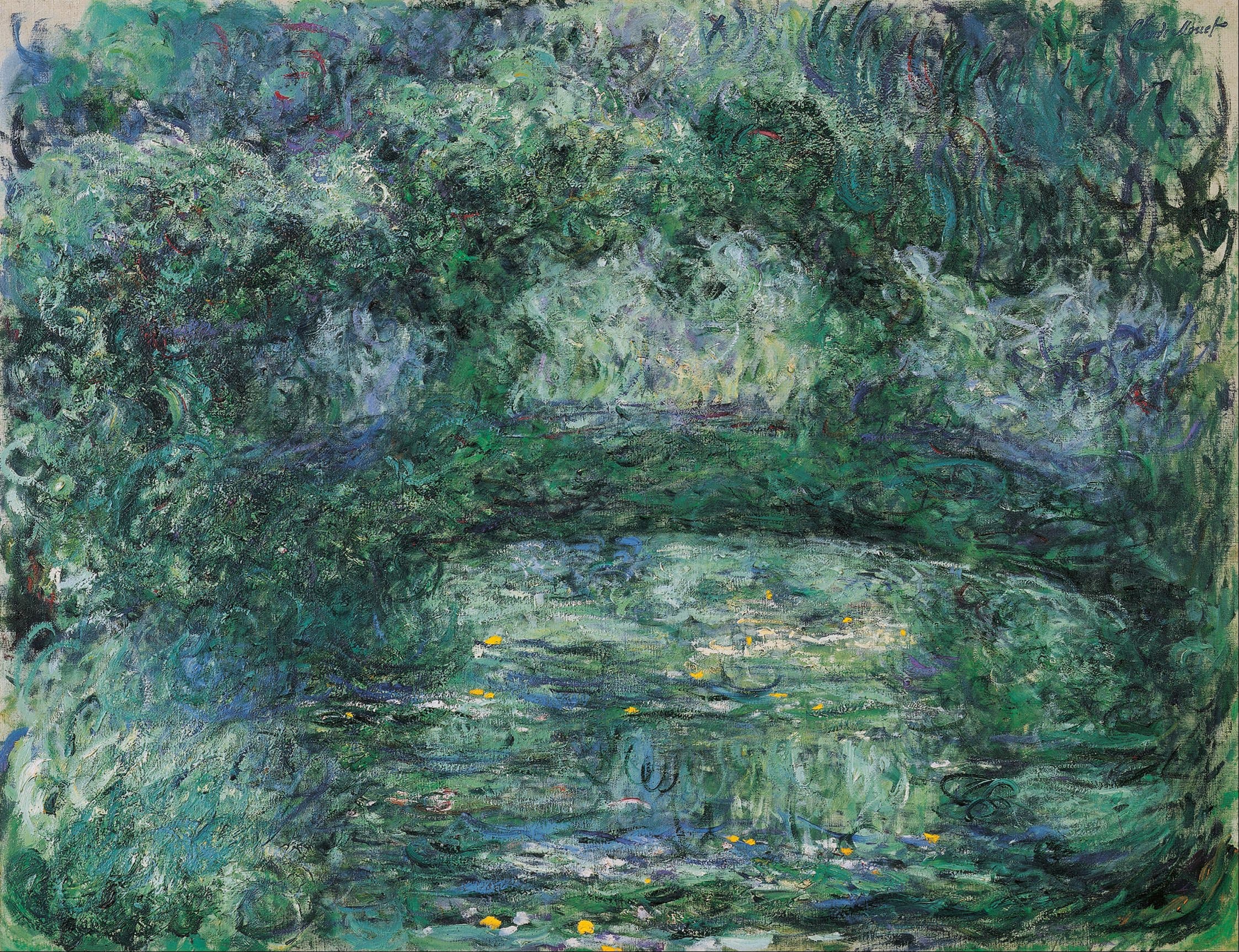
The Japanese Bridge
Claude Monet · 1918–24
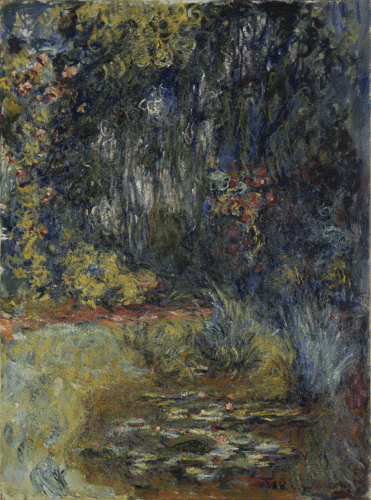
Corner of the Water-Lily Pond
Claude Monet · 1918
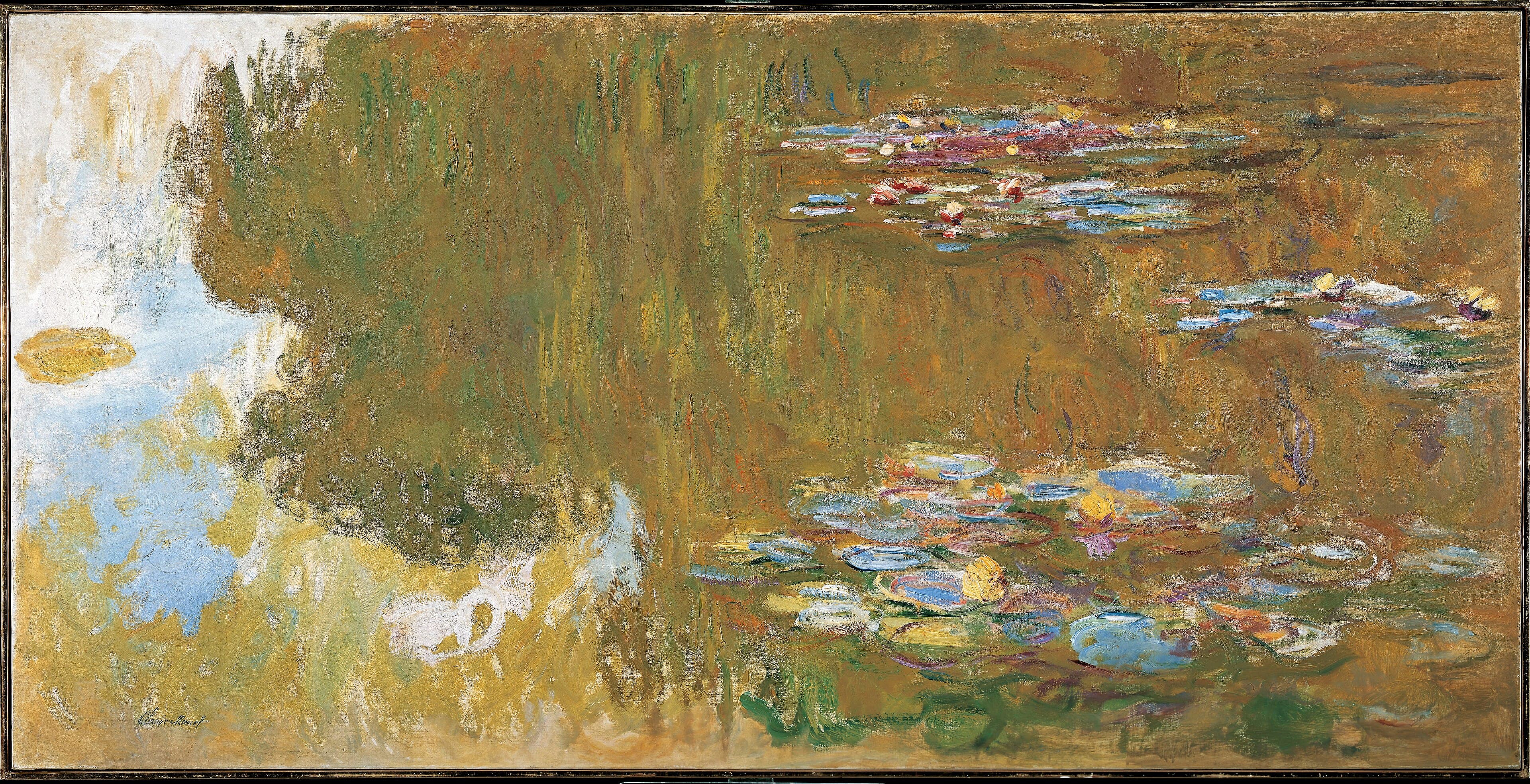
The Water Lily Pond (Albertina)
Claude Monet · 1917–19

The Water Lilies: The Clouds
Claude Monet · c. 1914–26
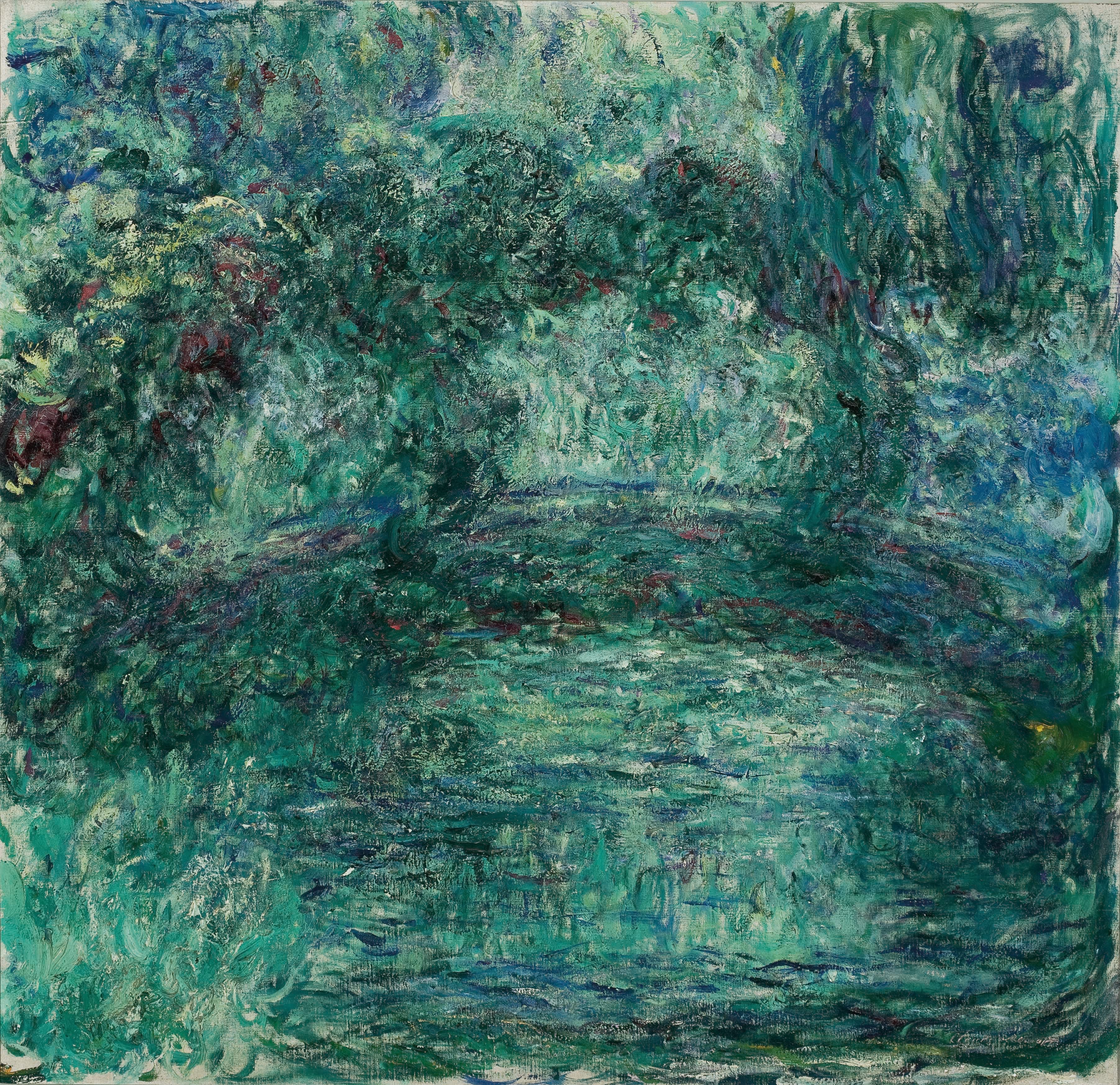
The Japanese Bridge over the Water-Lily Pond in Giverny
Claude Monet · 1920–24
Also painted in 1920
The same year
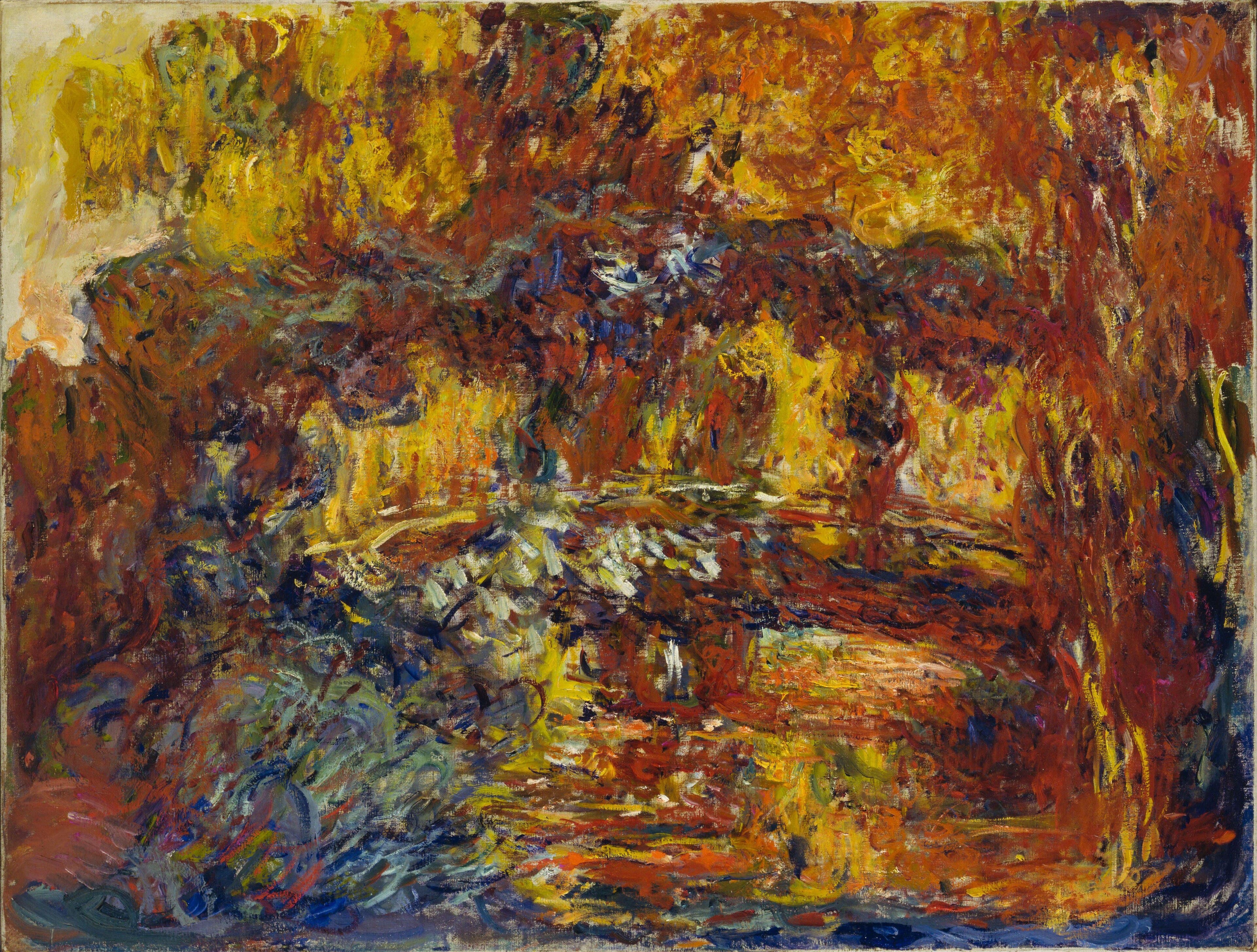
Kindred works
You may also study
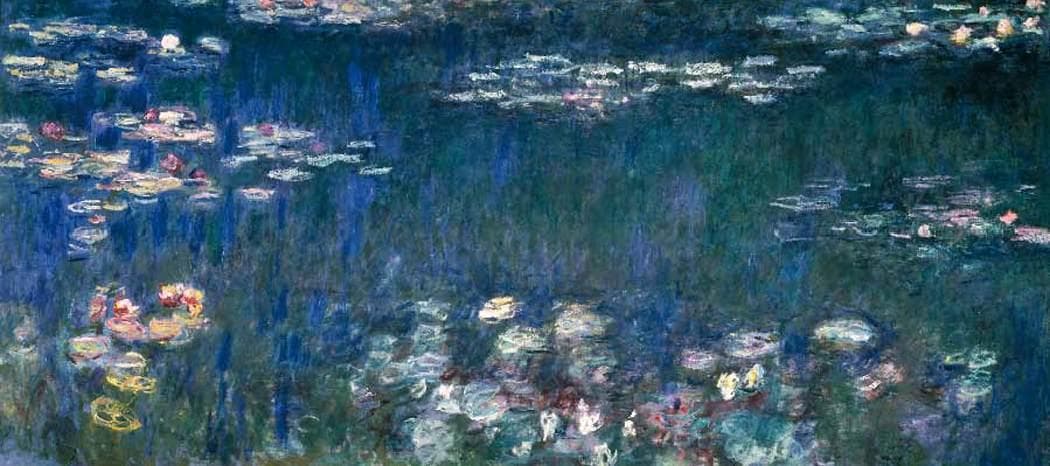
Water Lilies: Green Reflections
Claude Monet · 1914–26
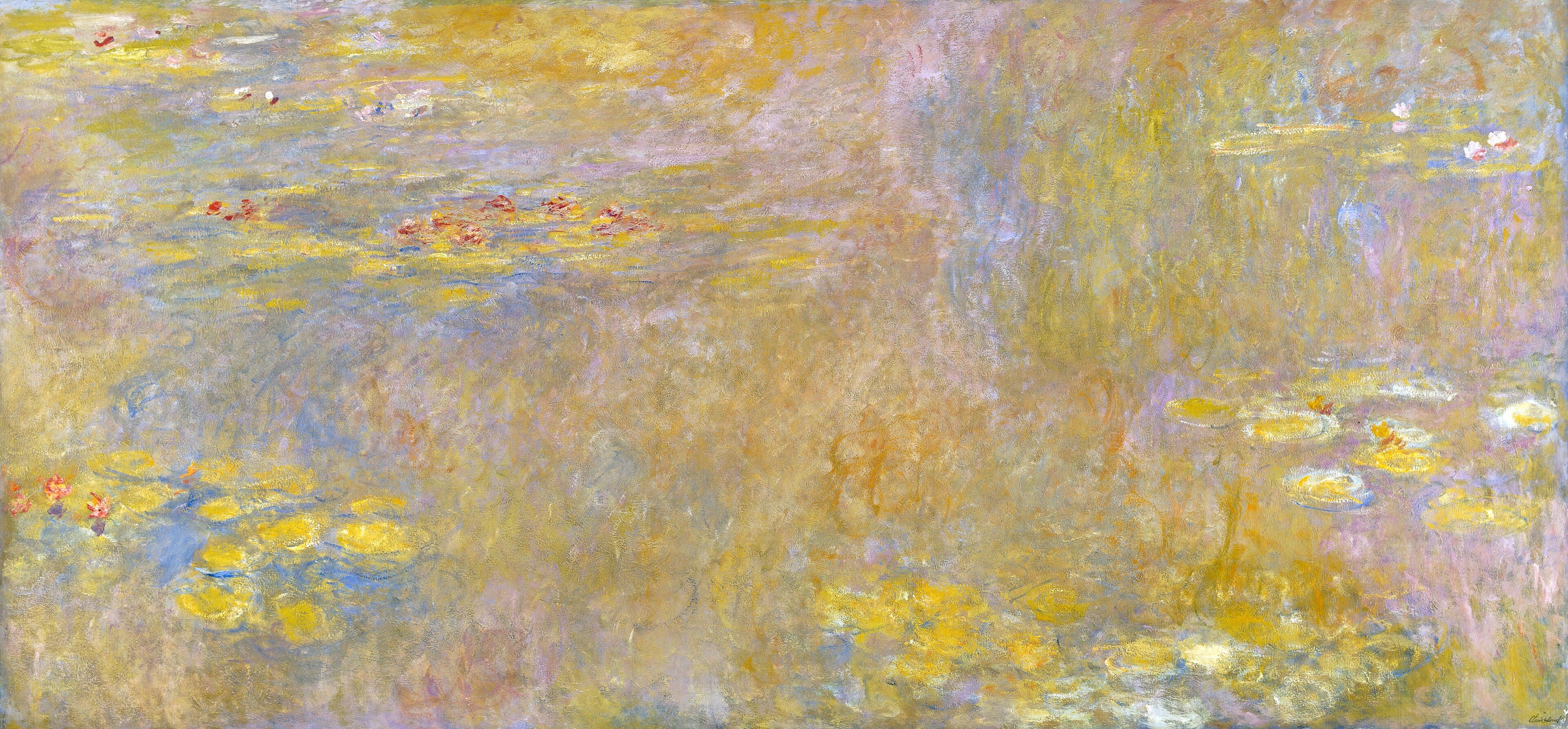
Water-Lilies
Claude Monet · after 1916
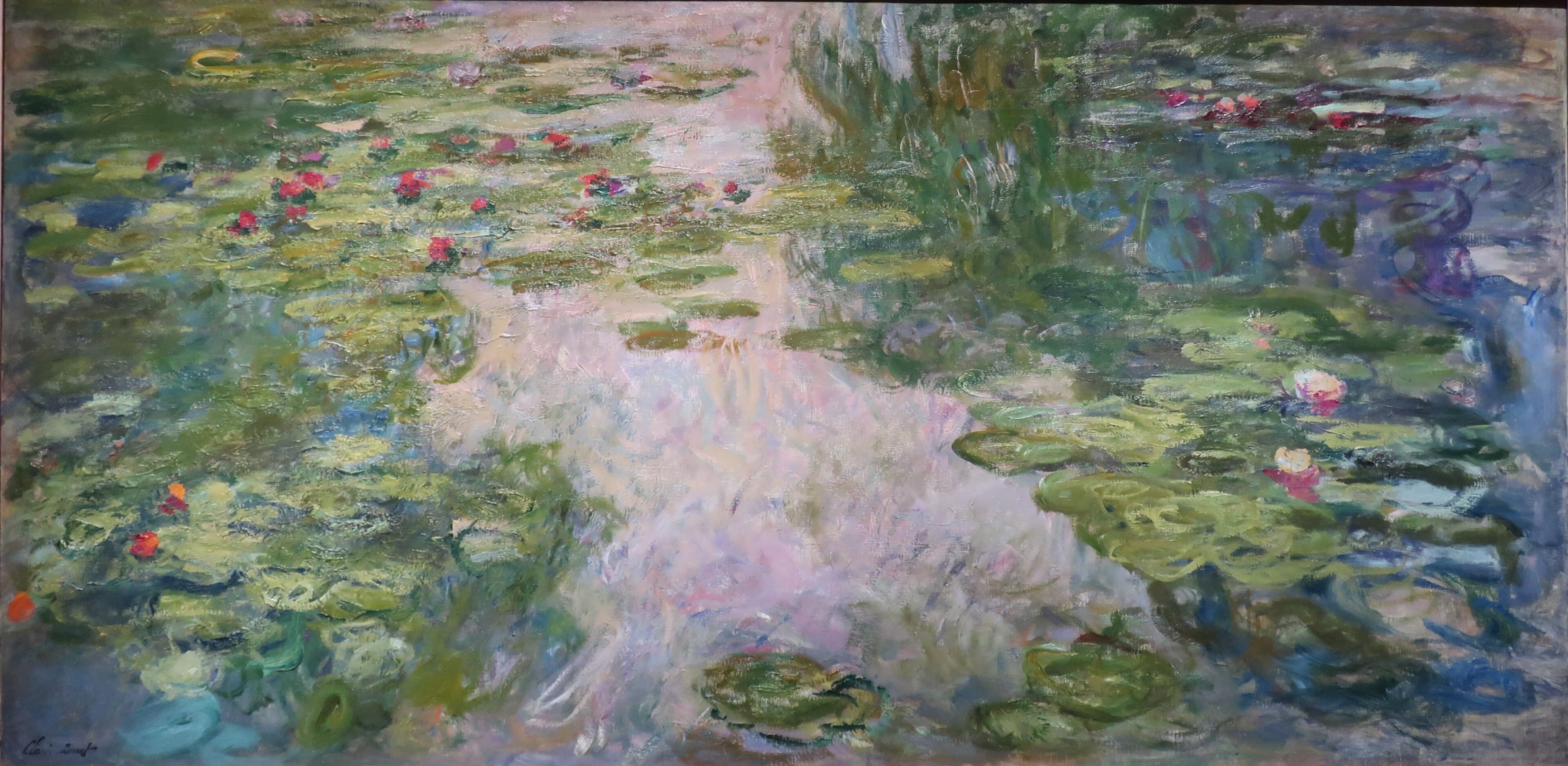
Water Lilies (Honolulu Museum of Art)
Claude Monet · 1917–19
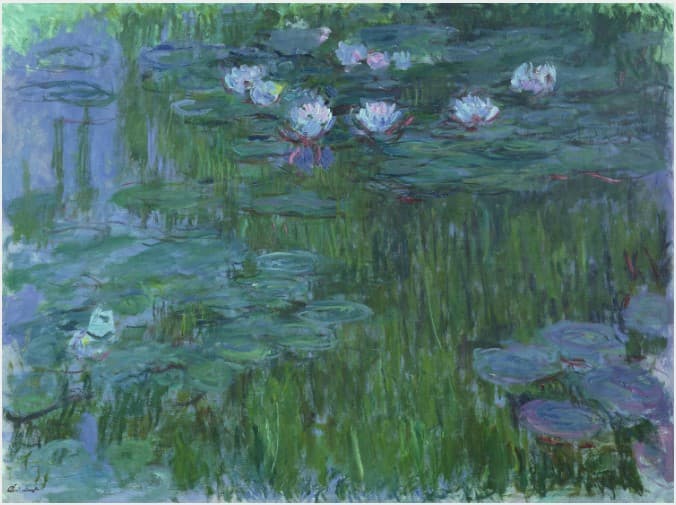
Nymphéas (Musée Marmottan Monet, 1914–17)
Claude Monet · 1914–17
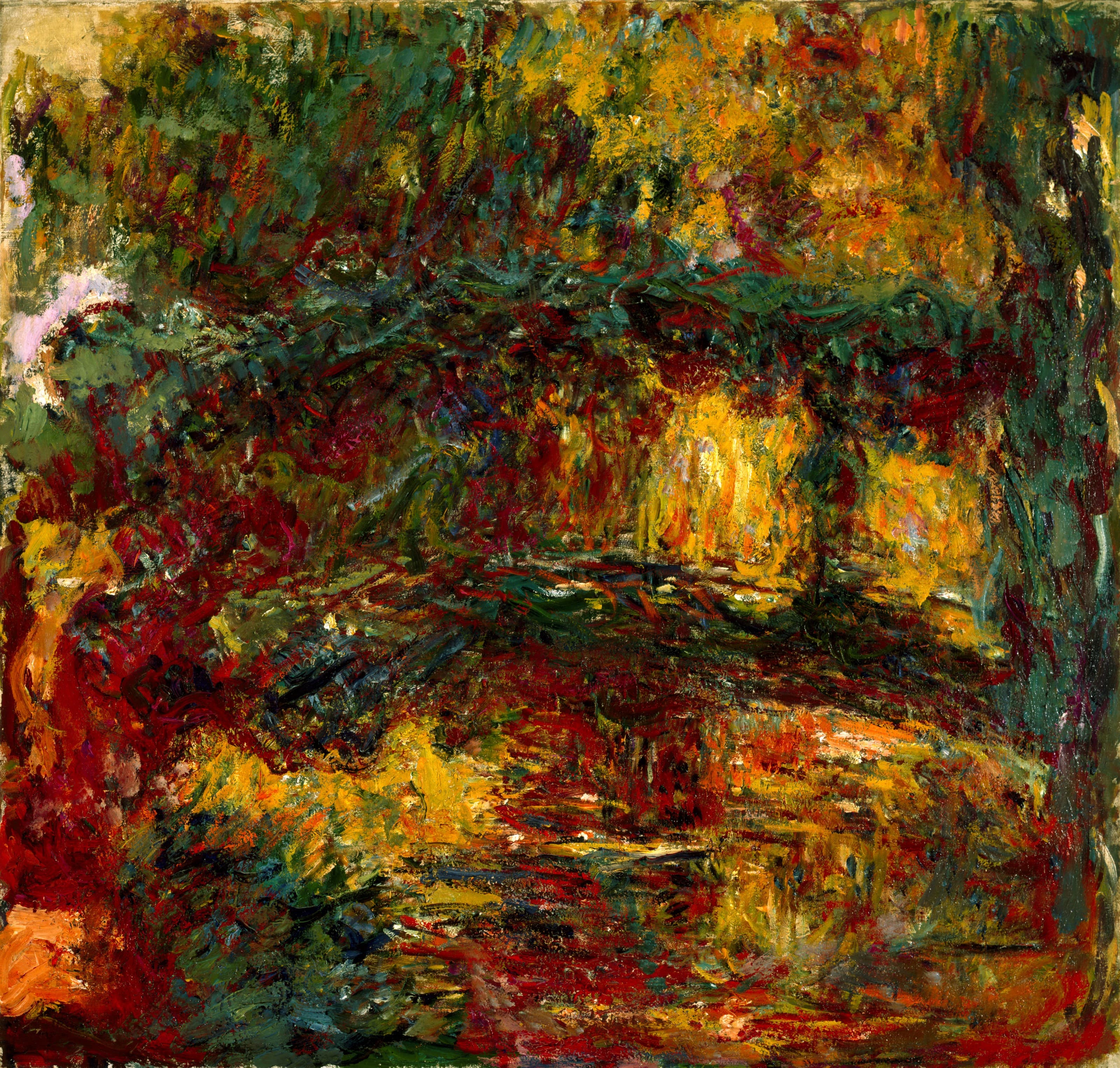
The Japanese Footbridge, Giverny
Claude Monet · c. 1922
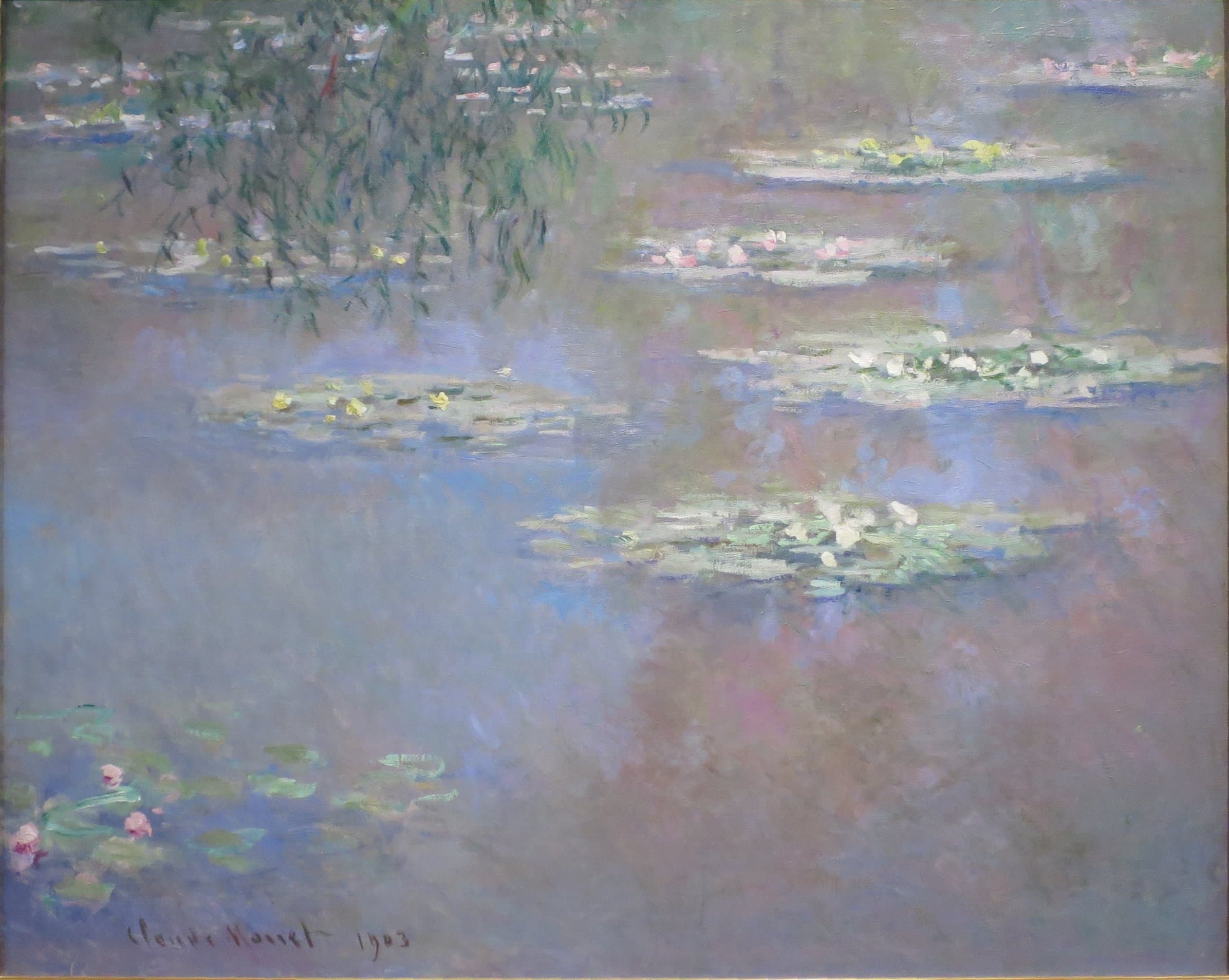
Waterlilies (1903, Dayton Art Institute)
Claude Monet · 1903
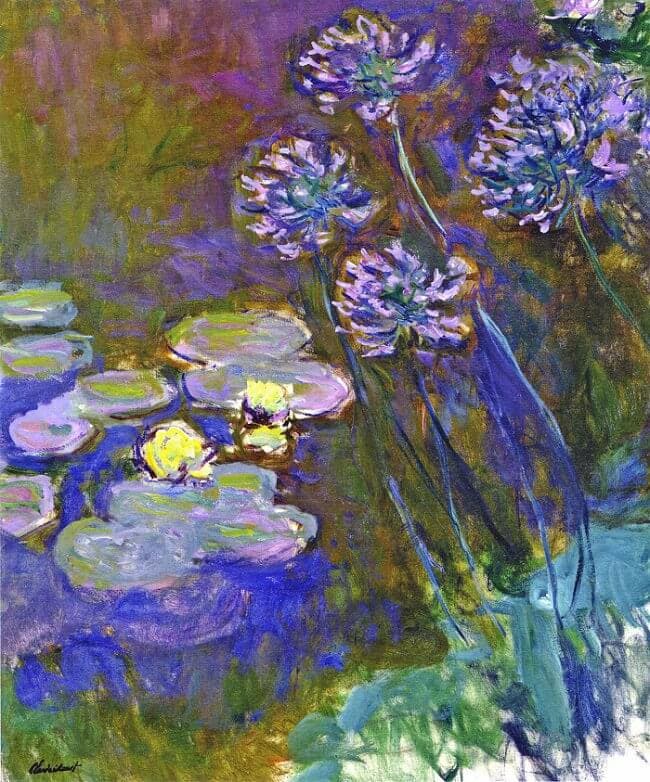
Water Lilies and Agapanthus
Claude Monet · 1914–17
Nymphéas en fleur
Claude Monet · c. 1914–17