Image: Musée Marmottan Monet, Paris · Public domain · via Wikimedia Commons
Le Pont japonais (The Japanese Bridge)
Claude Monet, 1918
Le Pont japonais is a 1918 canvas by Claude Monet, twice as wide as it is tall, in which the footbridge over his Giverny lily pond is a faint arch lost in yellow-green foliage. It is in the Musée Marmottan Monet, Paris.
- Artist
- Claude Monet
- Date
- 1918
- Medium
- Oil on canvas
- Dimensions
- 100 × 200 cm
- Collection
- Musée Marmottan Monet, Paris, France
- Movement
- Impressionism
- Catalogue
- Wildenstein 1913
- Nature & Landscape
- Water & Sea
Le Pont japonais (The Japanese Bridge) is a large oil painting Claude Monet made in 1918 of the wooden footbridge over the water-lily pond in his garden at Giverny. It measures 100 by 200 centimeters, a long horizontal format unusual among his bridge pictures, and it belongs to the Musée Marmottan Monet in Paris, which received it in 1966 with the bequest of the painter's son Michel Monet.
What you're looking at
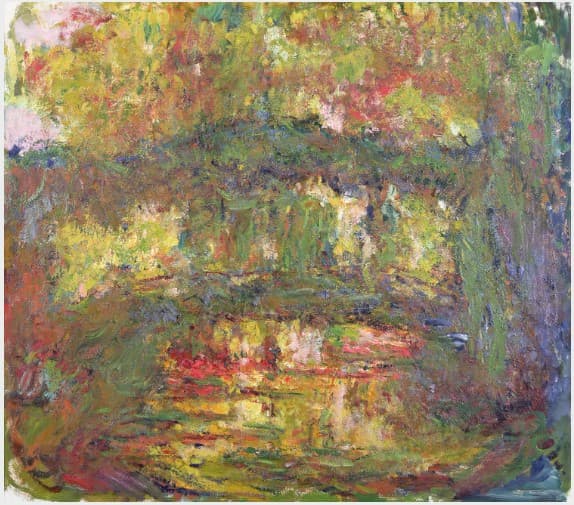
At first glance there is no bridge at all. The canvas is a field of yellow-green, olive and moss, laid on in loose, looping strokes. Look across the middle, though, and a thin, low arch appears, running almost the full width of the picture, a slightly darker band of green with a few touches of violet along its rail. Beneath it the pond is a pool of warm ochre and dull red, scattered with small pink-red dabs that read as water-lily flowers. The darker red patches along the bottom edge may be lily pads seen at a slant, or simply the shadowed water near the bank.
The right third of the canvas is a curtain of vertical strokes: long, wavering lines of green, yellow and purple that hang from top to bottom. These are the fronds of the weeping willow and the tall grasses at the edge of the pond. On the left, a tangle of green spirals and curls, with a few round loops, suggests the wisteria and shrubs growing over the bridge. At the lower left corner is a single dark red-brown patch with a curling green stem, perhaps a clump of foliage on the bank. Patches of bare canvas show along the top and right edges. Monet's studio stamp, Claude Monet, is at the lower right.
There is no sky, no horizon and almost no depth. The whole surface is the same distance from the eye.
Giverny in 1918
Monet built the footbridge around 1895 across the narrow western end of the pond he had dug in the land below his house. He painted it in a classic, clearly drawn series in 1899–1900, then let it rest. He came back to it in about 1918, at the age of 77, while he was also working on the huge water-lily panels that would become the Grandes Décorations for the Orangerie.
The circumstances were difficult. He had been diagnosed with cataracts in 1912, his wife Alice had died in 1911 and his elder son Jean in 1914,, and the First World War was still being fought for most of the year in which this picture was made. The late bridges are often read in the light of his failing eyesight, which blurred forms and dulled and warmed his perception of color. The Marmottan itself describes this canvas as a subjective vision built from masses of light and shade.
How it was painted
The proportions, one to two, connect this picture to the large decorations Monet was working on at the same time, many of which also stretch to two meters wide. The brushwork is fast and calligraphic: hooks, spirals, long drags and short stabs, each mark left as it fell. Colors are mixed partly on the canvas, so that a green stroke picks up yellow from the layer beneath. Compared with the 1899 bridges, such as Bridge over a Pond of Water Lilies at the Met, where the green rail and every plank are legible, here the bridge survives only as rhythm.
How this version differs
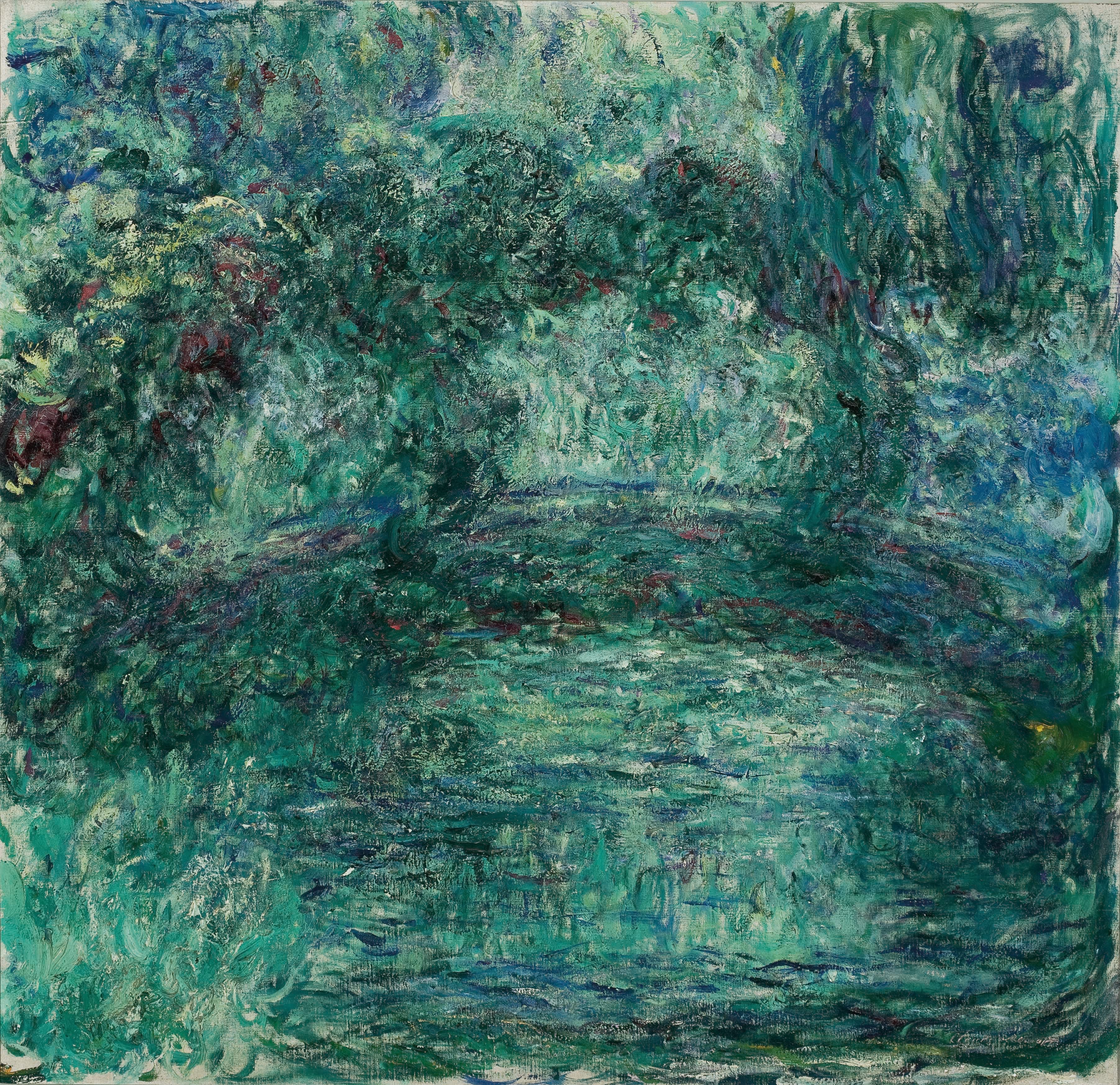
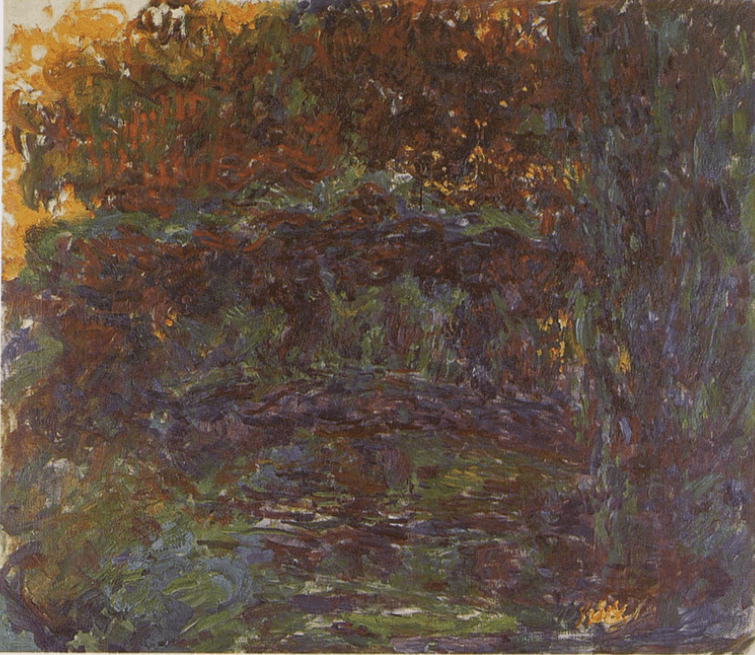
Most of the late bridge pictures are close to square, around 89 by 100 or 89 by 116 centimeters, and many of them, such as the red Marmottan Japanese Bridge, burn with reds and oranges. This one is different on both counts. It is a panorama, and it stays in a mild, sunlit yellow-green, with the reds kept low and scattered. Seen beside the bluer Japanese Bridge of 1918–19 or the deep green São Paulo version, it looks like the gentlest of the group, a summer midday rather than a dusk.
For the whole sequence, from the first bridge paintings to the last, see the Japanese Footbridge series. For the house and gardens, see Giverny.
Where to see it
The painting is in the Musée Marmottan Monet in the 16th arrondissement of Paris, which holds the largest single collection of Claude Monet's work, much of it the late garden paintings that stayed in his studio until his death in 1926. Displays rotate; see Monet at the Musée Marmottan.
Questions & answers
Where is Monet's 1918 Japanese Bridge?
It is in the Musée Marmottan Monet in Paris (inventory 5077). It came to the museum in 1966 as part of the bequest of Michel Monet, the painter's younger son, along with most of the late garden pictures.
When and where was it painted?
Monet painted it in 1918 in his water garden at Giverny, Normandy, where he had built the arched wooden footbridge across the lily pond in the mid-1890s. He was 77 and suffering from cataracts.
What does the painting show?
It shows the footbridge as a faint low arch across a wide canvas, almost buried in yellow-green foliage, with the willow's hanging fronds on the right and the lily pond below dotted with pink-red flowers.
How is it different from Monet's other Japanese bridge paintings?
It is a long panorama, 100 by 200 centimeters, while most late bridges are near-square. Its palette is a soft yellow-green rather than the hot reds and oranges of many of the 1918–24 versions.
More by the artist
Claude Monet
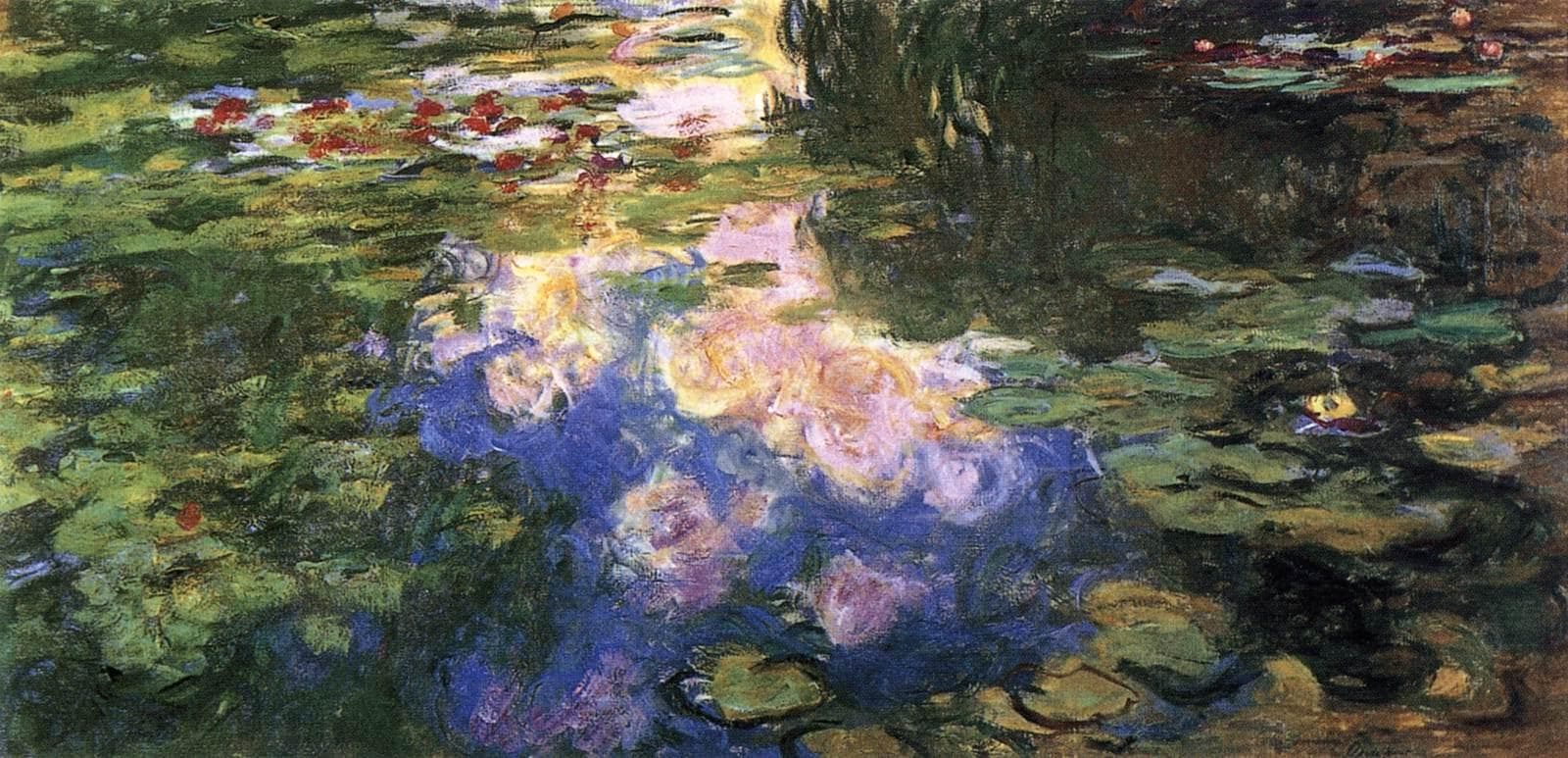
Water-Lily Pond (Le Bassin aux nymphéas), 1917–19
Claude Monet · 1917–19
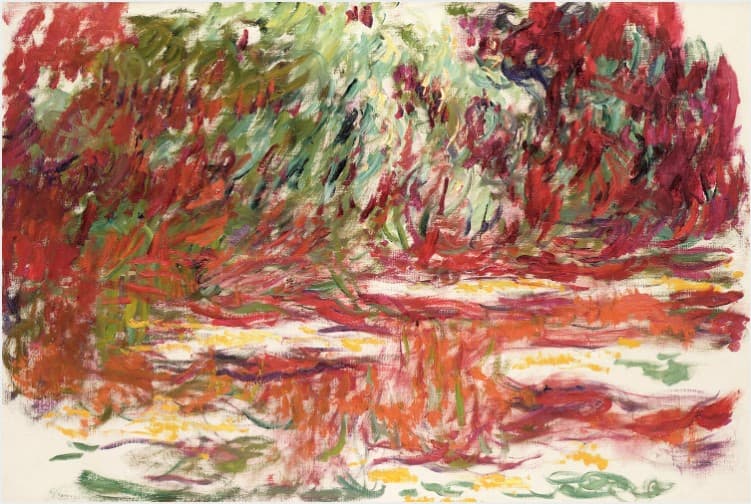
Water-Lily Pond (Bassin aux nymphéas, 1918–19)
Claude Monet · 1918–19
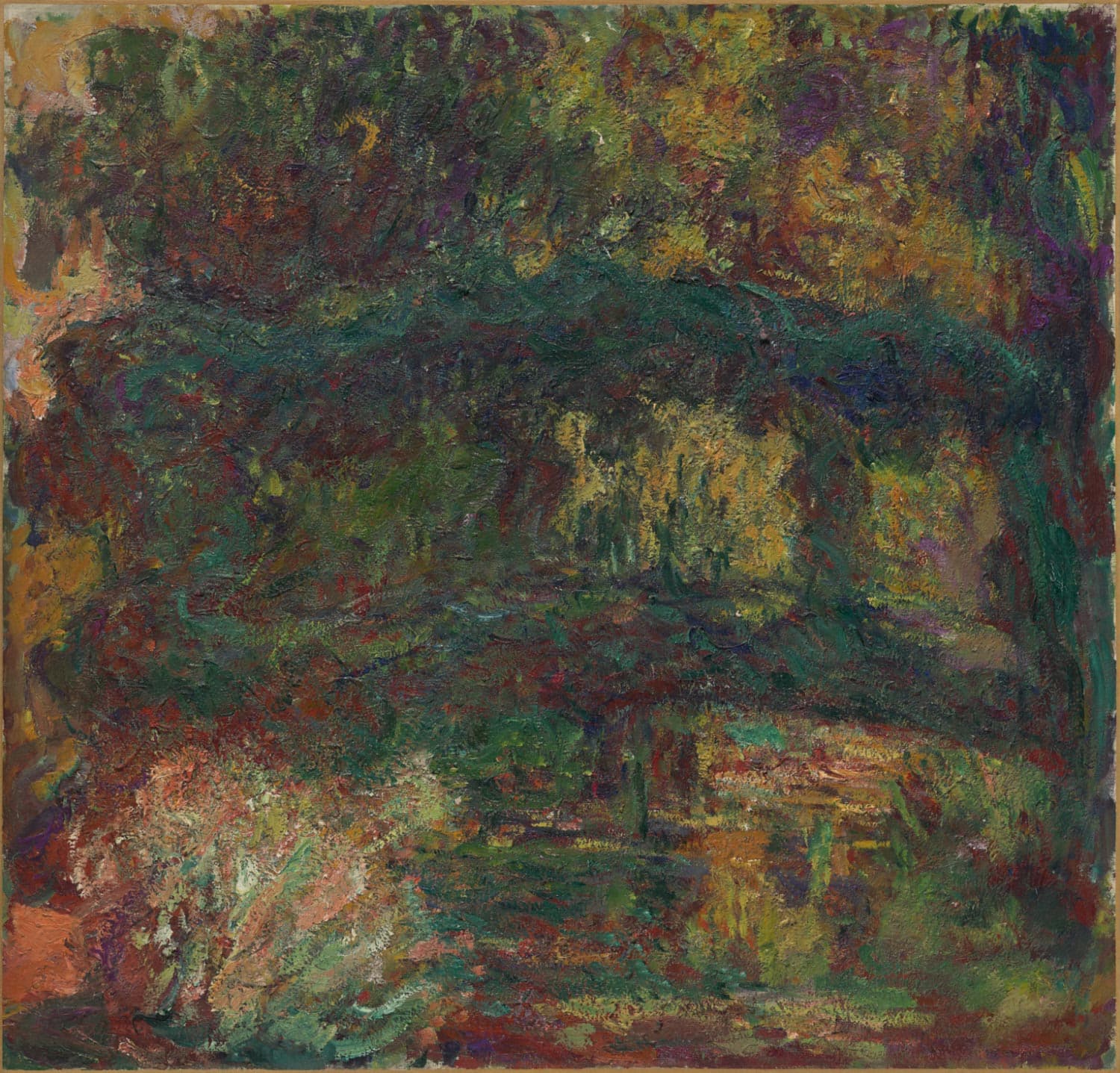
Nymphéas, Japanese Bridge
Claude Monet · 1918–26
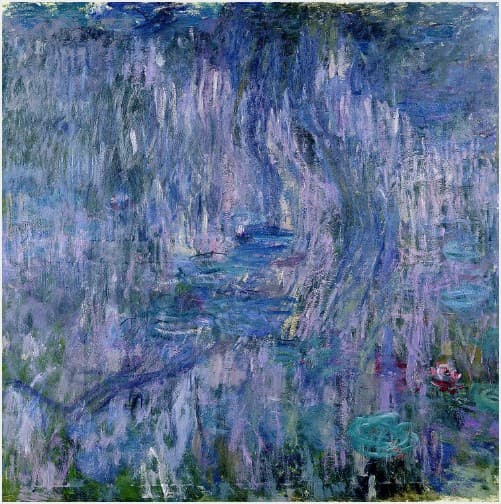
Water-Lilies, Reflection of a Weeping Willow
Claude Monet · 1916–19
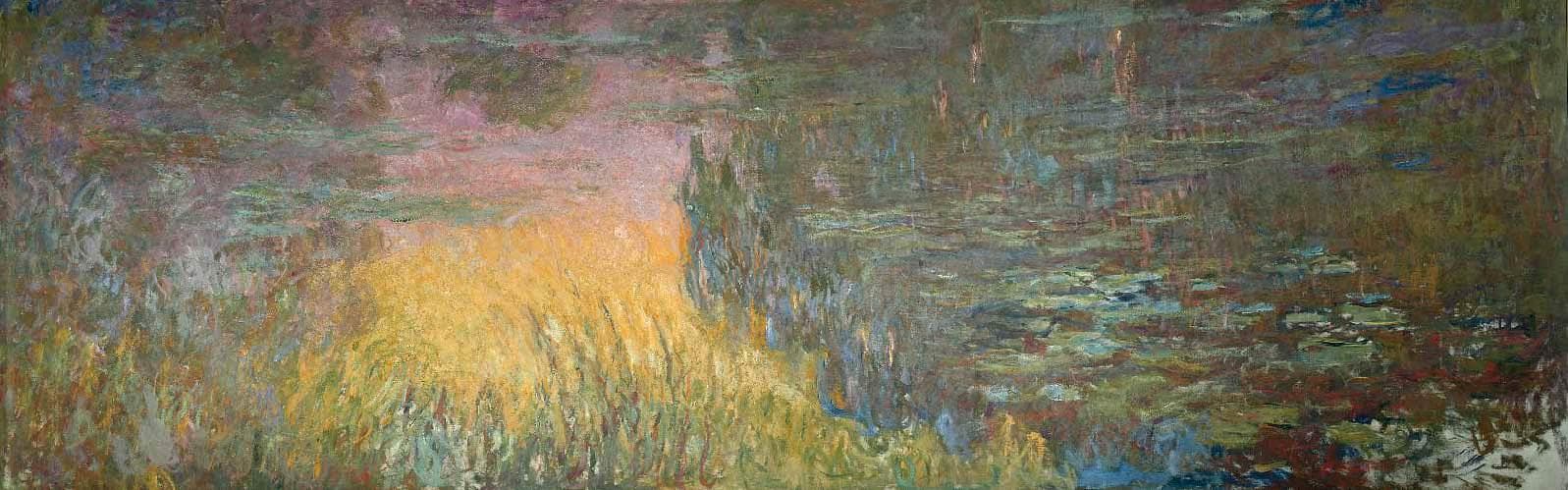
Water Lilies: Setting Sun
Claude Monet · 1914–26
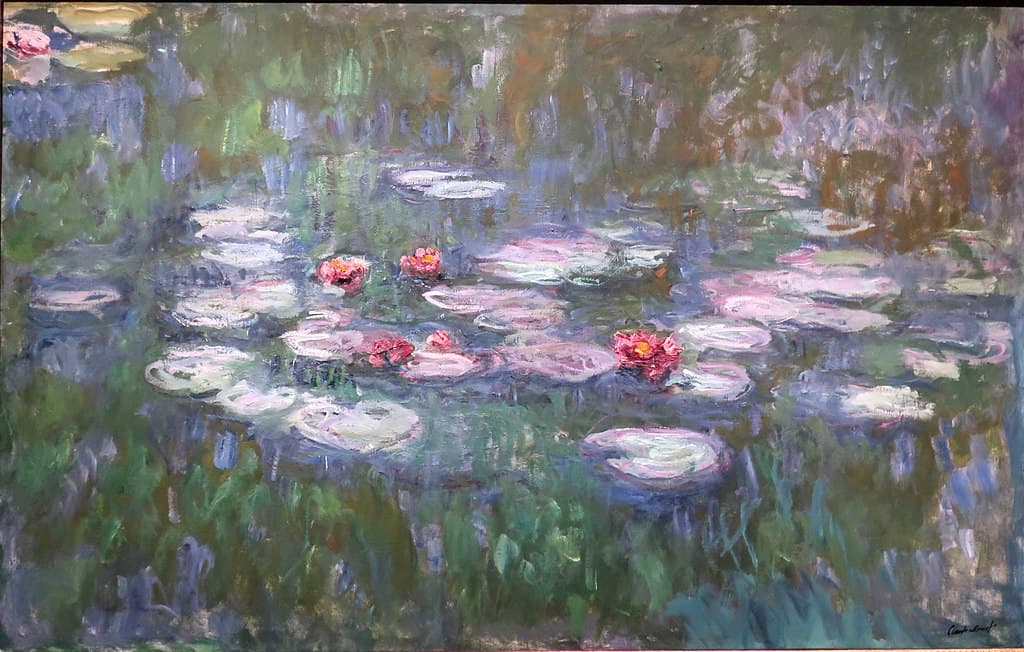
Nymphéas (Water Lilies)
Claude Monet · c. 1914–1919
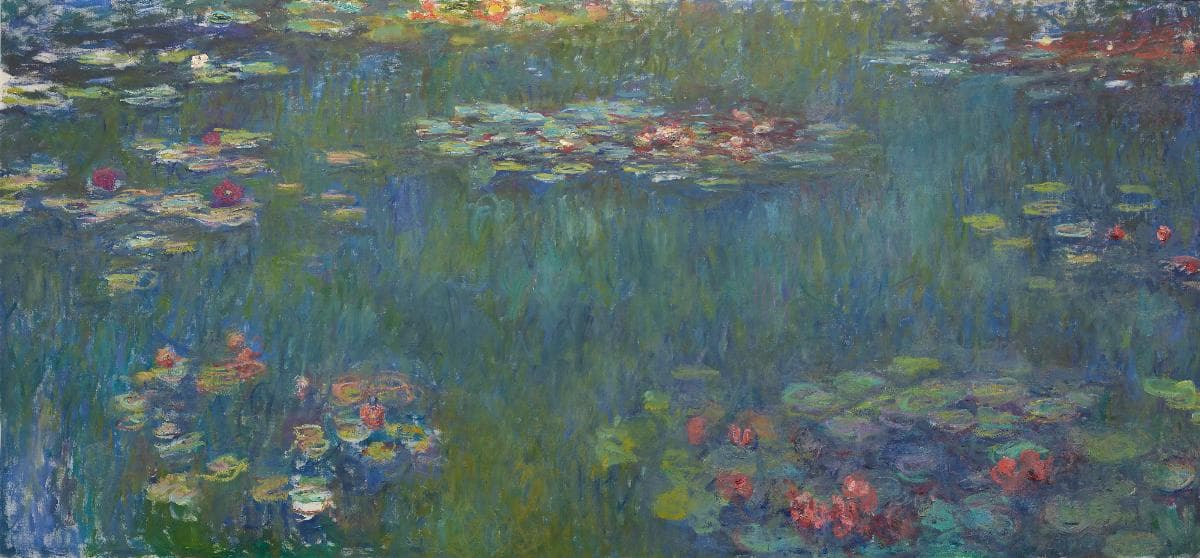
The Water-Lily Pond, Green Reflections
Claude Monet · 1920–26

The Water Lilies: The Clouds
Claude Monet · c. 1914–26
Also painted in 1918
The same year
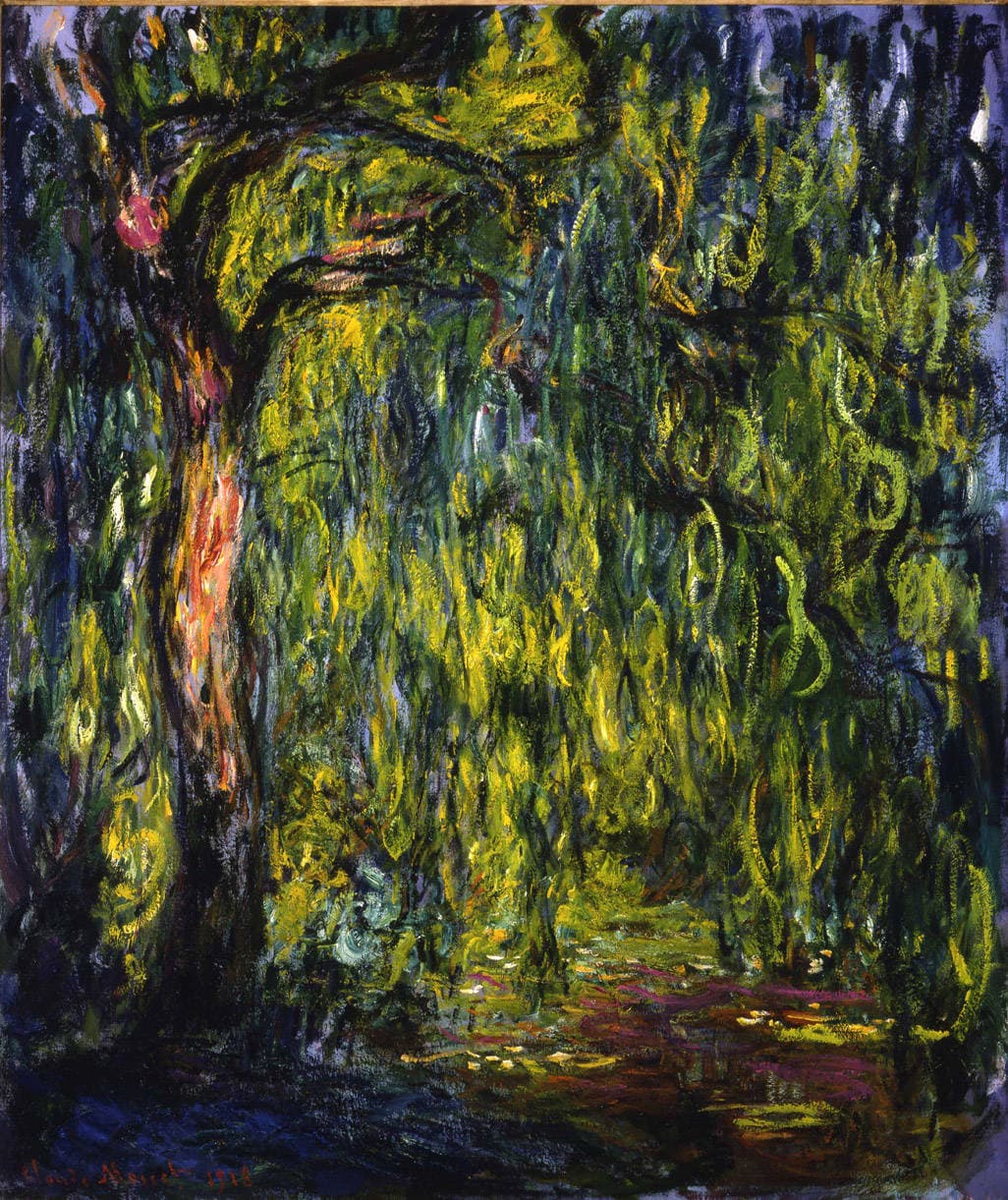
Weeping Willow (Columbus)
Claude Monet · 1918
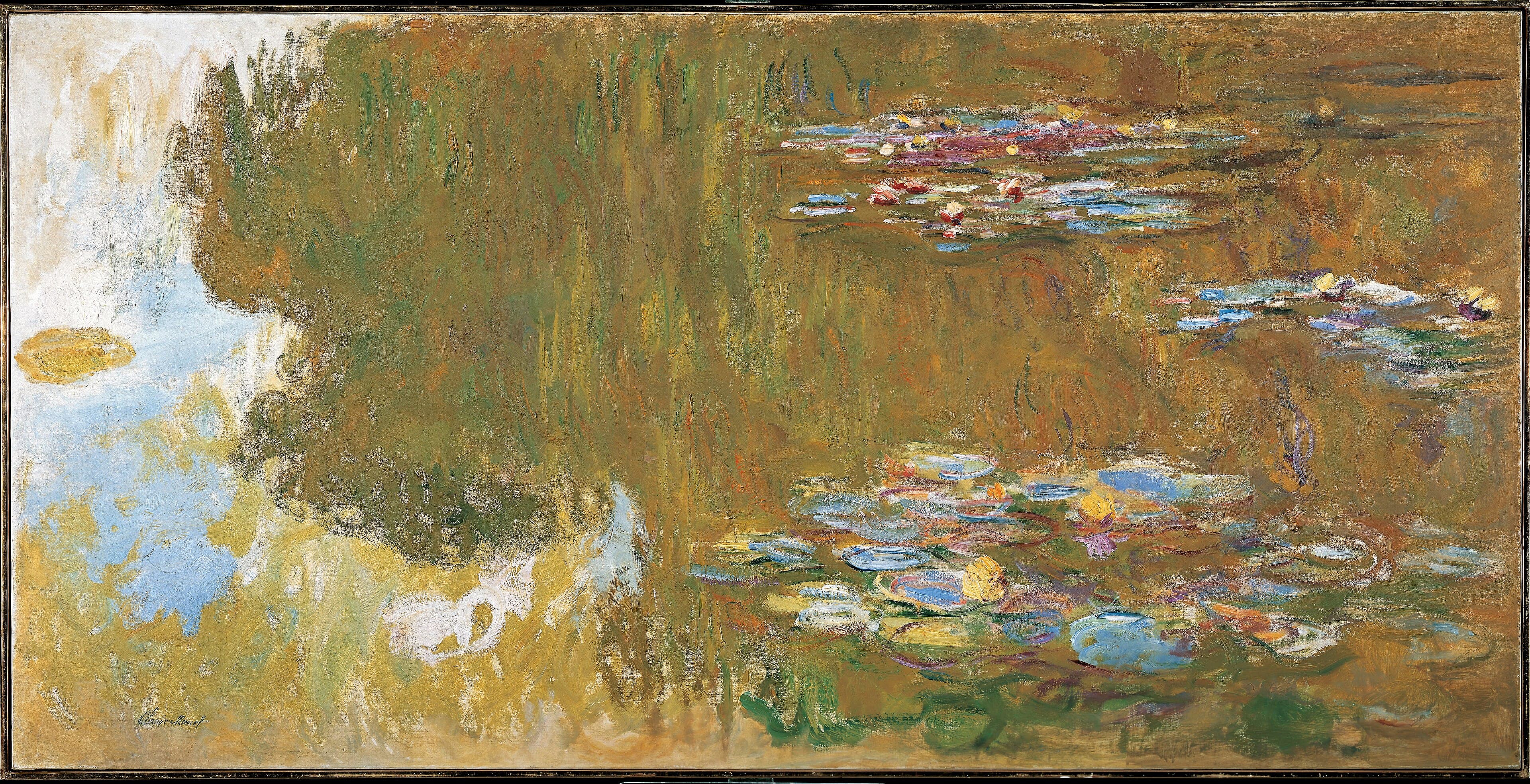
The Water Lily Pond (Albertina)
Claude Monet · 1917–19
Corner of the Water-Lily Pond
Claude Monet · 1918
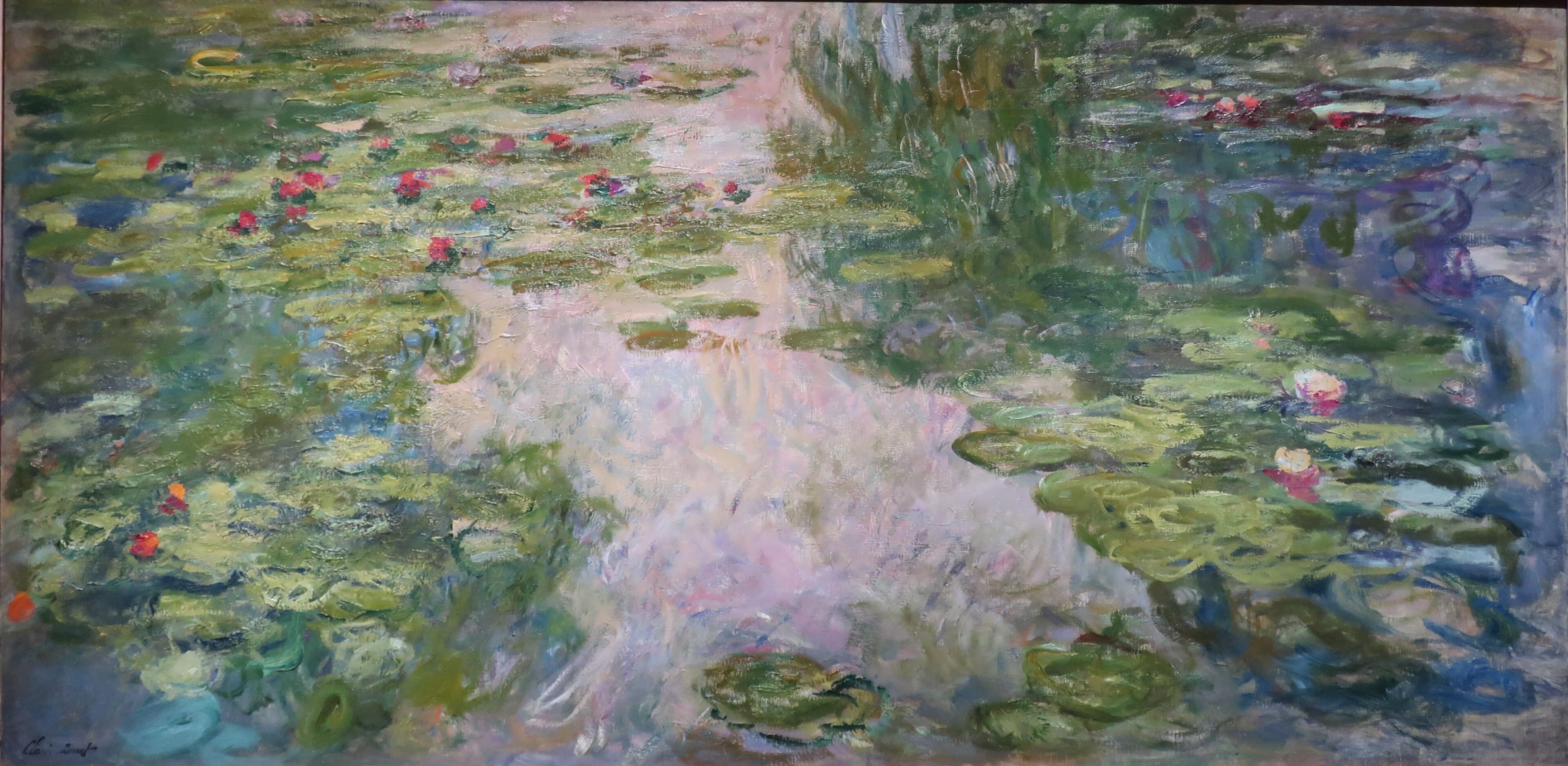
Water Lilies (Honolulu Museum of Art)
Claude Monet · 1917–19
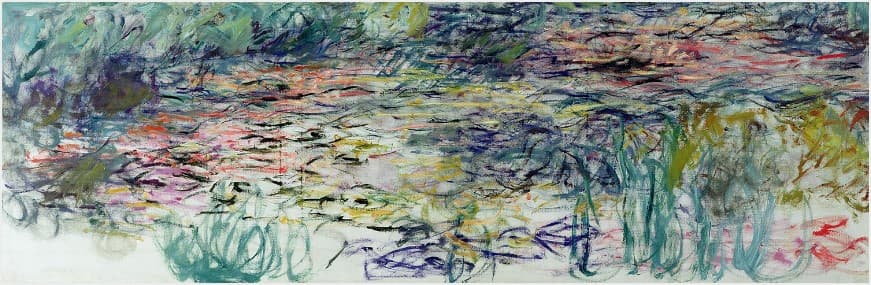
Nymphéas (Musée Marmottan Monet, 1917–19)
Claude Monet · 1917–19
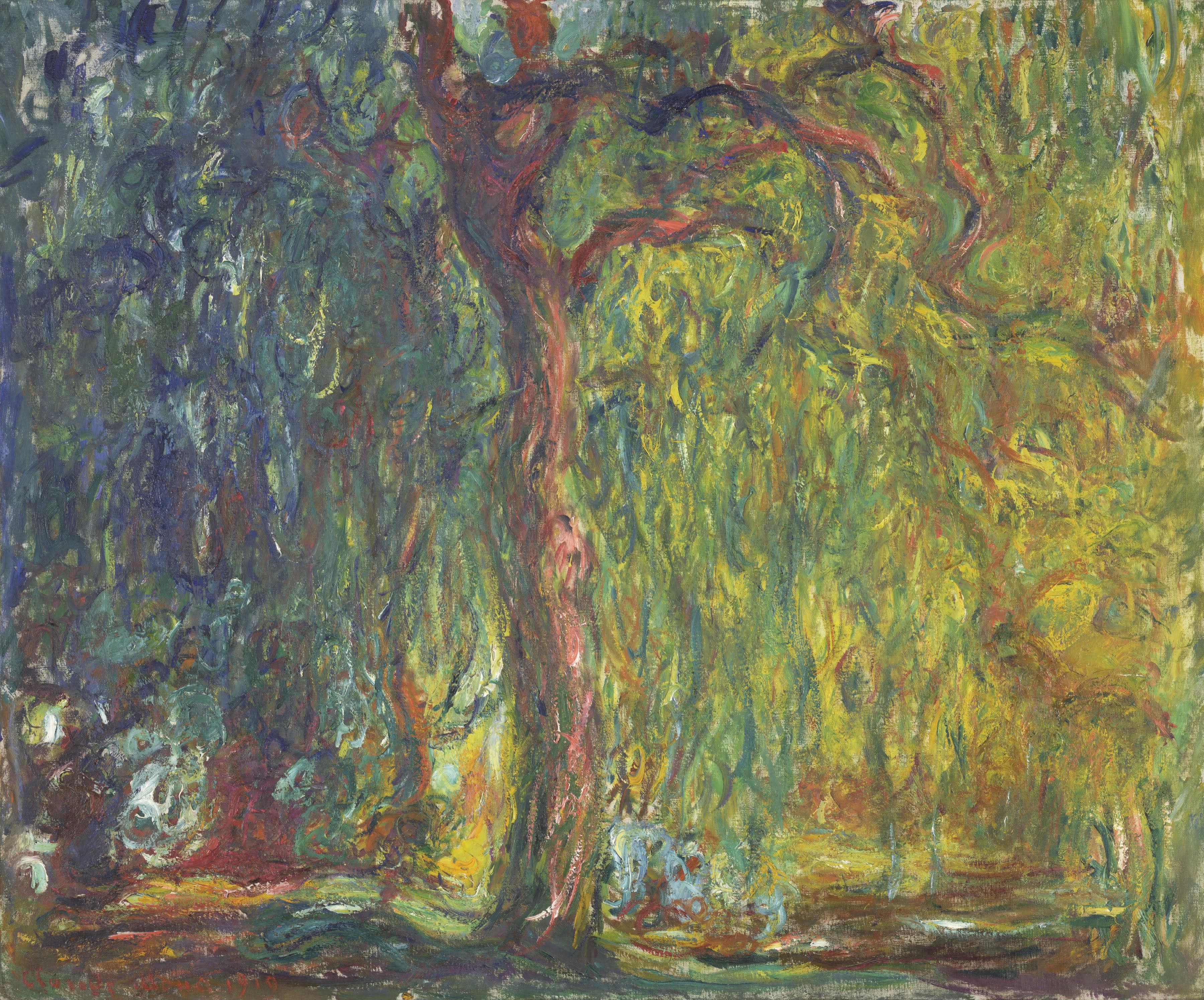
Weeping Willow
Claude Monet · 1918–19
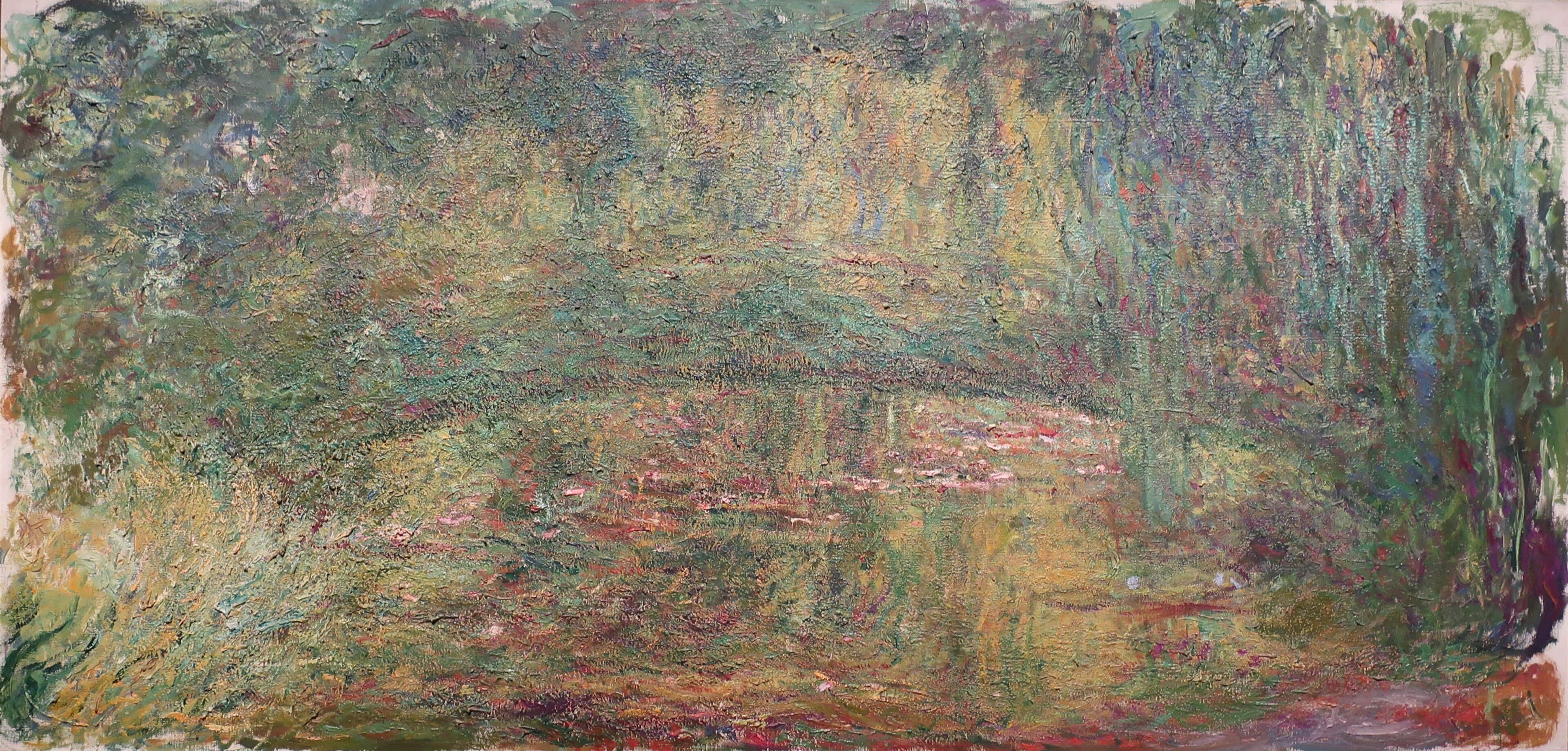
The Japanese Bridge
Claude Monet · 1918
Kindred works
You may also study
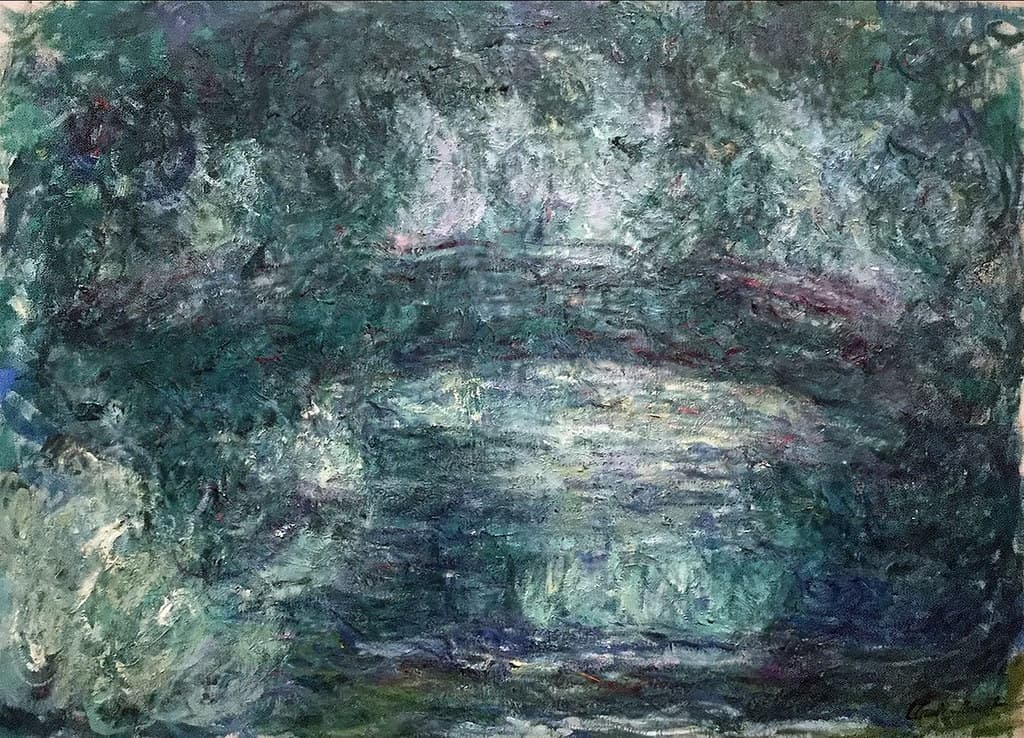
Japanese Bridge
Claude Monet · 1918–19
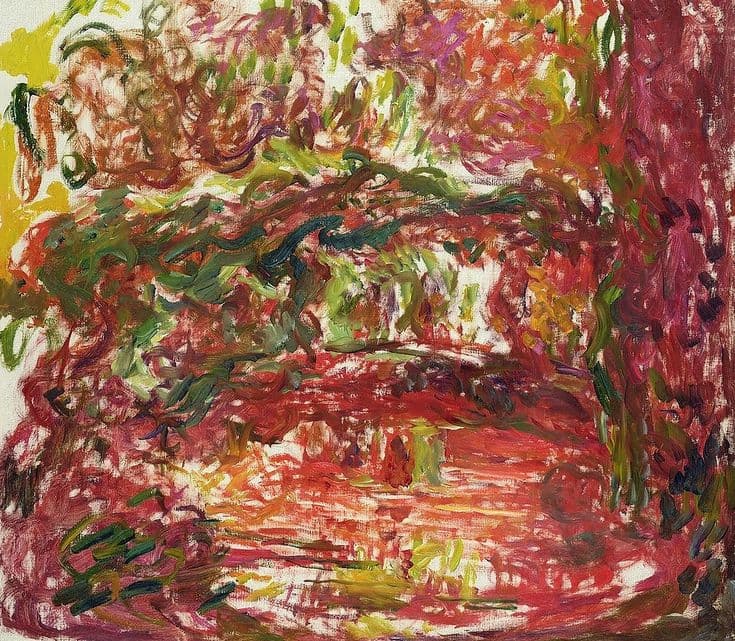
The Japanese Bridge
Claude Monet · 1918–24
Le pont japonais
Claude Monet · 1918–24
The Japanese Bridge over the Water-Lily Pond in Giverny
Claude Monet · 1920–24

Bridge over a Pond of Water Lilies
Claude Monet · 1899
Water Lilies (1904, MuMa Le Havre)
Claude Monet · 1904
The Japanese Bridge
Claude Monet · 1918–24
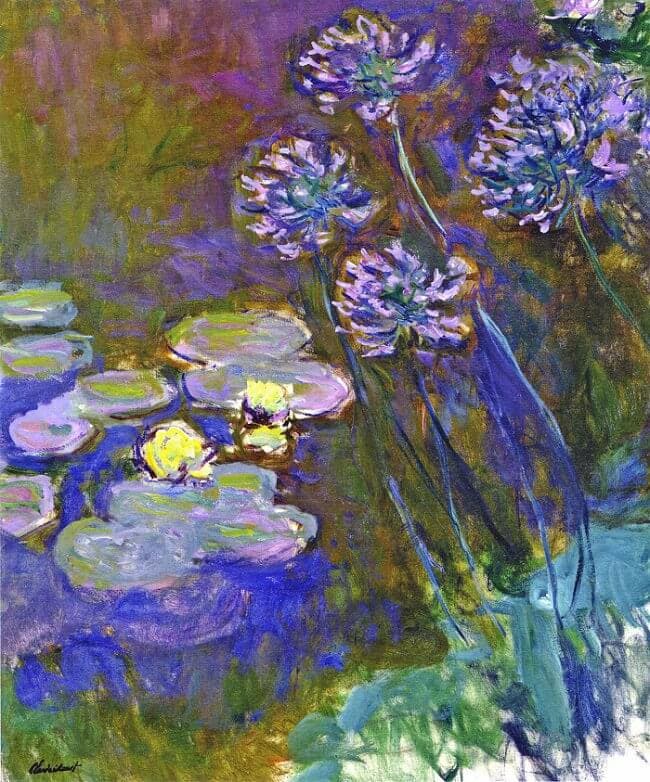
Water Lilies and Agapanthus
Claude Monet · 1914–17