Image: Musée Marmottan Monet, Paris · Public domain · via Wikimedia Commons
Nymphéas (Musée Marmottan Monet, 1917–19)
Claude Monet, 1917–19
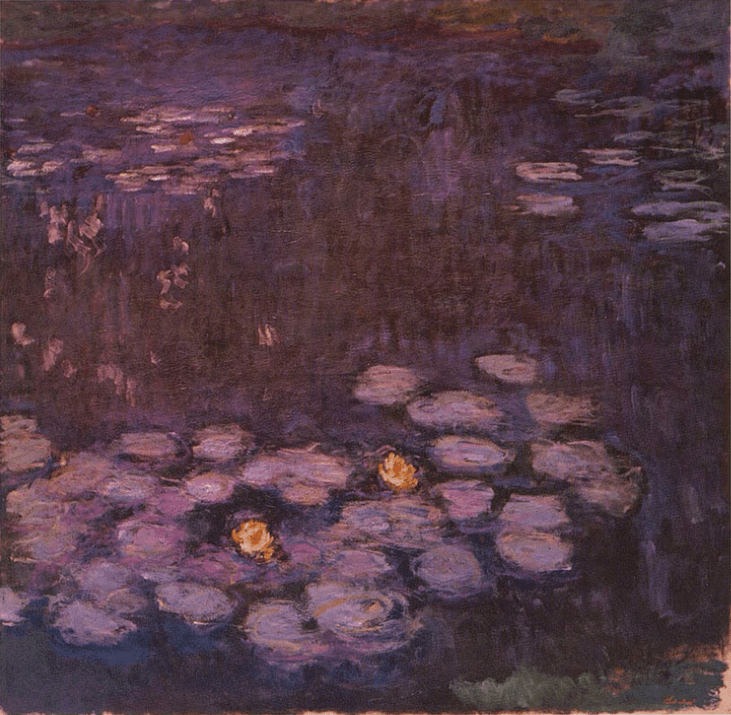
This Nymphéas is a three-meter-long, one-meter-high canvas Claude Monet painted at Giverny in 1917–19: a frieze of pond, reflections and reeds in loose, calligraphic strokes on bare canvas. It is in the Musée Marmottan Monet, Paris.
- Artist
- Claude Monet
- Date
- 1917–19
- Medium
- Oil on canvas
- Dimensions
- 100 × 300 cm
- Collection
- Musée Marmottan Monet, Paris, France
- Movement
- Impressionism
- Catalogue
- Wildenstein 1902
- Nature & Landscape
- Water & Sea
This Nymphéas (Water Lilies) is a long, narrow canvas, 100 × 300 cm, that Claude Monet painted of his pond at Giverny between 1917 and 1919. Unsigned, it came to the Musée Marmottan Monet in Paris with Michel Monet's bequest in 1966 (inv. 5118). It is number 1902 in the Wildenstein catalogue raisonné. Its frieze-like proportions, three times as wide as it is high, make it one of the most unusual formats in his late work.
What you're looking at
The canvas reads like a strip unrolled along the edge of the pond. Across the top runs a band of darker strokes in green, blue and violet, the reflection of trees and bushes on the far bank. Below it, the water is a field of short, horizontal, almost written marks in rose, coral, lemon, lilac and black, scattered across pale ground: lily pads and flowers reduced to flicks of the brush.
Along the bottom, in front of the water, tufts of reeds or iris leaves rise in long, upright strokes of teal and green, and in the lower right corner a few touches of red stand out. Much of the lower part of the canvas is left almost bare, so the pale priming shows through as light on the surface.
The effect is airy and fast, more like a drawing in colored inks than an oil painting. There is no single light effect; the picture seems built from glances along the bank rather than one steady look.
Where and when it was painted
In the late 1910s Monet was working on the great decorative cycle of water lilies, and the problem of how to make a picture continue sideways, around a room, was constantly on his mind. Long canvases like this one allowed him to think about the pond as a frieze. The final Orangerie panels are two meters high and up to six meters wide, built from joined canvases, and this smaller strip shares their horizontal sweep.
How it was painted
This is one of the freest canvases in the Marmottan. The strokes are calligraphic: short dashes, hooks, curls and long verticals, each placed once and left. Color is applied straight from the brush, with little mixing, and the bare ground plays as an active color. The handling is close to the late Japanese-bridge and rose-arch pictures painted at the same time, and it shows how much Monet's touch had loosened in his late seventies.
How this version differs
Most of the late water lilies are square, upright or roughly twice as wide as high. This three-to-one strip is rarer. Compare the Marmottan's Bassin aux nymphéas of 1918–19, painted with the same urgency but in a red key, or the large square Water-Lilies, Reflection of a Weeping Willow, where the touch is dense rather than open. The long Water-Lilies in London, also wider than tall, is fully painted where this one is mostly air. In the Water Lilies series it stands out as a sketch on a mural scale.
A detail to look for
Near the right end of the canvas, a cluster of upright strokes in olive and gold rises from the bottom edge, almost like a separate plant growing across the pond. These are the reeds or iris leaves at the water's edge, and they are painted with more care than anything else on the canvas, each blade a single sure stroke. Then look just above them, where a scatter of coral and red marks sits on the water: probably flowers, possibly reflected roses. The relationship between upright plants in front and flat water behind is the whole subject of this strip, and Monet would later develop it in the Orangerie panels that include agapanthus and irises along their lower edge.
Where to see it
The Musée Marmottan Monet in Paris displays its large collection of late Monet in a dedicated gallery, with works rotating and touring. For the artist, see Claude Monet; for the pond itself, see Giverny.
Questions & answers
Where is this long Monet Nymphéas?
It is in the Musée Marmottan Monet in Paris (inventory 5118). It came to the museum in 1966 with the bequest of Michel Monet, the painter's son.
When was it painted?
The Marmottan dates it to 1917–19. Monet painted it at Giverny while working on the water-lily decorations later installed at the Musée de l'Orangerie. It is Wildenstein number 1902.
What does the painting show?
It shows a long strip of Monet's lily pond: reflections of bushes along the top, pads and flowers reduced to quick colored marks across the water, and reeds rising along the bottom edge, with much bare canvas left showing.
Why is it so long and narrow?
At 100 × 300 cm it is three times as wide as it is high, a format that let Monet treat the pond as a frieze. He was then working on how to make the water-lily paintings continue around the walls of a room.
More by the artist
Claude Monet
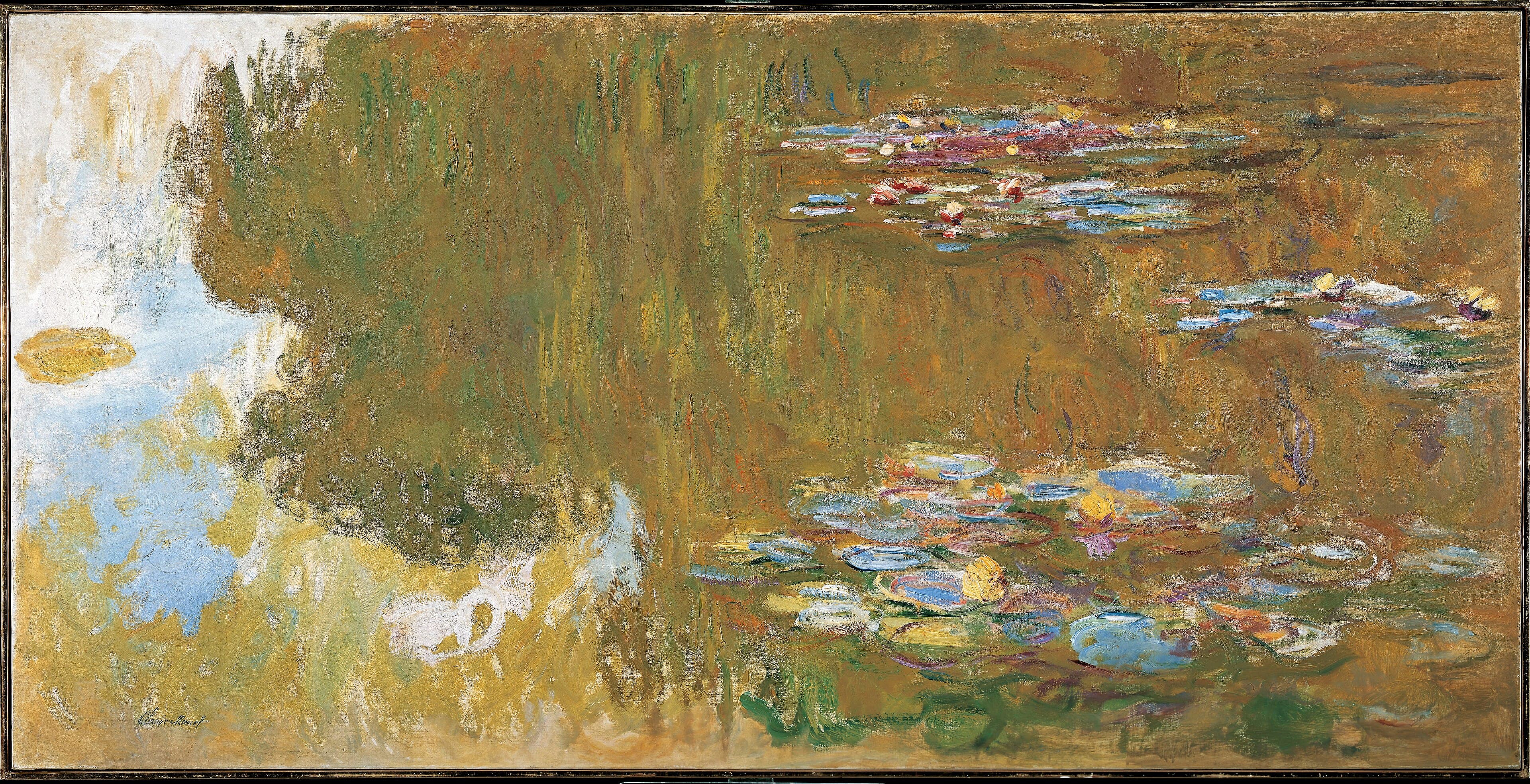
The Water Lily Pond (Albertina)
Claude Monet · 1917–19
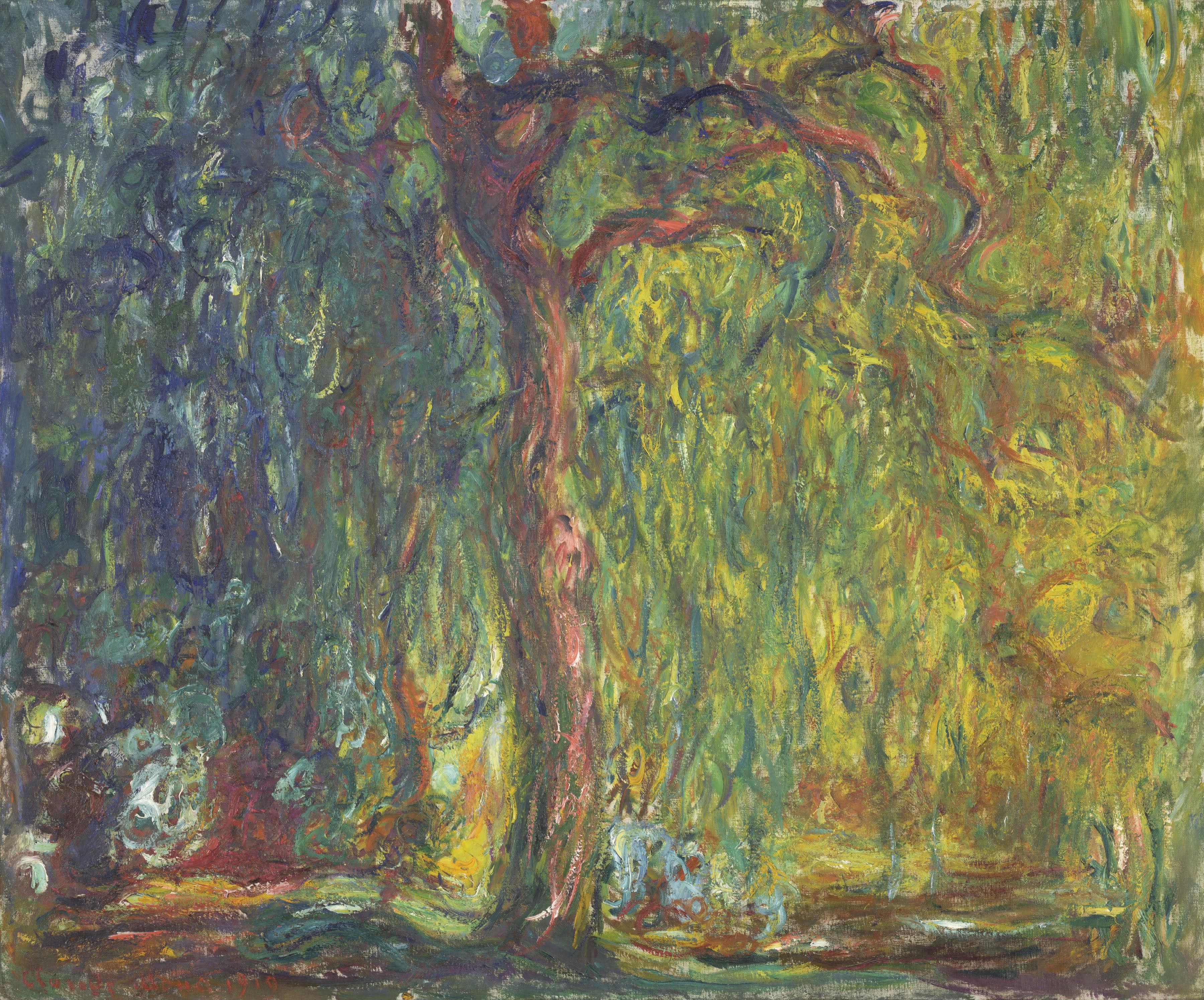
Weeping Willow
Claude Monet · 1918–19
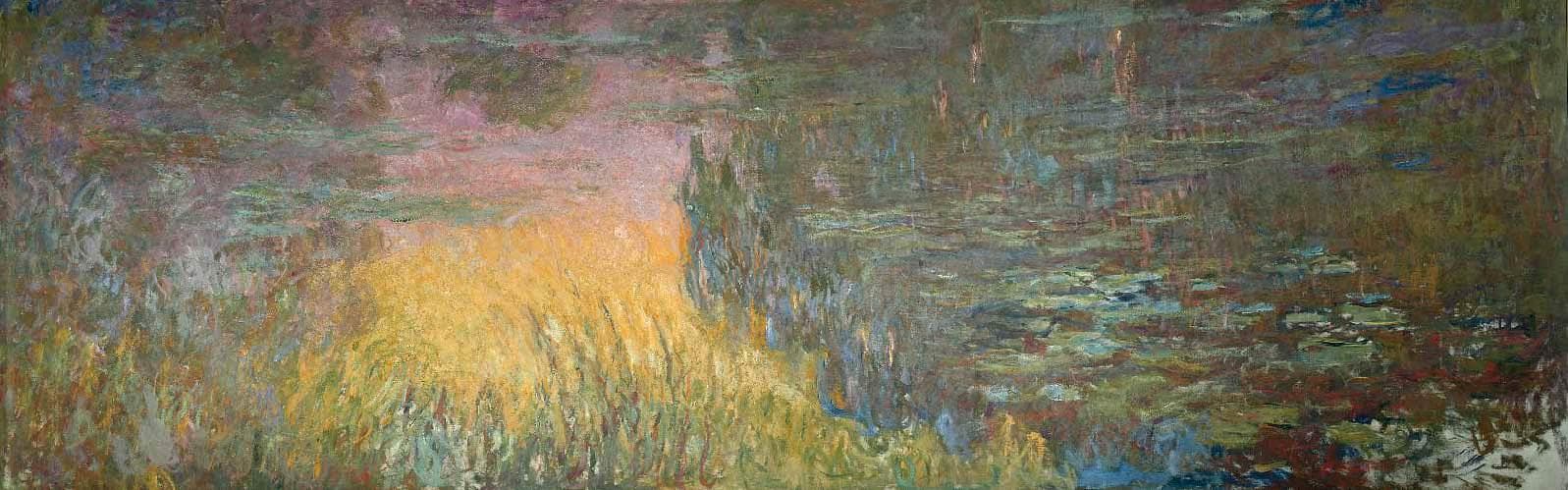
Water Lilies: Setting Sun
Claude Monet · 1914–26
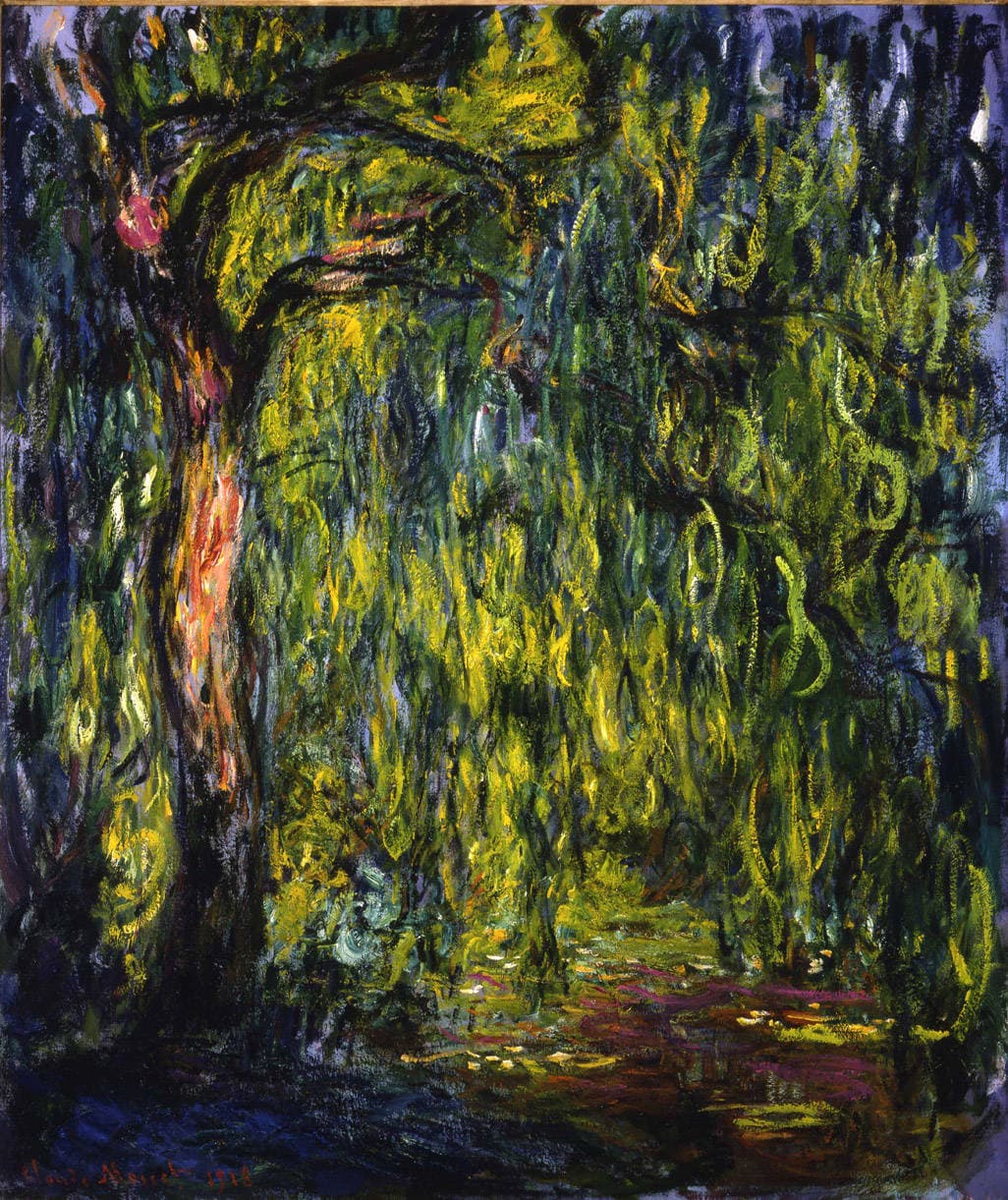
Weeping Willow (Columbus)
Claude Monet · 1918
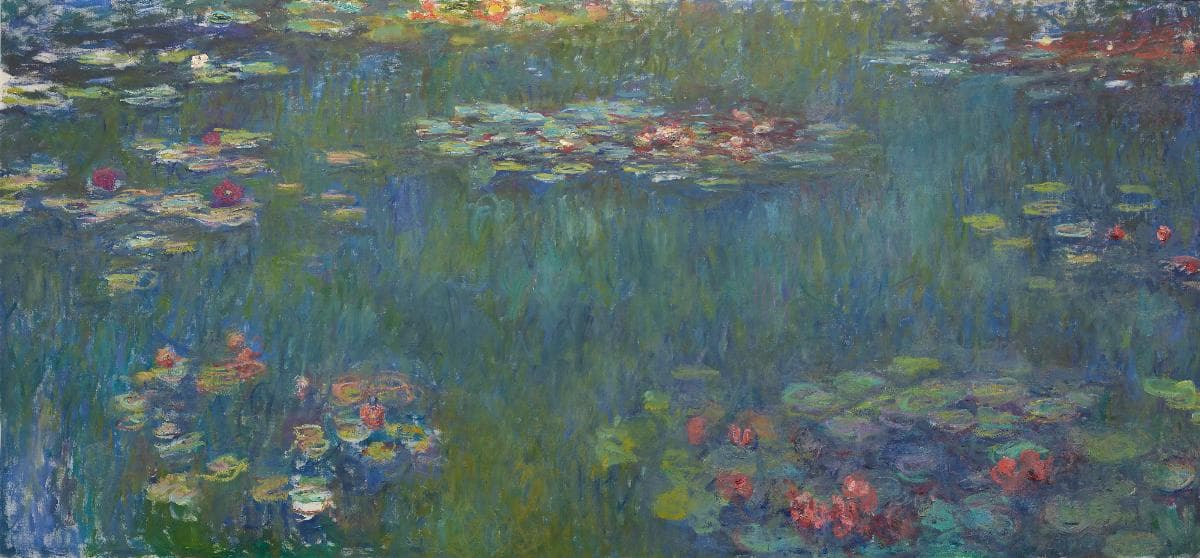
The Water-Lily Pond, Green Reflections
Claude Monet · 1920–26
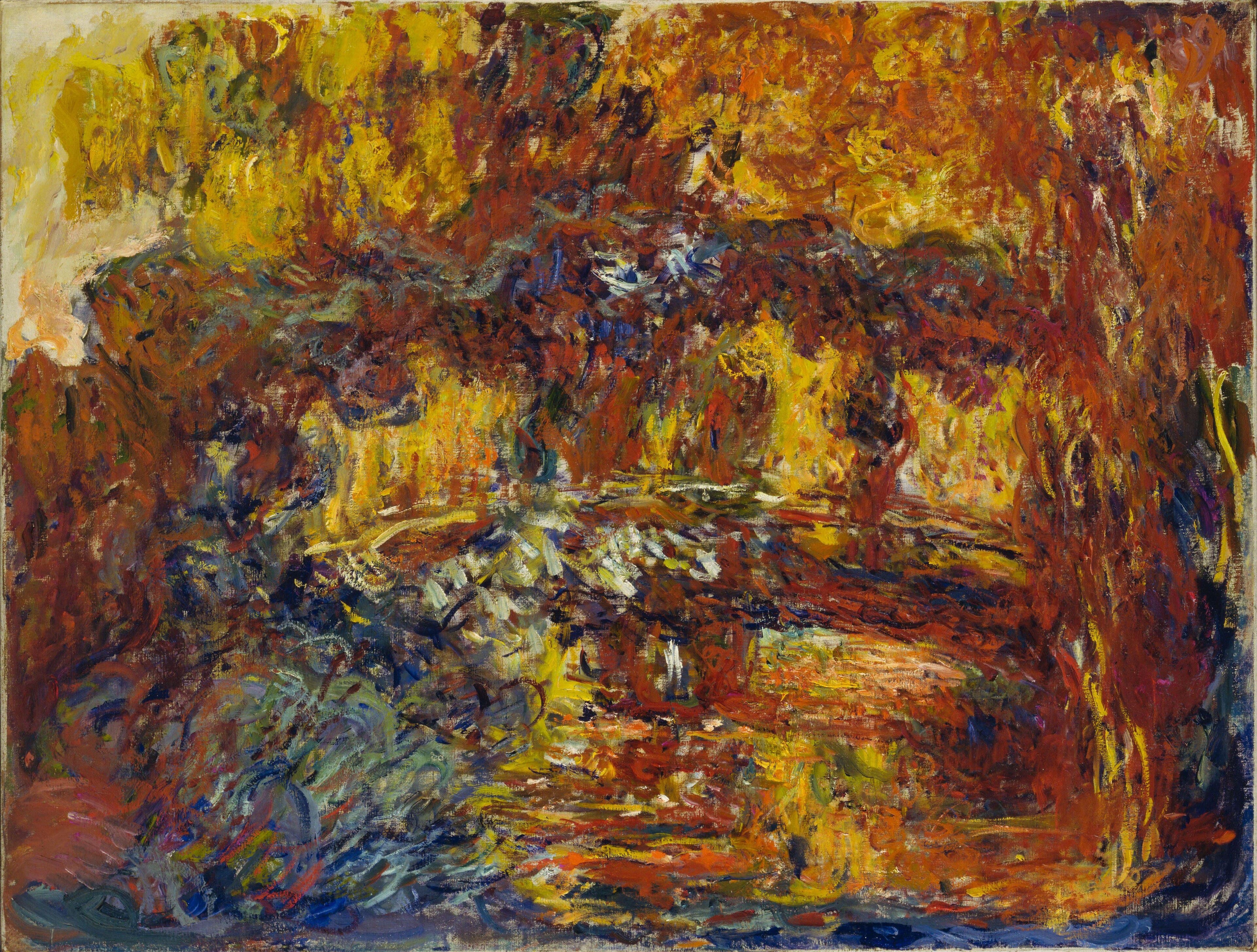
The Japanese Footbridge (MoMA)
Claude Monet · c. 1920–22
Corner of the Water-Lily Pond
Claude Monet · 1918
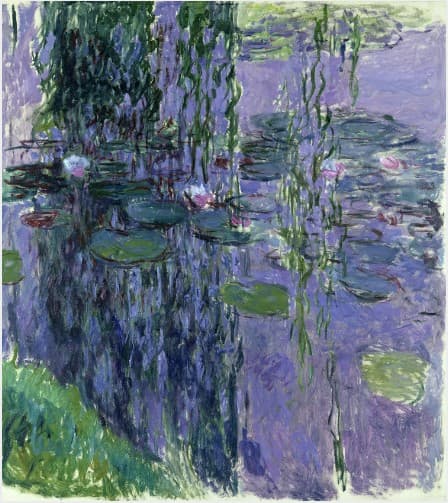
Nymphéas (Musée Marmottan Monet, 1916–19)
Claude Monet · 1916–19
Also painted in 1918
The same year
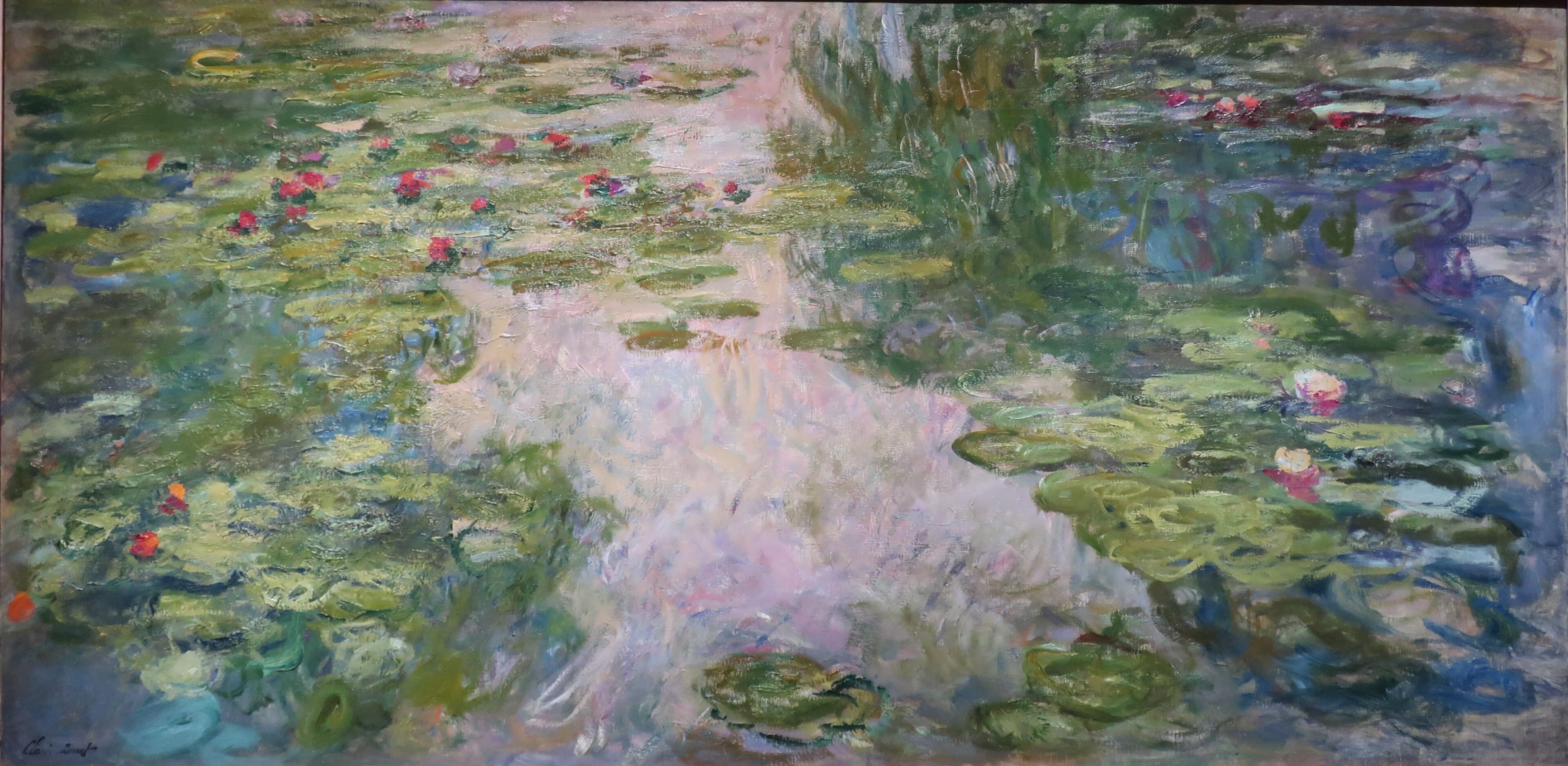
Water Lilies (Honolulu Museum of Art)
Claude Monet · 1917–19
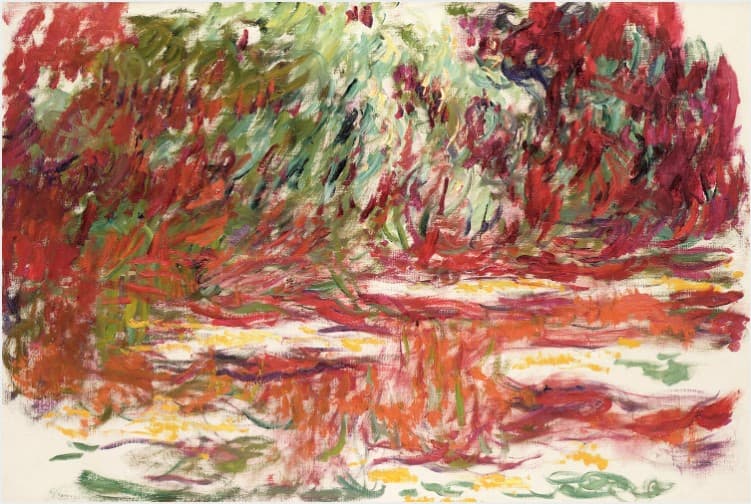
Water-Lily Pond (Bassin aux nymphéas, 1918–19)
Claude Monet · 1918–19
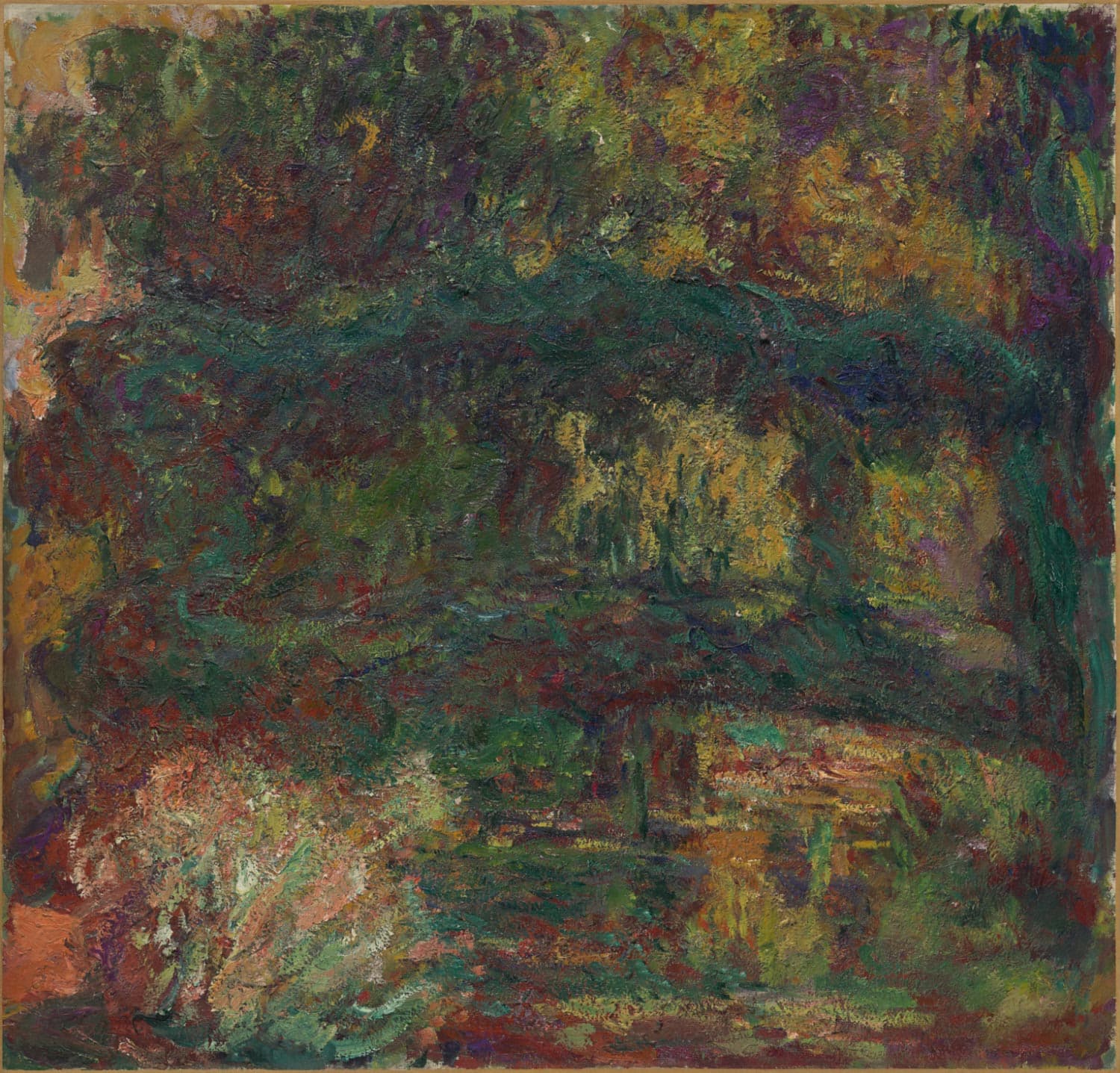
Nymphéas, Japanese Bridge
Claude Monet · 1918–26
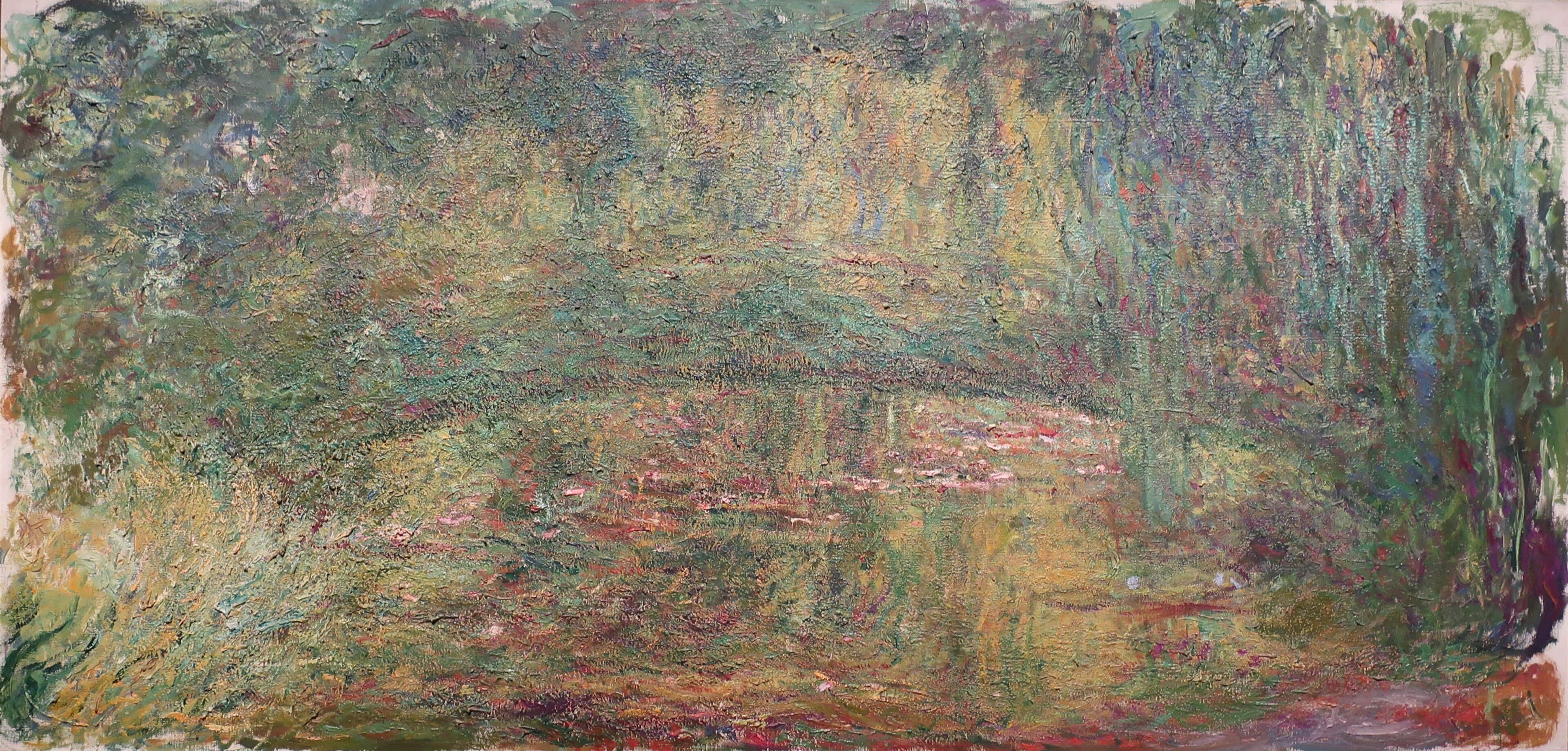
The Japanese Bridge
Claude Monet · 1918
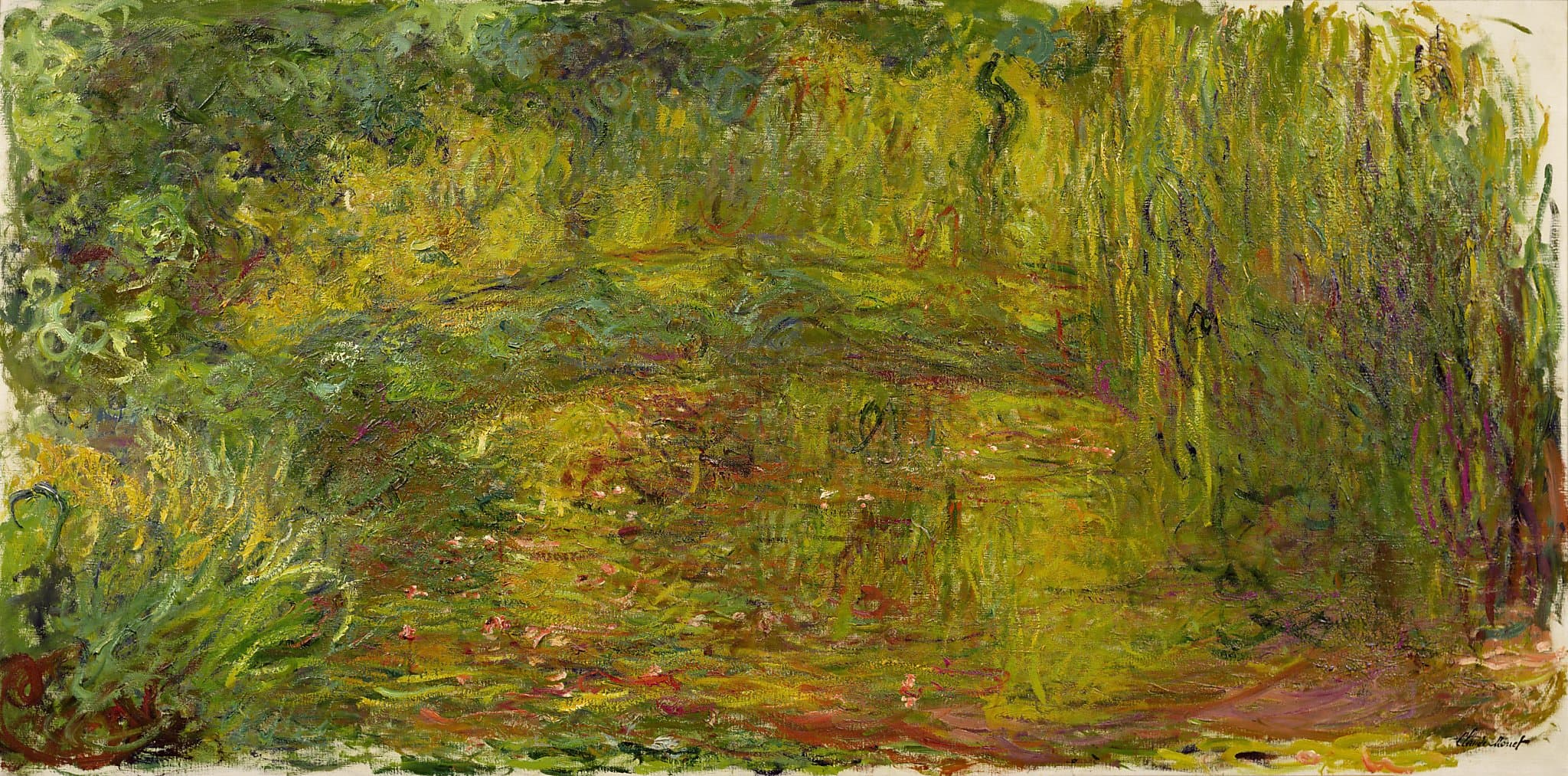
Le Pont japonais (The Japanese Bridge)
Claude Monet · 1918
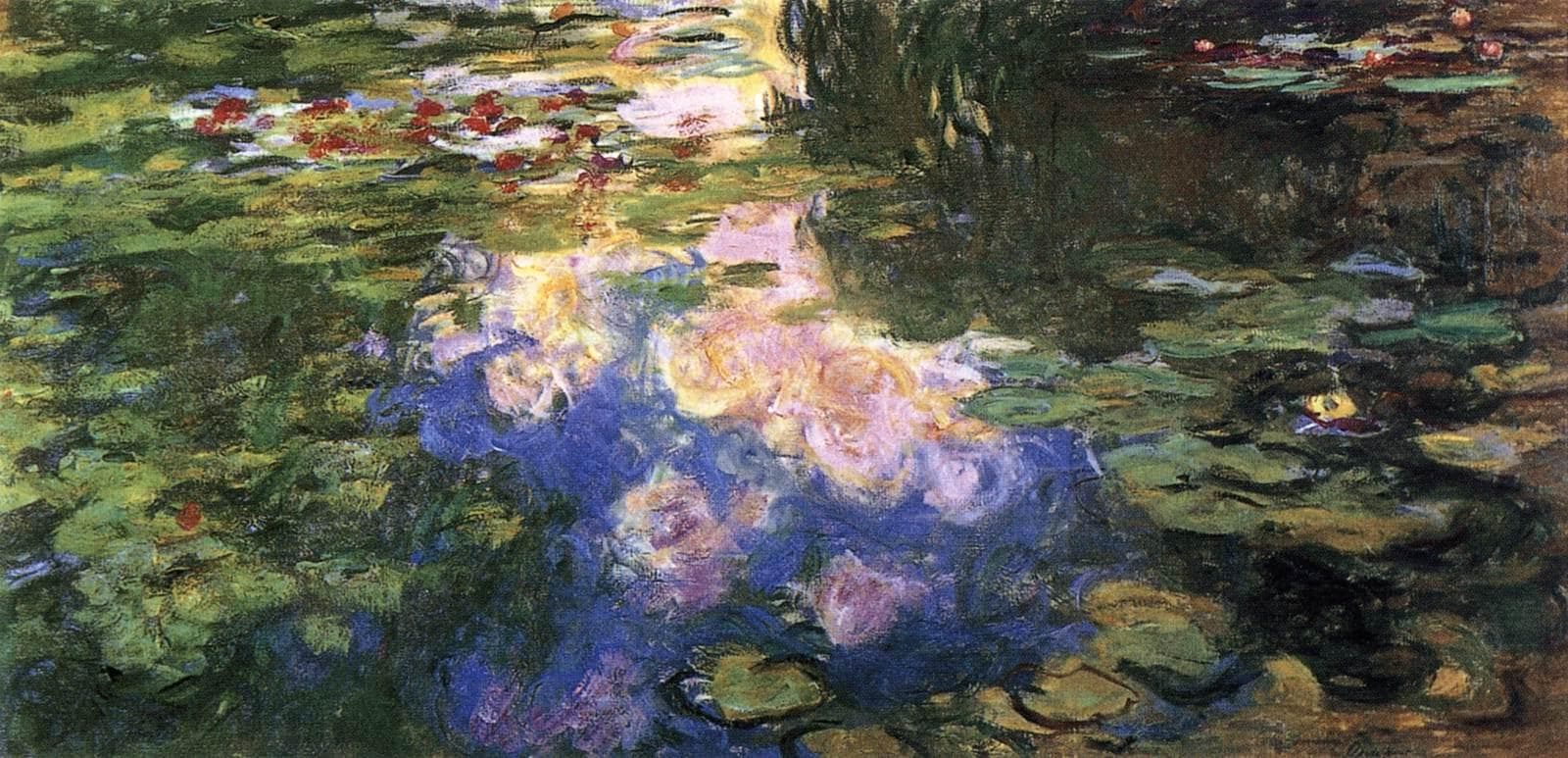
Water-Lily Pond (Le Bassin aux nymphéas), 1917–19
Claude Monet · 1917–19
Kindred works
You may also study
Water-Lily Pond (Bassin aux nymphéas, 1918–19)
Claude Monet · 1918–19
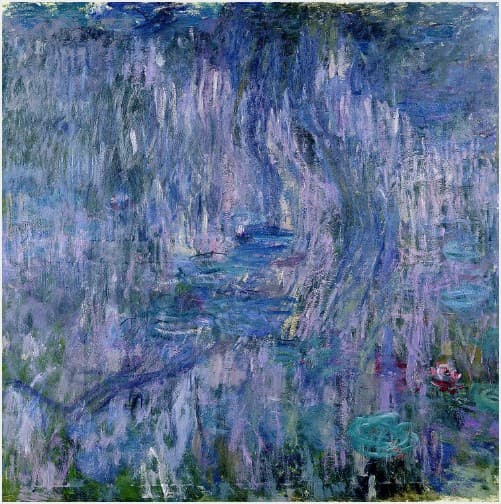
Water-Lilies, Reflection of a Weeping Willow
Claude Monet · 1916–19
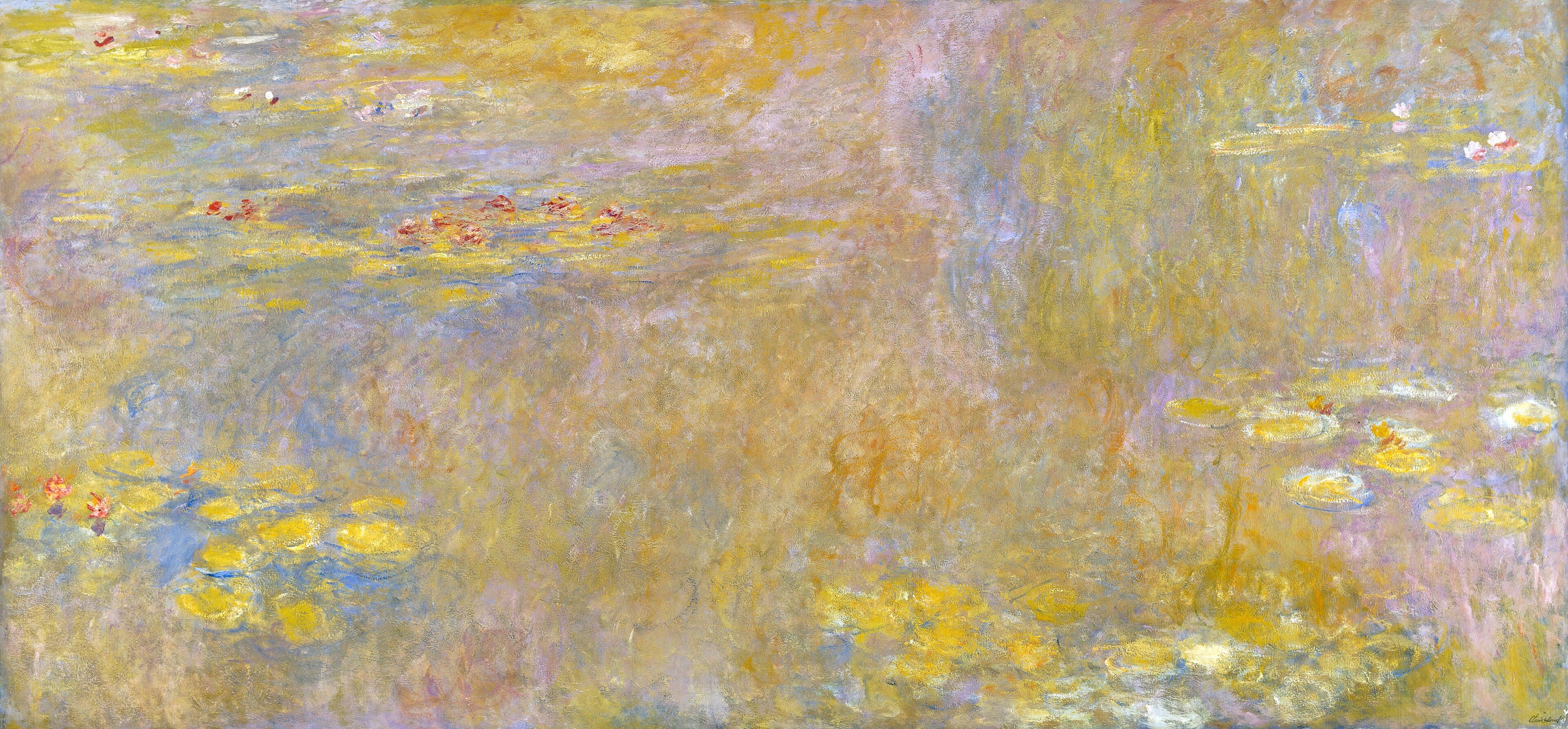
Water-Lilies
Claude Monet · after 1916
The Japanese Bridge
Claude Monet · 1919–24
Water Lilies (1904, MuMa Le Havre)
Claude Monet · 1904
Nymphéas (1915, Musée Marmottan Monet)
Claude Monet · 1915
Le pont japonais
Claude Monet · 1918–24
Water Lilies (Asahi Group Oyamazaki Villa Museum)
Claude Monet · c. 1914–17