Image: Honolulu Museum of Art (photograph via Wikimedia Commons) · Public domain · via Wikimedia Commons
Water Lilies (Honolulu Museum of Art)
Claude Monet, 1917–19
Water Lilies is a 100 × 200 cm canvas Claude Monet painted at Giverny in 1917–19: a pink-white reflection of sky runs through the pond between banks of green pads and red lilies. It is in the Honolulu Museum of Art, Hawaii.
- Artist
- Claude Monet
- Date
- 1917–19
- Medium
- Oil on canvas
- Dimensions
- 100 × 200 cm
- Collection
- Honolulu Museum of Art, Honolulu, United States
- Movement
- Impressionism
- Catalogue
- Wildenstein 1895
- Nature & Landscape
- Water & Sea
Water Lilies (Le Bassin aux nymphéas) is a horizontal canvas, 100 × 200 cm, that Claude Monet painted of his pond at Giverny between 1917 and 1919. It is in the Honolulu Museum of Art in Hawaii, which shows it among its European paintings, and it is number 1895 in the Wildenstein catalogue raisonné.
What you're looking at
The composition is shaped like a river. Down the middle of the canvas, from the top edge to the bottom, runs a wide channel of open water that reflects the sky: pale pink, lilac and white, painted in long, loose strokes that curve as they come forward. On either side, the lily pads crowd in.
On the left, the pads are a bright yellow-green, packed together and dotted with red and orange-red flowers. On the right the effect is cooler: pads in green and turquoise lie over darker blue water, with a few pink and white blooms, and at the top right a dark green mass suggests the reflection of trees or reeds on the bank. In the lower center, two big, dark green pads sit close to the viewer, the nearest objects in the picture.
What makes this version distinctive is the luminous central path. It reads as the brightest light of a clear sky at midday, and it pulls the eye into the picture as a perspective would, even though there is no horizon.
Where and when it was painted
From 1914 Monet painted his pond in canvases of every size as he worked toward the decorative cycle he would give to the French state. The horizontal 100 × 200 cm format was one of his standard sizes for this work, and a whole sequence of such canvases from 1917–19 survives, each showing a different arrangement of pads and reflected light.
The format also matters for how the picture is seen. At two meters wide, the canvas is broad enough that a viewer standing close cannot take it in at once, and the eye has to travel along the central channel of light as if following the pond's own curve. That experience, of moving through water rather than looking at a view of it, is what Monet scaled up in the Orangerie.
How it was painted
The paint is thick and the strokes are clearly visible. The open water is brushed in broad, sweeping marks, the pads in shorter, horizontal touches that pile up in impasto. The red flowers are quick, single dabs. The signature appears in the lower left corner. The picture contrasts warm and cool halves deliberately, a yellow-green and red left against a blue-green right, which keeps the eye moving across the long format.
How this version differs
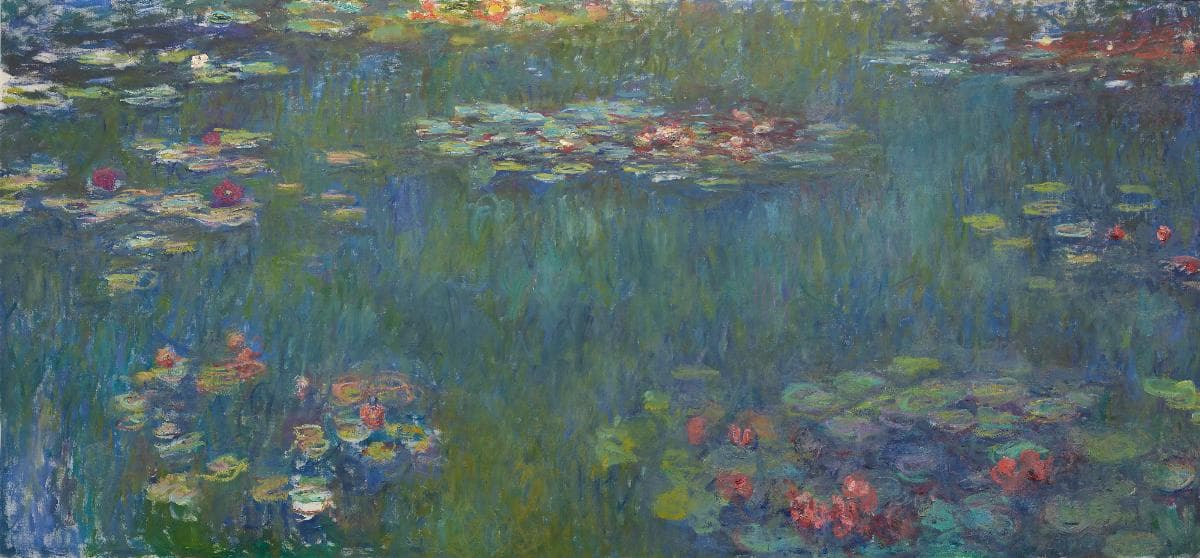
In the Water Lilies series of these years, many canvases are dominated by reflections of trees: the Albertina's The Water Lily Pond by a golden-brown mass, the Kunsthaus Zürich's Water Lily Pond, Green Reflection by green. Honolulu's version gives the center to the sky instead, which makes it one of the brightest and most open of the group. It is close in format and color to the Met's Water Lilies of 1919, which also has a pink-lilac sky reflection running through it.
A detail to look for
At the very bottom edge, toward the left, the water turns a strong, cool blue, and a couple of rounded strokes in teal and white sit on it. It is the nearest patch of the pond and the darkest, in shadow under the bank where Monet stood. That blue anchors the bottom of the canvas against the brightness above and gives the eye a starting point. Many of the 1917–19 horizontal canvases use the same device: a dark foreground band, a brighter middle and a shadowed far edge. Recognizing it helps you read the space of these pictures, which otherwise seem to float without perspective.
Where to see it
The Honolulu Museum of Art, founded in 1922 by Anna Rice Cooke, has a collection spanning Asian, Pacific, European and American art, and its Monet is one of the highlights of its European galleries. For other museums holding Claude Monet's work, see where to see Monet's paintings; for the garden it shows, see Giverny.
Questions & answers
Where is Monet's Water Lilies in Honolulu?
It is in the Honolulu Museum of Art in Honolulu, Hawaii, where it hangs among the museum's European paintings. It is a 100 × 200 cm canvas from Monet's late water-lily campaign.
When was it painted?
Monet painted it at Giverny between 1917 and 1919, while he was working on the large water-lily decorations now in the Musée de l'Orangerie in Paris. It is Wildenstein number 1895.
What does the painting show?
It shows Monet's lily pond with a wide band of pink-white sky reflected down the middle, flanked by yellow-green pads with red flowers on the left and cooler green pads over blue water on the right.
How many versions of Water Lilies did Monet paint?
Around 250 oil paintings of his water lilies are usually counted, from the late 1890s until his death in 1926. The Honolulu canvas belongs to a group of 100 × 200 cm horizontal views made in 1917–19.
More by the artist
Claude Monet
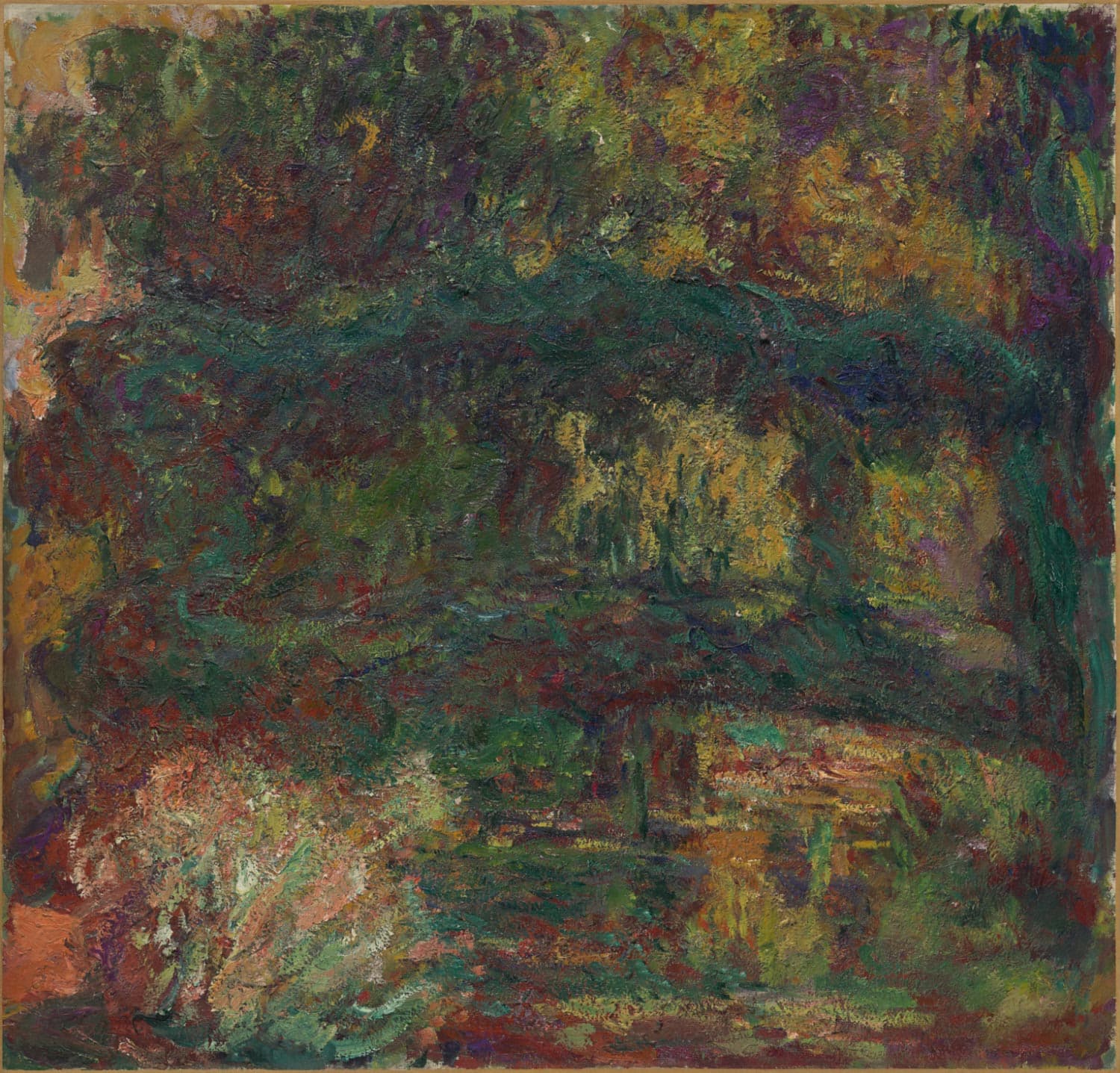
Nymphéas, Japanese Bridge
Claude Monet · 1918–26
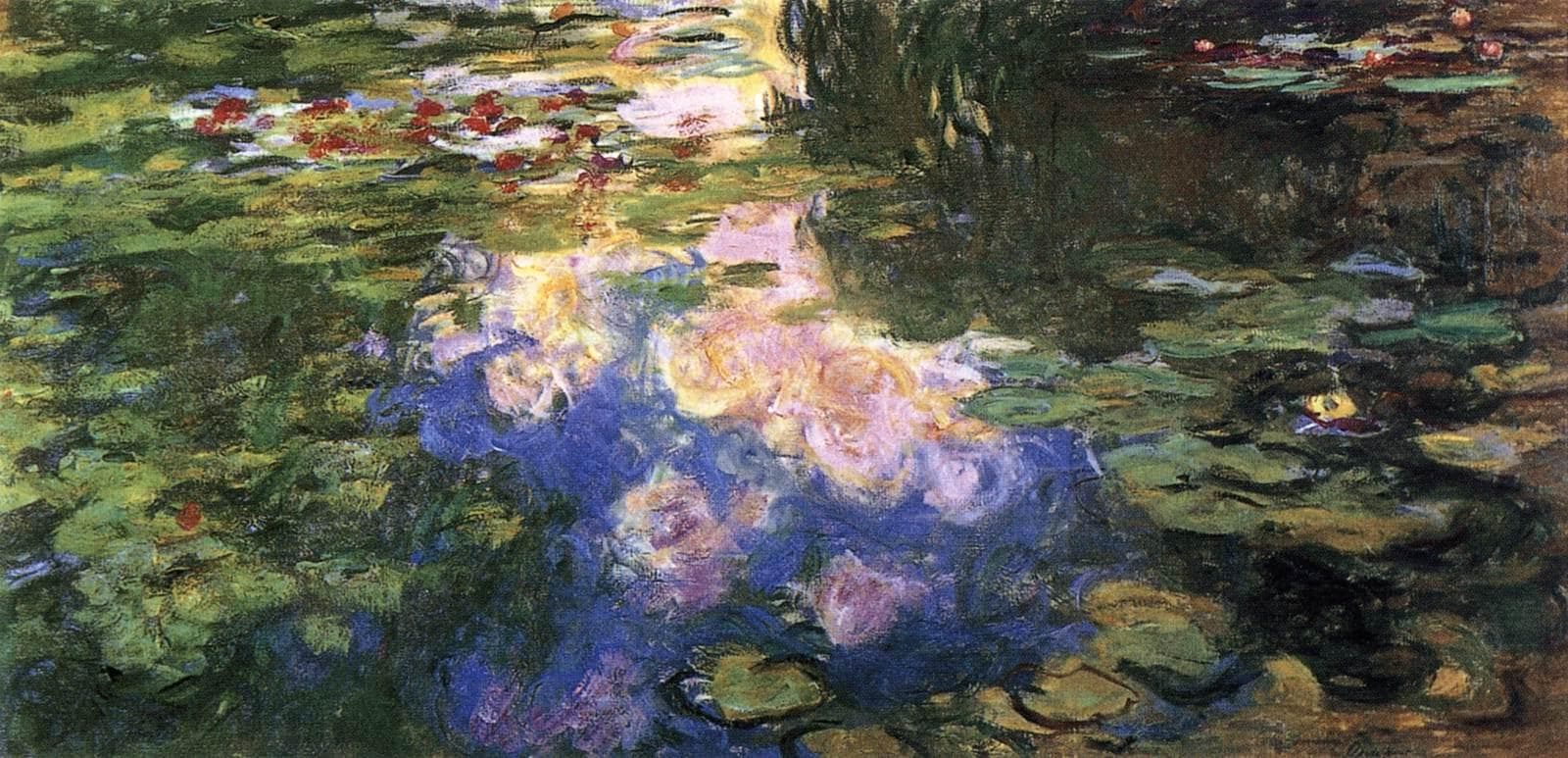
Water-Lily Pond (Le Bassin aux nymphéas), 1917–19
Claude Monet · 1917–19
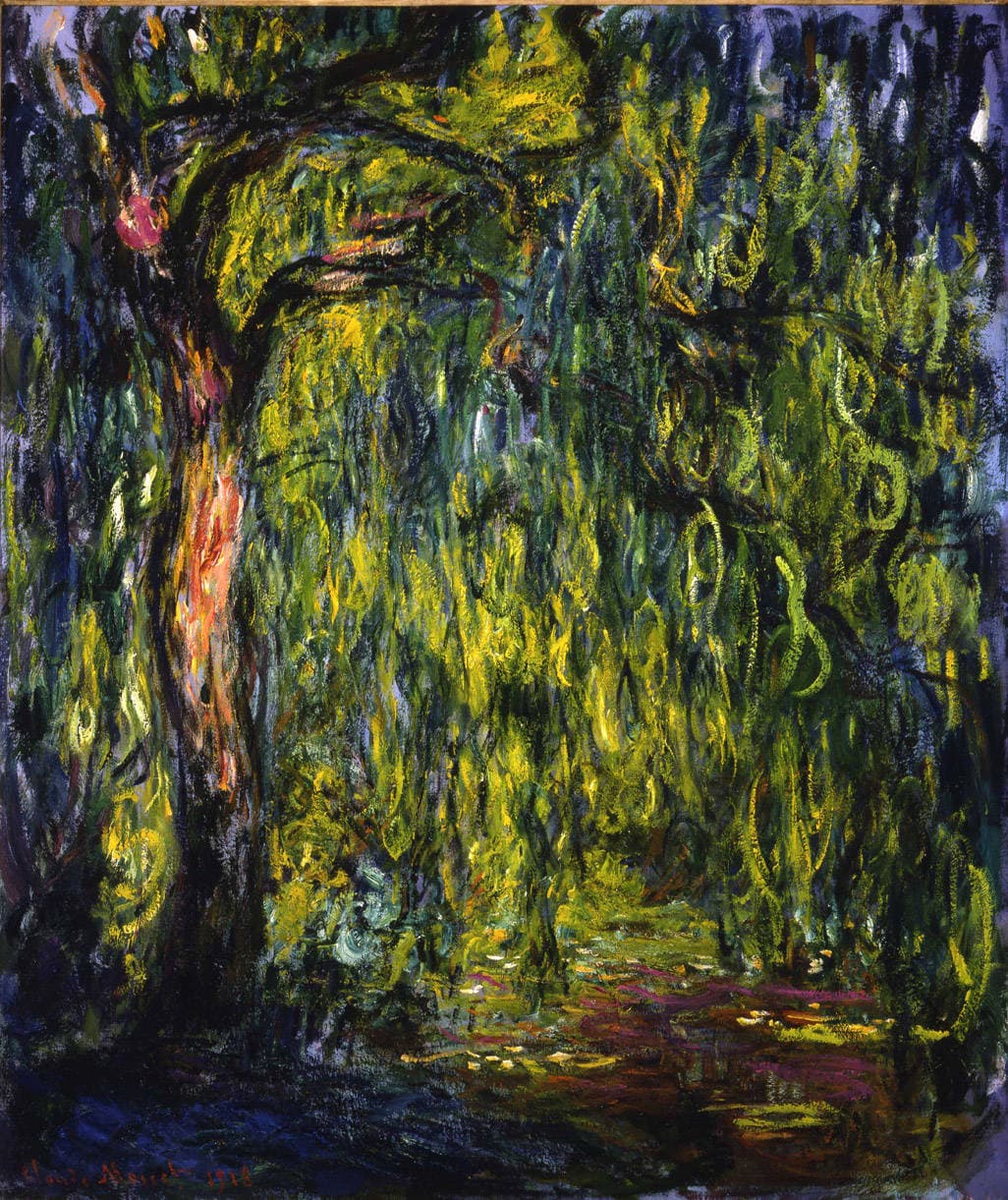
Weeping Willow (Columbus)
Claude Monet · 1918
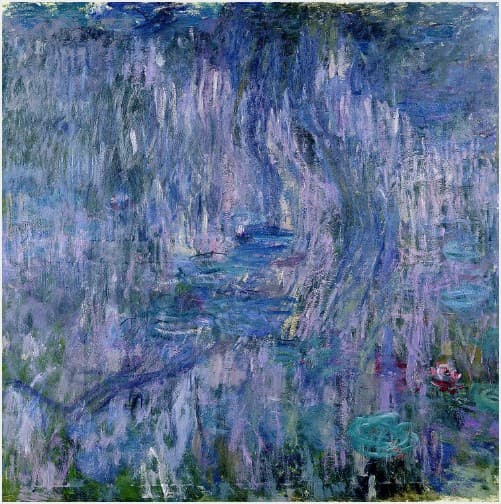
Water-Lilies, Reflection of a Weeping Willow
Claude Monet · 1916–19
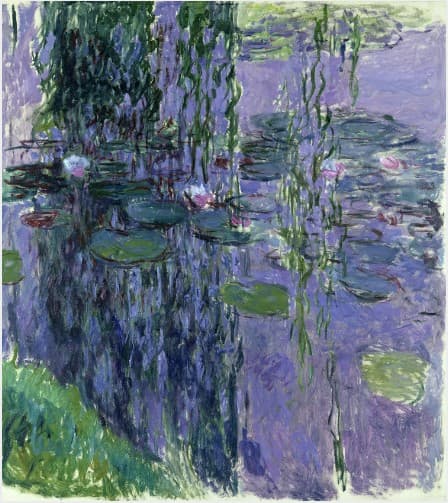
Nymphéas (Musée Marmottan Monet, 1916–19)
Claude Monet · 1916–19
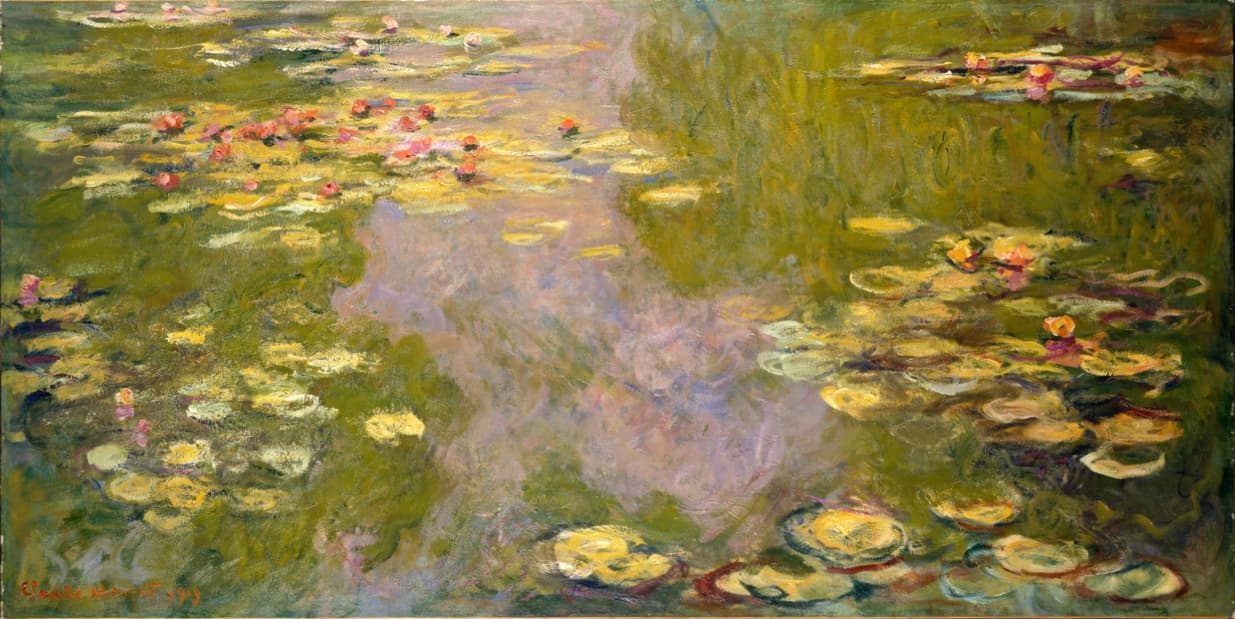
Water Lilies (1919, Metropolitan Museum)
Claude Monet · 1919
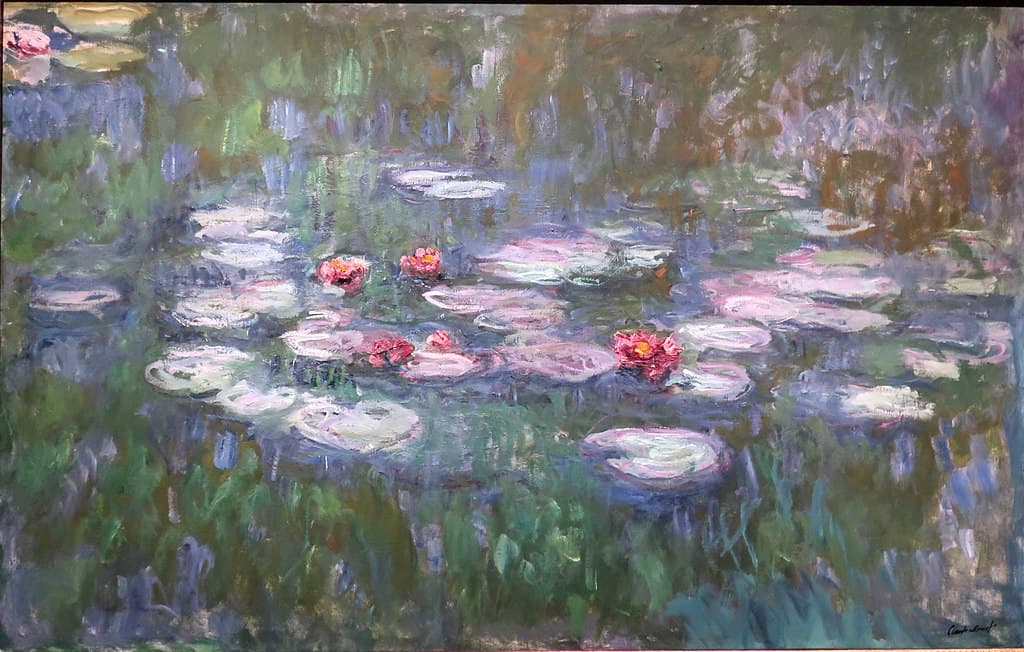
Nymphéas (Water Lilies)
Claude Monet · c. 1914–1919
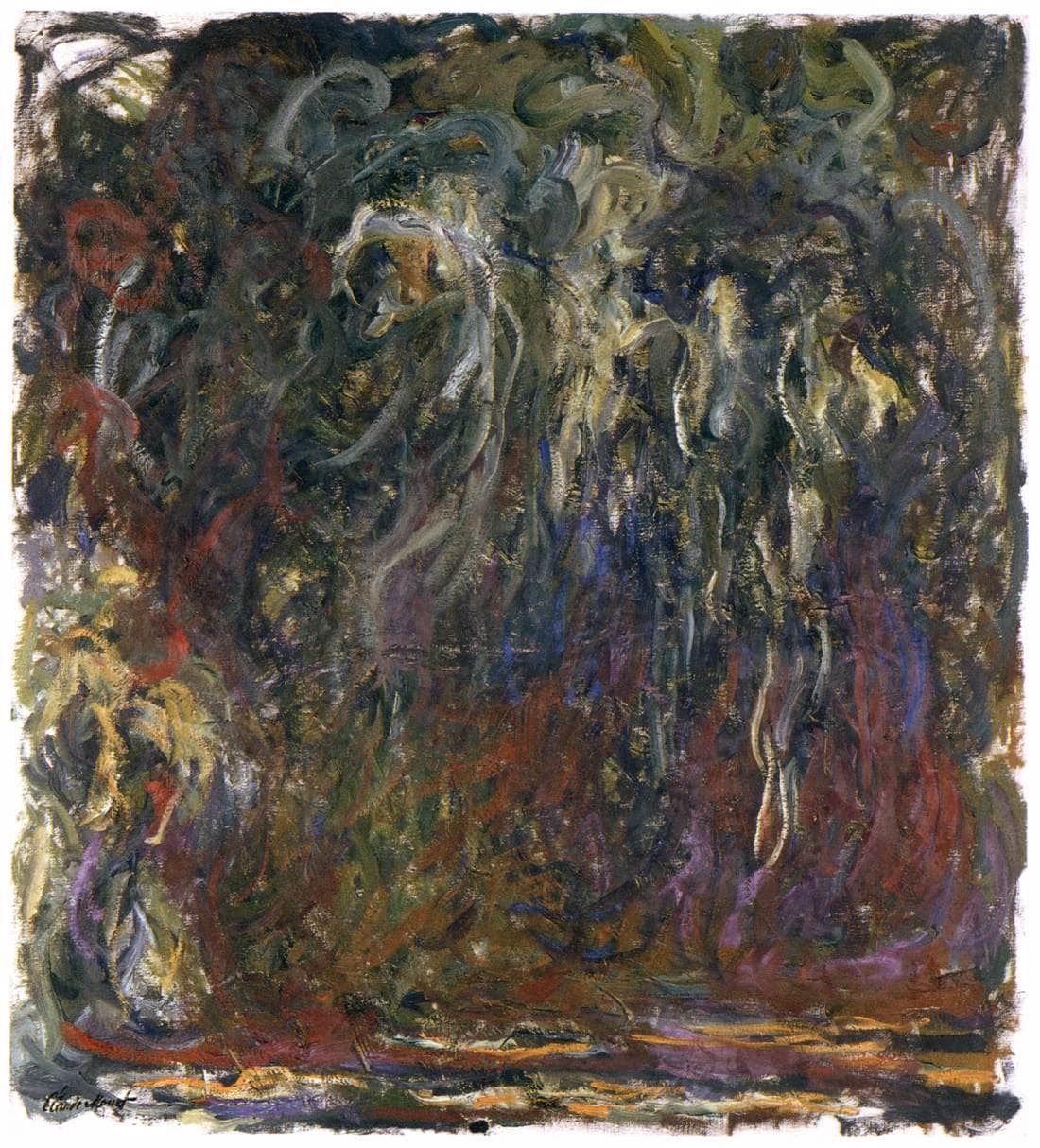
Weeping Willow
Claude Monet · 1920–22
Also painted in 1918
The same year
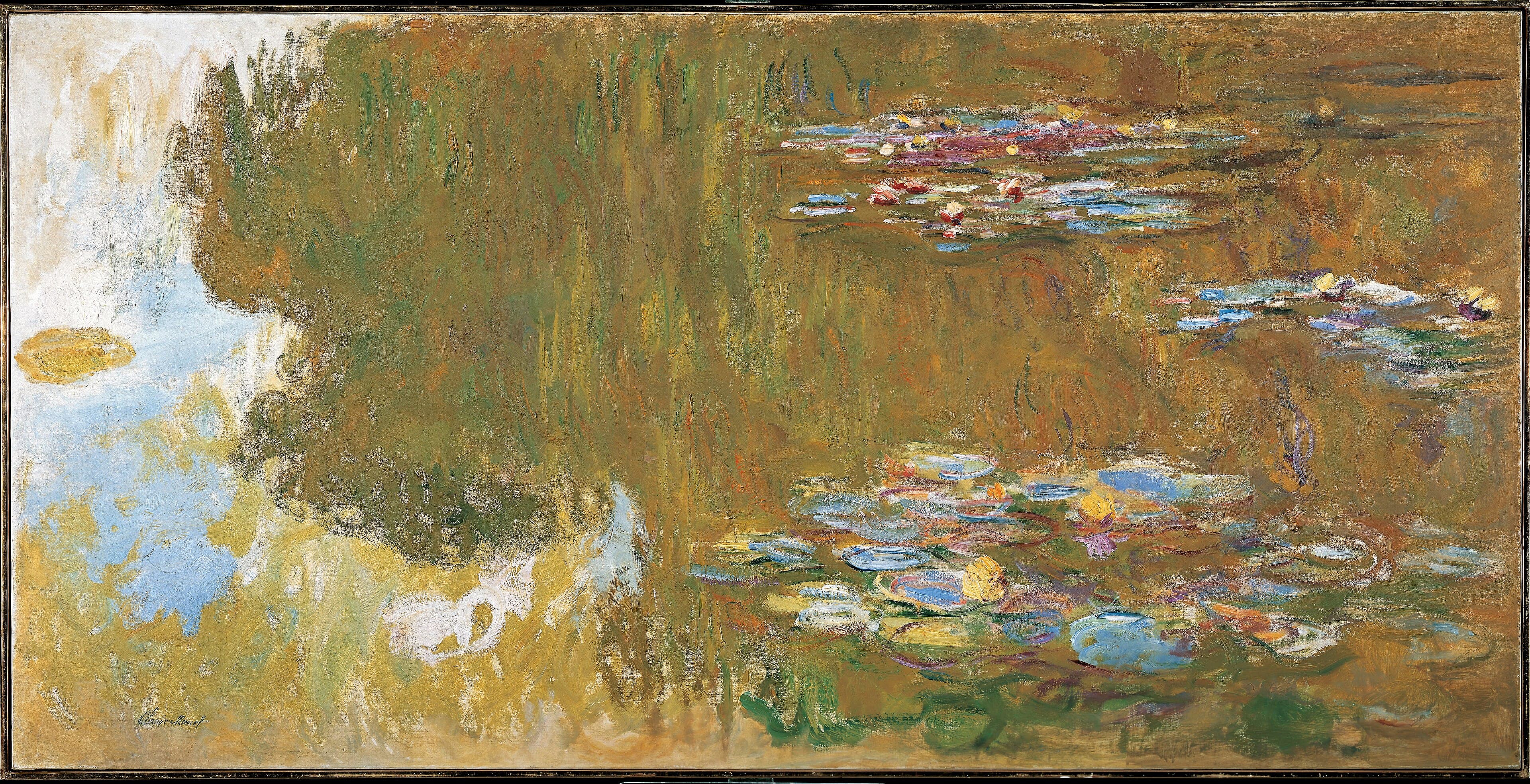
The Water Lily Pond (Albertina)
Claude Monet · 1917–19
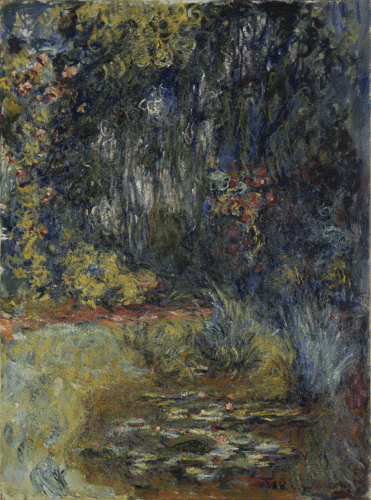
Corner of the Water-Lily Pond
Claude Monet · 1918
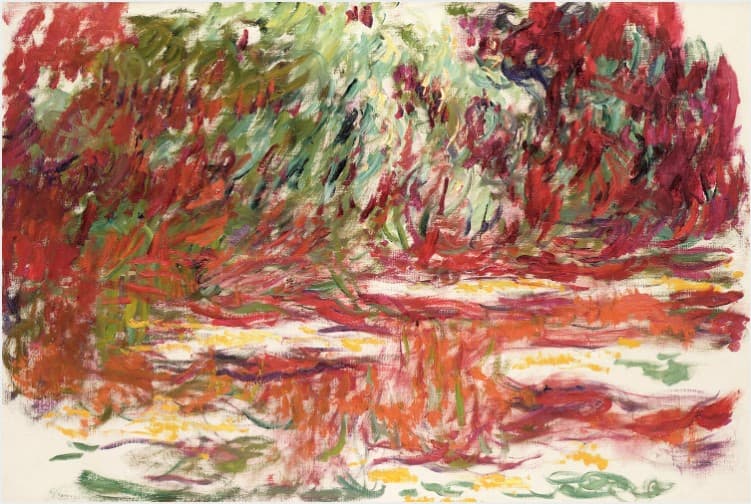
Water-Lily Pond (Bassin aux nymphéas, 1918–19)
Claude Monet · 1918–19
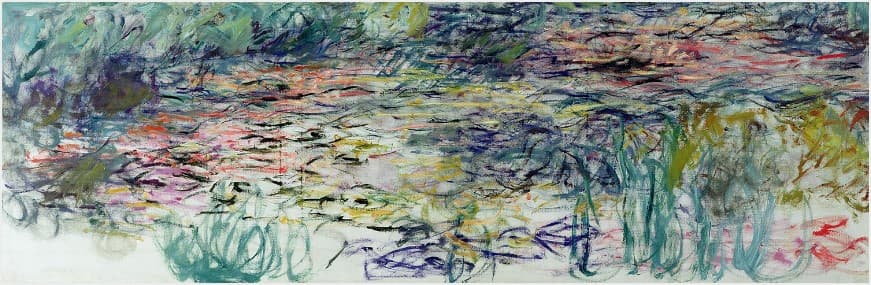
Nymphéas (Musée Marmottan Monet, 1917–19)
Claude Monet · 1917–19
Weeping Willow
Claude Monet · 1918–19
The Japanese Bridge
Claude Monet · 1918
Le Pont japonais (The Japanese Bridge)
Claude Monet · 1918
Kindred works
You may also study
The Water Lily Pond (Albertina)
Claude Monet · 1917–19
The Water-Lily Pond, Green Reflections
Claude Monet · 1920–26
Water-Lily Pond (Bassin aux nymphéas, 1918–19)
Claude Monet · 1918–19
Nymphéas (Musée Marmottan Monet, 1917–19)
Claude Monet · 1917–19
Water Lilies (1904, MuMa Le Havre)
Claude Monet · 1904

Nymphéas [Waterlilies] (National Gallery of Australia)
Claude Monet · c. 1914–17
Water-Lilies, Setting Sun (National Gallery, London)
Claude Monet · c. 1907
Weeping Willow and the Water-Lily Pond
Claude Monet · c. 1916–19