Image: Musée Marmottan Monet, Paris · Public domain · via Wikimedia Commons
Water-Lily Pond (Bassin aux nymphéas, 1918–19)
Claude Monet, 1918–19
Bassin aux nymphéas is a 73 × 105 cm canvas Claude Monet painted at Giverny in 1918–19, in which the pond and its banks dissolve into slashing reds, greens and yellows on bare canvas. It is in the Musée Marmottan Monet, Paris.
- Artist
- Claude Monet
- Date
- 1918–19
- Medium
- Oil on canvas
- Dimensions
- 73 × 105 cm
- Collection
- Musée Marmottan Monet, Paris, France
- Movement
- Impressionism
- Catalogue
- Wildenstein 1882
- Nature & Landscape
- Water & Sea
Bassin aux nymphéas (Water-Lily Pond) is a canvas Claude Monet painted at Giverny between 1918 and 1919, measuring 73 × 105 cm. Unsigned and visibly unfinished, it came to the Musée Marmottan Monet in Paris with the bequest of Michel Monet in 1966 (inv. 5105). It is number 1882 in the Wildenstein catalogue raisonné, and it is one of the most violent-looking pictures Monet ever made.
What you're looking at
You are looking across the pond toward a bank of trees. The upper half is a thicket of foliage, painted in hooked, slashing strokes of crimson, scarlet and orange mixed with sage green, olive and a little violet. Through the middle runs the water, a horizontal band where the same reds and greens repeat as reflection, laid in longer, flatter streaks. At the bottom, a few lily pads are no more than squiggles of green and yellow on white.
The most surprising feature is the white. Large areas of bare, primed canvas show through everywhere: between strokes, at the corners, along the lower edge. The picture is as much drawing as painting, and the white reads as light flashing off water.
The red is the key to this version. In Monet's late years his cataracts distorted his color vision, making blues hard to see and pushing everything toward red and yellow, and canvases like this are often discussed in that light. Others see in them a deliberate, expressive freedom. Both readings are argued by scholars, and the painting supports either.
Where and when it was painted
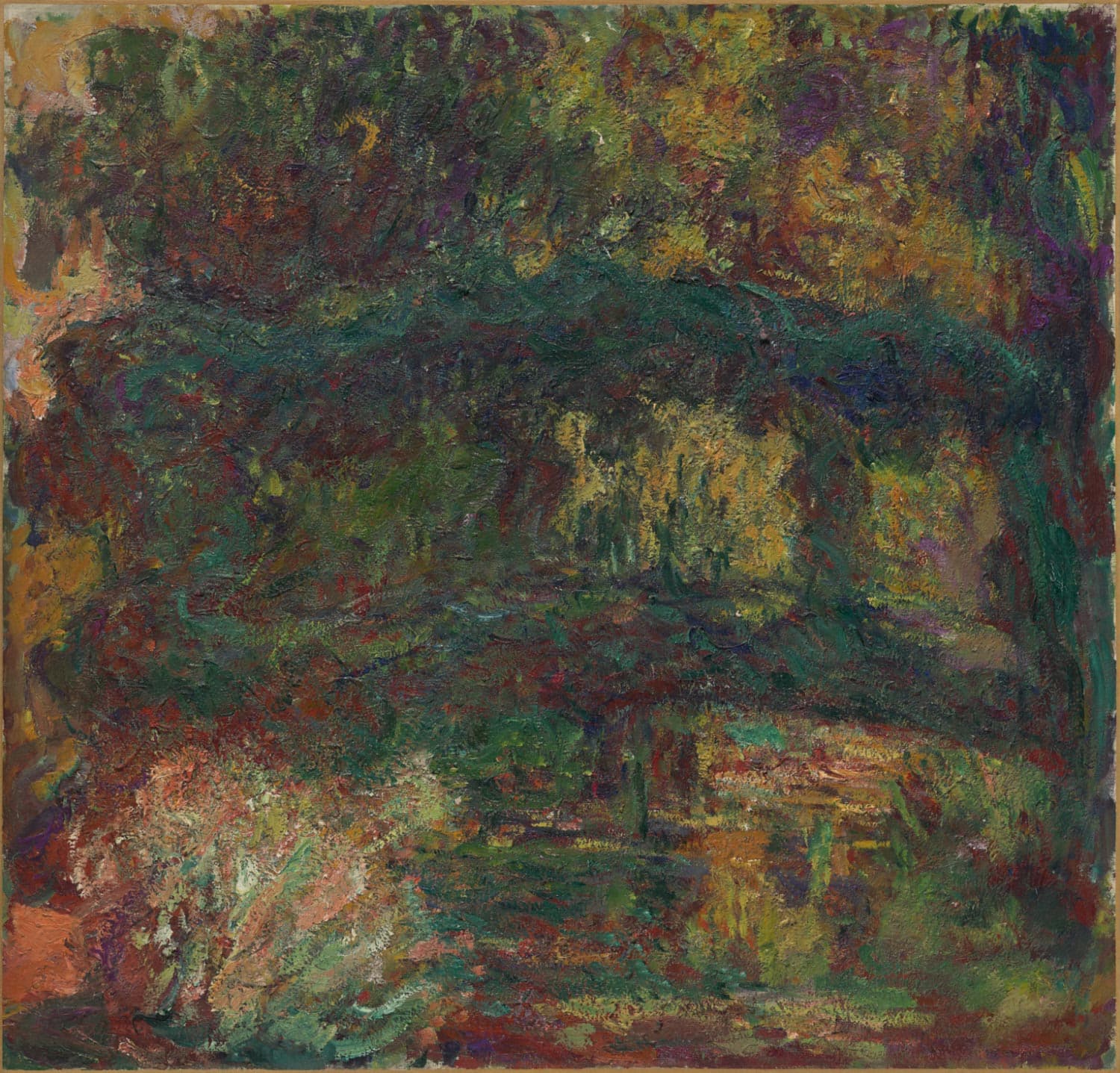
In 1918–19 Monet was 78 and still painting outdoors at the edge of the pond as well as in his studio. Alongside the large decorative panels, he made a series of smaller, rapid canvases of the pond and its surroundings, including the Japanese footbridge and the rose arches, in which form becomes increasingly gestural. This canvas belongs to that late, spontaneous group. He would have cataract surgery on his right eye in 1923.
The canvas is modest in size, 73 × 105 cm, which suggests it may have been painted at least partly outdoors, at the pond's edge, rather than in the big studio. Its speed and its unfinished state fit that: it reads like a record of a single session in which Monet set down the whole motif in color and then stopped.
How it was painted
The brush moves fast and at full arm's length. Strokes are long, curving and often painted with a single loaded charge of color. There is almost no blending: colors sit side by side or on top of one another, and Monet leaves the canvas bare where he has not yet painted, rather than toning it first. The result looks like a sketch, but on a canvas of substantial size.
How this version differs
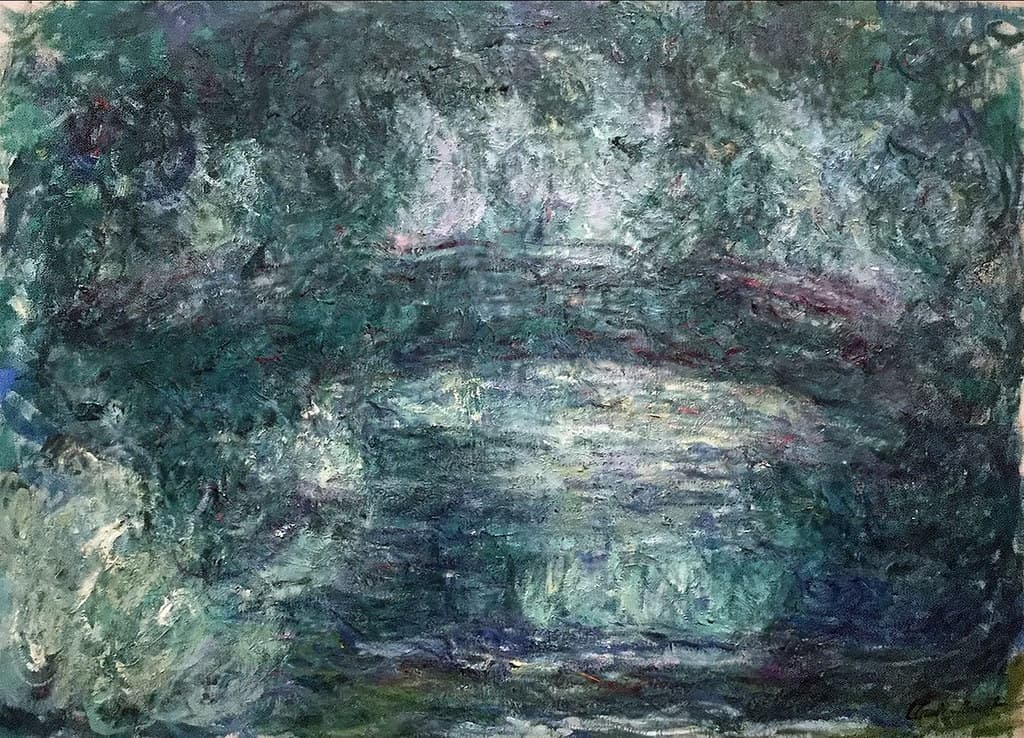
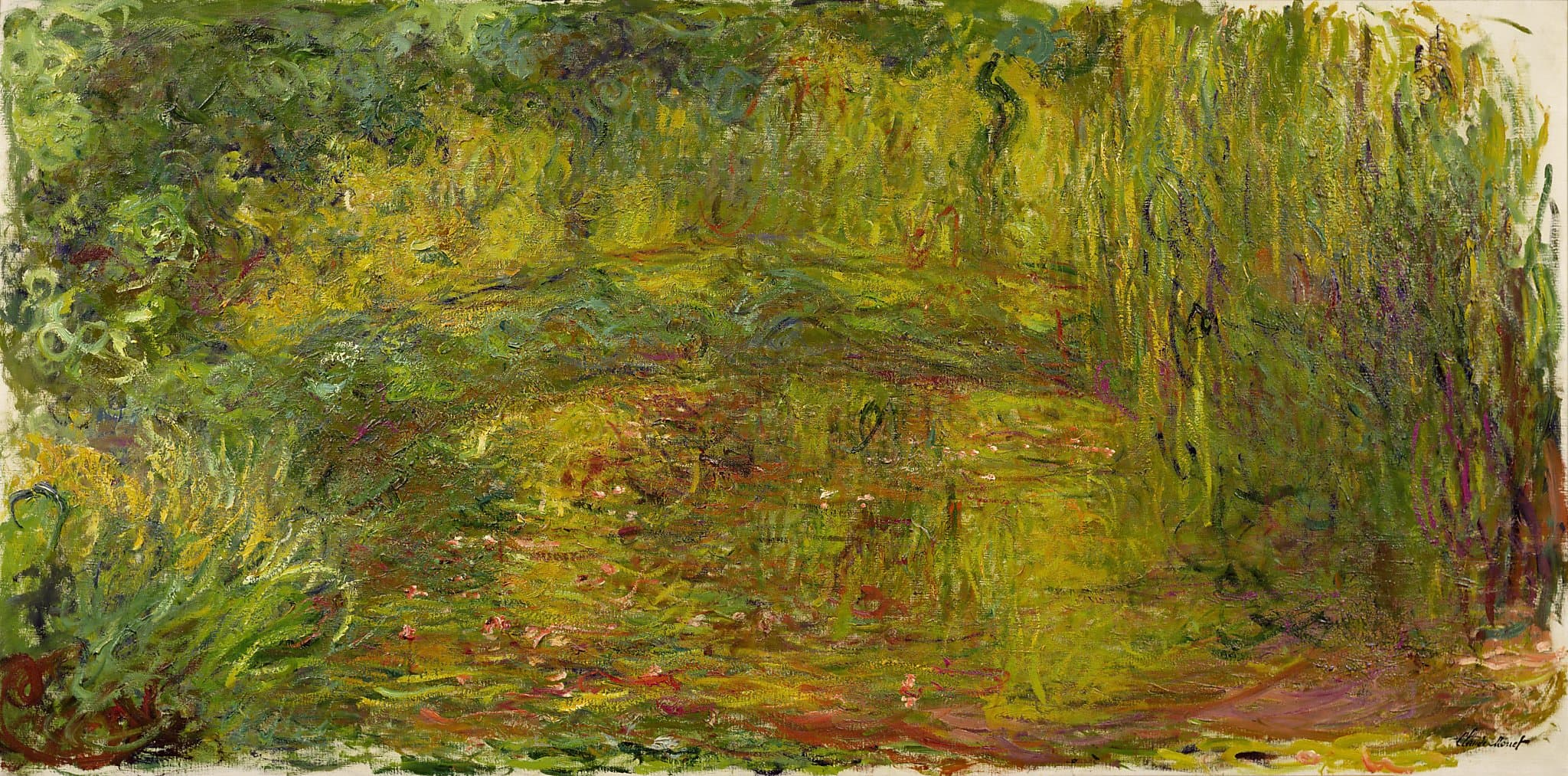
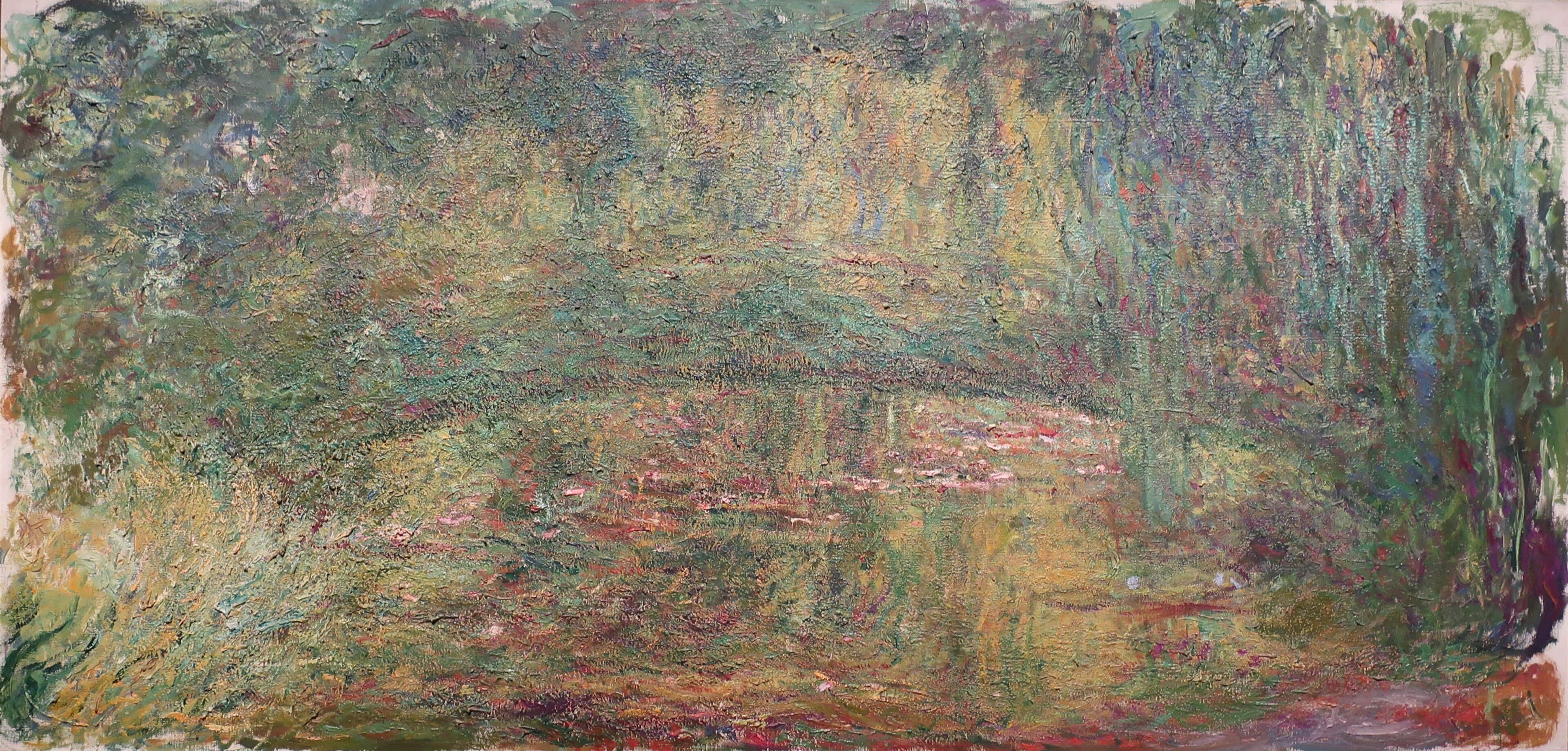
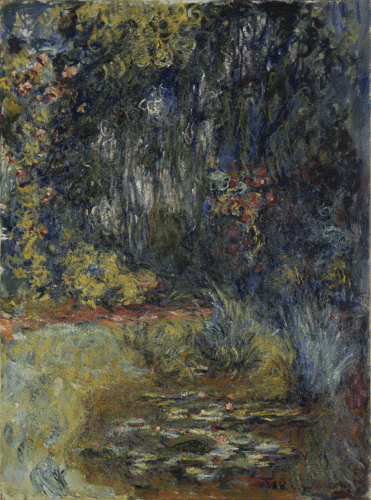
The Geneva Corner of the Water-Lily Pond of 1918 shows a similar view of bank and water, but in dense, closely worked strokes. The Albertina's The Water Lily Pond keeps a calm golden reflection. Here everything is moving and on fire. Its nearest relatives in the Marmottan are the late Japanese Bridge pictures and the long Nymphéas (1917–19), also loosely painted on bare canvas. Within the Water Lilies series it marks the far edge of Monet's late experiments.
Painting with damaged sight
Monet first noticed problems with his eyes around 1908, and by 1912 he had been diagnosed with cataracts in both eyes. His letters from the late 1910s and early 1920s complain that he could no longer judge colors and had to rely on the labels of his paint tubes and on the order of colors on his palette. After the operation on his right eye in 1923, and with corrective tinted lenses, he reportedly found some of his recent canvases too red and reworked or destroyed several. Pictures like this one, which survived in the studio, are therefore precious evidence of how he painted during the worst of his illness.
Where to see it
The Musée Marmottan Monet holds the largest group of late works by Claude Monet, almost all from the family bequest, and shows them in a dedicated gallery. Works rotate and travel. For the garden the painting records, see Giverny.
Questions & answers
Where is Monet's red Bassin aux nymphéas?
It is in the Musée Marmottan Monet in Paris (inventory 5105). It came to the museum in 1966 with the bequest of Michel Monet, the artist's son.
When was it painted?
The Marmottan dates it to 1918–19. Monet, then 78, painted it at Giverny alongside the large water-lily decorations. It is Wildenstein number 1882.
Why is this Monet painting so red?
Monet had cataracts in his last years, which distorted color, making blues hard to see and shifting colors toward red and yellow. Many scholars link the red late works to this, while others stress their deliberate expressive freedom.
Is the painting unfinished?
It is unsigned and leaves large areas of bare canvas showing, so it is generally regarded as an unfinished or sketch-like work. Many such canvases stayed in Monet's studio and passed to his son Michel.
More by the artist
Claude Monet
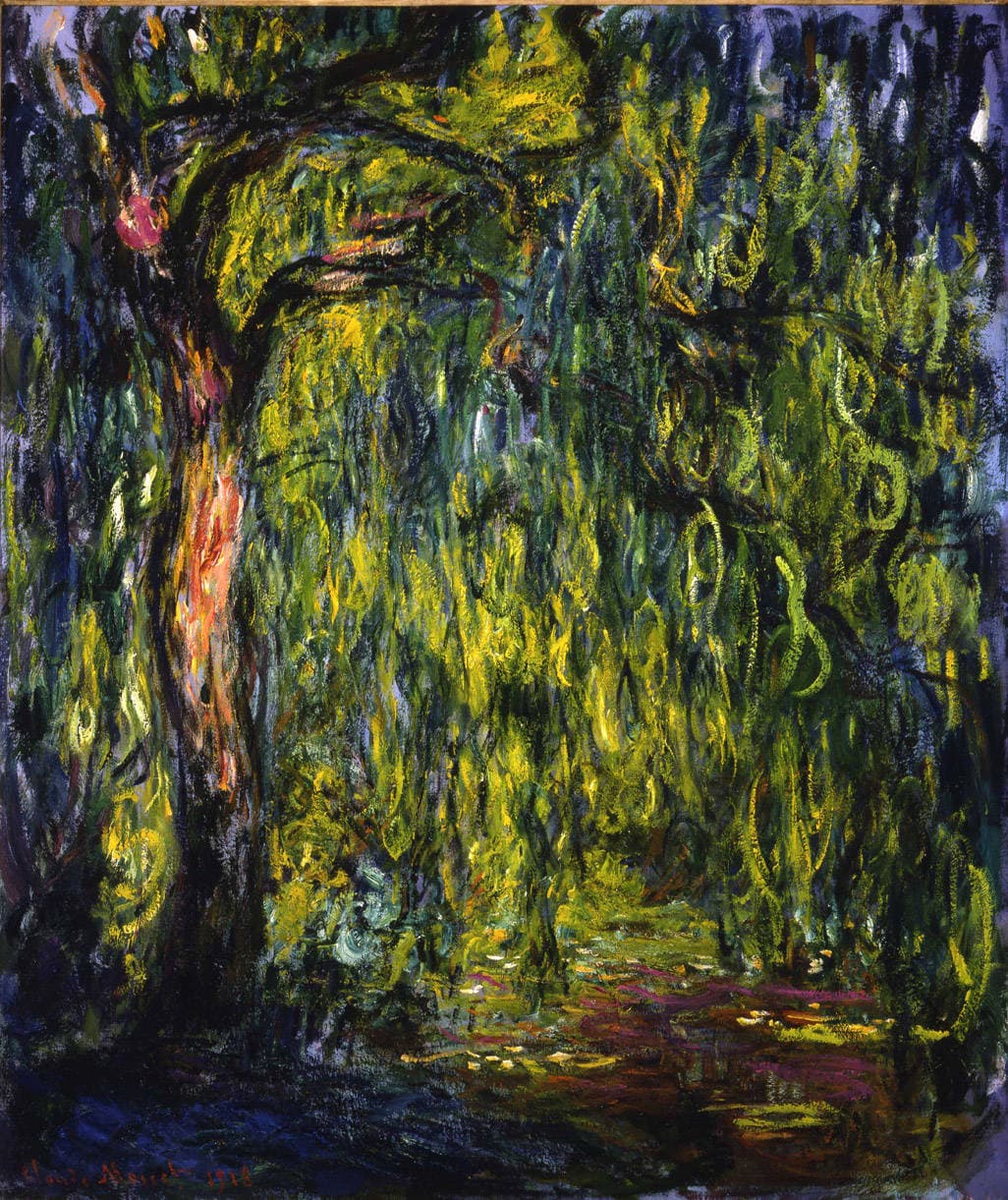
Weeping Willow (Columbus)
Claude Monet · 1918
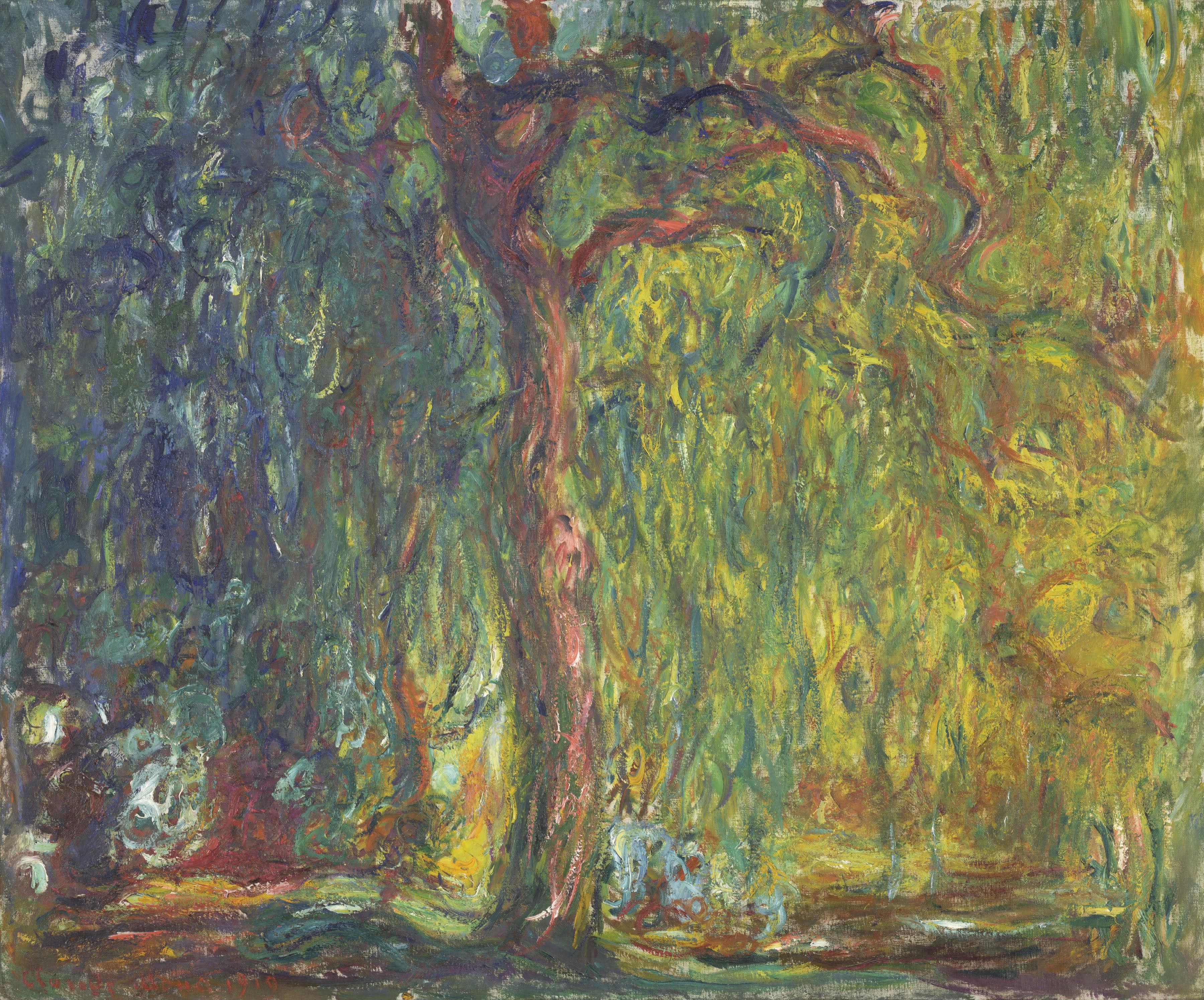
Weeping Willow
Claude Monet · 1918–19
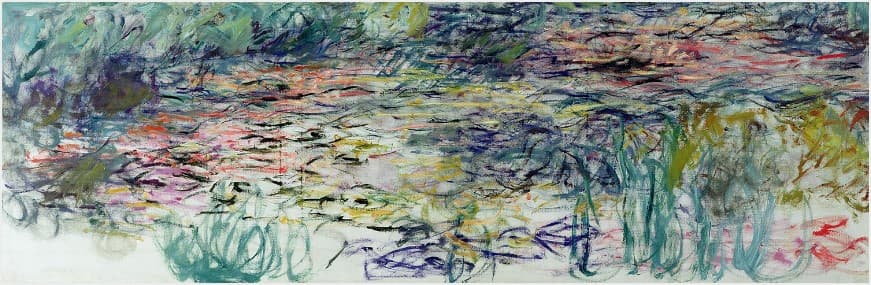
Nymphéas (Musée Marmottan Monet, 1917–19)
Claude Monet · 1917–19
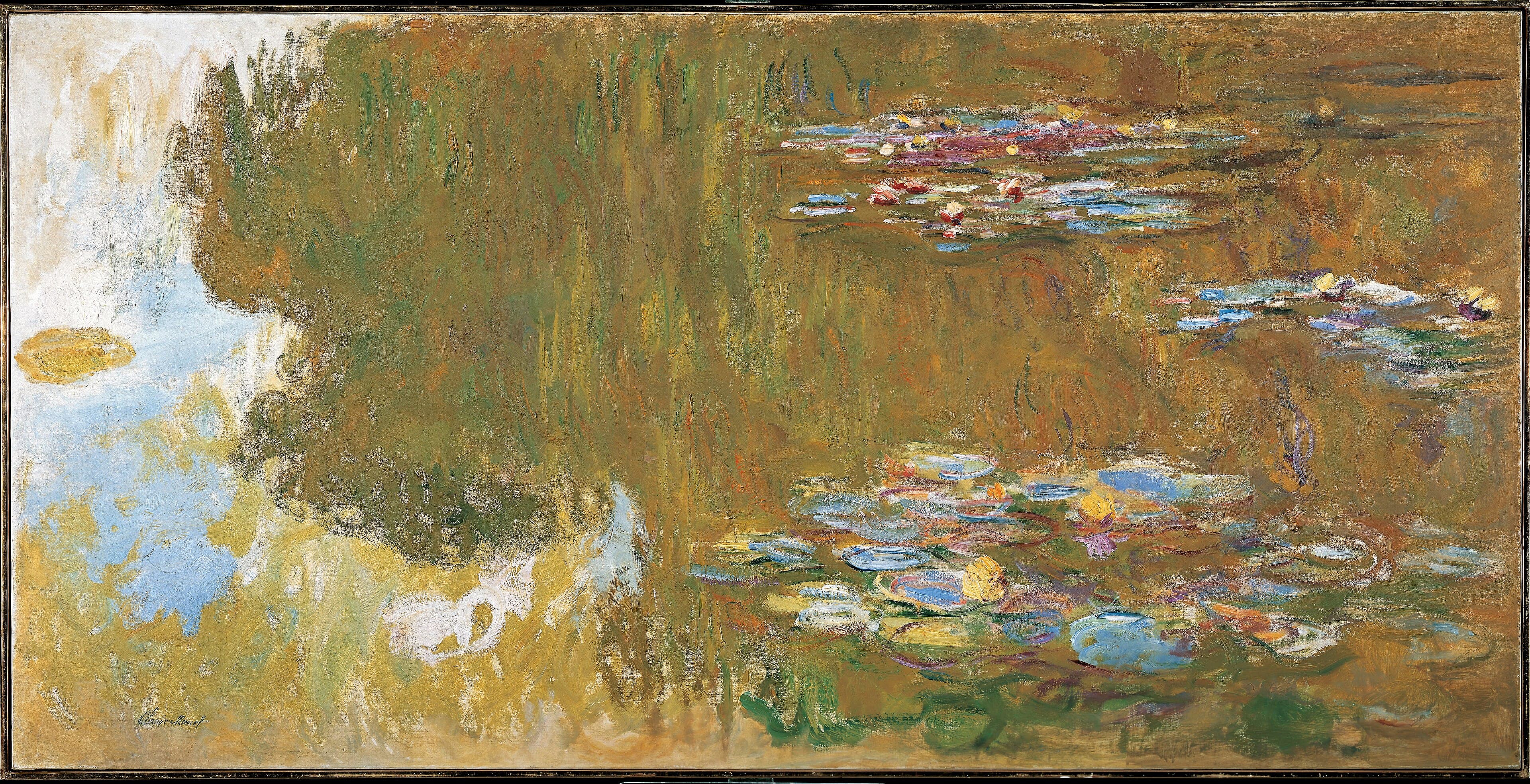
The Water Lily Pond (Albertina)
Claude Monet · 1917–19
Japanese Bridge
Claude Monet · 1918–19
Le Pont japonais (The Japanese Bridge)
Claude Monet · 1918
Water-Lily Pond (Le Bassin aux nymphéas), 1917–19
Claude Monet · 1917–19
Water Lilies (Saint Louis Art Museum)
Claude Monet · c. 1915–26
Also painted in 1918
The same year
Kindred works
You may also study
Corner of the Water-Lily Pond
Claude Monet · 1918
Water Lilies (Honolulu Museum of Art)
Claude Monet · 1917–19
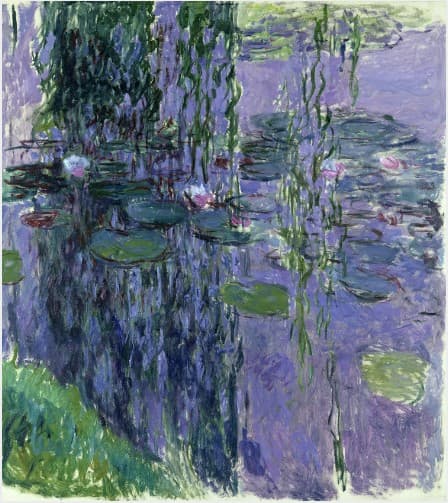
Nymphéas (Musée Marmottan Monet, 1916–19)
Claude Monet · 1916–19
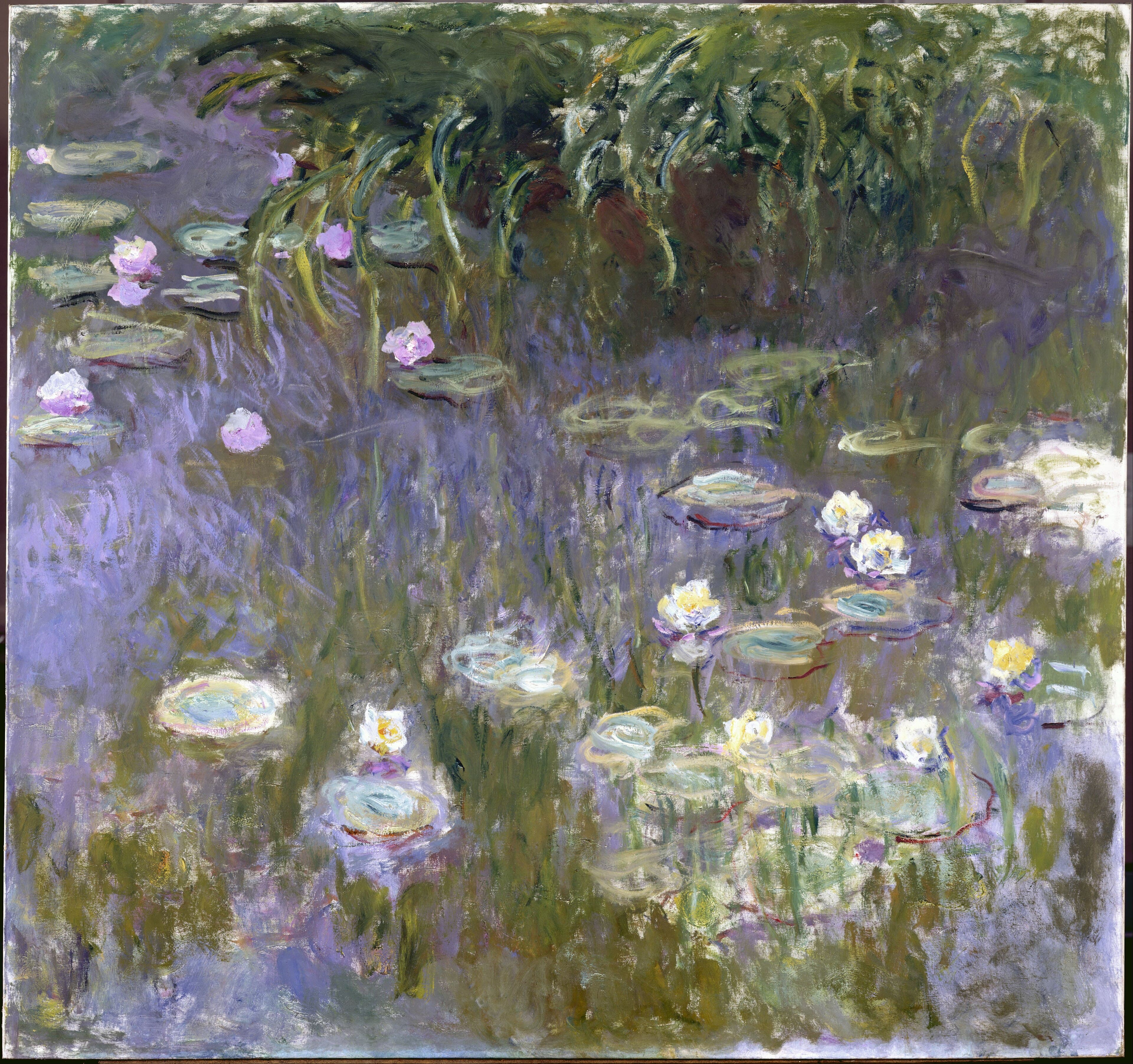
Water Lilies (Toledo Museum of Art)
Claude Monet · c. 1922
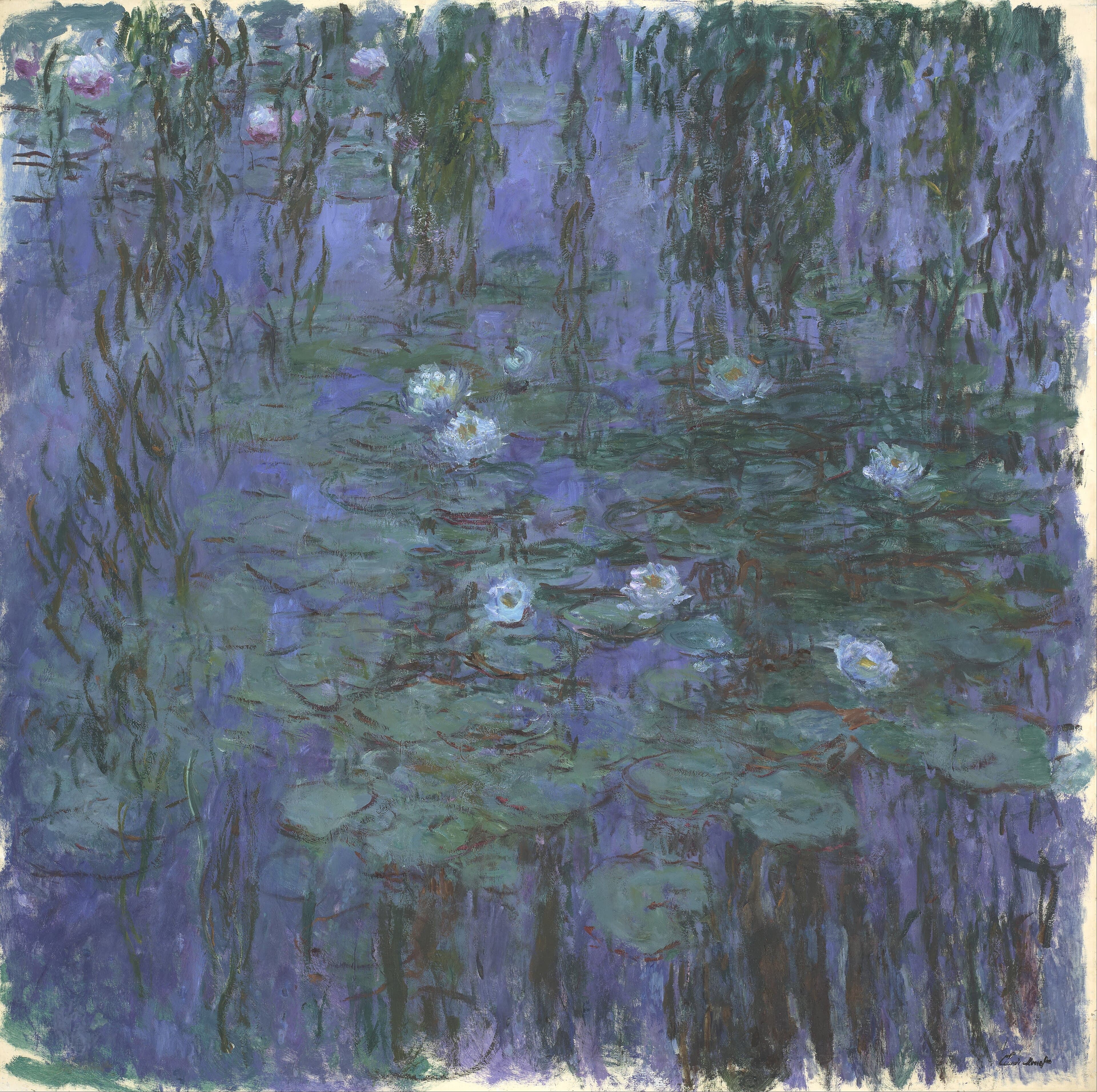
Blue Water Lilies
Claude Monet · 1916–19
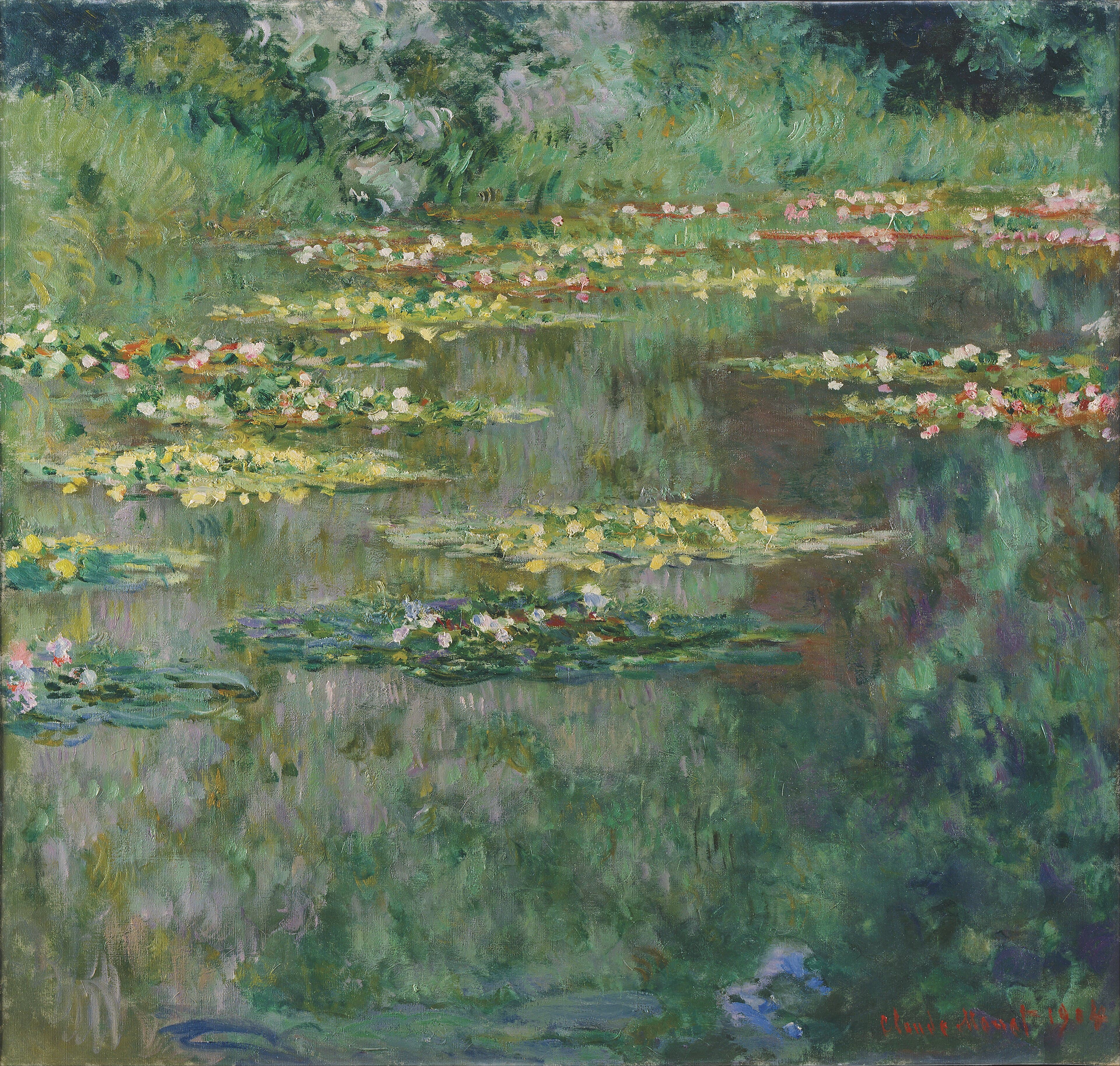
Le Bassin des Nymphéas (Denver)
Claude Monet · 1904
Water Lilies: Green Reflections
Claude Monet · 1914–26
The Japanese Footbridge (MoMA)
Claude Monet · c. 1920–22