Symbolism
The Garden of Death
Hugo Simberg, 1896
The Garden of Death is an 1896 watercolor by the Finnish Symbolist Hugo Simberg showing three skeletons in black robes tenderly tending flowers in a garden. It is in the Ateneum Art Museum, Helsinki.
- Artist
- Hugo Simberg
- Date
- 1896
- Medium
- Watercolor and gouache on paper
- Dimensions
- 16 × 17.5 cm
- Collection
- Ateneum Art Museum, Finnish National Gallery, Helsinki, Finland
- Movement
- Symbolism
What you are looking at
A walled garden glows in warm ochre and amber light. In it, three figures in long black robes are at work. They are skeletons, Death in the old familiar form, but they are doing the gentlest of jobs. The one on the left bends to water a row of potted plants from a green watering can. The one in the middle cradles a small plant in both bony hands, as if comforting it. The third, at the back, stoops over a raised bed. The flowers they look after are odd, spiky, star-shaped things, some barely more than stalks. A towel hangs on a peg at the far left. The date, 1896, and Simberg's initials are written at lower right.
This is The Garden of Death by Hugo Simberg (1873–1917), one of the leading painters of Finnish Symbolism. It is a small watercolor and gouache, about 16 by 17.5 centimeters, in the Ateneum Art Museum, part of the Finnish National Gallery in Helsinki.
What does it mean?
Simberg left no single explanation, and the picture's appeal lies in its ambiguity. One common reading is that the plants are human souls, and that the garden is a place between life and whatever follows, where Death, far from being a reaper, is a careful, even loving gardener. The small flower held in the middle skeleton's hands suggests tenderness for something fragile. The scene is close to folk tale, and Simberg's skeletons belong to the same family as the gentle, slightly comic devils and angels that fill his other work.
The idea of death as a gardener has older roots. In the medieval Dance of Death, Death takes people from every walk of life; Simberg turns the figure into a caretaker instead of a destroyer.
Looking closely
Notice the details that make the picture strange: the towel on its peg, as if the gardeners wash their hands after work; the neat rows of pots and labels; the low wall and the fringe of trees at the top, closing the garden off from the world. The palette is warm and earthy, which makes the black robes all the more striking.
Legacy
Simberg returned to the composition in 1906 as a large fresco in St John's Church, now Tampere Cathedral, alongside his even more famous The Wounded Angel. In 2006 Finns voted The Wounded Angel their national painting, and The Garden of Death is close behind it in popularity.
Where to see it
The watercolor is in the Ateneum, Helsinki; the fresco version is in Tampere Cathedral. See also Symbolism, Danse Macabre and Memento Mori.
Questions & answers
Where is The Garden of Death by Hugo Simberg?
The original 1896 watercolor and gouache is in the Ateneum Art Museum, part of the Finnish National Gallery, in Helsinki. Simberg painted a larger version of the composition in 1906 as a fresco in St John's Church, now Tampere Cathedral, in Finland.
What does The Garden of Death mean?
Simberg gave no definitive explanation. A common reading is that the plants represent human souls, tended with care by Death in a garden between life and the afterlife. The skeletons appear gentle rather than threatening, turning the traditional reaper into a gardener.
Who was Hugo Simberg?
Hugo Simberg (1873–1917) was a Finnish Symbolist painter and printmaker, a pupil of Akseli Gallen-Kallela. He is known for imaginative, often melancholy scenes with devils, angels and skeletons, especially The Wounded Angel (1903), voted Finland's national painting in 2006.
Kindred works
You may also study
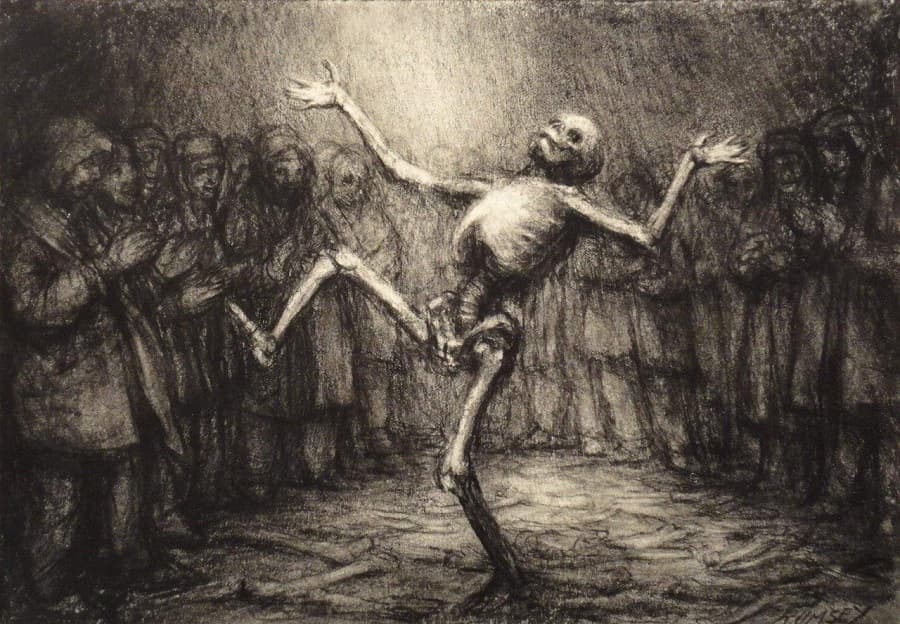
The Danse Macabre Series
Paul Rumsey
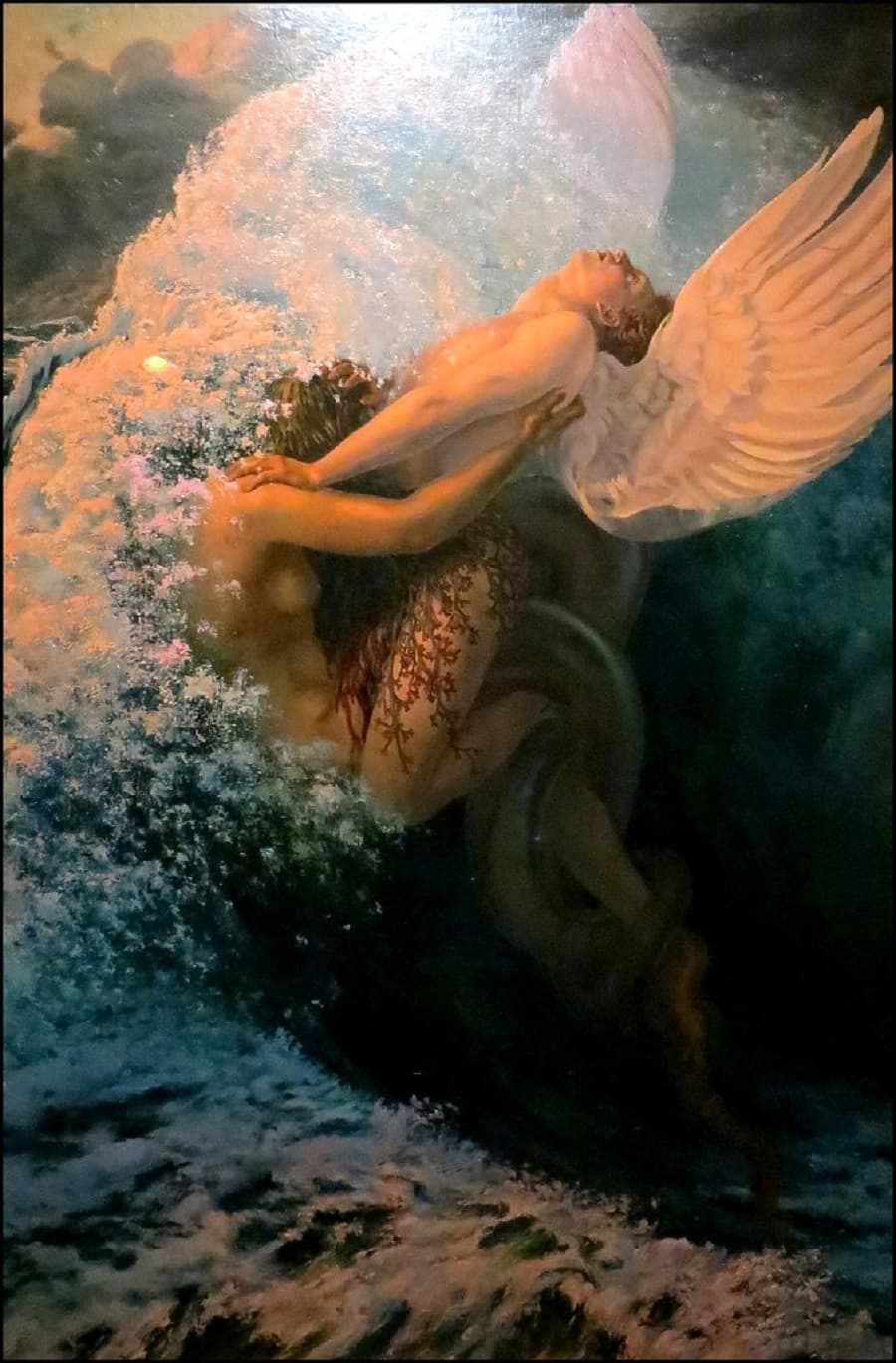
Spleen et Idéal
Carlos Schwabe · 1907
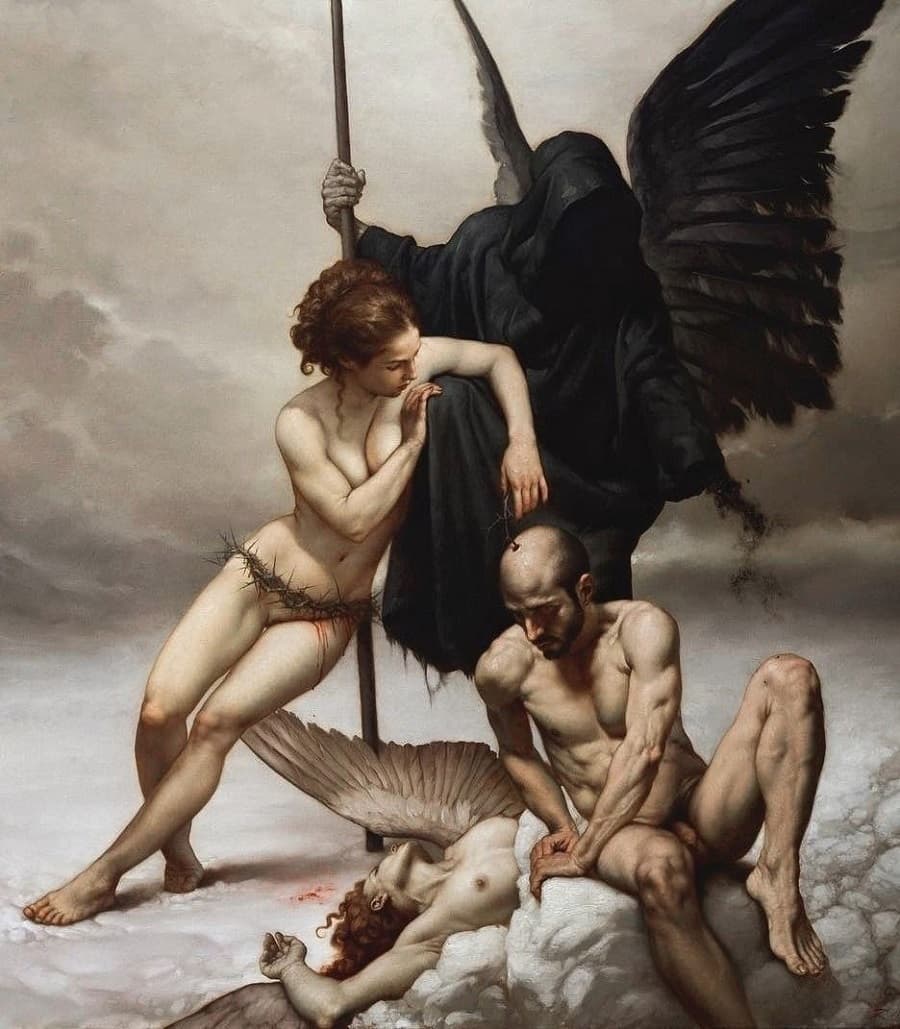
The Angel, the Death, and the Devil
Roberto Ferri · 2018
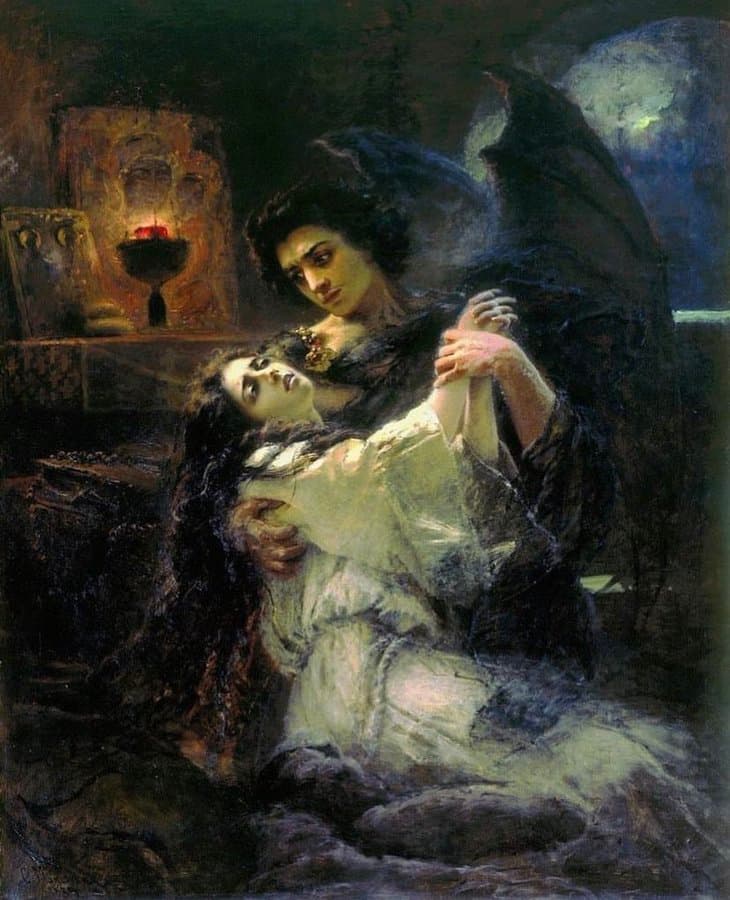
Tamara and Demon
Konstantin Makovsky · 1889
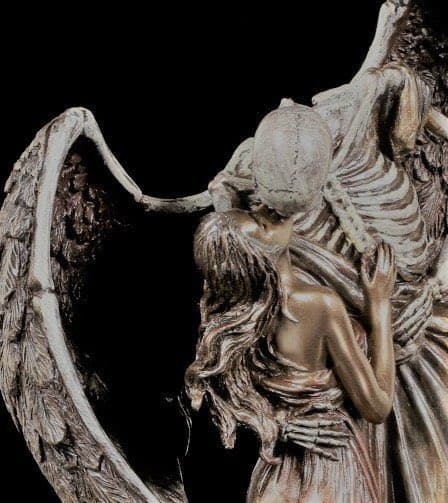
The Kiss of Death
Veronese Design · c. 2020

Bridge over a Pond of Water Lilies
Claude Monet · 1899

The Scream
Edvard Munch · 1893

The Thinker
Auguste Rodin · Modeled 1880–82; enlarged 1902–03; this cast 1904