Contemporary ceramics
Solastalgia
Kate MacDowell, 2010
Solastalgia is a 2010 hand-built porcelain sculpture by American artist Kate MacDowell: a human brain cut open to reveal a tiny eucalyptus forest with a koala, birds and flowers inside, an image of grief for a damaged environment.
- Artist
- Kate MacDowell
- Date
- 2010
- Medium
- Hand-built porcelain, cone 6 glaze
- Movement
- Contemporary ceramics
What you are looking at
A life-size human brain, modeled in matte white porcelain, is shown from the side with its folds, cerebellum and stem carefully described. A large section of the cortex has been cut away like a window. Inside, in miniature, is a forest: branching eucalyptus twigs with long leaves and gumnuts, ferns, a spray of small flowers, and in the middle a koala clinging to a trunk and looking out at us. A small bird perches on the lower lip of the opening, another sits in the foliage. Attached to the outside of the brain, where it does not belong, is a human ear, and beside it bursts a cluster of lily-like flowers.
Everything is the same unglazed-looking white, so the forest reads less like a living landscape than like a memory or a fossil.
The title
Solastalgia is a word coined in the early 2000s by the Australian philosopher Glenn Albrecht. It joins the Latin solacium (comfort) and the Greek -algia (pain) to describe the distress people feel when their home environment is degraded around them: a homesickness experienced while still at home. Albrecht developed the idea from communities in New South Wales living beside open-cut coal mines.
MacDowell's choice of a koala and eucalyptus is therefore precise. The forest inside this brain is an Australian one, the landscape that gave the word its origin, and the koala has become an emblem of habitat loss. The ear, placed on the outside and listening, suggests a mind that hears what is happening to that world and holds it inside.
How it was made
Kate MacDowell is an American artist based in Portland, Oregon. She builds her sculptures by hand in porcelain, without molds, and fires them with a cone 6 glaze. She has said she prefers porcelain for its luminous, ghostly quality and for its ability to hold very fine detail; the leaves here are paper-thin and the koala's fur is suggested with tiny incised marks. Porcelain is also fragile and associated with precious, decorative objects, which sharpens the contrast with her often disturbing subjects.
Meaning
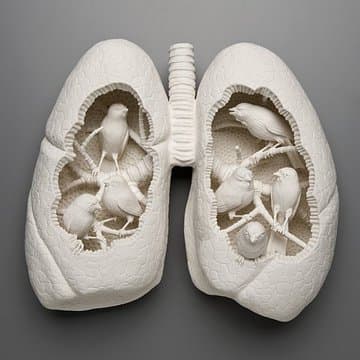
MacDowell describes her work as exploring the conflict between a romantic ideal of union with nature and our actual impact on the environment. Many of her pieces fuse human anatomy with animals and plants: hearts, lungs and skulls that open onto wildlife. Here the brain becomes a reliquary for a threatened ecosystem. Is the forest a memory of what has been lost, or something still alive that the mind is trying to protect? The work leaves both open, which is the feeling the word solastalgia names.
Related works
See MacDowell's Canary 3 and her artist page. For other works that grow nature from inside the body, compare Modem Swamp by Daniel Popper and Flower Figures Nº02 by Jean-Michel Bihorel.
Questions & answers
What does solastalgia mean?
Solastalgia is a word coined by Australian philosopher Glenn Albrecht for the distress people feel when their home environment is damaged or changed around them, a kind of homesickness while still at home. Kate MacDowell titled her 2010 porcelain sculpture after it.
What does Kate MacDowell's Solastalgia show?
It is a white porcelain human brain with a window cut into it, revealing a miniature eucalyptus forest with a koala, birds, ferns and flowers. A human ear and a cluster of lilies are attached to the outside of the brain.
What is Solastalgia made of?
It is hand-built porcelain fired with a cone 6 glaze. MacDowell works without molds and chooses porcelain for its pale, ghostly quality and its ability to hold extremely fine detail.
More by the artist
Kate MacDowell
Kindred works
You may also study
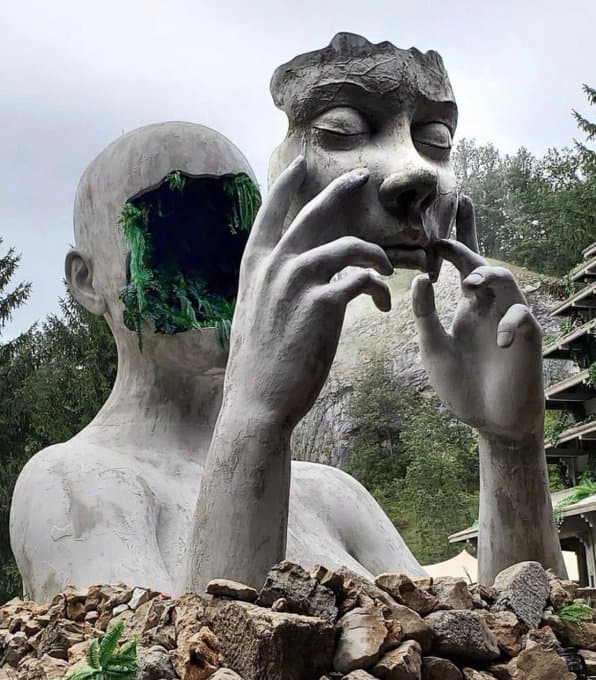
Modem Swamp
Daniel Popper · 2019
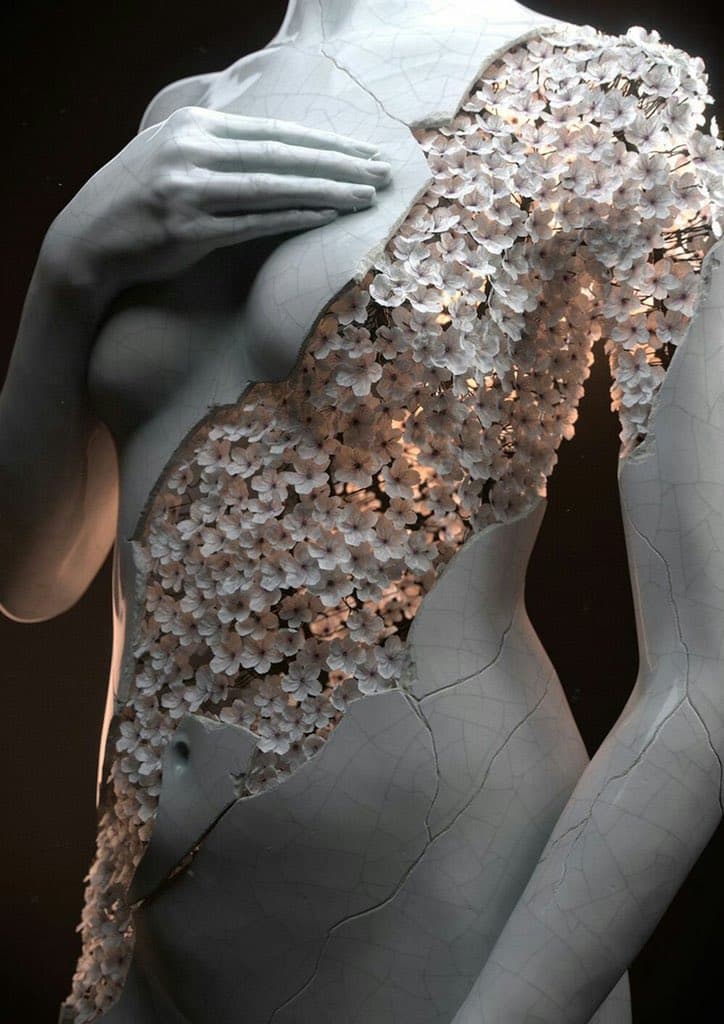
Flower Figures Nº02
Jean-Michel Bihorel · 2016
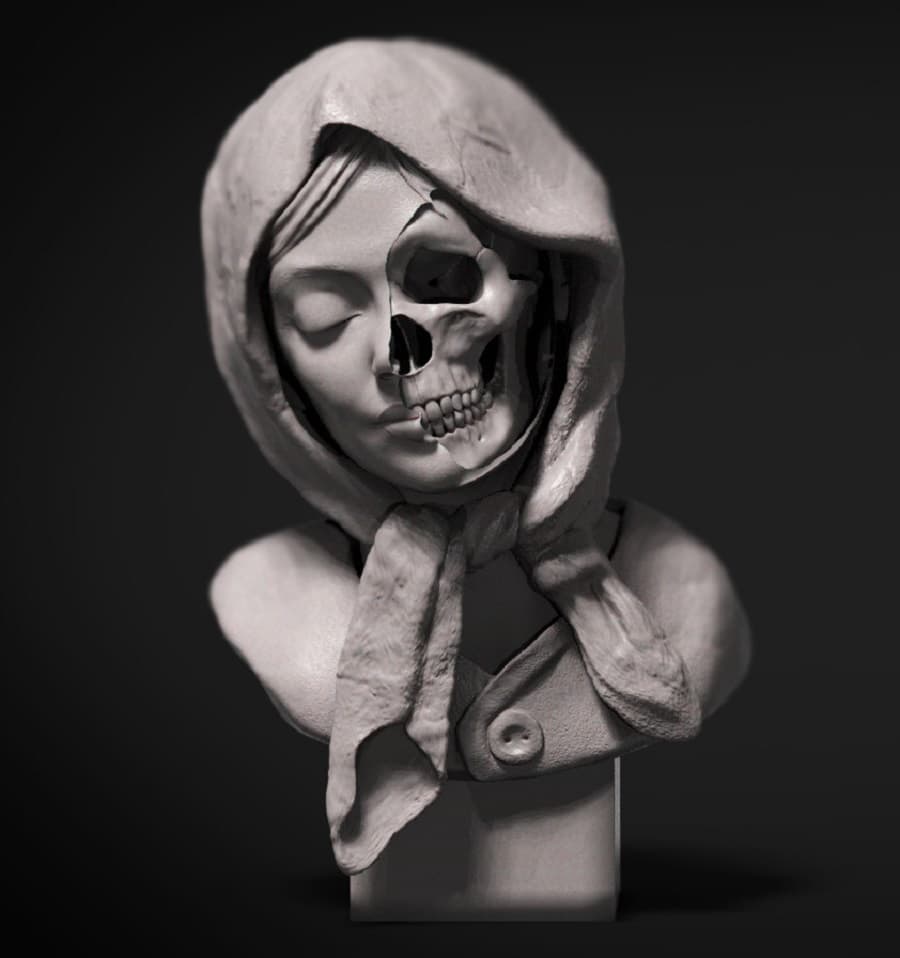
Vanitas Sculpture (Hooded Bust with Skull)
Various Artists or Collaborations
Ocean Atlas
Jason deCaires Taylor · 2014

Bridge over a Pond of Water Lilies
Claude Monet · 1899

The Scream
Edvard Munch · 1893

Saturn Devouring His Son
Francisco Goya · c. 1819–1823

Ophelia
John Everett Millais · 1851–52