Image: Musée d'Orsay, Paris (Google Art Project) · Public domain · via Wikimedia Commons
Blue Water Lilies
Claude Monet, 1916–19
Blue Water Lilies (Nymphéas bleus) is a two-meter-square canvas Claude Monet painted at Giverny between 1916 and 1919: white lilies on a pond drowned in violet and blue, curtained by hanging willow fronds. It is in the Musée d'Orsay, Paris.
- Artist
- Claude Monet
- Date
- 1916–19
- Medium
- Oil on canvas
- Dimensions
- 200 × 200 cm
- Collection
- Musée d'Orsay, Paris, France
- Movement
- Impressionism
- Catalogue
- Wildenstein 1853
- Nature & Landscape
- Water & Sea
Blue Water Lilies (Nymphéas bleus) is one of the large square canvases Claude Monet painted of his water-lily pond at Giverny in the last decade of his life, between about 1916 and 1919. It measures two meters on each side, it is almost entirely blue and violet, and it belongs to the Musée d'Orsay in Paris, which catalogues it under inventory number RF 1981 40.
What you're looking at
There is no bank, no sky and no horizon. Monet stands at the edge of the pond and looks down, so the whole square is water. Across the middle drifts a loose raft of lily pads, painted in cool bottle green and slate, their edges caught with touches of red-brown where the leaves curl. On them sit a dozen white flowers, each built from a few thick strokes of white and pale yellow, and a cluster of pink blossoms glows faintly in the top left corner.
What makes this version distinct is the curtain of willow. Long, dark green strokes hang down from the top edge and through the left side, the reflected fronds of a weeping willow on the bank. They fall straight through the pads, so the picture holds two planes at once: the leaves floating on the surface and the tree mirrored in its depths. Between them the water is a deep, saturated blue-violet, laid in broad vertical drags that read as reflected sky.
Look at the bottom edge and the right side and you can see bare, pale canvas showing through. Monet did not cover every inch; the brush simply stops, and that thinness at the margins tells you this was a working canvas kept in the studio rather than a picture finished for sale.
Where and when it was painted
By 1916 Monet, in his mid-seventies, had committed himself to the project he called the Grandes Décorations: an enveloping cycle of water-lily panels that would end up in the Musée de l'Orangerie. To work at that scale he built a vast new studio at Giverny in 1915, and alongside the long horizontal panels he painted dozens of two-meter canvases, many of them square, to test motifs and color harmonies. Blue Water Lilies is one of these. The willow, the white lilies and the dominant blue all recur in the final Orangerie rooms.
The years were hard ones. The First World War was being fought less than a hundred kilometers away, his son Jean had died in 1914, and his eyesight was beginning to cloud with cataracts. The cool, nocturnal key of this canvas has often been connected to those circumstances, though Monet himself left no statement tying it to them.
How it was painted
The handling is broad and rhythmic. Monet worked with large brushes, building the water from overlapping vertical strokes that let earlier layers of violet, ultramarine and green show through. The lily pads are horizontal ellipses scrubbed in with flatter, wider marks, which keeps the eye reading the surface as lying flat even though the picture has no perspective cues. The white flowers are the thickest paint on the canvas, and they sit up on the surface like the real blossoms on the water.
How this version differs
Most of the late square canvases in the Water Lilies series lean toward green or toward the pink and gold of evening. This one is pushed almost entirely into blue, the coolest of the group. Compare it with Water-Lilies, Reflection of a Weeping Willow at the Marmottan, where the willow reflection dissolves into lilac haze, or another 1916–19 Nymphéas in which a green bank intrudes at lower left. Here the willow is drawn more crisply, and the flowers are clearer, so the picture holds together as a single, legible image.
The garden behind the picture
The pond in this canvas was itself a work of Monet's making. In 1893 he bought a strip of marshy land across the road and railway line from his house and, after obtaining permission from the local authorities, diverted a branch of the little river Ru to feed a pool. He planted it with hardy hybrid water lilies, many bought from the nursery of Joseph Bory Latour-Marliac, and ringed it with willows, bamboo and irises. A gardener was employed to tend the pond, skimming the surface and trimming the lilies into the islands Monet wanted to paint. The arrangement of pads in Blue Water Lilies is therefore not wild nature: it is a composition planned in the garden before it was planned on the canvas.
Where to see it
The canvas remained in Monet's possession and passed to his family after his death in 1926; its inventory number shows it entered the French national collections in 1981. It is now one of the late works shown at the Musée d'Orsay. For the museum's other paintings by Claude Monet, see Monet at the Musée d'Orsay; for the garden it records, see Giverny.
Questions & answers
Where is Monet's Blue Water Lilies?
Blue Water Lilies is in the Musée d'Orsay in Paris (inventory RF 1981 40). The two-meter square canvas stayed in Monet's studio and with his heirs after his death and entered the French national collections in 1981.
When and where was Blue Water Lilies painted?
Monet painted it at Giverny between about 1916 and 1919, in the large studio he built in 1915 for the water-lily decorations. It shows the pond in his water garden, seen from above with a weeping willow reflected in it.
What does Blue Water Lilies show?
It shows a patch of the Giverny pond with no bank or sky: green lily pads with white flowers floating on blue-violet water, and the long hanging fronds of a weeping willow reflected through them. The subject is really light and reflection on water.
How is Blue Water Lilies related to the Orangerie Water Lilies?
It belongs to the group of large canvases Monet painted while preparing the Grandes Décorations now at the Musée de l'Orangerie. The willow reflections, white lilies and blue harmony all reappear in those final panels, but this canvas was kept separate.
More by the artist
Claude Monet
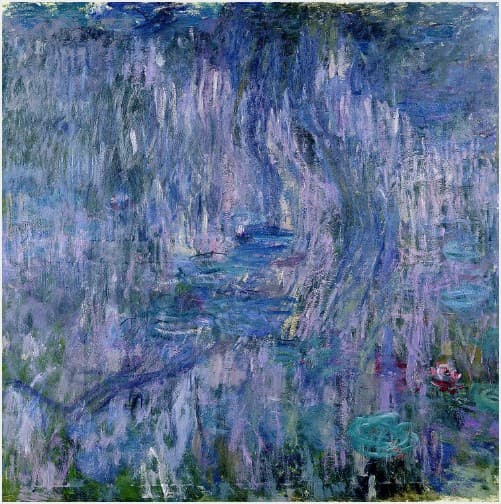
Water-Lilies, Reflection of a Weeping Willow
Claude Monet · 1916–19
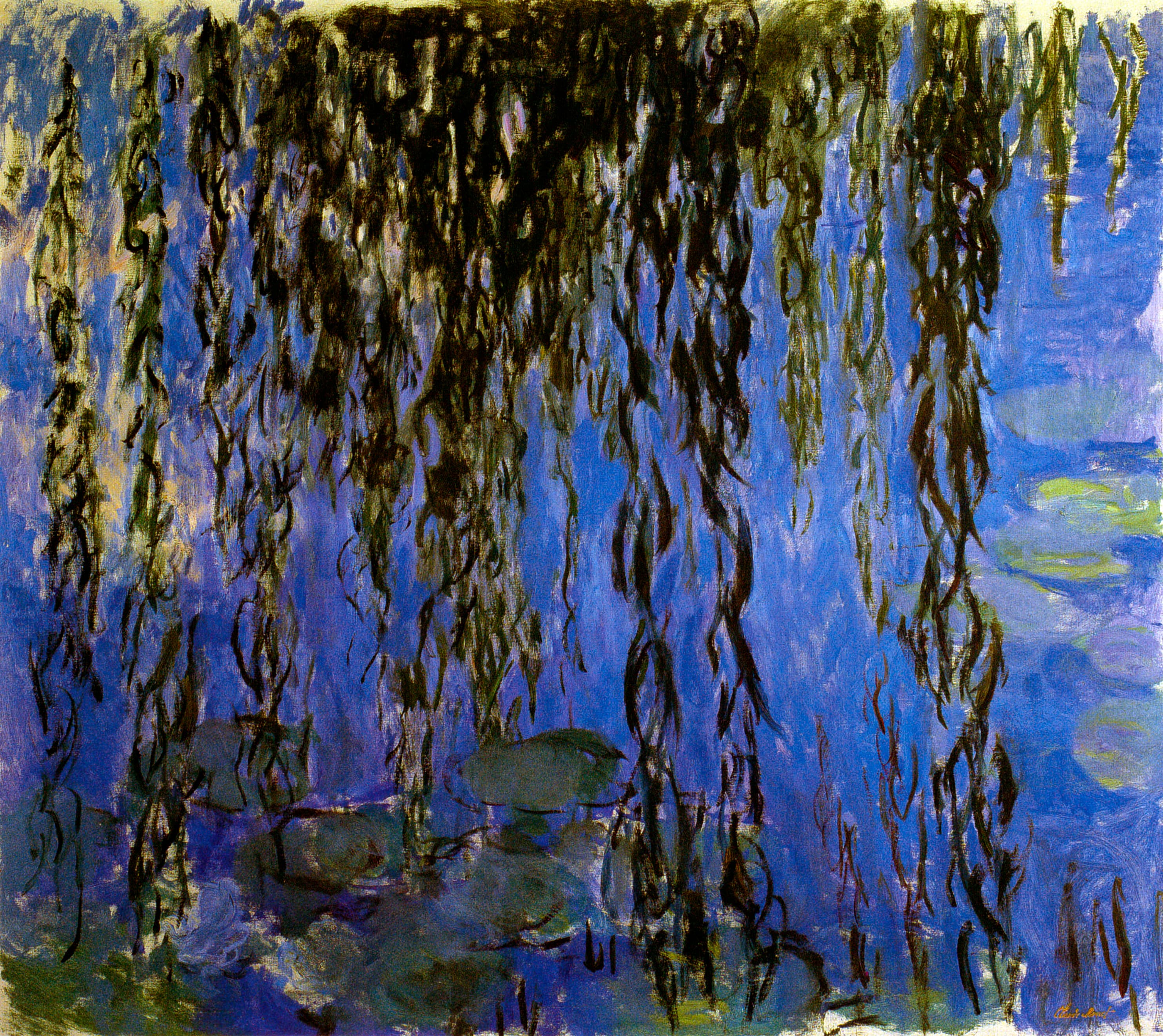
Water Lilies with Willow Branches
Claude Monet · c. 1916–17
Weeping Willow and the Water-Lily Pond
Claude Monet · c. 1916–19
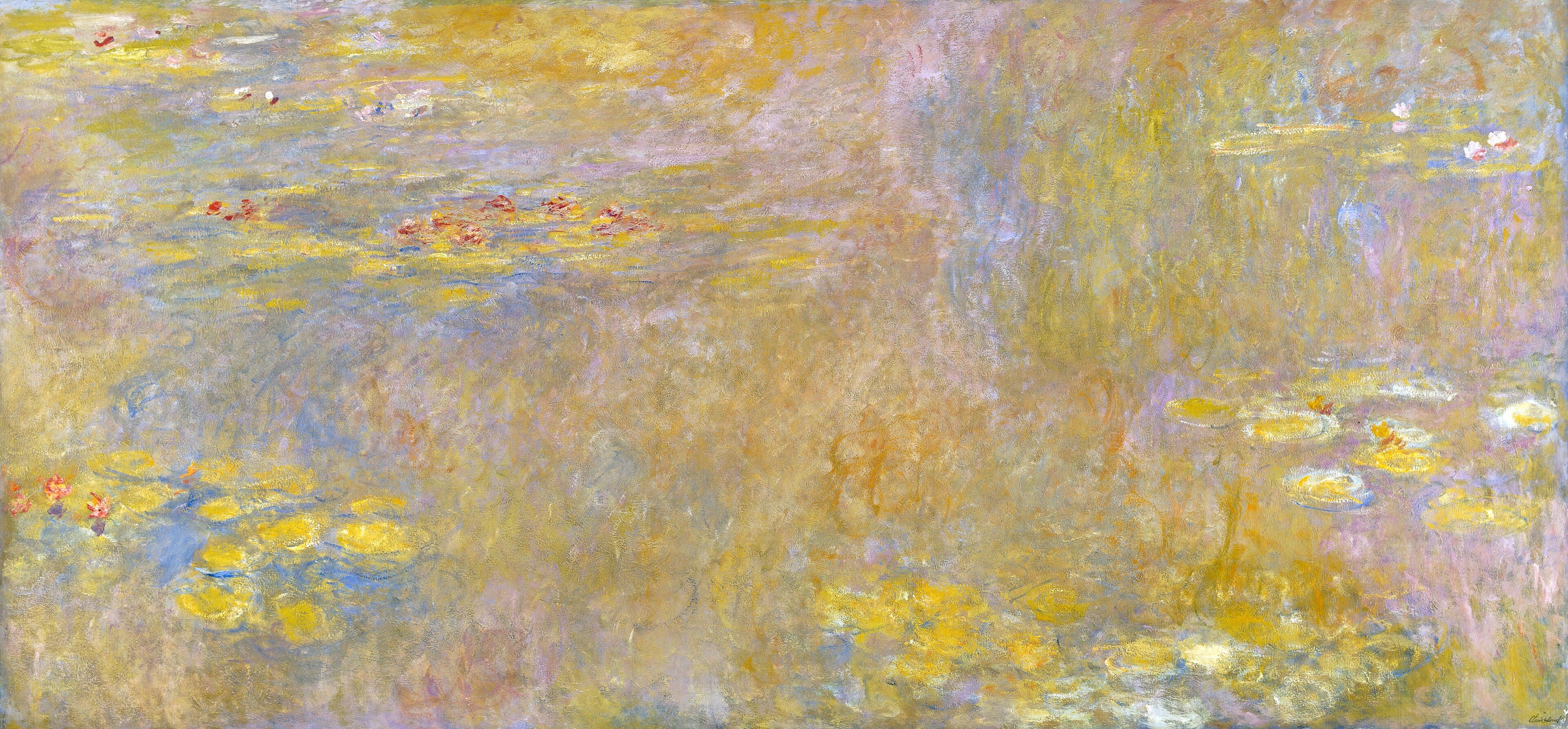
Water-Lilies
Claude Monet · after 1916
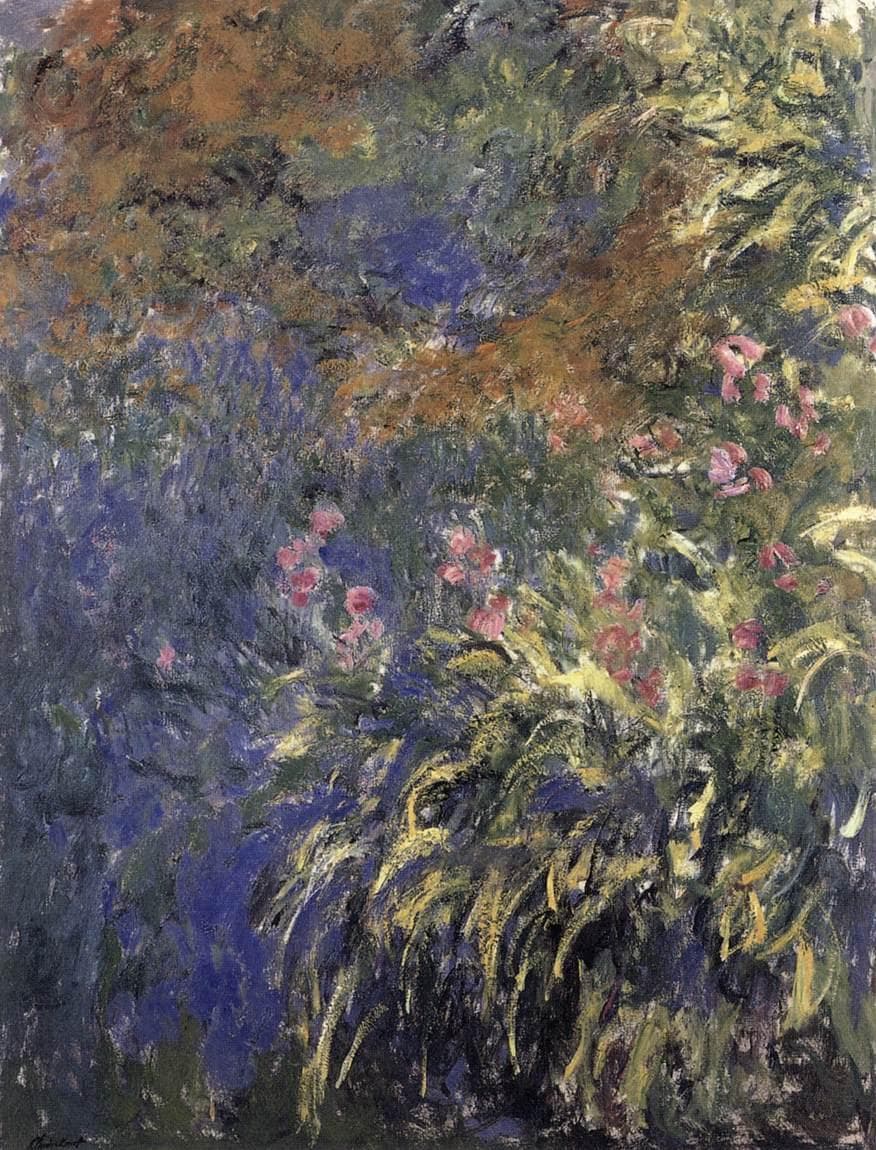
Irises by the Pond
Claude Monet · c. 1914–17
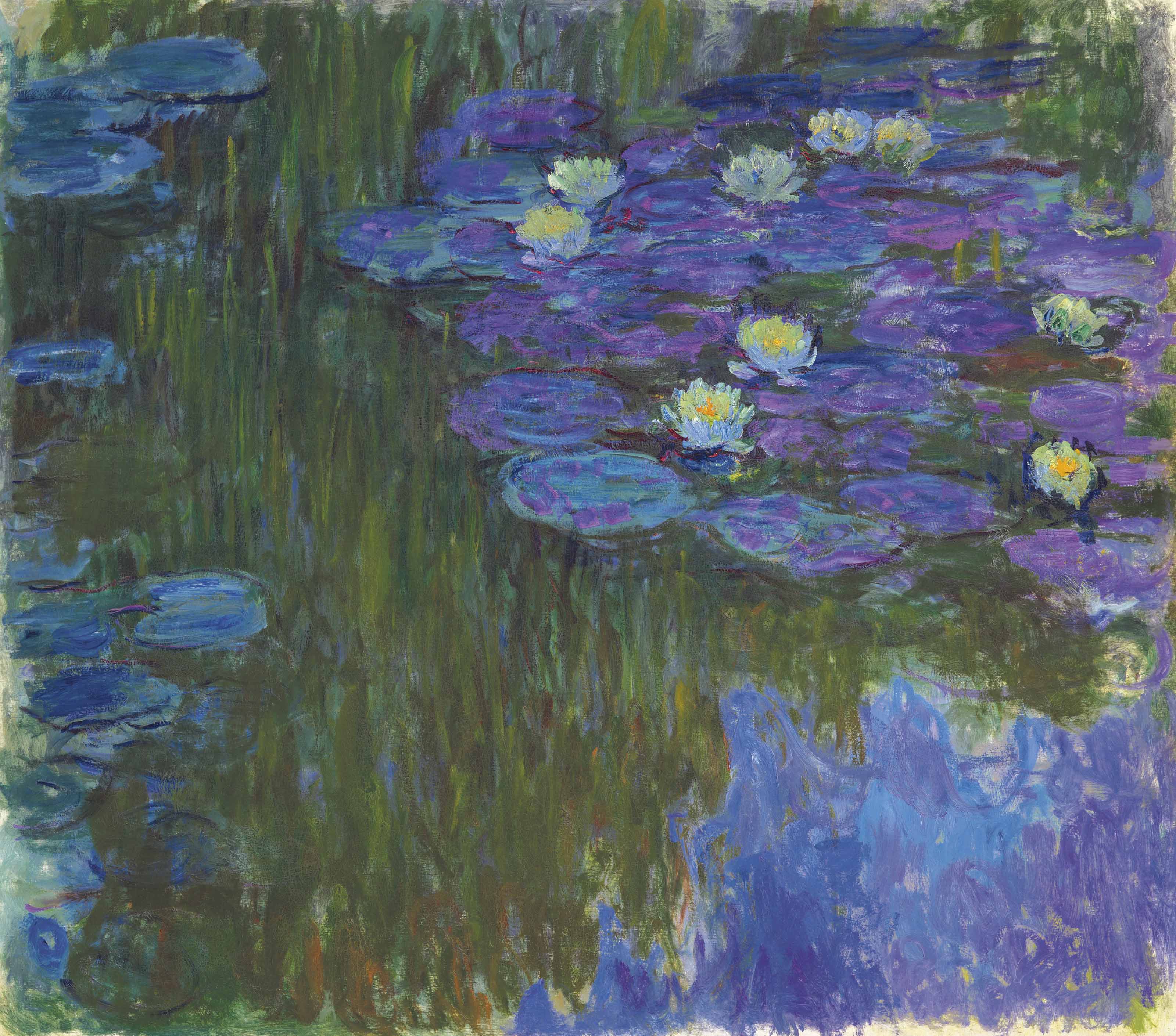
Nymphéas en fleur
Claude Monet · c. 1914–17
Corner of the Water-Lily Pond
Claude Monet · 1918
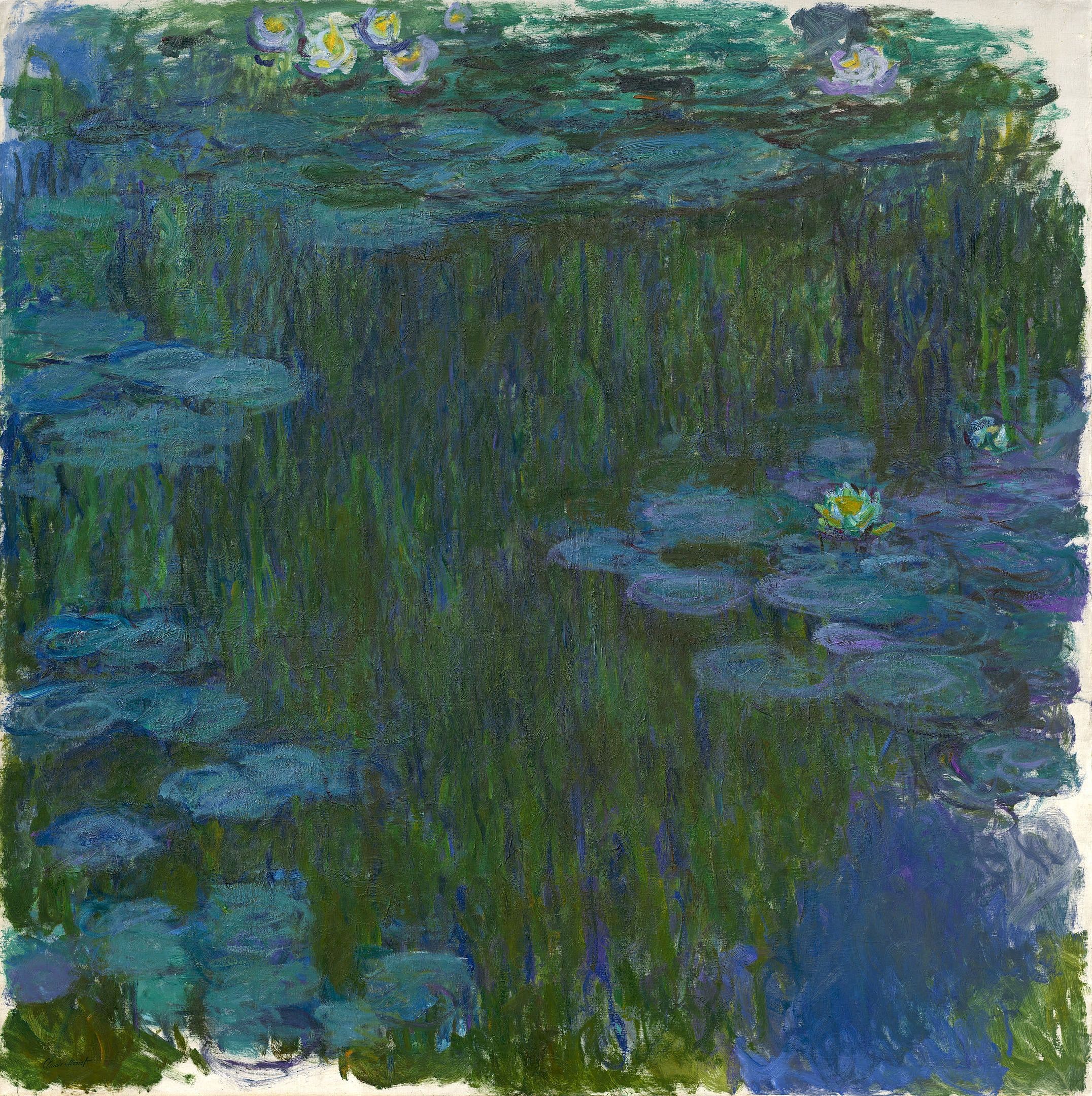
Water Lilies (1914–17, Museum Barberini)
Claude Monet · 1914–17
Also painted in 1916
The same year
Kindred works
You may also study
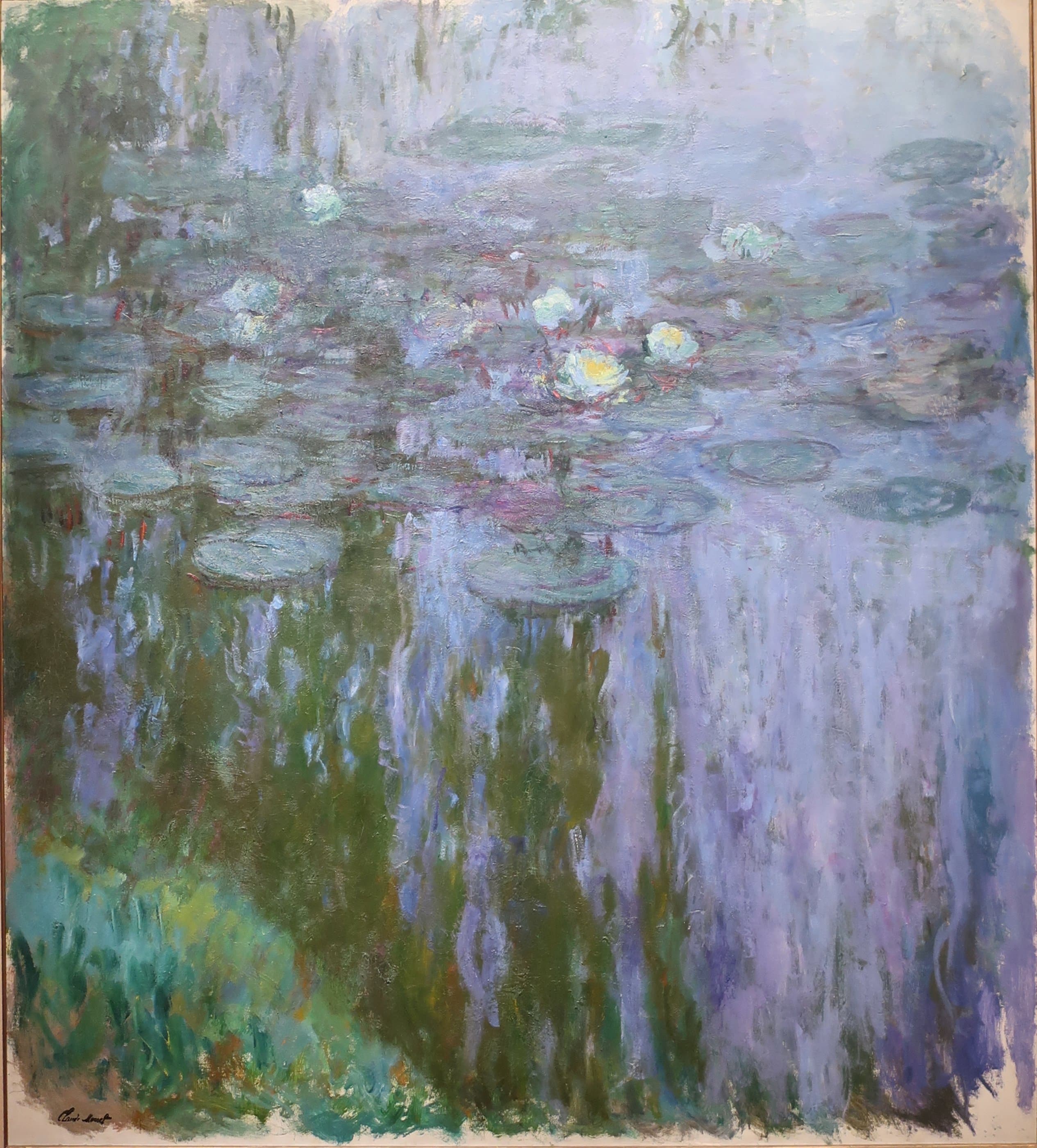
Nymphéas (Musée Marmottan Monet, 1916–19, inv. 5119)
Claude Monet · 1916–19
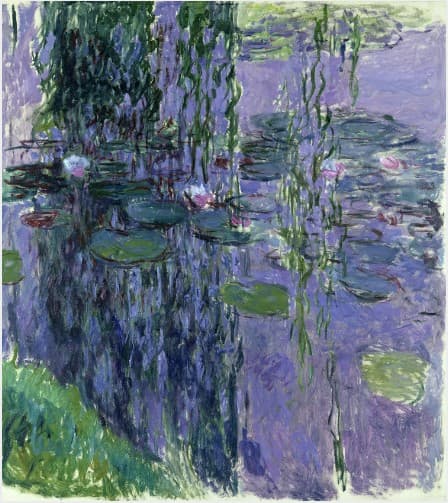
Nymphéas (Musée Marmottan Monet, 1916–19)
Claude Monet · 1916–19
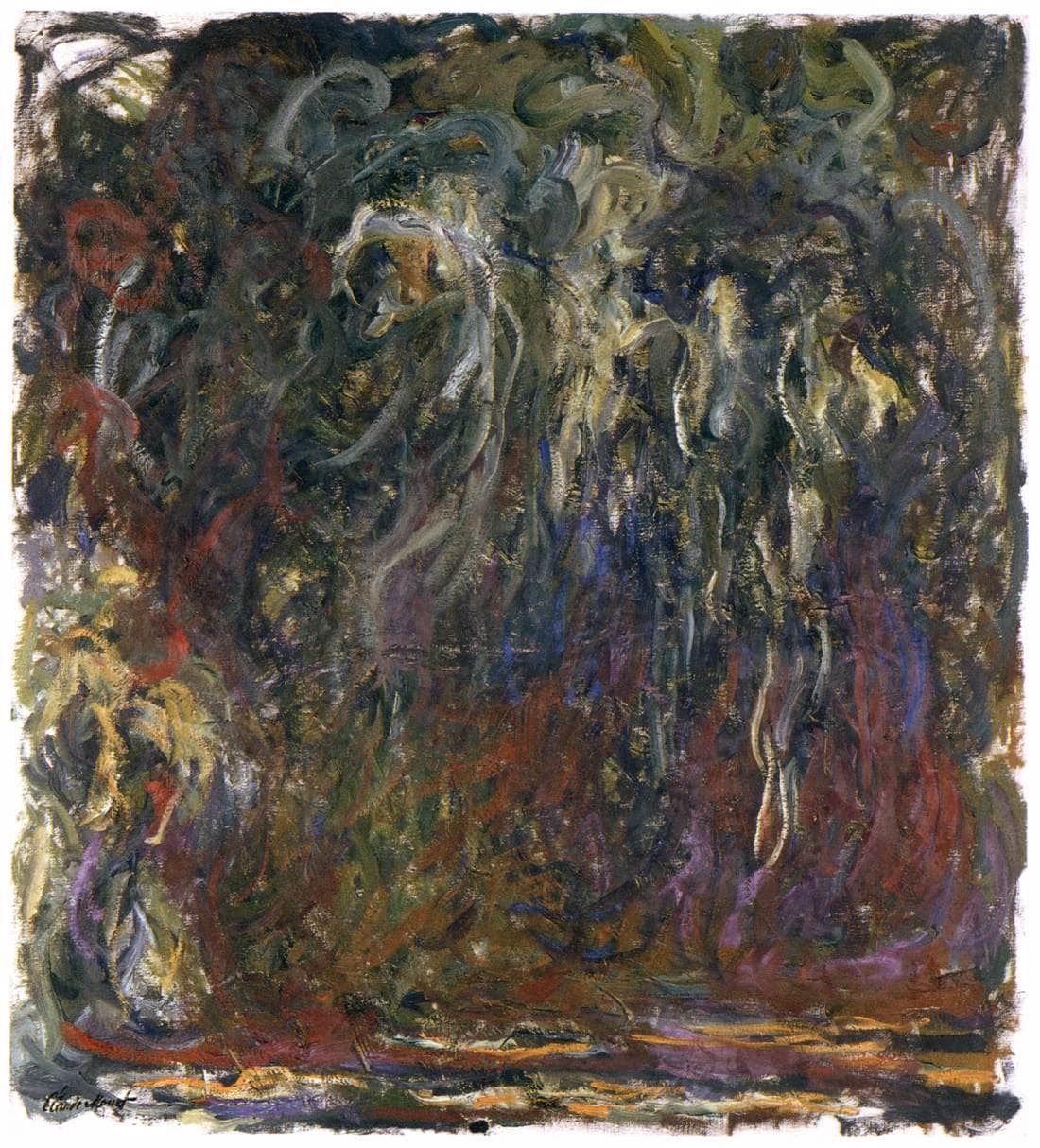
Weeping Willow
Claude Monet · 1920–22
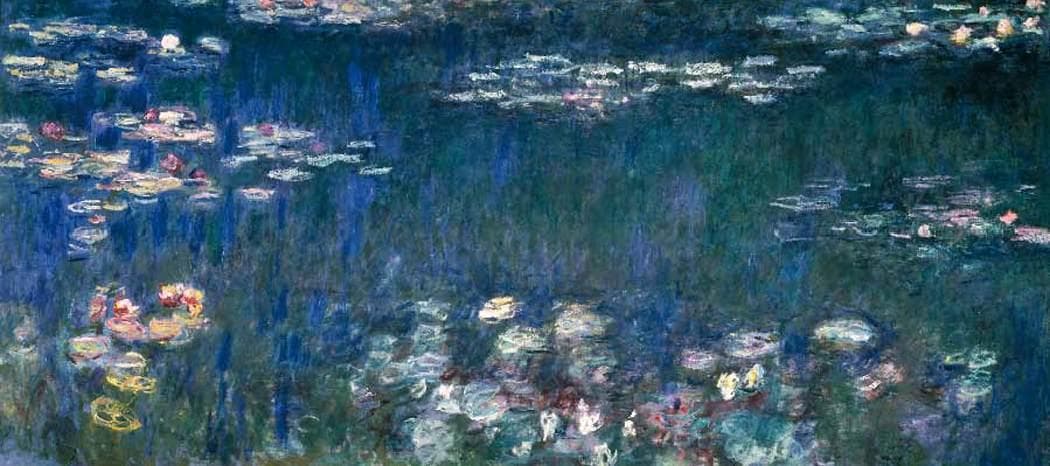
Water Lilies: Green Reflections
Claude Monet · 1914–26
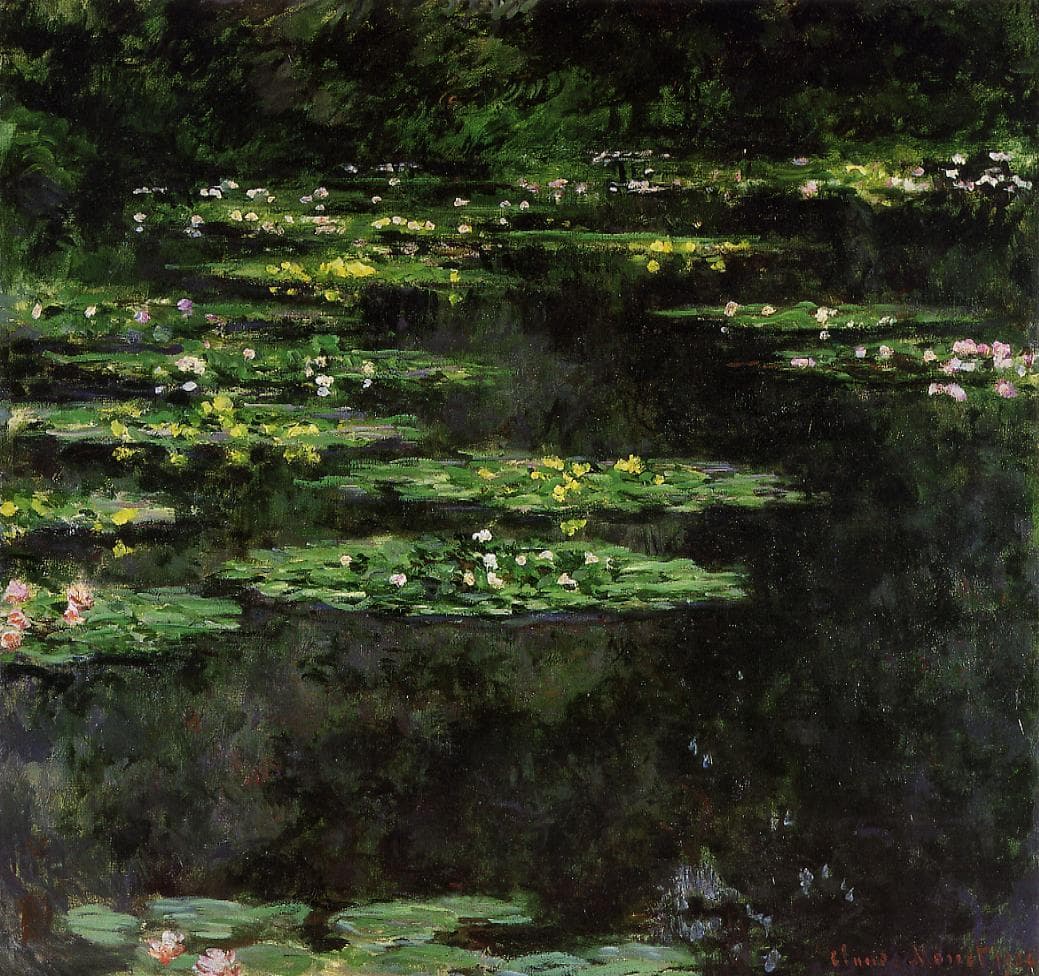
Water Lilies (1904, MuMa Le Havre)
Claude Monet · 1904
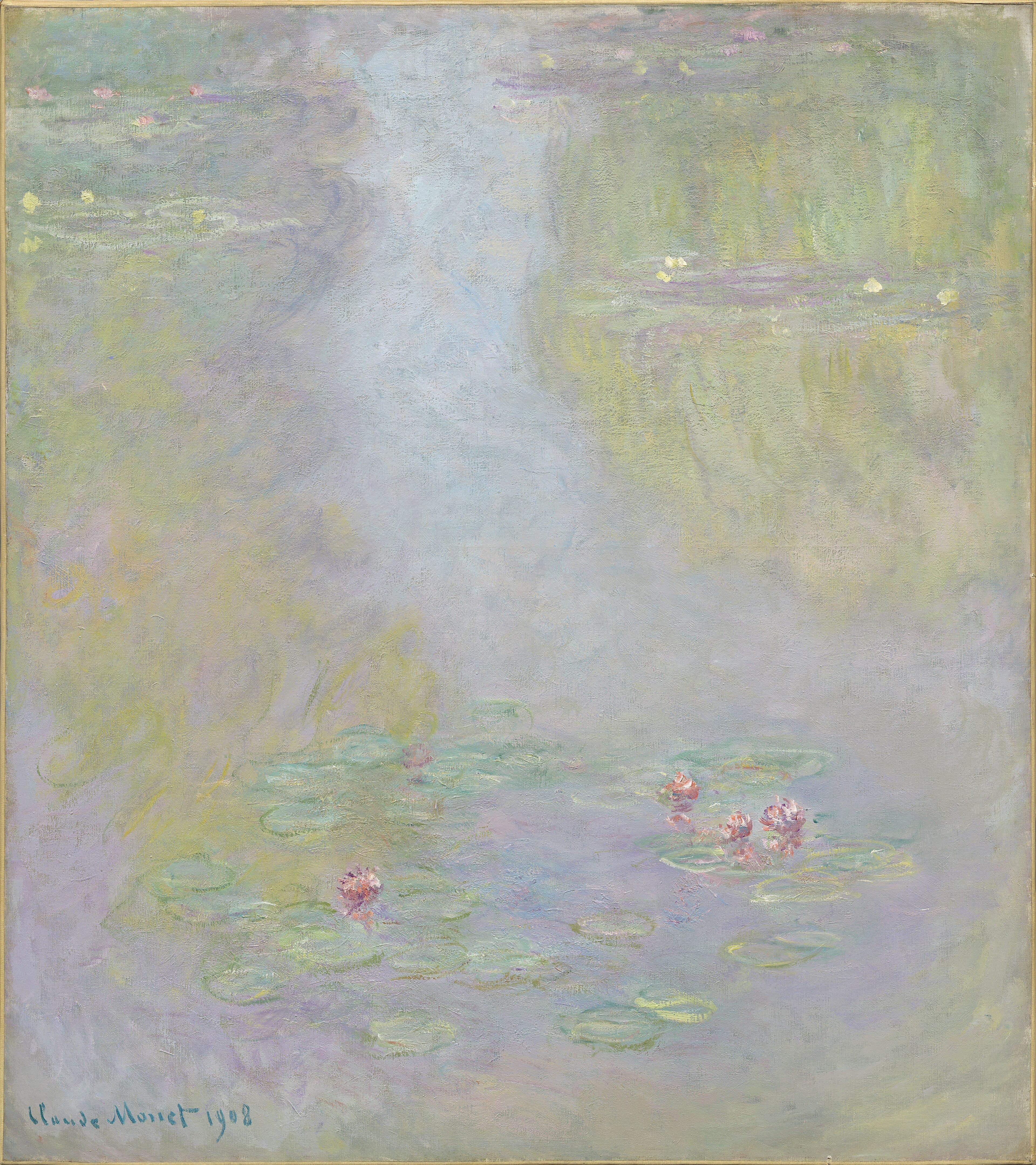
Water Lilies (1908, Tokyo Fuji Art Museum)
Claude Monet · 1908
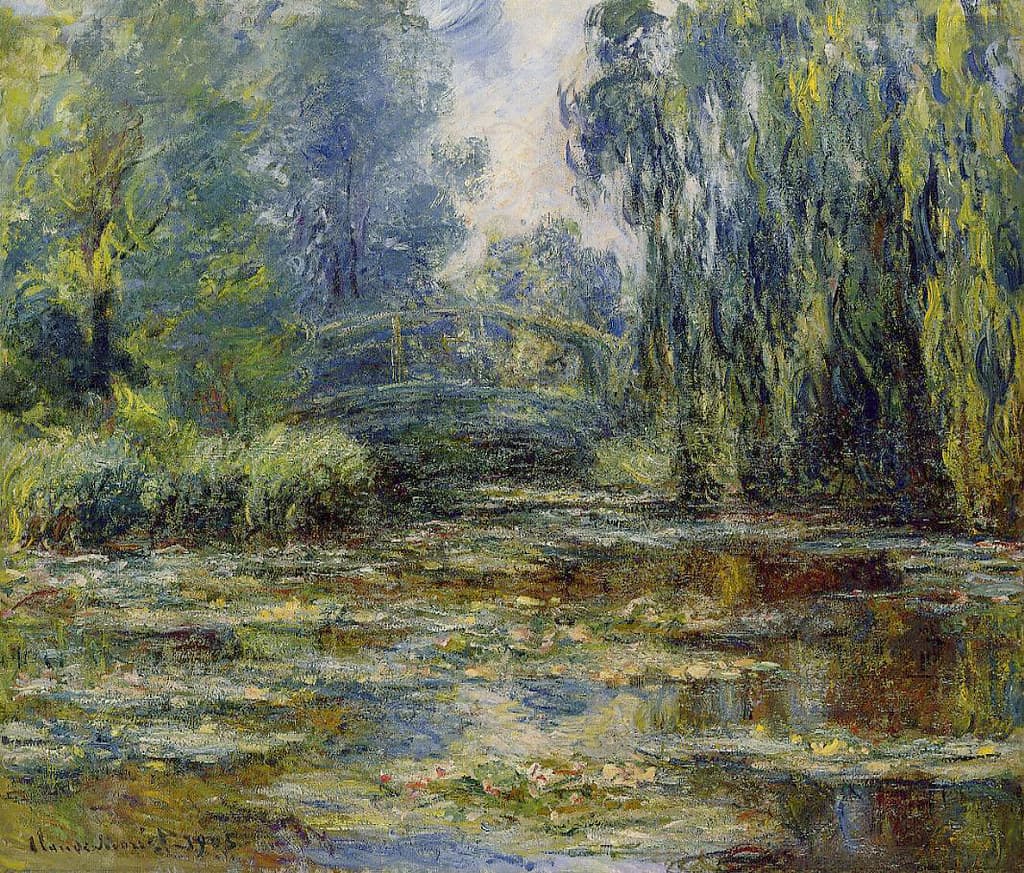
The Water-Lily Pond and Bridge
Claude Monet · 1905
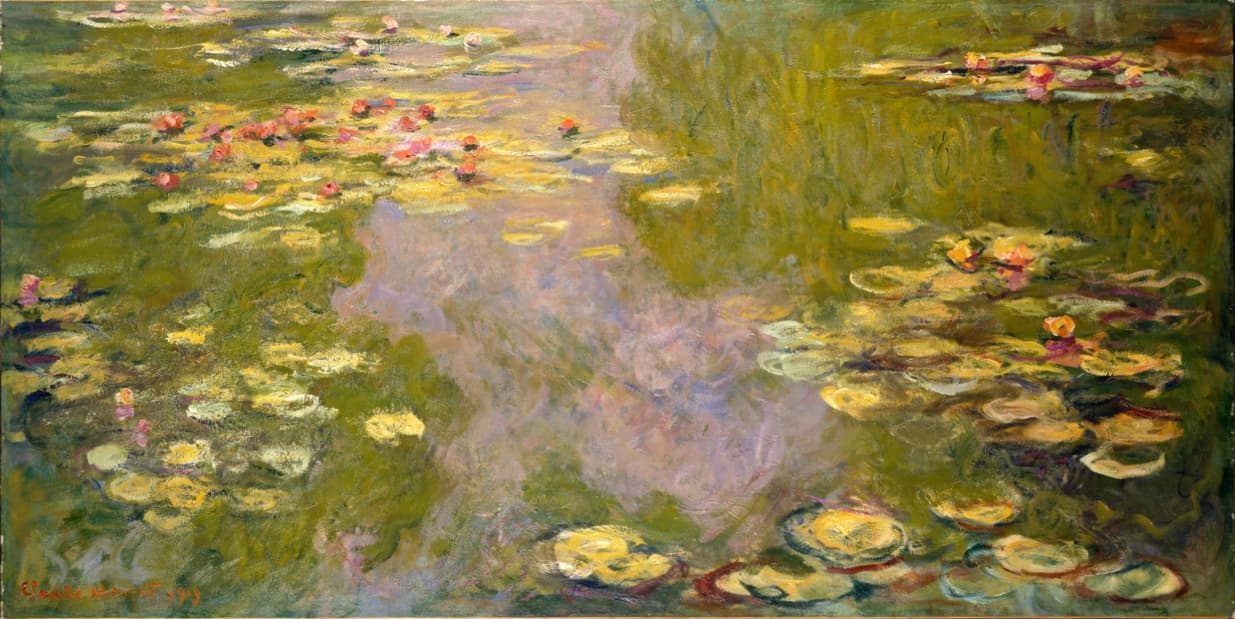
Water Lilies (1919, Metropolitan Museum)
Claude Monet · 1919