Victory (Lion Attacking a Python)
Herbert Thomas Dicksee, 1919
Victory is a 1919 etching by the British animal artist Herbert Thomas Dicksee, published by Frost & Reed, showing a roaring lion pinning a huge python beneath its paw. It is a print issued in an edition, so impressions are in various collections rather than one museum.
- Artist
- Herbert Thomas Dicksee
- Date
- 1919
- Medium
- Etching
- Dimensions
- Plate c. 45 × 70 cm
What you're looking at
A full-maned lion rears up on a rocky ledge, mouth wide open in a roar, head turned sharply to the right. Beneath and around him a python lies in heavy coils, its patterned body looping across the foreground and around the lion's forelegs. The lion has the advantage: one great paw presses down near the snake's head, claws spread, pinning it against the rock. The background is a dark, scratched-in cave or ravine wall, so that the pale mane and the lit tops of the coils stand out.
The drama is all in the etched line. Dicksee builds the mane from thousands of fine, flowing strokes, the snake's skin from a dense net of small scales, and the rock from looser, broken hatching. Look at the paw: the pads and the curve of each claw are drawn with the same care as the face, because the whole story of the picture happens there.
An etching, not a painting
The image is often described online as a painting, but it was published as an etching. Auction records describe it as an original etching printed in blue-black ink on Japanese vellum, issued by the London and Bristol fine-art publishers Frost & Reed in 1919, with signed artist's proofs and an edition of a few hundred impressions. The plate measures roughly 45 by 70 centimeters, a wide landscape format, so crops that show only the lion and the coiled snake leave out part of the composition.
Dicksee was a member of the Royal Society of Painter-Etchers, and large animal etchings like this, sold through publishers such as Frost & Reed, were how most people in Edwardian Britain owned his work. Later restrike prints from the plate have also circulated under the title Victory (Lion & Snake).
Who was Herbert Dicksee?
Herbert Thomas Dicksee (1862–1942) came from a London family of painters: his father Thomas Francis Dicksee and his uncle John Robert Dicksee were artists, and his brother was the Victorian painter Sir Frank Dicksee, known for Romeo and Juliet. Herbert specialized in animals, above all lions, tigers and leopards, as well as dogs. He never traveled to Africa or Asia; instead he sketched the big cats at London Zoo, reportedly arriving early in the morning before the public to watch them move.
His lion etchings, with titles such as Raiders, In the Enemy's Country and The Alarm, were popular around 1900. Victory is unusual among them for showing open combat rather than watchful stillness.
What does Victory mean?
The date and title point to the end of the First World War. An auction catalogue note states that the print commemorates the Armistice and also the death of the artist's only son, killed in Flanders in late 1918. Read that way, the lion, Britain's heraldic animal, stands over a defeated serpent, a familiar emblem of evil and of a cunning enemy. The roar is triumphant, but the picture is also violent and unresolved: the coils are still wrapped around the lion's legs.
The composition draws on an older tradition of animal combat in British art, from George Stubbs's lion attacking a horse to Victorian zoo-inspired fights, in which nature stands in for moral or national struggle. Dicksee's version is more naturalistic than allegorical, but the single word title tells the viewer how to read it.
Where to see it
Because Victory is an editioned print, there is no single original. Impressions appear regularly at British auction houses and with print dealers, and examples are held in private collections. For more images of conflict and the animal world, see The Lion of Lucerne, another lion made as a war memorial, and our page on Herbert Thomas Dicksee.
Questions & answers
Who made Victory, the lion and python picture?
It is by Herbert Thomas Dicksee (1862–1942), a British artist who specialized in lions, tigers and other animals, many of them sketched at London Zoo. He was the brother of the painter Sir Frank Dicksee. Victory was published in 1919 by Frost & Reed.
Is Victory a painting or a print?
It is an etching. Auction records describe it as an original etching printed in blue-black ink on Japanese vellum, published in 1919 in an edition of a few hundred impressions, with a plate of about 45 by 70 centimeters. Many online images are crops of the print.
What does Dicksee's Victory mean?
Its 1919 date and title link it to the end of the First World War. A lion, Britain's national emblem, overpowers a python, an old symbol of evil and of a treacherous enemy. An auction note also connects the print with the death of Dicksee's only son in Flanders in 1918.
Kindred works
You may also study
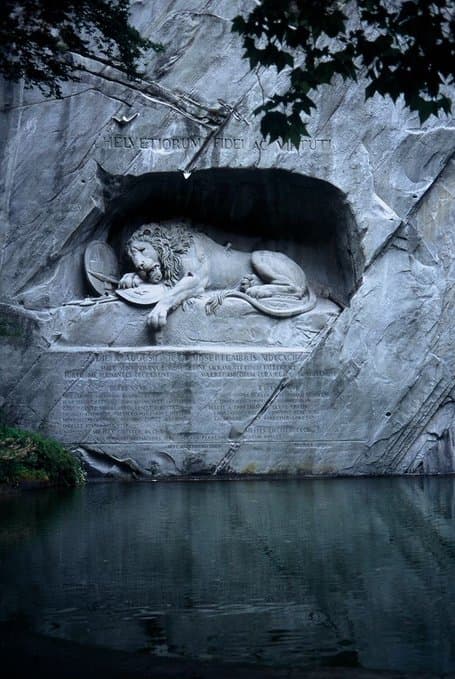
The Lion of Lucerne
Bertel Thorvaldsen & Lukas Ahorn · 1820–21
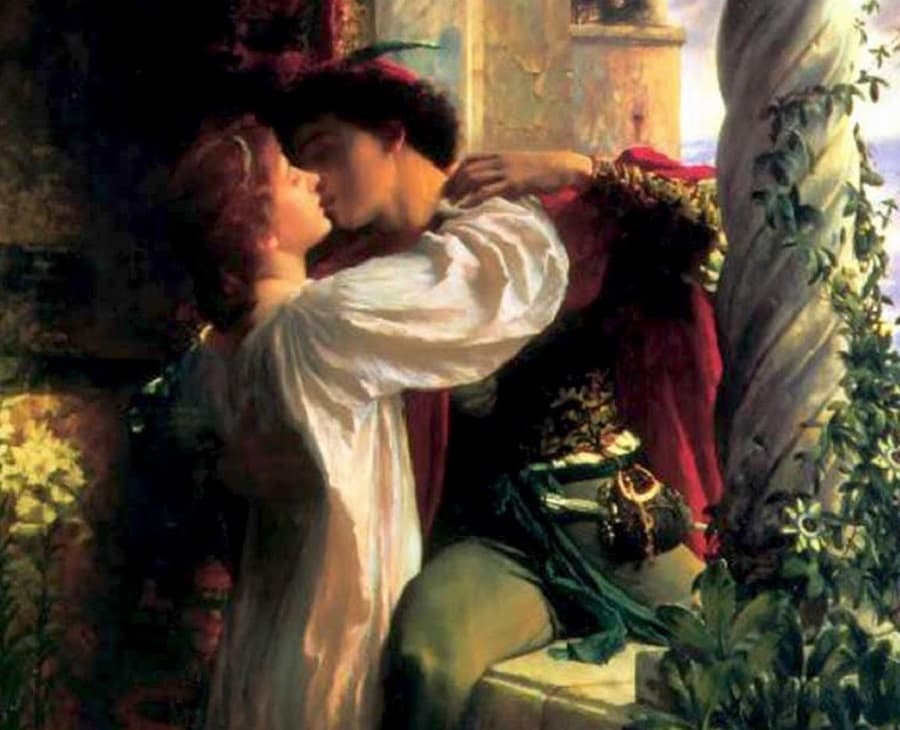
Romeo and Juliet
Sir Frank Dicksee · 1884
La Belle Dame sans Merci
Sir Frank Dicksee · 1901
Ivan the Terrible and His Son Ivan
Ilya Repin · 1883–85

Bridge over a Pond of Water Lilies
Claude Monet · 1899

The Scream
Edvard Munch · 1893

Saturn Devouring His Son
Francisco Goya · c. 1819–1823

Ophelia
John Everett Millais · 1851–52