Image: Kerry Stokes Collection, Perth (via Flickr / Wikimedia Commons) · Public domain · via Wikimedia Commons
Waterloo Bridge (Kerry Stokes Collection)
Claude Monet, 1899–1901
Waterloo Bridge is a small Claude Monet canvas of 1899–1901 in which a red-gold sun burns through turquoise fog and the bridge almost vanishes, leaving pink reflections on the Thames. It is in the Kerry Stokes Collection, Perth, Australia.
- Artist
- Claude Monet
- Date
- 1899–1901
- Medium
- Oil on canvas
- Dimensions
- 64.7 × 81 cm
- Collection
- Kerry Stokes Collection, Perth, Australia
- Movement
- Impressionism
- Catalogue
- Wildenstein 1574
- The City
- Water & Sea
This Waterloo Bridge is one of the smaller canvases, 64.7 × 81 cm, of Claude Monet's long series of views of the Thames from the Savoy Hotel in London, dated 1899–1901. It is number 1574 in the Wildenstein catalogue raisonné and belongs to the Kerry Stokes Collection in Perth, Western Australia, one of the major private art collections in Australia. It has been lent to exhibitions including Turner to Monet: The Triumph of Landscape at the National Gallery of Australia in 2008.
What you're looking at
At first it looks like an abstract picture in turquoise. The whole canvas is covered with quick, diagonal strokes of blue-green, pale teal and lilac, the fog filling the sky and sitting on the river. Only gradually does the bridge appear: a faint, slightly darker horizontal band across the middle, with no arches clearly drawn.
Two warm elements cut through the cool. In the upper left, a small orange-gold sun, a single round dab, sits inside a patch of violet and magenta, the color of light bleeding through fog. Below, on the river, short strokes of pink and coral lie in horizontal rows, the sun's reflection broken up by the current.
This version is distinct for its extreme reduction. There are no chimneys, no boats and almost no bridge. The sun in fog, and its echo on the water, is the whole subject. The handling is sketch-like and fast, the strokes sweeping in different directions as if recording the fog's movement.
Where and when it was painted
Monet painted in London in the autumn of 1899 and the winters of 1900 and 1901, working on dozens of canvases at once from his room at the Savoy. When the light changed, often within minutes, he switched canvases. Many of the smaller 65 × 81 cm pictures like this one seem to preserve such brief moments with less studio reworking than the larger canvases he dated 1902–04.
The smaller format, roughly the size of a standard French "no. 25" canvas, may also have been easier to handle when Monet needed to switch pictures quickly. Larger canvases of 65 × 100 cm make up most of the series, and many of them carry dates of 1902–04 that reflect long reworking at Giverny. The small ones keep more of the London moment.
How it was painted
The paint is thin in places and heavier in others. The fog is a web of crossing strokes laid wet into wet, with lilac pulled into the teal. The sun is a single thick touch of orange, ringed with violet. The pink reflections are dabbed on last, on top of the green, in short parallel strokes.
How this version differs
It has a near-twin in the Davis Museum's Waterloo Bridge, the same size and with a red sun at upper left over turquoise fog. Both belong with the Matsushita Waterloo Bridge in the small-format group of the Waterloo Bridge series. Compare the National Gallery of Canada's larger Waterloo Bridge: the Sun in a Fog, where the sun sits high at center and its reflection makes an orange path.
The bridge itself
Waterloo Bridge, by John Rennie, opened in 1817 and named for the victory of two years before. It was a granite bridge of nine elliptical arches, long considered one of the most elegant in London. It was demolished in the 1930s and replaced by the present bridge, which opened in 1945. In canvases like this one, though, the bridge's architecture hardly matters: Monet reduces it to a faint band in the fog. That reduction is the point. Where earlier views of London, by painters such as Canaletto, documented the bridges in detail, Monet treated them as screens on which weather and light could play.
Where to see it
As a private collection, the Kerry Stokes Collection is not permanently on public display, but it lends regularly to Australian museums. For Claude Monet's London paintings on view, see Monet in London and where to see Monet's paintings.
Questions & answers
Where is this Monet Waterloo Bridge?
It is in the Kerry Stokes Collection in Perth, Western Australia, a private collection that lends to Australian museums. It has been shown, for example, in Turner to Monet at the National Gallery of Australia in 2008.
When was it painted?
It is dated 1899–1901, the years of Monet's three stays at the Savoy Hotel in London, from which he painted the Thames. It is number 1574 in the Wildenstein catalogue raisonné.
What does the painting show?
It shows Waterloo Bridge almost dissolved in turquoise fog, with a small orange sun ringed with violet at upper left and pink reflections on the river below. There are no boats or chimneys.
How is this version different from other Waterloo Bridge paintings?
It is one of the smaller, sketchier canvases and one of the most reduced: the bridge is barely visible, and the picture is about the sun burning through fog and its reflection. The Davis Museum owns a near-twin.
More by the artist
Claude Monet
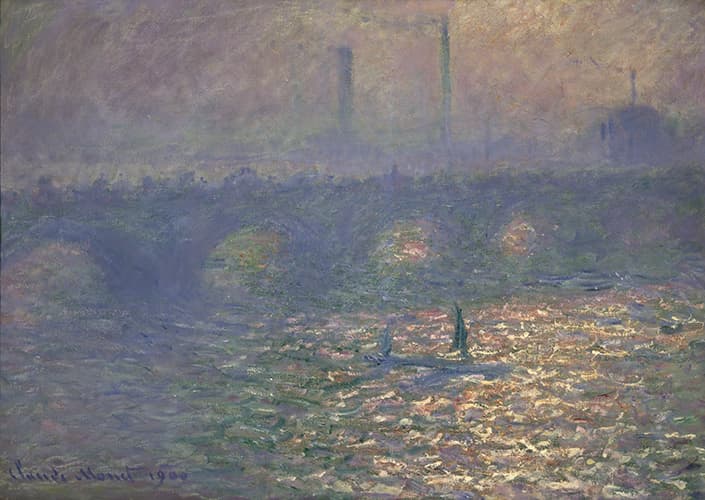
Waterloo Bridge (Santa Barbara Museum of Art)
Claude Monet · 1900
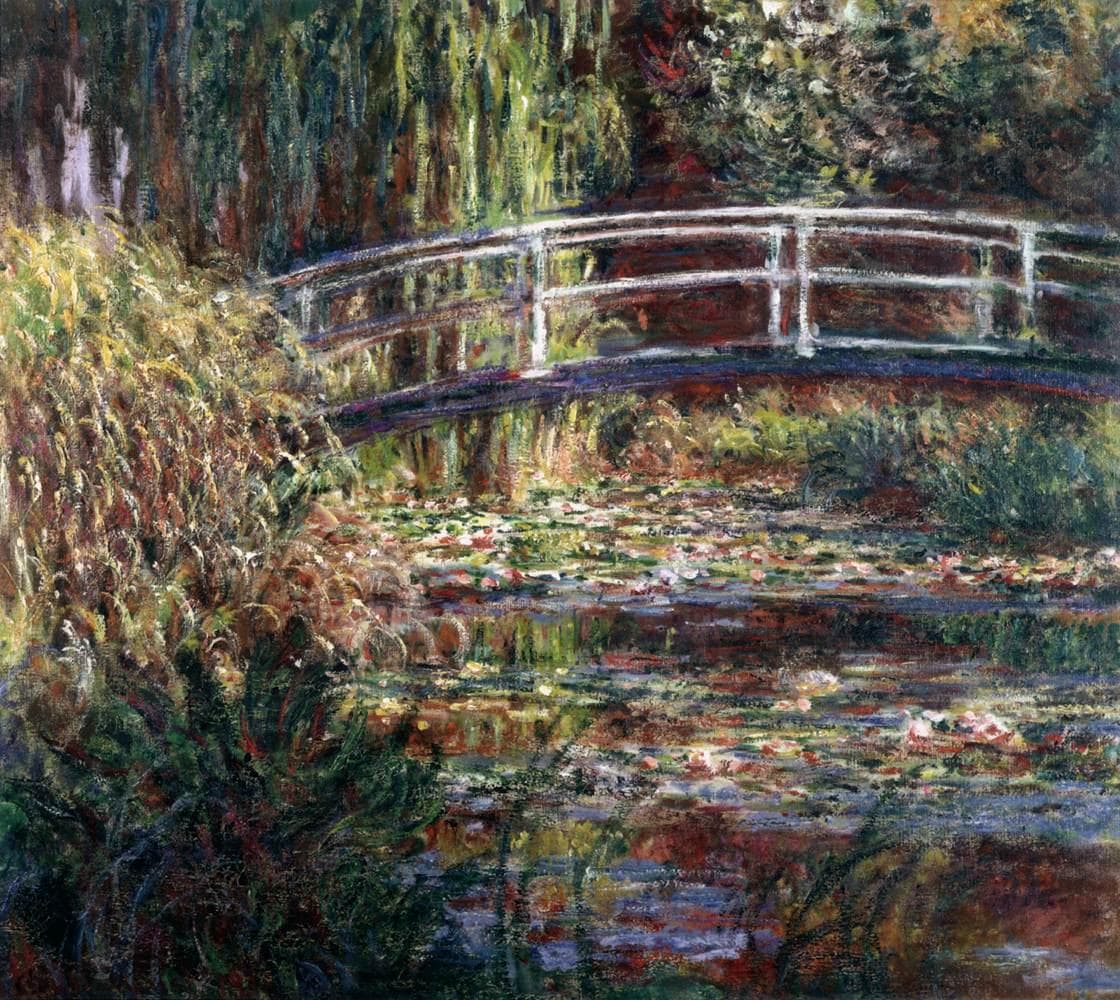
The Water Lily Pond, Harmony in Rose
Claude Monet · 1900
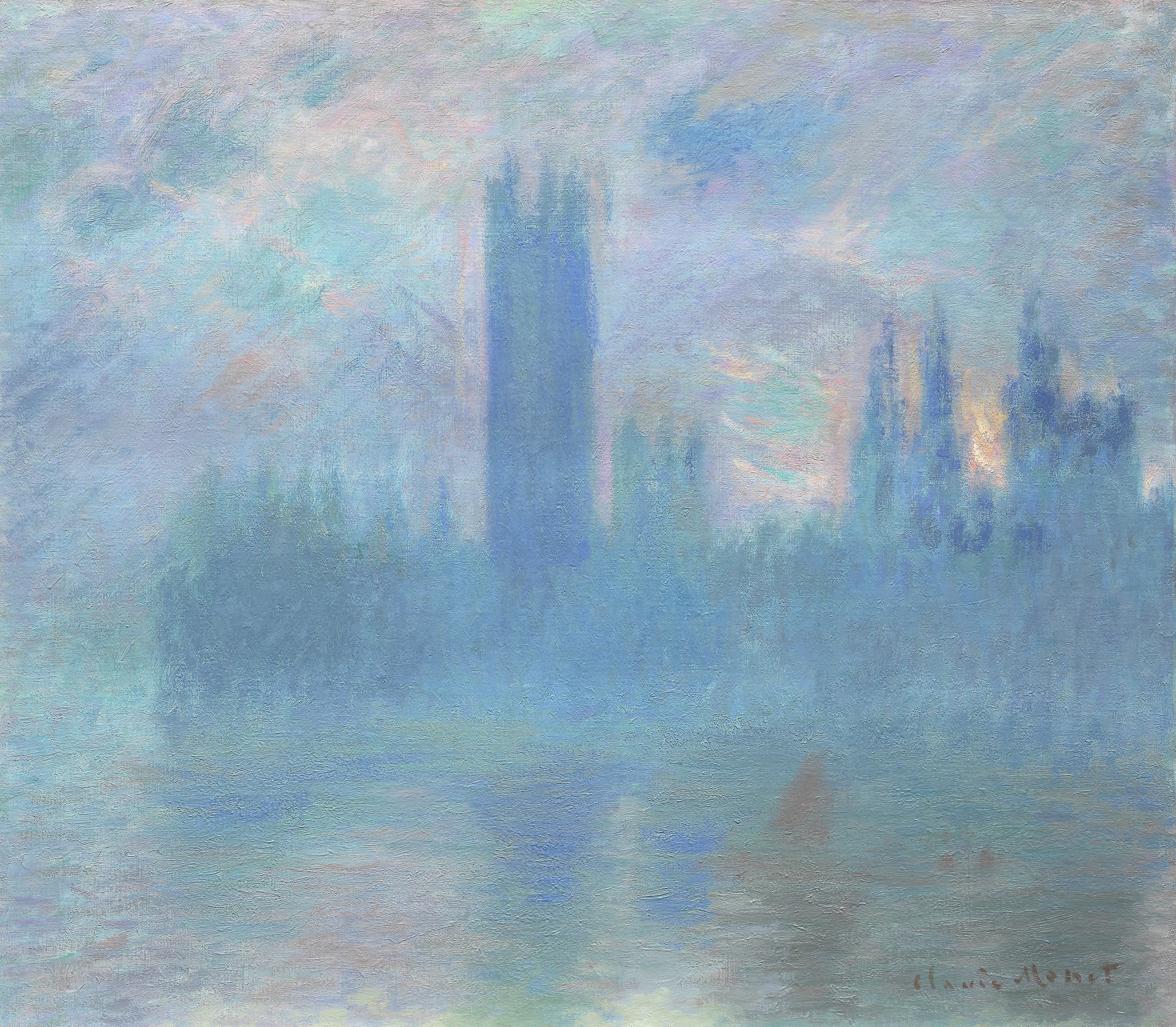
Houses of Parliament, London
Claude Monet · 1900–01
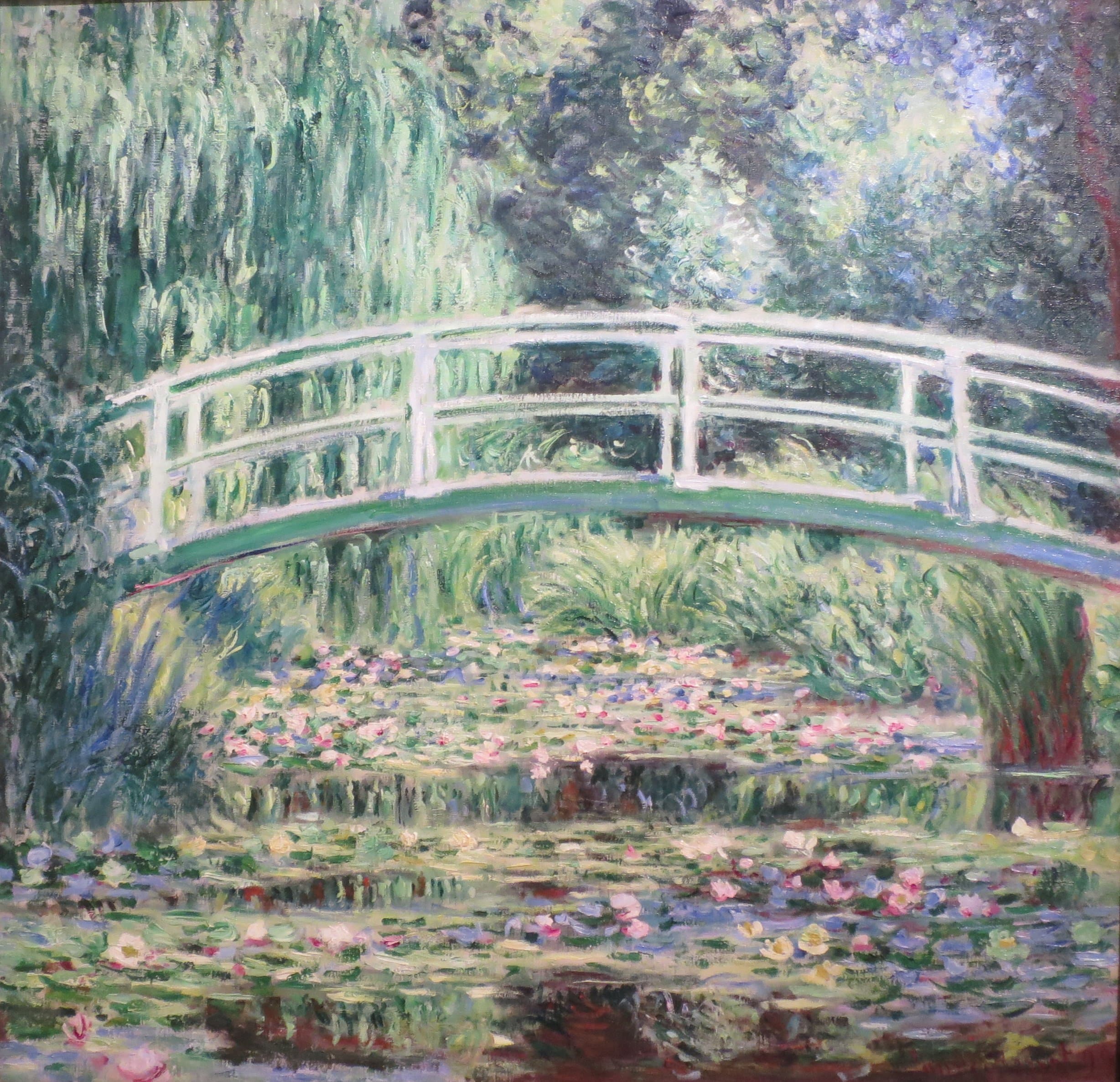
White Water Lilies
Claude Monet · 1899
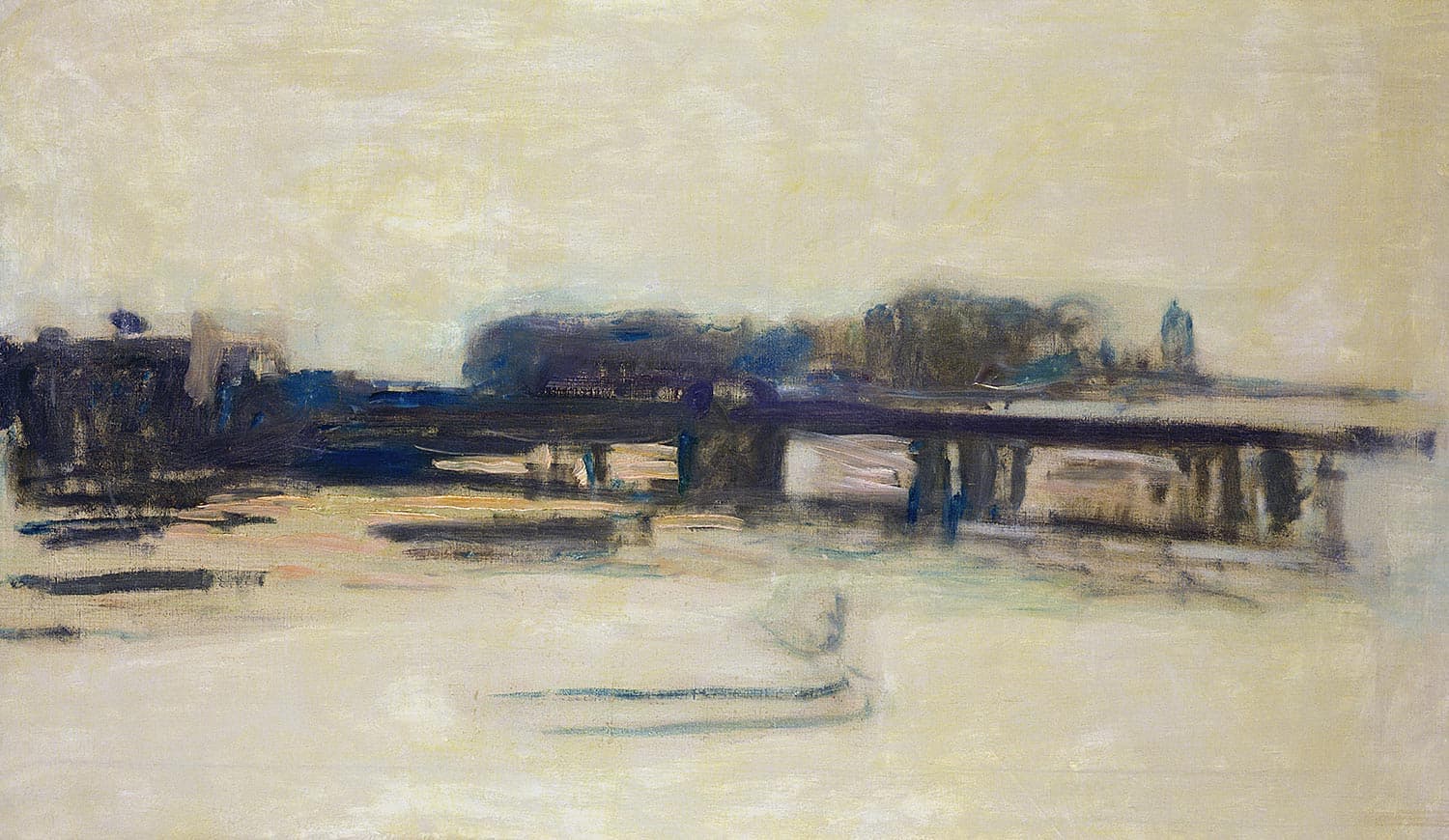
Charing Cross Bridge, London (Marmottan study)
Claude Monet · c. 1899–1901
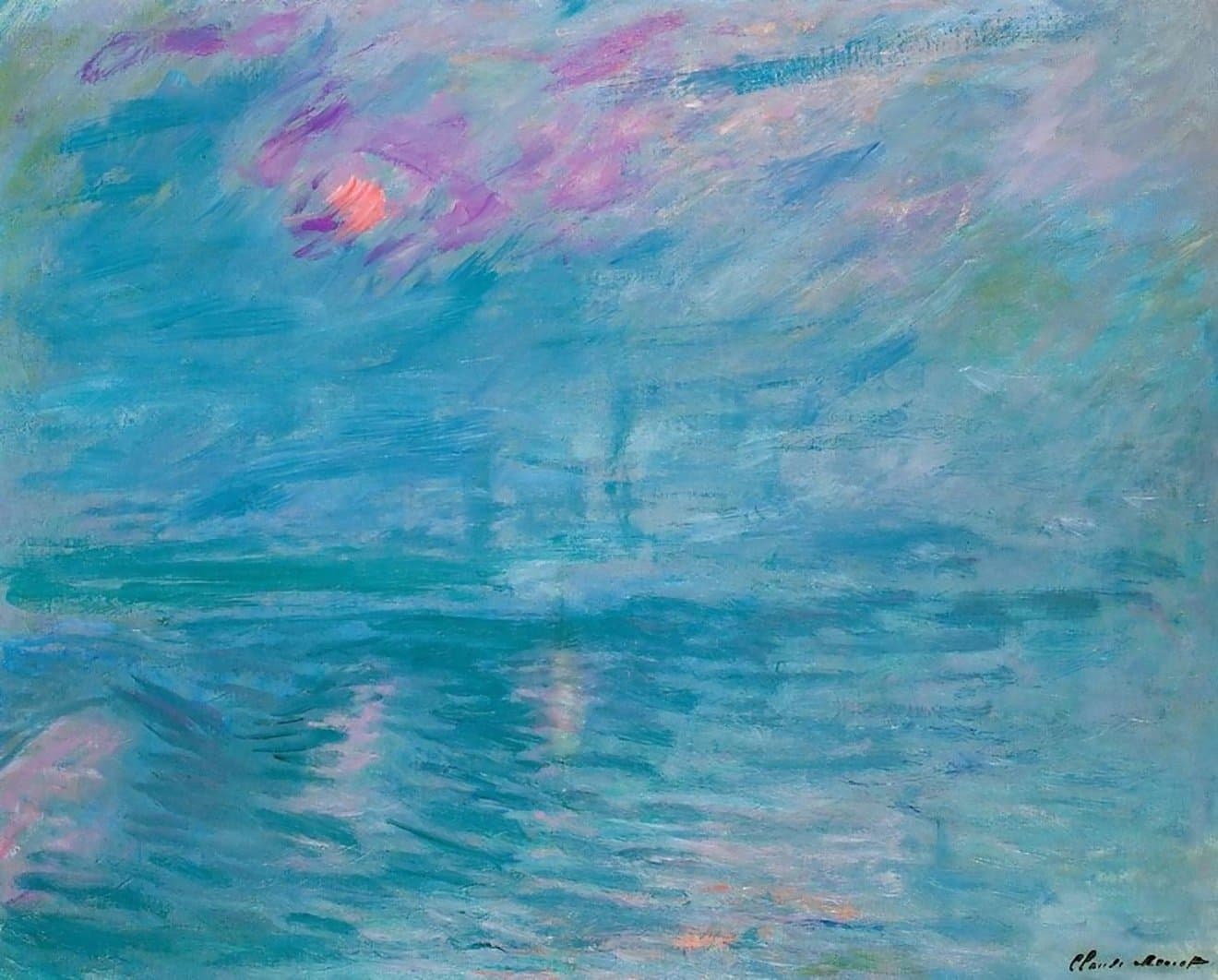
Waterloo Bridge (Davis Museum)
Claude Monet · 1899–1903
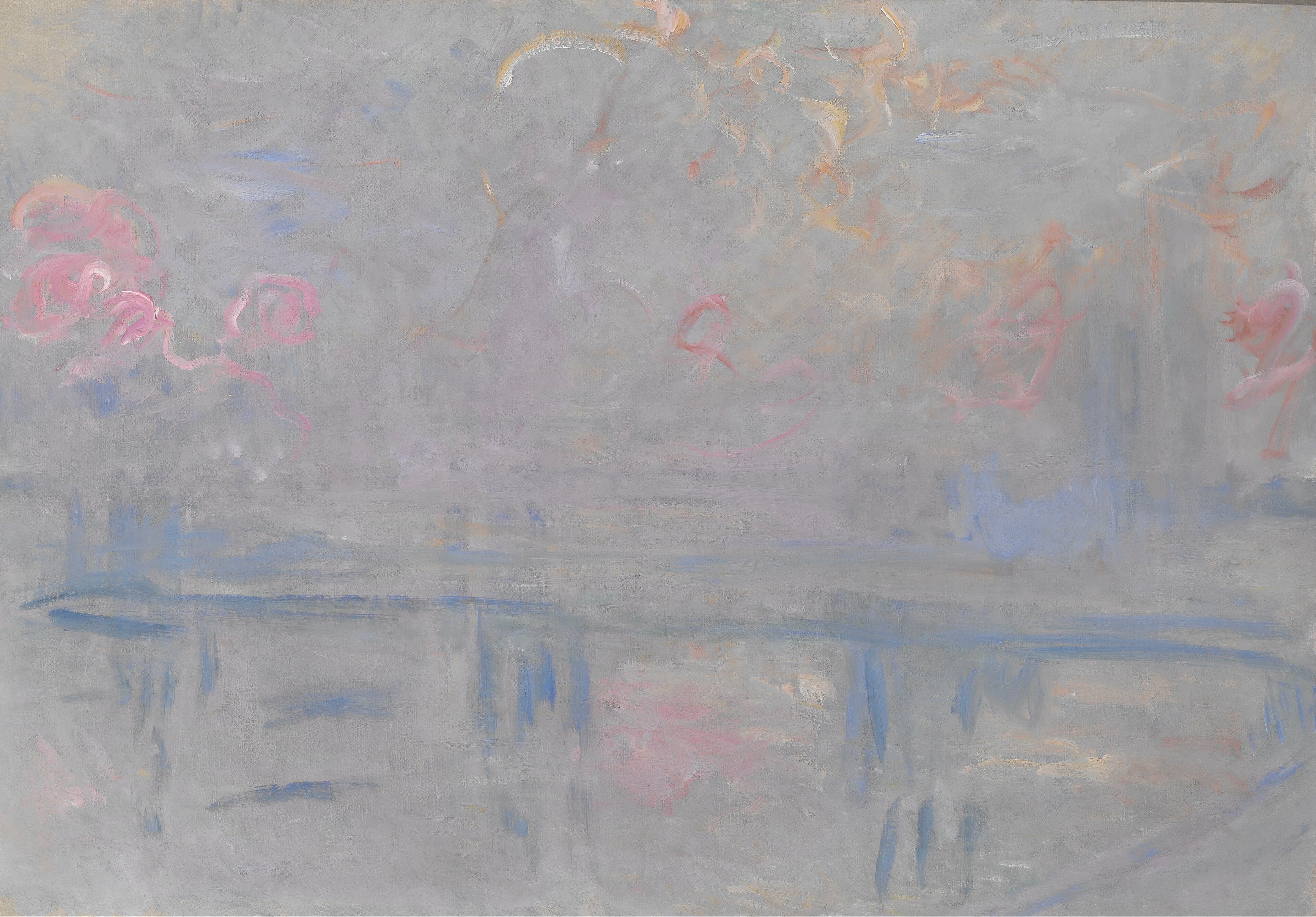
Charing Cross Bridge (Indianapolis)
Claude Monet · c. 1900
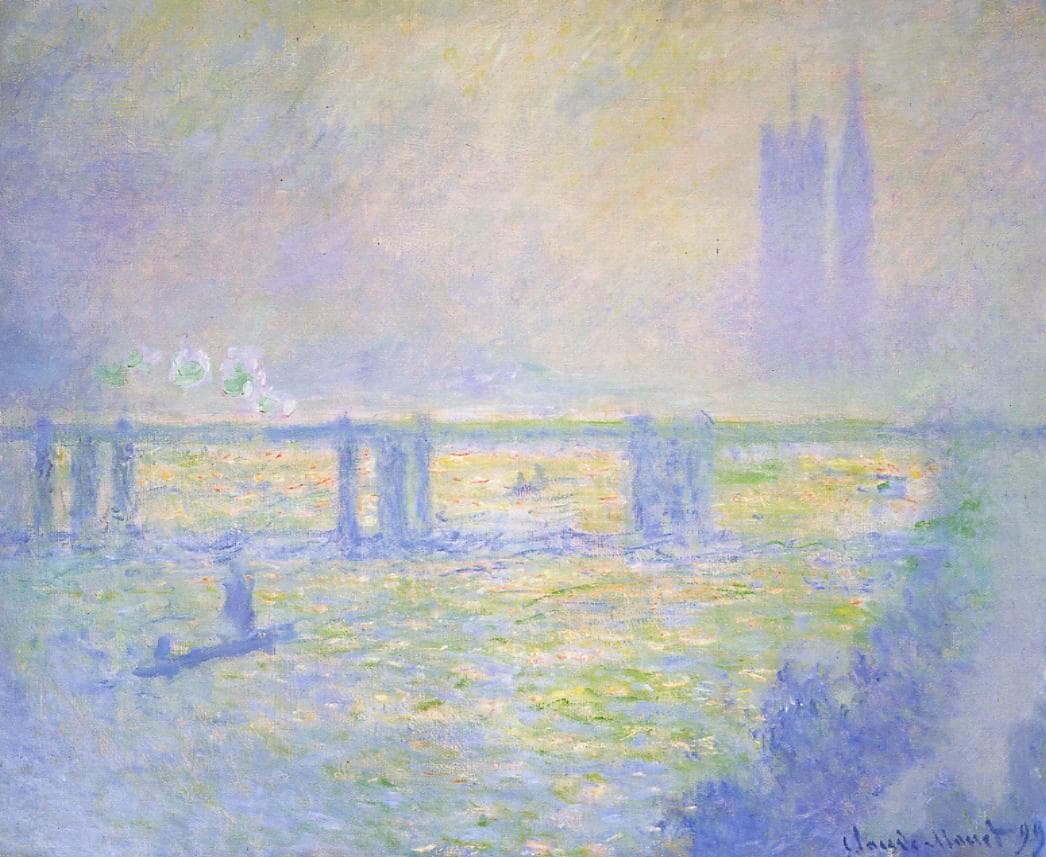
Charing Cross Bridge
Claude Monet · 1899
Also painted in 1900
The same year
Houses of Parliament, Symphony in Rose
Claude Monet · 1900
The Japanese Bridge or The Lily Pond
Claude Monet · 1900
Waterloo Bridge, London, Sun Effect
Claude Monet · 1899–1901
Waterloo Bridge, Gray Weather
Claude Monet · 1900
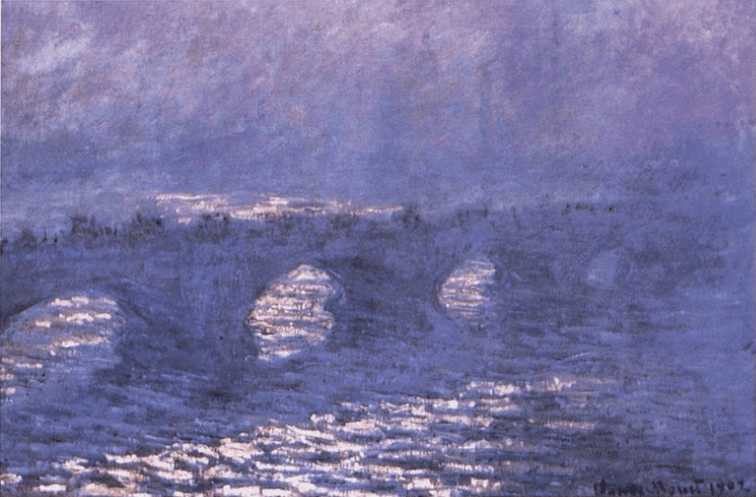
Waterloo Bridge, Effect of Sun in the Mist
Claude Monet · c. 1900–03
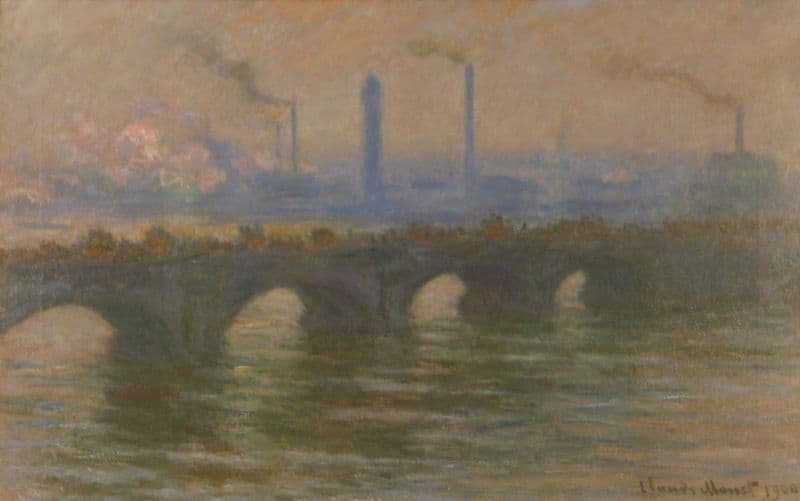
Waterloo Bridge, Overcast Weather
Claude Monet · 1900
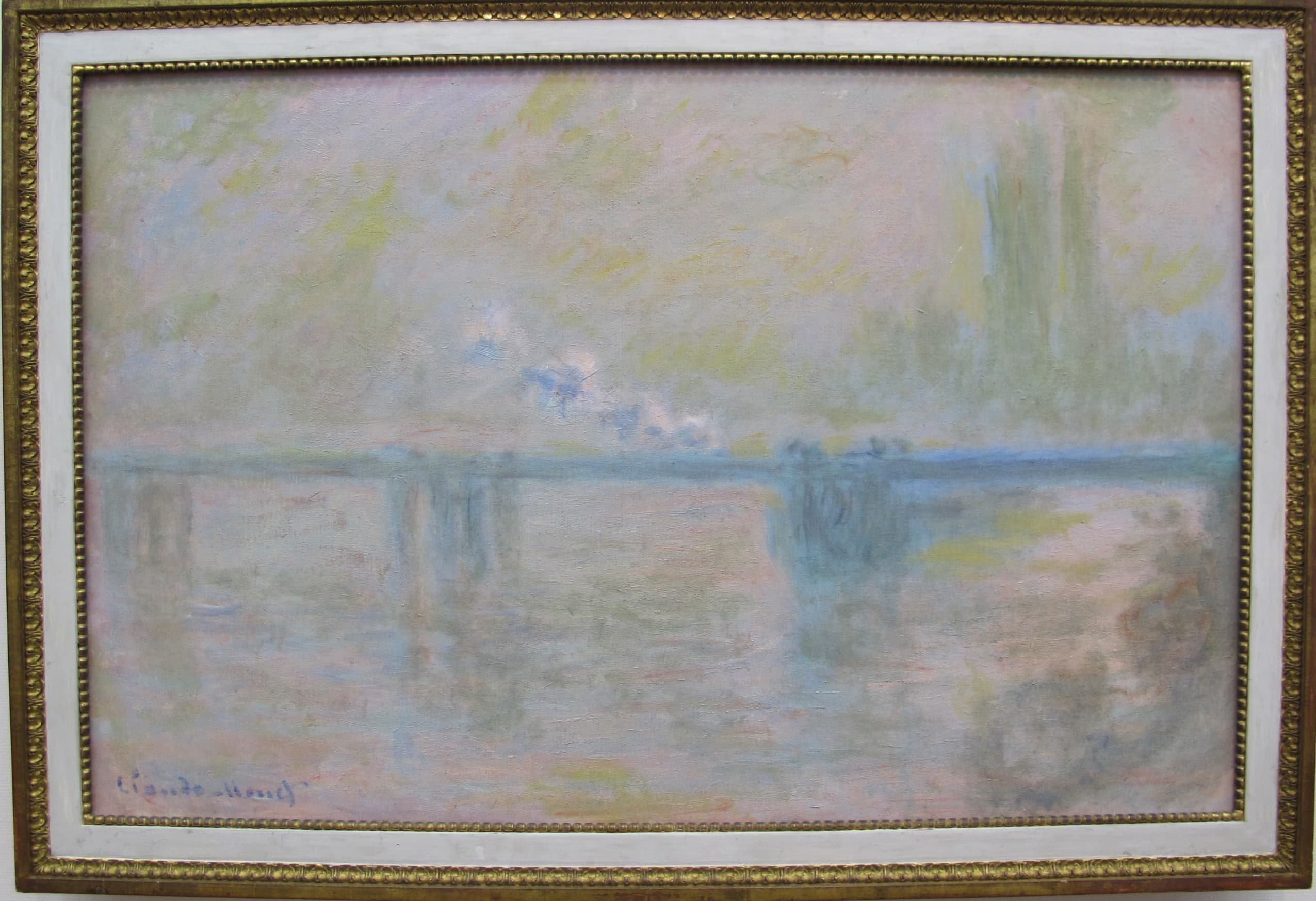
Charing Cross Bridge (Overcast Day)
Claude Monet · 1900
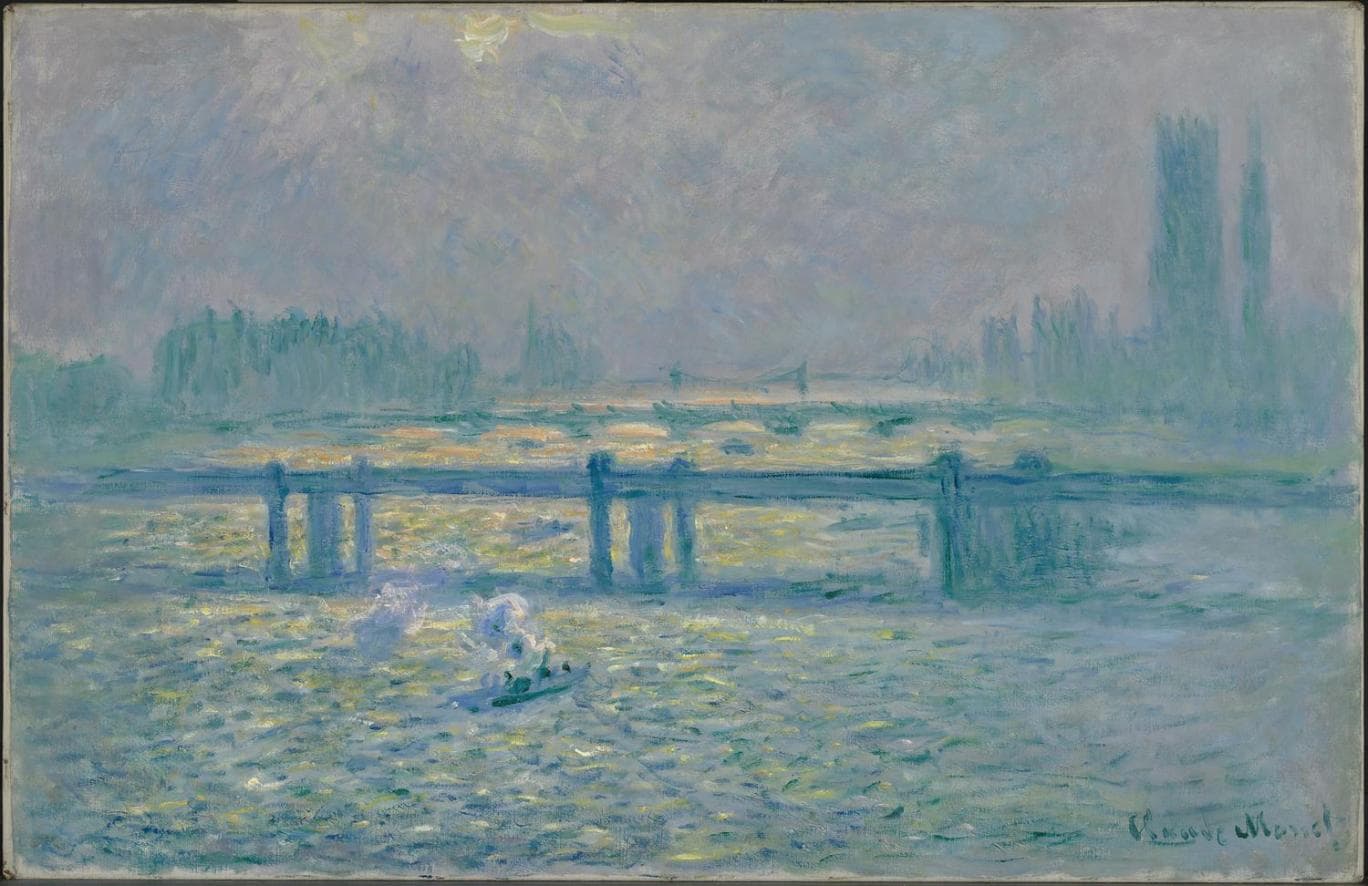
Charing Cross Bridge, Reflections on the Thames
Claude Monet · c. 1900
Kindred works
You may also study
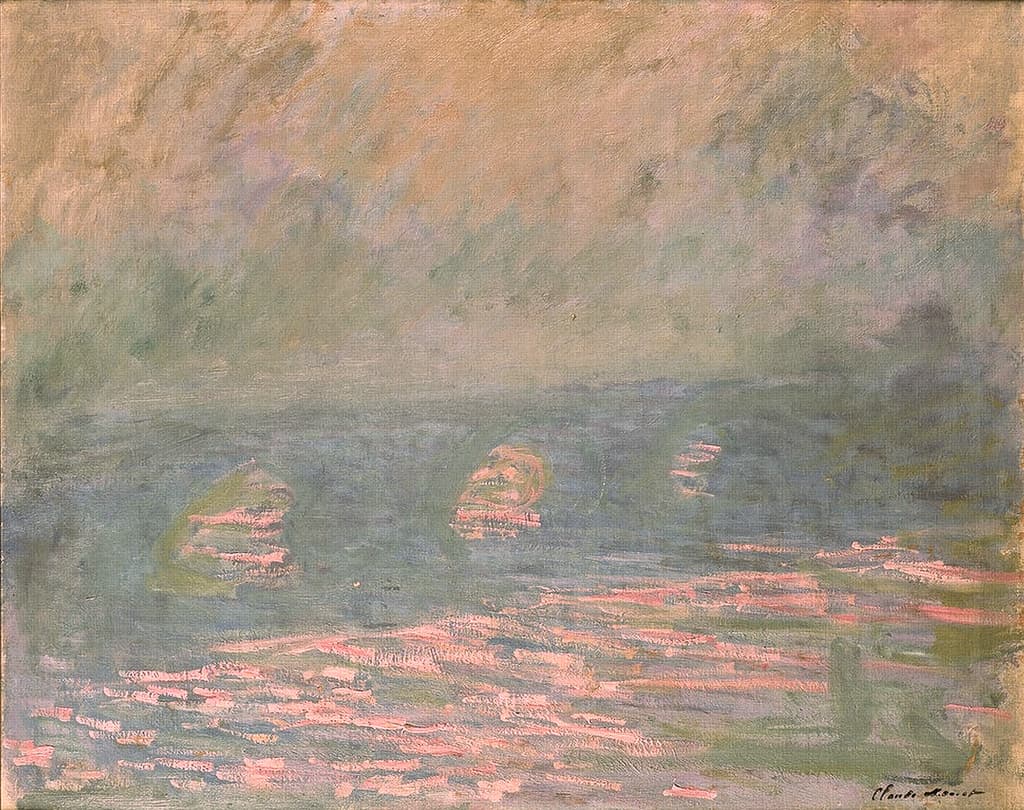
Waterloo Bridge (Matsushita Museum of Art)
Claude Monet · 1899–1901
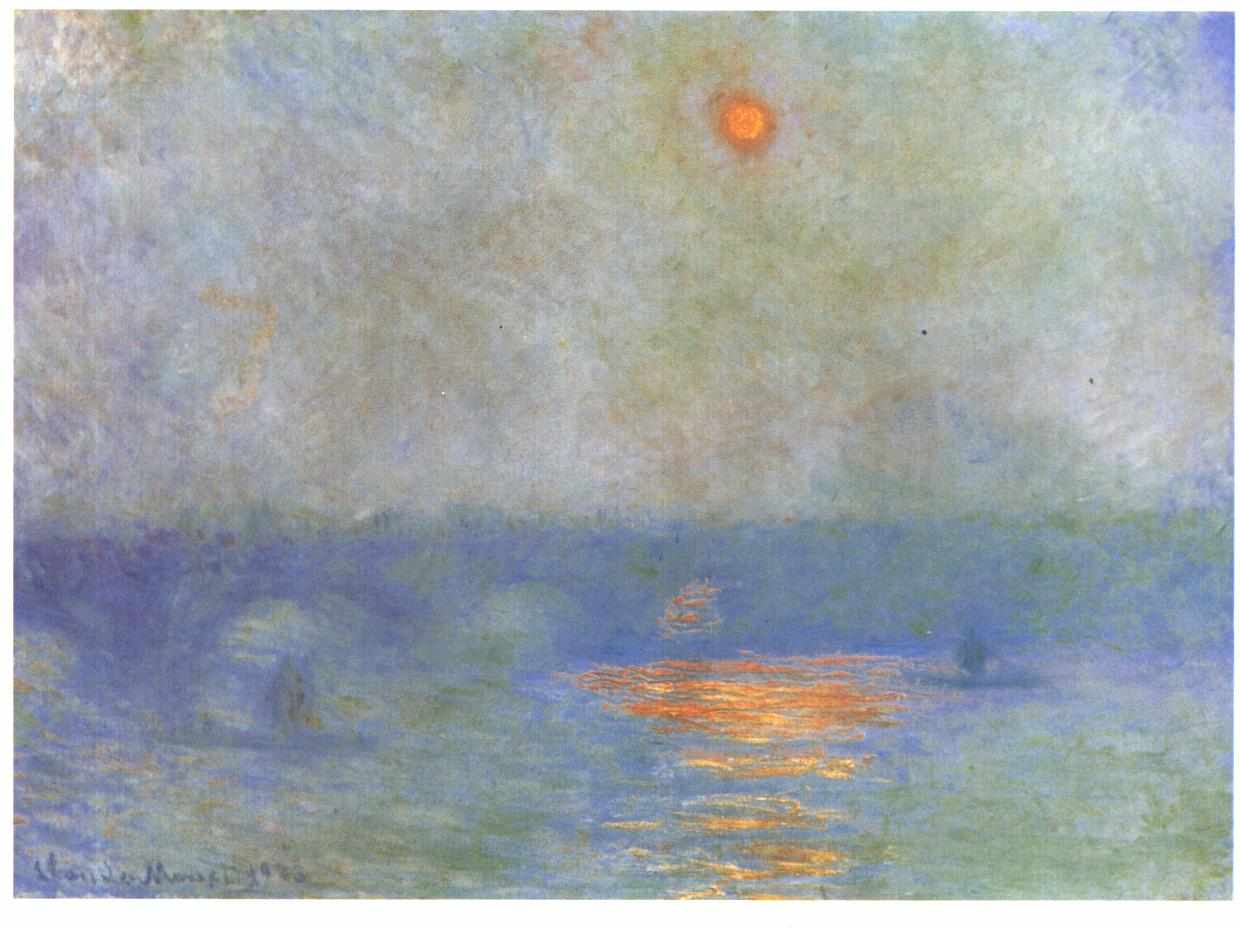
Waterloo Bridge: the Sun in a Fog
Claude Monet · 1903
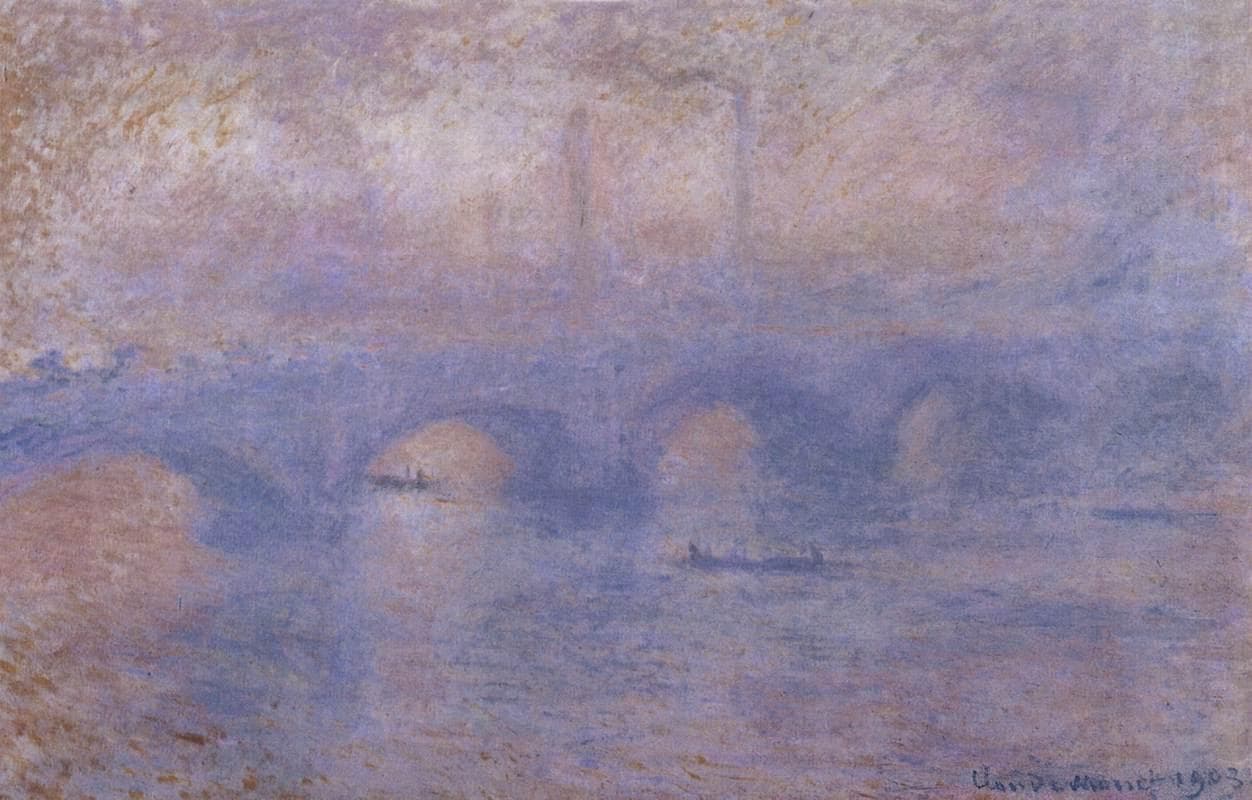
Waterloo Bridge, Effect of Fog
Claude Monet · 1903
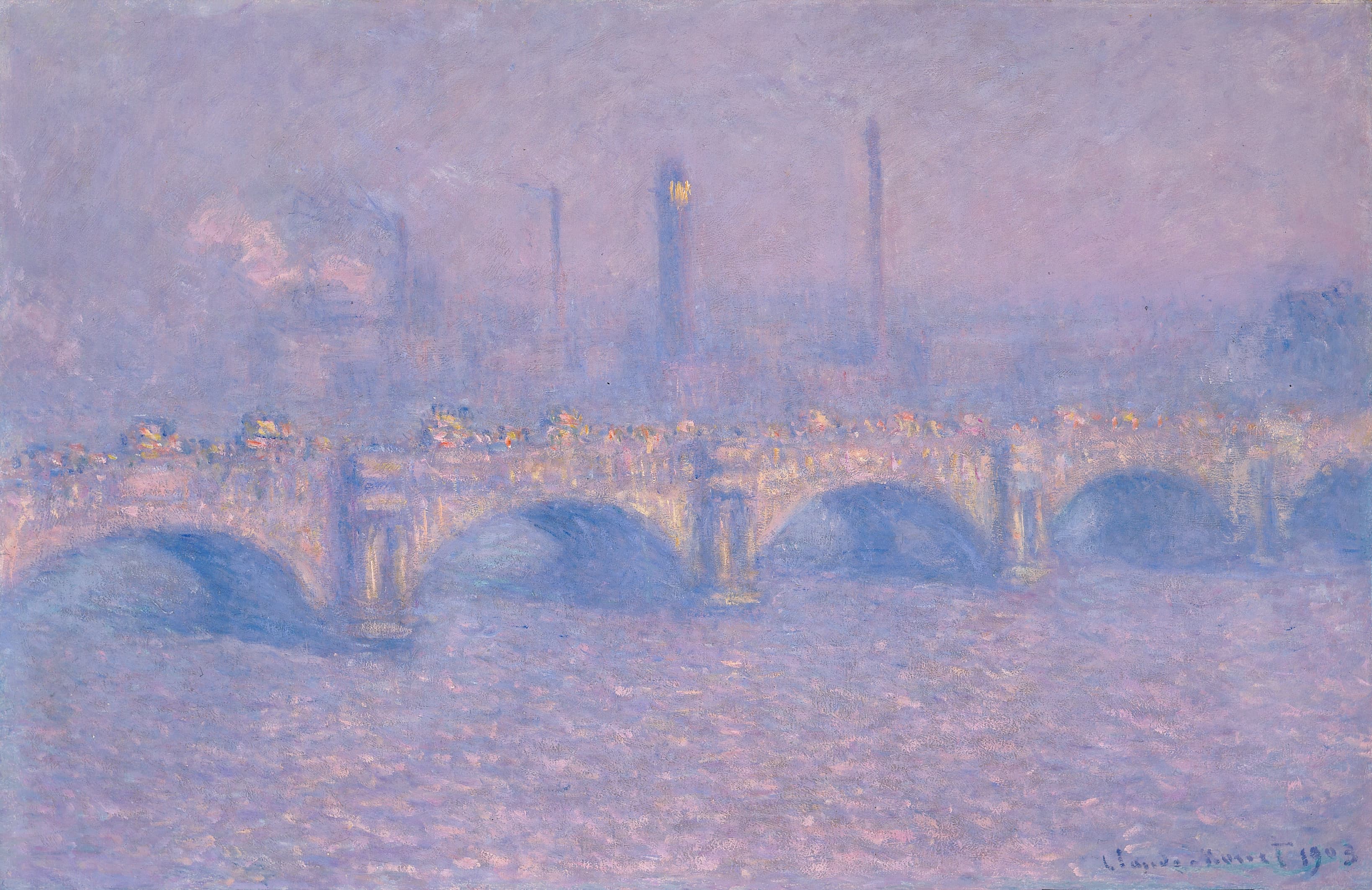
Waterloo Bridge, Veiled Sun
Claude Monet · 1903
Houses of Parliament, Symphony in Blue
Claude Monet · 1903
Gondola in Venice
Claude Monet · 1908
Waterloo Bridge, Gray Weather (Gurlitt Bequest)
Claude Monet · 1903
London, Parliament, Reflections on the Thames
Claude Monet · 1905