Image: Musée Marmottan Monet, Paris (reproduction via Exporevue, as stated on Commons) · Public domain · via Wikimedia Commons
London, Parliament, Reflections on the Thames
Claude Monet, 1905
London, Parliament, Reflections on the Thames is a 1905 painting by Claude Monet of Westminster as a stretched green-blue silhouette under a turbulent sky, sunlight glittering on the river. It is in the Musée Marmottan Monet, Paris.
- Artist
- Claude Monet
- Date
- 1905
- Medium
- Oil on canvas
- Dimensions
- 81.5 × 92 cm
- Collection
- Musée Marmottan Monet, Paris, France
- Movement
- Impressionism
- Catalogue
- Wildenstein 1606
- The City
- Water & Sea
- Architecture & Ruins
London, Parliament, Reflections on the Thames (Londres, le Parlement, reflets sur la Tamise) is a painting by Claude Monet dated 1905, signed at lower right. It shows the Palace of Westminster as a tall, stretched silhouette of green and blue, with sunlight bursting through a turbulent sky and glittering across the river below. The canvas, 81.5 by 92 centimeters, is in the Musée Marmottan Monet in Paris (inventory 5007), which received it from the artist's son Michel Monet. Wildenstein lists it as number 1606. It is the latest-dated Parliament picture and one of the few that Monet kept.
What you're looking at
The palace is transformed. Its great tower rises right of center as a column of streaky green, blue and violet, much taller and narrower than in other versions, and the building's lower mass is a forest of vertical strokes in teal and green that seems to grow straight out of the water. To the left, distant spires and buildings fade into a strip of blue haze.
The sky is the most agitated in the series. It is a churning mass of pink, mauve, gray-brown and cream, with swirls and loops of paint suggesting clouds blown by wind. At the top center the sun breaks through as a smear of white and yellow.
Below, the river is the picture's title and its brightest part. A wide path of light runs across the water from left to center, broken into short horizontal strokes of gold, white, pink and green. Toward the right the reflections darken into blue and green beneath the palace. The signature sits at lower right.
Reflections: what makes this version distinct
Every Parliament canvas shows reflections, but this is the one named for them. The emphasis falls on the play of light on the river, and on the way the palace and its reflection merge into a single vertical mass. It is closer to the stormy-sky picture in Lille, The Houses of Parliament, London, and to the private Le Parlement, soleil couchant, with its streaming clouds, than to the calm fogs.
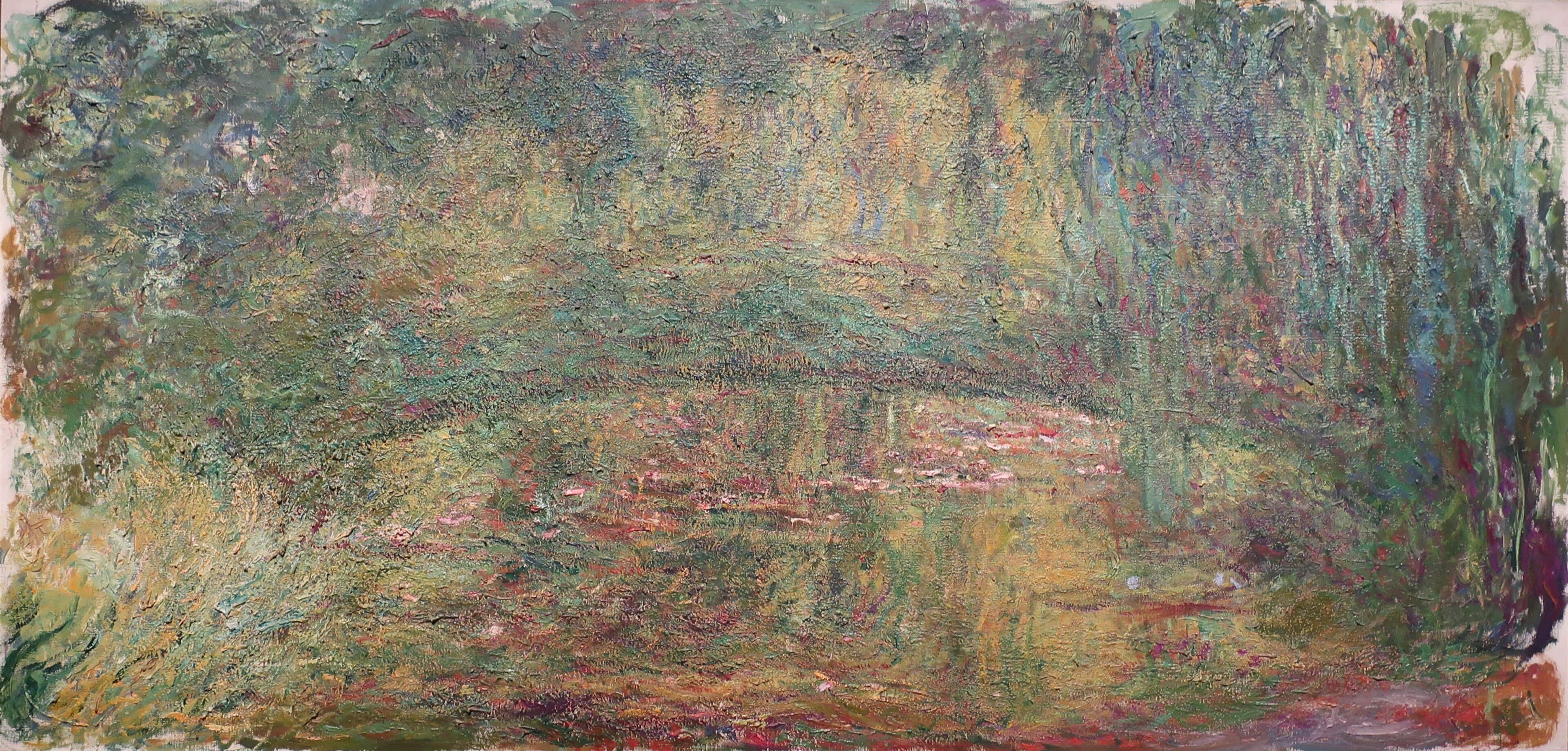
Its handling is also freer. The vertical, flame-like strokes of the building anticipate the loose brushwork of the late Giverny pictures, such as the Marmottan's own The Japanese Bridge, painted more than a decade later.
How it was painted
Monet painted the Parliament views from St Thomas' Hospital, across the Thames from Westminster, during his London trips of 1900 and 1901. He finished most of them at Giverny in time for his Thames exhibition at Durand-Ruel in 1904. This canvas carries a later date, 1905, which suggests that Monet went on reworking it after the show, perhaps because he wanted to keep it. The paint is thick and energetic, with long, loaded strokes in the building and quick, broken touches on the water.
Michel Monet and the Marmottan
Canvases still in Monet's studio at his death in 1926 passed to his son Michel, who in 1966 bequeathed his collection to the Académie des Beaux-Arts for the Musée Marmottan. That bequest made the Marmottan the world's largest collection of Monet's paintings, rich in late works and in pictures the artist chose to keep. This London canvas belongs to that group, along with the London view Charing Cross Bridge.
Details to look for
At the lower right, the green strokes of the palace's reflection slant down into the water and seem to reach out toward the viewer, like roots. The distant spires at far left are painted in pale blue with a few darker touches, a whole second city half-lost in the haze. The signature at lower right is partly cut off by the edge of the canvas.
Where to see it
The painting is in the Musée Marmottan Monet in Paris, in its Monet galleries when on view. See the Musée Marmottan Monet, our Houses of Parliament series hub, Monet in London and Claude Monet.
Questions & answers
Where is Monet's London, Parliament, Reflections on the Thames?
It is in the Musée Marmottan Monet in Paris, inventory number 5007. It came to the museum through the 1966 bequest of Michel Monet, the artist's son, which made the Marmottan the largest Monet collection in the world.
When was it painted?
It is dated 1905, the latest date in the Parliament series. Monet began the canvases in London in 1900–01 and finished most for his 1904 exhibition, but this one appears to have stayed in his studio and been reworked.
What does the painting show?
The Houses of Parliament as a tall, streaky green and blue silhouette under a churning pink and mauve sky, with the sun breaking through at the top and a wide path of gold and white light glittering on the Thames.
Why is it called Reflections on the Thames?
Because the light on the river is its real subject. The palace and its reflection merge into one vertical mass, and a broad path of sunlight breaks across the water in short strokes of gold, white, pink and green.
More by the artist
Claude Monet
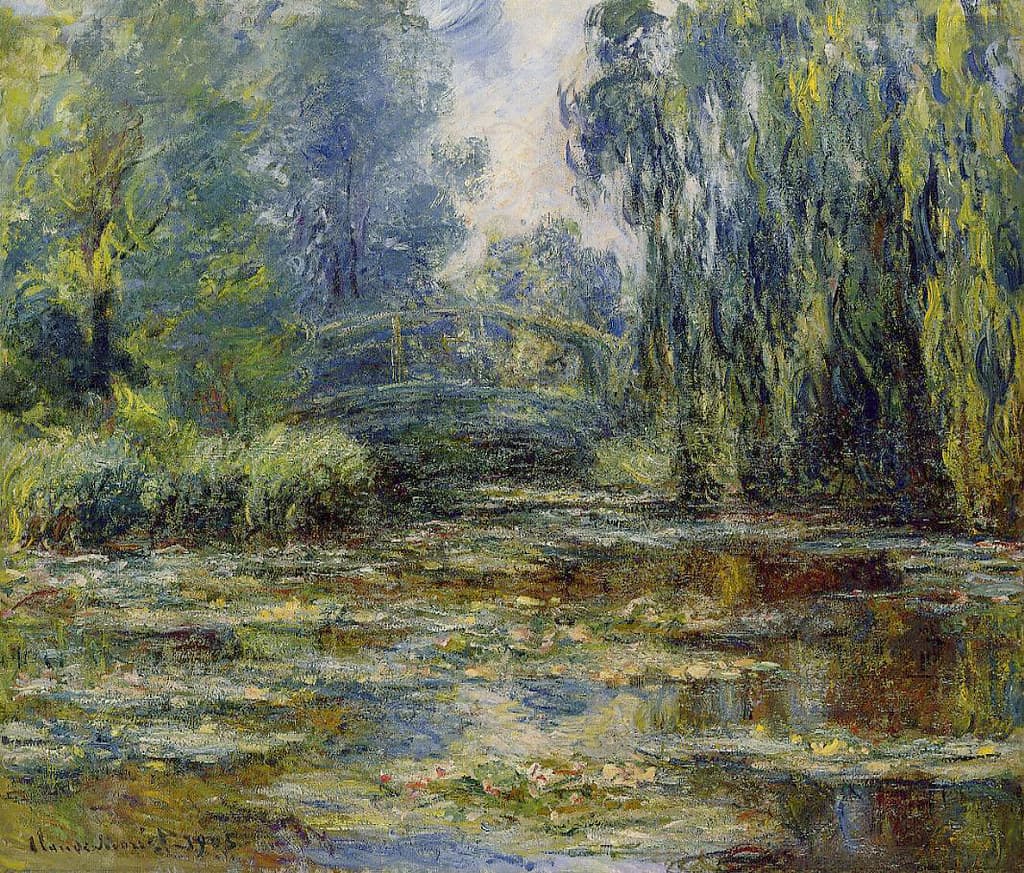
The Water-Lily Pond and Bridge
Claude Monet · 1905
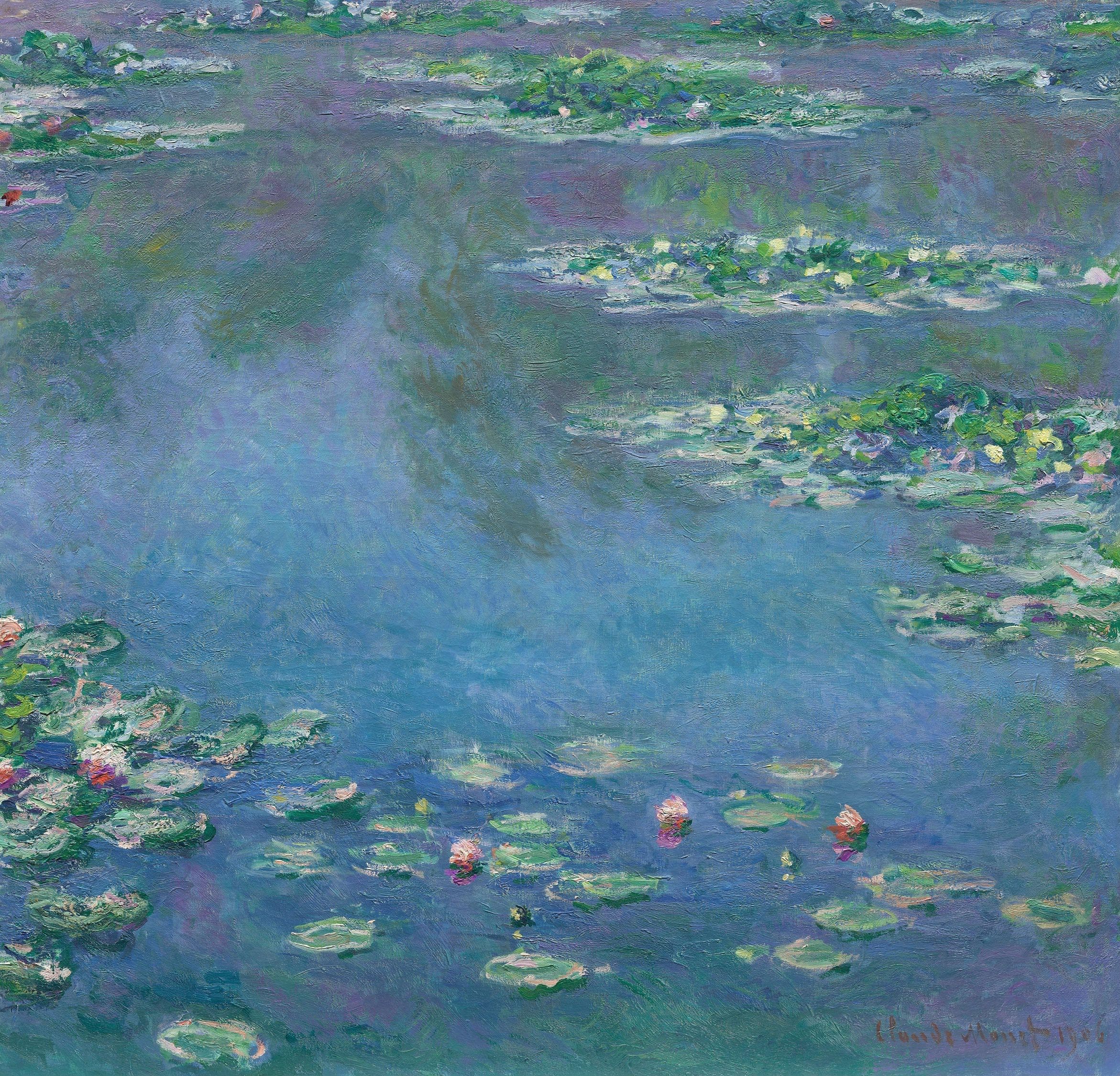
Water Lilies (1906, Art Institute of Chicago)
Claude Monet · 1906
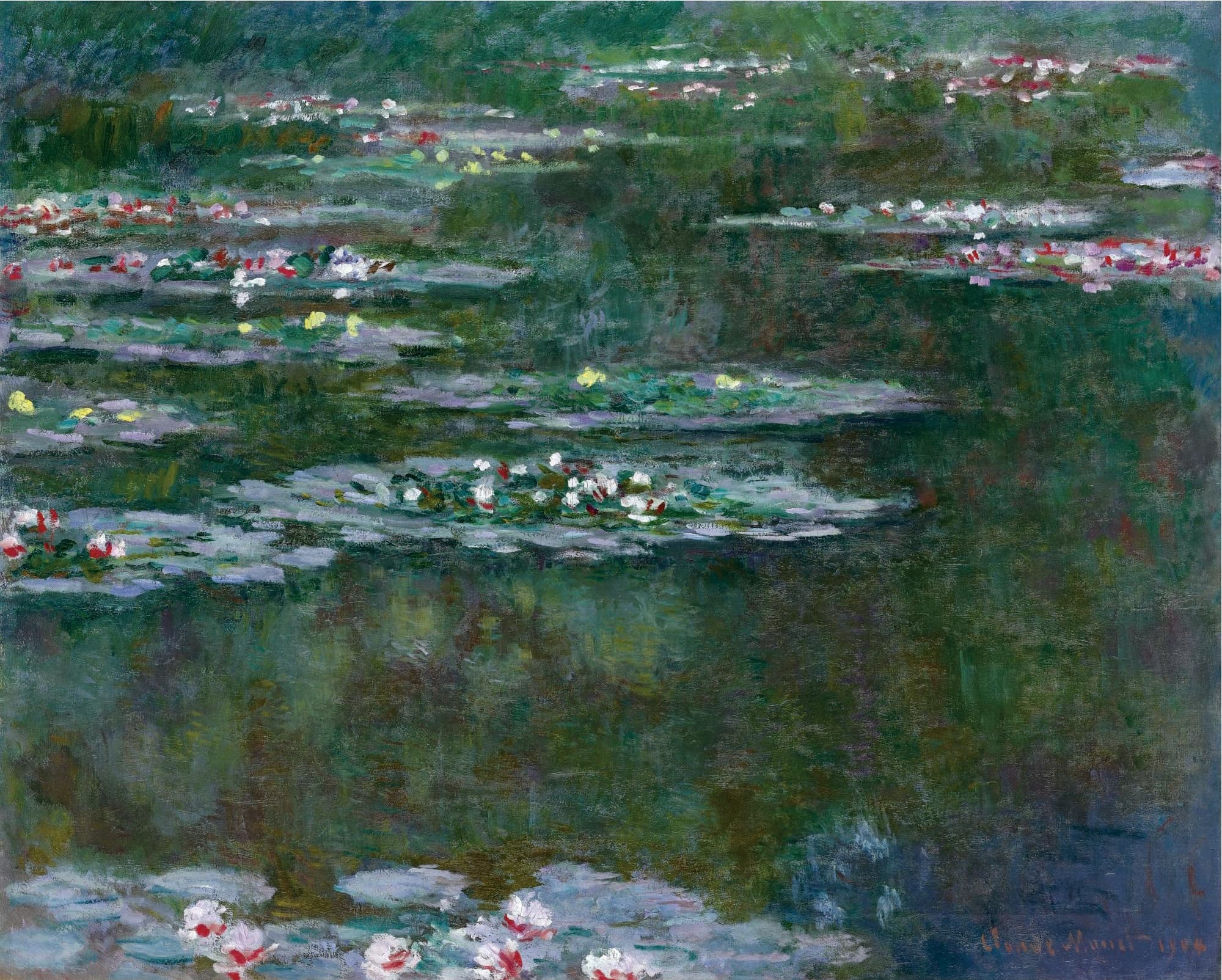
Water Lilies (1904)
Claude Monet · 1904
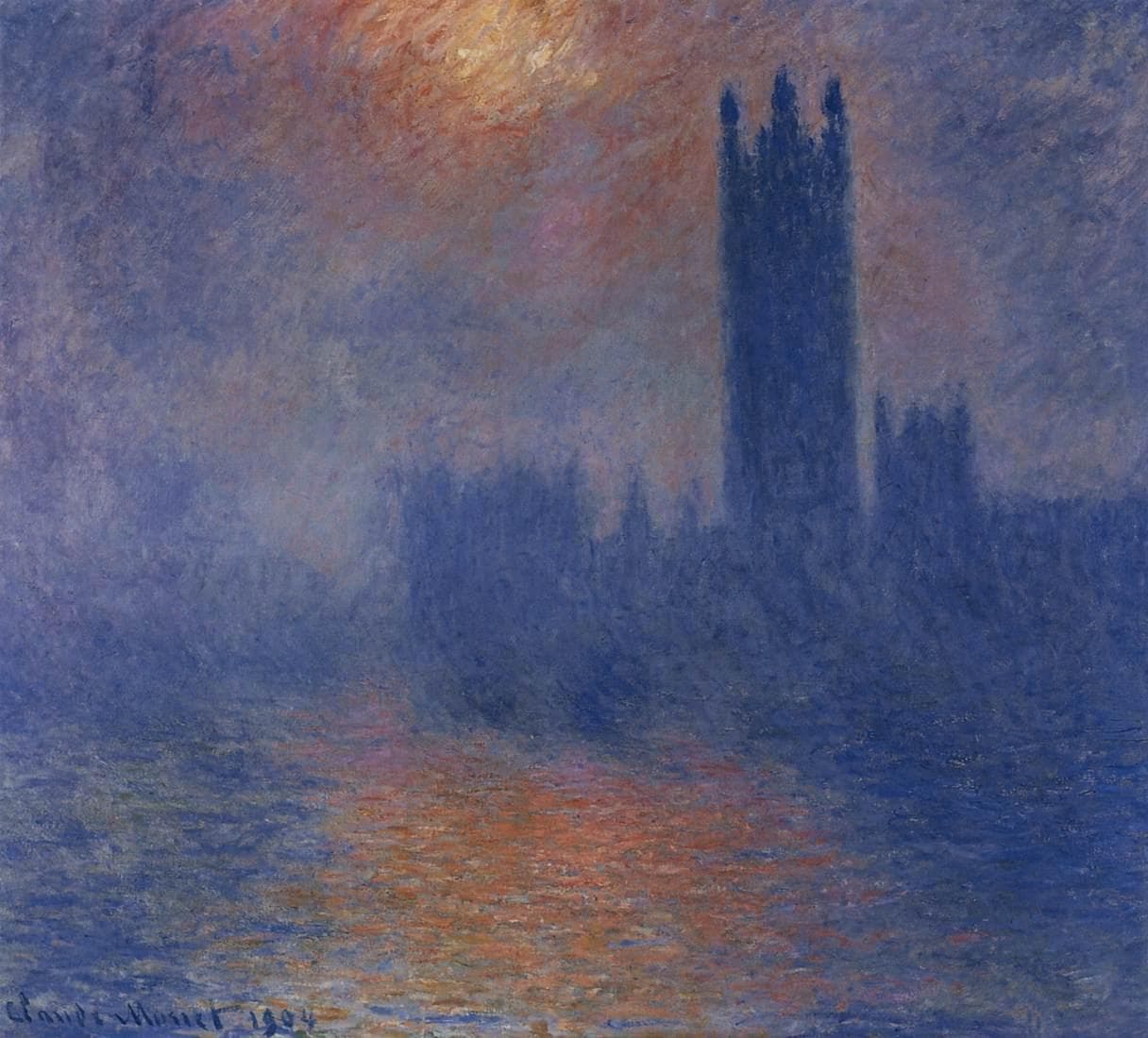
The Houses of Parliament in London
Claude Monet · 1904
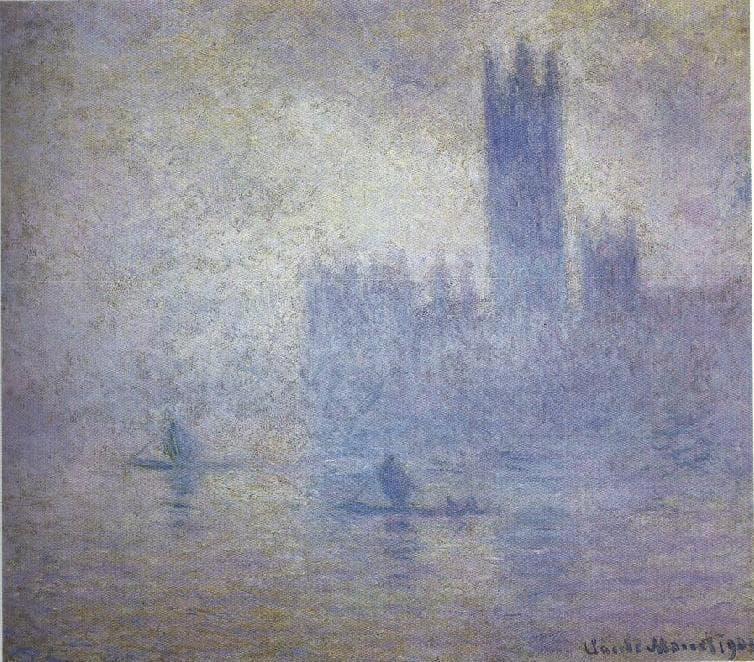
Houses of Parliament, Effect of Fog
Claude Monet · 1904
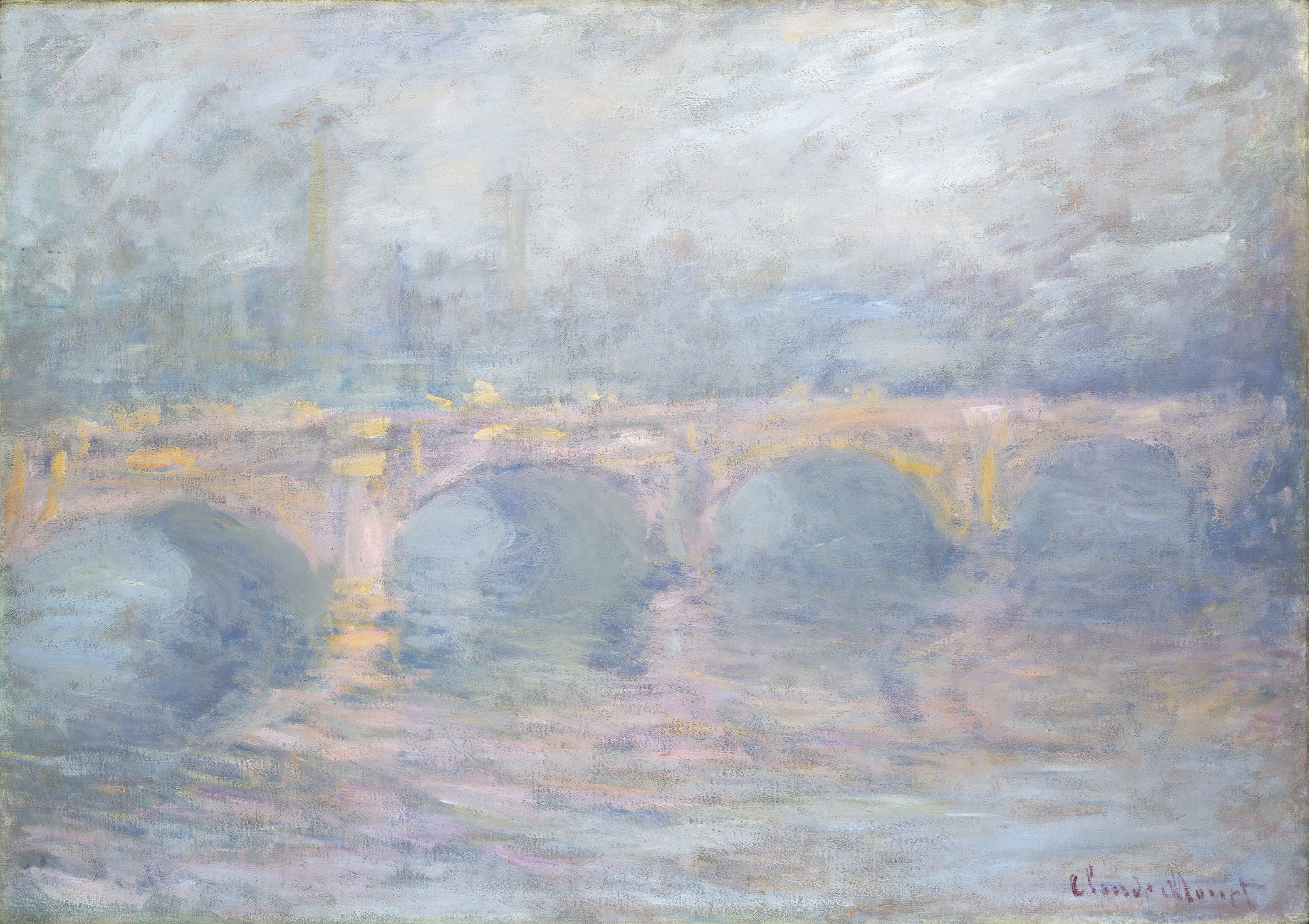
Waterloo Bridge, London, at Sunset
Claude Monet · 1904
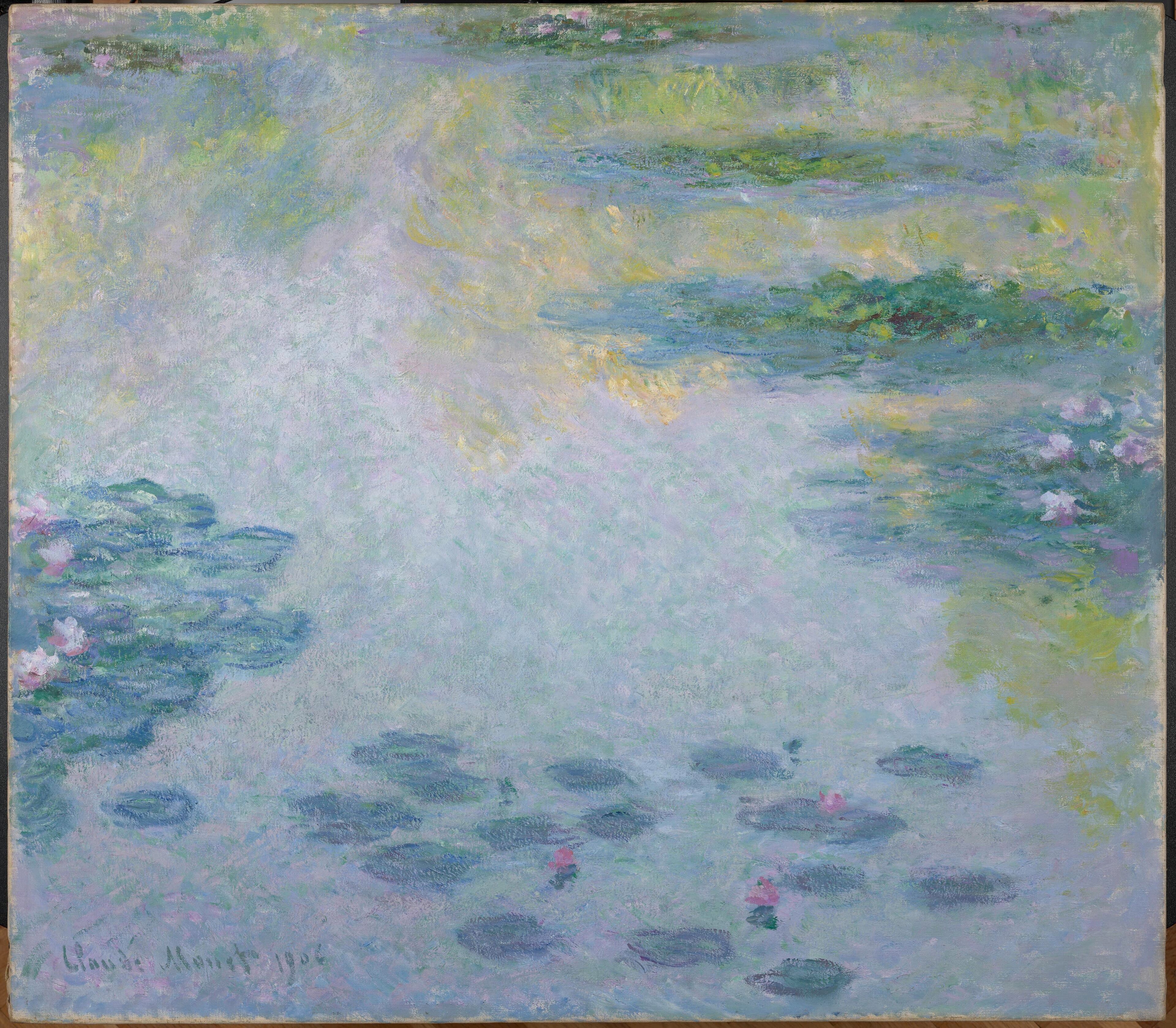
Waterlilies (1906, National Museum Cardiff)
Claude Monet · 1906
Water Lilies (1907, Pola Museum of Art)
Claude Monet · 1907
Kindred works
You may also study
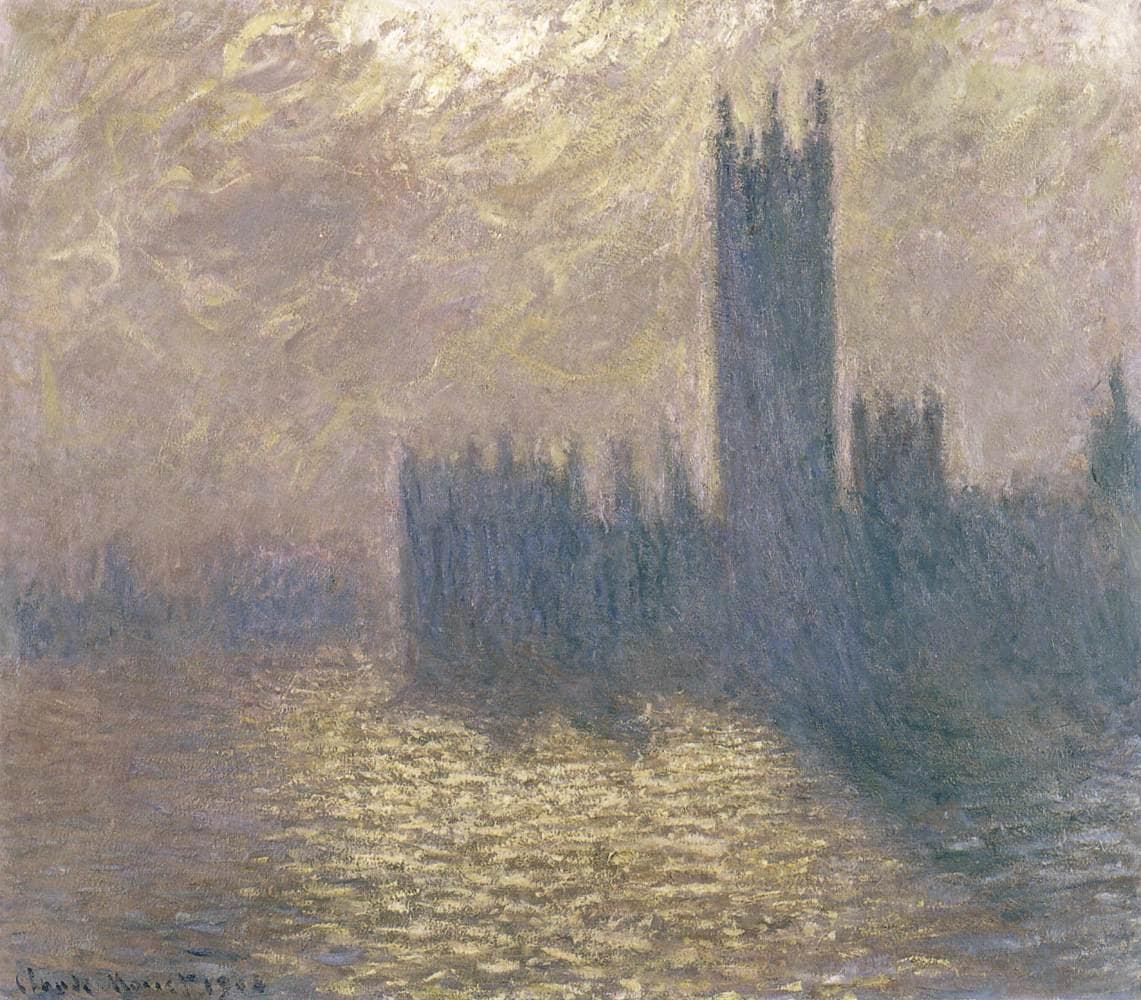
The Houses of Parliament, London
Claude Monet · 1904
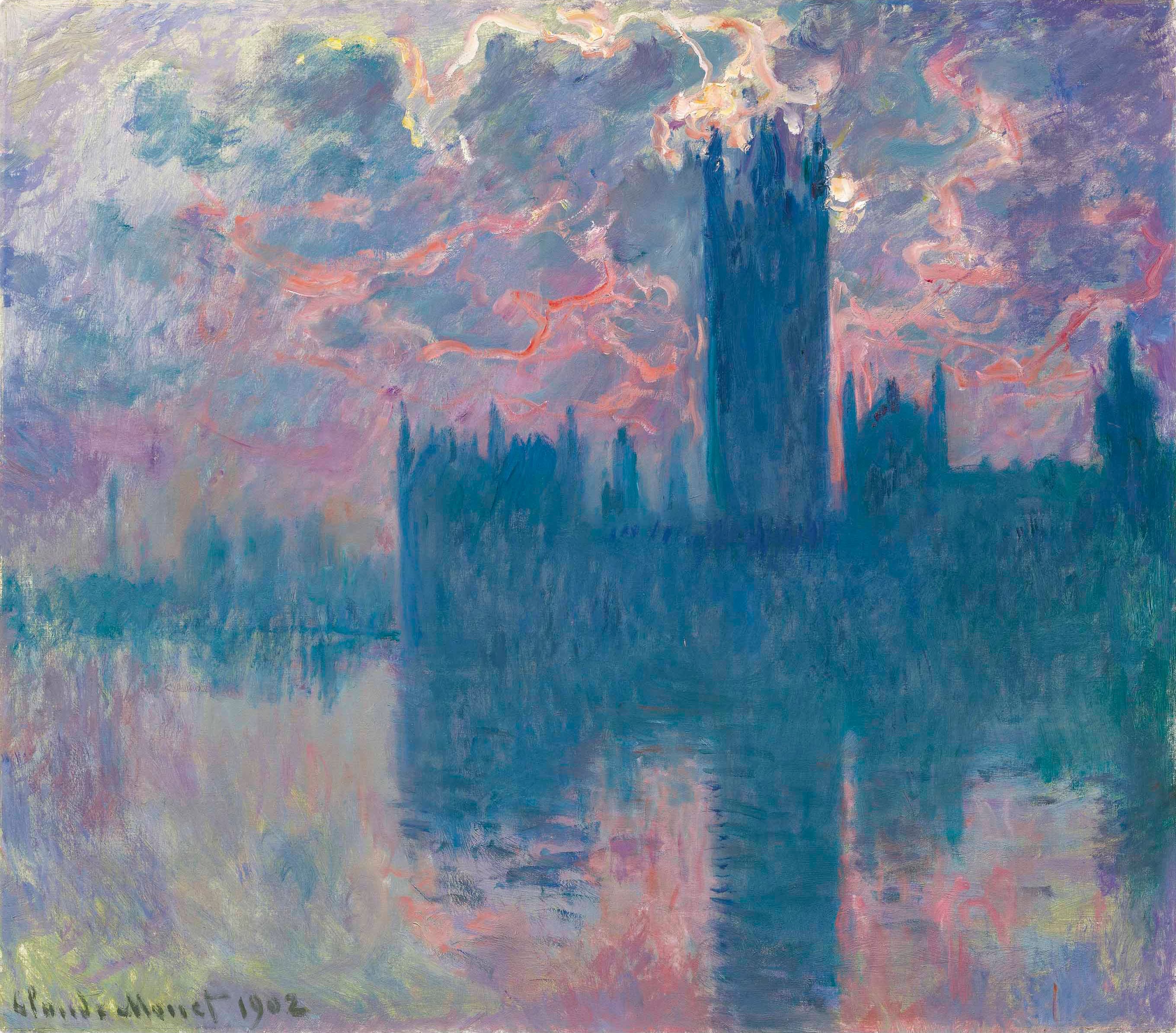
Le Parlement, soleil couchant
Claude Monet · 1902–03
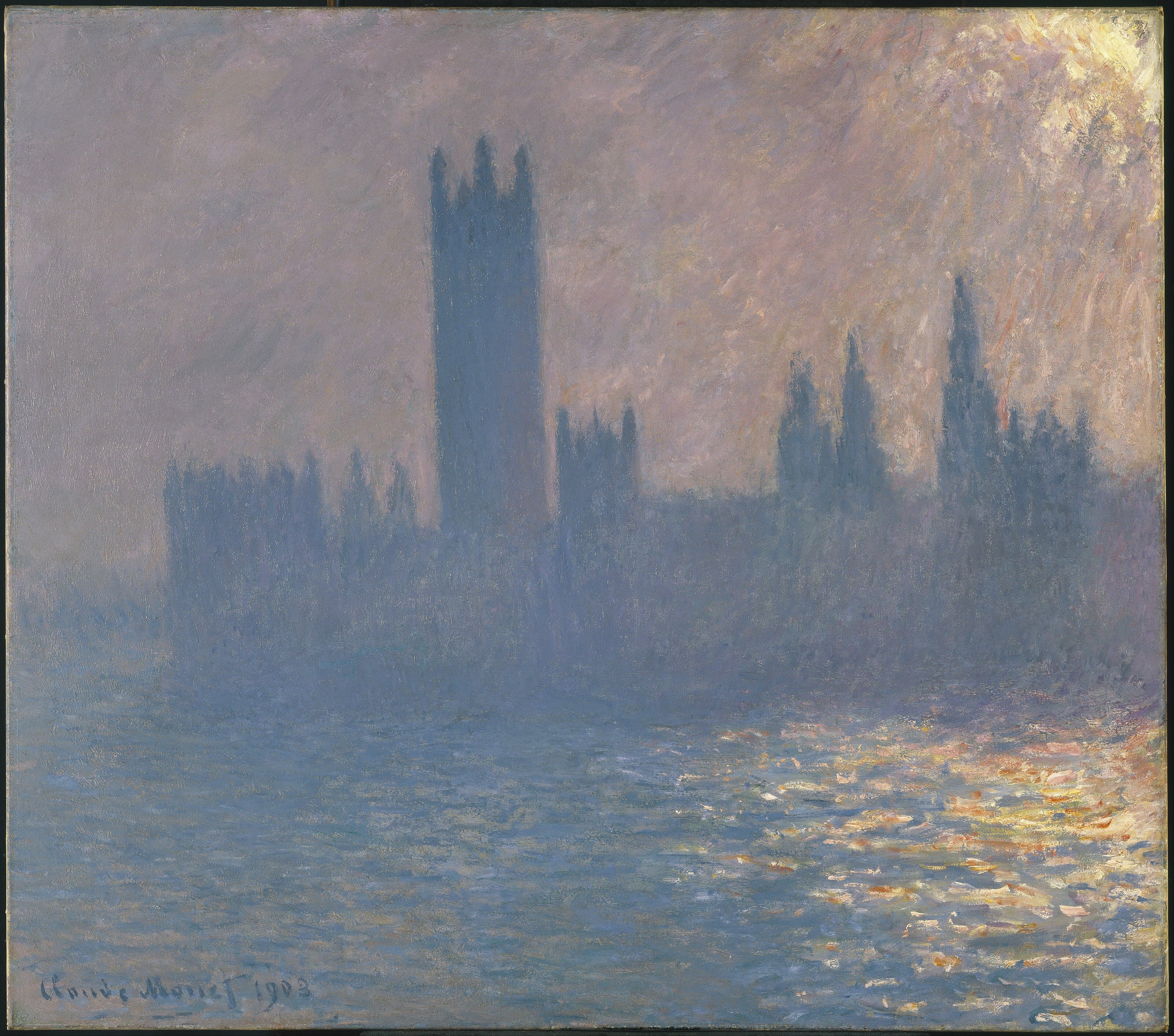
Houses of Parliament, Sunlight Effect
Claude Monet · 1903
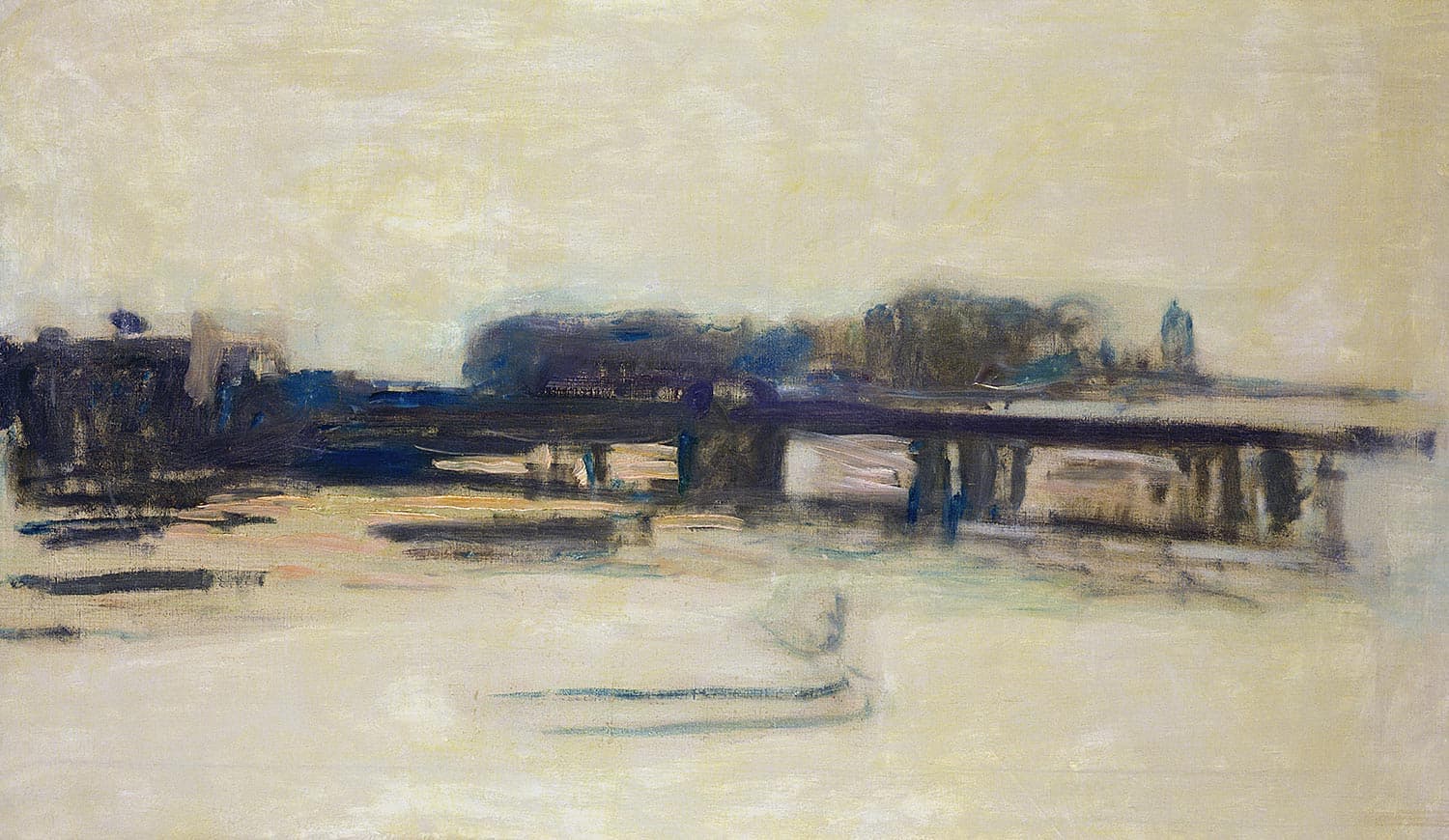
Charing Cross Bridge, London (Marmottan study)
Claude Monet · c. 1899–1901
The Japanese Bridge
Claude Monet · 1918
Le Palais Dario
Claude Monet · 1908
The Palazzo Ducale (Le Palais Ducal), 1908
Claude Monet · 1908
Palazzo Contarini
Claude Monet · 1908