Image: Matsushita Museum of Art, Kirishima · Public domain · via Wikimedia Commons
Waterloo Bridge (Matsushita Museum of Art)
Claude Monet, 1899–1901
Waterloo Bridge is a small canvas Claude Monet began in London around 1899–1901, in which the bridge's arches barely surface through a green-gold fog above pink flecks of light on the Thames. It is in the Matsushita Museum of Art, Kagoshima, Japan.
- Artist
- Claude Monet
- Date
- 1899–1901
- Medium
- Oil on canvas
- Dimensions
- 65 × 81 cm
- Collection
- Matsushita Museum of Art, Kirishima, Kagoshima, Japan
- Movement
- Impressionism
- Catalogue
- Wildenstein 1578
- The City
- Water & Sea
This Waterloo Bridge is one of the paintings Claude Monet made of the Thames from his room at the Savoy Hotel in London, begun during his stays of 1899–1901. It is one of the smaller canvases of the series, 65 × 81 cm, it is number 1578 in the Wildenstein catalogue raisonné, and it belongs to the Matsushita Museum of Art in Kirishima, Kagoshima Prefecture, in southern Japan. Wikidata dates it to 1899, the year Monet began the London pictures.
What you're looking at
At first glance there is hardly a bridge at all. The upper half of the canvas is a thick, brushy fog in pale olive, gold and grey-lilac, laid in diagonal strokes that seem to move. Across the middle, a long, low band of grey-green marks the deck of the bridge, and beneath it three piers stand out as small rounded shapes, each touched with salmon pink where light catches the stone.
The river fills the lower third. It is a muted sea-green, broken by short horizontal dashes of pink and coral, the reflections of sun or lamps on the water. The color is the same as on the piers, so light seems to pass from the bridge into the river. At lower right is the signature.
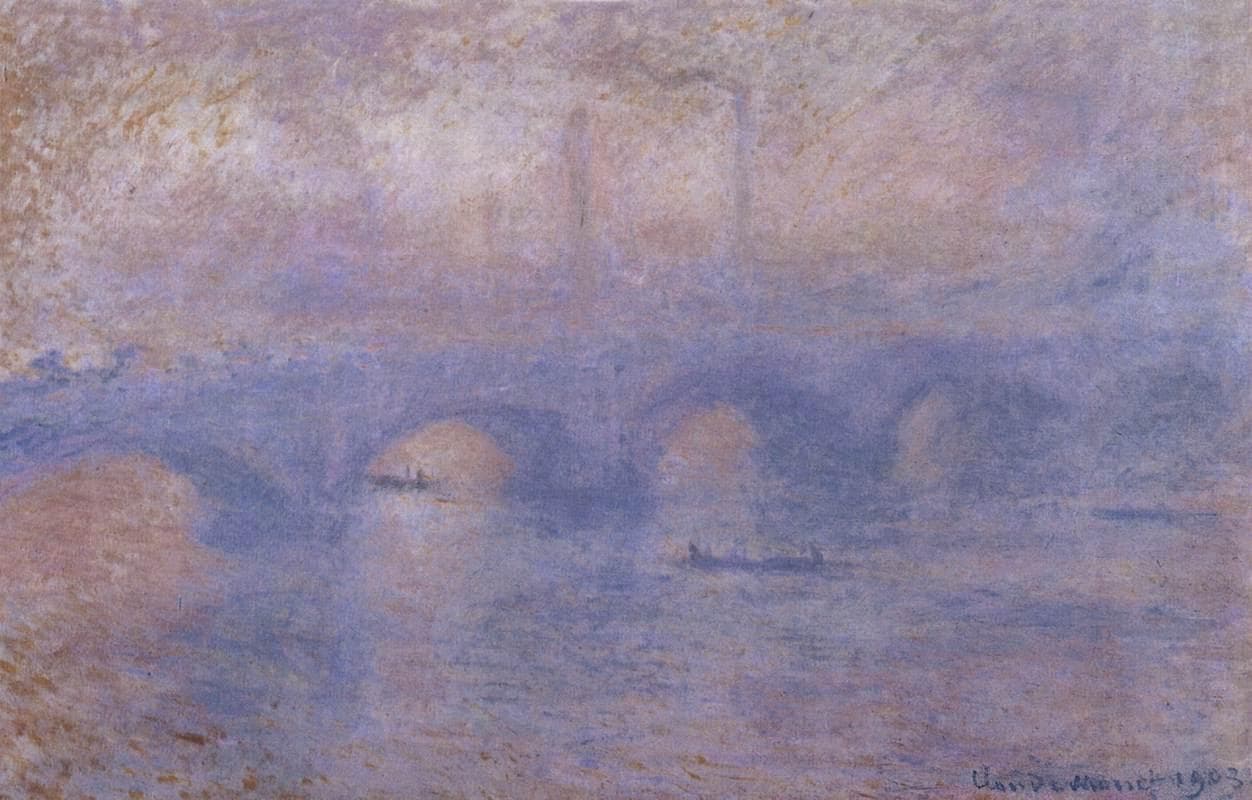
What makes this version distinct is how little Monet describes. There are no chimneys on the far bank, no boats, no traffic on the bridge, only the essential rhythm of three piers and their reflections in a uniform haze. Compared with the larger, more worked canvases of 1903, it feels close to a first impression of a weather effect, the kind Monet would start on one canvas and abandon when the light changed.
Where and when it was painted
Monet came to London in the autumn of 1899 and returned in the early months of 1900 and 1901, each time staying at the Savoy Hotel on the Embankment. From his balcony he looked east, downstream, to Waterloo Bridge, the granite bridge designed by John Rennie and opened in 1817, with the industrial south bank beyond. He painted it mainly in the mornings, switching between dozens of canvases as the fog shifted. As he later remarked, it was the fog that made London beautiful to him.
How it was painted
The brushwork is loose and directional. Fog is made of quick diagonals, the bridge of a few horizontal sweeps, the reflections of short, single strokes of pink laid wet on green. Monet usually finished his London canvases later in his studio at Giverny, working on them as a group before the 1904 exhibition at Durand-Ruel in Paris, Vues de la Tamise à Londres. This small picture shows less of that reworking than many.
How this version differs
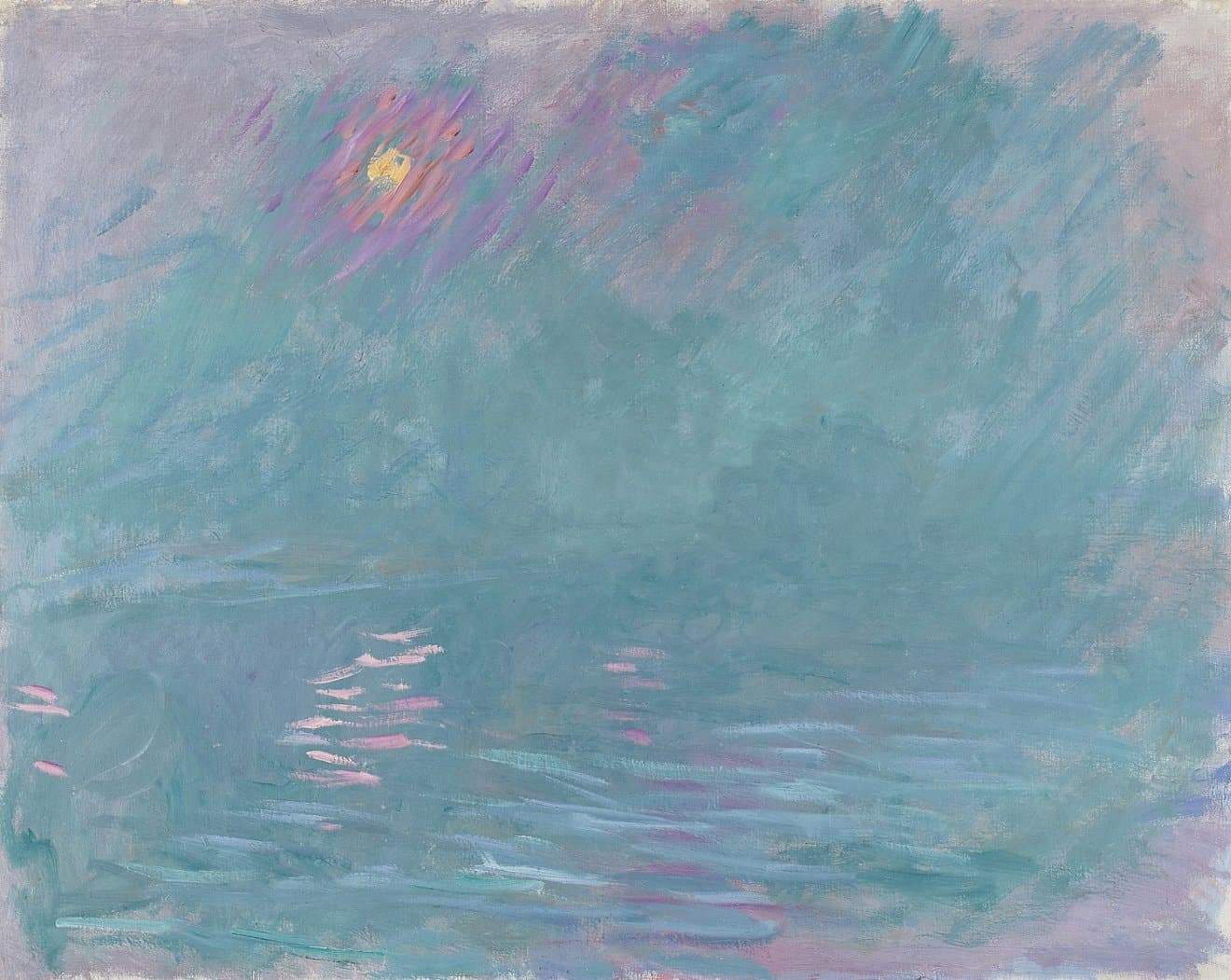
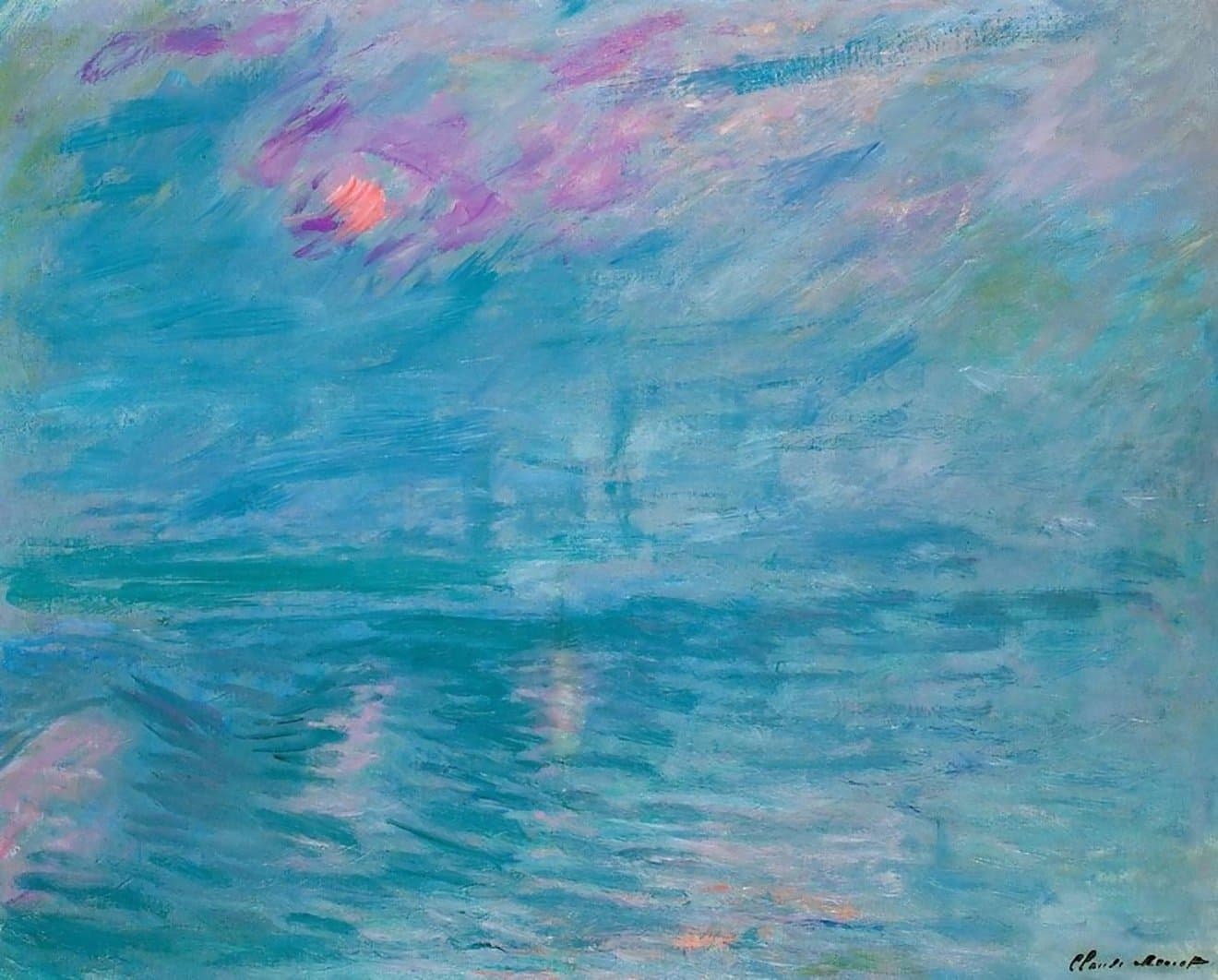
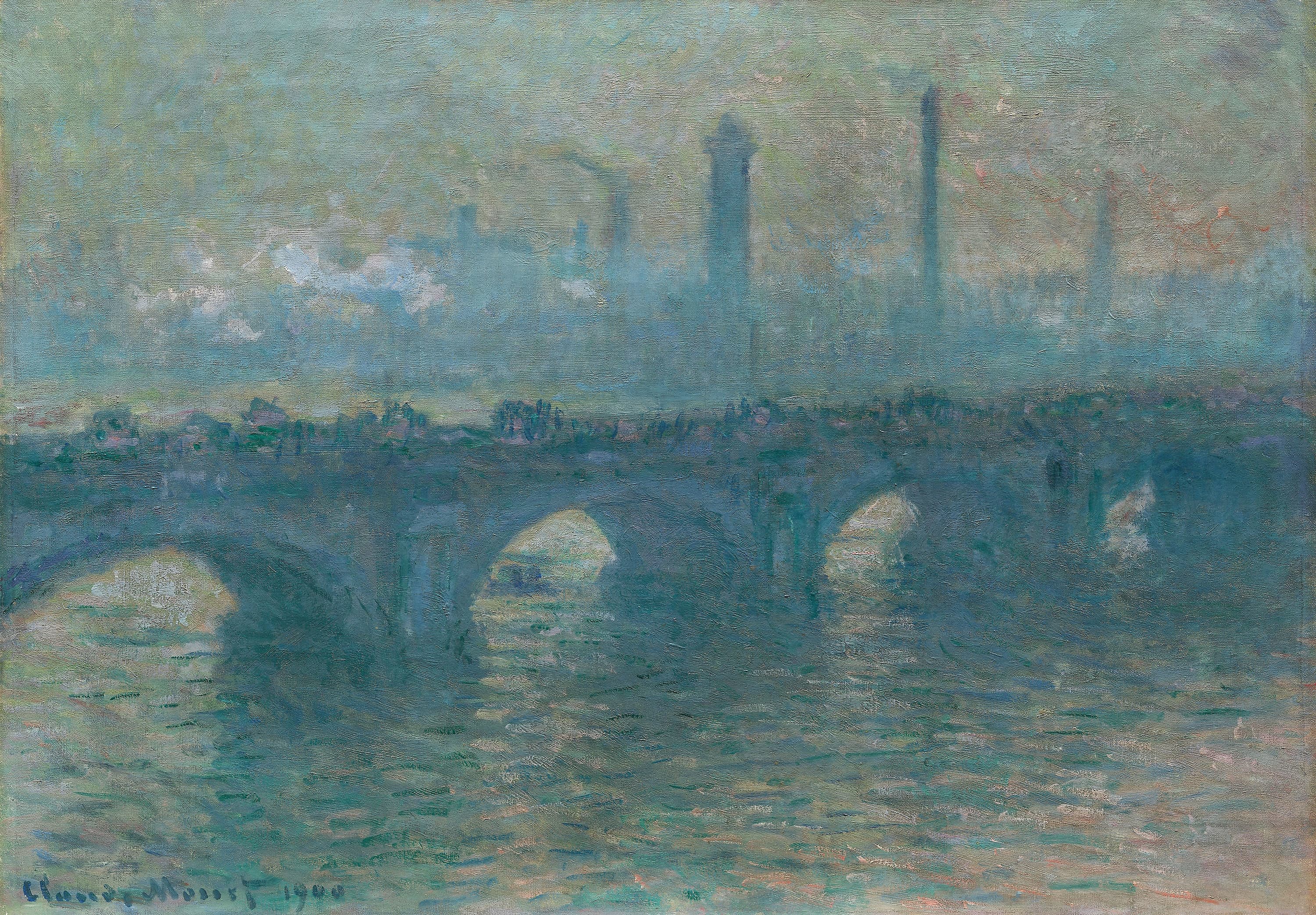
It belongs to a small group of 65 × 81 cm canvases in the Waterloo Bridge series, alongside the Kerry Stokes Collection's Waterloo Bridge and the Davis Museum's Waterloo Bridge, both of which show a red sun through fog. Here there is no sun disc, only diffused warm light. Set it beside the Art Institute of Chicago's Waterloo Bridge, Gray Weather, where the chimneys and arches are firmly drawn, and you see the full range of the series.
The bridge itself
Waterloo Bridge, designed by the engineer John Rennie and opened in 1817 on the second anniversary of the battle it commemorated, was a long granite bridge of nine elliptical arches, admired as one of the finest in London. By Monet's time it carried heavy traffic between the Strand and the south bank, and its downstream view, toward the City and the industrial south shore, was one of the busiest prospects on the river. The bridge was later found to be structurally unsound and was demolished in the 1930s; the present Waterloo Bridge, designed by Giles Gilbert Scott, opened in 1945. Monet's canvases are thus among the most famous records of a London landmark that no longer exists.
Where to see it
The Matsushita Museum of Art, in a spa district of Kirishima, has a collection of European and Japanese painting. For other London views by Claude Monet, see Monet in London; for museums worldwide, see where to see Monet's paintings.
Questions & answers
Where is this Monet Waterloo Bridge?
It is in the Matsushita Museum of Art in Kirishima, Kagoshima Prefecture, Japan. It is one of the smaller canvases of the series, 65 × 81 cm, and is number 1578 in Wildenstein's catalogue.
When was it painted?
Monet began it in London during his stays of 1899–1901 at the Savoy Hotel; Wikidata dates it to 1899. Like most of the London pictures, it may have been reworked later in his studio at Giverny.
What does the painting show?
It shows Waterloo Bridge almost dissolved in a green-gold fog: a low band for the deck, three piers touched with pink, and the Thames below with short pink reflections. There are no chimneys or boats.
How many Waterloo Bridge paintings did Monet make?
Monet made more than forty canvases of Waterloo Bridge between 1899 and 1904, the largest of his three London series. They vary by weather, time of day and degree of finish.
More by the artist
Claude Monet
Water Lilies and Japanese Bridge
Claude Monet · 1899
The Water-Lily Pond (National Gallery, London)
Claude Monet · 1899
The Japanese Footbridge and the Water Lily Pool, Giverny
Claude Monet · 1899
White Water Lilies
Claude Monet · 1899
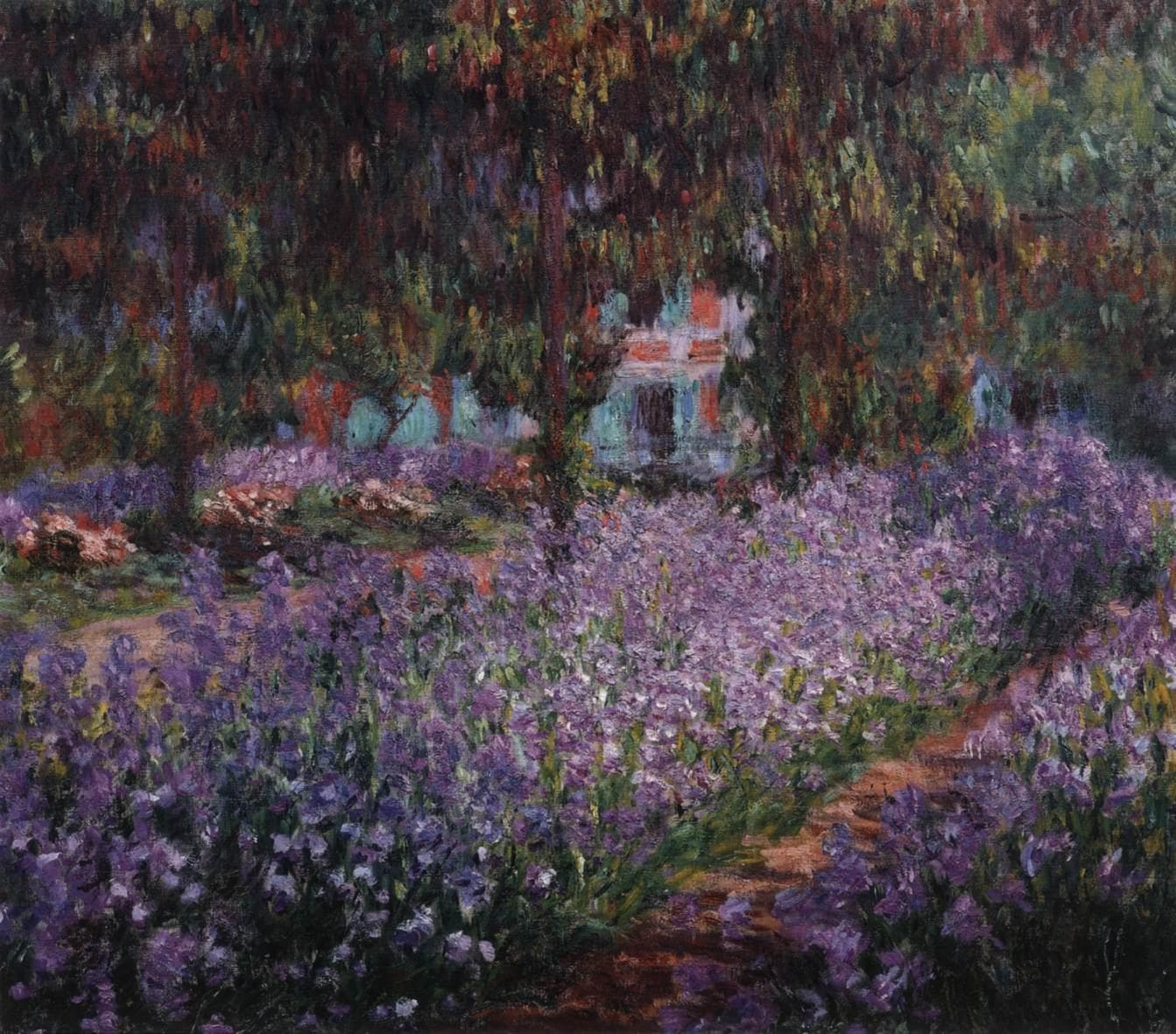
Irises in Monet's Garden at Giverny
Claude Monet · 1900
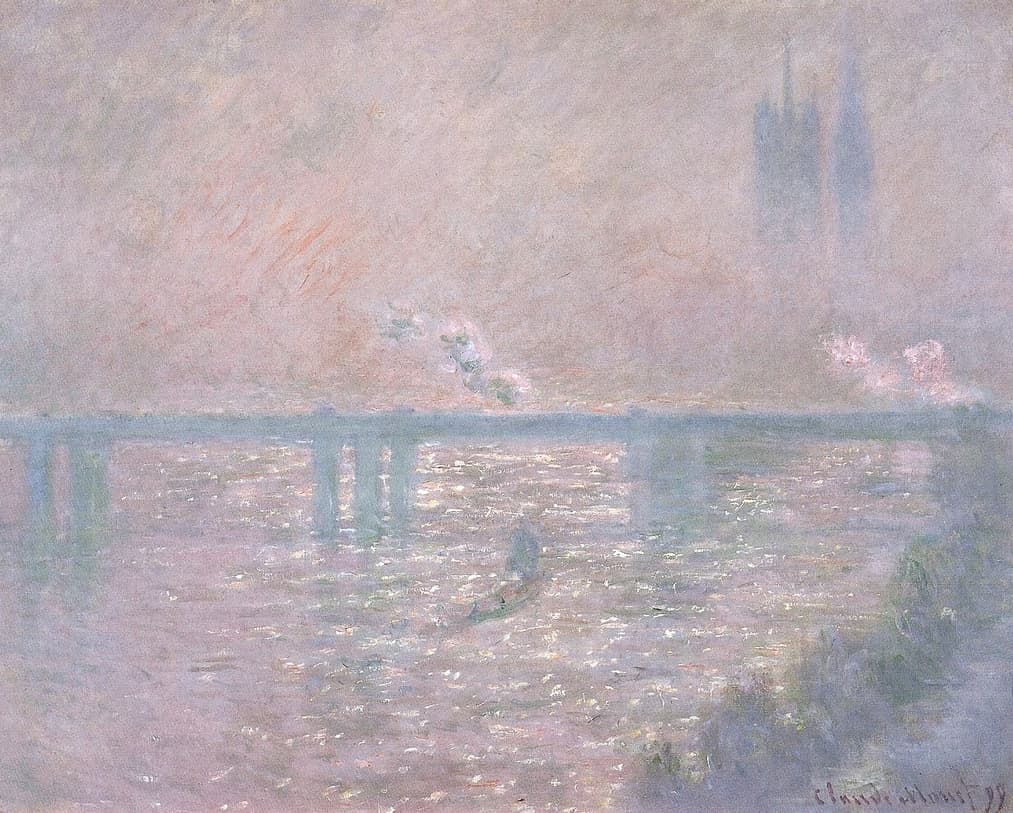
Charing Cross Bridge
Claude Monet · 1899
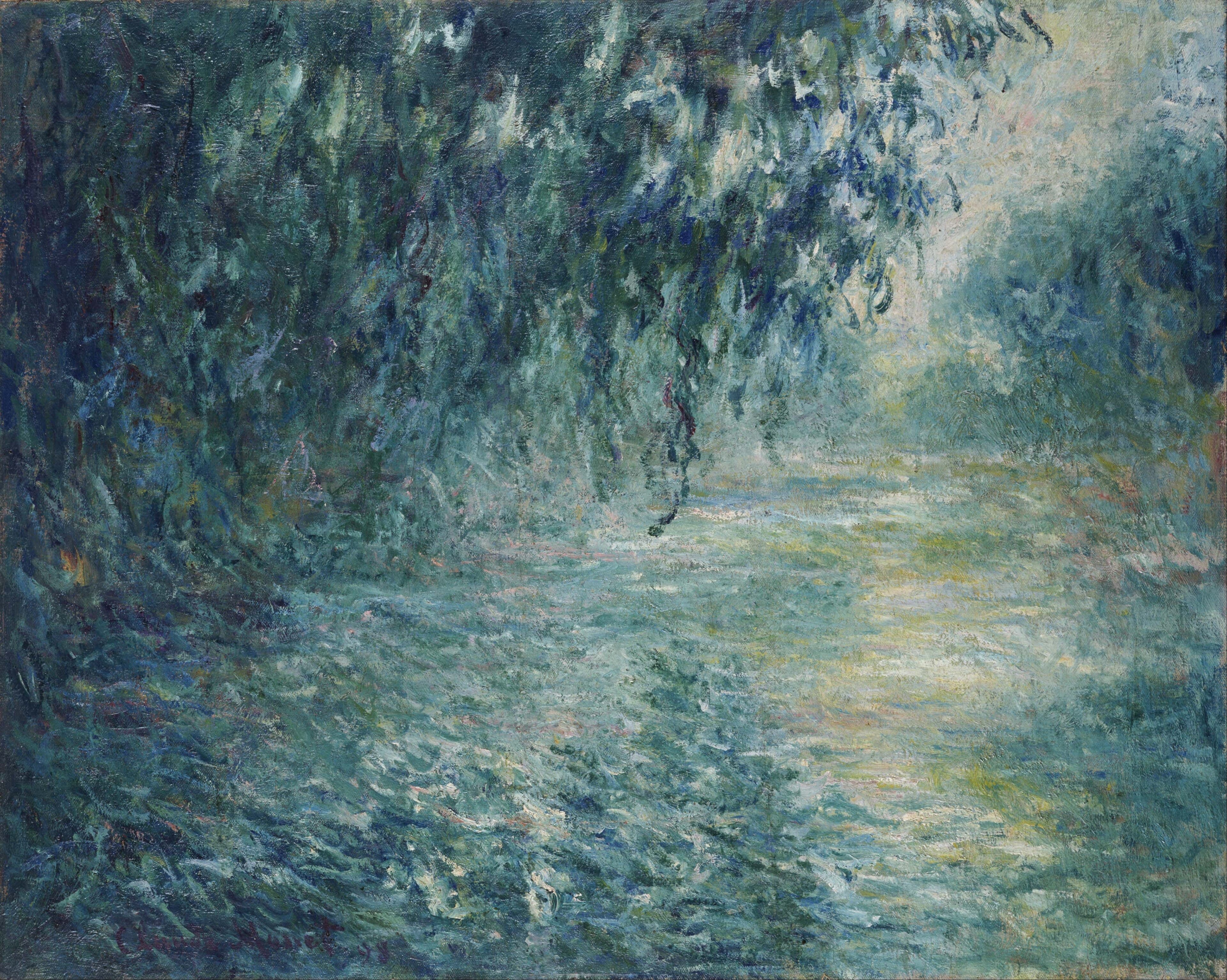
Morning on the Seine
Claude Monet · 1898
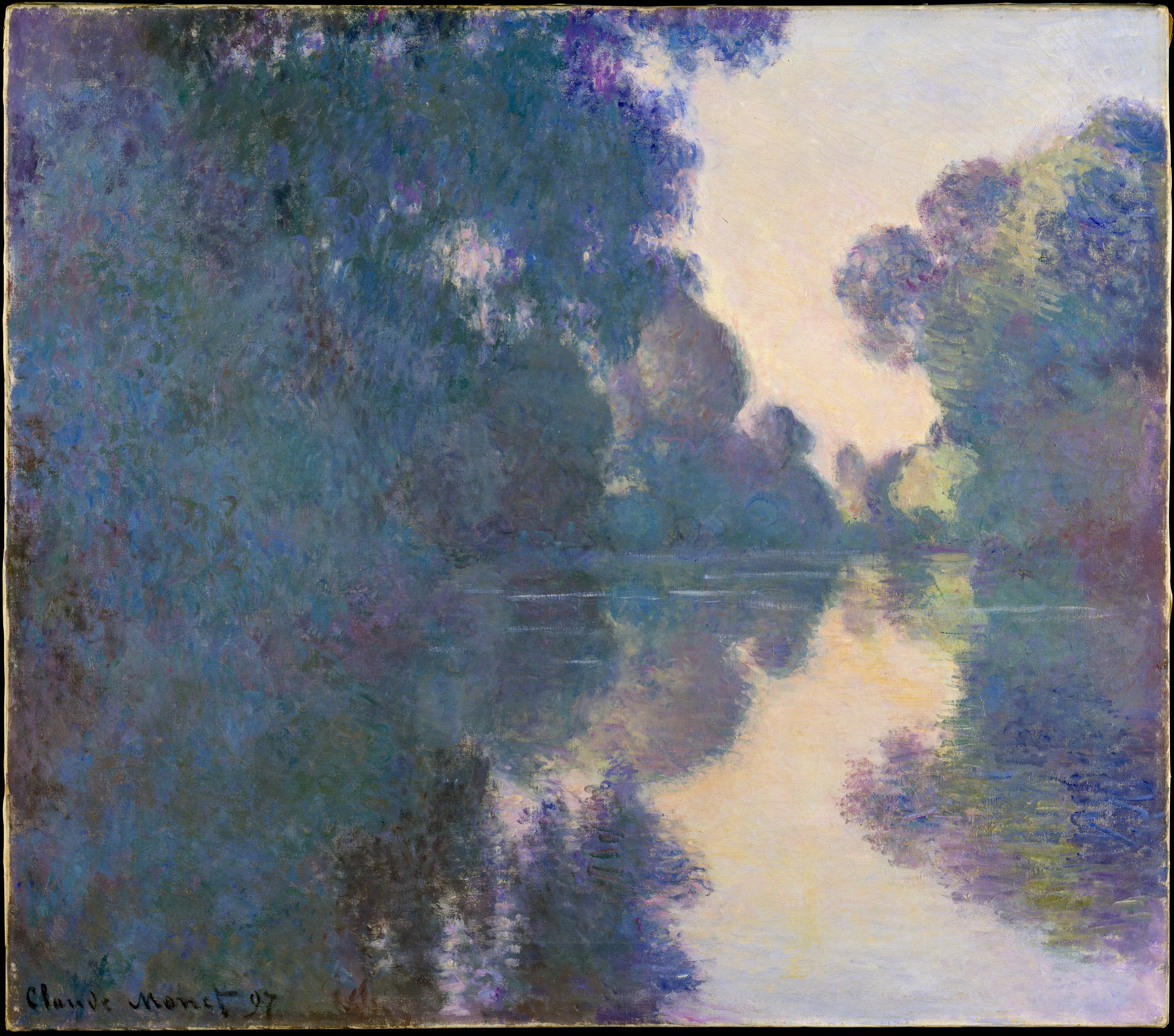
Morning on the Seine near Giverny
Claude Monet · 1897
Also painted in 1899
The same year

Bridge over a Pond of Water Lilies
Claude Monet · 1899
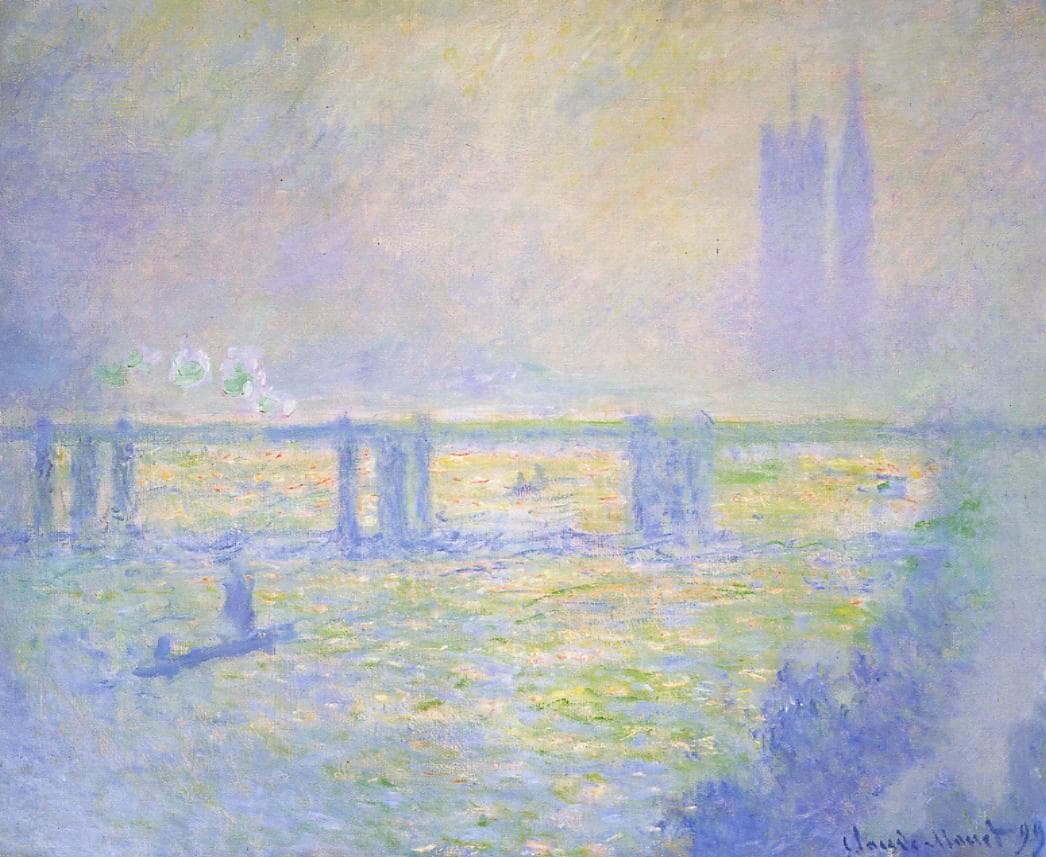
Charing Cross Bridge
Claude Monet · 1899
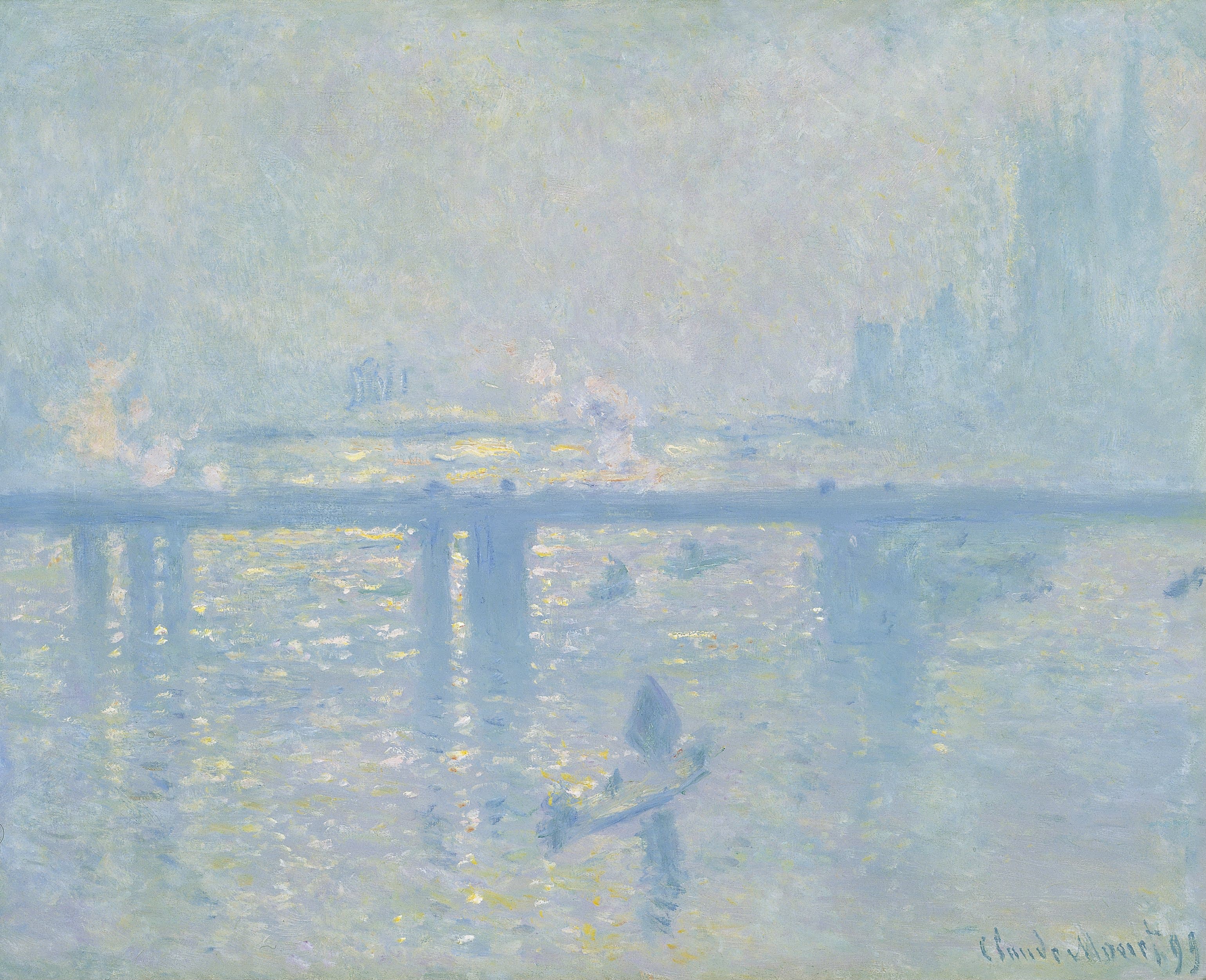
Charing Cross Bridge
Claude Monet · 1899
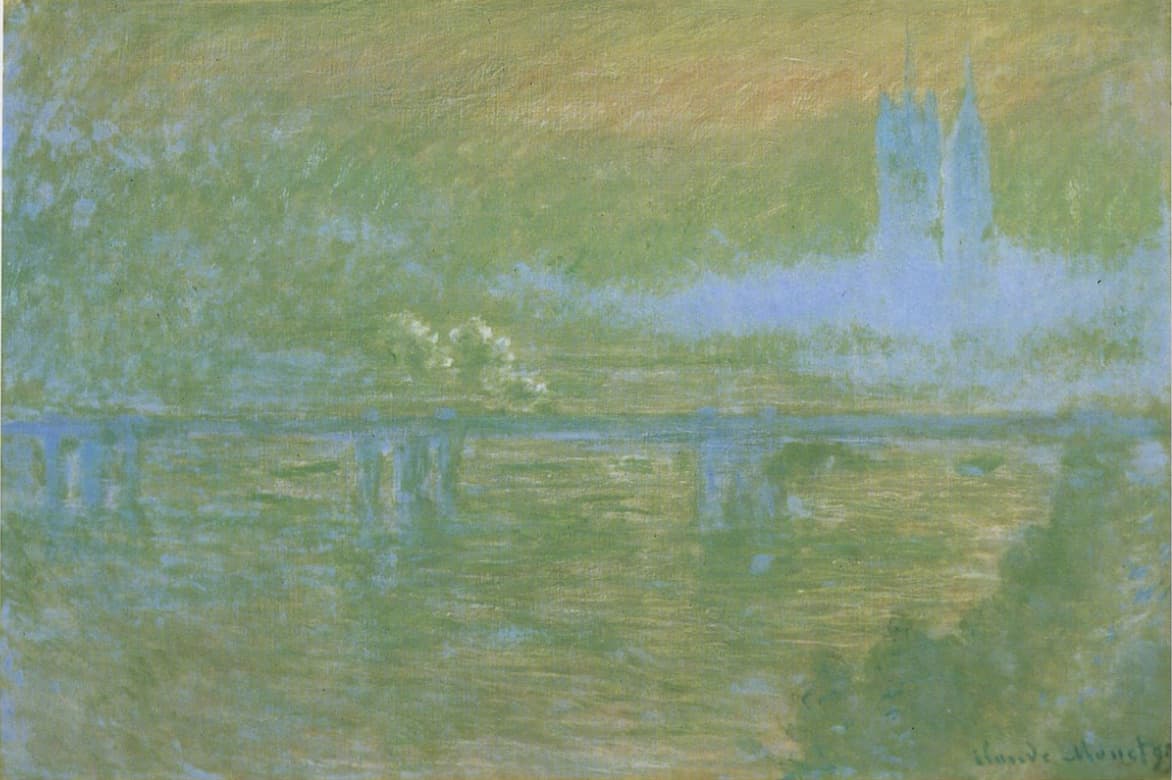
Charing Cross Bridge
Claude Monet · c. 1899
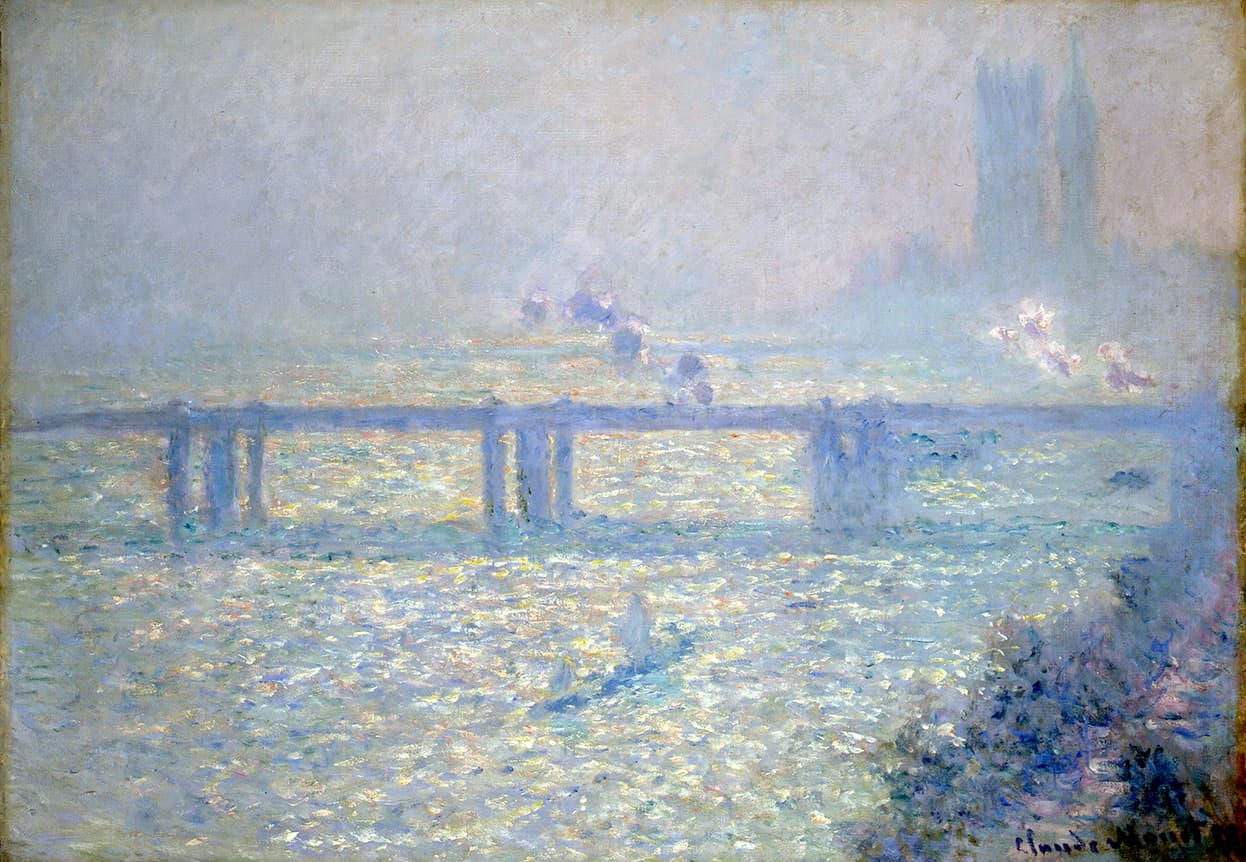
Charing Cross Bridge (Shelburne Museum)
Claude Monet · 1899
The Japanese Footbridge
Claude Monet · 1899
Water Lily Pond, Green Harmony
Claude Monet · 1899
Kindred works
You may also study
Waterloo Bridge (Kerry Stokes Collection)
Claude Monet · 1899–1901
Waterloo Bridge (Davis Museum)
Claude Monet · 1899–1903
Waterloo Bridge, Gray Weather
Claude Monet · 1900
Waterloo Bridge, Effect of Fog
Claude Monet · 1903
Waterloo Bridge, London, Sun Effect
Claude Monet · 1899–1901
The Railway Bridge at Argenteuil
Claude Monet · c. 1873–74

The Seine at Asnières (Hermitage)
Claude Monet · 1873
The Zuiderkerk, Amsterdam (Looking up the Groenburgwal)
Claude Monet · c. 1874