Impressionism
Gondola in Venice
Claude Monet, 1908
Gondola in Venice is an upright canvas by Claude Monet showing a single black gondola moored among wooden poles in pale, misty light, painted during his only visit to Venice in 1908. It belongs to the Musée d'arts de Nantes.
- Artist
- Claude Monet
- Date
- 1908
- Medium
- Oil on canvas
- Dimensions
- 81 × 65 cm
- Collection
- Musée d'arts de Nantes, Nantes, France
- Movement
- Impressionism
- Catalogue
- Wildenstein W 1772
Painted at Monet in Venice
Gondola in Venice is a painting by Claude Monet of a lone black gondola tied up among mooring poles, made during his only stay in Venice, in the autumn of 1908. The upright canvas, 81 by 65 centimeters and number 1772 in Daniel Wildenstein's catalogue, belongs to the Musée d'arts de Nantes, which received it by bequest in 1930. Of all the pictures Monet brought home from Venice, it is the one that comes closest to leaving the city out.
What does Gondola in Venice show?
A gondola lies diagonally across the middle of the canvas, its hull a single sweep of blue-black that rises at the right into the tall, curling prow. It is moored among four wooden posts, the poles Venetians drive into the canal bed to tie up boats. Three of them run off the top edge of the canvas; one, at the left, is little more than a thin violet stroke.
There is no building, no quay, no sky line and no horizon. The rest of the canvas is a field of off-white, faintly tinted with lilac, gray and a breath of yellow, so that water, air and mist read as one substance. Behind the prow, a second dark shape, probably another boat or its reflection, is half dissolved in that pale haze.
The lower half belongs to the reflection. Monet paints it as a broad, broken column of indigo and violet that wobbles down to the bottom edge in zigzag strokes, wider and looser than the boat itself. Around it, the reflections of the poles become little curls and hooks of lavender and blue, like handwriting. At the far left, a lone squiggle of violet floats with nothing attached to it, the trace of a ripple.
The paint surface up close
What most viewers miss is how little paint there is. Across large areas, the pale ground of the canvas is left almost bare, and you can see the weave through the thin scumbles of white. The gondola, by contrast, is laid on thickly in a few long, curving strokes, with touches of mid-blue along the gunwale to show light catching the varnished wood.
The palette is tiny: black-blue, violet, lilac, white and a trace of yellow ochre near the waterline. That restraint is the point. With almost no color and no setting, the picture becomes a study of a dark shape against light and of how water doubles and distorts it.
When was Monet in Venice?
Monet arrived in Venice with his wife Alice at the beginning of October 1908. They stayed first at the Palazzo Barbaro on the Grand Canal as guests of an English friend, then moved to the Hotel Britannia, and left in early December. He was 68, and he had long resisted the idea of painting a city already painted by everyone from Canaletto to Turner. Once there, he settled into a routine of working on several motifs a day from fixed viewpoints, often from a boat or a landing stage.
He left Venice with several dozen canvases, most of them unfinished, and worked on them at Giverny for the next three years. Alice's illness and death in May 1911 interrupted that work. Twenty-nine Venetian canvases were finally shown at the Bernheim-Jeune gallery in Paris in 1912, to strong reviews.
How it differs from the other Venice paintings
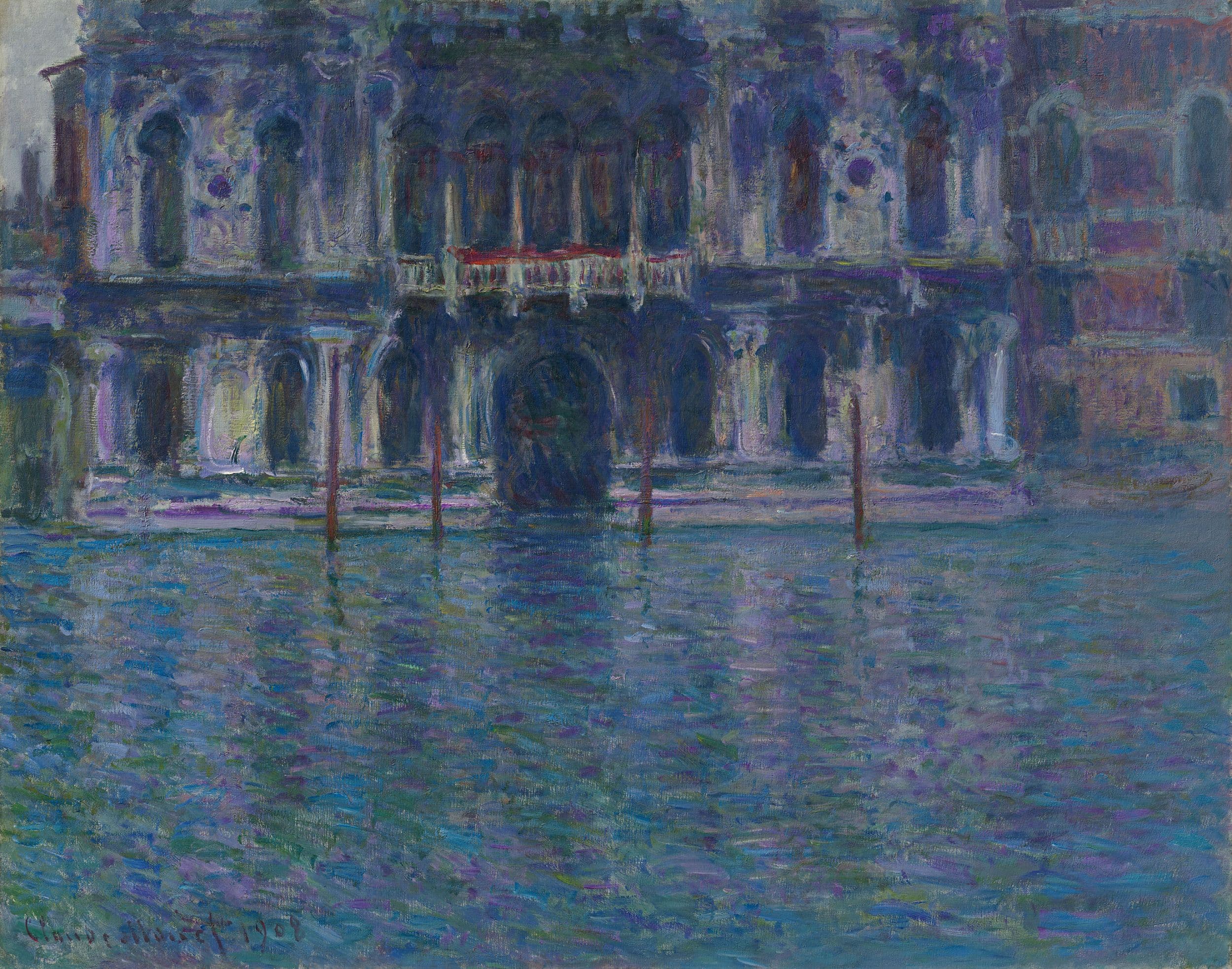
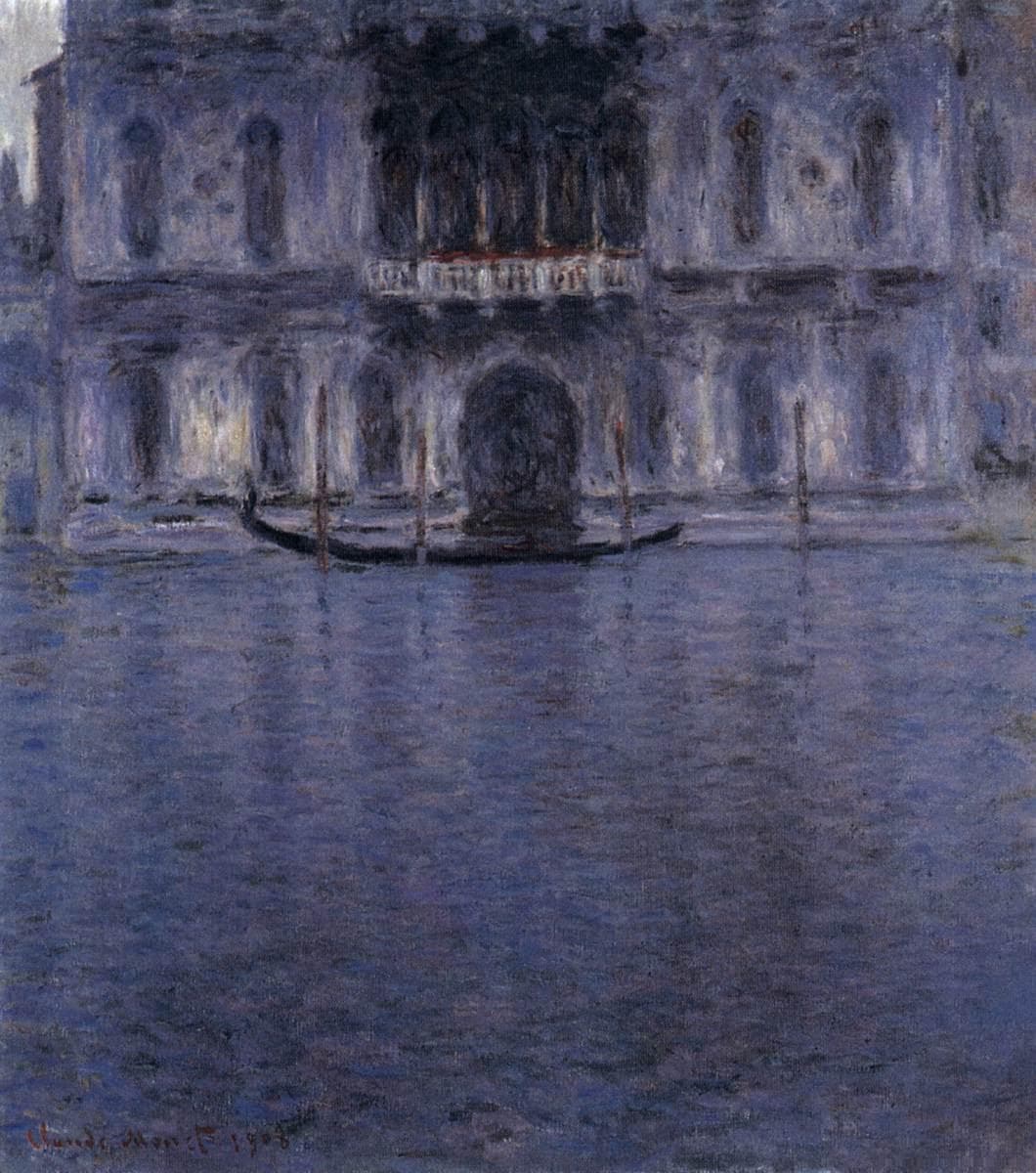
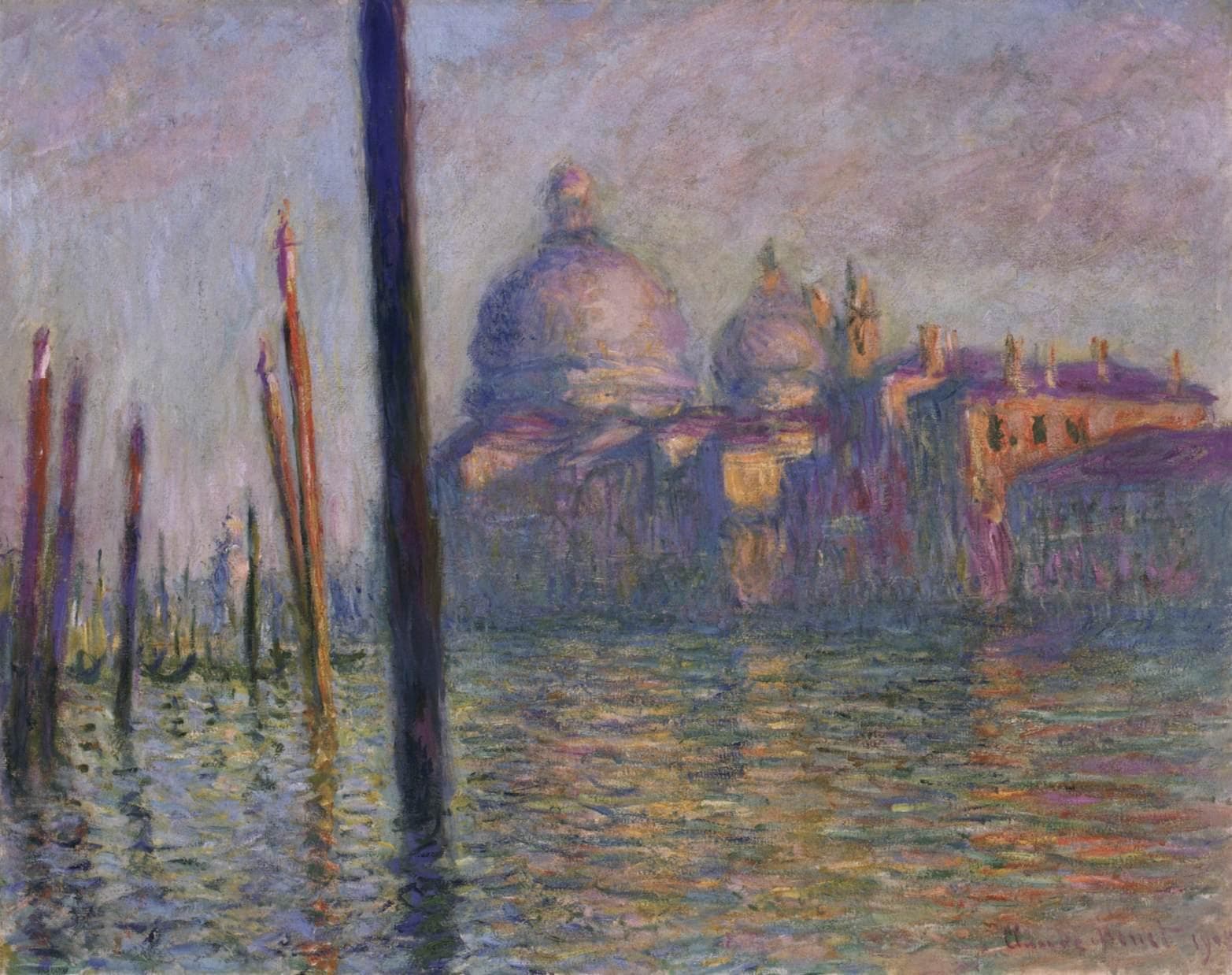
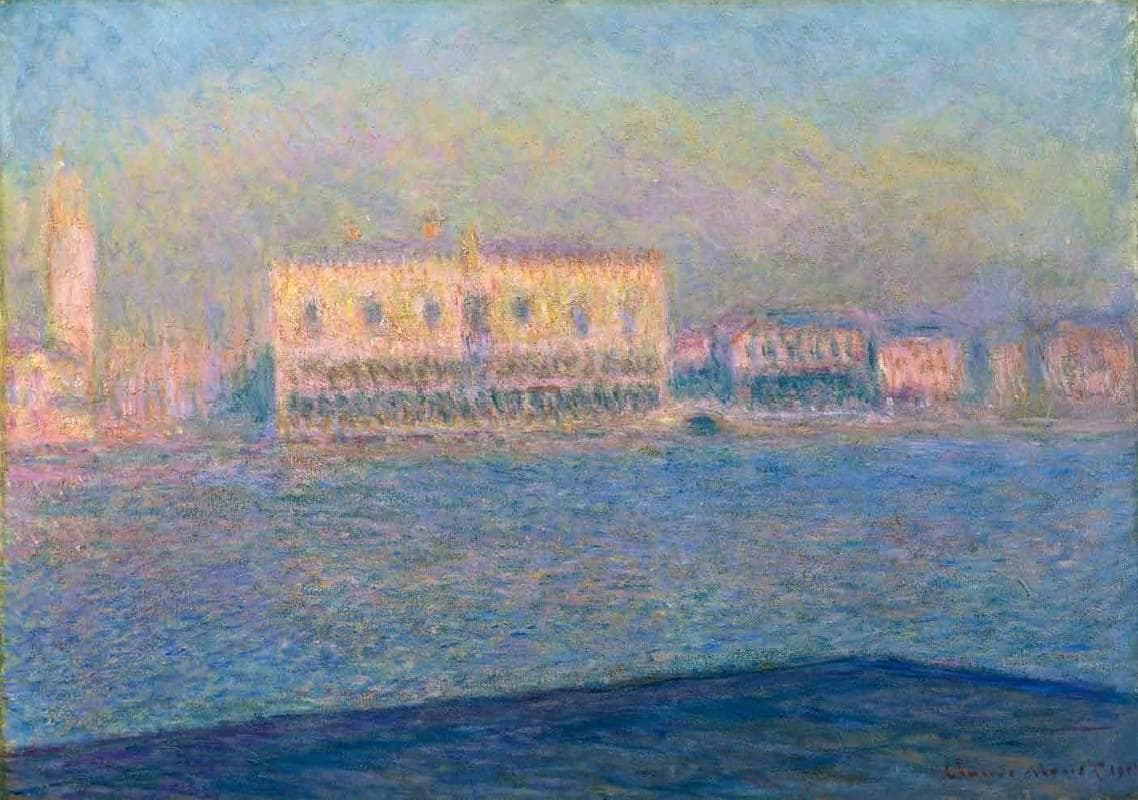
Most of the Venice canvases look across water at architecture: palace facades like Palazzo Contarini, the long front of the Palazzo Ducale seen from San Giorgio Maggiore, or the domes and poles of the Grand Canal. Others, like Sunset in Venice, reduce the city to a silhouette against a blazing sky. The mooring poles in those pictures are props at the edge of the view.
Here they become the subject. Monet moves in close, drops the buildings entirely and lets one black boat carry the composition. Whether he considered the canvas finished is not documented, and its bare passages make it look like an early stage beside the reworked, densely painted facades. Seen with his later work, though, its emptiness points ahead to the water-lily canvases, where the motif is again a few dark accents floating in light. You can follow the whole Venetian group in our guide to Monet in Venice.
Where to see Gondola in Venice
The painting is in the Musée d'arts de Nantes, the fine arts museum of Nantes in western France (inventory 2064). The same museum also owns a late Water Lilies canvas of 1917, so a visit lets you compare Monet's Venetian water with the pond at Giverny. For other collections, see where to see Monet's paintings, and for his life and work, our page on Claude Monet.
Questions & answers
Where is Monet's Gondola in Venice?
It is in the Musée d'arts de Nantes, the fine arts museum of Nantes in western France, which received it by bequest in 1930 (inventory 2064). The upright canvas measures 81 by 65 centimeters and is one of the few paintings from Monet's 1908 Venice trip that shows a boat rather than buildings.
When and where did Monet paint Gondola in Venice?
He painted it in Venice in the autumn of 1908, during his only visit to the city, from early October to early December, with his wife Alice. They stayed at the Palazzo Barbaro and then the Hotel Britannia. Like most of the Venice pictures, it was begun on the spot and kept at Giverny afterward.
What does Gondola in Venice show?
It shows a single black gondola moored among four wooden posts, with its broken reflection filling the lower half of the canvas. There is no architecture or horizon, only pale lilac and white mist. The picture turns Venice's most familiar object into a study of a dark shape against light.
Is Gondola in Venice part of a series?
It belongs to the group of about three dozen canvases Monet began in Venice in 1908, twenty-nine of which were shown in Paris in 1912. Most show palaces and churches across the water. This one is unusual for its close view, near-empty background and thin, sketchlike paint, and scholars differ on whether Monet considered it finished.
More by the artist
Claude Monet

Bridge over a Pond of Water Lilies
Claude Monet · 1899

Woman with a Parasol – Madame Monet and Her Son
Claude Monet · 1875

Sunset in Venice
Claude Monet · 1908–12

La Grenouillère
Claude Monet · 1869

Beach in Pourville
Claude Monet · 1882

Springtime
Claude Monet · 1872

Boating on the River Epte
Claude Monet · 1890

The Seine at Asnières (Hermitage)
Claude Monet · 1873
Also painted in 1908
The same year
Kindred works
You may also study
Palazzo Contarini
Claude Monet · 1908
The Grand Canal in Venice
Claude Monet · 1908
The Palazzo Ducale Seen from San Giorgio Maggiore
Claude Monet · 1908
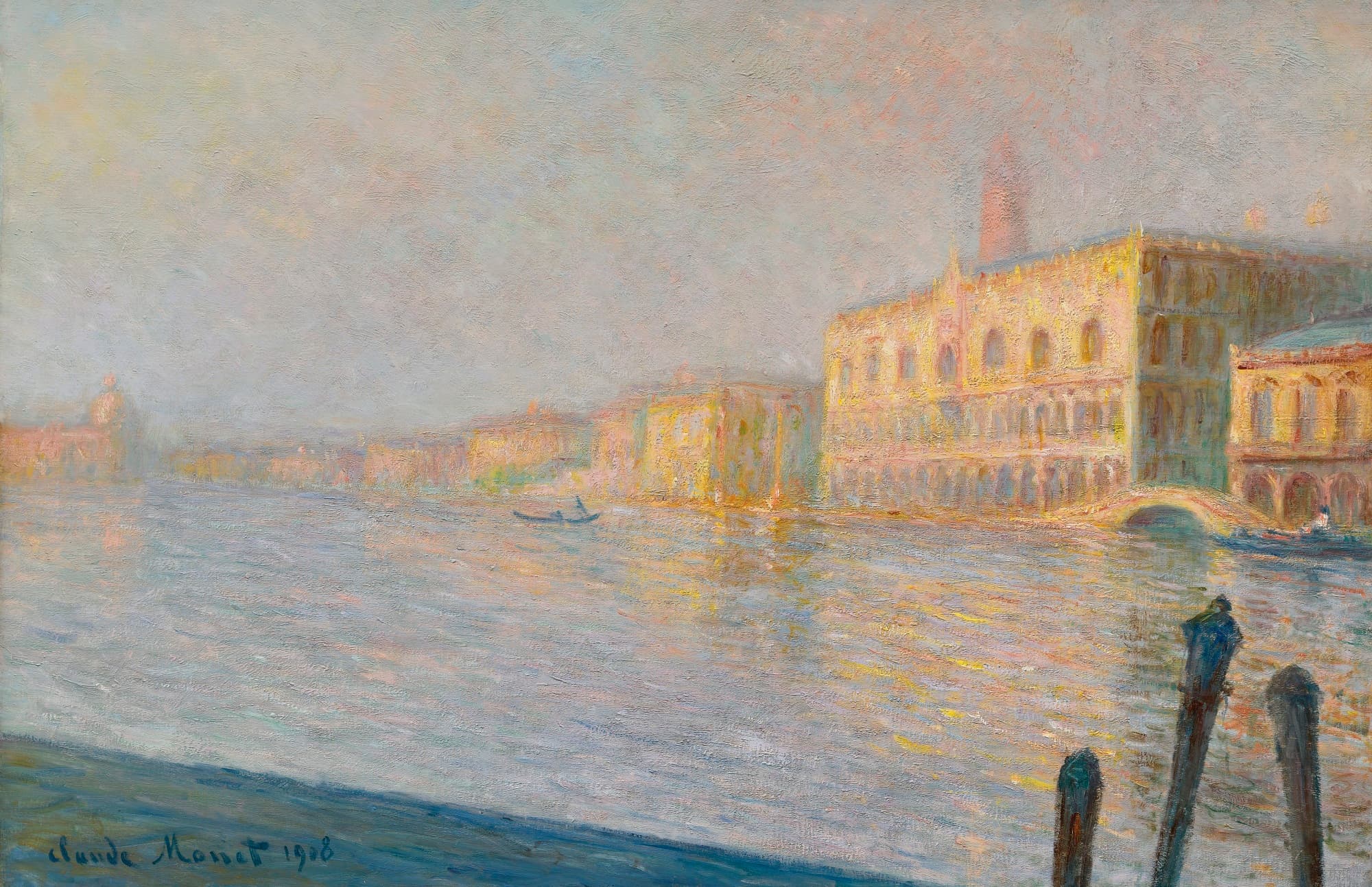
The Palazzo Ducale (Le Palais Ducal), 1908
Claude Monet · 1908
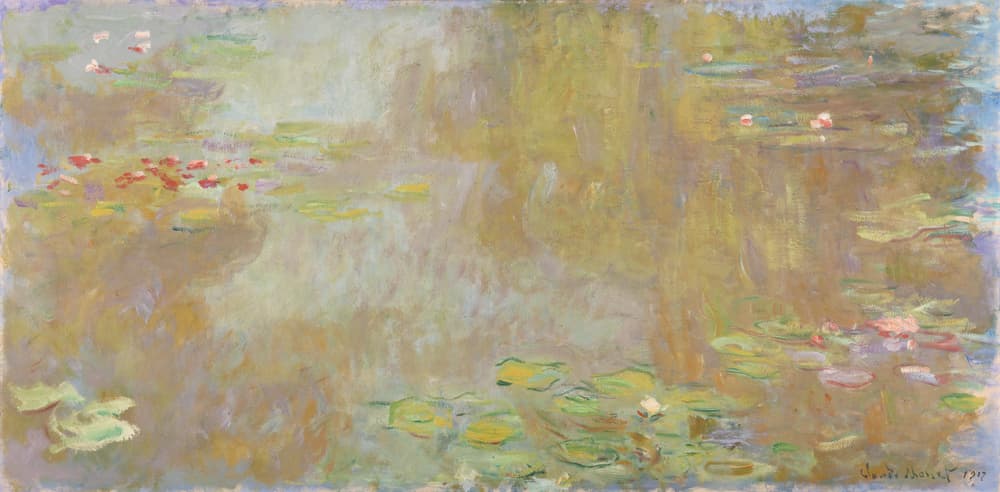
Water Lilies in Giverny
Claude Monet · 1917

Ophelia
John Everett Millais · 1851–52

The Great Wave off Kanagawa
Katsushika Hokusai · c. 1830–32
The Birth of Venus
Sandro Botticelli · c. 1484–1486