Image: Memorial Art Gallery of the University of Rochester; reproduction via Wikimedia Commons · Public domain · via Wikimedia Commons
Waterloo Bridge, Veiled Sun
Claude Monet, 1903
Waterloo Bridge, Veiled Sun is a 1903 painting by Claude Monet of London's Waterloo Bridge seen through a violet haze, the sun a faint glow behind smoke. It is in the Memorial Art Gallery of the University of Rochester, New York.
- Artist
- Claude Monet
- Date
- 1903
- Medium
- Oil on canvas
- Dimensions
- 64.8 × 99.7 cm
- Collection
- Memorial Art Gallery of the University of Rochester, Rochester, New York, United States
- Movement
- Impressionism
- Catalogue
- Wildenstein 1590
- The City
- Water & Sea
Waterloo Bridge, Veiled Sun (Waterloo Bridge, soleil voilé) is one of Claude Monet's London views of the Thames, begun from his room at the Savoy Hotel between 1899 and 1901 and signed and dated 1903 after he finished it at Giverny. It is catalogued by Wildenstein as no. 1590 and has belonged to the Memorial Art Gallery of the University of Rochester since 1953.
What you're looking at
The bridge crosses the canvas from edge to edge just below the middle, five arches showing, the farthest right cut by the frame. Its stones are a pale, chalky lilac picked out with cream and yellow along the piers and the parapet, where the light catches them. Under each arch is a pool of deeper blue, the only real darks in the picture.
Above, the south bank is a ghost: a long low mass of buildings, a few factory chimneys, one tall tower with a single touch of yellow near its top, and on the left a cloud of pink smoke curling up into the haze. The sky is a uniform violet-pink, with no visible sun. That is the "veiled sun" of the title: the light is everywhere and nowhere, diffused through London's coal smoke and river mist.
The water is the busiest part of the painting. Monet covers it in short, flat, horizontal strokes of pink, blue and lavender, densely packed, so that the river looks like a woven surface. Tiny sparks of yellow along the parapet stand for the traffic on the bridge. The signature and the date 1903 are in blue at lower right.
Where and when it was painted
Monet spent three working stays in London, in autumn 1899 and in the late winters of 1900 and 1901, each time at the Savoy Hotel on the Victoria Embankment. Looking east from his window, he had Waterloo Bridge in front of him, with the industrial south bank beyond. He worked on many canvases at once, picking up whichever matched the conditions of the moment. Fog, smoke and the low winter sun gave him an endlessly changing subject.
He brought the unfinished pictures home and spent two more years working on them at Giverny, away from the motif, until the series held together. Durand-Ruel showed the London paintings in Paris in 1904. See the Waterloo Bridge series and Monet in London for the wider story.
How it was painted
A non-invasive technical study by conservators from Buffalo State in 2016, made for the gallery's 2018 exhibition, used imaging, spectroscopy and ultraviolet light to look below the surface. One clear finding was that Monet moved the smokestacks: the chimneys we see now are not where he first painted them. It is a small but telling sign that he was arranging the skyline for the sake of the picture rather than recording it exactly, probably while reworking the canvas at Giverny.
The paint is applied in many thin, dryish layers, which give the surface its matte, powdery look. Warm and cool colors sit side by side at almost the same value, so the image seems to vibrate when seen from a distance.
How this version differs
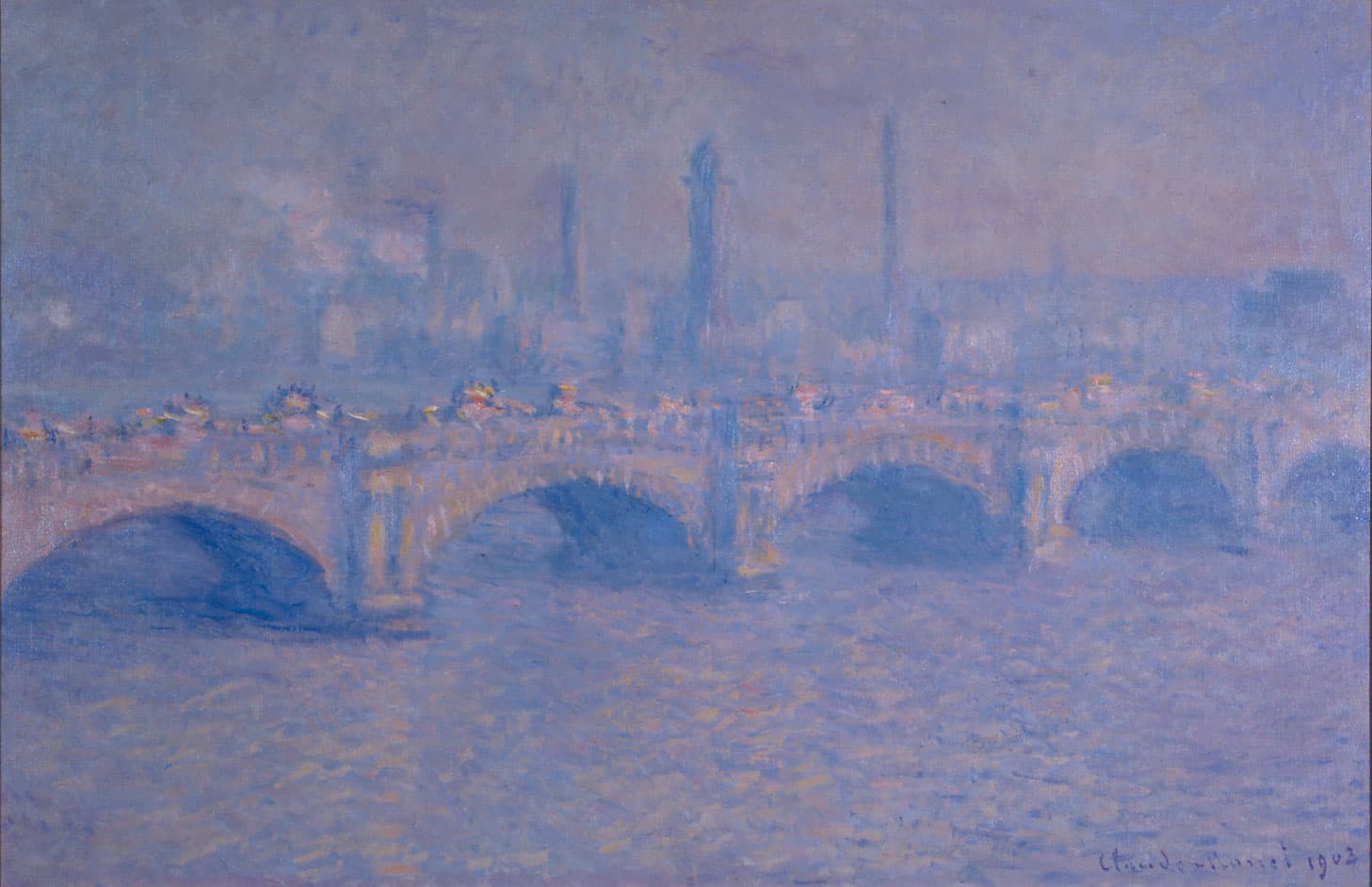
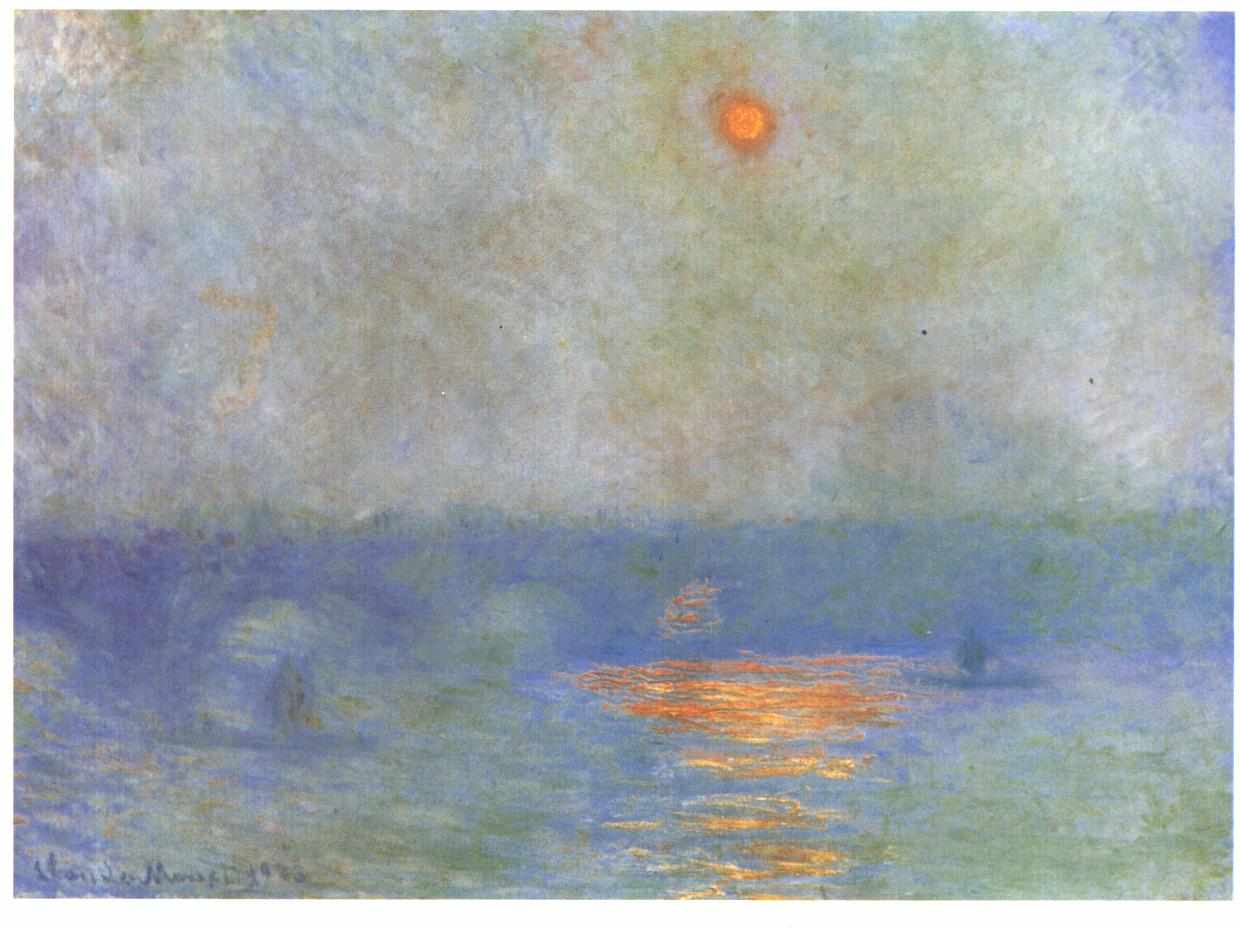
This is one of the palest and most unified of the Waterloo Bridge pictures. Compared with the McMaster Sunlight Effect, which uses almost the same composition and size, the Rochester canvas is pinker and warmer, and the sun never shows itself directly. In Waterloo Bridge: the Sun in a Fog in Ottawa, by contrast, the disc of the sun is visible and throws a bright path on the water, and in Waterloo Bridge, Gray Day in Washington the palette turns cold and gray.
Ownership and where to see it
The painting came to the Memorial Art Gallery in 1953 as a gift from the estate of Emily and James Sibley Watson; Emily Sibley Watson had founded the gallery in 1913 in memory of her son. In 2018–19 the gallery built an exhibition around it, Monet's Waterloo Bridge: Vision and Process, bringing it together with seven other versions from North American museums and publishing the technical findings with RIT Press. It remains one of the highlights of the collection and the best-known Monet in upstate New York. For other versions, see where to see Monet's paintings.
Questions & answers
Where is Waterloo Bridge, Veiled Sun?
It is in the Memorial Art Gallery of the University of Rochester in Rochester, New York. It came to the gallery in 1953 as a gift from the estate of Emily and James Sibley Watson and is a highlight of the permanent collection.
When and where did Monet paint Waterloo Bridge, Veiled Sun?
He began it from his room at the Savoy Hotel in London during stays between 1899 and 1901, then finished it at Giverny and dated it 1903. It was part of the London series Durand-Ruel exhibited in Paris in 1904.
What does the 'veiled sun' mean?
The sun is hidden behind smoke and mist, so it never appears as a disc. Instead its light spreads evenly through the sky and water, turning the whole scene violet and pink. Monet painted Waterloo Bridge in many such conditions.
What did the technical study of the Rochester Monet find?
A 2016 study by Buffalo State conservators found that Monet changed the position of the smokestacks from where he first painted them, evidence that he rearranged the skyline as he reworked the canvas.
More by the artist
Claude Monet
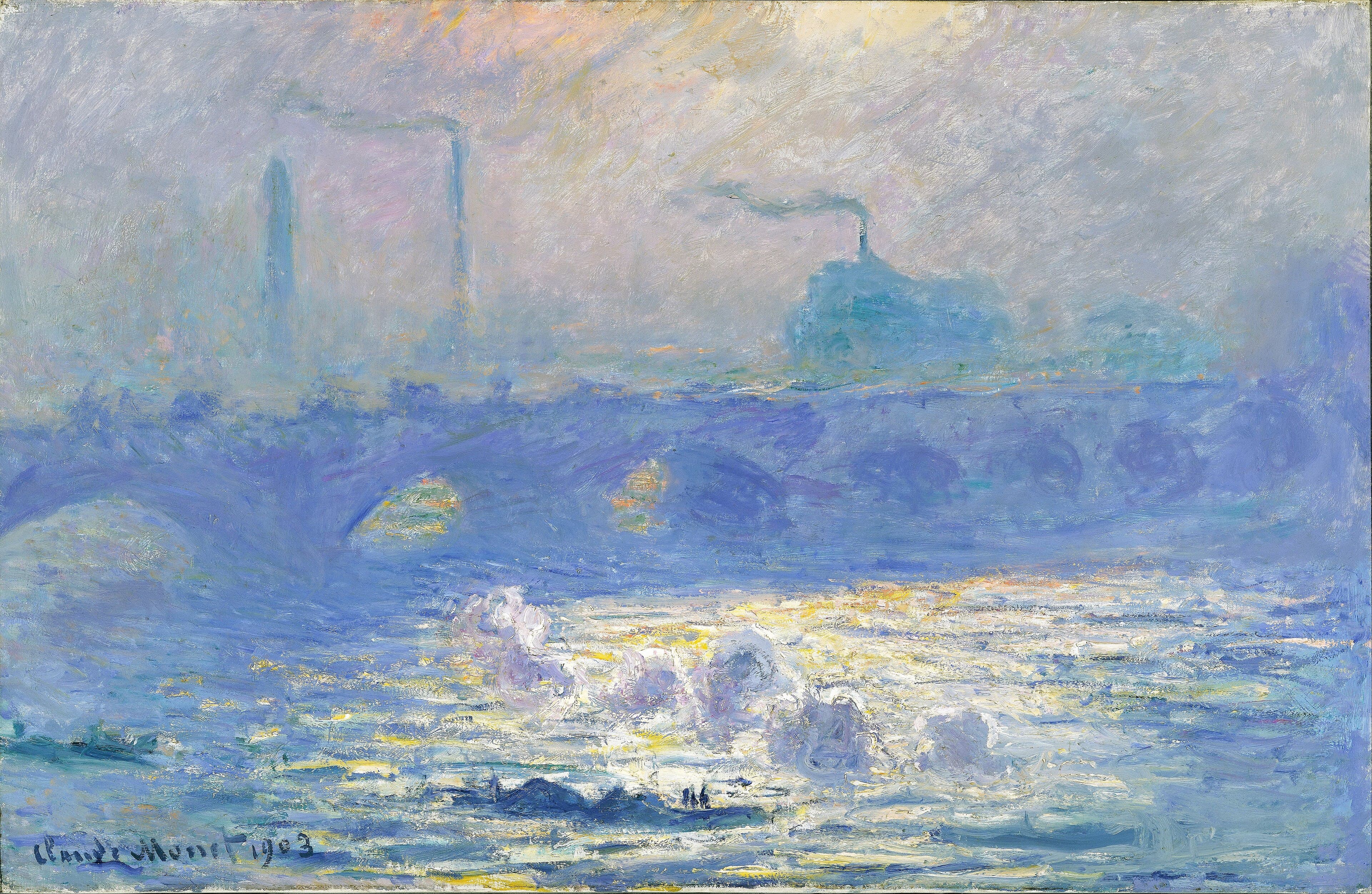
Waterloo Bridge, Sunlight Effect (Denver Art Museum)
Claude Monet · 1903
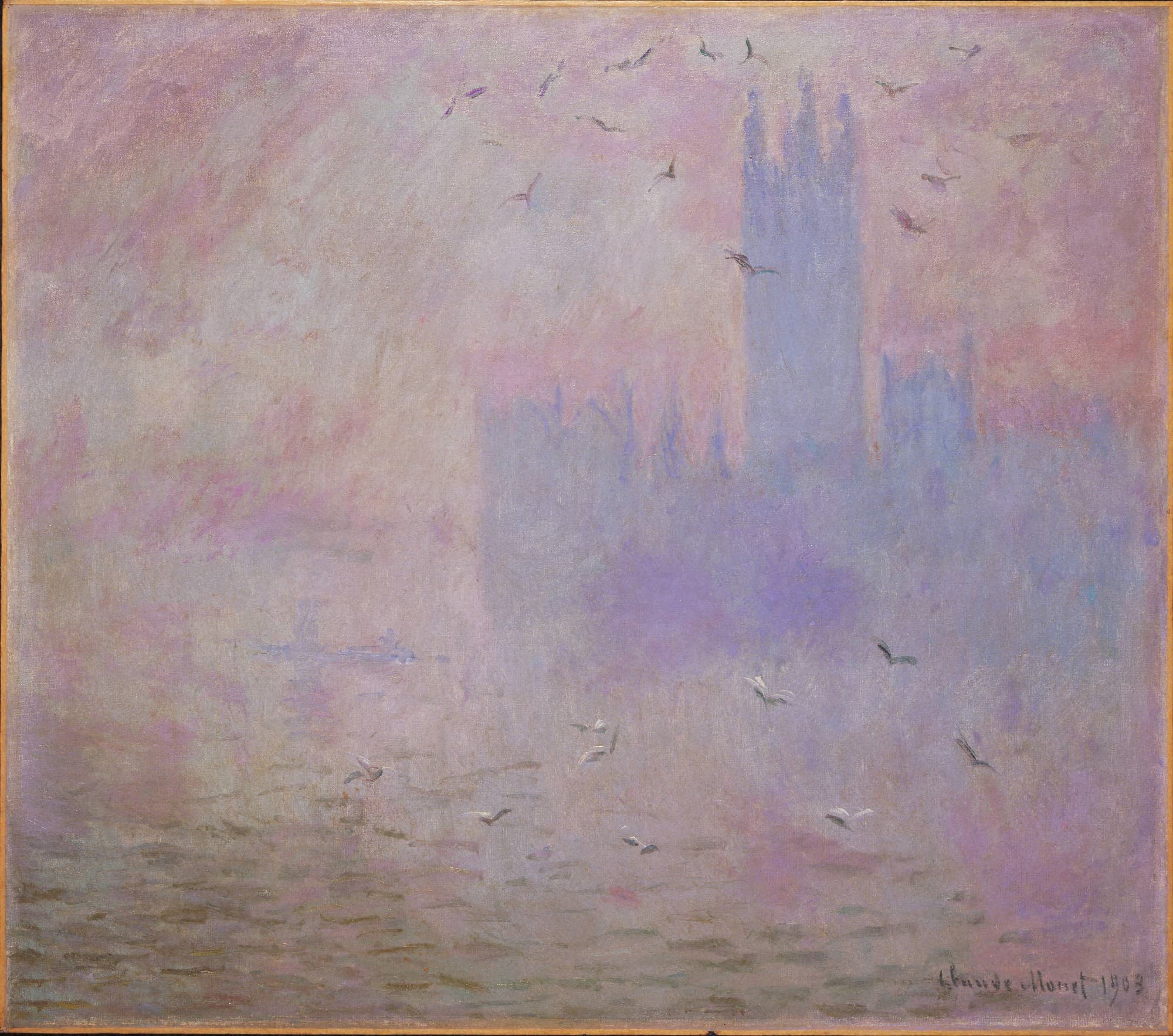
The Houses of Parliament, Seagulls
Claude Monet · 1903
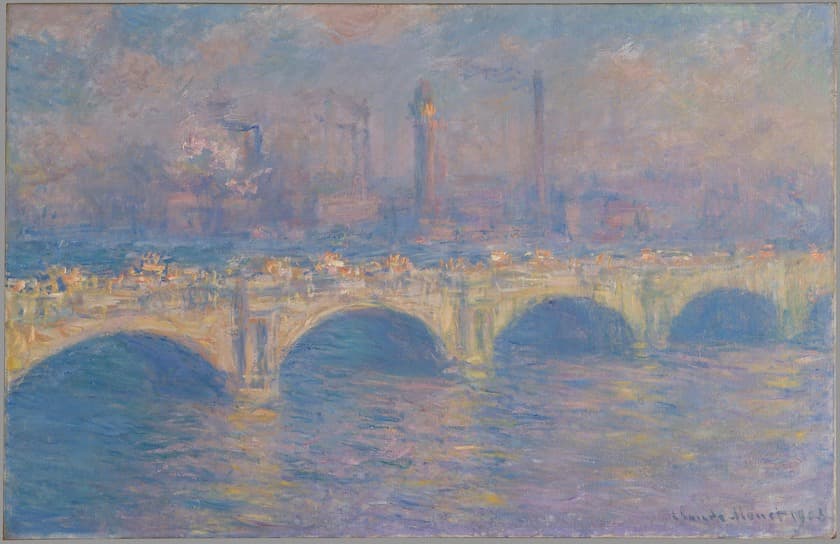
Waterloo Bridge, London
Claude Monet · 1903
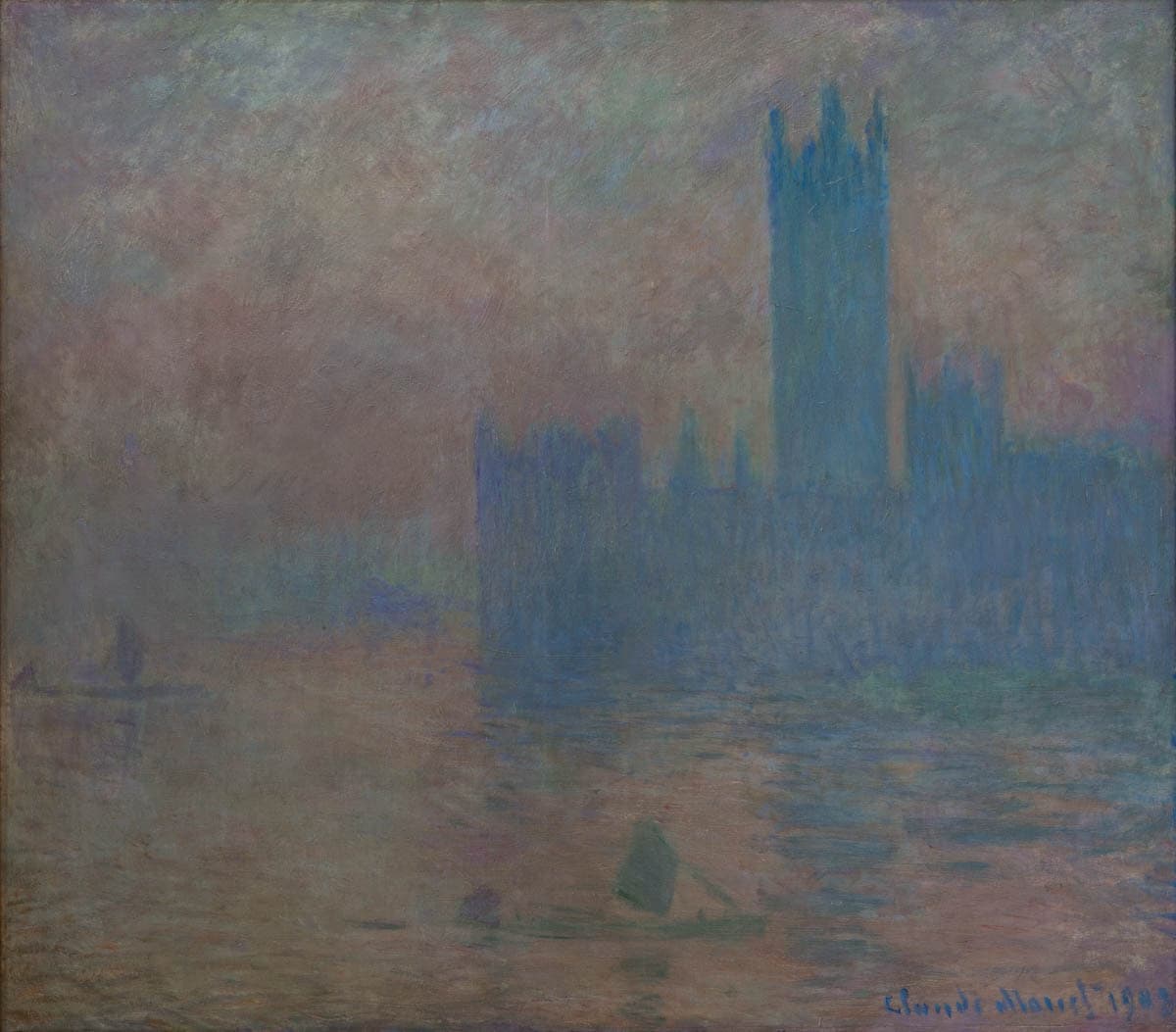
Le Parlement de Londres, effet de brouillard
Claude Monet · 1903
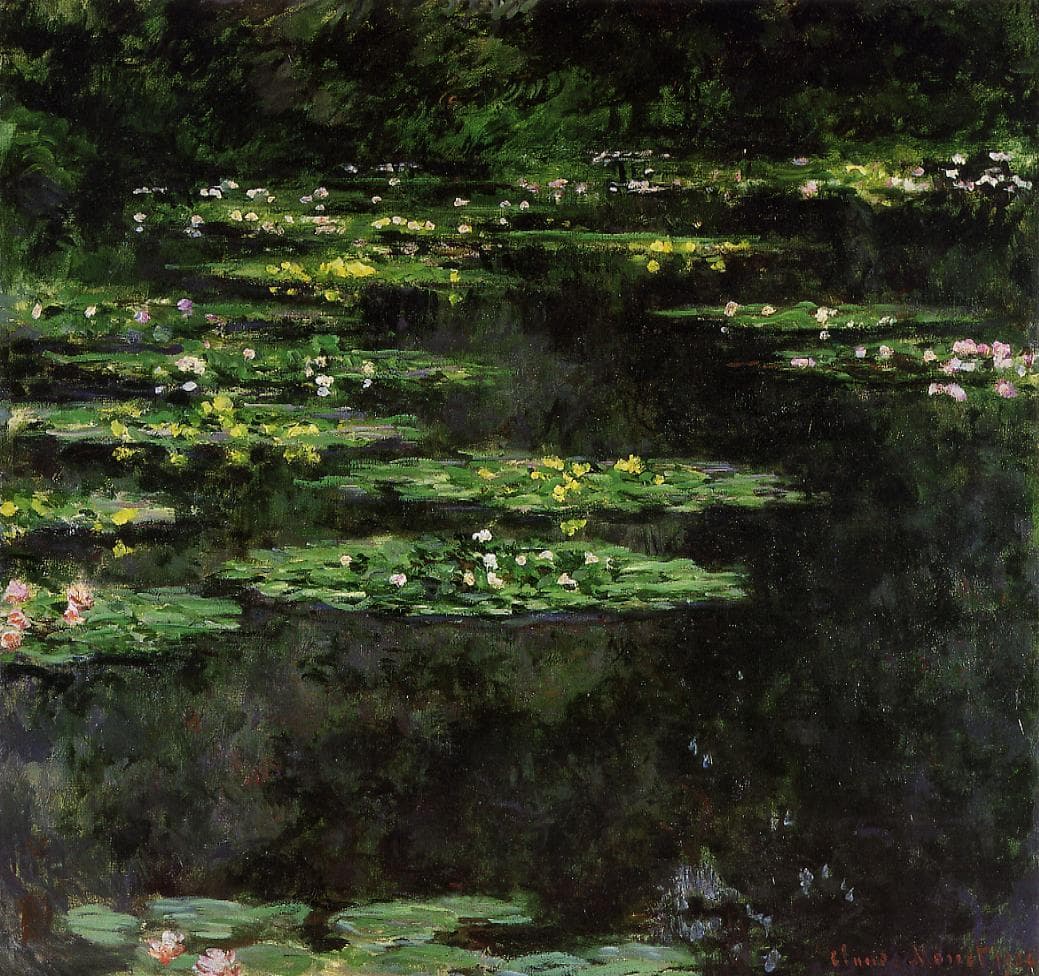
Water Lilies (1904, MuMa Le Havre)
Claude Monet · 1904
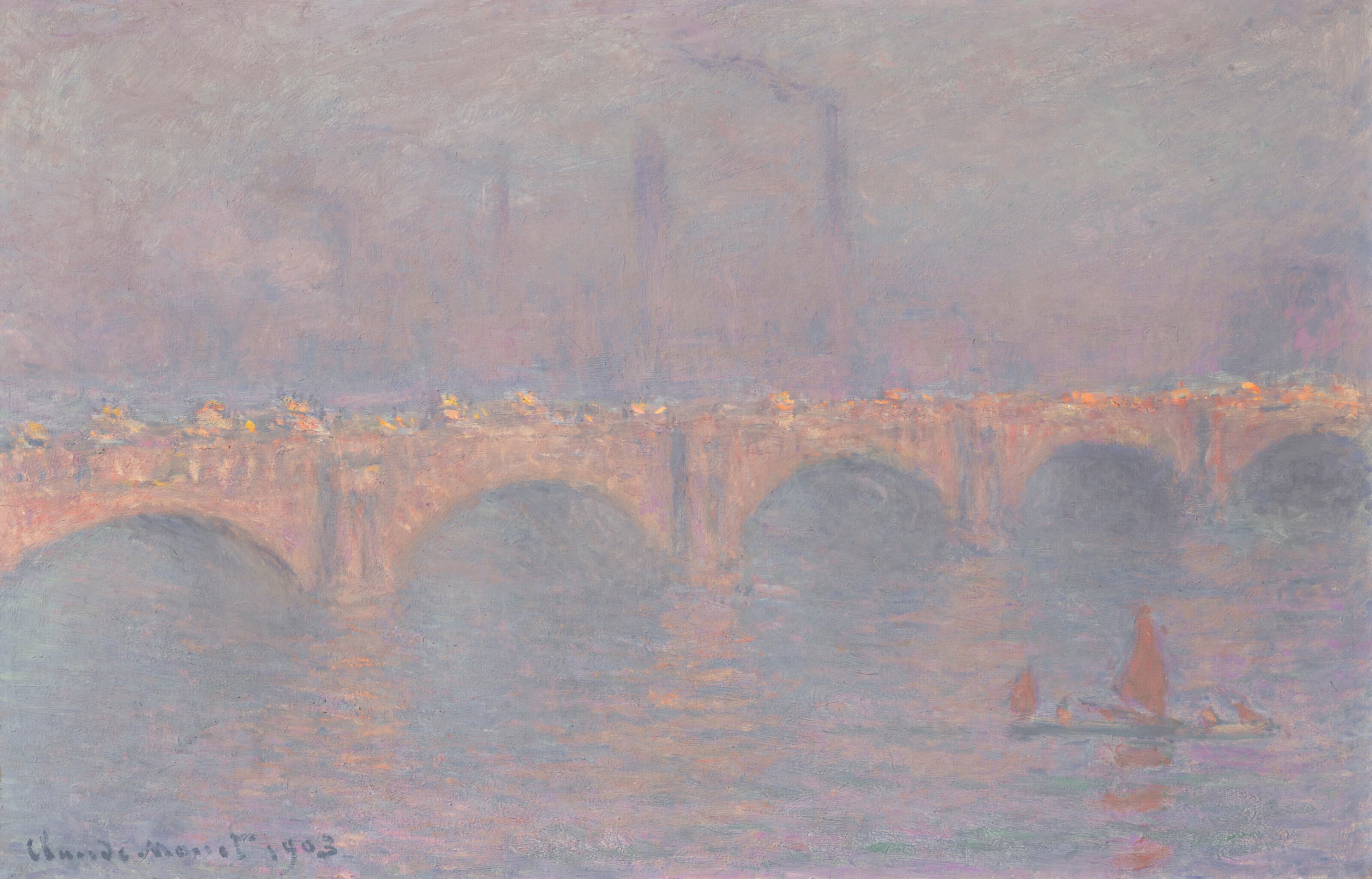
Waterloo Bridge, Hazy Sun
Claude Monet · 1903
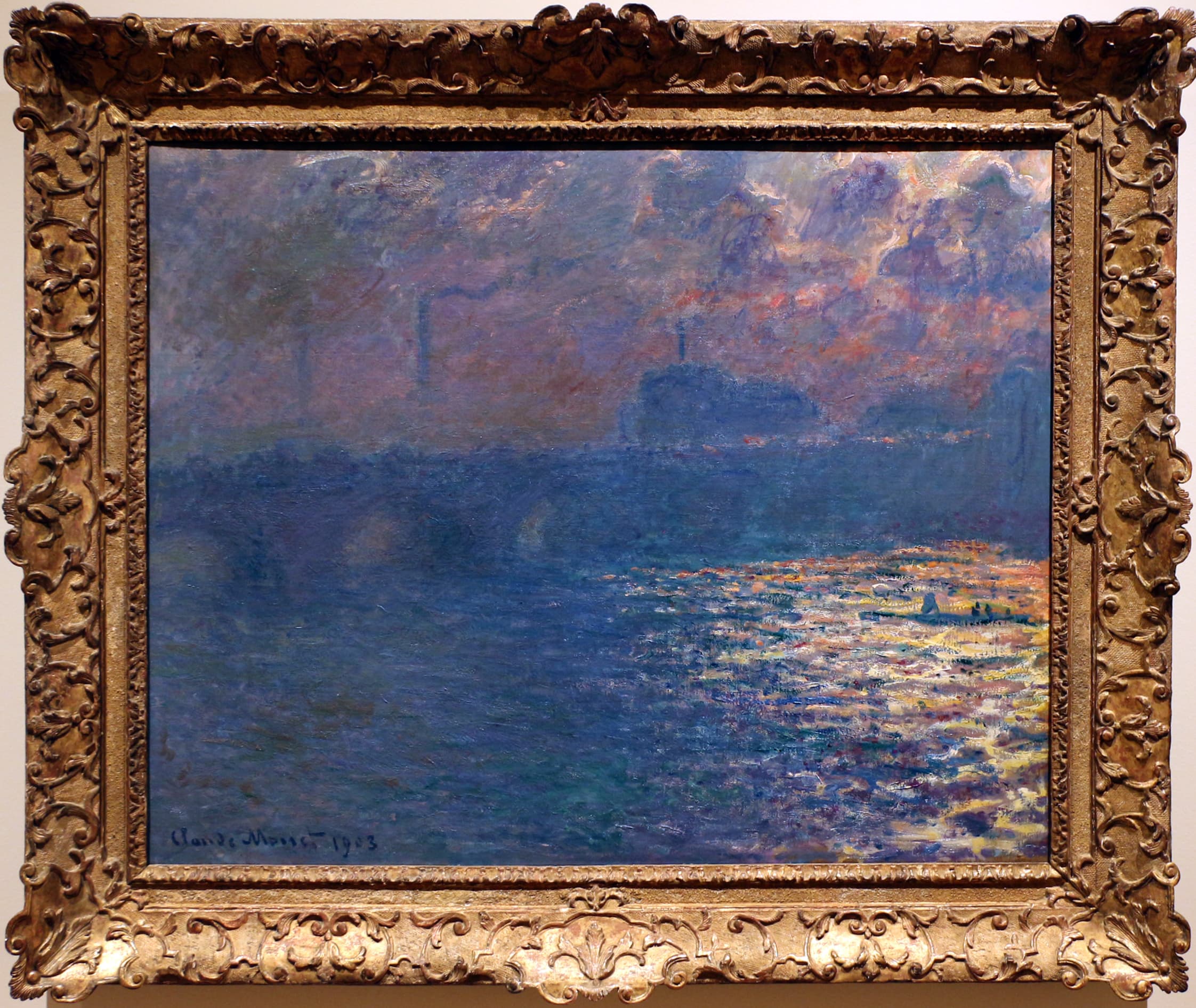
Waterloo Bridge, Sunlight Effect
Claude Monet · c. 1900 (dated 1903)
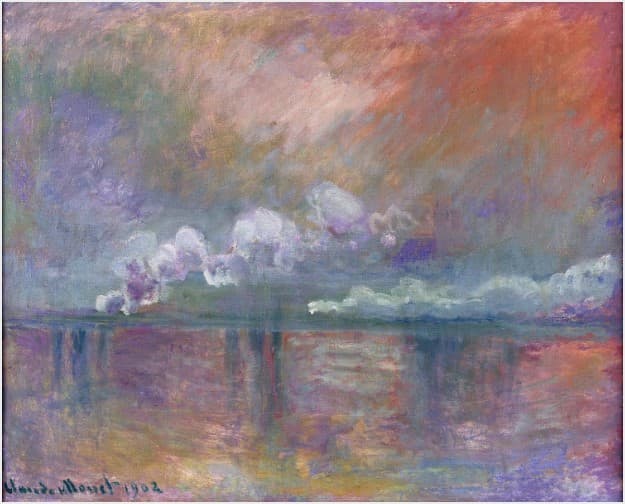
Charing Cross Bridge, Smoke in the Fog, Impression
Claude Monet · 1902
Also painted in 1903
The same year
Waterlilies (1903, Dayton Art Institute)
Claude Monet · 1903
The Houses of Parliament, Sunset
Claude Monet · 1903
Houses of Parliament, Sunset
Claude Monet · 1903
Charing Cross Bridge: Fog on the Thames
Claude Monet · 1903
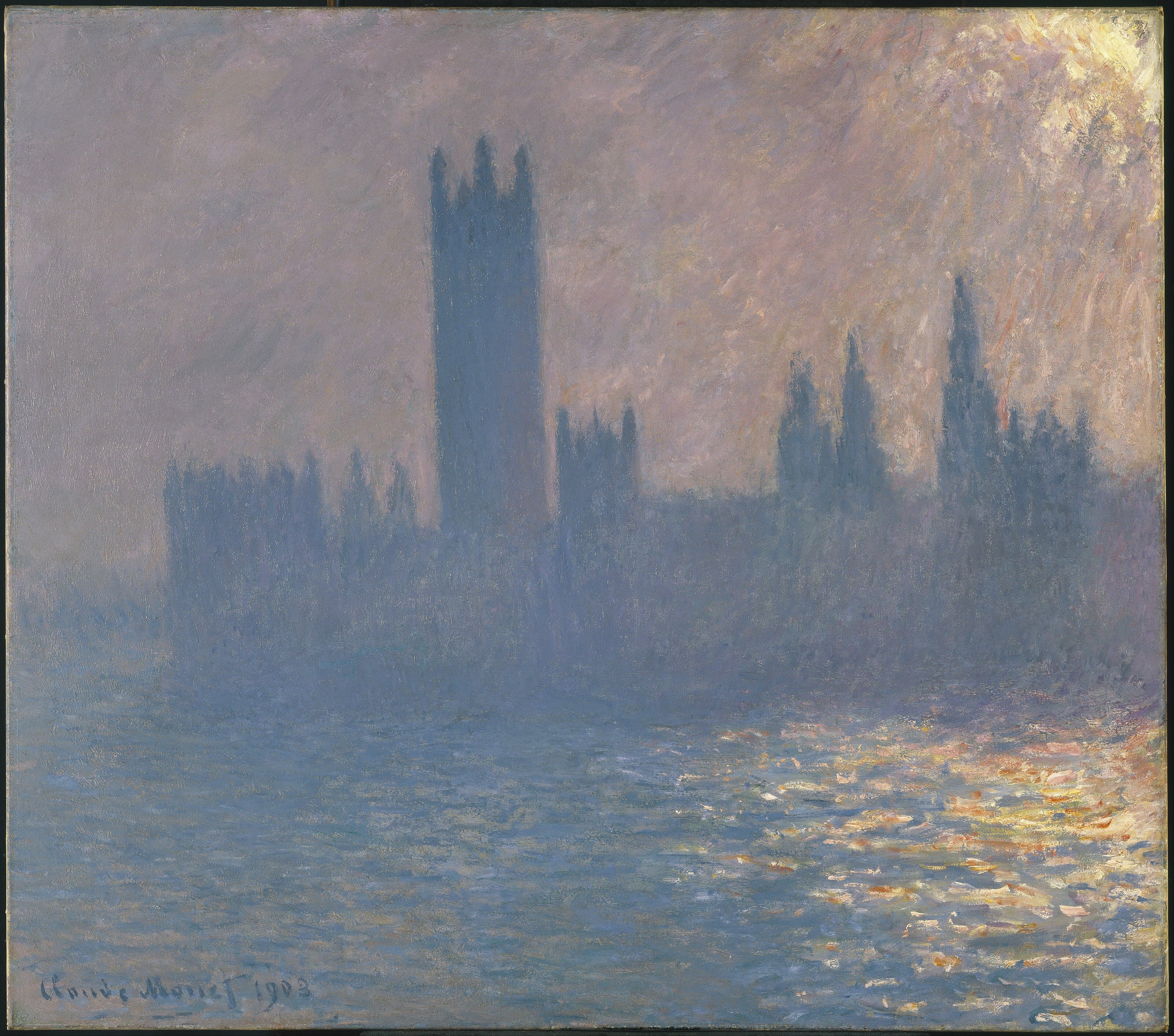
Houses of Parliament, Sunlight Effect
Claude Monet · 1903
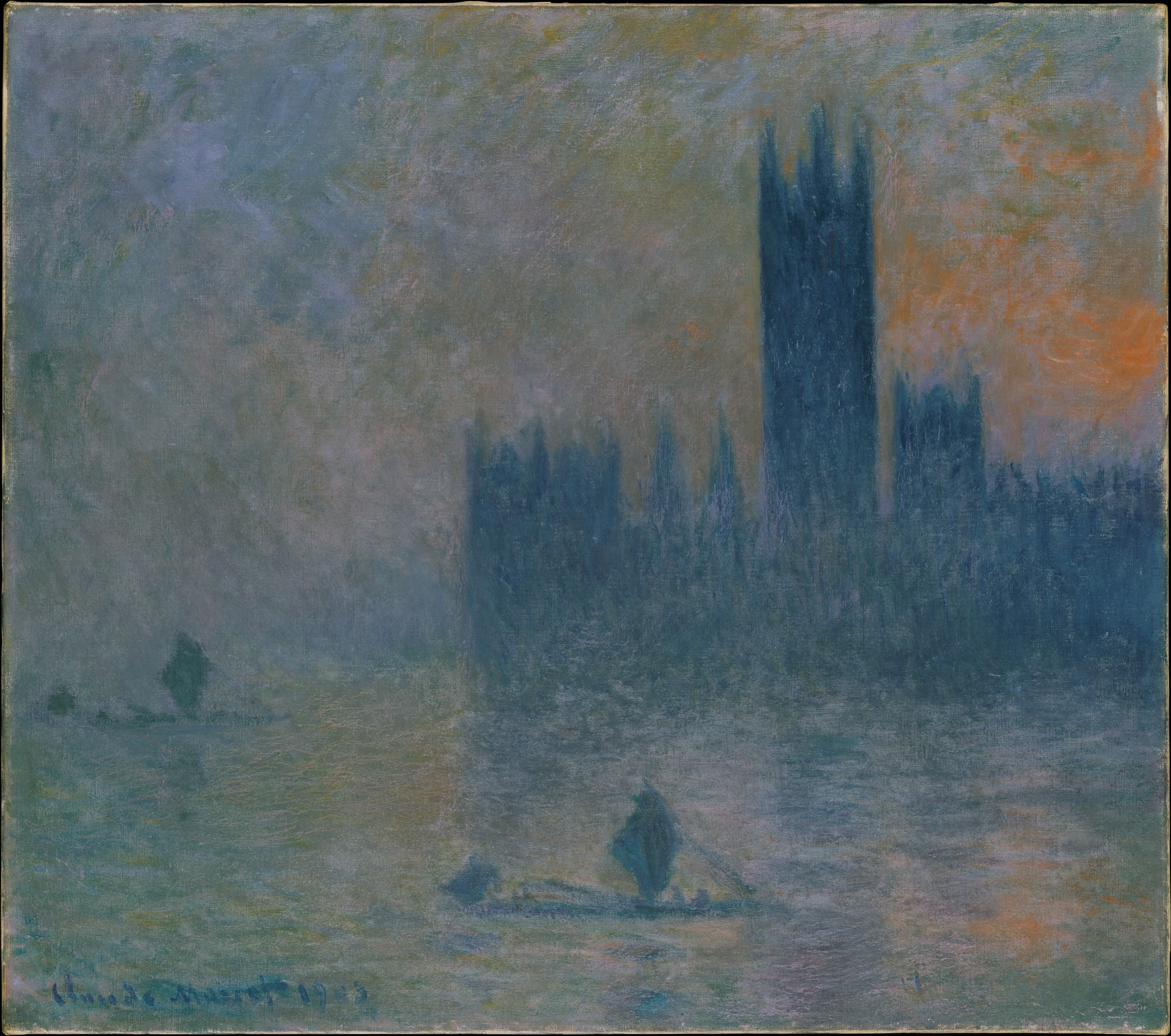
The Houses of Parliament (Effect of Fog)
Claude Monet · 1903–04
Houses of Parliament, Symphony in Blue
Claude Monet · 1903
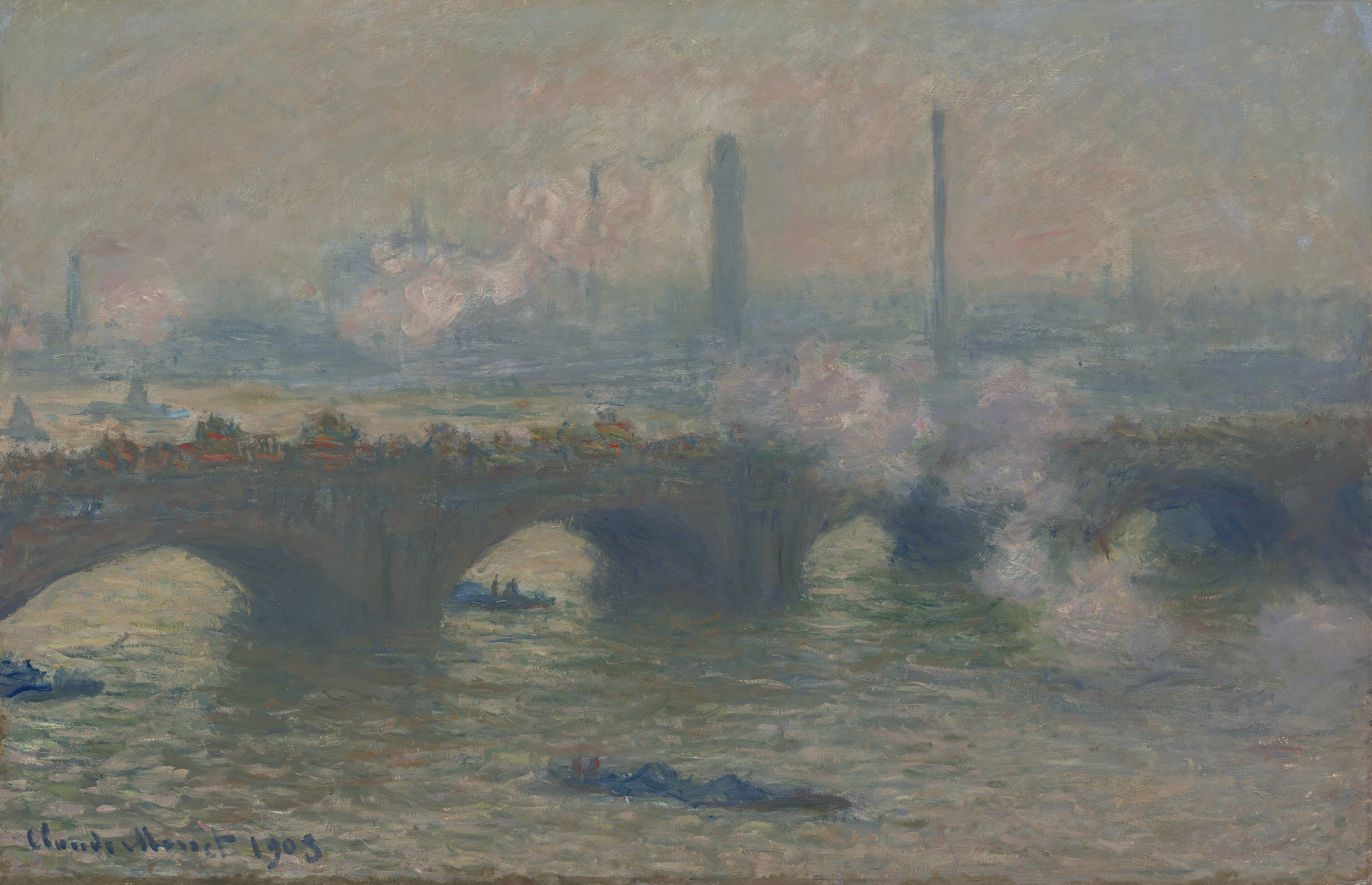
Waterloo Bridge, Gray Day
Claude Monet · 1903
Kindred works
You may also study
Waterloo Bridge, Sunlight Effect
Claude Monet · 1903
Waterloo Bridge: the Sun in a Fog
Claude Monet · 1903
Waterloo Bridge, Gray Day
Claude Monet · 1903
San Giorgio Maggiore
Claude Monet · 1908
Charing Cross Bridge (Chartwell)
Claude Monet · 1899–1902 (dated 1902)
Waterloo Bridge, Overcast Weather
Claude Monet · 1900
The Grand Canal in Venice
Claude Monet · 1908
The Doge's Palace Seen from San Giorgio Maggiore (Zürich)
Claude Monet · 1908