Image: Foundation E.G. Bührle Collection, on loan to Kunsthaus Zürich · Public domain · via Wikimedia Commons
Waterloo Bridge, London, Sun Effect
Claude Monet, 1899–1901
Waterloo Bridge, London, Sun Effect is a Claude Monet canvas of 1899–1901 in which the bridge turns almost white in pale sunlit haze, a single sailing barge in the foreground. It belongs to the Bührle Foundation and hangs at the Kunsthaus Zürich.
- Artist
- Claude Monet
- Date
- 1899–1901
- Medium
- Oil on canvas
- Dimensions
- 65 × 100 cm
- Collection
- Kunsthaus Zürich (Foundation E.G. Bührle Collection), Zürich, Switzerland
- Movement
- Impressionism
- Catalogue
- Wildenstein 1593
- The City
- Water & Sea
Waterloo Bridge, London, Sun Effect (Waterloo Bridge, effet de soleil) is one of Claude Monet's views of the Thames from the Savoy Hotel, dated by its owner 1899/1901. It measures 65 × 100 cm, is signed lower left, and is number 1593 in the Wildenstein catalogue raisonné. It belongs to the Foundation E.G. Bührle Collection, whose paintings are on long-term loan to the Kunsthaus Zürich.
What you're looking at
This is the palest of the Waterloo Bridge paintings. Sky, bridge and river are all variations of one milky light, in cream, pale green, pearl grey and lilac. The bridge crosses the canvas in a long sequence of arches, painted not as dark masses but as faint loops of white and pale green, so the structure seems to be made of light. Along its top runs a line of small touches in yellow, pink and pale green, the traffic of carts and omnibuses caught in the sun.
The far bank and its chimneys, so prominent in the grey-weather versions, have vanished in the haze. The only solid shape is in the lower right: a Thames sailing barge with a rust-orange sail, moving downstream, and a second, smaller sail further off. Their warm color is the one strong accent in the picture.
The effect is of sun high behind thin fog, flooding the whole scene with diffused brightness rather than casting shadows. It is the opposite of the dark, sooty London of the gray-day canvases.
Where and when it was painted
Monet worked in London in the autumn of 1899 and in the late winter and spring of 1900 and 1901, painting Waterloo Bridge in the mornings from his room at the Savoy and moving to Charing Cross Bridge and the Houses of Parliament later in the day. He brought the canvases back to Giverny and reworked them together for years, exhibiting thirty-seven London views at Durand-Ruel in Paris in 1904.
How it was painted
The paint is applied in small, dry, interlaced strokes over a pale ground, with little contrast in value. Monet relies on slight differences in temperature, cool green against warm cream, to separate bridge from sky and water. The barge's sail is the thickest paint on the canvas. The handling suggests careful studio reworking: the surface is even and dense, without the loose, unfinished passages of the smaller canvases.
How this version differs
In the Waterloo Bridge series, the closest relatives are the National Museum of Western Art's Waterloo Bridge in London of 1902, similarly pale and with a single barge, and the Paul Allen Waterloo Bridge, Hazy Sun of 1903, where the light turns warmer and pinker. The Art Institute of Chicago's Waterloo Bridge, Sunlight Effect keeps the chimneys visible in a lilac haze. This version is the most bleached of all.
A detail to look for
Look at the lower left, beneath the first arch: a faint, horizontal smudge of darker green, almost lost in the haze. It is a second barge or a lighter, moored near the north bank, and it balances the bright sail at the lower right. Without it, the composition would tip to one side. Monet often placed such barely visible objects at the edges of his London pictures, so faint that they register only after a long look. They work like the soft notes in a piece of music, structuring the picture without breaking the mood of fog and light. In the gallery, they appear only when you stand close.
Ownership and where to see it
Durand-Ruel and Bernheim-Jeune bought it from Monet in 1917. It passed through the Geneva collector Franz Burgers and the Lucerne dealer Theodor Fischer before the Zürich gallery Aktuaryus sold it to Emil Bührle in 1942. The Bührle collection is now shown at the Kunsthaus Zürich in its Chipperfield extension. For Monet's other London subjects see Monet in London; for Claude Monet in collections worldwide, where to see Monet's paintings.
Questions & answers
Where is Waterloo Bridge, London, Sun Effect?
It hangs at the Kunsthaus Zürich in Switzerland. It belongs to the Foundation E.G. Bührle Collection, which lends its paintings to the Kunsthaus long term. Emil Bührle bought it in 1942.
When was it painted?
The Bührle Foundation dates it 1899/1901. Monet painted Waterloo Bridge from the Savoy Hotel during his London stays of 1899, 1900 and 1901, then reworked the canvases in his studio at Giverny.
What does the painting show?
Waterloo Bridge seen through bright, milky haze, its arches rendered in pale whites and greens, with small dabs of color for the traffic on top. A barge with a rust-colored sail moves across the lower right.
How does it differ from other Waterloo Bridge paintings?
It is one of the palest of the series. The chimneys of the south bank, visible in many versions, have disappeared, and the whole scene is one tone of sunlit fog, broken only by the barge's sail.
More by the artist
Claude Monet
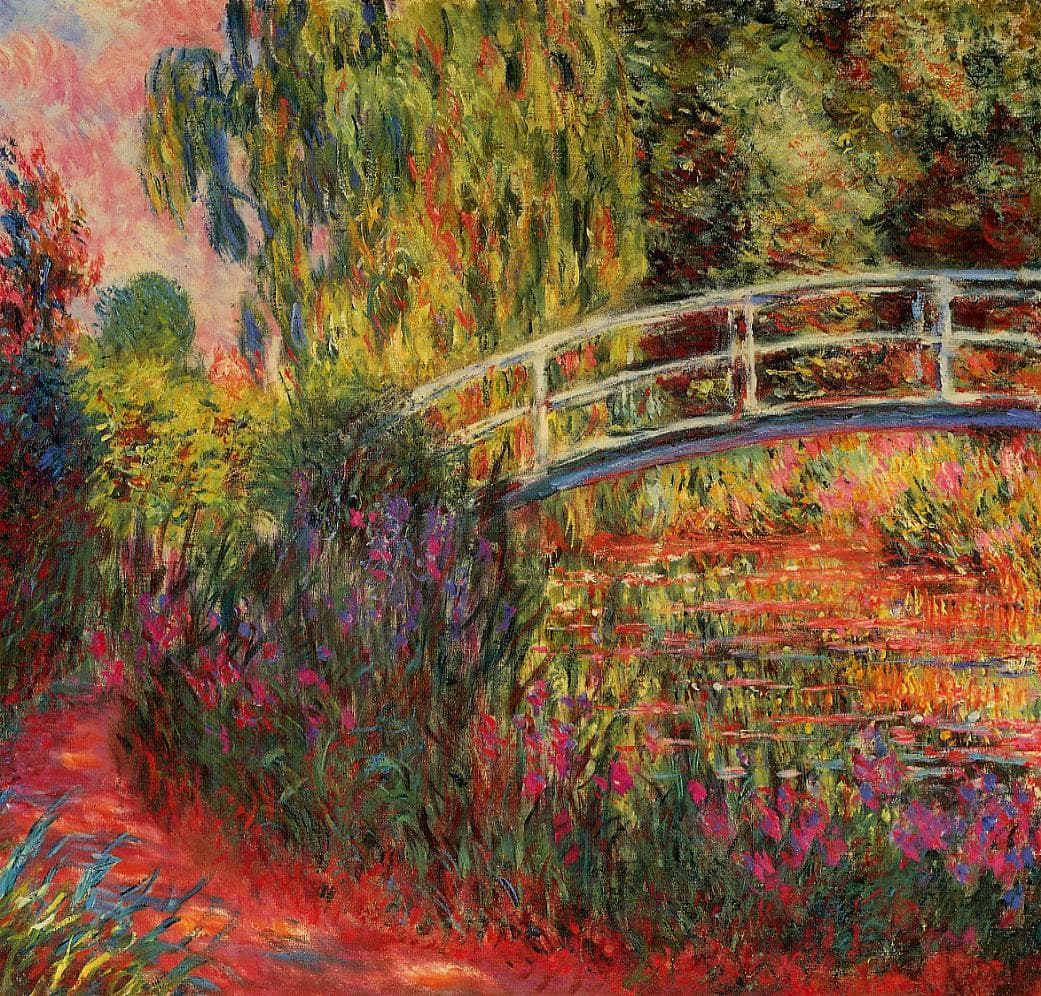
The Japanese Bridge or The Lily Pond
Claude Monet · 1900
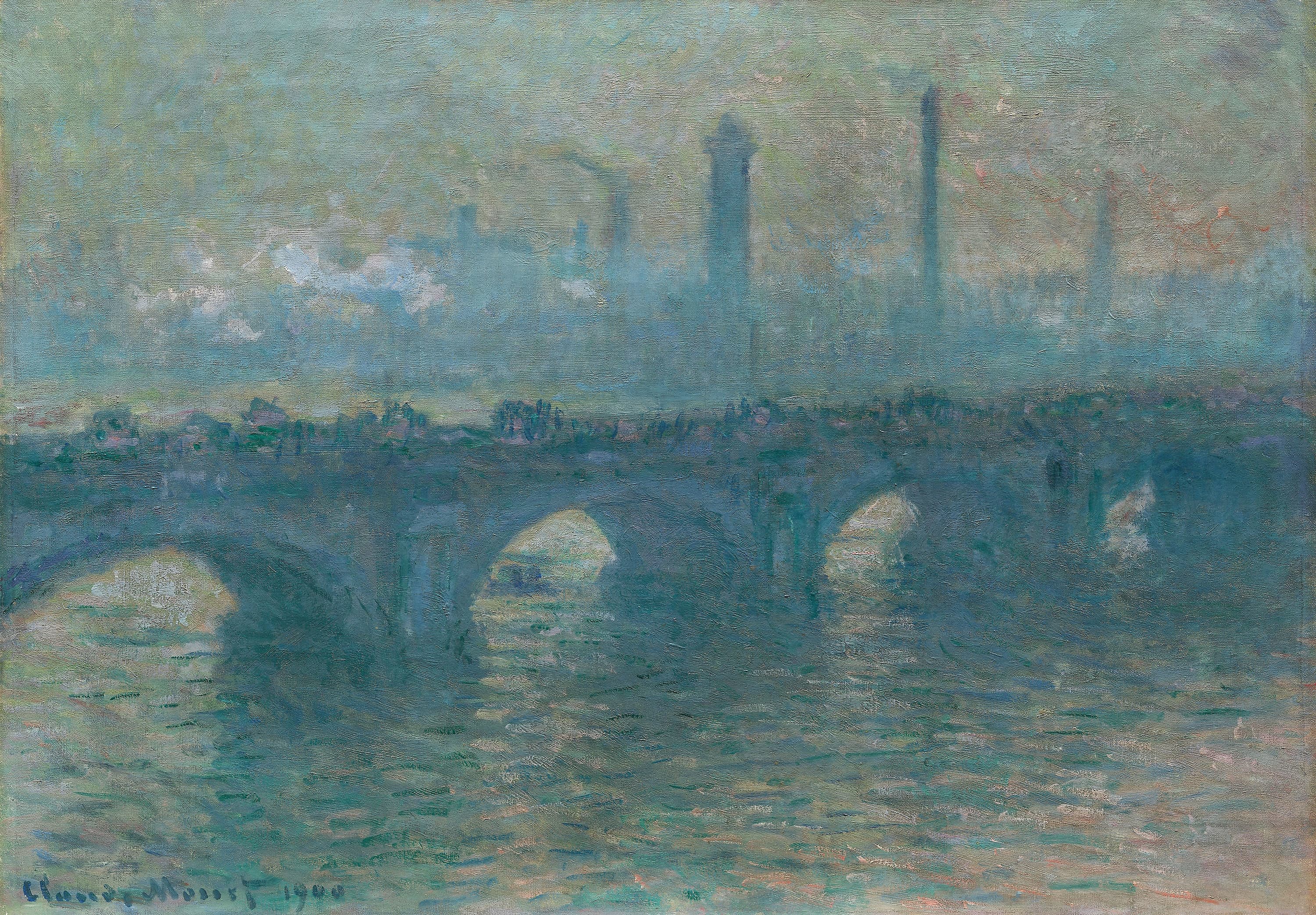
Waterloo Bridge, Gray Weather
Claude Monet · 1900
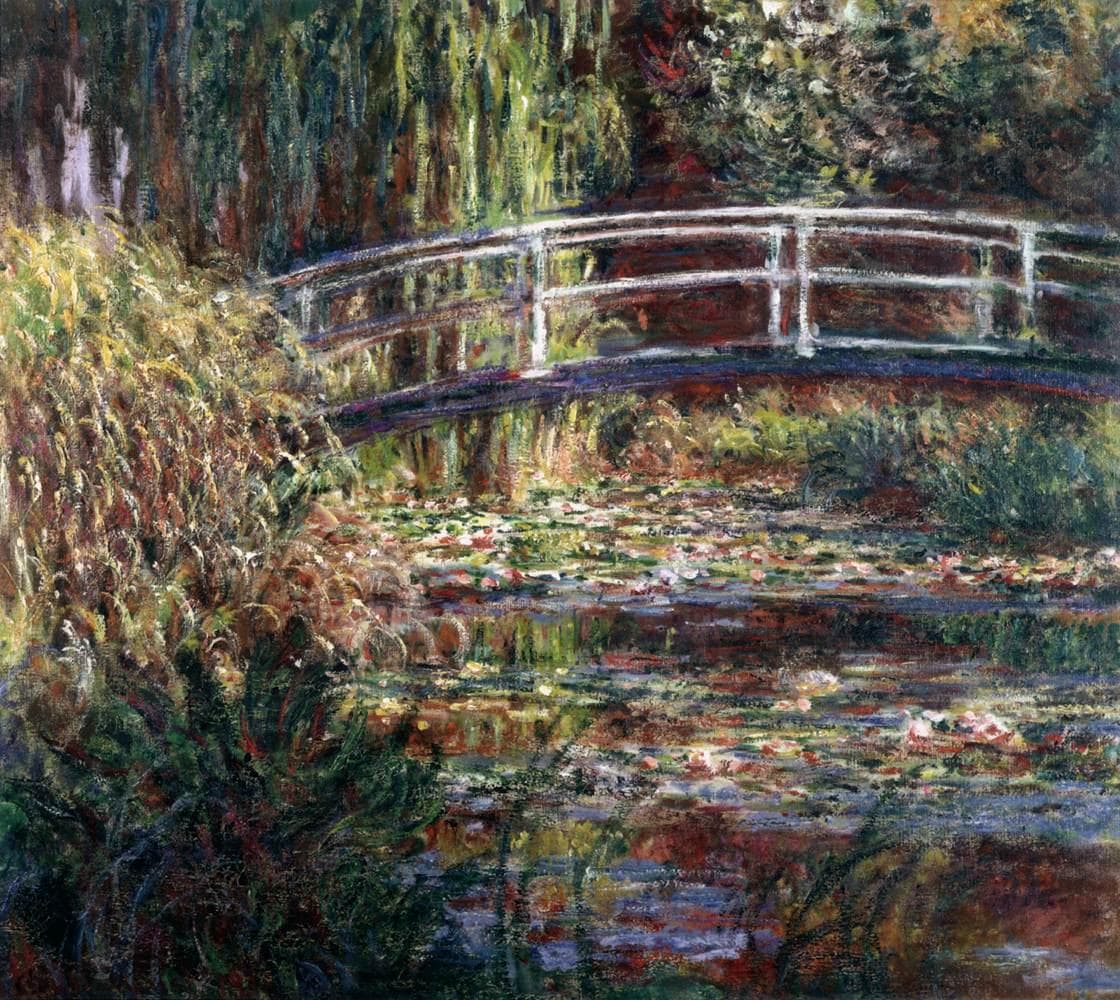
The Water Lily Pond, Harmony in Rose
Claude Monet · 1900
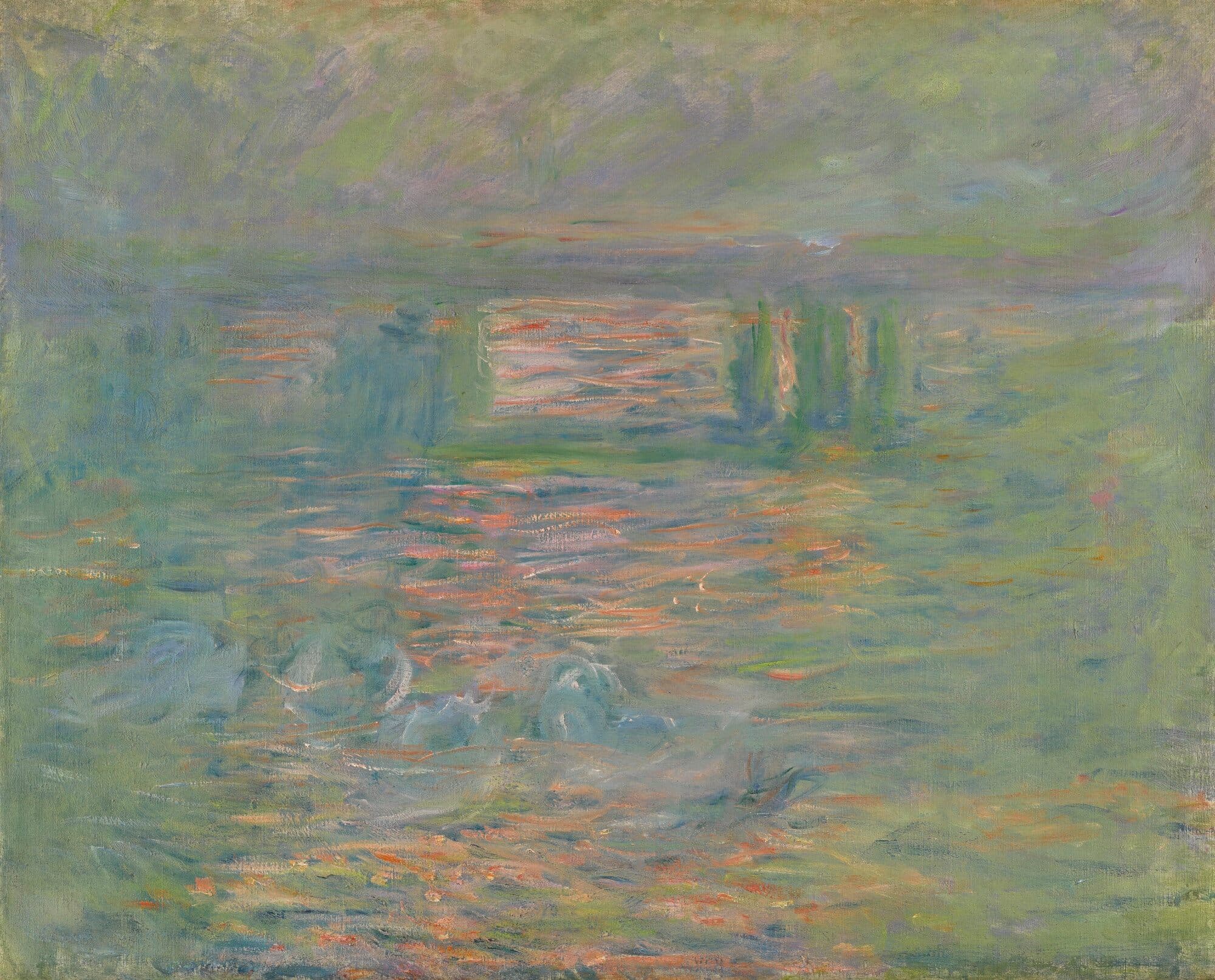
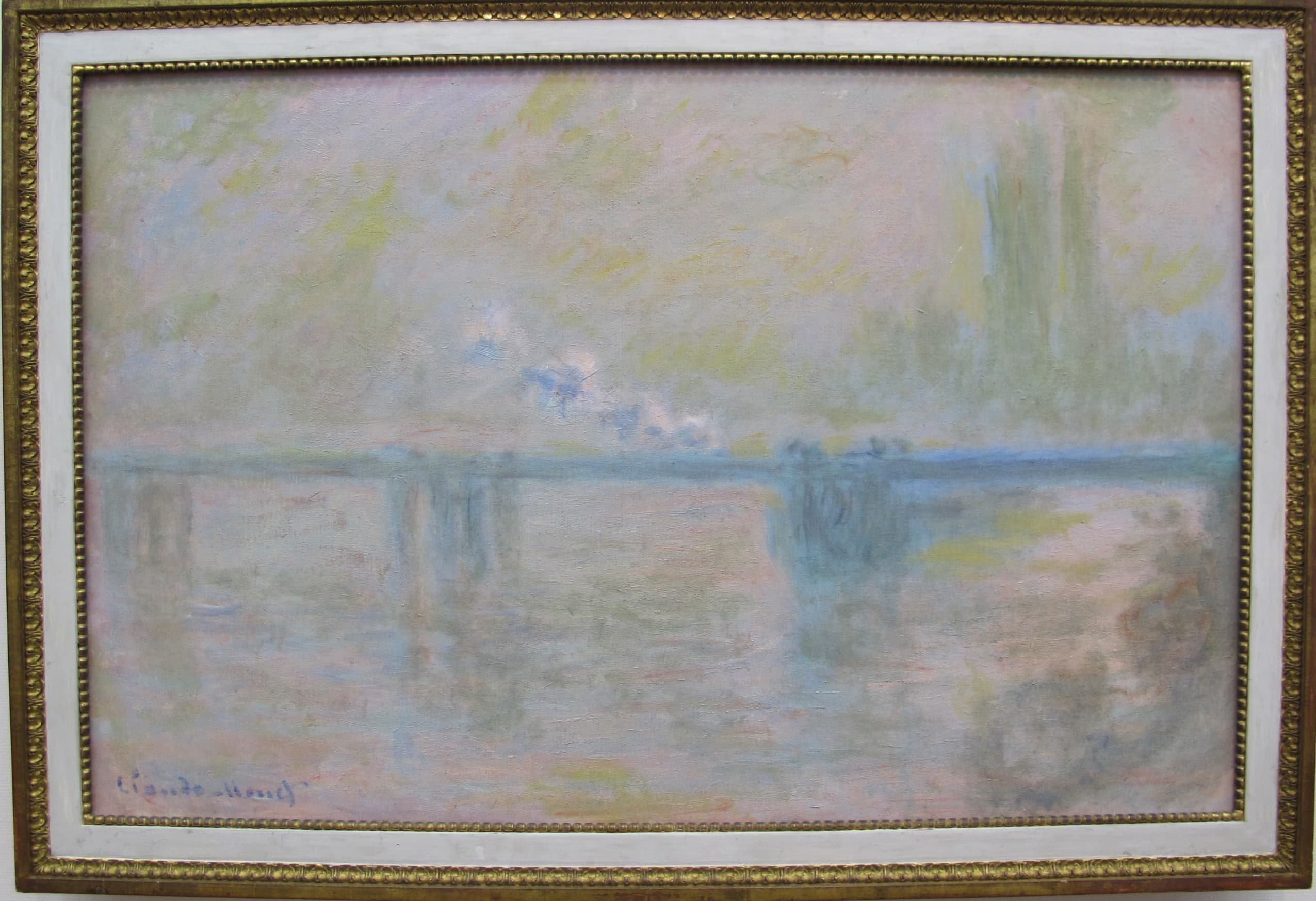
Charing Cross Bridge (private collection, c. 1900)
Claude Monet · c. 1899–1901
Charing Cross Bridge (Overcast Day)
Claude Monet · 1900
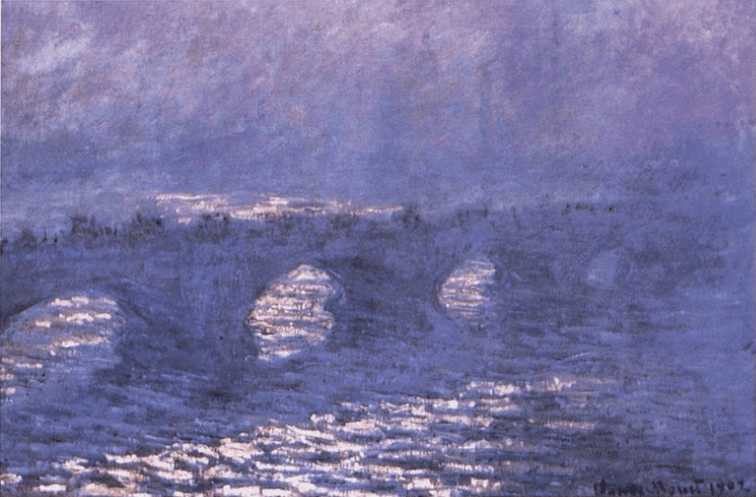
Waterloo Bridge, Effect of Sun in the Mist
Claude Monet · c. 1900–03
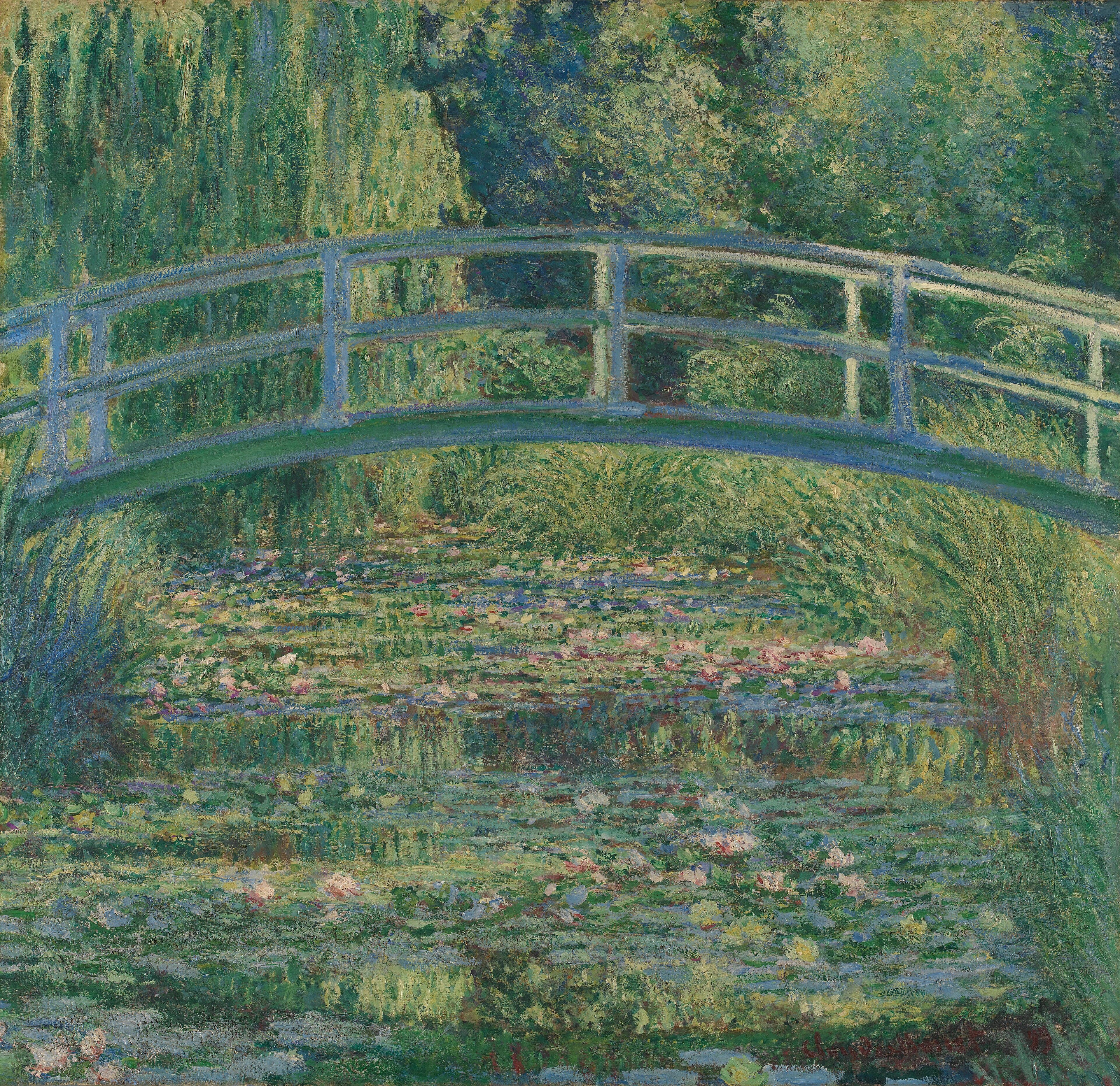
The Water-Lily Pond (National Gallery, London)
Claude Monet · 1899
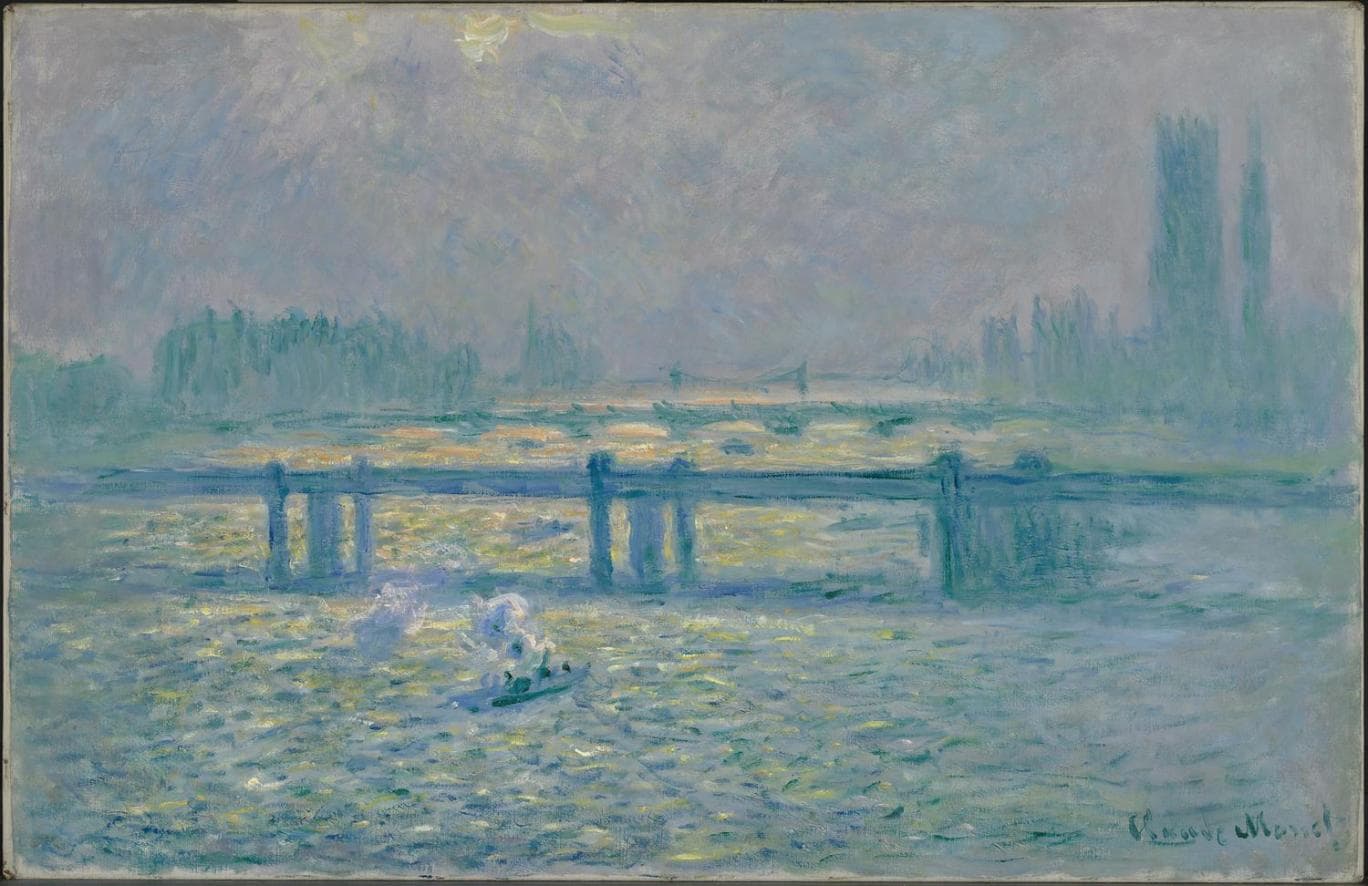
Charing Cross Bridge, Reflections on the Thames
Claude Monet · c. 1900
Also painted in 1900
The same year
Houses of Parliament, London
Claude Monet · 1900–01
Houses of Parliament, Symphony in Rose
Claude Monet · 1900
Waterloo Bridge (Santa Barbara Museum of Art)
Claude Monet · 1900
Waterloo Bridge, Overcast Weather
Claude Monet · 1900
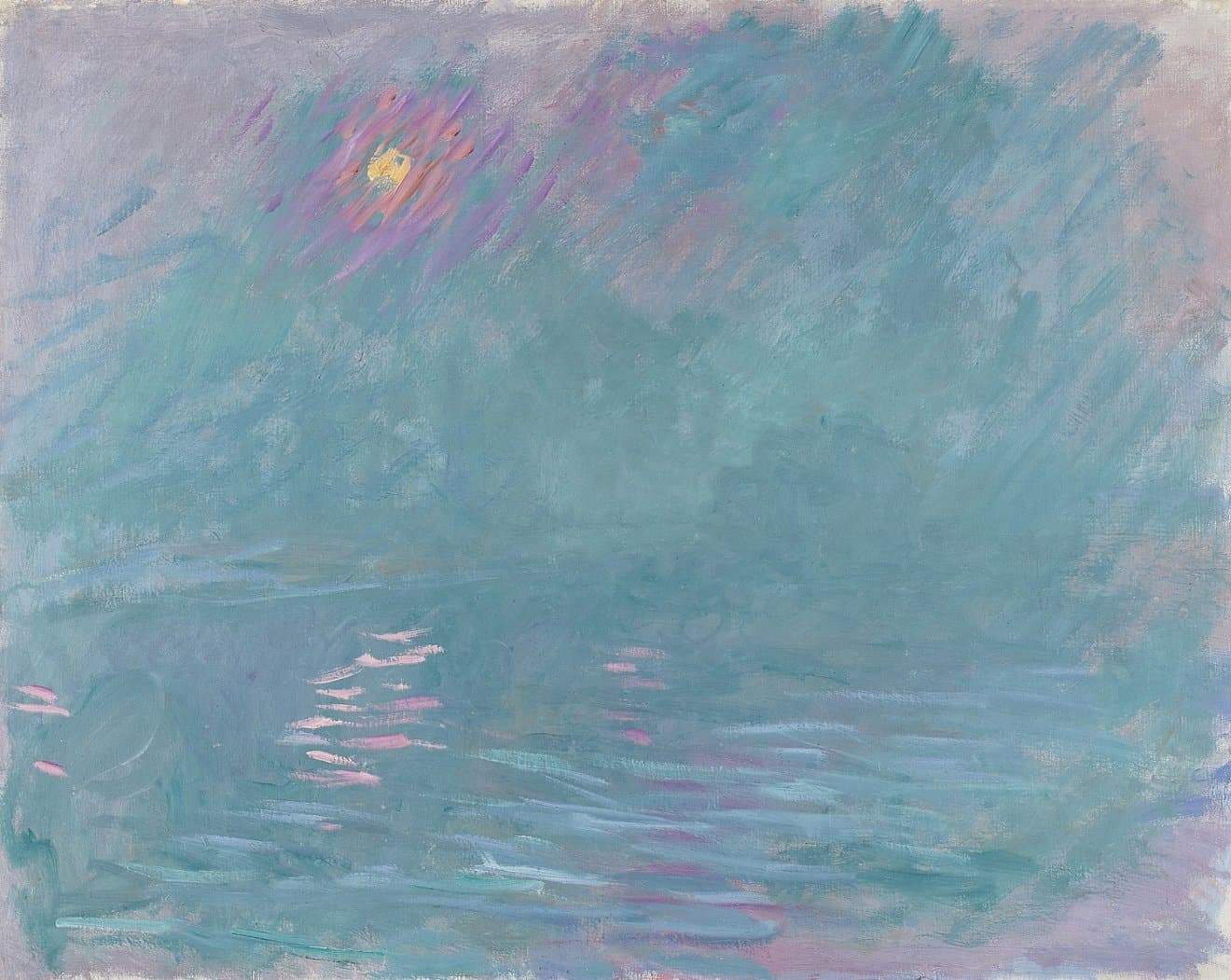
Waterloo Bridge (Kerry Stokes Collection)
Claude Monet · 1899–1901
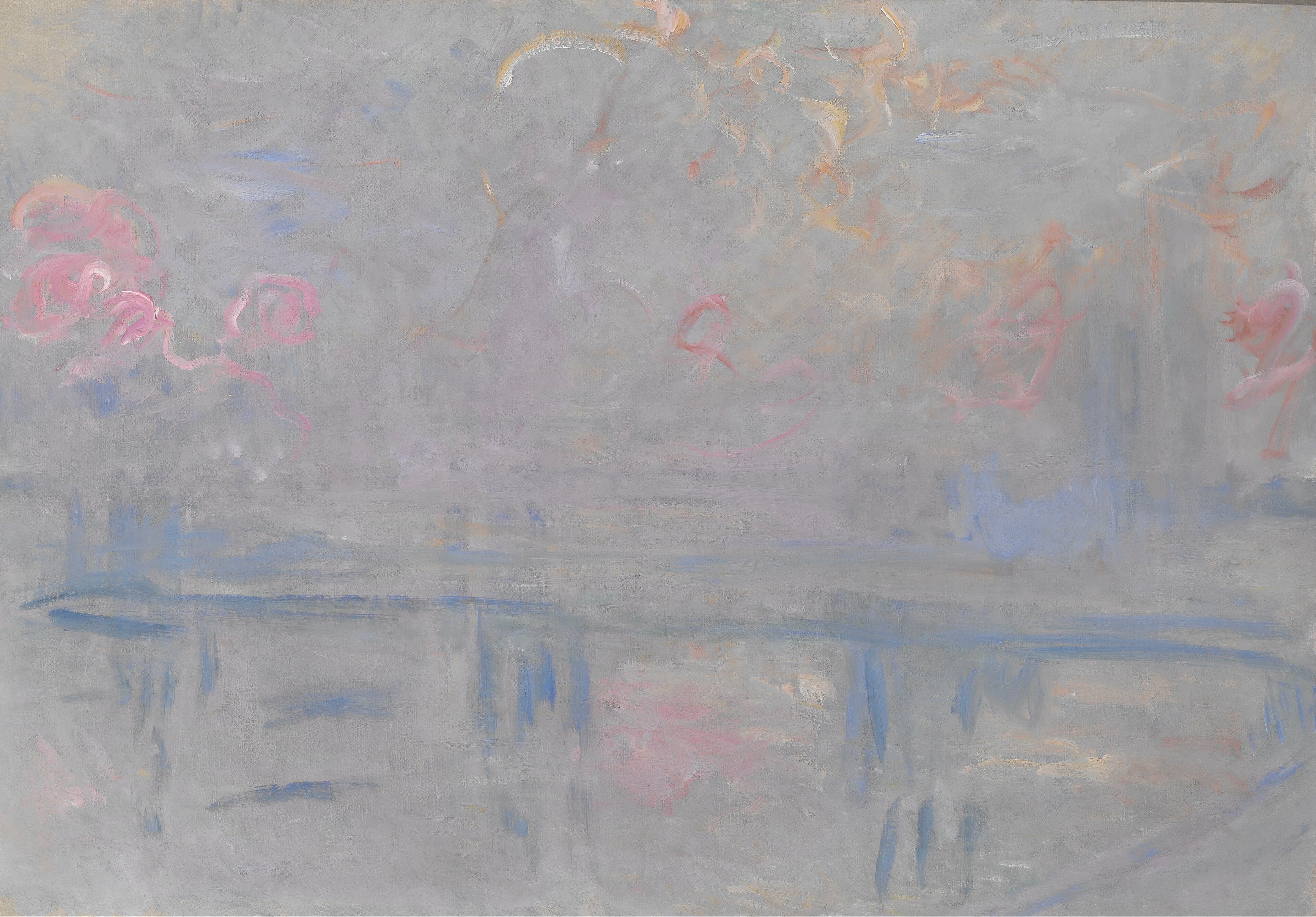
Charing Cross Bridge (Indianapolis)
Claude Monet · c. 1900
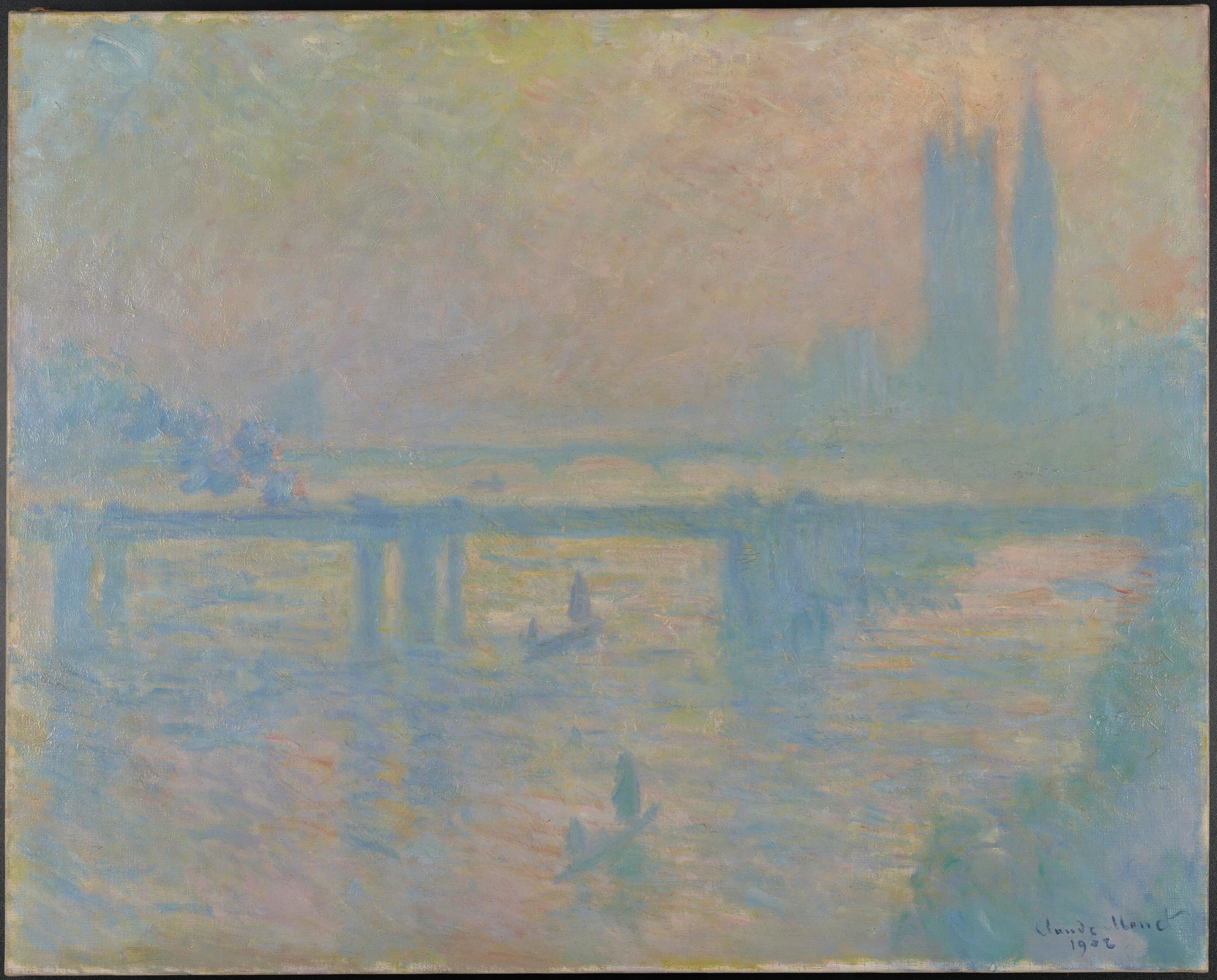
Charing Cross Bridge (Cardiff)
Claude Monet · c. 1900 (dated 1902)
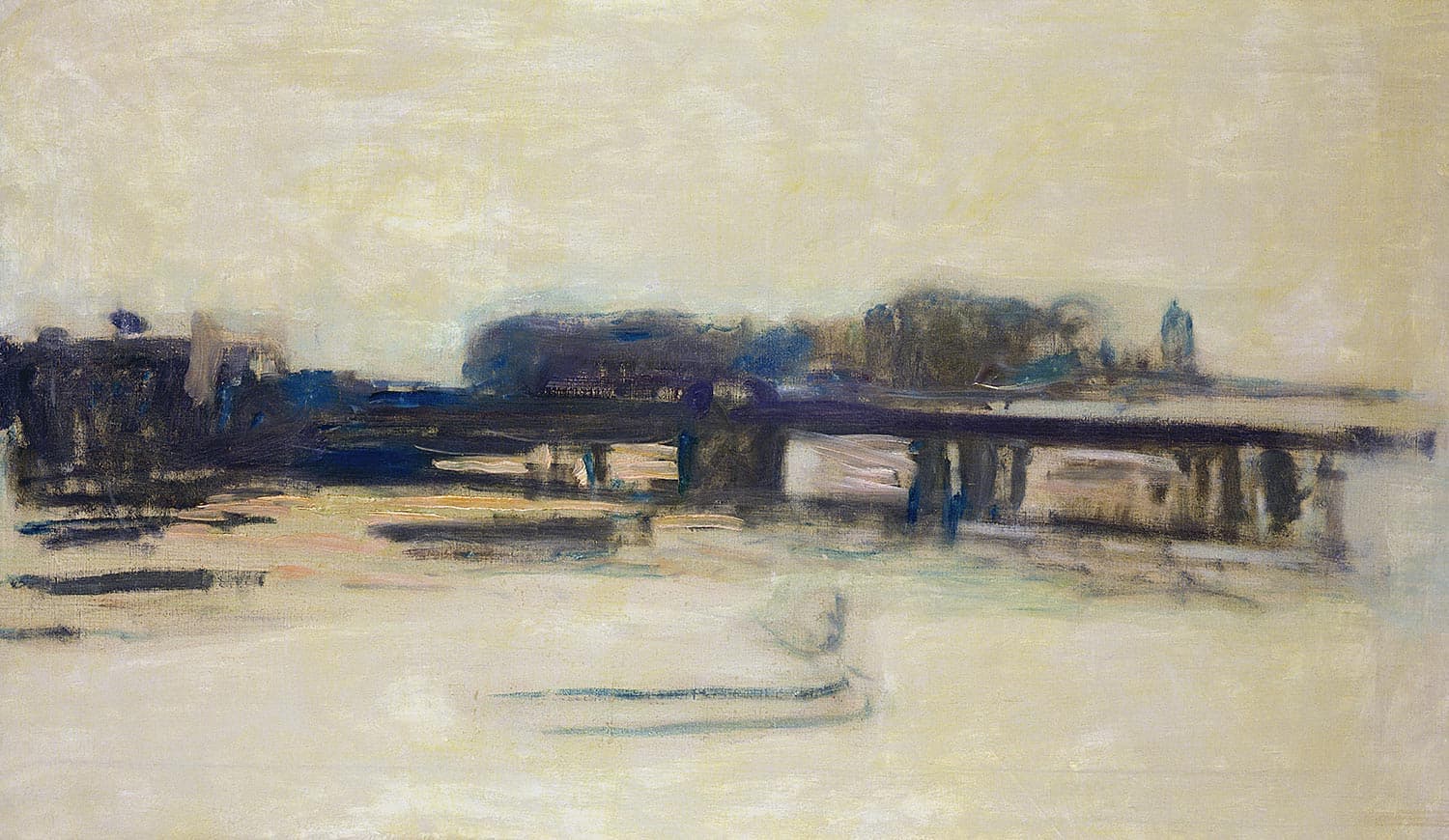
Charing Cross Bridge, London (Marmottan study)
Claude Monet · c. 1899–1901
Kindred works
You may also study
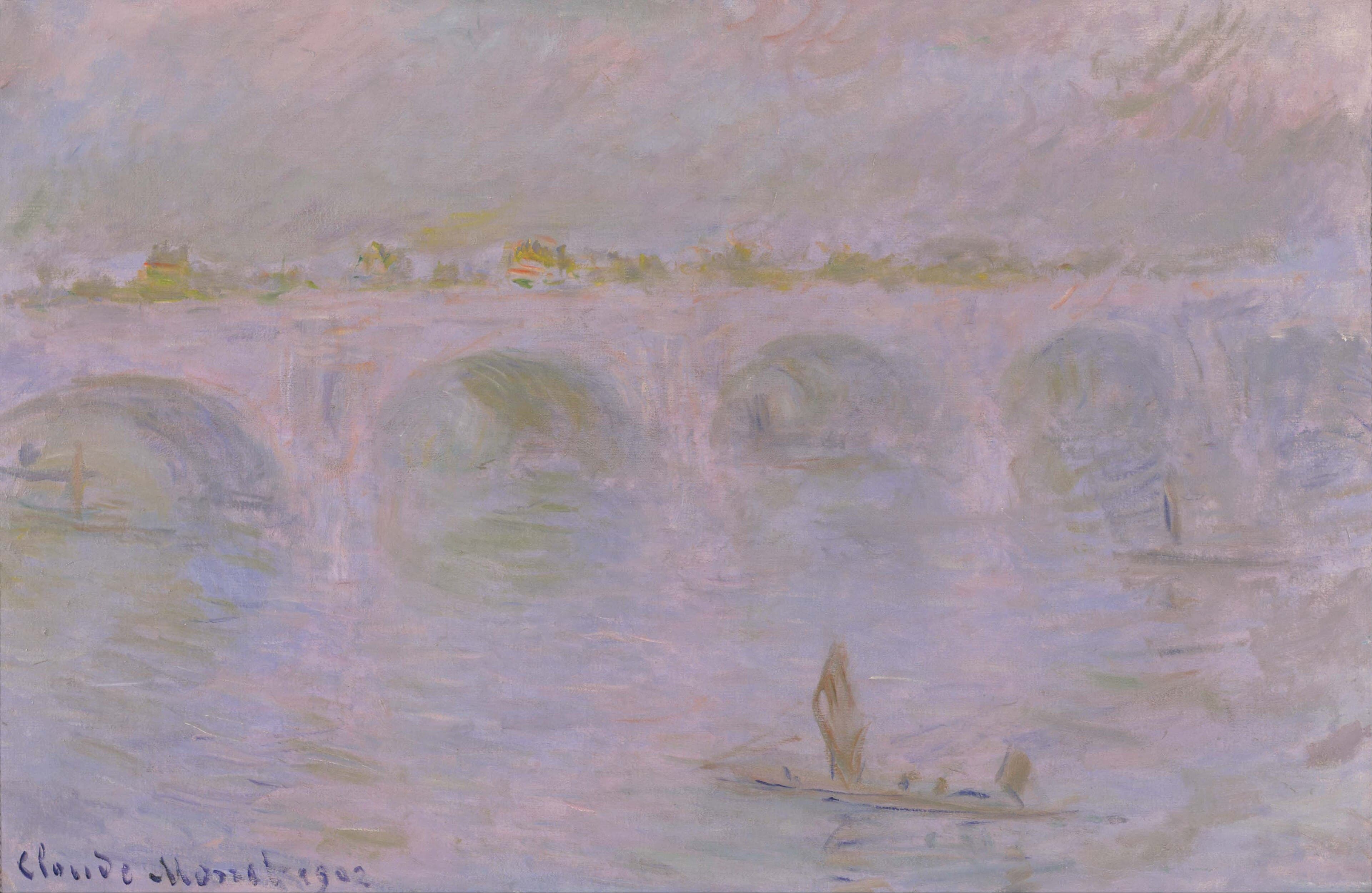
Waterloo Bridge in London
Claude Monet · 1902
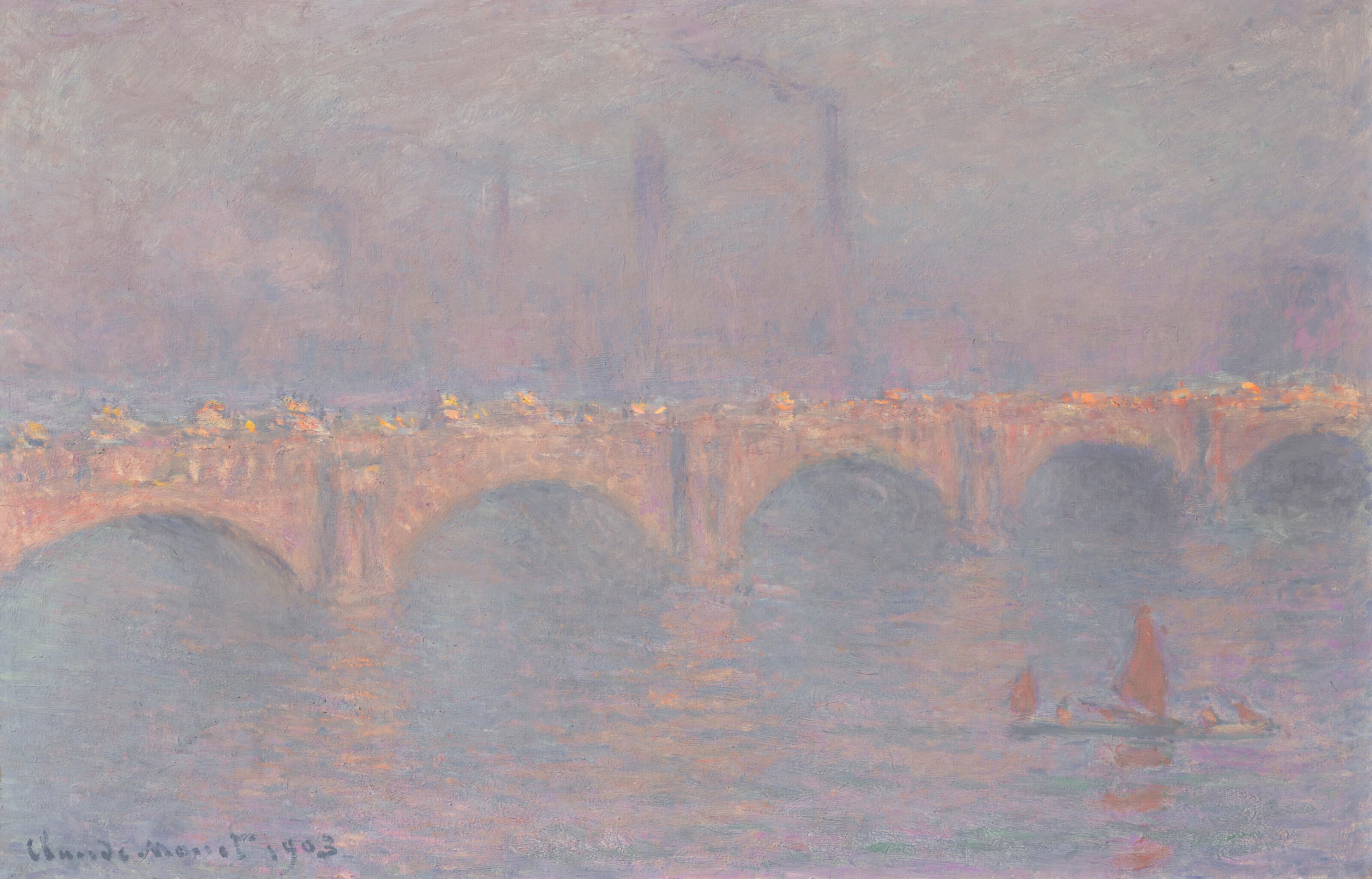
Waterloo Bridge, Hazy Sun
Claude Monet · 1903
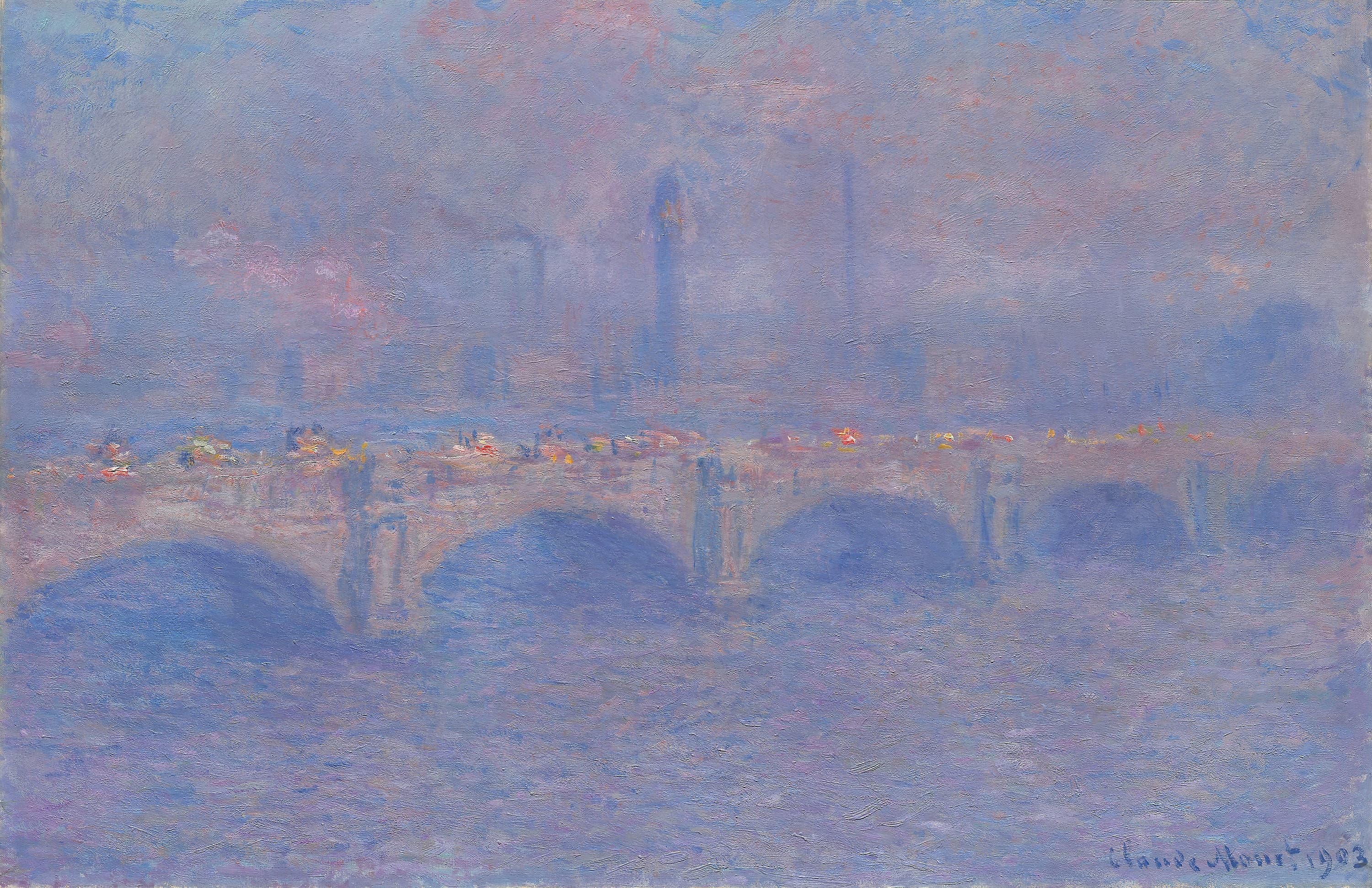
Waterloo Bridge, Sunlight Effect
Claude Monet · 1903
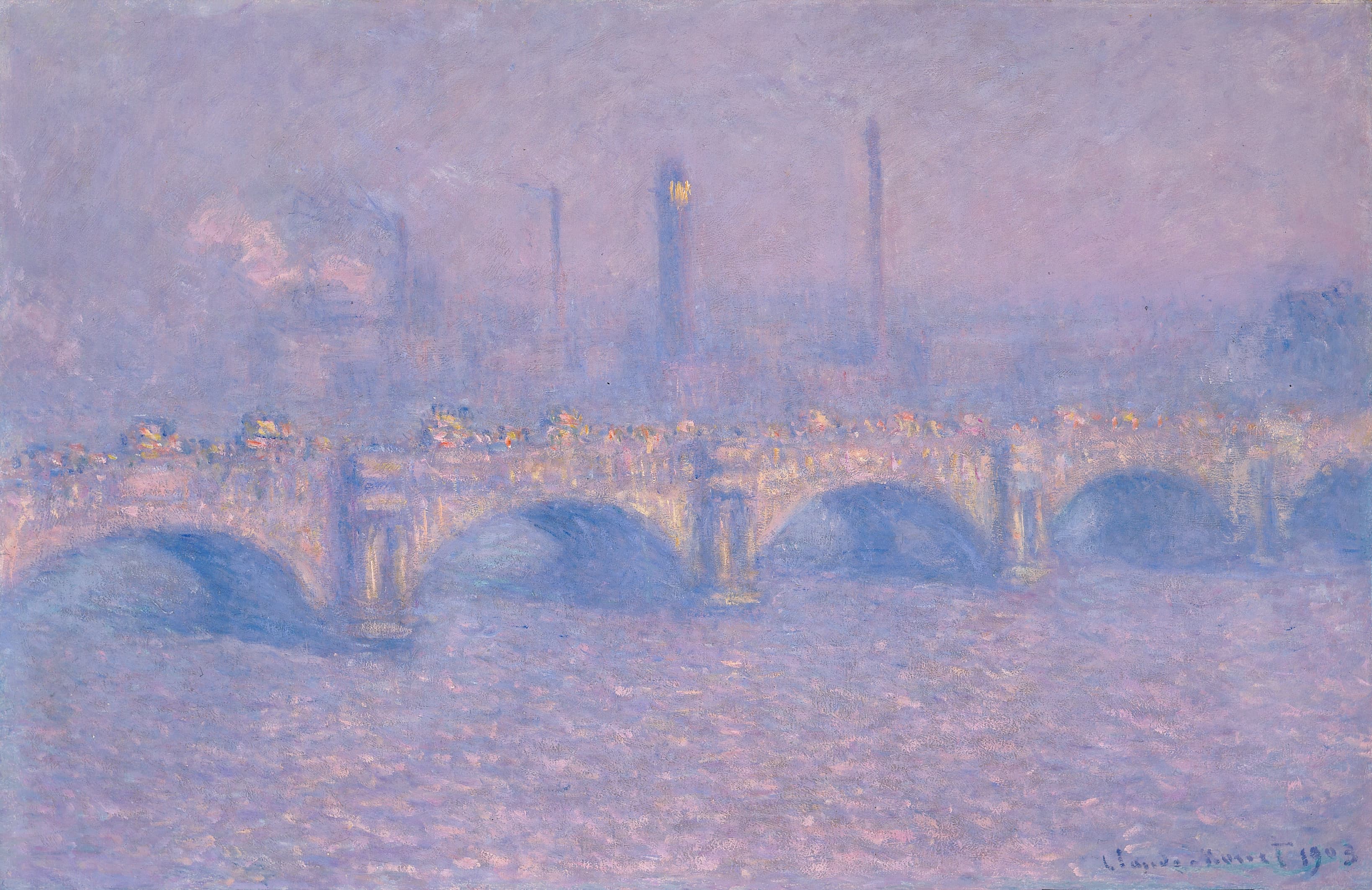
Waterloo Bridge, Veiled Sun
Claude Monet · 1903
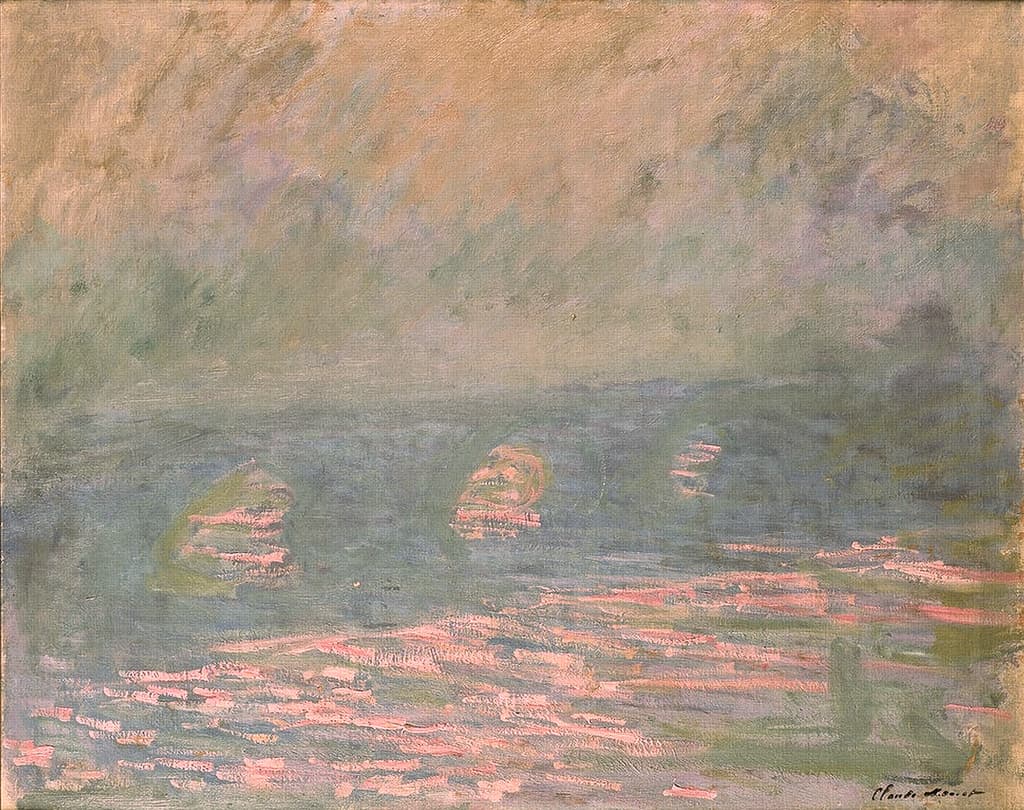
Waterloo Bridge (Matsushita Museum of Art)
Claude Monet · 1899–1901
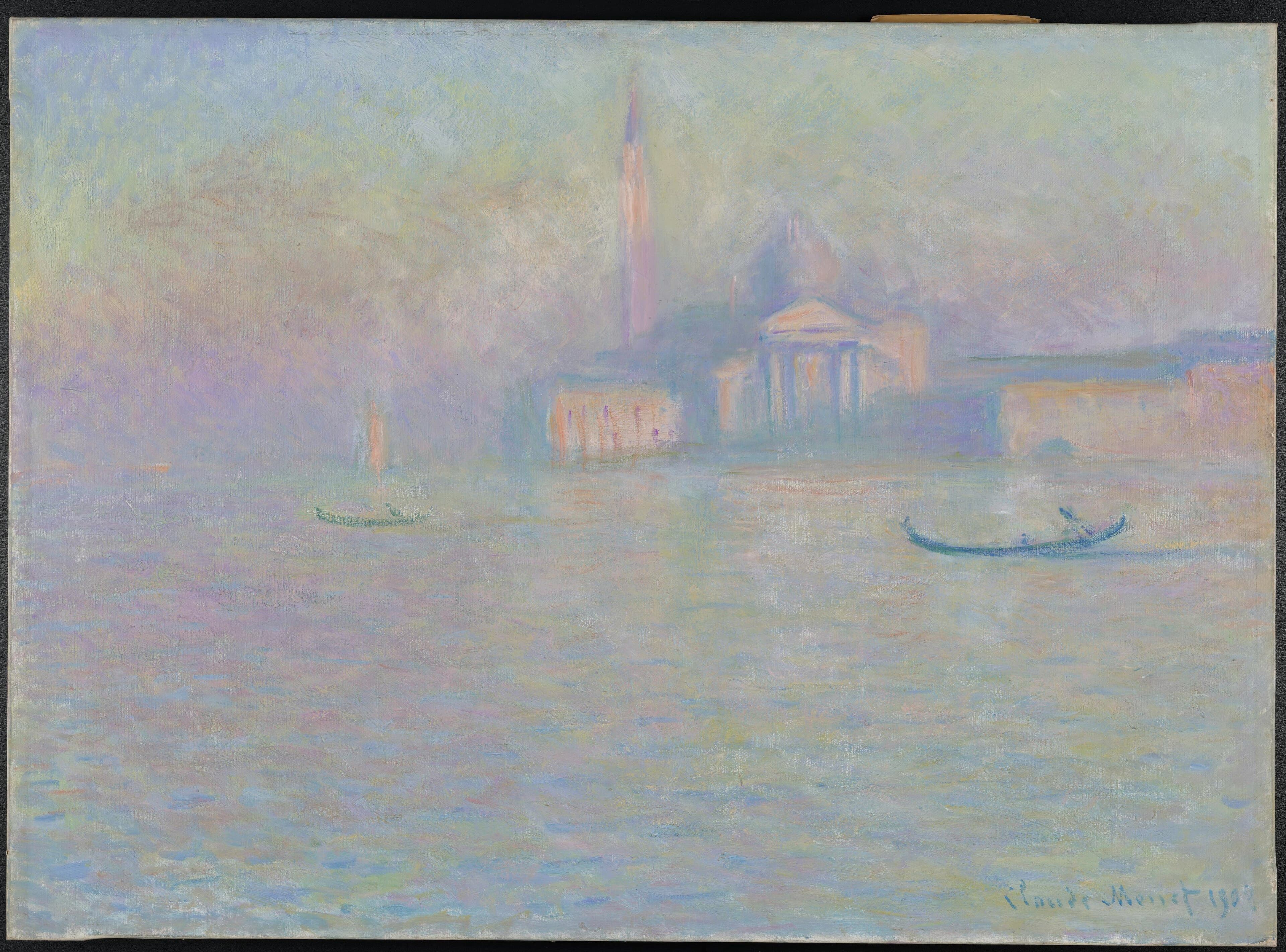
San Giorgio Maggiore
Claude Monet · 1908
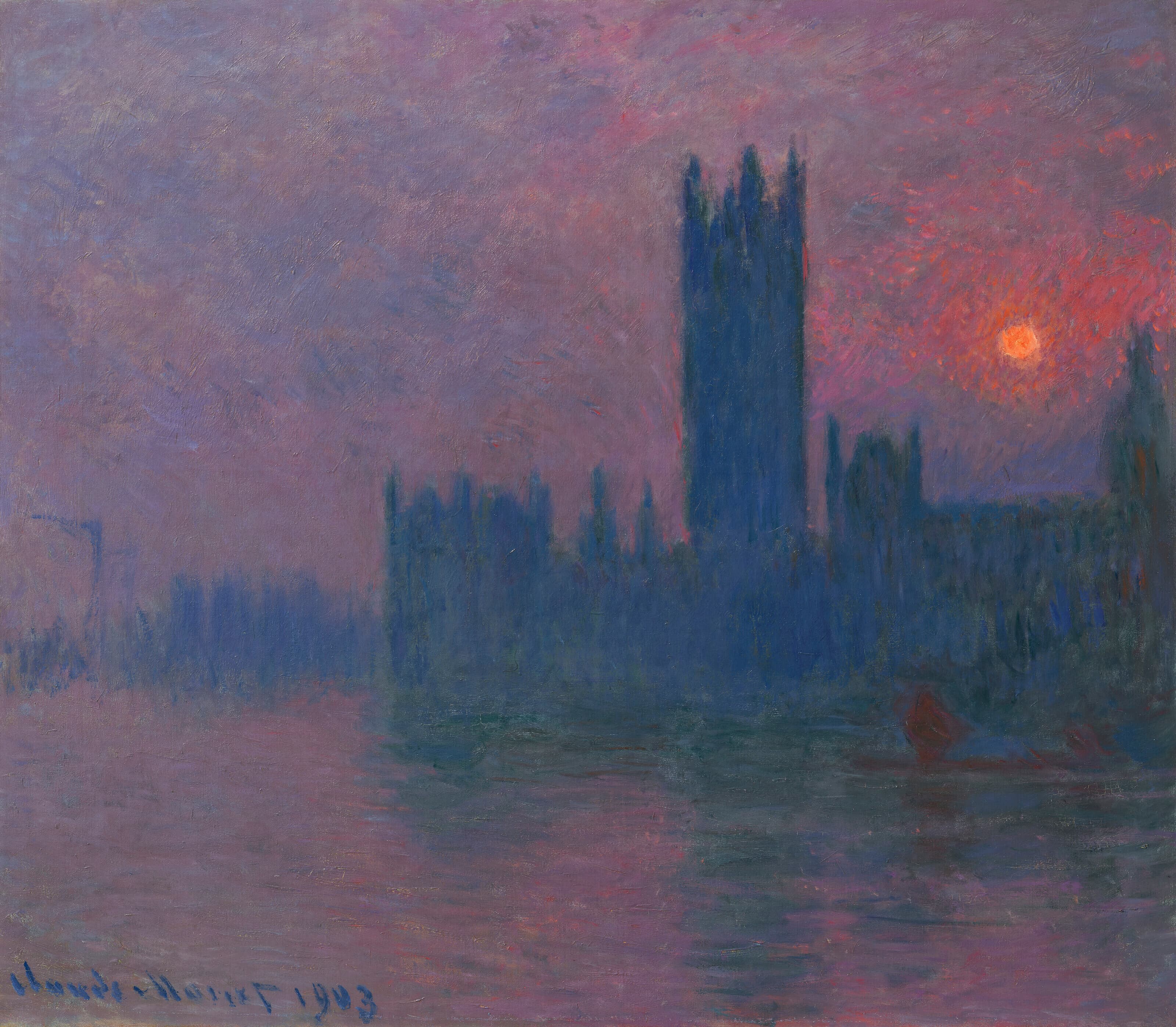
Houses of Parliament, Sunset
Claude Monet · 1903
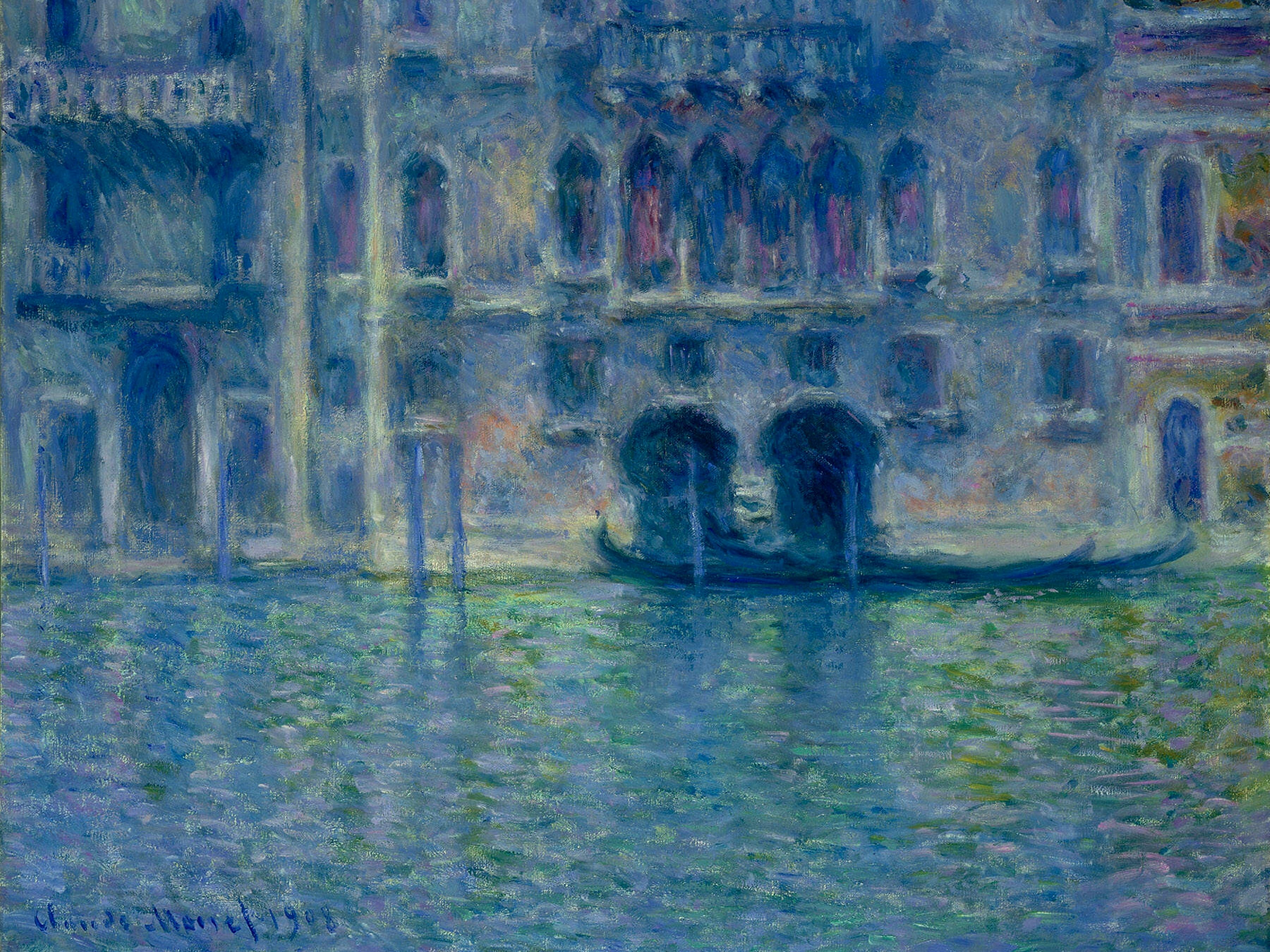
Palazzo da Mula, Venice
Claude Monet · 1908