Image: Baltimore Museum of Art · Public domain · via Wikimedia Commons
Charing Cross Bridge, Reflections on the Thames
Claude Monet, c. 1900
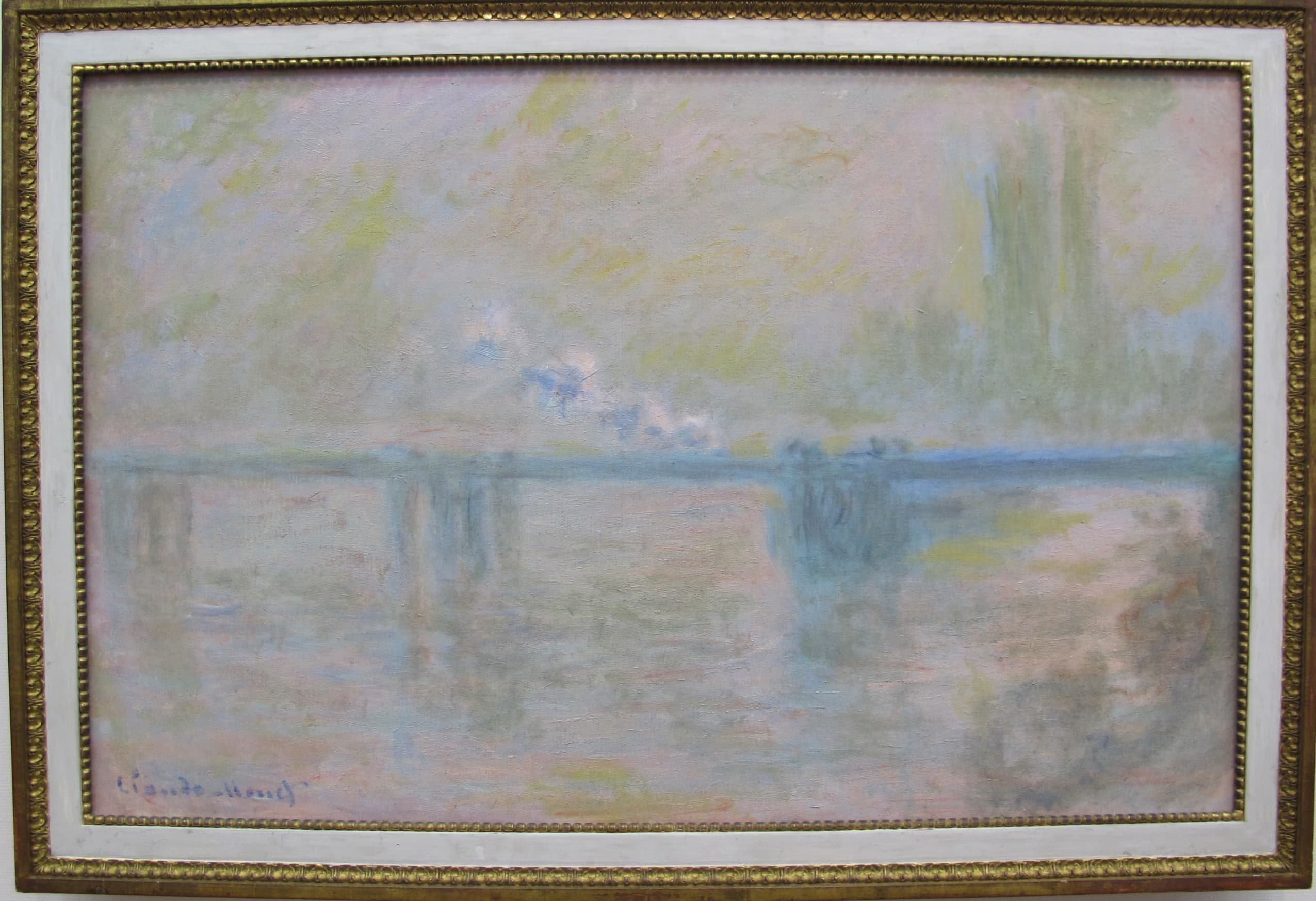
Charing Cross Bridge, Reflections on the Thames (c. 1900) is Claude Monet's view of the London railway bridge with the sun a pale disc in a gray-violet sky and a steam tug trailing smoke below. It is in the Baltimore Museum of Art.
- Artist
- Claude Monet
- Date
- c. 1900
- Medium
- Oil on canvas
- Dimensions
- 65 × 100 cm
- Collection
- Baltimore Museum of Art, Baltimore, United States
- Movement
- Impressionism
- Catalogue
- Wildenstein 1532
- The City
- Water & Sea
Charing Cross Bridge, Reflections on the Thames (Charing Cross Bridge, reflets sur la Tamise) is a canvas Claude Monet painted around 1900 from the Savoy Hotel in London. It is one of the most legible pictures in the series: the bridge, the far bank, the towers of Westminster and a steam tug on the river are all clearly readable, and a pale sun hangs in the sky at top center, its light scattered over the water below. It belongs to the Baltimore Museum of Art, part of the Helen and Abram Eisenberg Collection, and was accessioned in 1945.
What you are looking at
This is one of the widest canvases of the motif, about 65 by 100 cm, and Monet fills it with more information than usual. The bridge crosses just above the middle as a blue-green deck on paired piers. Beyond it, unusually, the far side of the river is visible: a line of dark green trees on the left (the gardens along the south bank), a low horizon, and on the right the tall gray-blue silhouettes of the Victoria Tower and the clock tower of Westminster, with smaller towers and buildings stepping down beside them.
The sky is a heavy gray-violet, worked in short diagonal strokes. At the top, just left of center, the sun appears as a small, pale disc, half veiled by cloud. Its light falls on the river below in a broad band of yellow, cream and green flecks between the piers. In the foreground, left of center, a small dark steam tug pushes through the water trailing a white cloud of smoke, the most active detail in the picture. The signature is at lower right.
Where and when it was painted
Monet painted this view from his window at the Savoy, looking upstream to the Hungerford railway bridge, which carried trains into Charing Cross station. He was there in autumn 1899 and again in early 1900 and 1901, and alternated between this view and the downstream view of Waterloo Bridge. Afternoons were reserved for the Houses of Parliament, painted from St Thomas' Hospital across the river. Our Monet in London hub explains the routine.
The sun's position, high and roughly south-west, suggests a winter midday, when the low sun hung over the river beyond the bridge.
How it was painted
The surface is built from short, separate strokes throughout, laid over a cool ground. In the sky they run diagonally; on the water they are horizontal and brighter, with yellow and white dabs carrying the reflected sun. The bridge is painted in a slightly darker blue-green than its surroundings, firm enough to read as structure. The tug and its smoke are added late, with a few dark strokes for the hull and quick white scumbles for the steam.
The title, reflets sur la Tamise, points to Monet's real subject: the way the hidden sun is reborn on the water as a scattered band of light, much brighter than its source.
Light, weather and a moving boat
Several details make this picture distinctive within the Charing Cross Bridge series. It shows the sun itself, which most versions leave hidden. It includes the south bank trees and a broader slice of the Westminster skyline. And its steam tug is larger and closer than the tiny rowing boats in canvases like the Santa Barbara version. Compare it with the Saint Louis Charing Cross Bridge, where a train's smoke fills the same role, or with the fog-bound Art Gallery of Ontario version, where nearly everything disappears.
Where to see it
The painting is in the Baltimore Museum of Art (inv. 1945.94), credited to the Helen and Abram Eisenberg Collection. The museum's European galleries also hold works from the Cone Collection, including paintings by Monet's contemporaries. Check the BMA's online collection for current display, and see where to see Monet's paintings for other collections.
Questions & answers
Where is Monet's Charing Cross Bridge, Reflections on the Thames?
It is in the Baltimore Museum of Art (inv. 1945.94), part of the Helen and Abram Eisenberg Collection. Check the museum's online collection for whether it is currently on view.
When was it painted?
Around 1900, during Monet's London campaigns of 1899–1901, when he painted the Thames from his window at the Savoy Hotel. Like most of the series, it was probably finished at Giverny.
What does the painting show?
Charing Cross railway bridge over the Thames, with the trees of the south bank and the towers of Westminster beyond. A pale sun is visible at the top, its light reflected in the river, and a steam tug trails smoke in the foreground.
What is special about this version?
It is one of the few in the series to show the sun itself, and it includes more of the far bank and skyline than usual. The title stresses the reflections: the veiled sun becomes a bright, scattered band of light on the water.
More by the artist
Claude Monet
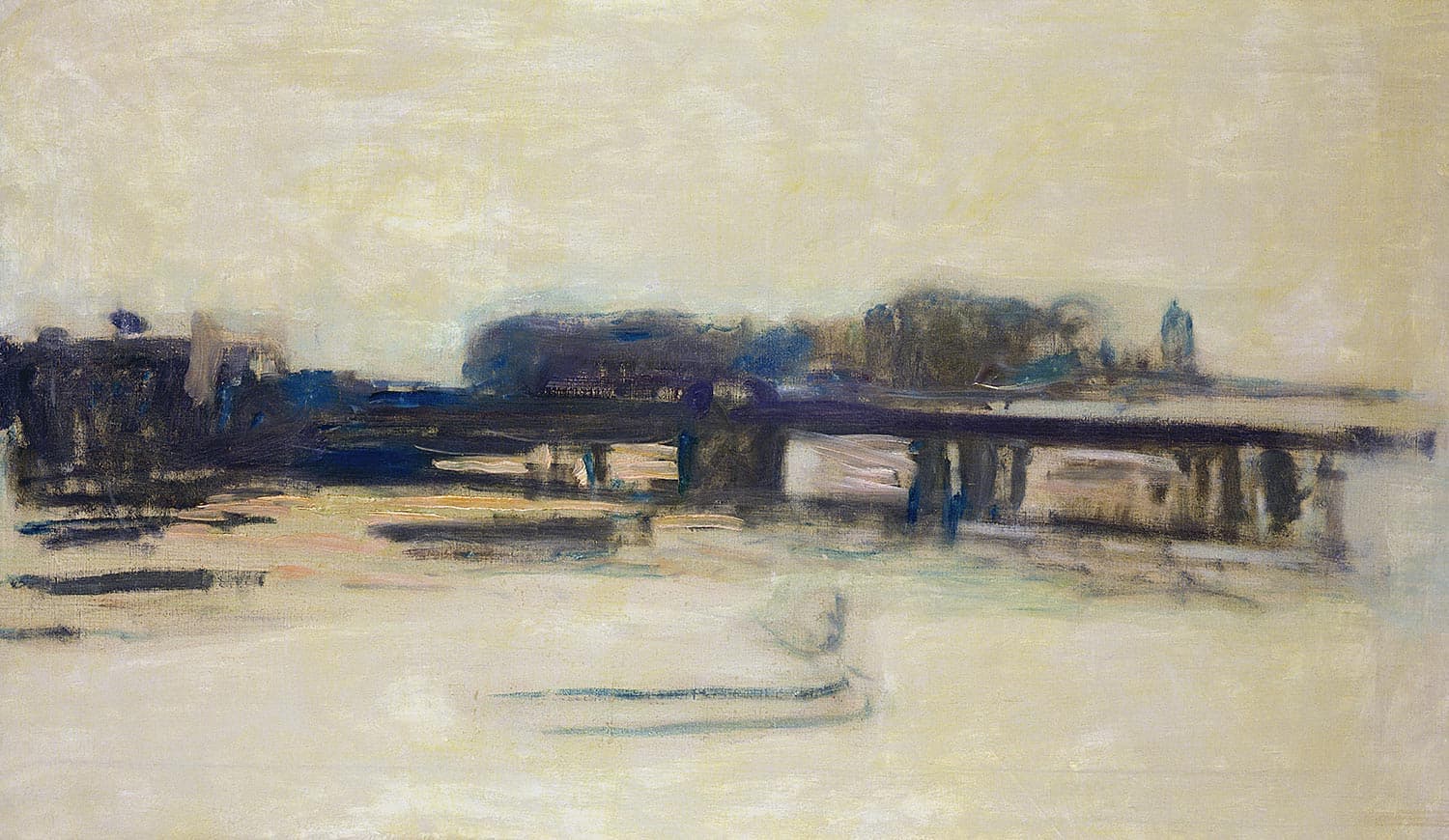
Charing Cross Bridge, London (Marmottan study)
Claude Monet · c. 1899–1901
Charing Cross Bridge (Overcast Day)
Claude Monet · 1900
Waterloo Bridge, Effect of Sun in the Mist
Claude Monet · c. 1900–03
The Water Lily Pond, Harmony in Rose
Claude Monet · 1900
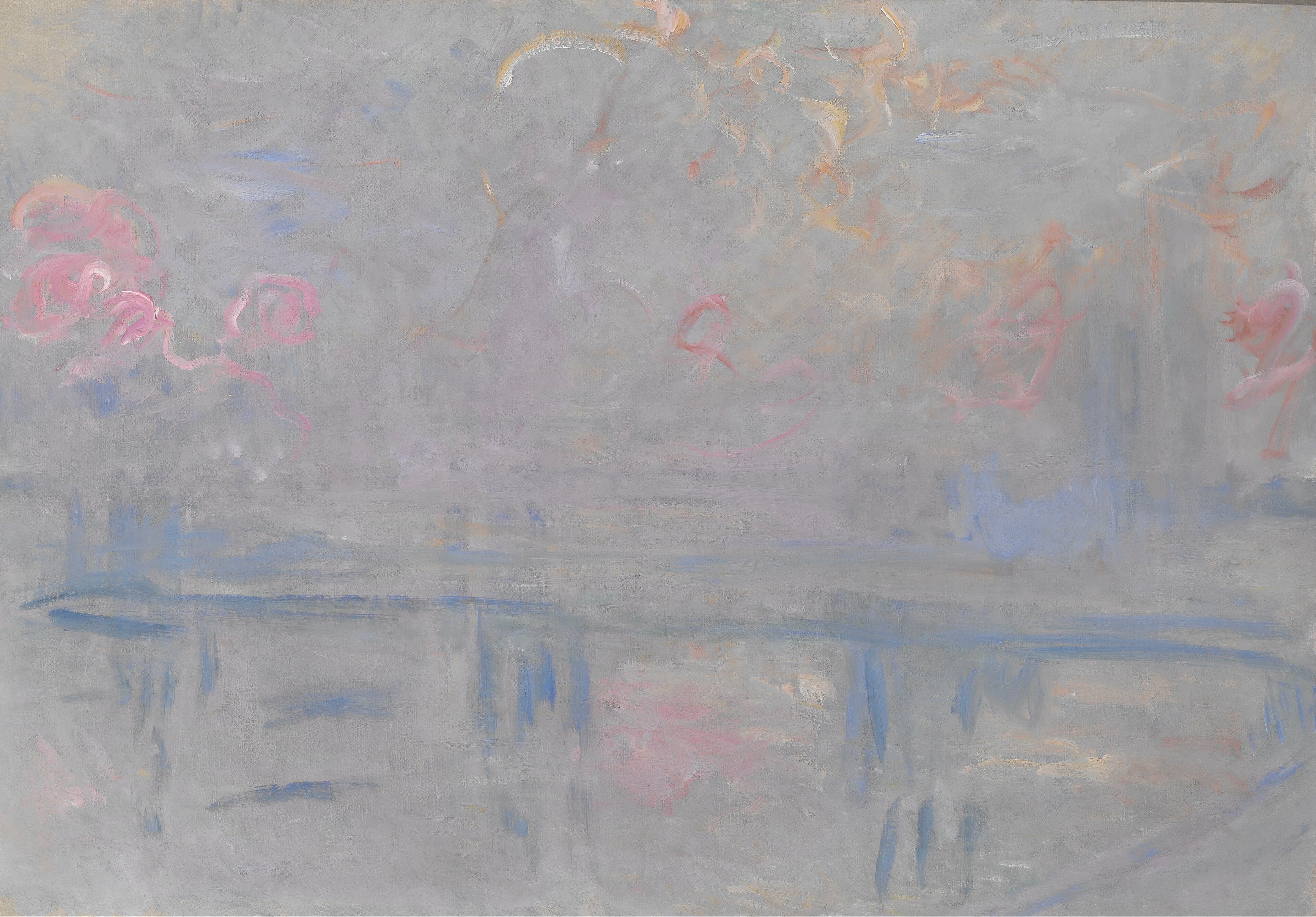
Charing Cross Bridge (Indianapolis)
Claude Monet · c. 1900
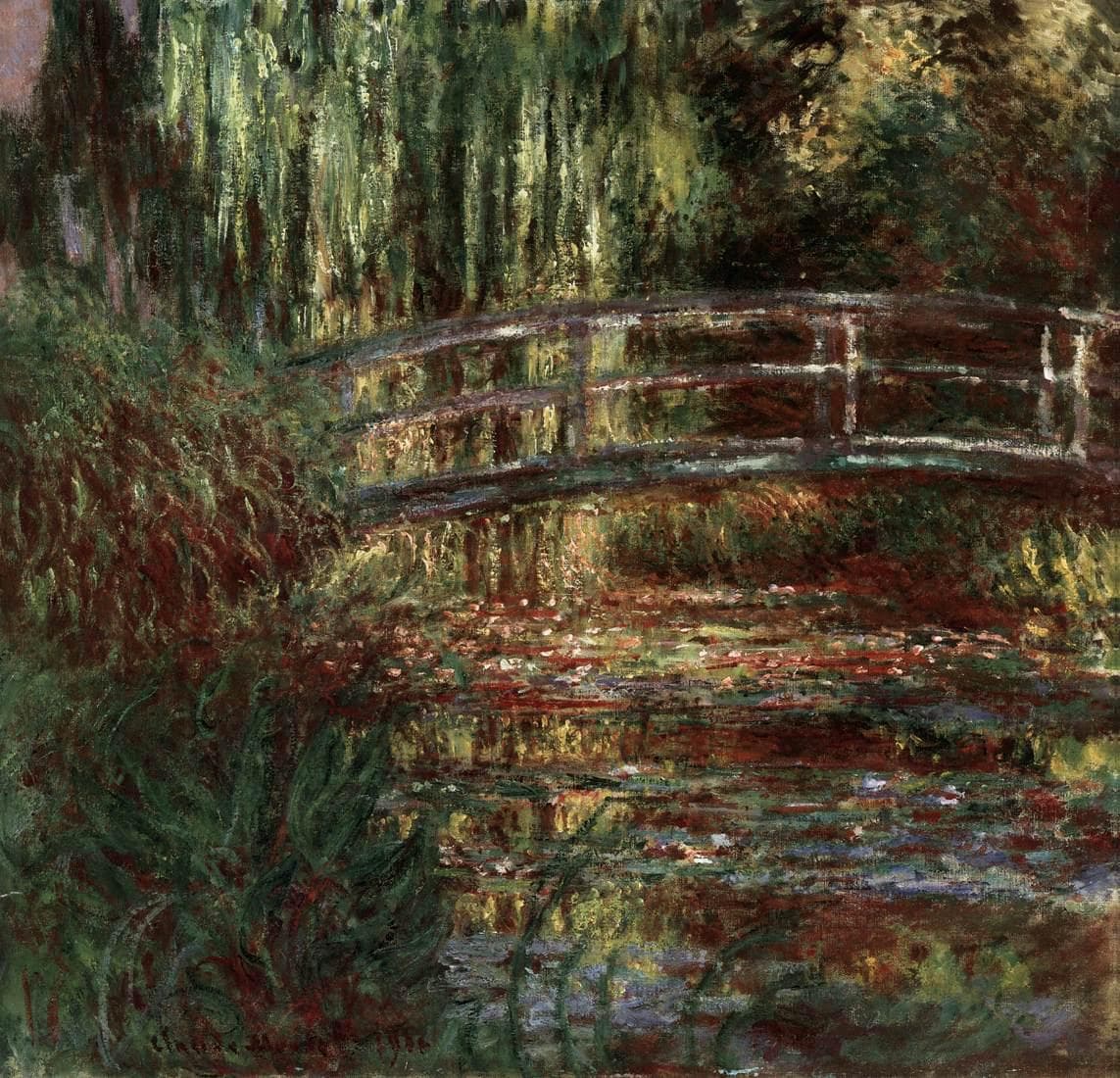
The Water Lily Pond
Claude Monet · 1900
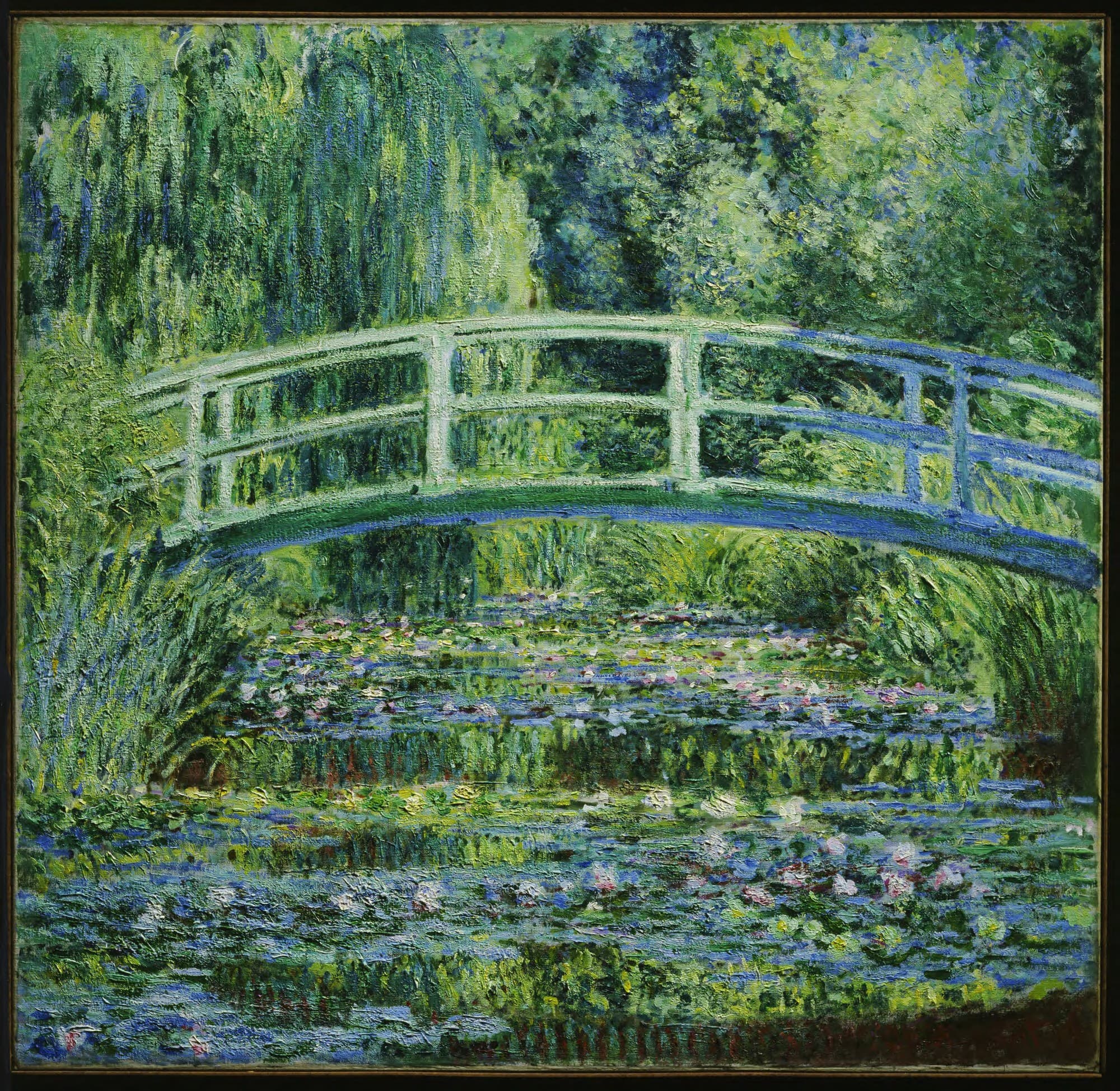
Water Lilies and Japanese Bridge
Claude Monet · 1899
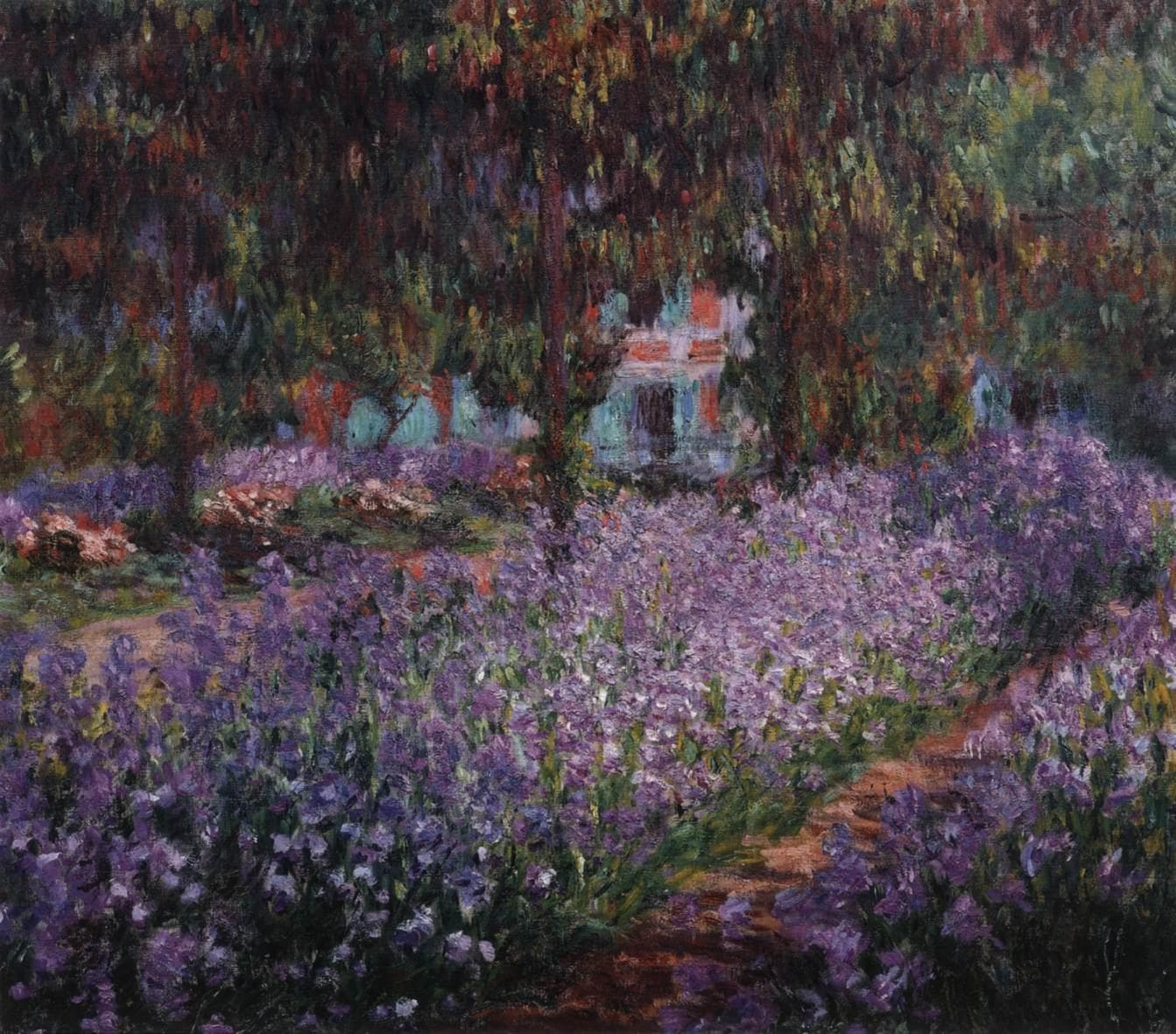
Irises in Monet's Garden at Giverny
Claude Monet · 1900
Also painted in 1900
The same year
Houses of Parliament, London
Claude Monet · 1900–01
Houses of Parliament, Symphony in Rose
Claude Monet · 1900
The Japanese Bridge or The Lily Pond
Claude Monet · 1900
Waterloo Bridge, London, Sun Effect
Claude Monet · 1899–1901
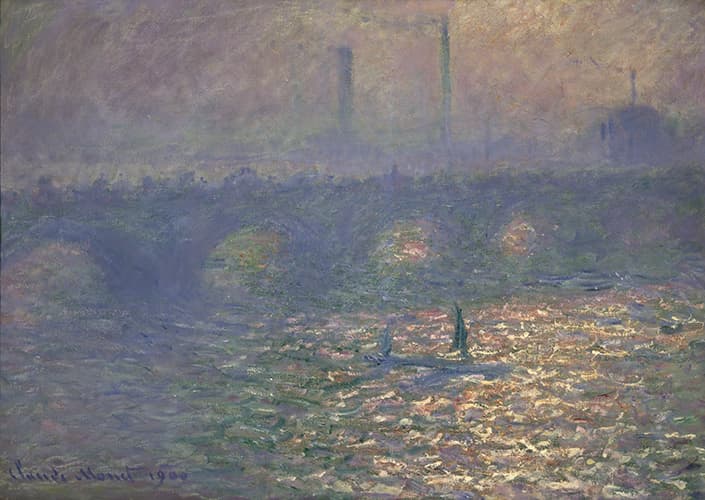
Waterloo Bridge (Santa Barbara Museum of Art)
Claude Monet · 1900
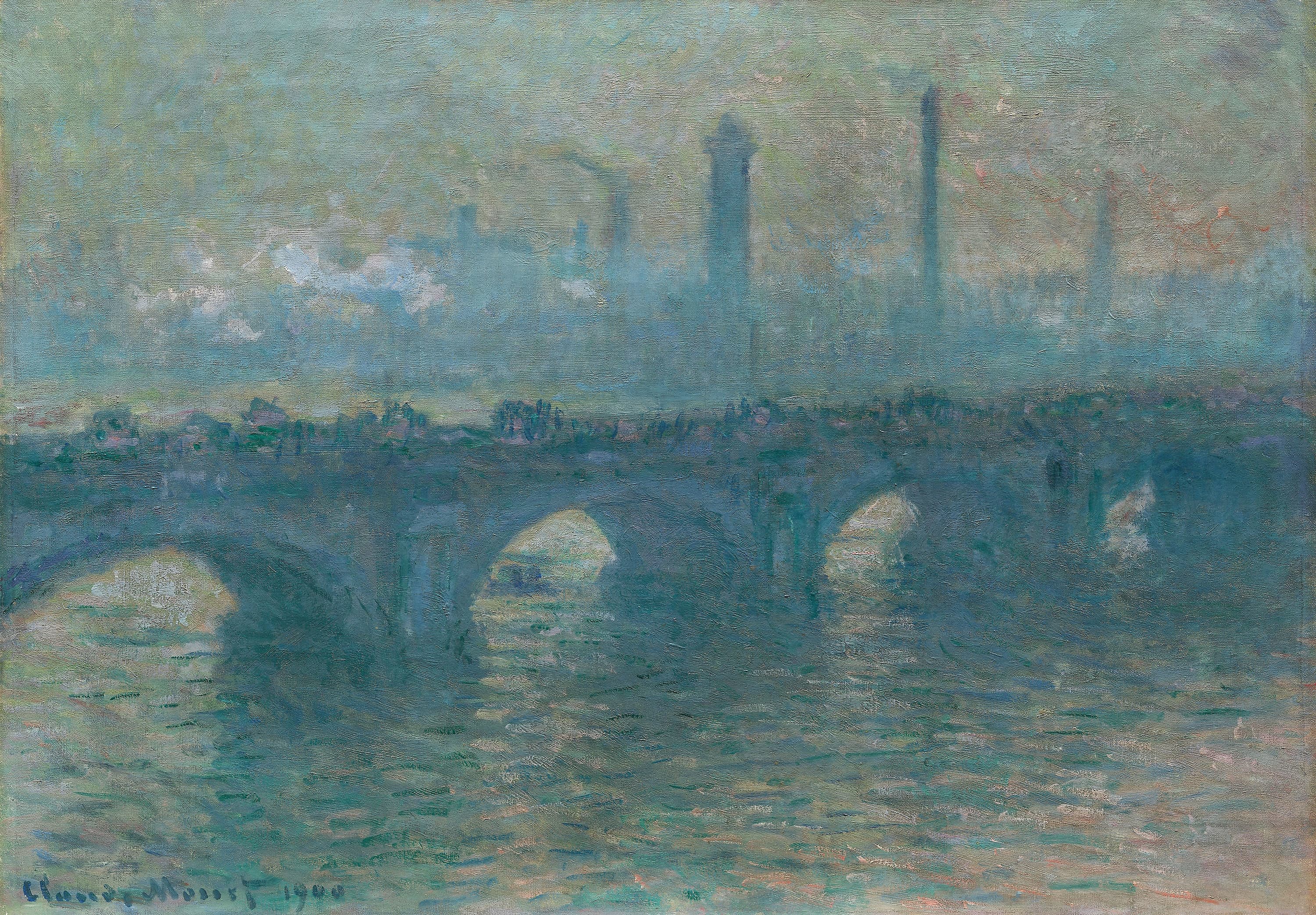
Waterloo Bridge, Gray Weather
Claude Monet · 1900
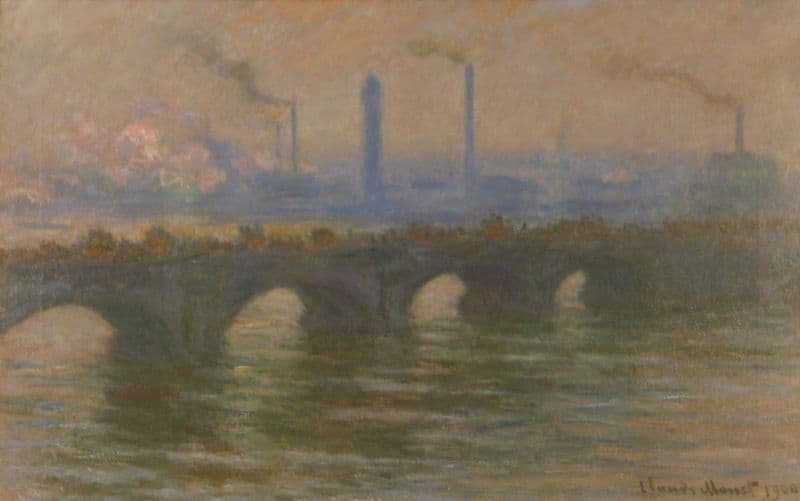
Waterloo Bridge, Overcast Weather
Claude Monet · 1900
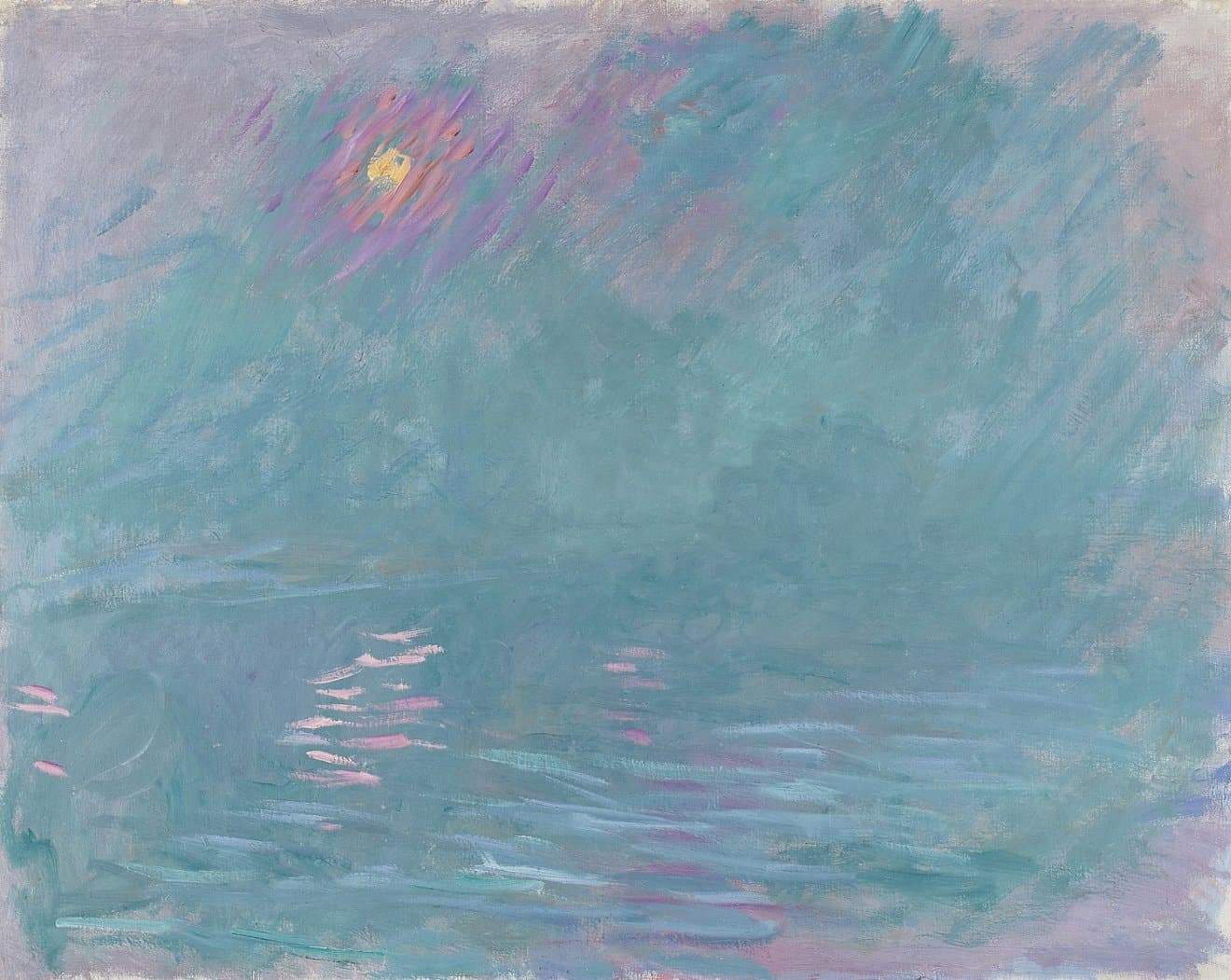
Waterloo Bridge (Kerry Stokes Collection)
Claude Monet · 1899–1901
Kindred works
You may also study
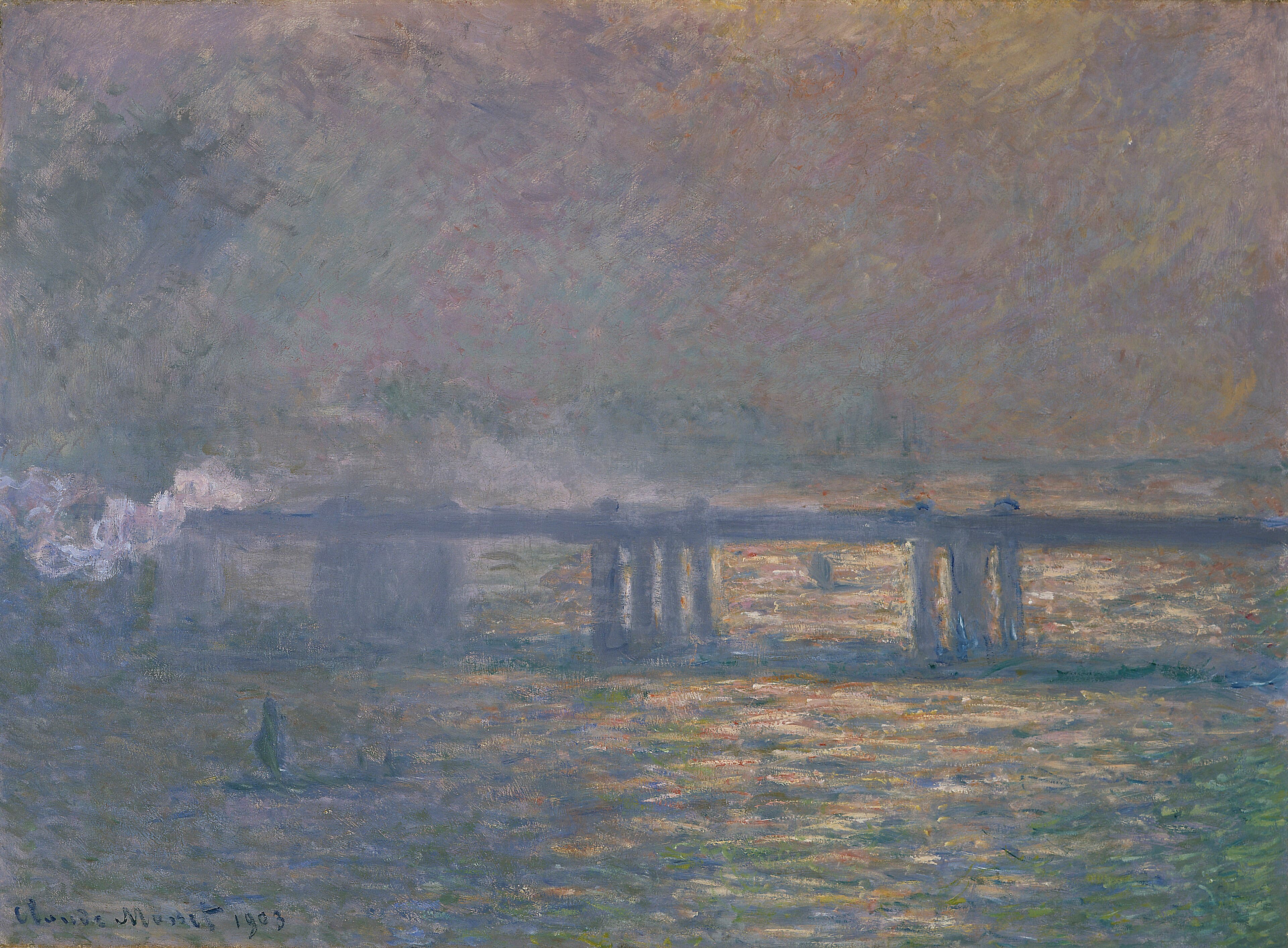
Charing Cross Bridge (Saint Louis)
Claude Monet · 1903
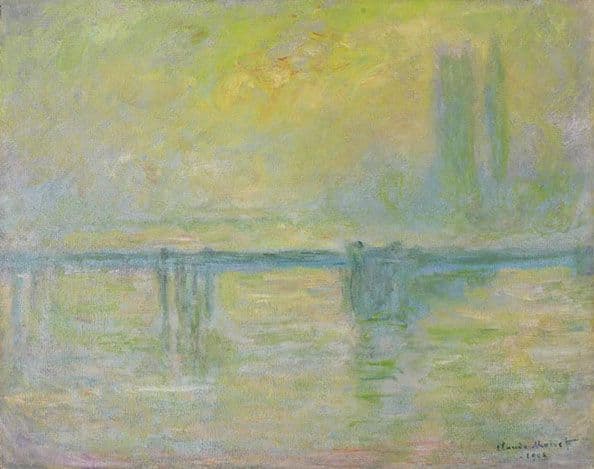
Charing Cross Bridge, Fog
Claude Monet · 1902–03
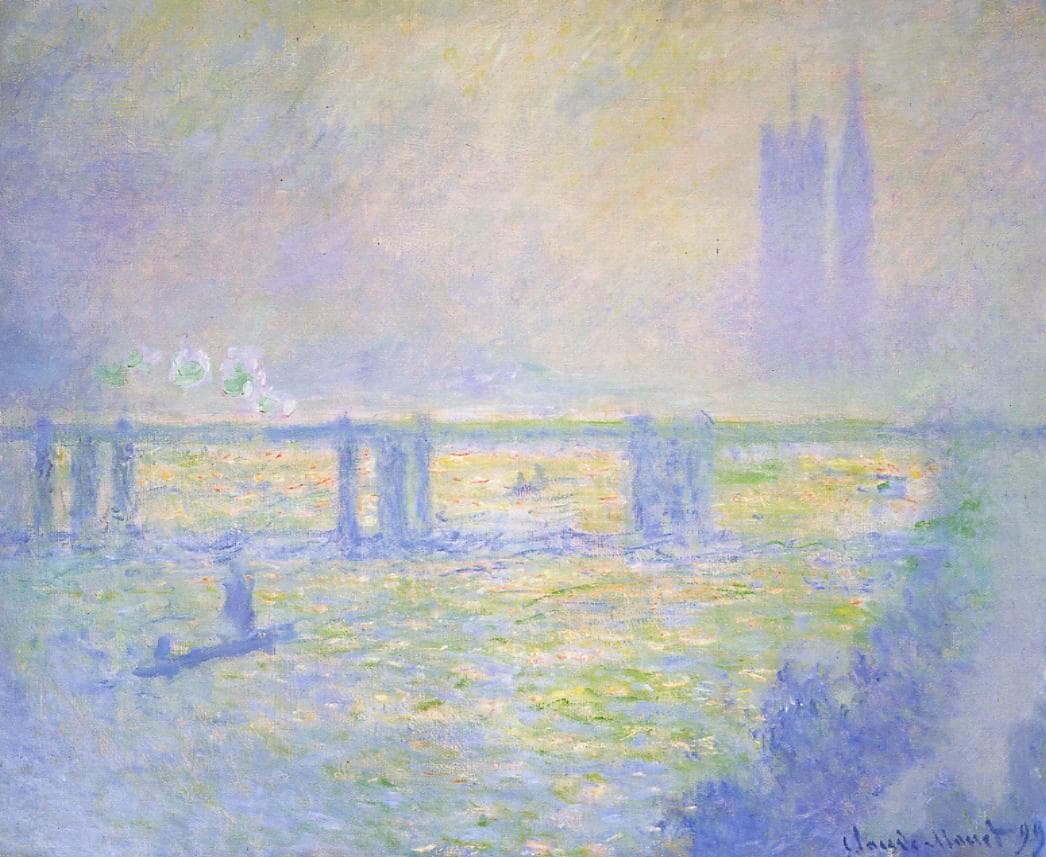
Charing Cross Bridge
Claude Monet · 1899
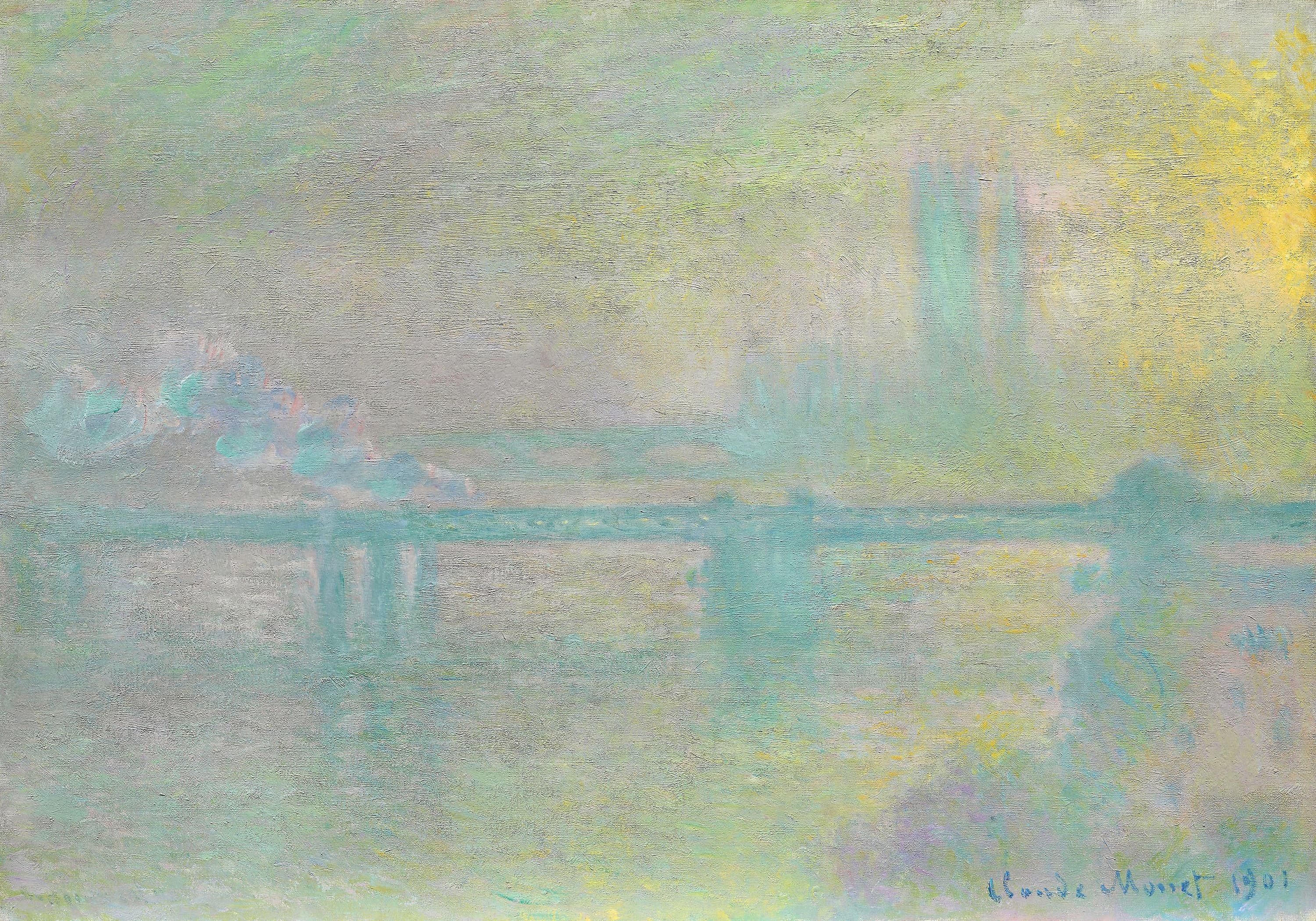
Charing Cross Bridge, London
Claude Monet · 1901
Waterloo Bridge, Effect of Fog
Claude Monet · 1903
Waterloo Bridge: the Sun in a Fog
Claude Monet · 1903
Waterloo Bridge, effet de brume
Claude Monet · 1904
Gondola in Venice
Claude Monet · 1908