Image: Davis Museum at Wellesley College (via Flickr / Wikimedia Commons) · Public domain · via Wikimedia Commons
Waterloo Bridge (Davis Museum)
Claude Monet, 1899–1903
Waterloo Bridge is a small Claude Monet canvas of 1899–1903 in which a rose-red sun burns through turquoise fog over the Thames, the bridge reduced to a faint band. It is in the Davis Museum at Wellesley College, Massachusetts.
- Artist
- Claude Monet
- Date
- 1899–1903
- Medium
- Oil on canvas
- Dimensions
- 65.5 × 81 cm
- Collection
- Davis Museum at Wellesley College, Wellesley, Massachusetts, United States
- Movement
- Impressionism
- Catalogue
- Wildenstein 1575
- The City
- Water & Sea
This Waterloo Bridge is one of the smaller canvases, 65.5 × 81 cm, in Claude Monet's long series of views of the Thames from the Savoy Hotel. The Davis Museum at Wellesley College, which owns it (1987.9), dates it 1899–1903; Wikidata gives 1901. It is number 1575 in the Wildenstein catalogue raisonné and came to the museum from the estate of Marion L. and Gustave Ring, parents of the Wellesley alumna Carlyn Ring.
What you're looking at
The canvas is a storm of turquoise. Fog fills the sky in sweeping, diagonal strokes of aquamarine, teal and pale green, interlaced with streaks of violet and magenta. In the upper left, a small rose-red sun burns through, surrounded by a halo of purple and pink where its light colors the mist.
The bridge is barely there: a slightly darker horizontal band across the middle, with what may be the faint shape of a tower or chimney rising above it at center. Below, the Thames repeats the sky's turquoise in flatter, horizontal strokes. A vertical column of pale rose under the center marks the sun's reflection, and at lower left a large curving stroke of pink suggests light catching a wave or a boat's wake.
The defining feature of this version is its energy. The strokes are fast and broad, and they change direction constantly, so the fog seems to be moving. It is one of the most vigorous and least finished-looking pictures in the series.
Where and when it was painted
Monet worked in London in the autumn of 1899 and in early 1900 and 1901, painting Waterloo Bridge in the mornings from his room at the Savoy. With the light changing every few minutes, he kept dozens of canvases going, switching to another whenever the effect shifted. The small 65 × 81 cm canvases in the series seem to record such fleeting moments with less later reworking than the larger pictures.
How it was painted
The paint is laid quickly, wet into wet, with brushes loaded with unmixed color. The sun is a single round dab of red over violet. The water's reflections are long, light verticals pulled down through the green. Bare canvas peeks through in places. The signature is at lower right.
How this version differs
Its near-twin is the Kerry Stokes Collection's Waterloo Bridge (W 1574), the same size and also with a sun at upper left in turquoise fog; the Davis canvas is bolder in color and more agitated in touch, its sun redder. With the Matsushita Waterloo Bridge they form the small, sketch-like group within the Waterloo Bridge series. Compare the large, highly worked Ottawa Waterloo Bridge: the Sun in a Fog.
Painting many canvases at once
Monet's working method in London was unusual even for him. Staying at the Savoy, he set up dozens of canvases, sometimes close to a hundred, and moved between them as the light and fog changed. His letters describe frantic searches for the right canvas when a new effect appeared, and frustration when the fog lifted or thickened before he could finish. Many canvases, like this one, record a single moment and were never brought to the high finish of others. Their directness has made them especially admired by later painters, who see in them Monet working as fast as his eye.
Where to see it
The Davis Museum, on the Wellesley College campus near Boston, is free and open to the public, and the painting is usually on view. It was lent to Monet's Waterloo Bridge: Vision and Process, an exhibition built around the series and shown at the Worcester Art Museum and the Memorial Art Gallery in Rochester. For more, see Monet in London, where to see Monet's paintings and Claude Monet.
The canvas belongs to a teaching museum with a collection ranging from antiquity to contemporary art, and it is often used in classes as an example of Monet's series method: a single motif, painted again and again, with weather and light as the real subject.
Questions & answers
Where is the Davis Museum's Monet Waterloo Bridge?
It is at the Davis Museum at Wellesley College in Wellesley, Massachusetts (1987.9). It came from the estate of Marion L. and Gustave Ring, parents of Wellesley alumna Carlyn Ring. Admission is free.
When was it painted?
The Davis Museum dates it 1899–1903; Wikidata gives 1901. Monet painted the Waterloo Bridge series from the Savoy Hotel in 1899–1901 and continued working on the canvases at Giverny until 1904.
What does the painting show?
A rose-red sun burning through turquoise fog over the Thames, with the bridge reduced to a faint horizontal band and a pale column of reflected light on the water below.
Is there a similar Monet Waterloo Bridge?
Yes. The Kerry Stokes Collection in Perth owns a near-twin (W 1574) of the same size, also with a sun at upper left in turquoise fog. The Matsushita Museum in Japan has another small-format version.
More by the artist
Claude Monet
Leicester Square, Night
Claude Monet · c. 1901
Waterloo Bridge, Morning Fog
Claude Monet · 1901
Leicester Square, by Night
Claude Monet · 1901
Waterloo Bridge, London, Sun Effect
Claude Monet · 1899–1901
The Japanese Bridge or The Lily Pond
Claude Monet · 1900
Charing Cross Bridge, London (Marmottan study)
Claude Monet · c. 1899–1901
Le Parlement de Londres, effet de brouillard
Claude Monet · 1903
Charing Cross Bridge, London
Claude Monet · 1901
Kindred works
You may also study
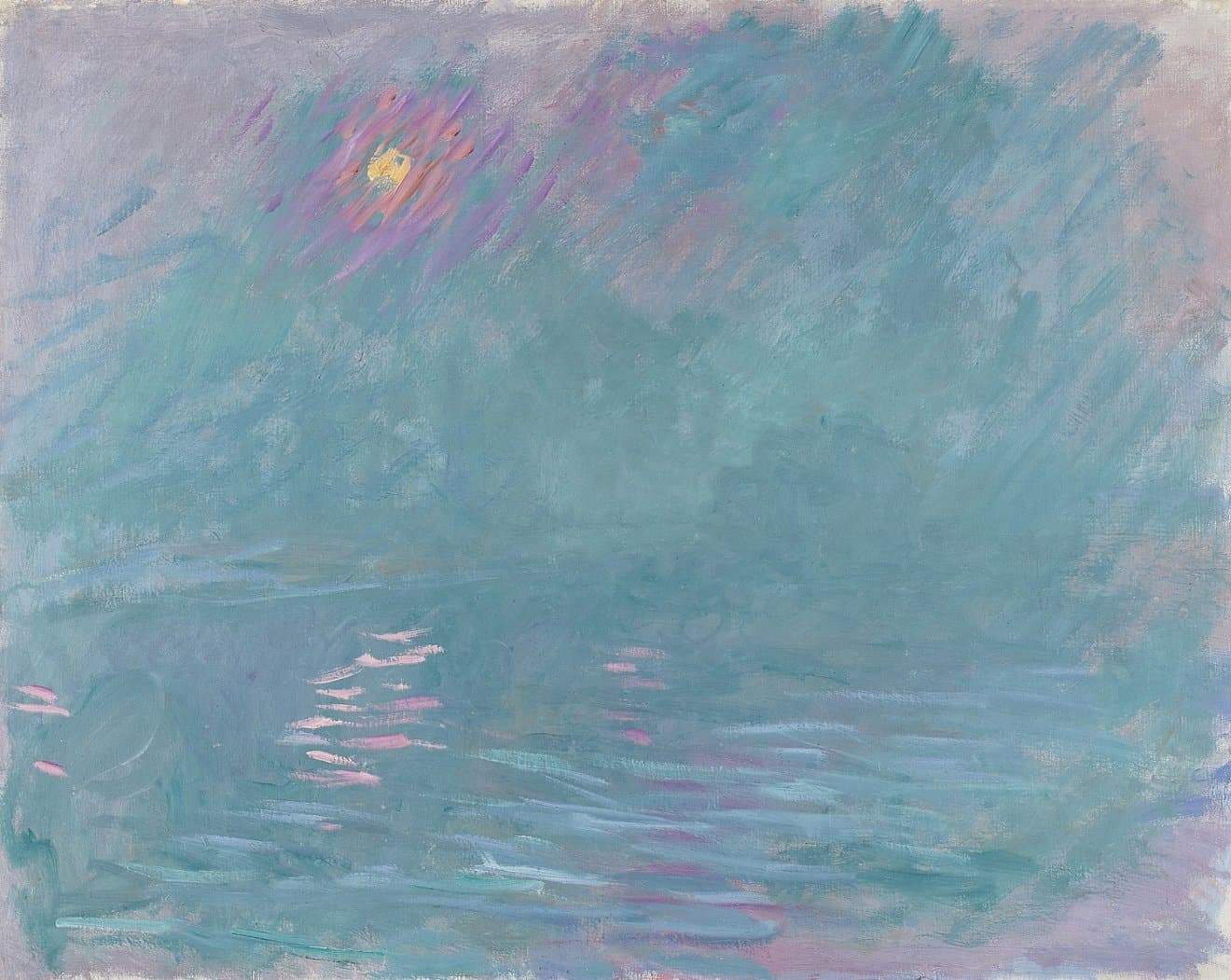
Waterloo Bridge (Kerry Stokes Collection)
Claude Monet · 1899–1901
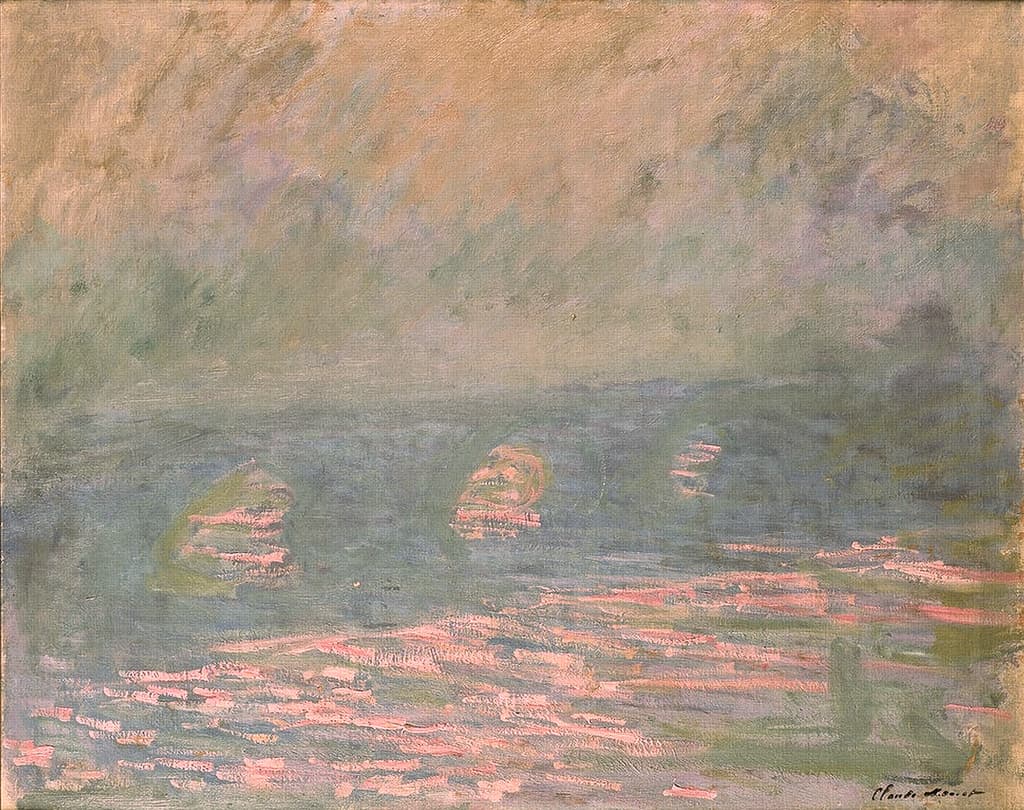
Waterloo Bridge (Matsushita Museum of Art)
Claude Monet · 1899–1901
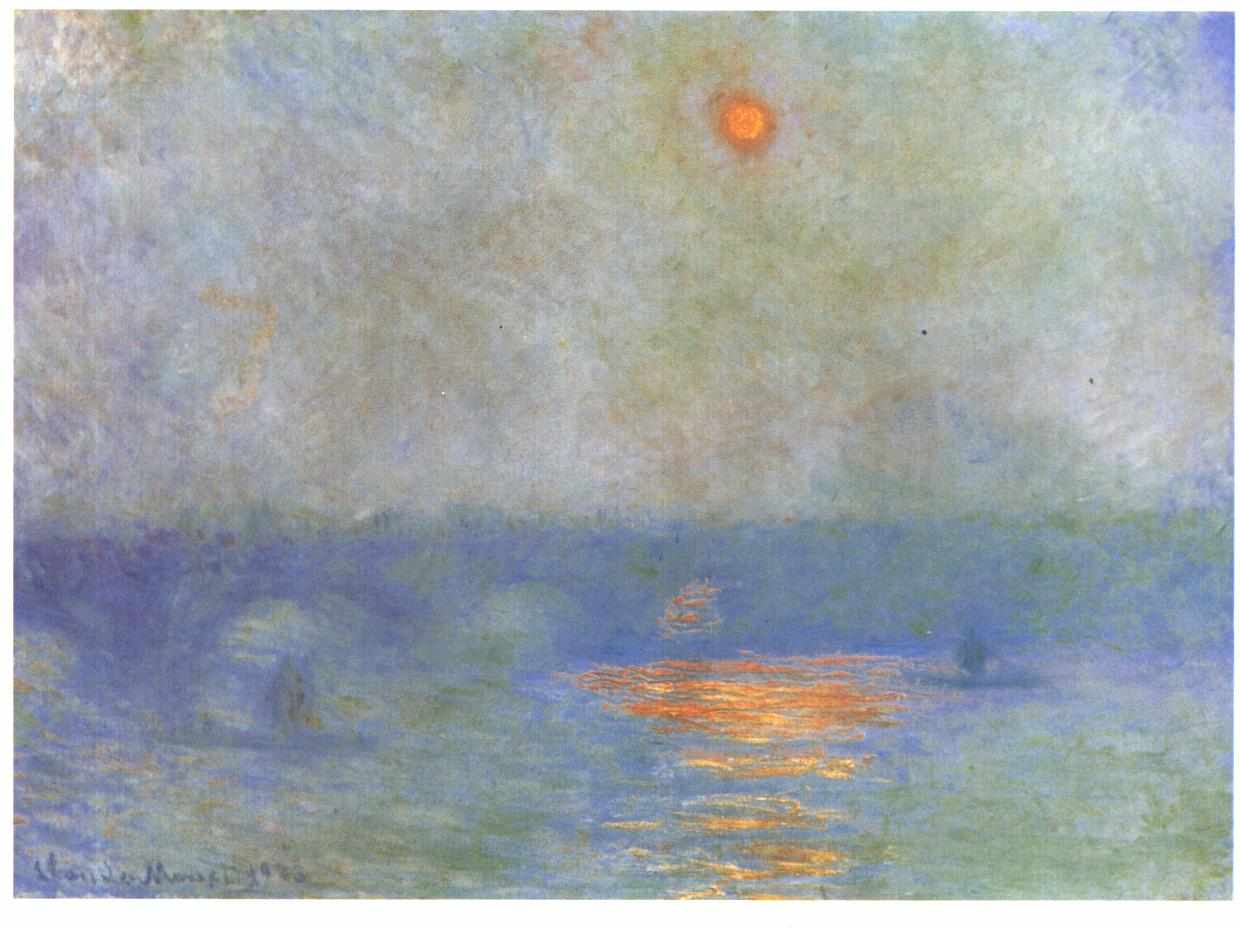
Waterloo Bridge: the Sun in a Fog
Claude Monet · 1903
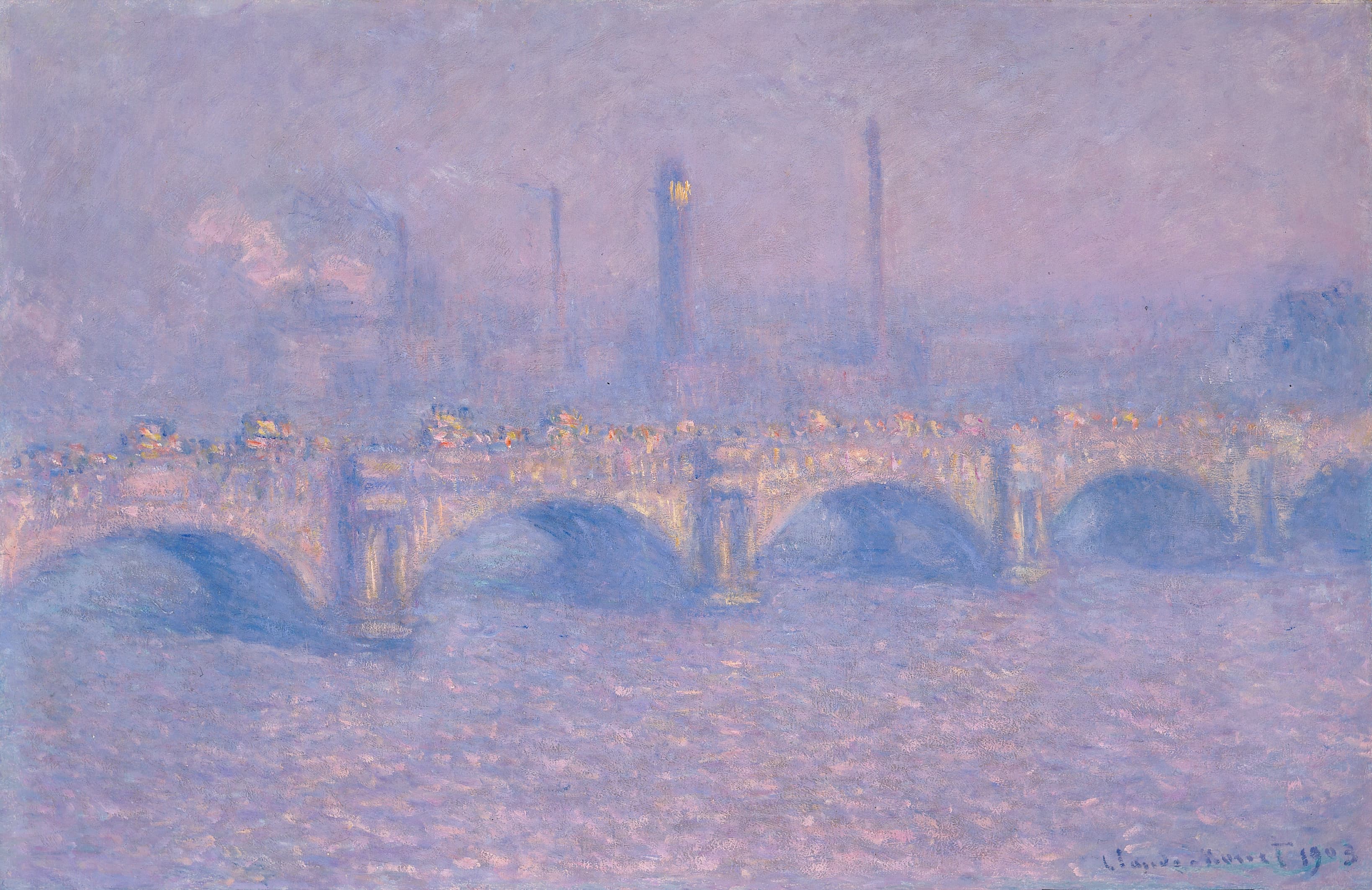
Waterloo Bridge, Veiled Sun
Claude Monet · 1903
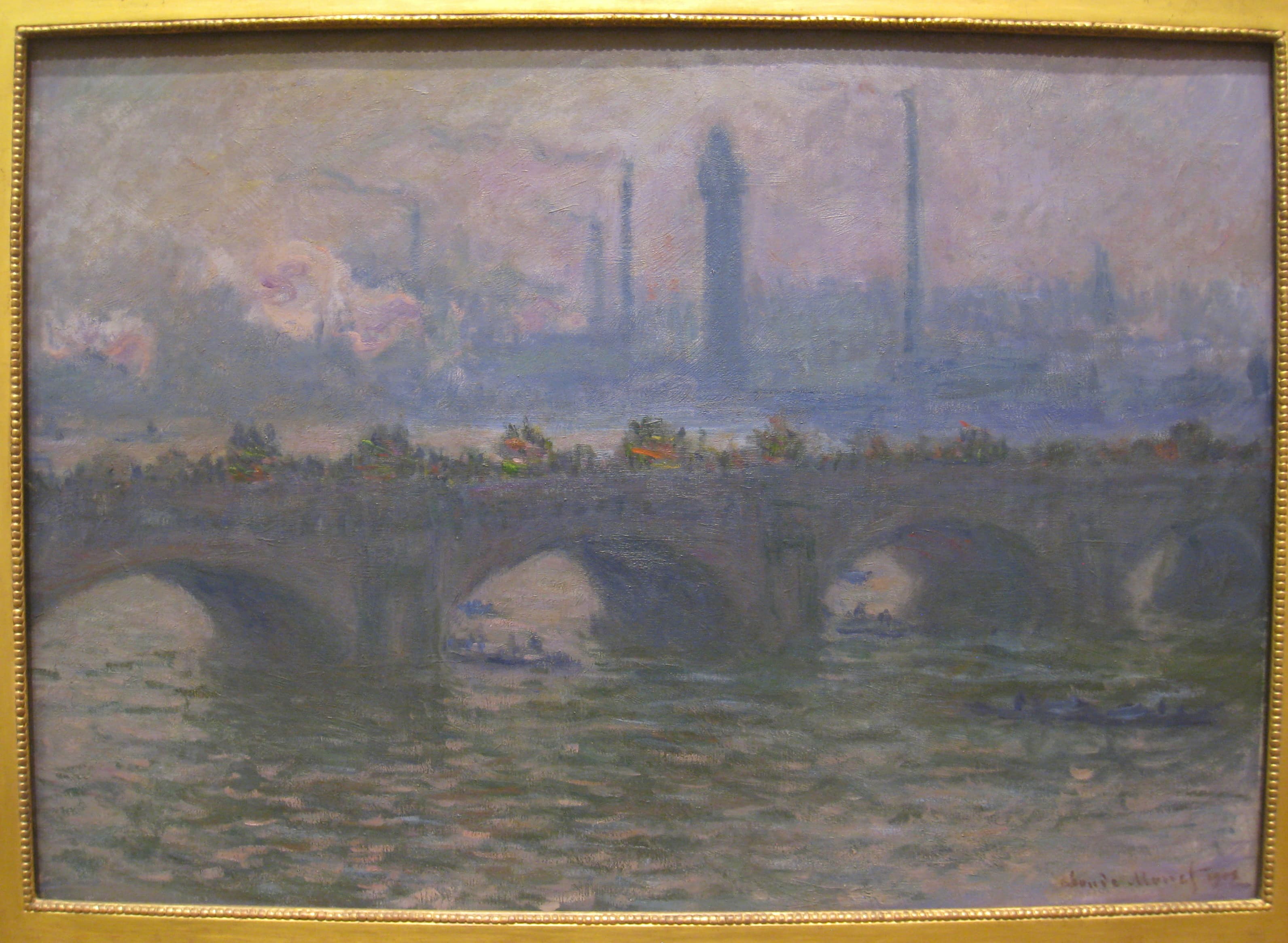
Waterloo Bridge (Worcester Art Museum)
Claude Monet · 1903
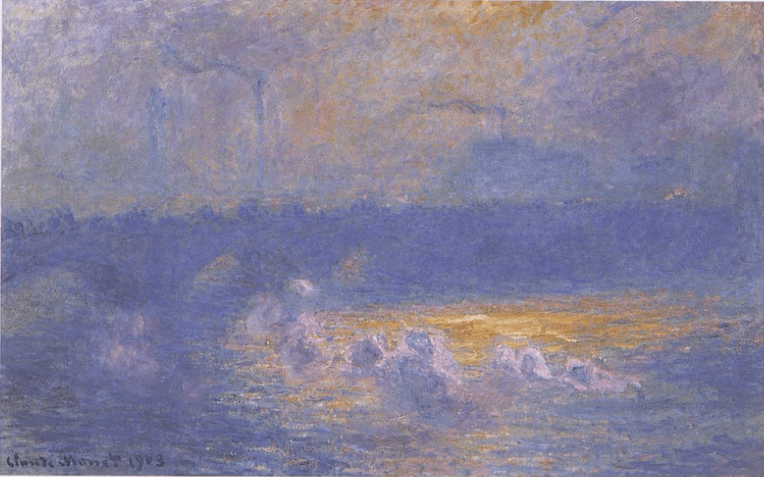
Waterloo Bridge, Sunlight Effect with Smoke
Claude Monet · 1903
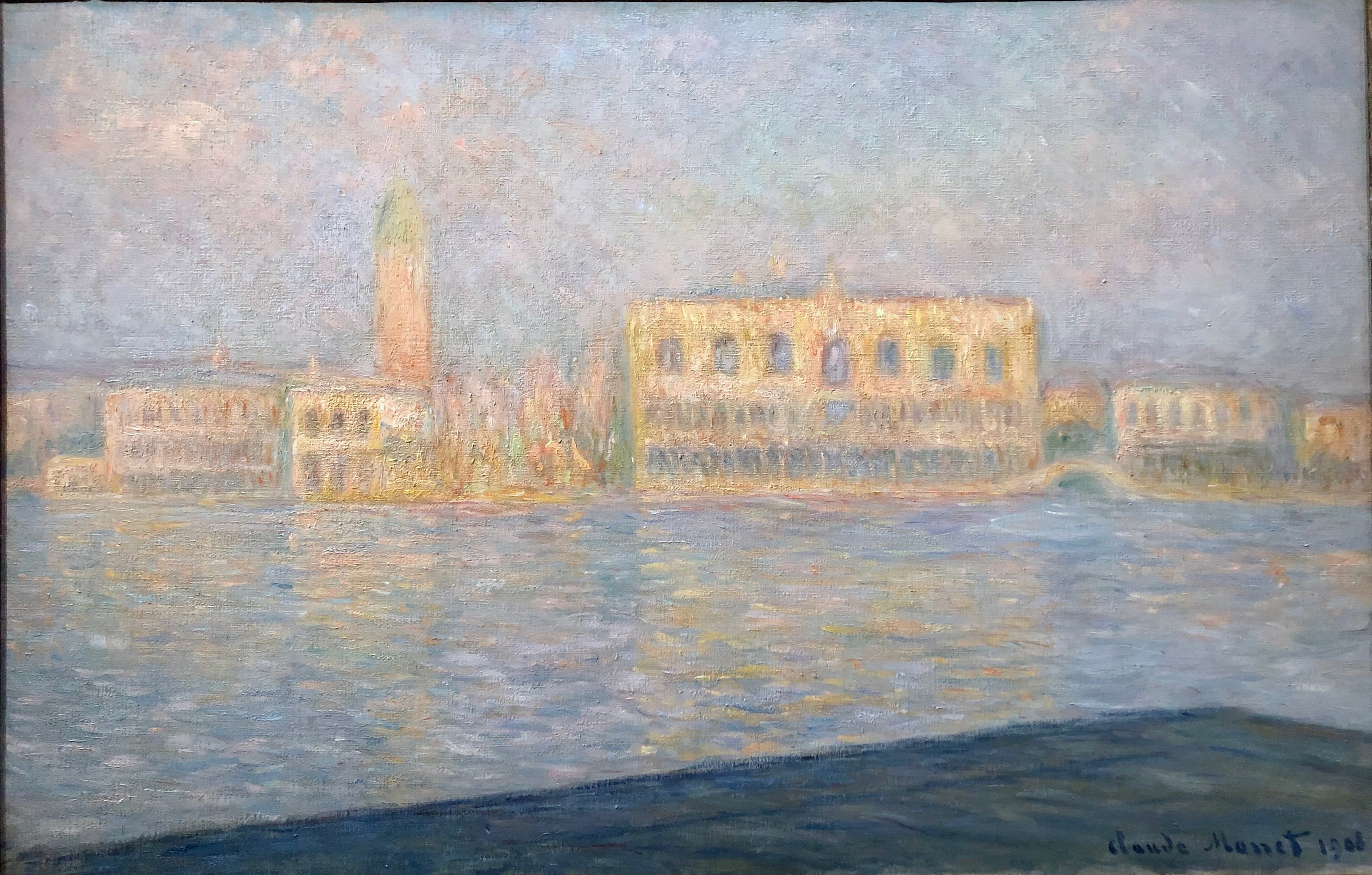
The Palazzo Ducale, Seen from San Giorgio Maggiore (Guggenheim)
Claude Monet · 1908
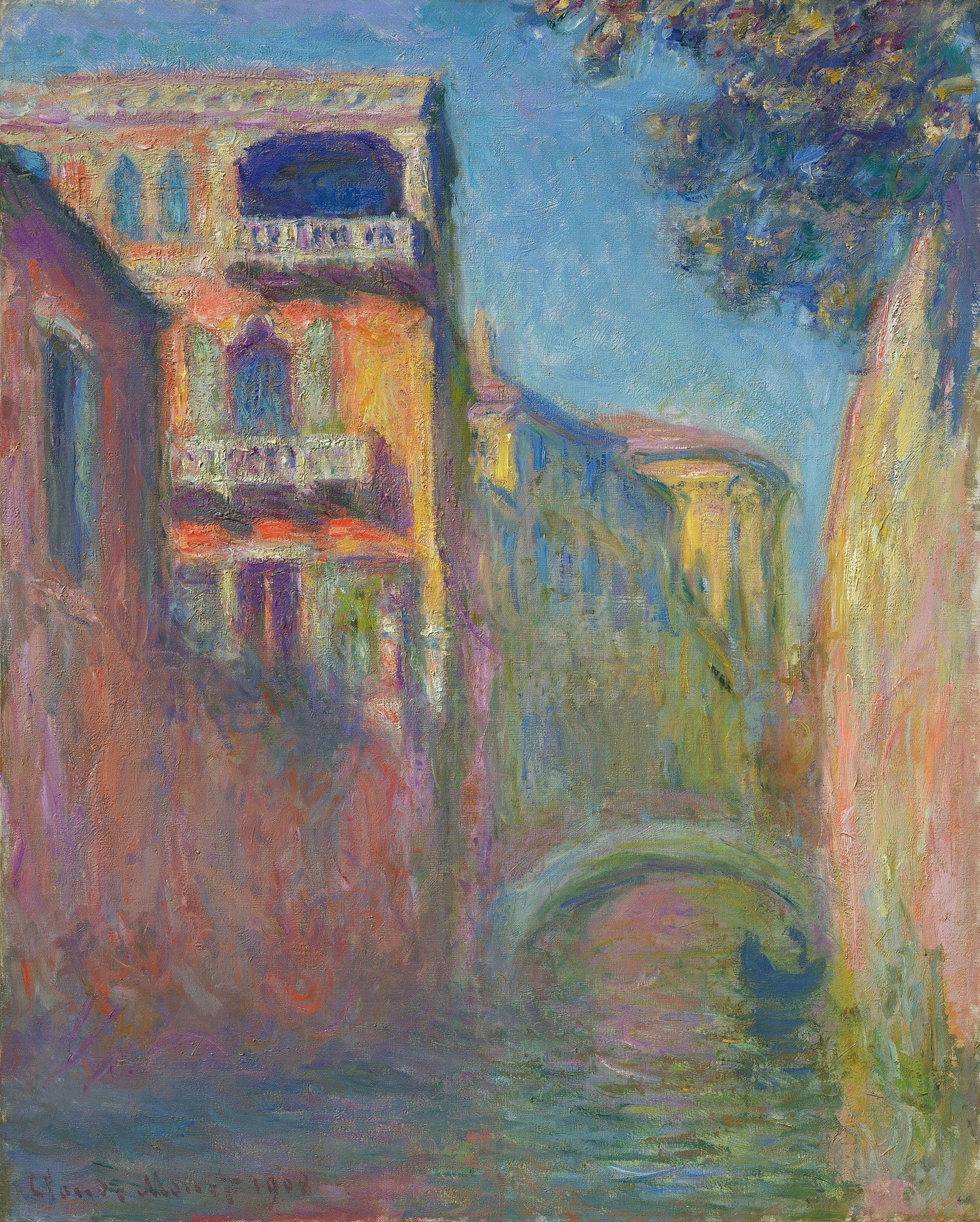
The Rio della Salute
Claude Monet · 1908