Image: Musée Marmottan Monet, Paris · Public domain · via Wikimedia Commons
Charing Cross Bridge, London (Marmottan study)
Claude Monet, c. 1899–1901
Charing Cross Bridge (c. 1899–1901) is an unfinished study by Claude Monet: the London bridge and skyline blocked in with dark blue-violet strokes on a bare cream canvas. It came from Monet's studio and is in the Musée Marmottan Monet, Paris.
- Artist
- Claude Monet
- Date
- c. 1899–1901
- Medium
- Oil on canvas
- Dimensions
- 60 × 100 cm
- Collection
- Musée Marmottan Monet, Paris, France
- Movement
- Impressionism
- Catalogue
- Wildenstein 1553
- The City
- Water & Sea
Charing Cross Bridge in the Musée Marmottan Monet is a working study Claude Monet made in London, probably during one of his stays of 1899–1901, and never took further. Instead of the colored fog of his finished Thames pictures, it shows the bridge, a passing train and the far skyline drawn in rapid strokes of dark blue and violet across a bare, cream-colored canvas. It stayed in Monet's studio at Giverny and came to the Marmottan with the bequest of his son Michel Monet in 1966 (inv. 5101).
What you are looking at
The canvas is wide, about 60 by 100 cm, and nearly two thirds of it is untouched or thinly washed with a pale cream ground. Across the middle, a band of dark ink-blue and purple strokes forms the bridge and the buildings behind it. At left, a blocky mass of dark shapes and a small dome mark the Charing Cross end of the bridge and the station buildings. In the center, a rounded dark cloud sits on the deck, the smoke or bulk of a train. On the right, behind the bridge, a low line of trees and buildings ends in a small pale dome or tower.
The bridge's piers are a row of dark vertical rectangles, and between them Monet scrubbed in patches of warm pink and gray. On the water below, a few long horizontal strokes of dark blue and green mark reflections or the wake of a boat, and a faint ghostly loop in the lower center may be a boat sketched and then abandoned. The upper half is a smooth, pale, slightly yellowed field: either the fog itself, or simply ground waiting for paint.
Where and when it was painted
Monet painted the Thames from the Savoy Hotel in autumn 1899 and in the late winter and spring of 1900 and 1901. Looking upriver, he saw the Hungerford railway bridge, called Charing Cross Bridge after its terminus; looking downriver he saw Waterloo Bridge. He kept dozens of canvases going at once and later finished many in his Giverny studio for the 1904 exhibition at Durand-Ruel's gallery. Our Monet in London hub follows the project.
This study's dark, drawn character, with the structure stated plainly, suggests a day of relatively clear visibility, unusual for the series.
How it was painted
The paint is thin and fluid, applied with a loaded brush in quick horizontal and vertical marks, almost like ink drawing. Monet established the architecture first, with dark tones, before beginning the atmospheric layers that would normally cover it. Here those layers never came. The result shows how firm the underlying design of the London pictures was: the bridge sits at the same height and the same angle as in the finished canvases, and the spacing of the piers matches.
How this version differs
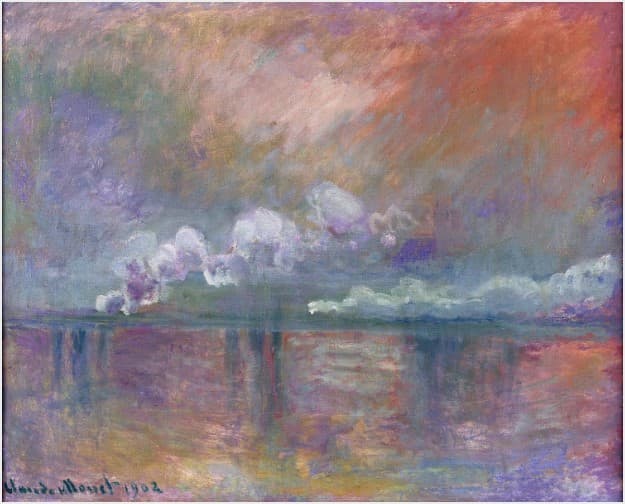
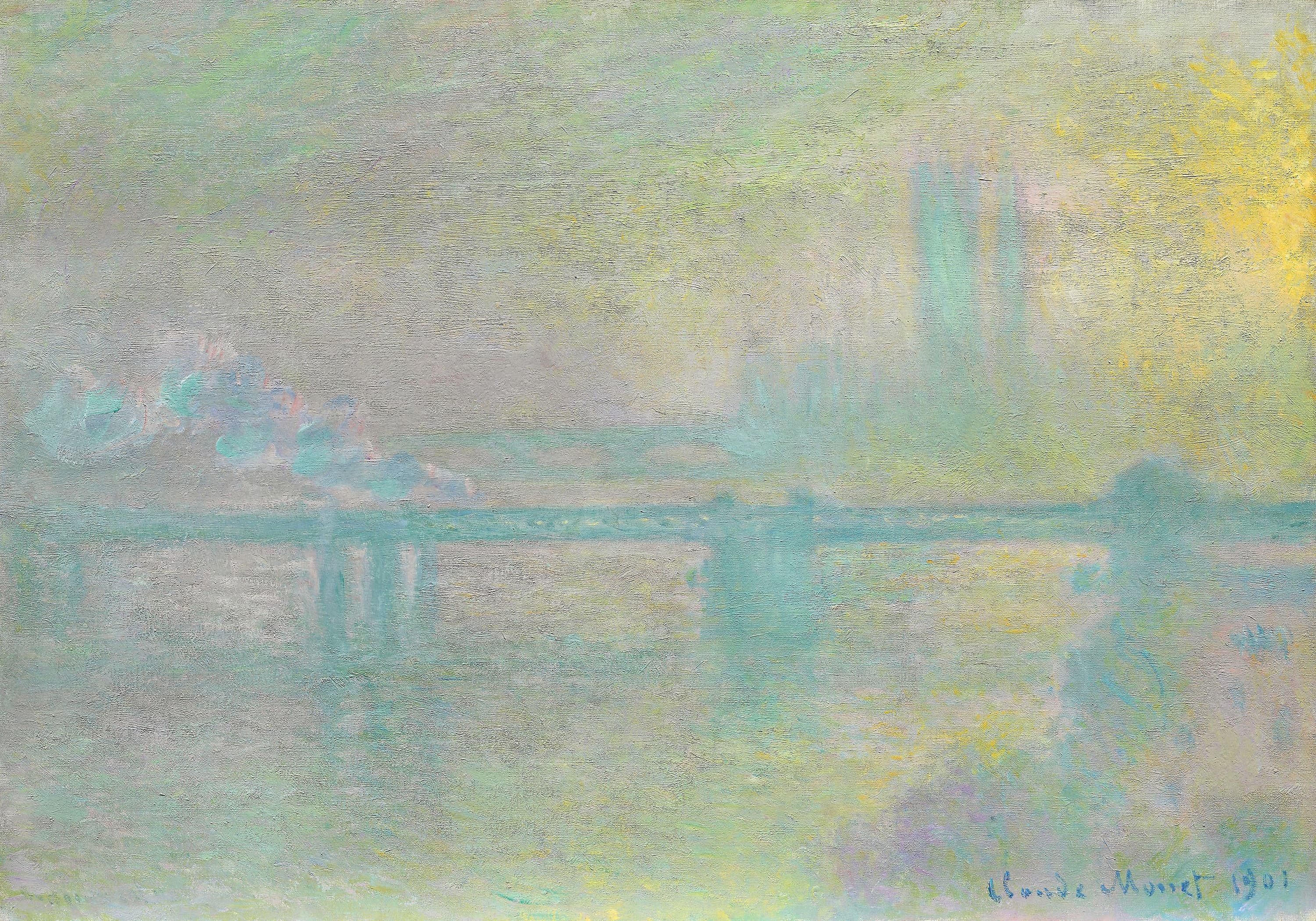
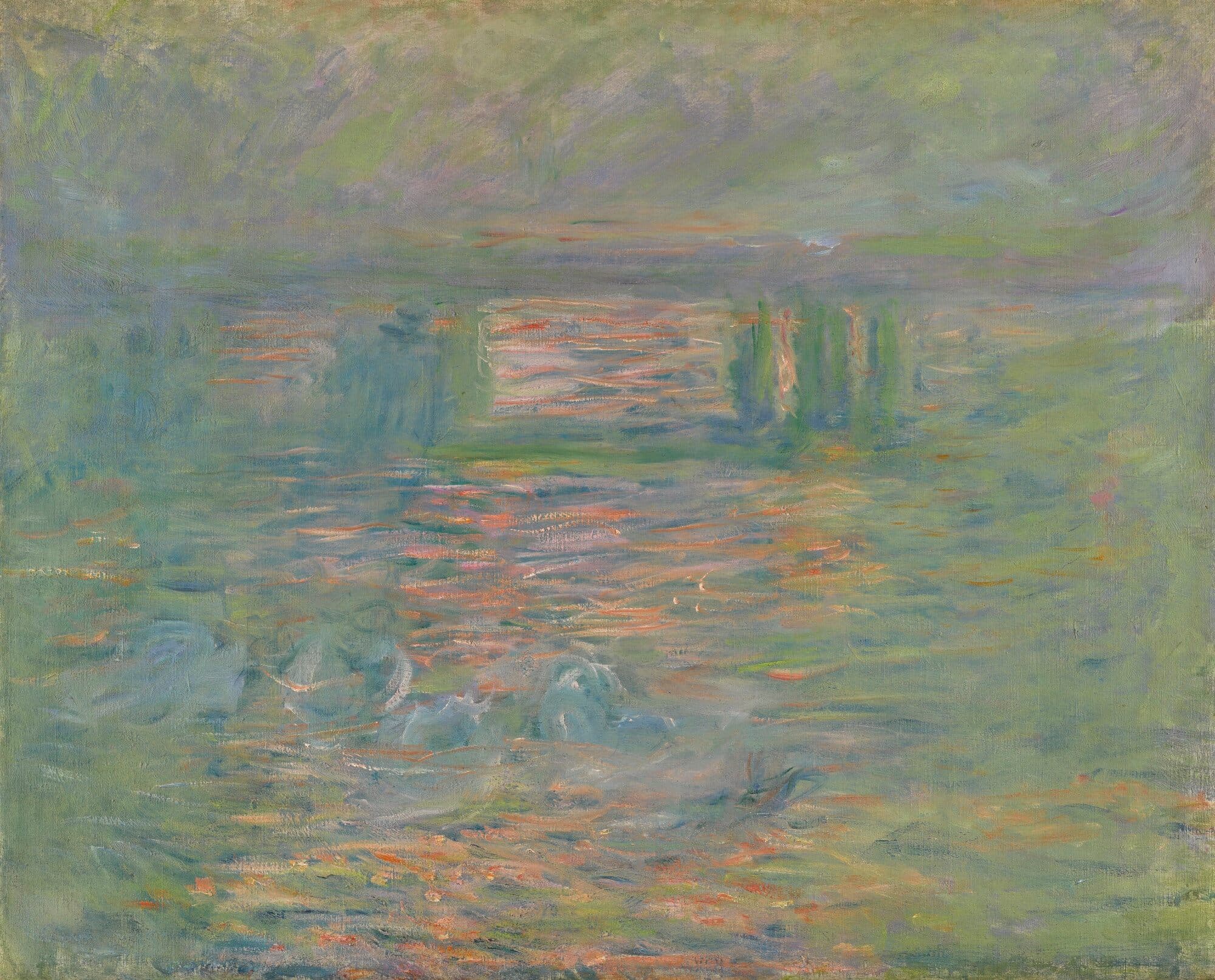
Set it beside a finished canvas such as Charing Cross Bridge, London in Chicago, where the bridge is a pale shape barely distinguishable from the mist, and the contrast is startling: the Marmottan study is dark on light, the finished picture light on light. It belongs with the sketch-like Indianapolis canvas as evidence of Monet's process. The same museum also owns the brilliantly colored Charing Cross Bridge, Smoke in the Fog, so visitors can see both ends of the process in one place. All versions are on our Charing Cross Bridge series page.
The studio inheritance
When Monet died in 1926, hundreds of canvases remained at Giverny: late water lilies, garden pictures, and unfinished works from earlier campaigns like this one. His son Michel kept them largely out of sight and, on his death in 1966, left them to the Académie des Beaux-Arts, which placed them in the Musée Marmottan. That bequest is why the Marmottan holds the world's largest Monet collection, and why it is rich in exactly this kind of private, unfinished work.
Where to see it
The study is in the Musée Marmottan Monet in Paris's 16th arrondissement; see our Marmottan guide for the collection and visiting tips. Not every work is on permanent display. Note that catalogue numbers for this canvas vary between sources: Wikidata gives Wildenstein 1553, while the Commons image file is labeled W 1554.
Questions & answers
Where is this Charing Cross Bridge study by Monet?
It is in the Musée Marmottan Monet in Paris (inv. 5101). It came from Monet's own studio through the 1966 bequest of his son Michel Monet, which also gave the museum most of its late water lilies.
Is it finished?
No. It is a working study: the bridge, train and skyline are blocked in with dark blue and violet strokes, and much of the cream canvas is bare. Monet never added the colored atmospheric layers of his finished London pictures.
When was it painted?
During Monet's London campaigns of 1899–1901, when he painted the Thames from the Savoy Hotel. Wikidata dates it about 1900; Monet kept it in his studio until his death.
How does it compare with the finished Charing Cross Bridge paintings?
It reverses their logic. Finished canvases are light on light, with the bridge dissolving in colored fog. This study is dark on light, showing the firm structure Monet laid in first, which later layers would normally hide.
More by the artist
Claude Monet
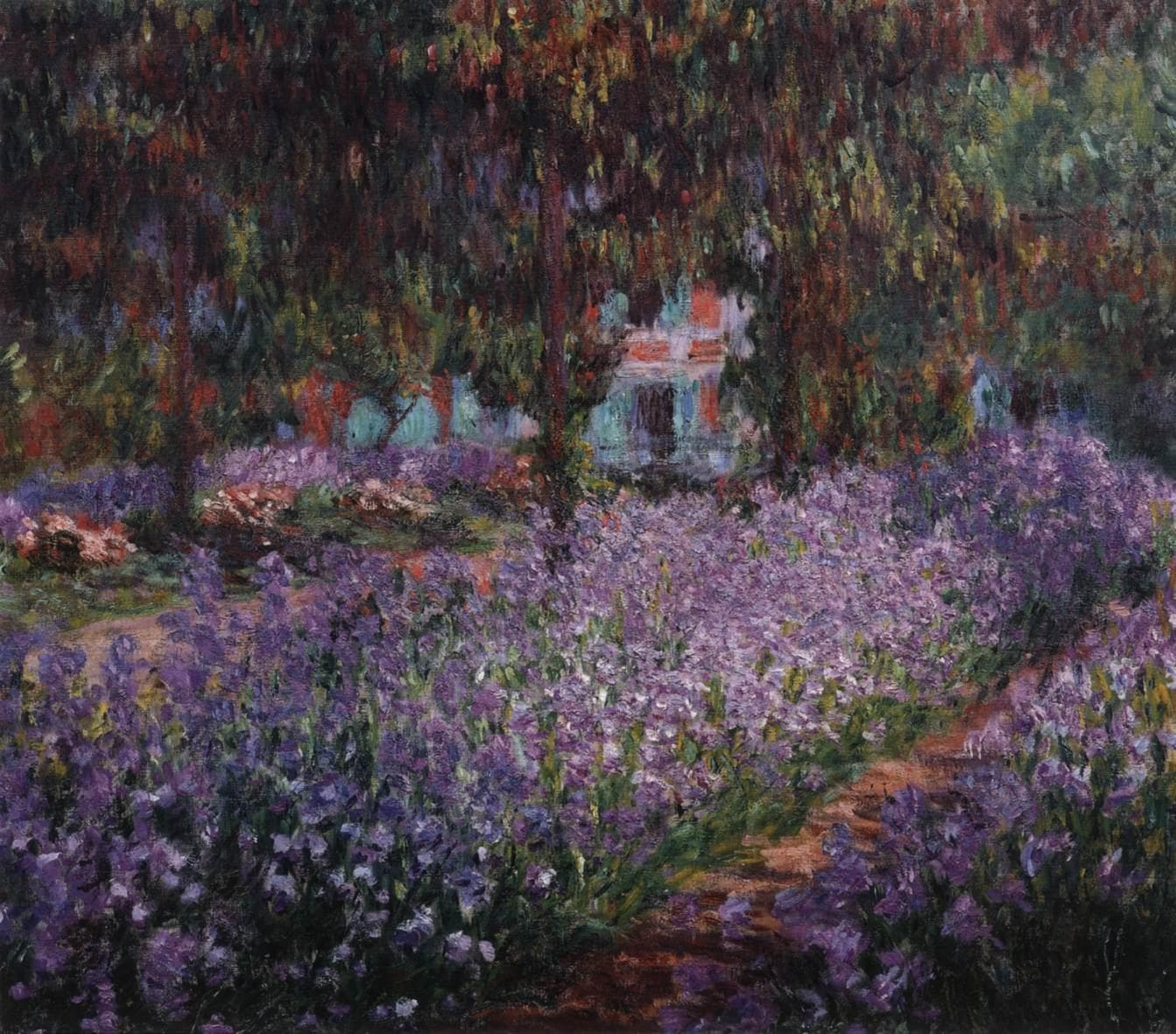
Irises in Monet's Garden at Giverny
Claude Monet · 1900
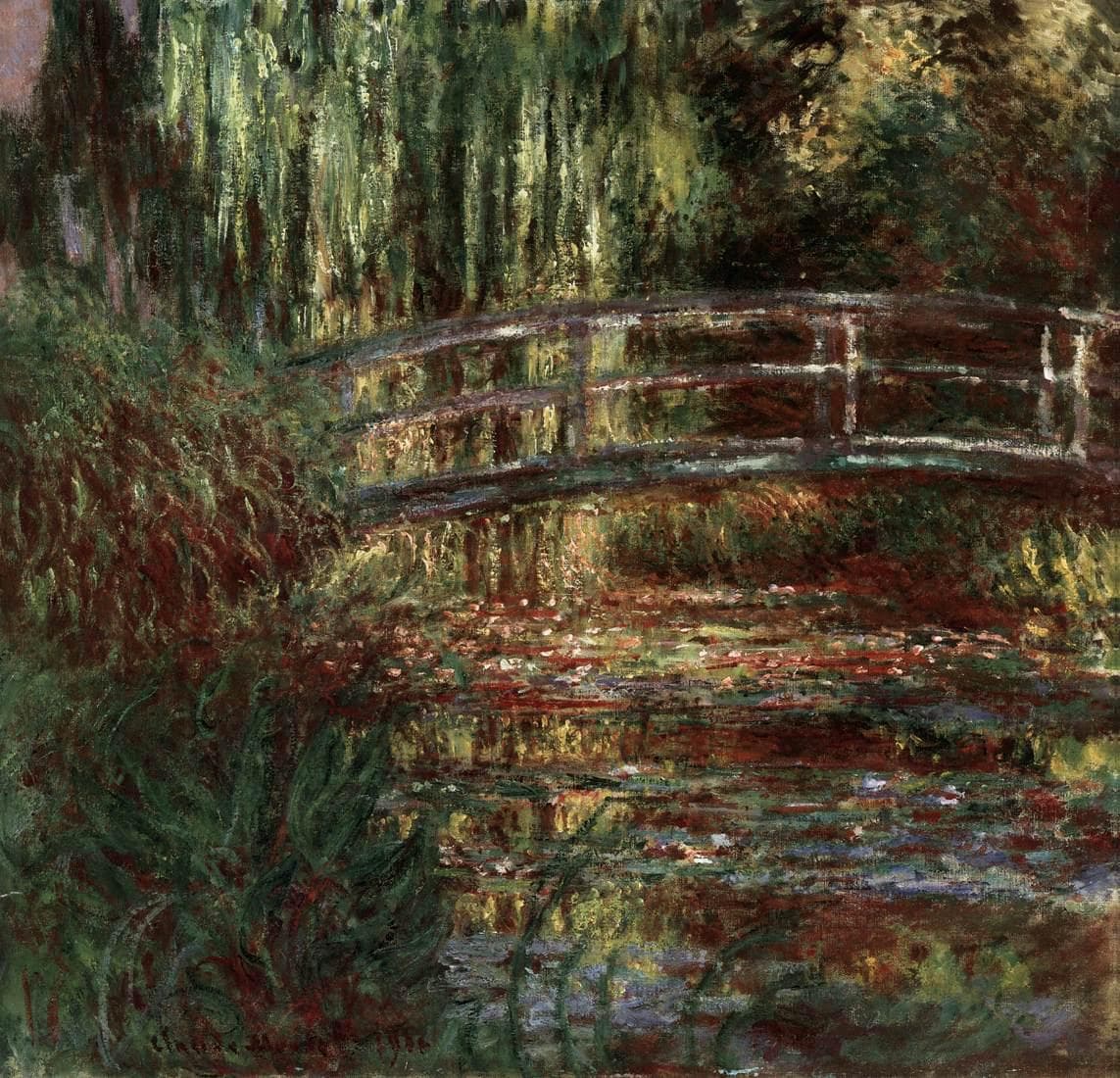
The Water Lily Pond
Claude Monet · 1900
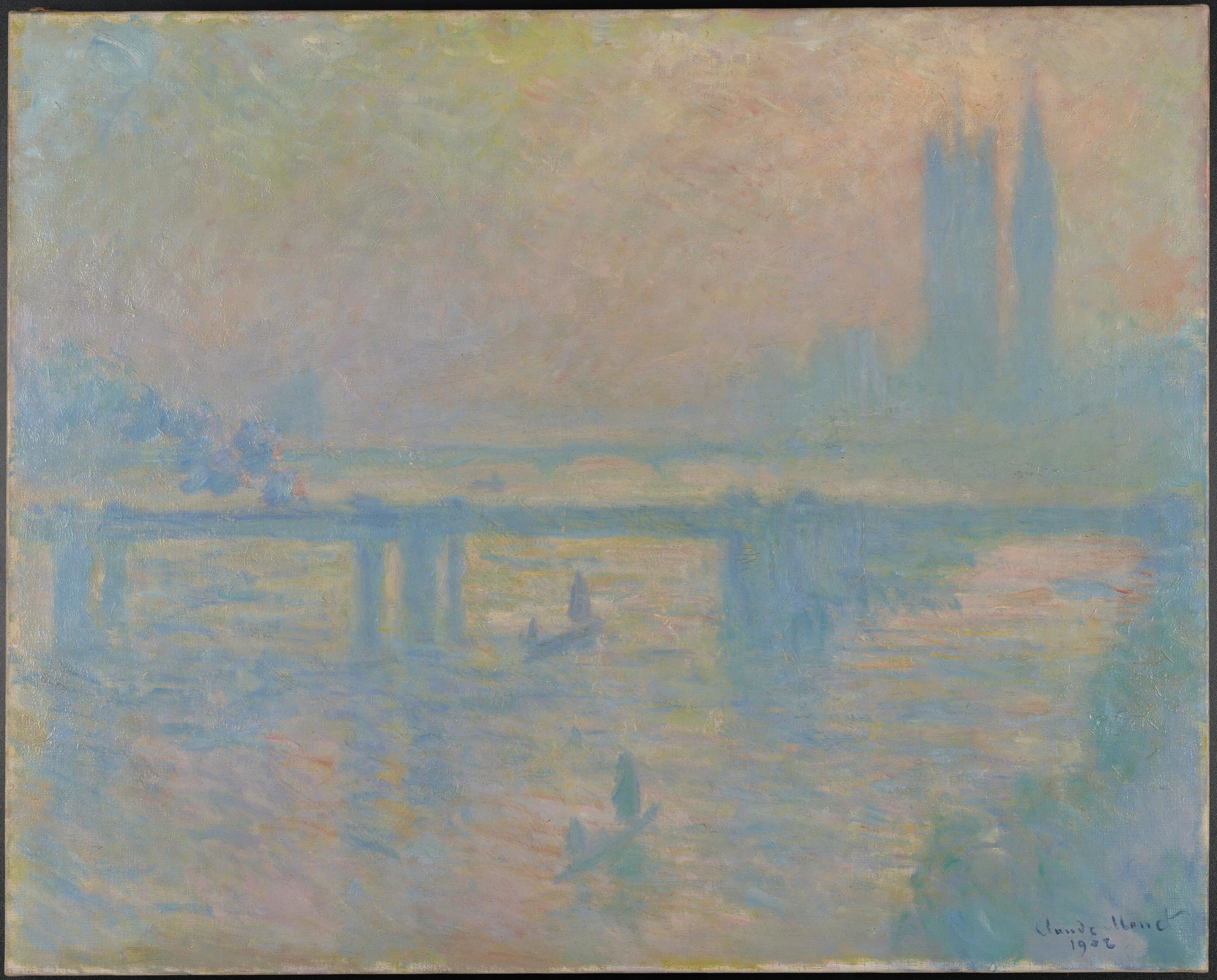
Charing Cross Bridge (Cardiff)
Claude Monet · c. 1900 (dated 1902)
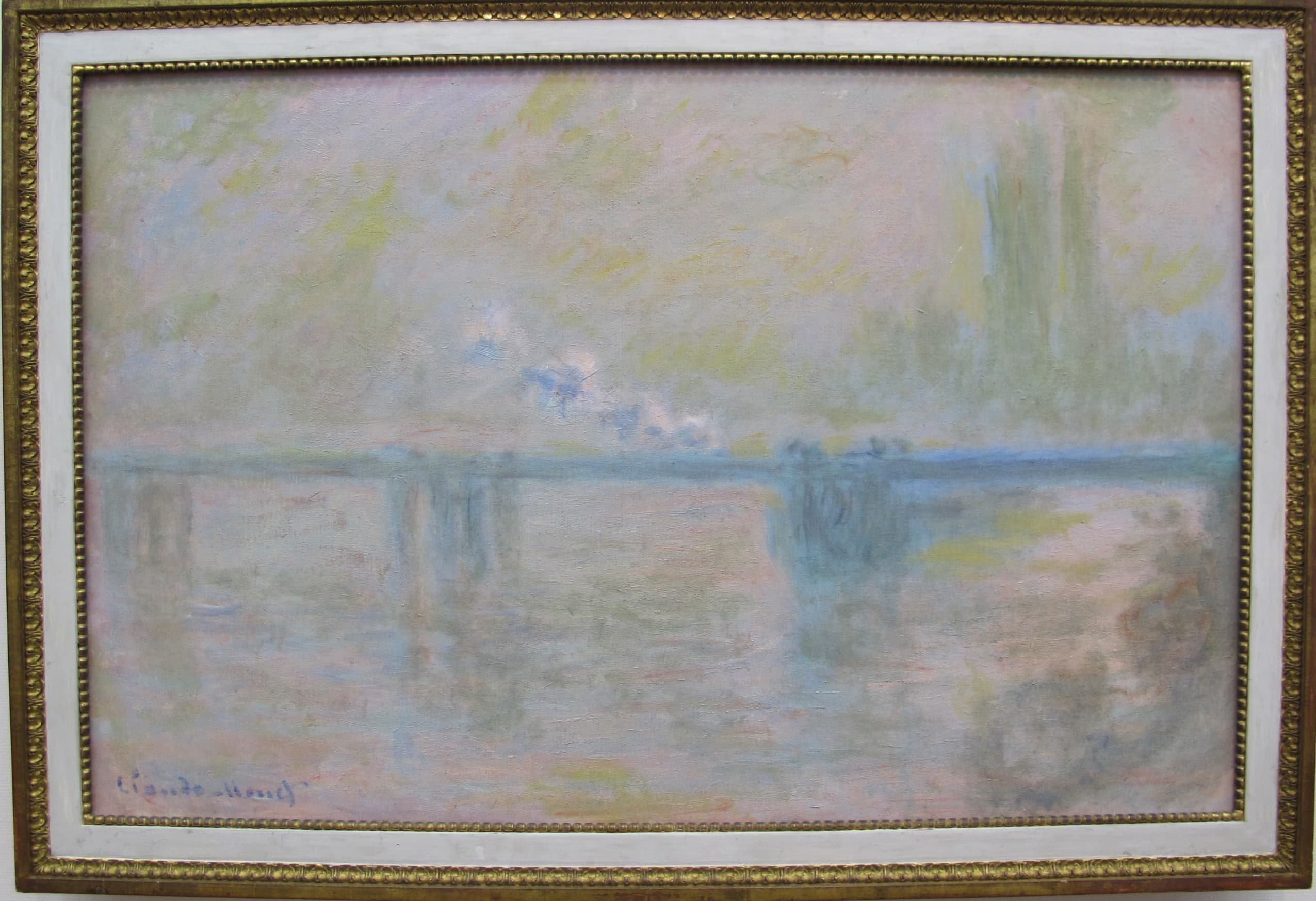
Charing Cross Bridge (Overcast Day)
Claude Monet · 1900
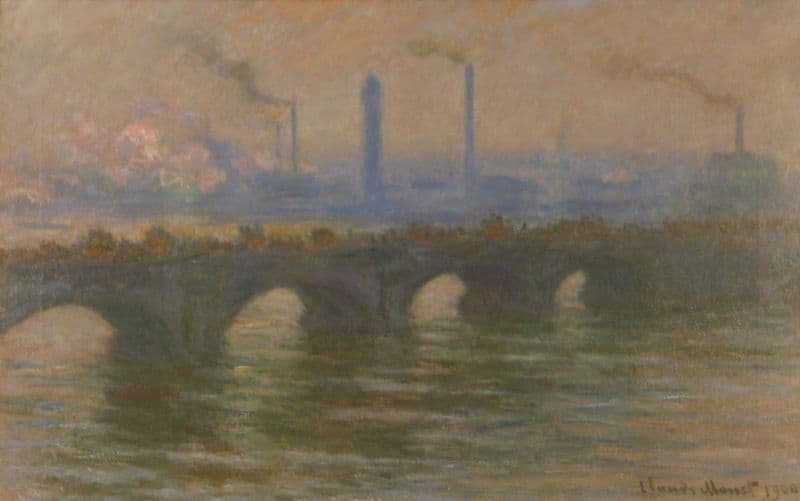
Waterloo Bridge, Overcast Weather
Claude Monet · 1900

Bridge over a Pond of Water Lilies
Claude Monet · 1899
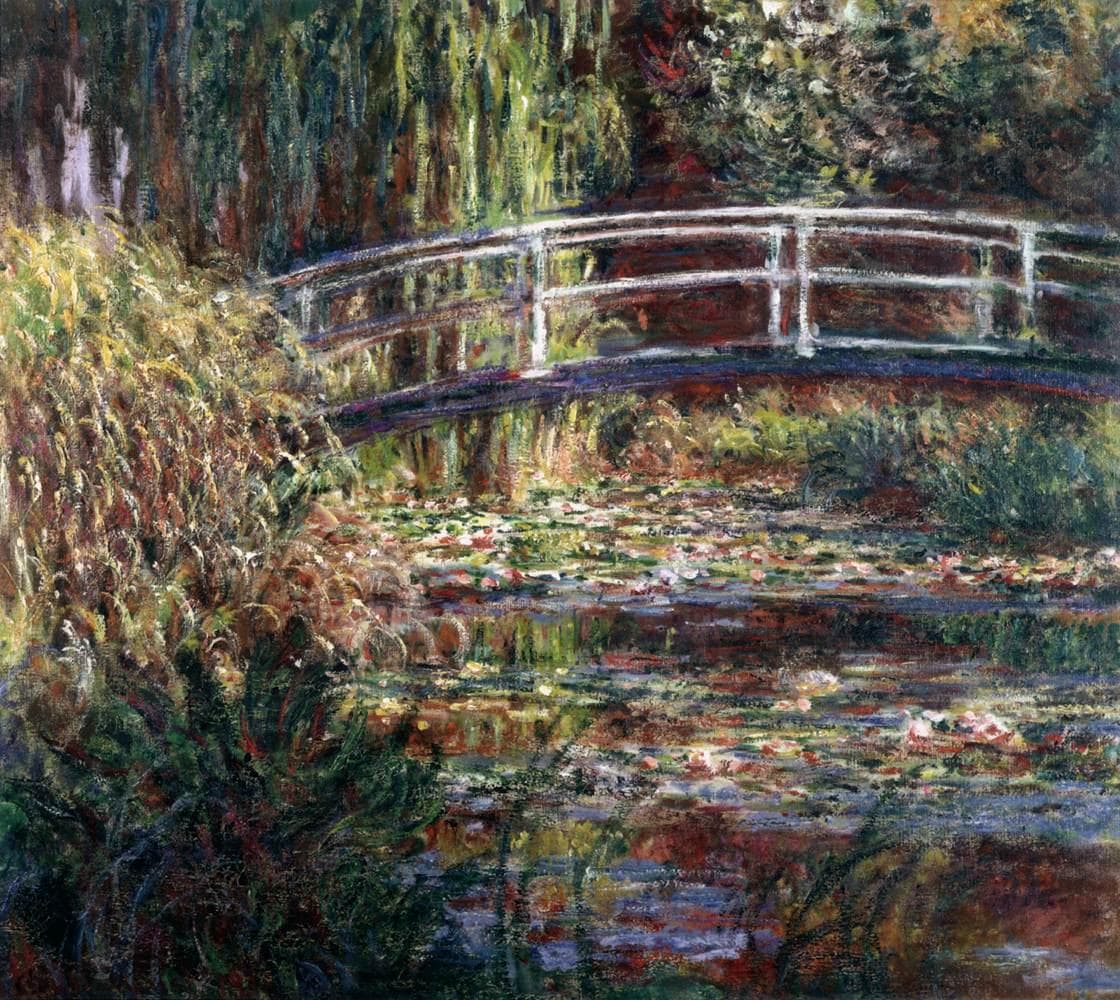
The Water Lily Pond, Harmony in Rose
Claude Monet · 1900
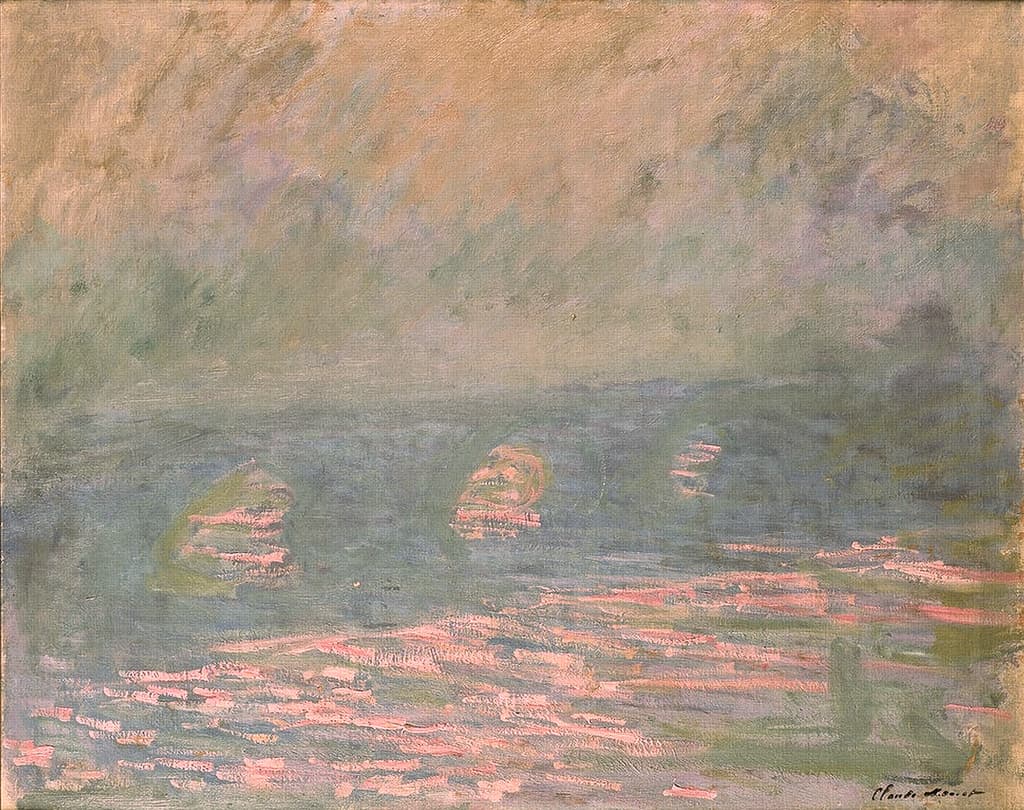
Waterloo Bridge (Matsushita Museum of Art)
Claude Monet · 1899–1901
Also painted in 1900
The same year
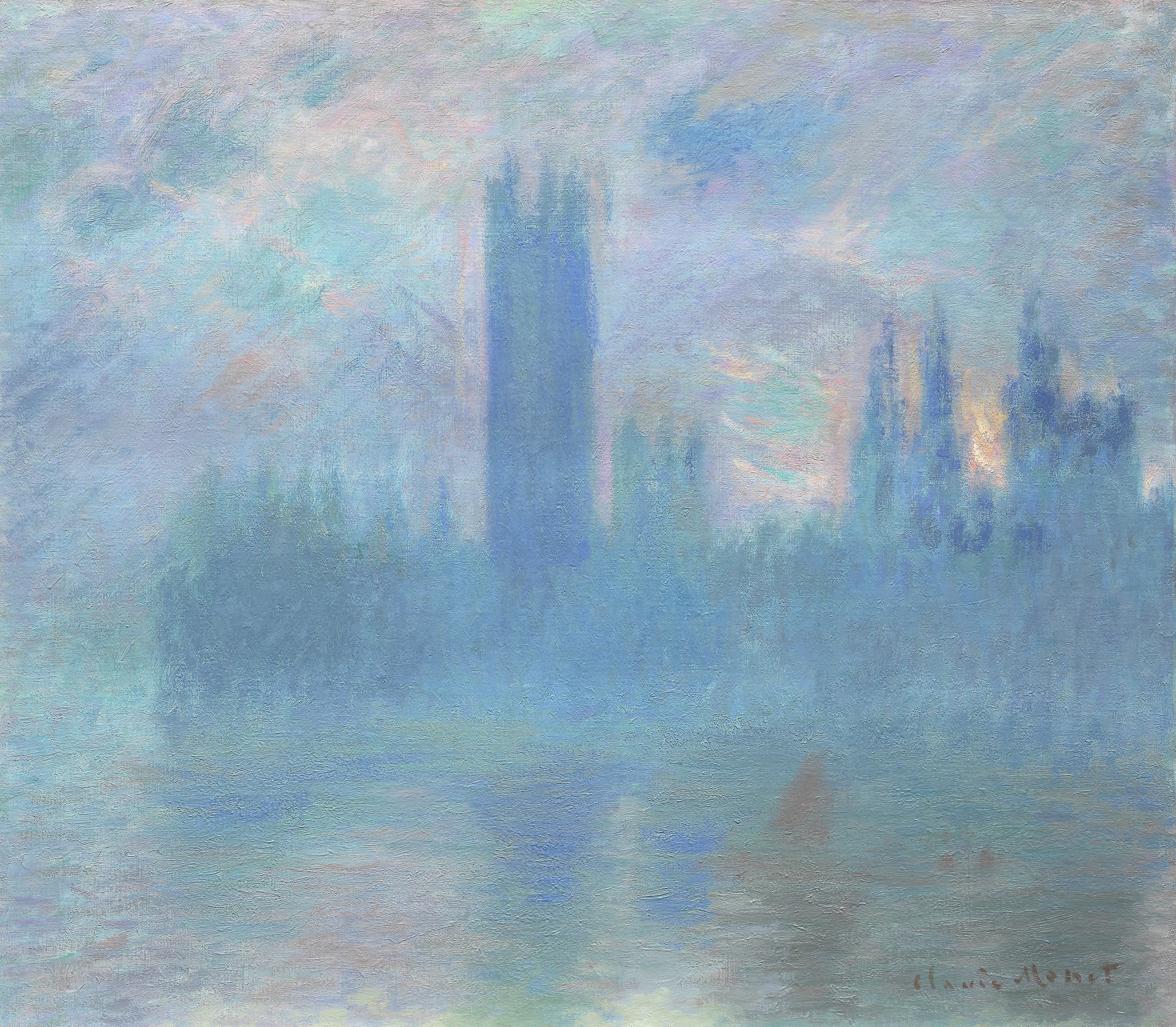
Houses of Parliament, London
Claude Monet · 1900–01
Houses of Parliament, Symphony in Rose
Claude Monet · 1900
The Japanese Bridge or The Lily Pond
Claude Monet · 1900
Waterloo Bridge, London, Sun Effect
Claude Monet · 1899–1901
Waterloo Bridge (Santa Barbara Museum of Art)
Claude Monet · 1900
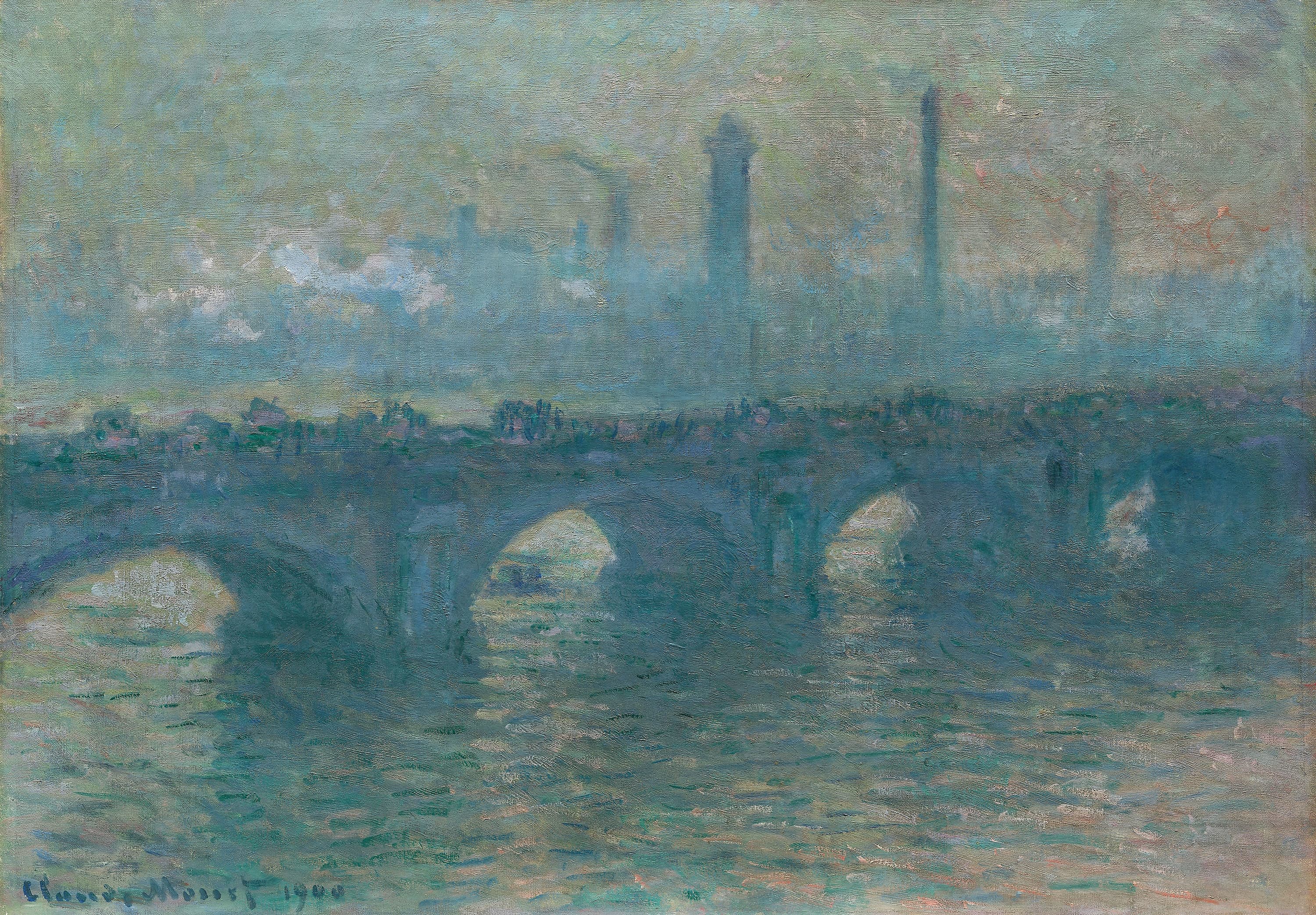
Waterloo Bridge, Gray Weather
Claude Monet · 1900
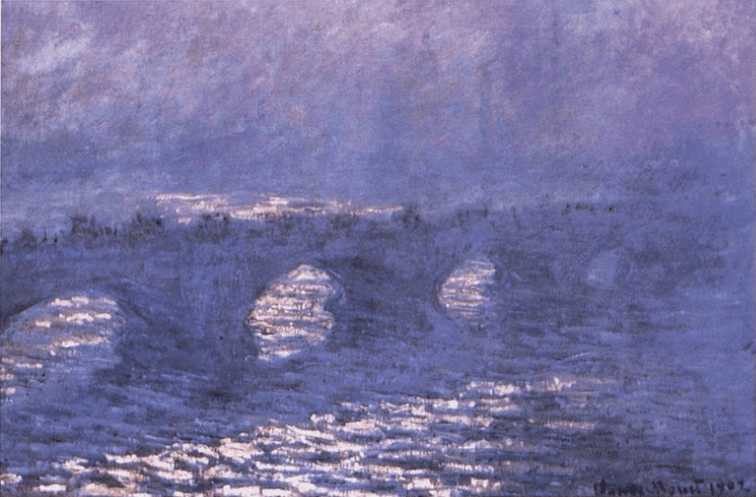
Waterloo Bridge, Effect of Sun in the Mist
Claude Monet · c. 1900–03
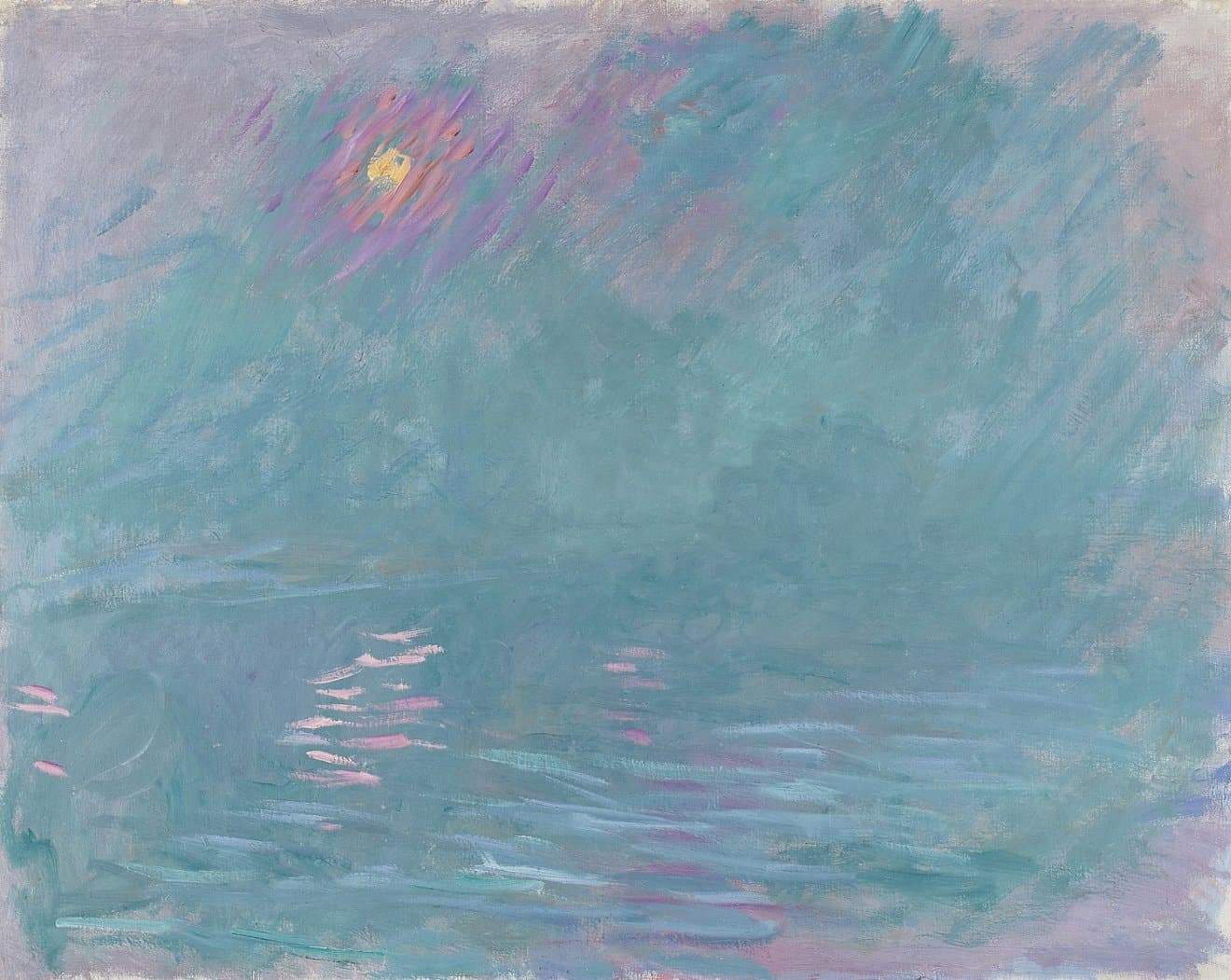
Waterloo Bridge (Kerry Stokes Collection)
Claude Monet · 1899–1901
Kindred works
You may also study
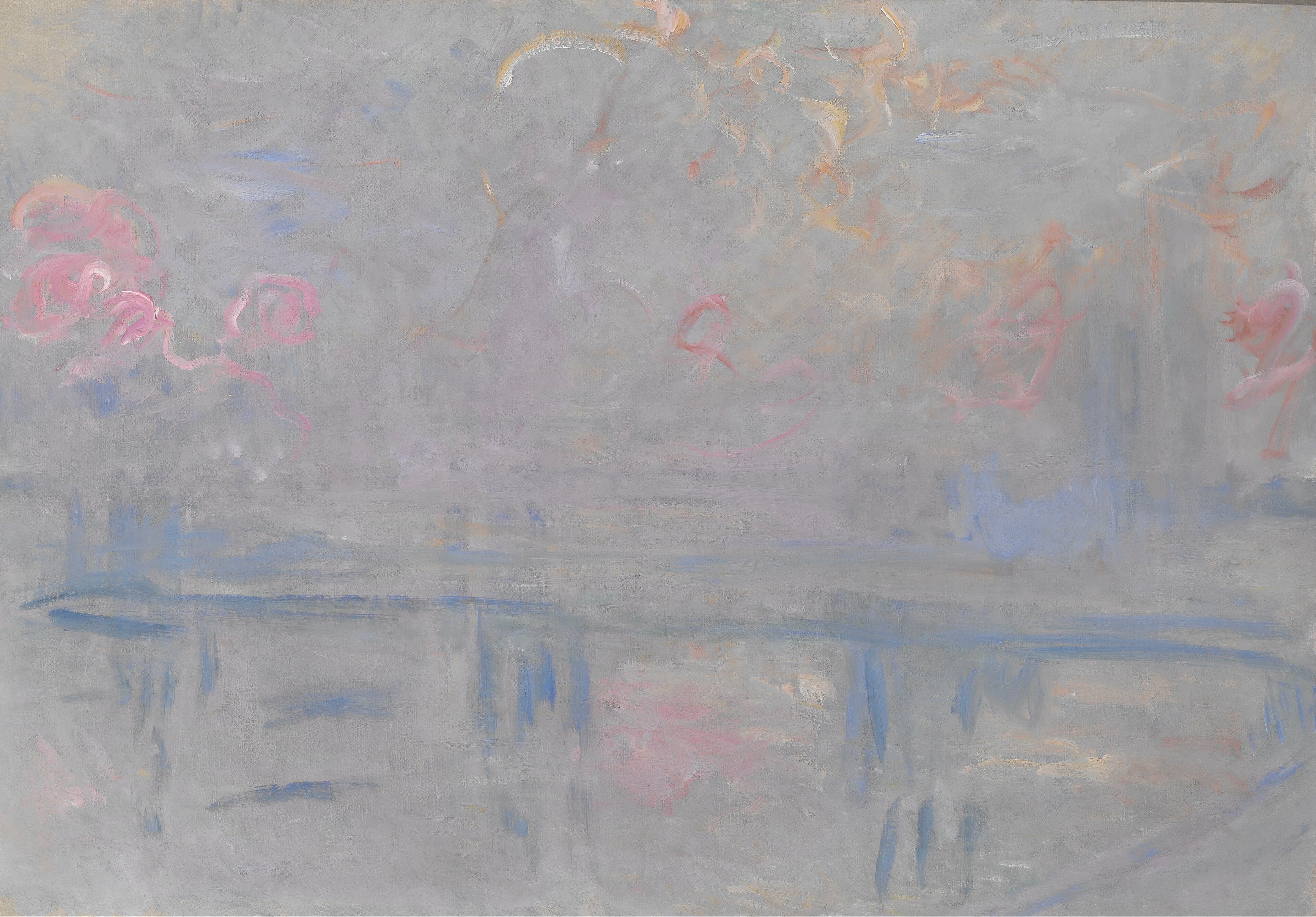
Charing Cross Bridge (Indianapolis)
Claude Monet · c. 1900
Charing Cross Bridge, Smoke in the Fog, Impression
Claude Monet · 1902
Charing Cross Bridge, London
Claude Monet · 1901
Charing Cross Bridge (private collection, c. 1900)
Claude Monet · c. 1899–1901
Waterloo Bridge, Effect of Fog
Claude Monet · 1903
Palazzo da Mula, Venice
Claude Monet · 1908
The Church of San Giorgio Maggiore, Venice
Claude Monet · 1908
The Grand Canal, Venice
Claude Monet · 1908