Image: Santa Barbara Museum of Art · Public domain · via Wikimedia Commons
Waterloo Bridge (Santa Barbara Museum of Art)
Claude Monet, 1900
Waterloo Bridge is an 1900 Claude Monet canvas of the Thames at early morning: a violet bridge against an opal sky streaked with factory smoke, the river glittering gold below. It is in the Santa Barbara Museum of Art, California.
- Artist
- Claude Monet
- Date
- 1900
- Medium
- Oil on canvas
- Dimensions
- 65.4 × 92.7 cm
- Collection
- Santa Barbara Museum of Art, Santa Barbara, United States
- Movement
- Impressionism
- Catalogue
- Wildenstein 1555
- The City
- Water & Sea
This Waterloo Bridge is one of the views of the Thames that Claude Monet painted from his room at the Savoy Hotel in London. Signed and dated 1900 at lower left, it measures 65.4 × 92.7 cm and is number 1555 in the Wildenstein catalogue raisonné. It came to the Santa Barbara Museum of Art in California as part of the bequest of Katharine Dexter McCormick, in memory of her husband Stanley McCormick (1968.20.7), and is on view in the museum's nineteenth-century European galleries.
What you're looking at
The museum's label calls it "apparitional," and that is the right word. The sky is a soft haze of lilac, rose and grey-gold. Rising into it on the far bank are the tall chimneys of the south bank's factories, painted as faint vertical smudges, and at the right a squat dark shape that reads as a gasholder or industrial building. Long trails of smoke drift across the upper canvas.
The bridge crosses the middle in a band of dusky violet and blue. Its arches are lit from behind: through three of them the light glows yellow-green and orange, as if the sun were low beyond the bridge, on the far side of the river. Along its top, small touches of color suggest the morning traffic.
Below, the river is the most vivid part of the picture. It is covered with short, broken strokes of gold, cream, lilac and green, a sheet of sunlight flickering on moving water. Two small dark shapes, a boat and its mooring or a pair of barges, stand in the middle distance.
The contrast between the solid violet bridge and the glittering, almost weightless river is what defines this version. It captures early morning, when the sun is still low in the east, behind the bridge.
Where and when it was painted
Monet painted Waterloo Bridge from the Savoy during his London visits of 1899, 1900 and 1901, working in the morning before turning to Charing Cross Bridge and the Houses of Parliament. As the Santa Barbara label notes, he was drawn to subjects where natural and man-made atmosphere mixed: the fog off the river and the smoke from the factories across it.
How it was painted
The water is built up from dozens of small, separate strokes laid over a darker base, so that the gold seems to float on the surface. The bridge is painted in broader, flatter strokes, which keeps it quiet. In the sky, Monet lays thin, dragged layers over each other to create the opalescent haze. He dated the canvas 1900, but like most of the series it may have been revised at Giverny before the 1904 exhibition.
How this version differs
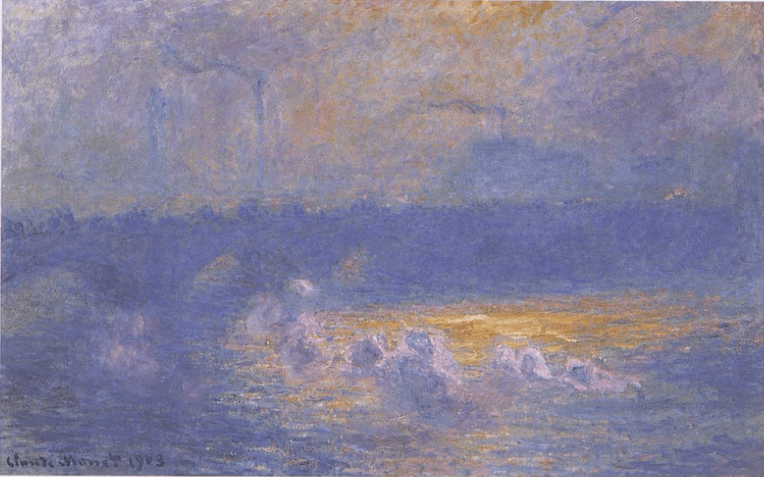
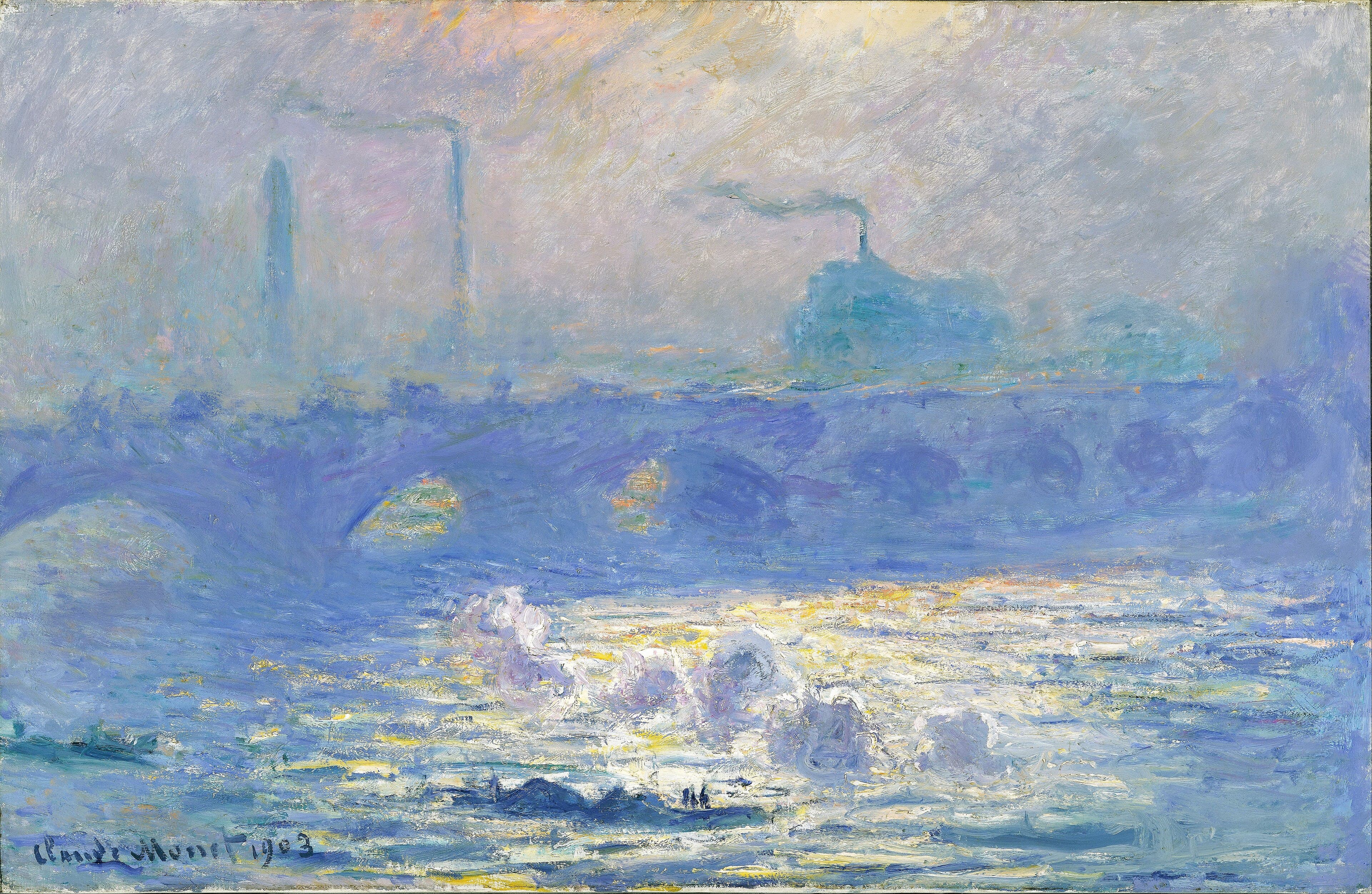
Within the Waterloo Bridge series, it is closest to the Baltimore Waterloo Bridge, Sunlight Effect with Smoke, where the sun's glitter is broken by white puffs of steam, and the Denver Waterloo Bridge, Sunlight Effect. Compared with the Art Institute of Chicago's cool, green-grey Waterloo Bridge, Gray Weather, also dated 1900 and the same size, this is the warm, sunlit counterpart.
A detail to look for
In the middle distance, two dark vertical forms rise from the gold water: a boat with a mast and a smaller one beside it, or perhaps a pair of moored barges. They are the only dark, upright shapes on the river, and they sit almost exactly where the light is brightest. Monet uses them as a measure of scale and as a foil for the glitter around them. Without them the river would read as a flat sheet of gold; with them, it has depth and a sense of working life. Similar dark boats recur across the series, but rarely set so precisely in the heart of the light.
Where to see it
The Santa Barbara Museum of Art also owns Monet's Charing Cross Bridge of 1899, making it possible to compare two of the London series in one room (see Charing Cross Bridge). For the full London campaign, see Monet in London; for Claude Monet elsewhere, where to see Monet's paintings.
Questions & answers
Where is this Monet Waterloo Bridge?
It is in the Santa Barbara Museum of Art in California (1968.20.7), a bequest of Katharine Dexter McCormick in memory of her husband, Stanley McCormick. It is usually on view in the nineteenth-century European galleries.
When was it painted?
It is signed and dated 1900. Monet painted it from his room at the Savoy Hotel in London, where he stayed in 1899, 1900 and 1901, and may have reworked it at Giverny before showing the London series in 1904.
What does the painting show?
Waterloo Bridge at early morning: a violet bridge with light glowing through its arches, factory chimneys and smoke in an opal sky beyond, and the Thames covered in glittering gold reflections.
Why did Monet paint the same bridge so many times?
He wanted to record how London's fog, smoke and changing light transformed the same view. He kept dozens of canvases going at once, switching between them as the conditions changed.
More by the artist
Claude Monet
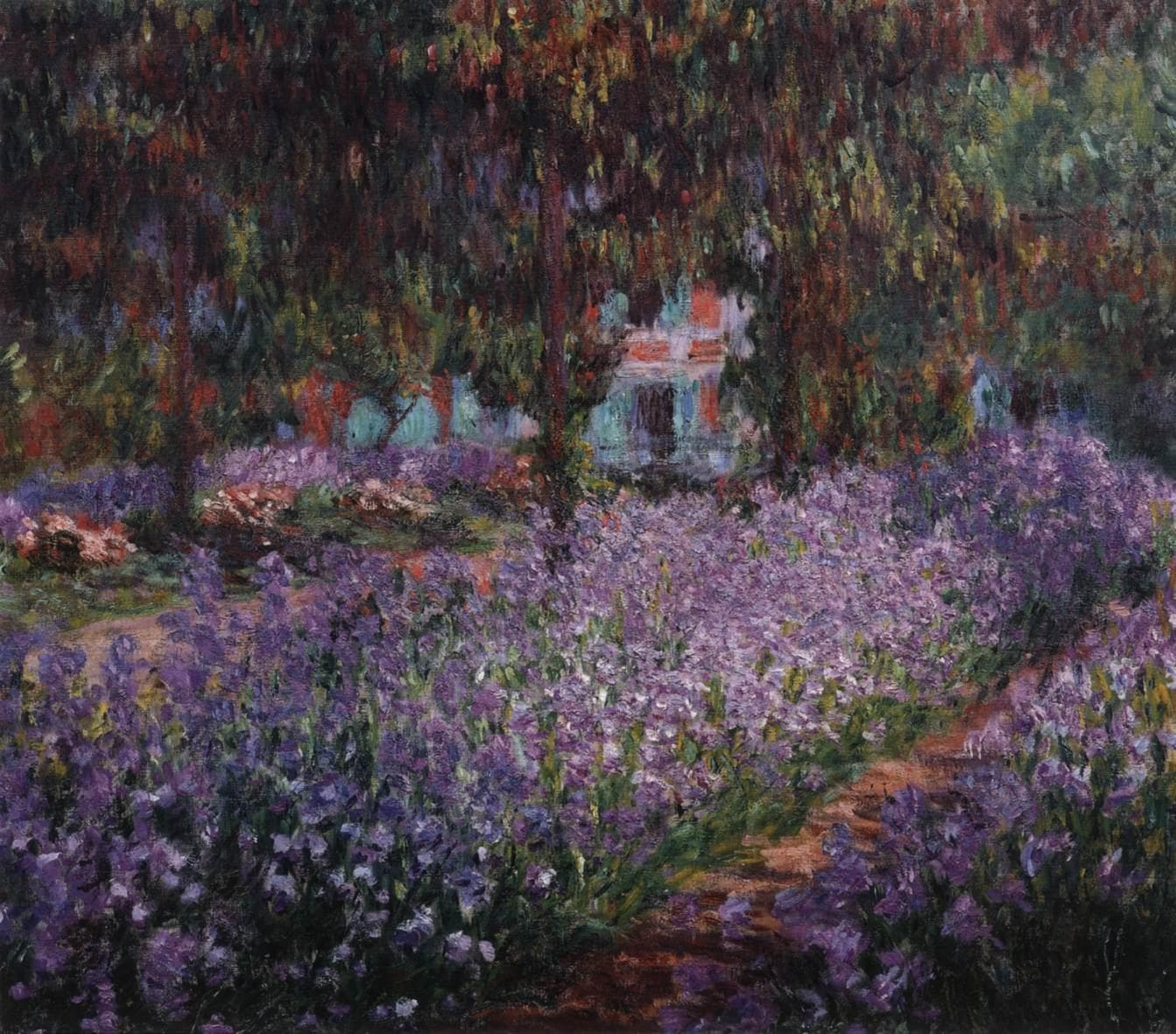
Irises in Monet's Garden at Giverny
Claude Monet · 1900
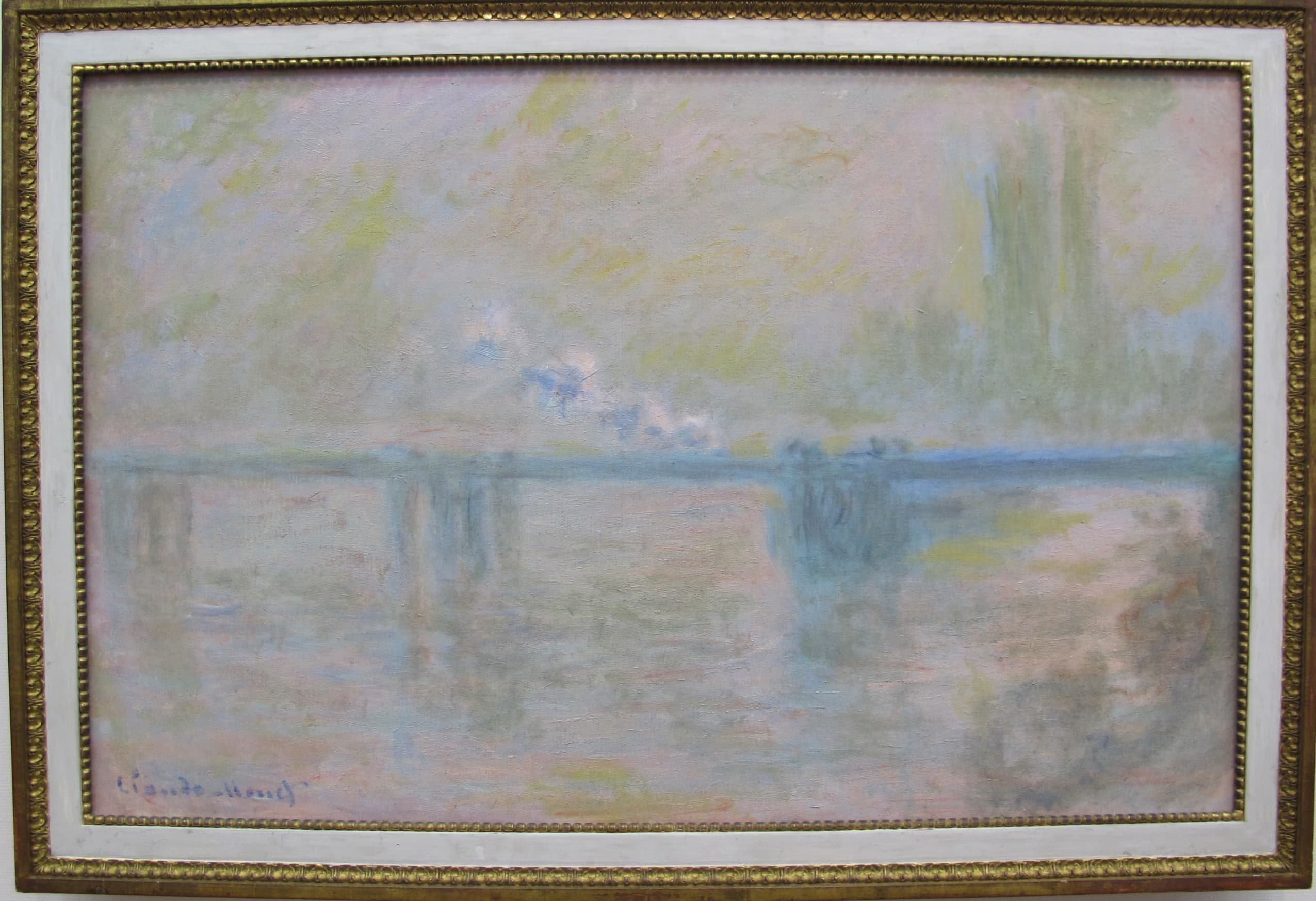
Charing Cross Bridge (Overcast Day)
Claude Monet · 1900
Houses of Parliament, Symphony in Rose
Claude Monet · 1900
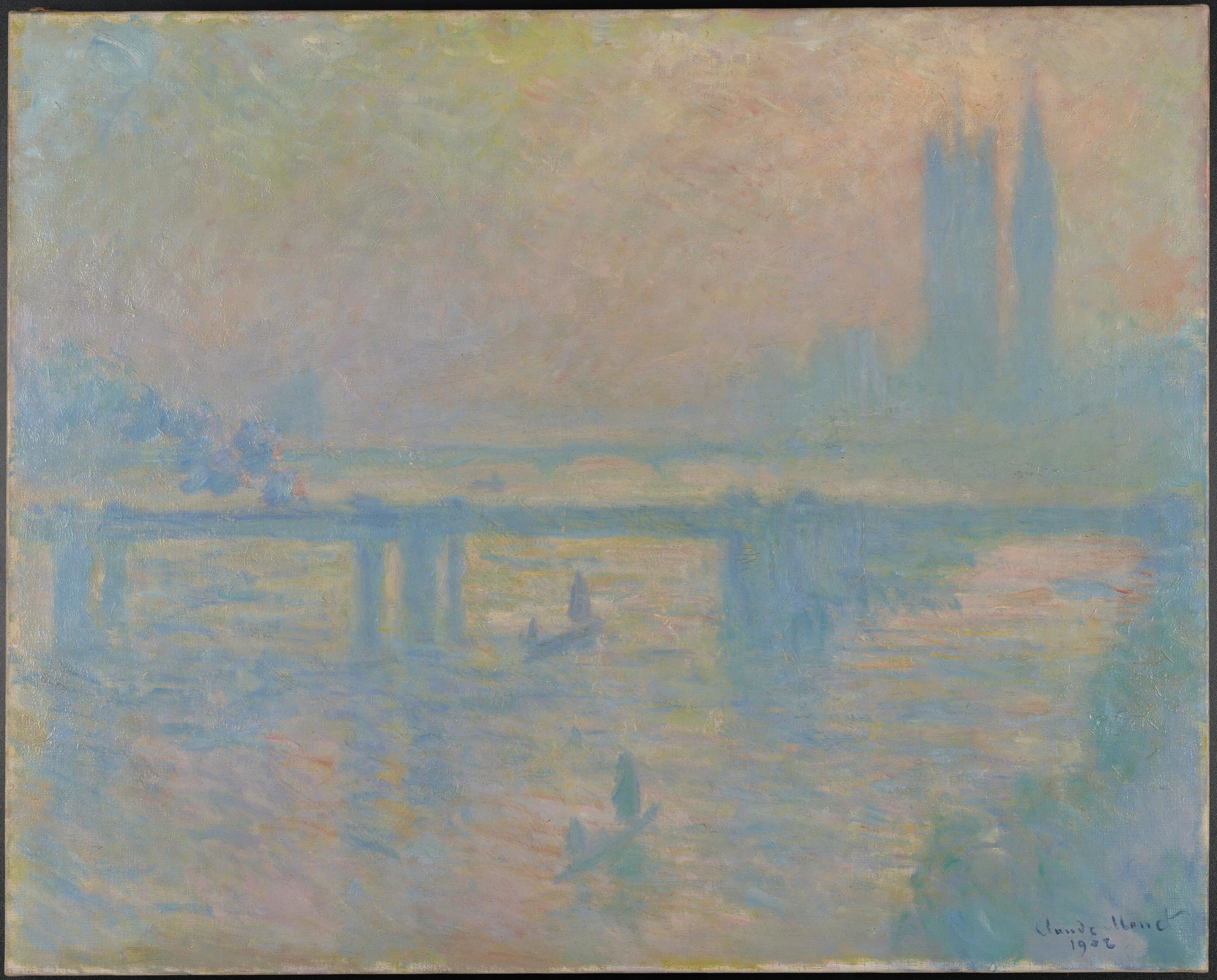
Charing Cross Bridge (Cardiff)
Claude Monet · c. 1900 (dated 1902)
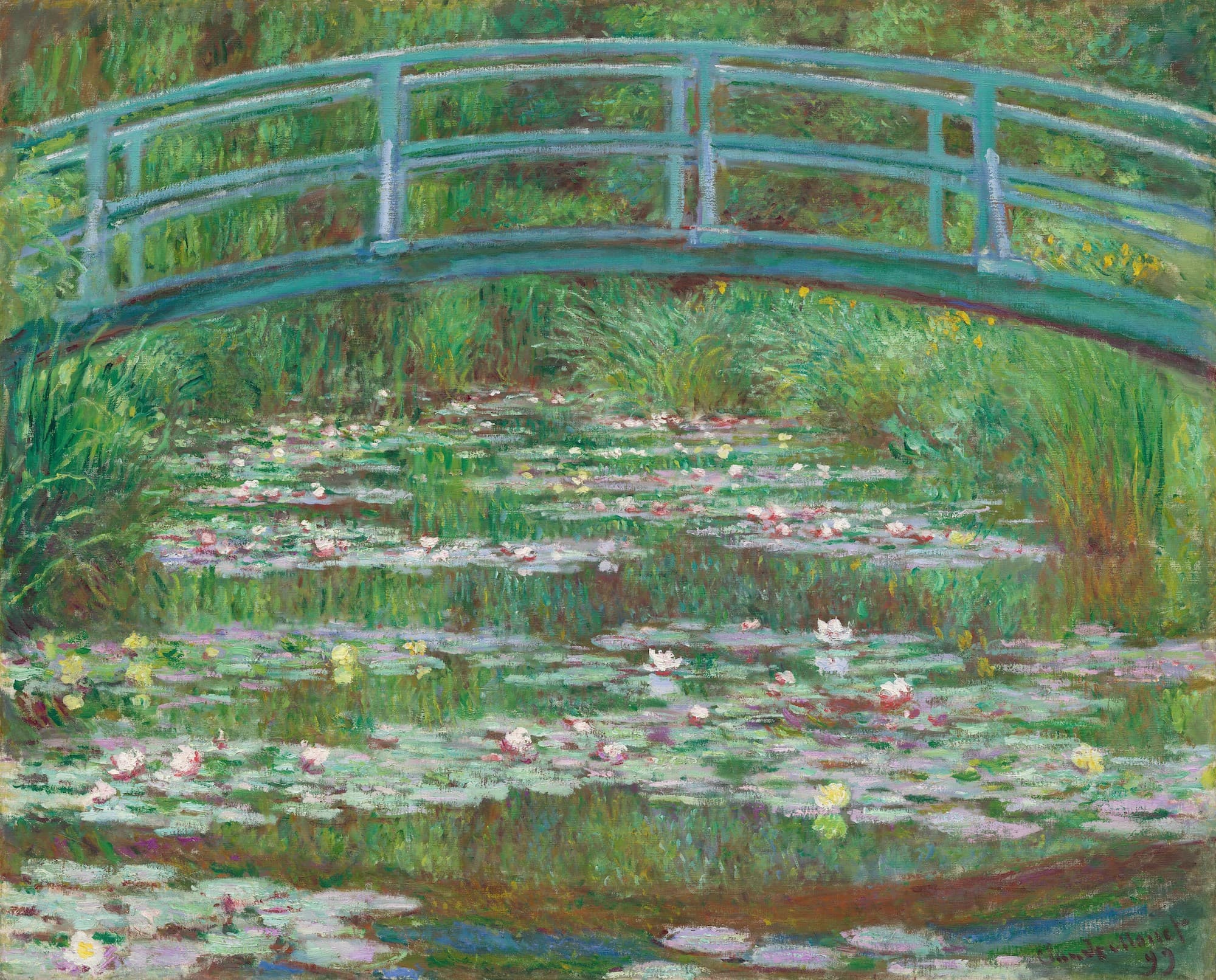
The Japanese Footbridge
Claude Monet · 1899
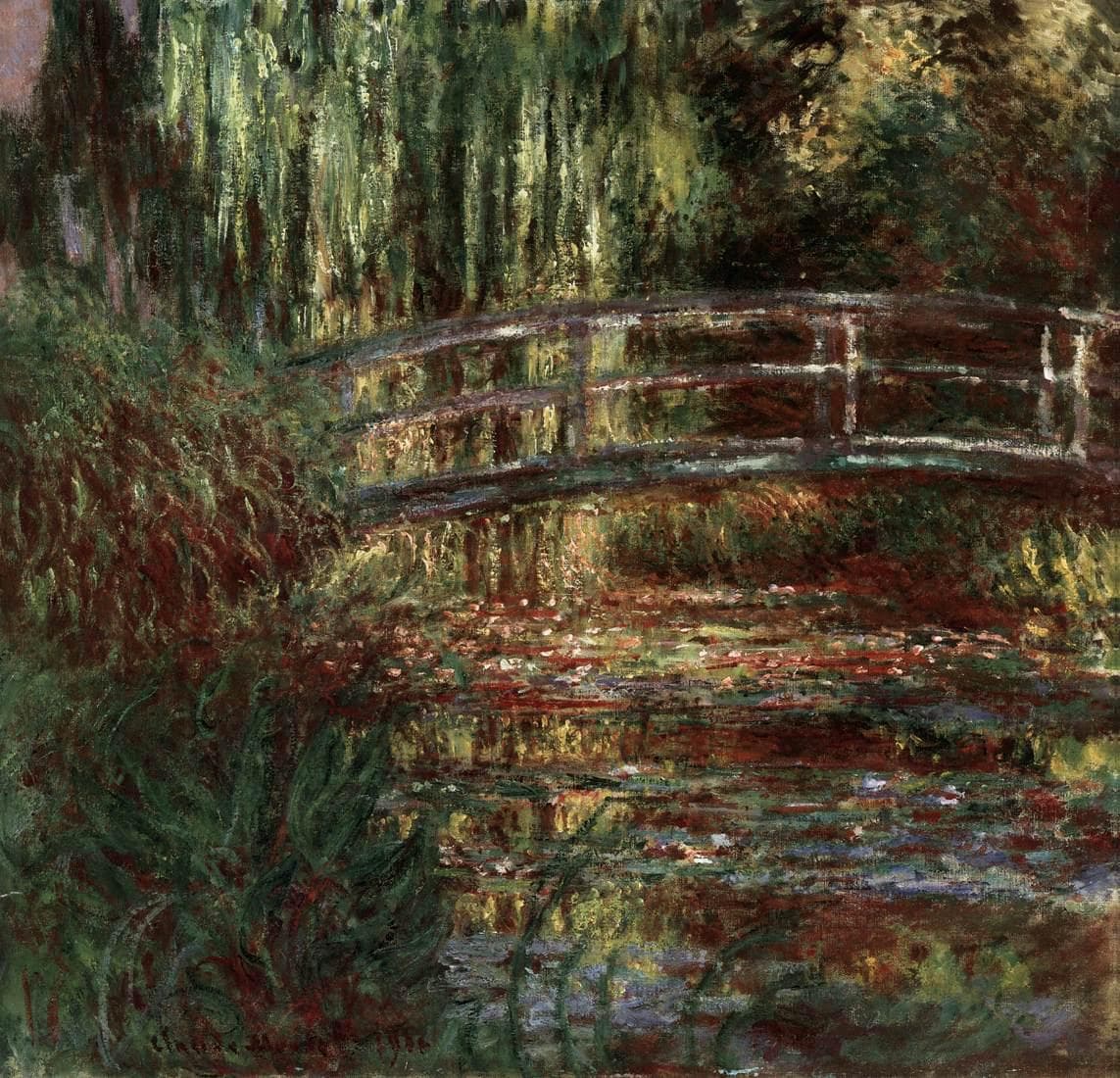
The Water Lily Pond
Claude Monet · 1900
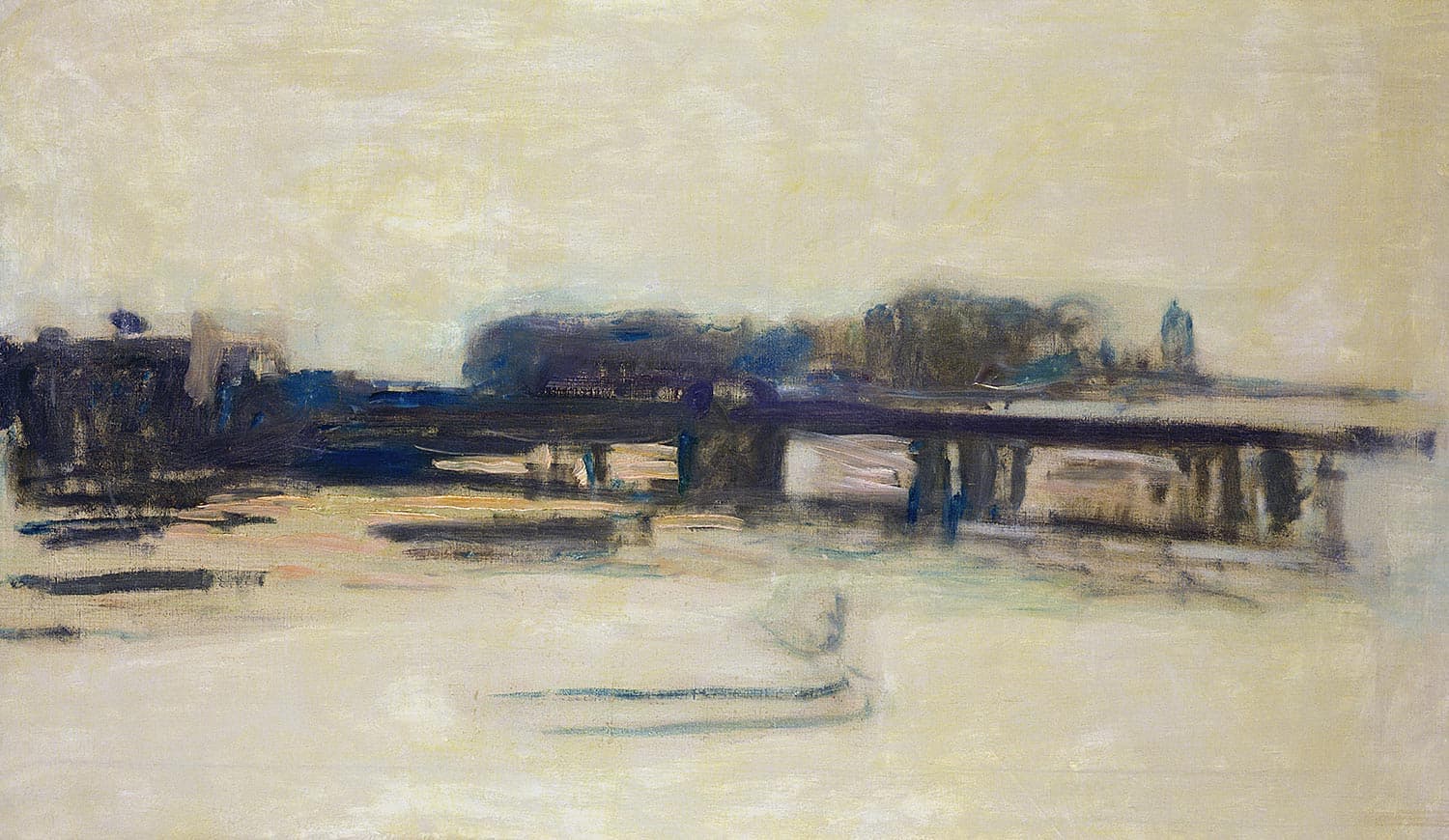
Charing Cross Bridge, London (Marmottan study)
Claude Monet · c. 1899–1901
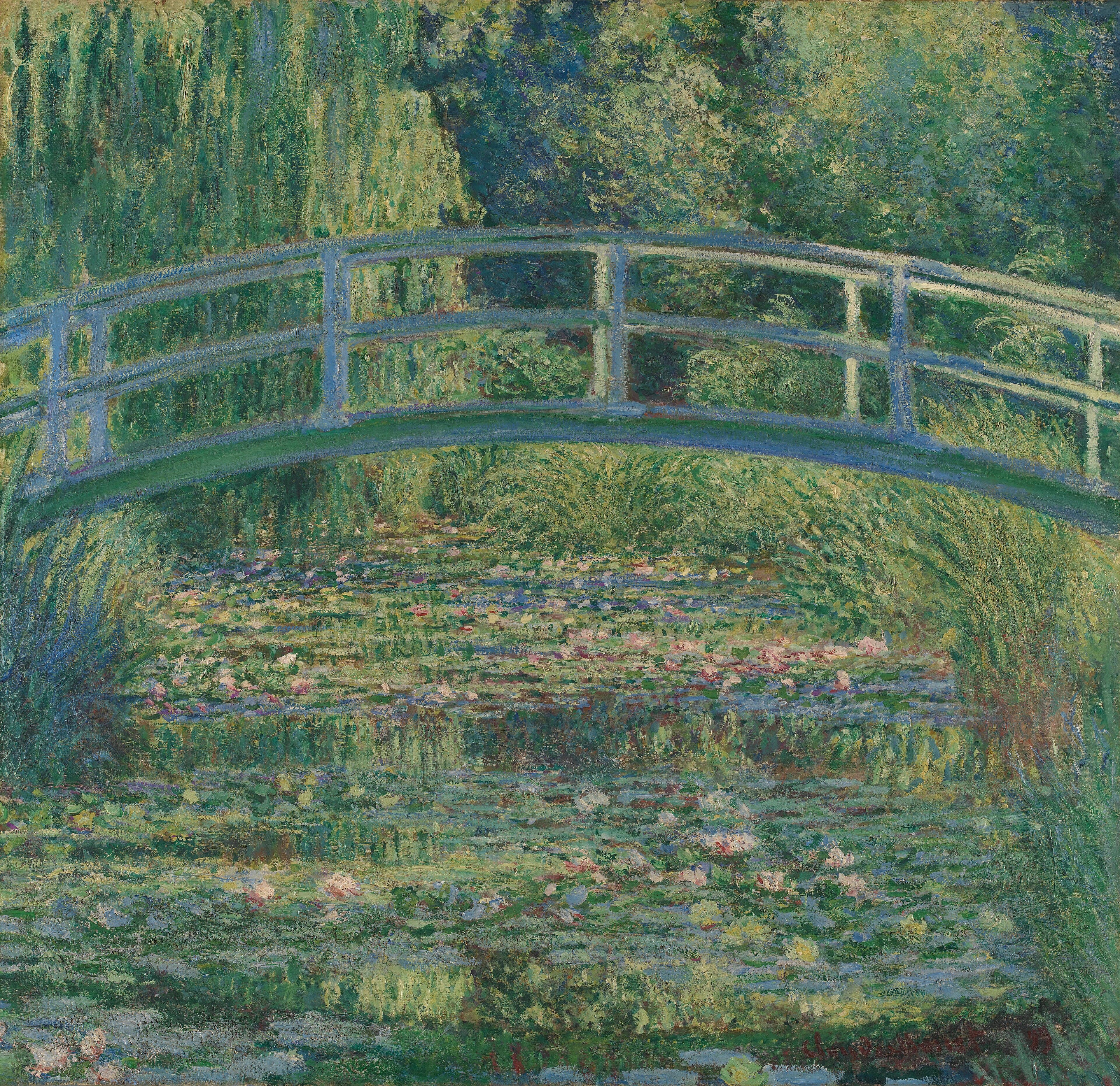
The Water-Lily Pond (National Gallery, London)
Claude Monet · 1899
Also painted in 1900
The same year
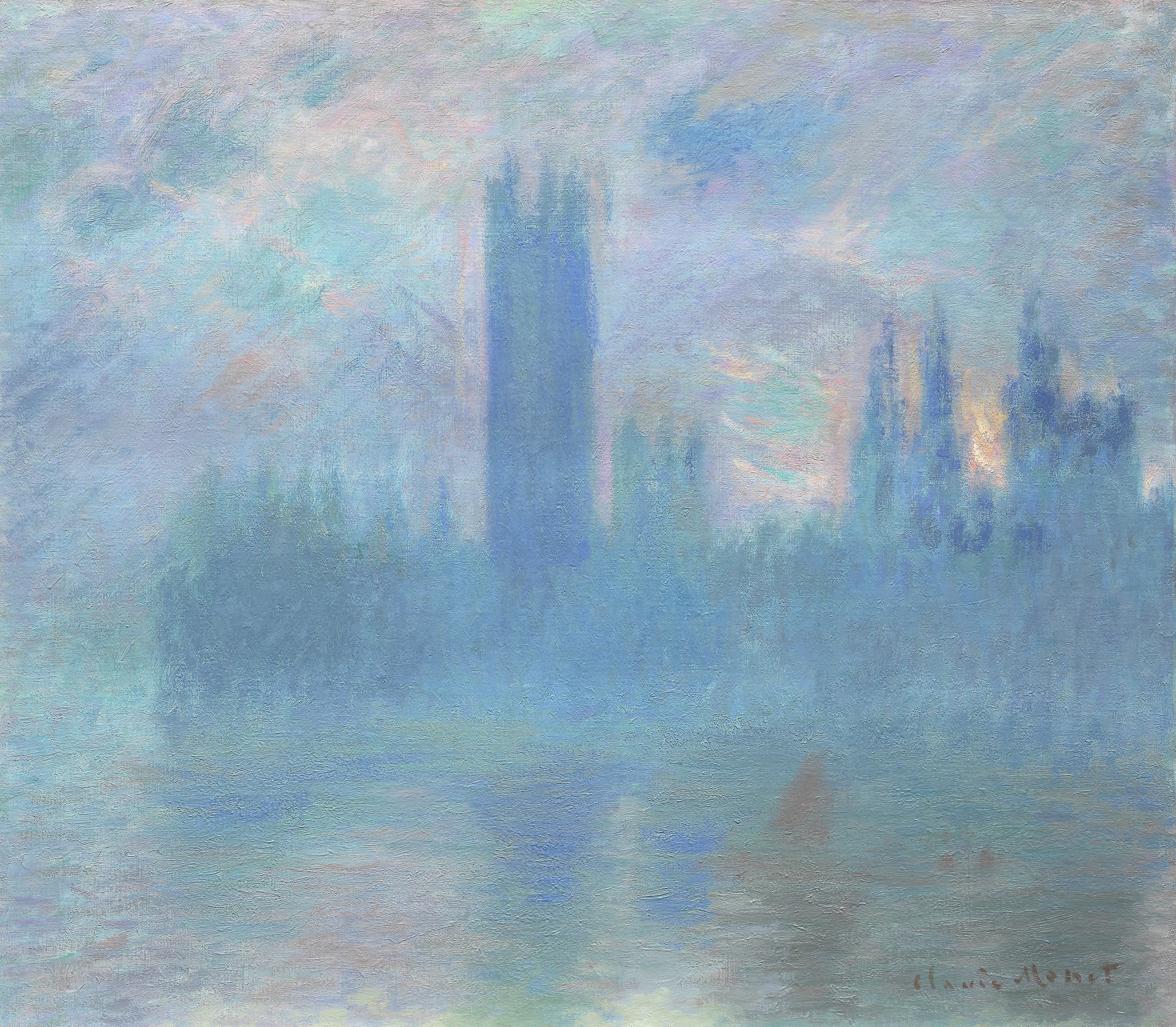
Houses of Parliament, London
Claude Monet · 1900–01
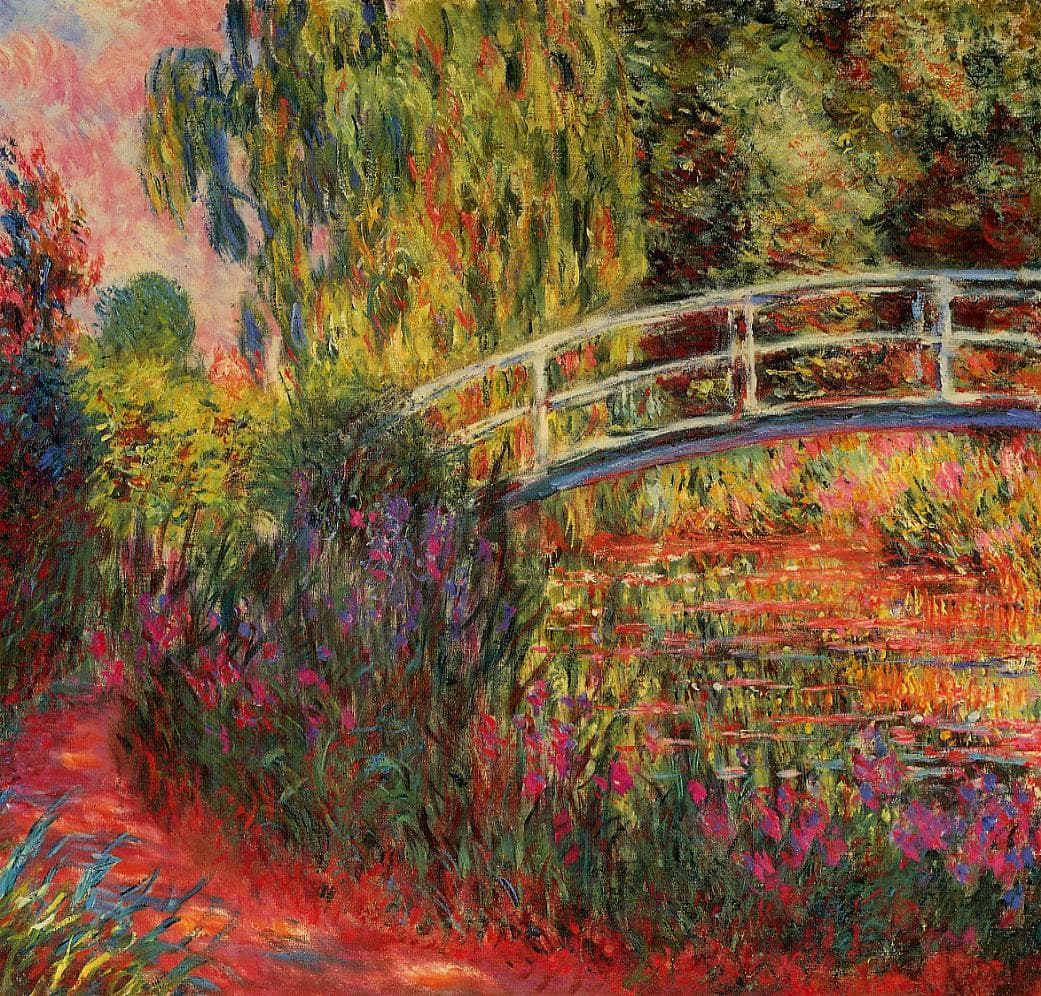
The Japanese Bridge or The Lily Pond
Claude Monet · 1900
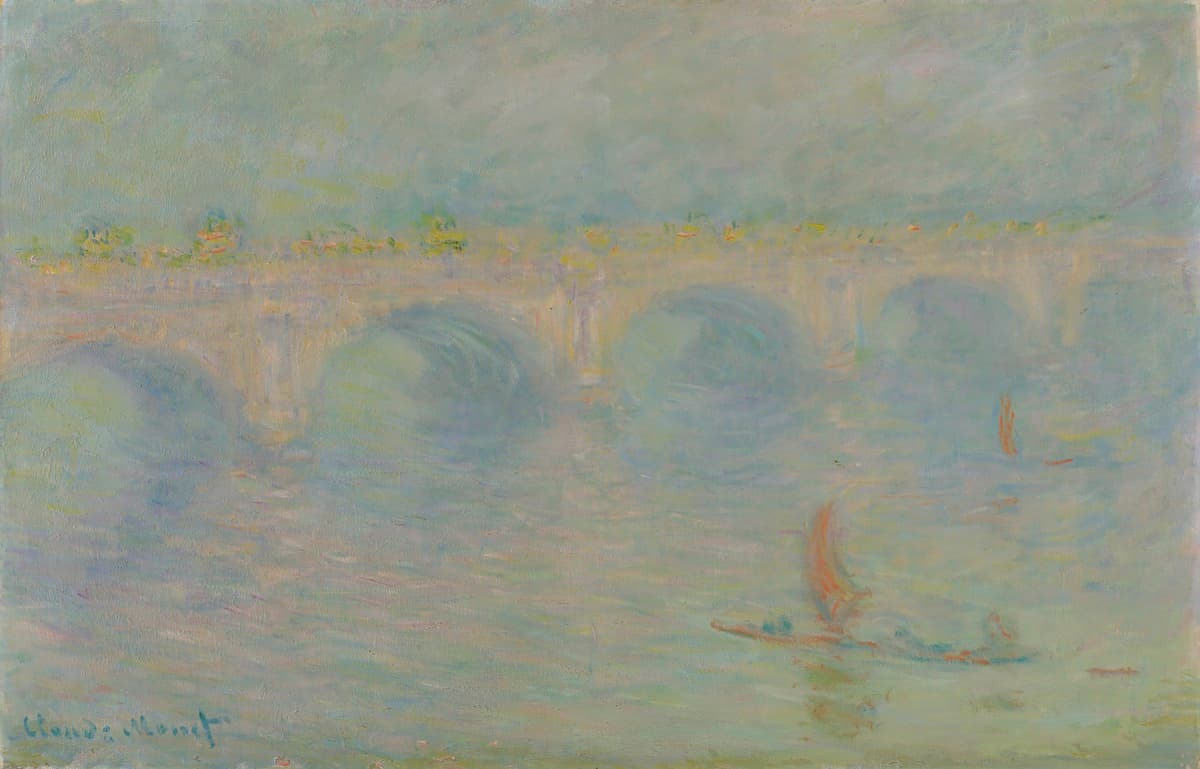
Waterloo Bridge, London, Sun Effect
Claude Monet · 1899–1901
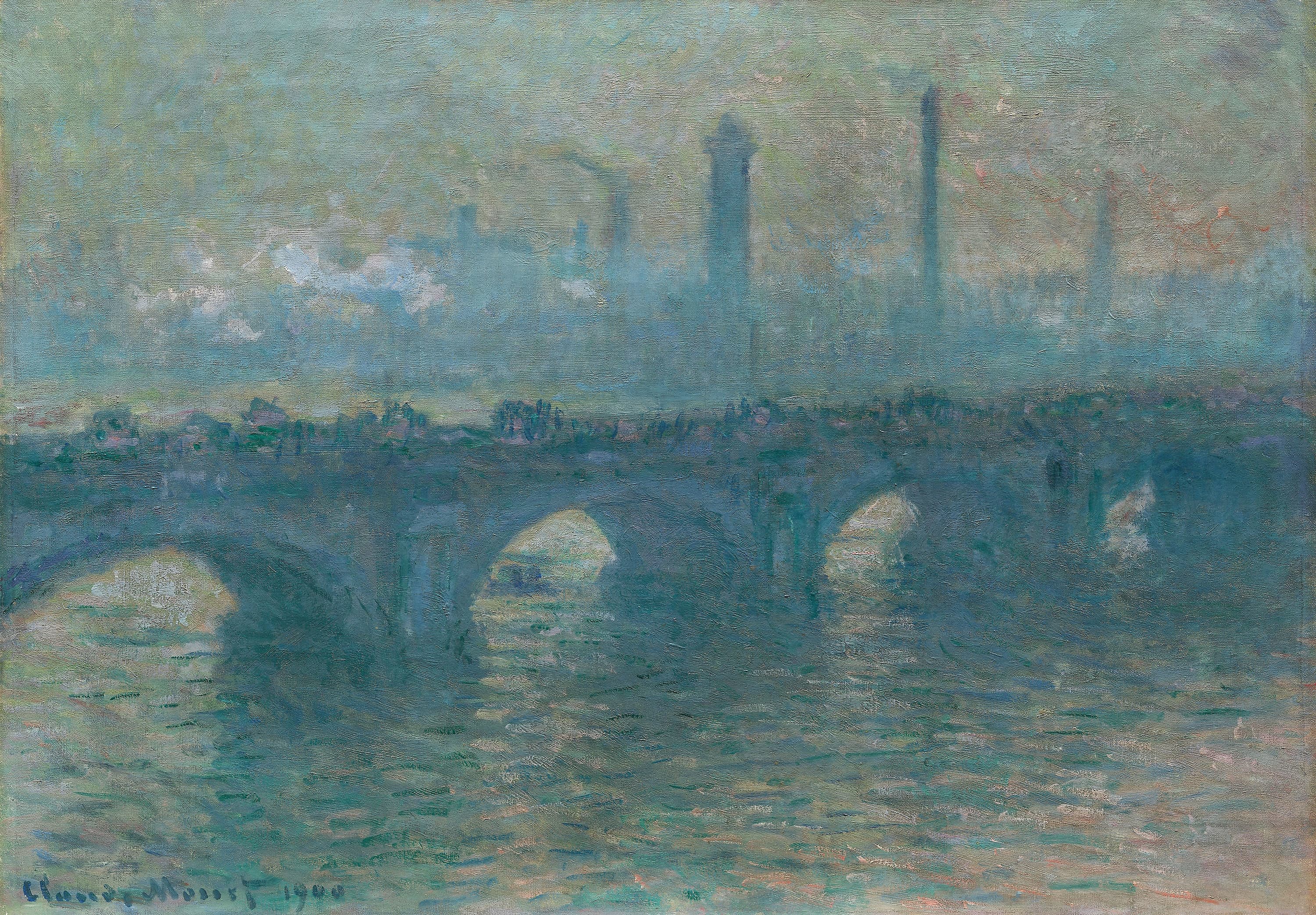
Waterloo Bridge, Gray Weather
Claude Monet · 1900
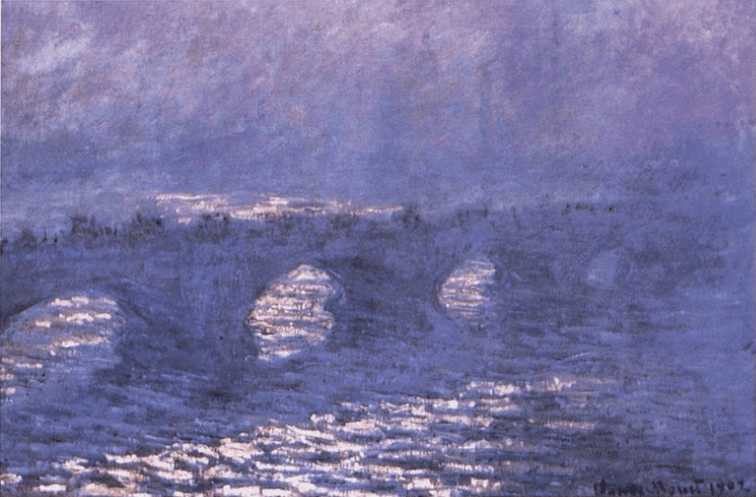
Waterloo Bridge, Effect of Sun in the Mist
Claude Monet · c. 1900–03
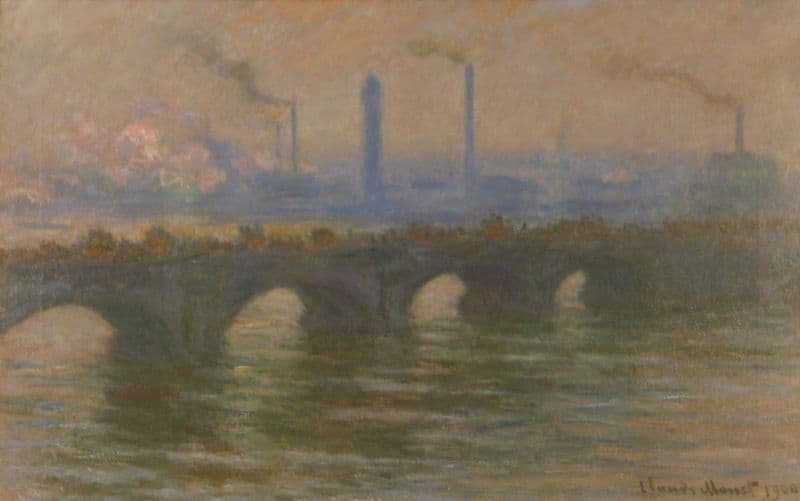
Waterloo Bridge, Overcast Weather
Claude Monet · 1900
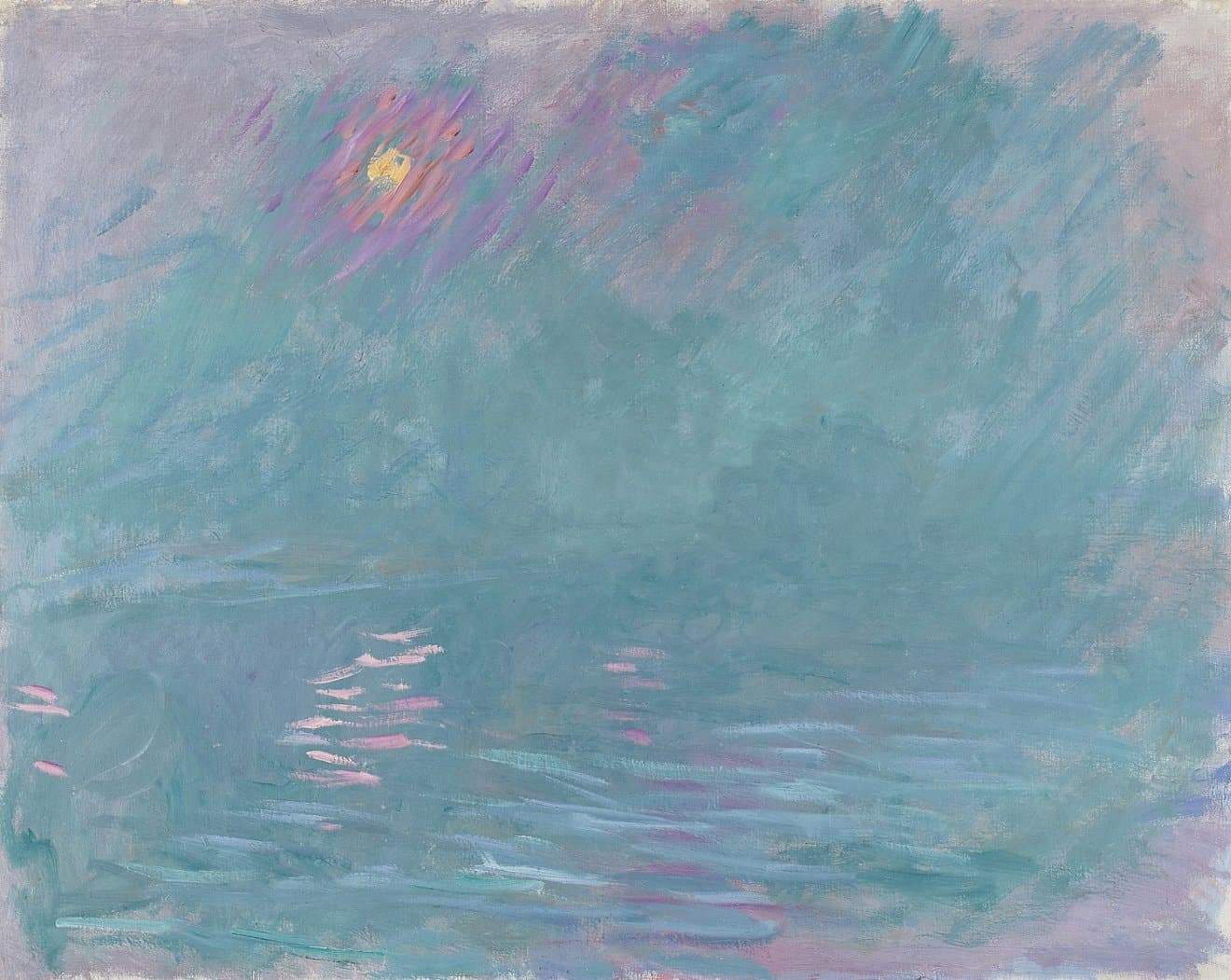
Waterloo Bridge (Kerry Stokes Collection)
Claude Monet · 1899–1901
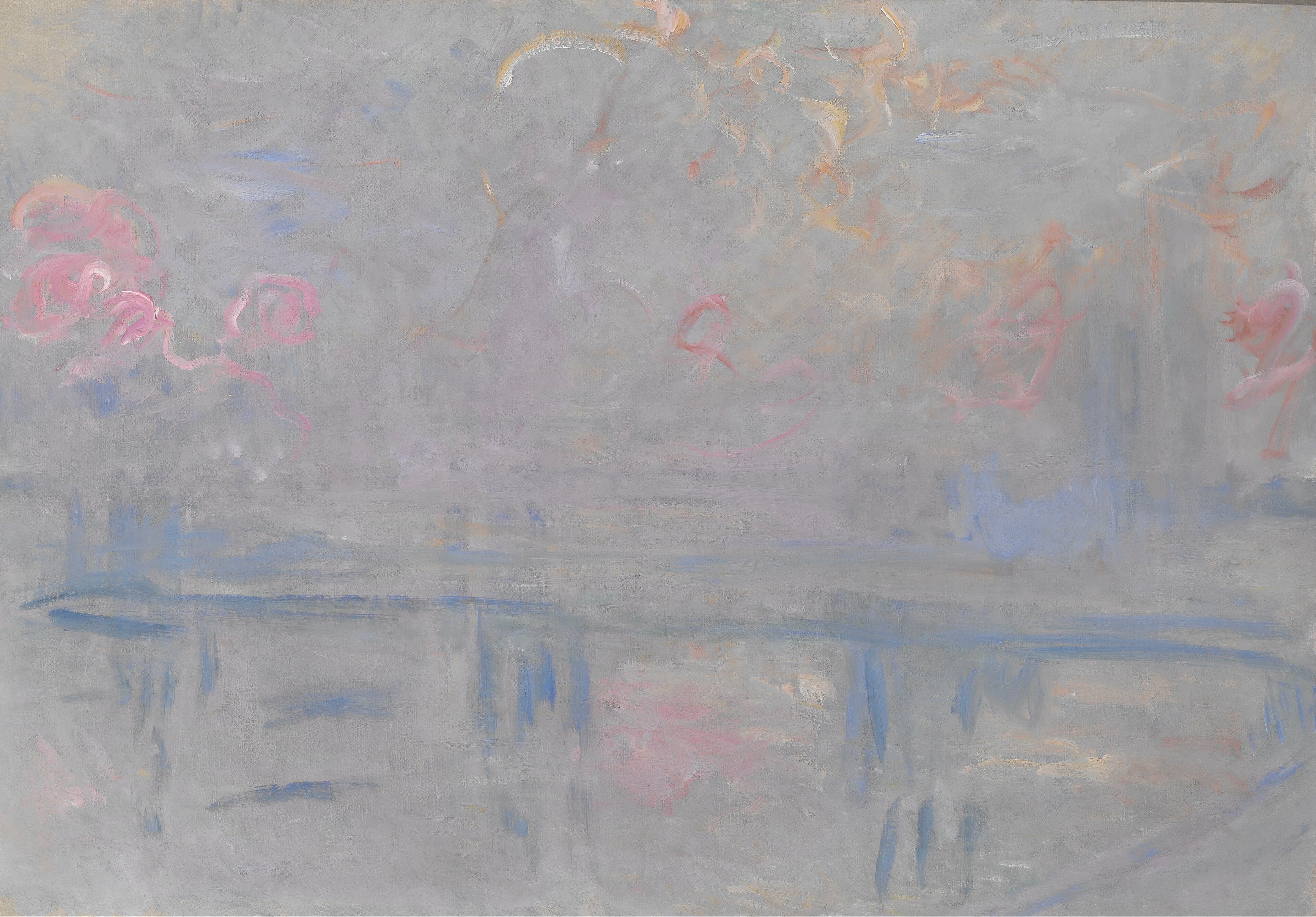
Charing Cross Bridge (Indianapolis)
Claude Monet · c. 1900
Kindred works
You may also study
Waterloo Bridge, Sunlight Effect with Smoke
Claude Monet · 1903
Waterloo Bridge, Sunlight Effect (Denver Art Museum)
Claude Monet · 1903
Waterloo Bridge, Gray Weather
Claude Monet · 1900
Waterloo Bridge, Effect of Fog
Claude Monet · 1903
Waterloo Bridge, Effect of Sun in the Mist
Claude Monet · c. 1900–03
Palazzo da Mula, Venice
Claude Monet · 1908
Houses of Parliament, Sunset
Claude Monet · 1903
The Doge's Palace Seen from San Giorgio Maggiore (Zürich)
Claude Monet · 1908