Image: Art Institute of Chicago (artic.edu/artworks/16584) · CC0 · via Wikimedia Commons
Houses of Parliament, London
Claude Monet, 1900–01
Houses of Parliament, London is a painting by Claude Monet of 1900–01 showing the Palace of Westminster as a blue silhouette in turquoise mist, the sun glinting through its spires. It is in the Art Institute of Chicago.
- Artist
- Claude Monet
- Date
- 1900–01
- Medium
- Oil on canvas
- Dimensions
- 81.2 × 92.8 cm
- Collection
- Art Institute of Chicago, Chicago, United States
- Movement
- Impressionism
- Catalogue
- Wildenstein 1600
- The City
- Water & Sea
- Architecture & Ruins
Houses of Parliament, London is a painting by Claude Monet, begun during his London campaigns of 1900–01 and signed "Claude Monet" at lower right. It shows the Palace of Westminster across the Thames as a pale blue silhouette in a mist of turquoise, lilac and pink, with a spark of sun caught between its spires. The canvas, 81.2 by 92.8 centimeters, is in the Art Institute of Chicago (accession 1933.1164), a bequest from the collector Martin A. Ryerson. Wildenstein lists it as number 1600.
What you're looking at
The palace stretches across the middle of the canvas as a single flat shape. Its great square tower rises left of center; a cluster of thinner pinnacles stands at right. Nothing is drawn; the forms are made of soft vertical strokes of blue and blue-green, darker at their bases and fading into the air at their tops.
The sky is a field of crisscrossing strokes in turquoise, aquamarine, pink and lilac, laid on in quick diagonals. At right, between two pinnacles, Monet places a few touches of yellow and orange: the sun, low in the west, breaking through the mist for a moment. A pale streak of rose and gold runs across the sky above it.
The river takes up the lower third. It is almost the same color as the sky, turquoise and lilac, so that the line between building and water is lost. A single boat, a faint pink triangle of sail, floats at lower right, the only sign of human life.
Blue mist: what makes this version distinct
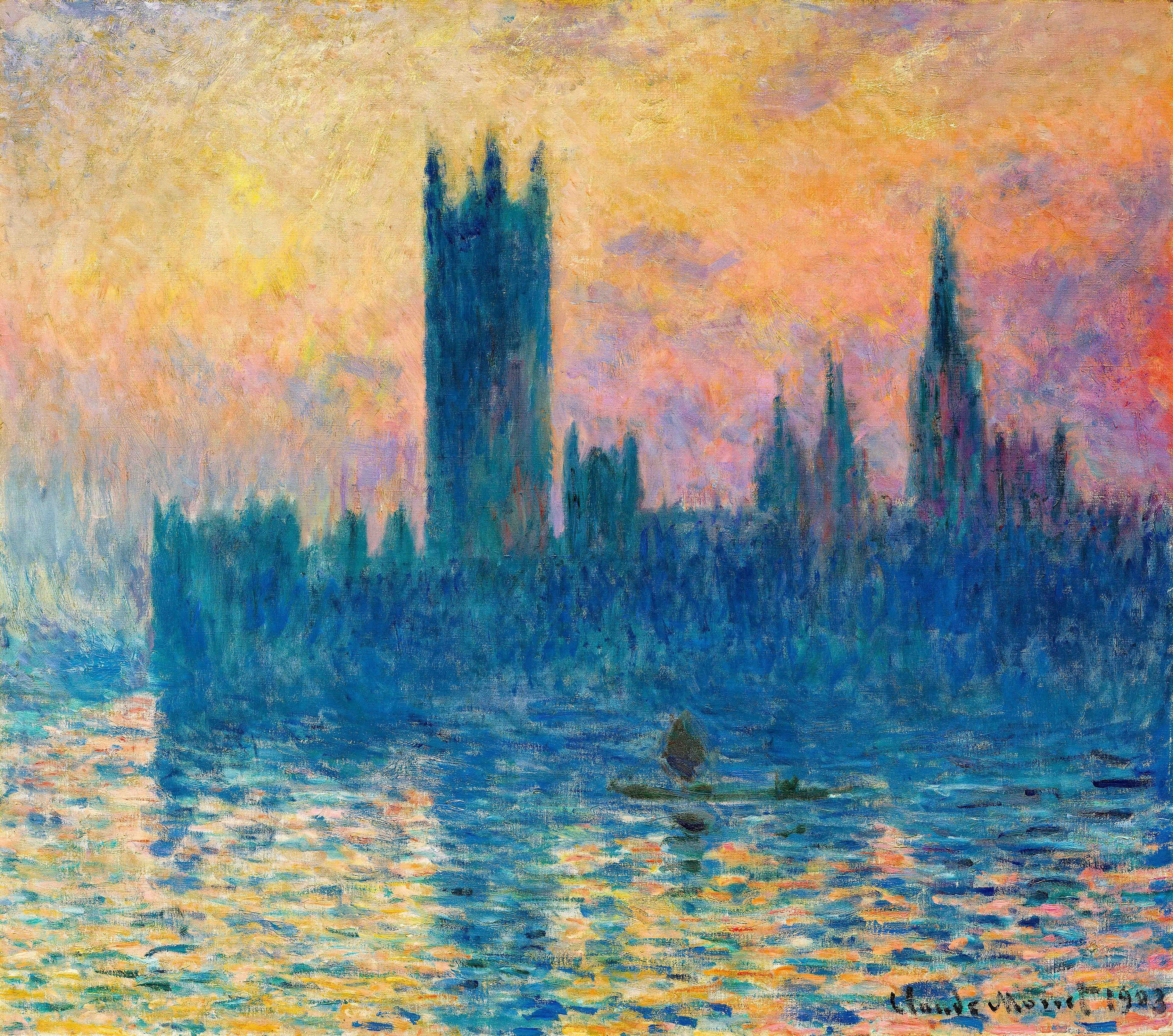
The Parliament canvases range from dark silhouettes against burning sunsets to fogs so dense the building barely registers. The Chicago picture sits at the cool, airy end of that range. Its color is unusually light, almost pastel: turquoise and pink rather than the purples, oranges and deep blues of the later sunsets such as The Houses of Parliament, Sunset in Washington. The Pola Museum's Houses of Parliament, Symphony in Rose, also of 1900, has nearly the same composition shifted into rose and mauve.
The date matters too. Most Parliament canvases are dated 1903 or 1904, the years Monet finished them at Giverny. Chicago dates this one to 1900–01, the period when he was still painting in London, and it was recorded by his dealer as "Westminster, 1903." It shows the series close to its starting point.
How it was painted
Monet worked on the Parliament views from St Thomas' Hospital, on the opposite bank of the Thames, in the late afternoon and at sunset, when the sun was behind the building. He began the first of them on February 13, 1900. He kept dozens of canvases going at once and took them up as each effect returned, then reworked them at Giverny, sometimes for years. Here the paint is thin in places, with the weave of the canvas showing through, and built up in the sky in a dense net of strokes.
The Art Institute notes that Monet's viewpoint was close to the one J. M. W. Turner used for his paintings of the 1834 fire that destroyed the old Parliament, but that his feeling for dusk and mist owed more to the American painter James McNeill Whistler and his Thames nocturnes.
From Durand-Ruel to Chicago
The Paris dealer Rosenberg owned the painting by 1916. Durand-Ruel bought it in October of that year and sold it in December to Martin A. Ryerson, a Chicago lumber heir and one of the Art Institute's great benefactors, who bequeathed it to the museum in 1933.
Details to look for
The pink sail at lower right is easy to miss, but it is the warmest touch in the lower half and anchors the composition. Look too at the left side of the palace, where Monet lets the blue shapes dissolve into the turquoise air, so the building seems to come out of the mist from left to right. The signature, small and pink, sits on the water at lower right.
Where to see it
It hangs in the Art Institute's Impressionist galleries (Gallery 243 at the time of writing). See Monet at the Art Institute of Chicago, our Houses of Parliament series hub, Monet in London and Claude Monet. Chicago also owns London views from the Waterloo Bridge and Charing Cross Bridge series.
Questions & answers
Where is Monet's Houses of Parliament, London?
This version is in the Art Institute of Chicago, accession number 1933.1164, from the Mr. and Mrs. Martin A. Ryerson Collection. Monet painted about nineteen views of the Houses of Parliament, now spread among museums and private collections.
When did Monet paint the Houses of Parliament?
He painted them on trips to London in 1900 and 1901, starting the first on February 13, 1900, and finished most at Giverny in 1903–04. The Art Institute dates this canvas to 1900–01.
Where did Monet stand to paint Parliament?
He worked from St Thomas' Hospital, on the south bank of the Thames opposite the Palace of Westminster. From there, in late afternoon and at sunset, the sun was behind the building, turning it into a silhouette.
What makes the Chicago version different?
It is one of the lightest and coolest in color: the palace is a pale blue shape in turquoise and pink mist, with only a spark of sun among the spires. Later versions are darker, with purple skies and red or orange suns.
More by the artist
Claude Monet
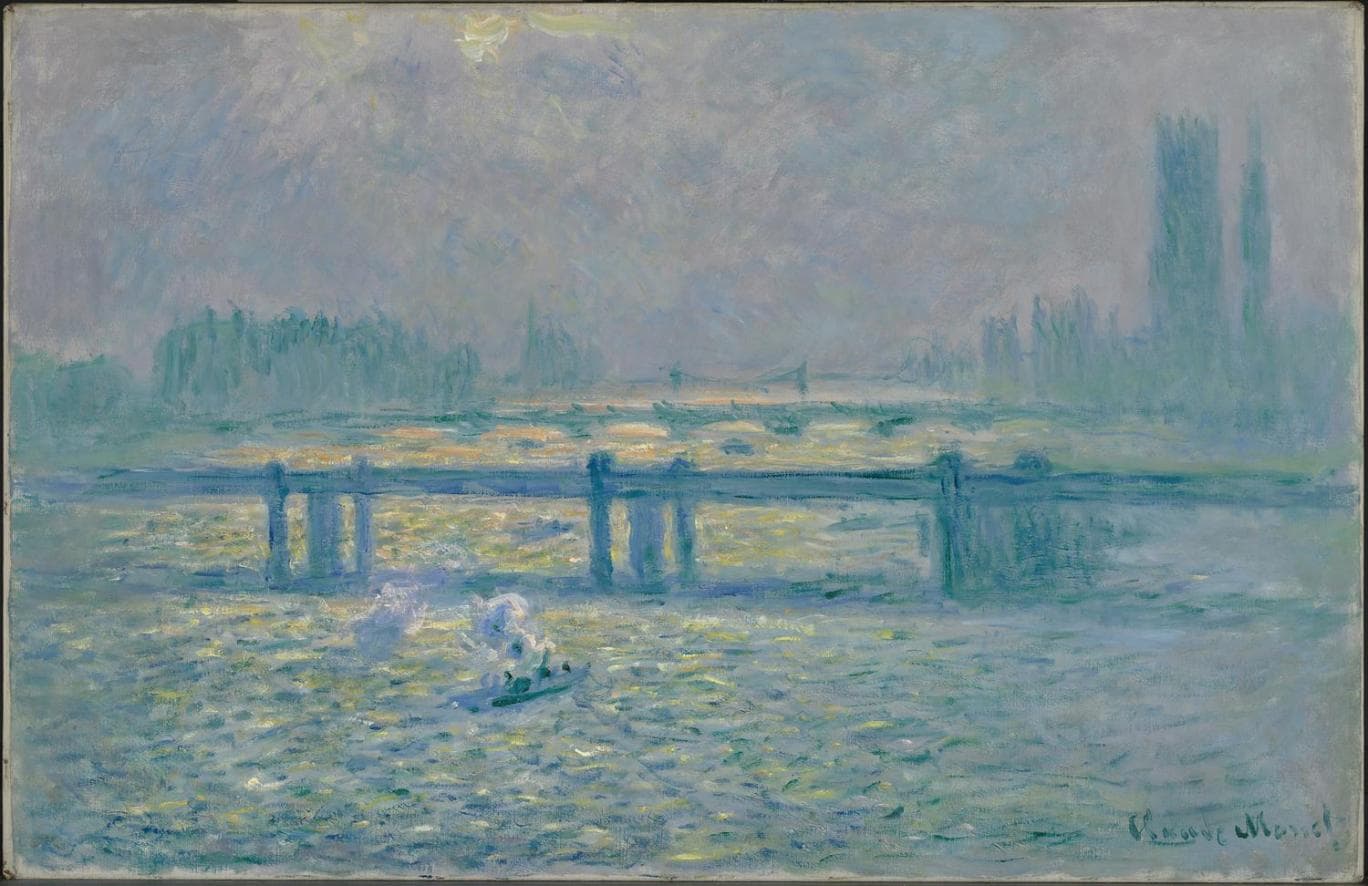
Charing Cross Bridge, Reflections on the Thames
Claude Monet · c. 1900
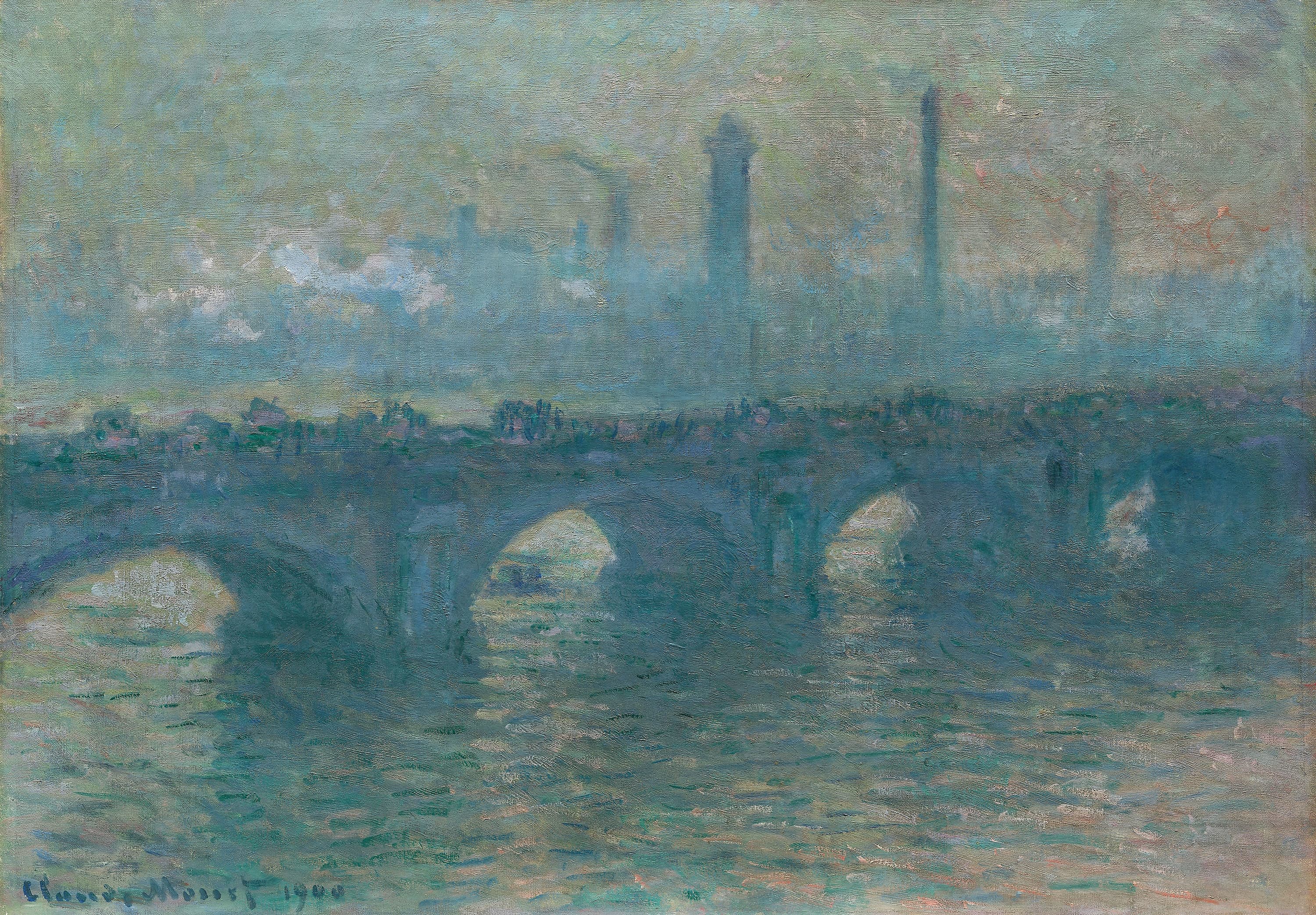
Waterloo Bridge, Gray Weather
Claude Monet · 1900
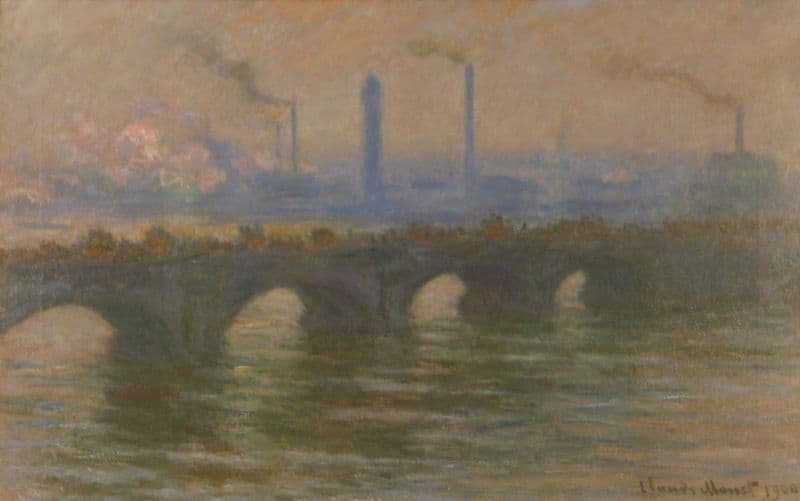
Waterloo Bridge, Overcast Weather
Claude Monet · 1900
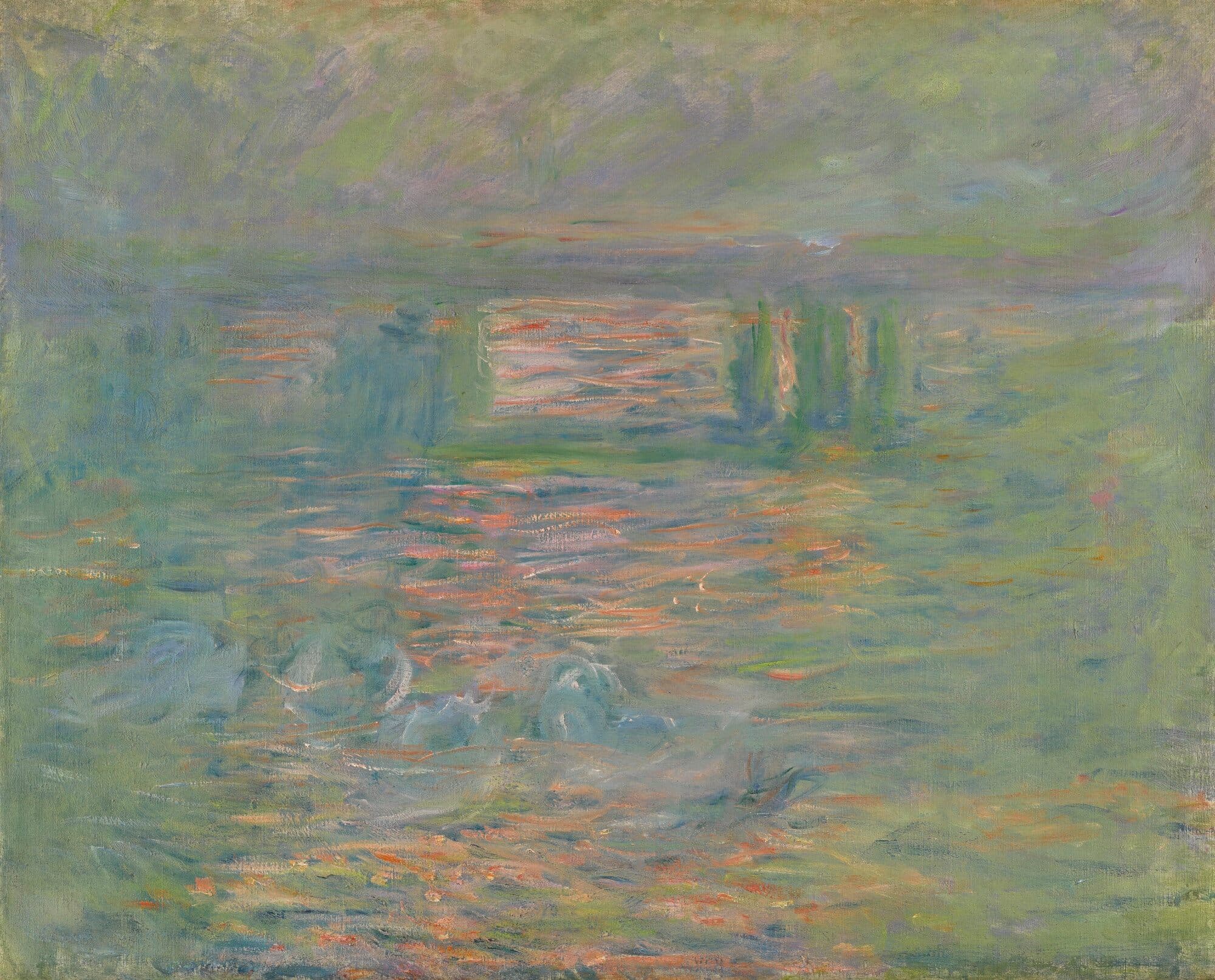
Charing Cross Bridge (private collection, c. 1900)
Claude Monet · c. 1899–1901
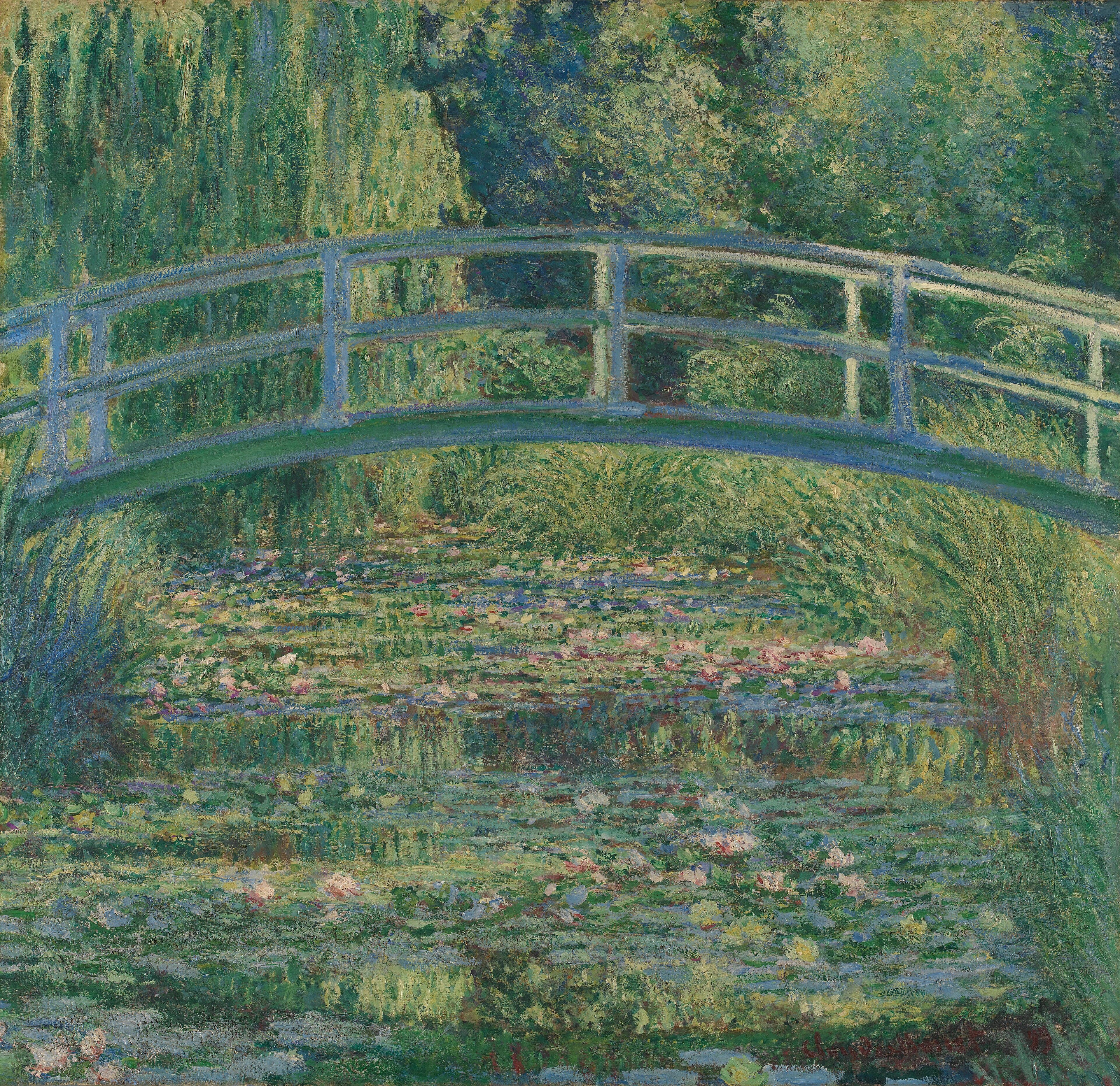
The Water-Lily Pond (National Gallery, London)
Claude Monet · 1899
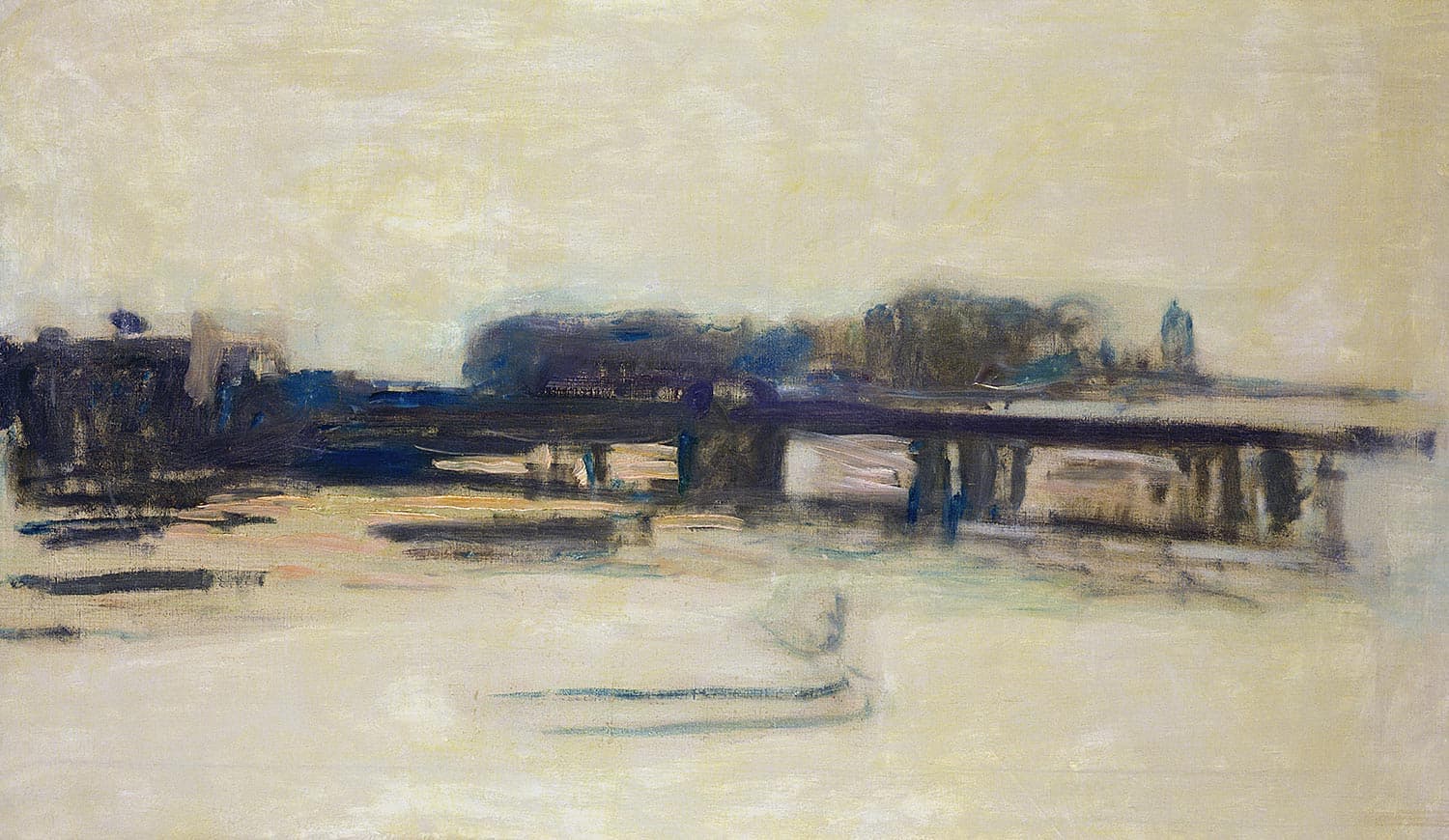
Charing Cross Bridge, London (Marmottan study)
Claude Monet · c. 1899–1901
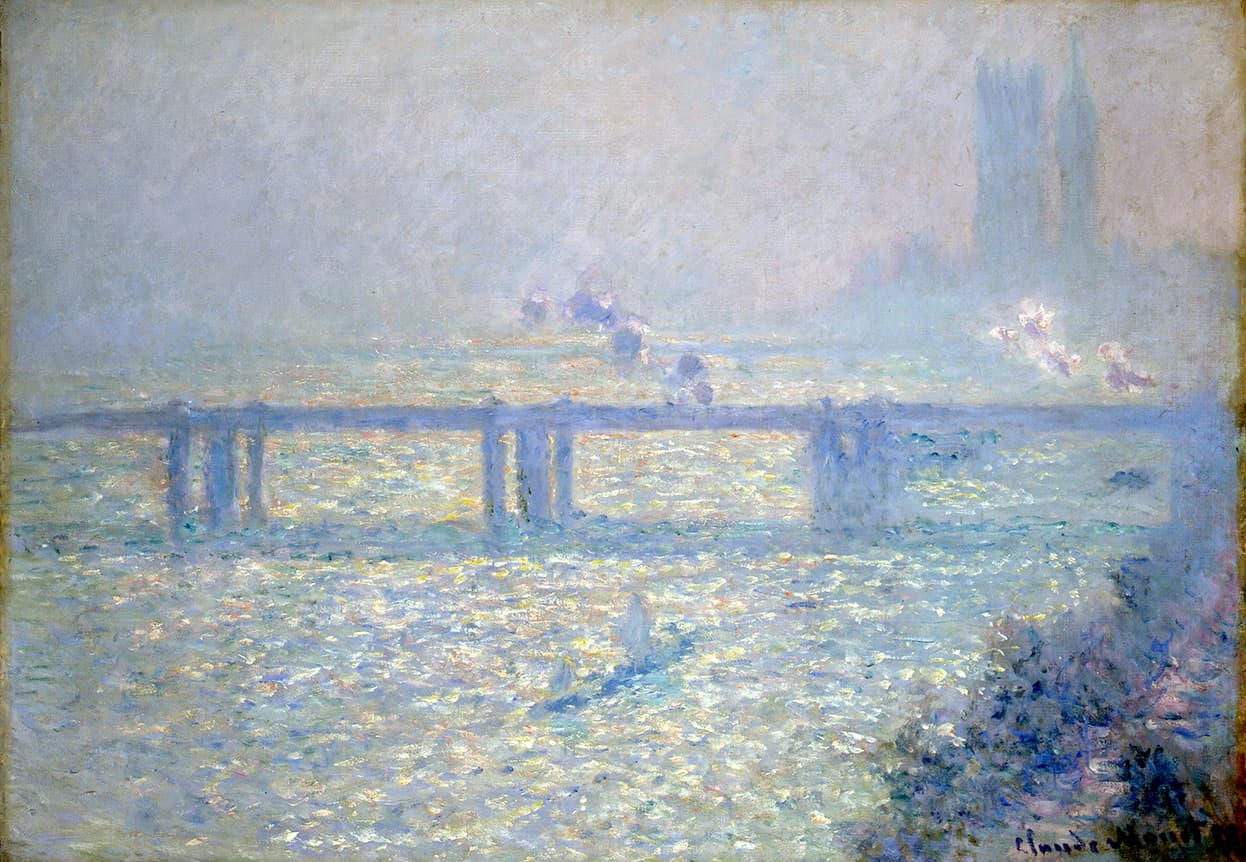
Charing Cross Bridge (Shelburne Museum)
Claude Monet · 1899
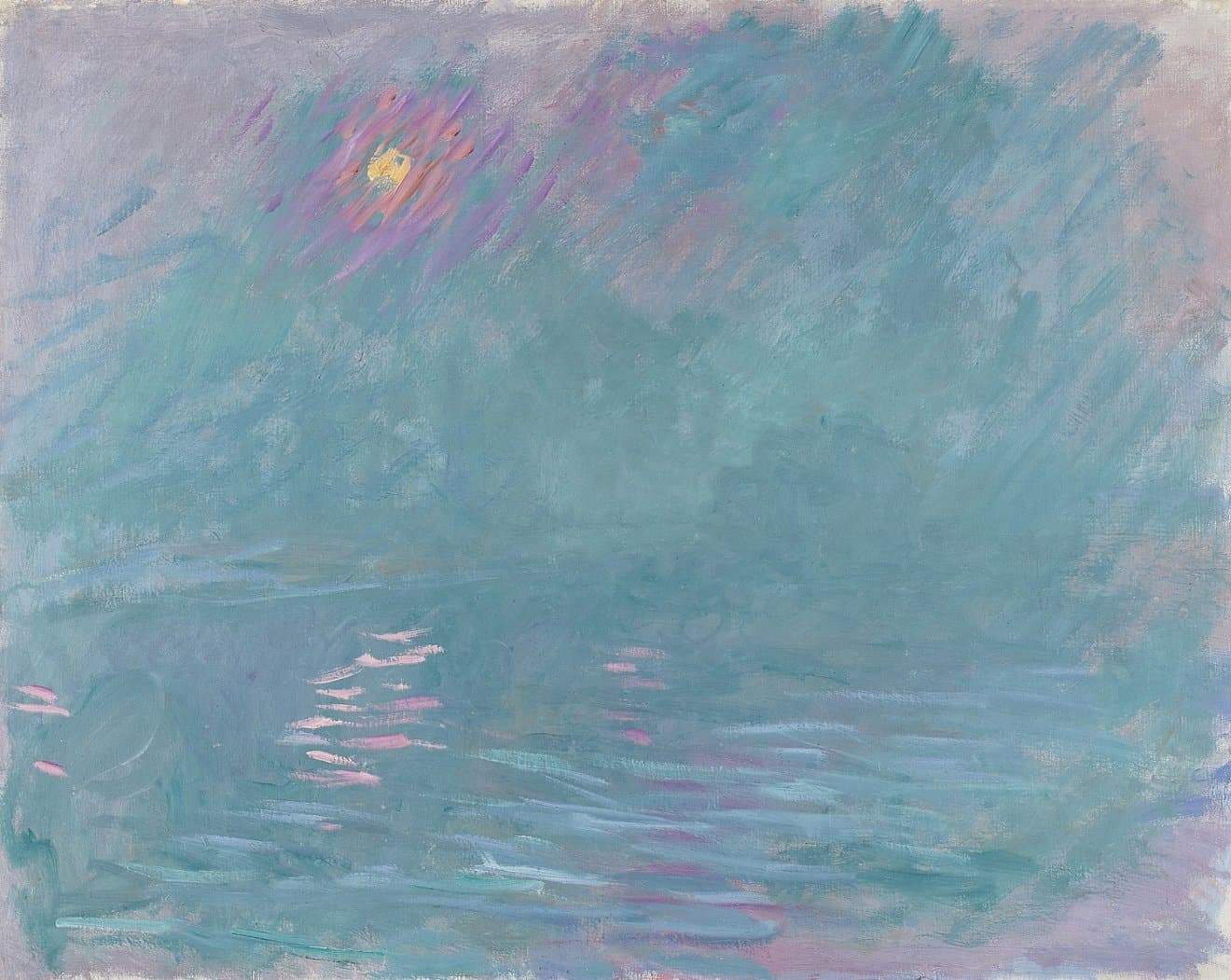
Waterloo Bridge (Kerry Stokes Collection)
Claude Monet · 1899–1901
Also painted in 1900
The same year
Houses of Parliament, Symphony in Rose
Claude Monet · 1900
The Japanese Bridge or The Lily Pond
Claude Monet · 1900
Waterloo Bridge, London, Sun Effect
Claude Monet · 1899–1901
Waterloo Bridge (Santa Barbara Museum of Art)
Claude Monet · 1900
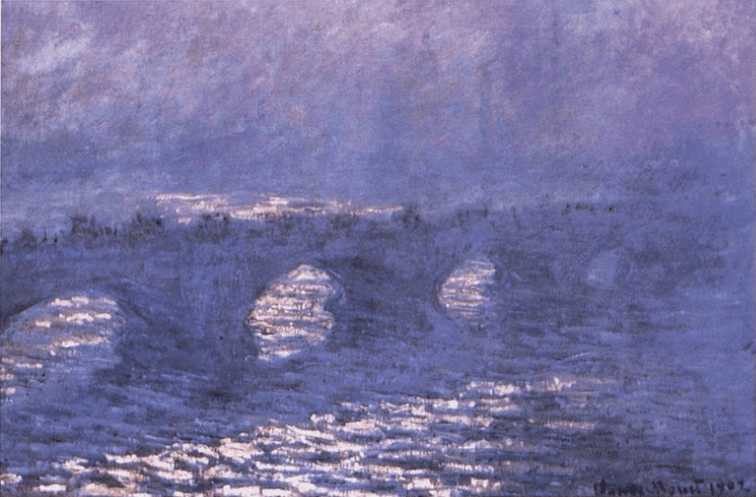
Waterloo Bridge, Effect of Sun in the Mist
Claude Monet · c. 1900–03
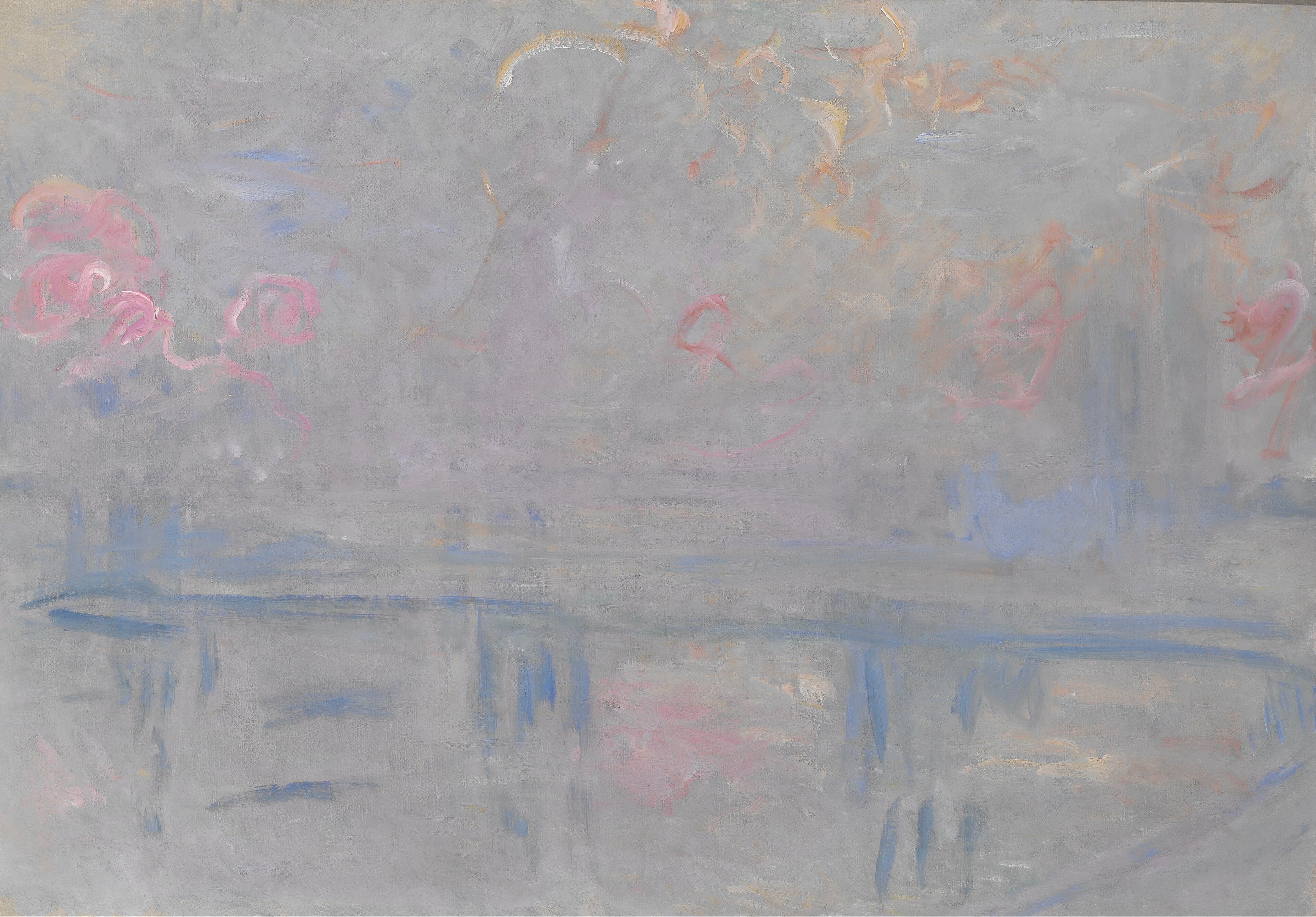
Charing Cross Bridge (Indianapolis)
Claude Monet · c. 1900
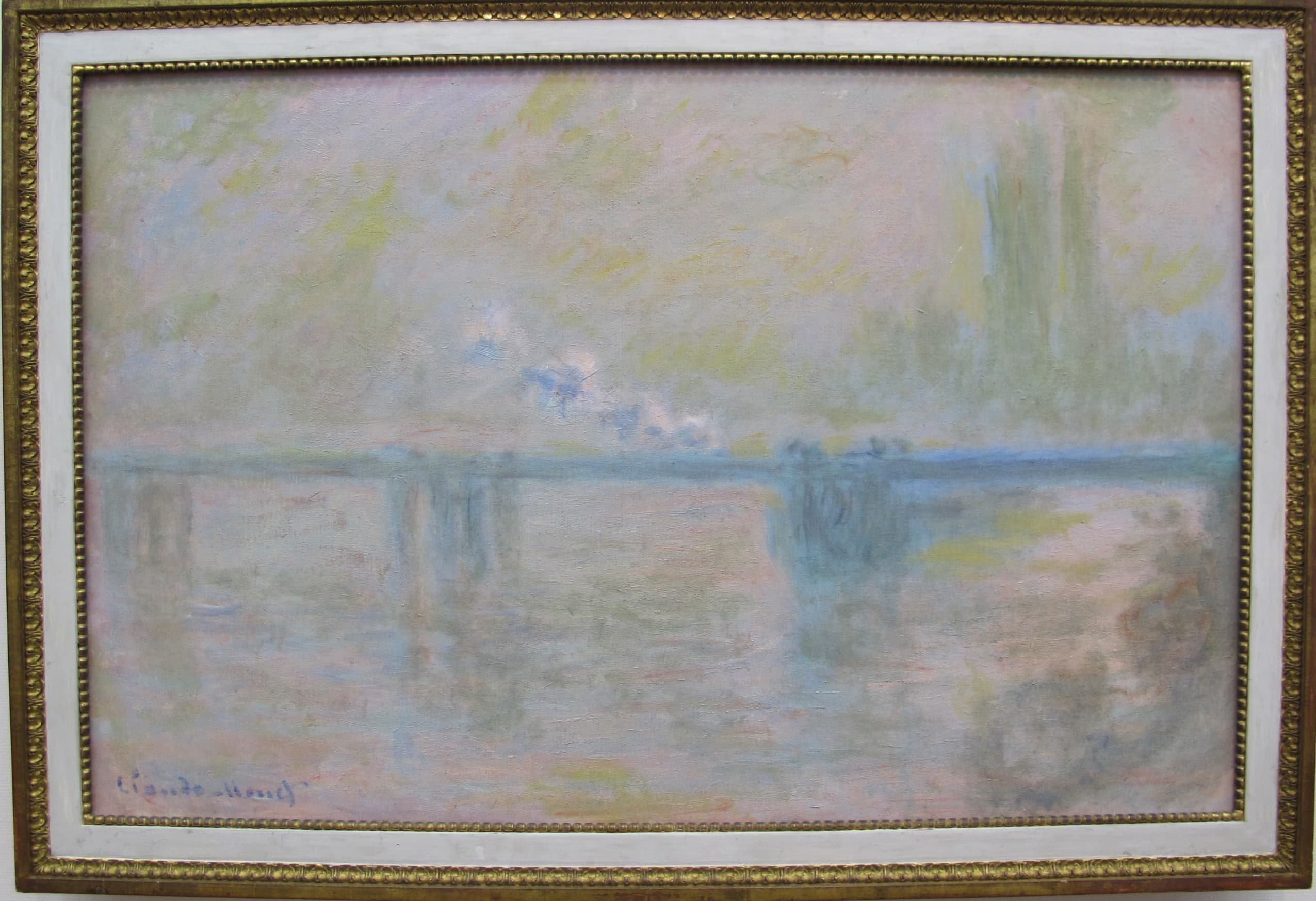
Charing Cross Bridge (Overcast Day)
Claude Monet · 1900
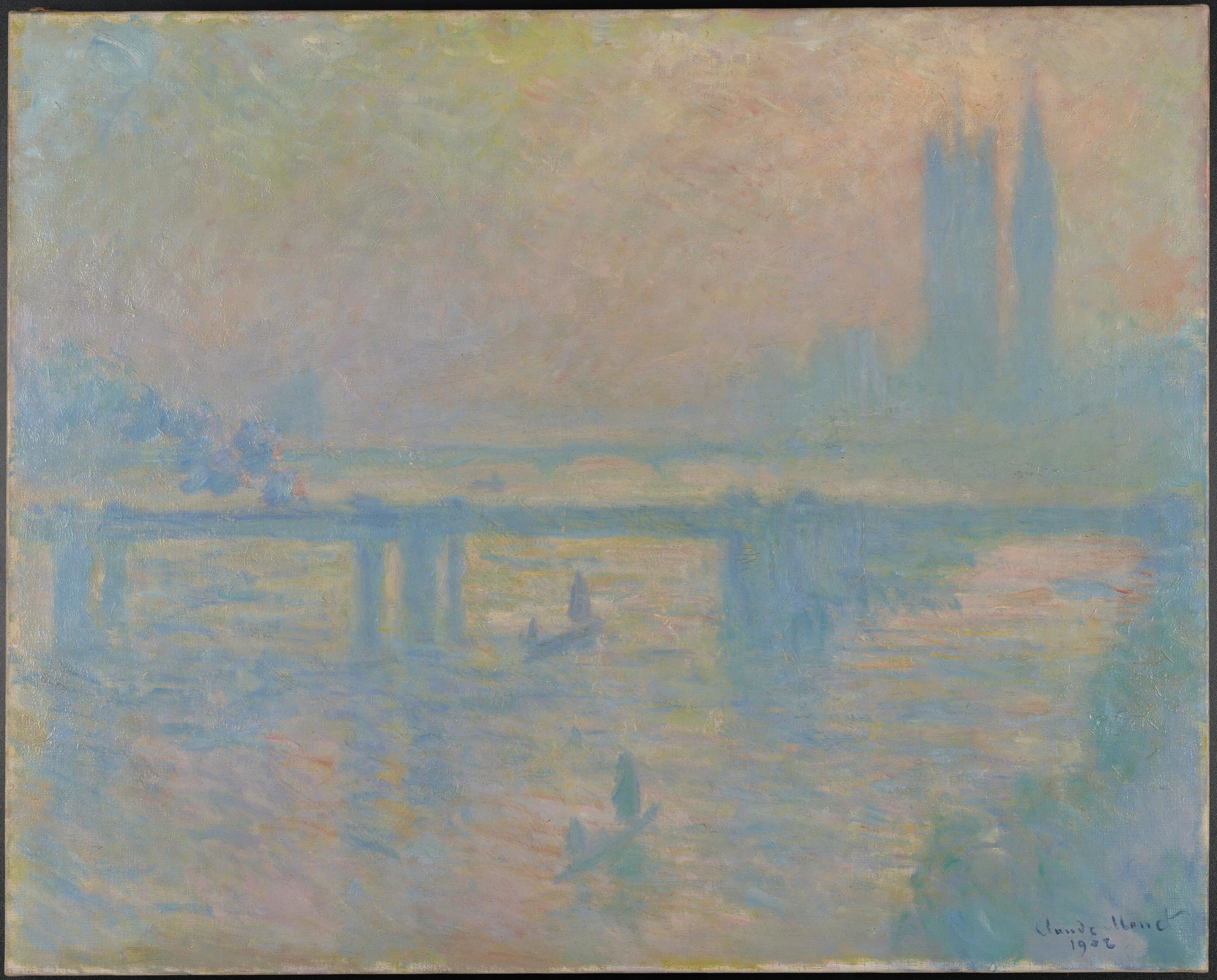
Charing Cross Bridge (Cardiff)
Claude Monet · c. 1900 (dated 1902)
Kindred works
You may also study
Houses of Parliament, Symphony in Rose
Claude Monet · 1900
The Houses of Parliament, Sunset
Claude Monet · 1903
The Houses of Parliament (Effect of Fog)
Claude Monet · 1903–04
The Houses of Parliament in London
Claude Monet · 1904
The Rio della Salute
Claude Monet · 1908
Twilight, Venice
Claude Monet · 1908
Palazzo Da Mula Morosini
Claude Monet · 1908
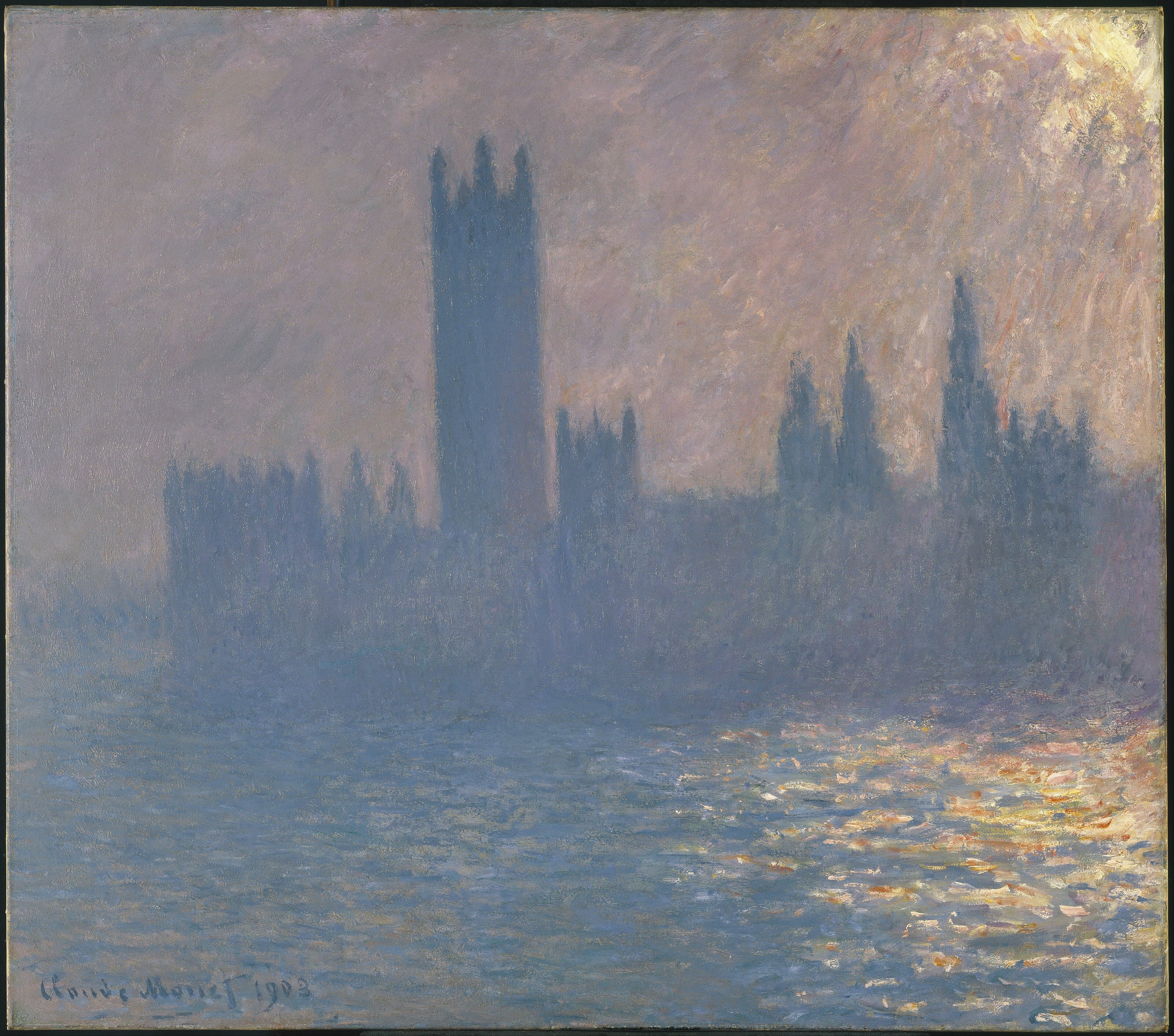
Houses of Parliament, Sunlight Effect
Claude Monet · 1903