Image: Santa Barbara Museum of Art · Public domain · via Wikimedia Commons
Charing Cross Bridge
Claude Monet, 1899
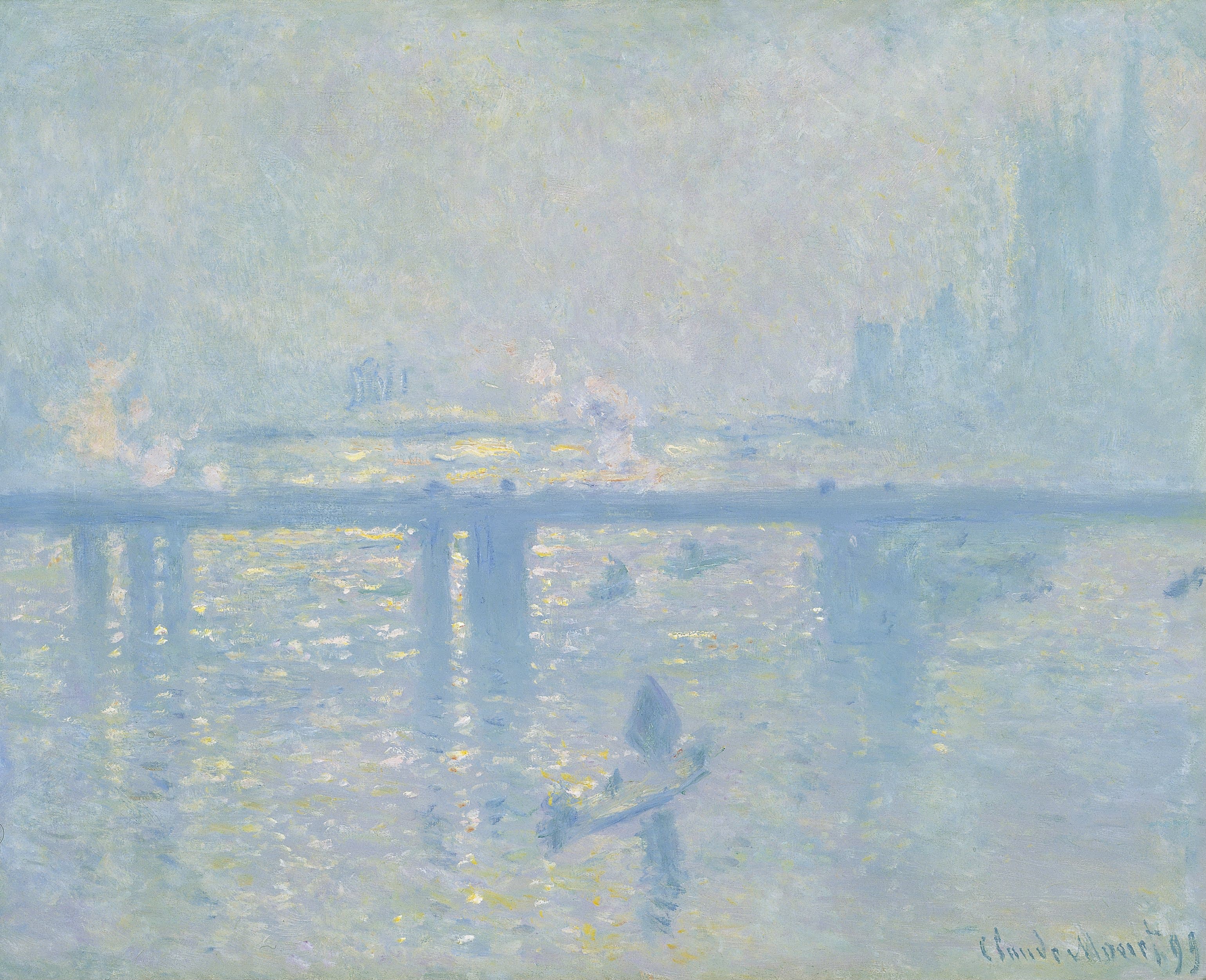
Charing Cross Bridge is an 1899 oil painting by Claude Monet of the Thames railway bridge in London, seen through a violet haze from his room at the Savoy Hotel. It is in the Santa Barbara Museum of Art, California.
- Artist
- Claude Monet
- Date
- 1899
- Medium
- Oil on canvas
- Dimensions
- 65.7 × 81.6 cm
- Collection
- Santa Barbara Museum of Art, Santa Barbara, United States
- Movement
- Impressionism
- Catalogue
- Wildenstein 1522
- The City
- Water & Sea
Charing Cross Bridge is one of the first canvases Claude Monet began in London in the autumn of 1899, looking upriver from his room at the Savoy Hotel. A long iron railway bridge crosses the Thames through a pale, sunlit haze, a puff of white steam marks a passing train, and the twin towers of the Houses of Parliament float at upper right. Signed and dated 1899, it belongs to the Santa Barbara Museum of Art, which received it in 1968 as a bequest from Katharine Dexter McCormick in memory of her husband, Stanley McCormick.
What you are looking at
The picture is built in three horizontal bands. At the top is a sky of milky lilac and lemon yellow, worked in short diagonal strokes so that the whole upper half seems to vibrate. Across the middle runs the bridge, a thin violet bar resting on four groups of piers. Below it the river fills nearly half the canvas, and this is where Monet spent most of his paint: dense flecks of yellow, cream, mauve and pale green that read as sunlight broken on moving water.
Look for the small details that anchor the scene. At left, just above the deck, a cluster of white and green dabs is the steam of a train crossing toward Charing Cross station. In the water below, a dark rowing boat with a standing figure sits on the lower left diagonal, and a second, tinier boat appears beneath the central span. At right, the Victoria Tower and the clock tower of Westminster rise as one soft violet mass, and in the bottom right corner a smudge of blue and green foliage suggests the trees of the Embankment gardens below the hotel. The signature, Claude Monet 99, is written in the lower right.
Where and when it was painted
Monet had first seen London as a refugee from the Franco-Prussian War in 1870–71. He came back in September 1899, aged 58, to visit his son Michel, and took rooms at the Savoy on the Victoria Embankment. From a sixth-floor window he had two views: downstream to Waterloo Bridge and upstream to the Hungerford railway bridge, always called Charing Cross Bridge after the station it served. He returned in early 1900 and again in 1901, and our Monet in London hub follows those campaigns.
This canvas dates from the first, shortest stay. Its brighter key and relatively legible structure suggest a day when the fog thinned and a low sun came through, rather than the thick brown smogs that dominate later versions.
How it was painted
Monet worked on many canvases at once in London, switching as the light changed, and he finished most of them later in his studio at Giverny. This one is a standard size (about 65 × 81 cm) and keeps much of the directness of work done at the window. The water is laid in with loaded, separate touches; the sky is thinner and more scumbled, letting the ground show through. The bridge itself is drawn with a single dragged band of violet, the piers with a few vertical strokes, so that the structure barely interrupts the field of light.
The palette is the key to the picture's mood: there is almost no dark tone anywhere except the boat. Everything else is held within a narrow range of pale violets and yellows, the colored atmosphere Monet called the enveloppe.
How this version differs from the series
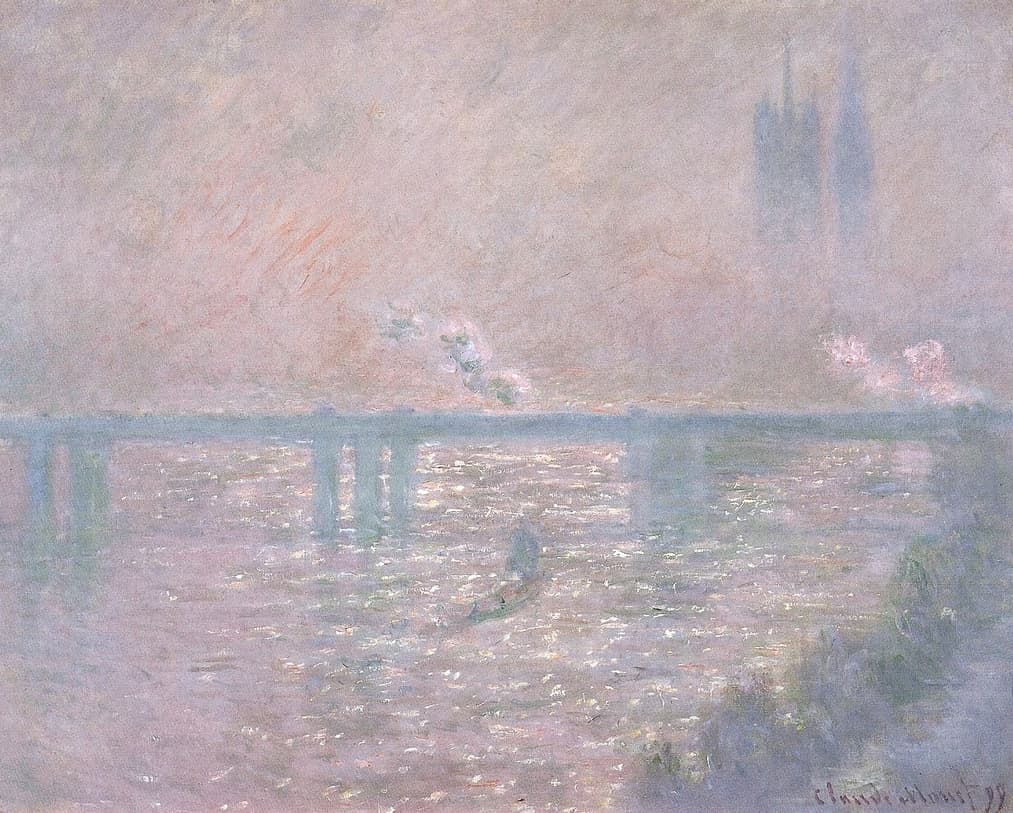
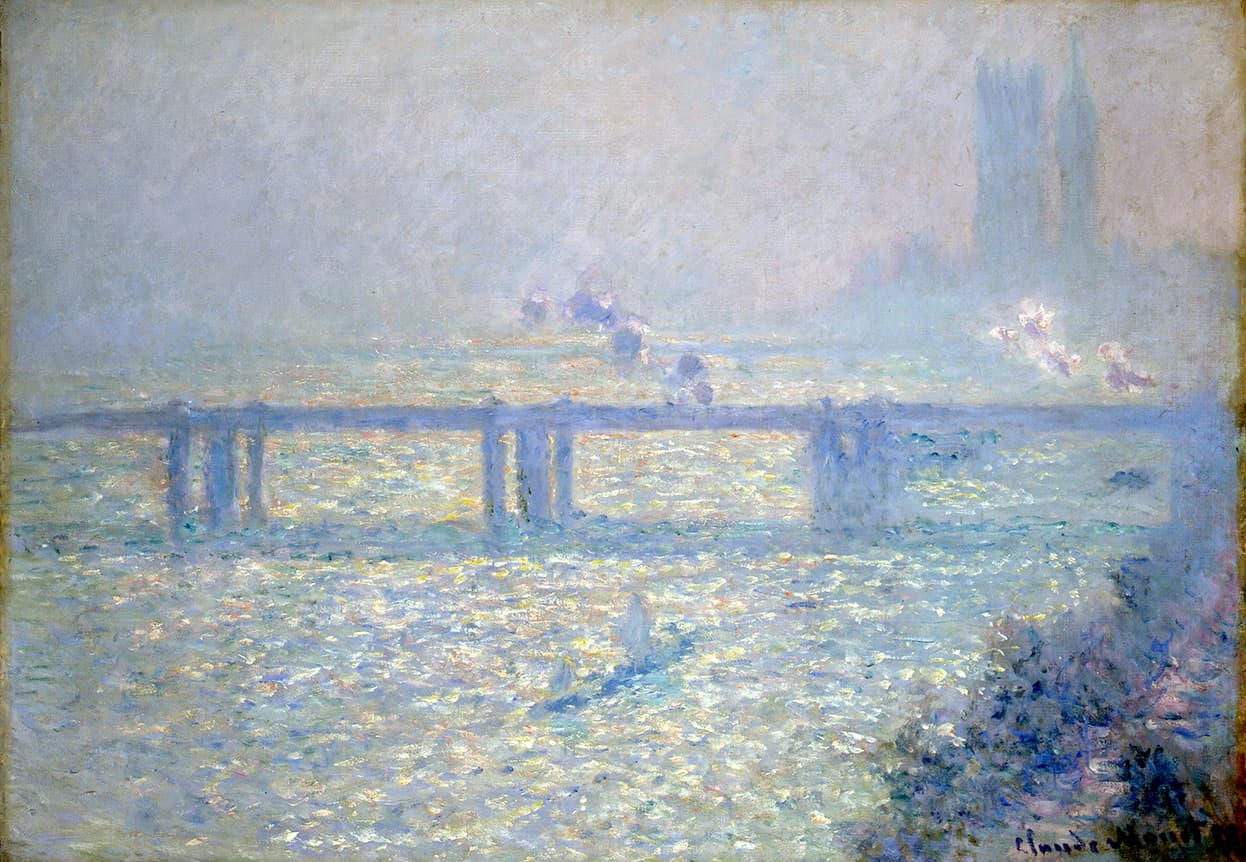
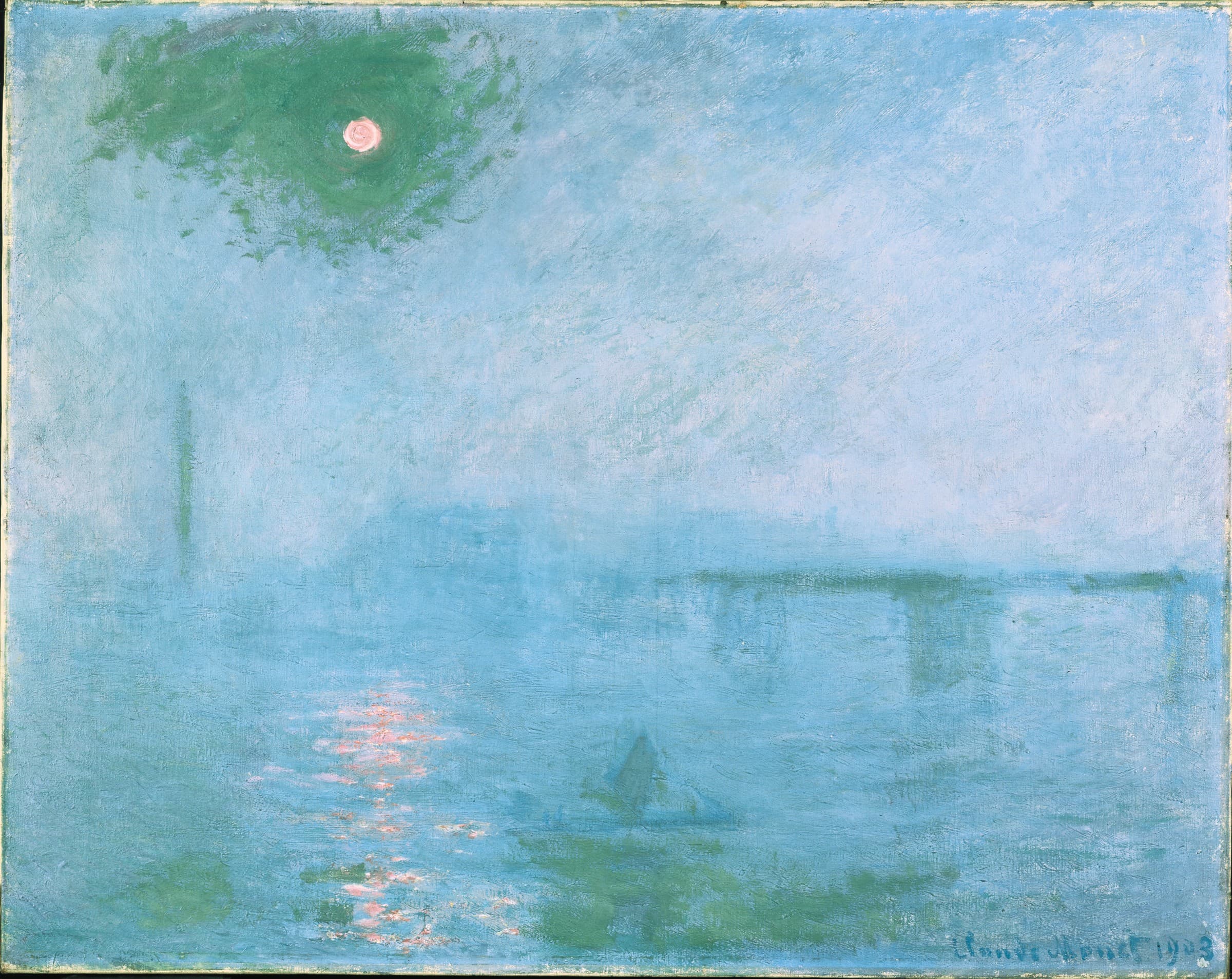
The Charing Cross Bridge series runs to more than thirty canvases. Compare this one with the cooler, blue-gray Thyssen-Bornemisza version painted the same year, or the rosy Menard Art Museum canvas, and you see how the same view could become a study in yellow, blue or pink. Later pictures such as Charing Cross Bridge: Fog on the Thames (1903) dissolve the bridge almost completely. Here it is still clearly legible, and the sparkle on the water is the real subject.
Where to see it
The painting is in the Santa Barbara Museum of Art (inv. 1968.20.4). Stanley McCormick bought it in 1902, the year after Monet sold it to Durand-Ruel, and his widow Katharine Dexter McCormick left it to the museum. For other collections, see where to see Monet's paintings.
Questions & answers
Where is Monet's Charing Cross Bridge in Santa Barbara?
It is in the Santa Barbara Museum of Art in California (inv. 1968.20.4). Katharine Dexter McCormick bequeathed it in 1968 in memory of her husband Stanley McCormick, who had bought it in 1902, a year after Monet sold it to the dealer Durand-Ruel.
When and where was it painted?
In the autumn of 1899, during Monet's first stay at the Savoy Hotel in London. He painted the bridge from his sixth-floor window, looking upriver, and signed and dated the canvas '99' in the lower right corner.
What does the painting show?
The Hungerford railway bridge, known as Charing Cross Bridge, crossing the Thames in a pale haze. Steam from a train rises at left, a rowing boat floats in the foreground, and the towers of the Houses of Parliament appear faintly at upper right.
How many Charing Cross Bridge paintings did Monet make?
More than thirty, painted from 1899 to 1901 and reworked at Giverny until 1904; scholars count between 34 and 37 depending on how sketches are included. Each records a different light, from this bright, yellow-violet day to dense fog.
More by the artist
Claude Monet
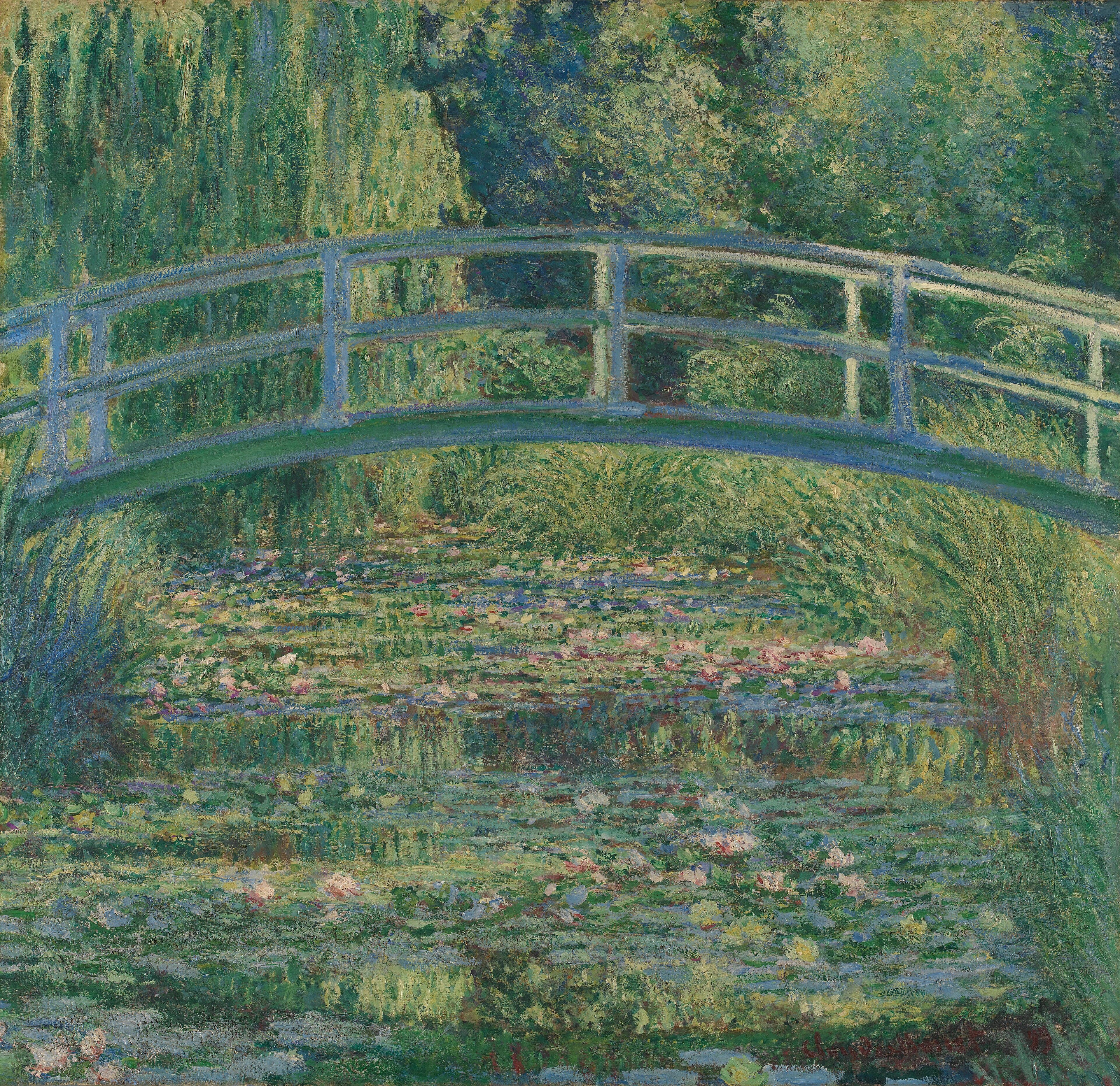
The Water-Lily Pond (National Gallery, London)
Claude Monet · 1899
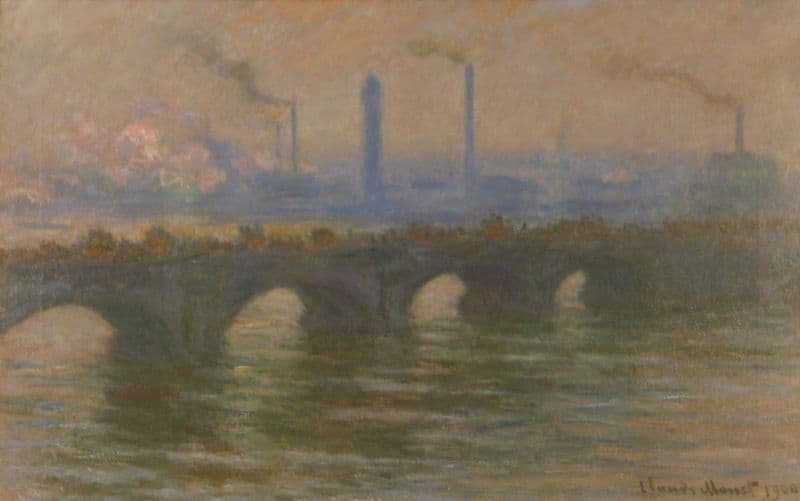
Waterloo Bridge, Overcast Weather
Claude Monet · 1900
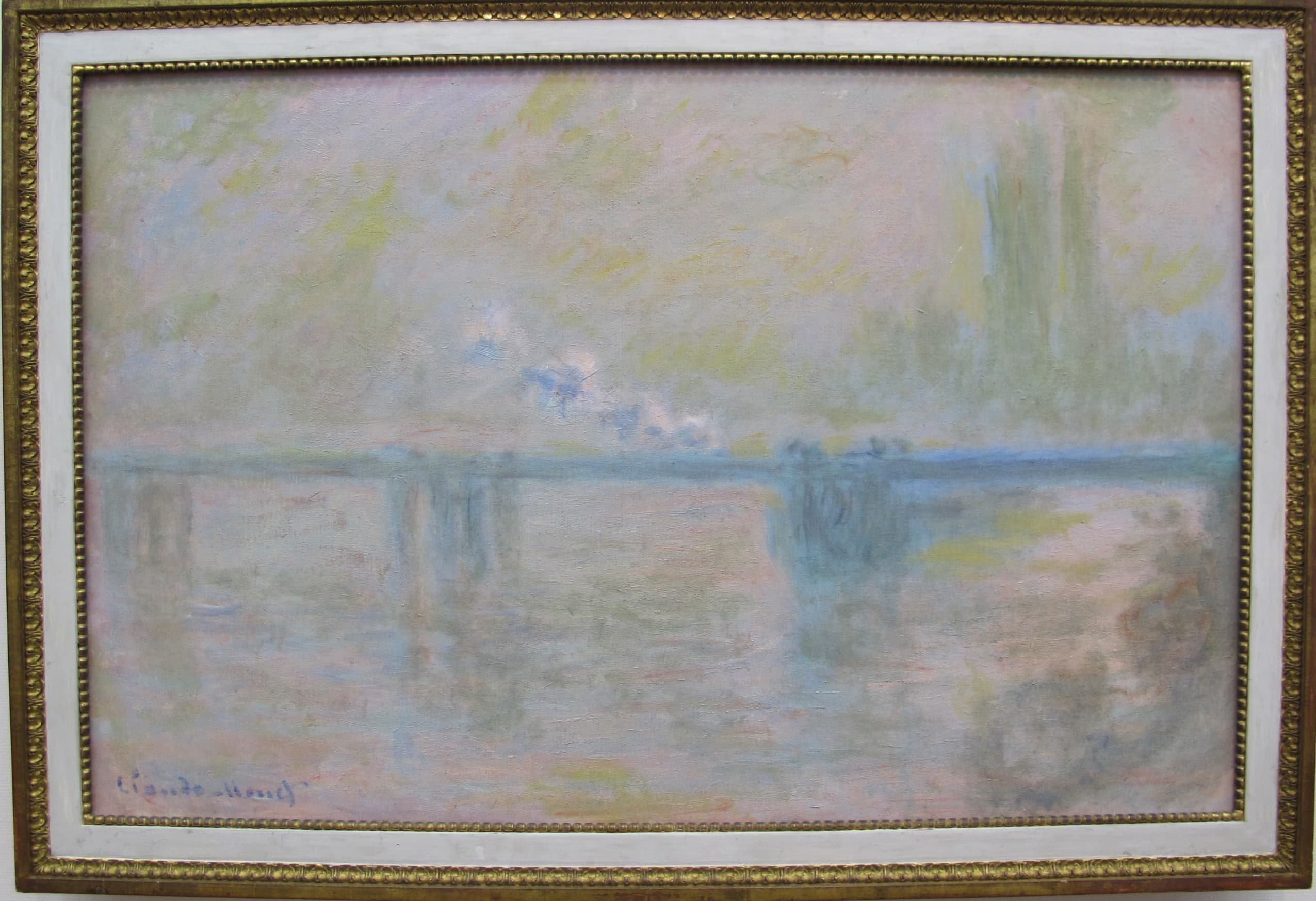
Charing Cross Bridge (Overcast Day)
Claude Monet · 1900
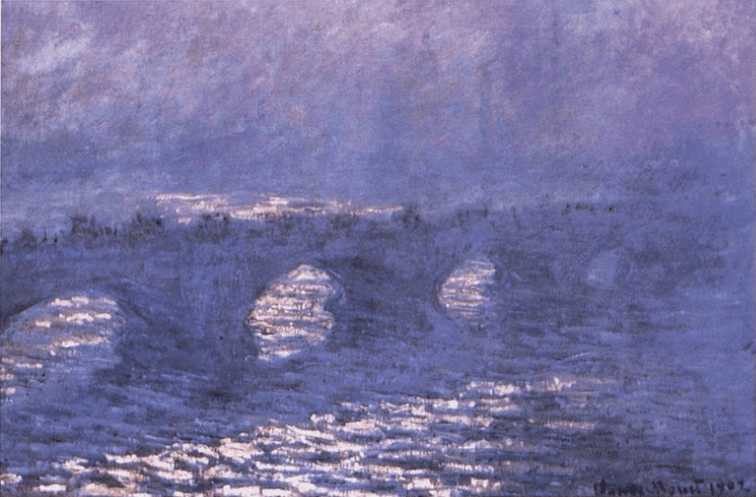
Waterloo Bridge, Effect of Sun in the Mist
Claude Monet · c. 1900–03
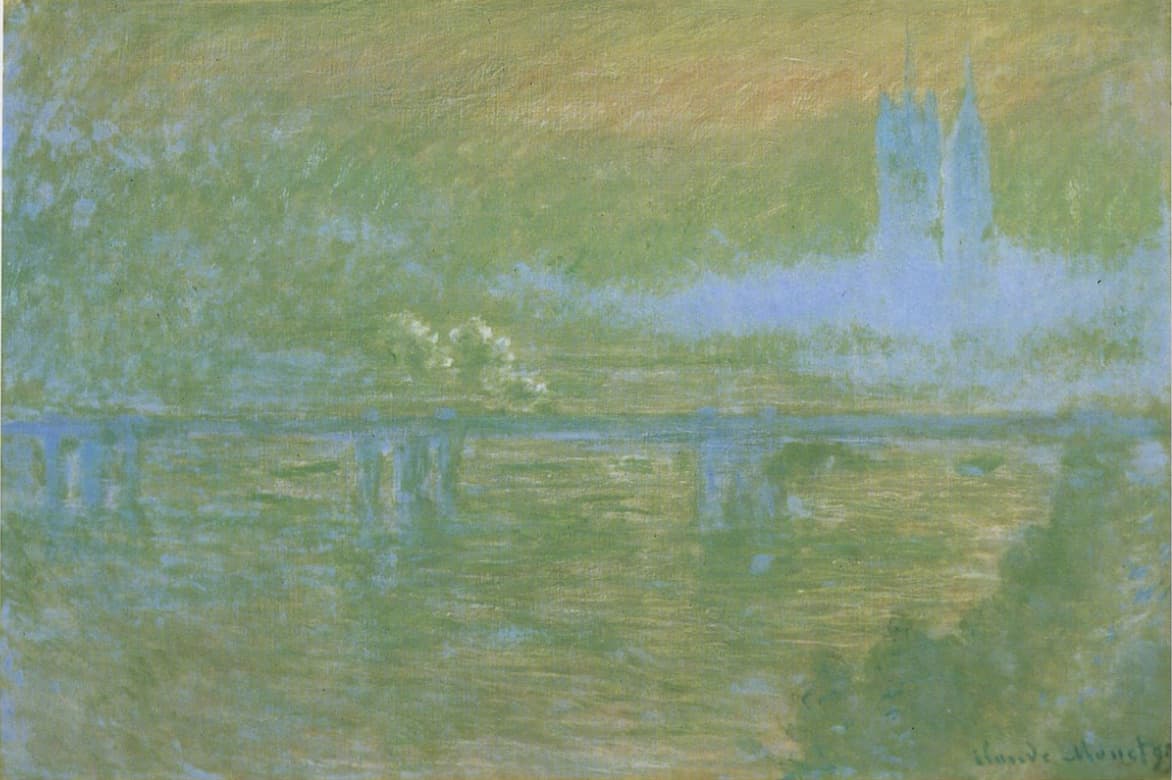
Charing Cross Bridge
Claude Monet · c. 1899
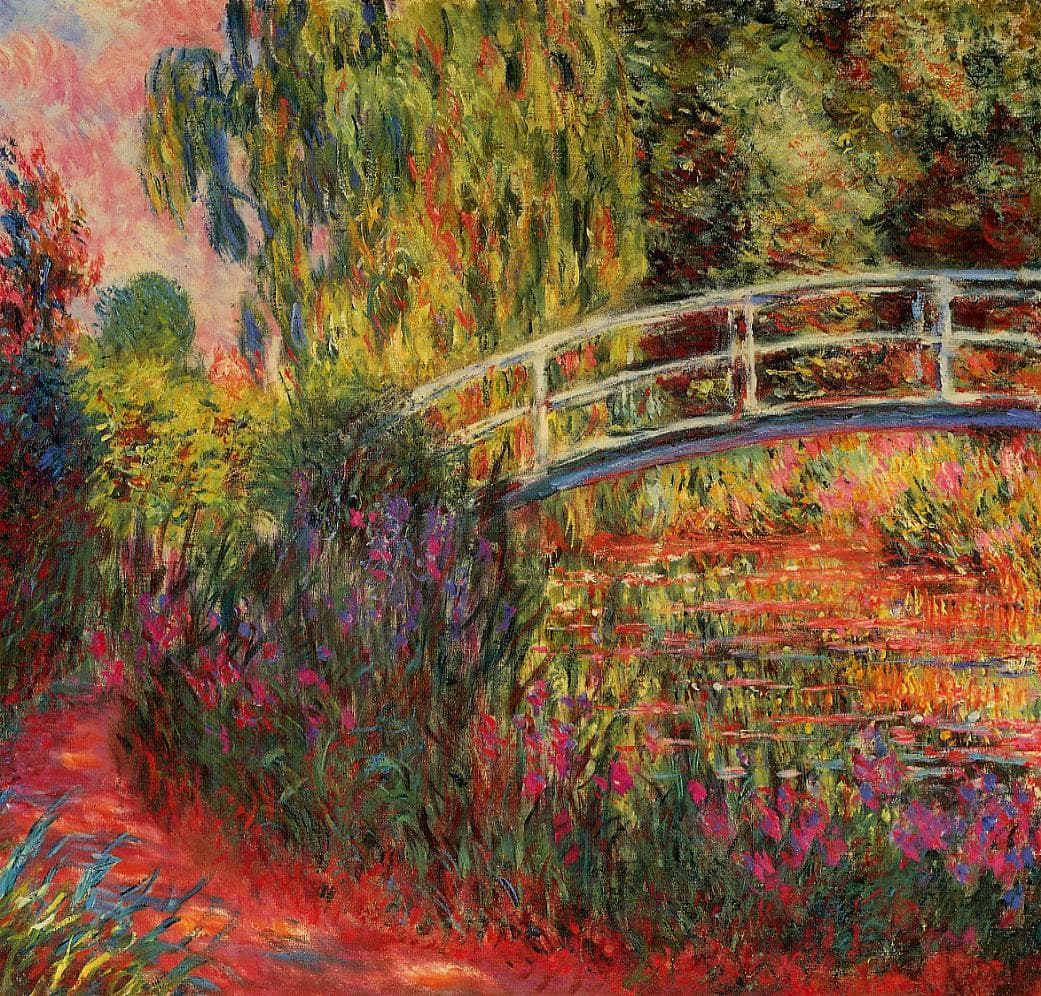
The Japanese Bridge or The Lily Pond
Claude Monet · 1900
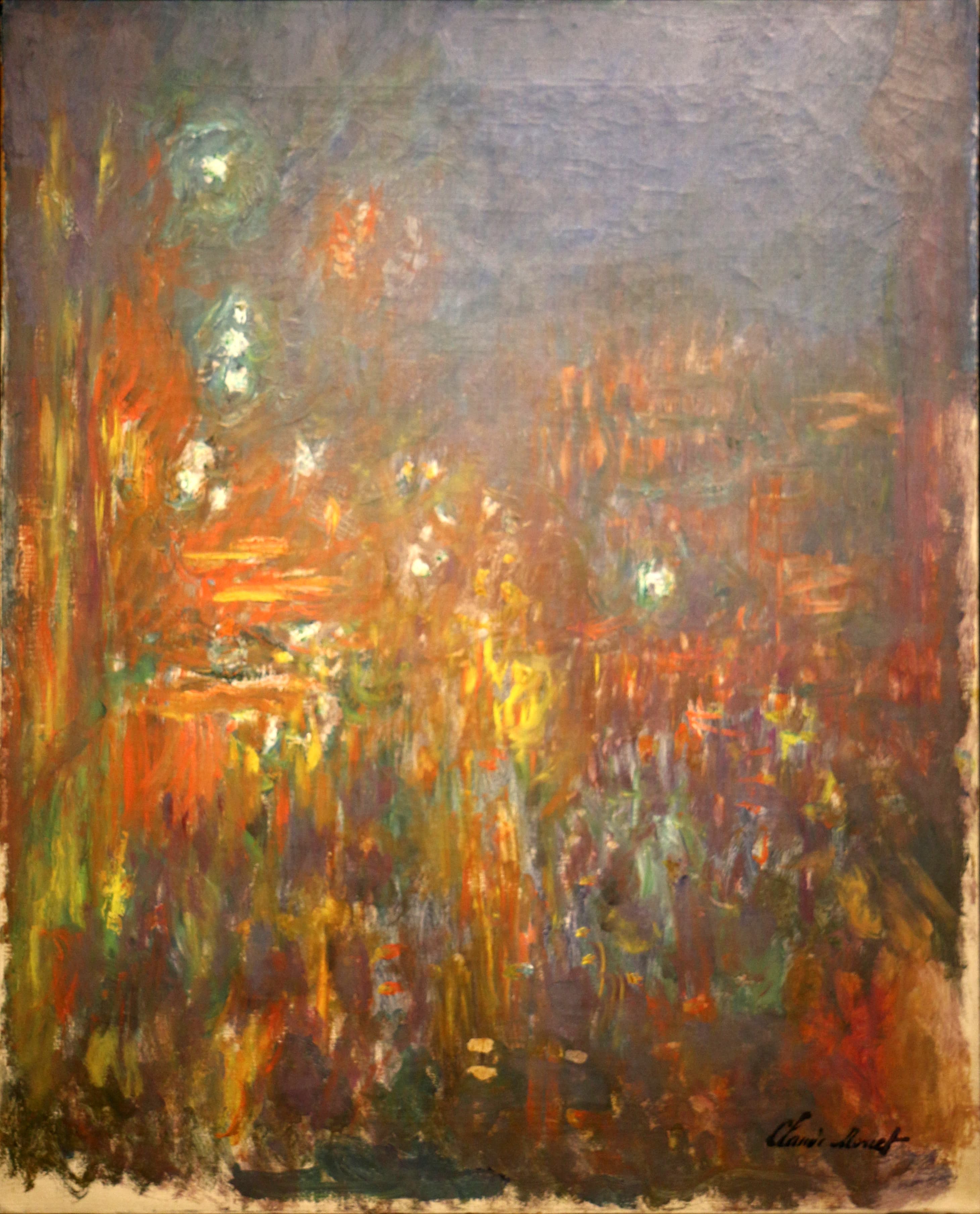
Leicester Square, by Night
Claude Monet · 1901
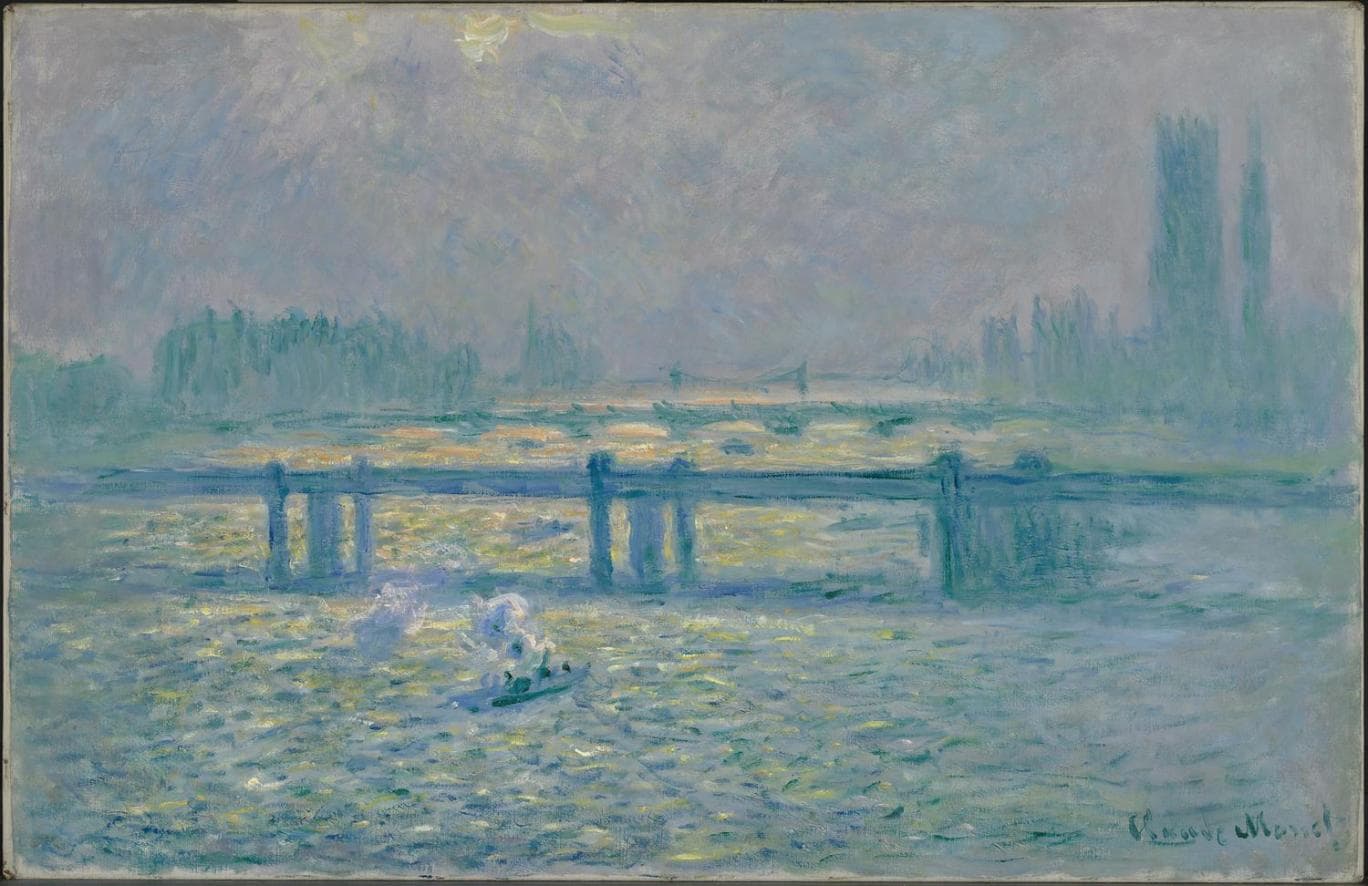
Charing Cross Bridge, Reflections on the Thames
Claude Monet · c. 1900
Also painted in 1899
The same year

Bridge over a Pond of Water Lilies
Claude Monet · 1899
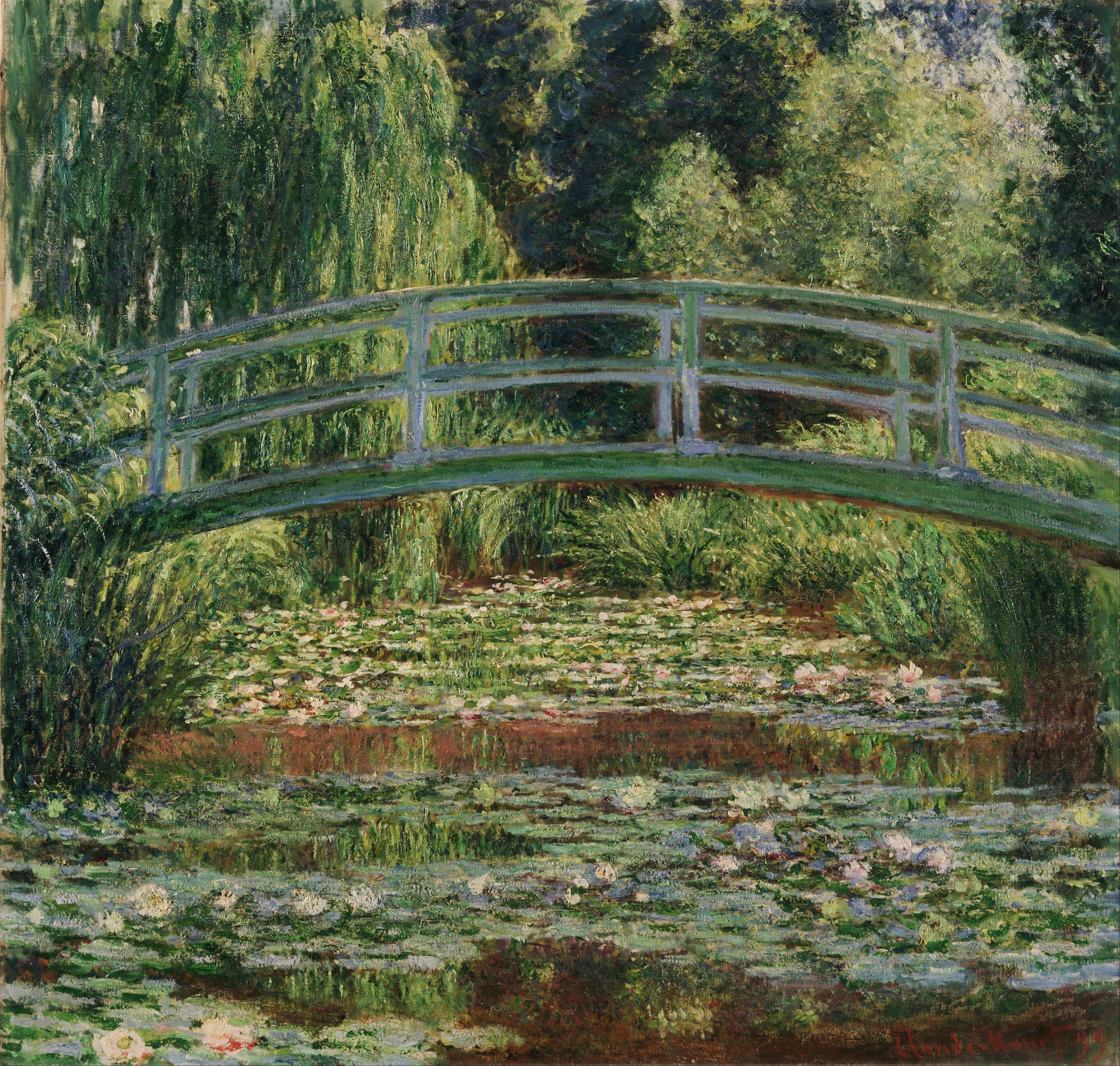
The Japanese Footbridge and the Water Lily Pool, Giverny
Claude Monet · 1899
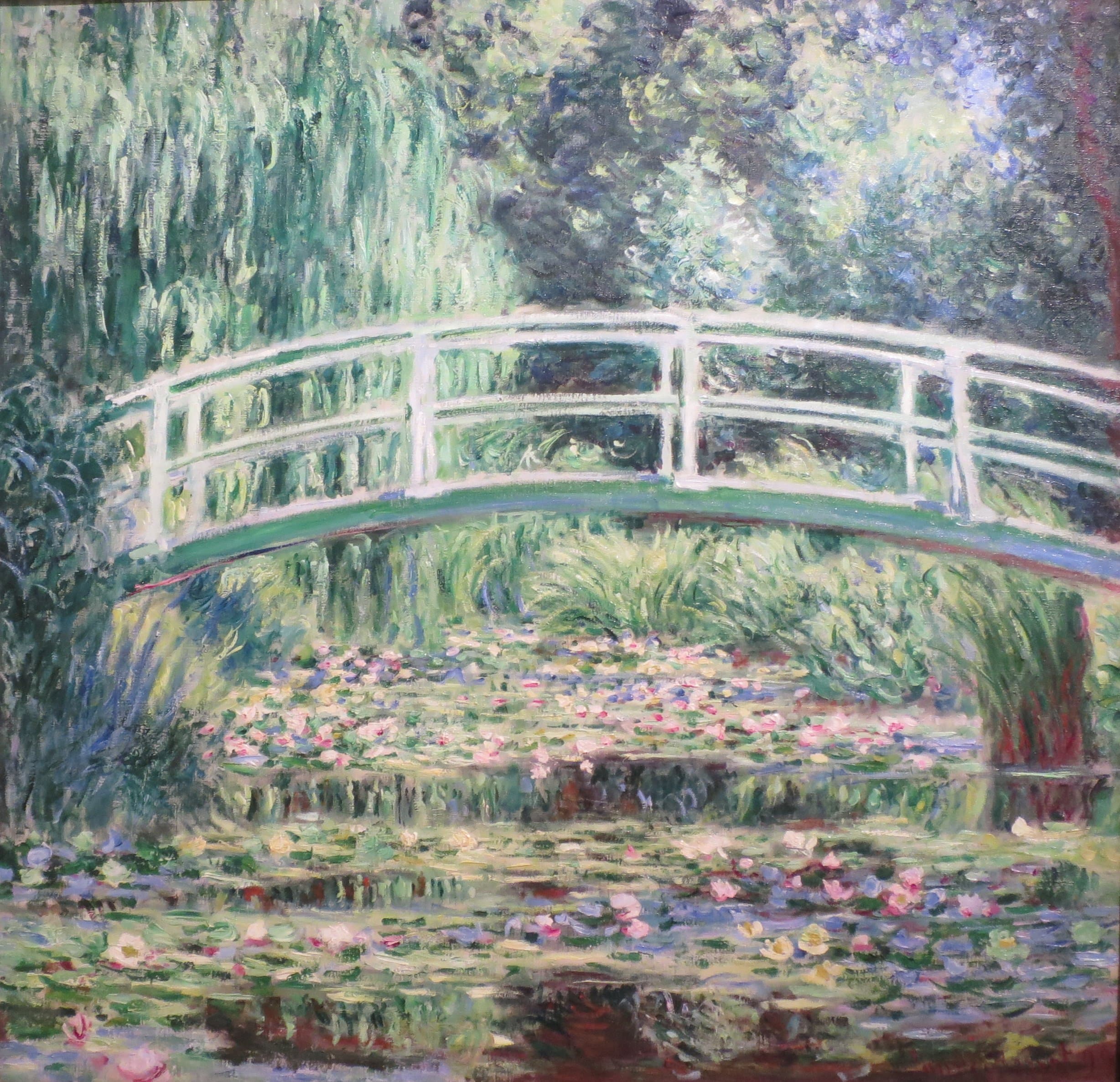
White Water Lilies
Claude Monet · 1899
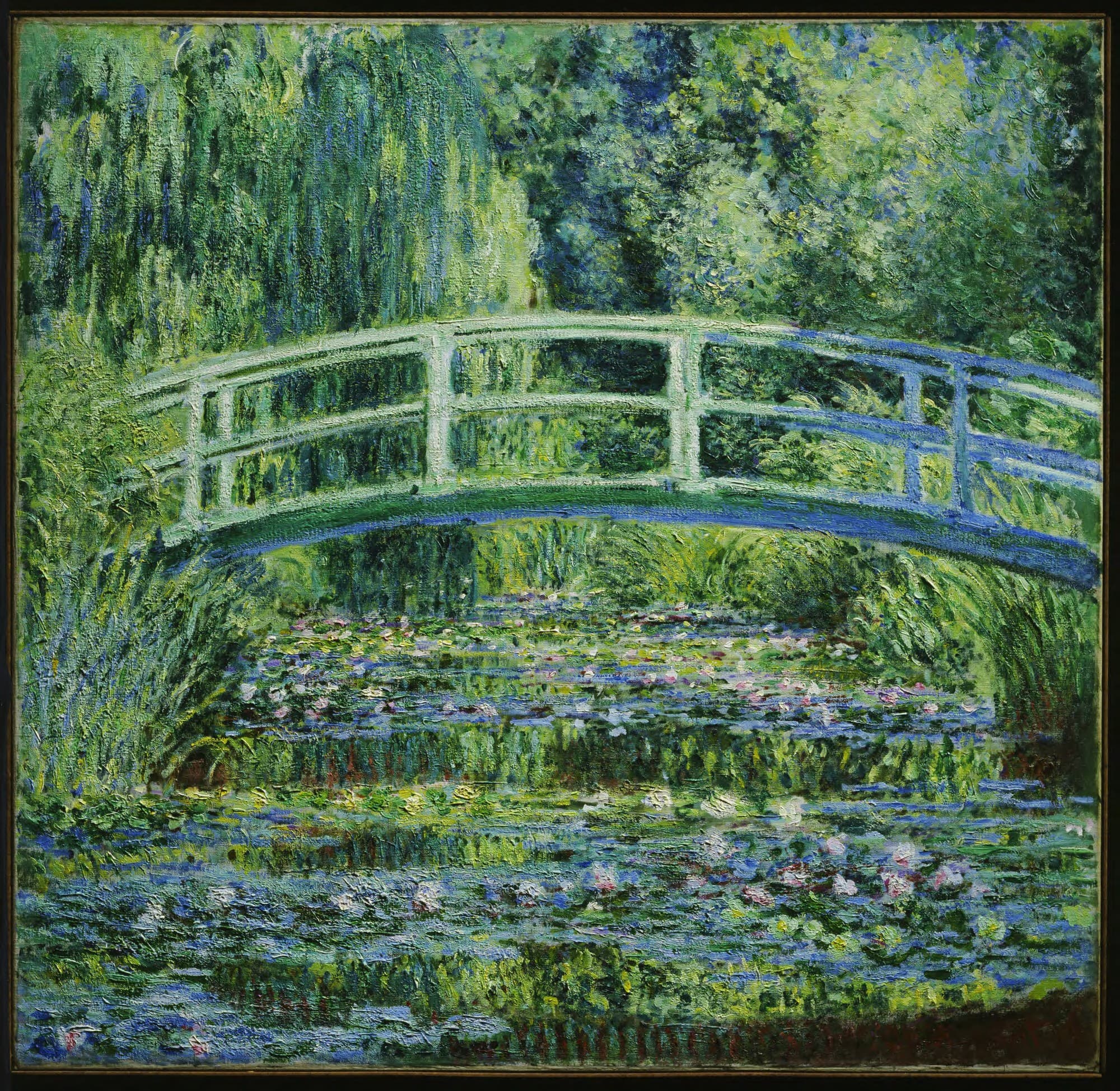
Water Lilies and Japanese Bridge
Claude Monet · 1899
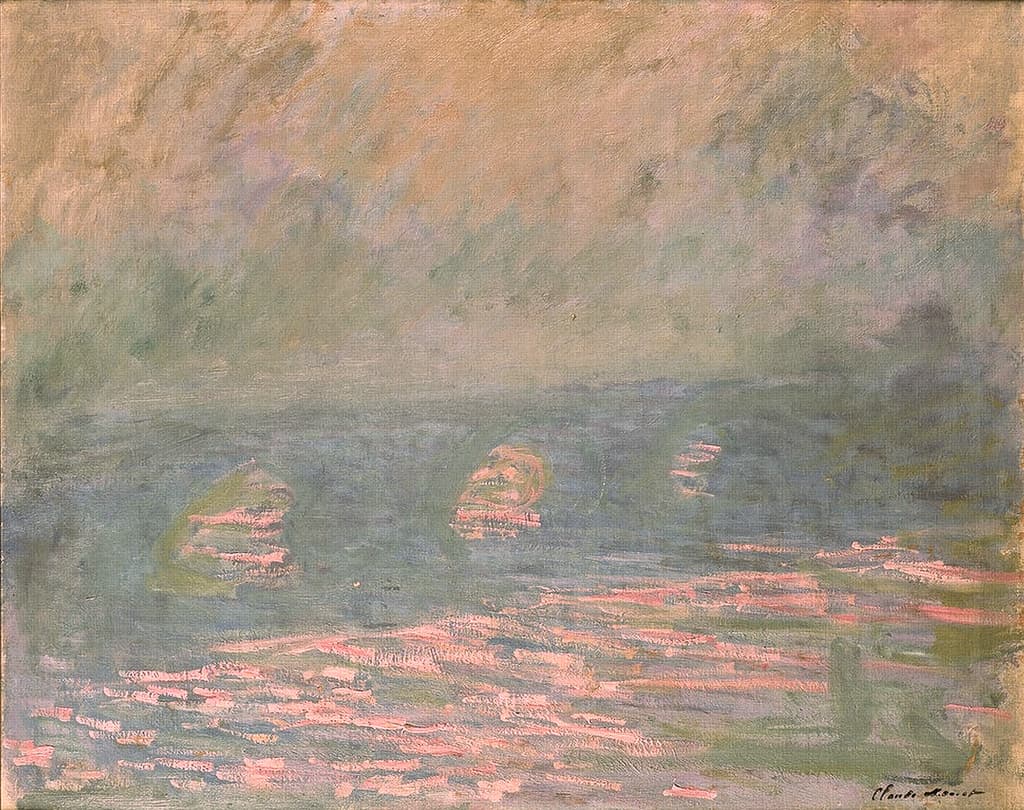
Waterloo Bridge (Matsushita Museum of Art)
Claude Monet · 1899–1901
Charing Cross Bridge
Claude Monet · 1899
Charing Cross Bridge
Claude Monet · 1899
Charing Cross Bridge (Shelburne Museum)
Claude Monet · 1899
Kindred works
You may also study
Charing Cross Bridge
Claude Monet · 1899
Charing Cross Bridge
Claude Monet · 1899
Charing Cross Bridge (Shelburne Museum)
Claude Monet · 1899
Charing Cross Bridge: Fog on the Thames
Claude Monet · 1903
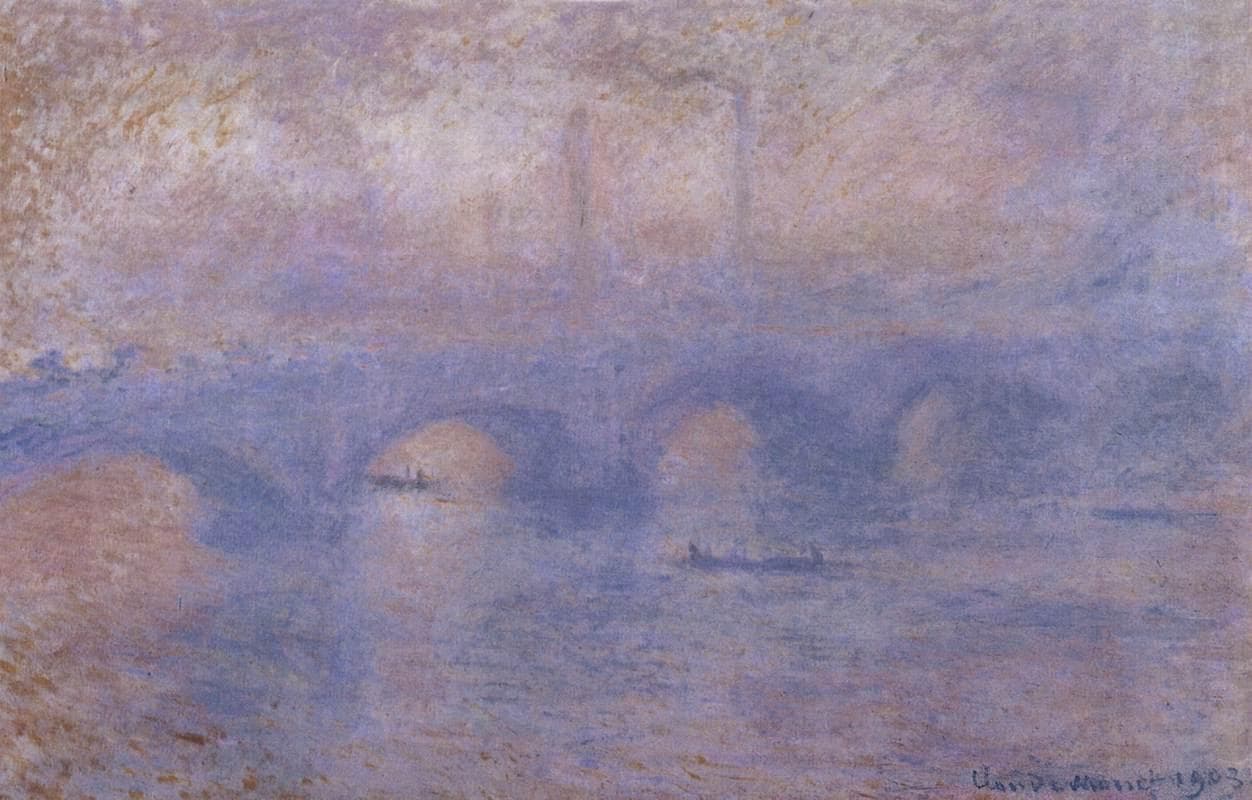
Waterloo Bridge, Effect of Fog
Claude Monet · 1903
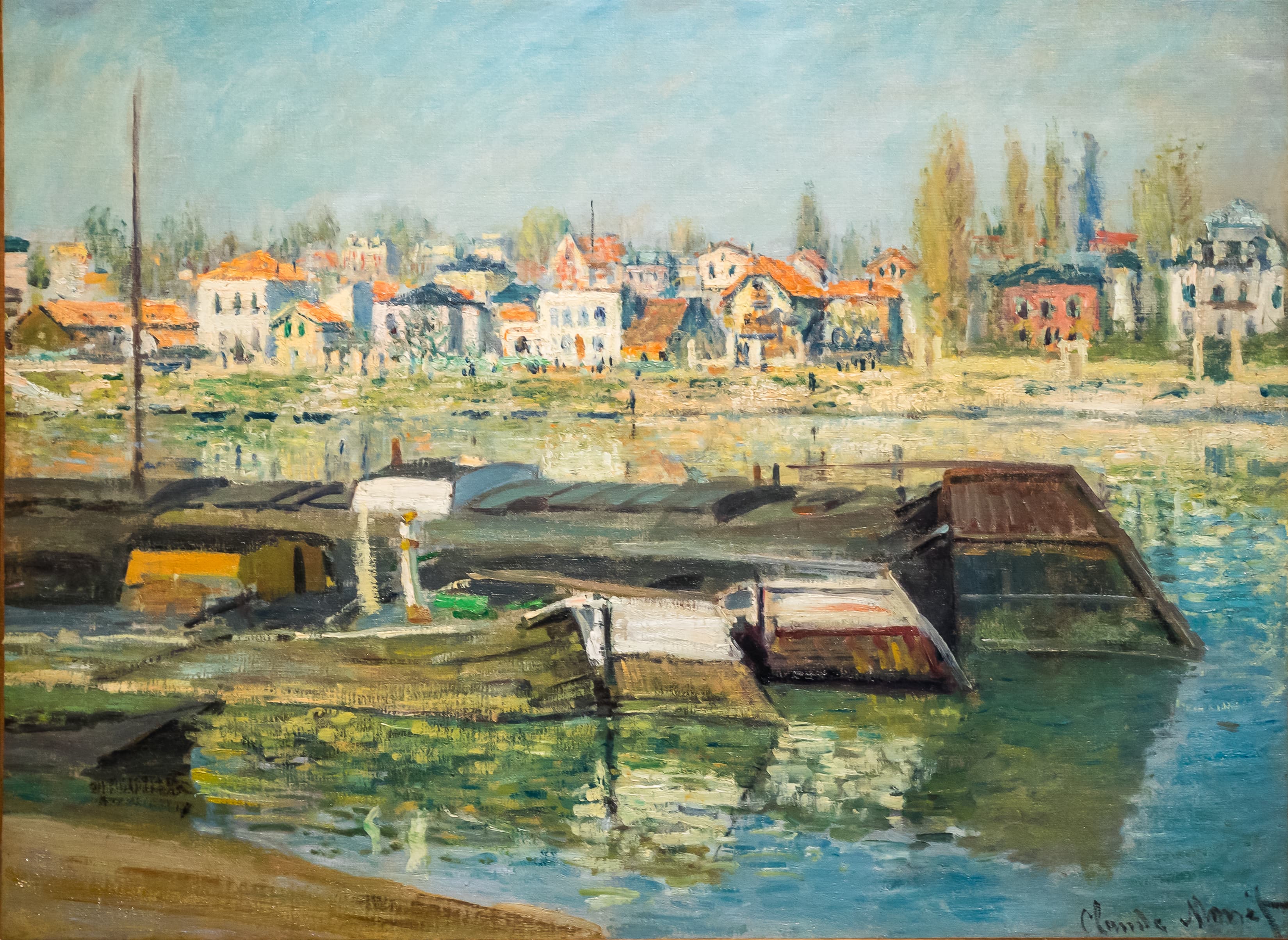
The Seine at Asnières
Claude Monet · 1873
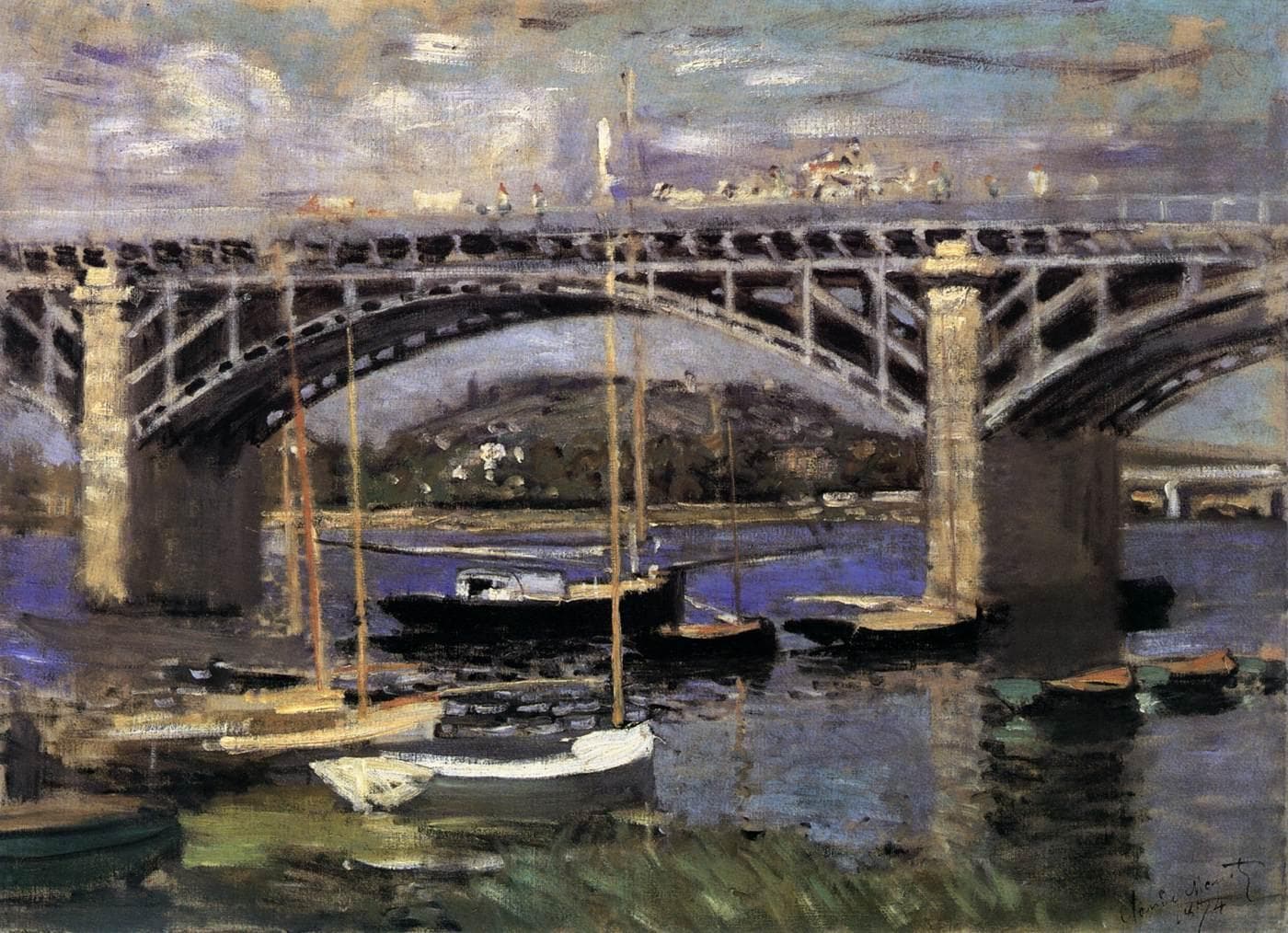
The Bridge at Argenteuil
Claude Monet · 1874
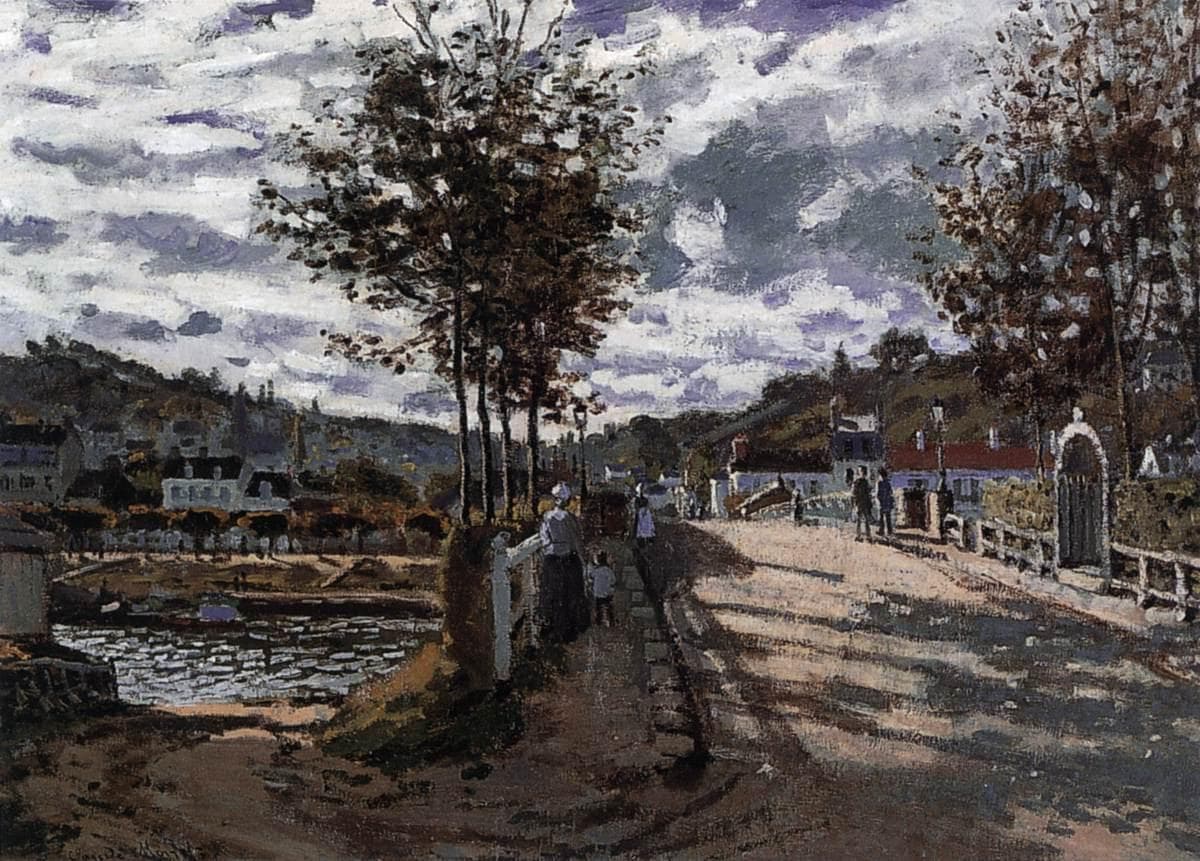
The Bridge at Bougival
Claude Monet · 1869