Image: Museo de Arte Contemporáneo de Caracas (book reproduction via Wikimedia Commons) · Public domain · via Wikimedia Commons
Waterloo Bridge, Effect of Sun in the Mist
Claude Monet, c. 1900–03
Le pont de Waterloo, effet de soleil dans la brume is a Claude Monet painting of about 1900–03: a blue-violet bridge in mist, sunlight breaking through its arches onto the Thames. It belongs to the Museo de Arte Contemporáneo de Caracas.
- Artist
- Claude Monet
- Date
- c. 1900–03
- Medium
- Oil on canvas
- Dimensions
- 65 × 92 cm
- Collection
- Museo de Arte Contemporáneo de Caracas, Caracas, Venezuela
- Movement
- Impressionism
- Catalogue
- Wildenstein 1577
- The City
- Water & Sea
Le pont de Waterloo, effet de soleil dans la brume (Waterloo Bridge, Effect of Sun in the Mist) is one of Claude Monet's London views of the Thames, painted from the Savoy Hotel. It measures 65 × 92 cm, is number 1577 in the Wildenstein catalogue raisonné, and belongs to the Museo de Arte Contemporáneo de Caracas (MACCAR) in Venezuela, which has featured it in its public program on the national art heritage. Wikidata dates it to 1900; the date beside the signature at lower right is hard to read in reproduction and may be later.
What you're looking at
The whole picture is steeped in blue and violet. The sky is a dense, lilac-tinged mist with no visible chimneys or buildings, and the bridge crosses it as a darker band of ultramarine and purple, its arches seen in silhouette.
The drama is underneath. Through three of the arches, and along a strip above the bridge's deck, a cold white-gold light breaks out, as if the sun were low on the far side of the river. That light spills down onto the water as short, bright, horizontal strokes, which pile up in a broad shimmering path across the lower half of the canvas. The rest of the river is a deep blue-violet.
What makes this version distinct is the color temperature. Many sunlit versions of the bridge, such as those in Denver and Baltimore, warm the light to gold or orange. Here the sunlight is pale and silvery, and the mist around it is cold, which gives the canvas a wintry, early-morning stillness.
Where and when it was painted
Monet stayed at the Savoy Hotel in the autumn of 1899 and the late winters of 1900 and 1901, painting Waterloo Bridge in the mornings, when the sun rose downstream behind it. He took the canvases back to Giverny, reworked them for several years, and showed a selection at Durand-Ruel in Paris in 1904, in the exhibition Vues de la Tamise à Londres.
How it was painted
The mist is built from thin, scumbled layers of violet and blue dragged over one another. The bridge is laid in darker, flatter strokes. The light on the water is the thickest paint, short horizontal dabs of white with yellow and pink, set on top of the dark river so they seem to float. The method, dark base and bright broken touches on top, is the same one Monet used across the series to make light flicker.
How this version differs
In the Waterloo Bridge series, its nearest relatives are the Santa Barbara Waterloo Bridge, where light glows through the arches above a gold river, and the Hermitage's Waterloo Bridge, Effect of Fog, almost entirely violet. The Ottawa Waterloo Bridge: the Sun in a Fog shows the sun itself as a red disc; here it is hidden, felt only through its light.
Monet and London fog
Monet had first seen London in 1870–71, when he took refuge there during the Franco-Prussian War, and he returned in 1899 partly to paint the winter fogs he remembered. The fogs of the period were thick with coal smoke from homes and factories, and they colored the light in ways no French city offered: brown, yellow, violet, red. His letters from London describe waiting for the fog and despairing when the weather was clear. The cold, violet mist of this canvas is one of the many types he recorded. Modern scientists have even used his London pictures as evidence for the history of urban air pollution.
Where to see it
The Museo de Arte Contemporáneo de Caracas, founded in 1973 in the Parque Central complex, holds one of the largest collections of modern art in Latin America. Opening hours and displays have varied in recent years, so check before visiting. For Claude Monet's London campaign, see Monet in London; for other locations, where to see Monet's paintings.
Questions & answers
Where is Monet's Waterloo Bridge in Caracas?
It belongs to the Museo de Arte Contemporáneo de Caracas (MACCAR) in Venezuela, one of the largest modern art collections in Latin America. Displays vary, so it is not always on view.
When was it painted?
Wikidata dates it to 1900. Monet began the Waterloo Bridge canvases in London in 1899–1901 and finished many of them at Giverny up to 1904, so a date of about 1900–03 is safer. It is Wildenstein number 1577.
What does the painting show?
It shows Waterloo Bridge as a blue-violet silhouette in thick mist, with pale sunlight breaking through its arches and spreading across the Thames in a shimmering path of white and gold strokes.
Why is the painting so blue?
Monet painted the bridge in the morning, against the light, when mist turned everything blue-violet. In this version the sun is hidden and the light on the water is cool and silvery, unlike the warmer sunlit versions.
More by the artist
Claude Monet
Charing Cross Bridge, London (Marmottan study)
Claude Monet · c. 1899–1901
Houses of Parliament, Symphony in Rose
Claude Monet · 1900
The Japanese Bridge or The Lily Pond
Claude Monet · 1900
Charing Cross Bridge, Reflections on the Thames
Claude Monet · c. 1900
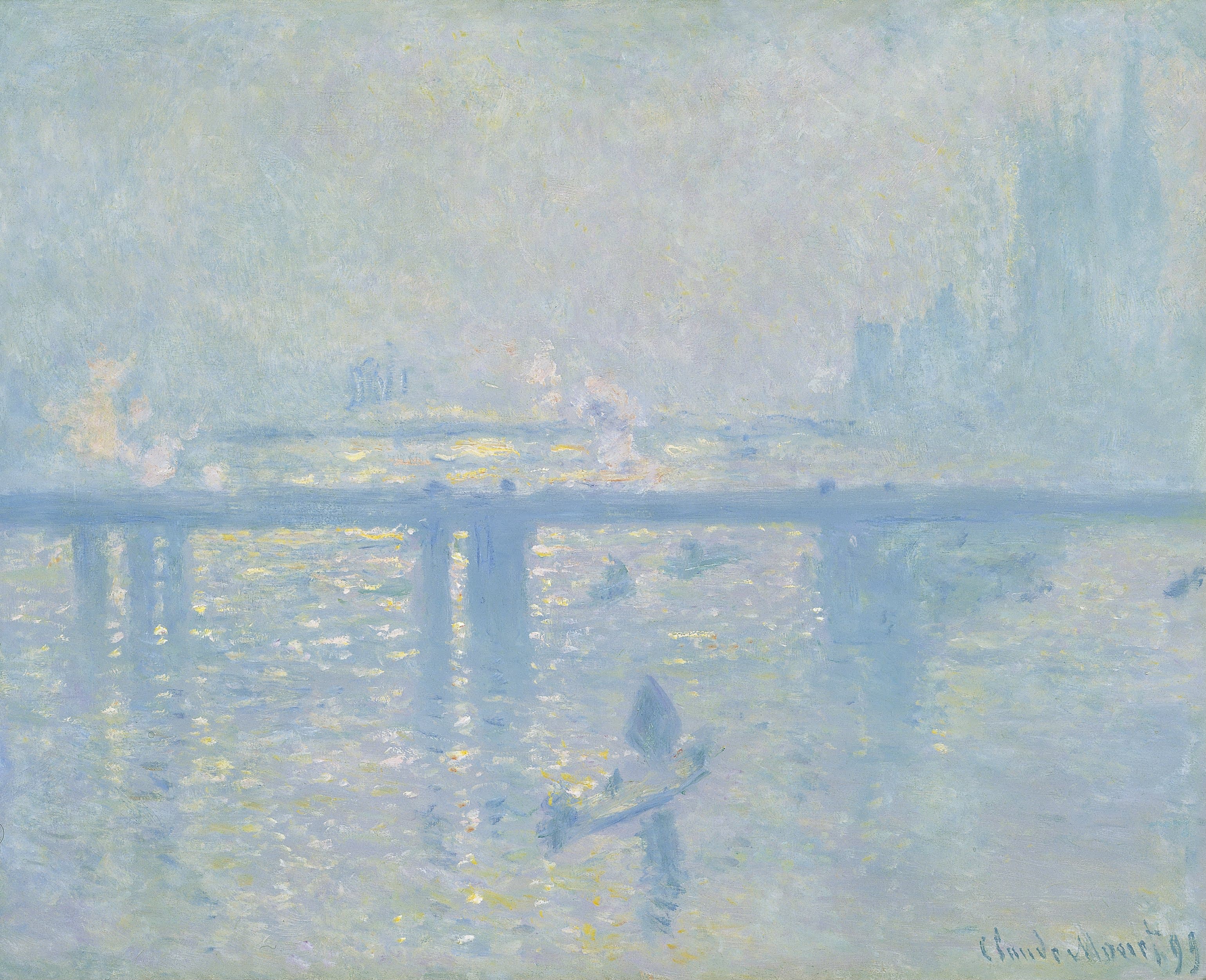
Charing Cross Bridge
Claude Monet · 1899
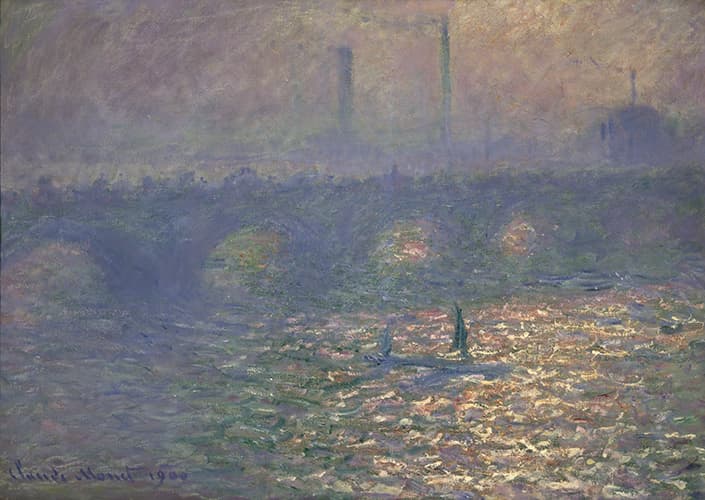
Waterloo Bridge (Santa Barbara Museum of Art)
Claude Monet · 1900
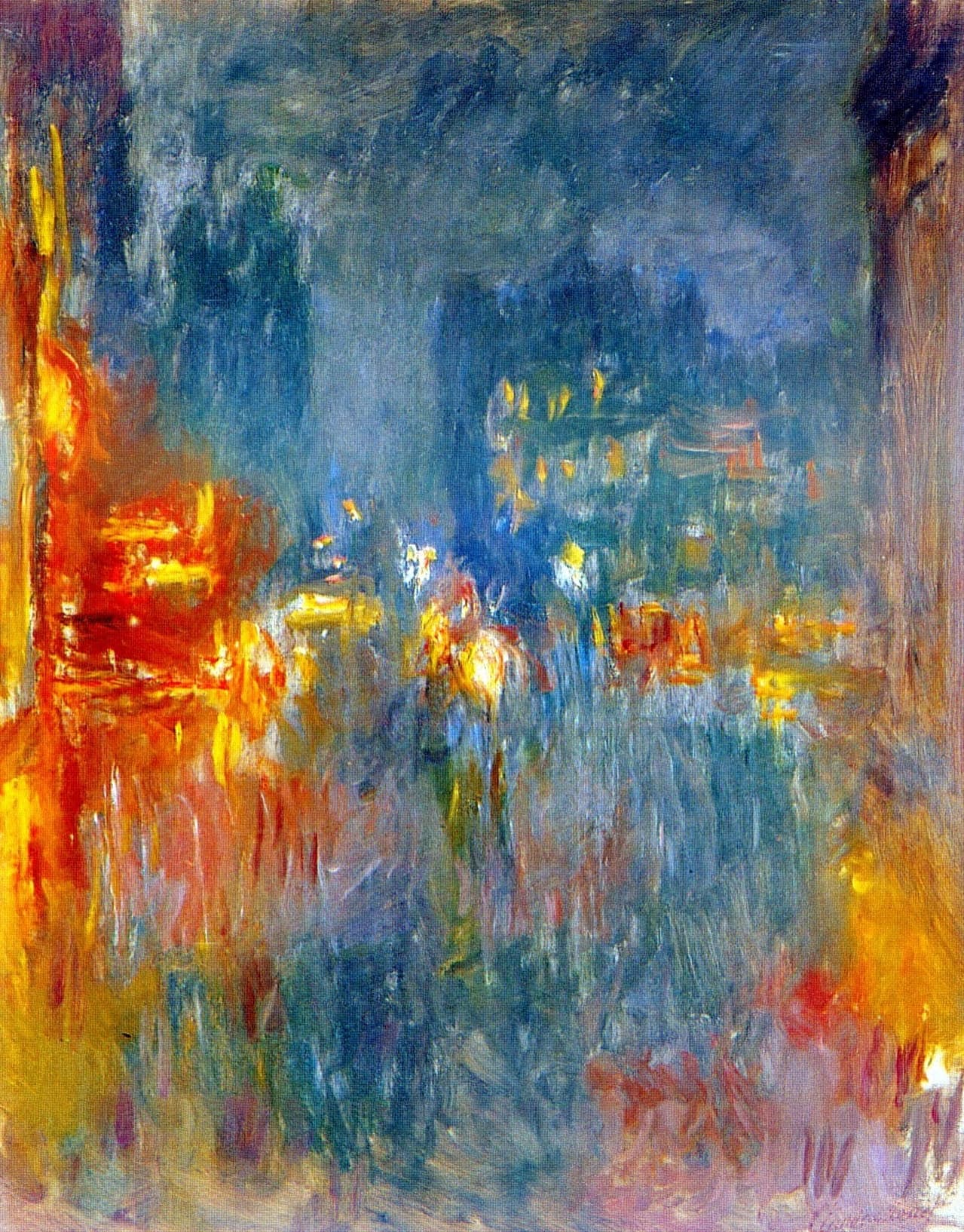
Leicester Square, Night
Claude Monet · c. 1901
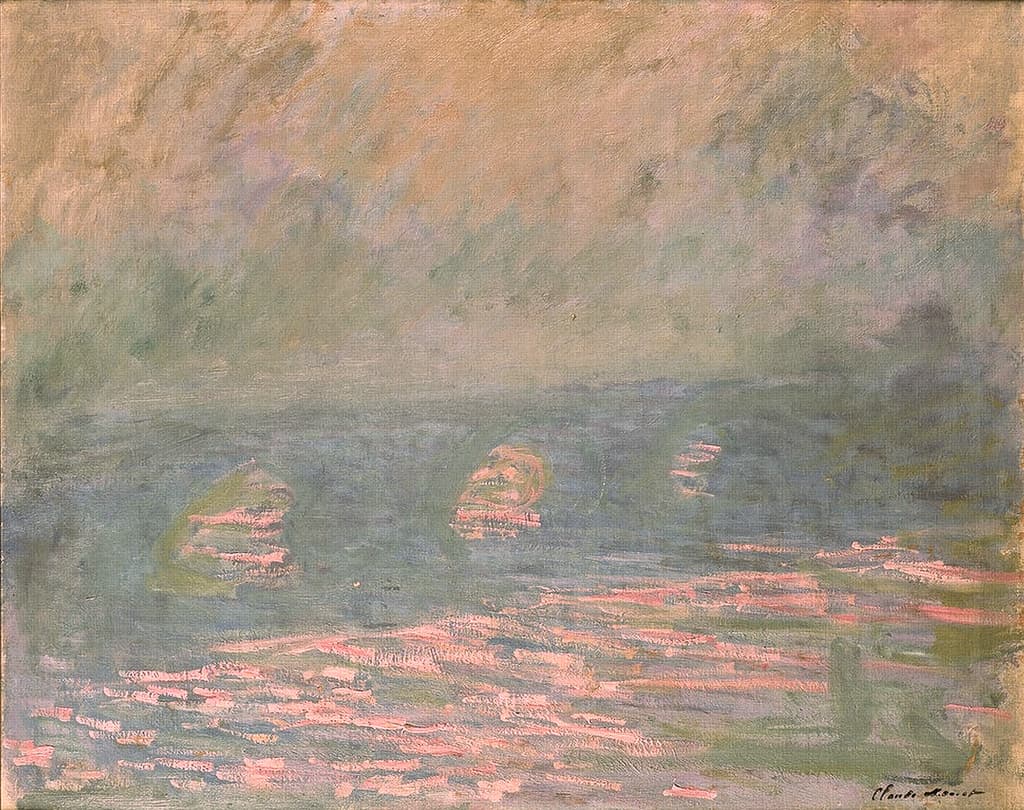
Waterloo Bridge (Matsushita Museum of Art)
Claude Monet · 1899–1901
Also painted in 1900
The same year
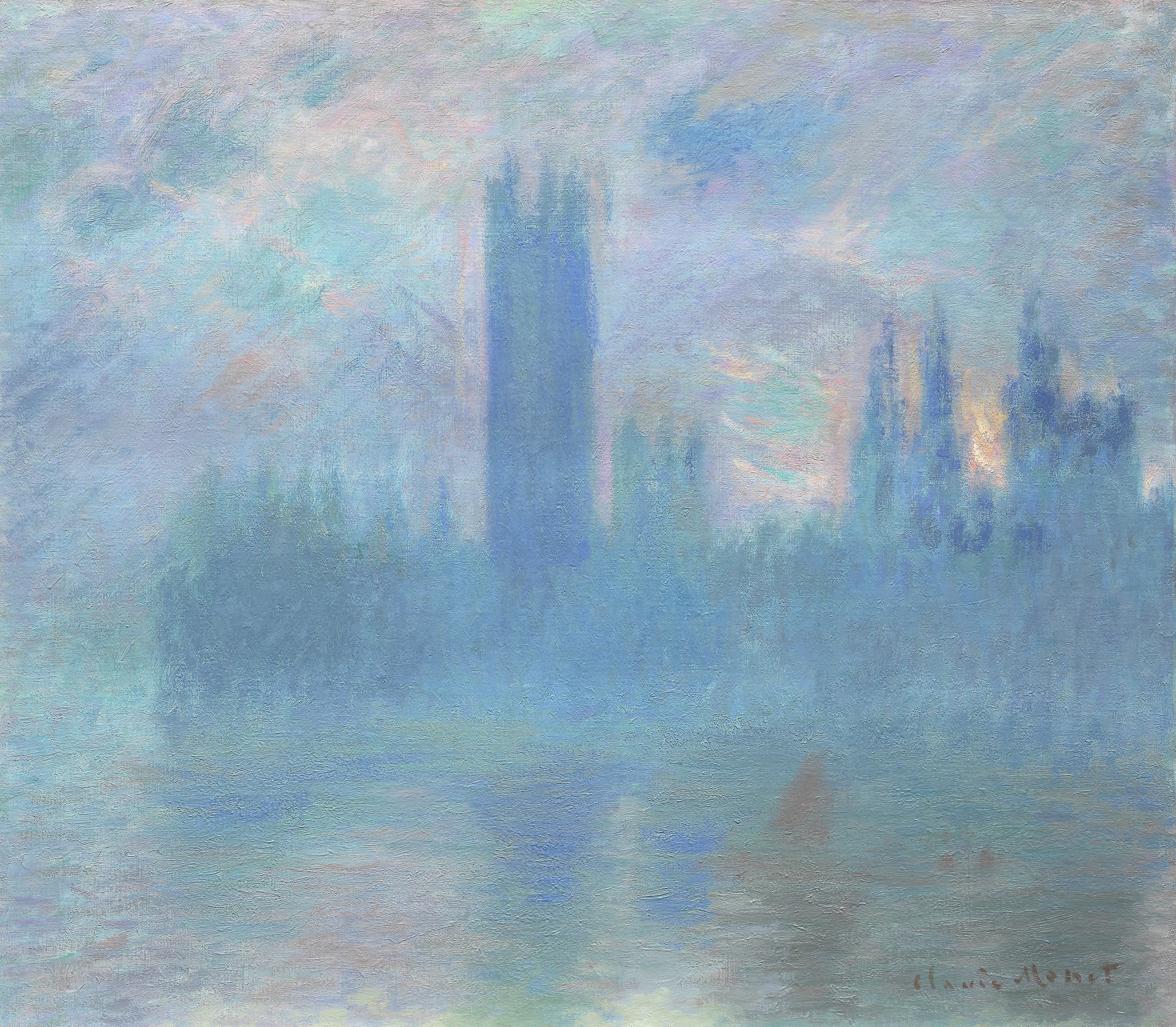
Houses of Parliament, London
Claude Monet · 1900–01
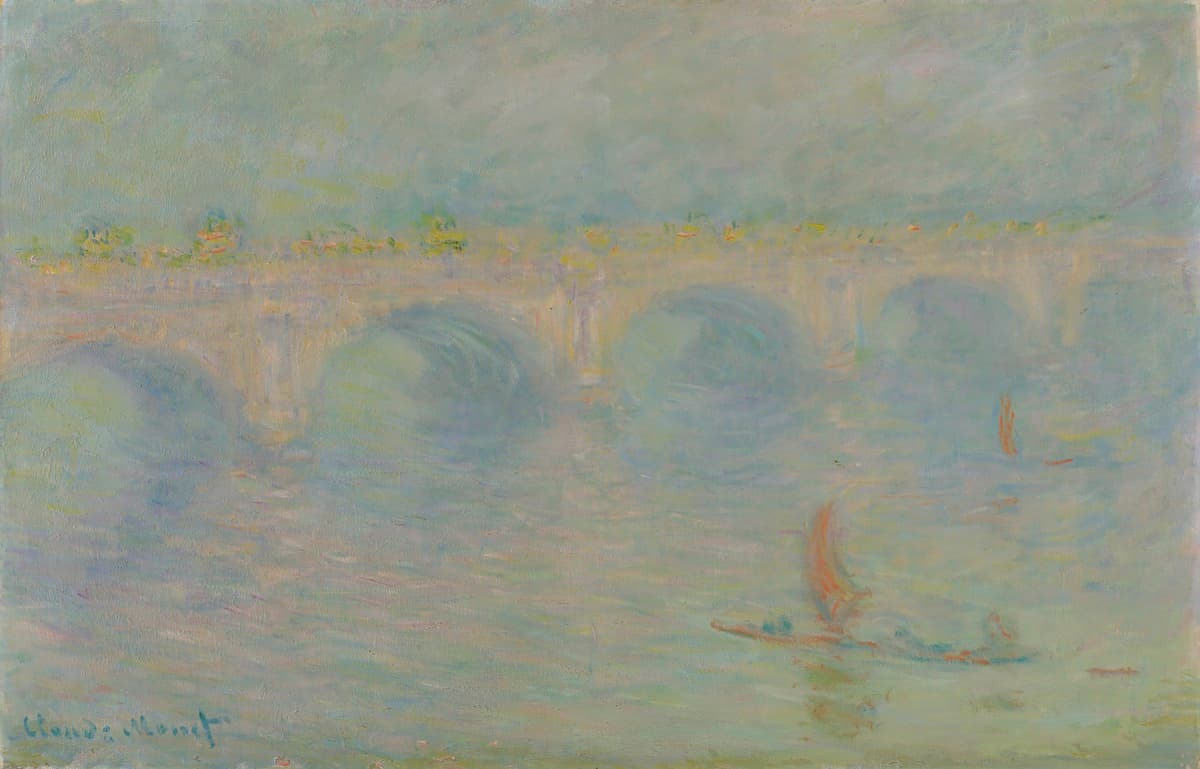
Waterloo Bridge, London, Sun Effect
Claude Monet · 1899–1901
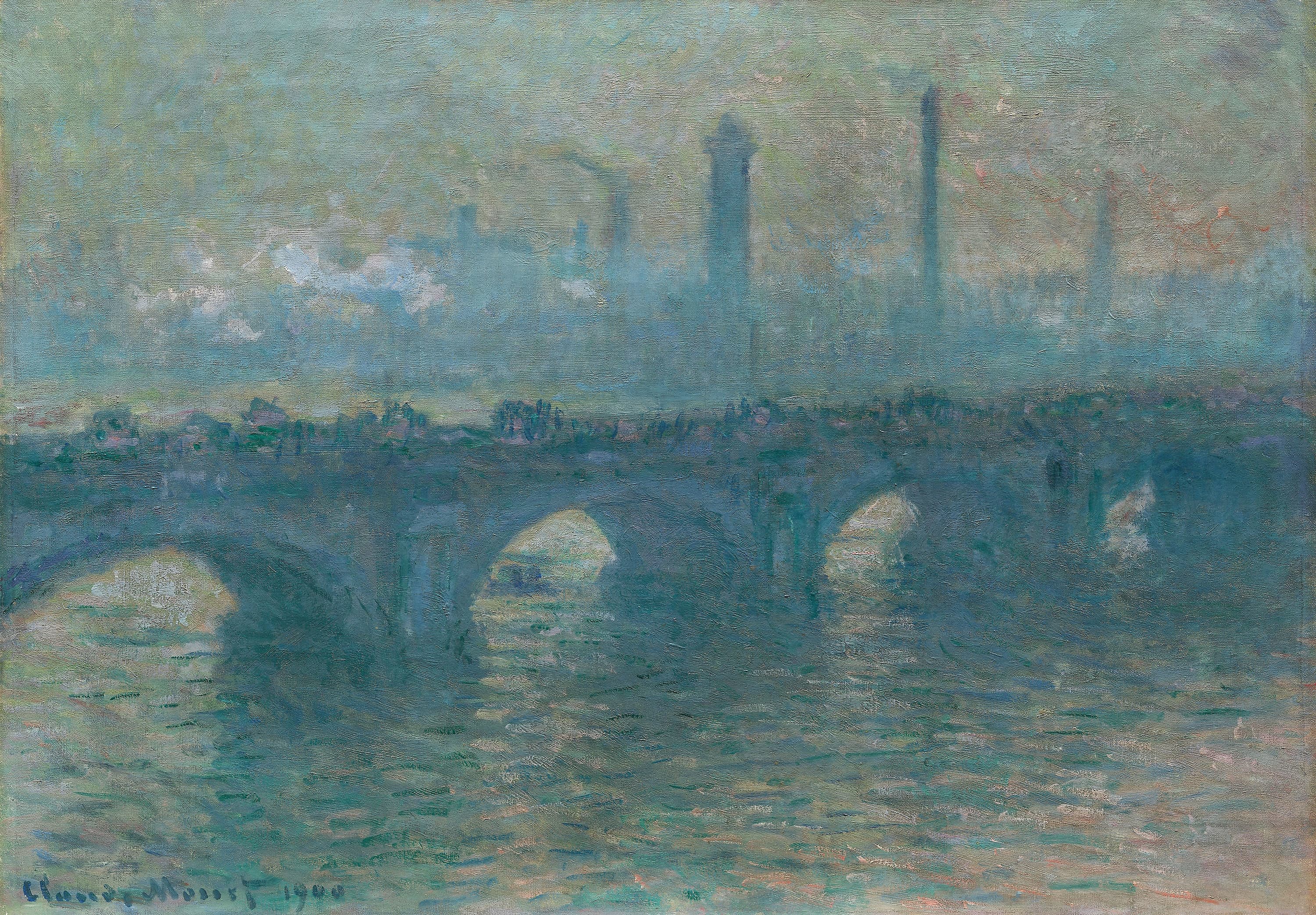
Waterloo Bridge, Gray Weather
Claude Monet · 1900
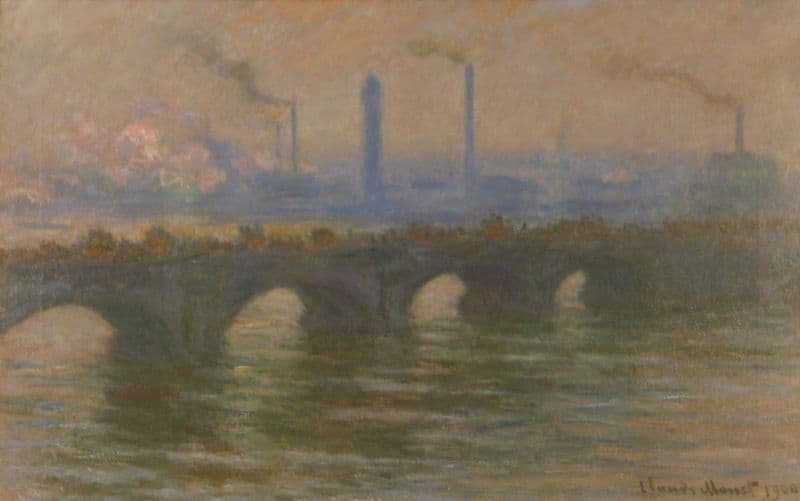
Waterloo Bridge, Overcast Weather
Claude Monet · 1900
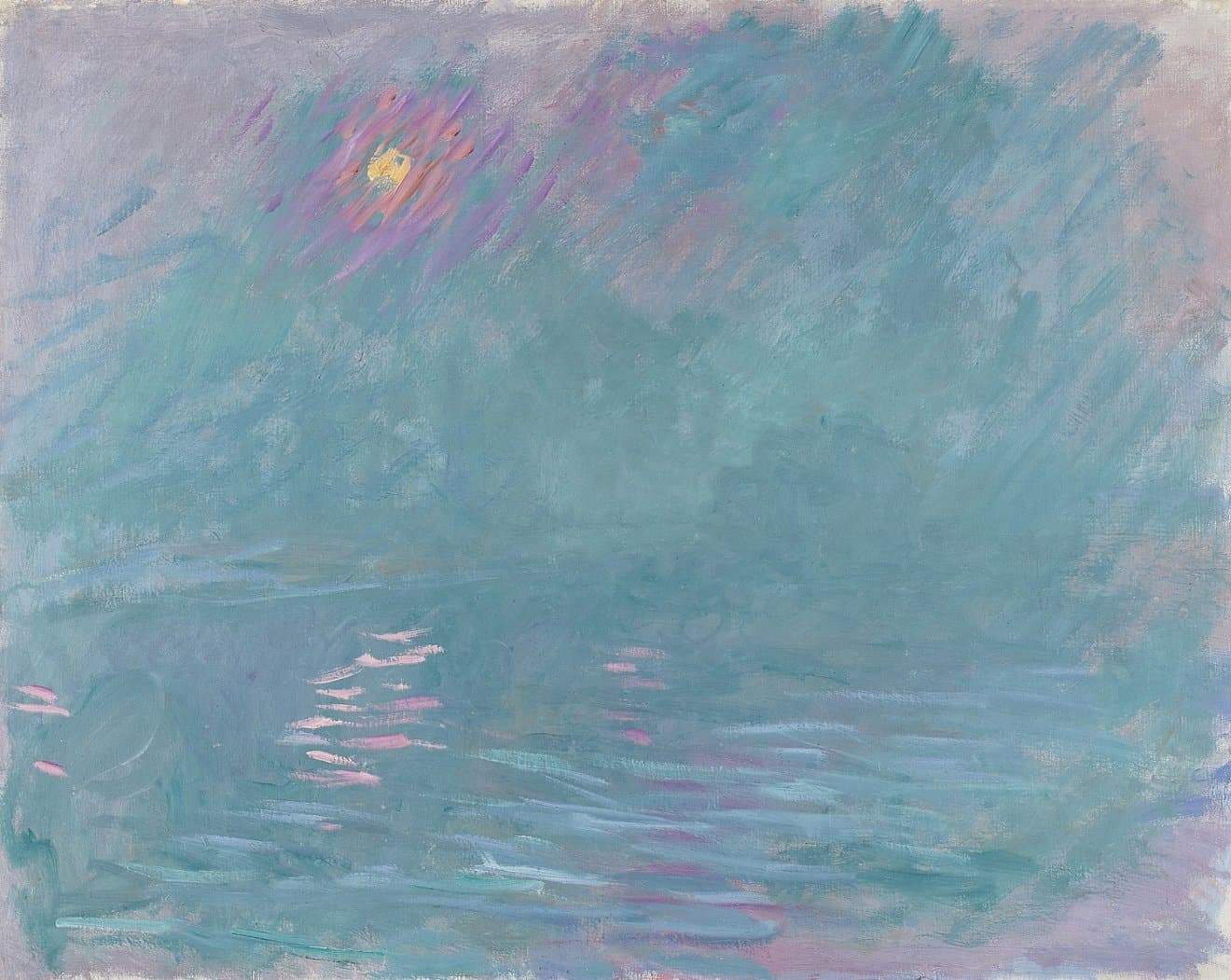
Waterloo Bridge (Kerry Stokes Collection)
Claude Monet · 1899–1901
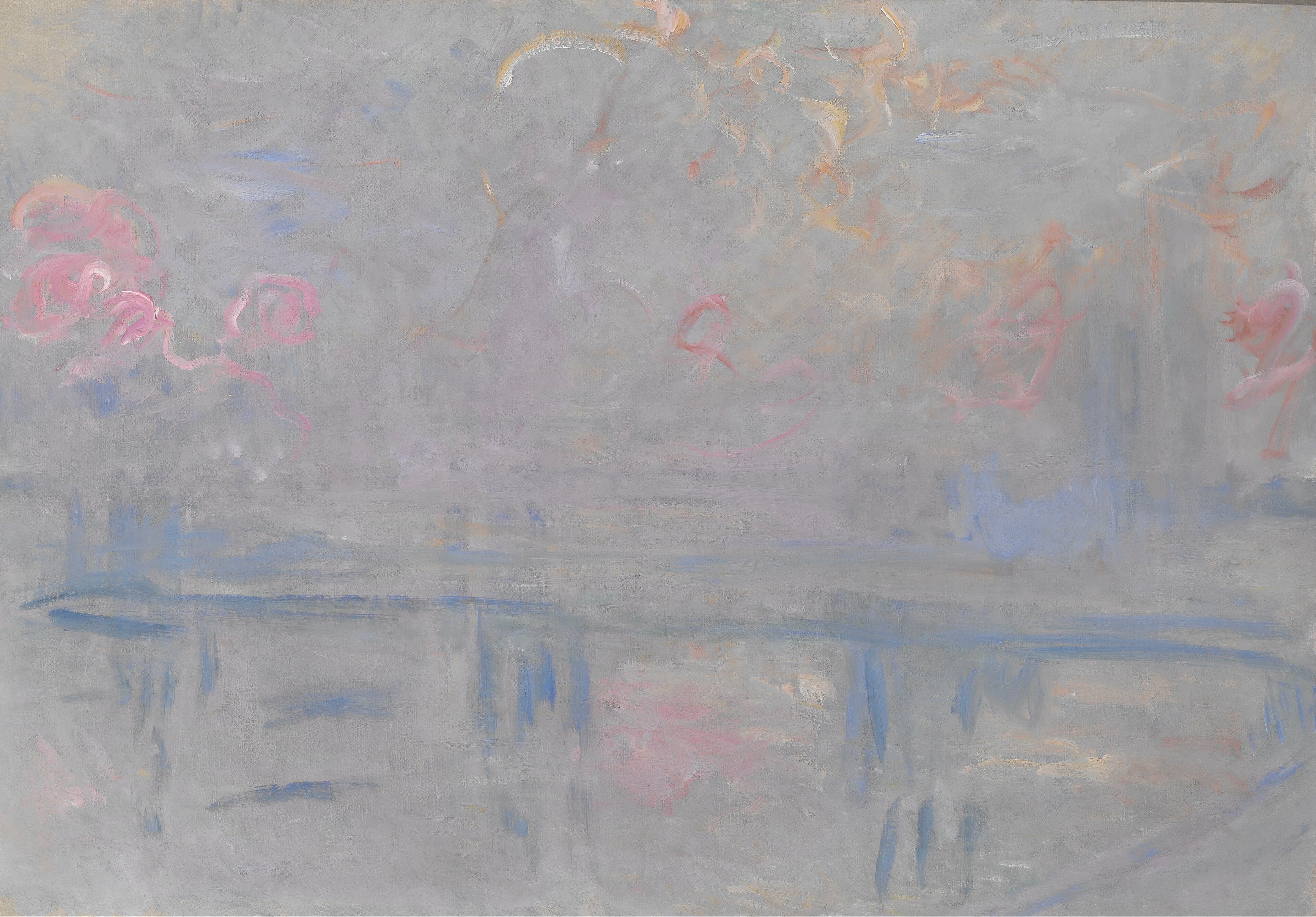
Charing Cross Bridge (Indianapolis)
Claude Monet · c. 1900
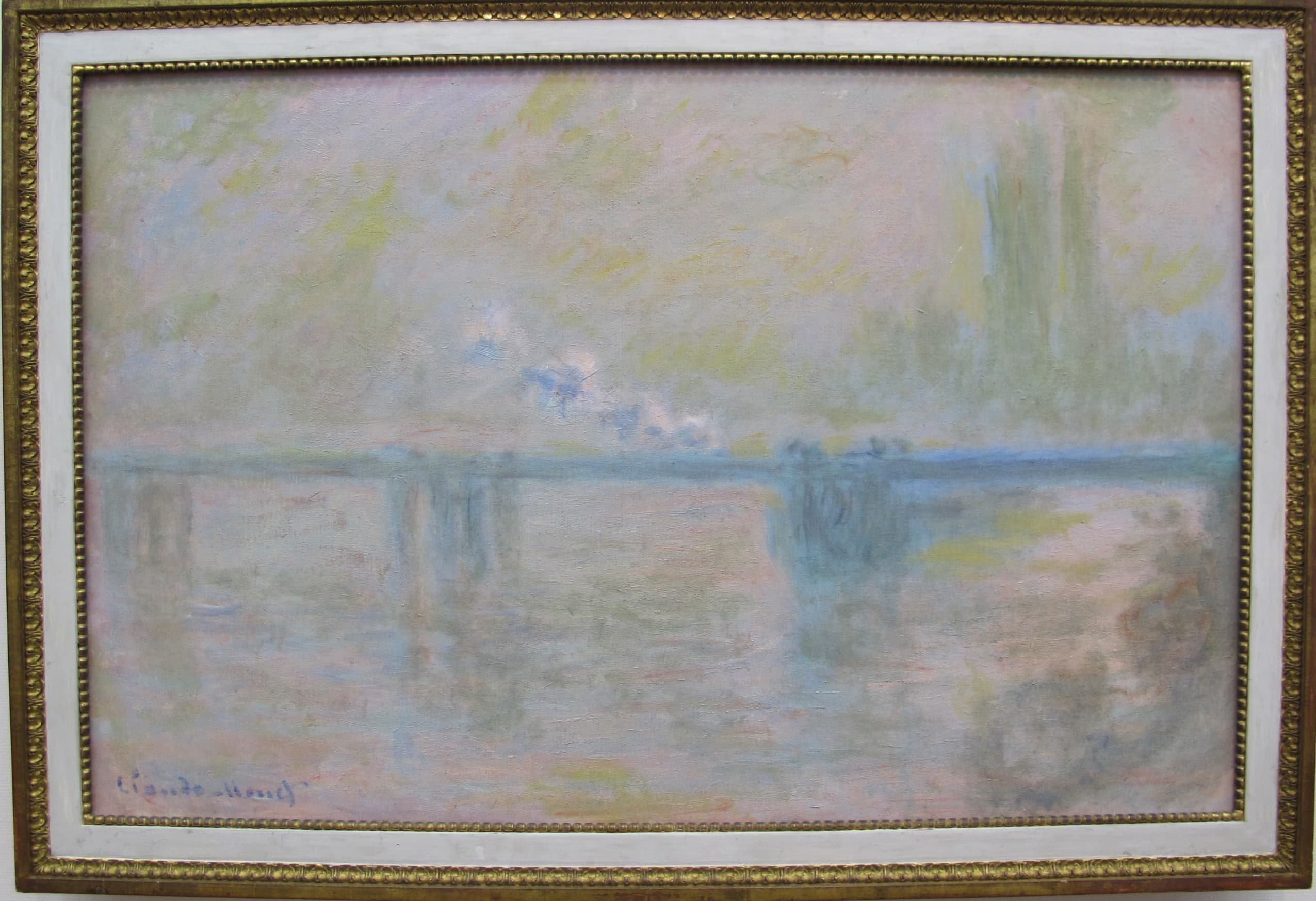
Charing Cross Bridge (Overcast Day)
Claude Monet · 1900
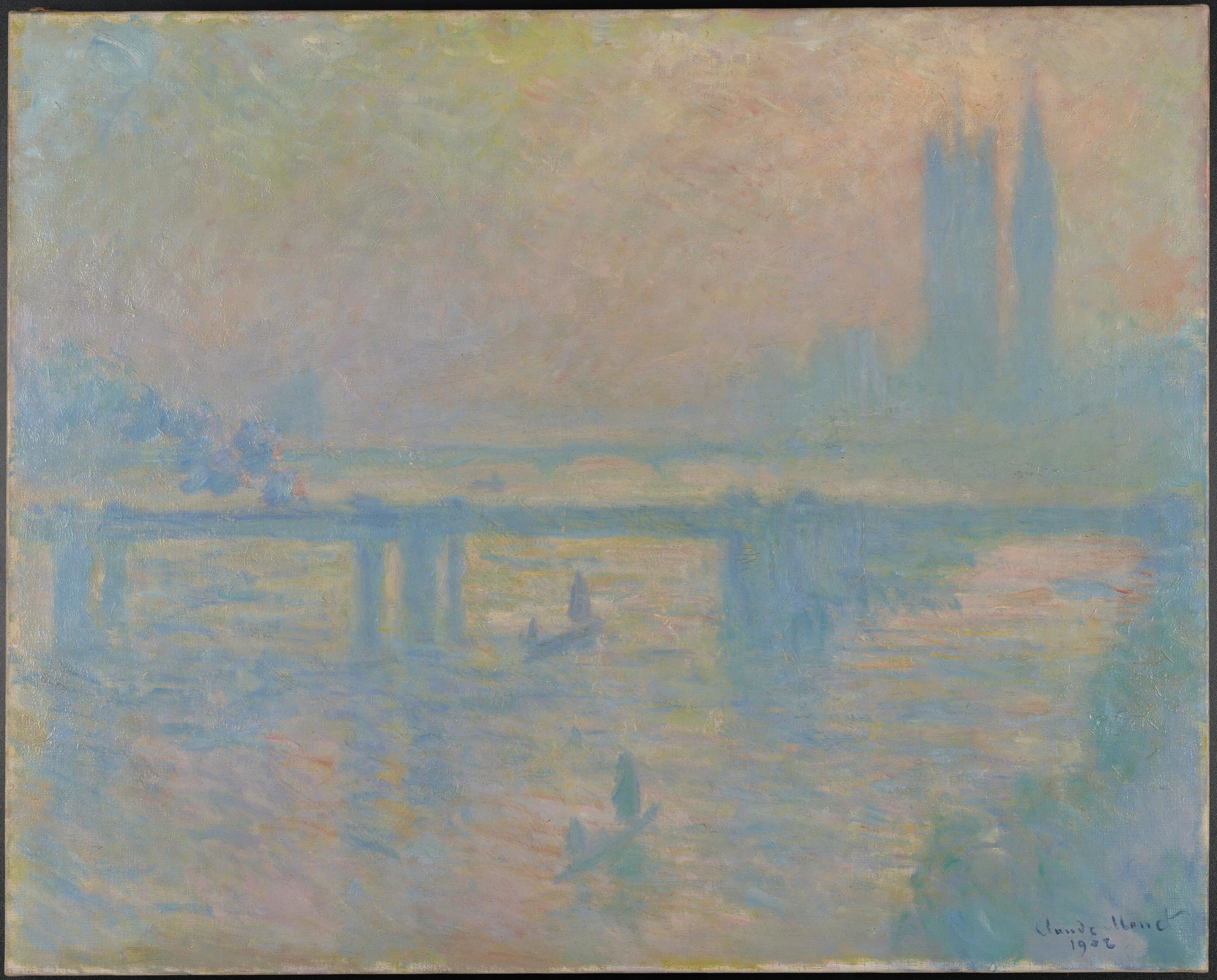
Charing Cross Bridge (Cardiff)
Claude Monet · c. 1900 (dated 1902)
Kindred works
You may also study
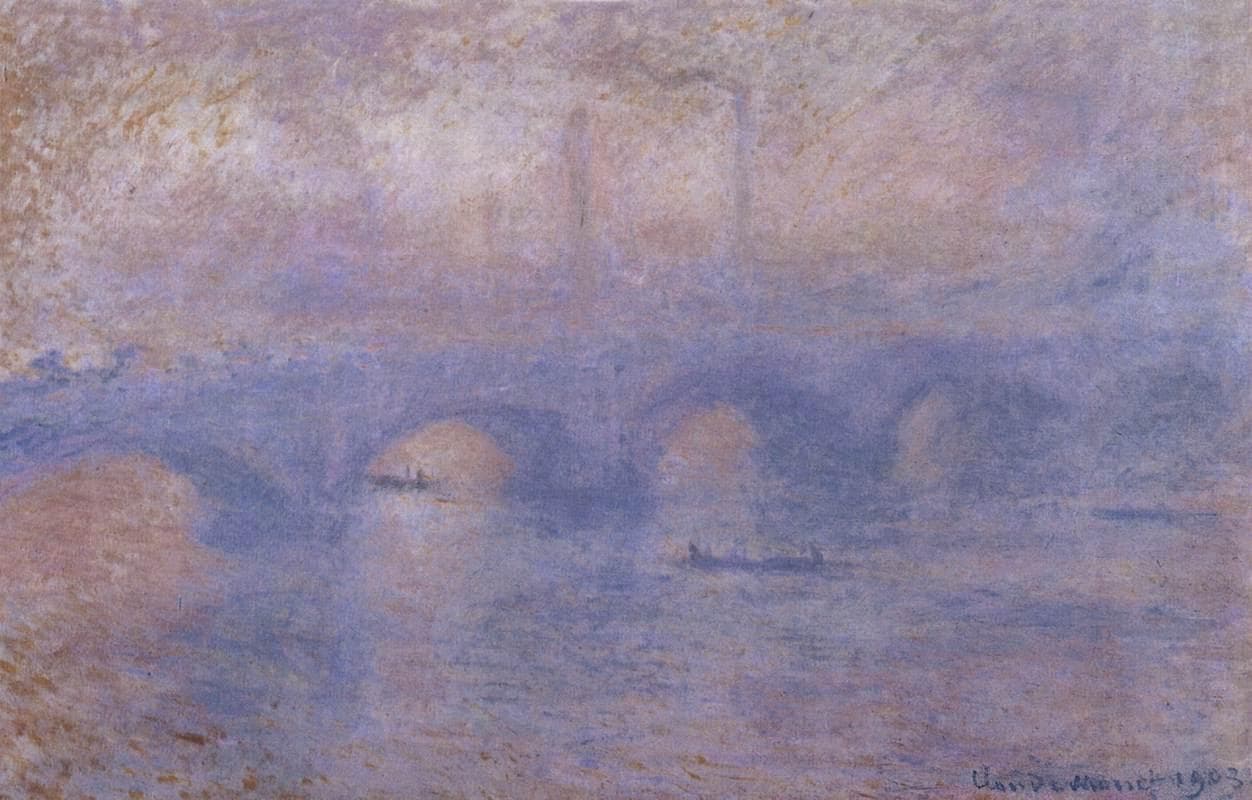
Waterloo Bridge, Effect of Fog
Claude Monet · 1903
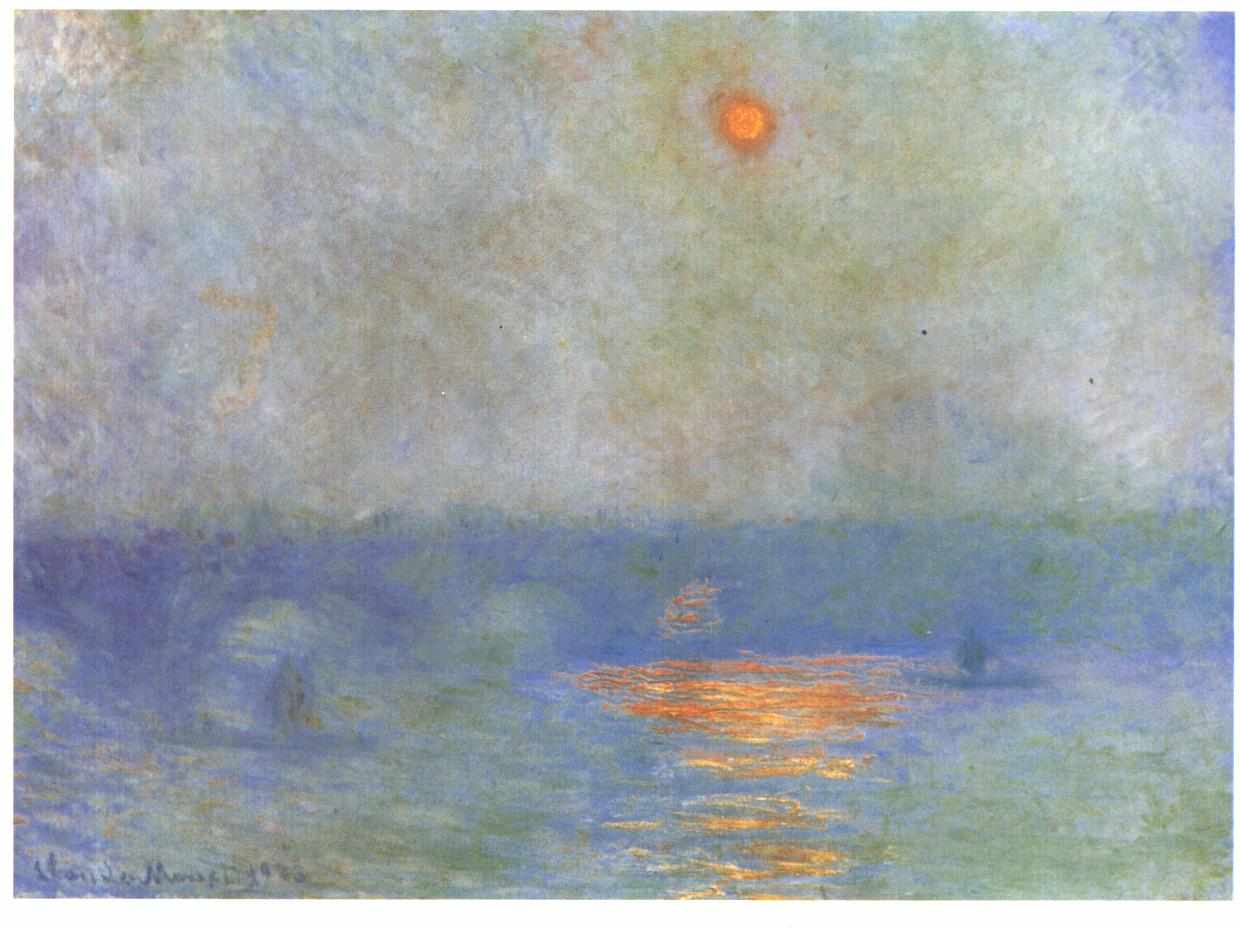
Waterloo Bridge: the Sun in a Fog
Claude Monet · 1903
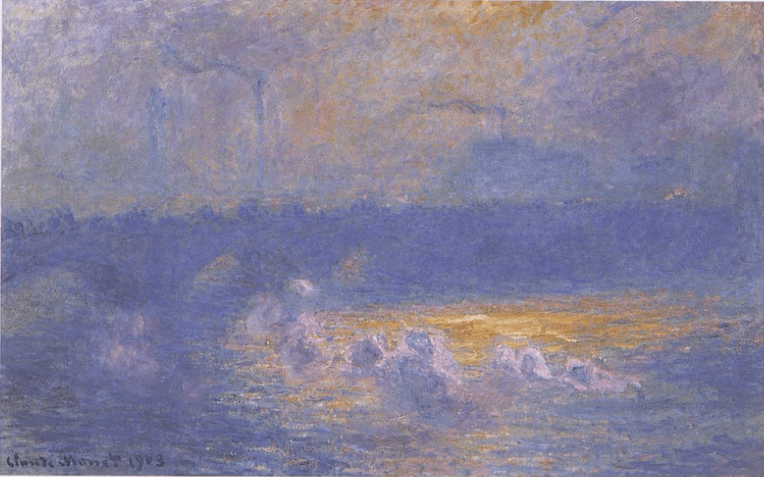
Waterloo Bridge, Sunlight Effect with Smoke
Claude Monet · 1903
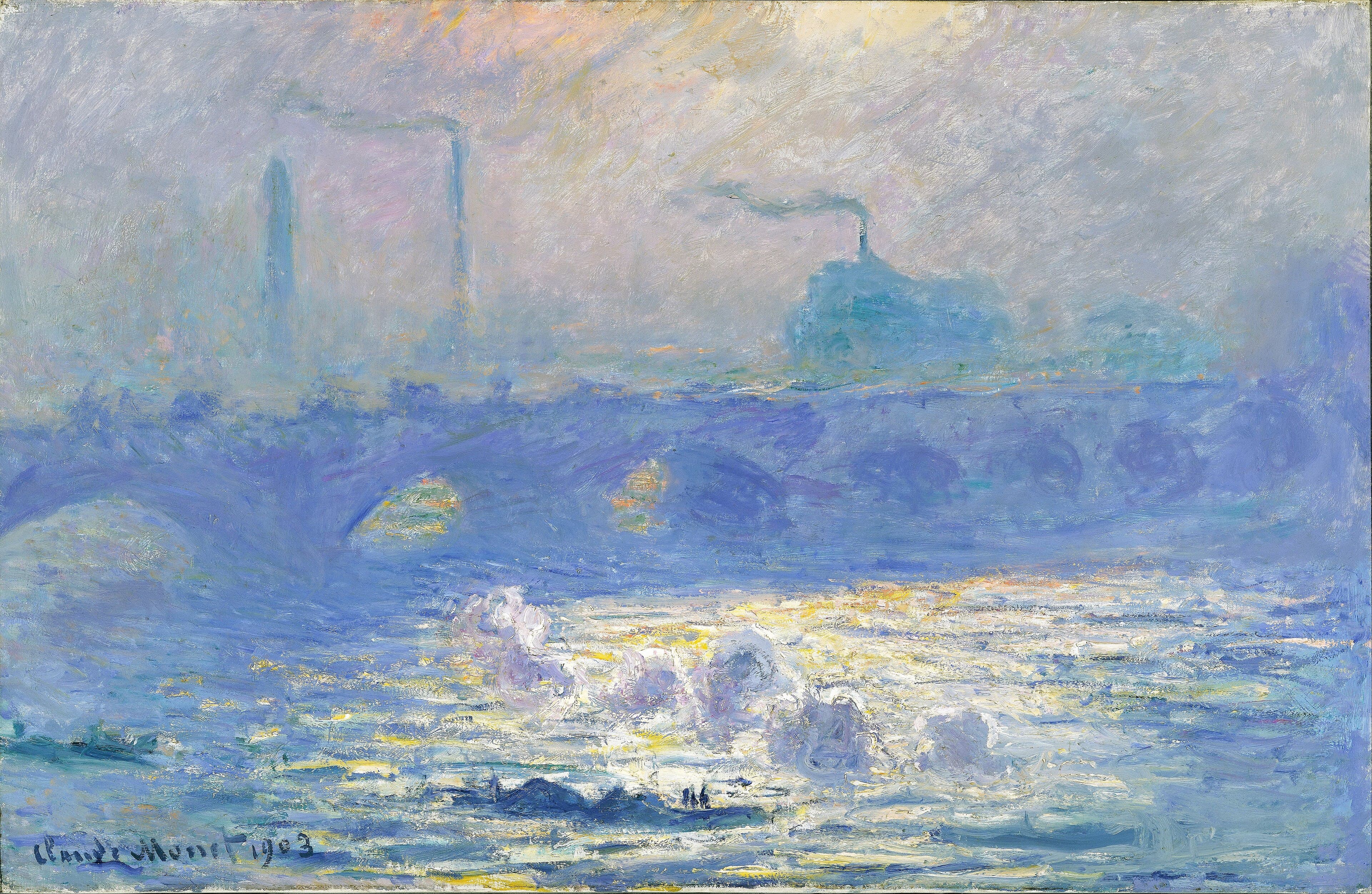
Waterloo Bridge, Sunlight Effect (Denver Art Museum)
Claude Monet · 1903
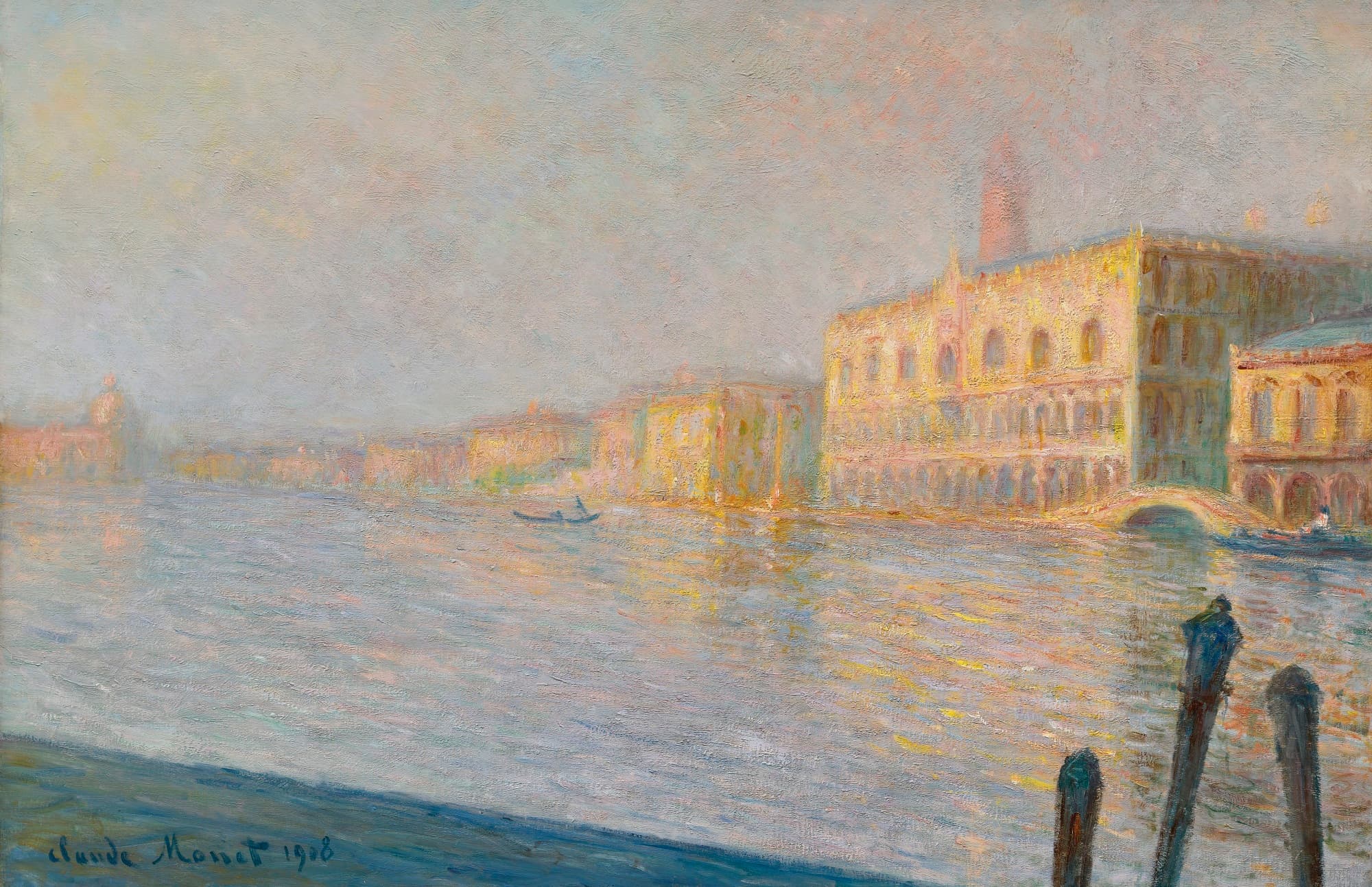
The Palazzo Ducale (Le Palais Ducal), 1908
Claude Monet · 1908
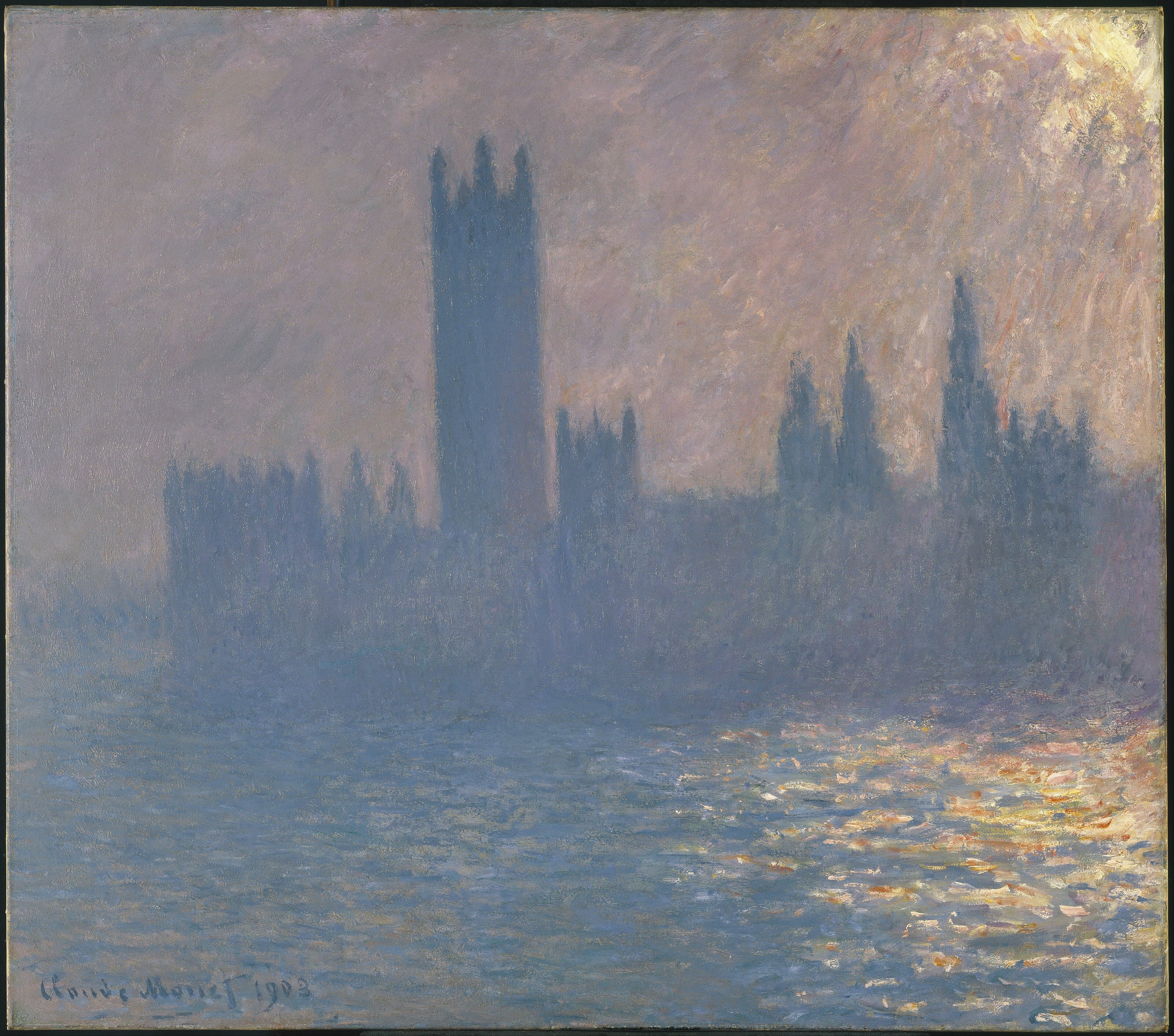
Houses of Parliament, Sunlight Effect
Claude Monet · 1903
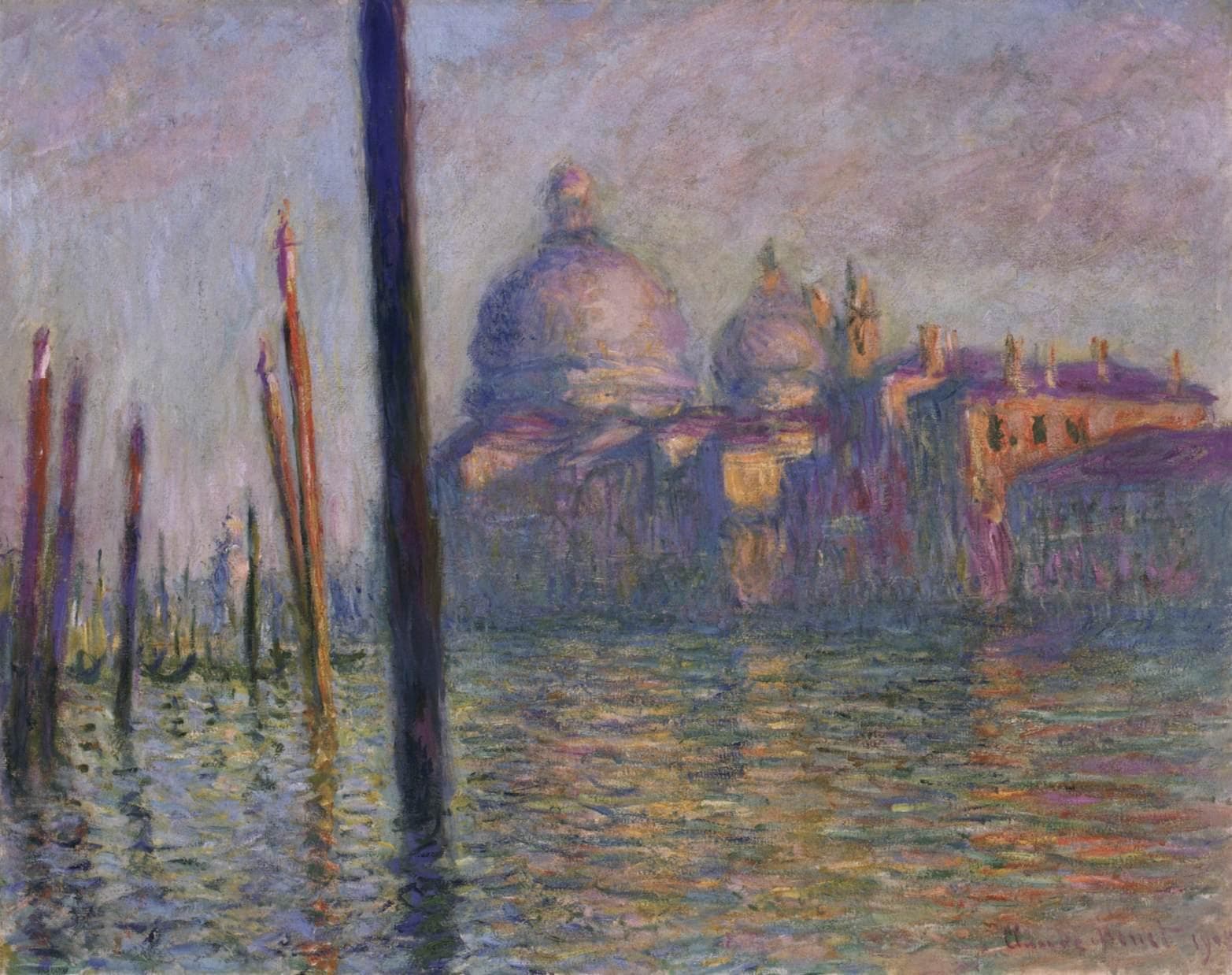
The Grand Canal in Venice
Claude Monet · 1908
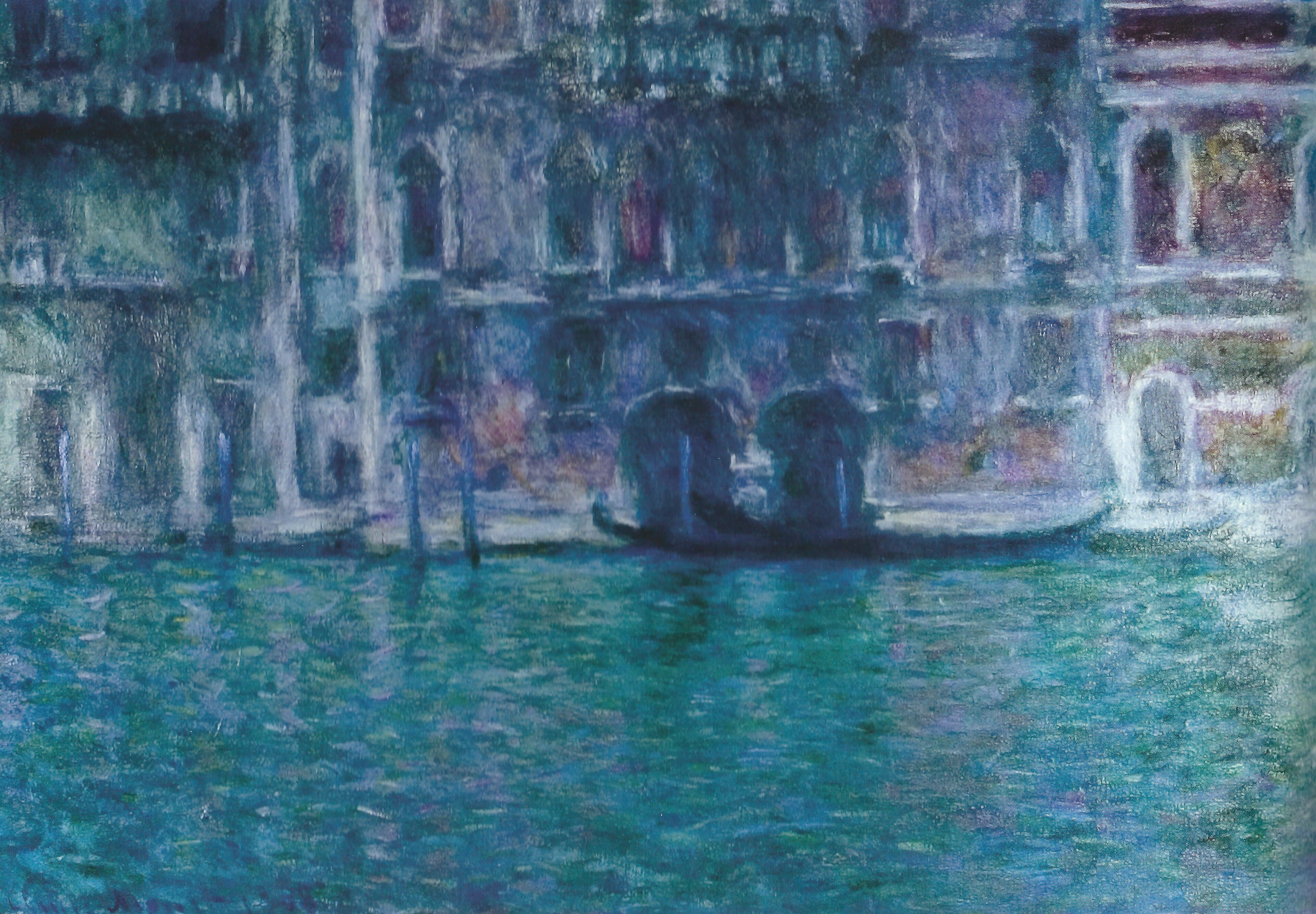
Palazzo Da Mula Morosini
Claude Monet · 1908