Image: Musée Marmottan Monet, Paris · Public domain · via Wikimedia Commons
Le pont japonais
Claude Monet, 1918–24
Le pont japonais (Wildenstein 1923) is a late Claude Monet view of his Giverny footbridge, about 1918–24, in golden yellow, olive, red and pink, with the arch reflected in the pond. It is in the Musée Marmottan Monet, Paris.
- Artist
- Claude Monet
- Date
- 1918–24
- Medium
- Oil on canvas
- Dimensions
- 89 × 100 cm
- Collection
- Musée Marmottan Monet, Paris, France
- Movement
- Impressionism
- Catalogue
- Wildenstein 1923
- Nature & Landscape
- Water & Sea
Le pont japonais (The Japanese Bridge) is a late painting by Claude Monet of the wooden footbridge over the water-lily pond in his garden at Giverny, dated between about 1918 and 1924 and catalogued by Wildenstein as no. 1923. The unsigned canvas measures 89 by 100 centimeters. It was among the paintings left in Monet's studio and came to the Musée Marmottan Monet in Paris in 1966 with the bequest of his son Michel.
What you're looking at
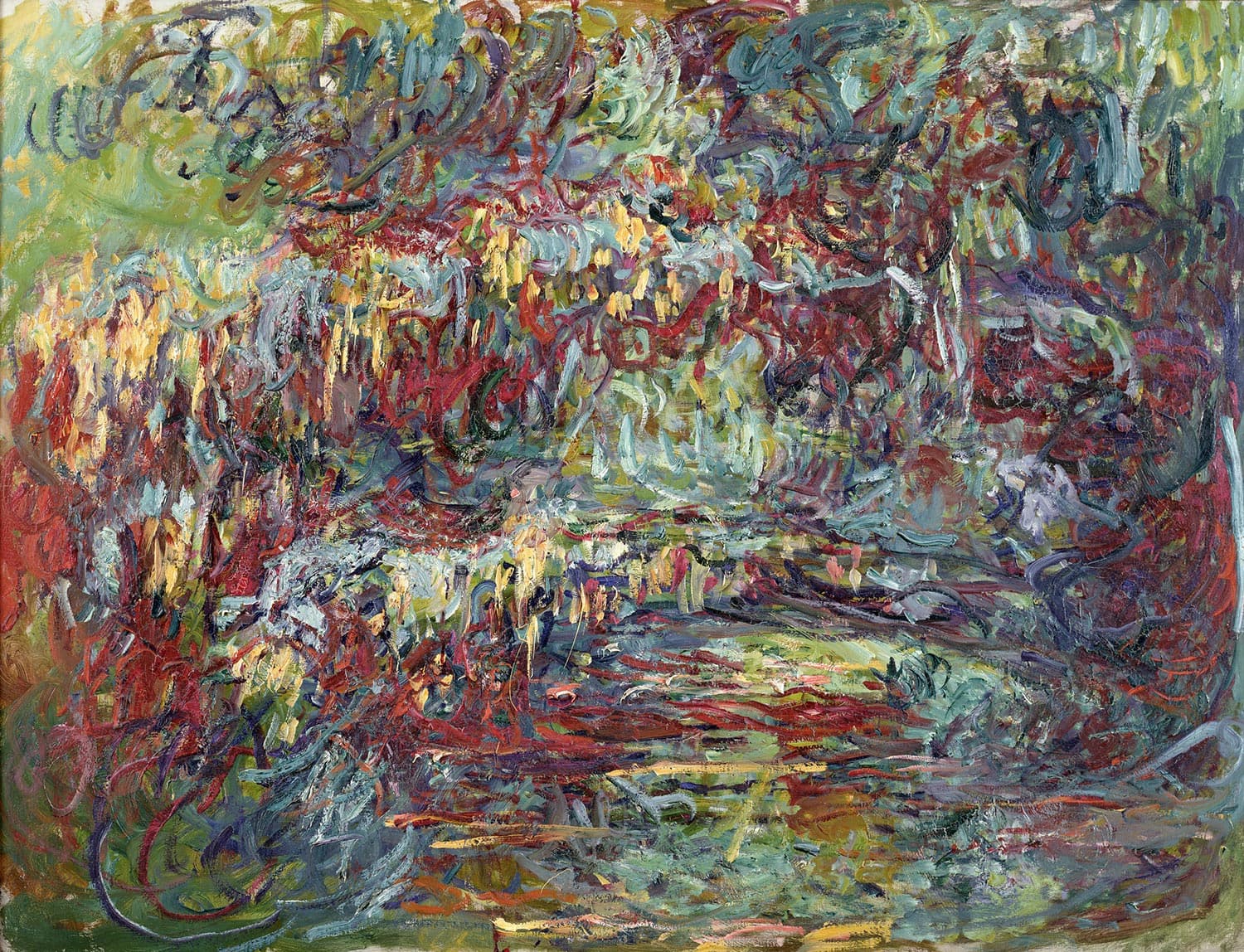
This version is warm and sunlit. The palette is golden yellow, olive and moss green, with touches of rose pink, coral and vermilion and a few cool notes of blue and violet. The bridge is clearly legible: a low arch crossing the canvas just above the middle, drawn as a dark olive band with a thin dark line along its rail. Above it, the wisteria and trees are a sun-struck mass of yellow, ochre and green with rose-pink and red flecks, perhaps flowers. At the upper left, a patch of pale pink suggests a bloom of wisteria or a glimpse of sky.
Beneath the arch, framed by it, hang long vertical strokes of yellow and pale green: the willow fronds and the light behind them. In the pond below they reappear, reflected and broken into short horizontal dashes of yellow, coral and red, with a dark band repeating the line of the bridge. On the right side, a cascade of green and violet verticals marks the weeping willow on the bank. At the bottom the water is a mixture of olive, red and yellow strokes, with a few blue-gray touches at the corners.
Unlike some of the late bridges, this one keeps a clear sense of space: bridge in the middle ground, light beyond, reflections in front.
Monet's return to the bridge
Monet built the footbridge in the mid-1890s and painted it in a celebrated series in 1899–1900, as in the Metropolitan Museum's Bridge over a Pond of Water Lilies. By the time he returned to it, about 1918, the wisteria had grown over a trellis on the bridge and the garden had matured. Monet was then in his late seventies, painting the vast water-lily decorations for the Orangerie and contending with cataracts that disturbed his perception of color. The Marmottan's late bridges, of which this is one, were never exhibited in his lifetime.
How it was painted
The canvas is covered with lively, varied strokes, mostly thick and opaque. Monet changes direction constantly: hatched diagonals in the foliage, long verticals in the willow, short horizontals in the water. Warm and cool colors alternate stroke by stroke, so that the greens vibrate against the reds. The near-square format holds the bridge and its reflection as a stacked pair of curves.
How this version differs
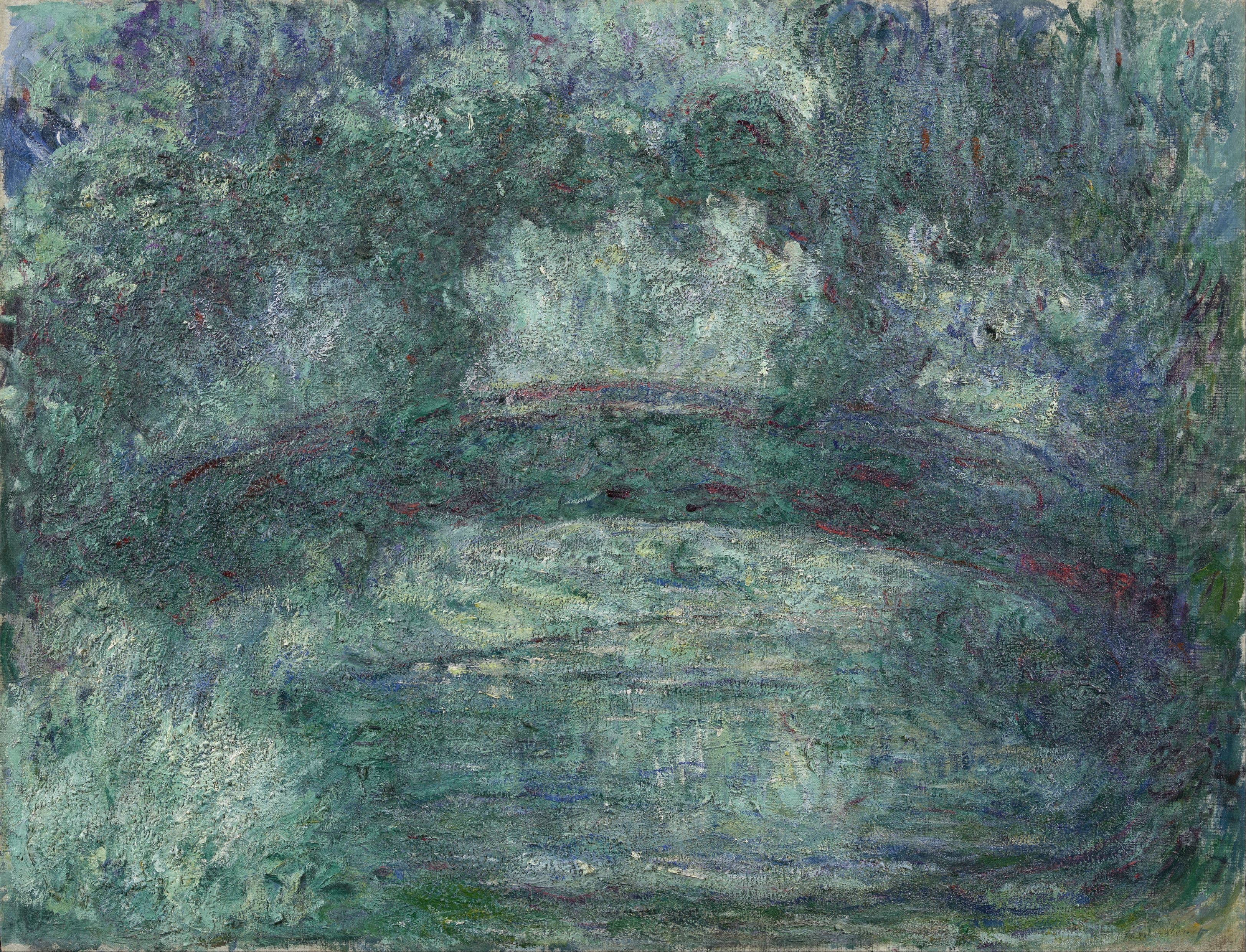
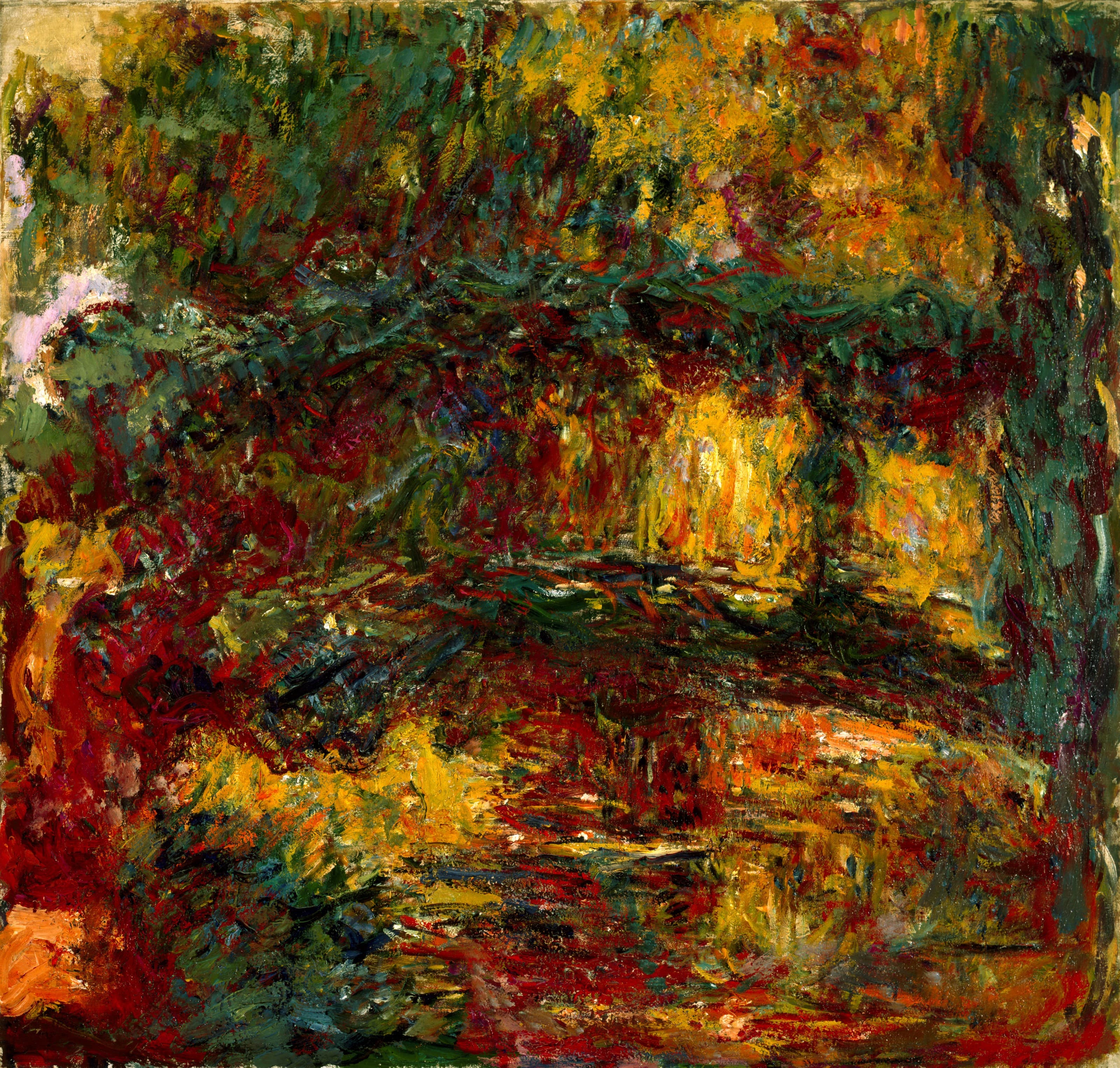
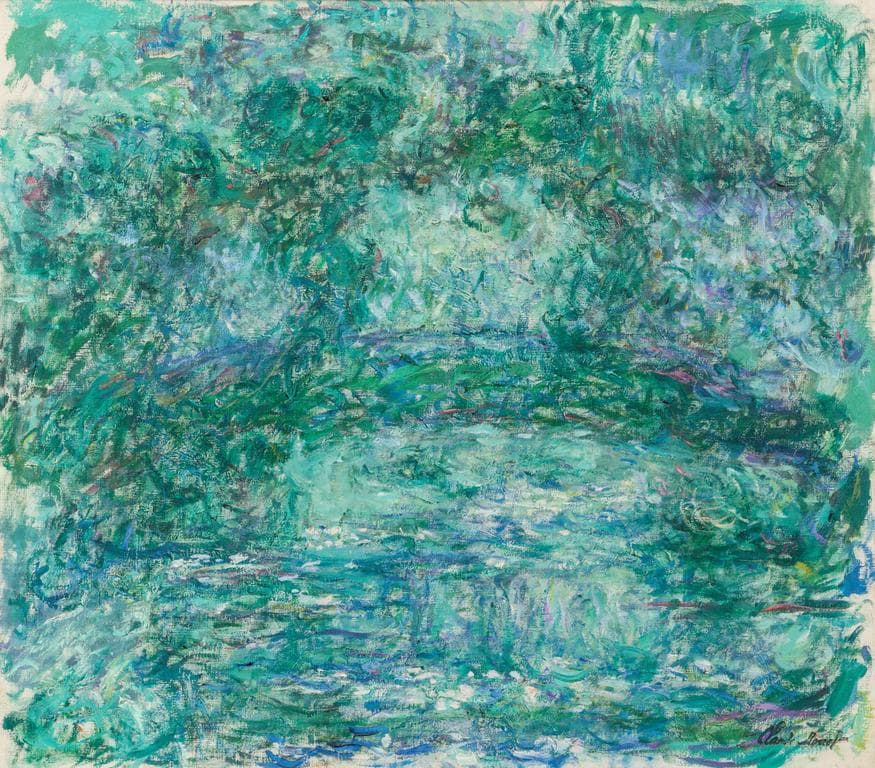
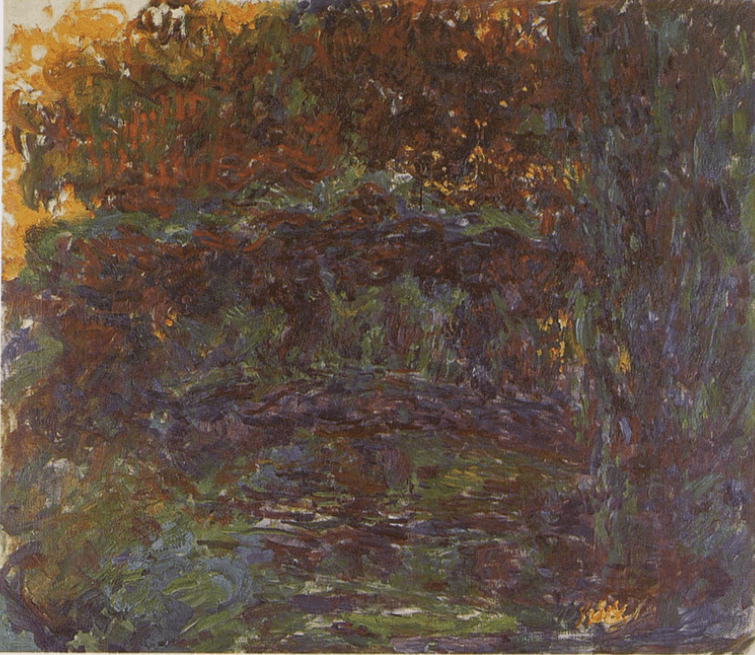
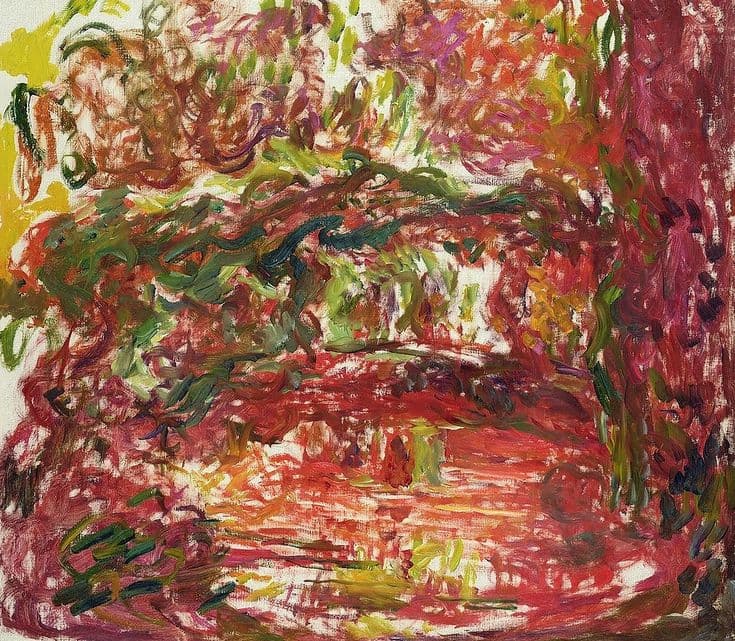
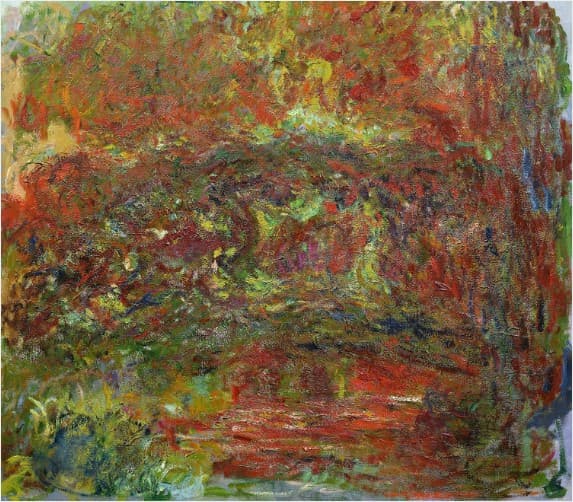
Among the four Marmottan bridges of the same size, 89 by 100 centimeters, this one is the most readable and the most sunlit. The Japanese Bridge (W 1924) is dark russet and plum; the Japanese Bridge (W 1928) is a blaze of red and orange; Le pont japonais (W 1927) is rust-red over green. This canvas stands closest to the Houston Japanese Footbridge, which also opens a golden light under the arch. See the whole group in the Japanese Footbridge series and the garden in Monet's Giverny.
Where to see it
The painting belongs to the Musée Marmottan Monet in Paris, which holds the world's largest collection of works by Claude Monet. The late garden canvases, including the bridges, are shown in rotation in the museum's purpose-built lower gallery. See Monet at the Musée Marmottan.
Questions & answers
Where is Monet's Le pont japonais (W 1923)?
It is in the Musée Marmottan Monet in Paris (inventory 5092). It entered the museum in 1966 with the bequest of Michel Monet, the painter's son, together with most of Monet's late garden paintings.
When was it painted?
Between about 1918 and 1924, at Monet's water garden in Giverny. Wikidata dates it to around 1921. It belongs to the group of late bridge pictures Monet never exhibited.
What does it show?
It shows the arched footbridge in a warm, sunlit palette of gold, olive and red, with willow fronds hanging beneath the arch and their reflections broken into strokes of yellow and coral in the pond.
How many Japanese bridge paintings are at the Marmottan?
The Marmottan holds most of the late bridges of 1918–24, including several canvases of 89 by 100 centimeters, such as this one, plus larger and smaller versions like the 1918 panorama measuring 100 by 200 centimeters.
More by the artist
Claude Monet
The Japanese Bridge
Claude Monet · 1919–24
The Japanese Footbridge, Giverny
Claude Monet · c. 1922
Le pont japonais (Japanese Bridge)
Claude Monet · 1918–24
Weeping Willow
Claude Monet · 1920–22

The Water Lilies: The Clouds
Claude Monet · c. 1914–26
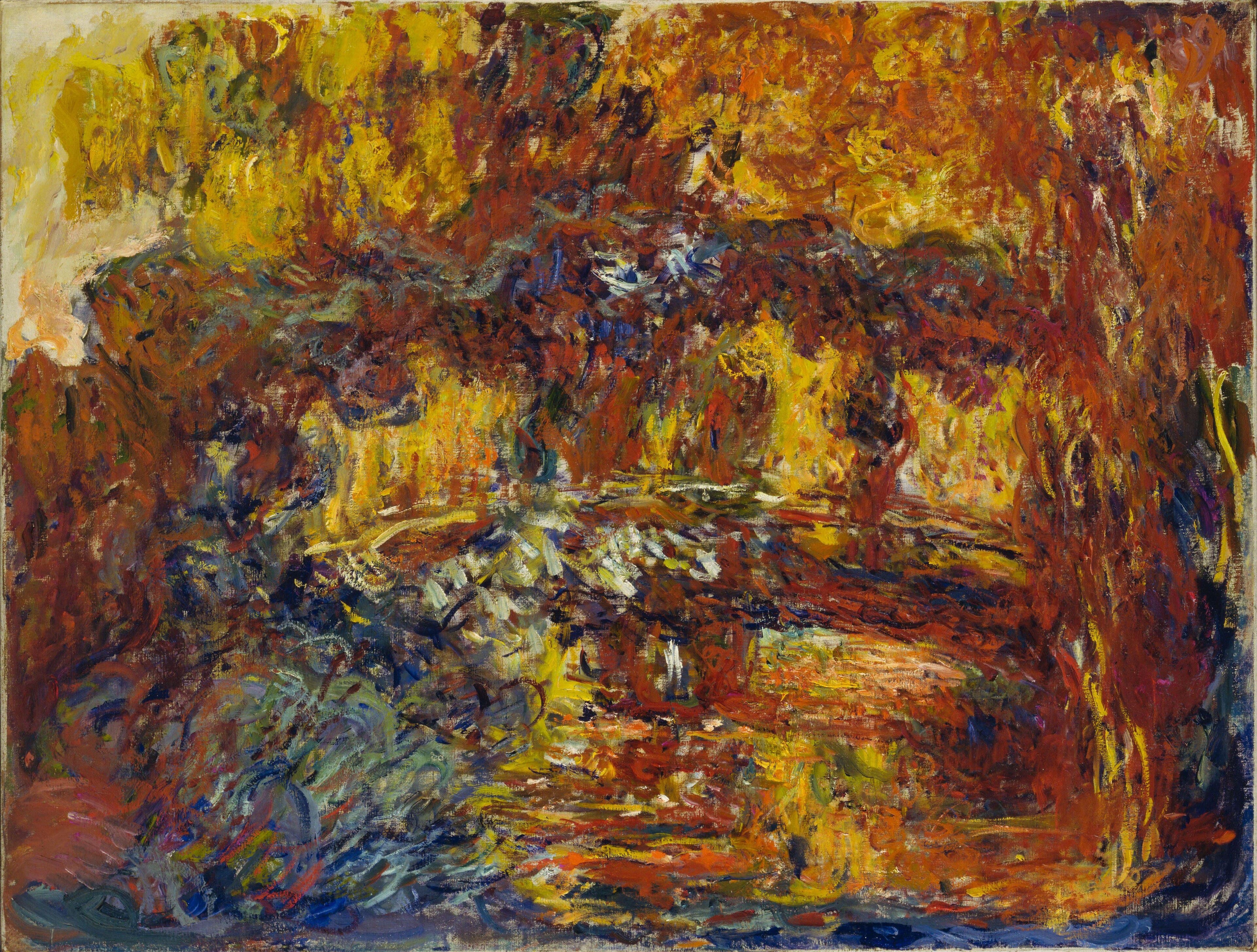
The Japanese Footbridge (MoMA)
Claude Monet · c. 1920–22
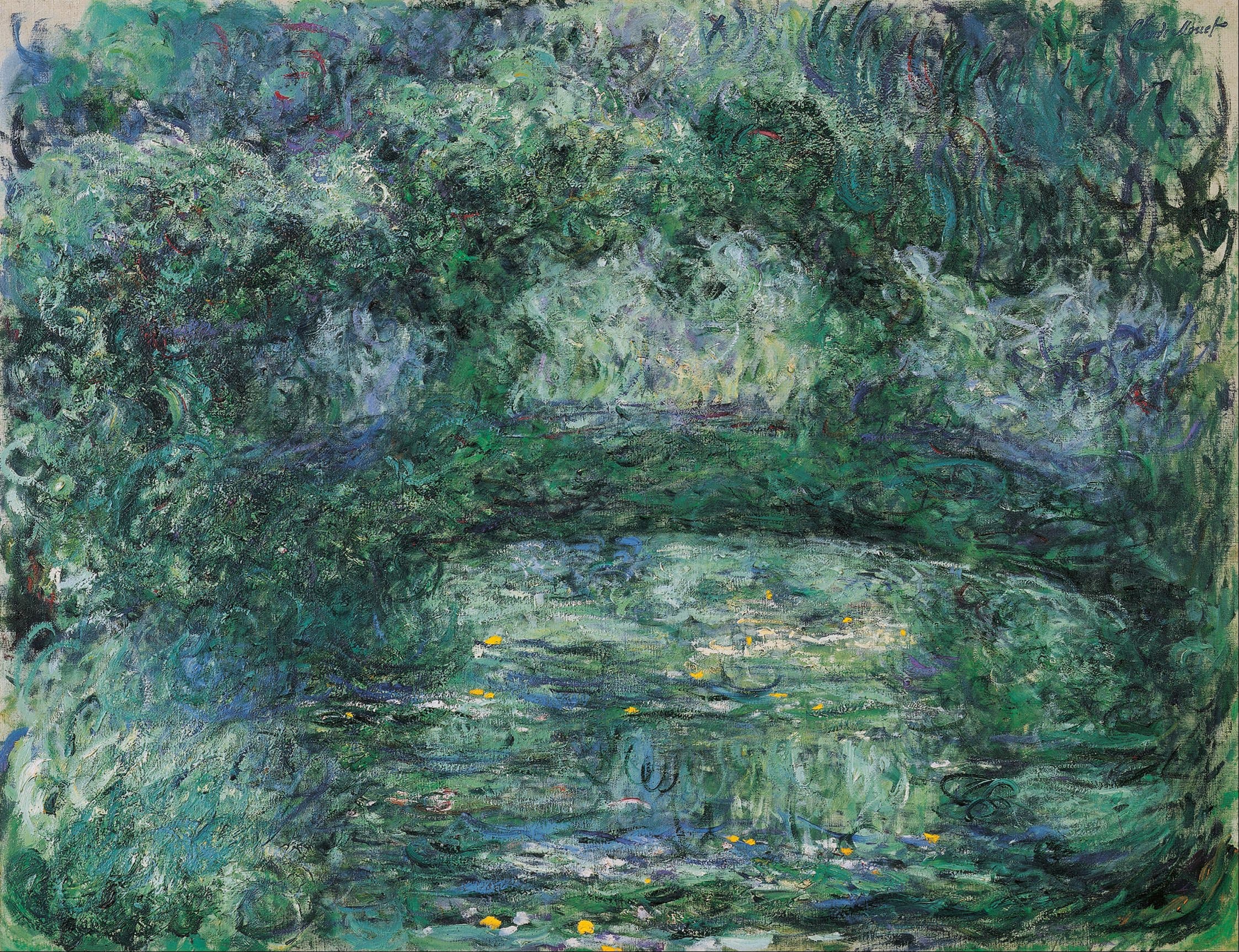
The Japanese Bridge
Claude Monet · 1918–24
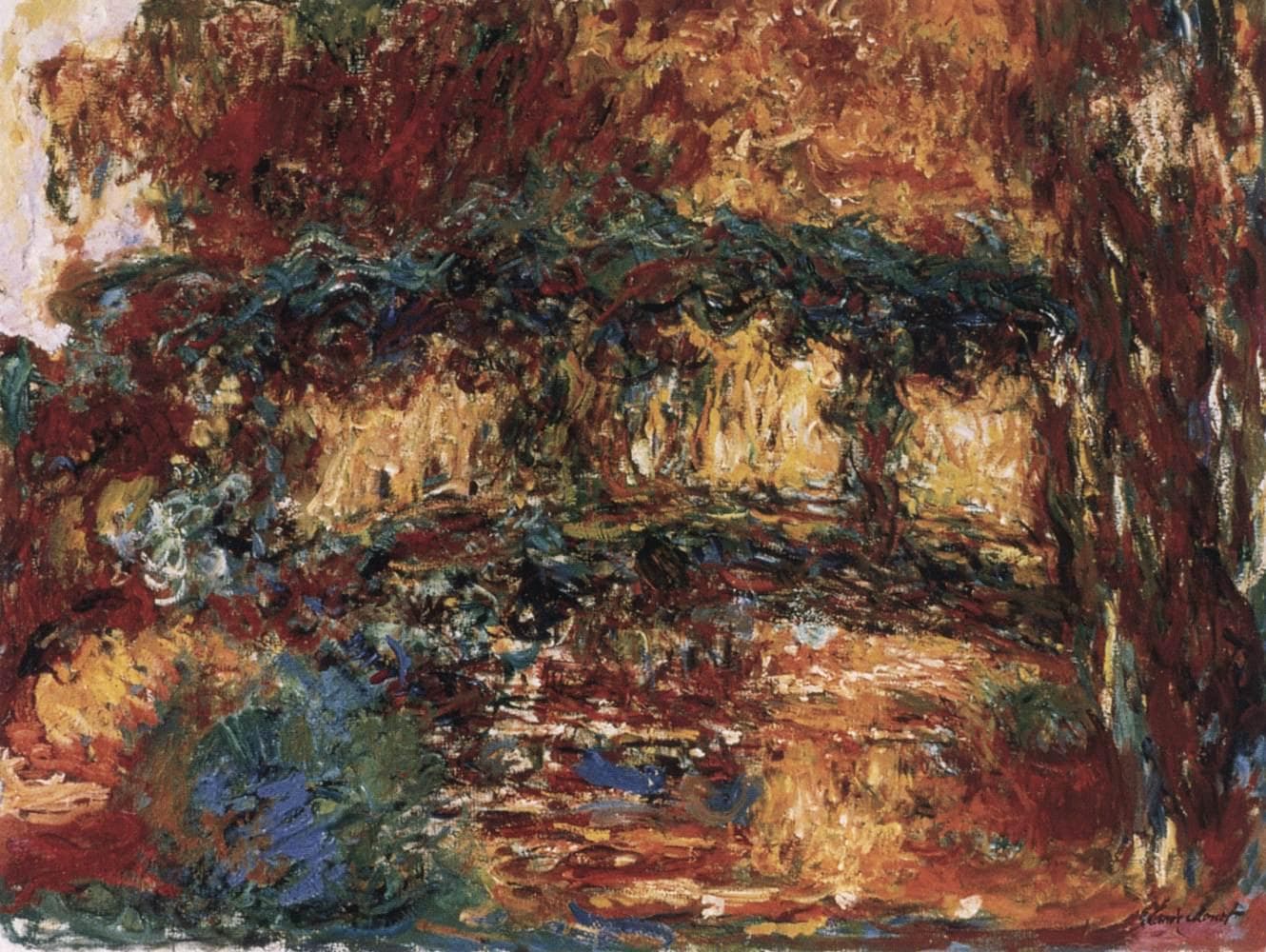
The Japanese Bridge
Claude Monet · c. 1923–25
Also painted in 1921
The same year
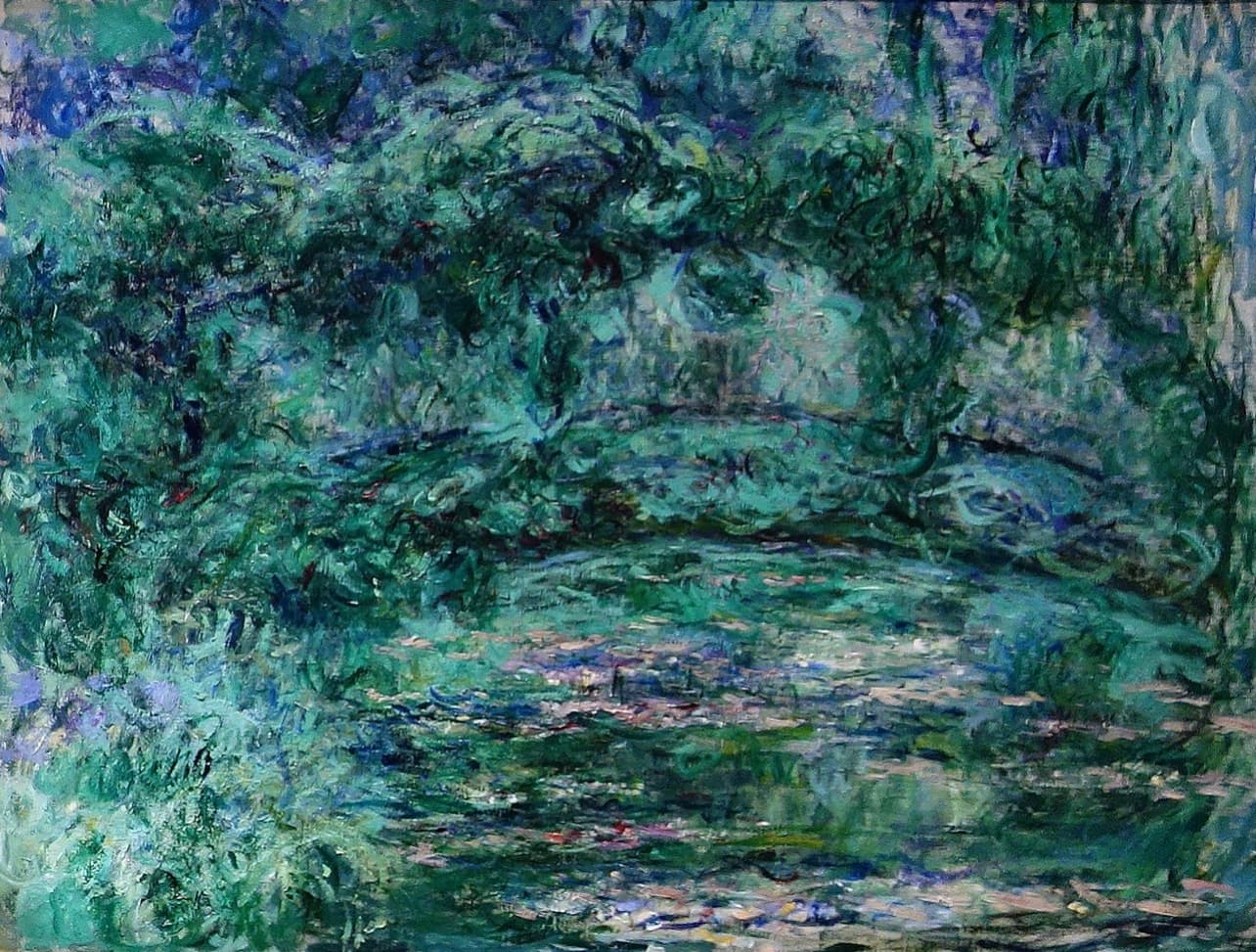
Kindred works
You may also study
The Japanese Bridge
Claude Monet · 1918–24
The Japanese Bridge
Claude Monet · 1918–24
Le pont japonais
Claude Monet · 1918–24
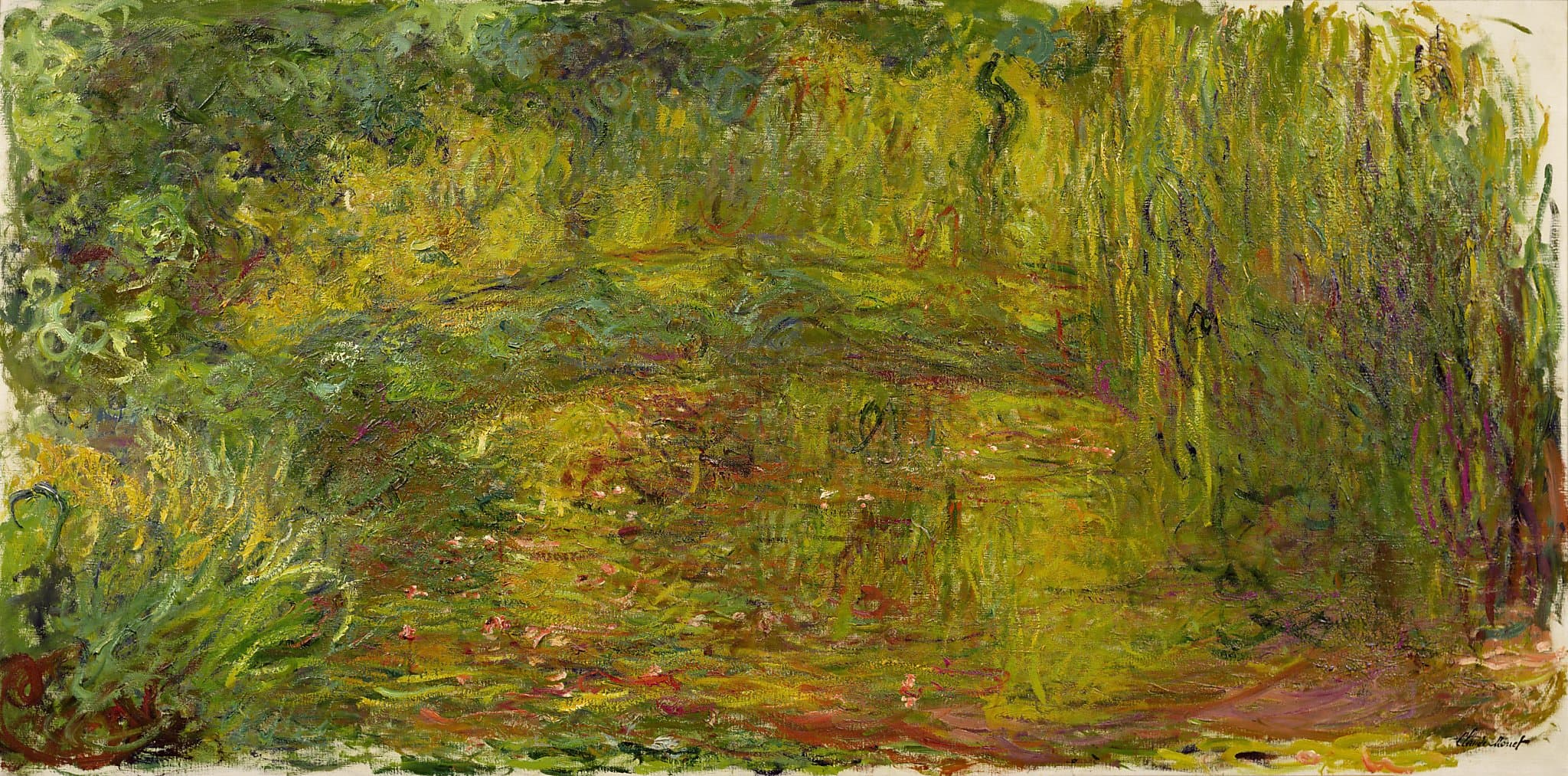
Le Pont japonais (The Japanese Bridge)
Claude Monet · 1918
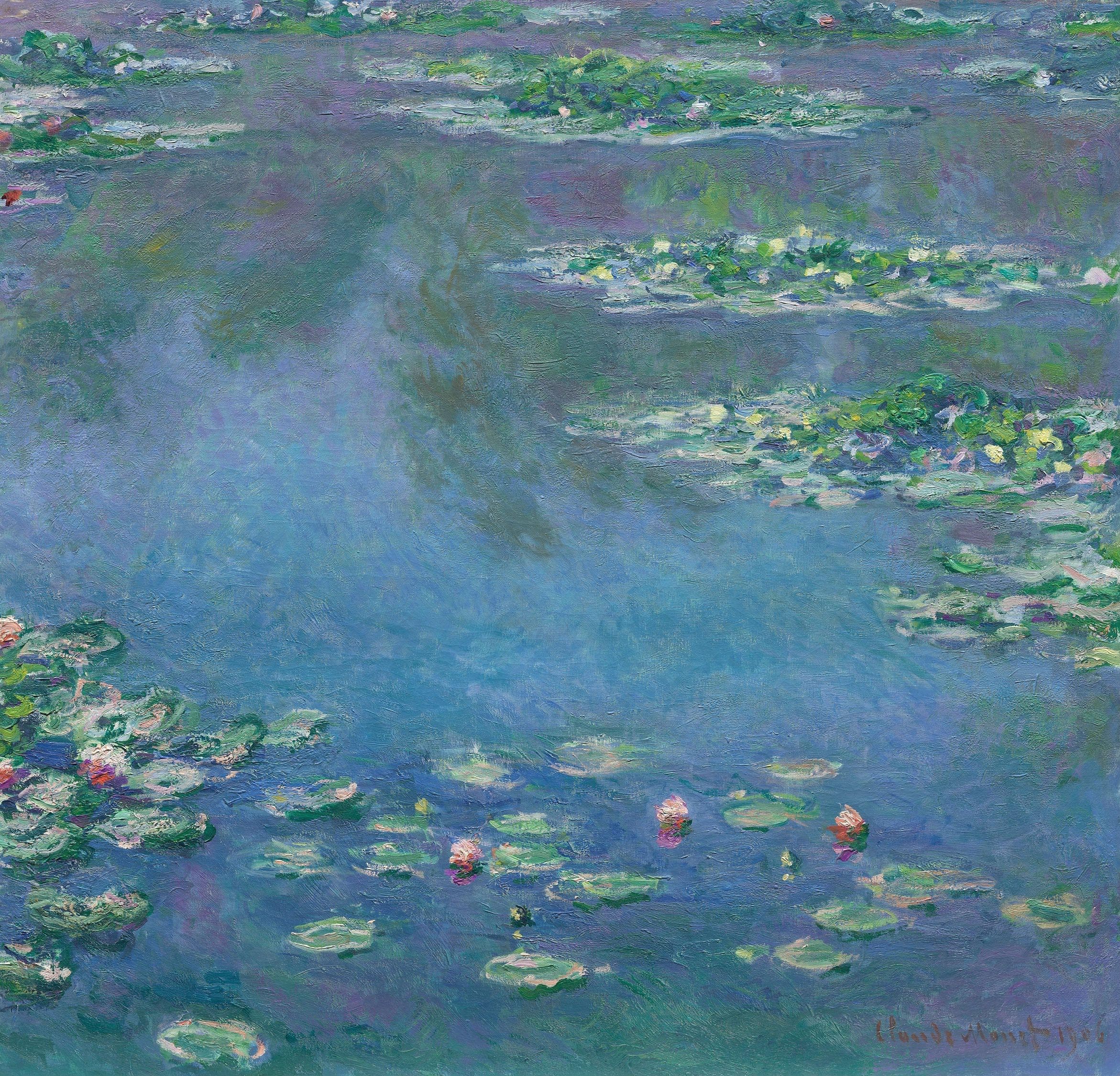
Water Lilies (1906, Art Institute of Chicago)
Claude Monet · 1906
Water Lilies (1907, Pola Museum of Art)
Claude Monet · 1907
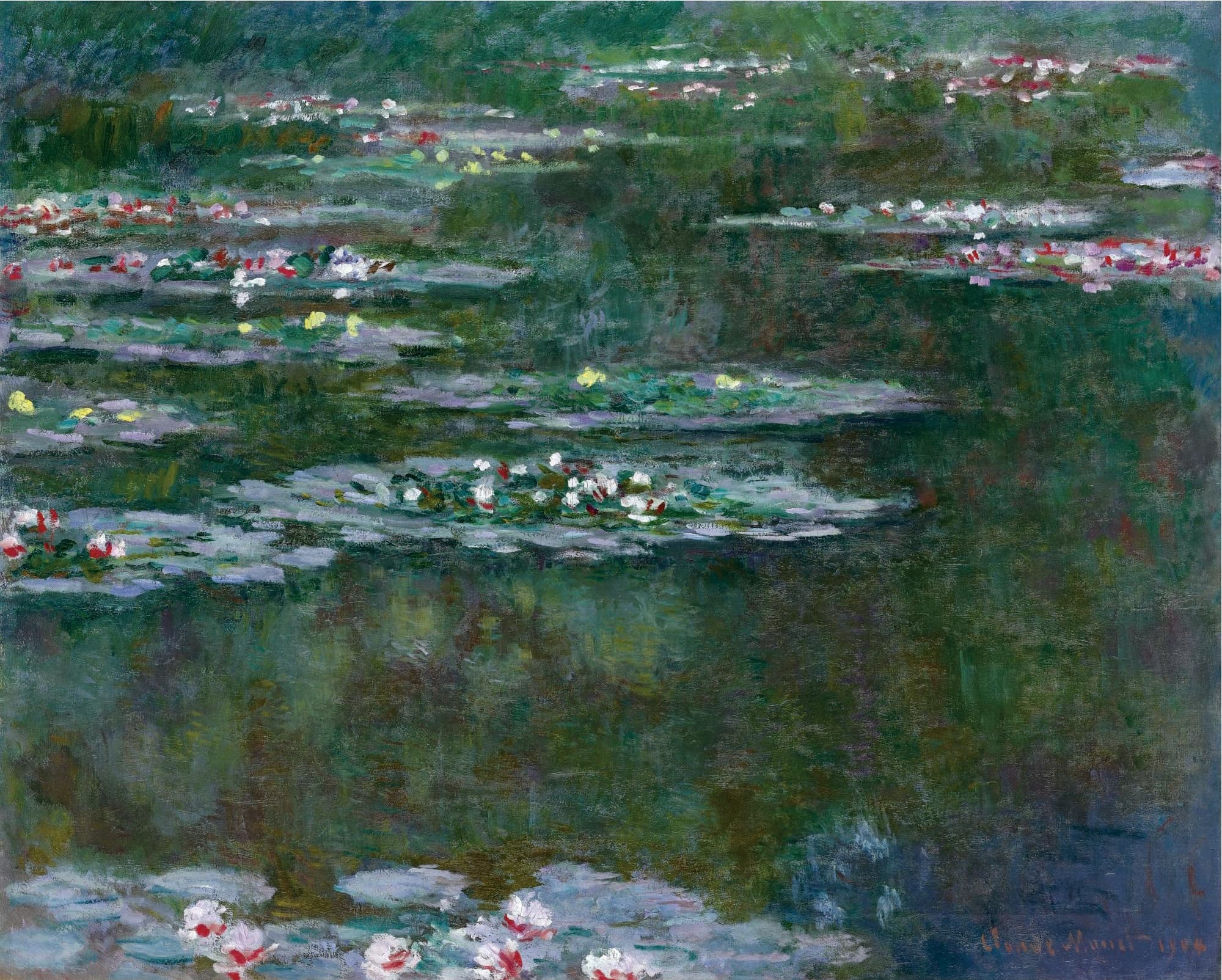
Water Lilies (1904)
Claude Monet · 1904
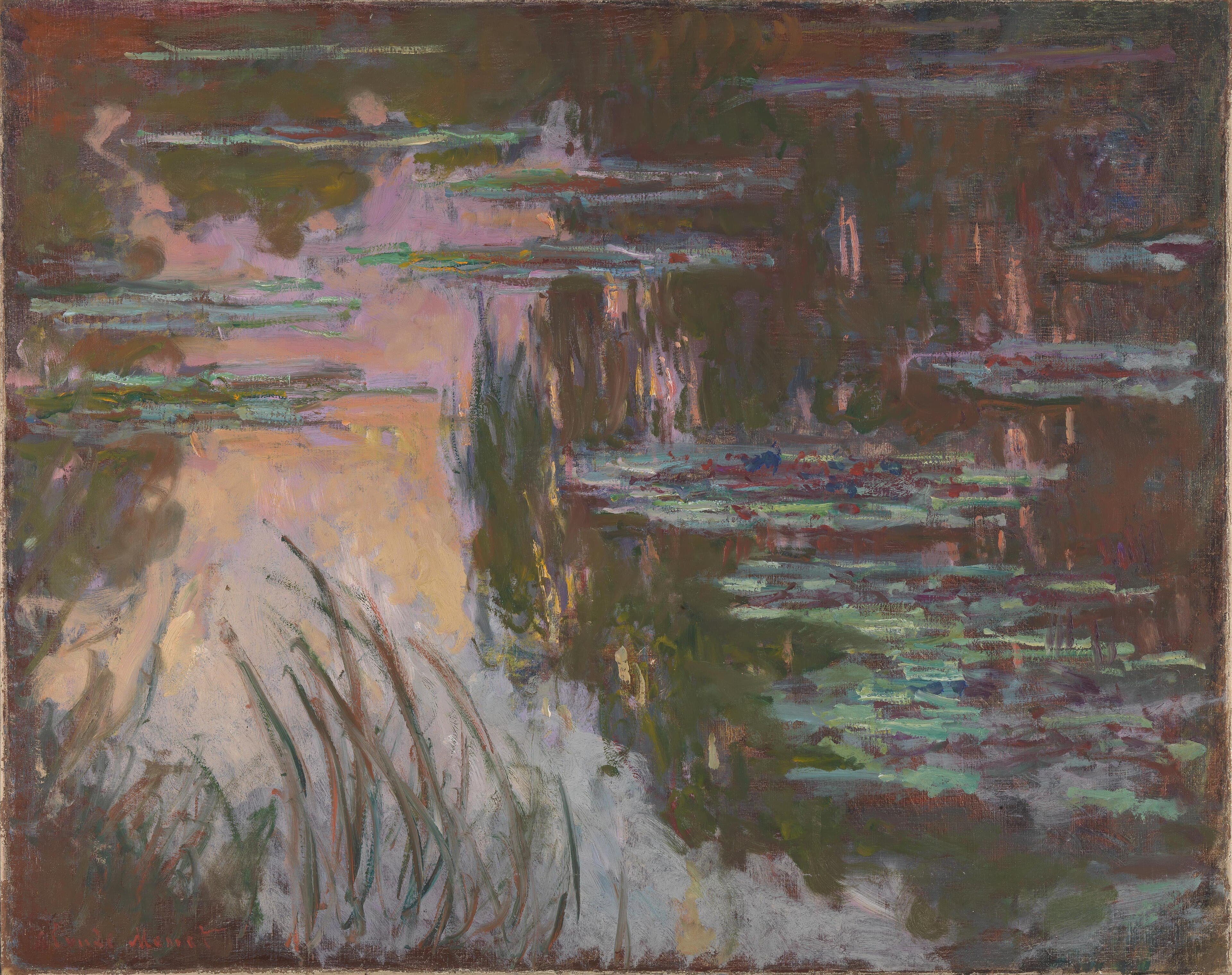
Water-Lilies, Setting Sun (National Gallery, London)
Claude Monet · c. 1907