Image: Musée de l'Orangerie, Paris (Google Arts & Culture) · Public domain · via Wikimedia Commons
The Water Lilies: The Clouds
Claude Monet, c. 1914–26
The Clouds (Les Nuages) is one of Claude Monet's giant Water Lilies compositions, about 12.75 meters long, in which white clouds reflected in his Giverny pond drift among floating lily pads. Painted c. 1914–26, it hangs in the first room of the Musée de l'Orangerie, Paris.
- Artist
- Claude Monet
- Date
- c. 1914–26
- Medium
- Oil on canvas (three panels)
- Dimensions
- 200 × 1275 cm
- Collection
- Musée de l'Orangerie, Paris, France
- Movement
- Impressionism
- Water & Sea
- Nature & Landscape
Claude Monet's The Clouds (Les Nymphéas : Les Nuages) is one of the eight great compositions of the Grandes Décorations, the water-lily cycle Monet gave to France and installed after his death in two oval rooms at the Musée de l'Orangerie in Paris. Made of three canvas panels joined edge to edge, it is 2 meters high and 12.75 meters long (inventory INV 20100), and it hangs in the first room alongside Morning, Green Reflections and Setting Sun. Monet worked on it from around 1914 until his death in 1926.
What you are looking at
There is no bank, no horizon and no sky: only the surface of the pond, seen as if you were standing at its edge and looking down. What you see in that surface is the sky. Across the middle of the composition, great white and pale violet clouds float in a field of blue, their soft, billowing edges painted in thick, swirling strokes. They are reflections, and the only thing that tells you so is the scatter of small, flat lily pads floating across them, painted as dark green and violet ellipses that lie on the water while the clouds lie beneath it.
The color changes as you walk along. At the left end the water is a cooler, greener blue, dense with pads and tinged with yellow-green. In the center the clouds are brightest, a mass of white, pink and lilac. Toward the right the reflections darken: a deep blue-black mass, perhaps the reflection of trees or of a darkening sky, closes the composition. Lily flowers are almost absent; this is a picture of sky and water, not of blossoms.
The detail to notice is the double space. The pads sit flat on the surface, small and foreshortened; the clouds seem to open up a great depth beneath them. Monet makes you see both at once, the surface and the infinite sky in it.
Where and when
Monet created his water garden at Giverny in 1893 and painted it obsessively from 1897 onward; see Water Lilies. In 1914, after the deaths of his wife Alice and his son Jean, he began a project on an entirely new scale: huge, continuous canvases that would surround the viewer. He built a vast studio for them in 1915. On the day after the Armistice in November 1918 he offered two panels to the French state as a monument to peace, and with his friend Georges Clemenceau the gift grew into the whole cycle. Monet kept working on the panels until he died in December 1926, and they were installed and opened to the public at the Orangerie in May 1927.
How this composition differs
Each of the eight compositions has its own time of day and mood. Morning is cool and fresh, Setting Sun is a single gold and violet glow, and Green Reflections is dominated by the dark green reflections of trees. The Clouds is the most open and airy: its subject is the sky in the water, and it is the one most likely to make visitors look up, as if the clouds were overhead. Its pale, high-keyed center contrasts with the darker Setting Sun in the same room.
How it was painted
The paint is thick and layered, built up over years of reworking. The clouds are swirling, interlocking strokes of white, pink, lilac and blue; the water around them is laid on in longer, horizontal strokes; the pads are flat, rounded touches added over the top. Seen close, much of it is nearly abstract, a quality that made the Orangerie panels a touchstone for American Abstract Expressionists after the Second World War. Monet's cataracts, operated on in 1923, affected his color perception during these years.
Where to see it
The Clouds is permanently installed in the first oval room of the Musée de l'Orangerie in the Tuileries Garden, Paris, lit by natural daylight from above as Monet wanted. For other public collections, see Where to See Monet's Paintings; for the artist, Claude Monet.
Questions & answers
Where is Monet's The Clouds?
The Clouds (Les Nuages) is permanently installed in the first oval room of the Musée de l'Orangerie in the Tuileries Garden, Paris, alongside the Water Lilies compositions Morning, Green Reflections and Setting Sun.
How big is Monet's The Clouds?
It is about 2 meters high and 12.75 meters long, made of three canvas panels joined edge to edge. It is one of eight compositions in Monet's Grandes Décorations at the Orangerie.
What does The Clouds show?
It shows the surface of Monet's water-lily pond at Giverny with white and violet clouds reflected in the blue water, among scattered dark lily pads. There is no bank or horizon; the sky is seen only in its reflection.
When did Monet paint The Clouds?
He worked on it from around 1914 until his death in 1926, in a large studio built for the purpose at Giverny. The Water Lilies cycle was installed at the Orangerie and opened to the public in May 1927.
More by the artist
Claude Monet
Weeping Willow
Claude Monet · 1920–22
The Japanese Bridge
Claude Monet · 1918–24
Le pont japonais
Claude Monet · 1918–24
Le Pont japonais
Claude Monet · 1918–24
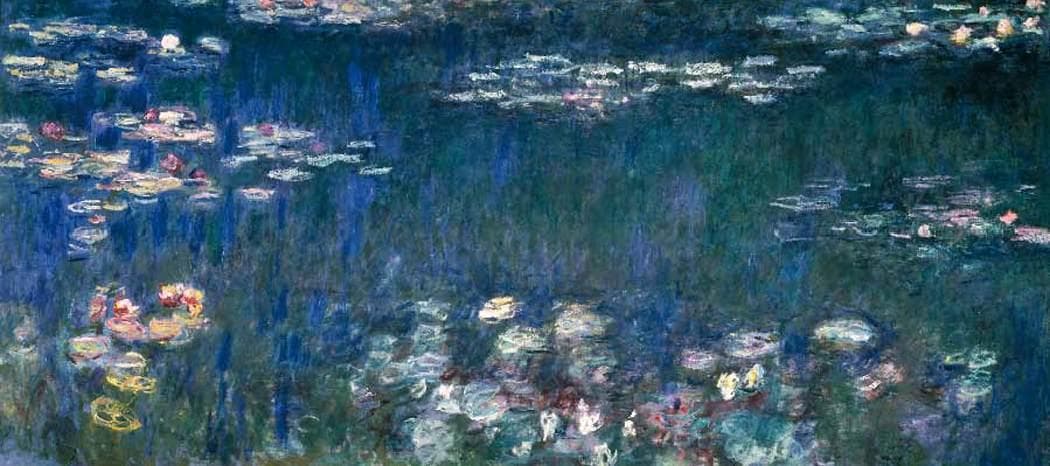
Water Lilies: Green Reflections
Claude Monet · 1914–26
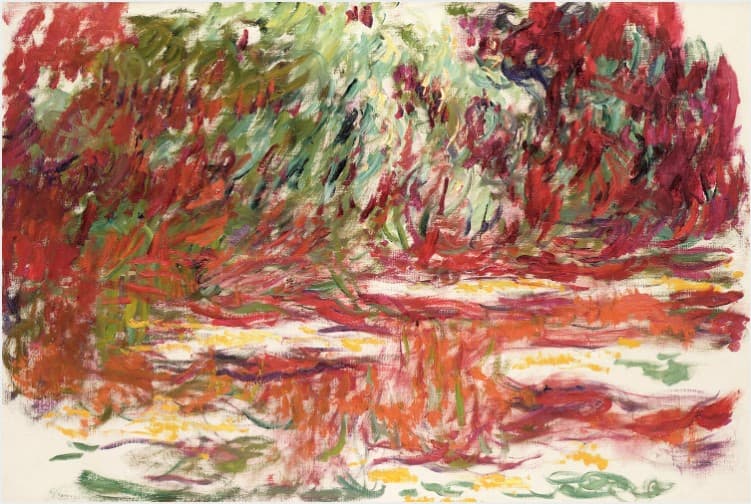
Water-Lily Pond (Bassin aux nymphéas, 1918–19)
Claude Monet · 1918–19
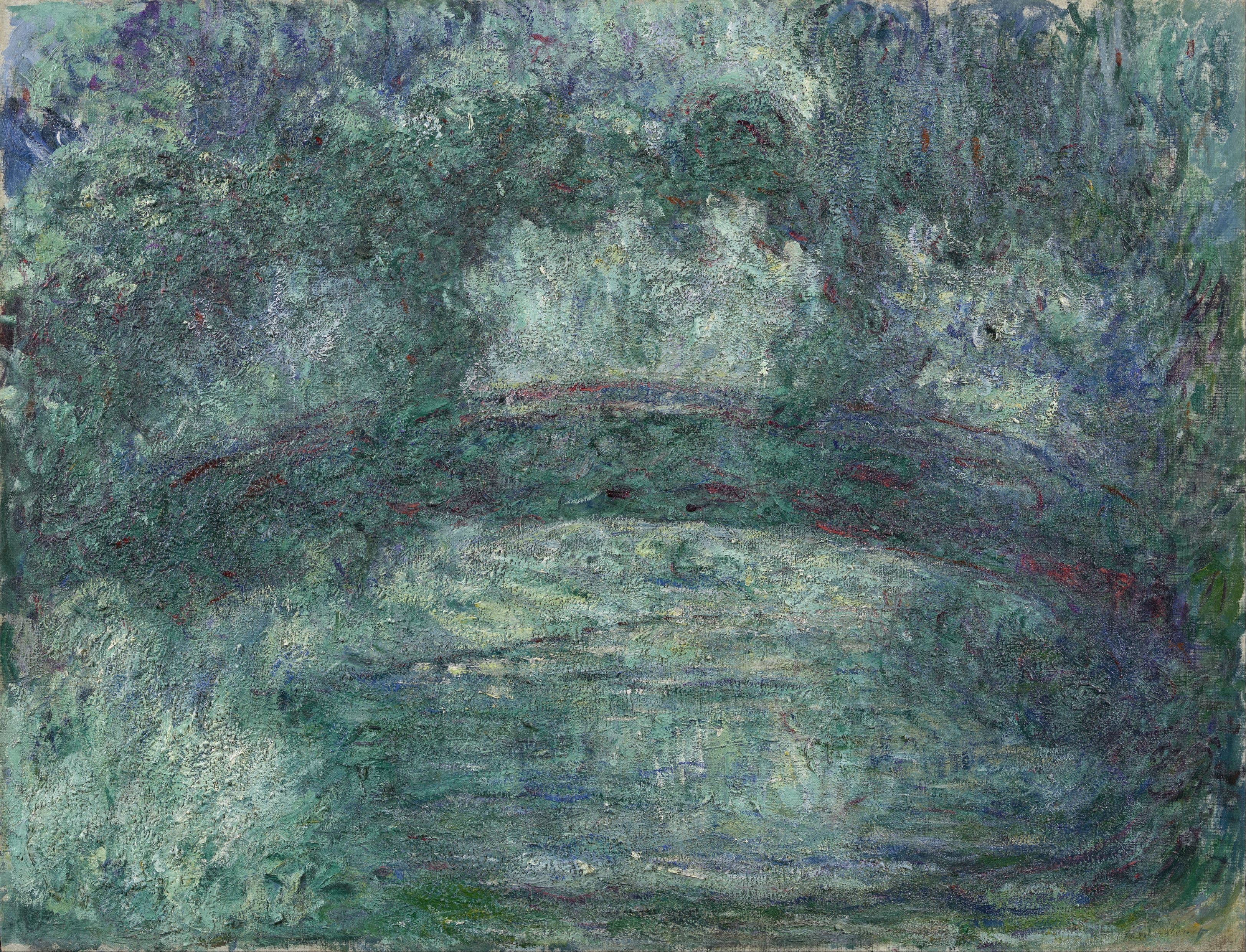
The Japanese Bridge
Claude Monet · 1919–24
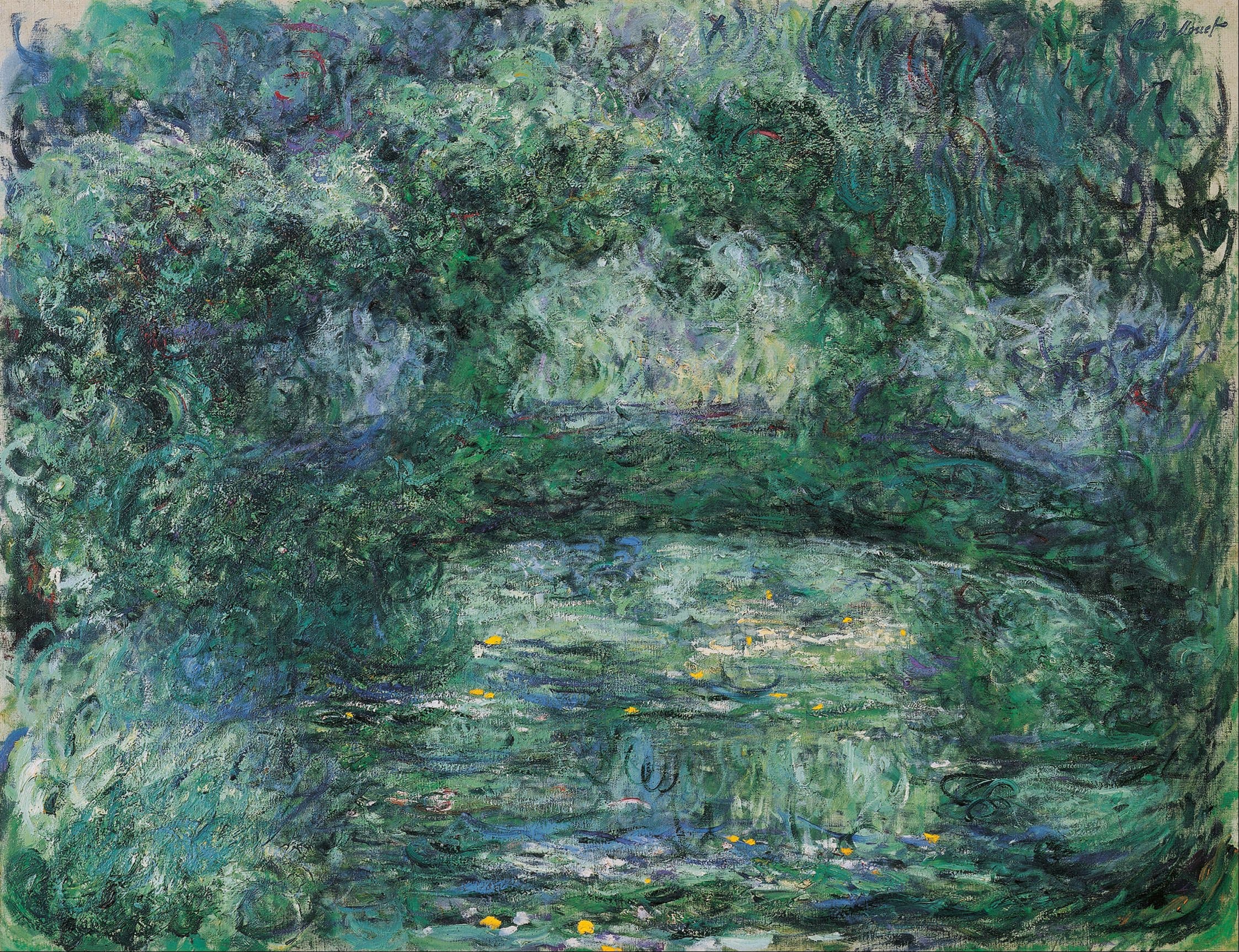
The Japanese Bridge
Claude Monet · 1918–24
Also painted in 1920
The same year
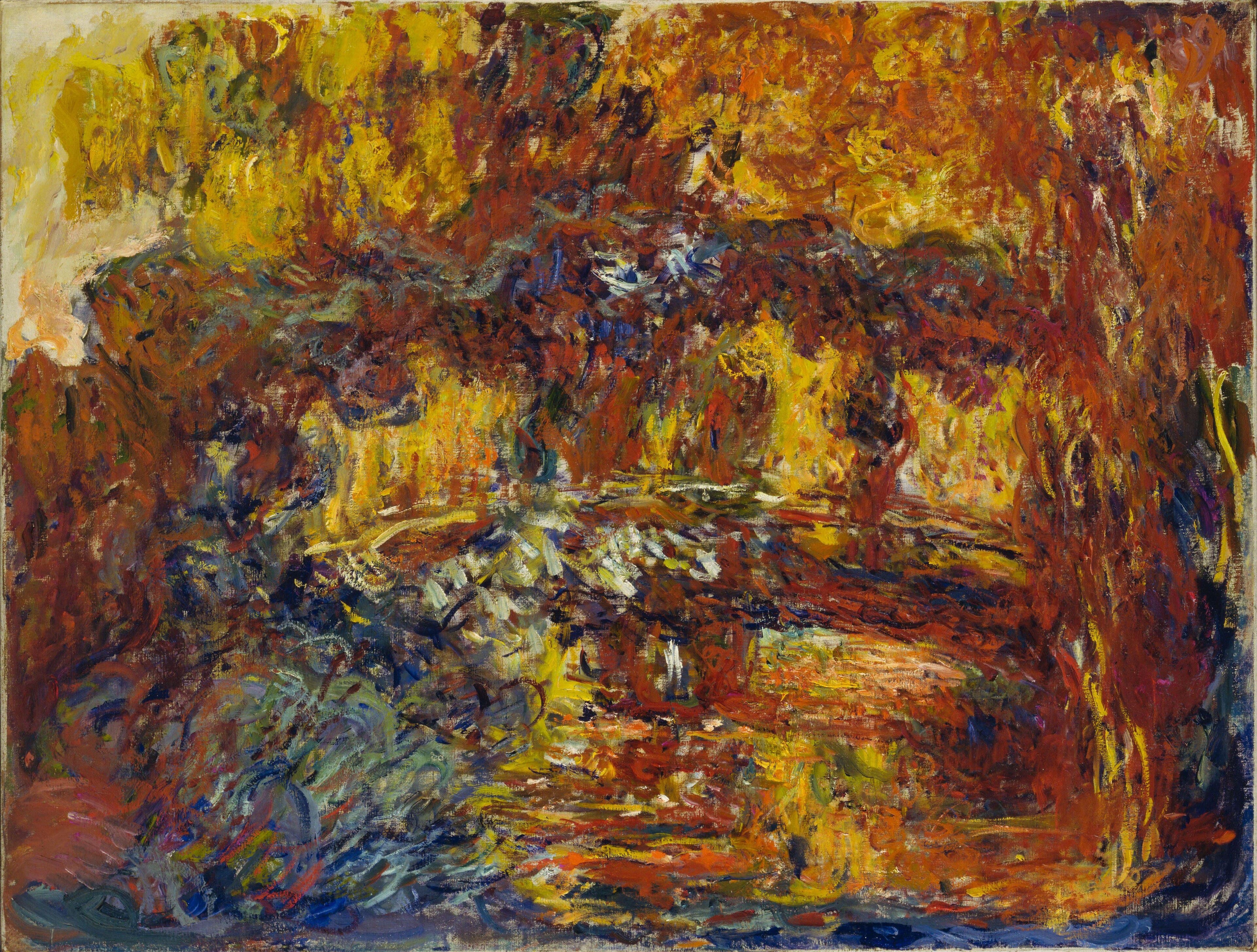
The Japanese Footbridge (MoMA)
Claude Monet · c. 1920–22
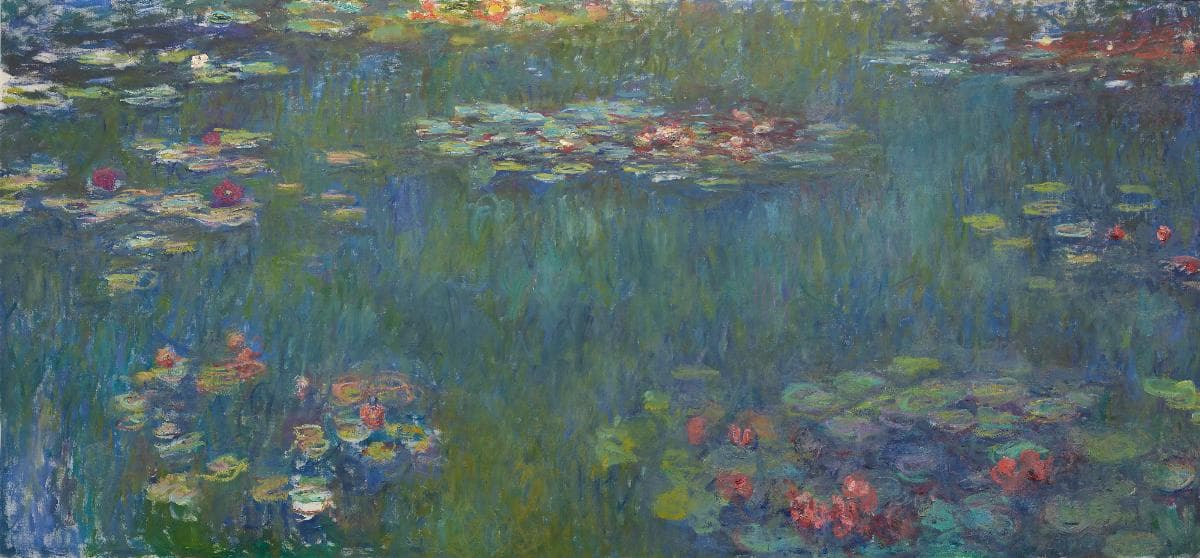
The Water-Lily Pond, Green Reflections
Claude Monet · 1920–26
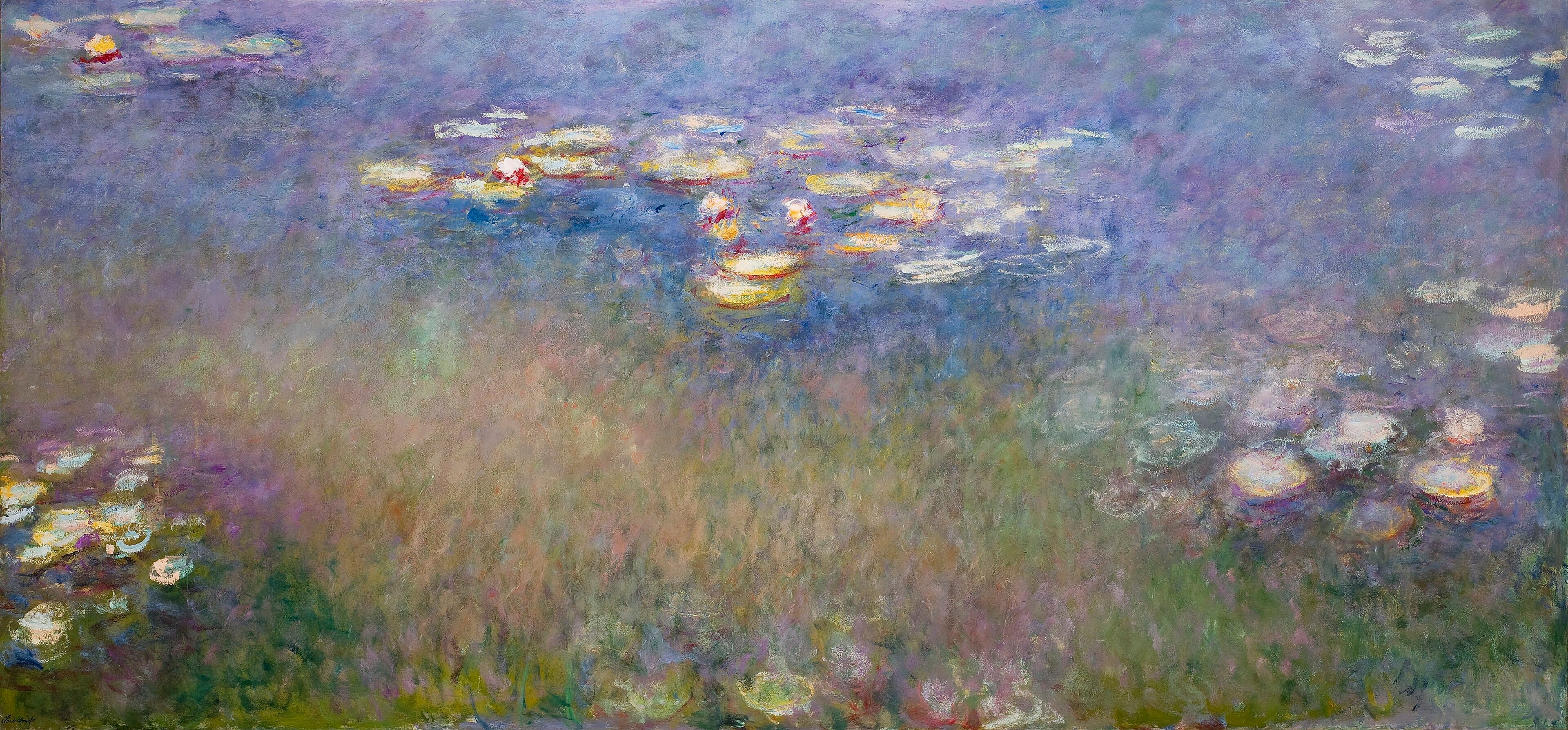
Water Lilies (Saint Louis Art Museum)
Claude Monet · c. 1915–26
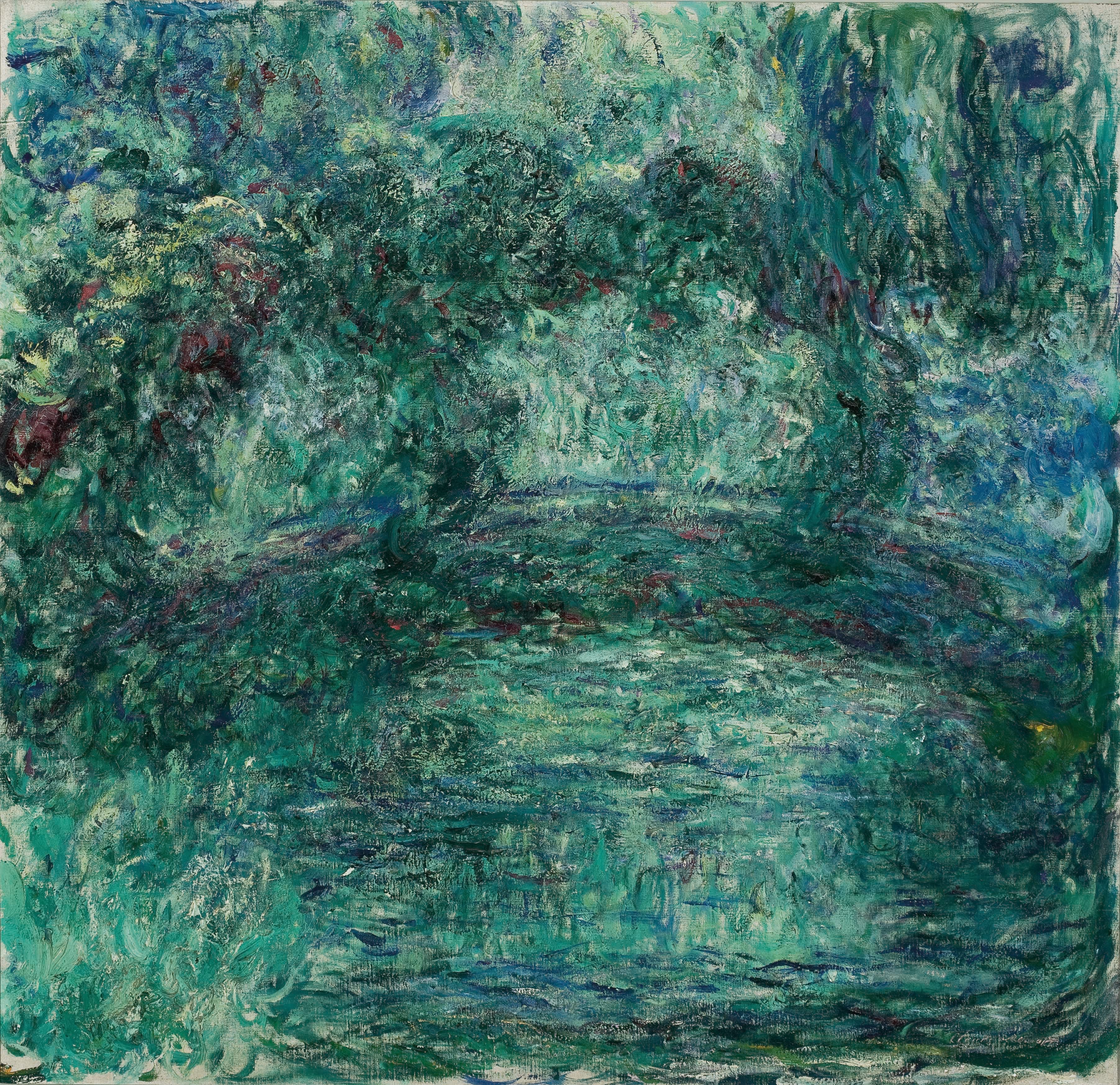
The Japanese Bridge over the Water-Lily Pond in Giverny
Claude Monet · 1920–24
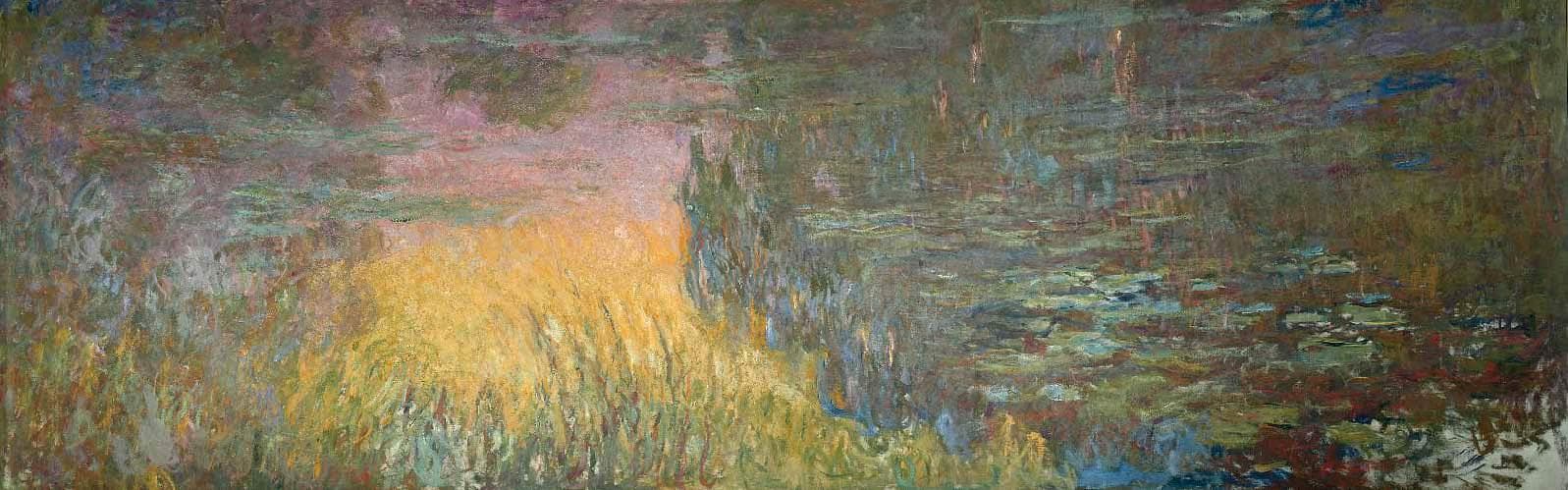
Water Lilies: Setting Sun
Claude Monet · 1914–26
Kindred works
You may also study
Water Lilies: Setting Sun
Claude Monet · 1914–26
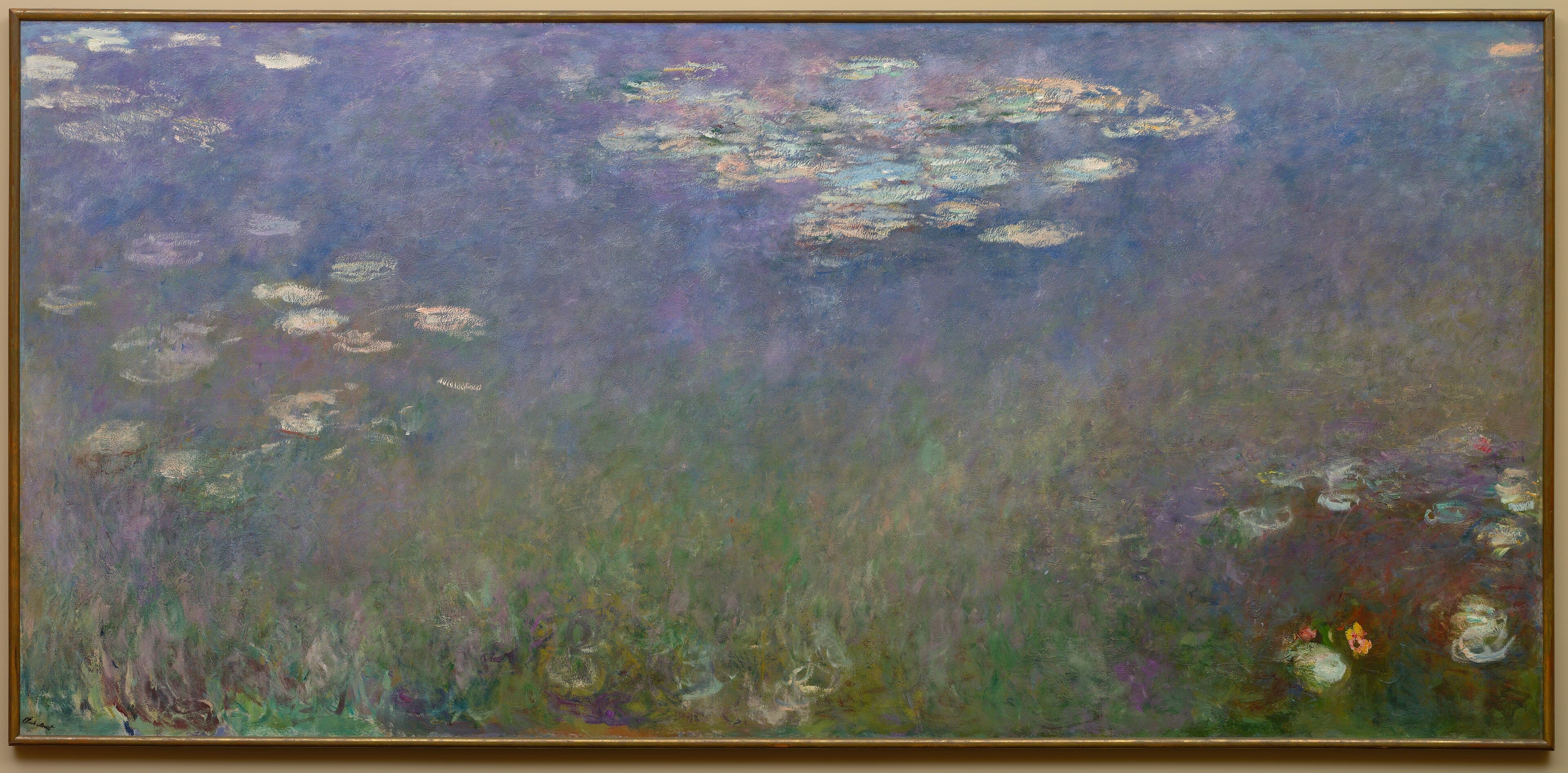
Water Lilies (Agapanthus)
Claude Monet · c. 1915–26
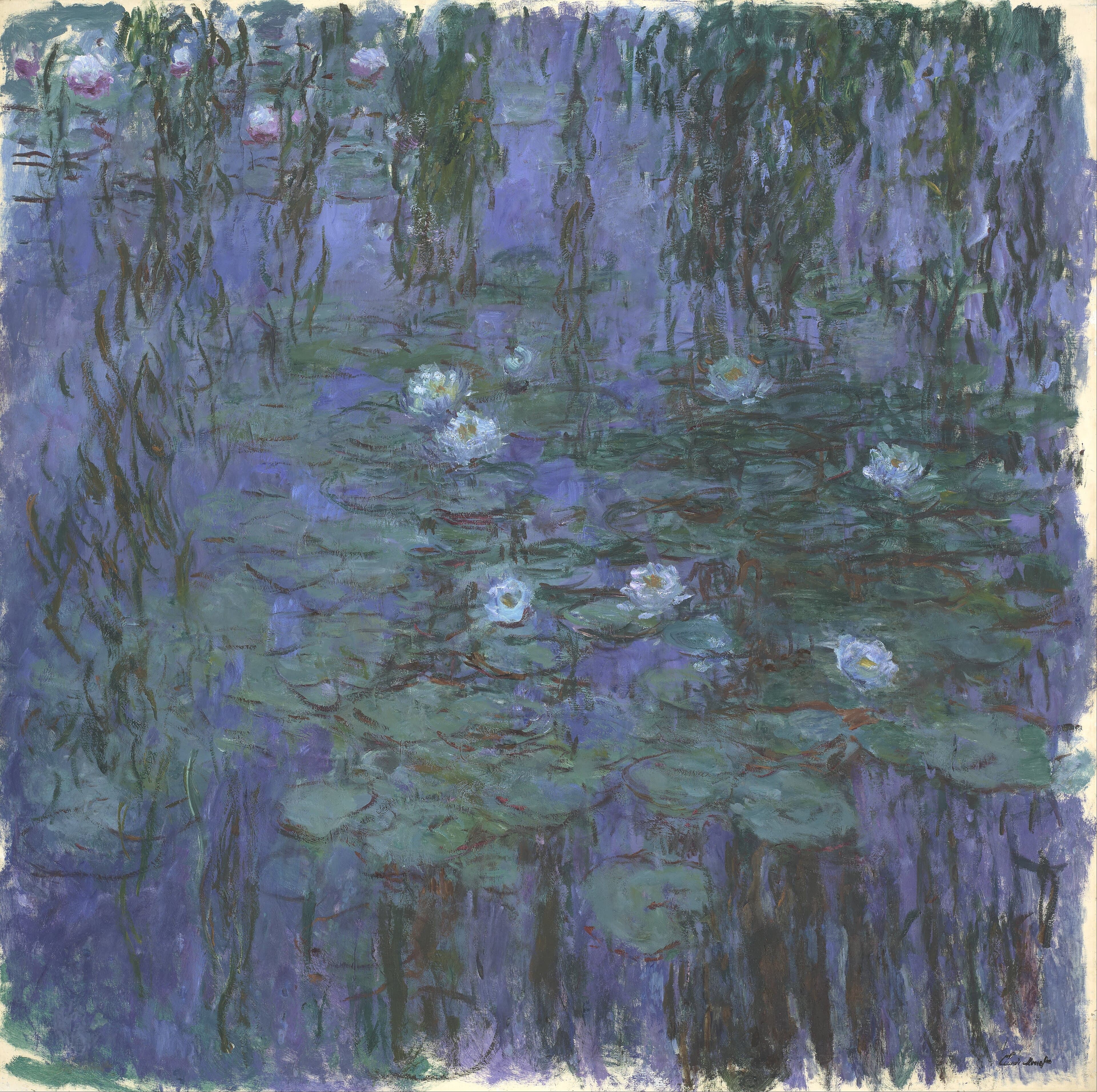
Blue Water Lilies
Claude Monet · 1916–19
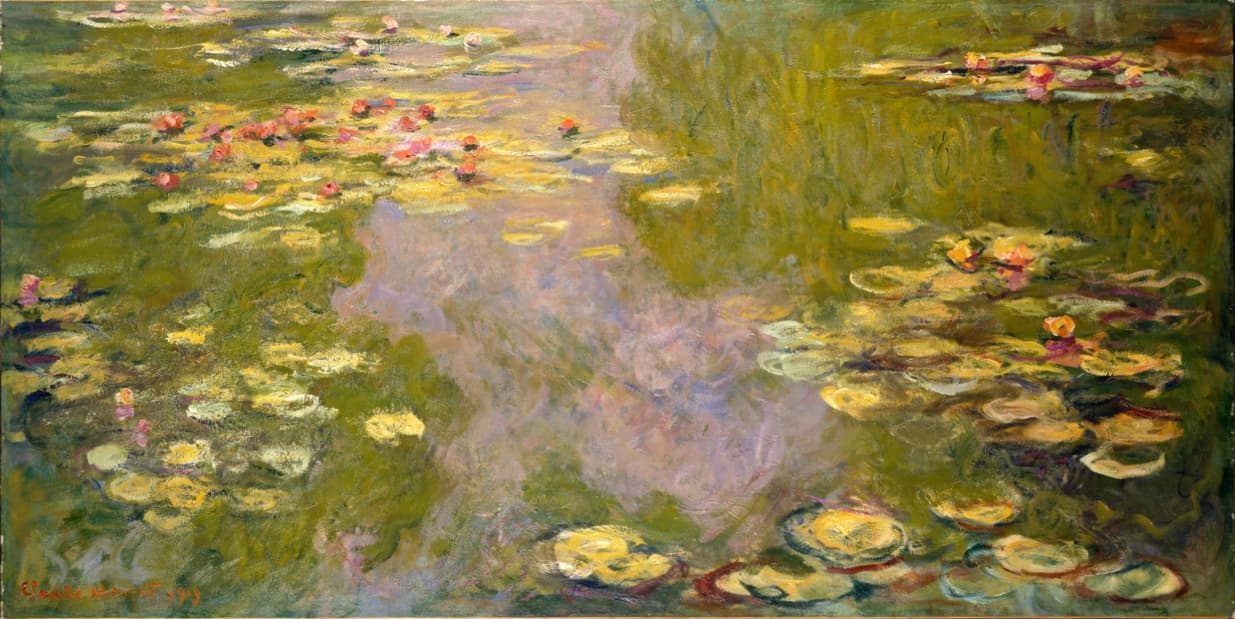
Water Lilies (1919, Metropolitan Museum)
Claude Monet · 1919
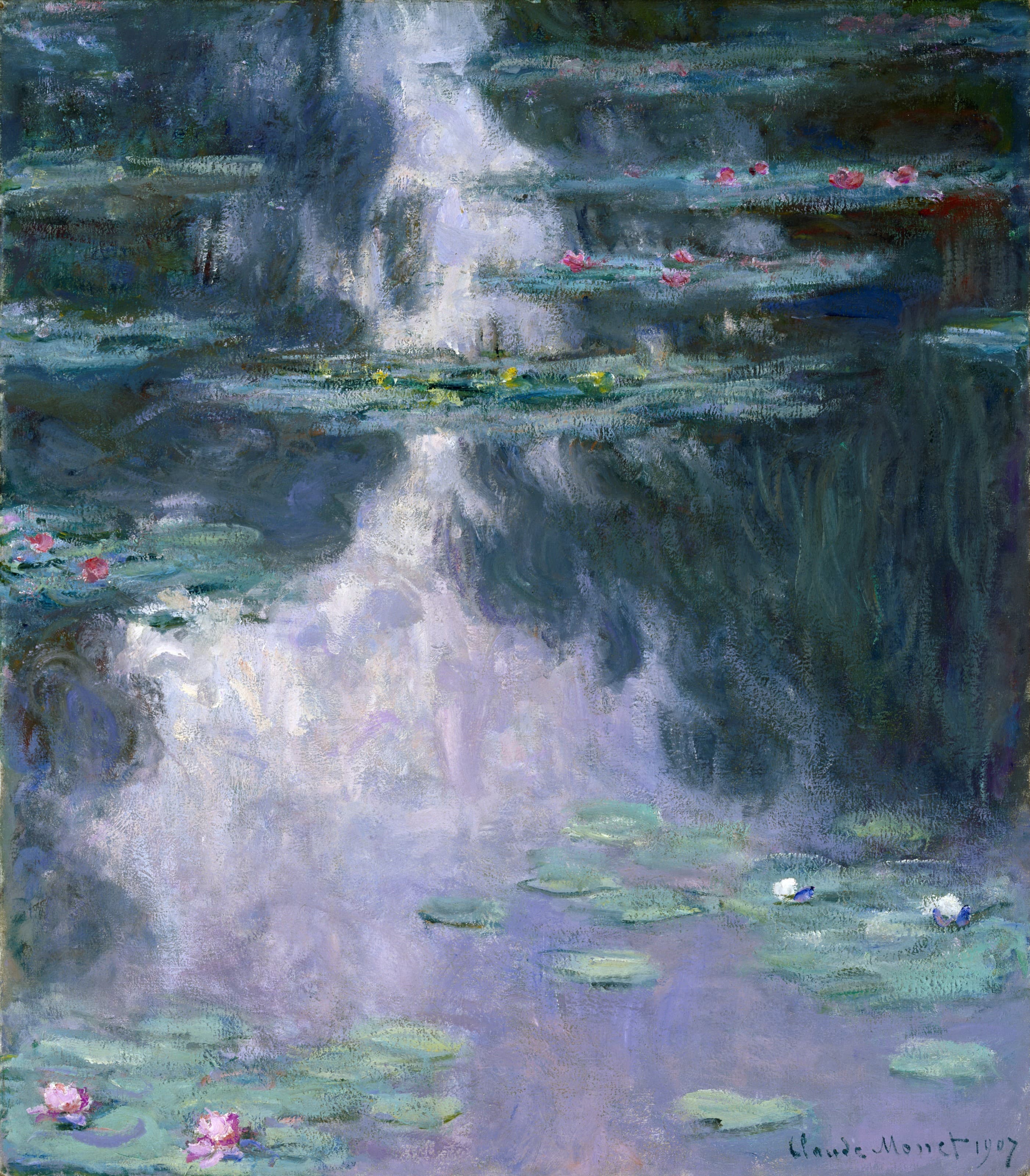
Water Lilies (Nymphéas), 1907 (Houston)
Claude Monet · 1907
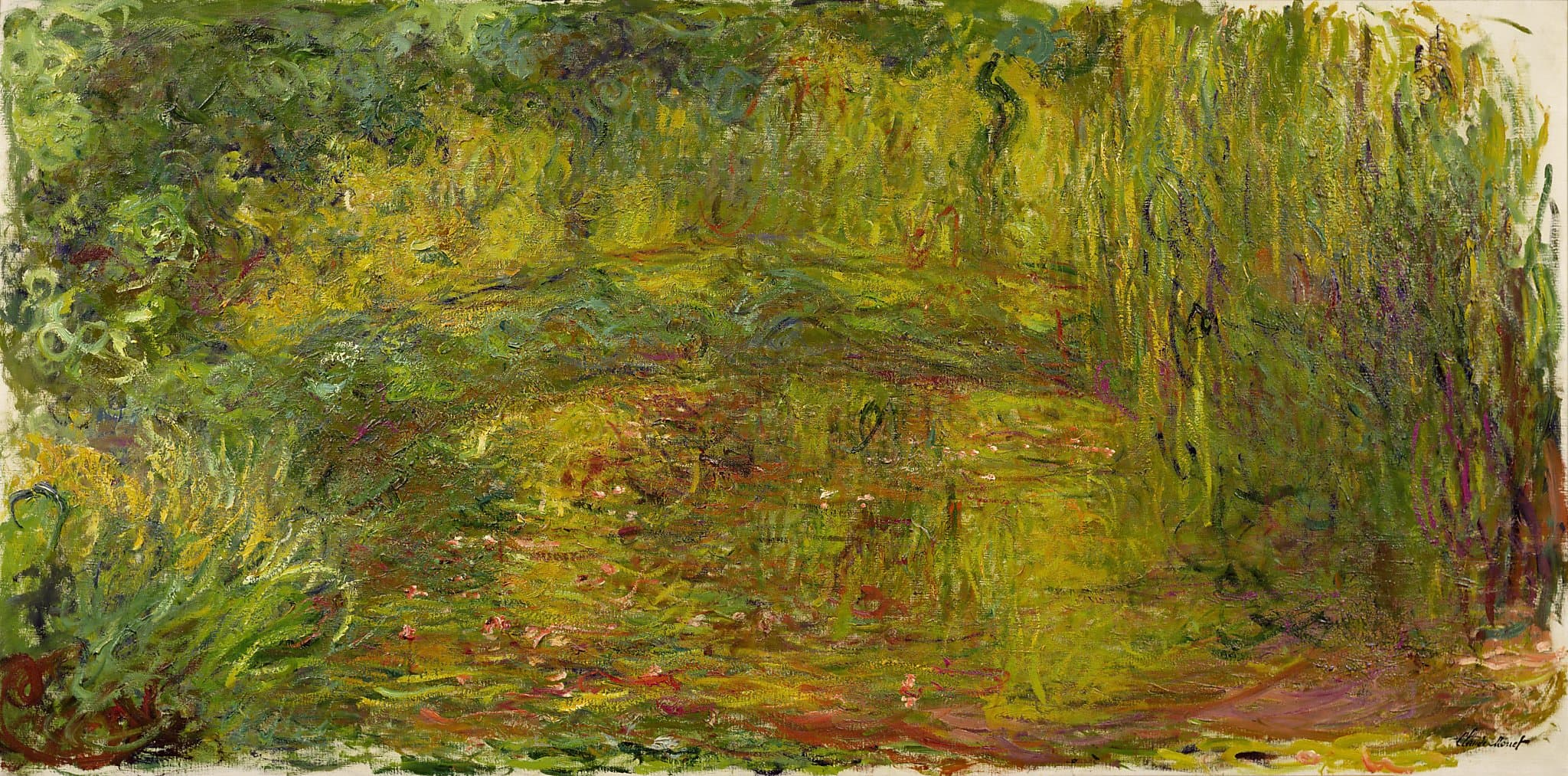
Le Pont japonais (The Japanese Bridge)
Claude Monet · 1918
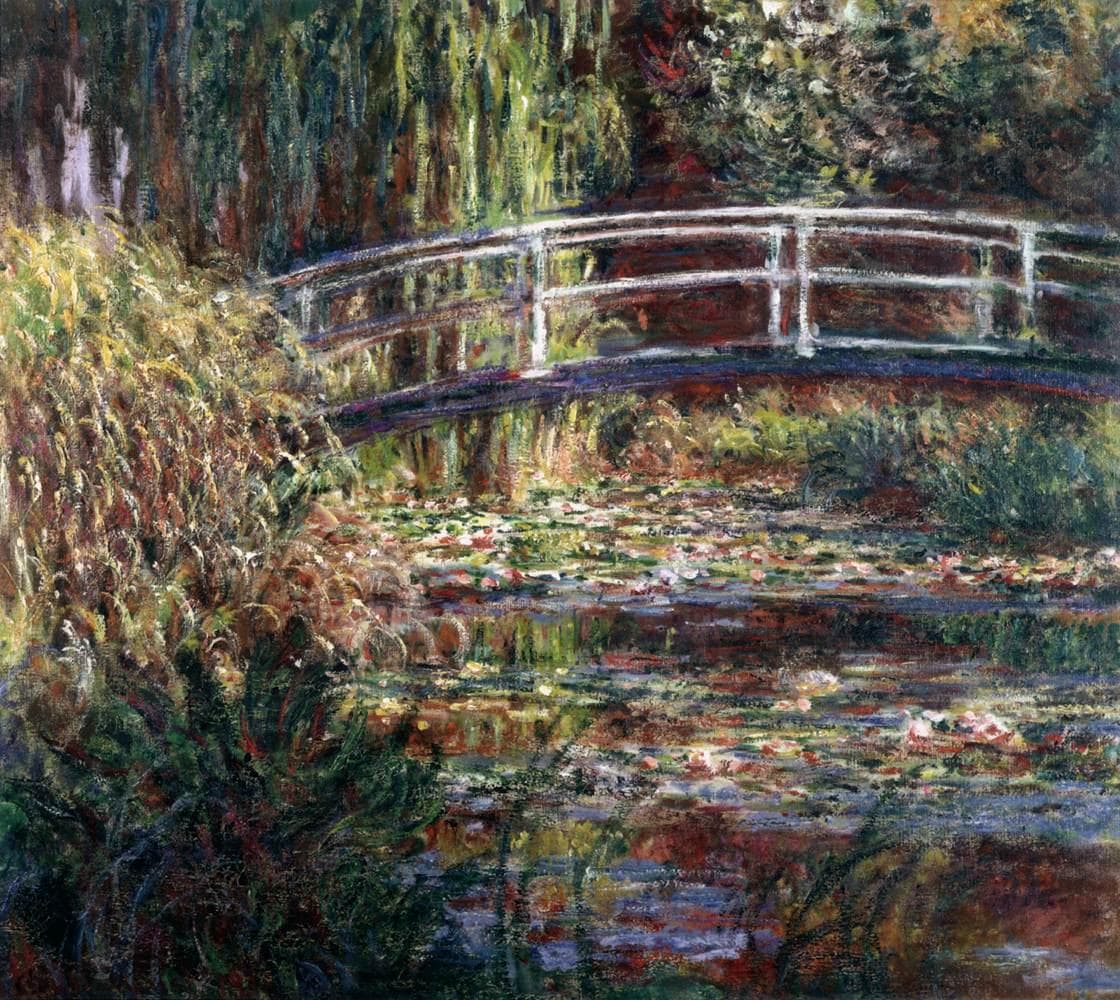
The Water Lily Pond, Harmony in Rose
Claude Monet · 1900
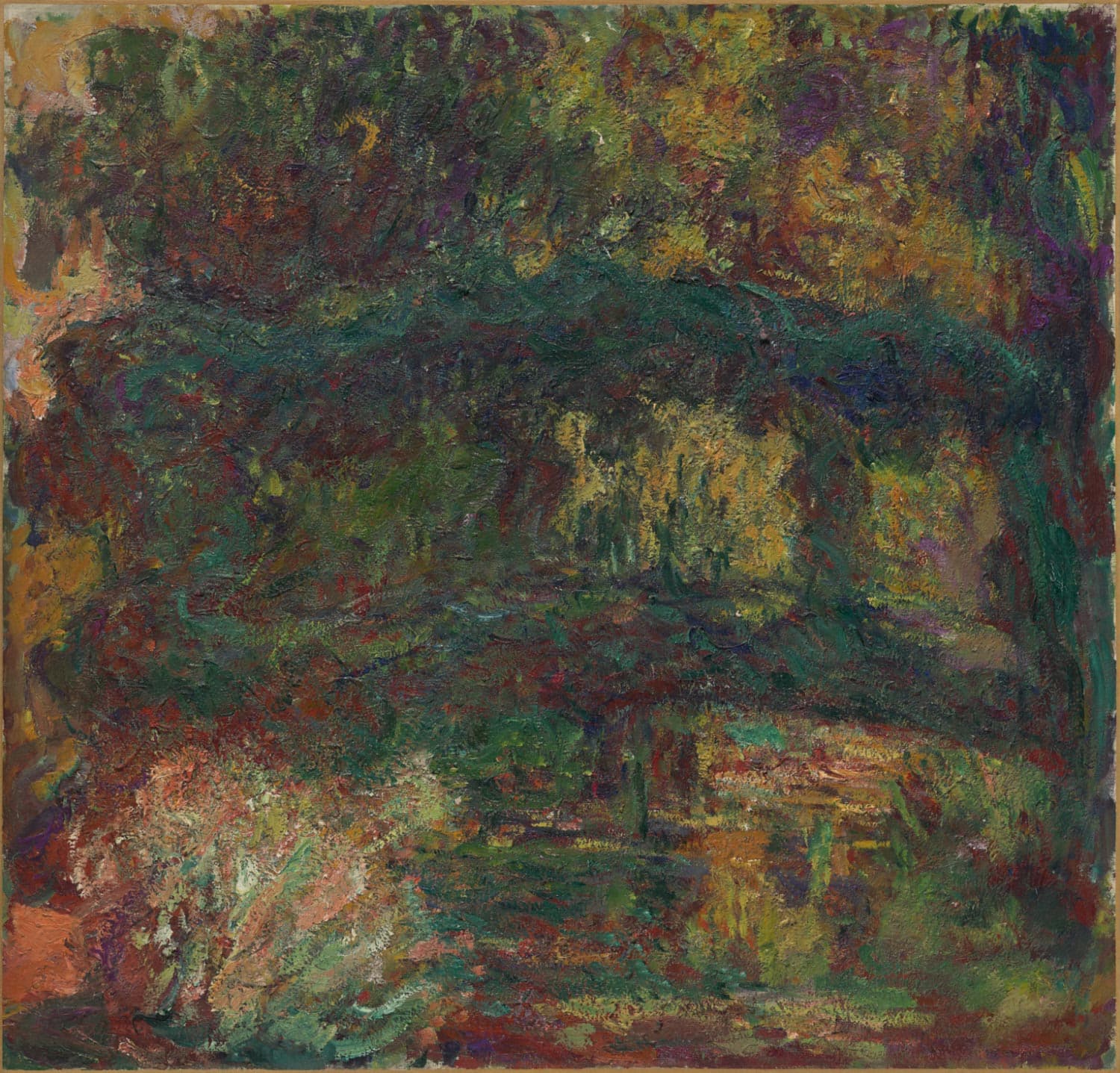
Nymphéas, Japanese Bridge
Claude Monet · 1918–26