Image: Museu de Arte de São Paulo Assis Chateaubriand (MASP) · Public domain · via Wikimedia Commons
The Japanese Bridge over the Water-Lily Pond in Giverny
Claude Monet, 1920–24
The Japanese Bridge over the Water-Lily Pond is a late Claude Monet painting of his Giverny footbridge, dated 1920–24, in which the arch sinks into a deep emerald green. It has been in the São Paulo Museum of Art (MASP) since 1948.
- Artist
- Claude Monet
- Date
- 1920–24
- Medium
- Oil on canvas
- Dimensions
- 90 × 92.5 cm
- Collection
- São Paulo Museum of Art (MASP), São Paulo, Brazil
- Movement
- Impressionism
- Catalogue
- Wildenstein 1919
- Nature & Landscape
- Water & Sea
The Japanese Bridge over the Water-Lily Pond in Giverny (A ponte japonesa sobre a lagoa das ninfeias em Giverny) is a late painting by Claude Monet of the wooden footbridge in his garden, dated by the São Paulo Museum of Art to 1920–24. The near-square canvas, 90 by 92.5 centimeters, was given to MASP in 1948 by Louis La Saigne, and it is one of the best-known Impressionist pictures in Latin America.
What you're looking at
Green, everywhere. This is the most single-minded of the late bridges in color: emerald, viridian, sea green and a bright, almost acid mint, with deep blue-black in the shadows and only a few flecks of maroon. The bridge is a broad arch just below the middle of the canvas, a little darker than its surroundings, picked out along its top edge by a thin line of cobalt blue. Above it, the wisteria and trees are a heaving mass of foliage brushed in short, curling strokes, with darker pockets of blue and a cluster of dark red-purple at the upper left, probably flowers or shaded leaves.
Below the arch the pond is a flat sheet of lighter green, crossed by long horizontal strokes of blue that read as ripples or the edges of lily pads. The bottom quarter is more open, the water lighter and almost luminous, with the strokes laid in parallel bands. On the right, a few touches of turquoise and a single yellow dot interrupt the green. At the lower left corner the canvas is barely covered, showing how quickly Monet worked toward the edges.
The near-square format gives the arch a firm center. Even with all the flurry of strokes, the composition is the same as in the 1899 bridges: an arch across the middle, foliage above, water below.
Giverny, 1920–24
These were the last years of Monet's working life. He was painting the great water-lily panels for the Orangerie, which he formally promised to the French state in 1922, and he was nearly blind in one eye from cataracts until an operation in 1923. MASP's catalogue text notes that the Japanese bridge was one of the motifs he worked on most intensively between 1918 and 1924, and that some 23 canvases of it survive from those years.
How it was painted
Monet built this canvas in thick, layered strokes, many of them applied wet into wet so that blue and green merge on the surface. The brushwork changes with the motif: short and circular in the leaves, long and horizontal on the water, arched along the bridge itself. There is no drawing in the conventional sense. The bridge exists because the strokes bend.
The single dominant hue is the picture's most striking choice. Many later bridges, such as the Marmottan's red Le Pont japonais or the Houston Japanese Footbridge, are hot with reds and oranges. This one keeps to green, closer in spirit to the 1899 harmony in green, though now dense, dark and nearly abstract.
How this version differs
Compared with the blue-gray Japanese Bridge of 1918–19 at the Marmottan, the São Paulo canvas is brighter and more saturated. Compared with the Fondation Beyeler's bridge, which shares its greens, it is more tightly framed and has fewer flowers on the water. For the full sequence, see the Japanese Footbridge series, and for the garden itself, Monet's Giverny.
Where to see it
The painting is in the collection of MASP, the Museu de Arte de São Paulo Assis Chateaubriand, on Avenida Paulista. MASP displays much of its collection on Lina Bo Bardi's glass easels, freestanding in a single open gallery, so this Monet is often seen floating in space among works from other centuries. MASP also owns a second Monet painted near Giverny, Boating on the River Epte. For other collections worldwide, see where to see Monet's paintings.
Questions & answers
Where is Monet's Japanese Bridge in São Paulo?
It is in the São Paulo Museum of Art (MASP), inventory MASP.00093. Louis La Saigne gave it to the museum in 1948. It is often displayed on the museum's glass easels in the main collection gallery on Avenida Paulista.
When was it painted?
MASP dates it to 1920–24, the last years of Monet's career, when he was painting at Giverny while working on the Water Lilies decorations for the Orangerie and struggling with cataracts.
What does it show?
It shows the arched wooden footbridge over Monet's water-lily pond, almost submerged in thick strokes of emerald and blue-green, with dense wisteria above and the pond below.
How many late Japanese bridge paintings did Monet make?
MASP's catalogue notes that about 23 canvases of the Japanese bridge survive from the years 1918–24. Most are in the Musée Marmottan Monet in Paris; others are in São Paulo, Houston, Riehen, Amsterdam, New York and Minneapolis.
More by the artist
Claude Monet
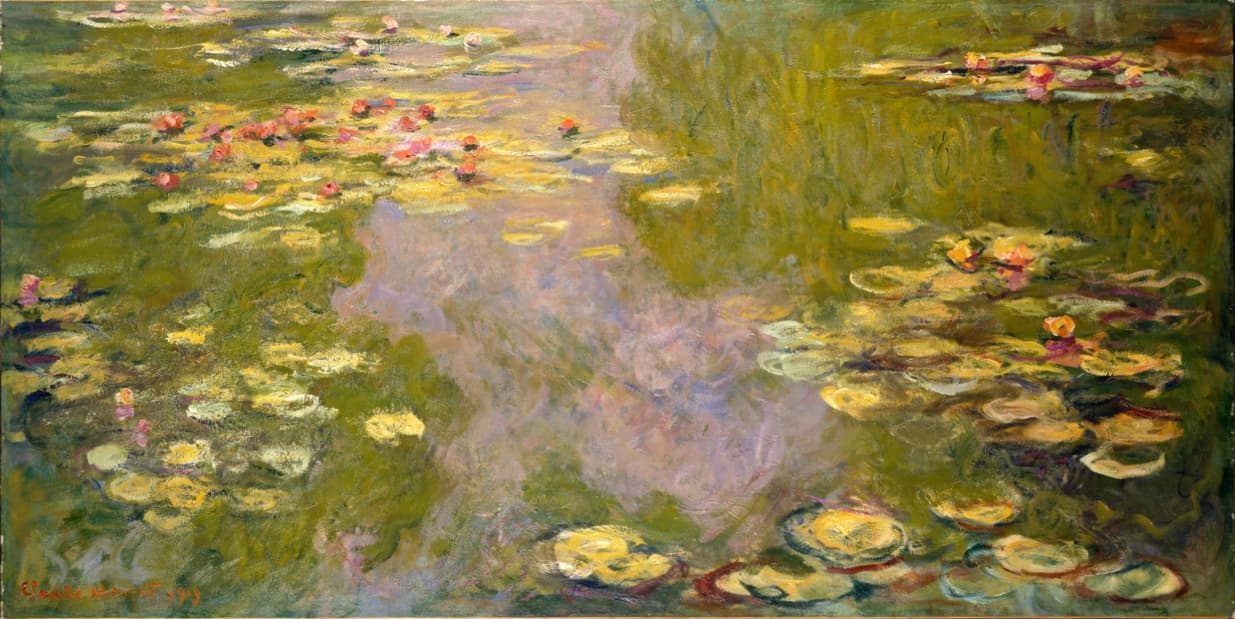
Water Lilies (1919, Metropolitan Museum)
Claude Monet · 1919
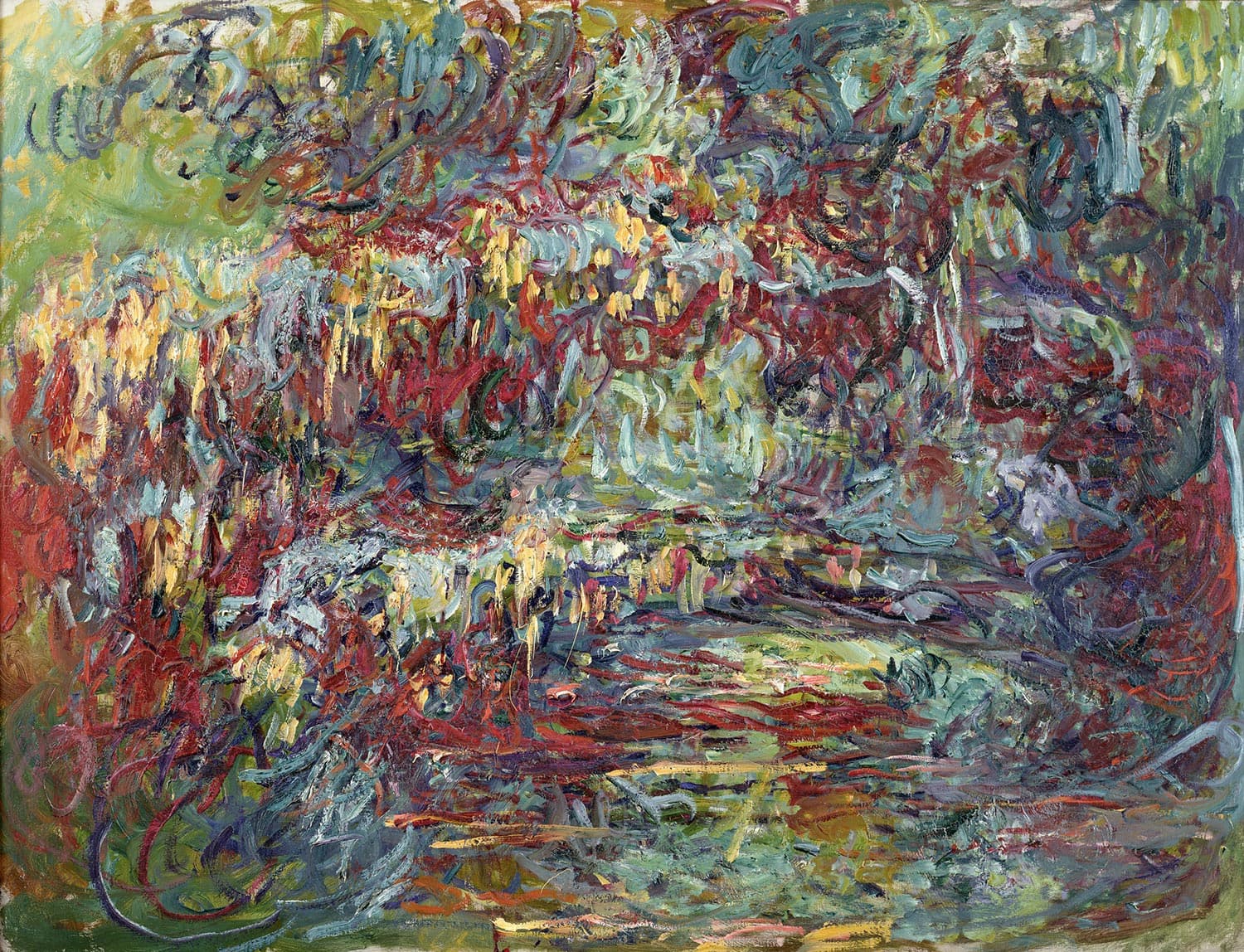
Le Pont japonais
Claude Monet · 1918–24
Le pont japonais
Claude Monet · 1918–24
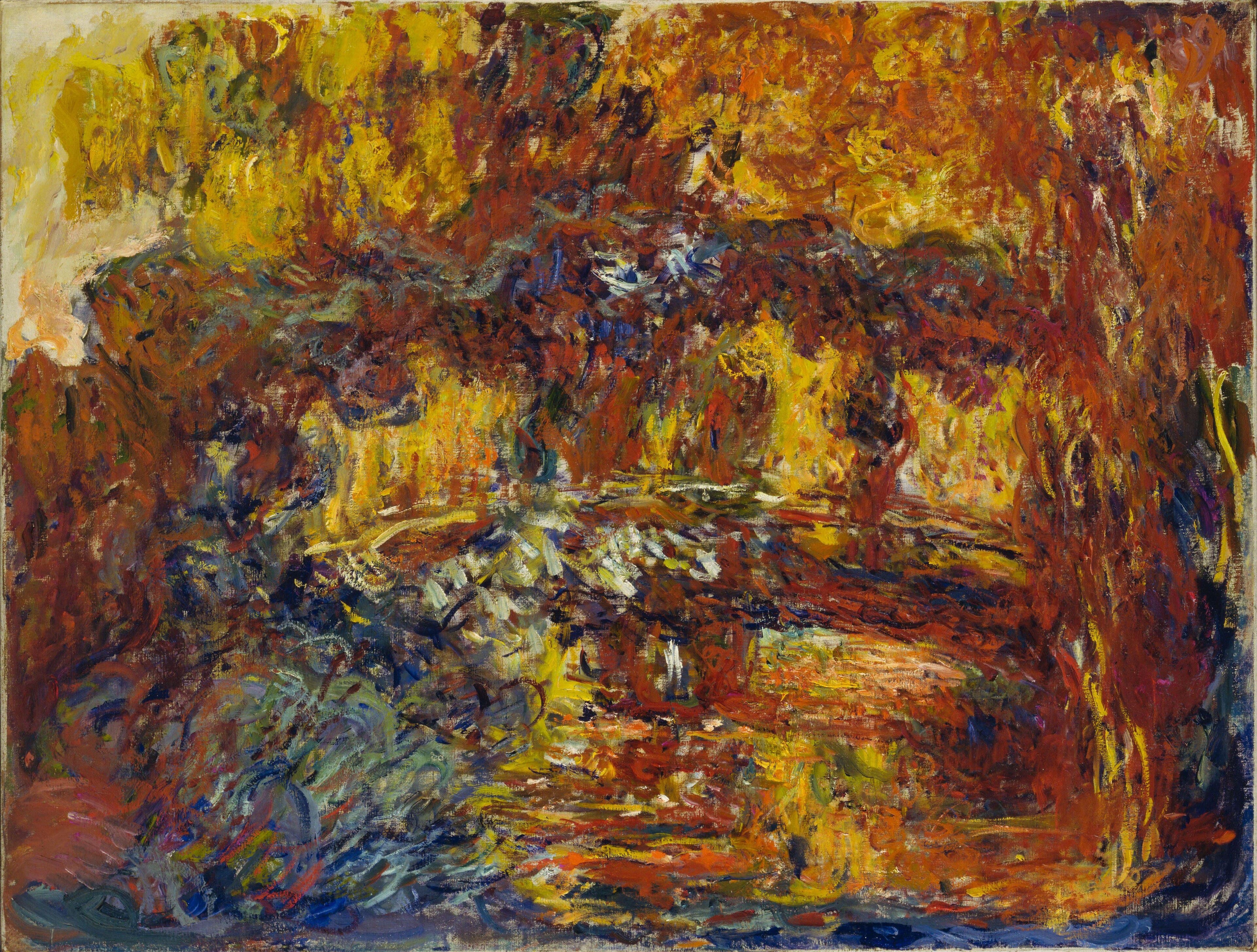
The Japanese Footbridge (MoMA)
Claude Monet · c. 1920–22
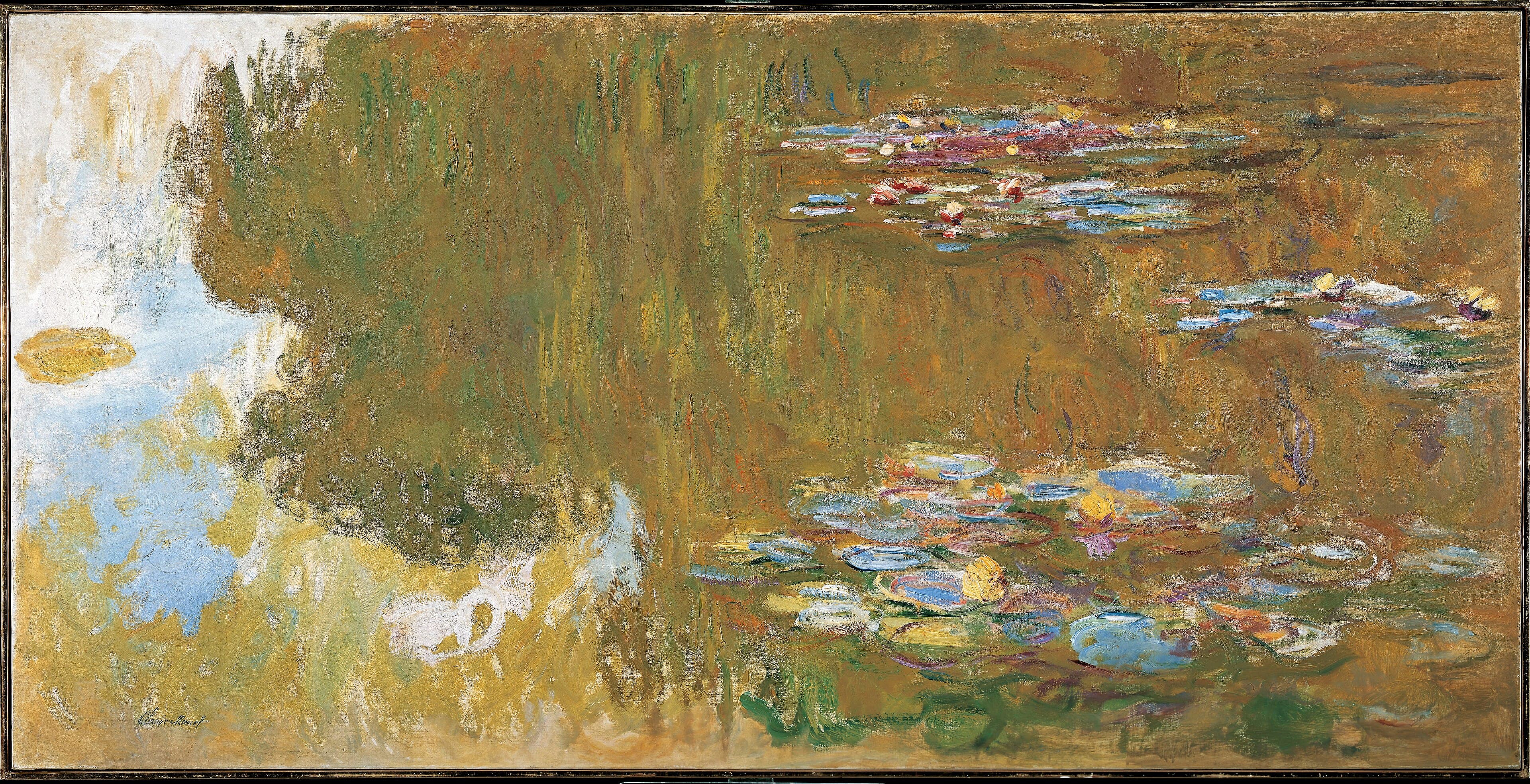
The Water Lily Pond (Albertina)
Claude Monet · 1917–19
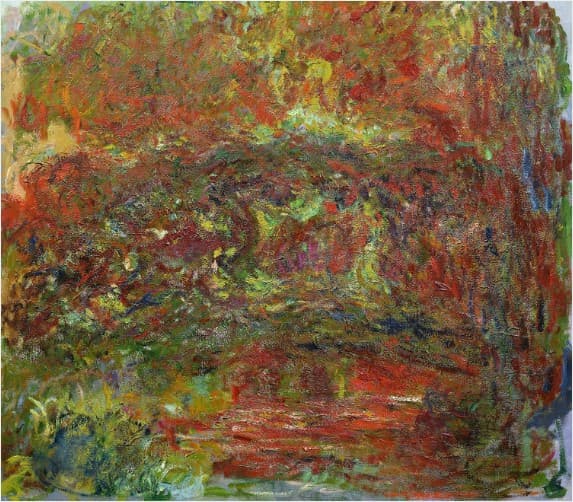
Le pont japonais
Claude Monet · 1918–24
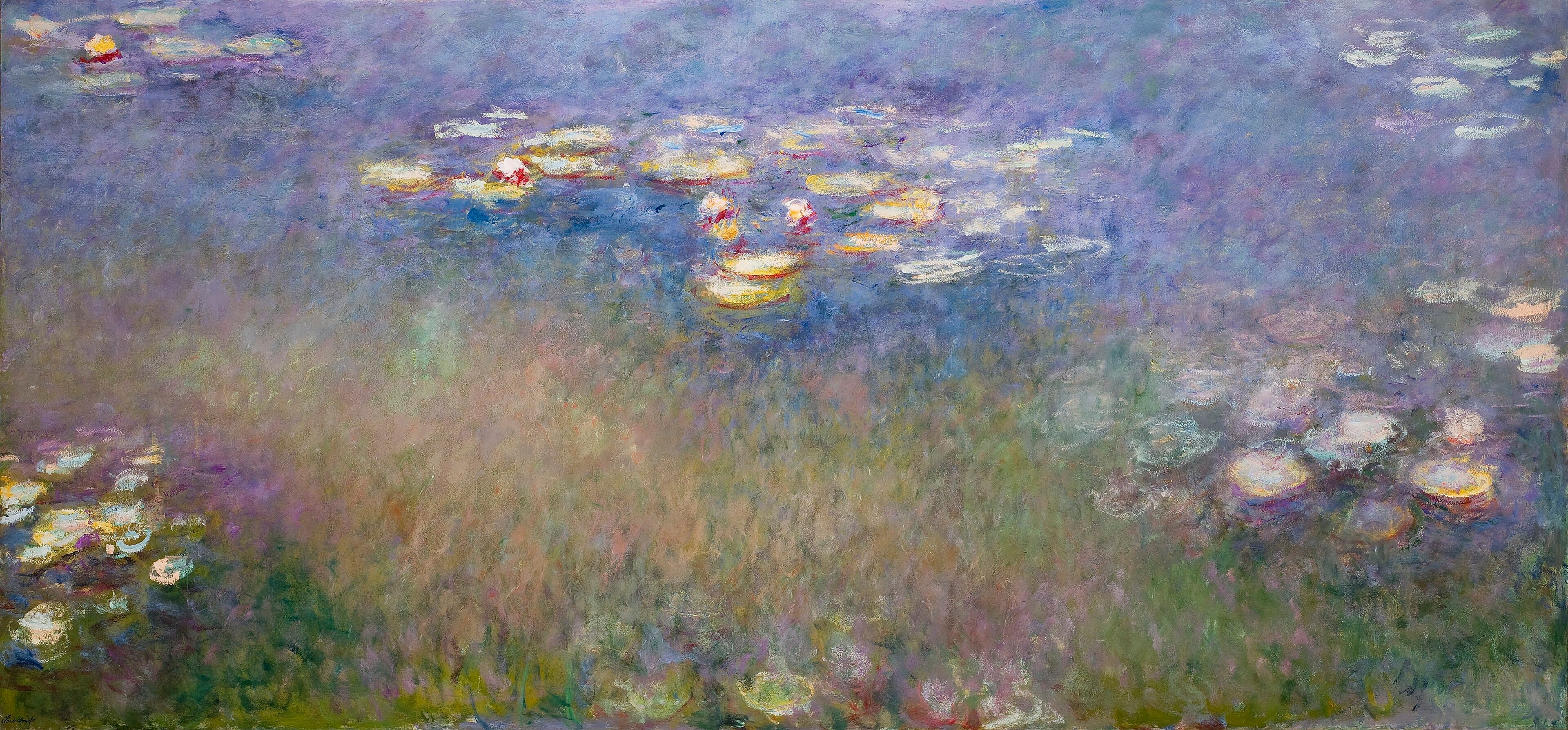
Water Lilies (Saint Louis Art Museum)
Claude Monet · c. 1915–26
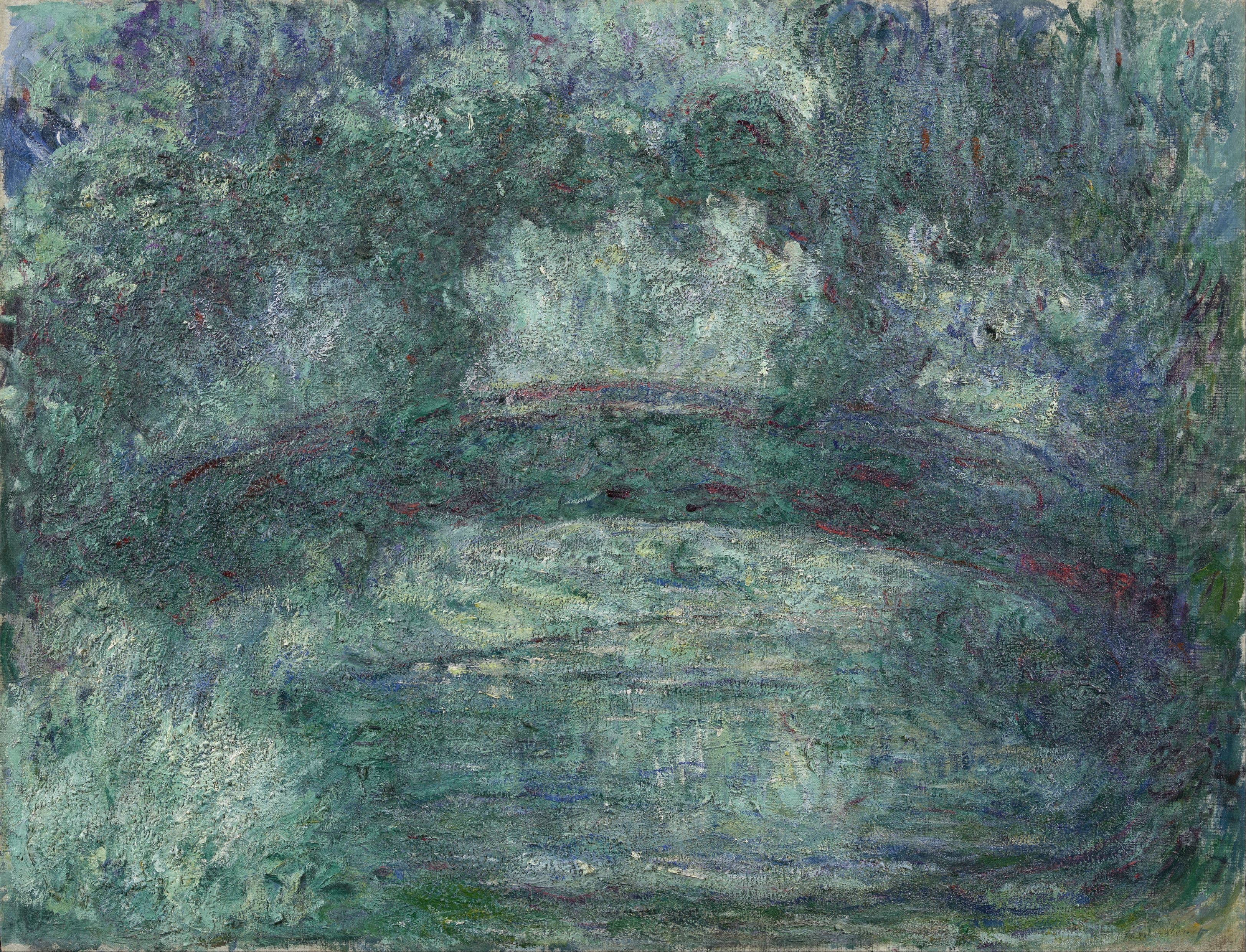
The Japanese Bridge
Claude Monet · 1919–24
Also painted in 1920
The same year

Kindred works
You may also study
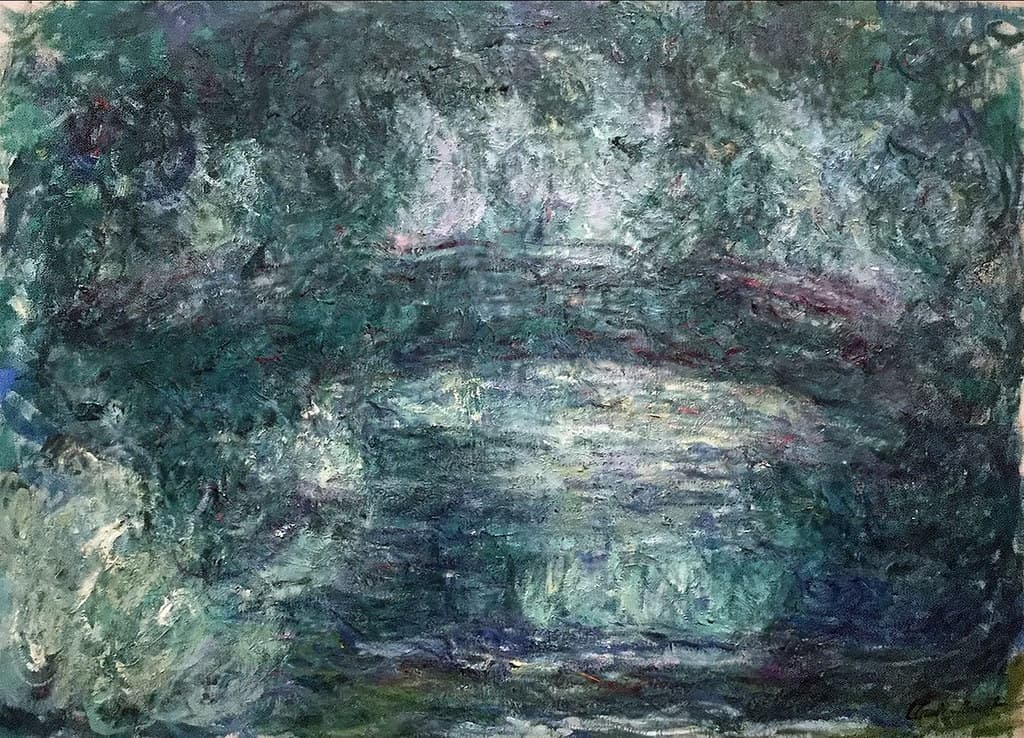
Japanese Bridge
Claude Monet · 1918–19
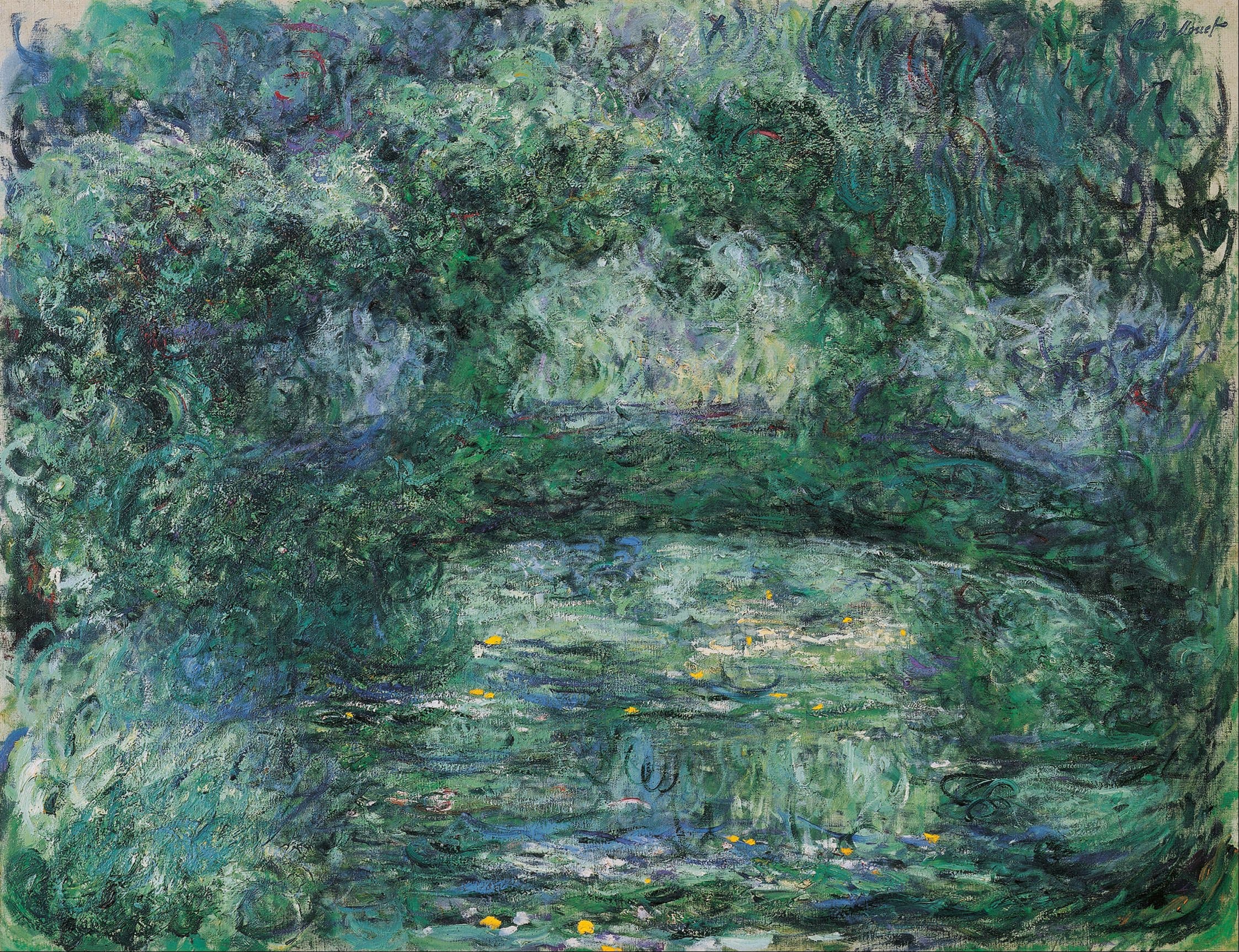
The Japanese Bridge
Claude Monet · 1918–24
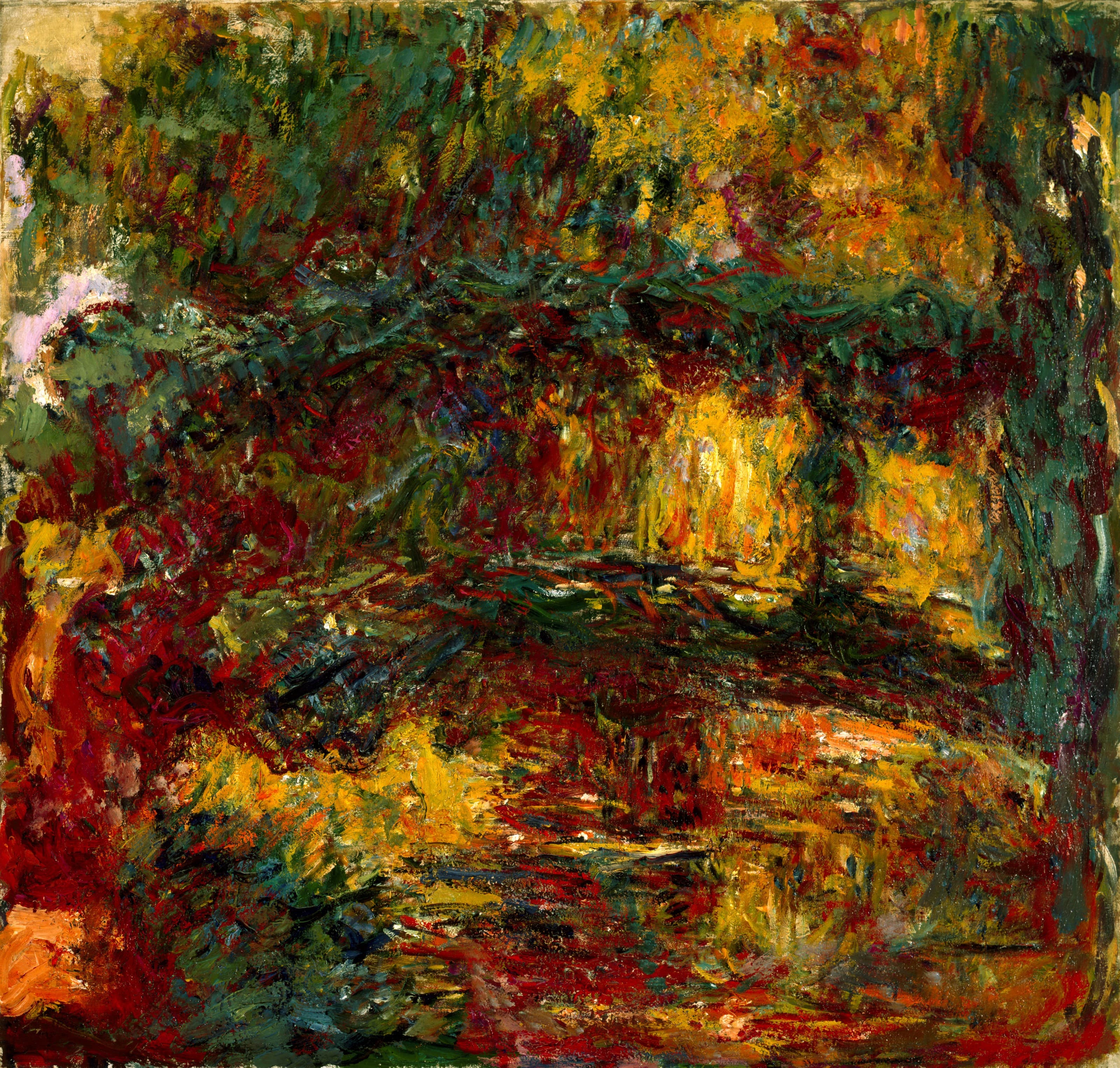
The Japanese Footbridge, Giverny
Claude Monet · c. 1922
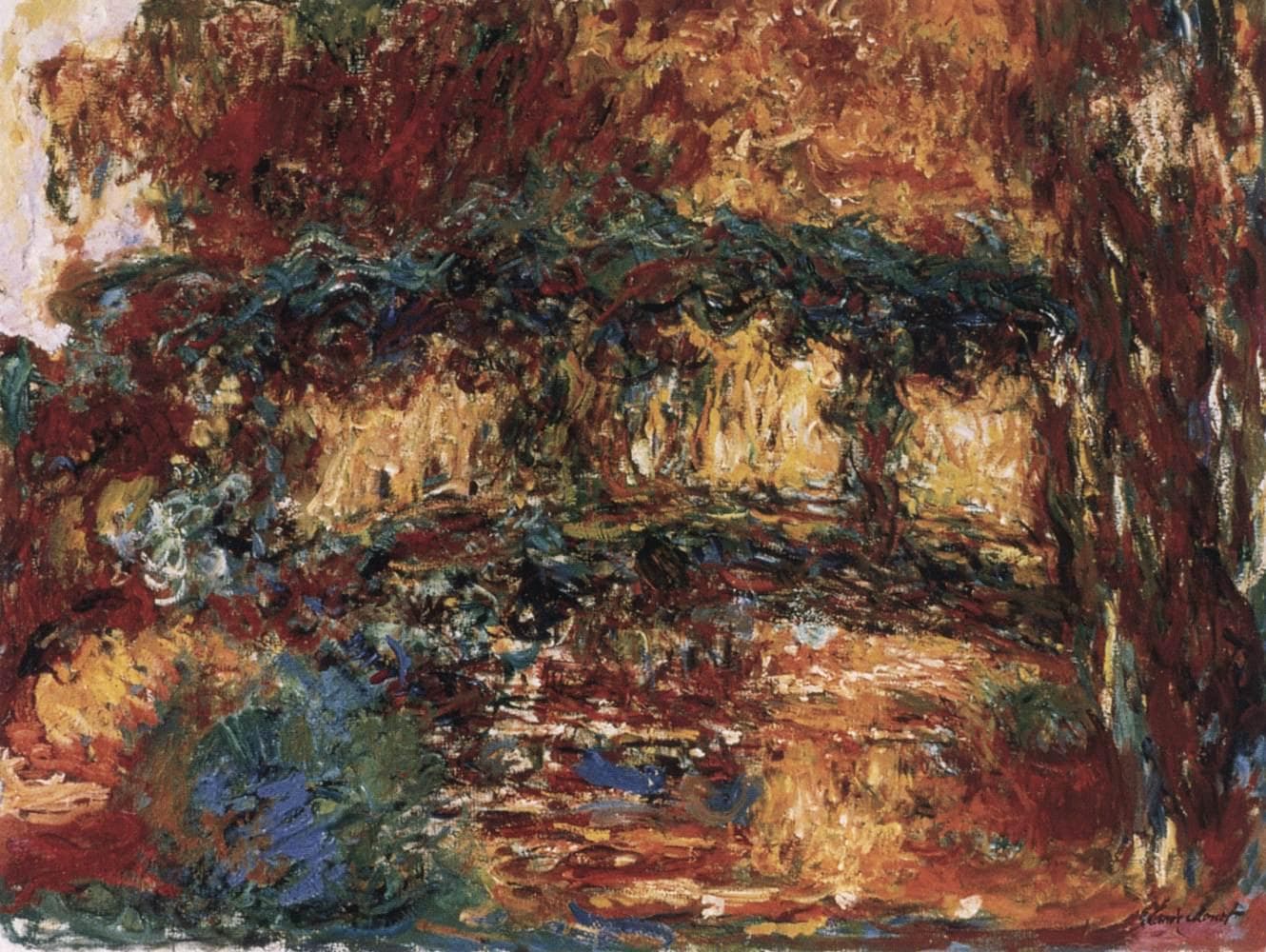
The Japanese Bridge
Claude Monet · c. 1923–25
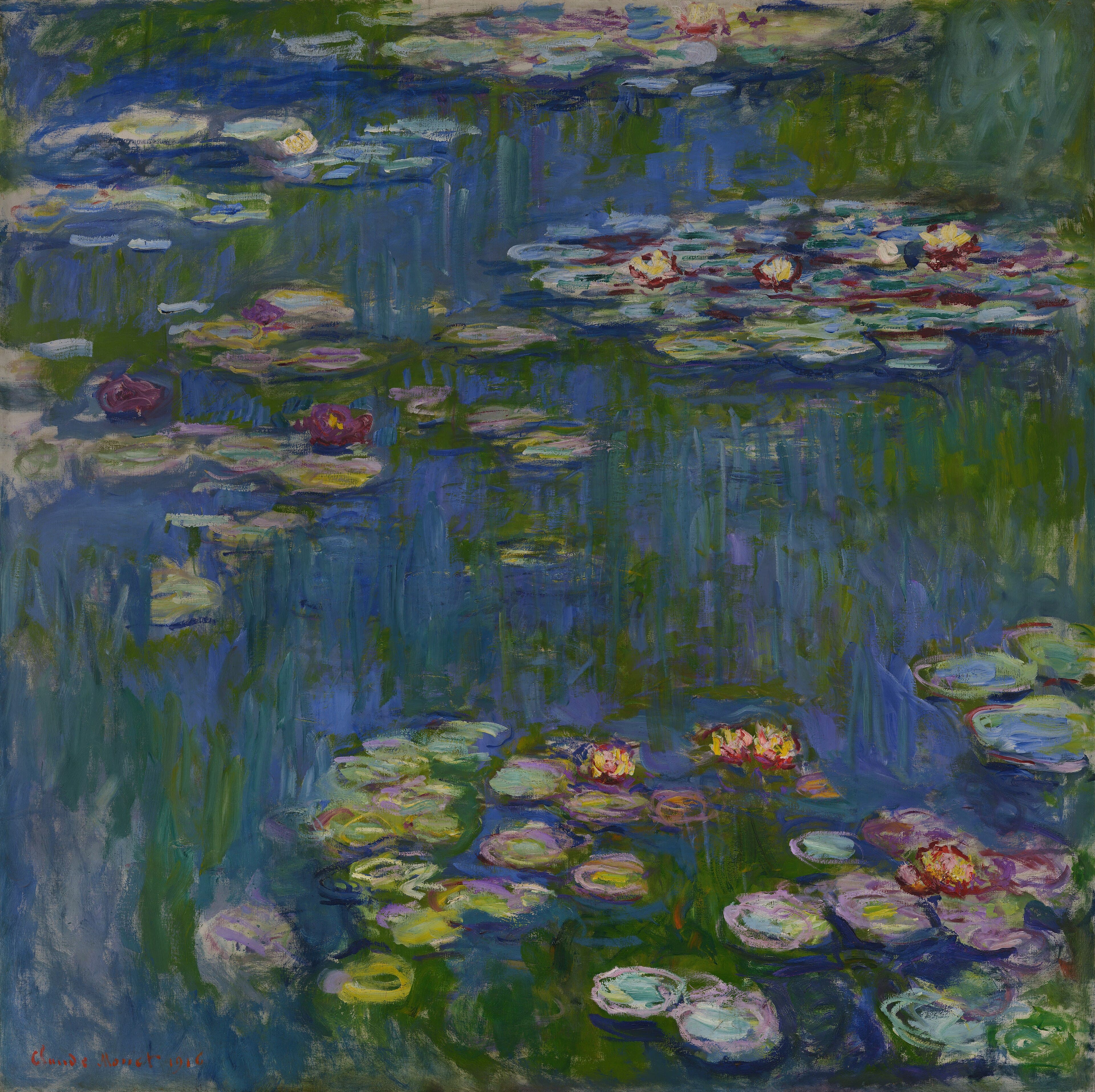
Water Lilies (1916, Tokyo)
Claude Monet · 1916
Nymphéas (Musée Marmottan Monet, 1916–19)
Claude Monet · 1916–19

Water Lilies (MoMA triptych)
Claude Monet · 1914–26
Nymphéas (Musée Marmottan Monet, 1914–17)
Claude Monet · 1914–17