Image: MuMa – Musée d'art moderne André Malraux, Le Havre · Public domain · via Wikimedia Commons
Water Lilies (1904, MuMa Le Havre)
Claude Monet, 1904
Water Lilies (Les Nymphéas) is a 1904 painting by Claude Monet of his lily pond in deep shadow, with sunlit islands of pads and pink and yellow flowers on dark water. It is in the MuMa museum in Le Havre, the town where Monet grew up.
- Artist
- Claude Monet
- Date
- 1904
- Medium
- Oil on canvas
- Dimensions
- 89 × 93 cm
- Collection
- MuMa – Musée d'art moderne André Malraux, Le Havre, France
- Movement
- Impressionism
- Catalogue
- Wildenstein 1664
- Nature & Landscape
- Water & Sea
Water Lilies (Les Nymphéas) is a 1904 canvas by Claude Monet of the lily pond in his garden at Giverny, now in the MuMa, the Musée d'art moderne André Malraux in Le Havre (A 486). Square in format, 89 by 93 centimeters, it was one of the forty-eight paintings Monet exhibited at Durand-Ruel in 1909, and the museum received it from the artist in 1910. It is the darkest and most dramatic of the 1904 lily pictures.
What you're looking at
At the top of the canvas a dense band of dark foliage, painted in deep greens and near-black, closes off the far bank. Below it, the pond spreads down the picture as a deep, shadowed mirror, its water a dark mixture of blackish green, bottle green and blue. On that dark surface float long horizontal islands of lily pads, catching sunlight in bright yellow-green and lime. Flowers are scattered over them: white and pale yellow near the center, and to the right and lower left clusters of pink and rose.
The pads are arranged in staggered bands that recede up the canvas, and in the gaps between them the reflections of the trees fall straight down as dark verticals. At the bottom, a few larger pads with pink blooms come close. The signature, Claude Monet, is at the lower right.
The contrast between bright pads and black water gives the picture a strong, almost theatrical light, like late afternoon sun striking the surface under trees already in shadow.
The pond in 1904
Monet had dug the pond in 1893 and enlarged it in 1901–02. From 1903 he worked steadily on views of its surface, which he called paysages d'eau. According to the MuMa, this canvas was painted over the spring to autumn of 1904 at the edge of the pond. In May 1909 Durand-Ruel exhibited forty-eight of these canvases, dated 1903 to 1908, under the title Les Nymphéas, séries de paysages d'eau, and this was one of them.
How this version differs
The 1904 pictures still keep a strip of bank or foliage at the top, unlike the later ones. The Denver Le Bassin des Nymphéas of the same year has a similar structure but is lighter, with silvery reflections and grassy greens. Dayton's 1903 Waterlilies is pale, all pink and blue reflected sky. Le Havre's canvas is the deep-shadow version: the reflected trees turn the water almost black, so the lily pads seem lit from within. It shows Monet treating the pond as a problem of contrast as well as of reflection. The museum notes that the near-total removal of topographical cues anticipates abstraction.
How it was painted
The dark water is laid in with long, vertical and diagonal strokes of mixed greens and blues, with very little white. The pads are built in short, thick horizontal touches of yellow-green over the dark, and the flowers are single dabs of pink, white or yellow. The top band of foliage is painted broadly and more thinly.
Monet and Le Havre
Monet grew up in Le Havre, where he first met Eugène Boudin and began painting outdoors. It was in the port of Le Havre that he painted Impression, Sunrise in 1872, the canvas that gave Impressionism its name. The town museum holds an important group of his works, and this lily pond, which came from the artist himself, connects the end of his career to its beginning. For the coast where he started, see Étretat and the Normandy Coast.
Where to see it
The painting is in the MuMa on the waterfront in Le Havre. For the series see Monet's Water Lilies; for the garden, Giverny; for other public Monet collections, Where to See Monet's Paintings.
Questions & answers
Where is Monet's 1904 Water Lilies from Le Havre?
It is in the MuMa, the Musée d'art moderne André Malraux in Le Havre (A 486). According to the museum, it was received from the artist in 1910, the year after it was shown in Paris.
When was it painted?
In 1904, from spring to autumn, at the edge of Monet's lily pond at Giverny. It was shown at Durand-Ruel in Paris in 1909 among forty-eight water landscapes dated 1903 to 1908.
What does it show?
The lily pond in deep shade: dark green-black water reflecting the trees, with sunlit islands of yellow-green pads and white, yellow and pink flowers, and a band of dark foliage along the top.
How does it differ from other Monet water lilies of 1903–04?
It is the darkest and highest in contrast. The Denver canvas of 1904 is lighter and silvery, Dayton's 1903 picture is pale pink and blue; here the black water makes the pads seem to glow.
More by the artist
Claude Monet
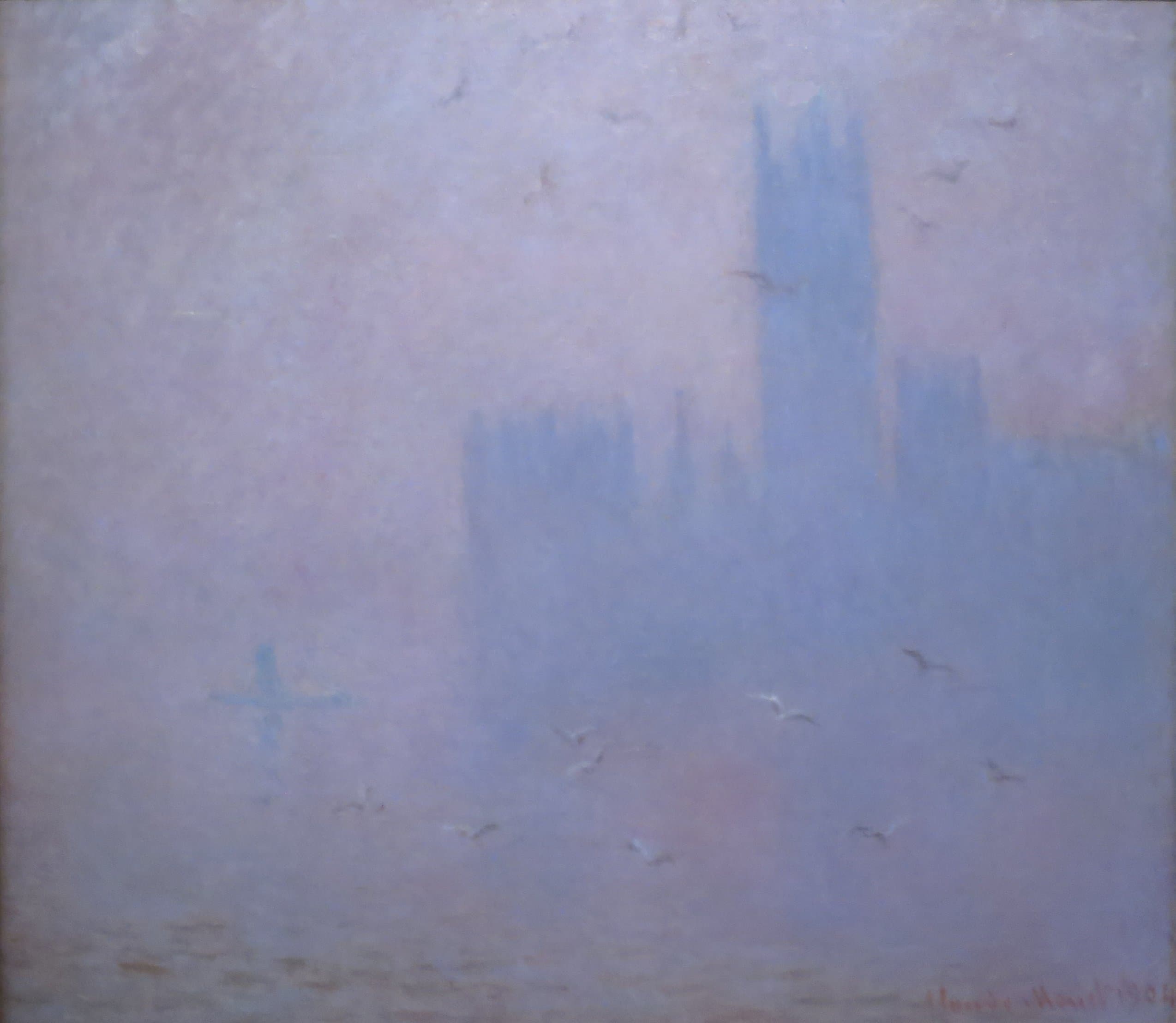
Seagulls, the River Thames and the Houses of Parliament
Claude Monet · 1904
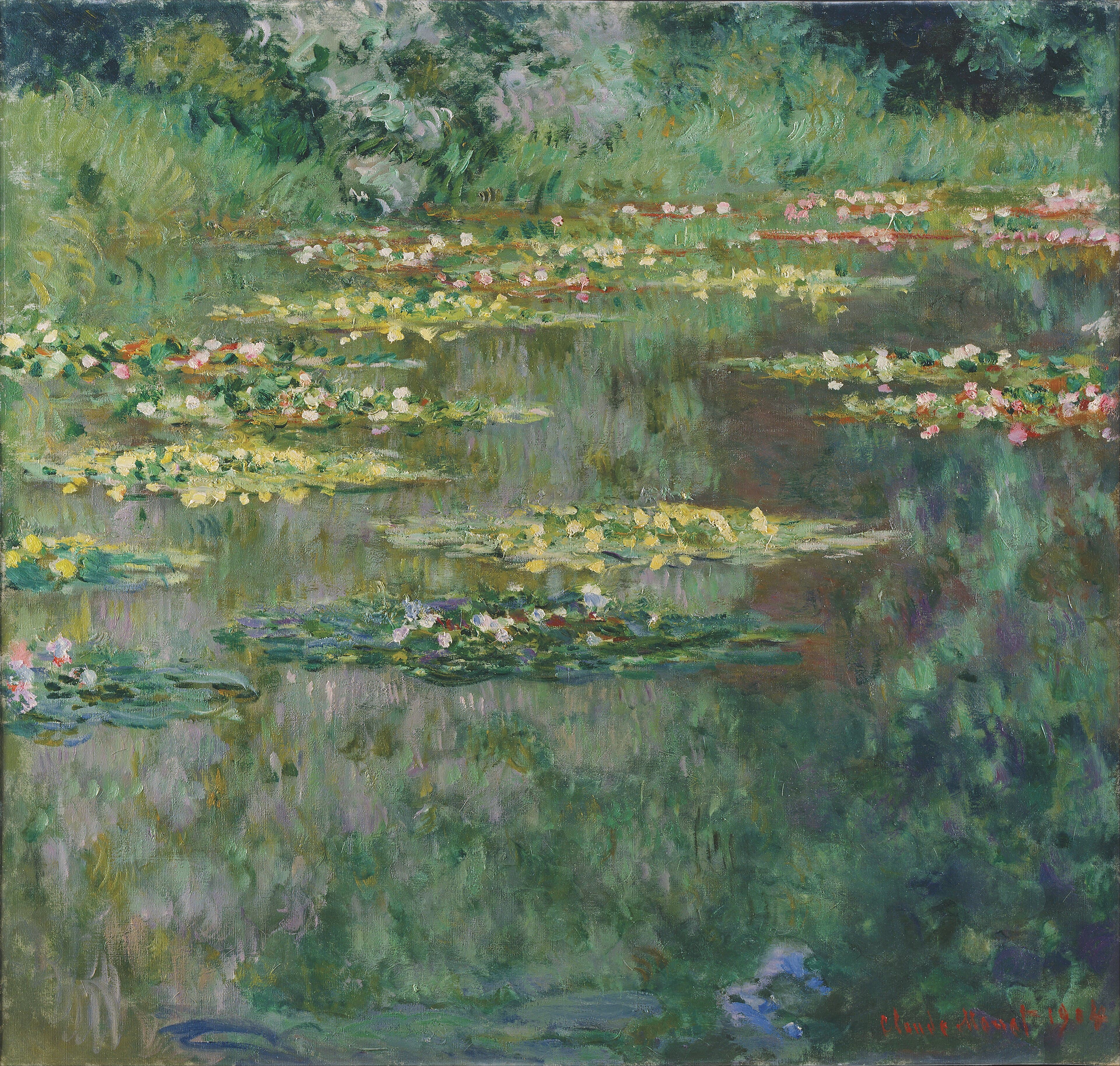
Le Bassin des Nymphéas (Denver)
Claude Monet · 1904
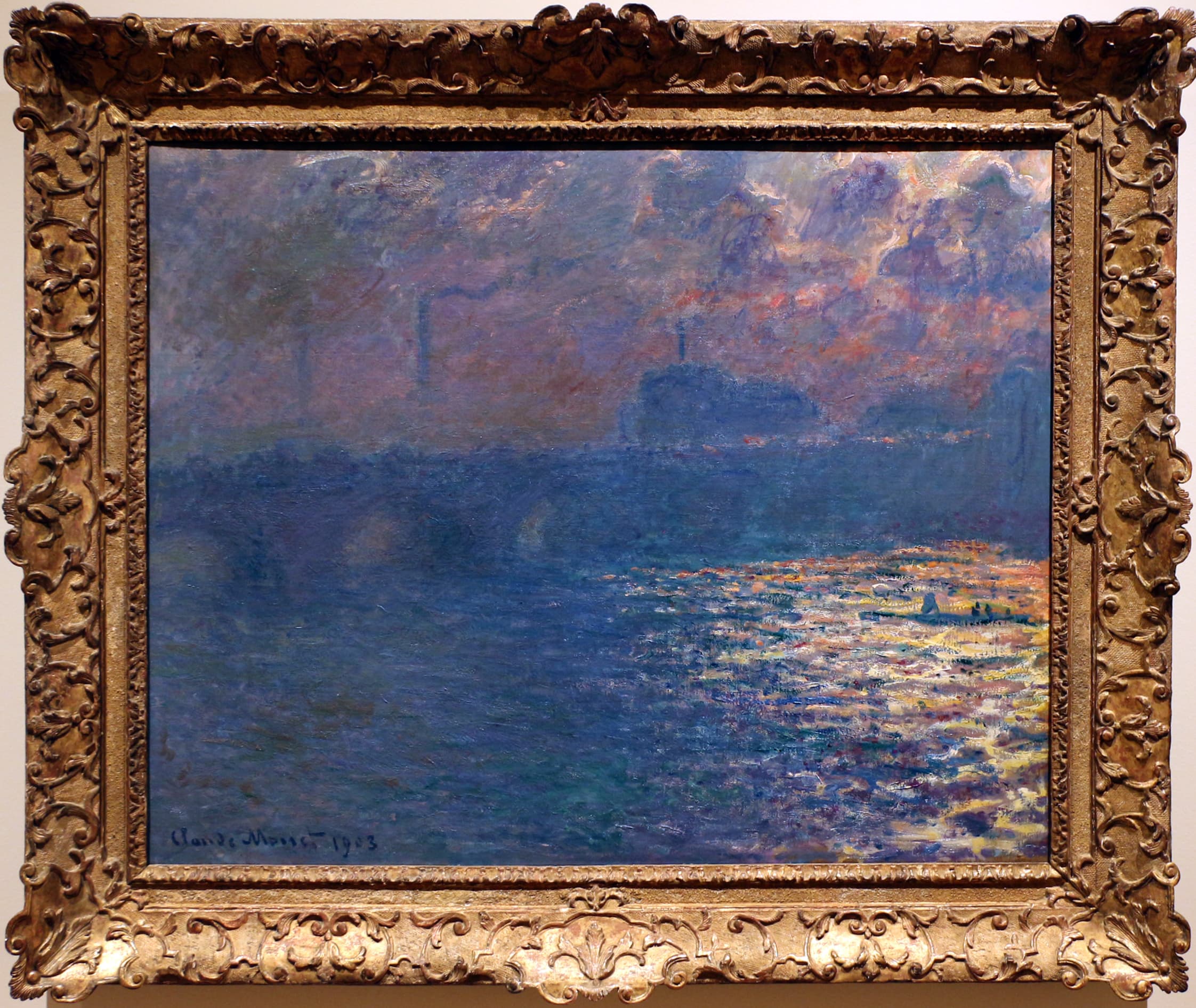
Waterloo Bridge, Sunlight Effect
Claude Monet · c. 1900 (dated 1903)
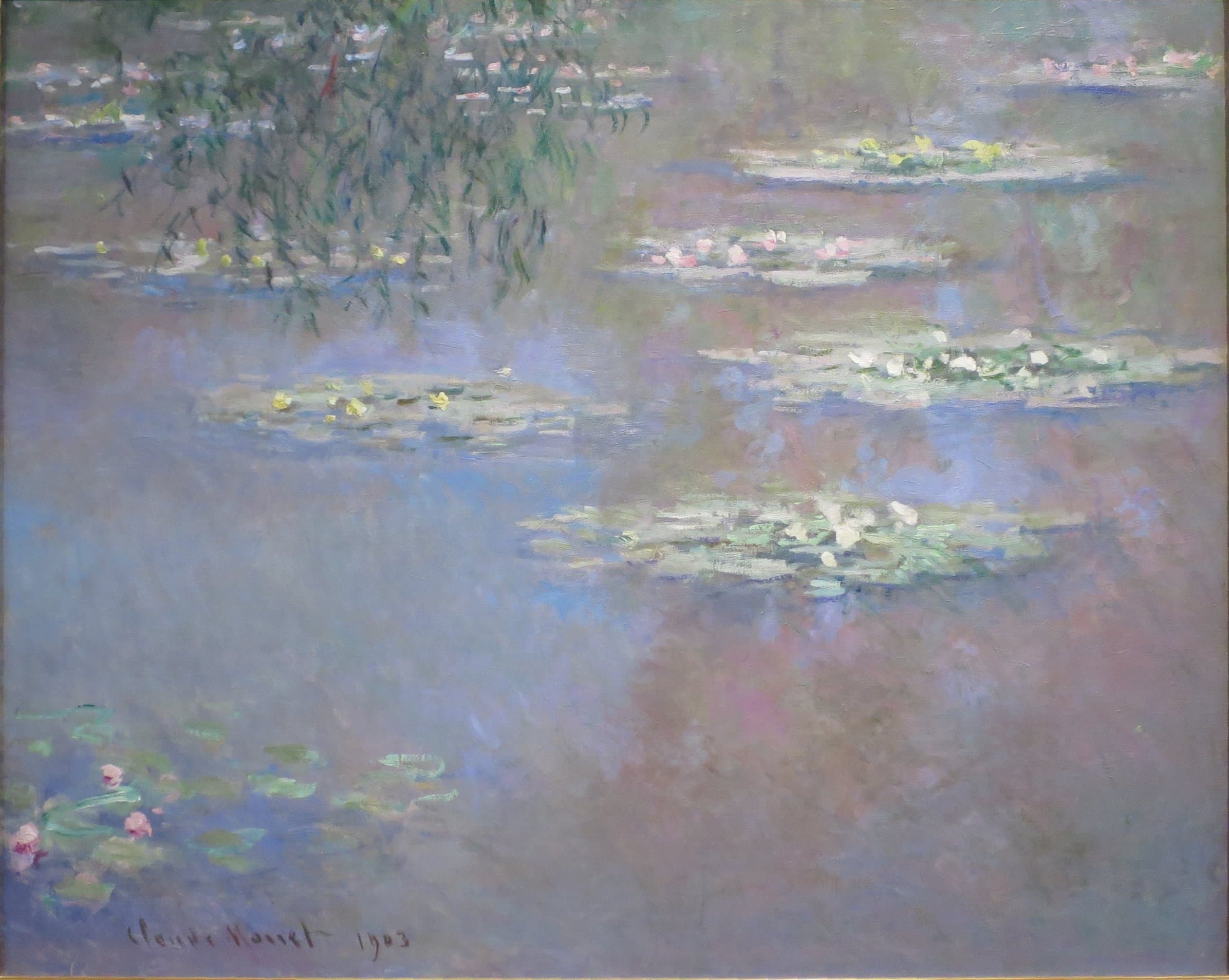
Waterlilies (1903, Dayton Art Institute)
Claude Monet · 1903
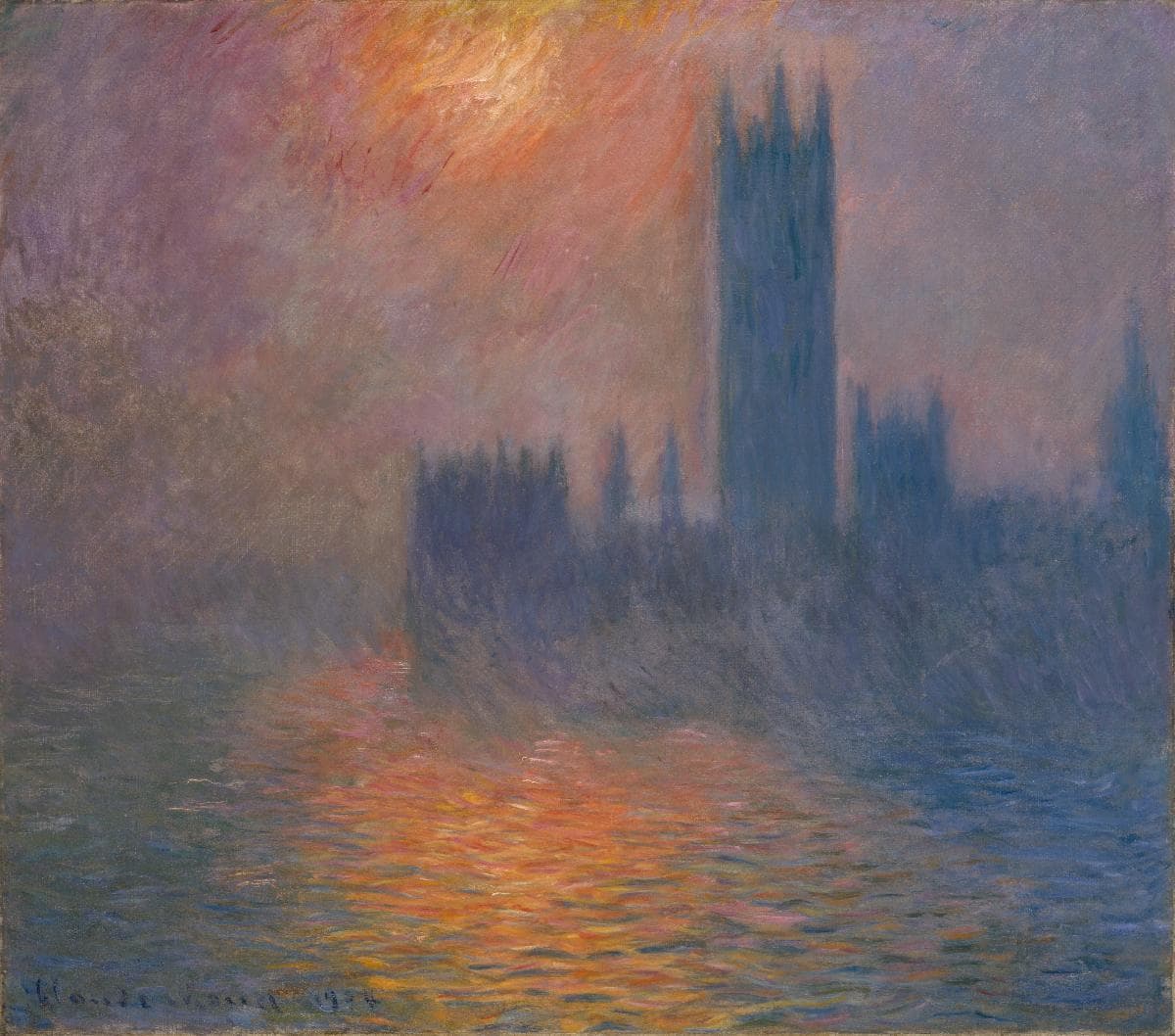
Houses of Parliament, Sunset
Claude Monet · 1904
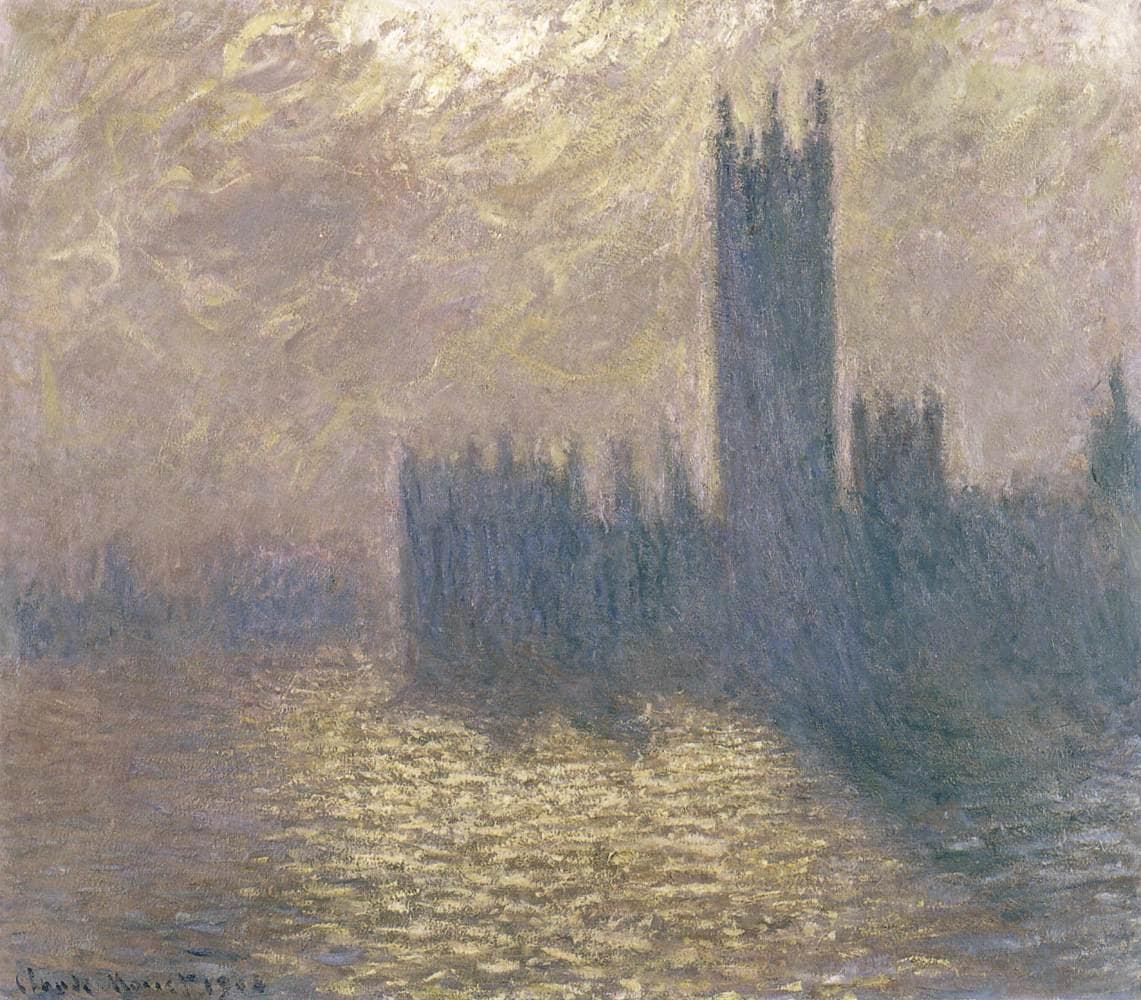
The Houses of Parliament, London
Claude Monet · 1904
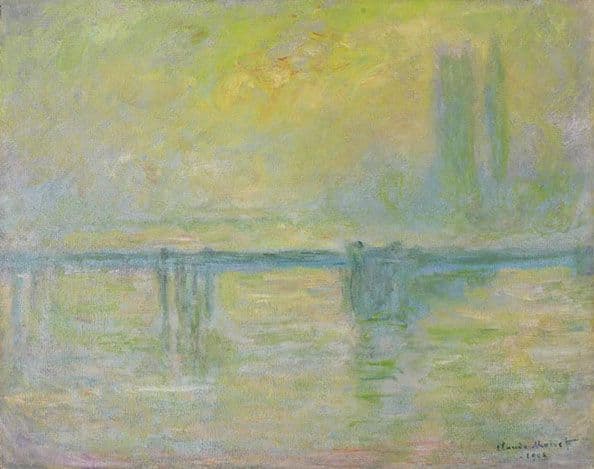
Charing Cross Bridge, Fog
Claude Monet · 1902–03
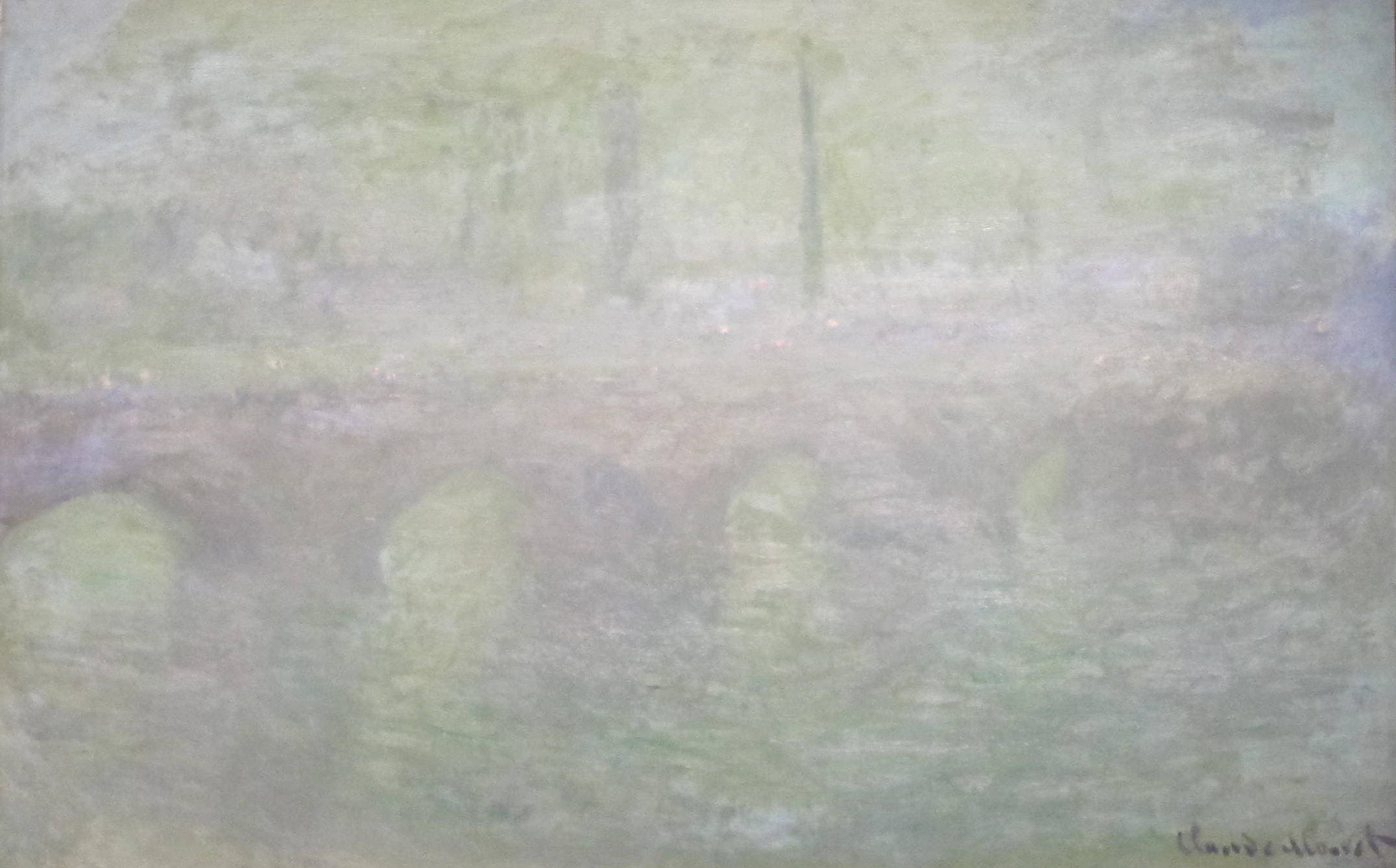
Waterloo Bridge, London, at Dusk
Claude Monet · 1904
Also painted in 1904
The same year
Kindred works
You may also study
Water Lilies (1904)
Claude Monet · 1904
Water Lilies (1906, Art Institute of Chicago)
Claude Monet · 1906
Waterlilies (1906, National Museum Cardiff)
Claude Monet · 1906
Water Lilies (Nymphéas), 1915 (Gunma)
Claude Monet · 1915
Water Lilies (Saint Louis Art Museum)
Claude Monet · c. 1915–26
Water Lilies (Toledo Museum of Art)
Claude Monet · c. 1922

Water Lilies (MoMA triptych)
Claude Monet · 1914–26
Water Lilies (1916, Tokyo)
Claude Monet · 1916