Image: Musée Marmottan Monet, Paris · Public domain · via Wikimedia Commons
Japanese Bridge
Claude Monet, 1918–19
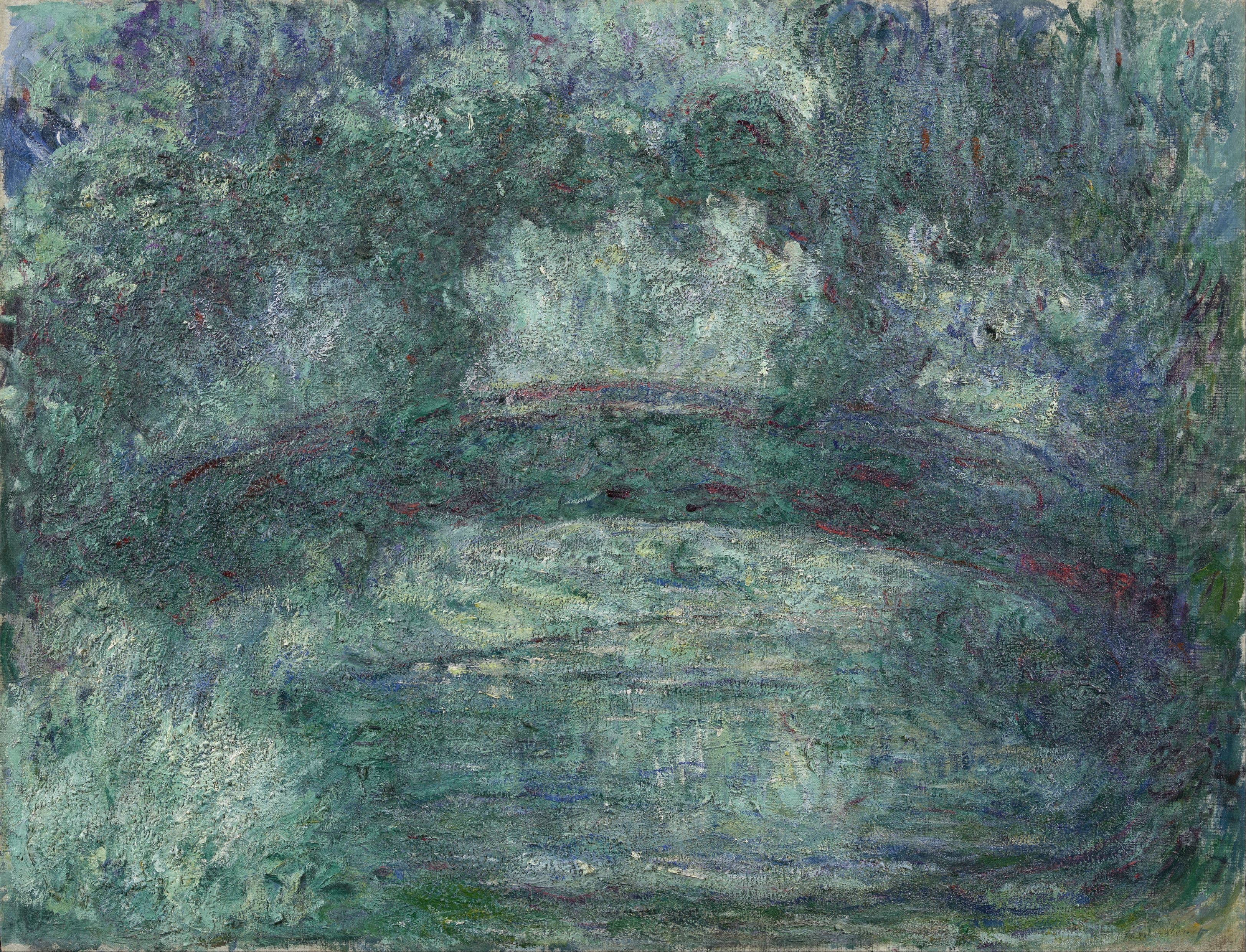
Japanese Bridge is a small 1918–19 canvas by Claude Monet of the footbridge over his Giverny lily pond, painted in cool blue-greens with a pale band of light on the water. It is in the Musée Marmottan Monet, Paris.
- Artist
- Claude Monet
- Date
- 1918–19
- Medium
- Oil on canvas
- Dimensions
- 74 × 92 cm
- Collection
- Musée Marmottan Monet, Paris, France
- Movement
- Impressionism
- Catalogue
- Wildenstein 1914
- Nature & Landscape
- Water & Sea
- Night & Dreams
Japanese Bridge (Le Pont japonais) is a painting by Claude Monet of the arched footbridge in his water garden at Giverny, dated by the Musée Marmottan Monet to between 1918 and 1919. At 74 by 92 centimeters it is one of the smaller canvases of his late return to the bridge. It belongs to the Marmottan in Paris, which received it in 1966 with the bequest of Michel Monet, the painter's son.
What you're looking at
This is the coolest and most nocturnal-looking of the late bridges. The palette is almost entirely blue-green, slate and gray, with whitish lilac for the light. The bridge is a heavy dark arch spanning the canvas from left to right just above the middle, its upper edge picked out with a few strokes of dull red and plum. Above it, the wisteria and the trees beyond are a dense wall of teal and bottle green, broken at the center by a pale, chalky glow, as if light were coming through a gap in the leaves.
Below the arch, a broad horizontal band of pale blue and white crosses the pond: the sky, or the bright foliage, reflected in the water. It is the brightest passage in the picture and it repeats the curve of the bridge upside down, so that arch and reflection form a loose oval. The lower third of the canvas sinks into darker blue and green, with a few horizontal dashes of violet and a line of rust near the bottom edge. On the far left, a column of blue-white strokes, thick and crusty, suggests a lit clump of plants on the bank. The paint everywhere is thick and worked over, with strokes laid wet into wet.
Despite the date, the effect is closer to evening than to noon. The lilies themselves are hard to find; the subject is the arch, its reflection and the dim light around them.
Giverny, 1918–19
Monet painted the bridge in a clear, carefully drawn series in 1899 and 1900, among them Bridge over a Pond of Water Lilies at the Metropolitan Museum. Around 1918, nearly eighty and working on the immense water-lily decorations he would give to the French state, he took up the motif again. His sight had been failing since about 1912, when he was diagnosed with cataracts in both eyes, and in these years he complained that colors had lost their force.
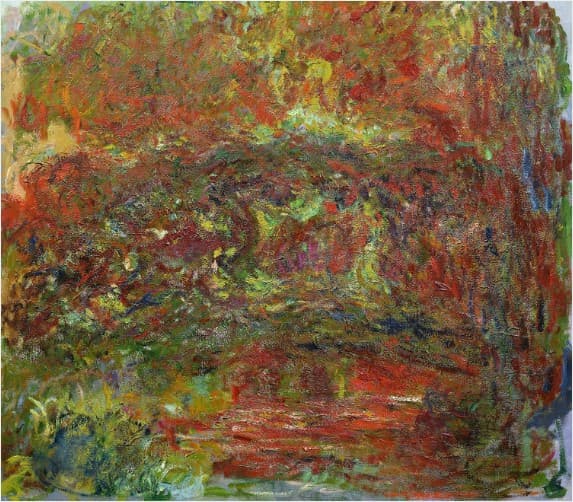
That context matters for this picture. The blues and grays of this canvas, and the soft, fused forms, are the opposite of the hot, red-orange bridges he would paint in the following years, such as the Marmottan's red Le Pont japonais. Scholars have connected the shift toward reds and yellows to the yellowing of his lenses; this blue version shows that he could still see, and paint, cool harmonies in 1918–19.
How it was painted
The canvas is a standard size, worked at the pond's edge or from studies made there. Monet built the picture in layers: thin first washes of blue-green, then thicker scumbles of white and lilac dragged across the surface, so that the darker color shows through. The brush is loaded and the strokes are short and curving in the foliage, long and horizontal in the water. The signature-like marks at the lower right appear in reproductions, but the Marmottan catalogues the work as unsigned; many of the late canvases carry only a studio stamp added after Monet's death.
How this version differs
Among the late bridges, this one is unusual for its smaller size and its cool tonality. Compared with the 1918 panorama in the same museum, which is sunlit yellow-green, it is a dusk picture. Compared with the Van Gogh Museum's Japanese Bridge, which shares its blue-green range, it is darker and more enclosed, with the light gathered into one band across the water. The full sequence is in the Japanese Footbridge series.
Where to see it
The painting belongs to the Musée Marmottan Monet in Paris, home to the largest group of works by Claude Monet, including dozens of late pictures of the garden at Giverny. Not every canvas is on view at once; see Monet at the Musée Marmottan.
Questions & answers
Where is this Japanese Bridge by Monet?
It is in the Musée Marmottan Monet in Paris (inventory 5177). It entered the museum in 1966 with the bequest of Michel Monet, the artist's son, who had inherited the contents of his father's studio at Giverny.
When was it painted?
The Marmottan dates it to 1918–19. Monet painted it at Giverny, in the water garden he had created below his house, when he was in his late seventies and suffering from cataracts.
What does it show?
It shows the wooden footbridge over the lily pond as a dark blue-green arch, with dense wisteria and trees above and a pale band of reflected light on the water below. The palette is cool, almost twilight blue.
Why do Monet's late Japanese bridges look so different from the 1899 ones?
In 1899 Monet drew the bridge clearly in fresh greens. By 1918–24 his sight was impaired by cataracts and his brushwork had grown freer, so forms dissolve into dense, gestural color. This blue version is one of the calmer late examples.
More by the artist
Claude Monet
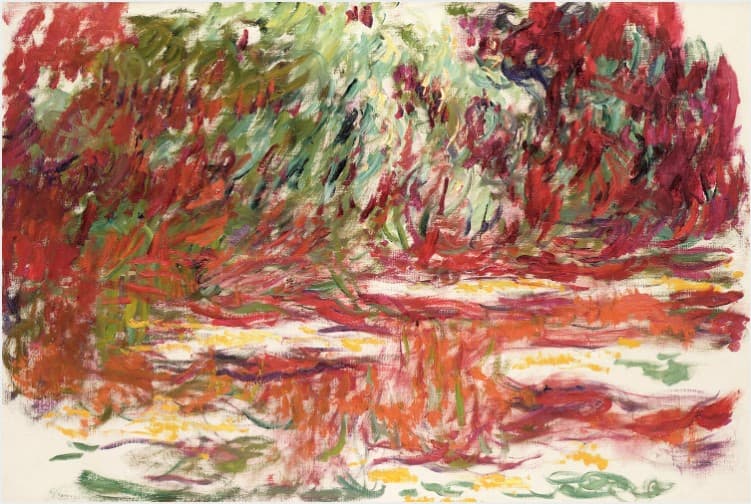
Water-Lily Pond (Bassin aux nymphéas, 1918–19)
Claude Monet · 1918–19
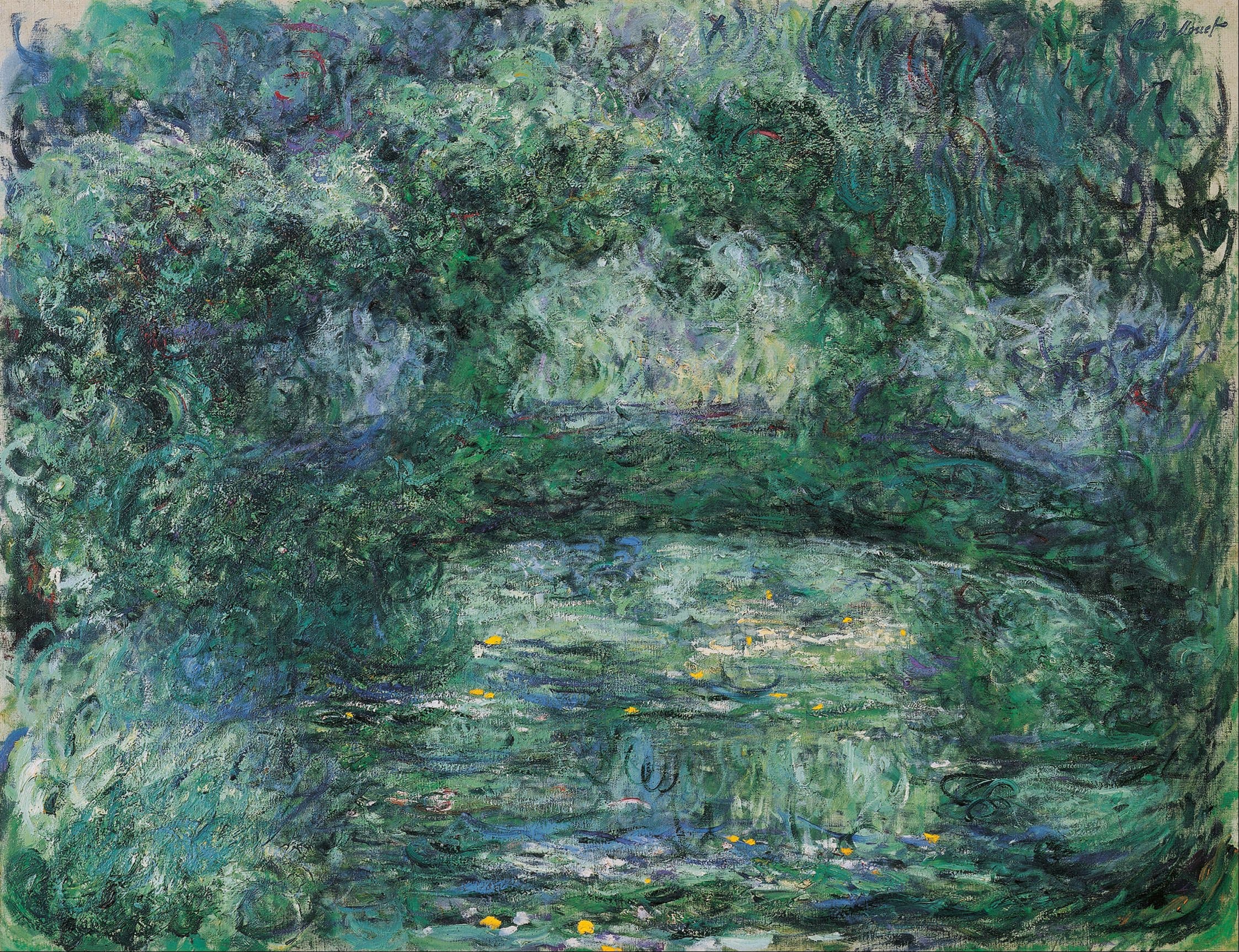
The Japanese Bridge
Claude Monet · 1918–24
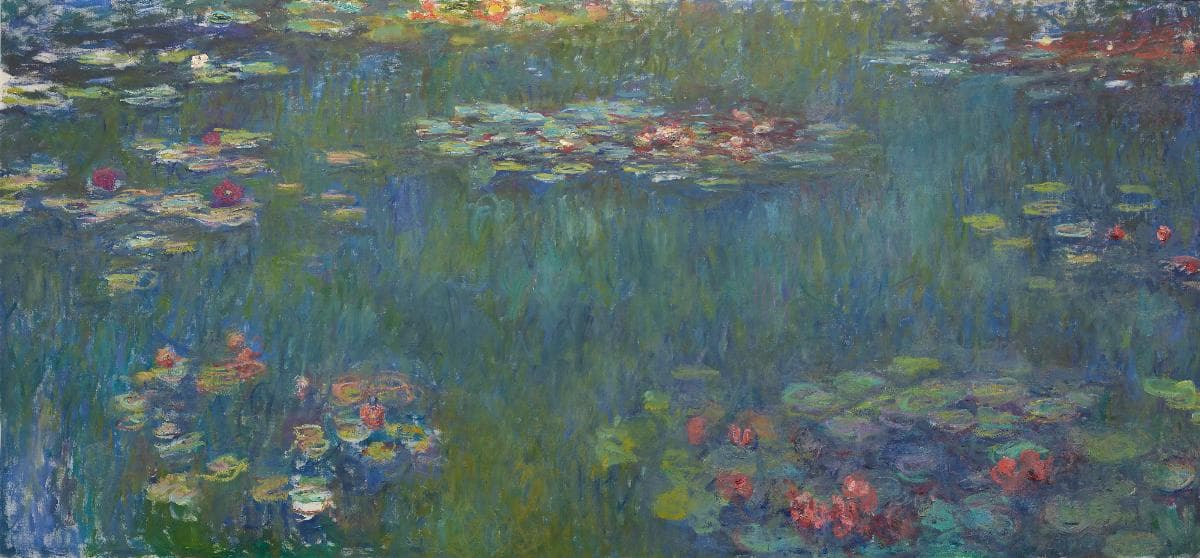
The Water-Lily Pond, Green Reflections
Claude Monet · 1920–26
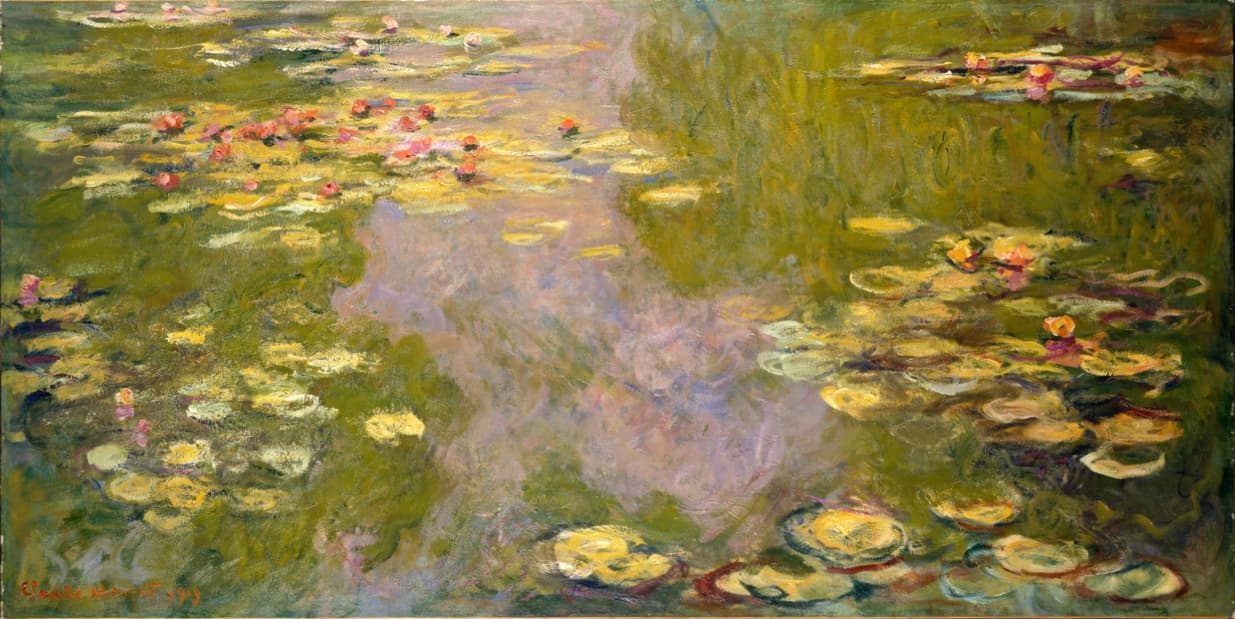
Water Lilies (1919, Metropolitan Museum)
Claude Monet · 1919
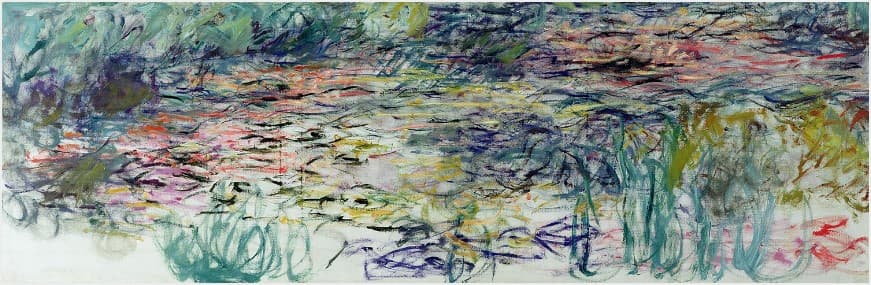
Nymphéas (Musée Marmottan Monet, 1917–19)
Claude Monet · 1917–19
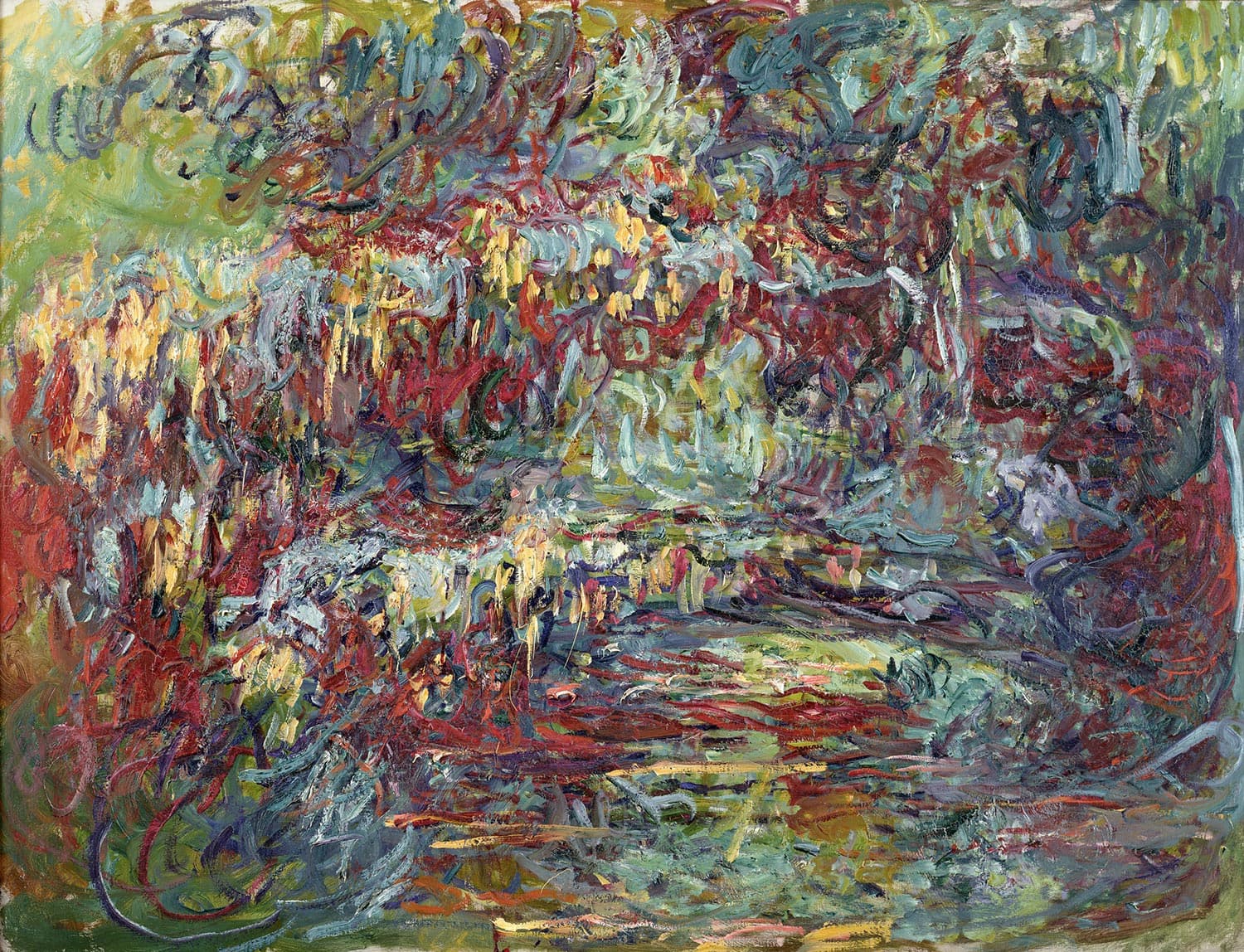
Le Pont japonais
Claude Monet · 1918–24
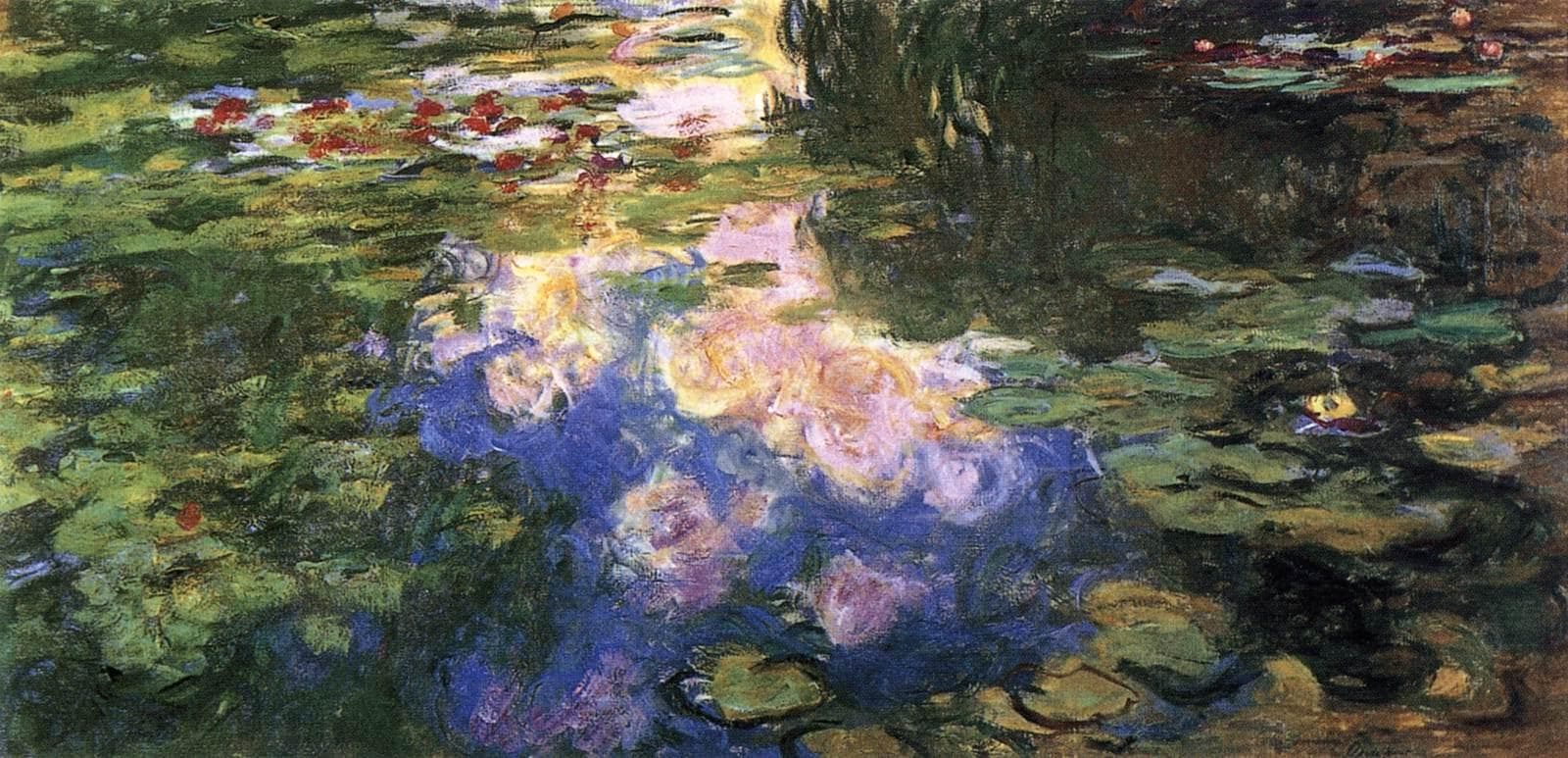
Water-Lily Pond (Le Bassin aux nymphéas), 1917–19
Claude Monet · 1917–19
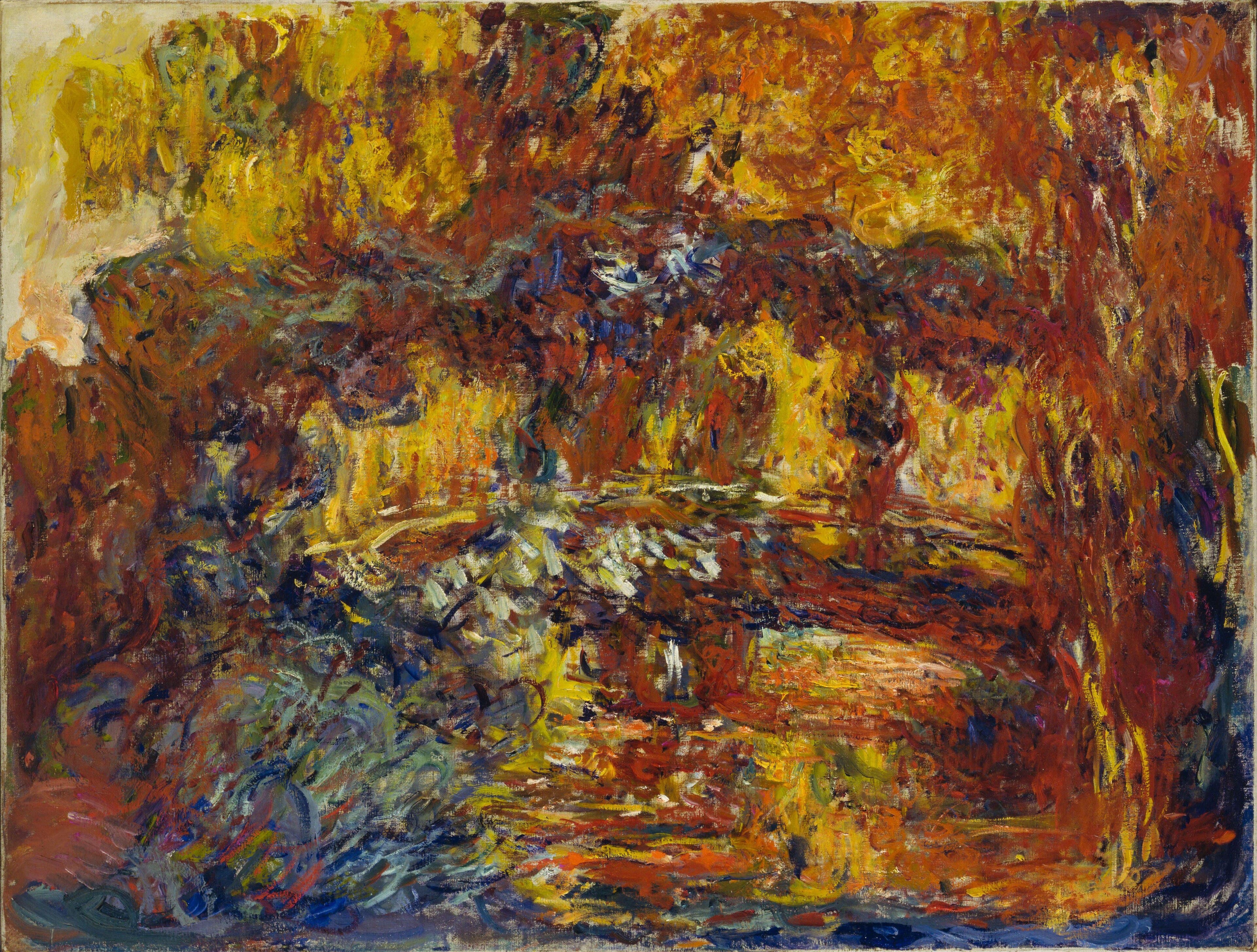
The Japanese Footbridge (MoMA)
Claude Monet · c. 1920–22
Kindred works
You may also study
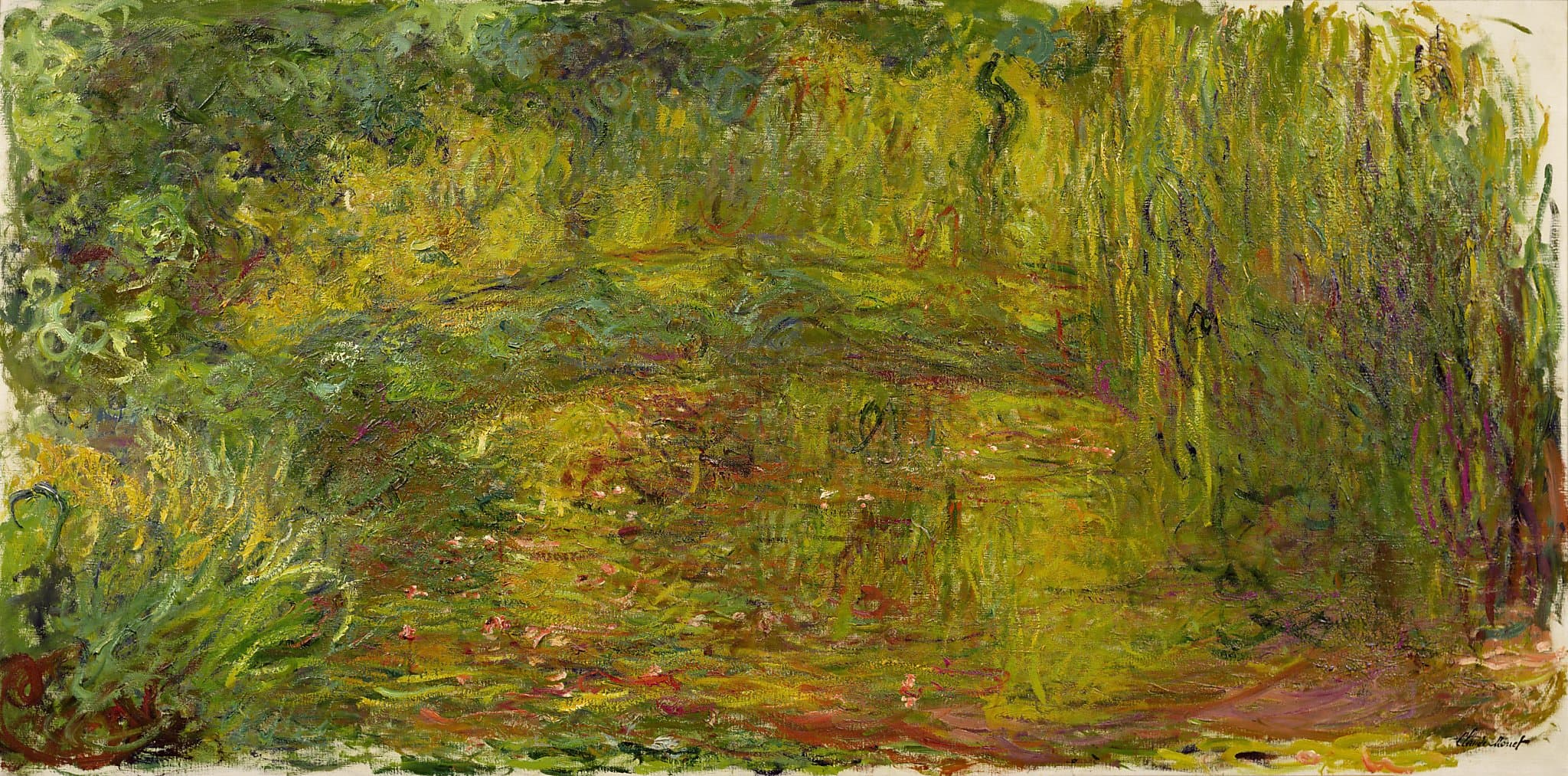
Le Pont japonais (The Japanese Bridge)
Claude Monet · 1918
The Japanese Bridge
Claude Monet · 1919–24
Le pont japonais
Claude Monet · 1918–24
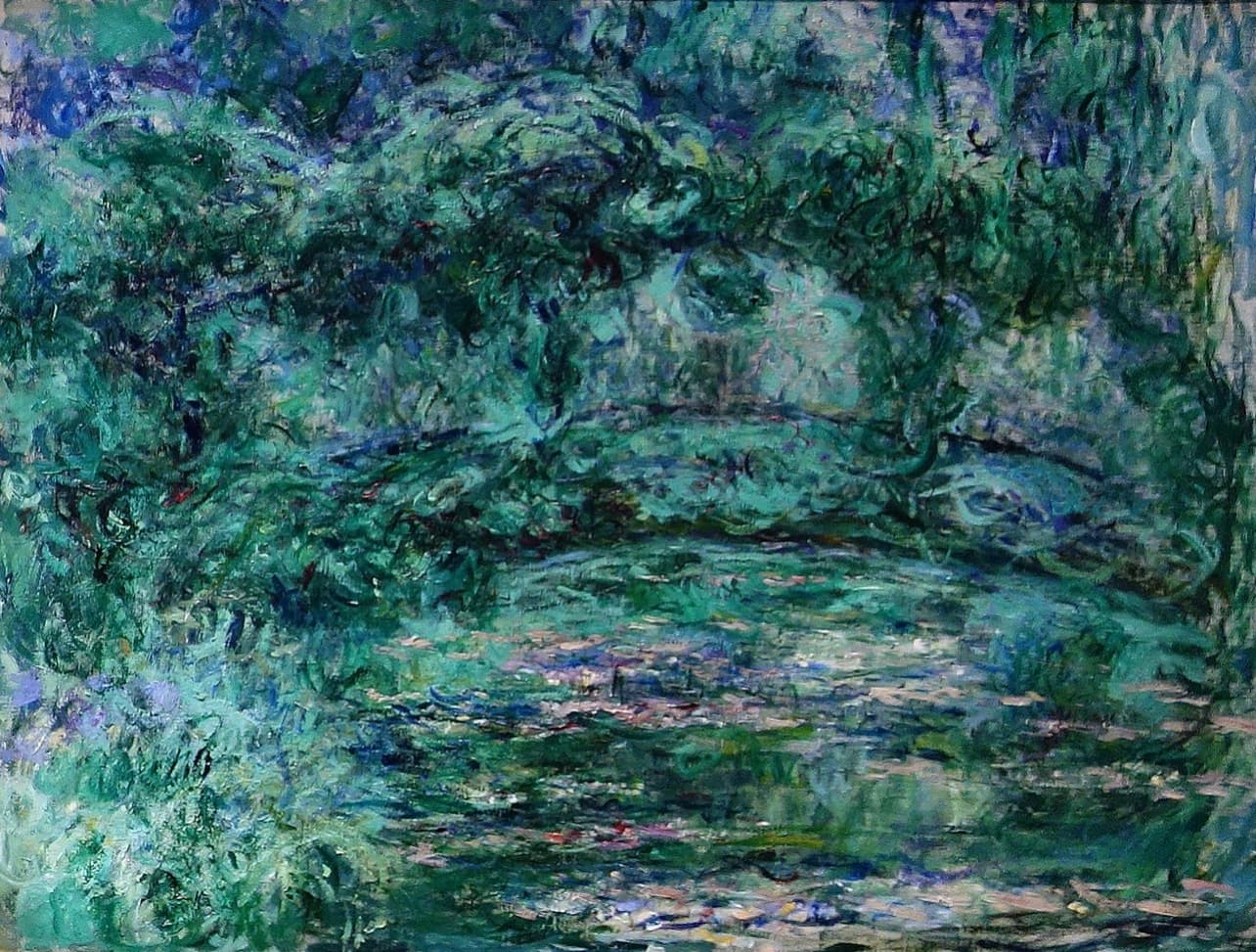
The Japanese Bridge
Claude Monet · c. 1919–24

Bridge over a Pond of Water Lilies
Claude Monet · 1899
Moonlit Landscape with a View of the New Amstel River and Castle Kostverloren
Aert van der Neer · c. 1647
The Creuse, Sunset
Claude Monet · 1889
Morning on the Seine, Giverny
Claude Monet · 1897