Image: Musée Marmottan Monet, Paris · Public domain · via Wikimedia Commons
The Japanese Bridge
Claude Monet, 1918–24
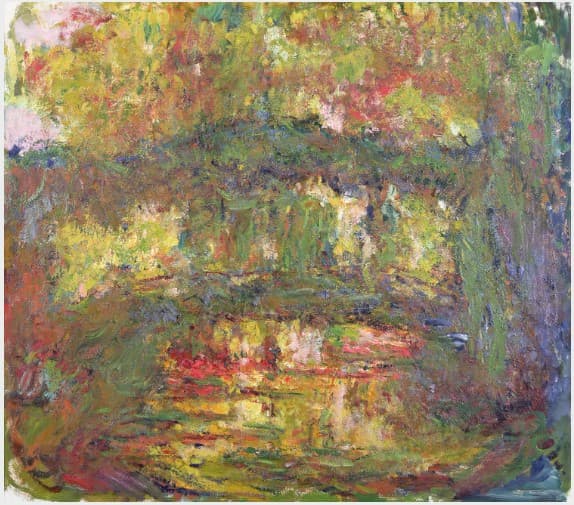
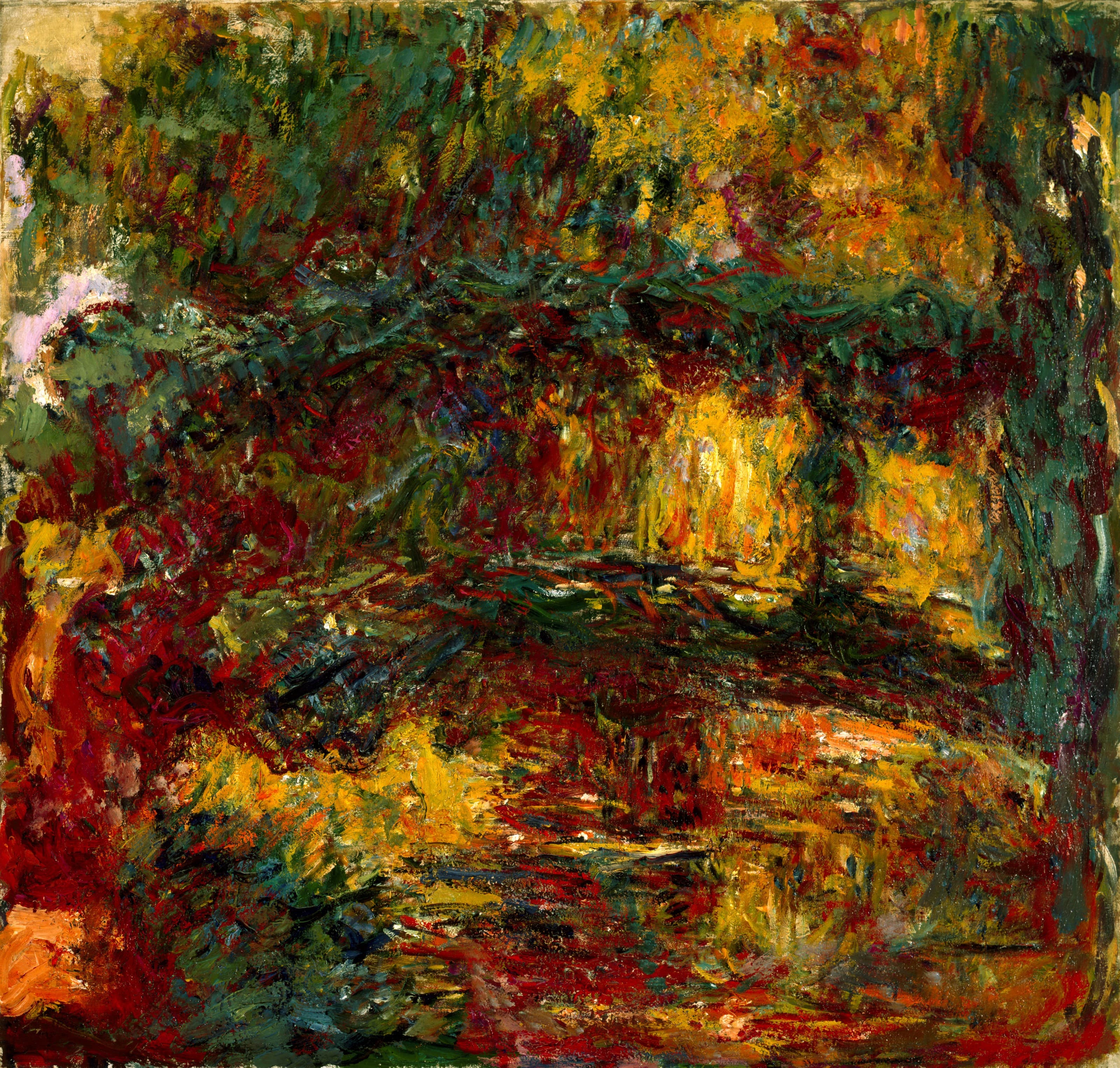
The Japanese Bridge (Wildenstein 1928) is the most fiery of Claude Monet's late views of his Giverny footbridge, painted about 1918–24 in vermilion, crimson, orange and yellow with dark green loops. It is in the Musée Marmottan Monet, Paris.
- Artist
- Claude Monet
- Date
- 1918–24
- Medium
- Oil on canvas
- Dimensions
- 89 × 100 cm
- Collection
- Musée Marmottan Monet, Paris, France
- Movement
- Impressionism
- Catalogue
- Wildenstein 1928
- Nature & Landscape
- Water & Sea
The Japanese Bridge (Le pont japonais) is a late painting by Claude Monet of the arched footbridge over his water-lily pond at Giverny, made between about 1918 and 1924 and catalogued by Wildenstein as no. 1928. The canvas, 89 by 100 centimeters and unsigned, stayed in Monet's studio until his death and came to the Musée Marmottan Monet in Paris with the bequest of his son Michel in 1966. It is the picture most people mean when they speak of Monet's "red bridge."
What you're looking at
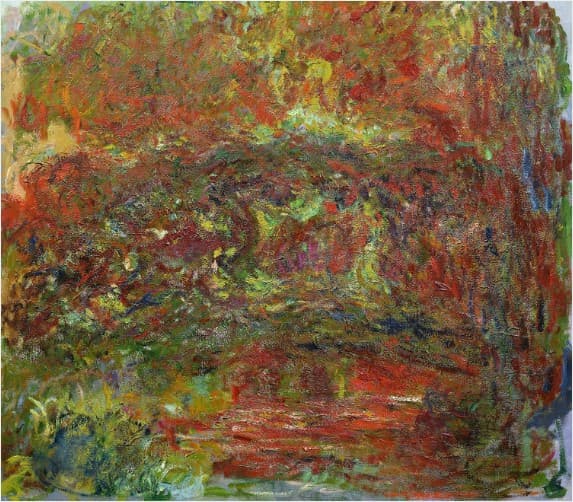
Red dominates everything. Vermilion, crimson, rose and cherry are swept across the whole canvas, with orange and lemon yellow in the upper left and pink and magenta in the foliage at top right. The bridge is still there: a low arch of red and rust crossing the canvas just below the middle, with the bright pond seen through it. Over the arch, the wisteria is drawn in long, ropy strokes of dark bottle green and olive, coiling across the red like vines. These green strokes are the darkest marks in the picture and the clearest drawing in it; they give the eye something to hold.
Under the bridge the light opens up. Patches of pale yellow and white show between vertical strokes of green, the willow fronds hanging into the light. In the pond, a broad horizontal swath of orange-red and coral reflects the glow, crossed by a few strokes of yellow and pale green. The lower left corner has a clump of dark green vertical leaves, perhaps irises, laid on with a few heavy strokes. The right edge is a falling curtain of deep red, plum and green, the willow in shadow. At the edges, bare canvas shows through, especially along the top.
The picture reads less as a description of a place than as a burst of color and gesture with a bridge-shaped structure inside it.
Why so red?
Monet had painted his bridge in fresh greens in 1899–1900, as in Bridge over a Pond of Water Lilies at the Met. The bridge itself was green. When he came back to it about 1918, cataracts, diagnosed in 1912, had clouded and yellowed his lenses; blues faded and warm colors dominated his perception. Monet told visitors that reds had begun to look muddy to him and that he relied on the labels on his paint tubes. Canvases like this one are often explained in those terms.
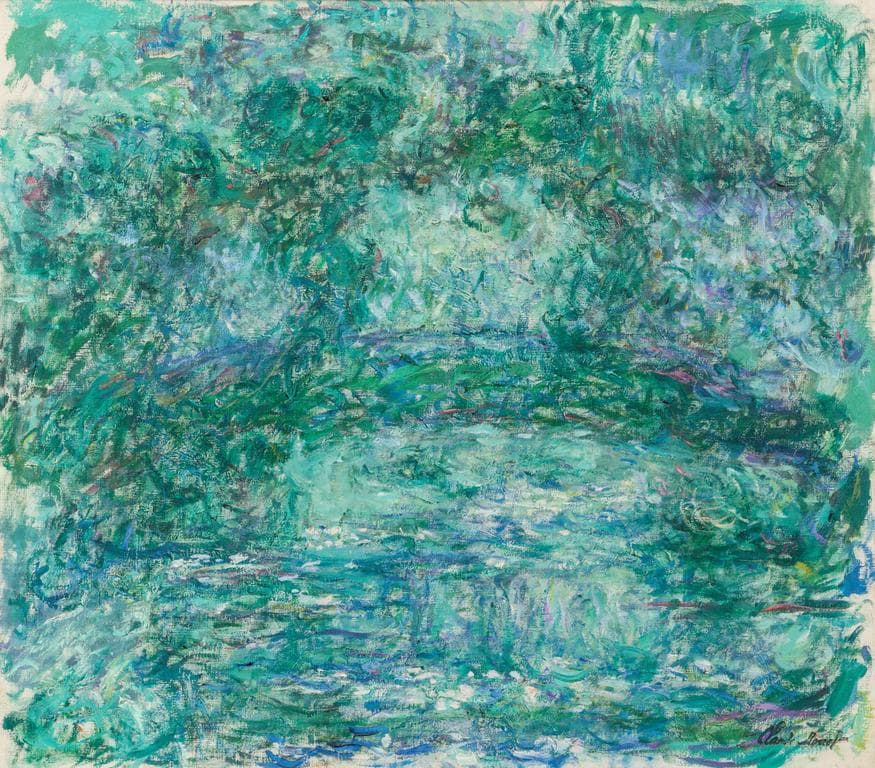
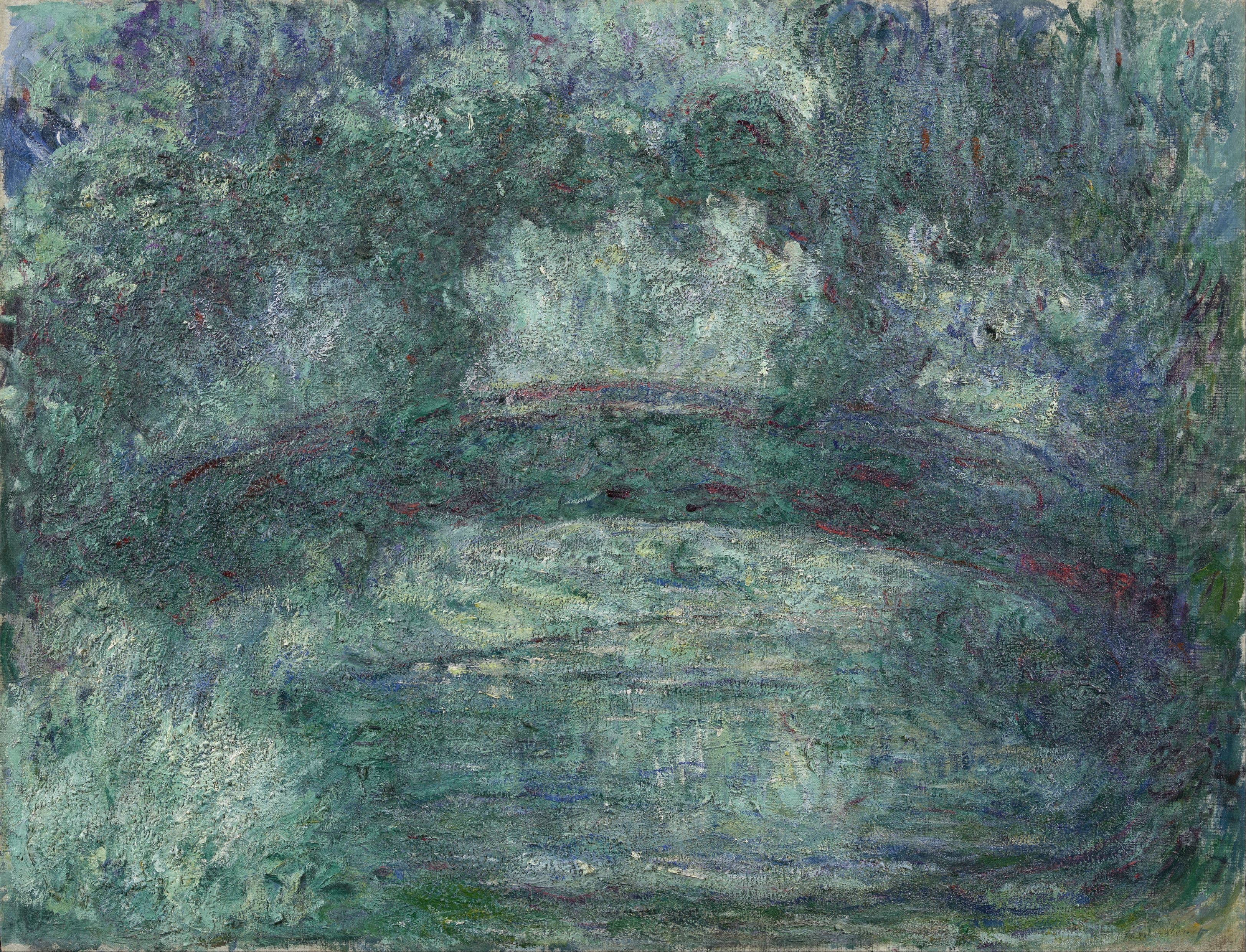
But the explanation is only partial. Monet chose to keep painting, and he chose this degree of freedom. Some of the same years produced cool, blue-green bridges, such as the Marmottan Japanese Bridge of 1918–19. The red bridges are as much a product of a late, expressive way of working as of failing sight.
How it was painted
The paint is thick and fast. Strokes are long and looping, applied with a loaded brush, often wet into wet so that red and green mix into brown at their edges. Monet seems to have worked around the canvas in broad passes, leaving gaps of bare ground. There is no drawing beneath and almost no blending; each stroke is visible. The effect anticipates the gestural abstraction of the 1950s, which is one reason the late Monet was rediscovered by American painters after the Second World War.
How this version differs
Of the four Marmottan bridges measuring 89 by 100 centimeters, this is the brightest and hottest. Le pont japonais (W 1927) shares its reds but is darker and more brown; Le pont japonais (W 1923) is golden and olive; the Japanese Bridge (W 1924) is somber russet and plum. For the whole sequence, see the Japanese Footbridge series, and for the garden, Monet's Giverny.
Where to see it
The painting is in the Musée Marmottan Monet in Paris, which holds the largest collection of works by Claude Monet, built on Michel Monet's bequest of the contents of his father's studio. It is one of the late works most often lent to international exhibitions, so it may be traveling. See Monet at the Musée Marmottan.
Questions & answers
Where is Monet's red Japanese bridge painting?
The best-known red version, Wildenstein 1928, is in the Musée Marmottan Monet in Paris (inventory 5093). It came to the museum in 1966 with the bequest of Michel Monet, the painter's son. It is often lent to exhibitions abroad.
When was it painted?
Between about 1918 and 1924, at Giverny, in the water garden Monet had created in the 1890s. He was then in his late seventies and early eighties and was losing his sight to cataracts.
Why did Monet paint the Japanese bridge red?
The real bridge was green. Cataracts yellowed Monet's vision and dulled his sense of blue, so warm colors dominated his late work. He also chose a freer, more expressive way of painting, and some late bridges of the same years are cool blue-green.
What does the painting show?
It shows the arched footbridge over the lily pond, buried in sweeping strokes of red, orange and yellow, with dark green loops of wisteria across it and a glow of light beneath the arch reflected in the water.
More by the artist
Claude Monet
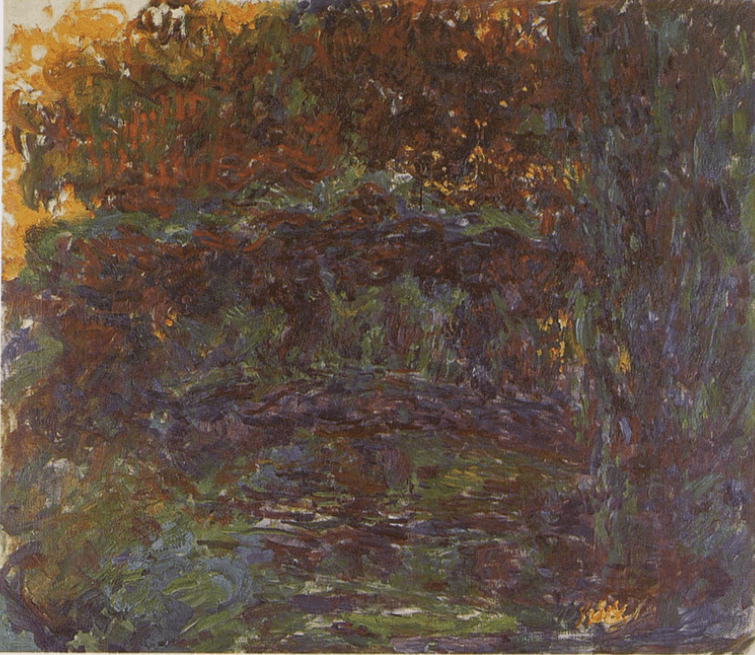
The Japanese Bridge
Claude Monet · 1918–24
Le pont japonais
Claude Monet · 1918–24
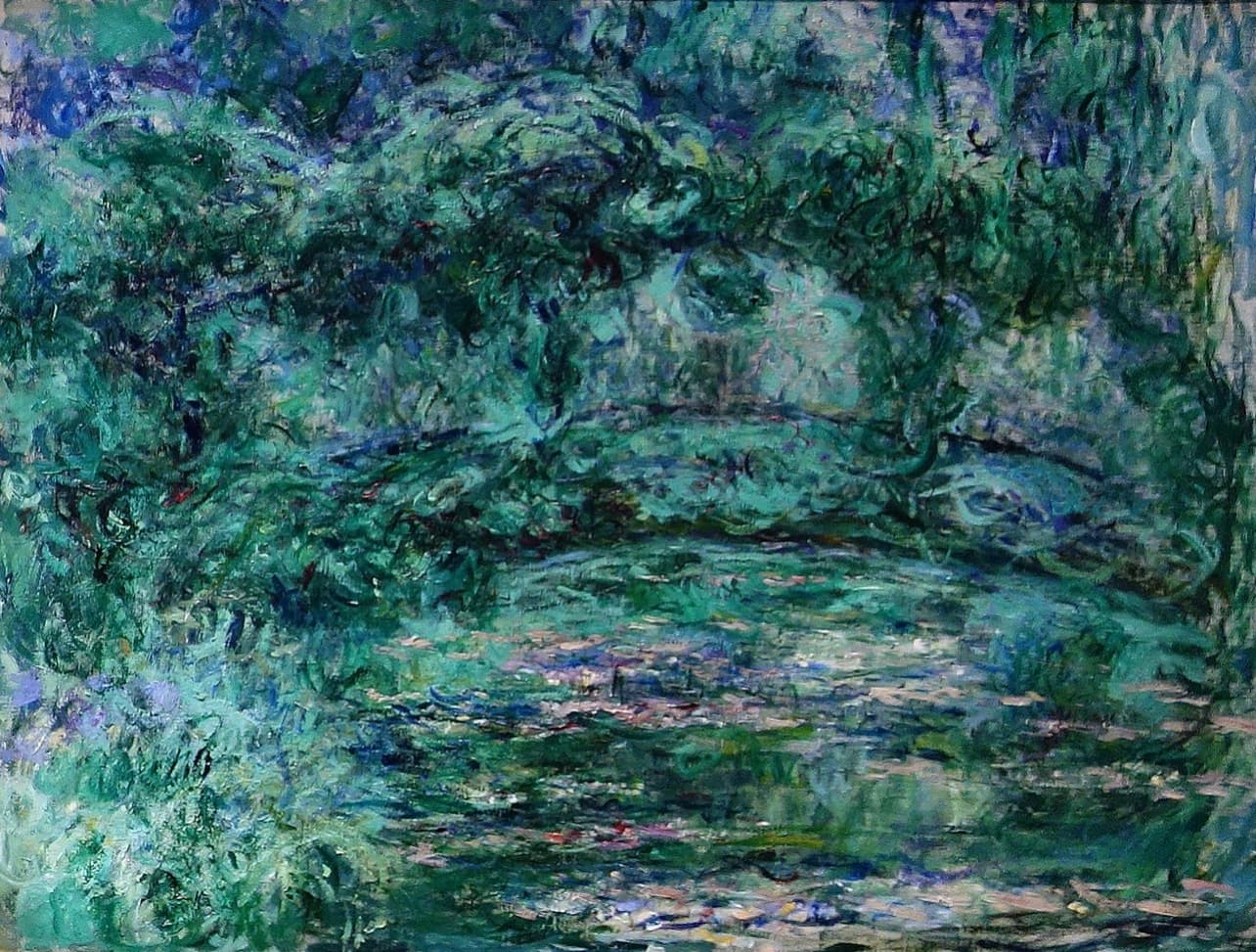
The Japanese Bridge
Claude Monet · c. 1919–24
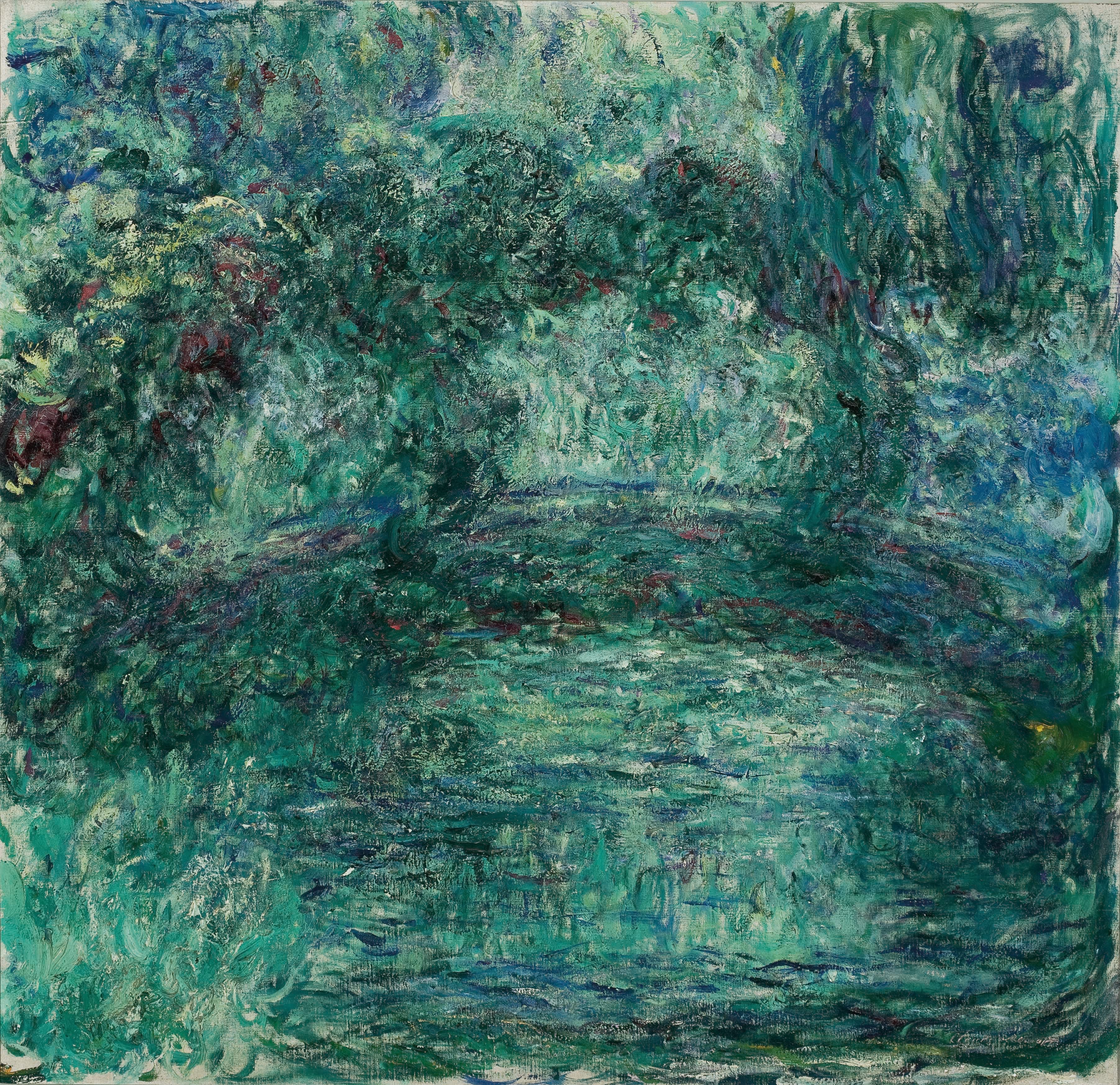
The Japanese Bridge over the Water-Lily Pond in Giverny
Claude Monet · 1920–24
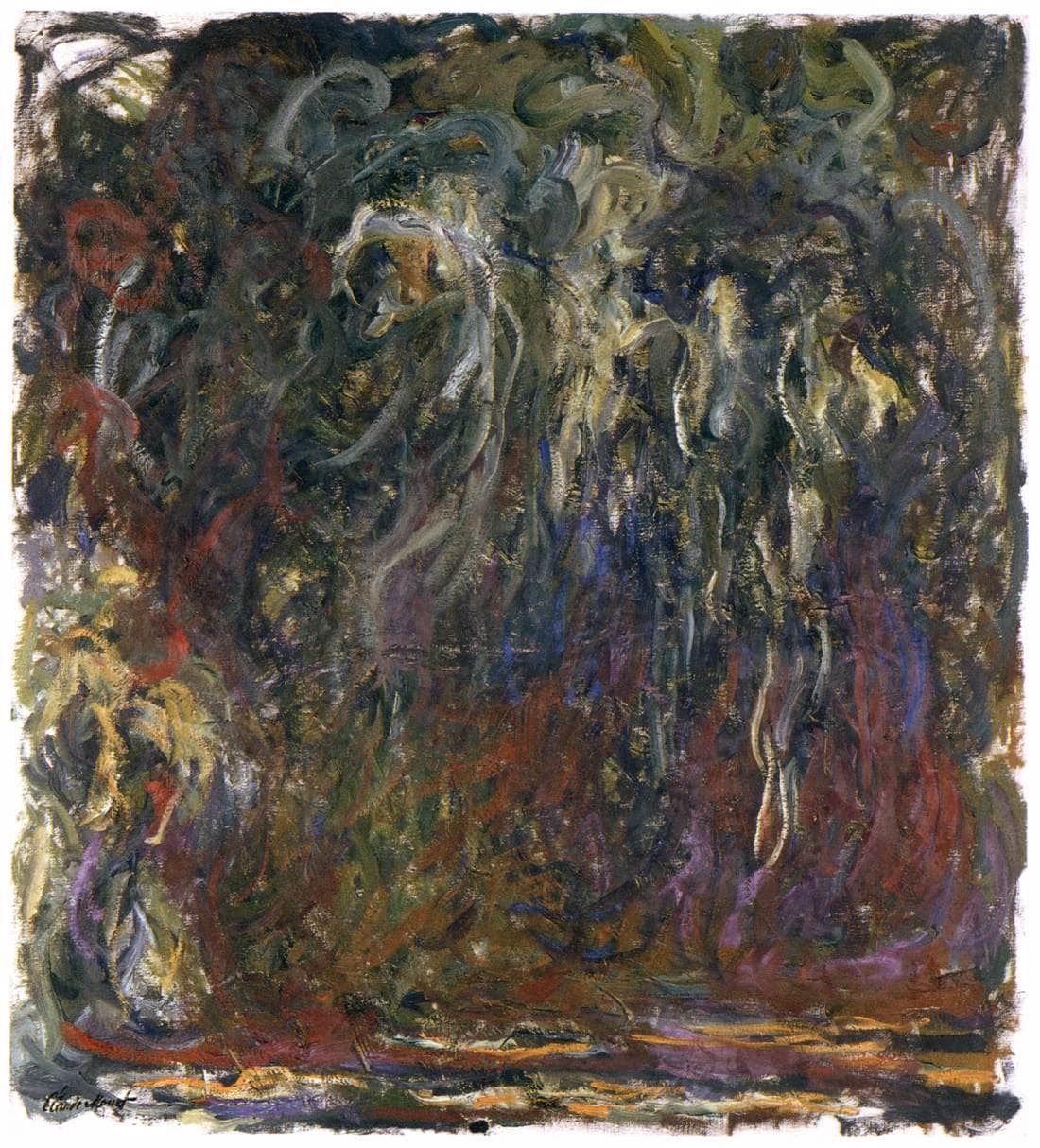
Weeping Willow
Claude Monet · 1920–22
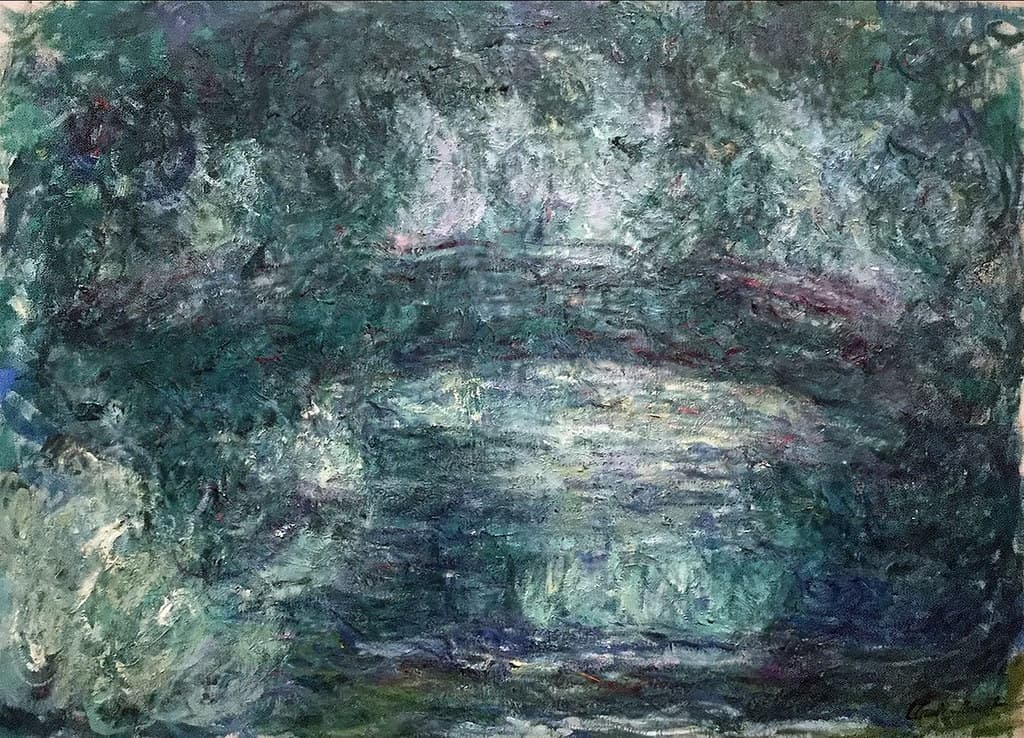
Japanese Bridge
Claude Monet · 1918–19
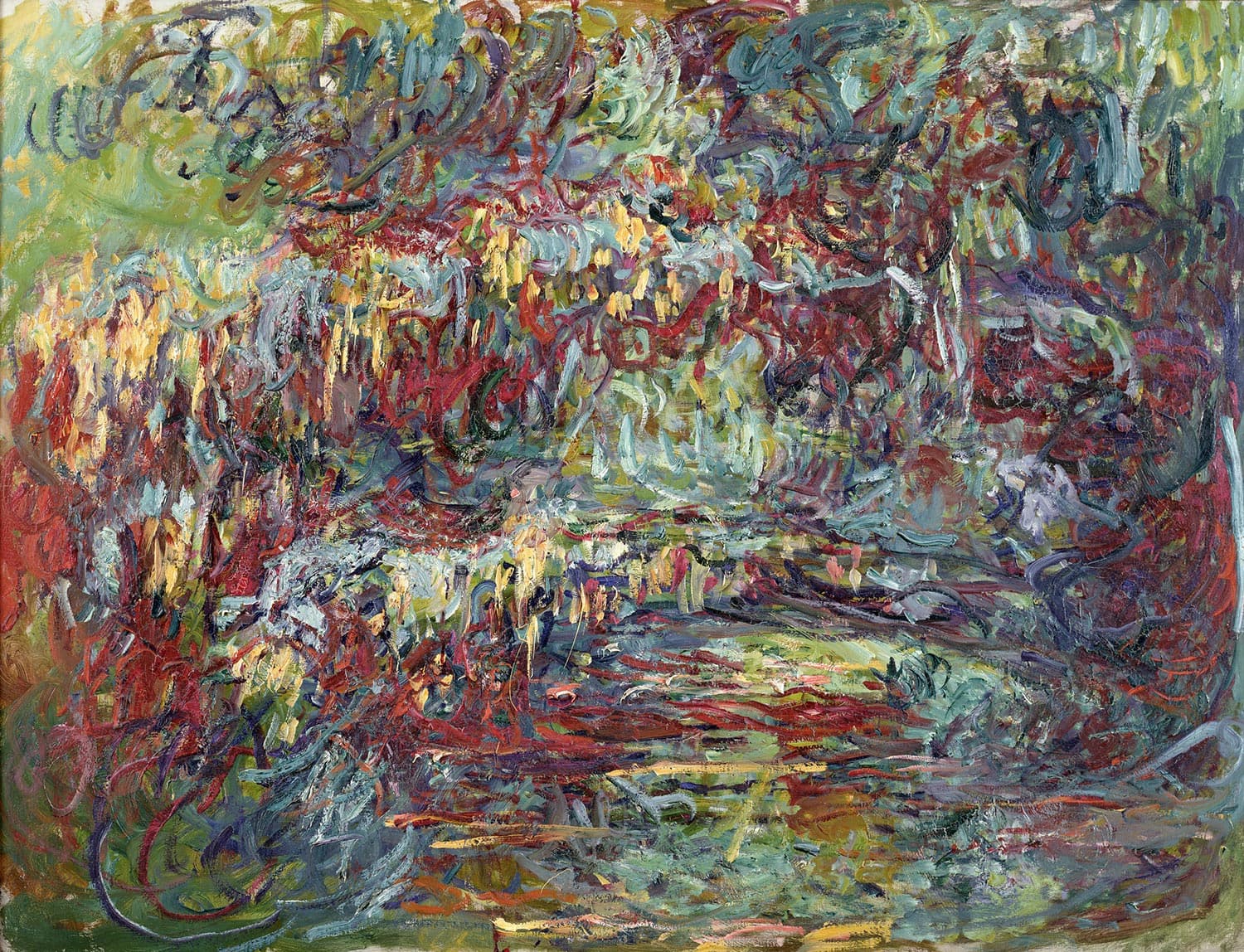
Le Pont japonais
Claude Monet · 1918–24
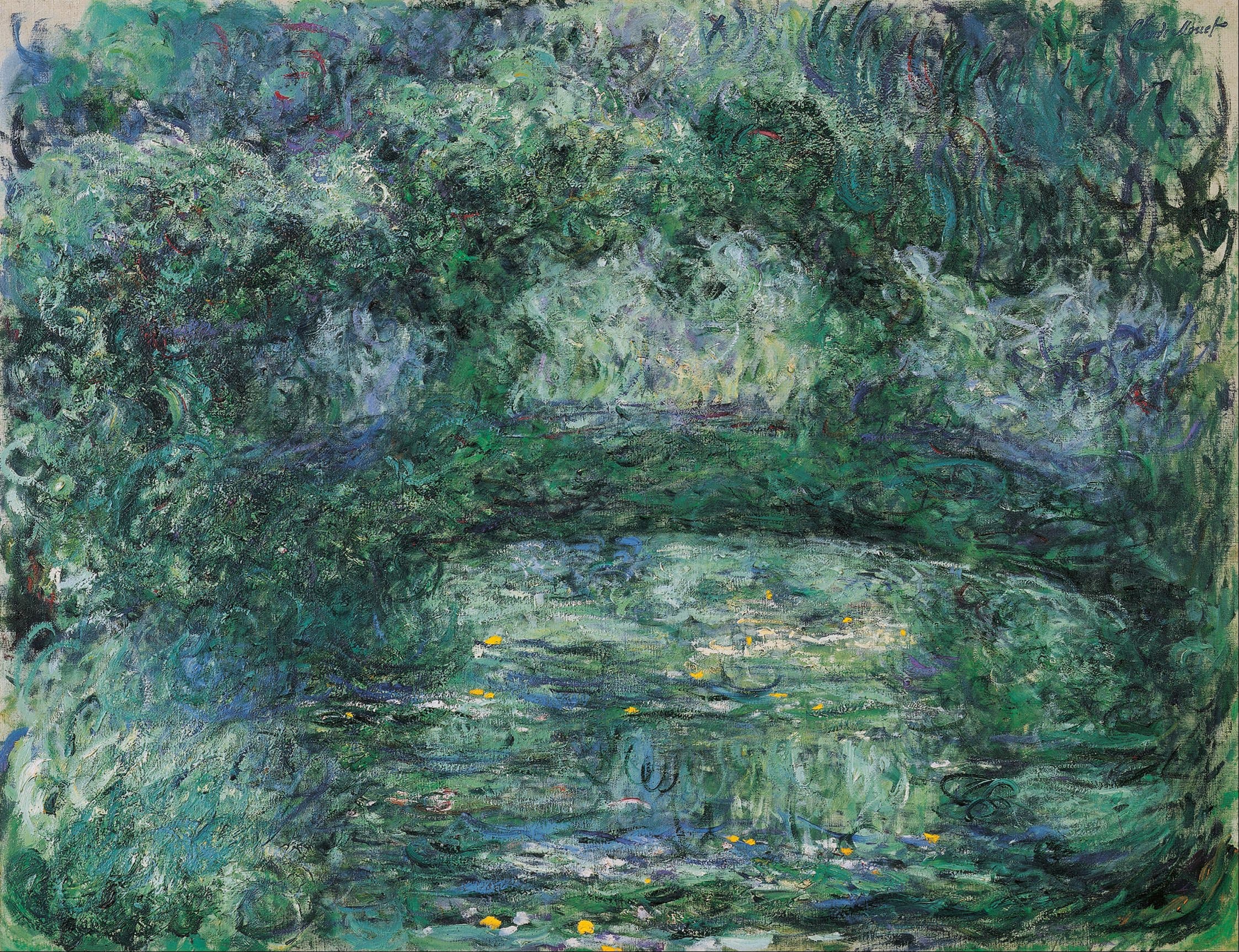
The Japanese Bridge
Claude Monet · 1918–24
Also painted in 1921
The same year
Kindred works
You may also study
Le pont japonais
Claude Monet · 1918–24
The Japanese Footbridge, Giverny
Claude Monet · c. 1922
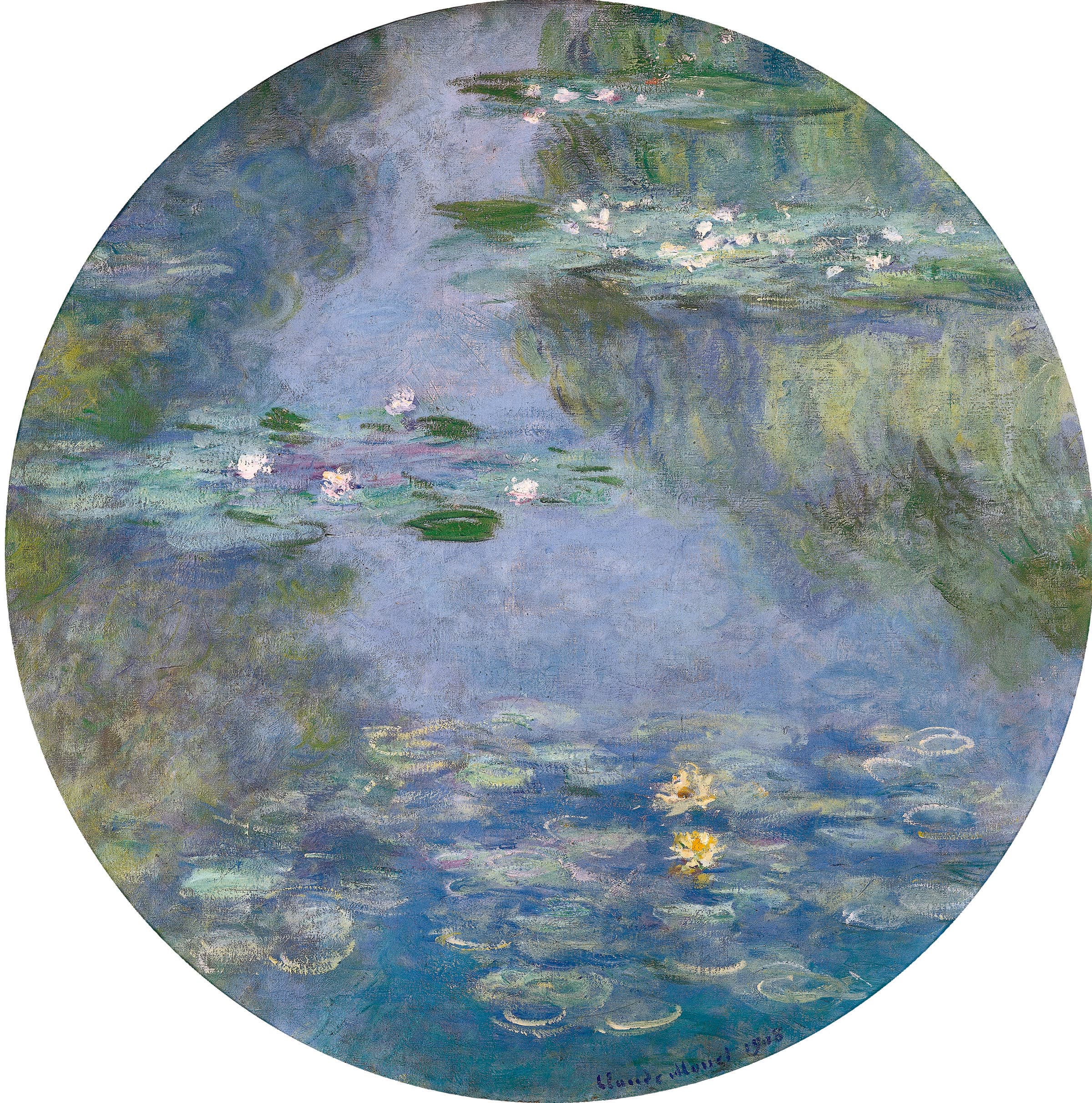
Nymphéas (1908 tondo, Vernon)
Claude Monet · 1908
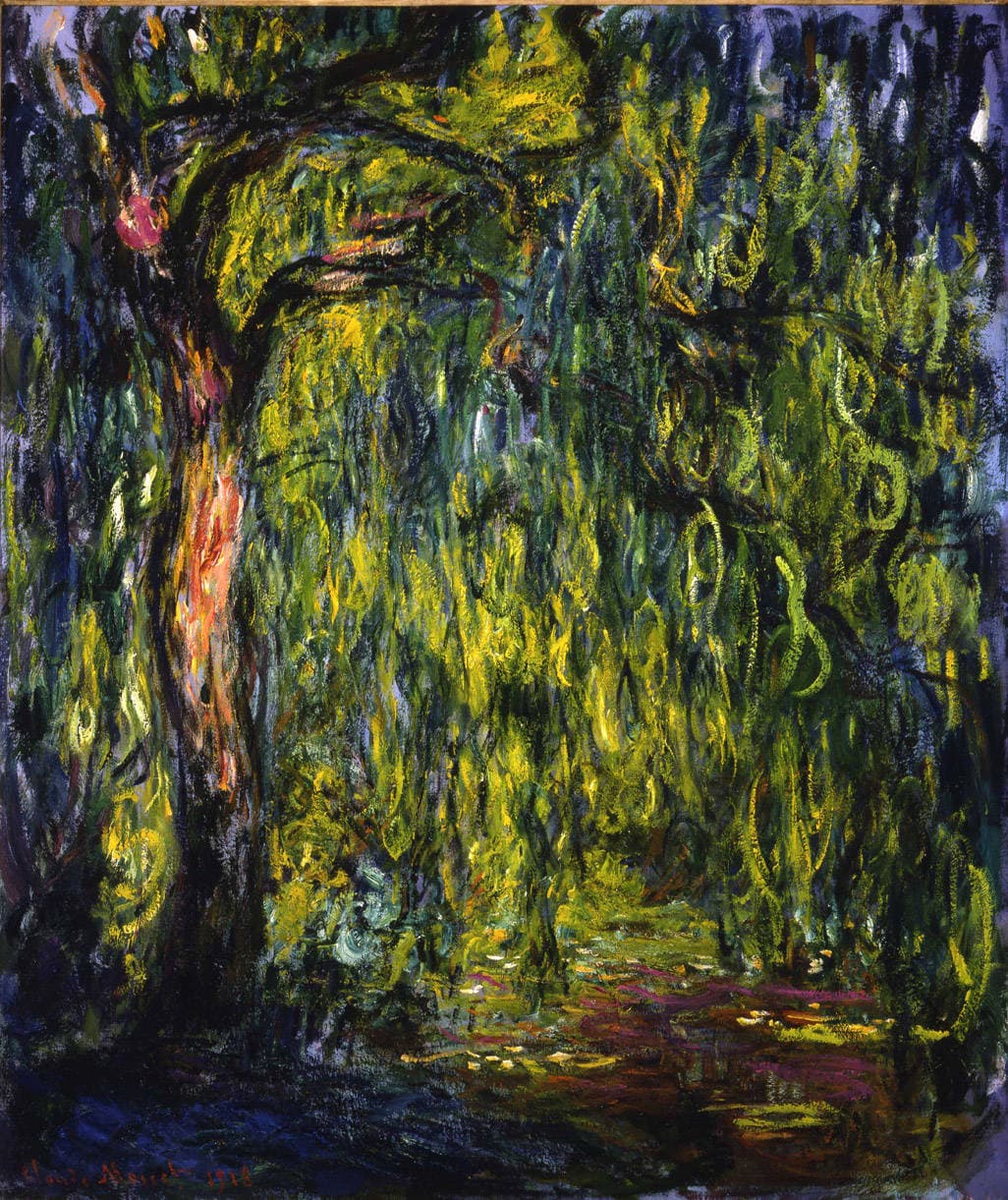
Weeping Willow (Columbus)
Claude Monet · 1918
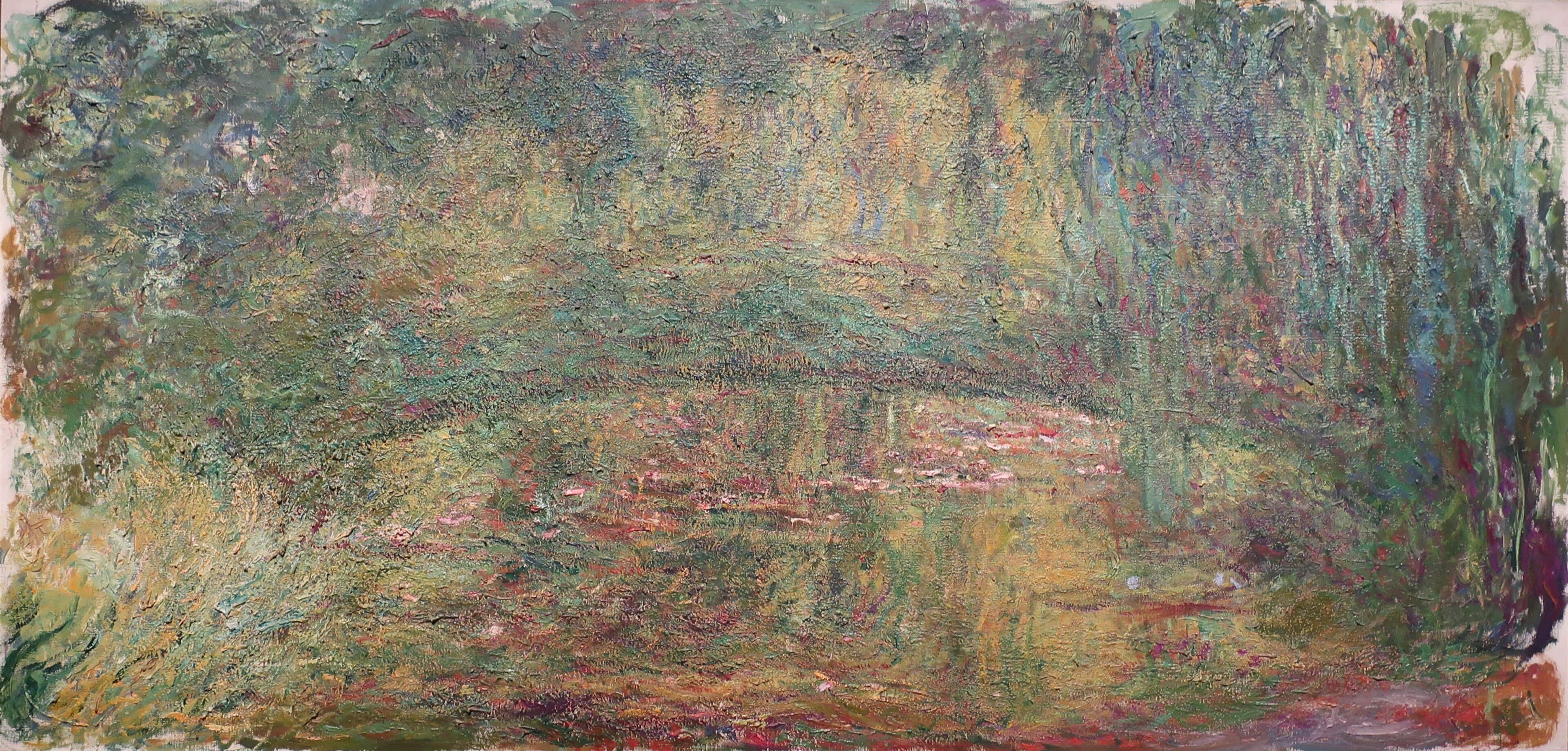
The Japanese Bridge
Claude Monet · 1918
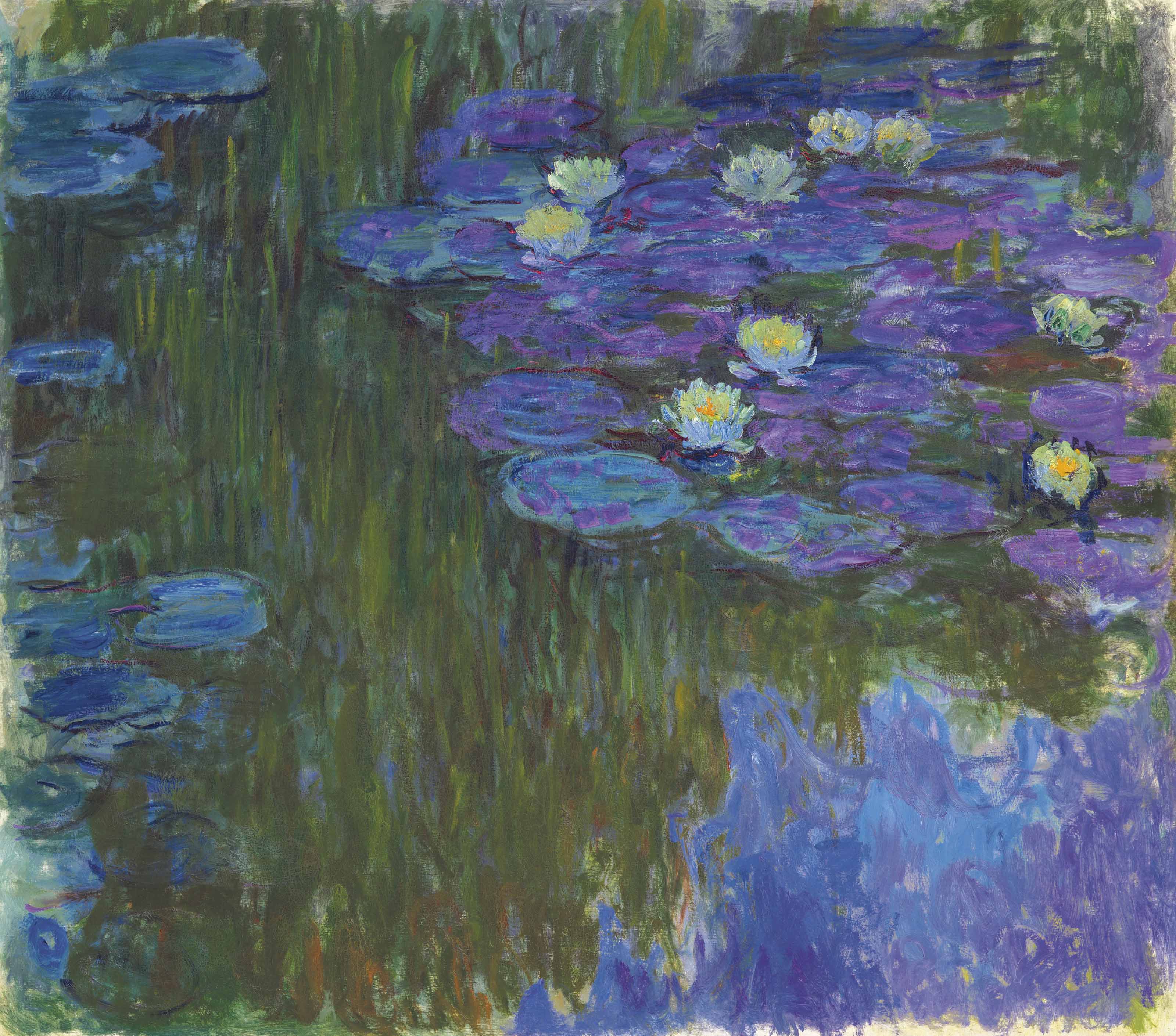
Nymphéas en fleur
Claude Monet · c. 1914–17
Nymphéas (Musée Marmottan Monet, 1914–17)
Claude Monet · 1914–17
Water-Lily Pond (Le Bassin aux nymphéas), 1917–19
Claude Monet · 1917–19