Image: Musée d'Orsay, Paris; via Wikimedia Commons · Public domain · via Wikimedia Commons
Impressionism
Carrières-Saint-Denis
Claude Monet, 1872
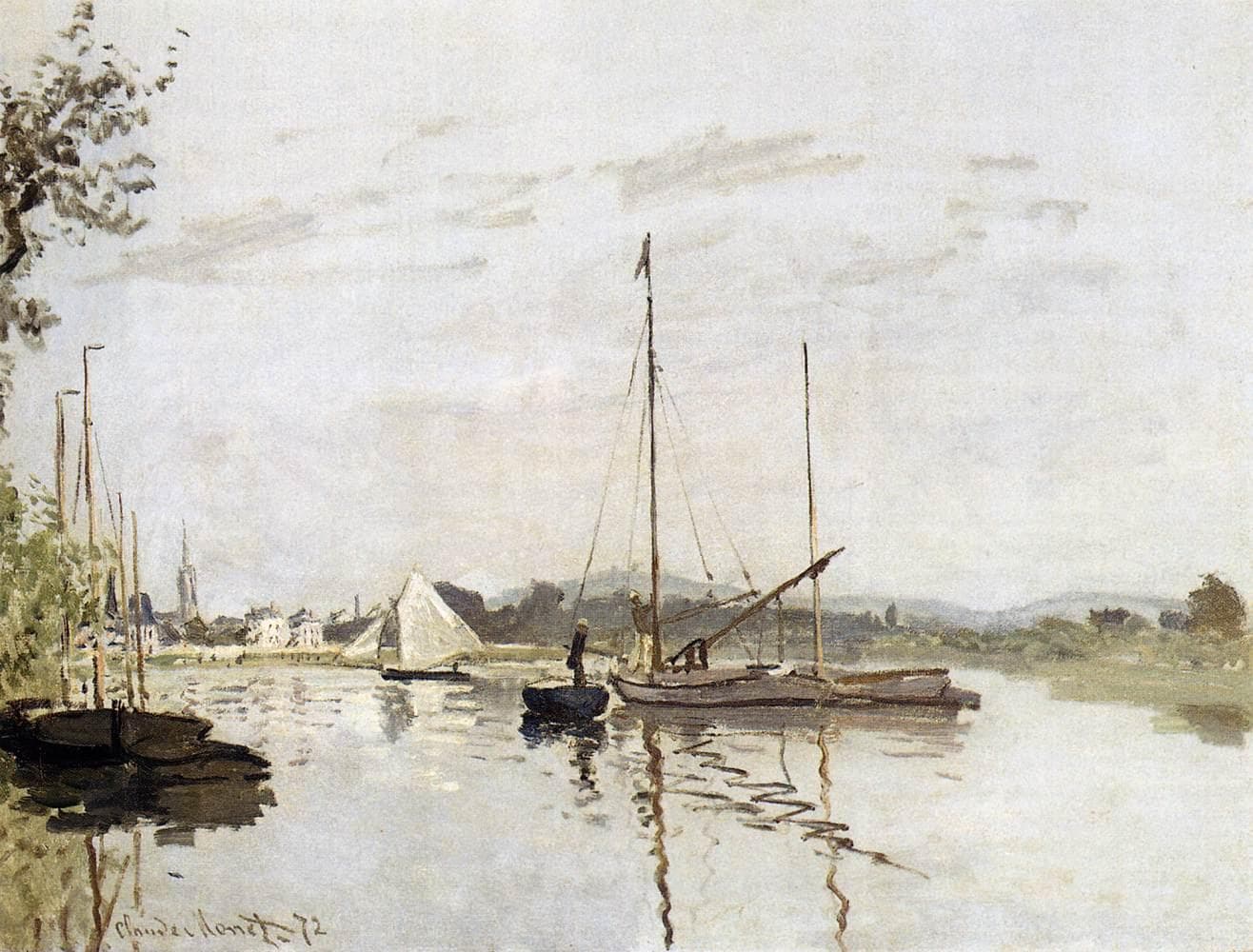
Carrières-Saint-Denis is an 1872 painting by Claude Monet of the village of Carrières (now Carrières-sur-Seine) seen across the Seine near Argenteuil. It is in the Musée d'Orsay, Paris.
- Artist
- Claude Monet
- Date
- 1872
- Medium
- Oil on canvas
- Dimensions
- 61 × 81 cm
- Collection
- Musée d'Orsay, Paris, France
- Movement
- Impressionism
- Catalogue
- Wildenstein 237
What you are looking at
A calm, wide river fills the lower half of the canvas, its surface pale blue and lilac, broken by small ripples. On the far bank a long stone wall runs along the water, and above it a village climbs the slope: a dense jumble of cream, pink and gray houses with red roofs, a church tower with a pointed spire, and a larger building with many windows on the right. Three tall, dark poplars stand at the left of the village, and their reflections drop straight down into the water as long dark strokes.
Just right of center, a long, low covered barge or washhouse boat is moored against the wall, painted almost black. Small boats rest near the right edge. The sky is a soft blue with long streaks of white cloud. The light is clear and gentle, a fine day without strong sun.
Where and when it was painted
Monet moved to Argenteuil at the end of 1871, after his return from London and the Netherlands. In 1872 he explored the river and its banks, painting the villages along the Seine downstream of the town. Carrières-Saint-Denis, today Carrières-sur-Seine, lies on the left bank a few kilometers away. The view was probably painted from a boat on the river or from the Île Fleurie opposite the village.
These were among the happiest and most productive years of Monet's life, and the Seine around Argenteuil gave him his main subject: the river as a place of leisure, work and light. In 1873 he would fit out a studio boat to paint from the water more easily, but this canvas already has the low, water-level viewpoint of that later work.
How it was painted
The composition is a classic river view: water below, a horizontal band of village in the middle, sky above, with the poplars giving a strong vertical accent on the left. Monet keeps the composition steady and lets the water do the work. The reflections of the poplars are painted as broken, wavering strokes, the reflections of the houses as soft, pale smudges, and between them the surface of the river is built from horizontal touches of blue, lilac, white and gray.
The village is described with economy. A few blocks of warm color for the walls, a few darker touches for windows and roofs, a single thin stroke for the spire. The dark barge in the center anchors the eye and gives scale. A detail most viewers miss: the canvas is signed twice, once at lower right and once at left, a little higher up, in the water. The second signature was probably added later so that it would remain visible when the painting was put in a smaller frame.
The palette is light for a picture of 1872. Monet had abandoned the dark grounds and heavy shadows of the 1860s, and the whole canvas is keyed to the pale blue of the sky. Even the shadows on the river wall are violet and gray rather than brown, a sign of the Impressionist method he was developing at Argenteuil.
Ownership
The painting was sold in New York in 1895, bought by Paul Durand-Ruel, and sold by him in 1900 to the collector Étienne Moreau-Nélaton. Moreau-Nélaton gave it to the French state in 1906 with the rest of his collection, which also included Manet's Déjeuner sur l'herbe. It hung first in the Louvre and is now in the Musée d'Orsay (RF 1674). A reproduction stands on the Impressionists' trail in Carrières-sur-Seine today.
Related works
The calm river of 1872 links this picture to The Basin at Argenteuil and Argenteuil, both also in the Orsay, and to the fields of The Plain of Sannois at Argenteuil. The village-on-the-river motif reappears later at Vétheuil, in pictures such as View of Vétheuil.
Where to see it
Carrières-Saint-Denis is in the Musée d'Orsay in Paris. See Monet at the Musée d'Orsay for the museum's other Monets.
Questions & answers
Where is Monet's Carrières-Saint-Denis?
It is in the Musée d'Orsay in Paris, inventory RF 1674. The collector Étienne Moreau-Nélaton gave it to the French state in 1906; it hung in the Louvre before moving to the Orsay.
When and where was Carrières-Saint-Denis painted?
Monet painted it in 1872, his first year at Argenteuil. Carrières-Saint-Denis, now Carrières-sur-Seine, is a village on the Seine a few kilometers downstream, probably painted from a boat or from the island opposite.
What does Carrières-Saint-Denis show?
It shows the village on its slope above a stone river wall, with a church spire, three tall poplars and a moored barge, all reflected in the calm Seine under a soft blue sky.
Why is the painting signed twice?
Monet signed it at lower right, and again at left a little higher up. The second signature was probably added so it would stay visible when the canvas was put in a smaller frame.
More by the artist
Claude Monet

Bridge over a Pond of Water Lilies
Claude Monet · 1899

Woman with a Parasol – Madame Monet and Her Son
Claude Monet · 1875

Sunset in Venice
Claude Monet · 1908–12

La Grenouillère
Claude Monet · 1869

Beach in Pourville
Claude Monet · 1882

Springtime
Claude Monet · 1872

Boating on the River Epte
Claude Monet · 1890

The Seine at Asnières (Hermitage)
Claude Monet · 1873
Also painted in 1872
The same year
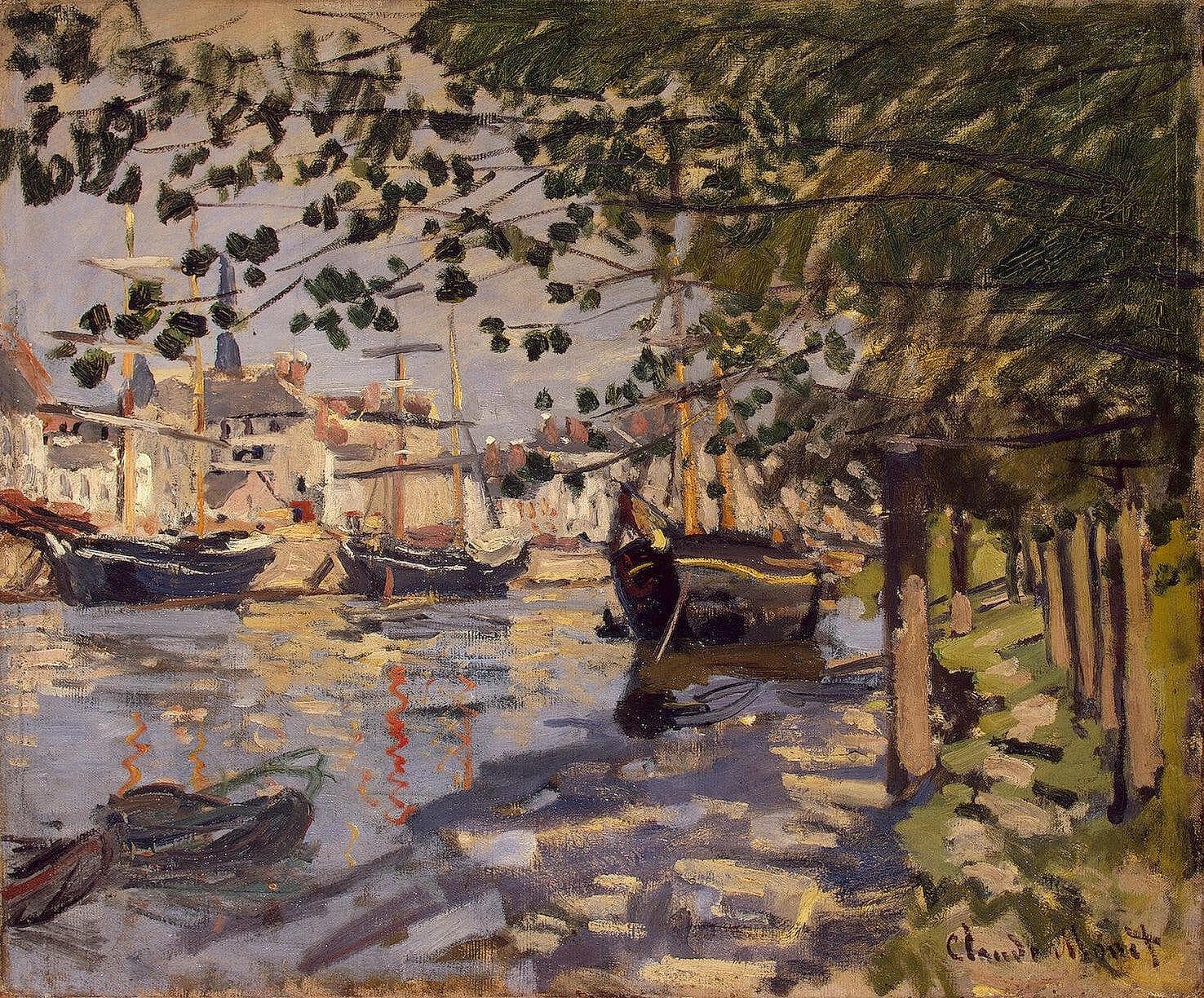
The Seine at Rouen
Claude Monet · 1872
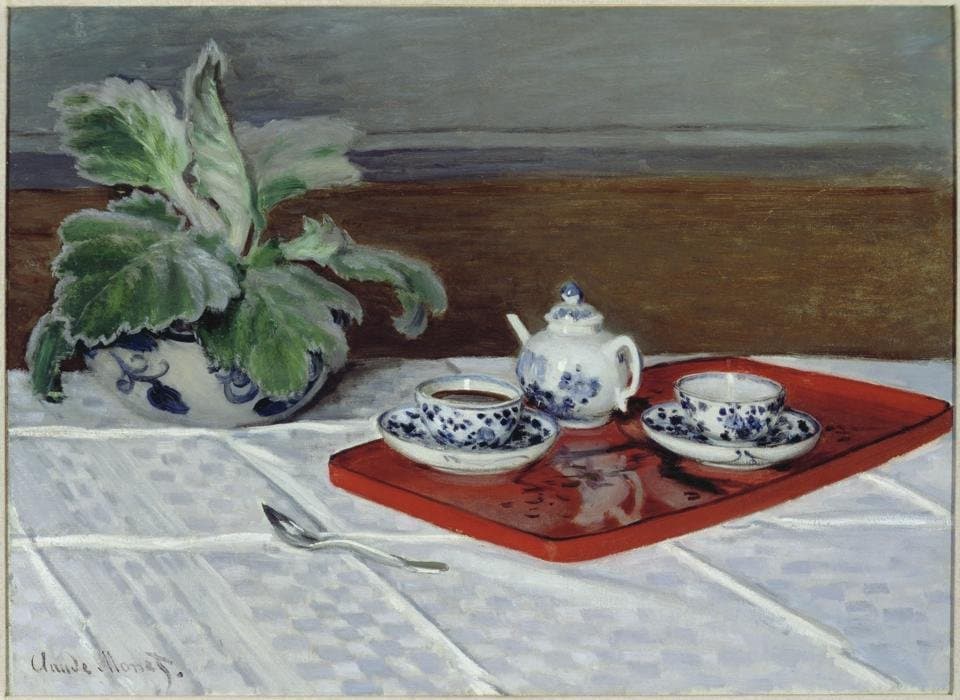
The Tea Service
Claude Monet · 1872
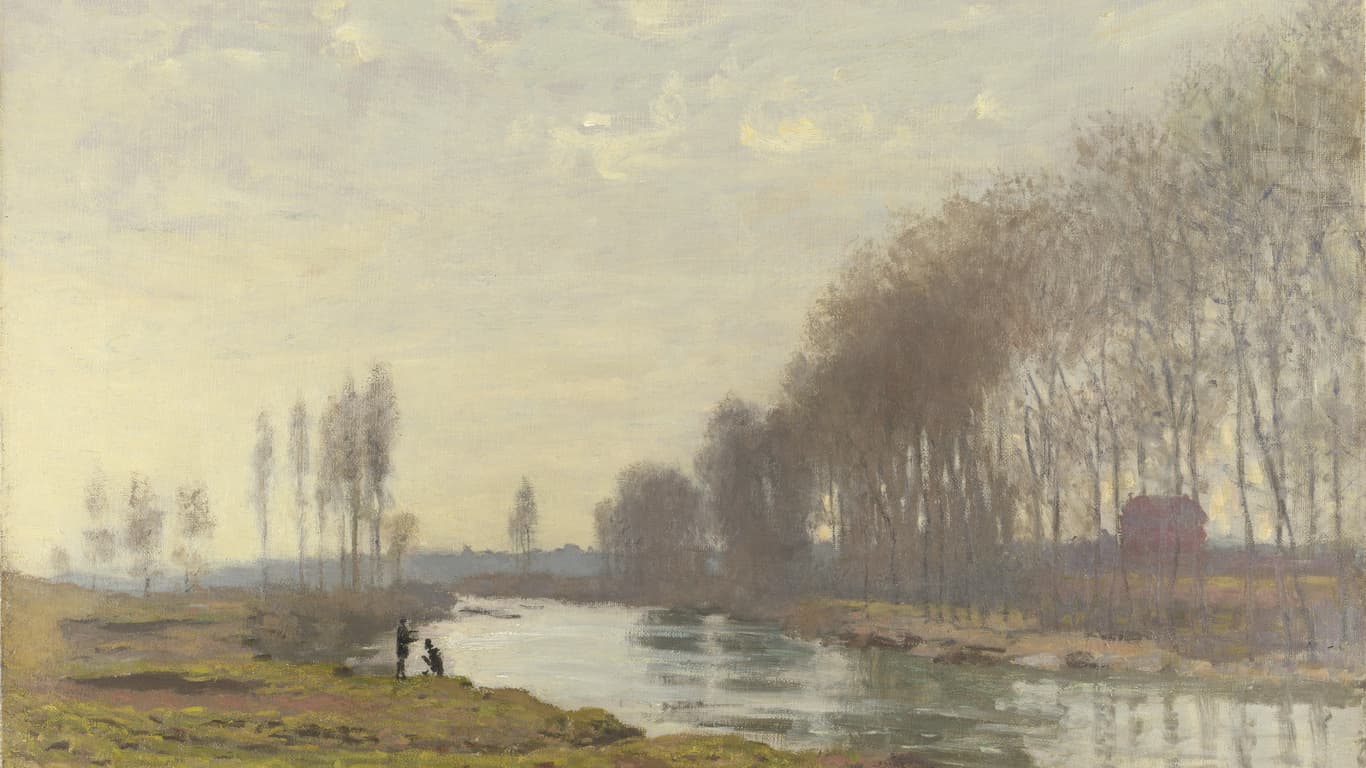
The Petit Bras of the Seine at Argenteuil
Claude Monet · 1872
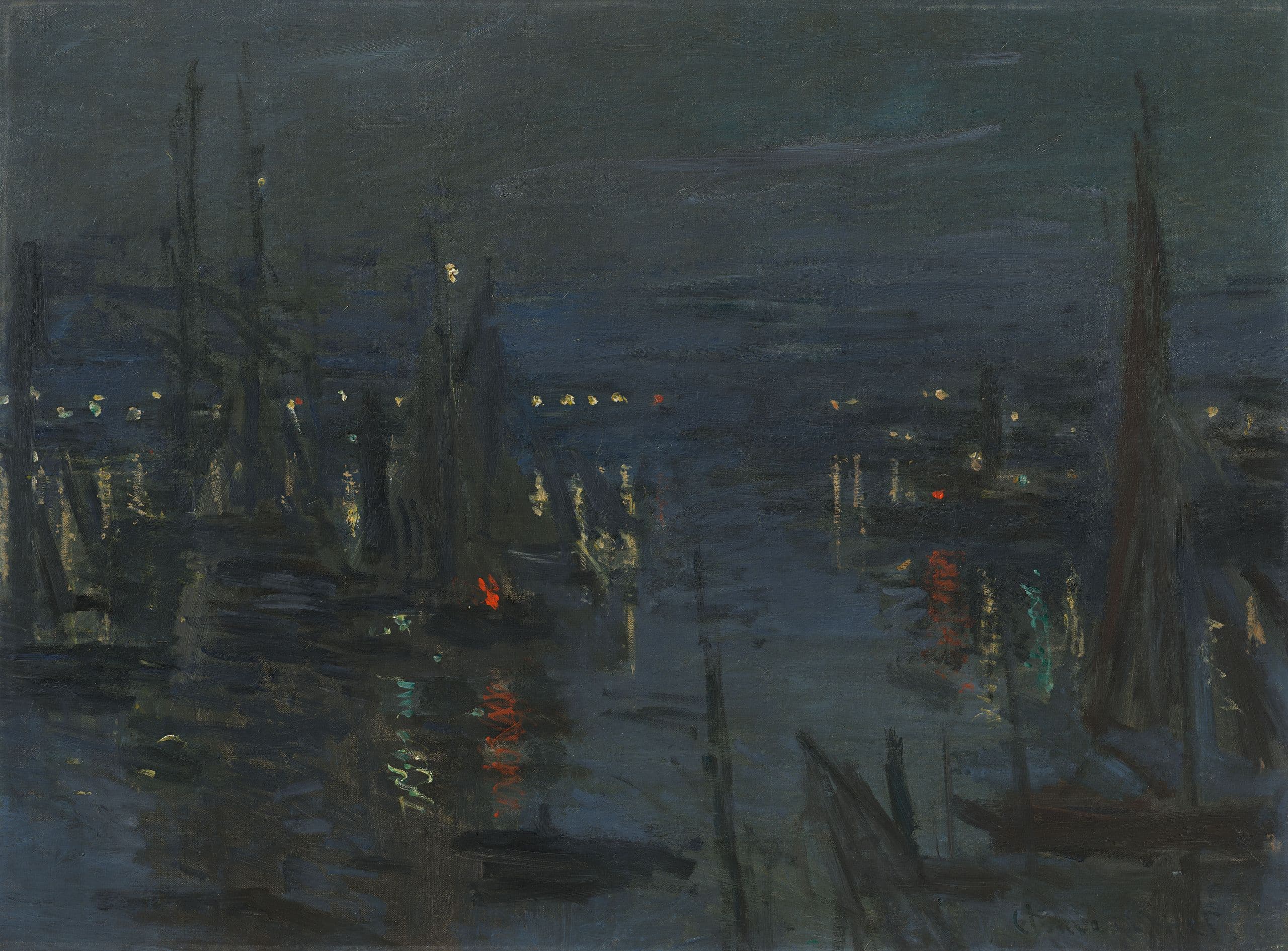
The Port of Le Havre, Night Effect
Claude Monet · 1872
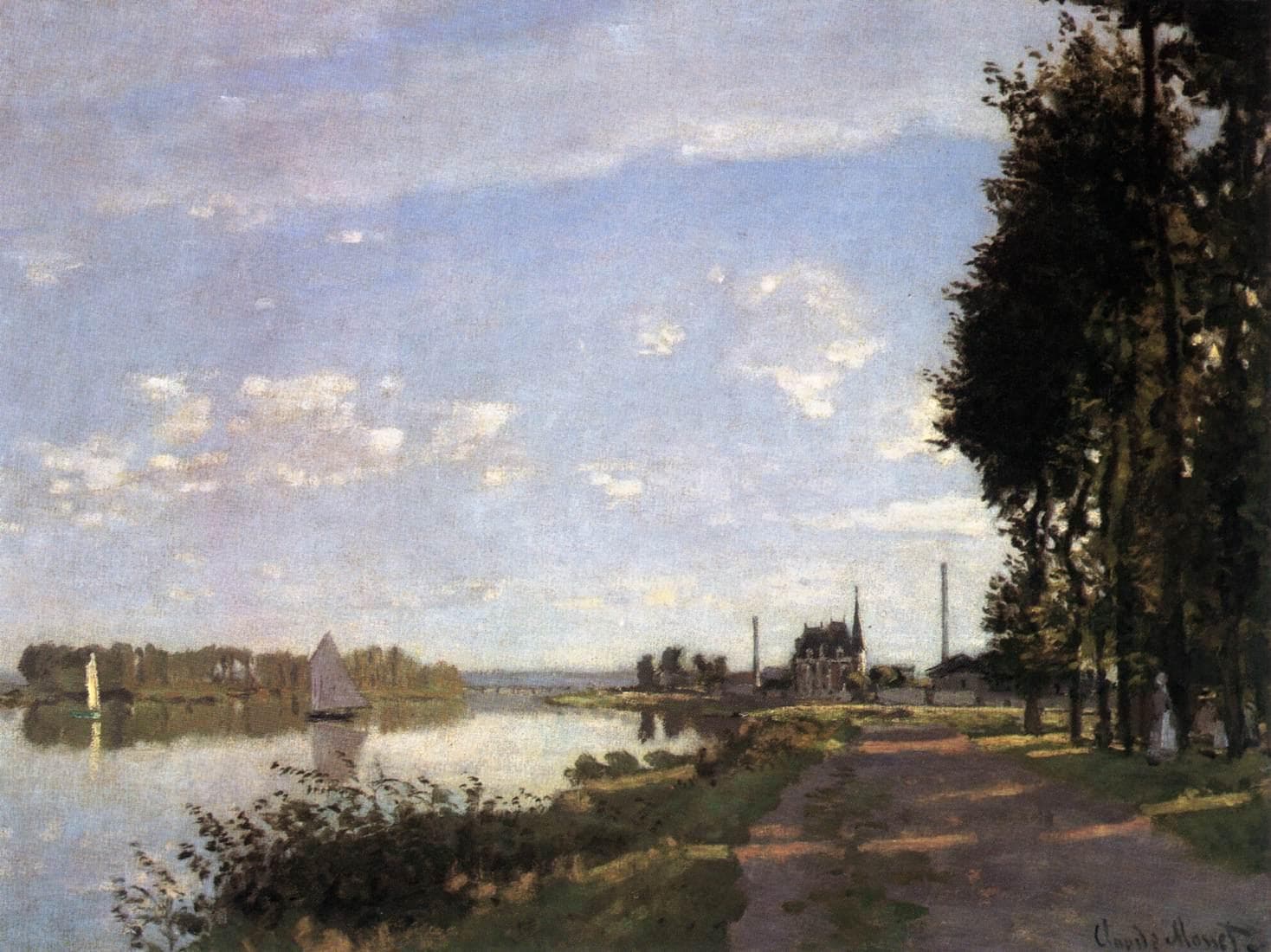
Riverside Path at Argenteuil
Claude Monet · c. 1872
The Basin at Argenteuil
Claude Monet · 1872
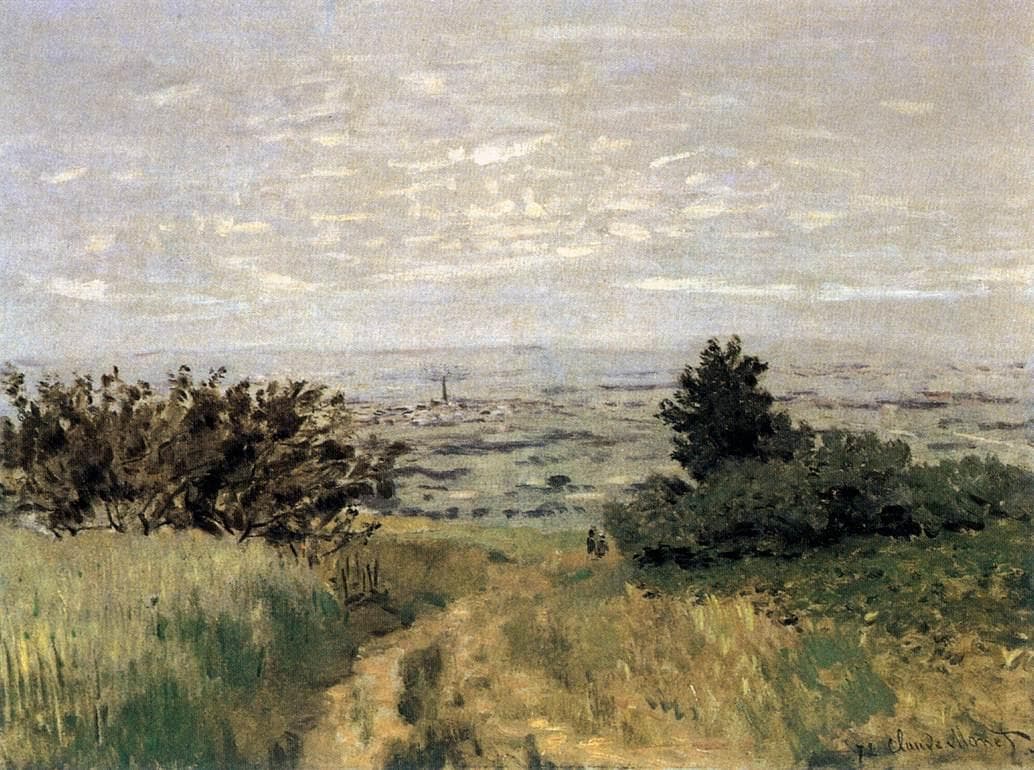
The Plain of Sannois at Argenteuil
Claude Monet · 1872
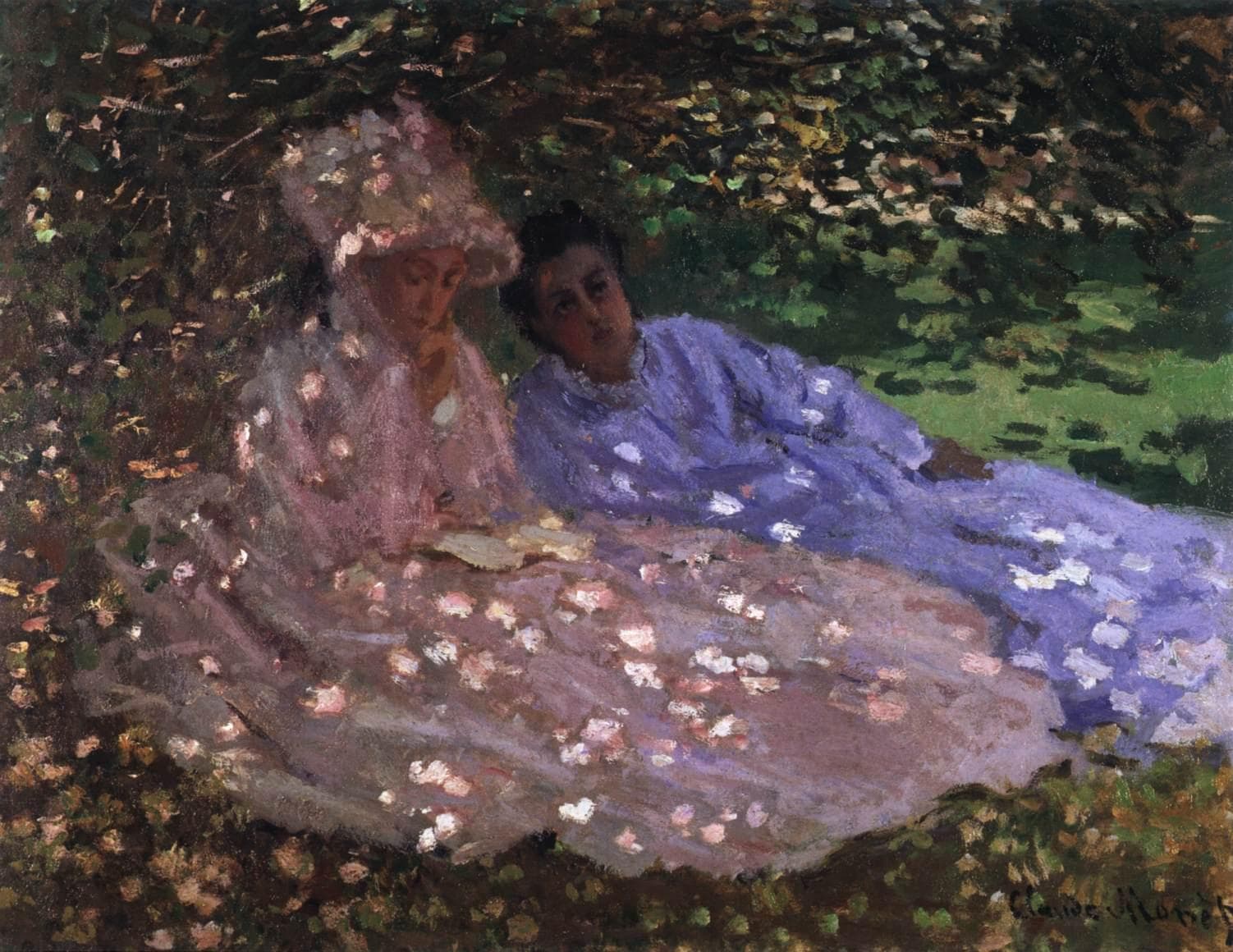
Madame Monet and a Friend in the Garden
Claude Monet · c. 1872
Kindred works
You may also study
The Basin at Argenteuil
Claude Monet · 1872
Argenteuil
Claude Monet · c. 1872
The Plain of Sannois at Argenteuil
Claude Monet · 1872
Riverside Path at Argenteuil
Claude Monet · c. 1872
The Petit Bras of the Seine at Argenteuil
Claude Monet · 1872

The Scream
Edvard Munch · 1893

Ophelia
John Everett Millais · 1851–52

The Great Wave off Kanagawa
Katsushika Hokusai · c. 1830–32